Based on analysis of personal attacks and other machine-learned elements of language, a research company figured out which subreddits are the most toxic, then charted that toxicity against supportiveness.
Read the restspriteleigh
Shared posts
29 Mar 15:57

Lo-Fi Let's Play: LOOM
by Leigh Alexander
Come along with me and revisit a classic Lucasfilm Games experience. There's a lot special about LOOM, which recently went on sale at the DRM-free digital store Good Old Games. Read the rest
28 Mar 19:58

55 Films' First and Last Shots
by Chris Higgins
"What can we learn by examining only the first and final shot of a film?" asks Jacob T. Swinney. Lots of things, really. We can look at composition, color, content, characters being separate or apart. Or we can play games! For instance, can you name these films based on just the tiny snippets of shots? After you see the list of films (below the video), how many have you seen? How many of these shots feature eyes as a primary focus? How many show a transformation in color, but a similar location or composition?
Make up your own quiz, if you're a quiz-taker, then watch. The list of films is below.
mozallowfullscreen allowfullscreen>First and Final Frames from Jacob T. Swinney on Vimeo.
Films Used
Note: there are clickable times on the Vimeo page, which may be useful if you don't like scrubbing around in the video.
The Tree of Life 00:00
The Master 00:09
Brokeback Mountain 00:15
No Country for Old Men 00:23
Her 00:27
Blue Valentine 00:30
Birdman 00:34
Black Swan 00:41
Gone Girl 00:47
Kill Bill Vol. 2 00:53
Punch-Drunk Love 00:59
Silver Linings Playbook 01:06
Taxi Driver 01:11
Shutter Island 01:20
Children of Men 01:27
We Need to Talk About Kevin 01:33
Funny Games (2007) 01:41
Fight Club 01:47
12 Years a Slave 01:54
There Will be Blood 01:59
The Godfather Part II 02:05
Shame 02:10
Never Let Me Go 02:17
The Road 02:21
Hunger 02:27
Raging Bull 02:31
Cabaret 02:36
Before Sunrise 02:42
Nebraska 02:47
Frank 02:54
Cast Away 03:01
Somewhere 03:06
Melancholia 03:11
Morvern Callar 03:18
Take this Waltz 03:21
Buried 03:25
Lord of War 03:32
Cape Fear 03:38
12 Monkeys 03:45
The World According to Garp 03:50
Saving Private Ryan 03:57
Poetry 04:02
Solaris (1972) 04:05
Dr. Strangelove 04:11
The Astronaut Farmer 04:16
The Piano 04:21
Inception 04:26
Boyhood 04:31
Whiplash 04:37
Cloud Atlas 04:43
Under the Skin 04:47
2001: A Space Odyssey 04:51
Gravity 04:57
The Searchers 05:03
The Usual Suspects 05:23
28 Mar 19:53
I Want You Bach
by Miss Cellania
 (
(In this video, the Piano Guys go for Baroque with a mashup that spans a couple of centuries: The Jackson Five and Johann Sebastian Bach. The result just proves that good music is good music, no matter when or where it came from. That’s one rockin’ harpsichord! -via Viral Viral Videos
See also: More from The Piano Guys.
28 Mar 19:46

Canadian court hands a gimme to copyright trolls
by Cory Doctorow
Michael Geist writes, "Canada's Federal Court has issued its ruling on the costs in the Voltage-TekSavvy case, a case involving the demand for the names and address of thousands of TekSavvy subscribers by Voltage on copyright infringement grounds.
Read the rest
27 Mar 01:11

NYPD officers who wikiwashed police brutality pages will get wrist-slaps
by Cory Doctorow

The two officers blamed for hundreds of anonymous edits to Wikipedia pages on victims of police brutality, made from the NYPD's IP block, will face minor discipline for using work computers for non-work activities.
Read the rest
27 Mar 01:03

Morning Cup of Links: Shut Up and Dance!
by Miss Cellania
Here's a supercut of 89 of the most iconic dance scenes in film. All joyfully edited and synched to the song “Shut Up and Dance.”
*
9 Of The Strangest Animated TV Shows From The 1990s. They didn’t follow a formula as much as the shows of the ‘70s, which only made them weirder.
*
15 Jokes That Only Biologists Will Fully Understand. That’s not quite true; you don’t have to be a biologist to understand them, you just need to know some basic biology terms.
*
Brawl through the fourth wall: 11 tips for surviving a movie bar fight. In the real world, it’s best to just run.
*
Please Stop Playing Hide-and-Seek in Our Stores. Folks are staging mass games at IKEA stores and inviting participants through social media.
*
Will Ferrell And Kevin Hart’s Failed Audition Tapes. A promotional film shows how they once competed for each other’s roles. NSFW language.
*
Tobacco kills, but it’s not the plant’s fault. With a little genetic modification, it may end up saving lives by producing disease-specific antibodies.
*
15 Delightful Facts About Saint Patrick’s Day. May you have a very Éirinn go Brách day!
27 Mar 00:30
Just watch the amazing trailer for this genre bender
by Leigh Alexander
Here's a genre mash-up you might not expect: Classic narrative-driven adventure games and two-dimensional space shooters? I'm not sure if it'll work, but I've been watching the gorgeous trailer for Starr Mazer on loop forever. Read the rest
26 Mar 23:32
Eurovision Waffles Mashup
by Miss Cellania
 (
(BrotherTrousers mashed up “Still in Love With You” by Electro Velvet with the British Potato Waffles jingle and it’s just right. Not that I would ever eat frozen potato waffles, but I might sing about them. And good luck to Electro Velvet in the 2015 Eurovision contest! -via b3ta
26 Mar 23:14

NYPD caught wikiwashing Wikipedia entries on police brutality
by Cory Doctorow
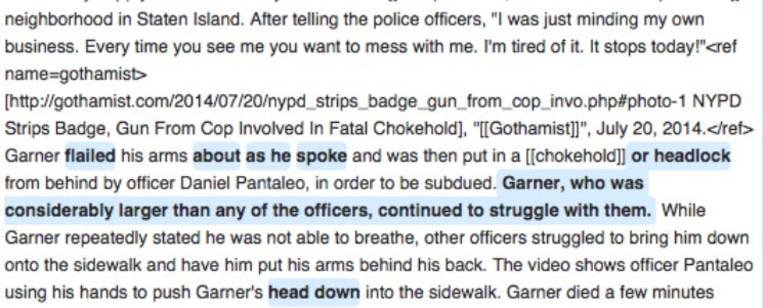
Anonymous users from NYPD's IP block have made questionable edits to the Wikipedia entries on high-profile police brutality victims including Eric Garner, Sean Bell, and Amadou Diallo.
Read the rest
25 Mar 01:36

Music made from the audio stripped out of an MP3
by Clive Thompson
Check out "Ghost in the MP3," a eerie song made from the audio that was removed from "Tom's Diner" by Suzanne Vega when it was turned into an MP3.
25 Mar 01:36


"Hello, Barbie" eavesdrops on kids, sends what it hears to Mattel
by Clive Thompson

Mattel's new "Hello Barbie" will "learn about its users over time." How? By recording what the child says and sending it to Mattel's servers, reports the Washington Post. Read the rest
25 Mar 01:32
Game of Thrones Meets The Princess Bride
by John Farrier

"Jesus, Grandpa, what did you read me this thing for?"
Game of Thrones is a heartwarming love story. The Princess Bride is a terrifying look into the abyss of the human soul and suffering in a godless world. Or something like that. I get them confused sometimes because, as this mashup by Shawn Kohne points out, they're very similar.
Content warning: violence and gore. On the other hand, Hodor keeps his clothes on, which is probably a good thing.
-via Jeremy Barker
25 Mar 01:27
Twitter bans revenge porn
by Rob Beschizza
New rules forbid the posting of " intimate photos or videos that were taken or distributed without the subject's consent."
25 Mar 01:17
The Kanye West / Rugrats Mashup We Never Knew We Needed
There are no words. Just revel in the glory for a minute.
25 Mar 01:12

Piketty on the pointless cruelty of European austerity
by Cory Doctorow
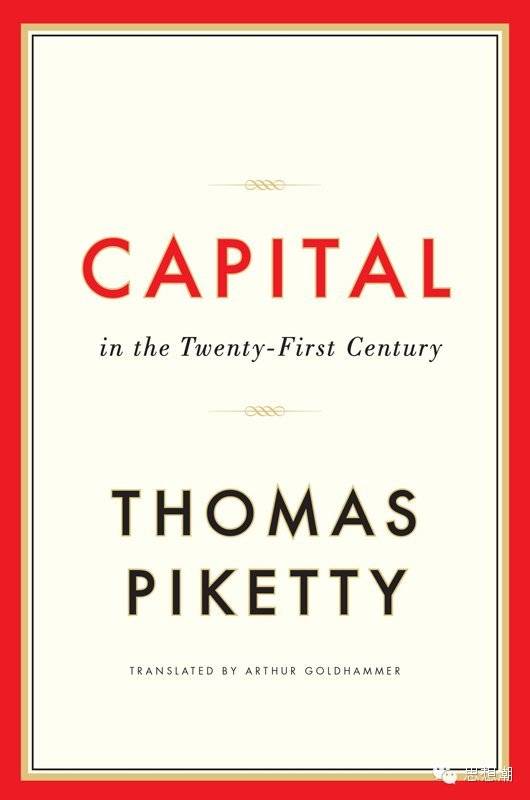 The economist says that the US's post-crisis job creation record and the EU's lagging record demonstrates that austerity cripples recoveries.
Read the rest
The economist says that the US's post-crisis job creation record and the EU's lagging record demonstrates that austerity cripples recoveries.
Read the rest

25 Mar 01:08

Proprietary vibes: a new dawn for copyright trolls?
by Rob Beschizza
Yesterday, a jury decided that Blurred Lines infringed the copyright of Marvin Gaye's Got to Give It Up. The consensus seems to be that the ruling is a troublesome one, connecting the sheet music actually owned by Gaye's estate to the "feel" of its recording--and anything that sounds like it in future.
Read the rest
25 Mar 00:41
Gritty, Post-Apocalyptic Charlie Brown
by John Farrier

Linus warned us. Long before we listened--before we ran out of time--he warned us. Lucy had the football. She would use it, eventually. And when Schroeder walked away, out of her life, she felt that she no longer had anything to live for. And neither did we, apparently.
A boy and his dog make their way across the wasteland in this image from a horrific Peanuts. Max Dunbar composed the original image, Vitali Iakovlev did the inks, and Sean Ellery did the colors.
-via Ace of Spades HQ
25 Mar 00:32

Wikimedia sues the NSA
by Cory Doctorow

The Wikimedia Foundation -- which oversees Wikipedia -- eight other organizations, and the ACLU have filed a lawsuit against the DoJ and the NSA, contesting the spy agency's program of mass "upstream" surveillance.
Read the rest
Markku.lempinen likes this
25 Mar 00:31

Mashup: Hall & Oates vs. Metallica
by David Pescovitz
"I Can't Enter Than (No Sandman)" by Neil Cicierga (more…)
09 Mar 22:53

Star Trek movie supercuts: just the spaceships
by Cory Doctorow
Thomas Hunt's done all the Trek movies as ship-only videos, which is, as JWZ notes, oddly soothing. Read the rest
09 Mar 22:42
Superheroes Inhabit Famous Paintings
by Lisa Marcus
 A Sunday on La Grande Jatte by thebluelemur
Original: A Sunday Afternoon on the Island of La Grande Jatte by Georges-Pierre Seurat
Great works of art have been prized by humanity throughout history. We build fantastic architecture to house our artworks, such as the Louvre, the Musée d’Orsay, and the Guggenheims of New York and Spain. Collectors spend millions every year making acquisitions. Patrons make trips all over the world to visit the museums.
So how could one possibly improve on a Monet, Renoir or Seurat? Lend them superpowers! At Worth1000, people are artfully doing just that, and in competition with each other. See a ton of fun entries here (and at the bottom of that page there are additional links). -Via Guff Rembrandt vs Joker by Valgio
Original:Self Portrait with Beret by Rembrandt van Rijn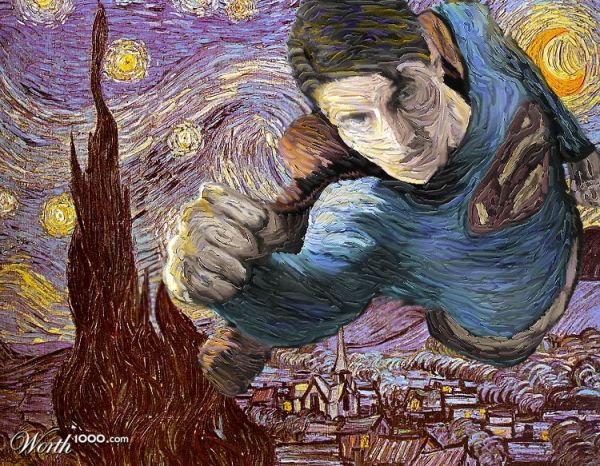
Soaring through a Starry Night by Todd1000
Original: Starry Night by Vincent Van Gogh
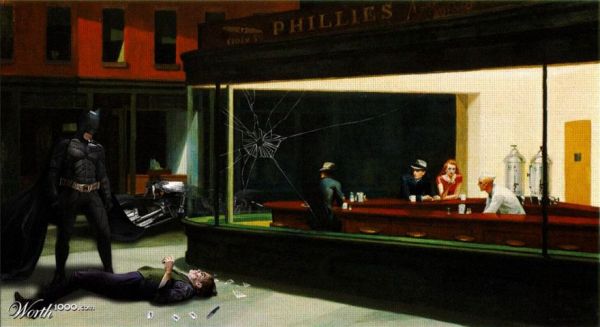
Nighthawks by tysmiff07
Original: Nighthawks by Edward Hopper 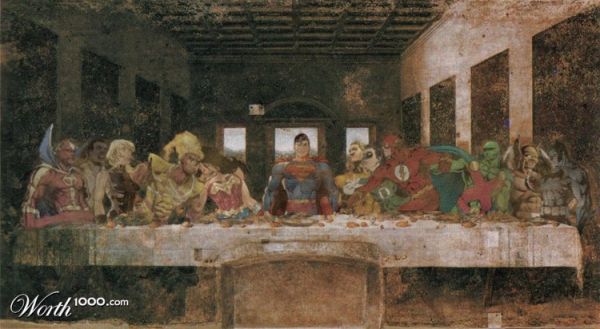
The Justice Supper by FeedBack
Original: The Last Supper by Leonardo Da Vinci
 The Son of Batman by riddle
Original: The Son of Man by Rene Magritte
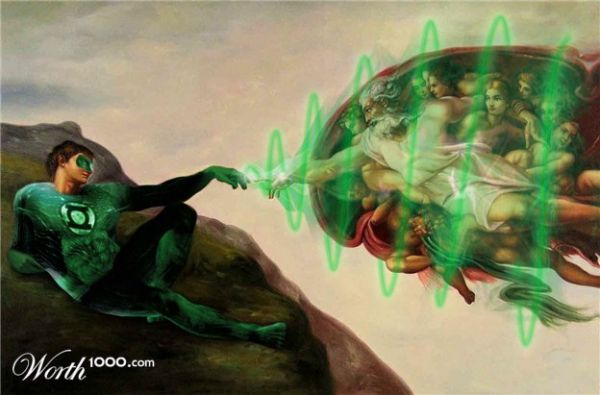



Green Lantern by metalwave
Original: The Creation of Adam by Michelangelo
.jpg)
08 Mar 14:39

An online community that deletes itself once it's indexed by Google
by Cory Doctorow
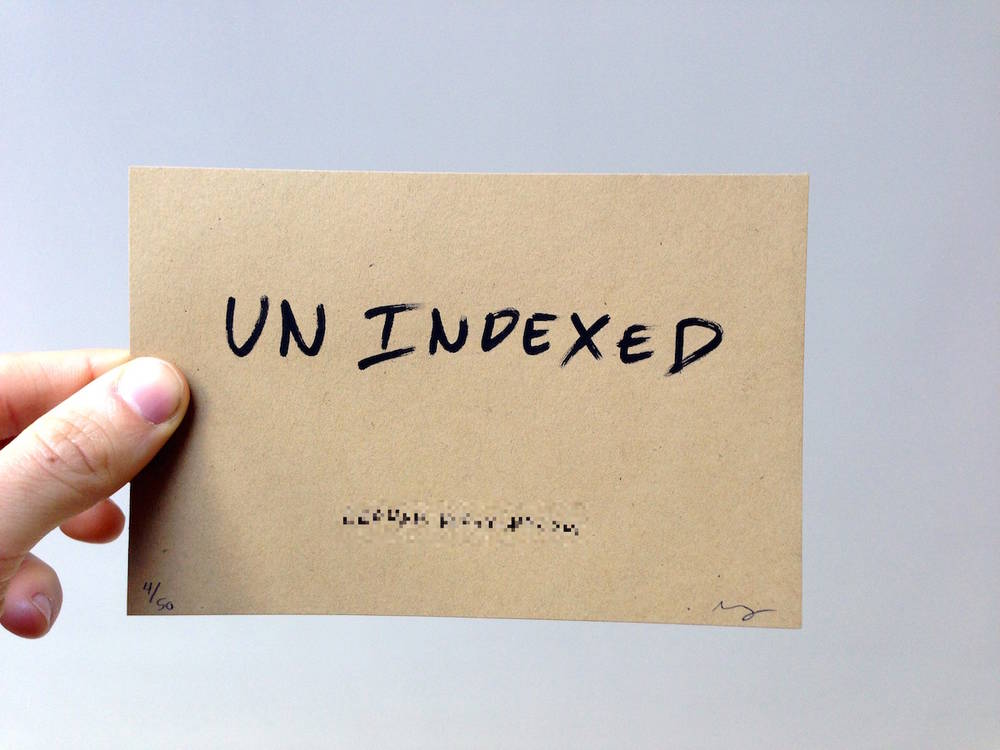
Unindexed is an online community that anyone can contribute to; it runs a back-end process that continuously scours Google for signs that it has been indexed, and securely erases itself once it discovers evidence of same.
Read the rest
Erectlocution likes this
07 Mar 14:59

DMCA abuser ordered to pay $25K to WordPress
by Cory Doctorow
 Straight Pride UK, a homophobic organization, used a fraudulent copyright complaint to censor an article about them, but WordPress fought back.
Read the rest
Straight Pride UK, a homophobic organization, used a fraudulent copyright complaint to censor an article about them, but WordPress fought back.
Read the rest
Luke.stirling likes this
07 Mar 01:44
 March 6, 2015 - 9:30am
How Does Your Computer Recognize Spam Mail?
by Nick
Of all the email sent worldwide over the next 24 hours, around 70% will be spam—unsolicited electronic junk messages.
Spam is a problem for all email users, but it could be a lot worse. Thanks to an 18th century English mathematician who’d never even heard of Viagra, your daily trickle of laser eye-surgery and organ-enlargement throwaways is prevented from becoming a raging flood.
The Reverend Thomas Bayes died in 1761. Published two years after his death, his important essay on the subject of probability included a mathematical rule now known as Bayes’ theorem. That same theorem now forms the basis of "smart" spam filtration.
Spam evolves. Spammers are always devising more sophisticated ways to get through to your inbox, and ‘mutating spam’ changes in response to server knockbacks. So, hard and fast filtering rules don’t perform well. Blocking spam used to be a simple matter of "blacklisting" bad senders and building lists of banned content words. As that approach no longer works, spam filters have had to evolve too.
Bayesian filters don’t simply build lists of words and email addresses, they build lists of classifiers. Once an email is classified as spam (or not), it becomes a gold mine of further classifiers for the Bayesian algorithm. Patterns of information—whether in images, text content, or source header data—are used by the algorithm as a kind of template (a ‘decision tree’) to check new incoming mail against.
It’s vital, then, that classifiers are accurate. To improve their accuracy, the filter needs to "learn" when it gets classification right and when it doesn’t. And what better to teach it than the most sophisticated classification device we know of—a human brain. Brains usually know ham when they see it.
Receiving spam is annoying, but having "good" email (sometimes called "ham") classified as spam is worse. Depending on filter settings, it may get moved to another folder that you don’t check often, or may even get deleted. When a filter classifies ham as spam, that’s known as a false positive. Fortunately, it’s easy to tell the algorithm about false positives so that, over time, they become fewer and fewer.
How does this work? Let’s use the popular spam-filtering program SpamAssassin as an example. This program, usually installed on your email server, has a Bayesian function called sa-learn. To "teach" it, you set up folders in your email client that correspond to "spam" and "ham." To kick start the process, it’s a good idea to put a bunch of spam and ham into the relevant folders. After that, each time a new spam message is delivered to your inbox you move it to "spam," and each time you pick up a false positive you move it to "ham."
If sa-learn is set up right, it will scan through your "spam" and "ham" folders once per day, and then adjust its classifiers to achieve a better match with what it finds there.
The filter is a kind of Bayesian agent. More technically, it’s a "naïve" Bayesian agent—it’s impossible to implement Bayes' theorem in full. The algorithm doesn’t really do anything on its own apart from process information. But, in combination with a utility function that does something with that information—like assigning a "spam score" out of 10 to each message—it becomes a useful tool. So, a combination of inference and action gives us an agent.
Spam filtration isn’t so different from water filtration. Imagine pushing a torrent of emails through a series of meshes—each one finer than the previous one—with the "pure ham" we want coming out as the end product. Top-level filters and "block lists" on the servers of Internet service providers (ISPs) are the reservoir grilles trapping branches and big debris. User-controlled filters on ISP mail servers trap leaves, twigs, and trash. Automatic and rule-based filters on end-user email client computers trap grit.
In these terms, our attention is a super-fine mesh that can get rid of even the tiniest particles. But we’d really like to stop the spam before it ever reaches that one. Bayesian filtering is one of the finest ways to do that.
Were this an email, there’s a chance that you wouldn't get to read it. Because the text contains many occurrences of the word "spam," it might get picked out and trashed by some filter somewhere before it ever reaches your inbox. It’s quite a tricky challenge for a Bayesian agent to learn that stories about spam with "spam" in the message subject aren’t necessarily spam.
But if the Bayesian agents that were to process this email had been doing their sa-learning homework, and they aren’t too strict or naïve, then the email would make it through.
05 Mar 23:17

Trolls abuse Canadian copyright law with fraudulent mass-scale extortion notices
by Cory Doctorow

Michael Geist writes, "The launch of the Canadian copyright notice system earlier this year raised serious concerns as Rightscorp, a U.S.-based anti-piracy company, sent notices that misstated Canadian law and demanded that users pay to settle claims."
Read the rest
05 Mar 23:16
Net Neutrality victory lap: Grumpy Cat banner flown over Comcast HQ
by Cory Doctorow
Net Neutrality advocates flew an airplane over Comcast HQ in Philadelphia towing a 2,000 square foot banner of Grumpy Cat saying "Comcast: Don't Mess with the Internet." Read the rest
Bushchime, neonicwind likes this