16 Apr 10:21
by Mengyao Ma,
Jingjing Wu,
Qing Zhang,
Wan Pang,
Chao Liu

This review highlights hypervalent iodine (HVI) chemistry combined with light or electricity as a sustainable platform for radical fluorination and fluoroalkylation. It systematically classifies key developments in photo- and electrochemical HVI-mediated transformations, emphasizing reaction design, mechanistic insights, and the synergistic role of HVI reagents.
Fluorine incorporation profoundly influences the physicochemical and biological properties of organic molecules, yet conventional fluorination often relies on hazardous reagents and harsh conditions. Recent advances have established hypervalent iodine (HVI) chemistry, combined with light or electricity, as a sustainable platform for radical fluorination and fluoroalkylation under mild, redox-neutral conditions. This review highlights key developments in photo- and electrochemically driven HVI-mediated transformations, systematically classified by the number of fluorine atoms introduced—mono-, di-, and trifluoromethyl/perfluoroalkylation. Emphasis is placed on reaction design, mechanistic insights, and the synergistic role of HVI reagents in enabling efficient, selective, and environmentally benign synthesis of organofluorine compounds.
16 Apr 10:16
Publication date: April 2026
Source: Journal of Fluorine Chemistry, Volume 291
Author(s): Yang Li, Min Jiang, Jin-Tao Liu
13 Apr 10:45
by Yuxiang Zhang, Xinyue Ma, Wei Sun, and Zhijun Zuo

Organic Letters
DOI: 10.1021/acs.orglett.6c01178
13 Apr 10:38
by Airi Yamaguchi,
Tomoko Yajima

We report a metal-free, visible-light-induced synthesis of perfluoroalkyl amides from amines and perfluoroalkyl iodides using an inexpensive organic photocatalyst under mild and open-air conditions. This environmentally friendly method exhibits a broad substrate scope and is readily scalable. Furthermore, the obtained perfluoroalkyl amides can undergo diverse post-synthetic transformations, highlighting their versatility for further derivatization.
ABSTRACT
Fluoroalkyl amides have attracted significant attention in drug discovery and materials science. However, conventional synthetic methods often involve toxic reagents and multi-step procedures, limiting their practicality, safety, and sustainability. In this study, we report a visible-light-driven synthesis of perfluoroalkyl amides from amines and perfluoroalkyl iodides employing an organic photocatalyst under ambient air. This reaction proceeds under mild, metal-free conditions and demonstrates broad compatibility with various fluorinated substrates, including amines and perfluoroalkyl iodides. Moreover, when using diiodoperfluoroalkanes, compounds linking amides and other functional groups via fluoroalkylene are readily synthesized.
02 Apr 09:56
by Qiang Liu, Yan Zhang, and Xiang-Yu Chen

Accounts of Chemical Research
DOI: 10.1021/acs.accounts.6c00067
23 Oct 06:34
by Shengbin Sun, Jia-Nan Mo, Huiwei Xu, Xiang Li, and Jiannan Zhao

Organic Letters
DOI: 10.1021/acs.orglett.5c03979
23 Oct 06:09
by Matthew E. Lowe, Benjamin M. Gallant, Nathan Davison, Matthew N. Hopkinson, Dominik J. Kubicki, Erli Lu, and Roly J. Armstrong

Journal of the American Chemical Society
DOI: 10.1021/jacs.5c14052
15 Sep 12:11
by Kilian Weißer,
Beatrice Cula,
Christian Limberg

Electron rich thiolates readily undergo autoxidation in contact with O2, which can produce sulfinates in rather high yields (96% in case of NaSPh). Primary thiolates on the other hand hardly react with O2 so that iron(II) centers are required to promote its conversion,, motivating catalyst design for selective thiolate-to-sulfinate conversion.
Abstract
The results of an investigation on the reactivity of thiolates RS‒ (R = phenyl, mesityl, tert-butyl, iso-propyl, n-propyl, n-octyl, ethyl, (CH2)2NHBoc) towards O2, in the presence or absence of iron ions, revealed, that under conditions typically employed to test bioinspired model complexes with regard to their potential to act as functional models for thiol dioxygenases, thiophenolate and other thiolates with electron rich residues R can undergo autoxidation. This, in the absence of Fe, gives high yields of the corresponding sulfinates. The case is different for aliphatic primary R: here the presence of iron ions can be helpful and studies concerning the development of iron-based dioxygenation catalysts should aim at such substrates. The proceedings during the reactions in the presence of Fe2+ were followed more closely for the case of R = Ph as well as for n-Pr and t-Bu by Mössbauer studies.
11 Sep 08:39
by Zhiyang Ma, Liang Zhang, Jinglan Wen, Yahao Huang, and Peng Hu

Organic Letters
DOI: 10.1021/acs.orglett.5c03110
11 Sep 08:29
by Didier Bégué, Maryam Miri, Avat Arman Taherpour, Manabu Abe, and Curt Wentrup

The Journal of Organic Chemistry
DOI: 10.1021/acs.joc.5c01317
30 Jul 07:01
by Thomas J. Hasiweder,
Hoan M. Dinh,
Dilip K. Pandey,
Aleksandr Sorvanov,
Julia R. Khusnutdinova

Biogenic materials naturally containing trace metals such as Celite or diatomaceous earth promote practical perfluoroalkylation of C─H bonds of (hetero)arenes and a double bond bromination with N-bromosuccinimide upon mechanoactivation via ball milling. This conceptually broadens the scope of mechanoactivated solids beyond piezoelectric materials. This approach poses an advancement towards sustainable processes, as it demonstrates the new application of non-toxic, untreated biominerals.
Abstract
Herein, we report that Celite (diatomaceous earth) commonly viewed as an innocent filter aid or support material, or Earth-abundant, non-toxic metal oxides are efficient mechanoactivated catalysts for arene and heteroarene C─H bond radical trifluoromethylation and pentafluoroethylation, with the activity comparable with previously reported mechanochemical methods utilizing piezoelectric materials. Celite was also applied for mechanochemical dibromination of a double bond with N-bromosuccinimide, eliminating the need to use of lithium titanate as a piezoelectric mechanoredox catalyst. Mechanoactivation via ball milling in the presence of minimal amount of solvent was crucial to observe the reactivity, while sonication or using a pre-ground suspension in a bulk solvent were not efficient. The EDX studies and comparison with individual metal oxides suggest a possible role of trace metal oxides in mechanoinduced reactivity. Celite could be recycled and reused several times without significant loss of activity. This approach offers environmentally benign, biocompatible and inexpensive nature-inspired materials as efficient mechanocatalyts and conceptually broadens the scope of mechanoactivated solids to the materials previously deemed inert.
30 Jul 06:54
by Samuel Dagorne,
Christophe Gourlaouen,
Sandip Munshi,
Rudolf Wehmschulte,
Geetika Gupka

Calcium salts consisting of Ca2+ weakly coordinated by carborate counterions have been prepared through anhydrous and aqueous methods. The Ca2+ center is sufficiently Lewis acidic to weakly coordinate olefins, alkynes and aromatics, and catalyze the hydrosilylation of 1-hexene and several alkynes.
Abstract
The syntheses of calcium carborates, Ca[HexCB11Cl11]2, 1, Ca[HCB11Cl11]2, 2, and Ca[MeCB11Cl11]2·2(o-DFB), 3·2(o-DFB), (o-DFB = 1,2-difluorobenzene) including the structure of 2·4(o-DFB) are described. The large size of the Ca2+ cation is reflected by the coordination geometry with the Ca center being coordinated by three Cl donors from each of the carborate anions and one F donor from each of the two coordinated solvent molecules. Based on 11B NMR and DOSY NMR studies, the salts 1, 2 and 2·2(o-DFB) form close ion pairs in PhBr and o-DFB solutions. The Fluoride Ion Affinities (FIA) in PhBr for the salts 1 and 2·2(o-DFB) were DFT-calculated (ωB97XD/6–31 + G**) at 211.3 kJ mol−1 and 217.5 kJ mol−1, respectively, which is below that of the landmark Lewis acid B(C6F5)3 (241.5 kJ mol−1). The Ca2+ center in salt 1 is sufficiently Lewis acidic to coordinate 1,5-cyclooctadiene (1,5-COD) and 2,6-octadiyne and to catalyze the hydrosilylation of 1-hexene and several alkynes, albeit slowly. Compound 1 also displays moderate activity as a catalyst for transfer hydrogenation catalysis and carbonyl-olefin metathesis (COM), a first for Ca compounds.
29 Jul 11:10
by Zhu, Shan
Synthesis
DOI: 10.1055/a-2637-3568

Emerging as the basic structural units in a variety of bioactive molecules, developing straightforward and efficient methods for synthesizing benzylic fluorinated compounds is of considerable significance. Herein, an electrocatalytic strategy utilizing sulfur hexafluoride (SF6) as a fluorinating reagent to transform benzylic alcohols into benzyl fluorides has been developed under mild conditions. This reaction is compatible with several substrate backbones and avoids the excessive usage of chemical reductants, which provides new routes for the efficient utilization and degradation of SF6, the potent greenhouse gas.
[...]
Georg Thieme Verlag KG Oswald-Hesse-Straße 50, 70469 Stuttgart, Germany
Article in Thieme eJournals:
Table of contents | Abstract | Full text
28 Jul 13:45
by Muyuan Wang, Jonah Ruskin, Joseph Marques, Nathaniel Garrison, and Thomas Lectka

Chemical Reviews
DOI: 10.1021/acs.chemrev.5c00363
03 Jul 11:33
by Masashi Hattori
Nature Chemistry, Published online: 27 June 2025; doi:10.1038/s41557-025-01855-3
The production of fluorination agents generally involves the formation of toxic hydrogen fluoride. Now, a mechanochemical protocol to decompose the fluoropolymer polyvinylidene fluoride has been developed, generating potassium fluoride as a fluorinating agent. This approach provides a safer and sustainable fluorination strategy for efficient S–F, C(sp2)–F and C(sp3)–F bond formation.
26 Jun 14:33
by Elena Cassera, Vittoria Martini, Valerio Morlacci, Serena Abrami, Nicola Della Ca’, Davide Ravelli, Maurizio Fagnoni, and Luca Capaldo

JACS Au
DOI: 10.1021/jacsau.5c00530
06 Jun 09:22
by Soo Young Kim, Juho Lee, Won Seok Ham, Tae Yeong Im, Su Yong Go, and Hong Geun Lee

Organic Letters
DOI: 10.1021/acs.orglett.5c01127
06 Jun 07:09
by Zining Zhang, Kezhi Chen, Peng Liu, and Guangbin Dong

Journal of the American Chemical Society
DOI: 10.1021/jacs.5c08175
05 Jun 12:16
by Xianjin Wang
Nature Communications, Published online: 20 May 2025; doi:10.1038/s41467-025-60011-0
Fluorine-containing compounds play a critical role in life sciences, driving extensive research into efficient fluorination methods over the past decades. Here, the authors report a radical-mediated synthesis of alkyl fluorides via decarboxylative-desulfonylative gem-difunctionalization under photochemical conditions.
02 Jun 14:13
by Stephen G. Sweeting and Alastair J. J. Lennox

Journal of the American Chemical Society
DOI: 10.1021/jacs.5c05472
15 May 07:50
by Patrick Ryan, Ramsha Iftikhar and Luke Hunter
Abstract
When present within an organic molecule, the C–F bond tends to align in predictable ways with neighbouring functional groups, due to stereoelectronic effects such as hyperconjugation and electrostatic attraction/repulsion. These fluorine-derived conformational effects have been exploited to control the shapes, and thereby enhance the properties, of a wide variety of functional molecules including pharmaceutical agents, liquid crystals, fragrance chemicals, organocatalysts, and peptides. This comprehensive review summarises developments in this field during the period 2010–2024.
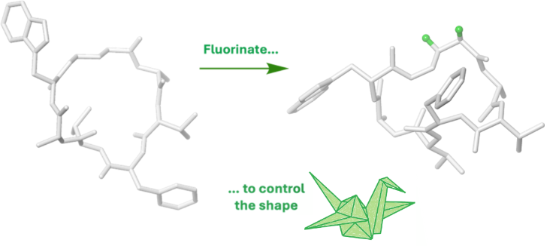
Beilstein J. Org. Chem. 2025, 21, 680–716. doi:10.3762/bjoc.21.54
15 May 07:38
by Seonyoung Kim and Hyunwoo Kim

ACS Catalysis
DOI: 10.1021/acscatal.5c01668
20 Mar 13:21
by Francesco Pasca, Yuri Gelato, Michael Andresini, Defne Serbetci, Philipp Natho, Giuseppe Romanazzi, Leonardo Degennaro, Marco Colella, and Renzo Luisi

JACS Au
DOI: 10.1021/jacsau.4c00902
22 Jan 09:34
by Fangyuan Yu, Daoyi Yang, Yuanlin Yang, Dengfu Lu, and Yuefa Gong

Organic Letters
DOI: 10.1021/acs.orglett.4c04826
17 Dec 09:07
by Nathan Faialaga,
Dana Gephart,
Breno Silva,
Richard Y. Liu

The synthesis and isolation of arenesulfenyl fluorides (ArS-F) has been achieved via a Halex reaction. Several arenesulfenyl fluorides have been characterized by NMR, UV-Vis, and FTIR spectroscopy, including structural analysis of two compounds by single-crystal X-ray diffraction. The functional group engages in direct, efficient, and highly regioselective anti-addition to alkenes and alkynes, as well as insertion by carbenes.
Abstract
Sulfenyl fluorides are organic compounds of sulfur in formal oxidation state +2 with the formula R−S−F. Although the chloride, bromide, and iodide analogues have been extensively described in the literature, arenesulfenyl fluorides remain essentially unstudied. These structures have been implicated as putative intermediates in established processes to access polyfluorinated sulfur species; however, definitive and direct evidence of their existence has not been obtained, nor has a systematic understanding of their reactivity. Here, we report the synthesis, isolation, and spectroscopic characterization of several arenesulfenyl fluorides, including structural analysis of 2,4-dinitrobenzenesulfenyl fluoride and 4-cyano-2-nitrobenzenesulfenyl fluoride by single-crystal X-ray diffraction. The functional group undergoes direct, efficient, and highly regioselective anti-addition to alkenes and alkynes, as well as insertion by carbenes. The resulting α- or β-fluoro thioether adducts can be readily transformed into useful fluorinated motifs, for example by modification of the sulfur groups (to sulfonamides or sulfonyl fluorides), by sulfur elimination (to generate formal C−H fluorination products), or by Julia–Kocienski olefination (to form vinyl fluorides). Thus, we establish that sulfenyl fluorides are unexpectedly accessible and stable compounds, which serve as versatile reagents for the production of fluorinated organic compounds.
29 Nov 10:24
by Huijian Wang,
Chengjun Lei,
Tingting Liu,
Ruijin Meng,
Xiao Liang

The strong basicity of fluoride ions leads to detrimental side reactions on organic cations and solvents, converting “naked” F− into bifluoride (HF2
−) ions. In this work, dual 1,3-diphenylurea (DPU) ligands shield the Lewis basicity of F− through hydrogen bonding, providing long-term chemical stability across a wide range of aprotic solvents and sustaining improved electrochemical performance in nonaqueous fluoride ion batteries.
Abstract
The strong basicity of fluoride ions leads to detrimental nucleophilic attack on organic components in the electrolytes, such as β-hydrogen elimination reactions with organic cations and solvents, converting “naked” F− into corrosive and unstable bifluoride (HF2
−) ions. These reactions significantly constrain the choice of suitable solvents and salts to develop electro(chemical) stable fluoride ion electrolytes. In this work, we replaced the triple water ligands typically present in industrial organic fluoride salts with dual 1,3-diphenylurea (DPU) coordination via hydrogen bonding interaction. This modification successfully suppressed the Lewis basicity of fluoride ions, providing long-term chemical stability (over 1000 hours) across a wide range of aprotic solvents, a broadened electrochemical stability window (−2.5–0.9 V vs. Ag+/Ag) and high ionic conductivity (1.7 mS cm−1) at room temperature. Additionally, the weaker hydrogen bonding in F−-DPU coordination, compared to the conventional boron-based anion acceptor (AA) strategy that relies on intensive Lewis acid-base interactions, facilitates faster (de)fluorination kinetics at the electrode. The proposed room temperature fluoride ion batteries sustain improved electrochemical performance by pairing with the Pb-PbF2 anode and BiF3 or Ag cathode.
16 Oct 07:39
by Jelen, Jan
Synthesis
DOI: 10.1055/a-2412-1398

Fluorine organic compounds have been a predominant force of pharmaceutical chemistry for modern drug design, with an increasing amount of fluorine-containing compounds entering the market. Methodologies for fluorine atom incorporation into organic molecules are still challenging to date and thus represent an important research area. Deoxyfluorination serves as a useful tool for the construction of carbon–fluorine bonds in biologically active molecules by converting a common hydroxyl group into the corresponding fluoride. In this review, we have summarized and categorized deoxyfluorination reaction protocols developed over the last decade (2015–2024) by the structural type of C–O bond deoxyfluorination, including substrates like alcohols, phenols, ketones, aldehydes, and carboxylic acids.1 Introduction2 Deoxyfluorination of C(sp3)–O Bonds2.1 Alcohols2.2 Alcohol Derivatives3 Deoxyfluorination of C(sp2)–O Bonds3.1 Phenols3.2 Phenol Derivatives3.3 Aldehydes and Ketones3.4 Carboxylic Acids4 Conclusions
[...]
Georg Thieme Verlag KG Rüdigerstraße 14, 70469 Stuttgart, Germany
Article in Thieme eJournals:
Table of contents | Abstract | open access Full text
18 Sep 14:51
Green Chem., 2024, 26,10324-10329
DOI: 10.1039/D4GC03324H, Paper
Yi-Fan Zhang, Shan Zhu, Ya-Wen Zuo, Hang Liu, Ruo-Xing Jin, Xi-Sheng Wang
Synthesis of benzyl fluorides via visible-light-induced fluorination using SF6 has been established, exhibiting a broad substrate scope and high efficiency.
The content of this RSS Feed (c) The Royal Society of Chemistry
No more posts. Check out what's trending.
