Shared posts

18 Nov 17:09

MODe: Fashion in the 1960s

by Jonathan

IMGP4319There is still a bit of tweaking to be done, but our new show at the Fashion History Museum is now open. MODe looks at the phenomenal changes in fashion that occurred between 1960 and 1970.

For three centuries, women’s fashions had been almost exclusively the invention of Parisian couturiers, but by the early 1960s the haute couture tradition was in jeopardy as new sources of style were on the rise from: London, New York, Florence, San Francisco, Hong Kong, Madrid, Rome…

IMGP4297

Early 1960s garments including Balenciaga and a Davidow copy of Chanel.

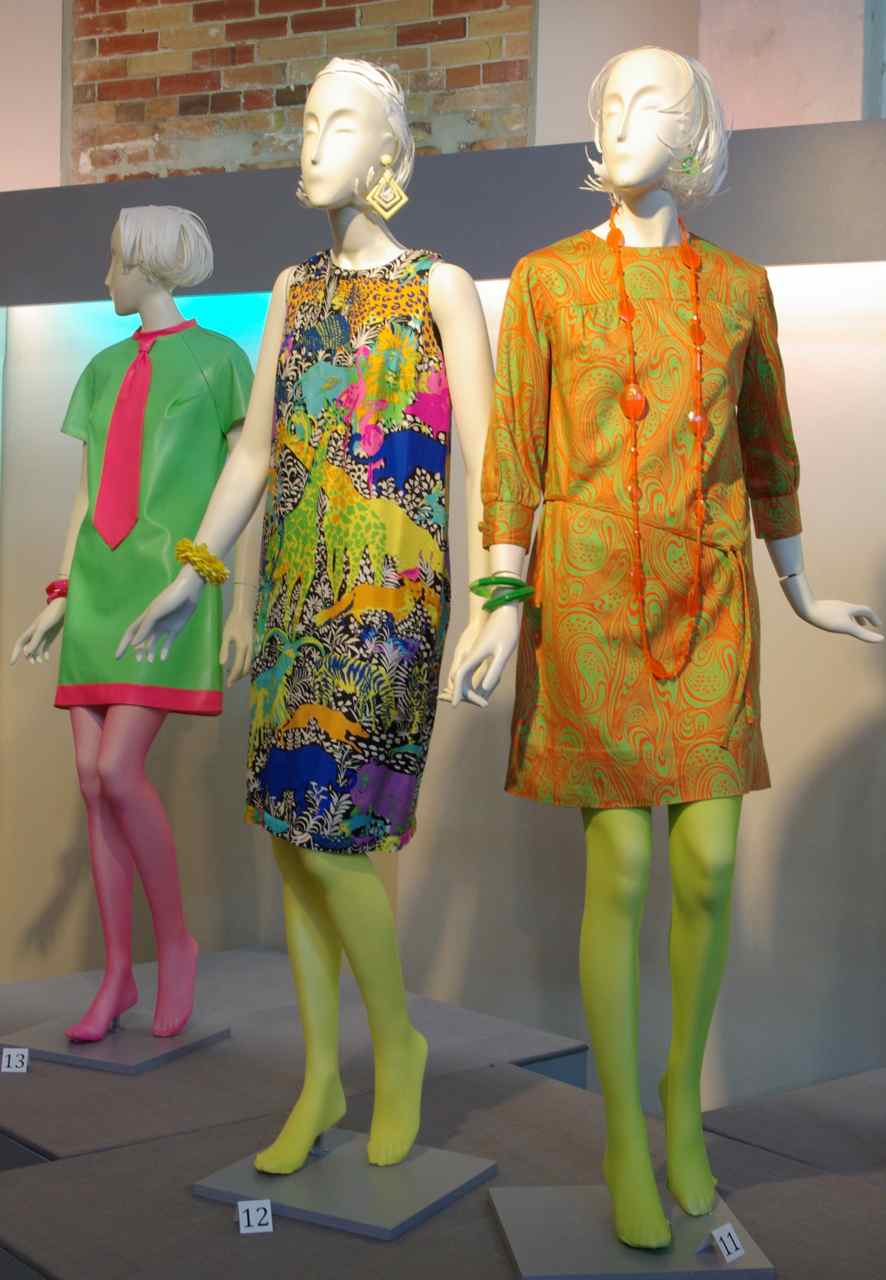
Early in the decade, fashion was under the influence of Internationalism, a global style of modernism where fashion interpreted the ‘Less is more’ modernism mantra through garments of pure line with spare ornament. However, this didn’t mean plain and boring. Textiles featured texture, and the art scene was at a peak of creativity. By mid decade Minimalist and Abstract art styles were augmented by Pop, Op and Psychedelic movements that found their way into fashion prints.

IMGP4282

Boutique vinyl dress and psychedelic dresses by Ken Scott and Dynasty

Futurism and nostalgia both fueled fashion as some designers looked to new materials like paper, metal, and plastic for space age inspired styles while others looked inside Grandma’s trunk for Victorian coats and Jazz-Age heirloom dresses for ideas.

Left to right: pink silk chiffon print dress, unlabelled, spring 1968; sequined green silk dress by Oscar de la Renta for Jane Derby, c. 1968; Yellow silk backless dress by Heinz Riva, Rome, c. 1966; gold and silver lame evening gown and coat by Richard Tam for Sara Fredericks, spring 1968.

Mid 1960s evening wear including Oscar de la Renta for Jane Derby; Heinz Riva, Rome; and Richard Tam for Sara Fredericks.

The 1960s were all about change, largely caused by the shift in demographics that began with the first wave of post-war baby boom children coming of age early in the decade. As this generation grew in size, young people realized they had the power to reinvent the world around them. The rules of fashion broke down as young men and women chose comfortable, informal styles.

London became the centre of a boutique revolution created by the young independent shopkeeper-designers who ‘geared up’the mod generation and launched the ‘British invasion’ of fashion that accompanied the music revolution that swept around the world. As the younger generation became more restless, fashion became more radical, resulting in anti-establishment styles typified by American Hippies on the West Coast.

Doing Your Own Thing - Hippy and other attire of the late 1960s including a photo print pantsuit of the crowd at Woodstock, c. 1970

Hippy and other attire including a photo print pantsuit of the crowd at Woodstock.

It could be said that the 1960s saw the death of fashion and the rise of style. By 1970, everything had changed from the way things had been just ten years before – the styles, markets, materials, demographics, inspirations and definitions of fashion were all new. ‘Take it from me,’ said designer Betsey Johnson in a 2003 article ‘There will never be another chunk of time of such pure genius… it was the first and last time that fashion really, really changed.’

The exhibition closes March 16, 2014.

10 Apr 22:15

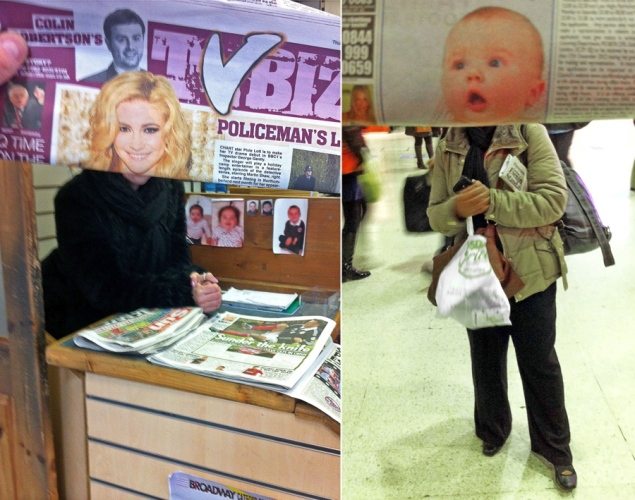
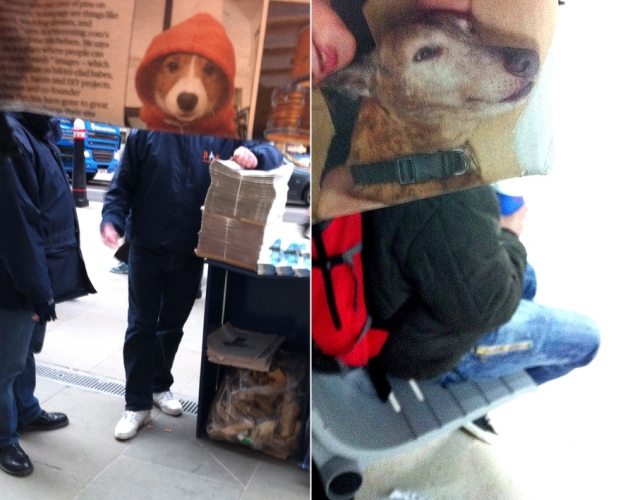
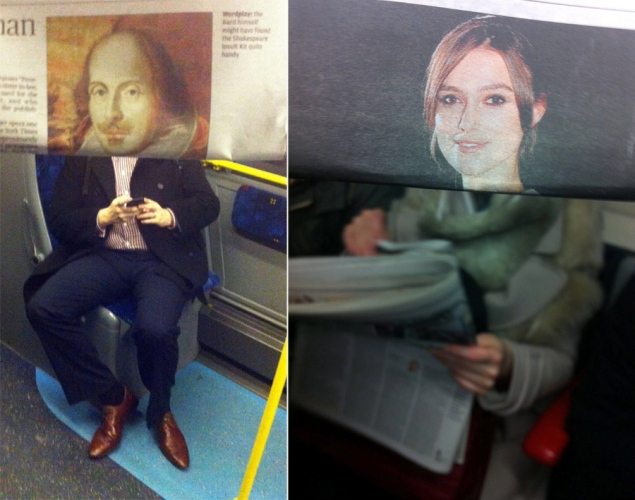
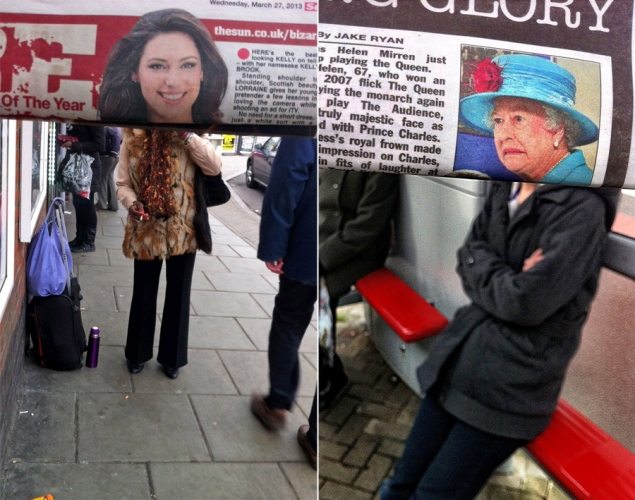
Commuter Takes Street Photos of Others Involving Newspapers and Forced Perspective

by Chris Gampat
Colin Carmichael

this is awesome...

commuter-newspaper-photobombs (1)

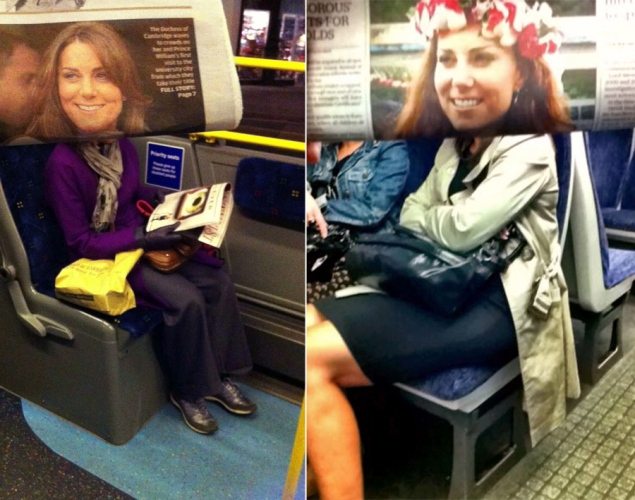
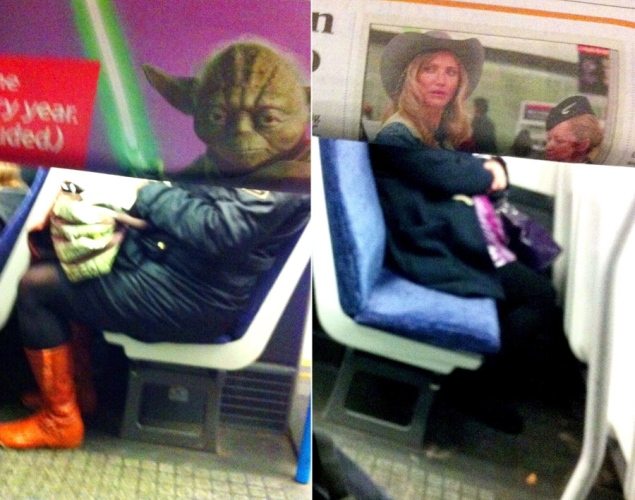
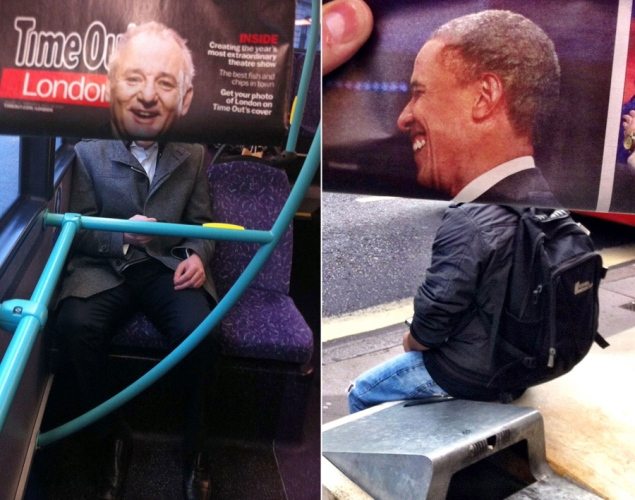
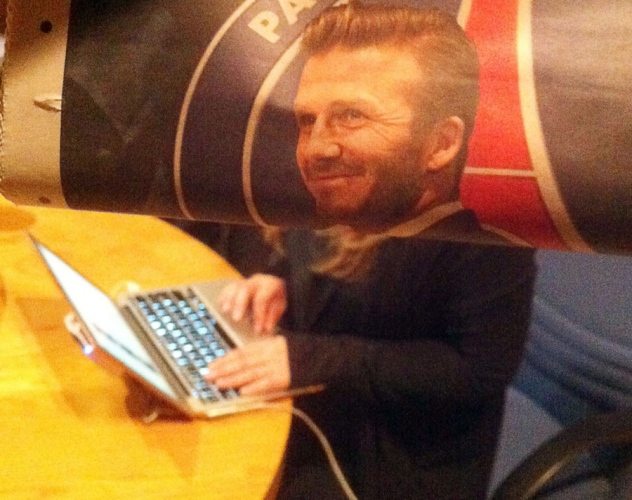
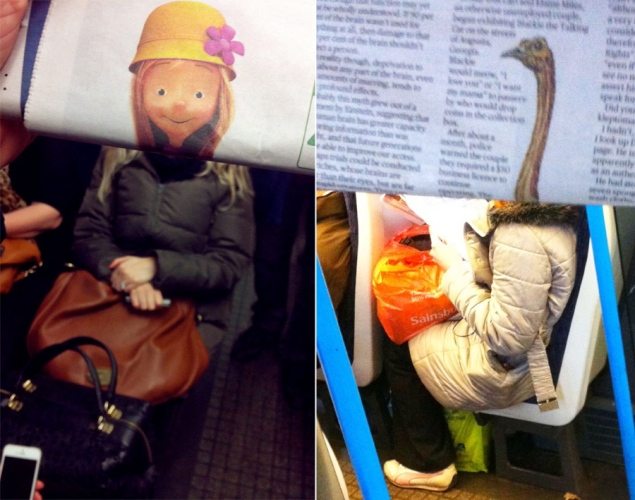
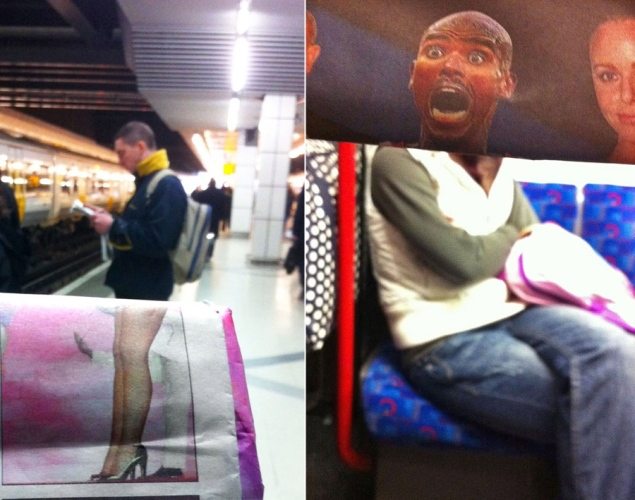
Think your morning commute sucks? Well, many people do. One anonymous person decided to do the clever thing of combining street photography with something Banksy might do. According to the NY Daily News, he perfectly folds newspapers and then strategically places them using forced perspective. Then he takes a photo. The Daily News isn’t stating who shot these images, but they’re quite hilarious. Some of them have Yoda, some have the Queen of England and more. Many other photographers have done similar projects–or just taken bits and pieces of ads to create a collage of some sort.

Take a look at some of them after the jump.


commuter-newspaper-photobombs (2) commuter-newspaper-photobombs (3) commuter-newspaper-photobombs (4) commuter-newspaper-photobombs (5) commuter-newspaper-photobombs (6) commuter-newspaper-photobombs (7) commuter-newspaper-photobombs (8) commuter-newspaper-photobombs (9) commuter-newspaper-photobombs (10) commuter-newspaper-photobombs


Please Support The Phoblographer

We love to bring you guys the latest and greatest news and gear related stuff. However, we can’t keep doing that unless we have your continued support. If you would like to purchase any of the items mentioned, please do so by clicking our links first and then purchasing the items as we then get a small portion of the sale to help run the website.

Also, please follow us on FacebookFlickr and Twitter.

10 Apr 21:25

MAPPING OF PARLIAMENT

by Dave
Colin Carmichael

that's pretty cool...

Had the chance today to follow the Google street view team as they map Parliament Hill.

House of Commons

Prime Minister’s office

Library of Parliament

The Senate chamber

01 Apr 21:46

Is This an Orphaned Suit Jacket? I recently received a couple of...

by derekguypto
Colin Carmichael

I'm not at all sure I agree with this. With so many exceptions noted in the article itself, the point is nearly moot. I often wear "orphaned" jackets even when I *do* have the matching pants, just for some contrast. Bottom line: if it looks great, wear it, and don't get caught up in how it was *supposed* to be worn.


Is This an Orphaned Suit Jacket?

I recently received a couple of emails from readers asking if I thought something they were looking at on eBay was an orphaned suit jacket. An orphaned suit jacket is a jacket that used to belong to a suit, but for some reason – whether because they were worn through, badly damaged, or just plain lost – the matching trousers are no longer available. It’s not uncommon to come across these when you’re looking at second hand clothing, and you’ll want to avoid purchasing them. Wearing an orphaned jacket can make you look like you spilled something on your suit trousers and had to change out of them. It’s not a good look.  

To be sure, there are no hard and fast rules, and some suit jackets can be worn as sport coats. Those made from cotton, linen, tweed, or corduroy are usually fine. There are also some wools that can be successfully used for both business suits and casual sport coats. However, for the purposes of this post, we’ll assume the simplistic view that suit jackets should generally never be worn alone, as most of the ones you’re likely to encounter through second hand clothing are of a certain type that shouldn’t be.

So how can you tell what’s what?

Generally speaking, the rougher, fluffier, more visible the weave, the more likely you’re looking at a sport coat. Conversely, the finer and flatter the weave, the more likely you’re looking at a suit jacket. This is especially true if it feels very smooth, silky, and lightweight, and you can see diagonal lines on the surface of the fabric (like you can with denim). If the fabric has a bit of shine to it when you bend and move it, it’s almost certainly something that was designated for a suit.

Certain patterns can also be clues. Pinstripes and chalkstripes always indicate something was meant to be worn as a suit. Birdseye, nailhead, pinhead, and very fine herringbone - the kind that you only notice is herringbone when you inspect it up close, but looks solid from a foot or two away - also tend to be reserved for suits, though there are exceptions. If it’s a chunky, rough weave such as tweed, something like a birdseye would be fine. 

Similarly, pay attention to scale of patterns. Though suits can come in big, bold patterns, and sport coats in quiet and subtle ones, the more successful sport coats tend to have larger scale designs. It’s a way of announcing to the world: this isn’t something to be worn to a business meeting. Thus, if you’re in between whether or not a jacket can be worn by itself – if the pattern is very small or faint, you’re probably safer off passing.

Lastly, if a jacket has buttons made from metal or mother of pearl, or are covered in leather, you’re likely looking at a sport coat. Horn, on the other hand, can go either way, but one thing you can do is count the number of buttons on the sleeve cuff. If there are less than four, the chances of it being a sport coat go up.

In the end, however, you just have to use your own best judgment. Remember: the point is not to say whether something is definitively orphaned or not, the point is to not look like you’re accidentally wearing a suit jacket without the matching trousers. In the end, just keep that in mind and go with your gut. 

(Photo via Capnwes)

01 Apr 06:49

Sympathy or Empathy for the Devil?

by Suzanne
My lovely and talented friend Robin (of Shameless Fashion) asked if I could discuss the difference between the words sympathy and empathy. They are both nouns and are often used interchangeably but they do, in fact, have different meanings and usage. Sympathy is defined by the Oxford dictionary as “feelings of pity and sorrow for [...]
26 Mar 22:00

How I shot and edited it: The Second Severn Crossing

by Elliot Hook

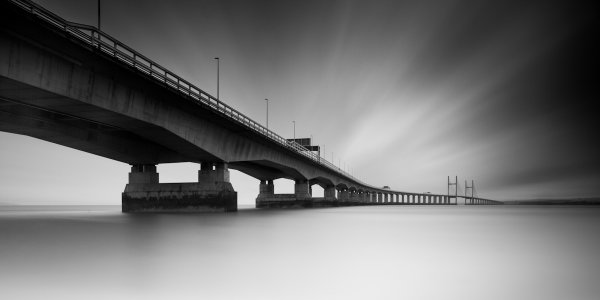
Second Severn Crossing - how I shot and edited

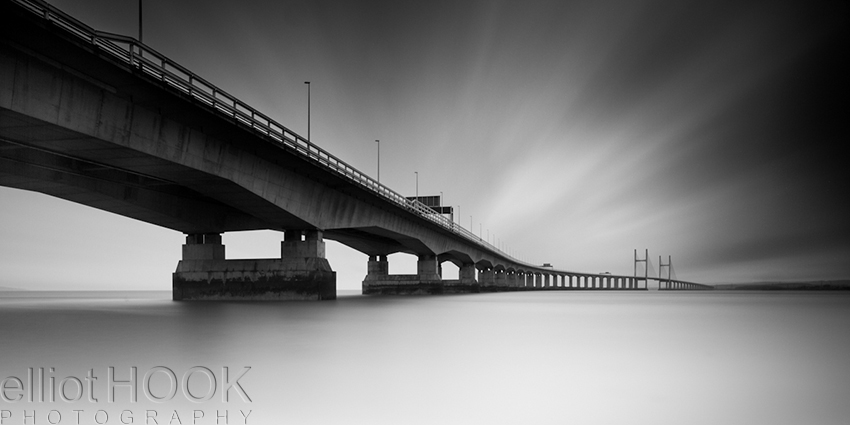
The image above is a long exposure taken of the Second Severn Crossing, a motorway bridge that crosses the River Severn, just outside Bristol, England.  I have been asked a number of times how this image was processed, what software/plug-ins were used, so I thought it would be a useful exercise to explain it here.

Shooting the image

I had been thinking about this shot for a while and I knew that there were a couple of important elements that I needed to consider when trying to capture the image:

  • I was really keen to get low, relative to the bridge, and shoot a wide-aspect image across the river.   Fortunately, there is a footpath that runs along the river bank, under the bridge, that is easily accessible by car (Google maps link).
  • I wanted to capture a long exposure so I could contrast the movement of the clouds against the static structure of the bridge.  Therefore, there was no special planning in terms of weather or time of day, as I was happy with a cloudy sky in the middle of the day, as long as there was a strong wind – fortunately, over the 2012 Christmas period, the UK offered those conditions in abundance.
  • I wanted to fill the frame with silky-smooth water, so as the River Severn is a tidal river with one of the largest tidal ranges in the world, I ensured that I would arrive at the location around high tide.

The image, as captured straight out of the camera, is shown below:
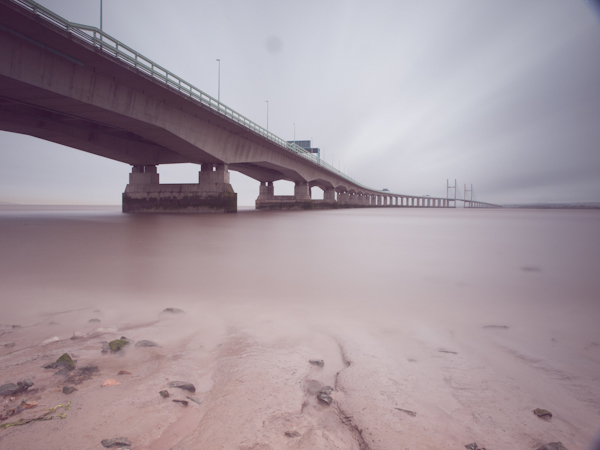
How I shot and edited - second severn crossing - image 1

The image was taken at ISO100, 12 mm, f/10, with a 5 minute exposure (299 seconds to be precise).  I used a 2-stop graduated neutral density filter to evenly match the exposure of the sky with the river, and used a 10-stop neutral density filter to produce the long exposure.   As the highlights of the scene were easily contained, I over-exposed the image to ensure that I captured the maximum amount of movement in the clouds, knowing I would be able to correct the exposure/contrast during post processing.

Processing the image

The processing of this image was performed in Adobe Lightroom 4.

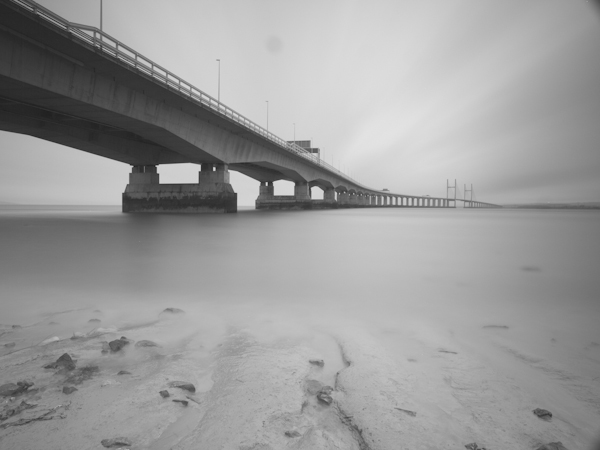
The first step was to convert the image to black and white using the B&W selector in the colour panel (on the development pane).
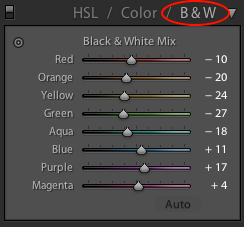
lightroom BandW selection

How I shot and edited - second severn crossing - image2

The initial image after a straight B&W conversion, lacking in contrast

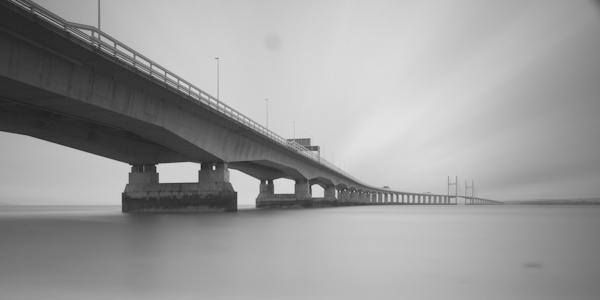
Given the significant amount of foreground, I decided to crop the image at this point, using a 2:1 aspect ratio, to give the wide-aspect image I was after and to stop the foreground being a distraction during the rest of the processing.
How I shot and edited - second severn crossing - image3

Cropped to a 2:1 aspect ratio

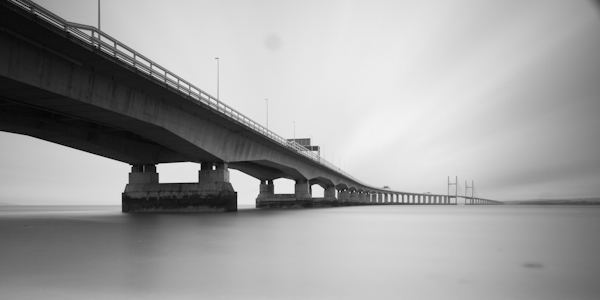
I then needed to address the lack of contrast and over-exposure of the initial image.  Therefore, I set the white (+33) and black (-40) points and adjusted the contrast (+40) to set the overall exposure for the image.
How I shot and edited - second severn crossing - image3-1

Initial exposure adjustments made

I then applied a graduated filter to the sky (shown below) to adjust the exposure (-1.74), contrast (+100), clarity (+100) and highlights (+12).  I wouldn’t usually increase either the contrast or the clarity to +100, let alone both, but in this instance doing so acts to bring out a full range of tones within they sky and so emphasise the movement captured in the clouds (the increase in contrast/clarity is also a very good way of highlighting any dust spots present in an image!).
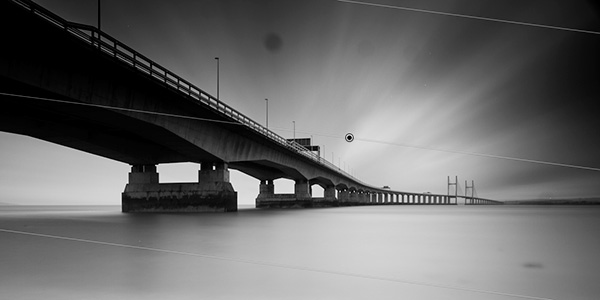
How I shot and edited - second severn crossing - image4

Showing the graduated filter being applied to give impact to the cloud movement in the sky

Next, I applied a graduated filter, from the bottom of the frame, to the water (shown below).  I used it to increase the exposure (+0.80) and reduce clarity (-100) in order to brighten the water and reduce the local contrast to give that bright, smooth water effect that can be key to an image such as this.
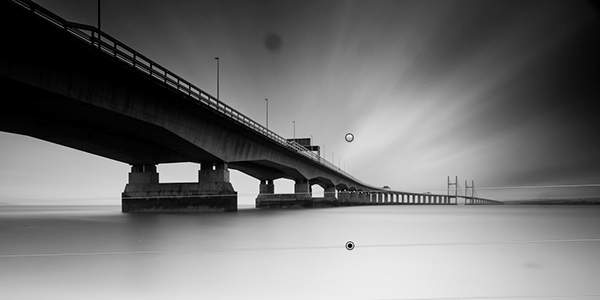
How I shot and edited - second severn crossing - image5

Showing the graduated filter being applied to the lower section of the image to smooth out the water

When applying the graduated filter to the sky, it also acted on the bridge in the top left corner of the frame, making it overly dark, losing detail.  Therefore, I used the adjustment brush to paint a mask over the affected portion of the bridge, using a low flow, in order to be able to build up the desired effect gradually.
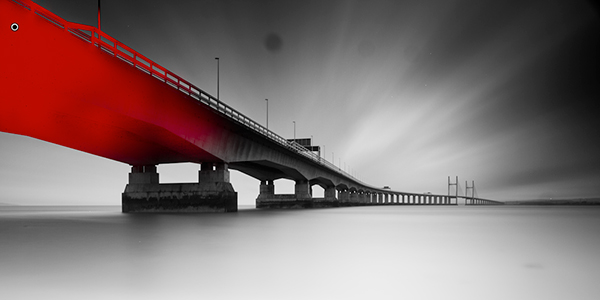
How I shot and edited - second severn crossing - image6

The mask drawn with the adjustment brush is shown in red

To the adjustment mask, I applied an increase in the exposure (+1.08) and shadows (+18) to bring out some of the detail in the bridge that was lost after applying the graduated filter over the sky.
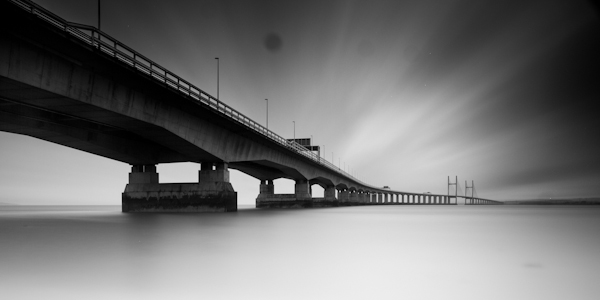
How I shot and edited - second severn crossing - image7

Nitce the extra detail now visible in the upper left portion of the bridge after application of the adjustment mask

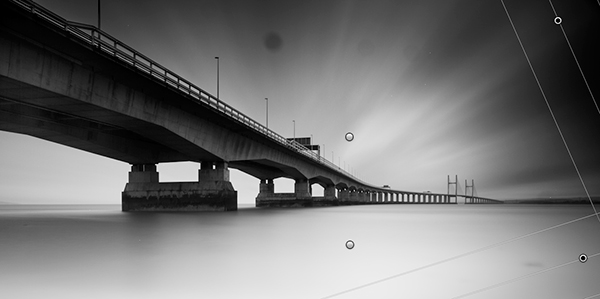
I then applied a graduated filter to each corner on the right hand side of the image, shown below.  The top graduated filter was required to subtly blend a vignette caused by me stacking the 10-stop filter and the ND filter holder.  The bottom graduated filter was required to tone down the water at the edge of the frame.  The exposure was reduced in both instances.
How I shot and edited - second severn crossing - image8

The two final graduated filters shown merged into the same image here)

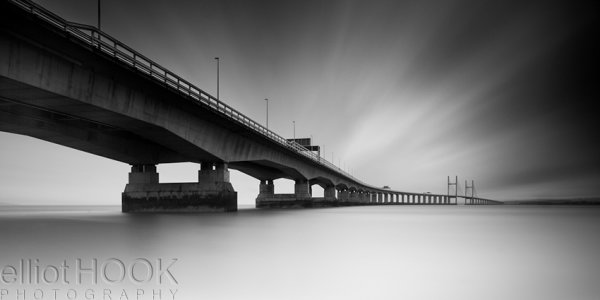
The final edit that needed to be made to the image was to remove all of the dust spots (you’ll be glad to know I’ve since had my sensor cleaned) and hot pixels (the bright white pixels that result from the extreme exposure time) to give the final image:
How I shot and edited - the second severn crossing - final image

The final image (click to enlarge)

So there you go, using a few relatively simple edits, it was possible to produce this high-contrast black and white long exposure without the need for any additional plug-ins or software packages outside of Lightroom 4.  The initial image may have lacked impact and that can often be the case with long exposure shots, however by shooting in raw, you can exploit the captured detail to create the image you had envisioned.

If you would like some tips to help you take long exposure images, such as the one above, please check out this earlier post.


Post originally from: Digital Photography Tips.

Check out our more Photography Tips at Photography Tips for Beginners, Portrait Photography Tips and Wedding Photography Tips.

How I shot and edited it: The Second Severn Crossing

26 Mar 20:52

Murder Rate Down, Fear Up: WHY?

by lskenazy

Readers — Below is an excerpt from a 2011 interview with University of Toronto criminologist Scot Wortley (just sent to me), whom I now consider a genius. He is so clear and smart about why, despite Canada’s homicide rate hitting a 44-year low, most people feel LESS safe, a discrepancy that daily constantly confounds me. The interviewer is Jenny Hall:  

Why does it feel like it’s less safe than ever out there?

This is one of the interesting things that we as criminologists are often asked to explain. We just recently did a survey in Toronto. We asked “do you think crime has increased or decreased in the last 10 years? The vast majority of Toronto residents—in the 80 to 90 per cent range—believe that crime is much worse now than it was 10 years ago.

There are probably a number of factors that contribute to that perception, but I believe it’s primarily the impact of the media. Compared to 20 or 30 years ago, coverage of crime is a much larger proportion of all news coverage.

We live in the age of the remote control, when people can change the channel quickly when a news program loses their interest. If you do crime stories, that will capture the audience. If your news is dominated with political, economic or human interest stories, you’re going to lose viewership.

This means we hear about the crimes that do take place in much more detail. We receive much more sensationalistic coverage. We receive the gory details.

We did a study of newspaper coverage a few years ago and found that there was a new homicide reported every single day in the Toronto newspaper. That was interesting because that year there were only 68 homicides in Toronto. So how can a new one appear every day?

The answer is that if there wasn’t a local homicide to report, they went outside the city. We found that 40 per cent of the homicides reported were American. This gives the impression to someone who is getting all of their information about crime from the newspaper, or from the TV news, that crime is everywhere.

Are there other factors contributing to this perception?

I also think there are a couple of players that benefit a great deal from fear of crime. The private security industry is a multi-billion dollar industry in North America. They want us to feel insecure because then we’re going to spend more money securing our homes and vehicles.

Law enforcement also benefits from fear of crime. We’ve seen police budgets and budgets for the public safety agenda increase dramatically over the last 20 years in this city and in other cities. I find it interesting that the Toronto Police Service remains largely silent in commenting on the drop in the crime rate. It’s interesting that when crime appears to be going up—when we have a rash of shootings or gang-related activity—the police are front and centre assuring the public that they are going to do all they can to fight the scourge of crime. But they’re very reluctant to deliver good news. They’re very reluctant to come out and say, “You’re safe on the streets, the crime rate is down.” I wonder if that reluctance is somehow linked to a concern that if the public becomes complacent about crime, if the public argues that their money should be spent elsewhere, that their economic power would be eroded.

Crime has also become a very prevalent issue in modern politics. If you followed the last federal election, you saw the Conservative government champion themselves as the promoters of public safety and as the party that was going to bring criminals to justice. When that kind of rhetoric is so prevalent among our community leaders, it does have an impact on public perception. [MORE HERE!]

Boogeyman crimes are up 179% in the last 10 years.

26 Mar 20:31

Cystic Fibrosis Looking Good

by Armin

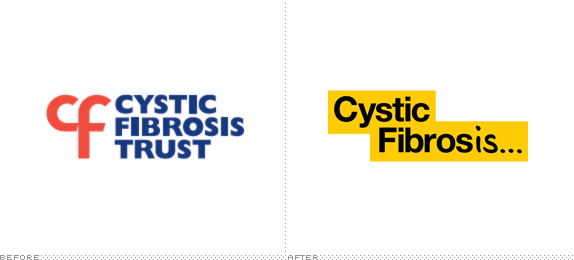
Cystic Fibrosis Trust Logo, Before and After

Established in 1964, the Cystic Fibrosis Trust supports "excellence in research and clinical care, as well as providing practical support and advice to people with Cystic Fibrosis and their families," and is the only UK-wide charity focusing solely on cystic fibrosis (CF). The organization funds research, sets standards of CF care, and provides information and advice to people with CF and their families. But the main challenge with CF remains: explaining what it is and raising awareness. "Cystic fibrosis," explains the Trust "is chronically misunderstood, kills thousands worldwide and is carried unknowingly in the genes of millions. It's often invisible to the naked eye yet destroys lives, stopping them short, inflicting hardship and distress on patients, their families and carers. Cystic fibrosis directly affects around 10,000 people in the UK." Today, the Cystic Fibrosis Trust has launched a new identity-slash-campaign designed by London-based johnson banks.

Cystic Fibrosis Trust Logo and Identity

Sample of old look. Not designed by johnson banks.

We discovered that supporters of the charity feel that the general awareness and understanding of cystic fibrosis among the general public is very low. People aren't clear what cystic fibrosis is or does, how they can or can't catch it and what it means on a day-to-day basis.
— johnson banks project description

Cystic Fibrosis Trust Logo and Identity

As the research stage progressed, we kept asking, but 'what is it, exactly?' and received a multitude of different responses. Mid-way through the research stage we had a breakthrough when we noticed the 'is' at the end of 'fibrosis'. So we suggested the charity should activate the 'is' in their name with a series of statements, effectively forcing it to always explain what it is, does, and why they are here.
— johnson banks project description

Cystic Fibrosis Trust Logo and Identity

Cystic Fibrosis Trust Logo and Identity

Cystic Fibrosis Trust Logo and Identity

Custom handwritten font by Nick Cooke.

Some are simple: 'cystic fibrosis why we're here', some uplifting 'cystic fibrosis a battle we must win', some hard-hitting - 'cystic fibrosis a life sentence'. The Trust now has at least 40 sentences they can use, and we are adding to them continually. Like many charities they are short of funds and can't afford big marketing campaigns, so this effectively makes everything they do part of one big 'is' campaign.
— johnson banks project description

Cystic Fibrosis Trust Logo and Identity

Cystic Fibrosis Trust Logo and Identity

Cystic Fibrosis Trust Logo and Identity

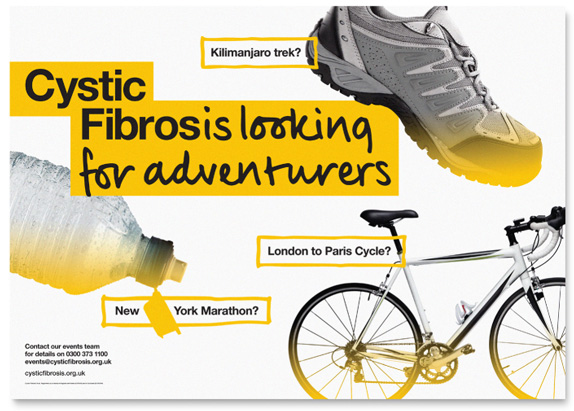
We retained one of their previous colours, yellow, but made it warmer and then the linking colour throughout the work. It even gently graduates up from the base of some photos - hinting at the presence of cystic fibrosis without actually showing or saying it.
— johnson banks project description

Cystic Fibrosis Trust Logo and Identity

Cystic Fibrosis Trust Logo and Identity

Cystic Fibrosis Trust Logo and Identity

Cystic Fibrosis Trust Logo and Identity

Brand launch video "which attempts to demonstrate why the Cystic Fibrosis Trust exists and the charity's role as an organisation." Animation by Sebas and Clim.

Nice to see you again all the way down here. It almost goes without saying but this is truly smart and fantastic work — on its own and even more so in contrast with the old look and feel. All of a sudden, the Cystic Fibrosis Trust brand is a walking, talking educational tool that is as simple as it gets, explaining in the own terms and words of people affected by the disease why they should pay attention. Almost annoyingly simple the logo takes a few tired clichés — Helvetica, highlighter bars, and handwritten elements — to serve as the foundation for a striking identity that is both serious and playful; with the wrong execution these same elements could have turned out cloying and childish. Not much left to say other than just how awesome is the animation?

Vote
Don't forget to cast your vote about this post online

Many thanks to our ADVx3 Partners