
The Federal Office for the Protection of the Constitution (BfV -- Germany's domestic spy agency) coveted access to Xkeyscore, the NSA's flagship tool for searching and analyzing mass-surveillance data, so they secretly, illegally traded access to Germans' data with the NSA for it.
Read the rest
Markku.lempinen
Shared posts
28 Aug 07:18

Germany's spy agency gave the NSA the private data of German citizens in exchange for Xkeyscore access
by Cory Doctorow
Markku.lempinen likes this
28 Aug 06:55
* Windows: it's always the next version *
by donotreply@osnews.com (Thom Holwerda)
Markku.lempinenIt would be extremely funny if it wasn't so awful :D
This hit the news yesterday.
Microsoft released Windows 10 four weeks ago today, and now the company is providing a fresh update on its upgrade figures. 14 million machines had been upgraded to Windows 10 within 24 hours of the operating system release last month, and that figure has now risen to more than 75 million in just four weeks.
As somebody who uses Windows every day, and who upgraded to Windows 10 a few weeks before it was released, let me make a statement about all the positive Windows 10 reviews that not everyone is going to like. There are only two reasons Windows 10 is getting positive reviews. First, because it's free. This one's a given. Second, and more importantly: Windows 10 is getting positive reviews because none of the reviewers have forced themselves to use nothing but Metro applications.
Here's the cold and harsh truth as I see it: despite all the promises, Metro applications are still complete and utter garbage. Let me explain why.
Read more on this exclusive OSNews article...
Markku.lempinen likes this
28 Aug 06:38


Big Pharma Released!
by cliffski
Markku.lempinenI've been interested in this one but I've lacked the time to get it. Maybe now :)
So its that day! The lab management/strategy game Big Pharma, developed by Twice Circled and published by Positech Games is officially released. woohoo! Its now playable in English, German and French on Windows/OSX and Linux. Plus you can now grab it from Steam as well as the Humble Store as well as GoG or direct from us. Hurrah!
Games take a long time to make, and a lot of work, blood, sweat, tears, and debugging. The first time the phrase ‘Big Pharma’ was used between us was on 21st February 2014, and we were going back on forth on ideas and names before then, so its at least eighteen months in development. That may not sound long by the standards of Duke Nukem et al, but it is a long time to stay focused on one game as an indie. Hopefully its going to pay off :D
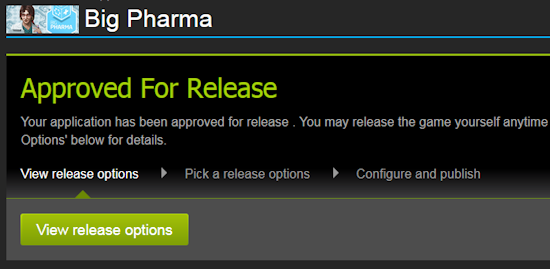
I’ve released a lot of games, I’ve been doing this for ages, and am in a lucky position that if a game doesn’t do well, I can shake it off, at least theoretically. However, emotionally, you always get wrapped up in anything you work on. Although this is Tims design & code, I also feel like I’ve nailed my name to it quite brightly and obviously. Publishing a game is a bit like getting up on stage in front of 10,000 or 100,000 people and shouting ‘I think this is awesome! whose with me?’, and then waiting to see who cheers. Kinda scary.
Its even more scary these days because most games sales figures are ‘more-or-less’ public on steamspy, and you can see how well a game is doing. Other stores are available, and there is a margin for error…but even so…

One of the scariest things about shipping a game as a publisher is that you have basically placed a bet of somewhere north of a hundred thousand dollars on someone you met 18 months ago…and then on release day, with no guarantee that it was a good bet, you have to double-down on that bet and spend MORE money letting people know about the game, with ads etc. The REALLY scary thing about being an independently owned publisher is that this isn’t shareholders money, its MINE. If I fuck up, I could not only look stupid, but have just lost a bucketful of money as well. This is something that I think British people take to heart more than Americans. In the USA failure is ‘a step on the ladder to success’. in the UK its just failure.
Thankfully Big Pharma is a fucking excellent game that I am myself totally addicted to. I suspect it will do just fine :D.
Markku.lempinen likes this
26 Aug 06:39

Refusing to bow to airport liquids ban, woman drinks bottle of cognac
by Jason Weisberger
Markku.lempinenLet's see when someone tells the security theater folks at IATA that ~65% of a human's body is water... confiscate that in the name of freedom and war against terrorism.
Even in freedom's cradle, China, airport security hates a good time. They don't tell us how large the bottle was, but the story is good.
Read the rest
Markku.lempinen, Joel Thrasymachus Dahl likes this
26 Aug 06:34
3M's delightful Rube Goldberg machine
by Mark Frauenfelder
3M showcased its products in a clever way by creating a chain reaction machine. The Post-It Note cascade at the end is wonderful.

Markku.lempinen, katygo likes this
26 Aug 06:29
How Linux was born, as told by Linus Torvalds himself
by Glyn Moody
One of the most famous messages in all computing was posted exactly 24 years ago today, on 25 August, 1991:
Hello everybody out there using minix -
I'm doing a (free) operating system (just a hobby, won't be big and
professional like gnu) for 386(486) AT clones. This has been brewing
since april, and is starting to get ready.

Many people have read that post by Linus Torvalds in the comp.os.minix newsgroup on Usenet, or at least heard about it. Many more are aware of how that (free) operating system ended up taking over vast swathes of the computing world, and becoming both "big" and "professional." But what about before that famous moment? What were the key events that led to Linus creating that first public release of Linux?
To find out, in December 1996, I went to Finland to interview Linus in his flat in Helsinki. I used some of his replies in a feature that appeared in Wired magazine in August 1997; more of them appeared in my book, Rebel Code: Inside Linux and the open source revolution, published in 2001. What follows is a more detailed explanation of how Linux came into being, as told in Linus' own words.
Markku.lempinen likes this
24 Aug 06:44


Torrent Trackers Ban Windows 10 Over Privacy Concerns
by Ernesto
Markku.lempinenI've never heard of iTS before but I like their approach to wIn10 :p
 Since the release of Windows 10 last month many media reports have focused on various privacy intrusions.
The WiFi password sharing feature, for example, or the extensive sharing of personal data and information back to Microsoft’s servers. The list goes on and on.
While we’re the last ones to defend these policies, it is worth pointing out that many other large tech companies have similar privacy violating policies. Reading rants about Windows 10 privacy on Facebook is particularly ironic.
This week things took a turn for the worse. Slowly but steadily reports started pouring in that Windows 10 has a built-in piracy kill switch. If we were to believe some of the reports, Microsoft would nuke all torrents downloaded from The Pirate Bay.
The truth is nowhere near as dystopian though. The controversy originates from a single line in Microsoft’s Service Agreement which allows the company to download software updates and configuration changes that may prevent people from “playing counterfeit games.”
This change isn’t limited to Windows 10 but covers many services. Also, there is no indication that this will ever be used to target third-party games, which is highly unlikely.
Still, the recent privacy concerns have some torrent tracker staffers worried. During the week TF received reports informing us that several private trackers have banned Windows 10, or are considering doing so.
The staffers at iTS explain that Windows 10 is off-limits now because of the extensive amount of data it shares. This includes connections to MarkMonitor, the brand protection company which is also involved in the U.S. Copyright Alert System.
“Unfortunately Microsoft decided to revoke any kind of data protection and submit whatever they can gather to not only themselves but also others. One of those is one of the largest anti-piracy company called MarkMonitor,” iTS staff note.
“Amongst other things Windows 10 sends the contents of your local disks directly to one of their servers. Obviously this goes way too far and is a serious threat to sites like ours which is why we had to take measures,” they add.
While this may sound scary, Microsoft has been working with MarkMonitor for years already. Among other things, the company helps to keep scammers at bay.
There is no evidence that any piracy related info is being shared. Still, the connection is raising red flags with other tracker operators as well. More trackers reportedly ban Windows 10 and others including BB and FSC are consider to follow suit.
“We have also found [Windows 10] will be gathering information on users’ P2P use to be shared with anti piracy group,” BB staff writes to its users.
“What’s particularly nasty is that apparently it sends the results of local(!!) searches to a well known anti piracy company directly so as soon as you have one known p2p or scene release on your local disk … BAM!”
The same sentiment is shared at FSC where staff also informed users about the threat.
“As we all know, Microsoft recently released Windows 10. You as a member should know, that we as a site are thinking about banning the OS from FSC. That would mean you cannot use the site with the OS installed,” FSC staff writes.
While a paranoid mindset is definitely not a bad thing for people in the business of managing a torrent community, banning an operating system over privacy concerns is a bit much for most. Especially since many of the same issues also affect earlier versions of Windows.
Luckily, the most invasive privacy concerns can be dealt with by configuring Windows properly. Or any other operating system, application or social network for that matter.
Instead of banning something outright, it may be a good idea to inform the public on specific dangers and educate them how they can be alleviated.
Source: TorrentFreak, for the latest info on copyright, file-sharing, torrent sites and ANONYMOUS VPN services.
Markku.lempinen likes this
21 Aug 12:59
 Madness, reports Wired. “we may collect information stored on your mobile device, such as contacts, photos, or media files … we may also collect information about your location based on, for example, your phone’s GPS location."
Spotify's new privacy policy lets it collect everything on your phone
by Rob Beschizza
Markku.lempinenI almost felt like subscribing so I could terminate my subscription with some very angry feedback. But I guess I'll survive.
Madness, reports Wired. “we may collect information stored on your mobile device, such as contacts, photos, or media files … we may also collect information about your location based on, for example, your phone’s GPS location."
Markku.lempinen likes this
21 Aug 07:23


Father builds glowing life-sized Minecraft block for son's birthday
by David Pescovitz
Nathan Pryor (HaHaBird) made this fantastic life-sized illuminated Minecraft block for his son's birthday. It's lit with RGB LEDs so the color can be changed via remote control. Read the rest
Bushchime, Markku.lempinen likes this
20 Aug 06:38

Jeb Bush: the NSA isn't spying on us enough
by Cory Doctorow
Markku.lempinenAnother Bush wants to spy on his own people even more? Surprised? I'm not.
 Because "evildoers."
Read the rest
Because "evildoers."
Read the rest
20 Aug 06:37

Fantastic video of Pluto fly-by made from still images
by David Pescovitz
Astronomical artist Björn Jónsson stitched together still images captured by the New Horizons spacecraft as it flew past the dwarf planet Pluto last month. Read the rest
19 Aug 07:23

New pornoscanners are also useless, cost $160 million
by Cory Doctorow
Markku.lempinenColour me surprised.
 The new generation of millimeter-wave body scanners from the convicted war-criminals at L-3 were supposed to replace the useless, expensive backscatter radiation machines from Rapiscan with a more robust, less privacy invasive alternative.
Read the rest
The new generation of millimeter-wave body scanners from the convicted war-criminals at L-3 were supposed to replace the useless, expensive backscatter radiation machines from Rapiscan with a more robust, less privacy invasive alternative.
Read the rest
19 Aug 06:34
Windows 10 won’t run games with SecuROM DRM, says Microsoft
by Mark Walton
Markku.lempinenThis "we don't allow this DRM shit to run" may be the first positive thing I've ever read about W10.
While Windows 10 is largely good news for gamers, it turns out that those with a collection of older games laden with DRM copy protection software are going to have a hard time getting them up and running on the new OS. In an interview with Rocket Beans TV (as translated by Rock, Paper, Shotgun) at this year's Gamescom, Microsoft's Boris Schneider-Johne explained that that Windows 10 won't be able to run games that use SafeDisc and SecuROM technology.
"Everything that ran in Windows 7 should also run in Windows 10," said Johne, "There are just two silly exceptions: antivirus software, and stuff that’s deeply embedded into the system needs updating—but the developers are on it already—and then there are old games on CD-ROM that have DRM. This DRM stuff is also deeply embedded in your system, and that’s where Windows 10 says, 'Sorry, we cannot allow that, because that would be a possible loophole for computer viruses.' That’s why there are a couple of games from 2003-2008 with SecuROM, etc. that simply don’t run without a no-CD patch or some such."
This isn’t a bad thing for most people, though. While SafeDisc has hit the headlines before thanks to security issues in Windows—introducing access vulnerabilities into the OS, for example—it's SecuROM that is the most famous, and the most hated of all DRM software. Developed by Sony DADC, SecuROM took a heavy-handed approach to DRM, limiting the number of installs and activations end-users had access to, as well as requiring users to check in online to keep the game running. SecuROM even counted certain hardware changes as a change of computer, forcing another activation.
Markku.lempinen likes this
18 Aug 06:47


Woman fined for posting photo of police car illegally parked in handicap spot
by David Pescovitz
A woman in Petrer, Spain posted a photo on Facebook of a police car illegally parked in a handicap spot. She was subsequently fined almost €800 (~US$886) under the Citizens Security Law, aka the "gagging law," that prohibits "the unauthorised use of images of police officers that might jeopardise their or their family’s safety or that of protected facilities or police operations." Read the rest
18 Aug 06:45

Amazing working paper model of a V6 engine
by David Pescovitz
A fantastic working papercraft model of a V6 engine that runs on compressed air. Read the rest
Markku.lempinen, Bwescott.bw likes this
17 Aug 07:13

AT&T was the NSA's enthusiastic top surveillance partner
by Cory Doctorow
Markku.lempinenShould I act surprised?

All the phone companies helped the NSA commit mass surveillance, but the agency singled out Ma Bell as "highly collaborative" with an "extreme willingness to help."
Read the rest
17 Aug 07:10
HOWTO build an Endor Speeder Bike/rocking horse
by Cory Doctorow
Markku.lempinenHmmmm... We may have some space for a rocking horse somewhere...
HOWTO build an Endor Speeder Bike/rocking horse

AKA, how to win parenting forever. Read the rest
Roumen.ganeff, Markku.lempinen and one other like this
17 Aug 07:03

Even when you turn on Win 10's "privacy" flags, it still spies on you
by Cory Doctorow
Markku.lempinenBuahaha

By default, Windows listens to you, gathers your keystrokes, watches your browser history and purchases and sends them to Microsoft and its partners -- but even if you turn off all the tickboxes in the hellishly complex privacy dashboard it still gathers and sprays your data.
Read the rest
Markku.lempinen, Sophianotloren and 2 others like this
17 Aug 06:45
Politicians can only view secret trade pact in special viewing room
by Glyn Moody
Markku.lempinenThe TTIP "openness" is just as "open" as Microsof'ts braindead OOXML format.
The fact that most people have still never heard of the world's biggest trade deal—the Transatlantic Trade and Investment Partnership (TTIP) between the US and Europe—even after two years of negotiations, might suggest that whatever its problems, maintaining secrecy is not one of them. But the European Commission begs to differ: since the end of July, instead of sending up-to-the-minute summaries of its talks with the US to EU politicians, the Commission now requires that national politicians travel all the way to Brussels to a special reading room where the texts can be viewed under tight security. MEPs must also use this same system.
The EC made this rather drastic move in response to confidential TTIP documents appearing on the non-profit investigative news site Correct!v. News of this secret reading room was revealed in a confidential report of an EU meeting that took place on 24 July... which rather embarrassingly was then also leaked to the same site.
The new system is pretty insulting for top politicians, who are not used to being treated likely naughty schoolchildren that require constant adult supervision. Furthermore, considering the wide-ranging implications of TTIP, you'd think that the EC would want to make it easier for European politicians to read the latest documents, so that they know what is being negotiated in their name.
Markku.lempinen likes this
14 Aug 04:03
One Problem With Open Game Development
by Pentadact
In general I really like open game development – talking and writing publicly about what I’m working on – but I do have one problem. The time when I want to share what I’ve been making is when, after an exhausting amount of work, I’ve finally created something I’m happy with. But sharing it invites critique: anyone who sees a way it could be better will generally tell you about it.
And it’s just the wrong time to hear it. I spend all the rest of my time dissatisfied – that’s how I get things done. The point when I’m actually happy with it is the light at the end of the tunnel, and sharing it is part of how I celebrate. Having it picked apart right then – even if the suggestions are fair – is crushing. I go from exhausted but happy to exhausted, miserable, and daunted. It doesn’t even help me make the thing better, because I’m too demoralised to work on it anymore.
Sometimes, of course, I ask for feedback. But when I don’t, I think I’m going to just quietly disable comments. It’s not a case of “Oh god the comments”, it’s just an evasive way of saying “I’m not looking for feedback on this.” I stay aware of any real problems by doing lots of playtesting, and if it’s something that doesn’t bother actual players, it’s not worth having my enthusiasm drained over it.
Markku.lempinen likes this
13 Aug 05:54
Even when told not to, Windows 10 just can’t stop talking to Microsoft
by Peter Bright
Windows 10 uses the Internet a lot to support many of its features. The operating system also sports numerous knobs to twiddle that are supposed to disable most of these features and the potentially privacy-compromising connections that go with them.
Unfortunately for privacy advocates, these controls don't appear to be sufficient to completely prevent the operating system from going online and communicating with Microsoft's servers.
For example, even with Cortana and searching the Web from the Start menu disabled, opening Start and typing will send a request to www.bing.com to request a file called threshold.appcache which appears to contain some Cortana information, even though Cortana is disabled. The request for this file appears to contain a random machine ID that persists across reboots.
12 Aug 05:10

WATCH: scorching guitar riff with ACPAD MIDI controller prototype
by Andrea James
Markku.lempinenNeat!
ACPAD is a touch-activated MIDI controller that can be overlaid on an acoustic guitar face, allowing a range of effects and rhythms while playing. Read the rest
Markku.lempinen likes this
11 Aug 04:53

Windows 10 automatically spies on your children and sends you a dossier of their activity
by Cory Doctorow
Markku.lempinenCreepy as fuck :| I guess it's something that's considered ok in weird countries like the US and especially UK, but elsewhere... not really :|

Kirk writes, "This weekend we upgraded my 14-year-old son's laptop from Windows 8 to Windows 10. Today I got a creepy-ass email from Microsoft titled 'Weekly activity report for [my kid]', including which websites he's visited, how many hours per day he's used it, and how many minutes he used each of his favorite apps."
Read the rest
10 Aug 05:22

Massive LEGO Star Wars Trench Run diorama
by Chris
“Almost there … almost there…”
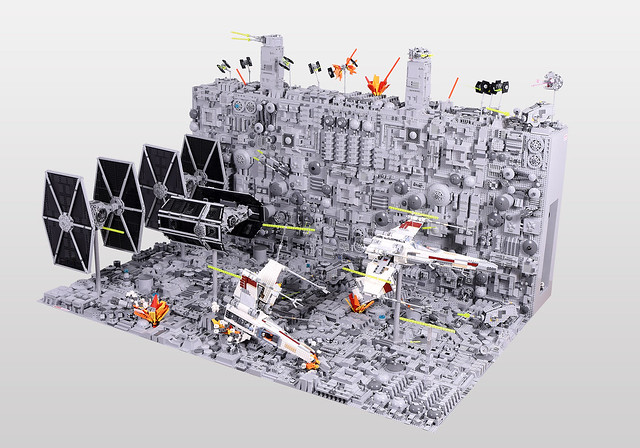
This sweet diorama of the infamous Death Star run (famously modeled after WWII dogfighting movies) has loads of detail, as we’ve come to expect from Korean professional building team OliveSeon. I almost didn’t notice the microscale dogfights going on in the background at first.
Markku.lempinen likes this
10 Aug 05:13
Microsoft wants you to pay $15 for DVD playback in Windows 10
by Sebastian Anthony
Markku.lempinenBuahaha :D
If you partake in Microsoft's free upgrade offer from Windows 7 or 8 to Windows 10, Windows Media Center will be removed without warning. In its place, a new app called Windows DVD Player has been added to the Windows Store. It costs the princely sum of £11.59, or $14.99/€14,89 if you live in the terrifyingly parched wastes outside Blighty.
Microsoft doesn't exactly hide the fact that Windows 10 forcibly deprecates Media Center, but the information isn't in the most obvious of locations either. If you visit the Windows 10 upgrade website, and then click the "Windows 10 specifications" link in the small print at the bottom of the page, there's a big list of deprecated features. Media Center is the main one, but you'll be dismayed to hear that Solitaire, Minesweeper, and Hearts have also been removed.
Now, the good news: if your computer had Media Center before the upgrade (most versions of Windows 7, or Windows 8/8.1 with Media Center), you will be credited with a free copy of Windows DVD Player. In practice, this means that most people upgrading from Windows 7 will have access to the Windows DVD Player app for free, while most Windows 8 upgraders won't. Likewise, if you bought a full Windows 10 Home or Pro licence, or a new Windows 10 computer, you won't be eligible to download the DVD Player app for free.
Markku.lempinen likes this
04 Aug 05:05

Windows 10 defaults to keylogging, harvesting browser history, purchases, and covert listening
by Cory Doctorow
Markku.lempinenThese defaults are just ... something.
 By default, Microsoft gets to see your location, keystrokes and browser history -- and listen to your microphone, and some of that stuff is shared with "trusted [by Microsoft, not by you] partners."
Read the rest
By default, Microsoft gets to see your location, keystrokes and browser history -- and listen to your microphone, and some of that stuff is shared with "trusted [by Microsoft, not by you] partners."
Read the rest

03 Aug 07:34
Vegan Black Metal Chef makes lasagna
by Jason Weisberger
Markku.lempinenI've found the VBMC immensely amusing and I don't know why :p
This Vegan Black Metal Chef is Brutal.
Markku.lempinen, Luke.stirling likes this
03 Aug 07:11
FSF Issues A Statement Over Windows 10
Markku.lempinenThe more I read about W10 the happier I am with my decision to steer very clear off W8 and its service packs that aren't called SPs :D
The Free Software Foundation has issued a warning this week over the newly-released Windows 10 while blasting Microsoft...
Markku.lempinen likes this
03 Aug 07:08

Coding the GSB2 Radiation effect (directx9 C++)
by cliffski
I was never 100% happy with the radiation effect in Gratuitous Space Battles 2, so I’ve coded a better version for the next patch. Here it is in very short silent video form:
I thought maybe some people may be interested theoretically in how it is done. Now I’m sure if this was in 3D in unity there is already a 99c plug-in that does it without you even having to understand coding, but thats not how its done so here we go…
The first thing to remember is that the spaceship is not a 3D mesh at all. its a series of sprites rendered to different render targets and then composited. That means that I’m not wrapping a texture around a mesh, but drawing one sprite on top of another, but cropping the final output to the alpha channel of the base (ship outline) sprite.
Before I learned much about shaders, I had a system that did this using mostly fixed function, which I use here, but build on with better shaders to do more stuff, making it a hybrid approach and fairly complex :D. To simply draw one sprite on top of another, but use the alpha channel from the bottom sprite, I use a custom vertex format that has 2 sets of texture co-ordinates. One set is from the splatted image ‘radiation’ and the other is from the alpha channel of the ship outline.
It gets a bit fiddly because where I’m drawing the splat sprite could be anywhere on the ship, so I need to work out the offset and dimensions of the splat in relation to the ship image, and store that in the second set of texture UVs, and pass that into a shader.
The shader then simply reads the color data and alpha data from the radiation splat, and multiplies the alpha by the alpha at that point on the base ship texture, and voila, the image is cropped to the ship.
But thats a very simplistic explanation because there is more going on. To make things fast, all of my radiation gets drawn together (to minimize texture / render target / state change hassle), so its done towards the end of processing. In other words, there is no painters-algorithm going on and I need to check my depth buffer against this ships Z value to see if the whole splat is obscured by some nearby asteroid or debris. That requires me passing in the screen dimensions to the shader, and also setting the depth buffer as a texture that the shader can read.
So that gets us a nicely Z-cropped image that wraps around the ship at any position. It also fades in and out so we need to pass in a diffuse color for the splat sprite and calculate that too. We also have to do all this twice, once for the splat, and once for the slightly brighter and more intense lightmap version, allowing the radiation effect to slightly light up areas of the ship hull during final composition.
At this point the shader is a bit complex…and there is more…
I wanted the radiation to ‘spread’, and to do that, I need to splat the whole thing at a fixed size, but gently reveal it expanding outwards. To do this I create yet another texture (the spread mask) which also gets passed to the shader. There were various ways to achieve this next bit, but what I did was to ‘lie’ to the shader about the current UV positions when sampling this spread mask. Basically I calculate and pass in a ‘progress’ value for the spread, and I use that, inverted, to deflate the UVs of the source image (which is CLAMPed). So effectively my first UVs are -4,-4,4,4 and the spread splat is a small circle in the center of the splat, expanding outwards to full size.
Because I’m only doing this when I sample the alpha channel from the spread mask, the color and alpha data from the base ‘splat’ texture remains where it is, so it looks like its a static image being revealed by an expanding circular (but gaussian blurred) mask.
I’m pretty pleased with it. The tough bit I’ll leave for you to work out is how that works when the source radiation image is actually a texture atlas of different radiation splats :D
Fun fun fun.
Markku.lempinen likes this