26 Jan 21:17
by Cuihong Yang, Chunhua Ren, Jie Zhou, Jinjian Liu, Yumin Zhang, Fan Huang, Dan Ding, Bing Xu, Jianfeng Liu
Abstract
The increase of bacterial resistance demands rapid and accurate diagnosis of bacterial infections. Biosurface-induced supramolecular assembly for diagnosis and therapy has received little attention in detecting bacterial infections. Herein we present a dual fluorescent-nuclear probe based on self-assembly of vancomycin (Van) on Gram-positive bacteria for imaging bacterial infection. A Van- and rhodamine-modified peptide derivative (Rho-FF-Van), as the imaging agent, binds to the terminal peptide of the methicillin-resistant staphylococcus aureus (MRSA) and self-assembles to form nanoaggregates on the surface of MRSA. In an in vivo myositis model, Rho-FF-Van results in a significant increased fluorescence signal at the MRSA infected site. Radiolabeled with iodine-125, Rho-FF-Van shows strong radioactive signal in the MRSA-infected lungs in a murine model. This novel dual fluorescent and nuclear probe promises a new way for in vivo imaging of bacterial infections.

Image building: A dual fluorescent/nuclear probe based on the self-assembly of vancomycin on Gram-positive bacteria images bacterial infection. The probe aggregates on the surface of methicillin-resistant Staphylococcus aureus (MRSA) and can image MRSA-infected myositis and lungs in mice.
25 Jan 20:11
by Yi Dong, Suhua Wang, Chunting Wang, Zihua Li, Yao Ma and Gang Liu

Journal of Medicinal Chemistry
DOI: 10.1021/acs.jmedchem.6b01704

25 Jan 20:09
Chem. Commun., 2017, 53,2154-2157
DOI: 10.1039/C7CC00311K, Communication
Joo Hee Jang, Woo Ri Kim, Amit Sharma, Suk Hee Cho, Tony D. James, Chulhun Kang, Jong Seung Kim
We highlight the prominent role of hydrophilicity in the preferential cellular uptake process of biotinylated fluorescent probes.
The content of this RSS Feed (c) The Royal Society of Chemistry

25 Jan 20:08
by Wagener, J., MacCallum, D. M., Brown, G. D., Gow, N. A. R., Doering, T. L.
ABSTRACT
The opportunistic human fungal pathogen Candida albicans can cause a variety of diseases, ranging from superficial mucosal infections to life-threatening systemic infections. Phagocytic cells of the innate immune response, such as neutrophils and macrophages, are important first-line responders to an infection and generate reactive oxygen and nitrogen species as part of their protective antimicrobial response. During an infection, host cells generate nitric oxide through the enzyme inducible nitric oxide synthase (iNOS) to kill the invading pathogen. Inside the phagocyte, iNOS competes with the enzyme arginase-1 for a common substrate, the amino acid l-arginine. Several pathogenic species, including bacteria and parasitic protozoans, actively modulate the production of nitric oxide by inducing their own arginases or the host’s arginase activity to prevent the conversion of l-arginine to nitric oxide. We report here that C. albicans blocks nitric oxide production in human-monocyte-derived macrophages by induction of host arginase activity. We further determined that purified chitin (a fungal cell wall polysaccharide) and increased chitin exposure at the fungal cell wall surface induces this host arginase activity. Blocking the C. albicans-induced arginase activity with the arginase-specific substrate inhibitor N-hydroxy-nor-arginine (nor-NOHA) or the chitinase inhibitor bisdionin F restored nitric oxide production and increased the efficiency of fungal killing. Moreover, we determined that C. albicans influences macrophage polarization from a classically activated phenotype toward an alternatively activated phenotype, thereby reducing antimicrobial functions and mediating fungal survival. Therefore, C. albicans modulates l-arginine metabolism in macrophages during an infection, potentiating its own survival.
IMPORTANCE The availability and metabolism of amino acids are increasingly recognized as crucial regulators of immune functions. In acute infections, the conversion of the "conditionally essential" amino acid l-arginine by the inducible nitric oxide synthase to nitric oxide is a resistance factor that is produced by the host to fight pathogens. Manipulation of these host defense mechanisms by the pathogen can be key to successful host invasion. We show here that the human opportunistic fungal pathogen Candida albicans influences l-arginine availability for nitric oxide production by induction of the substrate-competing host enzyme arginase-1. This led to a reduced production of nitric oxide and, moreover, reduced eradication of the fungus by human macrophages. We demonstrate that blocking of host arginase-1 activity restored nitric oxide production and increased the killing potential of macrophages. These results highlight the therapeutic potential of l-arginine metabolism in fungal diseases.
25 Jan 20:06
by Trish T. Hoang, Thomas P. Smith, Ronald T. Raines
Abstract
Angiogenin (ANG) is a human ribonuclease that is compromised in patients with amyotrophic lateral sclerosis (ALS). ANG also promotes neovascularization, and can induce hemorrhage and encourage tumor growth. The causal neurodegeneration of ALS is associated with reactive oxygen species, which are also known to elicit the oxidative cleavage of carbon–boron bonds. We have developed a synthetic boronic acid mask that restrains the ribonucleolytic activity of ANG. The masked ANG does not stimulate endothelial cell proliferation but protects astrocytes from oxidative stress. By differentiating between the two dichotomous biological activities of ANG, this strategy could provide a viable pharmacological approach for the treatment of ALS.

Masked marvel: The ribonuclease angiogenin is defective in patients with amyotrophic lateral sclerosis, which is also associated with oxidative stress. A semisynthetic angiogenin was produced in which a key active-site residue is masked with a boronic acid, thus preventing deleterious systemic side effects. Under conditions of oxidative stress, the reactive oxygen species H2O2 unmasks the angiogenin conjugate, thereby conferring neuroprotection.
23 Jan 17:40
by Xavier Vila-Farres, John Chu, Daigo Inoyama, Melinda A. Ternei, Christophe Lemetre, Louis J. Cohen, Wooyoung Cho, Boojala Vijay B. Reddy, Henry A. Zebroski, Joel S. Freundlich, David S. Perlin and Sean F. Brady

Journal of the American Chemical Society
DOI: 10.1021/jacs.6b11861

23 Jan 16:04
by Chong Chen
Nature advance online publication 23 January 2017. doi:10.1038/nature20817
Authors: Chong Chen, Song Liu, Xia-qing Shi, Hugues Chaté & Yilin Wu
Collective oscillatory behaviour is ubiquitous in nature, having a vital role in many biological processes from embryogenesis and organ development to pace-making in neuron networks. Elucidating the mechanisms that give rise to synchronization is essential to the understanding of biological self-organization. Collective oscillations in biological multicellular systems often arise from long-range coupling mediated by diffusive chemicals, by electrochemical mechanisms, or by biomechanical interaction between cells and their physical environment. In these examples, the phase of some oscillatory intracellular degree of freedom is synchronized. Here, in contrast, we report the discovery of a weak synchronization mechanism that does not require long-range coupling or inherent oscillation of individual cells. We find that millions of motile cells in dense bacterial suspensions can self-organize into highly robust collective oscillatory motion, while individual cells move in an erratic manner, without obvious periodic motion but with frequent, abrupt and random directional changes. So erratic are individual trajectories that uncovering the collective oscillations of our micrometre-sized cells requires individual velocities to be averaged over tens or hundreds of micrometres. On such large scales, the oscillations appear to be in phase and the mean position of cells typically describes a regular elliptic trajectory. We found that the phase of the oscillations is organized into a centimetre-scale travelling wave. We present a model of noisy self-propelled particles with strictly local interactions that accounts faithfully for our observations, suggesting that self-organized collective oscillatory motion results from spontaneous chiral and rotational symmetry breaking. These findings reveal a previously unseen type of long-range order in active matter systems (those in which energy is spent locally to produce non-random motion). This mechanism of collective oscillation may inspire new strategies to control the self-organization of active matter and swarming robots.

20 Jan 19:29
by Theo Peschke, Kersten S. Rabe, Christof M. Niemeyer
Abstract
We herein describe the engineering of E. coli strains that display orthogonal tags for immobilization on their surface and overexpress a functional heterologous “protein content” in their cytosol at the same time. Using the outer membrane protein Lpp-ompA, cell-surface display of the streptavidin-binding peptide, the SpyTag/SpyCatcher system, or a HaloTag variant allowed us to generate bacterial strains that can selectively bind to solid substrates, as demonstrated with magnetic microbeads. The simultaneous cytosolic expression of functional content was demonstrated for fluorescent proteins or stereoselective ketoreductase enzymes. The latter strains gave high selectivities for specific immobilization onto complementary surfaces and also in the whole-cell stereospecific transformation of a prochiral CS-symmetric nitrodiketone.

The cell-surface display of orthogonal tags (orange) on E. coli cells that simultaneously overexpress a functional “protein content” (green) in their cytosol leads to a new class of self-immobilizing whole-cell biocatalysts. This method should be useful for the development of biotechnological processes based on living biocatalysts.
20 Jan 18:38
by Matthew H. Spitzer, Yaron Carmi, Nathan E. Reticker-Flynn, Serena S. Kwek, Deepthi Madhireddy, Maria M. Martins, Pier Federico Gherardini, Tyler R. Prestwood, Jonathan Chabon, Sean C. Bendall, Lawrence Fong, Garry P. Nolan, Edgar G. Engleman
A systems approach reveals that engagement of systemic immunity is critical to the process of tumor rejection following immunotherapy.
20 Jan 18:37
by Christopher G. Parker, Andrea Galmozzi, Yujia Wang, Bruno E. Correia, Kenji Sasaki, Christopher M. Joslyn, Arthur S. Kim, Cullen L. Cavallaro, R. Michael Lawrence, Stephen R. Johnson, Iñigo Narvaiza, Enrique Saez, Benjamin F. Cravatt
A chemical proteomics platform enables the global mapping of reversible small-molecule fragment-protein interactions in cells.
19 Jan 21:42
by Huiqing Zheng

Nature Chemical Biology 13, 218 (2017).
doi:10.1038/nchembio.2259
Authors: Huiqing Zheng, Christopher J Colvin, Benjamin K Johnson, Paul D Kirchhoff, Michael Wilson, Katriana Jorgensen-Muga, Scott D Larsen & Robert B Abramovitch

19 Jan 21:40
by Sergey Ovchinnikov
Despite decades of work by structural biologists, there are still ~5200 protein families with unknown structure outside the range of comparative modeling. We show that Rosetta structure prediction guided by residue-residue contacts inferred from evolutionary information can accurately model proteins that belong to large families and that metagenome sequence data more than triple the number of protein families with sufficient sequences for accurate modeling. We then integrate metagenome data, contact-based structure matching, and Rosetta structure calculations to generate models for 614 protein families with currently unknown structures; 206 are membrane proteins and 137 have folds not represented in the Protein Data Bank. This approach provides the representative models for large protein families originally envisioned as the goal of the Protein Structure Initiative at a fraction of the cost.
Authors: Sergey Ovchinnikov, Hahnbeom Park, Neha Varghese, Po-Ssu Huang, Georgios A. Pavlopoulos, David E. Kim, Hetunandan Kamisetty, Nikos C. Kyrpides, David Baker
19 Jan 18:38
by Baiju P. Krishnan and Kana M. Sureshan

Journal of the American Chemical Society
DOI: 10.1021/jacs.6b11549

19 Jan 13:28
by Kaveh Emami
RodA as the missing glycosyltransferase in <i>Bacillus subtilis</i> and antibiotic discovery for the peptidoglycan polymerase pathway
Nature Microbiology, Published online: 13 January 2017; doi:10.1038/nmicrobiol.2016.253
RodA is a peptidoglycan polymerase found in Bacillus subtilis. A bacterial extract may be able to target the peptidoglycan polymerase pathway and serve as an antibiotic.

18 Jan 18:34
by Qin Wu, Hidde L. Ploegh and Matthias C. Truttmann

ACS Chemical Biology
DOI: 10.1021/acschembio.6b00998

17 Jan 18:54
by Lingtong Zhi
by Lingtong Zhi, Yonglin Yu, Xueying Li, Daoyong Wang, Dayong Wang
The microRNA (miRNA)
let-7 is an important miRNA identified in
Caenorhabditis elegans and has been shown to be involved in the control of innate immunity. The underlying molecular mechanisms for
let-7 regulation of innate immunity remain largely unclear. In this study, we investigated the molecular basis for intestinal
let-7 in the regulation of innate immunity. Infection with
Pseudomonas aeruginosa PA14 decreased
let-7::
GFP expression. Intestine- or neuron-specific activity of
let-7 was required for its function in the regulation of innate immunity. During the control of innate immune response to
P.
aeruginosa PA14 infection, SDZ-24 was identified as a direct target for intestinal
let-7. SDZ-24 was found to be predominantly expressed in the intestine, and
P.
aeruginosa PA14 infection increased SDZ-24::GFP expression. Intestinal
let-7 regulated innate immune response to
P.
aeruginosa PA14 infection by suppressing both the expression and the function of SDZ-24. Knockout or RNA interference knockdown of
sdz-24 dampened the resistance of
let-7 mutant to
P.
aeruginosa PA14 infection. Intestinal overexpression of
sdz-24 lacking 3’-UTR inhibited the susceptibility of nematodes overexpressing intestinal
let-7 to
P.
aeruginosa PA14 infection. In contrast, we could observed the effects of intestinal
let-7 on innate immunity in
P.
aeruginosa PA14 infected transgenic strain overexpressing
sdz-24 containing 3’-UTR. In the intestine, certain SDZ-24-mediated signaling cascades were formed for nematodes against the
P.
aeruginosa PA14 infection. Our results highlight the crucial role of intestinal miRNAs in the regulation of the innate immune response to pathogenic infection.

13 Jan 13:22
Chem. Commun., 2017, 53,3315-3318
DOI: 10.1039/C6CC09408B, Communication
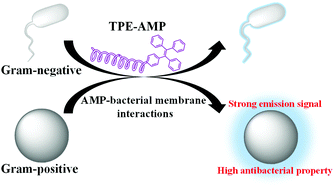
Ning Ning Li, Jun Zhi Li, Peng Liu, Dicky Pranantyo, Lei Luo, Jiu Cun Chen, En-Tang Kang, Xue Feng Hu, Chang Ming Li, Li Qun Xu
A fluorescence technique to investigate the interactions between bacterial membranes and an AIE luminogen-decorated antimicrobial peptide has been reported.
The content of this RSS Feed (c) The Royal Society of Chemistry

13 Jan 13:20
by Kyle C. Costa
The opportunistic pathogen Pseudomonas aeruginosa produces colorful redox-active metabolites called phenazines, which underpin biofilm development, virulence, and clinical outcomes. Although phenazines exist in many forms, the best studied is pyocyanin. Here, we describe pyocyanin demethylase (PodA), a hitherto uncharacterized protein that oxidizes the pyocyanin methyl group to formaldehyde and reduces the pyrazine ring via an unusual tautomerizing demethylation reaction. Treatment with PodA disrupts P. aeruginosa biofilm formation similarly to DNase, suggesting interference with the pyocyanin-dependent release of extracellular DNA into the matrix. PodA-dependent pyocyanin demethylation also restricts established biofilm aggregate populations experiencing anoxic conditions. Together, these results show that modulating extracellular redox-active metabolites can influence the fitness of a biofilm-forming microorganism.
Authors: Kyle C. Costa, Nathaniel R. Glasser, Stuart J. Conway, Dianne K. Newman
12 Jan 15:37
by Paul W. Groundwater, Rajeshwar Narlawar, Vivian Wan Yu Liao, Anusri Bhattacharya, Shalini Srivastava, Kishore Kunal, Munikumar Doddareddy, Pratik M. Oza, Ramesh Mamidi, Emma C. L. Marrs, John D. Perry, David E. Hibbs and Dulal Panda

Biochemistry
DOI: 10.1021/acs.biochem.6b00879

12 Jan 15:36
by Yuan Liu, Shuangyang Ding, Richard Dietrich, Erwin Märtlbauer, Kui Zhu
Abstract
The emergence and rapid spread of methicillin-resistant Staphylococcus aureus (MRSA) poses a serious threat to public health. New antibiotics and strategies are urgently needed to combat S. aureus associated infections. Bacaucin, a novel cyclic lipopeptide from Bacillus subtilis CAU21, is reported. Bacaucin shows broad antibacterial activity against Gram-positive bacteria, but is also hemolytic and cytotoxic. However, bacaucin-1, a bacaucin-inspired ring-opened heptapeptide, shows specific antibacterial activity against MRSA by a membrane-disruptive mechanism without detectable toxicity to mammalian cells or induction of bacterial resistance. Bacaucin-1 was efficient in preventing infections in both in vitro and in vivo models and is a valuable prototype antibiotic with high potential against S. aureus infections.

Pandora's box with hope: A natural cytotoxic antibiotic bacaucin (see picture; red), a cyclic lipopeptide from Bacillus subtilis, is presented. The safe bacaucin-inspired synthetic derivative bacaucin-1 (blue) shows specific antibacterial activity against methicillin-resistant Staphylococcus aureus (MRSA), and is efficient in preventing infections in vitro and in vivo.
11 Jan 20:25
by Kallol Gupta
Nature advance online publication 11 January 2017. doi:10.1038/nature20820
Authors: Kallol Gupta, Joseph A. C. Donlan, Jonathan T. S. Hopper, Povilas Uzdavinys, Michael Landreh, Weston B. Struwe, David Drew, Andrew J. Baldwin, Phillip J. Stansfeld & Carol V. Robinson
Oligomerization of membrane proteins in response to lipid binding has a critical role in many cell-signalling pathways but is often difficult to define or predict. Here we report the development of a mass spectrometry platform to determine simultaneously the presence of interfacial lipids and oligomeric stability and to uncover how lipids act as key regulators of membrane-protein association. Evaluation of oligomeric strength for a dataset of 125 α-helical oligomeric membrane proteins reveals an absence of interfacial lipids in the mass spectra of 12 membrane proteins with high oligomeric stability. For the bacterial homologue of the eukaryotic biogenic transporters (LeuT, one of the proteins with the lowest oligomeric stability), we found a precise cohort of lipids within the dimer interface. Delipidation, mutation of lipid-binding sites or expression in cardiolipin-deficient Escherichia coli abrogated dimer formation. Molecular dynamics simulation revealed that cardiolipin acts as a bidentate ligand, bridging across subunits. Subsequently, we show that for the Vibrio splendidus sugar transporter SemiSWEET, another protein with low oligomeric stability, cardiolipin shifts the equilibrium from monomer to functional dimer. We hypothesized that lipids are essential for dimerization of the Na+/H+ antiporter NhaA from E. coli, which has the lowest oligomeric strength, but not for the substantially more stable homologous Thermus thermophilus protein NapA. We found that lipid binding is obligatory for dimerization of NhaA, whereas NapA has adapted to form an interface that is stable without lipids. Overall, by correlating interfacial strength with the presence of interfacial lipids, we provide a rationale for understanding the role of lipids in both transient and stable interactions within a range of α-helical membrane proteins, including G-protein-coupled receptors.

11 Jan 20:25
by Amy J. Glenwright
Nature advance online publication 11 January 2017. doi:10.1038/nature20828
Authors: Amy J. Glenwright, Karunakar R. Pothula, Satya P. Bhamidimarri, Dror S. Chorev, Arnaud Baslé, Susan J. Firbank, Hongjun Zheng, Carol V. Robinson, Mathias Winterhalter, Ulrich Kleinekathöfer, David N. Bolam & Bert van den Berg
The human large intestine is populated by a high density of microorganisms, collectively termed the colonic microbiota, which has an important role in human health and nutrition. The survival of microbiota members from the dominant Gram-negative phylum Bacteroidetes depends on their ability to degrade dietary glycans that cannot be metabolized by the host. The genes encoding proteins involved in the degradation of specific glycans are organized into co-regulated polysaccharide utilization loci, with the archetypal locus sus (for starch utilisation system) encoding seven proteins, SusA–SusG. Glycan degradation mainly occurs intracellularly and depends on the import of oligosaccharides by an outer membrane protein complex composed of an extracellular SusD-like lipoprotein and an integral membrane SusC-like TonB-dependent transporter. The presence of the partner SusD-like lipoprotein is the major feature that distinguishes SusC-like proteins from previously characterized TonB-dependent transporters. Many sequenced gut Bacteroides spp. encode over 100 SusCD pairs, of which the majority have unknown functions and substrate specificities. The mechanism by which extracellular substrate binding by SusD proteins is coupled to outer membrane passage through their cognate SusC transporter is unknown. Here we present X-ray crystal structures of two functionally distinct SusCD complexes purified from Bacteroides thetaiotaomicron and derive a general model for substrate translocation. The SusC transporters form homodimers, with each β-barrel protomer tightly capped by SusD. Ligands are bound at the SusC–SusD interface in a large solvent-excluded cavity. Molecular dynamics simulations and single-channel electrophysiology reveal a ‘pedal bin’ mechanism, in which SusD moves away from SusC in a hinge-like fashion in the absence of ligand to expose the substrate-binding site to the extracellular milieu. These data provide mechanistic insights into outer membrane nutrient import by members of the microbiota, an area of major importance for understanding human–microbiota symbiosis.

10 Jan 13:20
by Sarah J. Smith, Carine R. Nemr and Shana O. Kelley

Journal of the American Chemical Society
DOI: 10.1021/jacs.6b10850

05 Jan 20:55
by Boyuan Wang, Aishan Zhao, Qian Xie, Paul Dominic Olinares, Brian T. Chait, Richard P. Novick, Tom W. Muir
Sequence variants of AgrC, a receptor histidine kinase involved in virulence regulation in S. aureus, show different activity depending on the conformational output of the sensor domain. Single mutations in AgrC generate constitutive mutants through modification of the response curve, and these mutants phosphorylate AgrA at different rates in the presence of inhibitors, revealing a key regulatory hot spot.
04 Jan 15:27
by Rui Kuai
Nature Materials.
doi:10.1038/nmat4822
Authors: Rui Kuai, Lukasz J. Ochyl, Keith S. Bahjat, Anna Schwendeman & James J. Moon

04 Jan 15:20
by Elhanan Tzipilevich, Michal Habusha, Sigal Ben-Yehuda
Bacteria sensitive to phage infection can exchange phage receptors with their resistant neighbors, suggesting a new route for information transfer.
04 Jan 15:19
by Brittany A. Moser and Aaron P. Esser-Kahn

ACS Chemical Biology
DOI: 10.1021/acschembio.6b01012

22 Dec 19:30
by Jie Li, Xuewen Du, Saqib Hashim, Adrianna Shy and Bing Xu

Journal of the American Chemical Society
DOI: 10.1021/jacs.6b11512

22 Dec 17:20
by Daniel Abegg, Giulio Gasparini, Dominic G. Hoch, Anton Shuster, Eline Bartolami, Stefan Matile and Alexander Adibekian

Journal of the American Chemical Society
DOI: 10.1021/jacs.6b09643

15 Dec 20:34
by Alexander Harms
Bacterial persister cells avoid antibiotic-induced death by entering a physiologically dormant state and are considered a major cause of antibiotic treatment failure and relapsing infections. Such dormant cells form stochastically, but also in response to environmental cues, by various pathways that are usually controlled by the second messenger (p)ppGpp. For example, toxin-antitoxin modules have been shown to play a major role in persister formation in many model systems. More generally, the diversity of molecular mechanisms driving persister formation is increasingly recognized as the cause of physiological heterogeneity that underlies collective multistress and multidrug tolerance of persister subpopulations. In this Review, we summarize the current state of the field and highlight recent findings, with a focus on the molecular basis of persister formation and heterogeneity.
Authors: Alexander Harms, Etienne Maisonneuve, Kenn Gerdes