Marcos Pires
Shared posts
Antibiotic discovery is a walk in the park [Commentaries]
N-Carboxyanhydride-Mediated Fatty Acylation of Amino Acids and Peptides for Functionalization of Protocell Membranes

High-throughput Identification of DNA-Encoded IgG Ligands that Distinguish Active and Latent Mycobacterium tuberculosis Infections

Controlled membrane translocation provides a mechanism for signal transduction and amplification

Nature Chemistry. doi:10.1038/nchem.2678
Authors: Matthew J. Langton, Flore Keymeulen, Maria Ciaccia, Nicholas H. Williams & Christopher A. Hunter
The transmission of chemical information across lipid bilayer membranes is crucial in biological systems. Now, an artificial chemical system able to both transduce and amplify chemical signals across a membrane has been developed. The system works by exploiting the controlled translocation of a synthetic molecule that is embedded within a vesicle membrane.
High-Resolution pH Imaging of Living Bacterial Cells To Detect Local pH Differences
Protons are utilized for various biological activities such as energy transduction and cell signaling. For construction of the bacterial flagellum, a type III export apparatus utilizes ATP and proton motive force to drive flagellar protein export, but the energy transduction mechanism remains unclear. Here, we have developed a high-resolution pH imaging system to measure local pH differences within living Salmonella enterica cells, especially in close proximity to the cytoplasmic membrane and the export apparatus. The local pH near the membrane was ca. 0.2 pH unit higher than the bulk cytoplasmic pH. However, the local pH near the export apparatus was ca. 0.1 pH unit lower than that near the membrane. This drop of local pH depended on the activities of both transmembrane export components and FliI ATPase. We propose that the export apparatus acts as an H+/protein antiporter to couple ATP hydrolysis with H+ flow to drive protein export.
IMPORTANCE The flagellar type III export apparatus is required for construction of the bacterial flagellum beyond the cellular membranes. The export apparatus consists of a transmembrane export gate and a cytoplasmic ATPase complex. The export apparatus utilizes ATP and proton motive force as the energy source for efficient and rapid protein export during flagellar assembly, but it remains unknown how. In this study, we have developed an in vivo pH imaging system with high spatial and pH resolutions with a pH indicator probe to measure local pH near the export apparatus. We provide direct evidence suggesting that ATP hydrolysis by the ATPase complex and the following rapid protein translocation by the export gate are both linked to efficient proton translocation through the gate.
Supramolecular PEGylation of biopharmaceuticals [Applied Physical Sciences]
Integrating Enzymatic Self-Assembly and Mitochondria Targeting for Selectively Killing Cancer Cells without Acquired Drug Resistance

Co-opting a Bioorthogonal Reaction for Oncometabolite Detection

Designed proteins induce the formation of nanocage-containing extracellular vesicles
Nature advance online publication 30 November 2016. doi:10.1038/nature20607
Authors: Jörg Votteler, Cassandra Ogohara, Sue Yi, Yang Hsia, Una Nattermann, David M. Belnap, Neil P. King & Wesley I. Sundquist
Complex biological processes are often performed by self-organizing nanostructures comprising multiple classes of macromolecules, such as ribosomes (proteins and RNA) or enveloped viruses (proteins, nucleic acids and lipids). Approaches have been developed for designing self-assembling structures consisting of either nucleic acids or proteins, but strategies for engineering hybrid biological materials are only beginning to emerge. Here we describe the design of self-assembling protein nanocages that direct their own release from human cells inside small vesicles in a manner that resembles some viruses. We refer to these hybrid biomaterials as ‘enveloped protein nanocages’ (EPNs). Robust EPN biogenesis requires protein sequence elements that encode three distinct functions: membrane binding, self-assembly, and recruitment of the endosomal sorting complexes required for transport (ESCRT) machinery. A variety of synthetic proteins with these functional elements induce EPN biogenesis, highlighting the modularity and generality of the design strategy. Biochemical analyses and cryo-electron microscopy reveal that one design, EPN-01, comprises small (~100 nm) vesicles containing multiple protein nanocages that closely match the structure of the designed 60-subunit self-assembling scaffold. EPNs that incorporate the vesicular stomatitis viral glycoprotein can fuse with target cells and deliver their contents, thereby transferring cargoes from one cell to another. These results show how proteins can be programmed to direct the formation of hybrid biological materials that perform complex tasks, and establish EPNs as a class of designed, modular, genetically-encoded nanomaterials that can transfer molecules between cells.
Effect of Preorganized Charge-Display on the Cell-Penetrating Properties of Cationic Peptides
Abstract
The effect of preorganized versus undefined charge display on the cellular uptake of cationic cell-penetrating peptides (CPPs) was investigated by comparing conformationally well-defined guanidinylated oligoprolines with flexible oligoarginines. Flow cytometry and confocal microscopy studies with different cancer cell lines (HeLa, MCF-7, and HT-29) showed that preorganization of cationic charges in lateral distances of ≈9 Å enhanced the cellular uptake of CPPs. Binding affinity measurements revealed tighter binding of analogues of cell-surface glycans to the guanidinylated octaproline with localized charges compared to flexible octaarginine, a finding that was further correlated to the cellular uptake by studies with CHO cells deficient in glycans on the outer plasma membrane.

Matching charges: Cationic oligoprolines with charges at lateral distances of 9 Å penetrate into cancer cells at submicromolar concentrations. The cellular uptake correlates with binding affinity to the cell-surface glycan analogue heparin with comparable distances between anionic sulfate moieties.
A Trojan-Horse Peptide-Carboxymethyl-Cytidine Antibiotic from Bacillus amyloliquefaciens

The innate immune receptor Dectin-2 mediates the phagocytosis of cancer cells by Kupffer cells for the suppression of liver metastasis [Immunology and Inflammation]
Seven enzymes create extraordinary molecular complexity in an uncultivated bacterium

Nature Chemistry. doi:10.1038/nchem.2666
Authors: Michael F. Freeman, Maximilian J. Helf, Agneya Bhushan, Brandon I. Morinaka & Jörn Piel
Polytheonamides are giant peptide toxins produced by the uncultivated sponge bacterium Entotheonella factor. The biosynthesis of polytheonamides involves up to 50 post-translational modifications. Now, heterologous expression in E. coli and Rhizobium hosts have shown that a minimalistic, iterative enzyme set introduces this exceptional molecular complexity via epimerizations, C-/N-methylations, hydroxylations, dehydration and proteolytic maturation.
[Report] Directed evolution of cytochrome c for carbon–silicon bond formation: Bringing silicon to life
Proliferation of Listeria monocytogenesL-form cells by formation of internal and external vesicles
Proliferation of Listeria monocytogenesL-form cells by formation of internal and external vesicles
Nature Communications, Published online: 23 November 2016; doi:10.1038/ncomms13631
L-forms are cell wall-deficient bacteria that divide through unusual mechanisms, potentially resembling those of primitive cells. Here the authors describe how Listeria monocytogenes L-forms proliferate by generation of internal and external vesicles.
[Research Article] A general catalytic β-C–H carbonylation of aliphatic amines to β-lactams
C-Terminal Modification and Multimerization Increase the Efficacy of a Proline-Rich Antimicrobial Peptide
Abstract
Two series of branched tetramers of the proline-rich antimicrobial peptide (PrAMP), Chex1-Arg20, were prepared to improve antibacterial selectivity and potency against a panel of Gram-negative nosocomial pathogens including Escherichia coli, Klebsiella pneumoniae, Acinetobacter baumannii and Pseudomonas aeruginosa. First, tetramerization was achieved by dithiomaleimide (DTM) conjugation of two C-terminal-cysteine bearing dimers that also incorporated C-terminal peptide chemical modification. DTM-linked tetrameric peptides containing a C-terminal hydrazide moiety on each dimer exhibited highly potent activities in the minimum inhibitory concentration (MIC) range of 0.49–2.33 μm. A second series of tetrameric analogues with C-terminal hydrazide modification was prepared by using alternative conjugation linkers including trans-1,4-dibromo-2-butene, α,α’-dibromo-p-xylene, or 6-bismaleimidohexane to determine the effect of length on activity. Each displayed potent and broadened activity against Gram-negative nosocomial pathogens, particularly the butene-linked tetrameric hydrazide. Remarkably, the greatest MIC activity is against P. aeruginosa (0.77 μm/8 μg mL−1) where the monomer is inactive. None of these peptides showed any cytotoxicity to mammalian cells up to 25 times the MIC. A diffusion NMR study of the tetrameric hydrazides showed that the more active antibacterial analogues were those with a more compact structure having smaller hydrodynamic radii. The results show that C-terminal PrAMP hydrazidation together with its rational tetramerization is an effective means for increasing both diversity and potency of PrAMP action.

In for the kill: C-terminal proline-rich antimicrobial peptide (PrAMP) hydrazidation together with its rational tetramerization are shown to be effective means for increasing both diversity and potency of PrAMP action against nosocomial Gram-negative bacteria.Wade et al: C-Terminal Modification & Multimerization Increase Efficacy #Proline-Rich #Antimicrobial #Peptide
Discovery of MRSA active antibiotics using primary sequence from the human microbiome

Nature Chemical Biology 12, 1004 (2016). doi:10.1038/nchembio.2207
Authors: John Chu, Xavier Vila-Farres, Daigo Inoyama, Melinda Ternei, Louis J Cohen, Emma A Gordon, Boojala Vijay B Reddy, Zachary Charlop-Powers, Henry A Zebroski, Ricardo Gallardo-Macias, Mark Jaskowski, Shruthi Satish, Steven Park, David S Perlin, Joel S Freundlich & Sean F Brady
Here we present a natural product discovery approach, whereby structures are bioinformatically predicted from primary sequence and produced by chemical synthesis (synthetic-bioinformatic natural products, syn-BNPs), circumventing the need for bacterial culture and gene expression. When we applied the approach to nonribosomal peptide synthetase gene clusters from human-associated bacteria, we identified the humimycins. These antibiotics inhibit lipid II flippase and potentiate β-lactam activity against methicillin-resistant Staphylococcus aureus in mice, potentially providing a new treatment regimen.
From Anthramycin to Pyrrolobenzodiazepine (PBD)-Containing Antibody–Drug Conjugates (ADCs)
Abstract
The pyrrolo[2,1-c][1,4]benzodiazepines (PBDs) are a family of sequence-selective DNA minor-groove binding agents that form a covalent aminal bond between their C11-position and the C2-NH2 groups of guanine bases. The first example of a PBD monomer, the natural product anthramycin, was discovered in the 1960s, and the best known PBD dimer, SJG-136 (also known as SG2000, NSC 694501 or BN2629), was synthesized in the 1990s and has recently completed Phase II clinical trials in patients with leukaemia and ovarian cancer. More recently, PBD dimer analogues are being attached to tumor-targeting antibodies to create antibody–drug conjugates (ADCs), a number of which are now in clinical trials, with many others in pre-clinical development. This Review maps the development from anthramycin to the first PBD dimers, and then to PBD-containing ADCs, and explores both structure–activity relationships (SARs) and the biology of PBDs, and the strategies for their use as payloads for ADCs.

PBDs as payloads for ADCs: The pyrrolobenzodiazepines (PBDs) are a family of DNA-interactive antitumor agents that bind to guanine bases in the DNA minor groove in a sequence-selective manner. They have potent cytotoxicity, and are being used as payloads for antibody–drug conjugates (ADCs). This Review outlines their development from the discovery of the natural product anthramycin through to the use of PBD dimer payloads in ADCs.
Green- to far-red-emitting fluorogenic tetrazine probes - synthetic access and no-wash protein imaging inside living cells
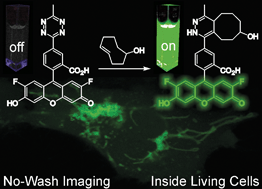
DOI: 10.1039/C6SC03879D, Edge Article
 Open Access
   This article is licensed under a Creative Commons Attribution-NonCommercial 3.0 Unported Licence.
Fluorogenic probes for bioorthogonal labeling chemistry are highly beneficial to reduce background signal in fluorescence microscopy imaging.
The content of this RSS Feed (c) The Royal Society of Chemistry
Characterizing hydrophobicity of amino acid side chains in a protein environment via measuring contact angle of a water nanodroplet on planar peptide network [Chemistry]
Host Cell Interactions Are a Significant Barrier to the Clinical Utility of Peptide Antibiotics

Measurement of bacterial replication rates in microbial communities

Nature Biotechnology. doi:10.1038/nbt.3704
Authors: Christopher T Brown, Matthew R Olm, Brian C Thomas & Jillian F Banfield
[Report] A chemical biology route to site-specific authentic protein modifications
Chemoproteomic profiling and discovery of protein electrophiles in human cells

Nature Chemistry. doi:10.1038/nchem.2645
Authors: Megan L. Matthews, Lin He, Benjamin D. Horning, Erika J. Olson, Bruno E. Correia, John R. Yates, Philip E. Dawson & Benjamin F. Cravatt
A chemical proteomic strategy is described for the discovery of protein-bound electrophilic groups in human cells. Using this approach, the dynamic regulation of the pyruvoyl catalytic cofactor in S-adenosyl-L-methionine decarboxylase was characterized and an N-terminal glyoxylyl modification on secernin proteins was discovered.
Total Synthesis of Dansylated Park's Nucleotide for High-Throughput MraY Assays
Abstract
The membrane protein translocase I (MraY) is a key enzyme in bacterial peptidoglycan biosynthesis. It is therefore frequently discussed as a target for the development of novel antibiotics. The screening of compound libraries for the identification of MraY inhibitors is enabled by an established fluorescence-based MraY assay. However, this assay requires a dansylated derivative of the bacterial biosynthetic intermediate Park's nucleotide as the MraY substrate. Isolation of Park's nucleotide from bacteria and subsequent dansylation only furnishes limited amounts of this substrate, thus hampering the high-throughput screening for MraY inhibitors. Accordingly, the efficient provision of dansylated Park's nucleotide is a major bottleneck in the exploration of this promising drug target. In this work, we present the first total synthesis of dansylated Park's nucleotide, affording an unprecedented amount of the target compound for high-throughput MraY assays.

Total, not semi: Park's nucleotide is an intermediate in bacterial peptidoglycan biosynthesis acting as the substrate of the enzyme MraY. An efficient total synthesis of dansylated Park's nucleotide is reported. The thus obtained amount of the target compound vastly exceeded the amount accessible by semi-synthesis on conventional scale, therefore enabling high-throughput assays for the identification of MraY inhibitors as potential antimicrobial agents.
Insights into ClpXP proteolysis: Heterooligomerization and partial deactivation enhance chaperone affinity and substrate turnover in Listeria monocytogenes
DOI: 10.1039/C6SC03438A, Edge Article
Open Access   This article is licensed under a Creative Commons Attribution 3.0 Unported Licence.
Caseinolytic proteases (ClpP) are important for recognition and controlled degradation of damaged proteins. While the majority of bacterial organisms utilize only a single ClpP, Listeria monocytogenes expresses two isoforms (LmClpP1...
The content of this RSS Feed (c) The Royal Society of Chemistry
A Synthetic Loop Replacement Peptide That Blocks Canonical NF-κB Signaling
Abstract
Aberrant canonical NF-κB signaling is implicated in diseases from autoimmune disorders to cancer. A major therapeutic challenge is the need for selective inhibition of the canonical pathway without impacting the many non-canonical NF-κB functions. Here we show that a selective peptide-based inhibitor of canonical NF-κB signaling, in which a hydrogen bond in the NBD peptide is synthetically replaced by a non-labile bond, shows an about 10-fold increased potency relative to the original inhibitor. Not only is this molecule, NBD2, a powerful tool for dissection of canonical NF-κB signaling in disease models and healthy tissues, the success of the synthetic loop replacement suggests that the general strategy could be useful for discovering modulators of the many protein–protein interactions mediated by such structures.

A peptide-based inhibitor of canonical NF-κB signaling, in which a hydrogen bond in the NBD peptide is synthetically replaced by a non-labile bond, shows an about 10-fold increased potency relative to the original inhibitor. The success of the synthetic replacement of a peptide loop suggests that the general strategy could be broadly useful for discovering modulators of many protein–protein interactions mediated by such structures.
Development of Rare Bacterial Monosaccharide Analogs for Metabolic Glycan Labeling in Pathogenic Bacteria

Natural-Product-Inspired Aminoepoxybenzoquinones Kill Members of the Gram-Negative Pathogen Salmonella by Attenuating Cellular Stress Response
Abstract
Gram-negative bacteria represent a challenging task for antibacterial drug discovery owing to their impermeable cell membrane and restricted uptake of small molecules. We herein describe the synthesis of natural-product-derived epoxycyclohexenones and explore their antibiotic activity against several pathogenic bacteria. A compound with activity against Salmonella Typhimurium was identified, and the target enzymes were unraveled by quantitative chemical proteomics. Importantly, two protein hits were linked to bacterial stress response, and corresponding assays revealed an elevated susceptibility to reactive oxygen species upon compound treatment. The consolidated inhibition of these targets provides a rationale for antibacterial activity and highlights epoxycyclohexenones as natural product scaffolds with suitable properties for killing Gram-negative Salmonella.

Aminoepoxycyclohexenones inhibit the growth of Gram-negative Salmonella in the low micromolar range. The bacterial targets of these antibiotics were analyzed by quantitative ABPP, which revealed a link to bacterial stress response that was validated by various assays. Aminoepoxybenzoquinones were thus validated as natural product scaffolds with suitable properties for the growth inhibition of Salmonella.