22 Nov 12:01
by Mura, A., Fadda, D., Perez, A. J., Danforth, M. L., Musu, D., Rico, A. I., Krupka, M., Denapaite, D., Tsui, H.-C. T., Winkler, M. E., Branny, P., Vicente, M., Margolin, W., Massidda, O.
Streptococcus pneumoniae is an ovoid-shaped Gram-positive bacterium that grows by carrying out peripheral and septal peptidoglycan (PG) synthesis, analogous to model bacilli such as Escherichia coli and Bacillus subtilis. In the model bacilli, FtsZ and FtsA proteins assemble into a ring at midcell and are dedicated to septal PG synthesis, but not peripheral PG synthesis; hence inactivation of FtsZ or FtsA results in long filamentous cells unable to divide. Here we demonstrate that FtsA and FtsZ colocalize at midcell in S. pneumoniae and that partial depletion of FtsA perturbs septum synthesis, resulting in elongated cells with multiple FtsZ rings that fail to complete septation. Unexpectedly, complete depletion of FtsA resulted in delocalization of FtsZ rings and ultimately cell ballooning and lysis. In contrast, depletion or deletion of gpsB and sepF, which in B. subtilis are synthetically lethal with ftsA, resulted in enlarged and elongated cells, with multiple FtsZ rings, the latter mimicking partial depletion of FtsA. Notably, cell ballooning was not observed, consistent with later recruitment of these proteins to midcell after Z ring assembly. Overproduction of FtsA stimulates septation and suppresses the cell division defects caused by deletion of sepF and gpsB under some conditions, supporting the notion that FtsA shares overlapping functions with GpsB and SepF at later steps in the division process. Our results indicate that, in S. pneumoniae, both GpsB and SepF are involved in septal PG synthesis, whereas FtsA and FtsZ coordinate both peripheral and septal PG synthesis and are codependent for localization at midcell.
Importance Streptococcus pneumoniae (pneumococcus) is a clinically important human pathogen for which more therapies against unexploited essential targets, like cell growth and division proteins, are needed. Pneumococcus is an ovoid-shaped Gram-positive bacterium with cell growth and division properties that have important distinctions from those of rod-shaped bacteria. Gaining insights into these processes can thus provide valuable information to develop novel antimicrobials. Whereas rods use distinctly localized protein machines at different cellular locations to synthesize peripheral and septal peptidoglycan, we present evidence that S. pneumoniae organizes these two machines at a single location in the middle of dividing cells. Here we focus on the properties of the actin-like protein, FtsA, as an essential orchestrator of peripheral and septal growth in this bacterium.
21 Nov 18:22
by Krishnamoorthy, G., Wolloscheck, D., Weeks, J. W., Croft, C., Rybenkov, V. V., Zgurskaya, H. I.
In Gram-negative bacteria, a synergistic relationship between slow passive uptake of antibiotics across the outer membrane and active efflux transporters creates a permeability barrier, which efficiently reduces the effective concentrations of antibiotics in cells and, hence, their activities. To analyze the relative contributions of active efflux and the passive barrier to the activities of antibiotics, we constructed Escherichia coli strains with controllable permeability of the outer membrane. The strains expressed a large pore that does not discriminate between compounds on the basis of their hydrophilicity and sensitizes cells to a variety of antibacterial agents. We found that the efficacies of antibiotics in these strains were specifically affected by either active efflux or slow uptake, or both, and reflect differences in the properties of the outer membrane barrier, the repertoire of efflux pumps, and the inhibitory activities of antibiotics. Our results identify antibiotics which are the best candidates for the potentiation of activities through efflux inhibition and permeabilization of the outer membrane.
15 Nov 19:34
by Samuel H. Ho and David A. Tirrell

Journal of the American Chemical Society
DOI: 10.1021/jacs.6b07067

14 Nov 19:35
by Alexander J. F. Egan, Robert M. Cleverley, Katharina Peters, Richard J. Lewis, Waldemar Vollmer
During growth and propagation, a bacterial cell enlarges and subsequently divides its peptidoglycan (PG) sacculus, a continuous mesh-like layer that encases the cell membrane to confer mechanical strength and morphological robustness. The mechanism of sacculus growth, how it is regulated and how it is coordinated with other cellular processes is poorly understood. In this article, we will discuss briefly the current knowledge of how cell wall synthesis is regulated, on multiple levels, from both sides of the cytoplasmic membrane. According to the current knowledge, cytosolic scaffolding proteins connect PG synthases with cytoskeletal elements, and protein phosphorylation regulates cell wall growth in Gram-positive species. PG-active enzymes engage in multiple protein–protein interactions within PG synthesis multienzyme complexes, and some of the interactions modulate activities. PG synthesis is also regulated by central metabolism, and by PG maturation through the action of PG hydrolytic enzymes. Only now are we beginning to appreciate how these multiple levels of regulating PG synthesis enable the cell to propagate robustly with a defined cell shape under different and variable growth conditions.

We review how bacterial cell wall growth is regulated on multiple levels. We outline the assembly of synthesis complexes through protein scaffolding and how dynamic protein–protein interactions control cell wall growth. We also discuss other regulatory inputs including phosphorylation of key regulatory proteins, cell wall maturation and coordination of cell wall growth with central metabolism through sensing nutrient availability.
10 Nov 19:36
by Alvaro San Millan
Multicopy plasmids potentiate the evolution of antibiotic resistance in bacteria
Nature Ecology & Evolution, Published online: 7 November 2016; doi:10.1038/s41559-016-0010
As well as allowing horizontal gene transfer, the increased copy number of plasmids could accelerate evolution. Here, it is shown that clinically relevant antibiotic resistance evolves faster when the target gene is on a plasmid.

09 Nov 17:18
by Yuming Yu, Mary J. Sabulski, Wiley A. Schell, Marcos M. Pires, John R. Perfect and Steven L. Regen

Bioconjugate Chemistry
DOI: 10.1021/acs.bioconjchem.6b00629

09 Nov 13:52
For the first time ever, scientists have used predatory bacteria to kill pneumonia in a rat animal model. The research, published online in mBio, provides evidence that predatory bacteria can be used as a therapeutic, offering a possible solution to the rise of multidrug-resistant bacterial infections.
07 Nov 13:10
by Rita Gemayel

In the first instalment of the Words of Advice series, we feature the essentials of good manuscript writing with practical tips on how to plan, organise and write a standout scientific paper.
06 Nov 22:17
Publication date: June 2017
Source:Current Opinion in Structural Biology, Volume 44
Author(s): Caroline Soliman, Elizabeth Yuriev, Paul A Ramsland
Carbohydrate-binding antibodies and carbohydrate-based vaccines are being actively pursued as targeted immunotherapies for a broad range of cancers. Recognition of tumor-associated carbohydrates (glycans) by antibodies is predominantly towards terminal epitopes on glycoproteins and glycolipids on the surface of cancer cells. Crystallography along with complementary experimental and computational methods have been extensively used to dissect antibody recognition of glycan epitopes commonly found in cancer. We provide an overview of the structural biology of antibody recognition of tumor-associated glycans and propose potential rearrangements of these targets in the membrane that could dictate the complex biological activities of these antibodies against cancer cells.
Graphical abstract

02 Nov 17:04
Two widely prescribed antibiotics—chloramphenicol and linezolid—may fight bacteria in a different way from what scientists and doctors thought for years, University of Illinois at Chicago researchers have found. Instead of indiscriminately stopping protein synthesis, the drugs put the brakes on the protein synthesis machinery only at specific locations in the gene.
29 Oct 14:05
by Muller, A., Wenzel, M., Strahl, H., Grein, F., Saaki, T. N. V., Kohl, B., Siersma, T., Bandow, J. E., Sahl, H.–G., Schneider, T., Hamoen, L. W.
Daptomycin is a highly efficient last-resort antibiotic that targets the bacterial cell membrane. Despite its clinical importance, the exact mechanism by which daptomycin kills bacteria is not fully understood. Different experiments have led to different models, including (i) blockage of cell wall synthesis, (ii) membrane pore formation, and (iii) the...
27 Oct 13:28
by Celia Henry Arnaud
Quaternary ammonium group connects drugs to antibodies for targeted delivery

27 Oct 13:28
by Ryan Cross
Researchers develop new bioinformatics-based approach to natural product discovery

27 Oct 13:05
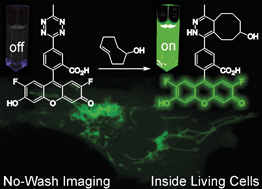
Chem. Sci., 2016, Advance Article
DOI: 10.1039/C6SC03879D, Edge Article

Open Access
Achim Wieczorek, Philipp Werther, Jonas Euchner, Richard Wombacher
Fluorogenic probes for bioorthogonal labeling chemistry are highly beneficial to reduce background signal in fluorescence microscopy imaging.
To cite this article before page numbers are assigned, use the DOI form of citation above.
The content of this RSS Feed (c) The Royal Society of Chemistry

27 Oct 13:02
by Homma, T., Nuxoll, A., Gandt, A. B., Ebner, P., Engels, I., Schneider, T., Götz, F., Lewis, K., Conlon, B. P.
Teixobactin represents the first member of a newly discovered class of antibiotics that act through inhibition of cell wall synthesis. Teixobactin binds multiple bactoprenol-coupled cell wall precursors, inhibiting both peptidoglycan and teichoic acid synthesis. Here, we show that the impressive bactericidal activity of teixobactin is due to the synergistic inhibition of both targets, resulting in cell wall damage, delocalization of autolysins, and subsequent cell lysis. We also find that teixobactin does not bind mature peptidoglycan, further increasing its activity at high cell densities and against vancomycin-intermediate Staphylococcus aureus (VISA) isolates with thickened peptidoglycan layers. These findings add to the attractiveness of teixobactin as a potential therapeutic agent for the treatment of infection caused by antibiotic-resistant Gram-positive pathogens.
24 Oct 19:31
by Tao Peng and Howard C. Hang

Journal of the American Chemical Society
DOI: 10.1021/jacs.6b08733

14 Oct 18:38
by Takuya Kaji, Motoki Murai, Hiroaki Itoh, Jyunichiro Yasukawa, Hiroshi Hamamoto, Kazuhisa Sekimizu, Masayuki Inoue
Abstract
Lysocin E (1) is a structurally complex 37-membered depsipeptide comprising 12 amino-acid residues with an N-methylated amide and an ester linkage. Compound 1 binds to menaquinone (MK) in the bacterial membrane to exert its potent bactericidal activity. To decipher the biologically important functionalities within this unique antibiotic, we performed a comprehensive structure-activity relationship (SAR) study by systematically changing the side-chain structures of l-Thr-1, d-Arg-2, N-Me-d-Phe-5, d-Arg-7, l-Glu-8, and d-Trp-10. First, we achieved total synthesis of the 14 new side-chain analogues of 1 by employing a solid-phase strategy. We then evaluated the MK-dependent liposomal disruption and antimicrobial activity against Staphylococcus aureus by 1 and its analogues. Correlating data between the liposome and bacteria experiments revealed that membrane lysis was mainly responsible for the antibacterial functions. Altering the cationic guanidine moiety of d-Arg-2/7 to a neutral amide, and the C7-acyl group of l-Thr-1 to the C2 or C11 counterpart decreased the antimicrobial activities four- or eight-fold. More drastically, chemical mutation of d-Trp-10 to d-Ala-10 totally abolished the bioactivities. These important findings led us to propose the biological roles of the side-chain functionalities.

What parts work best? Antibiotic lysocin E (1), a 37-membered depsipeptide, binds to menaquinone in the bacterial membrane to exert its potent bactericidal activity (see figure). Comprehensive SAR studies of 1 were performed by systematically changing the side-chain structures. The key structural features for the antimicrobial activities were established to be the cationic functionalities at d-Arg-2/7, the hydrophobic acyl group at l-Thr-1, and the indole ring at d-Trp-10.
10 Oct 11:43
Neurons in these live C. elegans roundworms are tagged with green fluorescent protein.
07 Oct 12:13
by Bjoern O Schroeder
Nature Medicine 22, 1079 (2016).
doi:10.1038/nm.4185
Authors: Bjoern O Schroeder & Fredrik Bäckhed

05 Oct 11:51
by Long Hu, Silin Xu, Zhenguang Zhao, Yang Yang, Zhiyuan Peng, Ming Yang, Changliu Wang and Junfeng Zhao

Journal of the American Chemical Society
DOI: 10.1021/jacs.6b07230

03 Oct 11:18
Bacteria inhabit most tissues in the human body, and genes from some of these microbes have made their way to the human genome. Could this genetic transfer contribute to diseases such as cancer?
26 Sep 14:26
by Silvie Hansenová Maňásková, Floris J. Bikker, Kamran Nazmi, Rianne van Zuidam, Johan A. Slotman, Wiggert A. van Cappellen, Adriaan B. Houtsmuller, Enno C. I. Veerman and Wendy E. Kaman

Bioconjugate Chemistry
DOI: 10.1021/acs.bioconjchem.6b00381

26 Sep 13:53
by Lenette L. Lu, Amy W. Chung, Tracy R. Rosebrock, Musie Ghebremichael, Wen Han Yu, Patricia S. Grace, Matthew K. Schoen, Fikadu Tafesse, Constance Martin, Vivian Leung, Alison E. Mahan, Magdalena Sips, Manu P. Kumar, Jacquelynne Tedesco, Hannah Robinson, Elizabeth Tkachenko, Monia Draghi, Katherine J. Freedberg, Hendrik Streeck, Todd J. Suscovich, Douglas A. Lauffenburger, Blanca I. Restrepo, Cheryl Day, Sarah M. Fortune, Galit Alter
Individuals with active and latent tuberculosis (TB) infections can be distinguished by the type of antibodies they produce, pointing toward an important and unappreciated contribution from humoral immunity in controlling chronic TB.
19 Sep 18:37
by Laurie Garrett
The U.N. General Assembly is taking on a danger that threatens the health of our entire species
-- Read more on ScientificAmerican.com
13 Sep 15:17
If you get pneumonia, or even an infected cut, your body is now a war zone.
09 Sep 11:07
In a creative stroke inspired by Hollywood wizardry, scientists from Harvard Medical School and Technion-Israel Institute of Technology have designed a simple way to observe how bacteria move as they become impervious to drugs.
08 Sep 23:04
by Ryan E. Schaub, Yolande A. Chan, Mijoon Lee, Dusan Hesek, Shahriar Mobashery, Joseph P. Dillard
Summary
Neisseria gonorrhoeae releases peptidoglycan (PG) fragments during infection that provoke a large inflammatory response and, in pelvic inflammatory disease, this response leads to the death and sloughing of ciliated cells of the Fallopian tube. We characterized the biochemical functions and localization of two enzymes responsible for the release of proinflammatory PG fragments. The putative lytic transglycosylases LtgA and LtgD were shown to create the 1,6-anhydromuramyl moieties, and both enzymes were able to digest a small, synthetic tetrasaccharide dipeptide PG fragment into the cognate 1,6-anhydromuramyl-containing reaction products. Degradation of tetrasaccharide PG fragments by LtgA is the first demonstration of a family 1 lytic transglycosylase exhibiting this activity. Pulse-chase experiments in gonococci demonstrated that LtgA produces a larger amount of PG fragments than LtgD, and a vast majority of these fragments are recycled. In contrast, LtgD was necessary for wild-type levels of PG precursor incorporation and produced fragments predominantly released from the cell. Additionally, super-resolution microscopy established that LtgA localizes to the septum, whereas LtgD is localized around the cell. This investigation suggests a model where LtgD produces PG monomers in such a way that these fragments are released, whereas LtgA creates fragments that are mostly taken into the cytoplasm for recycling.

Neisseria gonorrhoeae releases a significant portion of cell wall-derived peptidoglycan fragments, inducing inflammation and tissue damage in the genital tract. This work describes the functions of the two lytic transglycosylases responsible for producing the peptidoglycan fragments tracheal cytotoxin and GlcNAc-anhydro-MurNAc-tripeptide, a Nod1 agonist. Although these two enzymes can perform the same biochemical reaction, each lytic transglycosylase has different substrate specificity and cellular localization that leads to differing contributions to peptidoglycan remodeling, recycling, and release.
08 Sep 00:20
by Dina Fine Maron
Antibiotic resistance has grown so dire that it will be the subject of a dedicated global summit later this month
-- Read more on ScientificAmerican.com
07 Sep 11:15
by Haoxing Wu, Seth C. Alexander, Shuaijiang Jin and Neal K. Devaraj

Journal of the American Chemical Society
DOI: 10.1021/jacs.6b01625

30 Aug 17:41
by Lindzi Wessel
The worrisome combination has been detected before in other countries
-- Read more on ScientificAmerican.com