11 Jan 21:51
by Yuan Liu, Shuangyang Ding, Richard Dietrich, Erwin Märtlbauer, Kui Zhu
Abstract
The emergence and rapid spread of methicillin-resistant Staphylococcus aureus (MRSA) poses a serious threat to public health. New antibiotics and strategies are urgently needed to combat S. aureus associated infections. Bacaucin, a novel cyclic lipopeptide from Bacillus subtilis CAU21, is reported. Bacaucin shows broad antibacterial activity against Gram-positive bacteria, but is also hemolytic and cytotoxic. However, bacaucin-1, a bacaucin-inspired ring-opened heptapeptide, shows specific antibacterial activity against MRSA by a membrane-disruptive mechanism without detectable toxicity to mammalian cells or induction of bacterial resistance. Bacaucin-1 was efficient in preventing infections in both in vitro and in vivo models and is a valuable prototype antibiotic with high potential against S. aureus infections.

Pandora's box with hope: A natural cytotoxic antibiotic bacaucin (see picture; red), a cyclic lipopeptide from Bacillus subtilis, is presented. The safe bacaucin-inspired synthetic derivative bacaucin-1 (blue) shows specific antibacterial activity against methicillin-resistant Staphylococcus aureus (MRSA), and is efficient in preventing infections in vitro and in vivo.
11 Jan 21:41
by Paul W. Groundwater, Rajeshwar Narlawar, Vivian Wan Yu Liao, Anusri Bhattacharya, Shalini Srivastava, Kishore Kunal, Munikumar Doddareddy, Pratik M. Oza, Ramesh Mamidi, Emma C. L. Marrs, John D. Perry, David E. Hibbs and Dulal Panda

Biochemistry
DOI: 10.1021/acs.biochem.6b00879

11 Jan 16:06
by Pamela Brown
Development of new polymyxin derivatives for multi-drug resistant Gram-negative infections
The Journal of Antibiotics advance online publication, January 11 2017.
doi:10.1038/ja.2016.146
Authors: Pamela Brown & Michael J Dawson

11 Jan 15:30
by Eva Maria Steiner, Gunter Schneider, Robert Schnell
β-lactam antibiotics represent a novel direction in the chemotherapy of tuberculosis that brings the peptidoglycan layer of the complex mycobacterial cell wall in focus as a therapeutic target. Peptidoglycan stability in Mycobacterium tuberculosis, especially during infection, relies on the nonconventional peptide cross-links formed by l,d-transpeptidases. These enzymes are known to be inhibited by β-lactams, primarily carbapenems, leading to a stable covalent modification at the enzyme active site. A panel of 16 β-lactam antibiotics was characterized by inhibition kinetics, mass spectrometry, and x-ray crystallography to identify efficient compounds and study their action on the essential transpeptidase, LdtMt2. Members of the carbapenem class displayed fast binding kinetics, but faropenem, a penem type compound showed a three to four time higher rate in the adduct formation. In three cases, mass spectrometry indicated that carbapenems may undergo decarboxylation, while faropenem decomposition following the acylation step results in a small 87 Da β-OH-butyryl adduct bound at the catalytic cysteine residue. The crystal structure of LdtMt2 at 1.54 Å resolution with this fragment bound revealed that the protein adopts a closed conformation that shields the thioester bond from the solvent, which is in line with the high stability of this dead-end complex observed also in biochemical assays.
Database
Structural data are available in Protein Data Bank under the accession numbers 5LB1 and 5LBG.

The binding kinetics of various β-lactam antibiotics were investigated on LdtMt2, an essential l,d-transpeptidase from Mycobacterium tuberculosis. Faropenem, a classical penem-type compound showed the highest rate in adduct formation. Mass spectrometry and crystal structure analysis revealed a small well-shielded fragment of faropenem bound as covalent adduct. The high stability of this dead-end complex was observed in biochemical assays.
05 Jan 13:37
by Mark S Butler
Antibiotics in the clinical pipeline at the end of 2015
The Journal of Antibiotics 70,
3 (January 2017). doi:10.1038/ja.2016.72
Authors: Mark S Butler, Mark AT Blaskovich & Matthew A Cooper

04 Jan 17:03
Wild-type bacteria (black) can survive and grow in the presence of an antibiotic when surrounded by enough antibiotic-resistant bacteria (green).
04 Jan 16:25
by M. Fura, Jonathan
04 Jan 00:33
by Anupam Bandyopadhyay, Samantha Cambray and Jianmin Gao

Journal of the American Chemical Society
DOI: 10.1021/jacs.6b11115

03 Jan 19:50
Org. Biomol. Chem., 2017, 15,894-910
DOI: 10.1039/C6OB01664B, Paper
Paul Dockerty, Jerre G. Edens, Menno B. Tol, Danae Morales Angeles, Arnau Domenech, Yun Liu, Anna K. H. Hirsch, Jan-Willem Veening, Dirk-Jan Scheffers, Martin D. Witte
Natural products form attractive leads for the development of chemical probes and drugs.
The content of this RSS Feed (c) The Royal Society of Chemistry

03 Jan 13:03
by Ziqing Qian, Curran A. Rhodes, Lucas C. McCroskey, Jin Wen, George Appiah-Kubi, David J. Wang, Denis C. Guttridge, Dehua Pei
Abstract
Therapeutic applications of peptides are currently limited by their proteolytic instability and impermeability to the cell membrane. A general, reversible bicyclization strategy is now reported to increase both the proteolytic stability and cell permeability of peptidyl drugs. A peptide drug is fused with a short cell-penetrating motif and converted into a conformationally constrained bicyclic structure through the formation of a pair of disulfide bonds. The resulting bicyclic peptide has greatly enhanced proteolytic stability as well as cell-permeability. Once inside the cell, the disulfide bonds are reduced to produce a linear, biologically active peptide. This strategy was applied to generate a cell-permeable bicyclic peptidyl inhibitor against the NEMO-IKK interaction.

In the loop: Peptide bicyclization by a pair of disulfide bonds increases its proteolytic stability and cell permeability. This method also allows for regeneration of the functional linear peptide once inside the cytosol of the cell. CPP=cell-penetrating peptide.
28 Dec 14:10
by Arcadio Vázquez, Rastislav Dzijak, Martin Dračínský, Robert Rampmaier, Sebastian J. Siegl, Milan Vrabel
Abstract
The development of fluorogenic reactions which lead to the formation of fluorescent products from two nonfluorescent starting materials is highly desirable, but challenging. Reported herein is a new concept of fluorescent product formation upon the inverse electron-demand Diels–Alder reaction of 1,2,4,5-tetrazines with particular trans-cyclooctene (TCO) isomers. In sharp contrast to known fluorogenic reagents the presented chemistry leads to the rapid formation of unprecedented fluorescent 1,4-dihydropyridazines so that the fluorophore is built directly upon the chemical reaction. Attachment of an extra fluorophore moiety is therefore not needed. The photochemical properties of the resulting dyes can be easily tuned by changing the substitution pattern of the starting 1,2,4,5-tetrazine. We support the claim with NMR measurements and rationalize the data by computational study. Cell-labeling experiments were performed to demonstrate the potential of the fluorogenic reaction for bioimaging.

Click-in color: A conceptually new approach enables the formation of fluorescent 1,4-dihydropyridazine products upon reaction of various 1,2,4,5-tetrazines with particular trans-cyclooctene isomers. The chemistry was applied for rapid fluorogenic labeling of subcellular compartments in live cells.
21 Dec 12:35
by Adrian Mehlitz, Eva Eylert, Claudia Huber, Buko Lindner, Nadine Vollmuth, Karthika Karunakaran, Werner Goebel, Wolfgang Eisenreich, Thomas Rudel
Summary
Metabolic adaptation is a key feature for the virulence of pathogenic intracellular bacteria. Nevertheless, little is known about the pathways in adapting the bacterial metabolism to multiple carbon sources available from the host cell. To analyze the metabolic adaptation of the obligate intracellular human pathogen Chlamydia trachomatis, we labeled infected HeLa or Caco-2 cells with 13C-marked glucose, glutamine, malate or a mix of amino acids as tracers. Comparative GC-MS-based isotopologue analysis of protein-derived amino acids from the host cell and the bacterial fraction showed that C. trachomatis efficiently imported amino acids from the host cell for protein biosynthesis. FT-ICR-MS analyses also demonstrated that label from exogenous 13C-glucose was efficiently shuffled into chlamydial lipopolysaccharide probably via glucose 6-phosphate of the host cell. Minor fractions of bacterial Ala, Asp, and Glu were made de novo probably using dicarboxylates from the citrate cycle of the host cell. Indeed, exogenous 13C-malate was efficiently taken up by C. trachomatis and metabolized into fumarate and succinate when the bacteria were kept in axenic medium containing the malate tracer. Together, the data indicate co-substrate usage of intracellular C. trachomatis in a stream-lined bipartite metabolism with host cell-supplied amino acids for protein biosynthesis, host cell-provided glucose 6-phosphate for cell wall biosynthesis, and, to some extent, one or more host cell-derived dicarboxylates, e.g. malate, feeding the partial TCA cycle of the bacterium. The latter flux could also support the biosynthesis of meso-2,6-diaminopimelate required for the formation of chlamydial peptidoglycan.

In a bipartite metabolism the obligate intracellular human pathogen Chlamydia trachomatis uses host cell derived amino acids and glucose-6-phosphate for feeding protein biosynthesis and cell wall biosynthesis, respectively. Host dicarboxylates, e.g. malate are used for supplementing the chlamydial partial TCA cycle and may support peptidoglycan formation.
21 Dec 12:34
by Emöke Cserti, Sabine Rosskopf, Yi-Wei Chang, Sabrina Eisheuer, Lars Selter, Jian Shi, Christina Regh, Ulrich Koert, Grant J. Jensen, Martin Thanbichler
Summary
Most commonly studied bacteria grow symmetrically and divide by binary fission, generating two siblings of equal morphology. An exception to this rule are budding bacteria, in which new offspring emerges de novo from a morphologically invariant mother cell. Although this mode of proliferation is widespread in diverse bacterial lineages, the underlying mechanisms are still incompletely understood. Here, we report the first molecular-level analysis of growth and morphogenesis in the stalked budding alphaproteobacterium Hyphomonas neptunium. Peptidoglycan labeling shows that, in this species, buds originate from a stalk-like extension of the mother cell whose terminal segment is gradually remodeled into a new cell compartment. As a first step toward identifying the machinery mediating the budding process, we performed comprehensive mutational and localization studies of predicted peptidoglycan biosynthetic proteins in H. neptunium. These analyses identify factors that localize to distinct zones of dispersed and zonal growth, and they suggest a critical role of the MreB-controlled elongasome in cell morphogenesis. Collectively, our work shows that the mechanism of growth in H. neptunium is distinct from that in related, polarly growing members of the order Rhizobiales, setting the stage for in-depth analyses of the molecular principles regulating the fascinating developmental cycle of this species.

The stalked budding bacterium Hyphomonas neptunium grows by generating buds at the tip of a stalk-like cellular extension. This study reports the first molecular-level analysis of cell wall biosynthesis in this species. We show that its mode of growth differs significantly from that in related polarly growing species and identify factors critical to proper morphogenesis. These findings set the stage for in-depth mechanistic studies of a fascinating but poorly understood mode of bacterial proliferation.
19 Dec 23:47
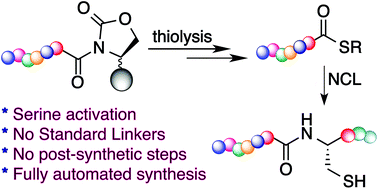
Chem. Sci., 2017, 8,117-123
DOI: 10.1039/C6SC02162J, Edge Article

Open Access
Hader E. Elashal, Yonnette E. Sim, Monika Raj
Fmoc solid phase peptide synthesis of peptide thioesters by displacement of the cyclic urethane moiety obtained by the selective activation of C-terminal serine.
The content of this RSS Feed (c) The Royal Society of Chemistry

18 Dec 20:19
by Isaac, S., Scher, J. U., Djukovic, A., Jimenez, N., Littman, D. R., Abramson, S. B., Pamer, E. G., Ubeda, C.
Background
Oral vancomycin remains the mainstay of therapy for severe infections produced by Clostridium difficile, the most prevalent cause of healthcare-associated infectious diarrhoea in developed countries. However, its short- and long-term effects on the human intestinal microbiota remain largely unknown.
Methods
We utilized high-throughput sequencing to analyse the effects of vancomycin on the faecal human microbiota up to 22 weeks post-antibiotic cessation. The clinical relevance of the observed microbiota perturbations was studied in mice.
Results
During vancomycin therapy, most intestinal microbiota genera and operational taxonomic units (OTUs) were depleted in all analysed subjects, including all baseline OTUs from the phylum Bacteroidetes. This was accompanied by a vast expansion of genera associated with infections, including Klebsiella and Escherichia/Shigella. Following antibiotic cessation, marked differences in microbiota resilience were observed among subjects. While some individuals recovered a microbiota close to baseline composition, in others, up to 89% of abundant OTUs could no longer be detected. The clinical relevance of the observed microbiota changes was further demonstrated in mice, which developed analogous microbiota alterations. During vancomycin treatment, mice were highly susceptible to intestinal colonization by an antibiotic-resistant pathogen and, upon antibiotic cessation, a less-resilient microbiota allowed higher levels of pathogen colonization.
Conclusions
Oral vancomycin induces drastic and consistent changes in the human intestinal microbiota. Upon vancomycin cessation, the microbiota recovery rate varied considerably among subjects, which could influence, as validated in mice, the level of susceptibility to pathogen intestinal colonization. Our results demonstrate the negative long-term effects of vancomycin, which should be considered as a fundamental aspect of the cost–benefit equation for antibiotic prescription.
18 Dec 20:08
by Pankaj Kumar

Nature Chemical Biology 13, 54 (2017).
doi:10.1038/nchembio.2237
Authors: Pankaj Kumar, Amit Kaushik, Evan P Lloyd, Shao-Gang Li, Rohini Mattoo, Nicole C Ammerman, Drew T Bell, Alexander L Perryman, Trevor A Zandi, Sean Ekins, Stephan L Ginell, Craig A Townsend, Joel S Freundlich & Gyanu Lamichhane

18 Dec 20:08
by Dan I Piraner

Nature Chemical Biology 13, 75 (2017).
doi:10.1038/nchembio.2233
Authors: Dan I Piraner, Mohamad H Abedi, Brittany A Moser, Audrey Lee-Gosselin & Mikhail G Shapiro

18 Dec 20:07
by Philipp Kleiner, Wolfgang Heydenreuter, Matthias Stahl, Vadim S. Korotkov, Stephan A. Sieber
Abstract
Affinity-based protein profiling (AfBPP) is a widely applied method for the target identification of bioactive molecules. Probes containing photocrosslinkers, such as benzophenones, diazirines, and aryl azides, irreversibly link the molecule of interest to its target protein upon irradiation with UV light. Despite their prevalent application, little is known about photocrosslinker-specific off-targets, affecting the reliability of results. Herein, we investigated background protein labeling by gel-free quantitative proteomics. Characteristic off-targets were identified for each photoreactive group and compiled in a comprehensive inventory. In a proof-of-principle study, H8, a protein kinase A inhibitor, was equipped with a diazirine moiety. Application of this photoprobe revealed, by alignment with the diazirine background, unprecedented insight into its in situ proteome targets. Taken together, our findings guide the identification of biologically relevant binders in photoprobe experiments.

In affinity-based protein profiling, small molecules are equipped with a photocrosslinker for irreversible binding to a protein target. The background protein labeling observed with such photocrosslinkers was analyzed by gel-free quantitative proteomics, and characteristic off-targets were identified for each photoreactive group. This is of importance for the reliable identification of biologically relevant binders in photoprobe experiments.
16 Dec 00:48
by Wei Gao, Tao Li, Jinghui Wang, Yibing Zhao and Chuanliu Wu

Analytical Chemistry
DOI: 10.1021/acs.analchem.6b04096

15 Dec 14:40
by Solmaz Sobhanifar
by Solmaz Sobhanifar, Liam J. Worrall, Dustin T. King, Gregory A. Wasney, Lars Baumann, Robert T. Gale, Michael Nosella, Eric D. Brown, Stephen G. Withers, Natalie C. J. Strynadka
In recent years, there has been a growing interest in teichoic acids as targets for antibiotic drug design against major clinical pathogens such as
Staphylococcus aureus, reflecting the disquieting increase in antibiotic resistance and the historical success of bacterial cell wall components as drug targets. It is now becoming clear that β-O-GlcNAcylation of
S.
aureus wall teichoic acids plays a major role in both pathogenicity and antibiotic resistance. Here we present the first structure of
S.
aureus TarS, the enzyme responsible for polyribitol phosphate β-O-GlcNAcylation. Using a divide and conquer strategy, we obtained crystal structures of various TarS constructs, mapping high resolution overlapping N-terminal and C-terminal structures onto a lower resolution full-length structure that resulted in a high resolution view of the entire enzyme. Using the N-terminal structure that encapsulates the catalytic domain, we furthermore captured several snapshots of TarS, including the native structure, the UDP-GlcNAc donor complex, and the UDP product complex. These structures along with structure-guided mutants allowed us to elucidate various catalytic features and identify key active site residues and catalytic loop rearrangements that provide a valuable platform for anti-MRSA drug design. We furthermore observed for the first time the presence of a trimerization domain composed of stacked carbohydrate binding modules, commonly observed in starch active enzymes, but adapted here for a poly sugar-phosphate glycosyltransferase.

15 Dec 14:38
Chem. Commun., 2016, Accepted Manuscript
DOI: 10.1039/C6CC07871K, Communication
Kuo-Ting chen, Cheng-Kun Lin, chih-wei Guo, Yi-Fan Chang, Chia-Ming Hu, Hsiao-Han Lin, Yuting Lai, Ting-Jen R. Cheng, wei-chieh cheng
Lipid II analogues bearing major modifications on the second sugar (GlcNAc) were synthesized and evaluated for their substrate activity toward TGases. Unexpectedly, N-deacetyled Lipid II decreased its activity dramatically, and...
The content of this RSS Feed (c) The Royal Society of Chemistry

14 Dec 19:17
The bacterium Pseudomonas aeruginosa infects burn wounds and forms immune-resistant biofilms like the one shown here, in vitro.
14 Dec 18:34
by Irina Protasova, Bekir Bulat, Nicole Jung and Stefan Bräse

Organic Letters
DOI: 10.1021/acs.orglett.6b03252

14 Dec 16:35
Publication date: February 2017
Source:Current Opinion in Microbiology, Volume 35
Author(s): Lara J Kohler, Craig R Roy
Eukaryotic cells use autophagy to break down and recycle components such as aggregated proteins and damaged organelles. Research in the past decade, particularly using Salmonella enterica serovar Typhimurium as a model pathogen, has revealed that autophagy can also target invading intracellular bacterial pathogens for degradation. However, many bacterial pathogens have evolved mechanisms that allow for evasion of the autophagic pathway, such as motility or direct and irreversible cleavage of proteins that comprise the autophagic machinery. As a complete and detailed understanding of the autophagic pathway and its derivatives continues to develop, it is likely that other mechanisms of inhibition by bacterial pathogens will be discovered.
Graphical abstract

13 Dec 20:29
by Rismondo, J., Bender, J. K., Halbedel, S.
The cell division protein GpsB is a regulator of the penicillin binding protein A1 (PBP A1) in the Gram-positive human pathogen Listeria monocytogenes. Penicillin binding proteins mediate the last two steps of peptidoglycan biosynthesis as they polymerize and cross-link peptidoglycan strands, the main components of the bacterial cell wall. It is not known what other processes are controlled by GpsB. L. monocytogenes gpsB mutants are unable to grow at 42°C, but we observed that spontaneous suppressors correcting this defect arise on agar plates with high frequency. We here describe a first set of gpsB suppressors that mapped to the clpC and murZ genes. While ClpC is the ATPase component of the Clp protease, MurZ is a paralogue of the listerial UDP–N-acetylglucosamine (UDP-GlcNAc) 1-carboxyvinyltransferase MurA. Both enzymes catalyze the enolpyruvyl transfer from phosphoenolpyruvate to UDP-GlcNAc, representing the first committed step of peptidoglycan biosynthesis. We confirmed that clean deletion of the clpC or murZ gene suppressed the gpsB phenotype. It turned out that the absence of either gene leads to accumulation of MurA, and we show that artificial overexpression of MurA alone was sufficient for suppression. Inactivation of other UDP-GlcNAc-consuming pathways also suppressed the heat-sensitive growth of the gpsB mutant, suggesting that an increased influx of precursor molecules into peptidoglycan biosynthesis can compensate for the lack of GpsB. Our results support a model according to which PBP A1 becomes misregulated and thus toxic in the absence of GpsB due to unproductive consumption of cell wall precursor molecules.
IMPORTANCE The late cell division protein GpsB is important for cell wall biosynthesis in Gram-positive bacteria. GpsB of the human pathogen L. monocytogenes interacts with one of the key enzymes of this pathway, penicillin binding protein A1 (PBP A1), and influences its activity. PBP A1 catalyzes the last two steps of cell wall biosynthesis, but it is unknown how GpsB controls PBP A1. We observed that a L. monocytogenes gpsB mutant forms spontaneous suppressors and have mapped their mutations to genes mediating and influencing the first step of cell wall biosynthesis, likely stimulating the influx of metabolites into this pathway. We assume that GpsB is important to ensure productive incorporation of cell wall precursors into the peptidoglycan sacculus by PBP A1.
09 Dec 19:14
by Julie A. Cass, Stella Stylianidou, Nathan J. Kuwada, Beth Traxler, Paul A. Wiggins
Summary
Advances in automated fluorescence microscopy have made snapshot and time-lapse imaging of bacterial cells commonplace, yet fundamental challenges remain in analysis. The vast quantity of data collected in high-throughput experiments requires a fast and reliable automated method to analyze fluorescence intensity and localization, cell morphology and proliferation as well as other descriptors. Inspired by effective yet tractable methods of population-level analysis using flow cytometry, we have developed a framework and tools for facilitating analogous analyses in image cytometry. These tools can both visualize and gate (generate subpopulations) more than 70 cell descriptors, including cell size, age and fluorescence. The method is well suited to multi-well imaging, analysis of bacterial cultures with high cell density (thousands of cells per frame) and complete cell cycle imaging. We give a brief description of the analysis of four distinct applications to emphasize the broad applicability of the tool.

In this paper, we have described a framework (Clist) and tools (gateTool) for visualizing and analyzing image cytometry data, inspired by the standard tools used for flow cytometry. This approach facilitates efficient analysis of subpopulations defined by cell descriptors such as fluorescence intensity and localization, cell morphology and growth rate. We provided four representative examples relevant to bacterial cell biology.
09 Dec 13:11
by Alexandra Tsirigotaki
Nature Reviews Microbiology 15, 21 (2017).
doi:10.1038/nrmicro.2016.161
Authors: Alexandra Tsirigotaki, Jozefien De Geyter, Nikolina Šoštaric´, Anastassios Economou & Spyridoula Karamanou
The general secretory (Sec) pathway comprises an essential, ubiquitous and universal export machinery for most proteins that integrate into, or translocate through, the plasma membrane. Sec exportome polypeptides are synthesized as pre-proteins that have cleavable signal peptides fused to the exported mature domains. Recent advances

06 Dec 12:34
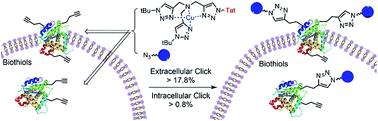
Chem. Sci., 2017, 8,2107-2114
DOI: 10.1039/C6SC02297A, Edge Article
Open Access
Siheng Li, Lin Wang, Fei Yu, Zhiling Zhu, Dema Shobaki, Haoqing Chen, Mu Wang, Jun Wang, Guoting Qin, Uriel J. Erasquin, Li Ren, Yingjun Wang, Chengzhi Cai
A copper-catalyzed click reaction inside living mammalian cells is demonstrated with the use of a cell-penetrating peptide-tethered CuI ligand.
The content of this RSS Feed (c) The Royal Society of Chemistry

05 Dec 17:36
Cin Kong, Su-Anne Eng, Mei-Perng Lim, Sheila Nathan
01 Dec 13:35
Chem. Commun., 2016, Accepted Manuscript
DOI: 10.1039/C6CC08292K, Communication
Haiyu Hu, Qingyang Zhang, qinghua wang, Shengnan Xu, Limin Zuo, Xuefu You
Specific detection of pathogens has long been recognized as a vital strategy in the control of infection diseases. Two novel theranostic neomycin analogs exhibit efficiently targeting, labelling and killing broad...
The content of this RSS Feed (c) The Royal Society of Chemistry