R.P. Aditya
Shared posts
How Women With A.D.H.D. Manage Their Money

The worst programmer I know
Article URL: https://dannorth.net/2023/09/02/the-worst-programmer/
Comments URL: https://news.ycombinator.com/item?id=37361947
Points: 1533
# Comments: 627
My Caste
Article URL: https://www.cs.toronto.edu/~meel/opinions/caste.html
Comments URL: https://news.ycombinator.com/item?id=37323760
Points: 549
# Comments: 395
An excruciatingly detailed guide to SSH (but only the things I find useful)
Article URL: https://grahamhelton.com/blog/ssh-cheatsheet/
Comments URL: https://news.ycombinator.com/item?id=37240187
Points: 436
# Comments: 109
A Camp for Japan’s Social Recluses
In 2017, soon after Kodai Yoshimura left his quiet hometown near the Sea of Japan for the bustling city of Osaka, something in his mindset began to shift.
His freshman year at Kansai University was supposed to be a time of new experiences and friendships. Instead, Yoshimura found himself losing interest in his studies. He began skipping class, and started spending more and more time holed up in his apartment, where he spent hours glued to his PlayStation 4, often until 3 a.m.
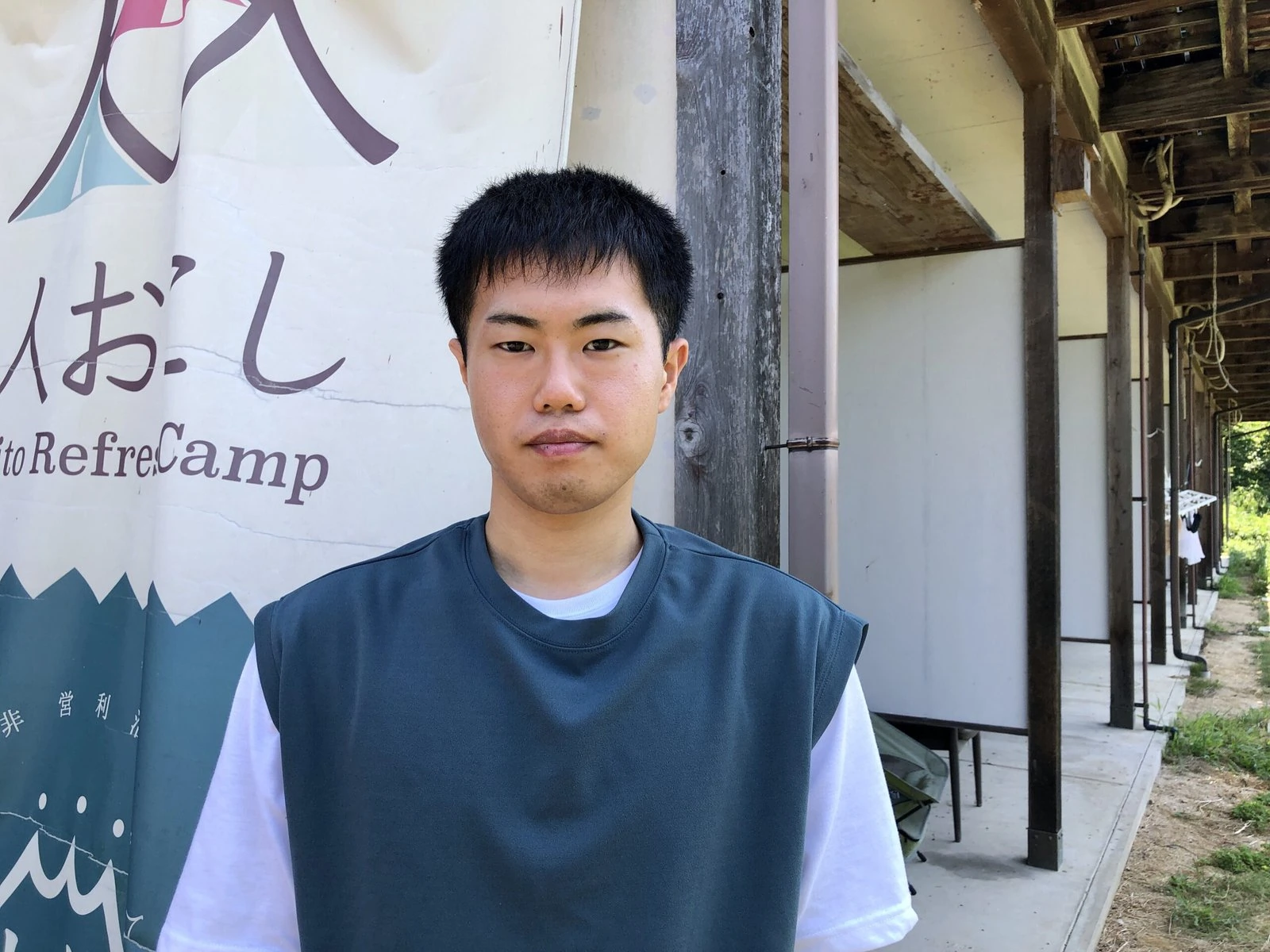
As first-person shooter games like Call of Duty absorbed his days and nights, he began avoiding people and venturing into public as little as possible. Within a few months, he had become a hikikomori, a social recluse.
“It’s not like I was bullied or anything,” says Yoshimura, now 26, recalling those days of isolation. “I just didn’t want to see other students.”
The post A Camp for Japan’s Social Recluses appeared first on Reasons to be Cheerful.
How They Tried to Kill Me
Article URL: https://www.nplusonemag.com/online-only/online-only/how-they-tried-to-kill-me/
Comments URL: https://news.ycombinator.com/item?id=37145491
Points: 317
# Comments: 129
My Overkill Home Network
Article URL: https://blog.networkprofile.org/my-home-network-complete-details-2023/
Comments URL: https://news.ycombinator.com/item?id=37081789
Points: 586
# Comments: 451
Exploring Maremma, a Quiet Corner of Italy

A love letter to the East Bay coffee shops that raised me

If we want a shift to walking we need to prioritize dignity
Article URL: https://streets.mn/2023/07/19/if-we-want-a-shift-to-walking-we-need-to-prioritize-dignity/
Comments URL: https://news.ycombinator.com/item?id=36920622
Points: 605
# Comments: 680
Louise Levy, Who Was Studied for Her Very Long Life, Is Dead at 112
Most hilarious squash point I've ever watched
https://www.youtube.com/watch?v=l_V75sasqxk
I was laughing so hard by the 7th let I had to go back and count them all lol
- 18:50 10-10
- 19:03 yes let
- 19:22 yes let
- 19:56 yes let
- 20:26 yes let
- 21:18 yes let
- 21:40 yes let
- 22:02 yes let
[link] [comments]
Flipping a Switch and Making Cancers Self-Destruct

L.A. by Subway

This Was No Ordinary Sunburn. What Was Wrong?
How King County Manages Its Waste
A trip to Cedar Hills Regional Landfill shows garbage’s disappearing act is an illusion.
There’s a great episode of 99 Percent Invisible that compares residential waste collection systems in Taiwan and the US. In Taipei, garbage and recycling trucks run their routes multiple times a day, playing distinctive classical music, and at each stop wait for residents to throw in their own garbage bags and sort their own recyclables. It’s a system that forces residents to reckon with the volume and types of their waste.
In the US, our solid waste disappears soon after we create it. We put it in bins or dumpsters outside and then pay someone else to do the dirty work. We might reckon with the amounts we’re creating when we pay the bill according to bin size or type, or we might live in places like Seattle where all recycling collection is free. Regardless, as soon as our refuse enters these bins, we don’t have to think about it again.
But where does it all go? And how much of it is there? In King County, while our garbage is kept out of the way, it’s not far away, and there is so much of it that we are running out of space in our landfill to store it. Despite this looming crisis, most of what we throw away could have been diverted from the landfill and reused, preserving precious landfill space, resources, and creating new value. We cannot continue to expect our garbage to simply disappear without someday dealing with the big reveal. Not only do we risk letting it erupt into our landscape, but we also fail to see how it can stabilize our supply chains. So let’s keep it in sight. To do that, we first need to find it!
Behind the Curtain
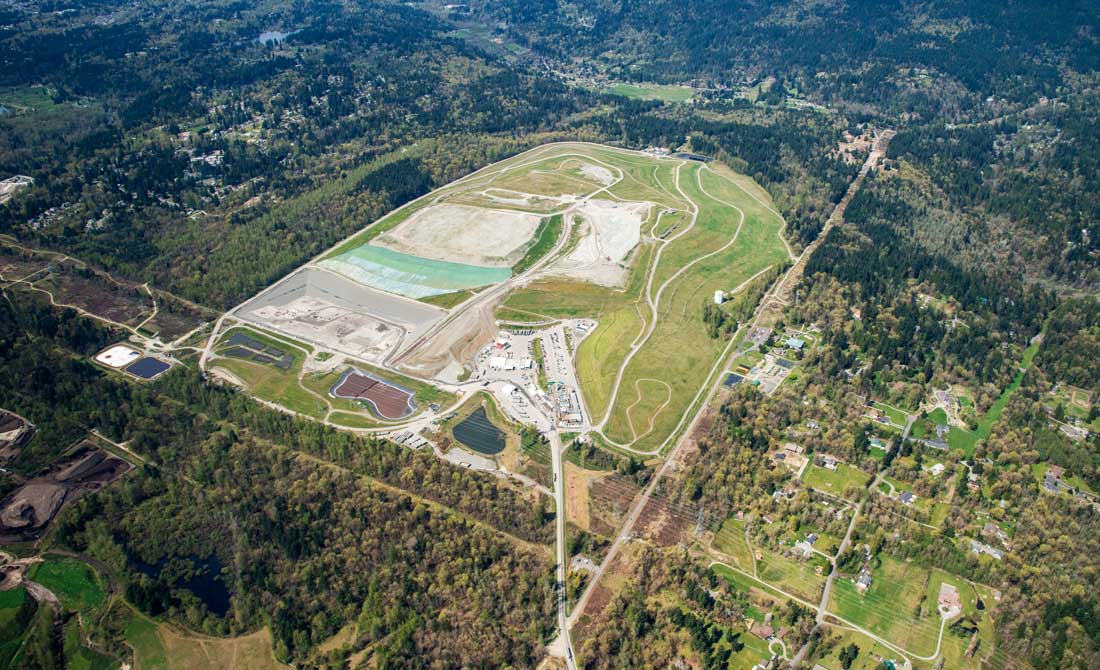
Tada! Look at the red outline in the bottom-right corner of the map below. If you live in King County (except Seattle and Milton, more on that later), most of your garbage goes there, to the Cedar Hills Regional Landfill.

Just south of Cougar and Tiger Mountains, weekend favorites for many hikers in the area, rises another range (or perhaps a monument), the Cedar Hills Regional Landfill. The 920-acre site amasses an additional 1 million tons per year, storing the garbage from about 1.5 million people, or 68% of King County, as of May 2022. The population that this humble dumping ground serves is expected to increase, as King County grew by an average of over 3% annually from 2010 to 2020 according to the US Census Bureau.
The Landfill is … Filling
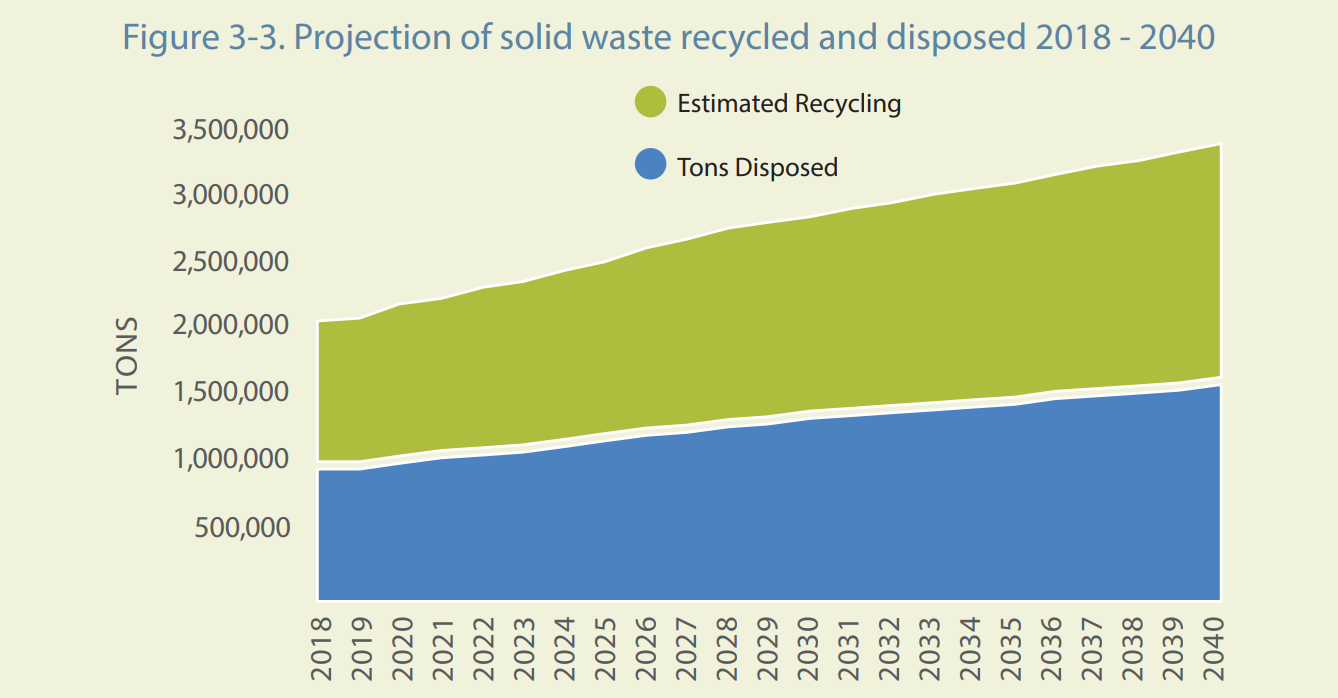
How will the landfill manage future population and waste growth? The King County Solid Waste Division (KCSWD) answered these questions in its 2019 Comprehensive Plan. They estimated that annual garbage production will increase up to 1.275 million tons by 2028 and 1.564 million tons by 2040 (“Tons Disposed” in the figure below).
The truth is that Cedar Hills is running out of space. In fact, when the 2019 Plan was published, the landfill was estimated to reach capacity by 2028, but in 2022 the county decided to expand it, kicking the proverbial can of deciding where to put our post-Cedar Hills trash 10 years down the road.
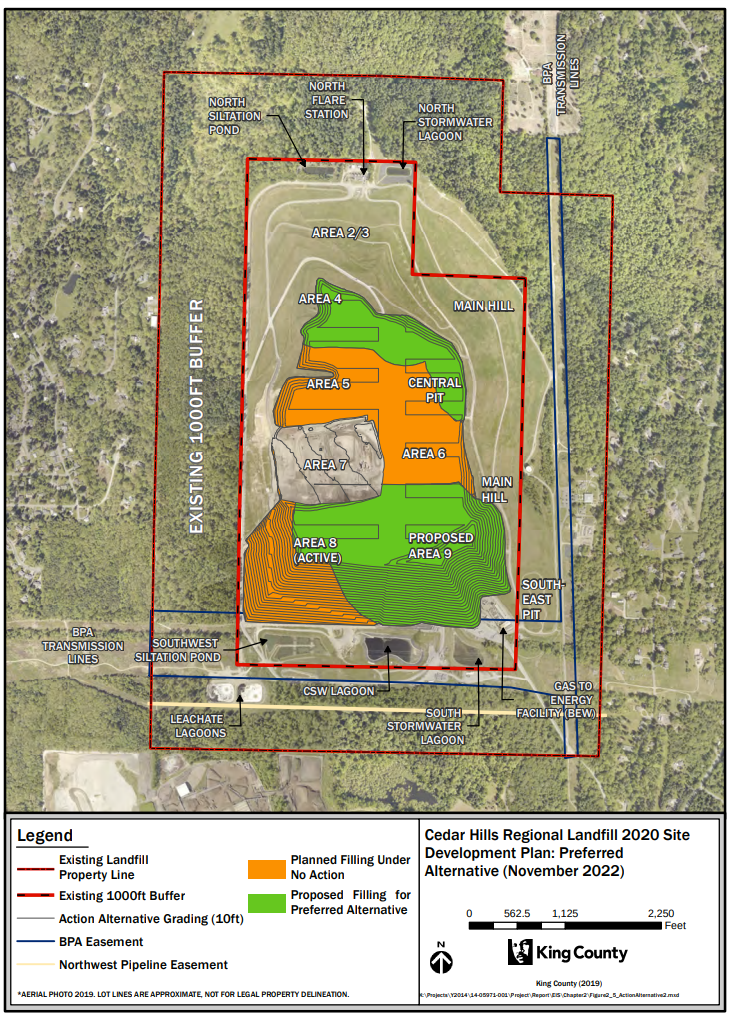
The adopted expansion plan created a new 34-acre Zone 9 in the landfill, for a total active area of about 500 acres, and also permitted the waste to pile up to 30 feet higher than before, from 800 feet to 830 feet above sea level. Since Cedar Hills is about 630 feet above sea level, that’s about 200 feet above the ground.
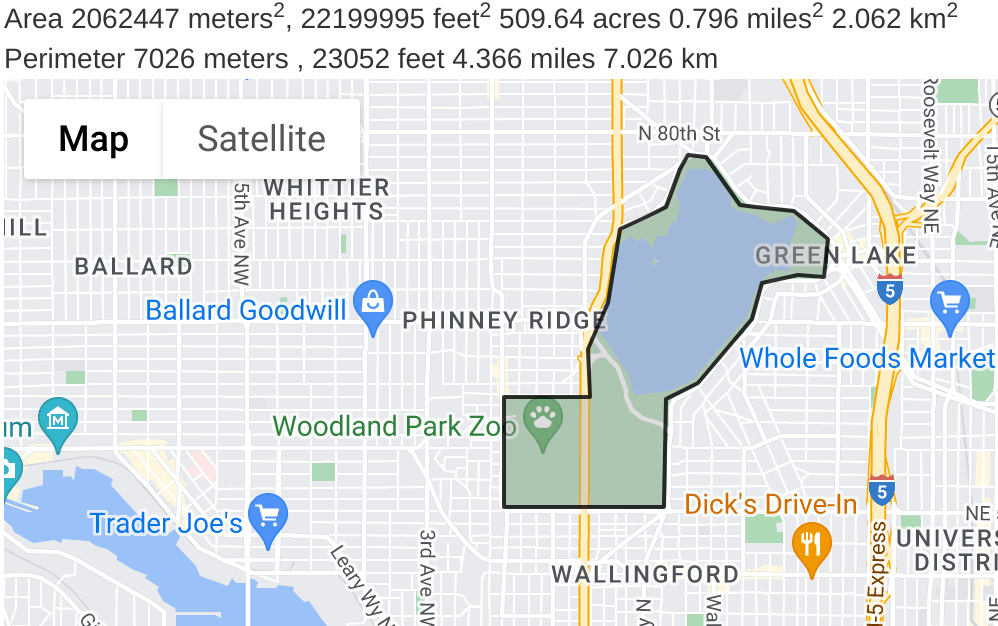
To get a sense for how large this landfill will be when it’s at what’s currently defined as full capacity: imagine Green Lake and Woodland Parks in Seattle (including the zoo) completely filled with garbage up to a third of the height of the Space Needle (605 feet at the top of the spire). The average density of the pile would be about the same as solid butter.
Wasted Opportunities
If the thought of the entire area of Green Lake and Woodland Parks filled up to 200 feet high with trash (or butter) doesn’t fill you with disgust (or awe), then maybe this will: that 62% of the new garbage in the landfill could have been diverted! The 2019 Waste Characterization Study concluded that most of what we threw away was “Readily Recyclable,” meaning that it could have been recovered in recyclables or organics waste streams (see Disposed Waste Recoverability chart on left, below).
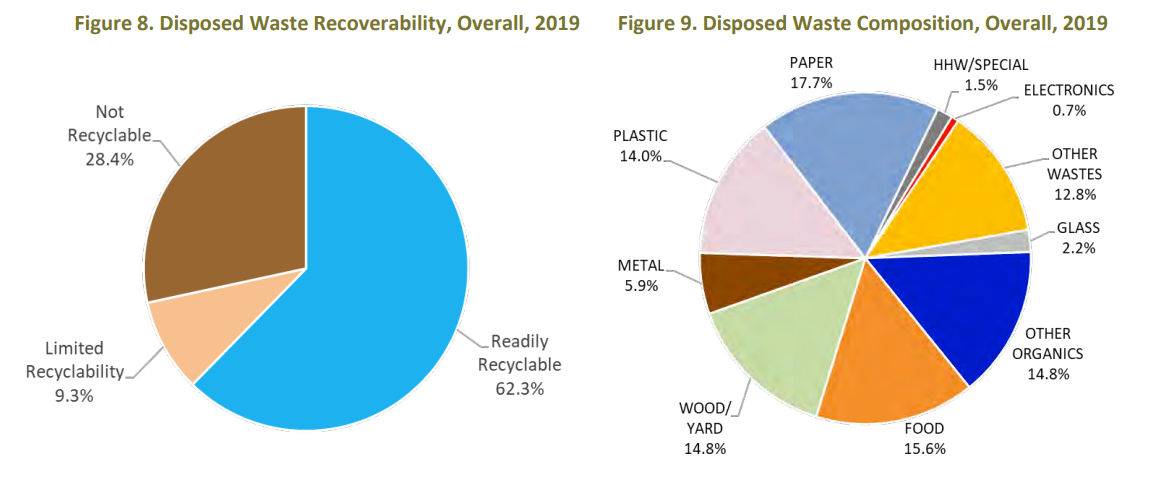
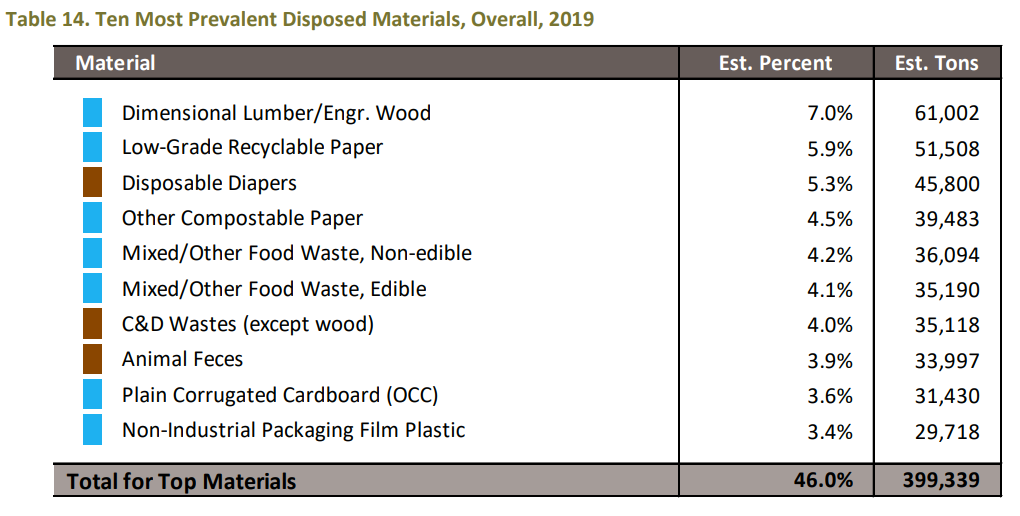
As the Disposed Waste Composition chart on the above right shows, a large portion of the recoverable waste is in the organics category (Wood/Yard, Food, and Other Organics, almost half!); furthermore, as the chart below shows, seven of the top ten most common materials were recyclable (materials with blue rectangles). Note that samples were collected from all over the county, and a couple facilities do not offer recycling and organics collection. The facilities also collect residential as well as commercial waste, but the overall results are similar to residential-only results.
Dirty Diapers
Landfills are federally mandated to include thick liners to prevent leakage into the surrounding soil and groundwater. Furthermore, they are covered daily in order to reduce odor, prevent fires and scavenging, and to recover methane that is released from the large amount of decomposing organic waste.
The fact that they contain large contributions of disposable diapers and pet waste (see table above) adds literal to their figurative purpose as the dirty diapers of society. The thousands of people who live around the 1.4 square-mile diaper that is Cedar Hills Landfill will always have to deal with it, and eventually we’ll have to create a new landfill. We can’t pretend that new landfills are never going to be sited in our future backyards or, more likely, that it’s okay to keep siting them in the backyards of those who already deal with their fair share of toxic and smelly sites. Indeed, the origin of the Not In My Backyard (NIMBY) movement has its roots in toxic waste management.
There are real opportunity costs to landfills, the first being healthy land. The protective measures mentioned above are designed to prevent infiltration, not to restore; the land will not be productive again as long as there are hundreds of feet of garbage underneath it and surrounding areas will remain devalued. Second, as the charts in the last section show, the landfills are filled with natural resources that could have been recovered, creating jobs and new products; instead, these resources remain inaccessible.
This, in my opinion, is the most potent smell of the status quo: that we are wasting valuable resources. It’s painful for me to think about the investments we’ve made as a society to grow an incredible diversity of food and to extract chemicals from fossil fuels and mines, only to choose every year to lock many of these resources away in landfills. As worldwide demand for these resources changes, I believe this wasteful pattern will lead to higher prices and more conflict. The 2019 Comprehensive Plan assumed a 52% recycling rate through 2023. This is like running an engine at 50% efficiency; imagine if half the gas you paid for and put in the tank was simply dumped on the ground! For systems that we use every day, this kind of inefficiency is increasingly expensive and unacceptable.
Opportunities of Waste
What can we do to slow the creation of new landfills and in the process create circular waste economies, where more materials are recovered and reused, and our waste is not so wasteful? I posed this question to Sergio Barbosa, KCSWD Operations Supervisor, while on a tour of the Bow Lake Transfer Station. He advocated for three things: changing incentives, improved facilities, and, most of all, education for residential customers to better sort and process their solid waste.
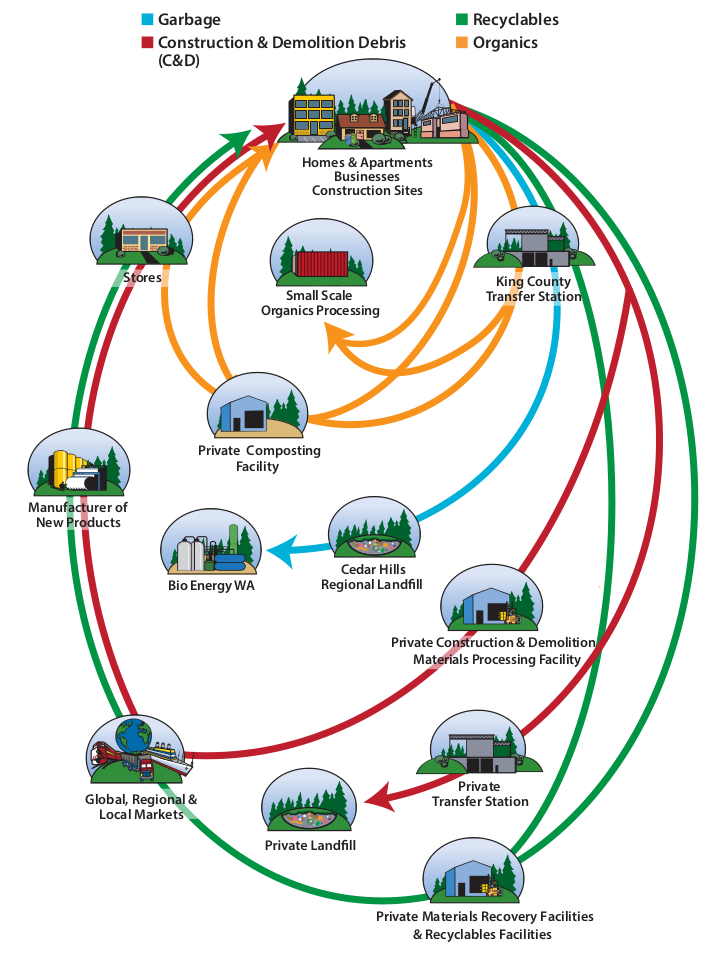
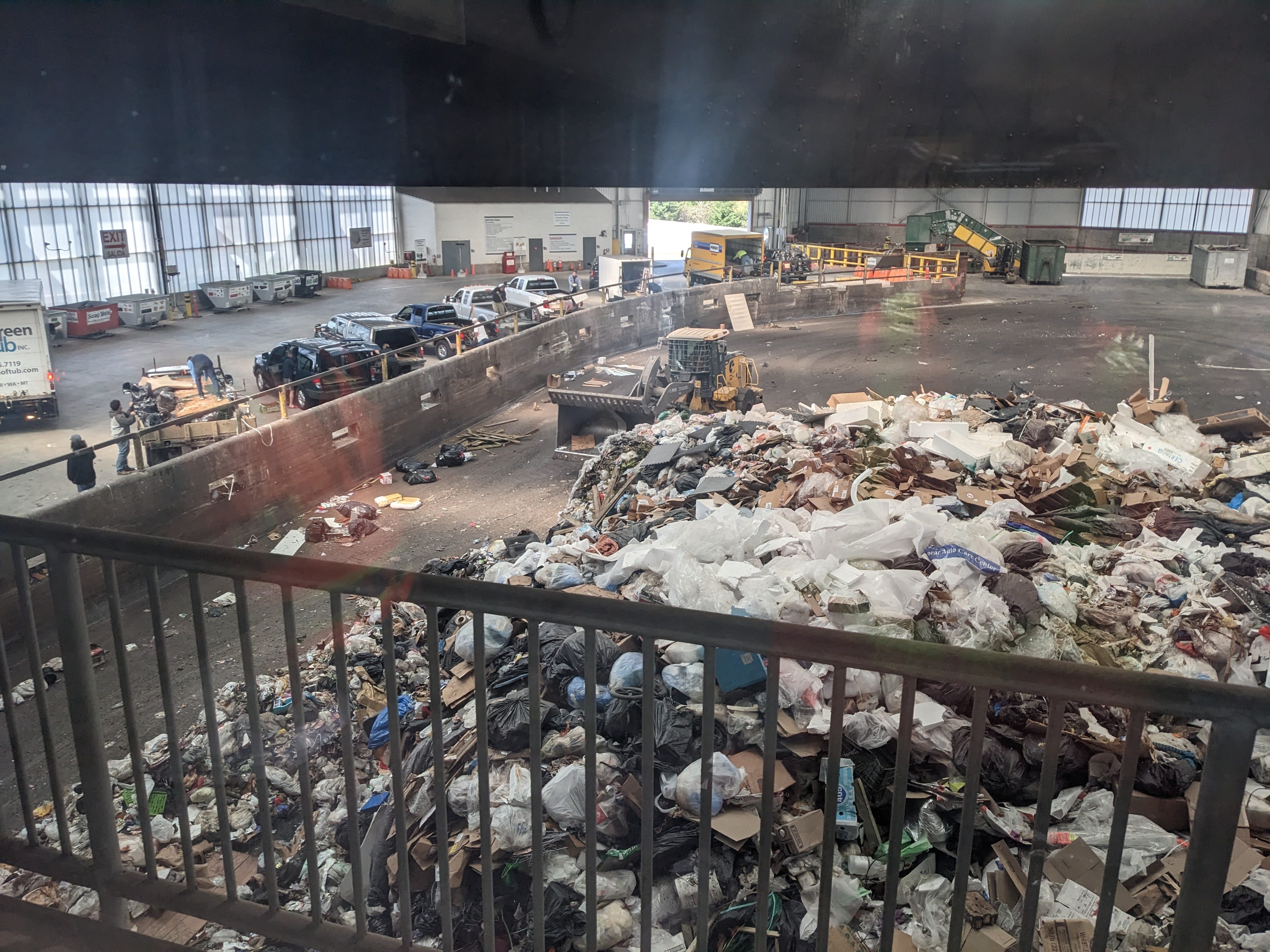
A transfer station, as the diagram above shows, is where haulers of all kinds bring their trash, recyclables, organics, and other valuable or hazardous products like appliances. Looking at the mountain of trash that had been dumped on the floor by commercial haulers, I could not help but notice the large number of recyclables just sitting on the top of the pile, mostly cardboard boxes. A loader shuttled back and forth, tirelessly pushing the waste into a corner where it would fall through the floor to be compacted and then taken to the landfill. Barbosa noted that this loader runs all day to keep up with new deposits.
Meanwhile, on the side of the floor, individuals stood in the backs of pickup trucks, throwing more trash but also more recyclables into the pile: mostly wood, but also perfectly good-looking furniture. These people were paying more to just throw everything into the trash, rather than bothering to make another stop, whether that was at their local donation center or the used wood collection bin 50 feet away. While I’m sympathetic to those who don’t have this luxury of time, I was disturbed by the pressures, ignorance, and indifference that drive this behavior.
At home, I researched Barbosa’s recommendations and found that the county has recognized the problem and is already taking action. There’s never been a better time to join the movement towards a more circular economy.
Investments
It’s encouraging that King County has a stated goal to “keep 70% of materials with economic value out of the landfill” as part of its newly launched Re+ program. What’s more, this March they put their money where their mouth is, awarding $2.3 million in grants to 14 projects that can help them reach this goal. The projects span the entire value chain and a variety of “waste” sources, from connecting surplus food with chefs to mixing post-consumer plastics into asphalt for roads. It’s a drop in the bucket of their total $357 million budget for this year, but it’s something.
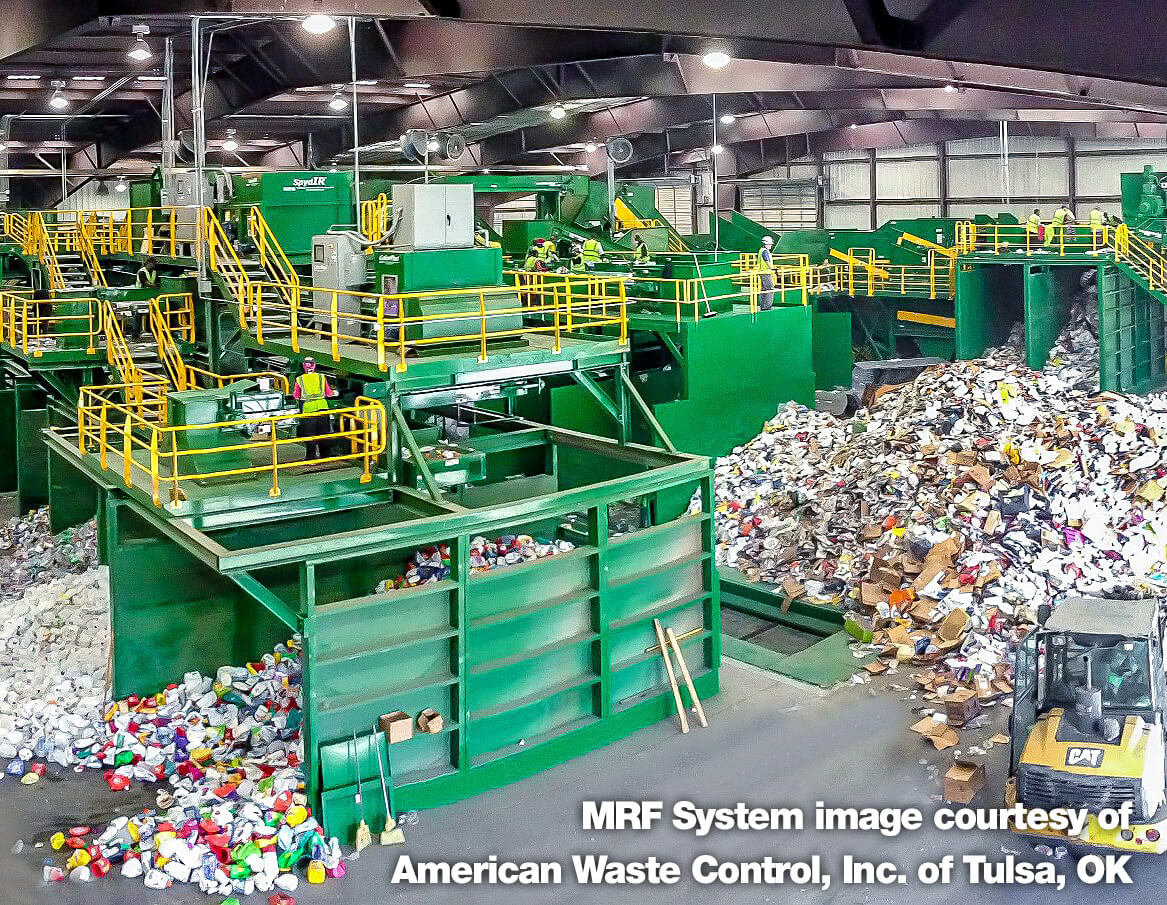
The county is also wrapping up a pilot that uses a new Materials Recovery Facility (MRF) technology called Juno. Juno has the ability to capture cups with plastic coatings and contaminated paper-based food packaging, tripling landfill diversion rates in other areas that it has been used.
Education
One thing that I won’t forget about recycling after learning about MRFs is that it’s better to not bag your recyclables, especially in opaque bags, because the machinery cannot process it and workers often do not have time to open the bags. Sadly, these bags full of perfectly recyclable material that you took the time to sort may end up in the trash. As of 2020, King County no longer accepts plastic bags in curbside bins, and neither does Seattle.
Similarly, unless the downstream MRF can handle “wet” inputs, like those using the Juno technology, it cannot handle recyclables that are commingled with food waste. Usually these recyclables are deemed contaminated and have to be thrown away. That is why many recycling services require that your recyclables are unbagged, clean, and dry.
Coincidentally, contamination is the reason that China’s National Sword policy was so impactful to the recycling economy in the US. The policy did not ban imports of recyclables outright, it just raised the quality standards of those imports, forcing the US to deal with its inventory of contaminated and even toxic materials. For many years, China was effectively buying garbage from the US, materials that would have just gone straight to the landfill otherwise. The problem is not that someone else is not buying our food-covered takeout containers; it’s that we’re producing so many without the ability to reclaim any value from them.
Speaking of waste that’s difficult to deal with, what do you do with the spectrum of unidentifiable plastic in so many goods and their packaging? In the past I’ve optimistically put much of it in the recycling bin, a practice called wishcycling. Unfortunately, our current facilities cannot process many of these plastics and when in doubt, they should be thrown away to prevent contamination. However, there are tools available, such as King County’s What Do I Do With…? and Seattle Public Utilities’ Where Does it Go? that may be able to provide other options.
I was shocked to learn that there are businesses in King County dedicated to recycling mattresses and rugs into new products! Organics waste is transformed into high-grade compost, locally, at Cedar Grove. Plastic bags and packaging film can be turned into new composites through programs like Seattle WRAP. Refrigerator coolants, which can be thousands of times more potent greenhouse gases than CO2, are purified and resold by Total Reclaim.
Upstream Interventions
The above interventions deal with the products that we have already created. They place a lot of responsibility on consumers and a lot of hope on future technology. But what about the manufacturers who made the product, or designed it in a way that makes it difficult to put it anywhere but in the trash?
As consumers we have the power to choose to buy and use products that create less solid waste, or less unusable solid waste. Of course, manufacturers are aware of this and there is a good amount of greenwashing going on, so you need to do your research. The petrochemical industry will keep on lobbying to make everything from cheap, ubiquitous, and difficult to recycle plastics. Buying used or even not at all is a good way to avoid dealing with the personal cost of dealing with the disposal of a new product.
When market(ing) forces are too strong, our lawmakers can also step in. We have already controlled the sale of some harmful materials in products and packaging, such as HCFCs (refrigerants) and PFAs (nonstick chemicals used in food packaging). Extended Producer Responsibility (EPR) programs force manufacturers to be responsible for disposal of their products.
Out of Sight But Not Mind
What will we do with our trash when the Cedar Hills Landfill closes? Most likely, it will be shipped to Oregon. This is the fate of Seattle’s trash today. The Columbia Ridge Landfill has a currently active size of 700 acres and processes an estimated 2.8 million tons of trash per year.
The trash is transported by train. Regulations require that each train only carries trash, on average 300 double-stacked containers weighing an average of 48 tons each. That’s a lot of trash, even to imagine. But when the roar and grumble of the engine fades into the distance, it’s as if it never existed; the trash stays invisible, hidden behind an illusion that we can just continue to create waste the way we do now without ever paying its full cost.
This article is a cross-post from ricehornet, a blog by Eric Thorne, who is a software engineer living in Columbia City.
The post How King County Manages Its Waste first appeared on The Urbanist.
Edward Fredkin, 88, Who Saw the Universe as One Big Computer, Dies
Sao Paulo: A city with no outdoor advertisements (2013)
Article URL: https://www.amusingplanet.com/2013/07/sao-paulo-city-with-no-outdoor.html
Comments URL: https://news.ycombinator.com/item?id=36586632
Points: 682
# Comments: 407
Very funny moment from the World Tour final that was missed in the highlights
A new study looks at how exercise can help alleviate anxiety and depression
Article URL: https://greatergood.berkeley.edu/article/item/what_type_of_exercise_is_best_for_mental_health
Comments URL: https://news.ycombinator.com/item?id=36472370
Points: 313
# Comments: 303
Minimal downtime major PostgreSQL version upgrades with pg_easy_replicate
Article URL: https://github.com/shayonj/pg_easy_replicate
Comments URL: https://news.ycombinator.com/item?id=36405761
Points: 301
# Comments: 62
Why 2023 Is the Year of the Long Walk
Can Old-World Horezu Pottery Survive Modern Tastes?
Pottery Workshops Fill Up as People Travel to Connect Over Clay
Mexico’s terrific new dietary guidelines. Yes!
Mexico has issued new dietary guidelines.
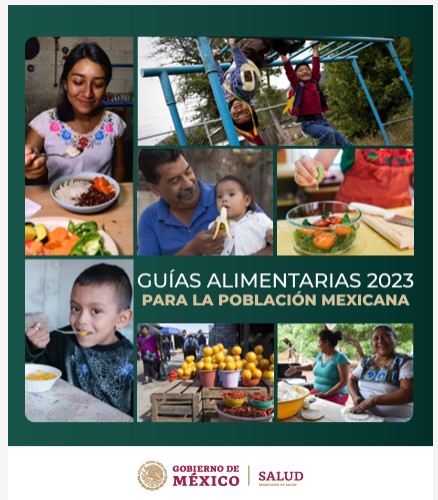
https://www.gob.mx/cms/uploads/attachment/file/826673/Gui_as_Alimentarias_2023_para_la_poblacio_n_mexicana.pdf
- Breastfeed babies for the first 6 months and then continue until age 2 along with other nutritious foods.
- Eat more vegetables and fruits.
- Eat beans.
- Choose whole grains.
- Eat less beef and processed meats.
- Avoid ultra-processed foods.
- Drink water.
- Avoid alcohol.
- Be physically active.
- Enjoy meals with family and friends.
I’m looking forward to reading a case study on how the public health institute got these through the political process.
If people follow these guidelines, these industries will be in trouble:
- Infant formula
- Beef
- Processed meats
- Ultra-processed foods
- Sugar-sweetened beverages
- Alcohol
People will be healthier! These industries will also be in trouble.
- Pharmaceutical drugs
- Private medicine
- Insurance companies? (you might think they would benefit, but they make so much money on illness—this one is complicated)
I hope the new U.S. Dietary Guidelines will find these inspiring.
The post Mexico’s terrific new dietary guidelines. Yes! appeared first on Food Politics by Marion Nestle.
In Tokyo, Skipping the Hot and New for Enduring Haunts

Simple exercise to eliminate gastroesophageal reflux (2022)
Article URL: https://www.ncbi.nlm.nih.gov/pmc/articles/PMC9106553/
Comments URL: https://news.ycombinator.com/item?id=36059247
Points: 507
# Comments: 223
To Find Europe’s Best Bike Routes, a Cycling Writer Asked the Crowd
Senator Manka Dhingra launches 2024 campaign for Attorney General

Democratic State Senator Manka Dhingra (D‑45th District: Redmond, Kirkland, Sammamish, Duvall), a Northwest Progressive Foundation boardmember, today became the first major candidate to jump into the 2024 contest for Attorney General of Washington State, which will be open next year due to incumbent Bob Ferguson’s decision to run for governor after Jay Inslee announced his retirement.
“Washington has never had an Attorney General of Washington with deep experience in criminal prosecution,” said Dhingra, who was first elected to the Legislature in 2017 in an expensive special election in the 45th District and has easily secured reelection twice since then (in 2018 and 2022).
“I began my legal career in the State Attorney General’s Office assisting with Sexually Violent Predator cases, and went on to a two decade career as a King County Deputy Prosecutor. I’ve put domestic abusers and child predators behind bars, prosecuted gun crimes, and confronted the blind spots in our justice system to improve accountability and reduce crime.”
“I’ve spent my career in the courtroom and State Senate speaking out for people who too often have no voice,” she added. “I’ve led reforms to create veterans and mental health courts to make sure people get the treatment they need.”
“I’ve written, sponsored, and passed laws to address gun violence, ban assault weapons and ghost guns. I’ve strengthened protection order laws so victims of abuse and their families can find solace and recovery. I’ve also secured the nation’s strongest privacy protections for sensitive reproductive and health care data.” (NPI worked with Senator Dhingra to pass many of these bills.)
“I’m excited to take this next step in my legal and advocacy career, continuing to work for all the people of Washington State as we confront national challenges to voting and access to reproductive rights. I’ll lead nationally on laws that safeguard worker rights, hold polluters accountable, and address the epidemic of gun violence.”
Most of Dhingra’s Democratic colleagues in the Washington State Senate are supporting her candidacy. Twenty fellow Democratic senators — which is most of the caucus — have already endorsed her. Former state party chair Tina Podlodowski is a supporter, along with King County Councilmembers Sarah Perry and Claudia Balducci, who represent the Eastside at the county level.
In 2020, State Representative Drew Hansen and then Seattle City Councilmember Lorena Gonzalez also considered running for Attorney General along with Dhingra, but neither is presently making moves to enter the 2024 race. Nick Brown, the U.S. Attorney for Western Washington, is said to be contemplating a run, but has declined to comment when asked reporters about his plans. Brown is good friends with Washington State Solicitor General Noah Purcell, who has also previously weighed running for AG. (If Brown does run, Purcell told Jerry Cornfield he won’t.)
Republicans have not yet put forth a candidate. They could try to field a county prosecuting attorney, as they hold some of those offices.
Seattle City Attorney Ann Davison is reportedly interested in running, but she has previously flopped as a statewide candidate, and if she runs for AG as a Republican, she’ll have to pander to the militant, extreme, Trump-adoring Republican base throughout the state, which could significantly damage her standing among Seattle voters, destroying any hope of reelection in 2025.
Incumbent Bob Ferguson will be leaving behind some mighty big shoes. Ferguson has had an incredible run as AG, with an impressive record in the legal arena, the legislative arena, and the electoral arena. He and his team have secured crucial victories at every level for a long list of progressive causes: environmental justice, reproductive rights, worker and immigrant protections, and health freedom, to name a few. He fearlessly took on the Trump regime, early and often.
Ferguson has also vigorously enforced Washington State’s public disclosure laws, holding bad actors like Tim Eyman and the Grocery Manufacturers accountable.
No one in modern times has done more with the office. But Ferguson would be the first to say there’s always more to do. If Dhingra is his successor, he’ll be followed by someone who is extremely passionate about securing progress and getting results. Senator Dhingra has consistently demonstrated a first-rate work ethic since she joined the Senate, and our staff has no doubt she’d work very hard as Attorney General to get justice for Washingtonians every day.
NPI does not endorse candidates for office or engage in electioneering for or against any candidate, but we will be covering this race over the next year and a half, and polling on it as well. We’ll be keeping an eye on the field as it grows!
Updated May 9th, 2023 with information about other candidates in the race.
Senator Manka Dhingra launches 2024 campaign for Attorney General is a post from NPI's Cascadia Advocate, the journal of the Northwest Progressive Institute. Published continuously since March of 2004, NPI's Cascadia Advocate provides thoughtful commentary and analysis on regional, national, and world politics. Keep The Cascadia Advocate going by making a contribution to sustain NPI's research and advocacy here.
The Surprising Role of Blind Women in India’s Health Care System
On a sunny March morning in Bengaluru, Ayesha Banu and Noorunnisa walk up to the stage of Nitte Meenakshi Institute of Technology. Their white canes folded and held aside, they speak to a packed hall of students and teachers about their work as Medical Tactile Examiners (MTEs).
“We assist doctors in detecting the early signs of breast cancer in women,” Banu speaks into the mic. “Using the first two fingers of both hands, we examine women’s breasts for abnormalities.” She explains that blind women like herself and Noorunnisa are especially well-suited to this profession because of the “high tactile sense in our fingertips, which helps us find tiny lumps in the breast.”
Banu and Noorunnisa (who goes by one name) are based at Cytecare, a cancer hospital in Bengaluru. They often travel around India to raise awareness about the significance of early diagnosis of breast cancer and to conduct routine tactile breast examinations at workplaces, universities, NGOs, and most importantly, rural communities, where there is little access to healthcare.
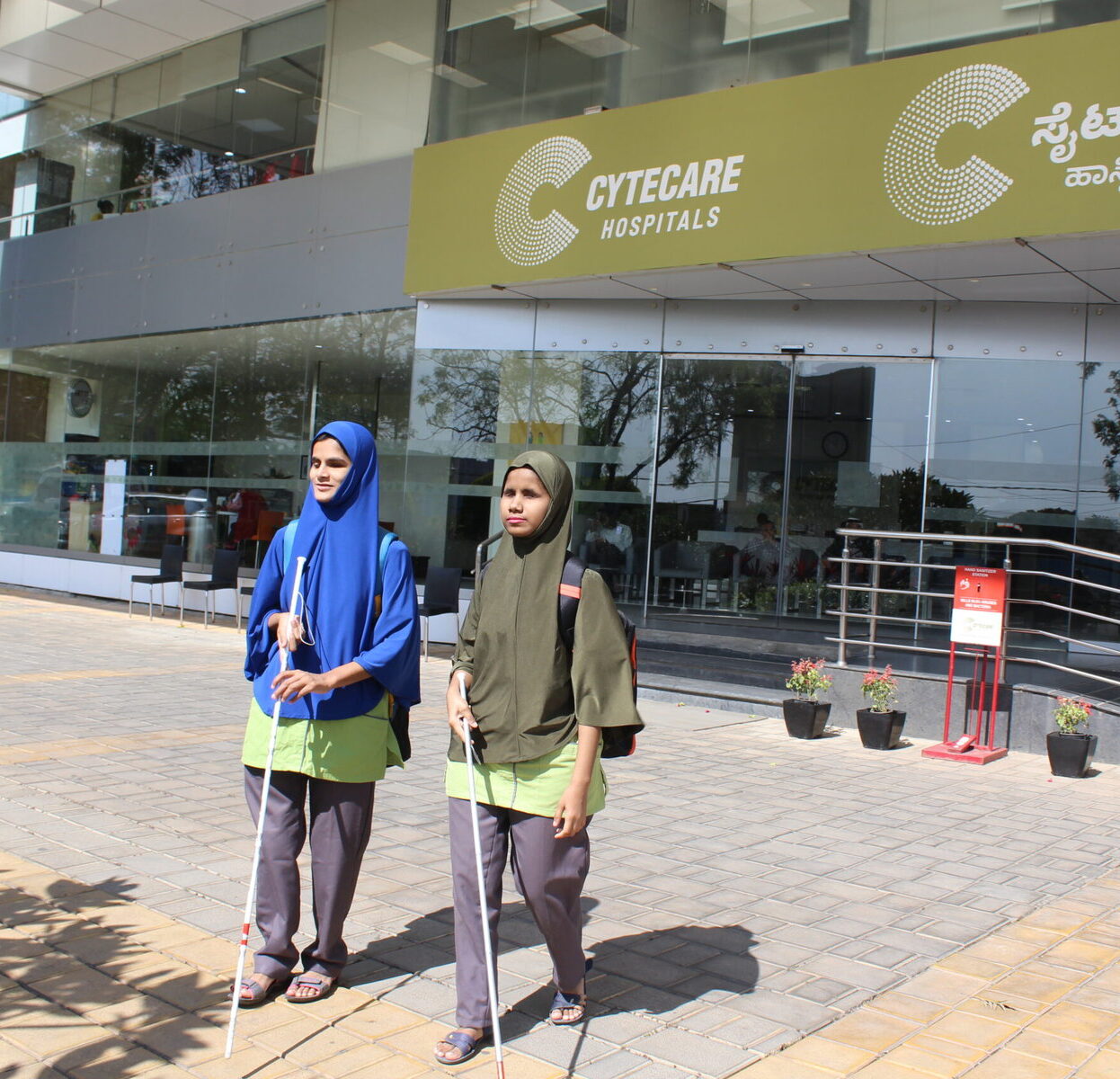
Tactile breast examinations, or TBEs, are clinical breast examinations specially designed for blind women trained as MTEs. Breast cancer is the most commonly diagnosed cancer globally. It is the principal cause of death from cancer in India, primarily because 60 percent of the cases are diagnosed at stage III or IV of the disease — when survival rates dip drastically. Employing MTEs for routine breast cancer screening — and reaching women in their communities and workplaces — could help in the early detection of cancer and save lives, says Dr. Poovamma CU, the breast specialist under whom Banu and Noorunnisa work. In fact, preliminary research found that clinical breast exams performed by visually impaired MTEs have an accuracy level similar to exams performed by physicians.
To conduct the examination, an MTE pastes five purpose-built Braille-marked documentation tapes on a woman’s chest to divide it into four zones for orientation, and then palpates every centimeter to check for any abnormalities. After the 30- to 40-minute examination, the MTE documents her findings and emails them to a physician for diagnosis. At Cytecare, Dr. Poovamma CU evaluates each report and makes a call on whether the patient needs further assessment such as mammography or ultrasound examination.
Since 2018, 14 MTEs have examined about 6,000 women in India, despite a break of two and a half years during the pandemic.
A creative moment
The idea for MTEs came to the German gynecologist Dr. Frank Hoffmann, who offers early breast cancer screening to his patients in his clinic in Duisburg in western Germany.
“I wasn’t content with what I could offer my patients with my two- to three-minute clinical breast examinations,” he recalls. He says he was wary of missing small changes in the breast tissue, critical for catching the early signs of cancer, and was looking for solutions to bridge the gap.
Then, in November 2005, “during a very creative moment one morning when I was under a shower, it hit me that this could be the perfect job for visually impaired people because they have a very highly trained sense of touch,” he says. Studies prove that in the absence of sight, blind people’s brains can develop a heightened sense of touch, as well as hearing, along with other senses and cognitive functions.


Become a sustaining member today!
Join the Reasons to be Cheerful community by supporting our nonprofit publication and giving what you can.
JoinHoffmann reached out to Berufsförderungswerk, an NGO that trains blind and visually impaired people in vocational skills in Düren, and with their help, designed a nine-month training course including three months of internship. The training has been offered by Hoffmann’s social enterprise, Discovering Hands, since 2010, and has accredited nearly 100 MTEs in Germany, Colombia, Mexico, Nepal, Switzerland, Austria and India. (MTEs are currently only practicing in Europe and India; the program has been on hold in other countries since the MTEs lost their jobs during the pandemic.)
Discovering Hands was brought to India in 2017 by the Delhi-based nonprofit vocational training institute National Association of the Blind India Centre for Blind Women and Disability Studies (NABCBW) funded by the life sciences company Bayer, which continues to sponsor the training in Delhi. Seven MTEs were trained in Delhi’s inaugural cohort.
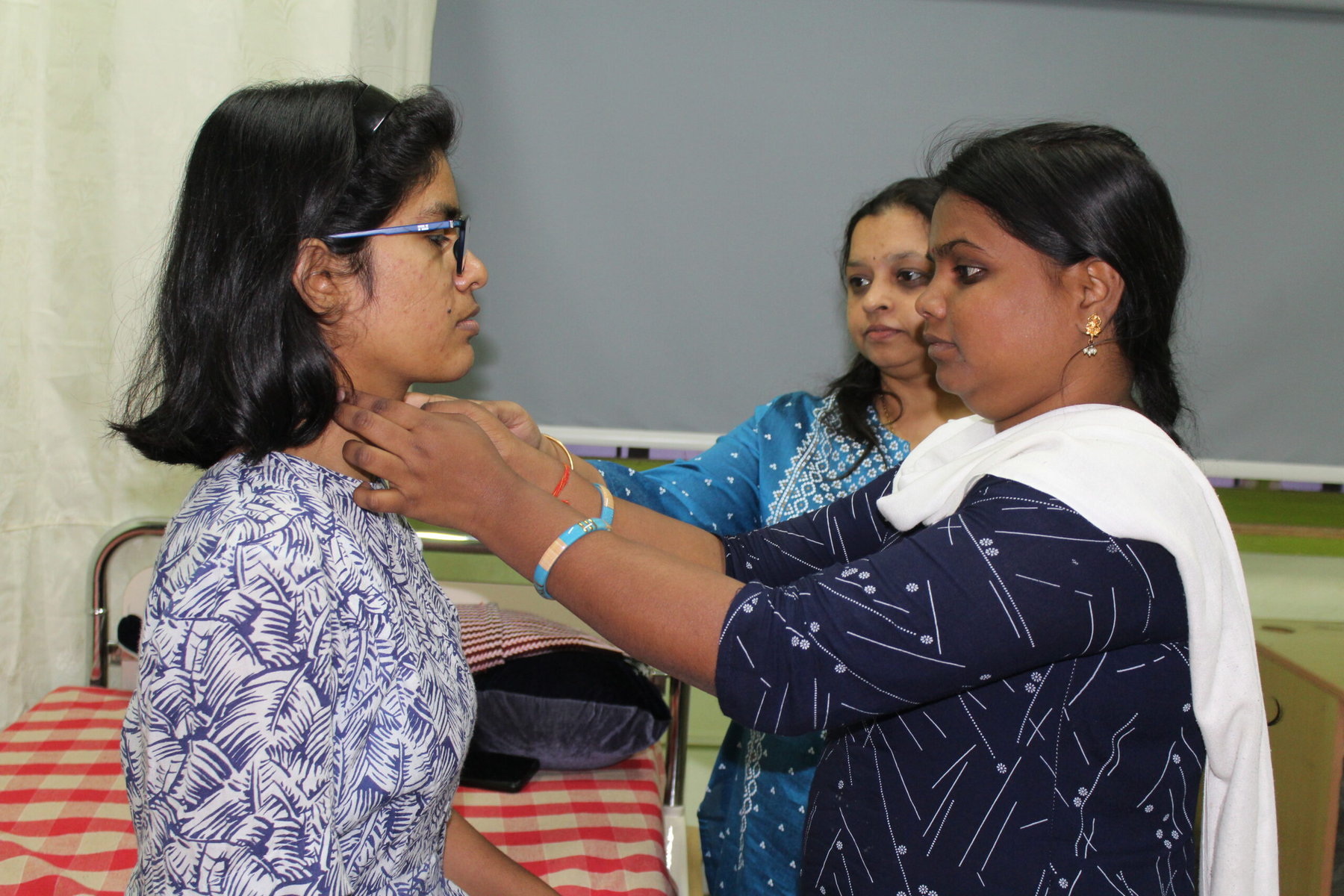
Two and a half years later, the NGO Enable India launched the training in Bengaluru. Banu and Noorunnisa were among the first cohort. Altogether, 18 MTEs have been trained in Delhi and Bengaluru, and eight more will graduate this year.
“Enable India works on shifting the narrative about persons with disabilities,” says Shanti Raghavan, the founder of the nonprofit. It aims to improve the recognition of persons with disabilities as meaningful contributors to society. Discovering Hands, Raghavan says, fulfills their mission because through the MTE training, “a woman with vision impairment is able to empower another woman, by offering her preventive health care.”
Becoming an MTE
Every year, applications for the new cohort are advertised with much enthusiasm through WhatsApp groups, other disability NGOs, and Enable Vaani, an audio-based social media platform for disabled people.
Candidates are assessed for five days and recruited on the basis of their tactile abilities, basic computer and English communication skills, and at least a 10th-grade pass certificate.
On a typical training day, the Discovering Hands training room at Enable India is abuzz with activity. Five blind and visually impaired women, ranging in age from 23 to 51, are busy learning. If one is cutting the documentation tapes to size, another may be pasting it on a 3D model of a woman’s breast. One may be trying to get a grasp on parts of the skin on a tactile model and yet another might be letting her screen reader read to her the lesson on types of cancers at a speech rate of 400 words per minute.
The training covers human — and specifically breast — anatomy and physiology and the study of cancers and palpation technique. It also includes the English communication and computer skills that are essential for an MTE to interact with her clients and upload medical histories and examination results.

None of the trainees had a chance to study science in school — when they were growing up, there was no option or provision for blind students for science education. Even today, science education is largely inaccessible to blind and visually impaired children in India because of a lack of special educators and schools that would be open to providing study material in diverse formats such as large print, Braille, audio, tactile, or digital.
“Initially, it was a little difficult for me to understand medical terminology,” says Leena Mehta, who lost her sight at 12 years old. But with consistent help and encouragement from her trainers, she got the hang of it. She adds that “3D models make it easy for us to understand how the human body works.”
Mehta knew she would face hurdles pursuing a medical curriculum, but she joined the training anyway. “I had never heard of a blind person working in the medical field,” she says, “and I wanted to be one.” She hasn’t regretted it.
“A lot of women who join the training have led protected lives at home,” says Ashwini Rao, a trainer at Enable India. Their parents often do not let them step out of the house, sometimes even at the cost of their education, she explains. Therefore, prior to the nine-month training, trainees are offered three months of mobility training, during which they learn to move independently from one place to another.
Trainees’ confidence catapults as they progress through the MTE training and gain skills and independence. Aishwarya Amalapuram, who has night blindness, says that she was previously unable to express herself, both because of shyness and lack of English communication skills, but now she can’t stop chattering.
Crushed by negative news?
Sign up for the Reasons to be Cheerful newsletter.Dr. Kanchan Kaur, a surgical oncologist who practices in Gurugram in North India and has been working with MTEs since 2018, says the training is very rigorous. “They get three months of internship in a very busy breast unit of a hospital under an oncologist, where they only learn about breast abnormalities – that’s much more time and practice than a medical student gets,” Kaur says.
In a recent Indian study where two MTEs conducted TBEs on 1,338 women, their success rate of detecting malignant cancers was over 78 percent, and the miss rate, only one percent.
What’s ahead
Physicians working with MTEs hope that the study will further establish MTEs as a useful resource for hospitals and screening programs and give a boost to the profession in India. Many medical facilities are hesitant to take on MTEs because of concerns that their disability could make them a logistical burden. Others don’t think they can get enough clients to pay for the examination.
Before expanding to other medical facilities, “we need to work on resource building,” says Kaur. Of the 18 trained MTEs in India, only six are actively practicing, while the rest have either opted for more secure government jobs or quit due to the pressures of married life or raising children.
Eight MTEs are due to graduate this year, though many more joined the training. Due to the length of the training, Rao says that some participants get restless and quit because they want to get a job as soon as possible. Many have switched to shorter courses on digital literacy. Shalini Khanna, the director of the NABCBW, notes that the price of training (it costs 2,50,000 INR, or $3,040, to train one MTE) has made it difficult to get funding for more women. The requirement of one trainer for every four to five trainees has also restricted the program’s expansion, since both the training centers have just two trainers each.
Those, like Banu, who graduate and move forward find the work fulfilling. “I get a lot of satisfaction from doing something for others,” Banu says. “I feel really happy when my clients give me so much respect for what I do for them.”
This project was funded by the European Journalism Centre, through the Global Health Security Call. This program is supported by the Bill & Melinda Gates Foundation.
The post The Surprising Role of Blind Women in India’s Health Care System appeared first on Reasons to be Cheerful.