R.P. Aditya
Shared posts
Why Was the Young Woman Vomiting Everything She Ate or Drank?
The Killer Stalking Sri Lanka’s Men

A Git story: Not so fun this time
Article URL: https://blog.brachiosoft.com/en/posts/git/
Comments URL: https://news.ycombinator.com/item?id=40849363
Points: 525
# Comments: 114
Op-Ed: WSDOT Must Keep SR 520 Trail Tunnel in Roanoke Lid
WSDOT is scrapping the planned SR 520 bike and pedestrian tunnel, forcing people who travel outside cars into dangerous territory.
As construction on SR 520 continues, the Washington State Department of Transportation (WSDOT) is cutting costs at the direction of the state legislature. The first casualty: a previously designed, hard-won bike and pedestrian thoroughfare known as the Harvard Connection, which links the new lid park and SR 520 trail to a popular bike route on Harvard Avenue. The trail and tunnel would create a safe, comfortable, and accessible multimodal transportation connection.
Unfortunately, WSDOT plans to cut this transportation equity lifeline from the project and abandon people who walk, bike, and roll – all so that they can save taxpayers a mere 2% of the budget shortfall. We cannot allow this to be the final word. WSDOT needs to find ways to save money without eliminating this essential element of the project.
Send a letter to the state legislators and WSDOT urging them to keep the Harvard Connection. More than 2,000 people have already contacted their legislators via this campaign, sponsored by Seattle Neighborhood Greenways in partnership with Disability Rights Washington.
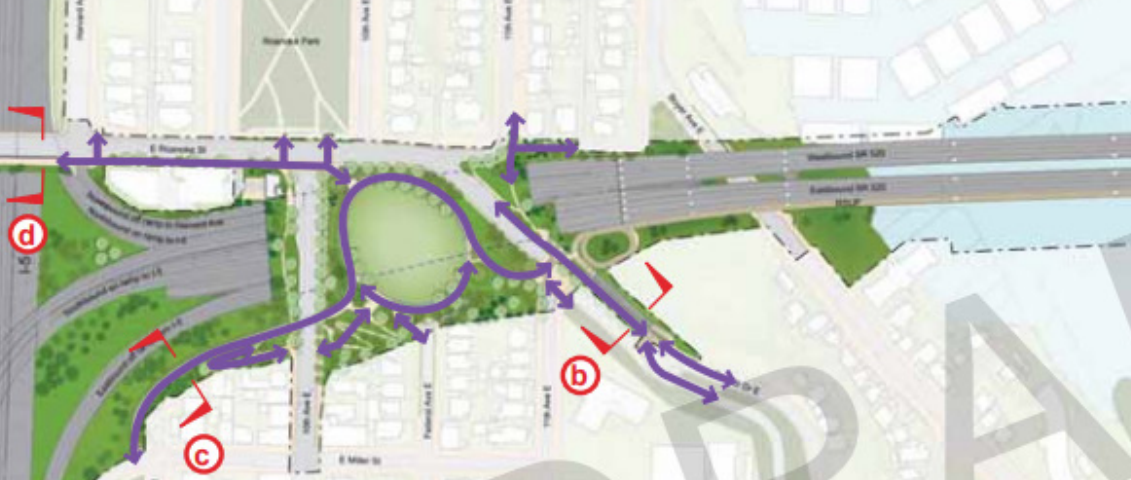
The tunnel would link North Capitol Hill to the SR 520 multi-use trail, which originates in Redmond and passes through Bellevue before crossing Lake Washington and Montlake. Without this connection to Harvard Avenue E and E Miller Street, people biking, walking, and rolling will continue to be forced onto the area’s busiest arterial, 10th Avenue E, and face steeper grades. This is a dangerous area for people who travel outside cars, which is a major reason why advocates began the fight for the tunnel and path 10 years ago.
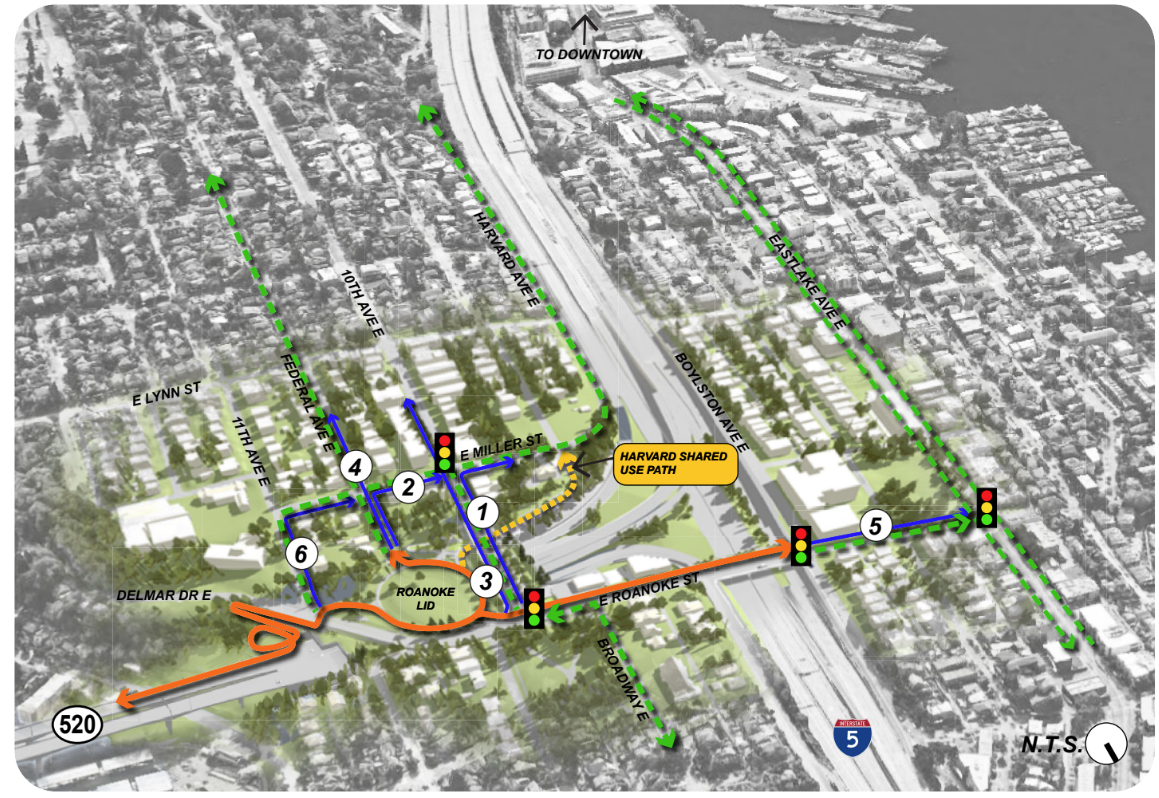
WSDOT’s 2014 comprehensive study, drafted in part with input from members of Central Seattle Greenways and others who bike, walk, and roll in the project area, concluded that the best way to integrate the lid into the bordering neighborhoods was to create a car-free bypass burrowed below the heavily-congested zone. The study cited 10th Avenue safety concerns such as the parking zone conflicts with unprotected bike lanes, crumbling pavement, flagrant speeding by drivers, and scant crosswalks as persuasive reasons to create this new people-friendly connection.
Ultimately, the department and advocates agreed that the tunnel would help vulnerable commuters avoid the most dangerous portions of 10th Avenue and included it in the project’s “final” 2019 plans.
Now, WSDOT intends to abandon that agreement even as people biking, walking, and rolling continue to face greater threat of injury and death by car — a deadly trend that American society (and WSDOT) seem more than willing to accept.
The department has an opportunity (and responsibility) to reduce the carnage directly associated with forcing people who bike, walk, and roll into dangerous interactions with vehicles. Keeping the tunnel and path as originally planned is a tangible way for the department to stay true to its “Target Zero” pledge to eliminate traffic deaths and reduce car dependency.
Should WSDOT go forward with this shortsighted move, it will further delay climate goals, lock in future car-dependency, and discourage would-be users of safer bicycle and pedestrian infrastructure from braving Seattle’s largely car-first street network. Our rapidly growing region is hungry for more efficient, community-focused transportation, which would be a net benefit for our city and the planet. The Harvard Connection would help the state reduce greenhouse gasses, which are largely driven by transportation emissions. The choice to cut the tunnel and path reveals that WSDOT’s true devotion is to motorists, even as the department touts the project’s goal of stitching together neighborhoods torn apart by an urban freeway.
They don’t get to have it both ways, and we’re not giving up this fight.
In a recent meeting with Central Seattle Greenways members, WSDOT representatives suggested that existing bicycle and pedestrian connections in the area provide a “similar function,” pointing to existing bike routes around the upcoming lid. If that were true, advocates wouldn’t be fighting for the tunnel’s inclusion, nor would WSDOT’s own study have recommended it. Climbing a 10% incline next to heavy car traffic is stressful, dangerous, and 0% similar to riding on a fully-separated path with no more than a 6% grade. Unsurprisingly, we weren’t fooled.
If WSDOT’s goal is to cut costs, the department should further scrutinize the most expensive pillar of the plan: the automobile infrastructure baked into this billion-dollar-plus project rather than safe passage for people who bike, walk, and roll. After all, WSDOT was able to shoehorn the costly replacement of an already-installed sign bridge into the SR 520 project budget to appease neighbors who complained of its size. But the department appears committed to cutting the tunnel, which would save only an estimated $10 to $15 million — a mere sliver of the overall $700 million cost overrun the department aims to cut.
Central Seattle Greenways believes the Harvard Connection is the best way to keep people who bike, walk, and roll safe from fast-moving vehicle traffic and comfortable despite daunting inclines. Time is running out for WSDOT to reconsider its misguided choice to remove a vital safe passage from the plan. If they continue to revise the lid design without this element, it will be cost-prohibitive to add it in the future. In other words, the time to save the Harvard Connection is now.
WSDOT bills the Roanoke Lid as a way to incorporate a large green space where a loud, polluting highway broke apart the surrounding neighborhoods. In their bid to repair some of the damage, the department agreed the Harvard Connection would provide greater accessibility for people who use wheelchairs and other assistive mobility devices — a community of people who are often left out of conversations like these. This isn’t just a safety and climate issue, it’s an equity one.
Done right, the lid could become a safe, car-free destination space for children to play, seniors to walk and roll, and other community members to gather and host events. A successful greenspace would be a breath of fresh air amid yet another ill-advised highway expansion.
Seattle is reckoning with its growth. State legislatures and planning departments should be prioritizing opportunities that connect communities with their sense of place in a way that doesn’t actively harm us. WSDOT should keep its agreement that the Harvard Connection be built as planned.
To help us save it, send a letter to the state legislators and project staff responsible for our future in transportation.
This editorial was written on behalf of Central Seattle Greenways, part of the Seattle Neighborhood Greenways coalition in partnership with Disability Rights Washington.
The post Op-Ed: WSDOT Must Keep SR 520 Trail Tunnel in Roanoke Lid first appeared on The Urbanist.
Backhand drives being cut off / intercepted
Hi all
I am having trouble with rallies down the backhand.
Most of my backhand drives are being intercepted by the opponent who is sitting on the T and vollying my returns.
In solo practice, I have time to cock the wrist, get my shoulder loaded and rotate my upper body to generate more power and height to get the ball towards the back of the court but in a match situation there is no time to wind up and I am constantly under pressure.
I noticed that my lobs also suffer in match situations. Instead of the ball carrying towards the back of the court with height, my opponents only need to get as far the the Tee, stand up high and volley.
Any advise?
[link] [comments]
If You Give a Frog a Sauna, It Might Fight Off a Deadly Fungus
After my dad died, I ran and sold his company (2018)
Article URL: https://anandsanwal.me/2018/06/19/dad-company-sale/
Comments URL: https://news.ycombinator.com/item?id=40758767
Points: 856
# Comments: 119
Monkeys in Puerto Rico Got Nicer After Hurricane Maria

Biking Through Southern France, and History

Why a 3-Legged Lion and His Brother Swam Across a Crocodile-Filled River
The Woman Who Could Smell Parkinson’s

Indian startup 3D prints rocket engine in 72 hours
Article URL: https://spectrum.ieee.org/3d-printed-rocket
Comments URL: https://news.ycombinator.com/item?id=40668088
Points: 429
# Comments: 266
lsix: Like "ls", but for images
Article URL: https://github.com/hackerb9/lsix
Comments URL: https://news.ycombinator.com/item?id=40598629
Points: 348
# Comments: 135
Unexpected anti-patterns for engineering leaders
Article URL: https://review.firstround.com/unexpected-anti-patterns-for-engineering-leaders-lessons-from-stripe-uber-carta/
Comments URL: https://news.ycombinator.com/item?id=40525802
Points: 367
# Comments: 151
A man ordered to hide his boat painted the boat on his fence
Article URL: https://news.artnet.com/art-world/fence-boat-painting-artist-hanif-panni-2487875
Comments URL: https://news.ycombinator.com/item?id=40531984
Points: 462
# Comments: 384
The hikikomori in Asia: A life within four walls
Article URL: https://www.cnn.com/interactive/2024/05/world/hikikomori-asia-personal-stories-wellness/
Comments URL: https://news.ycombinator.com/item?id=40475178
Points: 252
# Comments: 327
pg_timeseries: Open-source time-series extension for PostgreSQL
Article URL: https://tembo.io/blog/pg-timeseries
Comments URL: https://news.ycombinator.com/item?id=40417347
Points: 321
# Comments: 72
I organized a 20-acre game of Capture the Flag
Article URL: https://www.ntnbr.com/61/
Comments URL: https://news.ycombinator.com/item?id=40400139
Points: 432
# Comments: 143
How Women Are Helping Their Neighbors Heal From Depression
Rhoda Phiri was having a hard time sleeping. She found it difficult to mingle with people in her community and at church. Even basic chores were hard. She was, she says, in a “dark corner.”
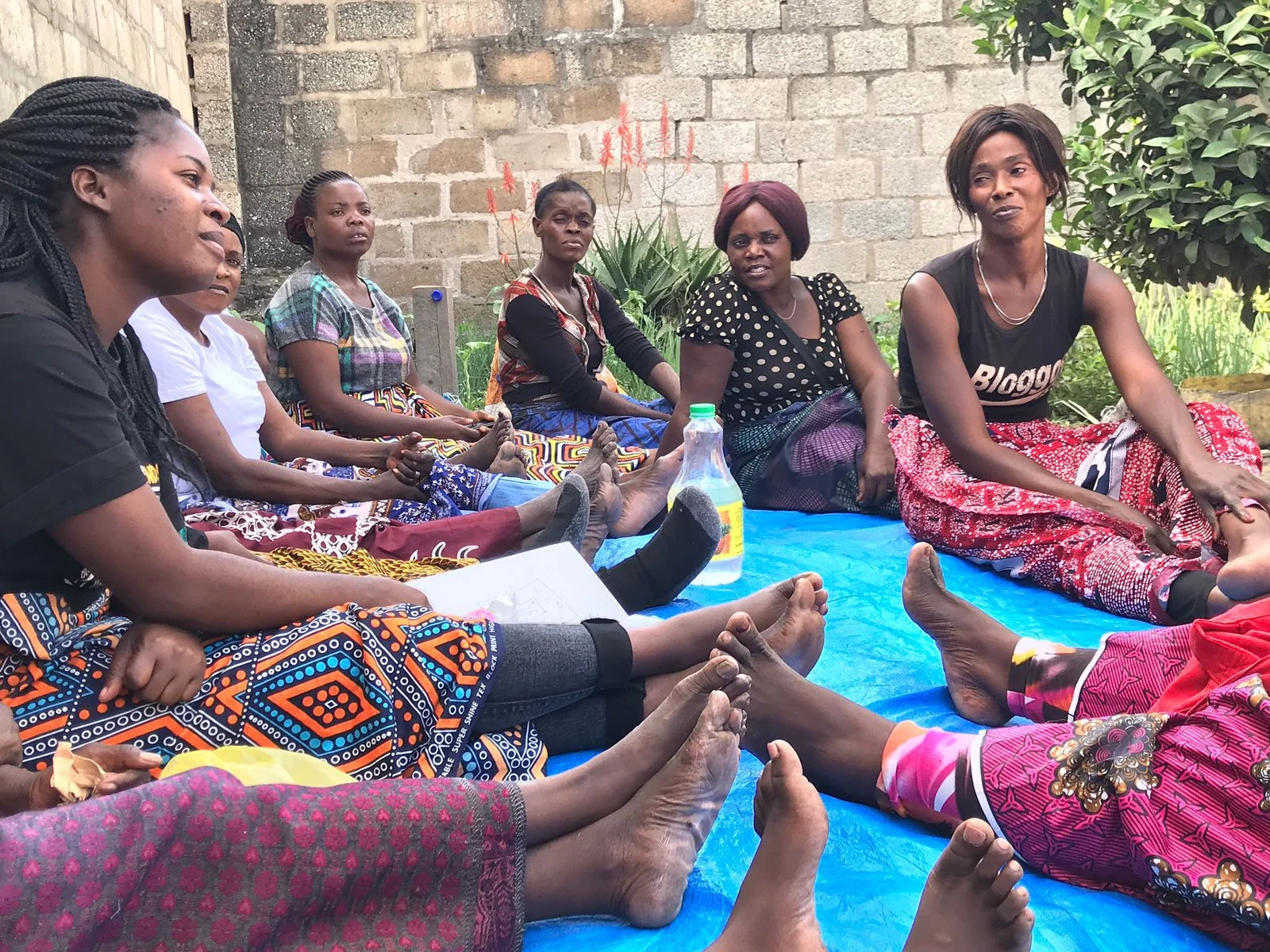
Then one day in 2020, a couple of women knocked on the door of her home in Zambia. The women were with StrongMinds, an international nonprofit that provides support for depression, particularly among women and adolescents. She accepted the women’s invitation to join a group therapy program, held under a tree in an area near her home, and as she learned about depression, she recognized the signs in herself.
“All the symptoms they were talking about, it’s like they were talking about me,” Phiri says. “It’s like they knew what I was going through.”
Phiri is among the estimated 280 million people around the globe who experience depression. Ranging in severity, the condition can have big implications for people’s daily functioning and quality of life. But while depression is widespread, options for mental health treatment are scarce, especially in low- and middle-income countries. In Zambia, for instance, there was an estimated total of 25 psychologists and psychiatrists as of 2020.
Instead of relying on mental health professionals, StrongMinds offers group therapy facilitated by trained community members — often clients who have completed the treatment themselves, like Phiri. This group therapy model has proven to be an effective way to treat depression. Since the organization launched in 2013, half a million people have gone through the treatment program. Three-quarters of participants screened as being free of depression symptoms two weeks after completing it.
“What we’ve learned in 11 years is that depression treatment can be, what we call, democratized,” says StrongMinds founder and executive director Sean Mayberry. “You can take it out of the hands of doctors and nurses and give it to the community itself.”
Based on screenings, three-quarters of participants in StrongMinds’ interpersonal group therapy are depression-free two weeks after completing the program.
Mayberry started the organization after reading an article about how interpersonal therapy led by non-mental health professionals had proven to be an effective treatment for depression in villages in Uganda. Mayberry, who had a background as a diplomat and social marketer, saw potential to scale up this form of treatment to expand mental health support in places where it is needed.
Since its launch, StrongMinds has grown to be well-established in Uganda and Zambia, and has more recently expanded to Ethiopia, Kenya, Nigeria and a pilot in the US.
Crushed by negative news?
Sign up for the Reasons to be Cheerful newsletter.Interpersonal group therapy, as the approach StrongMinds uses is known, focuses on identifying factors that trigger an individual’s depression, such as life changes like moving from a rural to an urban area, grief or social disagreements. Over six weeks, participants join a group of 10 to 12 people who share their personal experiences and help each other brainstorm strategies to address the triggers contributing to their depression. Participants try out strategies as homework, then share how it went with their group.
“It’s really taking away the mysticism around depression and giving it into the hands of the individual and leveraging the group,” Mayberry says. “It’s the group helping each other to get better.”
StrongMinds focuses on treating women, in part because they experience depression at a higher rate than men. But there’s another reason, explains Mayberry. When women heal from depression, benefits ripple through their families and communities. Clients report higher rates of participating in work, and improvements in their families’ food security and their children’s school attendance. The organization has also expanded to work with adolescents, both male and female.
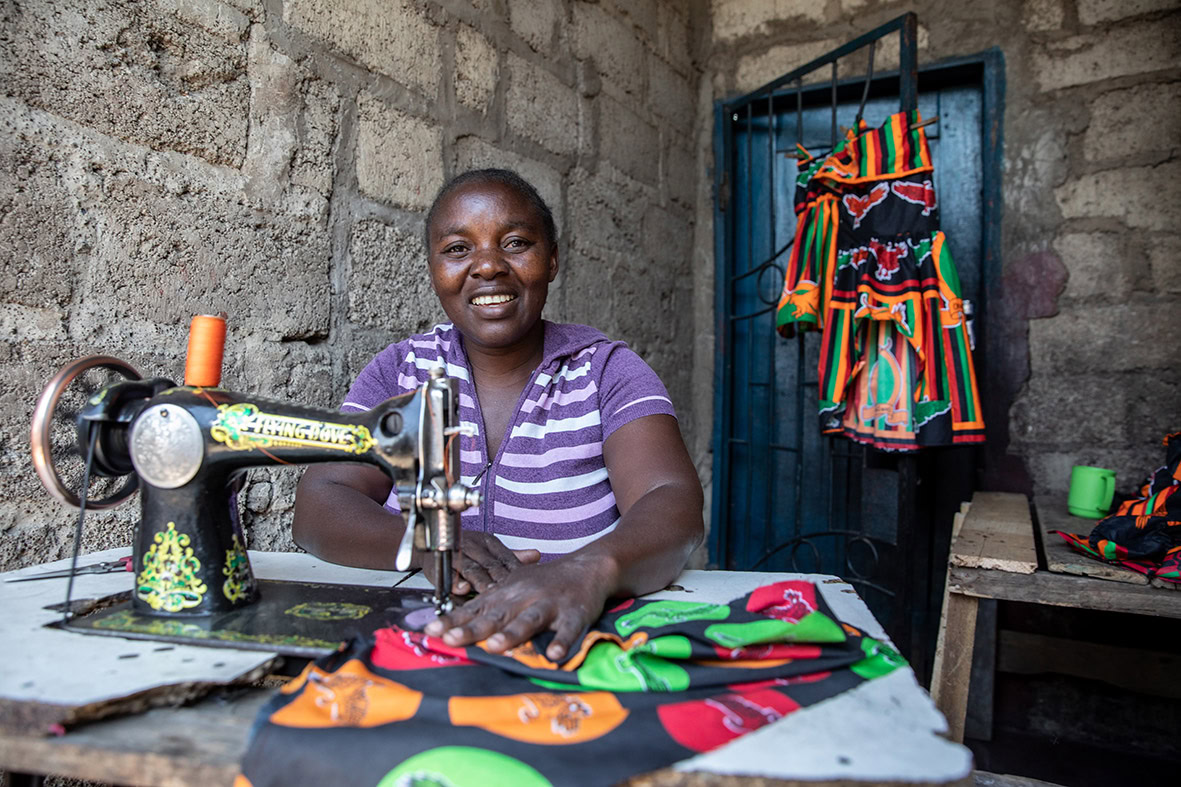
Almost 95 percent of group therapy programs are now run by “volunteers.” These are often former StrongMinds clients, teachers or community health workers, care providers who have lower levels of medical training. These volunteers, who receive a stipend, are trained to screen potential clients and to facilitate therapy sessions.
Beyond expanding capacity for treatment, the community-based approach offers another important benefit, according to Chilufya Chimbala, peer therapy group program manager in Zambia. As members of the community, the volunteers help build trust.
“Volunteers live in the community,” she says. “They understand the daily challenges.”
Women experience depression at a higher rate than men. And when women heal from depression, benefits ripple through their families and communities.
Chimbala sees a big need for mental health support in Zambia. StrongMinds reaches potential clients by going door-to-door through neighborhoods. It can be challenging, she says. Often, people who are depressed don’t want to engage. But it helps to meet people where they are and offer treatment right in their communities.
“There isn’t a lot of awareness of mental health,” Chimbala says. “So when you get in the communities to speak about mental health, translate the symptoms in the local languages that people speak, then they’re able to relate.”
After Priscilla Chama’s husband died suddenly, she struggled. She couldn’t concentrate, and lost interest in doing any activities.
When a woman working with StrongMinds came to Chama’s door, she decided to go to a group therapy session. During the first meeting, Chama didn’t feel comfortable speaking about her personal story. But as other women in the group began to share, she started to open up.
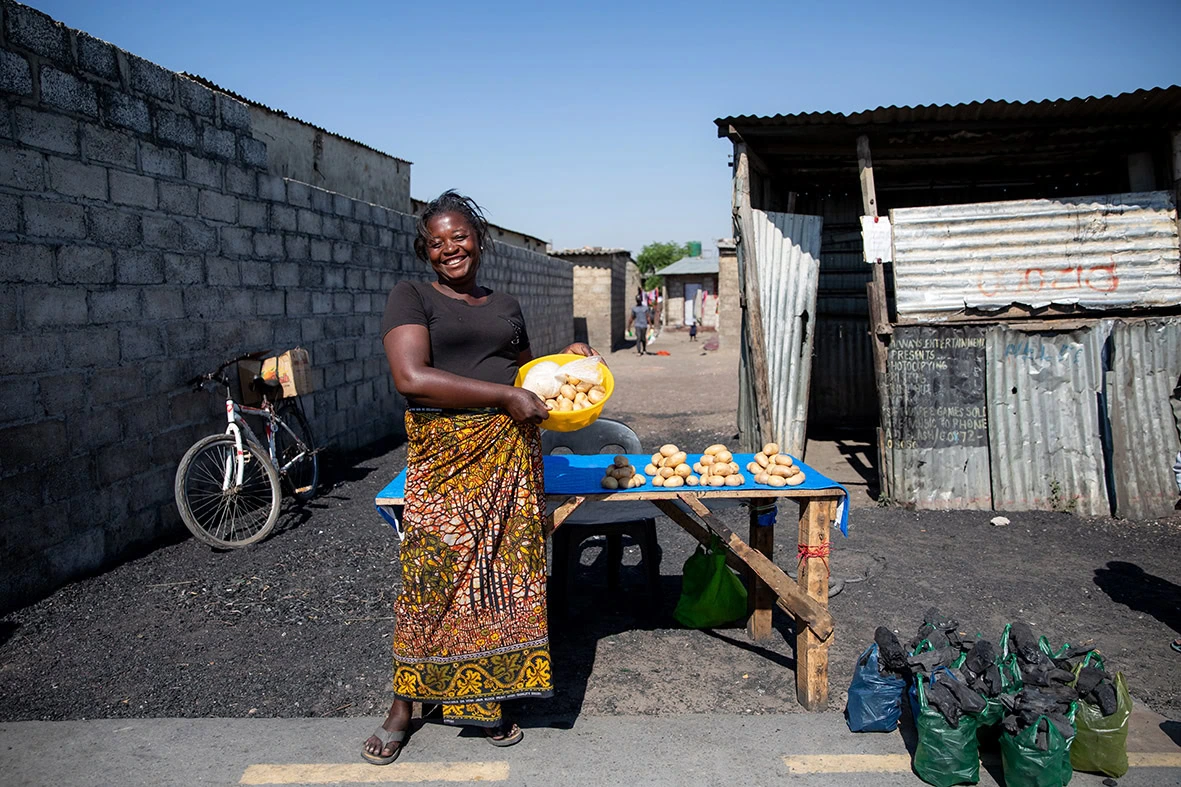
“You become friends with everyone there,” she says. “You learn from other people’s experience, you also tell them your experience.”
At one session, she was given homework to imagine her husband was seated in an empty chair and to speak with him. It was an intense emotional experience, she recalls. But the exercise helped her to accept her husband’s death.
Like Phiri, Chama trained to become a facilitator after she completed her own treatment. Both women now work in the area around Lusaka, Zambia’s capital and biggest city. It can be challenging to get women to participate. Many ask if they’ll get any compensation, and women often don’t have much time to go to the sessions.
Chama sees the positive impact the treatment has on the groups she facilitates. “It is really a benefit to the community,” she says.


Become a sustaining member today!
Join the Reasons to be Cheerful community by supporting our nonprofit publication and giving what you can.
JoinStrongMinds isn’t the only organization that uses an approach of training people with little or no health background to provide mental health services. Friendship Bench, an organization based in Zimbabwe, similarly mobilizes lay people to facilitate mental health support. That use of community members is an “important innovation” to expand mental health support, according to Mark Van Ommeren, who heads the mental health unit of the World Health Organization’s Department of Mental Health and Substance Abuse.
Van Ommeren says StrongMinds is particularly notable for how the organization has been able to scale its services up, while adhering to an evidence-based model that has been tested and proven in African contexts.
“There is an enormous amount of people that are suffering [from] depression, and also other disorders,” Van Ommeren says. “They’re making a difference.”

Maintaining the quality of StrongMinds treatment as the organization expands is a challenge, acknowledges Mayberry. Volunteers go through regular training refreshers. Surprise audits check in on the quality of programs. And the organization is rigorous about screening clients throughout treatment to gauge their symptoms and collecting data on outcomes.
Over the last decade, StrongMinds has refined its approach, and reduced the course of treatment from more than $400 per patient a decade ago to $40 — which the organization fully covers so participants receive treatment for free. While this is a relatively low price tag for mental health treatment, Mayberry says funding remains a limitation.
For women who struggle with depression, the group therapy can have a huge impact on their lives. Phiri, who went through the treatment in 2020, says it helped her to connect with people again. Now, she enjoys bringing that support to others.
“I really want to see people get out from depression,” she says. “It’s my passion.”
The post How Women Are Helping Their Neighbors Heal From Depression appeared first on Reasons to be Cheerful.
In the Caribbean, Mangroves Draw Visitors in Search of Wildlife and Quiet

The Ages When You Feel Most Lonely and How to Reconnect

Are Schools Too Focused on Mental Health?

mRNA Cancer Vaccine Reprograms Immune System to Tackle Glioblastoma in 48 Hours
New startup sells coffee through SSH
Article URL: https://www.terminal.shop/
Comments URL: https://news.ycombinator.com/item?id=40227208
Points: 895
# Comments: 402
Mexico’s Floating Gardens Are an Ancient Wonder of Sustainable Farming
Standing amid rows of juicy, lime green lettuce and chunky florets of broccoli, Jose Paiz appears as if he could be the owner of a modern, high-tech farm. But the crops thriving here, in the suburbs of Mexico City, are part of a 1,000-year-old tradition.
“My ancestors were doing this before even the [Spanish] Conquistadors arrived in Mexico [in 1519],” says Paiz, while crouching down to pick up a handful of powdery soil from the chinampa, or “floating garden,” on which we are both standing.
These highly productive man-made island-farms, which can be found floating on lakes across the south of Mexico’s capital, date back to the time of the Aztecs or perhaps even earlier — and now proponents say that these ancient engineering wonders could provide an important, sustainable food source as the city faces historic drought.
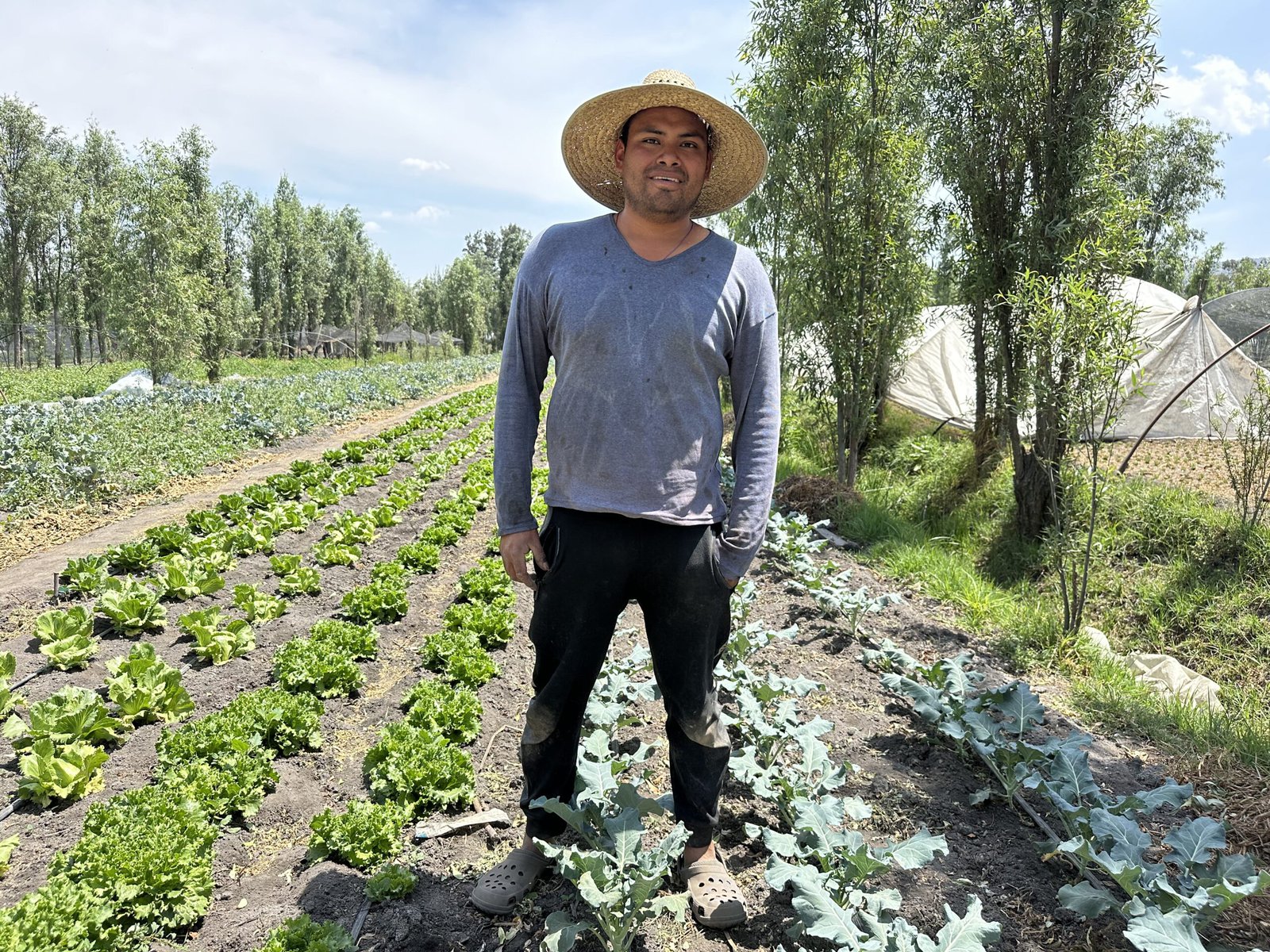
“My grandparents taught me the methods,” adds Paiz, 32, who is the fifth generation of his family to be a chinampero working in San Gregorio Atlapulco, a traditional working-class neighborhood about 10 miles south of the center of Mexico City.
Experts say that these chinampas, which have been recognized as a UNESCO World Heritage site, are considered one of the most productive agricultural systems in the world. The artificial islands are built by gathering large amounts of soil from the bottom of the lake and placing it on top of reeds, grasses and rushes in a mass that rises above the water. Farmers then plant a fence of ahuejotes, Mexican willow trees, around the plot to naturally protect against erosion. This system means that the chinampa’s soil is constantly enriched by nutrient-filled sediment flowing in from the surrounding ditches and canals, yielding multiple harvests every year.
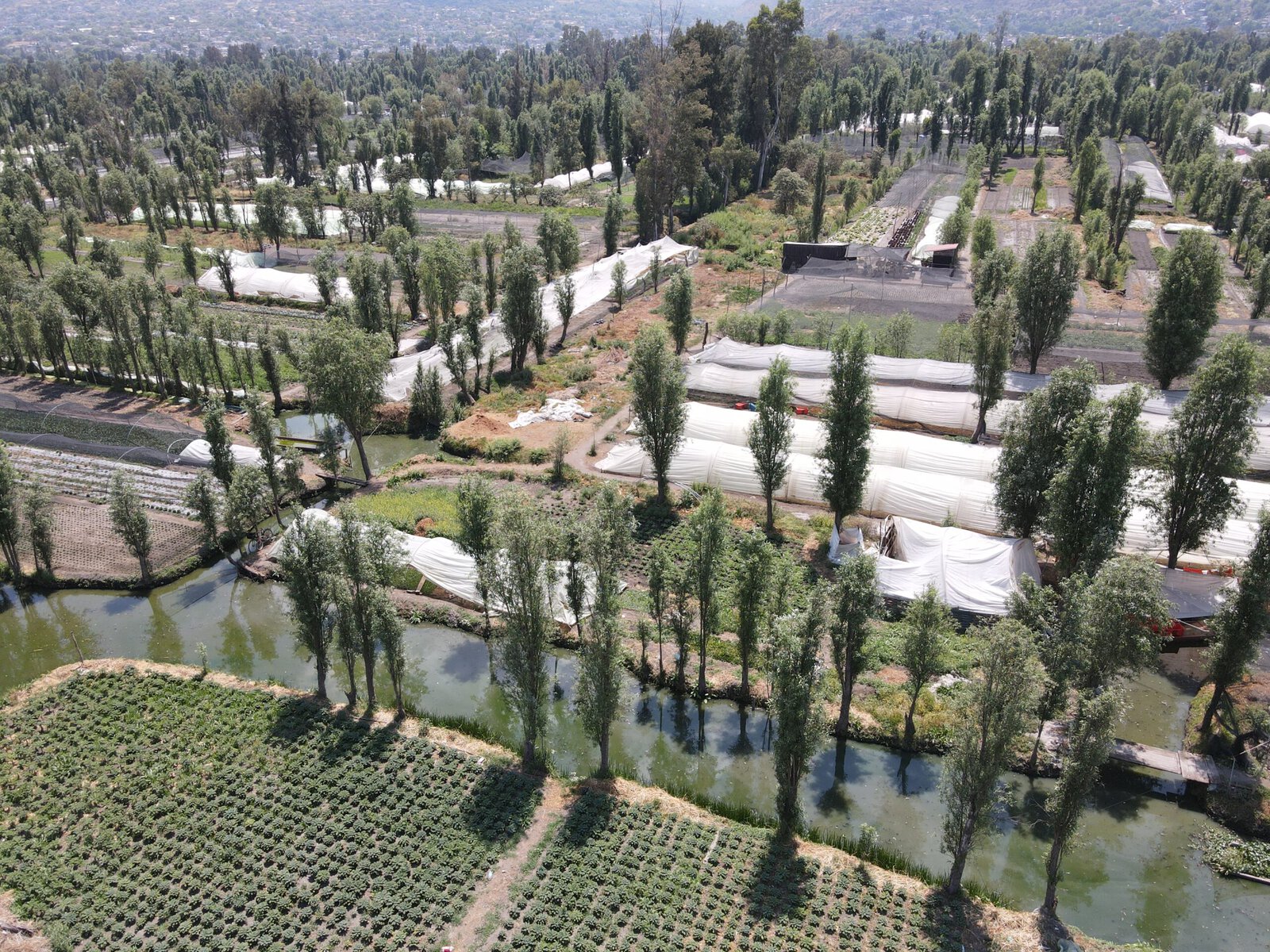
“In terms of agriculture, they are one of the best examples of how humans can work with nature,” says Lucio Usobiaga, founder of Arca Tierra, an organization providing local farmers in the area with technical and entrepreneurial support.
One of the first traces of the chinampas dates back to the 14th century, when the Aztecs arrived at the region of what is now modern-day Mexico City. There, they founded the settlement of Tenochtitlán — which would become one of the most powerful cities in all Mesoamerica — in the Valley of Mexico.
Crushed by negative news?
Sign up for the Reasons to be Cheerful newsletter.But as the Aztecs soon discovered, the valley’s boggy, lake-filled landscape was difficult to cultivate or build on. So they devised an ingenious plan to adapt to the surroundings: the chinampas.
A 2013 paper by North Carolina State University professor Matthew Teti found that in the 16th century, chinampa farms could produce 13 times as much crop as dry-land farming in the same area — a system that provided food for hundreds of thousands of people. Chinampas, the study said, are “one of the most intensive and productive agricultural systems ever devised.”
Greens and other vegetables flourish on the chinampas, which are considered one of the most productive agricultural systems in the world.
“Aztec planners created these vital waterways as integral to the existence of its cultural, physical, and spiritual, urban identity, rather than draining the water and excluding it from the urban experience,” it continued.
In the case of Jose Paiz, the age-old system is still reaping rewards today. He says that his 7,000 square meters of chinampa, for example, can produce as much as 100 kilograms of broccoli per day — which is sold alongside the yields of fresh herbs, spinach, chard, radishes, corn and kale at local markets in the south of Mexico City.
“I’m proud to be continuing the tradition of my ancestors,” he says.
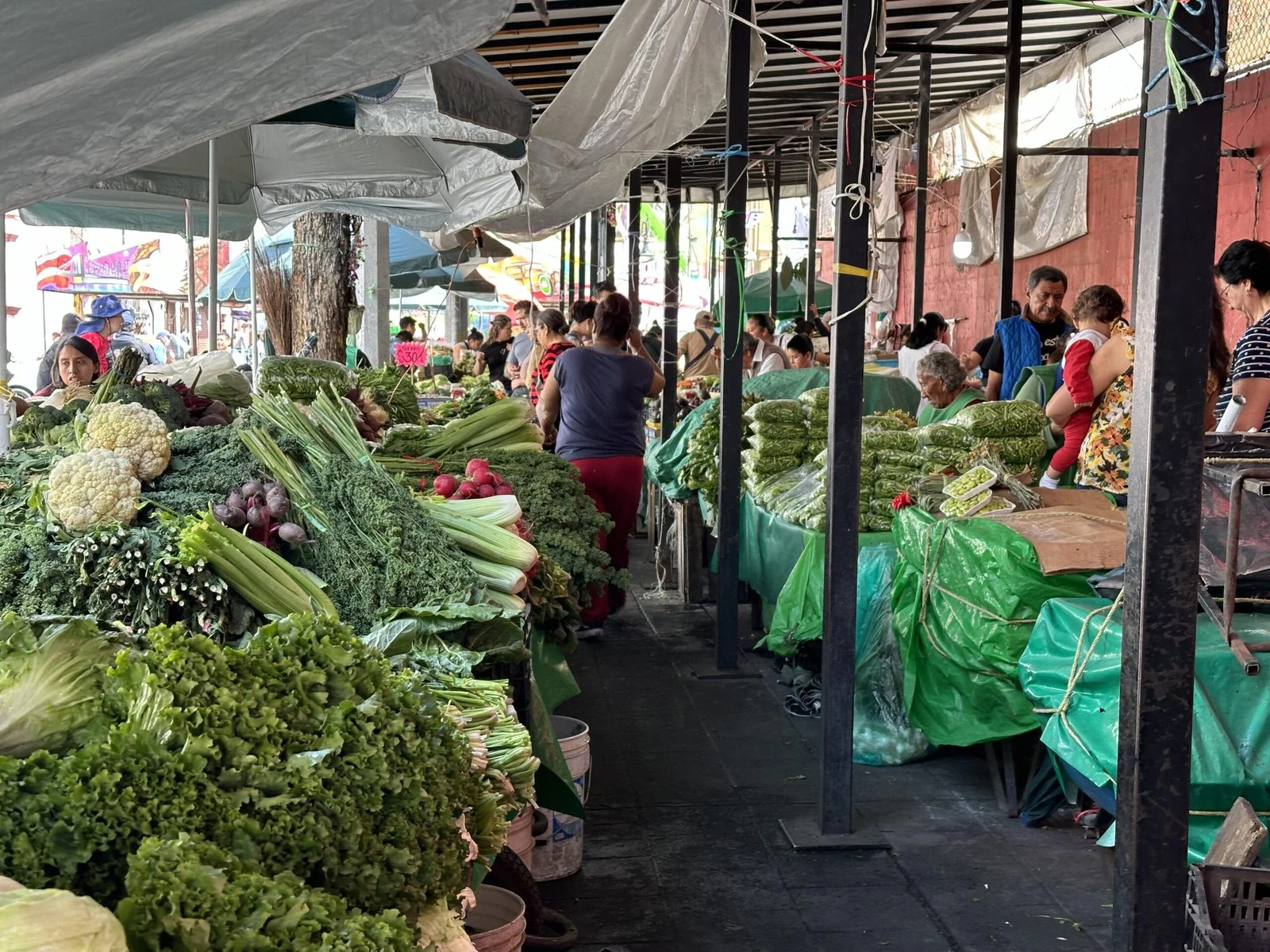
Meanwhile, according to Arca Tierra, their network of seven producers in the region cultivates over 40,000 square meters of land, employing a total of 27 workers in the field and producing 3,650 kilograms per month. At some farms, as many as 95 varieties of vegetables and herbs are cultivated, underlining the fertility of the method. The production brings in over $4,000 per month in crop sales.
“At the beginning, it was mainly a commercial endeavor to source organic produce close to the city,” says Usobiaga, who supplies restaurants in Mexico City and began working with chinamperos in 2009. “But I learned they are very important in many regards and have historical and cultural importance.”
The design of the chinampas is particularly efficient in its use of water, which it can absorb and retain from the surrounding canals for long periods as well as allowing crops to draw from the groundwater directly, reducing the need for active irrigation.
When it comes to farming, according to Lucio Usobiaga, founder of Arca Tierra, the chinampas “are one of the best examples of how humans can work with nature.”
This could prove hugely valuable for Mexico City and its 22 million residents, since water supplies have fallen to historic lows due to abnormally low rainfall partly attributable to climate change. And lessons learned from the chinampas could potentially help cities around the planet: the UN World Water Development 2024 Report found the number of people lacking access to drinking water in cities will likely reach two billion by 2050.
“The technical aspects of agriculture are innate to every place,” says Usobiaga. “But the way of thinking that created the chinampas, that sensibility, has to be appreciated and valued: To work with the flow of nature, the flow of the seasons. That is what we have to use to get us out of the problem we are in.”

The unique wetlands ecosystem is also home to two percent of the world’s and 11 percent of Mexico’s biodiversity, including the critically endangered axolotl, or Ambystoma mexicanum, an incredible salamander-like amphibian that is able to regenerate every part of its body — even parts of its vital organs such the heart and brain.
Meanwhile, the chinampas also provide a host of other benefits: they filter water, cool the city, sequester carbon, offer green space for locals, and are now a popular destination for tourists who take boats along the picturesque waterways.
The value of the chinampas was underlined during the Covid-19 pandemic, when, as the city’s major markets ground to a halt, the chinampas were able to provide healthy, locally-grown food. In some cases, sales more than doubled.
“People began to search for healthier food,” says David Monachon, a social sciences researcher at the National Autonomous University of Mexico who has researched the chinampas as a sustainable food source. “There was this focus on local economy and community. Many people didn’t make this connection before.”
Yet despite their immense value, the chinampas are under threat: rising urbanization means the chinampa landscape is being built on; pollution is dirtying the waters that feed them; younger generations are losing interest in agriculture; and agro-industry is under-cutting the small-scale producers in a price war.
For chinamperos like Jose Paiz, the age-old agricultural system is still reaping rewards today.
“There are a lot of challenges and problems,” says Monachon, who is supporting a local cooperative of chinamperos to sell their goods via the Mercado Universitario Alternativo, or Alternative University Market. “But chinampas could feed the city.”
Now, only 20 percent of the 2,200 hectares of chinampas are in use, and only about 2.5 percent are being actively cultivated for farming food — the rest is being used for growing flowers and tourism. But Arca Tierra is helping to restore the chinampas — five hectares to date — and is training 15 young students in the required skills to cultivate them — the second, six-month cohort — while also carrying out research on the most effective techniques and productive crops to use on them.
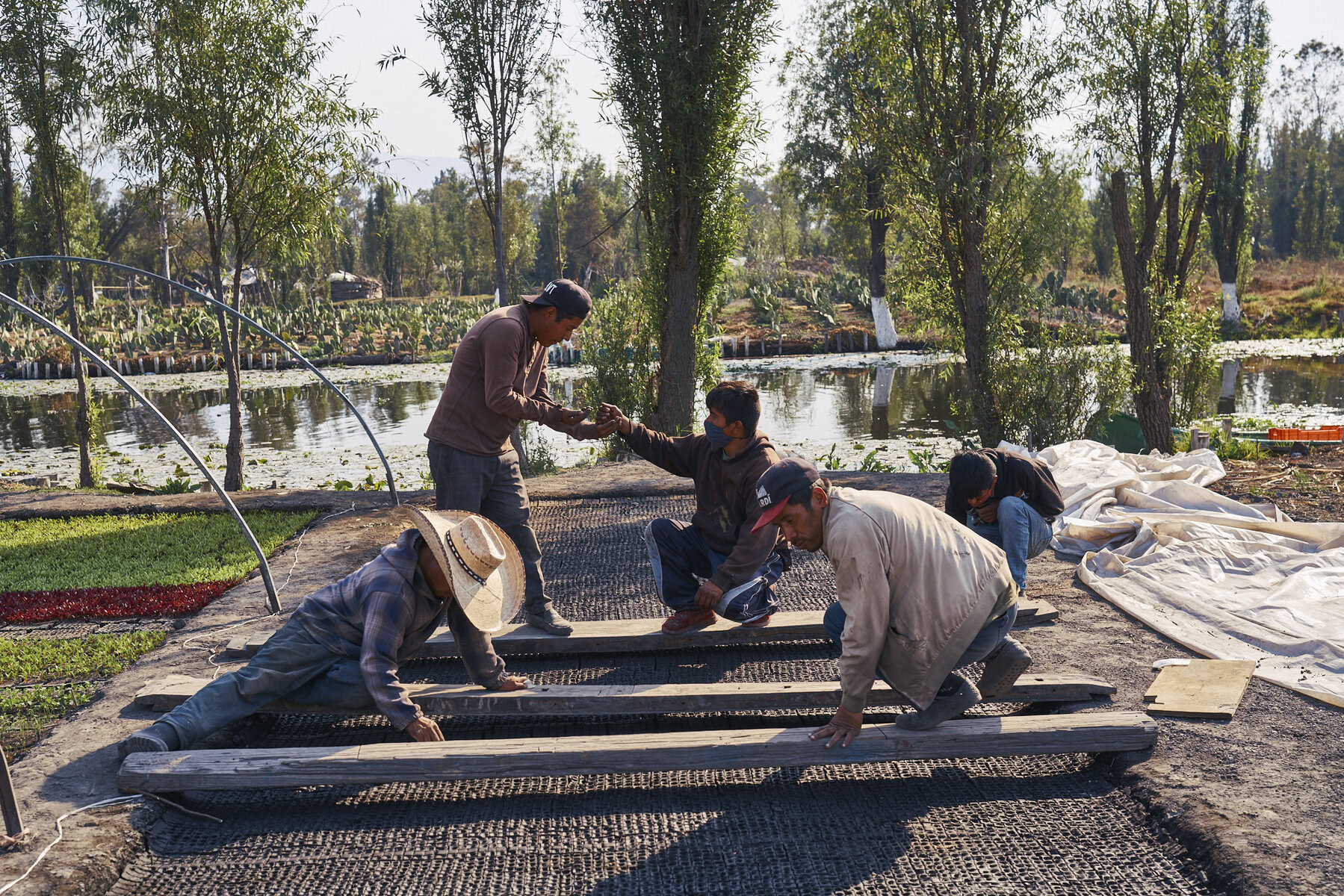
“We have demonstrated that it can be done on a small scale,” says Usobiaga, who believes chinampas have the potential to produce enough of crops like lettuces, herbs and broccoli for all of Mexico City. “But the chinampas need support and investment from the government to scale up production.”
At Xochimilco market, the largest in the area, there is clear evidence of appetite for a resilient, local food system and signs that this ancient Aztec tradition can still bear fruit. The market bustles with traders and customers, spilling from the covered area out onto the streets.
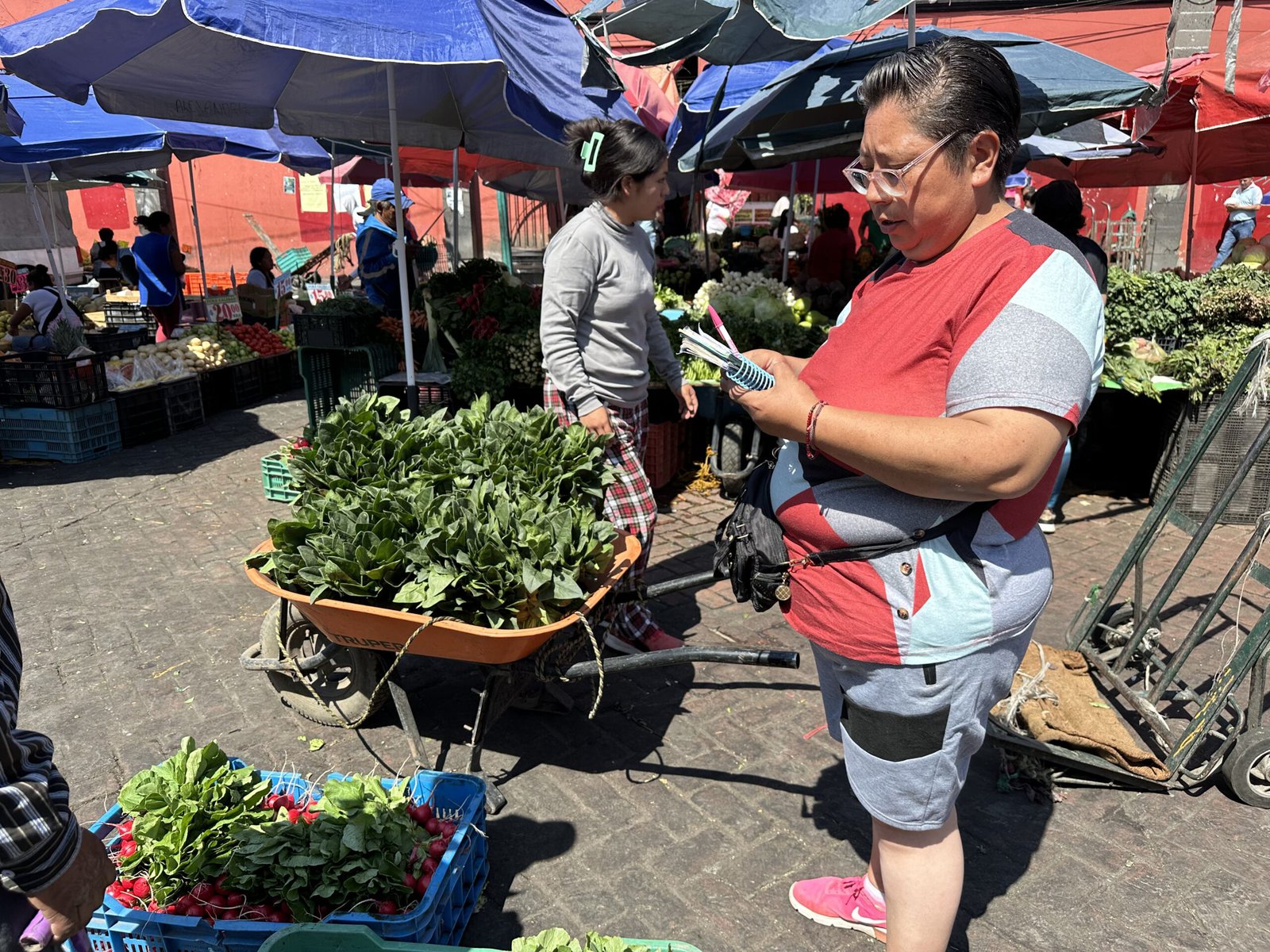
Rosa Garcia, 47, is rushing around delivering lettuce, spinach, cilantro and broccoli to her 14 clients of the day. The produce, grown at her one-hectare chinampa at San Gregorio Atlapulco, is in high demand. Garcia says that each day her family-run farm can earn as much as 1,000 to 1,500 Mexican pesos ($60 to $90).
“I’ve been doing this since I was a girl,” says Garcia, ticking off the orders as they are dispatched. “It’s a system that works. Why do anything different?”
The post Mexico’s Floating Gardens Are an Ancient Wonder of Sustainable Farming appeared first on Reasons to be Cheerful.
The beautiful dissociation of the Japanese language
Article URL: https://aethermug.com/posts/the-beautiful-dissociation-of-the-japanese-language
Comments URL: https://news.ycombinator.com/item?id=40132281
Points: 336
# Comments: 230
Tracing the Long, Winding Path of an Ancient Roman Aqueduct

City of Redmond, Microsoft open new bridge over State Route 520 for pedestrians and bicyclists
With just a few days to go until Sound Transit’s East Link extension inaugurates revenue service between eight stations in Bellevue and Redmond, the Northwest Progressive Institute’s hometown today celebrated the opening of a new bridge across State Route 520 that provides a safe means for people to cross the busy highway that bisects Microsoft’s Overlake campus on foot or by bike.
Funded by Microsoft, the bridge is more than just a new right of way… it’s a neighborhood landmark that’s aesthetically pleasing, as you can see from the aerial photo that we’ve chosen to accompany this post. Its availability to the public was marked with a ribbon cutting organized by the company and the city, at which several local leaders and representatives of Microsoft spoke. The bridge connects to the following:
- The East Link / Line 2 Redmond Technology Station (RTS)
- The State Route 520 bus flyer stops, which are served by multiple routes
- The State Route 520 regional bike trail, which now crosses Lake Washington following the completion of the new Albert Rosellini Evergreen Point Floating Bridge
- Both sides of the Microsoft campus — east and west
- Public right of way owned by Redmond on 156th Avenue NE
A ramp provides direct access to the bridge for riders leaving the RTS platform.
“This bridge will be a great benefit to the community and connect us in a number of sustainable ways, with lanes for those who want to walk and ride their bikes,” said Redmond Mayor Angela Birney in a statement.
“It is thanks to our partnerships with Microsoft, Sound Transit, and WSDOT, that we have this new, not only functional, but beautiful connection to enjoy.”
“The design of the bridge is the result of meticulous and innovative planning, as well as the unique efforts between Sound Transit, City of Redmond, and Microsoft,” a news release from the city of Redmond states. “The bridge was designed by AECOM and engineered by Kiewit Engineering Group, Inc., and features functional canopies, landscaped planters with native plants, and benches to enhance the user experience.”
“The Redmond Technology Station will be a hub for transit passengers and Microsoft workers throughout the Eastside,” said King County Executive and Sound Transit Board Chair Dow Constantine. “Thanks to the collaboration of our project partners, we’re expanding transit for a more connected Puget Sound region.”
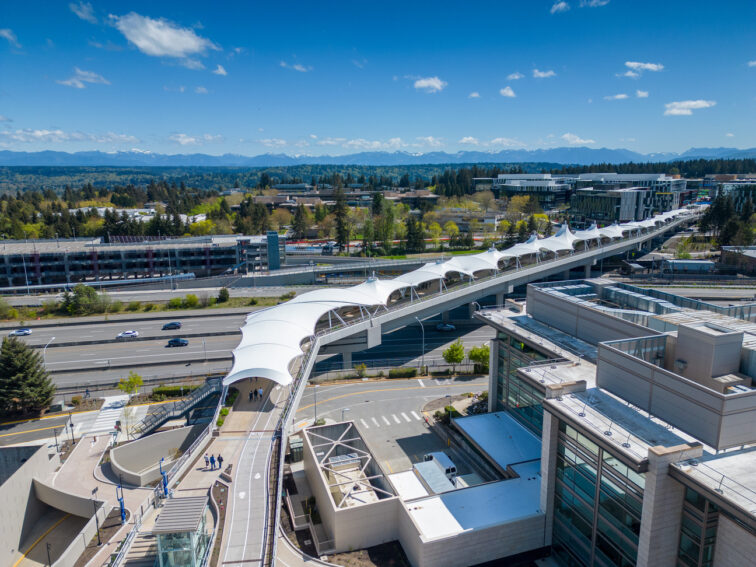
“With light rail service only days away, opening this bike and pedestrian bridge will safely connect transit passengers from the Redmond Technology Station to Microsoft, the SR 520 Trail, and more, providing yet another link to our growing light rail system,” said King County Councilmember Claudia Balducci. “This connection is the result of years-long collaboration between Sound Transit, WSDOT, Microsoft, and the City of Redmond and is an integral piece of building an interconnected transit system that makes multimodal travel easy, safe, and seamless.”
“Today’s grand opening is an important milestone in the effort to create a multimodal transportation system that supports the region’s economy and quality of life,” said Alice Jolla, chief accounting officer and corporate vice president at Microsoft. “This bridge is a symbol of Microsoft’s commitment to our local community, and we’re grateful for the collaboration with the City of Redmond, Sound Transit, and Washington State Department of Transportation.”
The new bridge is located between two other bridges that have been built over State Route 520 since Microsoft established its headquarters in Redmond: the one that carries NE 40th over the highway and the one that carries NE 36th over the highway. Longtime residents of Redmond can probably recall the days when NE 51st was the only exit in between 148th Avenue NE and West Lake Sammamish Parkway.
Now there’s an exit at NE 40th Street too. NE 36th doesn’t have ramps connecting it to SR 520, but it does provide a means of getting from one side of Microsoft’s campus to the other without having to fight traffic on NE 40th or NE 51st.
The NE 36th Street bridge was built at a time when Redmond was already planning for light rail to reach the Microsoft campus, and accordingly, the bridge was designed to ensure there was sufficient room underneath for a set of light rail tracks.
For the roads further to the east, Sound Transit’s contractors had to dig trenches and do some reconstruction to create a fully grade-separated guideway.
Planning for the bridge began in the 2010s. Construction started in 2019 and wrapped up in 2023, with some work continuing on the west approach and the trail connection.
The bridge has a smaller sibling to the west that provides pedestrians and bicyclists with a means of getting across State Route 520 without having to use 148th Avenue. A two hundred and sixty-foot-long steel-truss bridge opened back in January that serves the Overlake Village Station. It was designed not only to aid station access, but to improve freedom of mobility in the Overlake neighborhood.
Congratulations to the City of Redmond and Microsoft on this mobility milestone! This is a great prelude to Sound Transit’s Line 2 opening festivities this weekend. NPI will bring you coverage throughout the weekend of these new station openings right here on The Cascadia Advocate. We’ll also have a preview of what to expect later this week.
City of Redmond, Microsoft open new bridge over State Route 520 for pedestrians and bicyclists is a post from NPI's Cascadia Advocate, the journal of the Northwest Progressive Institute. Published continuously since March of 2004, NPI's Cascadia Advocate provides thoughtful commentary and analysis on regional, national, and world politics. Keep The Cascadia Advocate going by making a contribution to sustain NPI's research and advocacy here.
To make a fortune, target bored young men who want to make a fortune
Article URL: https://www.businessinsider.com/gambling-young-men-sports-betting-crypto-meme-stock-market-addiction-2024-4
Comments URL: https://news.ycombinator.com/item?id=40051597
Points: 165
# Comments: 492
This is a teenager
Article URL: https://pudding.cool/2024/03/teenagers/
Comments URL: https://news.ycombinator.com/item?id=40053774
Points: 1423
# Comments: 805