Shared posts

13 Sep 18:39

The Voluntary Gun Law Preventing Suicides

by Michaela Haas

On June 26, 2018, Donna Nathan typed the words “gun stores New Orleans” into her phone and followed the GPS on her screen to the nearest firearms shop. Minutes after arriving, though she had never owned a gun and had been diagnosed with bipolar disorder, she had herself a .38 Smith & Wesson and a box of bullets — pink ones, to promote breast cancer awareness. 

Then she drove to the Tree of Life in Audubon Park, and shot herself. 

“I was shocked to find out that her buying a gun was so easy and completely legal,” says Katrina Brees, Nathan’s daughter. “It was just one button away on her phone.” 
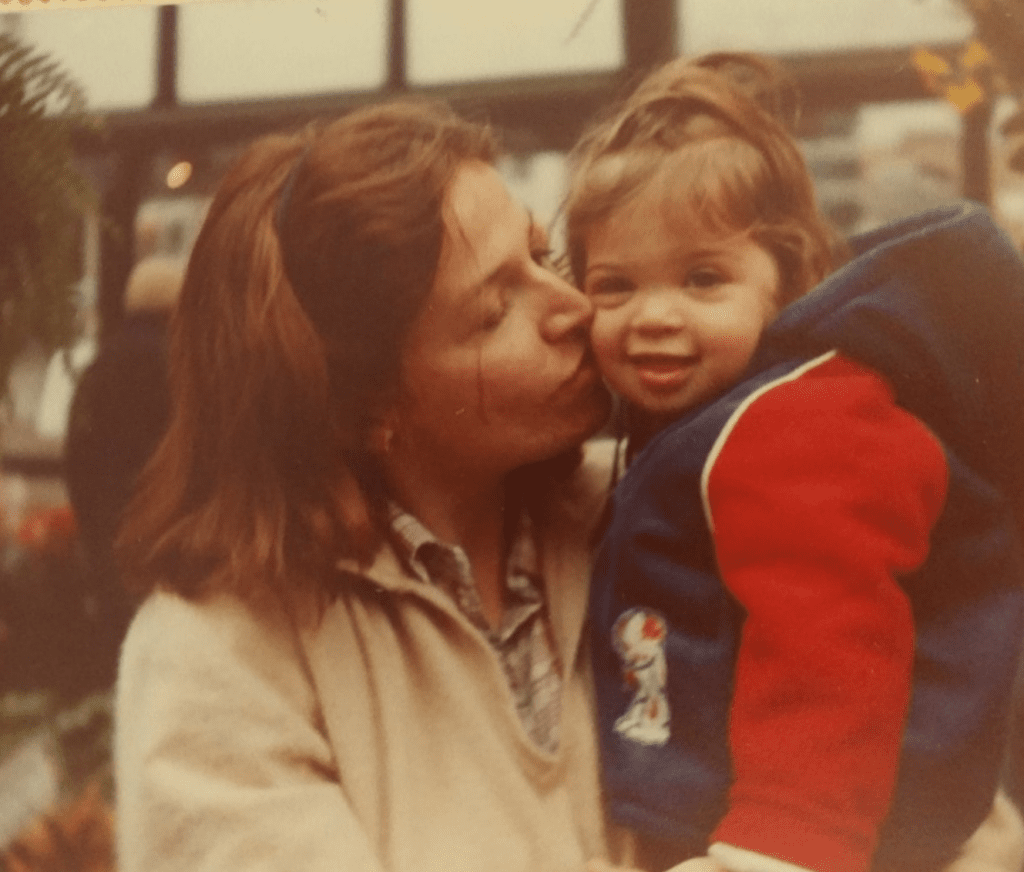
Donna Nathan and Katrina in 1979. Photo courtesy of Katrina Brees

Firearms are the most common means of suicide in the US, accounting for 53 percent of all suicides in 2020. Her mother’s death was the fourth gun suicide in Brees’ family history, and a tipping point. “The next morning, I went straight into action.” Now Brees is advocating for a simple solution: A way for people like her mother to voluntarily add themselves to a Do-Not-Sell List that prevents them from quickly buying a gun. “There are almost no barriers to buying a gun in Louisiana,” Brees says. “Every year we have more than 600 suicides here, and two thirds are by firearms.”

State by state, Brees’ solution is becoming a reality. Versions of the Voluntary Do-Not-Sell List — or Donna’s Law — have since been passed in Washington State, Virginia, and Utah. The law grants people the option to voluntarily and confidentially add their names to their state’s background check system to prevent them from impulsively purchasing a gun. Anybody can sign up, no questions asked. If they want to buy a gun, they can file a request to have their name removed after a 21-day waiting period. “It actually gives people more gun rights,” Brees says. 
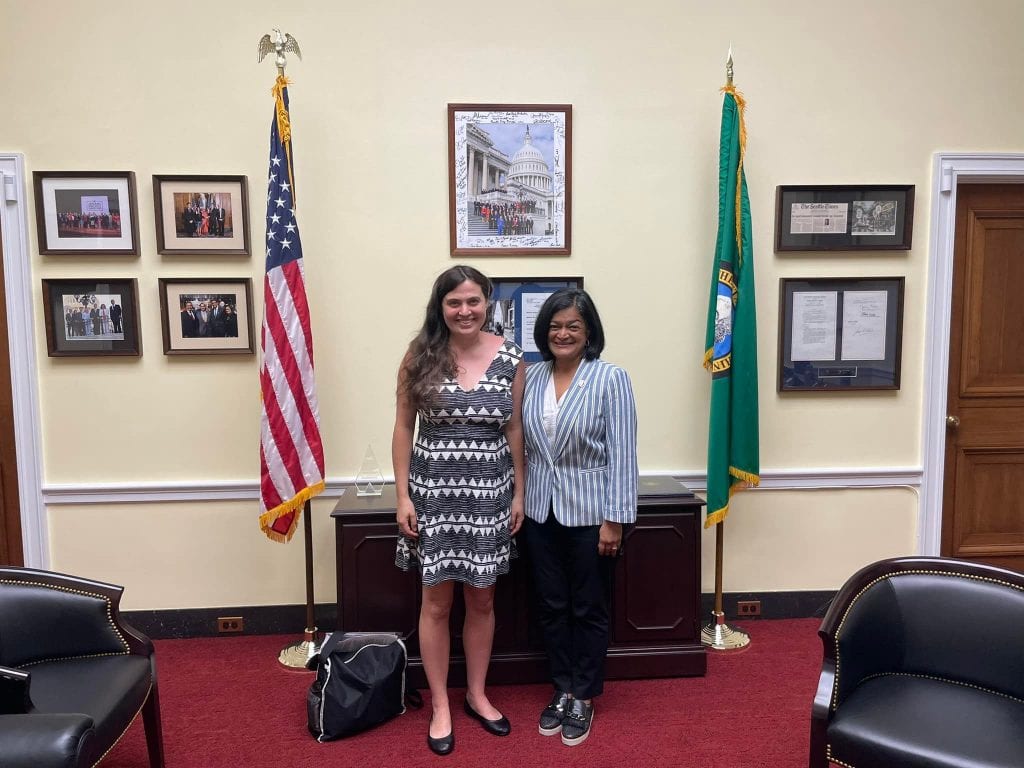
Katrina Brees and Congresswoman Pramila Jayapal. Photo courtesy of Katrina Brees

At least nine more states are currently considering similar laws, including Pennsylvania, Tennessee, New York and Wisconsin. In July, Washington Congresswoman Pramila Jayapal (D) and Utah Congressman John Curtis (R) introduced a bill to take the law national. “The odds of successfully committing suicide are 140 times greater when there is a gun,” Jayapal said in a statement. “Our bill ensures that people who are liable to hurt themselves cannot access a firearm.”

It’s one of the few pieces of gun safety legislation both parties can agree on. The Wall Street Journal called it a “libertarian approach” to gun control. 

“I didn’t know this before, but nearly 24,000 people die by gun suicide in America every year,” Curtis said in a recorded conversation with Jayapal. “That’s 65 per day.” In his home state of Utah, suicides make up 84 percent of all firearm deaths. 

Katrina Brees is sure her mother would have signed up. “My mom had fought so hard to stay alive. She had voluntarily checked herself into psychiatric hospitals three times in the months before her death when she thought she might harm herself.”

If she had been committed involuntarily to a psychiatric hospital, she would have been automatically added to the background check system. “But because she went there voluntarily, there was no way for her to prevent herself from buying a gun,” Brees says. “Part of the commitment of putting yourself in there is to separate yourself from lethal means.” In October 2017, her mother had changed her Facebook profile picture to show a gun crossed out.
Brees recounts all the ways her mother tried to save herself during her 30-year struggle with mental health, and that previous suicidal periods had always been very impulsive, “almost like a panic attack. Right before my mom died, she was in the fight for her life… The last time I spoke with her, she was talking about not letting go of hope and that she would do everything she could to get through this.” Her mother had gone to “hundreds of doctor appointments in her life,” Brees says. “She worked with her psychiatrist; she took medication that had tremendous side effects. She had doctors and family totally committed to her. She literally said, ‘I don’t want to die.’ She was excited about her new grandbaby. I think one of the saddest pieces of suicide misinformation is for us to think these people wanted to die. But the impulsivity of this really became obvious because this does not feel like the choice she really wanted.”

The laws are too new for their effects to be evaluated in the three states where they have already been implemented, but mental health experts agree that delaying access to firearms in times of crisis is a life-saving strategy. The American Foundation for Suicide Prevention, the National Alliance on Mental Illness, the National Education Association and Suicide Awareness Voices of Education all support the bill.

The most common objection to such laws is that suicidal people will simply find another way, but many suicide attempts occur with little planning during a short-term crisis, and 90 percent of attempters who survive do not die by suicide later. Reducing access to lethal means saves lives. Already, waiting periods for purchasing handguns significantly reduce gun suicides with no increase in non-gun suicides. Even if some might try other methods, few are as lethal as a firearm. For example, the estimated fatality rate of a suicide attempt using drugs is less than five percent.

Another objection is that the people who might need it the most won’t sign up. According to Fred Vars, a University of Alabama at Birmingham law professor who has bipolar disorder and has experienced suicidal ideation himself: “So much about suicide is impulsive.  [These laws are] about people helping themselves versus the government saying, you can’t have a gun. I don’t want to die, and me signing up for this list would reduce the probability of me dying.” When Vars asked 200 psychiatric patients at the University of Alabama Medical Center, nearly half said they would sign up. Brees says she receives messages from people all over the United States who tell her, “This would work,” and plead for the right to sign up.

“People like me, who recognize that they are prone to suicidality, need this act,” mental health advocate Bryan Barks recently wrote in the Washington Post about her battle with bipolar disorder. “I have mental clarity most of the time, but I know the storms will come again. I want to have the ability to preempt crises. I want to have the ability to protect myself from the version of me that is not thinking clearly.”

‘Self-defense against suicide’

Katrina Brees drove to the Skamania courthouse in Washington State to sign herself up for the Do-Not-Sell List, just to try it out, and found it was an easy process. But of course, the law only works statewide. “This is why we need federal legislation,” Brees urges. She and mental health experts also believe that allowing people to sign up in schools or doctors’ offices could increase participation. “And there are no side effects!” Brees says. “It’s just such a great way for people to empower themselves in self-defense against suicide.”

Crushed by negative news?

Sign up for the Reasons to be Cheerful newsletter.
[contact-form-7]

Some states recommend that gun owners let friends or the police “babysit” their guns during a depressive episode. However, “there is a lot of shame around this topic,” Brees knows. “Some don’t want their friends to know they’re going through a rough patch, or they don’t trust they’ll get their guns back later.”

Despite the history of gun suicides in her own family, Brees says the topic was rarely addressed because of the shame and stigma associated with it, and is relieved that her activism has opened up the gates for her and her family to speak about the issues. Brees, an artist, shows pictures of her mom and reminisces about the many New Orleans parades she and her mother attended together. Brees is head of a dance troupe called the Bearded Oysters, and she made some of the big floats with giant animals. “My mom loved to ride in the pickup truck and then dance with the troupe.” She tears up when she says, “We were all just so naive about how easy it was for her to get access to a gun.” 
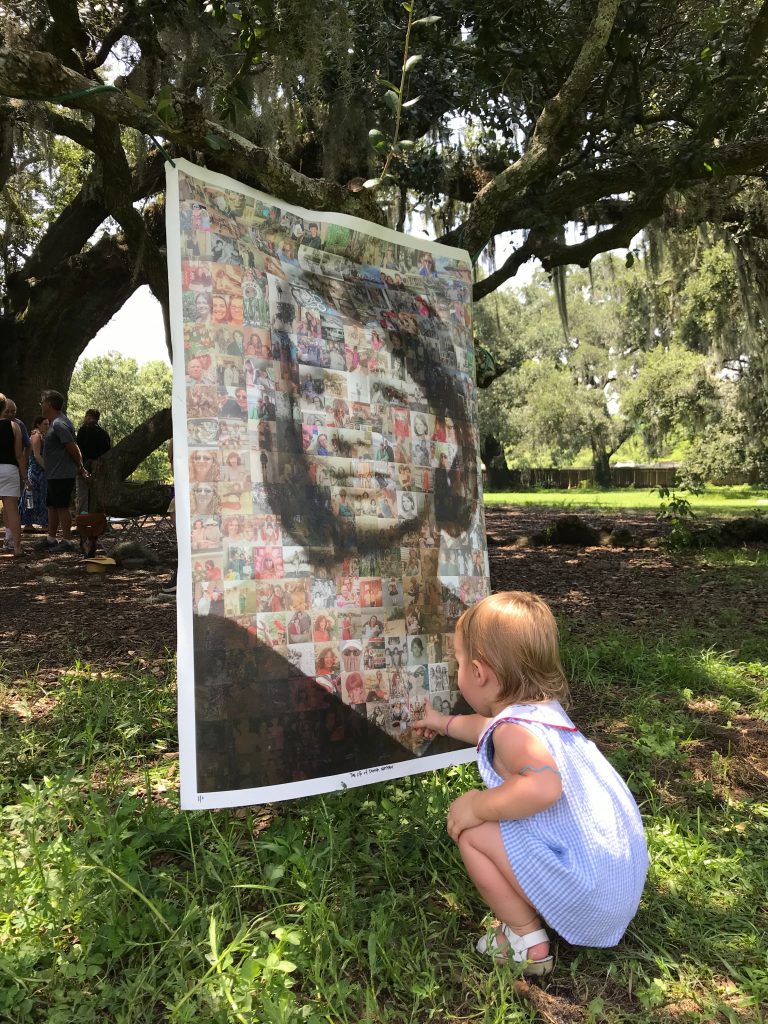
Donna Nathan in a collage of photographs from her life. Credit: Josh Hailey

That day in June 2018, Nathan’s partner Patrick Burke had a “really bad feeling.” When he couldn’t reach his girlfriend, he called the police five times, begging for support. “But there is no magic button that the police department can press that notifies gun stores in a mental health emergency,” Brees says. “This is why I’m so passionate about creating this little piece of legislation that has the potential of letting families like ours feel like we did everything, and also for the gun dealer.”

Her mom had “severe tremors at the time. How could anybody sell a gun to someone who couldn’t even hold a fork?” Brees even called the gun shop and told the owner what had happened after she had found his business card in her mother’s car. She said she asked him if she could return the gun. “He said, ‘All sales are final,’ and hung up.”

Since then, she had learned from police that another family had called that store begging them not to sell a gun to their son who was in the midst of a mental health crisis. According to Brees, their son went, bought the gun anyway, and shot himself. “I think this must weigh on the gun store owner as well.”

Brees was not able to prevent her mom from buying a gun. But she can work toward making sure others will have this option, potentially saving their lives.

The post The Voluntary Gun Law Preventing Suicides appeared first on Reasons to be Cheerful.

12 Sep 23:12

Bikes, not self driving cars, are the technological gateway to urban progress

by martopix
12 Sep 22:48

A Journey Through Black Nova Scotia

by Shayla Martin
The 400-year history of African culture in this maritime Canadian province is expansive, but it’s a story that’s been tucked into the shadows of Canadian history. Now, grass-root initiatives are changing that.
12 Sep 18:51

Nondrivers Are the Future

by Anna Zivarts
Nondrivers can see a different future, and we want you to join us. by Anna Zivarts

The thought of living without driving terrifies many adults in the United States because car dependence defines so much of our built environment and culture. But in every community there are people who can’t drive. And not just places where not driving is relatively convenient, such as Capitol Hill or Portland.

In fact, more than one-third of people living in the United States don’t have a driver's license. This includes people like me who can’t drive because of our disabilities. It also includes young people, immigrants, people with suspended licenses, and people who have aged out of driving. Additionally, there are many people with licenses who can’t afford to own a car, pay for insurance, parking or gas. 

But despite how many of us there are, the narrative we’ve been sold is that without a car you are not a person who has valid mobility needs. That story is particularly alarming when you consider the equity implications of who is considered a nonentity.

People without driver's licenses, both who identify as disabled and those who do not, are more likely to be Black, indigenous, or people of color. People with disabilities are four times more likely to be unable to drive, and two to three times more likely to live in a zero-vehicle household.

Wanting to address our erasure as nondrivers, in the fall of 2020, we began organizing other nondrivers as part of the Disability Mobility Initiative to insist that our voices be included. This looks like showing up to testify at transit board meetings where service cuts are being considered, or sharing stories in op-eds and TV interviews about how broken sidewalks and fast-moving traffic make it difficult for us to access our neighborhoods. 

We’ve also invited elected leaders, transportation planners, and everyone else who normally drives most places to spend a “Week Without Driving,” where they experience what it’s like to try to get around their own communities and patterns of daily community life without the privilege of driving themselves. When it comes time to allocate resources and make plans, we hope this challenge helps them remember how inconvenient or just simply impossible it is to get places without driving right now. 

And while our work at the Disability Mobility Initiative primarily addresses the gaps in access for nondrivers, car dependency has other environmental, climate and societal costs that are externalized to low-income and Black and brown communities. From neighborhoods segregated by highways, housing costs exacerbated by parking minimums, exposure to air and noise pollution, vehicle crashes and pavement-induced heat islands, our decision to build communities centered around the ability to drive yourself in a vehicle everywhere you need to go was and is a failure. 

Rather than minimizing the mobility needs of those of us who can’t or don’t drive, we should be celebrating and encouraging nondrivers, especially those young people who understand the extraordinarily high costs of car dependence and who are choosing not to feed into this dysfunction.

For people who have spent decades centering their lives around vehicle ownership, it may be impossible to imagine our country without car-dependent mobility. But those of us who are nondrivers are already working towards a different future. A future where you don’t need to worry that your car payment eats one-third of your paycheck, where you can let your kids walk to school on their own because there are sidewalks the whole way, where the light rail station is surrounded by affordable apartments rather than parking garages. A future where you could get from one rural community to the next because we run rural bus routes or rebuild our rail network, where you can still get to all our national parks even if you don’t have a car. 

Also, critically, the world nondrivers inhabit is one where you build connections across your community as you wait together at the bus stop, or when someone offers you a seat on the train. None of this happens when you’re hermetically sealed in a private vehicle. 

Nondrivers can see a different future, and we want you to join us. 


Anna Zivarts is a low-vision mom and nondriver who was born with the neurological condition nystagmus. Since launching the Disability Mobility Initiative (DMI) at Disability Rights Washington in 2020, Anna has worked to bring the voices of nondrivers to the planning and policy-making tables. Anna serves on the board of the League of American Bicyclists and the National Safety Council’s Mobility Safety Advisory Group.

[ Comment on this story ]

[ Subscribe to the comments on this story ]

08 Sep 16:55

Facebook Has No Idea What Data It Has

by Bruce Schneier

This is from a court deposition:

Facebook’s stonewalling has been revealing on its own, providing variations on the same theme: It has amassed so much data on so many billions of people and organized it so confusingly that full transparency is impossible on a technical level. In the March 2022 hearing, Zarashaw and Steven Elia, a software engineering manager, described Facebook as a data-processing apparatus so complex that it defies understanding from within. The hearing amounted to two high-ranking engineers at one of the most powerful and resource-flush engineering outfits in history describing their product as an unknowable machine.

The special master at times seemed in disbelief, as when he questioned the engineers over whether any documentation existed for a particular Facebook subsystem. “Someone must have a diagram that says this is where this data is stored,” he said, according to the transcript. Zarashaw responded: “We have a somewhat strange engineering culture compared to most where we don’t generate a lot of artifacts during the engineering process. Effectively the code is its own design document often.” He quickly added, “For what it’s worth, this is terrifying to me when I first joined as well.”

[…]

Facebook’s inability to comprehend its own functioning took the hearing up to the edge of the metaphysical. At one point, the court-appointed special master noted that the “Download Your Information” file provided to the suit’s plaintiffs must not have included everything the company had stored on those individuals because it appears to have no idea what it truly stores on anyone. Can it be that Facebook’s designated tool for comprehensively downloading your information might not actually download all your information? This, again, is outside the boundaries of knowledge.

“The solution to this is unfortunately exactly the work that was done to create the DYI file itself,” noted Zarashaw. “And the thing I struggle with here is in order to find gaps in what may not be in DYI file, you would by definition need to do even more work than was done to generate the DYI files in the first place.”

The systemic fogginess of Facebook’s data storage made answering even the most basic question futile. At another point, the special master asked how one could find out which systems actually contain user data that was created through machine inference.

“I don’t know,” answered Zarashaw. “It’s a rather difficult conundrum.”

I’m not surprised. These systems are so complex that no humans understand them anymore. That allows us to do things we couldn’t do otherwise, but it’s also a problem.

EDITED TO ADD: Another article.

06 Sep 17:22

Scientists Have Made a Human Microbiome From Scratch

by Carl Zimmer
To better understand how microbes affect our health, researchers combined 119 species of bacteria naturally found in the human body.
04 Sep 15:50

India’s Electric Vehicle Push Is Riding on Mopeds and Rickshaws

by Emily Schmall, Jack Ewing and Atul Loke
The country’s success with two- and three-wheeled vehicles that sell for as little as $1,000 could be a template for other developing countries.
04 Sep 15:45

The Curious Hole in My Head

by Helen Santoro
Born without my left temporal lobe, a brain region thought to be critical for language, I’ve been a research subject for much of my life.
30 Aug 17:11

Exploring Spain’s Arab Influence

by Nina Burleigh
Exploring the country’s Arab influence is an impossibly romantic journey, involving palaces with intricate geometric designs, castles and grand mosques reconfigured by Christians into cathedrals.
30 Aug 17:06

Why are you so busy?

by tjlingham
29 Aug 14:25

Ask HN: I want to be an expert in many things but my lifetime won't be enough

by kbns

If you are this kind, how do you decide which things to work on?


Comments URL: https://news.ycombinator.com/item?id=32628511

Points: 346

# Comments: 208

17 Aug 19:15

A Watermark, and ‘Spidey Sense,’ Unmask a Forged Galileo Treasure

by Michael Blanding
One of the University of Michigan Library’s most prized possessions, which appeared to be a Galileo manuscript, is now thought to be the work of a 20th-century forger.
16 Aug 17:39

Shark or Orca: Which Should You Fear More?

by Randall Munroe
Swimmers often worry about attacks by certain marine predators. But beware the bite of a more common animal.
10 Aug 18:47

Man who built ISP instead of paying Comcast $50K expands to hundreds of homes

by carride
R.P. Aditya

Go Jared!

04 Aug 03:43

Why So Many Cars Have Rats in Them Now

by T.M. Brown
Driving in the city is on the rise, but if New Yorkers think they can avoid rats this way, they are in for quite the surprise.
03 Aug 05:37

How I regained concentration and focus

by aiobe
28 Jul 18:25

Nobody optimizes happiness

by dynomight

Everyone I know is scheming for the future. They’ve got big goals and get up every day and work like mad to try to achieve them.

I’ve always found something odd about that: Despite all this effort, people don’t seem to think too much about the specifics of what would happen after their goal is achieved.

Like—say your startup goes public and you become a billionaire. What now? What will you buy, where will you live, what will you eat for lunch?

Don’t worry, I won’t tell you to abandon your goals and detach yourself from desire. I’m just observing that even if you achieved your goals, you’d need to make a huge number of decisions to convert them into a “life” and then (hopefully) happiness. And people don’t seem to think much about those decisions.

My favorite evidence comes from the FIRE (financial independence / retire early) community. There are tons of people who work hard, minimize expenses, and retire young. Some people who do this are totally happy. But there are also a lot of reports like:

Things started out great. But, right now, I’m pretty fucking bored.

I retired at 39. It sucked after about 6 months. I went back to college for a bit and eventually went back to work in a new career. Boredom was the worst.

Been FIRE for 10 months and it’s been extremely challenging for me. I’ve lost my drive to do activities, learn, etc. and I simply feel unfilled. When I was working, I felt mostly satisfied so this is a departure.

The typical advice the FIRE community gives these people is to become more intentional about how you structure your life—to the point of having spreadsheets and weekly status reports. Nobody is just “automatically” happy after retirement, you have to build a life.

But if that’s good advice after retiring, isn’t it good advice before retiring too?

What does this mean? I think it shows that we didn’t choose our goals to maximize our happiness. You could imagine someone sitting down and considering all the possible world-states in the future, and scoring each by how happy they would be. Then, they could choose actions to increase the expected value. It seems to me that most of us spend our days chasing after goals that weren’t chosen that way at all.

So if we aren’t optimizing happiness, why not?

Possibility: I’m wrong, people do optimize happiness

(I don’t think so, but it’s good to be exhaustive.)

Possibility: Increasing happiness is impossible

Maybe changes in our lives only have a fleeting effect on happiness, after which hedonic adaptation returns us to our fixed baseline.

As far as I can tell, no one knows how complete hedonic adaptation is. There’s lots of evidence that happiness varies widely between people (life isn’t fair) but is pretty stable over time for individuals. But for two reasons, I suspect hedonic adaptation isn’t complete:

  1. How do you study happiness? We don’t yet have the technology to scan someone’s brain and measure how much utility they’re deriving from the universe. If you want to know how happy I am, you need to… ask me. (I’m good, thanks.) The problem is—if I was “somewhat happy” then win the lottery and am still “somewhat happy” is that because nothing changed, or is it because my standards for what “somewhat happy” is supposed to look like have also increased?

  2. Prison. It sure seems like it would prison would be miserable, and you wouldn’t get used to it, right? Well, researchers have studied this and sure enough, people in prison are much less happy (Wildeman et al., 2014). Of course, these aren’t randomized trials, so you can worry about the direction of causality. For example, maybe mental illness both makes people unhappy and causes people to go to prison? But the researchers tried many statistical controls and prison still had a massive effect. More importantly, after people were released from prison, their happiness quickly bounced back.

    If it’s possible to cause unhappiness, surely it’s possible to cause happiness, too?

Whatever the case, could this explain why people chase after vague goals rather than trying to build concrete lives they’ll enjoy living? No, because regardless of if hedonic adaptation is true, most people don’t think it’s true (Kahneman, 2000). And even if people did think hedonic adaptation was complete, then why bother with big goals?

Aside: When I looked at the details of the studies for the interventions that are supposed to increase happiness (gratitude practice, etc.) the evidence was more flimsy than I realized. Someone should give this a skeptical look. (Update: I did it.)

Possibility: It’s the small big things

Maybe small life changes get eaten away by hedonic adaptation. It’s only Grand Achievements that provide lasting satisfaction, things like publishing a novel or starting a company or inventing a new medical treatment or raising some new amazing humans.

If that’s right, then people are using the right strategy: Focus on the big game and ignore the irrelevant stuff.

I like one thing about this theory—it assumes people are correctly pursuing their own interests.

Still, I doubt it. But I have no particular argument as to why, and I’m not sure if there’s any empirical evidence either way.

Possibility: It’s hard to climb out of local optima

I’d bet that most people would be a bit happier if they exercised. The thing is, exercise is hard, and—while it gets easier over time—it stays hard, forever.

How does this work? My guess is it’s something like this:

happiness time plot

To reap the rewards of running, you need to suffer a fairly large short-term decrease. This seems to be true of lots of things, like eating better, taking better care of your appearance, keeping your home well-decorated and orderly, and even maintaining relationships.

So maybe happiness improvement is possible, but we don’t have the willpower to leave our leaving local optima.

Is this plausible? Well, if local optima were a central challenge for happiness, then we’d expect that people with more self-control would be happier. Are they? Actually… maybe yes (Cheung et al. 2014).

If this hypothesis were true, another implication is that money should increase happiness. After all, it’s easy to convert money into a cleaner home or better appearance. It helps with eating better and exercise, too. Relationships are less obvious, but you can buy always buy therapy.

So if local optima are the issue, money should make people happy. That… may or may not be true. I know lots of people claim science has shown money has no impact. But in reality, it’s an active research subject with lots of contradictory results and weird findings like money increasing “life satisfaction” but not “emotional well-being” (Kahneman and Deaton 2010). We don’t really know.

So we can’t invalidate the idea of local optima. But still—this was supposed to explain why people struggle for abstract goals rather than explicitly trying to maximize happiness. Building a startup or writing a book or whatever also requires a ton of willpower. What are we supposed to think—people decide “it’s too hard to go running, so instead I’ll just grind for 10 years in my career?”

So, local optima may or may not be important, but I don’t think they explain what we’re trying to explain here.

Possibility: Increasing happiness is easy

Maybe it’s totally feasible to increase happiness—there are lots of ways most of us could move the needle, and it would be pretty easy to do them, but we just don’t.

Is this plausible at all? Well, “optimizing happiness” is very abstract. So here’s a more concrete exercise I sometimes think about: What do you want your days to look like?

When you wake up, what will your bedroom look like? Who (if anyone) will be in it with you? What clothes will you put on? What will you eat for breakfast? What will the breakfast room look like? What will you do all day? Who will you spend time with? What will you talk about?

When I try this, here’s what I notice:

  1. There are a lot of choices.
  2. Most of them seem pretty mundane. They aren’t soaked in Grand Meaning.
  3. Some of them would be hard to change, others would be pretty easy.
  4. The whole exercise is awkward and unnatural.

How do Big Goals factor in? It seems to like you’ve got two options.

Option A is to pencil in something like this:

After lunch, spend 5 minutes savoring your Amazing Achievements.

Option B is something like this:

In the morning, spend 3 hours working on new Important Projects.

That brings us to the final option.

Possibility: It’s the hunt

Maybe it’s not the achieving stuff that makes us happy, but rather the act of chasing after achievements.

Most people need to feel that they are contributing to society. At least for me, when I try to picture my ideal days, it doesn’t matter if I’ve accomplished anything in the past. But my visions always involve working towards some kind of goal in the future.

Note that even if this is true, past achievements will still matter. That’s because:

  • You need to position yourself in such a way that you have the time/resources/connections to work on something you think is important.
  • If you always fail, then eventually you’ll find it impossible to believe that your future goals are achievable.
27 Jul 16:59

James Lovelock, Whose Gaia Theory Saw the Earth as Alive, Dies at 103

by Keith Schneider
A British ecologist, he captured imaginations with his hypothesis and was essential to today’s understanding of man-made pollutants and their effect on the climate.
15 Jul 17:48

In a Twist, Old Coal Plants Help Deliver Renewable Power. Here’s How.

by Elena Shao
The sites, once a source of greenhouse gases, have a useful feature: They’re wired to the electricity grid. For new ventures like solar farms, that can save a lot of time and money.
29 Jun 22:36

Open Food Facts – a food products database made by everyone, for everyone

by jka

Article URL: https://world.openfoodfacts.org

Comments URL: https://news.ycombinator.com/item?id=31898218

Points: 312

# Comments: 56

29 Jun 22:10

House Hunting in Ecuador: An Andes Retreat Outside Cuenca for $550,000

by Michael Kaminer
While Ecuadoreans power the market in greater Cuenca, the city has long attracted retirees with its low cost of living and high quality of life.
27 Jun 23:46

‘That’s a lot of lives to touch’: Shen Hua closes after 25 years

by Maya Jimenez

‘That’s a lot of lives to touch’: Shen Hua closes after 25 years

photo of shen hua restaurant
Jonathan Hale/Staff
Shen Hua, a Chinese restaurant in Berkeley, is set to close its doors Sunday following 25 years of service.

On any night, many UC Berkeley students could be seen entering Shen Hua after a spirited game or while reuniting with parents, ready to settle down for steamed dumplings or hot fried rice.

Now, the Berkeley community must fondly recall such memories following the news that the beloved family-owned restaurant will close its doors Sunday. The news comes as a shock to many who know the restaurant for its delicious food but also as an important staple of the campus experience.

Grant Marek, campus alumni and board member of The Daily Californian, expressed his reaction to the news, saying it is “terrible to see it go.” He described the restaurant as a place where he often encouraged his family to visit when they came into town.

“It was a celebration restaurant. It’s a restaurant where if you were having a birthday or people visiting or a big game and needed somewhere to go, it was that spot,” Marek said. “Every time my parents came to visit, that’s where I would say ‘let’s go.’ ”

Marek recalled celebrating his wife’s graduation from campus 16 years ago. He mentioned that he had eaten with his wife’s parents there at least a dozen times.

Shen Hua’s closure is a familiar story of beloved Bay Area establishments making the difficult decision to close. Two other celebrated Chinese restaurants, Little Shin Shin and Great Wall Chinese Restaurant also closed their doors earlier this year, according to SF Gate.

Little Shin Shin cited retirement as its motivation for the choice, while Great Wall Chinese Restaurant sold the establishment to another owner, according to SF Gate. Similar to Shen Hua, the restaurants were a staple in the community since their respective openings in the 1980s.

As for Shen Hua, Marek added that the closure embodies the struggle of local business owners — desperately seeking new ways to adapt and reach customers in order to increase business in light of the difficulties brought on by the pandemic.

“Restaurants and bars are just not as full as they used to be,” Marek said. “I get it, but it doesn’t make it hurt any less to see it go. People like to have the important places in their life that were a part of their college experience.”

Shen Hua’s owner, Edward Chu, stated in a note posted to the window of the restaurant that the past few years had “posed challenges,” but after “long and thoughtful consideration,” he had decided to move on.

In the note, Chu said he was encouraged by the “resilience” of his employees and customers, despite the adversity.

“25 years is a long time. That’s two and a half decades,” Marek said. “That’s a lot of lives to touch.”

Contact Maya Jimenez at mayajimenez@dailycal.org, and follow her on Twitter at @mlj____.

The Daily Californian

20 Jun 21:52

The Incredible Journey of Three African Wild Dogs

by Natalie Angier
Three sisters braved lions, crocodiles, poachers, raging rivers and other dangers on a 1,300-mile transnational effort to forge a new dynasty.
20 Jun 21:52

A Herd in Exile: Riding Horses on Mozambique’s Bazaruto Archipelago

by Claire Thomas
A photographer spent a few weeks helping run a horseback riding program on the white-sand beaches of Benguerra Island. Here’s what she saw.
17 Jun 18:27

Meet the Peecyclers. Their Idea to Help Farmers Is No. 1.

by Catrin Einhorn
A shortage of chemical fertilizer, worsened by the war in Ukraine, has growers desperate. It just so happens that human urine has the very nutrients that crops need.
13 Jun 21:24

How to Do a Handstand

by kaycebasques
24 May 04:07

7 Great Biking Cities (and Which Trails to Ride)

There’s no better way to zip through a new city than on two wheels. Here are some routes to try, from riverside jaunts to mountain climbs.
13 May 00:05

India’s ‘Open Prisons’ Are a Marvel of Trust-Based Incarceration

by Kavitha Yarlagadda

During all of the 11 years that Arjiram spent in a conventional Indian prison, the numbardar — the man who conducts the daily roll call — never once called his name.

“He used to just count our heads,” says Arjiram, who was convicted of murder. The sense of anonymity was so intense, he says, “I began to even forget my name in the closed prison.”

Indignities like this defined Arjiram’s experience while he was incarcerated, piling up one by one in a years-long process of dehumanization. His experience was typical of prison life in India: he lived in cramped, unclean facilities, lacked basic amenities, and shared bug-infested blankets on crowded floors. “To ward off dark memories of the closed prison, I started feeding ants during my roll call at the open prison to keep myself from a disturbed state of mind when memories from the closed prison would persist,” he says. “Feeding these ants gave me a sense of purpose and a lesson in treating every creature with respect.”

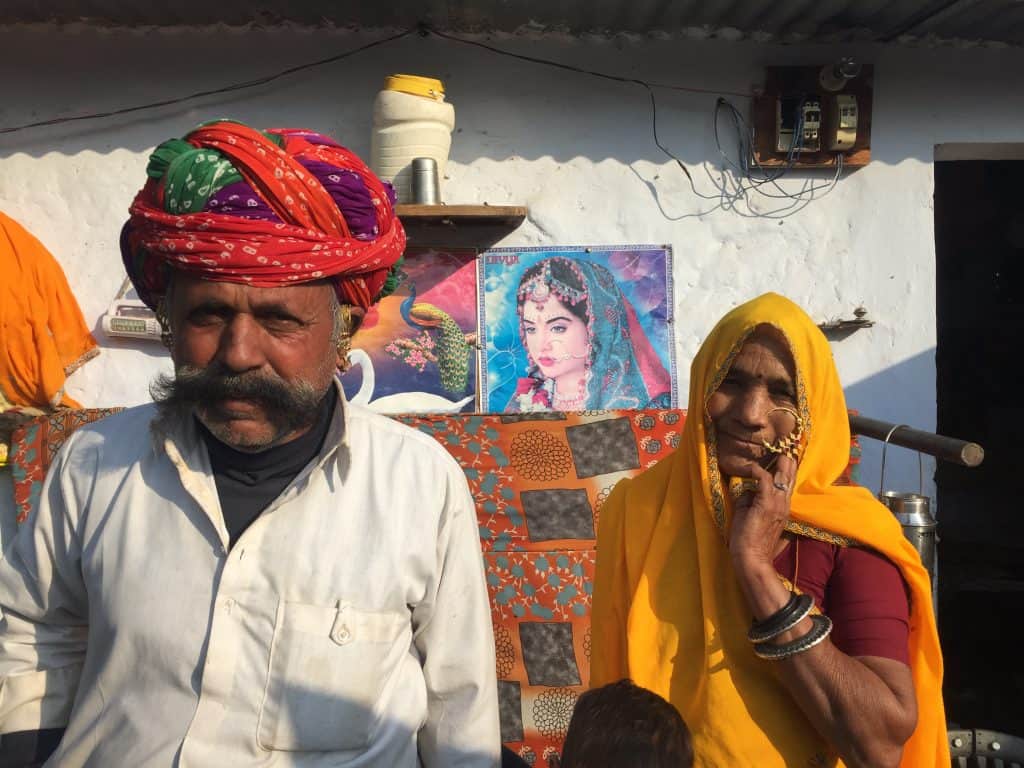
Arjiram and his wife at Sanganer open prison. Credit: PAAR

Then, in 2014, Arjiram’s life as a prisoner transformed in an instant when he was transferred to a different type of correctional facility: Sanganer open prison.

Though the people held at Sanganer open prison are technically incarcerated, they can leave the facility during the day and travel within the city limits. Almost immediately upon his arrival, Arjiram’s sense of self-worth grew. “It didn’t feel like I was in a prison,” he says. “I could go out and work and come back, and the best thing was they trusted me.” After being faceless and nameless for over a decade, he felt like a person again.

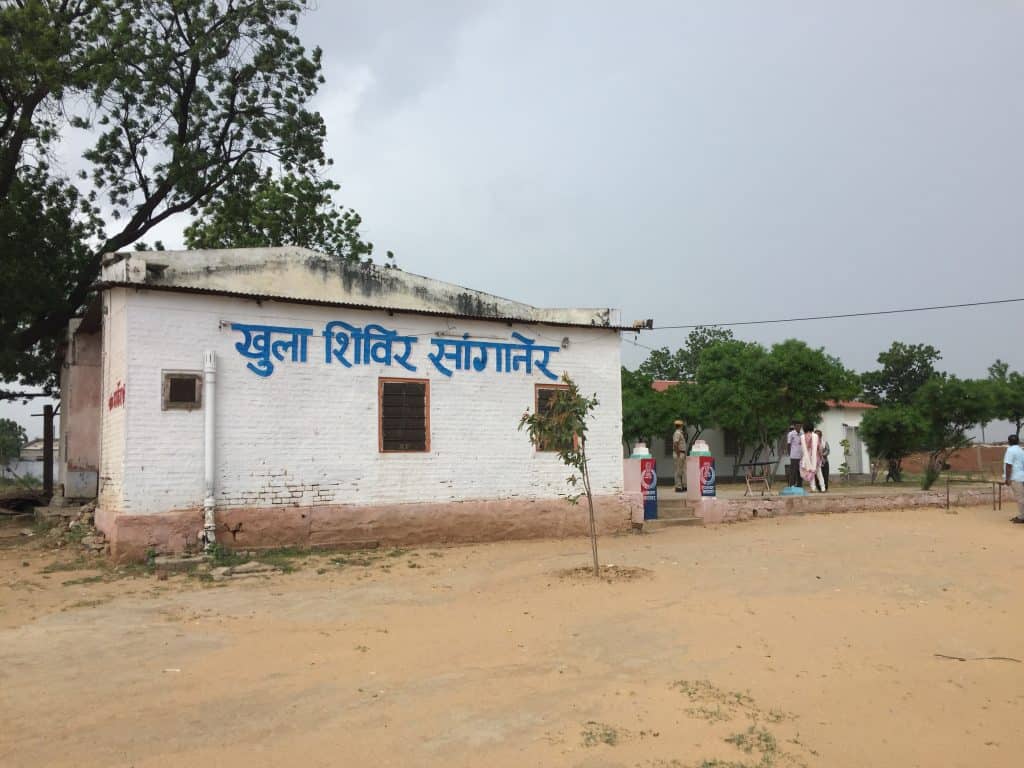
According to the country’s National Crime Records Bureau, there are about 88 open prisons in India, the largest share of which are in the state of Rajasthan, where the model is being pioneered. India’s open prisons are defined by minimal security. They are run and maintained by the state, and those incarcerated within them are free to come and go as they please. At Sanganer, the prison is open for up to 12 hours each day. Every evening, prisoners must return to be counted at an end-of-day roll call.

Designed to foster reform as opposed to punishment, the system is based on the premise that trust is contagious. It assumes — and encourages — self-discipline on the part of the prisoners. On a practical level, letting incarcerated folks go to work also allows them to earn money for themselves and their families, build skills, and maintain contacts in the outside world that can help them once they’re released.

open prison
The outside of Sanganer open prison. Credit: PAAR

This model has deep roots in India. One of the earliest open prisons was established so its inmates could help to construct a dam in Uttar Pradesh in 1953. Over the next couple of decades it evolved as a rehabilitation-oriented system, promoted in particular by Sampurnanand, the governor of Rajasthan in the 1960s.

Today, while open prisons are not the norm across India — they house less than three percent of the prison population — they are growing in number and represent a remarkably progressive approach to incarceration. The model puts India among an elite group of countries that offer open prisons, such as Finland, a place often celebrated for its forward-thinking justice system. But Finland is a small, wealthy country of just over five million people and relatively little violent crime — it registers only a few hundred murders each year. India, on the other hand, is home to 1.4 billion people and tens of thousands of murders, rapes and assaults. Its sheer size makes its open prison system improbable, but it works.

Admittance to India’s open prisons is similar to how parole works in many countries: prisoners are transferred from conventional prisons into open ones based on a range of criteria, such as behavior, motivation to reform, and physical and mental fitness.

They’re not only for those convicted of petty crimes. Hari Singh (not his real name) was convicted of murder and, after serving time in a closed prison, was moved to Sanganer open prison five years ago. Before his incarceration, he worked in construction. “Now I ride an e-rickshaw and earn 600 to 700 rupees ($8 to $9 USD) per day,” he says. “I spent eight years in the closed prison where we are shut out from the world and there was constant worry about everything. Here, we lead a stress-free life — kamao aur khao (earn and eat).”

Crushed by negative news?

Sign up for the Reasons to be Cheerful newsletter.
[contact-form-7]

In addition to allowing inmates to support themselves, open prisons require far less staff, and their operating costs are a fraction of those in closed prisons, which average monthly costs of 7,000 to 10,000 rupees ($92 to $130 USD) per prisoner. And while there is little reliable recidivism data available in India, Scandinavian countries with open prisons have among the lowest recidivism rates in the world.

But the most visible benefit of open prisons is in the humane conditions they provide for those who reside there. As in many countries, prison overcrowding is a major problem in India, with profound implications for physical and mental wellbeing. Open prisons help to solve this.

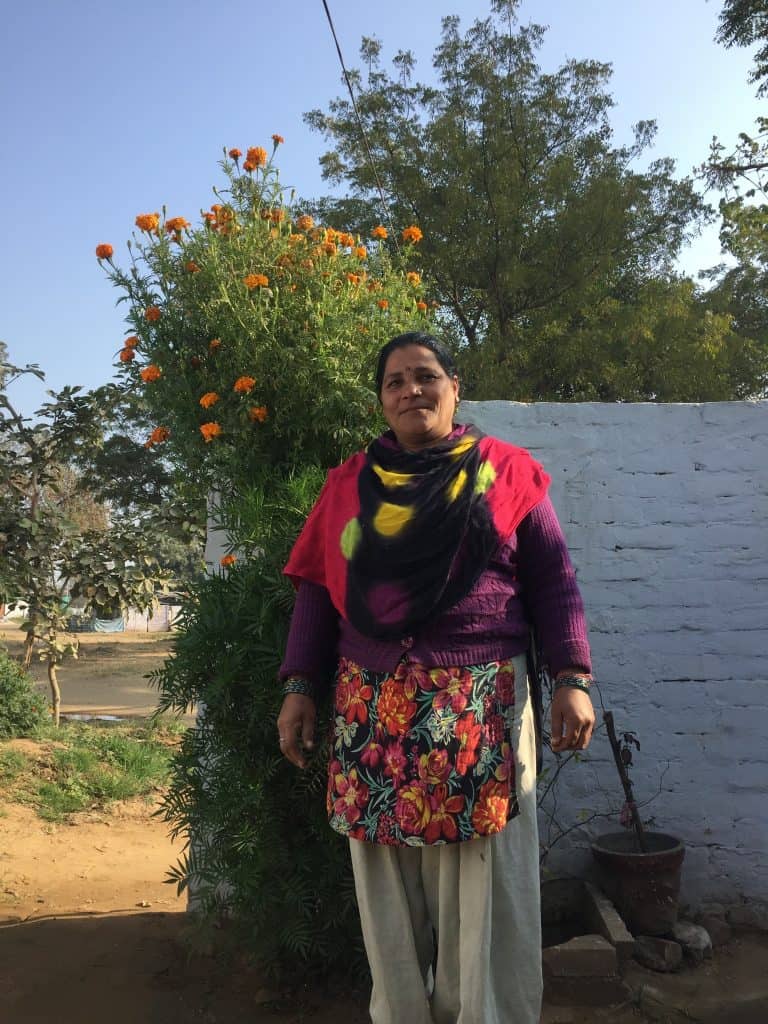
“Color is the one thing we miss in a traditional prison,” says Pooja Chabra, who was transferred to Sanganer open prison from a closed prison in 2015. As soon as she moved into Sanganer, Chabra started planting flowers. “I planted some marigolds outside my residence in Sanganer open prison,” she says, “which suddenly provided color to my otherwise colorless life.”

open prison
Pooja Chabra with her flowers. Credit: PAAR

Chabra found more than just color at Sanganer — she found love. It was there that she met Kishan Devagowda, who was also incarcerated. “I am living the second phase of my life here and these are possibly the happiest years of my life,” says Devagowda.

Single women are not typically allowed in open prisons, but some have found ways to get themselves transferred into them regardless. In some cases, a group of single women will declare that they are a family. “We decided to become each other’s family — life changed from that moment onwards,” says Geeta Sharma, who was sent to Sanganer open prison along with her “family” of other single women.

India has other types of open prisons, as well. The open prison at Cherlapally, Hyderabad in Telangana is spread over 120 pastoral acres. Those who reside there are paid to tend crops, fish and raise chickens. While offering somewhat less freedom than Sanganer open prison, the prison in Cherlapally nevertheless allows the people there to build skills, have family come visit and generally live a more normal, less confined life.

“The prisoners work on the farms and the poultry,” says a deputy superintendent at Cherlapally open prison who asked to remain anonymous. “They learn new techniques of cultivation which will enable and prepare them for livelihood after their release.” The Telangana State Prisons Department even set up an outlet called “My Nation” in the recently held All India Industrial Exhibition at Hyderabad. The outlet sold articles such as bedsheets, towels, doormats, steel cupboards, stools, and cleaning and bakery products made by the prisoners, all of whom were paid for the work.

Smita Chakraborty founded the prison reform organization Prison Aid and Action Research (PAAR) in 2018 after more than a decade of working with incarcerated people. Perhaps more than anyone else, she has pioneered the concept of open prisons throughout India. “If they can think of a parole system,” she says, “they can think of an open prison system, too.”

This advocacy has been successful, and India’s share of open prisons is growing. In 2017 the country’s Supreme Court ordered the central government to arrange discussions with authorities across India to build more open prisons. Since the ruling, 30 new open prisons have been established throughout the country.

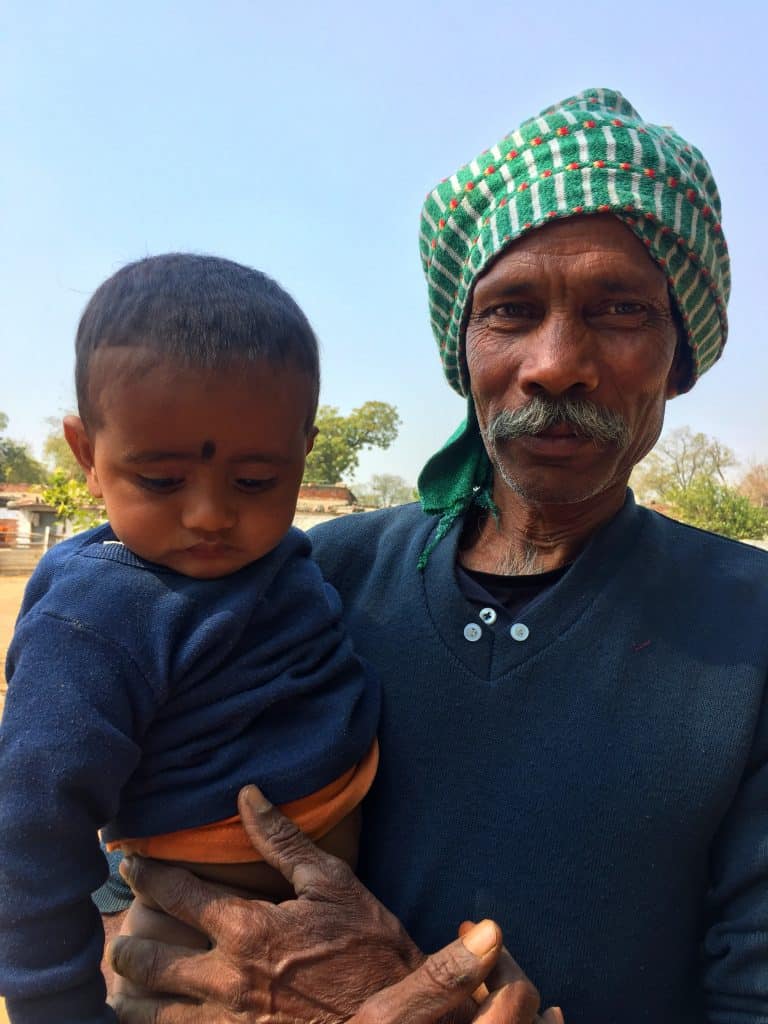
A prisoner at Sanganer open prison with his son. Credit: PAAR

Chakraborty points out that fewer than one percent of those in India’s open prisons are habitual offenders, and the vast majority are nonviolent and pose little threat to society. What’s more, hardly anyone “escapes” from an open prison. The trust-based model appears to foster a meaningful level of mutual respect between the state and those under its supervision.

If anything, the open prison model has been criticized for being too conservative, particularly in regards to which prisoners it will accept. What some critics see as unnecessarily strict eligibility criteria mean that many prisoners who likely pose no threat remain stuck in closed prisons. As of 2021, India had the capacity to house 6,213 people in its open prisons, but only 3,075 were residing there.

If solving this problem lacks urgency, that may be because of the public’s relative indifference to the plight of prisoners, who are often viewed as socially irredeemable. But as open prisons become an increasingly visible part of India’s justice landscape, that may change. “There is a possibility that this concept could emerge as one of the major reforms of the 21st century,” says Ajit Singh, ex-director general of prisons in Rajasthan.

The post India’s ‘Open Prisons’ Are a Marvel of Trust-Based Incarceration appeared first on Reasons to be Cheerful.

09 May 17:23

Her Rash Wouldn’t Go Away, and the Itch Was Ruining Her Life

by Lisa Sanders, M.D.
Nights were a particular torment, and nothing but steroids seemed to help. What could be causing this?
03 May 23:36

Mental illness, attention deficit disorder, and suffering

by emme

Article URL: https://blog.plover.com/brain/add.html

Comments URL: https://news.ycombinator.com/item?id=31228738

Points: 280

# Comments: 345