Shared posts

20 Mar 19:46

Can Your Freedom of Information Request Get You Killed?

by Ton Zijlstra

Last month 27 year old Slovak journalist Jan Kuciak was murdered, together with his fiancée Martina Kušnírová. As an investigative journalist, collaborating with the OCCRP, he regularly submits freedom of information requests (FOI). Recent work concerned organized crime and corruption, specifically Italian organised crime infiltrating Slovak society. His colleagues now suspect that his name and details of what he was researching have been leaked to those he was researching by way of his FOI requests, and that that made him a target. The murder of Kuciak has led to protests in Slovakia, and the Interior Minister resigned last week because of it, and [update] this afternoon the Slovakian Prime Minister resigned as well. (The PM late 2016 referred to journalists as ‘dirty anti-Slovak prostitutes‘ in the context of anti-corruption journalism and activism)

There is no EU, or wider European, standard approach to FOI. The EU regulations for re-use of government information (open data) for instance merely say they build on the local FOI regime. In some countries stating your name and stating your interest (the reason you’re asking) is mandatory, in others one or both aren’t. In the Netherlands it isn’t necessary to state an interest, and not mandatory to disclose who you are (although for obvious reasons you do need to provide contact details to receive an answer). In practice it can be helpful, in order to get a positive decision more quickly to do state your own name and explain why you’re after certain information. That also seems to be what Jan Kuciak did. Which may have allowed his investigative targets to find out about him. In various instances, especially where a FOI request concerns someone else, those others may be contacted to get consent for publication. Dutch FOI law contains such a provision, as does e.g. Serbian law concerning the anticorruption agency. Norway has a tit-for-tat mechanism built in their public income and tax database. You can find out the income and tax of any Norwegian but only by allowing your interest being disclosed to the person whose tax filings you’re looking at.

I agree with Helen Darbishire who heads Access Info Europe who says the EU should set a standard that prevents requesters being forced to disclose their identity as it potentially undermines a fundamental right, and that requester’s identities are safeguarded by governments processing those requests. Access Info called upon European Parliament to act, in an open letter signed by many other organisations.

20 Mar 19:45

RSS auto-discovery

by Dries

While working on my POSSE plan, I realized that my site no longer supported "RSS auto-discovery". RSS auto-discovery is a technique that makes it possible for browsers and RSS readers to automatically find a site's RSS feed. For example, when you enter https://dri.es in an RSS reader or browser, it should automatically discover that the feed is https://dri.es/rss.xml. It's a small adjustment, but it helps improve the usability of the open web.

To make your RSS feeds auto-discoverable, add a tag inside the tag of your website. You can even include multiple tags, which will allow you to make multiple RSS feeds auto-discoverable at the same time. Here is what it looks like for my site:

Pretty easy! Make sure to check your own websites — it helps the open web.

20 Mar 19:45

Canonical URLs

by Dries

Google Search Console showed me that I have some duplicate content issues on https://dri.es, so I went ahead and tweaked my use of the rel="canonical" link tag.

When you have content that is accessible under multiple URLs, or even on multiple websites, and you don't explicitly tell Google which URL is canonical, Google makes the choice for you. By using the rel="canonical" link tag, you can tell Google which version should be prioritized in search results.

Doing canonicalization well improves your site's SEO, and doing canonicalization wrong can be catastrophic. Let's hope I did it right!

20 Mar 19:45

Three things I wish I knew earlier about Machine Learning

by Peadar Coyle

(Reposted from www.peadarcoyle.com)

I’ve been working with Machine Learning models both in academic and industrial settings for a few years now, and I recently watched the excellent Scalable ML from Mikio Braun, to learn more about Scala and Spark.

His video series talks about the practicalities of ‘big data’, and it made me think about what I wish I knew earlier about Machine Learning. I’ve boiled it down to three main things:

1. Getting models into production is a lot more than just microservices
2. Feature selection and feature extraction are really hard to learn from a book
3. The evaluation phase is really important

Let’s get into the details.

Getting models into production is a lot more than just microservices

I’ve been speaking about things like Data Products for a few years now and there’s a lot more to this than just microservices. Models decay in production, there’s a whole deployment, evaluation phase and in some cases, a hand-off period between research and development work and production work. At Zopa, we invest heavily in our own tooling for production, and the improvements in throughput, auditability and the deployment experience are worth it. Read more about Predictor here.

Feature selection and feature extraction are really hard to learn

Something that I couldn’t learn from a book, but tried to, is feature selection and extraction. In reality, these skills are only learned by Kaggle competitions and real world projects. You can only really learn about the various tricks and methods by implementing them or using them in real-world projects. Trust me, this eats up a lot of the work flow of the data science process and feature extraction and feature selection deserve their own blog post.

The evaluation phase is really important

Unless you apply your models to test data — you’re not doing predictive analytics. Evaluation techniques such as cross-validation, evaluation metrics, etc, are all invaluable. The same goes for simply splitting your data into test data and training data. Life often doesn’t hand you a dataset with these things defined, so there is a lot of creativity and empathy involved in defining these two sets on a real-world dataset. There’s a good intro to this on Scikit-Learn docs.

The explanations by Mikio Braun are worth a read. I love his diagrams – here’s a useful example, in case you’re not familiar with training sets and testing sets.

A useful diagram by Mikio Braun on Machine Learning Source: Mikio Braun 2015

We don’t often discuss evaluation of models in papers, conferences or even when we talk about what techniques we use to solve problems. ‘We used SVM on that’ doesn’t really tell me anything. It doesn’t tell me your data sources, your feature selection, your evaluation methods, how you got into production, or how you used cross-validation or model-debugging. We need a lot more commentary about these ‘dirty’ aspects of machine learning. And I wish I knew that a lot earlier 🙂

Ian Ozsvald has some great remarks on ‘Data Science Delivered’ – a good read for any professional (junior or senior) building machine learning models for a living. It’s also a useful resource for recruiters hiring data scientists or managers interacting with data science teams –  if you’re looking for questions to ask your data science team, why not try:  ‘how did you handle that dirty data’?

Peadar Coyle is an Senior Data Scientist at Zopa working on Risk modelling. He’s an international speaker, an Open Source contributor to PyMC3. In his spare time, he enjoys craft beer and tag rugby.

The post Three things I wish I knew earlier about Machine Learning appeared first on Zopa Blog.

20 Mar 19:45

Prepare to be Creeped Out

by Jen Caltrider

Mozilla Fellow Hang Do Thi Duc joins us to share her Data Selfie art project. It collects the same basic info you provide to Facebook. Sharing this kind of data about yourself isn’t something we’d normally recommend. But, if you want to know what’s happening behind the scenes when you scroll through your Facebook feed, installing Data Selfie is worth considering. Use at your own risk. If you do, you might be surprised by what you see.

Hi everyone, I’m Hang,

Ever wonder what Facebook knows about you? Why did that ad for motorcycle insurance pop up when you don’t own a motorcycle? Why did that ad for foot cream pop up right after you talked about your foot itching?

I wondered. So I created something to help me find out. I call it Data Selfie. It’s an add-on–a little piece of software you download to use with your web browser–that works in both Firefox and Chrome.

How does it work? Every time you like, click, read, or post something on Facebook, Facebook knows. Even if you don’t comment or share much, Facebook learns about you as you scroll through your feed.

My add-on does something similar. It’s here to help you understand how your actions online can be tracked. It does this by collecting the same information you provide to Facebook, while still respecting your privacy.

NOTE: The add-on is available in Firefox too.

Want to see what your Data Selfie looks like? Here’s how:

  1. Go here: DataSelfie.it
  2. Download the Firefox or Chrome add-on
  3. Check out my privacy policy if you want to know more about how this works .
  4. You’ll see an eye icon that looks in the upper right corner of your browser. Click on it.
  5. From the list, click “Your Data Selfie.”

You’ll see there’s not much to your Data Selfie yet. Just browse Facebook as you normally do. It takes about a week of regular Facebook use for your Data Selfie to gather enough information to give you a good idea of what Facebook might know about you.

Thanks! I hope you enjoy your Data Selfie.

Hang Do Thi Duc
Mozilla Fellow

PS. My Data Selfie says I’m a laid-back, liberal man who isn’t likely to have a gym membership and prefers style when buying clothes. Pretty accurate, actually.

The post Prepare to be Creeped Out appeared first on The Mozilla Blog.

20 Mar 19:44

False Positives and Fake News

by mikecaulfield

I keep losing this information, so I thought I’d put it here on the blog. Some notes to thinking about disinfo in a different way. I realize this is a lot of stuff from everywhere and nothing is directly comparable. But some trends emerge.

First from Pew most people think they are good or pretty good at spotting fake news:

pew.PNG

That’s partially because people tend to believe they are slightly above average at almost everything, but there you go.

From that same report (late 2016) many people tended to overestimate how often they saw fake news. A reasonable answer for most people would be sometimes given what we know about overall frequency. Again, maybe this is just a difference in definitions or psychological salience:

sometimes

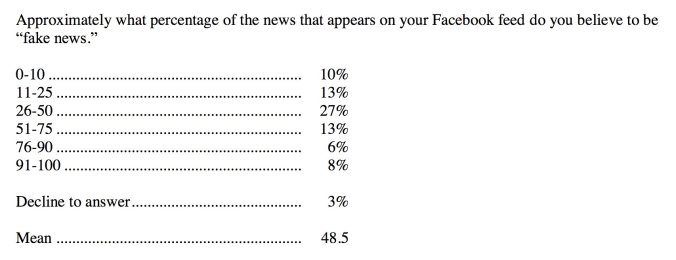
Ok, and then there’s this from Harvard’s IOP, on 18-29 year-olds, from March of 2017. I don’t like the term “fake news” here, because it could also trigger Trump identification and responses based on that (e.g. CNN shows up in feed, that’s fake news, right?). But fascinating, right? The average answer to what percentage is fake is about 50%! (h/t Joshua Benton for pointing me here):

DX3jWPfXkAAeNA7

Then there’s this from a Politico poll from October 2017.

politico

Followed by this chilling result:

revoke.PNG

And this from September 2016:

chartoftheday_5883_trust_in_mass_media_n

Anyway, all this leads me wonder if most people who think they are very good at spotting fake news are actually generating a lot of false positives. Again, this isn’t meant to argue that point necessarily — just wanted to collect these charts in one place.

20 Mar 19:44

How QuickBooks Onboards New Users

20 Mar 19:44

Analytical thinking: Unexpected consequences of a single election

by Josh Bernoff

A Democrat narrowly won a special election for an open congressional seat in western Pennsylvania. It’s only one election. But as an exercise in analytical thinking, let’s figure out what it could mean. First, the facts. Tim Murphy, the Republican in the 18th congressional district, resigned after his mistress said he’d told her to get … Continued

The post Analytical thinking: Unexpected consequences of a single election appeared first on without bullshit.

20 Mar 18:44

The Initial iPhone SDK

by Stephen Hackett
None of these apps were built by third party developers.

None of these apps were built by third party developers.

As noted by Craig Hockenberry, it has been a full decade since Apple shipped the first version of the iPhone SDK to developers.

It's hard to remember today that, in the beginning, the iPhone didn't have third-party apps. It came with a handful of built-in apps written by Apple for things like checking stocks and the weather, jotting down quick notes, making calendar events and reviewing contact information.

These apps were, for the most part, self-contained. The rich environment we enjoy on iOS today where apps can share lots of data with each other just wasn't present in 2007.

The outlier in this paradigm was Safari, which put the Internet — or at least the parts that didn't require Flash — in the palm of our hands.

This made Safari the iPhone's only real opening to the outside world, and I believe it was the most important app on that original iPhone.

At WWDC 2007, just a few weeks before the iPhone went on sale, Apple told a room full of Mac developers that the way to write apps for the upcoming device was via Safari. Here's John Gruber on the topic:

Perhaps it’s playing well in the mainstream press, but here at WWDC, Apple’s “you can write great apps for the iPhone: they’re called ‘web sites’” — message went over like a lead balloon.

He continues:

Telling developers that web apps are iPhone apps just doesn’t fly. Think about it this way: If web apps — which are only accessible over a network; which don’t get app icons in the iPhone home screen; which don’t have any local data storage — are such a great way to write software for iPhone, then why isn’t Apple using this technique for any of their own iPhone apps?

Or, take Apple’s argument regarding iPhone development and apply it to the Mac. If web apps running in Safari are a great way to write iPhone apps, why aren’t web apps running in Safari a great way to write Mac apps?

If all you have to offer is a shit sandwich, just say it. Don’t tell us how lucky we are and that it’s going to taste delicious.

Ouch.

Thankfully, this wasn't the case for long. As soon as iPhones were in the wild, developers — including Hockenberry — were hard at work figuring out what made it tick, and what it would take to run software on the device. After all, the iPhone's operating system1 was based on Mac OS X, meaning it was a familiar environment to Cocoa developers.

That's not to say that there weren't some impressive web apps built for the iPhone. Web developers did some really clever things in those days, but web apps could never be as rich or as powerful or as nice as honest-to-goodness native apps. Apple may have called web apps a "sweet solution," but it just wasn't meant to be.

In October 2007, Steve Jobs published an open letter on the subject:

Let me just say it: We want native third party applications on the iPhone, and we plan to have an SDK in developers’ hands in February. We are excited about creating a vibrant third party developer community around the iPhone and enabling hundreds of new applications for our users. With our revolutionary multi-touch interface, powerful hardware and advanced software architecture, we believe we have created the best mobile platform ever for developers.

It's come out in the years since that Jobs wasn't in favor of this plan, but was persuaded that it was the right call. His letter goes on:

It will take until February to release an SDK because we’re trying to do two diametrically opposed things at once—provide an advanced and open platform to developers while at the same time protect iPhone users from viruses, malware, privacy attacks, etc. This is no easy task. Some claim that viruses and malware are not a problem on mobile phones—this is simply not true. There have been serious viruses on other mobile phones already, including some that silently spread from phone to phone over the cell network. As our phones become more powerful, these malicious programs will become more dangerous. And since the iPhone is the most advanced phone ever, it will be a highly visible target.

On March 6, 2008, Apple took to the stage to unveil the SDK.2 Here's a bit from Jason Snell's live blog, quoting Scott Forstall:

“Starting today we’re opening up the same APIs and tools that we use to develop our own applications today. Now, there are a lot of pieces that make up an SDK. But the most important are the APIs and the platform. And we have a great one, Mac OS X.”

He went on to outline the layers that made up Mac OS X: Core OS, Core Services, Media, and Cocoa.

“To build the iPhone OS, we took the bottom three layers and moved them across. Now Cocoa is interesting… it’s the best application framework out there, but it’s based on a keyboard and mouse.”

Cocoa Touch was the name given to the new framework, and it enabled developers to work with familiar tools for an all-new platform. They could use numerous core services to use things like the Contacts database or Photos library on the device, and tap into Apple's rich media stack to make their apps flexible and powerful.

Development was done in Xcode, just as it was for Mac apps, for both regular and apps and games. Apps could be run directly on an iPhone, or on the host Mac via the new iPhone emulator.

To say that people were excited to get their hands on the SDK is an understatement. Anyone could download it and start writing an iPhone app, no matter their background or level of experience.

I spoke to David Smith, developer of Workouts++, Pedometer++ and other fine iOS and watchOS apps:

"The funny thing about the original SDK is that I had no idea at all about Apple development. So I just dived in and tried to hack things together. It wasn’t until much later that I knew enough to see where it was limited or basic," he said.

While a lot has changed in the last decade, Smith praised UITableView for aging well. "That was the crux of most of my early development and it still is a lot of it to this day," he said.

Russell Ivanovic, developer at Shifty Jelly, the home of Pocket Casts and Pocket Weather, was new to developing on Apple's platforms as well.

"I'd never done any Mac development or even seen Objective-C. Interface Builder felt more primitive than what Microsoft had at the time, but some of the components like UIScrollView and UITableView felt like they came from the future. They were so fast and easy to use it was incredible," he said.

There were, of course, some pretty severe limitations in the initial version of the iPhone SDK.

The first release lacked some of the tools Apple had previewed, as Marco Arment, developer of Overcast, reminded me.

"The first version of the SDK lacked Interface Builder and Core Data. I got started on Instapaper's app immediately, and since those tools weren't there, I just taught myself to do interfaces and data persistence manually. They were both added to the SDK within a month or two, but I never went back to re-learn them because I'd moved on to other parts of the app," he said. "To this day, I do almost all of my interfaces in code, and I don't use Core Data."

Developers who were new to the Apple way of doing things found it difficult to discuss their development with others.

For the first several months it existed, the iPhone SDK was protected by a strict NDA, as Chris Foresman wrote about in July 2008:

The NDA made a degree of sense during the SDK's beta period, since the API and documentation were in flux and nondisclosure could keep inaccurate information from being published. One of Ars' own staff members noted, however, that the potential for bugs and mismatches between documentation and the actual API means that more developers are facing the same stumbling blocks during the beta period. Those developers are used to solving such problems by taking advantage of online forums, blogs, IRC channels, and mailing lists to get help with problems; the NDA prevents any of that.

In fact, there were no books, seminars, or conferences on how to build iPhone apps until after the NDA lifted.

Apple relaxed the NDA in the fall of 2008, but it took some time for developers to become comfortable with talking about the SDK and related technologies.

The tools were primitive in places, and there were limitations when it came to apps that wanted to do phone-like things over EDGE. For example, VOIP apps would be permitted, but were restricted to working just over Wi-Fi. It was implied this as a bandwidth problem, but many raised their eyebrows at AT&T and other carriers over this.

Perhaps the primary complaint was the utter lack of multitasking for third-party apps. A handful of Apple's own apps, including Phone, Mail, Safari and iPod, could run in the background, but that was it. Any other app had to be in the foreground, active on the screen, to be running. Tapping the Home button would exit the app as it faded from view.

This was before the era of push notifications, so there was no way for an app to wake up or receive new information. This meant some apps, like instant messaging clients, were a bit frustrating to use.

John Gruber explained why this was the case:

Why has Apple imposed this limitation? Easy: the iPhone is severely resource constrained. Battery, RAM, and CPU cycles are all severely limited. If third-party apps could run in the background, all three could suffer. RAM would suffer for sure; all running apps consume memory. The iPhone has just 128 MB of RAM, and no swap space. CPU performance and battery life would suffer when background apps do something — and if they’re not doing anything, what’s the point of keeping them running? I noticed a significant increase in battery life after I switched the Mail app’s auto-checking interval from 15 minutes to 60 minutes. That’s just one app.

This would get better over time, but is perhaps the thing that struck me as feeling the oldest while revisiting these materials.

It's been a long ten years since the first iPhone SDK, but there's no doubt that it ushered in the age of apps we now enjoy. We often think about Apple products as being able to change the world, but in the iPhone's case, that was made possible thanks to a set of development tools.


  1. In hindsight, it's clear Apple didn't think people would care about the software on the phone. The company referred to it as "firmware" for a long time, just like on an iPod. Eventually, it got branded "iPhone OS," despite the iPod touch. After the iPad had been around for a bit, it got changed to iOS. ↩︎
  2. The App Store was also introduced in this keynote, but that's a story for a different time. ↩︎

Support MacStories Directly

Club MacStories offers exclusive access to extra MacStories content, delivered every week; it's also a way to support us directly.

Club MacStories will help you discover the best apps for your devices and get the most out of your iPhone, iPad, and Mac. Plus, it's made in Italy.

Join Now
20 Mar 18:44

Jot Takes a Stripped-Down Approach to Note Taking

by John Voorhees

Jot is a simple note taking app that collects the little bits of textual ephemera that come at you throughout the day. True to its name, Jot makes it easy to take down notes quickly. Although I think there’s room for a few more features that would enhance the app without compromising its simple approach, anyone with basic note taking needs that is looking for an app that focuses first and foremost on the words captured should appreciate Jot.

Jot is a paper tape-style app. There is no tagging or folder system. Notes are created by tapping the plus button in the lower right-hand corner of the app’s main screen or by pulling down on the notes list. New notes are added to the top, pushing older ones down the list.

The note compose view places the cursor in the middle of the text field similar to other text editors’ typewriter mode. Along the bottom of the view is a checkbox and clock icon for turning a line of text into a task that can be checked off and creating a reminder. Reminders include ‘Soon,’ ‘Tomorrow,’ and ‘In a week’ presets as well as options to set a custom reminder time and remove a reminder. On my iPad Pro, tapping the reminder button crashes Jot, which is a bug that the developers are aware of and are working to fix, but it works fine on the iPhone X. When you’re finished creating a note, tap ‘Done’ and it’s added to the top of your list.

Notes longer than about six lines long are truncated. The only way to see the full note is to open it with a tap. I understand the decision to truncate long notes in a paper roll-style app, but this would be a perfect spot to add peek and pop support using 3D Touch, which strikes me as consistent with the app’s aesthetic.

Notes can be archived by swiping left on them. Interestingly, there is no delete option, except after a note is archived, which is a little cumbersome.

If you have a note you don’t want to lose track of, you can pin it to the top of the list by swiping left on a note and tapping the pin icon. If you pin more than one note, they appear at the top of the screen in chronological order by creation date. Pinned notes can be unpinned with another right-to-left swipe and picking ‘unpin.’

Search provides access to your note archive, recent searches, and new searches and settings can help streamline Jot’s experience further.

Search provides access to your note archive, recent searches, and new searches and settings can help streamline Jot’s experience further.

The other way to find notes is by search. Tapping in the search field at the top of Jot’s main screen opens a separate search view. From here, you can tap into your note archive to browse, pick a search from your recent searches, or create a new search. In my tests, search was effective and fast. The modal search view makes it easy to let users browse their archive and select recent searches, but separating it into a separate view feels a little counter to the app’s bare bones style.

Swiping left to right reveals options to copy a note and share it from the system share sheet. The app’s settings let users toggle autocorrect, auto-archive completed task lists, launch the app in its compose view for even faster text entry, and require a passcode, Touch ID, or Face ID authentication.

The point of Jot is quick, simple text entry. Despite that though, there are a few features I’d like to see added that I don’t think would run counter to its goals. The first is sync. Notes do not sync between iOS devices, which is important if you split your time between an iPhone and iPad. Jot cannot detect phone numbers, addresses, or URLs either. Although I understand that Jot is intended to be a text-only app, adding the ability to launch the phone app, Maps, and Safari from Jot would add utility to the text entered without compromising the app’s simplicity. An extension for getting text into Jot from other apps would be useful too.

Jot’s unique take on note taking is interesting. I like the clean, sparse interface and the ability to take down notes quickly with minimal effort. The app should appeal to anyone who doesn’t care about the multimedia capabilities of Apple’s Notes app or the automation features of an app like Drafts. It’s a solid 1.0 release that I hope continues to be refined to address some of the shortcomings mentioned above.

Jot is available on the App Store for an introductory price of $1.99.


Support MacStories Directly

Club MacStories offers exclusive access to extra MacStories content, delivered every week; it's also a way to support us directly.

Club MacStories will help you discover the best apps for your devices and get the most out of your iPhone, iPad, and Mac. Plus, it's made in Italy.

Join Now
20 Mar 18:44

An Apple R&D Bonanza

by Neil Cybart

After a brief lull, Apple's R&D expenditures are once again exploding higher. Apple's 2Q18 financial guidance implies the company will soon report the largest year-over-year increase in quarterly R&D expense in its history. Management is on track to spend $14 billion on R&D in FY2018, nearly double the amount spent on R&D just four years ago. The dramatic rise in Apple R&D expenditures raises questions regarding the company's product pipeline and whether management's overall approach to R&D is changing.

The Numbers

Apple's pace of R&D expenditures is nothing like the company has ever seen. The $14 billion of R&D expense that Apple will spend in FY2018 will be more than the amount Apple spent on R&D from 1998 to 2011. The CAGR for Apple's R&D expenditures has been a remarkable 32% since 1998. As seen in Exhibit 1, the ramp in Apple R&D expense spanning more than two decades has been breathtaking. 

Exhibit 1: Apple R&D Expense (Annual)

Another way to demonstrate the dramatic rise in Apple R&D is to look at the year-over-year increase in expenditures on a quarterly basis. As seen in Exhibit 2, beginning in FY2Q17, Apple R&D expense growth has been on an uptrend. The expected $725 million increase year-over-year in Apple R&D expenditures in FY2Q18 will be nearly 25% higher than the previous R&D expense growth record. This $725 million figure is obtained by using Apple's guidance for operating expenses and backing into estimates for SG&A and R&D expenses. The recent ramp in R&D expenditures suggests Apple is definitely up to something.  

Exhibit 2:  Year-Over-Year Increase in Apple R&D Expense (Quarterly)

Screen Shot 2018-03-13 at 12.07.37 PM.png

R&D Growth Drivers

It's easy to assume that the increase in Apple R&D expenditures over the years simply reflects Apple's expanding product line. However, there is more behind Apple's R&D expenditures. Three items are responsible for the growth in Apple R&D expenditures:

  1. Existing products. Apple is doing more these days given a broader product portfolio.  
  2. In-house tech development. Apple has positioned controlling the core technologies powering its devices as a main goal. 
  3. New products. Apple is developing products for which it has no guarantee of future commercial viability. 

Once a project's commercial viability has been established, it becomes that much more difficult for Apple to classify subsequent manufacturing or evolutionary product updates as R&D. This means that cash spent on developing new versions of existing products may not necessarily qualify as R&D. Instead, such expenses may have to be marked as a capital expenditure and amortized or depreciated over the life of the asset. 

Another item that isn't contributing to Apple R&D expense is Apple Park construction. Real estate construction costs related to general corporate usage, or even design labs where some R&D may take place, cannot be categorized as R&D expense. Instead, for real estate to be classified as R&D, there has to be uncertainty regarding future commercial viability. As an example, the numerous buildings Apple bought, or began leasing, in the mid-2010s specifically for Project Titan likely boosted R&D at the time. (A map of Project Titan buildings is available to Above Avalon subscribers.)

New Products

Whereas Project Titan was a leading R&D driver a few years ago, there are likely two new items now driving the recent surge in R&D expenditures: 

  1. Smart glasses. We know Apple is working on smart glasses given the company's M&A track record (Vrvana, SensoMotoric Instruments, patents, and subtle clues found in Apple management commentary. The team dedicated to the effort is likely massive.
  2. Content distribution efforts. Apple appears to have settled on a broader strategy for content, and it involves doubling down as a content distributor. Apple is investing big when it comes to delivering music, video, apps, news, and written content to more than 850 million users (of which 500 million visit the App Store on a weekly basis). Apple's effort to launch a video streaming service from scratch is likely being classified as R&D. For example, Apple has no guarantee that money spent on script development will lead to a commercially viable video streaming product. We also know Apple is reportedly spending $1 billion on original video content. 

Apple is also continuing to work on doubling down on hardware to control the brains powering its products. As long as the byproduct of such efforts leads to products that are significantly different from existing products, Apple is likely able to qualify such efforts as R&D. Ongoing costs associated with Project Titan are also likely substantial, especially relative to smaller product-specific projects found throughout Apple. 

Changes

Although Apple remains an incredibly focused company when it comes to products, the amount of money spent on R&D would seem to suggest that management may be relaxing its focus mantra a bit when it comes to researching new ideas. As seen in Exhibit 3, Apple R&D expenditures as a percent of revenue now stand at a 14-year high. This tells us that Apple is spending more on R&D for every dollar of sales earned despite the dramatic rise in sales over the years. For some companies this may not mean much, but for Apple it can't be ignored. 

Exhibit 3: Apple R&D Expense as a Percent of Revenue

Screen Shot 2018-03-13 at 12.26.36 PM.png

There are a few possible explanations for the growth in Apple R&D expenditures in recent years:

  1. Greater ambition. Apple finds itself in a position of being able to do a whole lot more. It is estimated that Apple spent $150 million to build the first iPhone in the mid-2000s. At the time, it was a significant amount of cash for Apple. Nearly ten years later, Apple finds itself spending that much money developing one show for its upcoming video streaming service. To a certain degree, Apple management may feel it has an obligation of having to do more given its size. As Tim Cook recently put it, "We can do more things than we used to do because we’re a bit bigger." 
  2. Competition. One factor driving Apple's ambition to do more is competition. It is no longer enough just to control hardware and software. Apple now finds itself needing to control the technologies powering its devices. Bringing development of fundamental technologies in-house doesn't come cheap. Apple has opened a series of R&D centers around the world (China, Japan, India, Indonesia, New Zealand, Canada, France, Italy, Israel, Sweden, and the U.K.), many of which are tasked with developing hardware. Some of these R&D outposts are a result of Apple acquiring teams of talent. 
  3. More experimentation. Apple is likely experimenting much more when it comes to new ideas and processes. While there is no evidence of Apple allowing more of these ideas to actually proceed to market, it sure looks like Apple management wants to be in a position where it can afford to say "no" to more ideas than in the past. 

The third point involving additional experimentation ends up being the most interesting. For a company that positions its ability to focus on a few things at any one time as a core competency, increased experimentation seems to be at odds with this value.

Apple R&D Theory

My theory on the dramatic rise in Apple R&D expenditures is that management is becoming more ambitious. Apple's future is found in new industries. Just as Apple moved from desktops/laptops to personal music players, smartphones, and watches, the company will need to enter new industries to remain relevant. This is not a company that is holding onto the iPhone as tight as possible for fear of change. Apple management is investigating new ideas and processes in order to support future moves into new industries.

This explains Apple's ongoing interest in transportation and Project Titan, an area that Apple has pretty much no expertise in. We have Apple building an entertainment arm from scratch despite having no experience developing scripted content. In each case, Apple has had to rely on outside hires and significant cash outlays to build core competencies. 

It's not that Apple has thrown its focus mantra out the window. Apple remains very selective in terms of both its M&A activity and deciding which products make it to market. Instead of funding significant R&D endeavors with no intention of them one day leading to a product, Apple's R&D remains focused on ideas that at least have the potential to see the light of day. The years of development behind making Face ID a reality would be a recent example. 

Much of this focus mantra is driven by the fact that Jony Ive and his Industrial Design group oversee Apple's product vision and the user experience found with Apple products. With only 20 or so members, Jony and team can only do so much at any given moment. In a way, Apple's organizational and leadership structure serve as safeguards preventing Apple from spreading itself too thin and doing too much. Instead of trying to expand the design team in order to work on more products, Apple's strategy appears to be to do the opposite and place bigger bets on a few products.

These bigger bets come in the form of owning the core technologies powering Apple devices. Apple wants to reduce dependency on others. We are quickly moving to the point at which every Apple product will be powered by core technologies developed in-house. Such a reality would have been a pipe dream just a few years ago. Apple believes this strategy will give them an advantage in the marketplace. It's a new twist to the Alan Kay line about "people who are really serious about software should make their own hardware." We are moving to the point at which companies serious about software should design their own silicon. Having $285 billion of cash on the balance sheet gives Apple the freedom to pursue this ambitious goal. It is this motivation to control more of the user experience while pursuing new industries to enter that is driving the remarkable increase in Apple R&D expenditures. 

Receive my analysis and perspective on Apple throughout the week via exclusive daily updates. To sign up, visit the subscription page


20 Mar 18:43

Enough Alreadies

by Doc Searls

I just unsubscribed from Quora notifications.

Reasons:

  1. With my new full-time gig as editor-in-chief of Linux Journal, I have close to no time for anything else, even though many other obligations do take time. Some of those also pay, and so require that I cut out as many distractions as I can.
  2. The filter bubble thing works a bit too well. Two topics I’ve answered a lot—about IQ and radio—seem to bring an avalanche of others that beg to be answered, which I do too quickly, again and again. As a result I’ve said the same damn thing, or the same kinds of damn things, too many times.
  3. I’m not sure writing there does much good. But then, the world is now so thick with “content” that I’m not sure writing anywhere does as much good as it used to.
  4. It’s time now to look for effects. Except for up and down voting, which say almost nothing to me, I have little if any sense that anything I write on Quora means much, if anything, to other people.
  5. It’s not my space. It’s Quora’s

Also, in case you haven’t noticed, I’ve slacked off here, at doc.blog and other bloggy places of mine online, other than in Linux Journal. And even there a lot of what I do there is behind the scenes.

Even for people like me, whom marketers call “influencers” (and is nothing to brag about), writing to effect is getting harder and harder. Even if something gets a lot of notice, the news cycle is hardly longer than Now, and the sense of having done something quickly disappears.

So, while it’s a small thing, I’m moving on from Quora and focusing on stuff I know matters, whether I sense effects or not.

Life in the Fast & Vast Lane, I guess.

20 Mar 18:43

Machine learning to estimate when bus and bike lanes blocked

by Nathan Yau

Frustrated with vehicles blocking bus and bike lanes, Alex Bell applied some statistical methods to estimate the extent.

Sarah Maslin Nir for The New York Times:

Now Mr. Bell is trying another tack — the 30-year-old computer scientist who lives in Harlem has created a prototype of a machine-learning algorithm that studies footage from a traffic camera and tracks precisely how often bike lanes are obstructed by delivery trucks, parked cars and waiting cabs, among other scofflaws. It is a piece of data that transportation advocates said is missing in the largely anecdotal discussion of how well the city’s bus and bike lanes do or do not work.

Tags: bike lane, machine learning

20 Mar 18:42

The CARE Framework

files/images/CARE_Framework.PNG

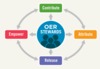
David Wiley, iterating toward openness, Mar 18, 2018


Icon

David Wiley responds to the CARE Framework (previously in OLDaily). He makes two major points. First, not everyone has the luxury to contribute to the  "hard, frequently painful, and seldom recognized work associated with stewardship." And second, "the document also contributes to the (much more active) conversation about who deserves to be allowed to participate in the OER movement." I think he's wrong on both counts. By analogy, it's like CARE is saying 'we are all stewards of the environment' and Wiley is saying 'We can't all get jobs as forest rangers', which while true, is irrelevant. Being a steward means respecting it, protecting it, and not destroying it. Wiley's second point is like saying 'we can't destroy it, no matter how we use it, because it's non rivalrous'. But openness can be destroyed; I have discussed the phenomenon of 'conversion' in the past, and it is this (and not some unthinking prejudice) that causes me to distrust commercial publishers and other bad actors.

Web: [Direct Link] [This Post]
20 Mar 18:42

There are No Things. There are patterns.

files/images/screen-shot-2018-03-15-at-19-17-05.png

Jenny Mackness, Jenny Connected, Mar 18, 2018


Icon

I've said in the past that knowledge is recognition, and if I were pressed to describe what I think truth is, I would say that it is a strong feeling of recognition. This I think is consistent with what the early empiricists (like David Hume) would say. Formally, truth is an attitude toward a proposition: we say that a propositoon is 'true' or 'not true' and then try to explain that through an interpretation (such as Tarski's theory of truth, or model theory, or some such thing). That makes truth easier to work with, but only because it abstracts the messier reality. Having said all this, I think this puts me in accord with Iain McGilchrist, cited by Jenny Mackness in this article, when he says things like ‘No single truth does not mean no truth.’ 

Web: [Direct Link] [This Post]
20 Mar 18:42

Fight the Right Things So You Can Win At Life

files/images/fight-the-right-things.png

Vicki Davis, The Cool Cat Teacher Blog, Mar 18, 2018


Icon

I felt sad when I read this. "Life is a constant battle. We must fight to become better." It can be a battle, I suppose, if you're determined to see it that way. But I don't think in terms of it "winning" and overcoming an "enemy". Life is an exploration, it is an experience, it is the ultimate (and only) source of happiness and contentment, it is balance, it is harmony, it is peace. Let the gift, not the glove, be your metaphor for life.

Web: [Direct Link] [This Post]
20 Mar 18:42

Schrodinger’s OER

files/images/DunScotus2.jpg

David Wiley, iterating toward openness, Mar 18, 2018


Icon

David Wiley responds to my criticisms of his arguments against the CARE Framework. He offers a reductio: if my assertion that 'open' is defined by access, rather than licensing, he argues, " any copy of an OER placed outside your reach ceases to be OER," and indeed, "the overwhelming majority of copies... in the world are not OER." But I don't see this as an absurd conclusion. The resources on my computer, no matter how they are licensed, are not open, precisely because I won't let you access my computer. In order for them to remain open, someone (and preferably a number of people) must make them accessible. The whole idea of stewardship is ensuring that this continues to be the case; the whole idea of conversion (and much commercialization) is to ensure that it doesn't.

Web: [Direct Link] [This Post]
20 Mar 18:42

No, ‘cognitive strengthening exercises’ aren’t the answer to media literacy

files/images/4129-640x583.jpg

Benjamin Doxtdator, Long View on Education, Mar 19, 2018


Icon

Both dana boyd's original post and Benjamin Doxtdator's response are really strong posts and I recommend you take the time to read both carefully. I cited a previous post from boyd recently making some of the same points. Essentially, boyd is saying that we need to 'innoculate' people from deception in media, while Doxdator is saying that this fails to address the power dynamic in society. The disagreement is most evident in the different ways we treat experts and authority. As Rene Hobbs says, "Media literacy educators, with their focus on evidence and reasoned argument, value expertise even as we point out that expertise is itself a social construction."

Web: [Direct Link] [This Post]
19 Mar 15:55

Reflecting on Maker Experiences with Reflection Cards

files/images/makerreflection-cards.jpg

Jackie Gerstein, User Generated Education, Mar 19, 2018


Icon

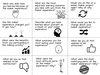
Jackie Gerstein describes a board game and set of cards she uses as a prompt to promote reflections on experiences. The game and cards pose different questions participants respond to, for example, "What new skills have you learned?" and "What surprised you the most?" I've had these tried on me in the past and struggled to explain in a public forum that the answers were "nothing" and "nothing". Not every educational experience can be reduced to a flash card. As I read this, though, it occurred to me that a much better experience would be to have the students create the questions for themselves. Now of course you can't do this every time (they'll eventually develop a set of canned questions, just like these). But it should happen at some point.

Web: [Direct Link] [This Post]
19 Mar 15:55

The Best Multi-Tool for Most Cyclists

by Peter Flax
The Best Multi-Tool for Most Cyclists

If you ride a bike—for commuting or fitness, on- or off-road—you know that you’re going to break down. And when that happens, you’re going to need a reliable mini tool that allows you to make basic adjustments and repairs, quickly and easily, because the last thing you want to do, no matter where or how you ride, is walk home. We spent two months and logged a total of 1,000 miles putting 15 tools through dozens of en route and at-home repairs, and found the Topeak Mini 9 to be the best multi-tool for casual cyclists. Despite its diminutive size and price, the Mini 9 offers an impressive array of tools, with seven different hex sizes (including an 8 millimeter, which is required to remove some kinds of pedals) and a T25 Torx bit. That’s enough to handle the vast majority of on-the-road fixes.

19 Mar 15:55

Goals and journeys

by Jim

Saints John and James Church - FergusonMy dad is 96. He’s never been a big talker, but there is one story that I’ve often retold. It wasn’t one that I learned until I was probably in my thirties.

Dad served in the Navy during WWII. He had to cheat on his pre-induction physical because of his eyesight; he memorized the eye chart while standing in line. He ended up stationed in San Diego, pretty much as far away from his home in Delaware as you could get and still be in the country.

After the war, Dad went back East and got a degree in mechanical engineering on the GI Bill. In 1950, he packed himself into his car and started west to return to San Diego. If you’ve seen both Wilmington, Delaware and San Diego, you can understand the attraction.

Around about St. Louis, he ran out of money, found a job, and started going to the local parish church, while saving up to resume his journey. One Sunday after Mass, he asked the parish priest if there were any nice Catholic girls he might get to know. It turned out to be seven children and nearly forty years before he finished that trip to San Diego.

Goals are important. They set you on your way. But, what you learn on the journey is equally important. It’s trite. I know. I don’t like trite. But I need to be reminded that it is the shared human experience underneath the trite that is important. I am distracted by bright, shiny, objects all of the time. For me, this story is a reminder and a warning to worry less about the particulars of my plans and keep the human goals top of the list.

UPDATE: With the help of some of my cousins, I was able to track down a photo of the church where Mom and Dad were married, Saints John and James Catholic Church in Ferguson.

The post Goals and journeys appeared first on McGee's Musings.

19 Mar 15:55

We're Sunsetting Classic API Consoles

by marsh

Eight years ago today, when Apigee was a small company, we launched an API Console for the Twitter API as a way to improve the developer experience. Shortly thereafter, we added a console for Facebook, and then we created a self-service option that enabled anyone to create their own API Console as a free service, simply by describing their service in XML using the WADL format.

API Consoles became the first experience that many developers had with Apigee products. One year after it launched, Twitter embedded our API Console within their developer site, as did companies like LinkedIn and Instagram.

A lot has changed since then. Now tools like Postman and Paw have enabled API consumers and providers to create collections of APIs, giving developers more choice and power to test and explore APIs. Apigee, meanwhile, has focused on API providers and helping them meet the needs of their developers directly.

So we’ve decided to turn down this service. Starting today, console users will be notified that as of April 14, the API Console service will be sunsetted. Please share any comments or ask any questions in the Apigee Community.

19 Mar 15:55

Google and Levi's created a digital jean jacket. Here's what I think of it

Google has been designing physical goods for years now. But once you’ve come out with your own lines of phones, laptops, speakers, VR goggles, earbuds, and cameras, what’s left?

Clothing.

Yes, Google has teamed up with Levi’s to create the ultimate wearable technology: A great-looking, nosebleed-priced jean jacket ($350). It bears the nearly infinite name, “Commuter Trucker Jacket with Jacquard by Google.”

The CTJWJBG is targeted at a super niche audience: bike riders whose hands are on the handlebars and not their phones.

image
Google and Levi’s have teamed up to create a digitally enhanced jean jacket.

The handsome blue denim CTJWJBG looks like Levi’s traditional trucker jean jackets, with a few important differences:

  • Extra pockets in convenient places for your phone, sunglasses, whatever. In addition to the two snap-closed breast pockets and the two regular hip-mounted slash pockets, there’s also a zippered one on the outside left upper arm, as well as a zippered inside breast pocket.
image
Bonus pockets accommodate the active gadget lugger.
  • Reflective details on the back, to help you stand out when you’re on the road at night.
  • Extra back panel to cover your waistband when you’re leaning forward on your bike, to avoid presenting the world with Biker’s Butt.
image
The back features reflective strips and extra fabric.
  • A little slit to hold the snap tag. More on this in a moment.

The biggest difference, though, is hidden. On the top surface of the left cuff, Levi’s has woven a grid of conductive, touch-sensitive thread, developed by Google just for this purpose. In essence, it turns your left cuff into a trackpad for simple taps and gestures — yet the jacket remains flexible and, more important, washable. (Levi’s says that the CTJWJBG is the first washable wearable in history.)

image
Conductive, touch-sensitive threads are woven through the left cuff.

Clearly, a trackcuff (cuffpad?) is going to need power and circuitry. So Google has also developed an impressively thin, flexible, five-inch rubberized strap that it calls the snap tag. It contains the battery, Bluetooth, vibration module, LED light, and all the silicon. When you need to charge the tag (or wash the jacket), you just yank it off. One end fits into any computer’s USB jack for charging, and a charge easily lasts two weeks. You can put the snap tag back onto the jacket with one hand: One end slips into a little slit in the cuff; the other end snaps easily to the cuff.

image
To charge the snap tag, you pull it out of the jacket and plug it into a USB jack.

The functions

Once you’ve downloaded the Jacquard app for Android or iPhone, and paired the snap tag with your phone, the fun begins.

By reaching across with your right hand, you can make any of four gestures on the trackcuff: Double-tap, swipe upward (away from your hand), swipe downward, or cover the cuff completely.

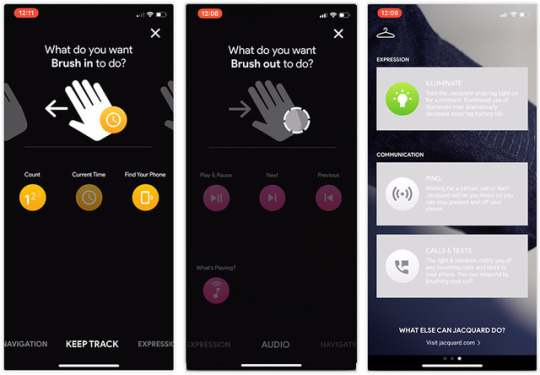
Using the app, you define what each of those gestures means (well, the swipes and taps, anyway; covering the cuff always means “silence all”). Here are your options:

  • Play/pause music. This trick, like most of the jacket’s stunts, assumes that you’re wearing earbuds and they’re connected to your phone.
  • Next track/previous track.
  • Identify this song. You hear the song name and artist spoken in your earbuds.
  • Next GPS instruction. For example, “Turn right on Maple Street in two miles.”
  • “You will arrive in 20 minutes.”
  • Speak the time.
  • Speak the incoming text message.
  • Find Your Phone. Makes your phone start ringing with a special chime, as long as it’s within about 30 feet of the jacket.
  • Count. Weird but neat: every time you make this gesture, the jacket increments a running tally. You can use it to count patrons coming into the bar, or number of F-bombs in a comedian’s speech, or birds you’re spotting—anything you like.
  • Illuminate. Lights up the LED on the left cuff button.
image
It’s easy to program the three cuff gestures.

In addition to these customized gestures, double-tapping always means “answer this call” (or “hang up this call”). When you’re pedaling along and a call comes in, your wrist buzzes, the left snap lights up, and, when you double-tap your left wrist, you can take the call.

And covering up the entire cuff always means, “Hold everything.” Music pauses, phone calls are quiet.

All of these gestures work flawlessly. I mean, the jacket and phone respond instantaneously and effortlessly, every single time. That part, Google and Levi’s have truly nailed.

But remember: You get to choose only three of those gestures! If you’ve set up the swiping to mean next track/previous track, and double-tapping to mean play/pause, then you can’t use any of the GPS, Find Phone, Count, or Illuminate functions (at least, not without firing up the app and changing the settings).

That limitation means that the CTJWJBG is one very expensive three-trick pony.

It’s not even the only pony on the block. You can already control your music playback with the switch on your earbuds cord — no jacket needed. And if you have speech-enabled wireless earbuds, like Apple’s Airpods or Google’s Pixel Buds (half the price of the jacket), you can do all of that stuff by voice. In that regard, the jacket feels like a juicy, but somewhat redundant, luxury.

The future

Google and Levi’s are well aware of the success/failure they’ve got on their hands. “This is a pilot product, not the final realization” of the idea, a product manager told me.

Already, since the jacket’s introduction last fall, Google has added new features to the app, and Levi’s, for its part, says it’s very interested in pursuing this concept. “Right now, we have a touch sensor, but we could add more sensors: temperature sensor, heating plates, motion sensors —everything is possible. This jacket is a first step,” says the Levi’s rep.

He also pointed out, by the way, that, “for the first time in the history of apparel, we have an insight on how it’s being used. We’re getting an indication of which gestures, which features people use the most.”

Yes, that’s right: This jacket collects data about you. What did you expect from a Google product?

(The companies stress that this data is aggregated and anonymized — they’re not tracking you, only all jacket buyers as a group.)

A non-digital Levi’s Trucker Jacket usually costs $90 (in fact, they’re $70 at the moment). So adding the Google part more than triples the price.

Clearly, at that price, not many people will buy this jacket, and they shouldn’t. But that’s fine with Google and Levi’s. Their goal wasn’t to crank out a bestseller; it was to develop a trial balloon, to take a first step into our digital-clothing future. And in that regard, it’s safe to say that the CTJWJBG experiment is a beautifully designed, flawlessly operating success.

David Pogue, tech columnist for Yahoo Finance, welcomes non-toxic comments in the Comments below. On the Web, he’s davidpogue.com. On Twitter, he’s @pogue. On email, he’s poguester@yahoo.com. You can sign up to get his stuff by email, here.  

Read more

Google Clips uses AI to snap pictures of your kids and pets — sort of
Why I bought Honda’s plug-in hybrid mystery car
Look up! A dozen ‘air taxi’ flying cars are readying for takeoff

19 Mar 15:54

Apple Invites Press to An Event For Teachers and Students in Chicago

by John Voorhees

Last December, Apple announced a partnership with the Chicago Public Schools to bring Apple’s Everyone Can Code program to the city’s students. Today, Apple sent invitations out to members of the press about an event that will be held at Lane Tech College Prep High School in Chicago. The invitation, which is titled ‘Let’s Take a Field Trip,’ says ‘Join us to hear creative new ideas for teachers and students.’ The event is scheduled for March 27, 2018 at 10:00 a.m.

The invitation doesn’t provide details of what Apple has in store for the event, but the debut of iOS 11.3, a new Apple Books app, and new entry-level iOS hardware targeted at the education market are all possibilities.


Support MacStories Directly

Club MacStories offers exclusive access to extra MacStories content, delivered every week; it's also a way to support us directly.

Club MacStories will help you discover the best apps for your devices and get the most out of your iPhone, iPad, and Mac. Plus, it's made in Italy.

Join Now
19 Mar 15:54

Hack Education Weekly News

Each week, I gather a wide variety of links to education and education technology articles. All this feeds the review I write each December on the stories we are told about the future of education.

(National) Education Politics


Via The New York Times: “National School Walkout: Thousands Protest Against Gun Violence Across the U.S.” From The Atlantic: “The Student Walkout Against Gun Violence, in Photos.” NPR on the students who protested on Capitol Hill. ESPN turns to a real expert here: “Shaquille O’Neal says more cops is answer to school shootings.” WaPo’s Valerie Strauss asks, “ What legal rights do students really have to protest during the school day?” Robert Pondiscio writes in The 74 that “Civil Disobedience Means Facing Consequences. School-Sanctioned Walkouts Rob Students of That Lesson.” I am not sure that’s not what civil disobedience means, and the students most likely to experience gun violence are probably those least in a position to protest it (or at least, they are quite likely to suffer the most from “consequences”). But damn, the authoritarian streak in education reform is sure alive and well when it comes to the topic of school discipline, isn’t it.

There are more stories about how individual schools responded to the students’ walkout in the “meanwhile on campus” section below.

Via The New York Times: “Trump Finds Unlikely Culprit in School Shootings: Obama Discipline Policies.” I don’t think blaming Obama is “unlikely” at all with this administration or its racist supporters.

Via NPR: “Trump’s Plan To Secure Schools Calls For Arming Teachers, Improving Background Checks.”

The US Secretary of Education appeared on 60 Minutes this past weekend. And… well… I’m sure you’ve heard by now.

The Department of Education tried to clarify some of the gaffs DeVos made in the interview, and wow, the media loved this story: Buzzfeed. Chalkbeat. NPR. “DeVos Digs Herself Deeper,” says The Atlantic’s Alia Wong. Rolling Stone’s Jamil Smith on DeVos: “The Worst Government Possible, on Purpose.”

From the Department of Education’s press office: Betsy DeVos’s remarks to the American Enterprise Institute World Forum. Sound the “factory model of education” klaxon!

Via The Intercept’s Rachel Cohen: “Betsy DeVos Is Now Fighting the Union at the Education Department.”

Via Politico: “DeVos defies White House in dismantling Education budget office.”

Via The Chronicle of Higher Education: “Education Dept. Stops Providing Details on Resolved Title IX Cases.”

More on the Department of Education and for-profit higher ed in the for-profit higher ed section below.

The Department of Education’s Chief Privacy Officer Kathleen Styles has been “reassigned,” Education Week reports. Although the news initially suggested the position would remain unfilled, it appears as though Angela Arrington will be the interim CPO at the department.

From the Department of Education press release: “Secretary DeVos Issues Full Forgiveness of HBCU Hurricane Relief Loans.”

Via Inside Higher Ed: “A bipartisan group of 30 attorneys general signed on to a letter Thursday opposing House legislation to reauthorize the Higher Education Act over a provision that would bar states from regulating student loan servicers.”

More on the politics of student loans in the financial aid section below.

The** Department of Education** has selected the Institute for the Study of Knowledge Management in Education to manage its #GoOpen campaign.

(State and Local) Education Politics


Via NPR: “Oklahoma Teachers Consider Strike.”

Lots more labor-related news in the HR section below.

Via The Washington Post: “ Why Florida school superintendents oppose new gun law Gov. Scott just signed.”

Via Inside Higher Ed: “Time Runs Out on Ball State School Takeover Plan.”

Via The Washington Post: “ It was hailed as the national model for school reform. Then the scandals hit.” “It” in the headline is the DC Public Schools.

Immigration and Education


Via The Outline: “ICE is detaining teenagers when they turn 18.”

The Wall Street Journal reports that the Trump Administration might limit the number of visas available to Chinese students. More via Inside Higher Ed.

Via The Chronicle of Higher Education: “‘Please Don’t Deport Our Professor’: Augsburg U. Frets Over One of Its Own.”

Via The Wall Street Journal: “Visas Issued to Foreign Students Fall, Partly Due to Trump Immigration Policy.”

Education in the Courts


Via The Pacific Standard: “Prosecutors Will Seek the Death Penalty for the Accused Florida High School Shooter.”

The Business of Financial Aid


Via The Washington Post: “Education Dept. opens door for student loan companies to ignore state authority.” More via The Chronicle of Higher Education.

I’m gonna go out on a limb and say that the real reason that students do not complete the FAFSA is that it is too complicated:

This isn’t really financial aid per se, but it’s part of the larger suite of financial products that schools (and the companies they partner with) push. Via Inside Higher Ed: “Wells Fargo’s deals with colleges are scrutinized for being costly to account holders. A senator wants answers, but the bank’s backers on campus say it’s sometimes the best option to help students – and institutional budgets.”

The “New” For-Profit Higher Ed


“Negotiators appointed to revise the federal gainful-employment rule failed to reach consensus Thursday, leaving it up to the Department of Education to issue its own version of regulations for career education programs,” Inside Higher Ed reports.

From the Department of Education press release: “Secretary DeVos Extends Closed School Discharge to More Charlotte School of Law Students.”

Via Inside Higher Ed: “Ashford Seeks to Become a Nonprofit.” Ashford is a for-profit university run by Bridgepoint Education.

Via KSLA: “Delta Tech students searching for answers after graduation canceled.” The school recently announced that it would end its attempts to regain accreditation after the Department of Education withdrew recognition for the for-profit in 2016.

Via The Chronicle of Higher Education: “A Sector in Flux: How For-Profit Higher Ed Has Shifted.”

Online Education (and the Once and Future “MOOC”)


Via Mindwires Consulting’s Phil Hill: “If At First You Don’t Succeed, Try To Be An OPM: Conversion of for-profits and MOOCs.”

There’s some Udacity-related MOOC news in the job training section below.

Meanwhile on Campus…


There are more details about Tuesday’s school walkout protesting gun violence in the national politics section above.

Via The San Jose Mercury News: “Students at Concord’s Mt. Diablo High break through gate in gun protest.” Concord, California, that is, where the front gates were locked in order to keep students on campus.

There was also a lockout at all the schools in my hometown of Casper, Wyoming following a threat made by a student. The lockout prevented students from leaving schools to participate in the National Walkout Day protest.

Via MLive: “Grand Blanc school locks doors to avoid student walkout over gun violence.” That’s Grand Blanc High School in Grand Blanc, Michigan.

Via The New York Times: “Teacher’s Gun Is Accidentally Fired During Public Safety Class, Injuring 3.” The incident occurred at Seaside High School in Seaside, California.

NPR visits Aztec High School in New Mexico where a school shooting occurred in December: “After A Deadly Shooting, School Moves On But The Trauma Remains.”

Damn. “Strange” is an understatement in this subhead. Via KGW.com: “A strange message that went out over the loudspeakers at Woodland Primary School Tuesday scared kids and confused parents.”

Via Mic: “Richard Spencer suspending the rest of his college tour because ‘antifa is winning’.”

At least six people died on Thursday when a new pedestrian bridge at Florida International University collapsed.

Cooper Union unveils plan to cut undergraduate tuition back down to zero in 10 years,” Inside Higher Ed reports.

NPR on “risk” and playgrounds.

I thought that teens weren’t into driving, but according to The New York Times, there’s “A Problem for High Schools: More Cars, and Nowhere to Park Them.”

Go, School Sports Team!


“New report calls out NCAA for saying that black athletes graduate at higher rates than other black students, when that’s not true at the top conferences,” says Inside Higher Ed.

Memos from HR


Former Secretary of Education (and now, venture capitalist) Arne Duncan has joined TurnItIn’s board of directors.

David Harris is stepping down from his role at The Mind Trust. More from Chalkbeat on the organization’s role in charter schools and education reform in Indianapolis.

USA Today’s education reporter Greg Toppo is moving to Inside Higher Ed, where he will become its senior editor.

“Why America’s Teachers Haven’t Been Getting Raises,” according to The Atlantic.

University staff strikes continue in the UK. Via the BBC: “University strikers reject pension deal.”

There’s more labor union-related news in the national politics and in the state and local politics sections above.

The Business of Job Training


Via Inside Higher Ed: “Online education provider Udacity quietly drops money-back pledge for those who can’t find a job after finishing their studies.”

Via Techcrunch: “WeWork expands its Flatiron School education business fo London with £1M in scholarships.”

Via Wired: “Tech Companies Try to Retrain the Workers They’re Displacing.”

This Week in Betteridge’s Law of Headlines


Perhaps this should go in the “reports” section. Perhaps it should go in the “robots” section. But when you give it a title like this, CoSN, I feel I have no choice but to stick it here. “Artificial Intelligence: Could emerging technologies ‘humanize’ teaching & learning?asks CoSN.

Will these four technology trends change education in India?asks Livemint.

(Reminder: according to Betteridge’s Law of Headlines, “Any headline that ends in a question mark can be answered by the word no.”)

Upgrades and Downgrades


YouTube, the Great Radicalizer” by Zeynep Tufekci. (This is so important to consider, as Tufekci noted on Twitter, in light of Google’s domination of the K–12 computing market.)

At SXSW, YouTube’s CEO Susan Wojcicki announced that it would start adding Wikipedia content to conspiracy-theory videos. Apparently Wikipedia received no “heads up” about this plan. Because relying on the free labor of others is precisely how this whole game works, I guess.

Via The MIT Technology Review: “A startup is pitching a mind-uploading service that is ‘100 percent fatal’.” It’s called Nectome, just so you have a little heads-up when the YC-backed company pivots to “job training” or something.

Techcrunch has details on another new YC Startup: “YC-backed Playbook wants students to make plans online, hang out offline.”

“America is about to become a Toys ‘R’ Us graveyard,” says The Outline.

UC Berkeley plans to shut down the server that runs the Chronozoom Big History project.

Edsurge on Degress Compass, a course recommendation engine from Austin Peay University: “How a ‘Netflix’ Model For Advising Lost Its Luster.” Sponsored by Salesforce “which had no influence on the thoughts and opinions expressed in this story.”

Edsurge on the “Five Dangers of Data-Informed Student Nudging.” Just five! Sponsored by Salesforce “which had no influence on the thoughts and opinions expressed in this story.”

Edsurge on Reagan Early College High School in Austin, Texas: “With Limited Options, a Struggling Campus Prepares Students for Life After High School.” Sponsored by Salesforce “which had no influence on the thoughts and opinions expressed in this story.”

More sponsored content on Edsurge – this one, on “middle school obsessions,” sponsored by the Chan Zuckerberg Initiative. And this one too, also sponsored by CZI, on a science research program. “Personalized learning” – it’s simply the best idea that money can buy (that isn’t already being paid for by Salesforce, I guess).

Via Edsurge: “VR Could Bring a New Era of Immersive Learning. But Ethical and Technical Challenges Remain.”

More on VR from Edsurge: “The 10 Best VR Apps for Classrooms Using Merge VR’s New Merge Cube.” Not sponsored content? Really?

Mindwires Consulting’s MIchael Feldstein offers an update on his company’s “Empirical Educator Project.”

“How to Ungradeby UMW’s Jesse Stommel.

Lisa Petrides, Douglas Levin, and Eddie Watson introduce The CARE Framework for OER. (Lumen Learning's David Wiley responds, with more words than the original post.)

You can now learn Klingon on Duolingo, Techcrunch reports.

More Techcrunch churnalism: “This eQuoo app games you into learning useful psychological skills.”

The Wall Street Journal weighs in on laptop bans.

Fitbit Ace is the company’s first fitness band for kids,” says The Verge. The tracker comes in purple or blue. No mention of privacy issues, because you won’t get invited to the next launch event if you’re too critical.

Robots and Other Education Science Fiction


Via Wired: “Med Students Are Getting Terrible Training in Robotic Surgery.”

(Venture) Philanthropy and the Business of Education Reform


Via EdWeek’s Market Brief: “Education ‘Moonshot’ on Horizon From Chan Zuckerberg Initiative.”

Venture Capital and the Business of Education


17zuoye has raised $200 million in Series E funding from Toutiao. The “homework help” company has now raised some $335 million, making it one of the most well-funded, privately held education companies in the world.

Yogome has raised $26.9 million in Series B funding from Exceed Capital Partners, Seaya Ventures, Insight Venture Partners, and Variv Capital. The educational game-maker has raised $36.5 million total.

Kiddom has raised $15 million from Owl Ventures and Khosla Ventures. The K–12 learning management company has raised $21.5 million total.

Ponddy Education has raised $6 million for its language learning software from Chenco Holding Company, Osnaburge Ventures LLC, and the MIC Ponddy AR Fund.

Saturday Kids, a coding bootcamp for children, has raised $1 million from Potato Productions.

Will Udacity IPO?

Edsurge’s Tony Wan interviews Ted Dintersmith, a partner at Charles River Ventures, at “what school could be.” (Here’s a look at CRV’s investment portfolio for a glimpse at what the firm imagines school should be.)

Edtech Digest’s Victor Rivero interviews Tory Patteron, a partner at Owl Ventures on how the firm is “Betting 185 Million Dollars on EdTech.” (Here’s a look at Owl Ventures’ investment portfolio for a glimpse at where the money’s going.)

Data, Surveillance, and Information Security


“There Are No Guardrails on Our Privacy Dystopiawrite David Golumbia and Chris Gilliard (and this section of the Hack Education Weekly News is here to prove it).

Via the Magnolia Reporter: “Magnolia School District buying advanced camera surveillance technology for MHS, MJHS.” Local law enforcement will be able to “tap into the system.”

Via The Intercept: “Amazon Partnership with British Police Alarms Privacy Advocates.” Enjoy those Alexa in the classroom!

Via The Verge: “University of Arizona tracks student ID cards to detect who might drop out.”

Via The Register: “Privacy activists have called for more transparency and parental control over web monitoring in British schools after a survey indicated that almost half track their students online.”

Here’s how Snapchat surveilled the students who walked out of school on Tuesday.

Via Willamette Week: “Portland State University Researchers Cancel Presentation of a Research Project That May Have Used Federally-Protected Student Data Without Permission.” More via OPB.

Via The Verge: “Peter Thiel’s data company Palantir will develop a new intelligence platform for the US Army.”

Via the Tallahassee Democrat: “50,000 Leon students, teachers may be impacted by Virtual School data breach.” That’s the Florida Virtual School, to be clear.

Via Remaking the University: “The Outsourcing of Payroll Data by the University of California and Why We Should Worry.” I’m not going to spoil it by telling you who has the contract for this project. But OMFG.

Research, “Research,” and Reports


A new report from the Network for Public Education: “Online Learning: What Every Parent Should Know.”

“Where did venture capitalists go to college?” asks Techcrunch. You’ll never guess…

The UK Higher Education Policy Institute predicts, “University place demand to grow by 300,000 by 2030.”

From the NCES: “Changes in Bullying Victimization and Hate-Related Words at School Since 2007.” The data says bullying is down, but do note: the data comes from the years 2007 through 2015.

Via Pacific Standard: “College Students Report Decreased Confidence in Free Speech Protections in a New Poll.”

Stanford University professor Larry Cuban asks, “Whatever Happened to Direct Instruction? (Part 1)”

NPR on “Rethinking How Students With Dyslexia Are Taught To Read.”

Via Chalkbeat: “When Chicago cut down on suspensions, students saw test scores and attendance rise, study finds.”

“How the ‘industrial era schools’ myth is a barrier to helping education today” by Sherman Dorn.

School Segregation Is Not a Myth,” writes Will Stancil in The Atlantic.

RIP


From Cambridge University: “Professor Stephen Hawking 1942 - 2018.”

(A reminder, from Teen Vogue: “Saying Stephen Hawking Is ‘Free’ From His Wheelchair Is Ableist.”)

Icon credits: The Noun Project

19 Mar 15:54

High-Speed Rail In Cascadia

by Ken Ohrn

The slow ride towards a high-speed rail connection up and down the west coast of North America is back in the news. We’ve written about this before, and now comes more money to sharpen up the planning and feasibility prelims.

If built, high-speed rail would be an attractive new choice for those travelling between Vancouver, Seattle and Portland.

HERE is the BC Premier’s announcement.

As part of ongoing efforts to strengthen the partnership between British Columbia and Washington state, the B.C. government will help fund a study of a potential ultra-high-speed corridor service connecting Vancouver with Seattle, Portland and beyond.

Premier John Horgan was joined by Washington Gov. Jay Inslee to announce that B.C. will contribute $300,000 toward an in-depth study with Washington state on the concept of a corridor service that would cut travel times between Vancouver and Seattle to about 60 minutes, from three hours. . . .

An economic analysis released last month by Washington state estimated that a high-speed corridor link could create up to 200,000 jobs for B.C. and U.S. workers, and generate billions of dollars in economic benefits for the Cascadia Innovation Corridor between B.C., Washington and Oregon.

The Washington state legislature last week approved funding of up to US$1.2 million toward the new in-depth study. . . .

The new study will build on the previous preliminary analysis, and will consider the practicality and business case for a high-speed corridor service by addressing factors such as ridership levels, system development, delivery methods and financing. It will include involvement by key community representatives, and stakeholders from the public and private sectors.

19 Mar 15:54

Really Big Regional Announcement

by Ken Ohrn

The Mayors council and the Province have announced the plan that completes funding for Phase 2 of the 10-year vision for regional transportation in Metro Vancouver.

VIDEO HERE.

To deliver these projects, the Mayors’ Council is proposing:

  • $1.6 billion in fare revenues expected from higher ridership resulting from service expansion in Phase Two, TransLink resources and efficiencies.
  • A 2% increase to all transit fares over two years beginning in 2020. This amounts to a five to 15 cent increase to adult and concession transit fares and 1 to 3 dollar increase to adult and concession monthly passes to pay for more bus improvements.
  • 15 cents per hour increase for an average $5 per hour parking. This is an increase from 21% to 24% to the existing parking lot rate. Legislative amendments would be required to enable TransLink to make this change.
  • $5.50 increase in property taxes per average household each year or about 46 cents a month, beginning in 2019.
  • About $300 to $600/unit increase to the Development Cost Charge on new residential developments depending on type of dwelling. Legislative changes are required to enable the Mayors Council to levy the DCC.
  • Revenue from a variety of transit-related commercial opportunities.

Key elements of the plan for Phase Two include:

  • Construction of Surrey-Newton-Guildford Light Rail
  • Construction of Millennium Line Broadway Extension
  • Significant upgrade of existing Expo-Millennium Lines to expand capacity to meet and improve the customer experience
  • An 8% increase in bus service to address overcrowding, reduce wait times and bring bus services to communities with limited service
  • Improvements to sidewalks, bikeways, multi-use pathways and roadways


19 Mar 15:11

HTC U12+ Leak Hints at Four Cameras and Minimized Bezels

by Evan Selleck
At some point in the near future, HTC is going to launch its newest flagship smartphone. A new report aims to give us a look at what’s coming down the pipe. Continue reading →
19 Mar 15:10

Google Camera 5.2 rolling out to Pixel and Nexus phones with dirty lens warning

by Rose Behar
Pixel Camera

Version 5.2 of Google’s Camera app for the Pixel line and certain Nexus devices is now rolling out, bringing with it the ability to set a dirty lens warning.

Users can find that option by entering the camera app’s settings, then going to ‘Advanced’ under the ‘Photo’ category.

The ‘Show dirty lens warning’ joins ‘HDR+ control,’ and displays a warning when “the lens may be too dirty to take high quality pictures” — a tool Brittney Spears could sorely use.

Additionally, users can now choose whether the double-top action controls zoom or switching between the front and rear cameras. The new option can be set under ‘Gestures’ in the camera app settings.

Users will also find that the setting to overlay a grid has been moved from the main interface to settings, reducing the amount of icons on the top bar.

In a teardown, Android Police‘s Cody Toombs also found something called ‘Circus mode,’ though it’s as yet unclear what it actually does since the Camera app is automatically disabling it at launch.

It’s also not clear just how long it will take for the new version to fully roll out across Google’s markets — none of MobileSyrup‘s Pixels have the new version yet. We’ve reached out for more information on the timeline, but expect it to touch down soon.

Source: 9to5Google, Android Police

The post Google Camera 5.2 rolling out to Pixel and Nexus phones with dirty lens warning appeared first on MobileSyrup.

19 Mar 15:01

Sony starts rolling out Android Oreo to unlocked Xperia XA1 and XA1 Ultra phones

by Igor Bonifacic

Sony has started a global rollout of Android Oreo to unlocked Xperia XA1, XA1 Plus and XA1 Ultra phones.

The over-the-air update, build number 48.1.A.0.116, was first spotted by Xperia Blog. According to early reports, it improves performance for some users — though it also removes the phone’s blue light filter.

The Xperia XA1 and XA1 Ultra came to Canada last year via Freedom Mobile and Videotron. No word yet when the two carriers will certify Android Oreo for XA1 and XA1 Ultra devices on their respective networks.

Source: Xperia Blog Via: Android Police

The post Sony starts rolling out Android Oreo to unlocked Xperia XA1 and XA1 Ultra phones appeared first on MobileSyrup.