My Affordable City is a series profiling people in cities to learn more about their housing situation, how they budget for urban life, and what cost-saving tips they can share. Email me if you, or someone you know, wants to participate!
Jada Stevens is a full-time graphic designer renting a 400 square foot studio apartment in downtown Vancouver.
“The building is over 100 years old and the apartments are full of vintage charm: 10-foot ceilings with crown mouldings, radiator heat, and a claw foot bathtub. I’m proud to say that my building doesn’t have parking, but the walk score is 99% and the transit score is 100%. The proximity to shops, parks and the downtown core is right outside my door, allowing me to live car-free and keep my expenses down.”
In our interview, Jada describes how she came to realize that home ownership might never be an option, but in spite of this, she has made the city her living room and enjoys the many low-cost activities it has to offer. “I am so much happier,” she says.
How much of your monthly income goes toward housing?
43% of the net income from my full-time job goes toward rent.
Are you satisfied with your current housing situation?
In the past, I have lived in every kind of housing situation. This includes living with boyfriends and sharing the living expenses, living with multiple roommates, renting out a living room in a shared apartment, living in a mansion in a co-housing situation with a dozen others, and renting out the solarium in my apartment to international students so that I can afford rent.
This is definitely the most expensive place I have lived. But a year and a half ago, I decided to live on my own downtown, and I don’t intend to go back to living with roommates. I am much happier.

Is unaffordability affecting your quality of life?
Currently, it doesn’t but for most of my life, it has. I’ve adapted my lifestyle to afford a decent quality of life in the city. A lot of the material possessions that people measure their quality of life against, like owning a home or a vehicle, or living in a big space filled with all the latest toys and gadgets, is not something I’ll ever have. But I’m fine with that. I’ve decided not to have these things and as a result, can afford to live downtown. To be able to live where I am surrounded by people, parks, beaches, shops, and restaurants increases my quality of life, so it’s a fair trade-off for me.
Have you made any lifestyle changes to afford to live in your city?
To afford city living, I need a dual income. In the past, I’ve lived with roommates or boyfriends to split the cost of city living. But as a single person, city living is only possible because I have a side hustle doing freelance.
Budgeting is huge. I have a spreadsheet that tracks my expenditures each month. I pay bills first, allocate funds for food, tuition, and savings, then keep a small portion for spending on extra things like entertainment. But I must stick to that budget as I don’t have a credit card, so I rely exclusively on debit and cash. Keeping an eye on my finances on a daily basis helps keep my spending in check.
I’m also living in a small space, which is the biggest tradeoff to living downtown. When I moved into this apartment, I had to reconsider how to live in a small space, so I decided to minimize my possessions and only own what I need. When it’s time to socialize with friends, we get together at beaches, cafes and coffee shops instead of cramming into my apartment. I consider the city an extension of my living space. The parks and public spaces are the backyard I share with everyone.
What are your favourite low budget activities in the city?
Vancouver hosts numerous free events and festivals, which I take advantage of, like the Vancouver Mural Festival, The Pride Festival, and Car Free Days.
Finding ways to make my hobbies low-budget encourages me to volunteer with non-profits and contribute in ways that interest me. For example, instead of paying for a ticket to a festival, I will volunteer. It’s a fantastic way to give back to my community, meet new people, and enjoy events without buying a ticket.
Living in downtown Vancouver means we are spoiled with beaches and parks. I adore Vancouver’s urban public spaces, like Robson Plaza or Harbour Green Park, which are great for people watching or hanging out with a book and a coffee.
What are your money saving tips for living in the city?
My girlfriends and I organize clothing swaps where we get together for a night of trading our gently-used clothes. It’s easy to walk away with a wardrobe of new-to-me clothes and accessories. It’s also a fantastic way to socialize and we donate the leftover clothing to a woman’s shelter.
Having a bike share membership and a bus pass keep transportation costs low. Plus I walk everywhere, never cab. My small investment in active transportation equals big savings plus the added benefit of a healthier lifestyle. I recommend it!
Vancouver has a terrific community centre membership program where one monthly membership gives me access to all of the city’s community centres, ice rinks and pools. I take dance classes and the gym to stay healthy. My friends have memberships as well, so we make going to the community centre a weekly social activity.
And, I try to never leave the house hungry. The convenience of having restaurants around can extend my food bill. But I make sure I eat breakfast before leaving for work, so I won’t pop in and grab a breakfast meal and coffee. All those small expenses add up.

Do you plan to stay in your current home for the long term?
I would like to stay in this apartment as long as possible. Even though my monthly rental is more than I’d like, the location is ideal and I love the space. If I move, I know I’d be throwing myself at the mercy of a city that has a rental vacancy rate at less than 1%.
When I was looking for an apartment, there were very few rental suites available that were clean, safe and in a good location that I could afford. This apartment was more than I wanted to spend on rent. The building had a waiting list and the landlord made it clear that he had his pick of tenants.
The only way I was able to secure tenancy was after the landlord told me it would be in my best interest to offer to pay more rent than was advertised. So I did, and I was given the keys and asked to sign a fixed-term lease. I wouldn’t want to be put in that position again, where landlords have the advantage over tenants. I am keenly aware that rental rates have increased in the last year, and if I were to move I’d be paying much more for the equivalent space and location.
What do you think needs to be done to make city living more affordable?
We need to make it easier for people to live near rapid transit in housing that is affordable for the lower and middle classes. The biggest reason why I can afford to live downtown is that transit is so prevalent, keeping my transportation costs low.
I would like to see the city rezone areas around existing and future rapid transit to allow more densification of market-rate rental buildings, social housing, co-ops and live/work buildings. Low and middle-class renters of Vancouver need more housing options besides competing for the few market rental suites and renting privately-owned condos or houses, which don’t provide housing security.
We have a civic election coming up in Vancouver and I am paying attention to any candidate that has progressive ideas to alleviating housing stress for those who live, work and pay taxes in the city.
Thanks, Jada!


 Yu is the founder and dean of the school of landscape architecture at Peking University, founding director of architectural firm Turenscape, and famous for being the man who reintroduced ancient Chinese water systems to modern design. In the process he has transformed some of China’s most industrialised cities into standard bearers of green architecture.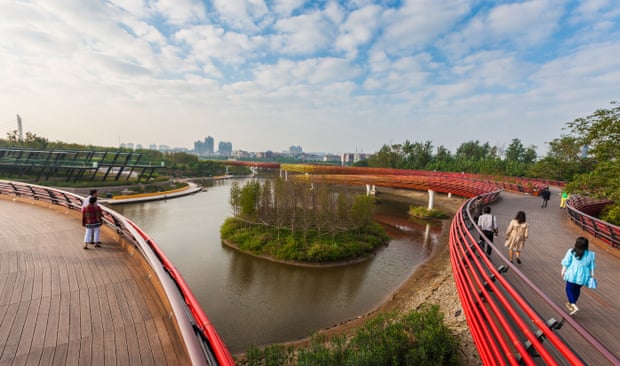
 TorrentFreak.










 However, the curious thing was that when I uploaded both the Cyclemeter and the Garmin data to Strava, the stats were much closer:
 \
\