Shared posts

04 Sep 04:34

Let’s be Transparent

by Nick Nguyen

Two years ago, we released the Firefox Hardware Report to share with the public the state of desktop hardware. Whether you’re a web developer deciding what hardware settings to test against or someone just interested in CPUs and GPUs, we wanted to provide a public resource to show exactly what technologies are running in the wild.

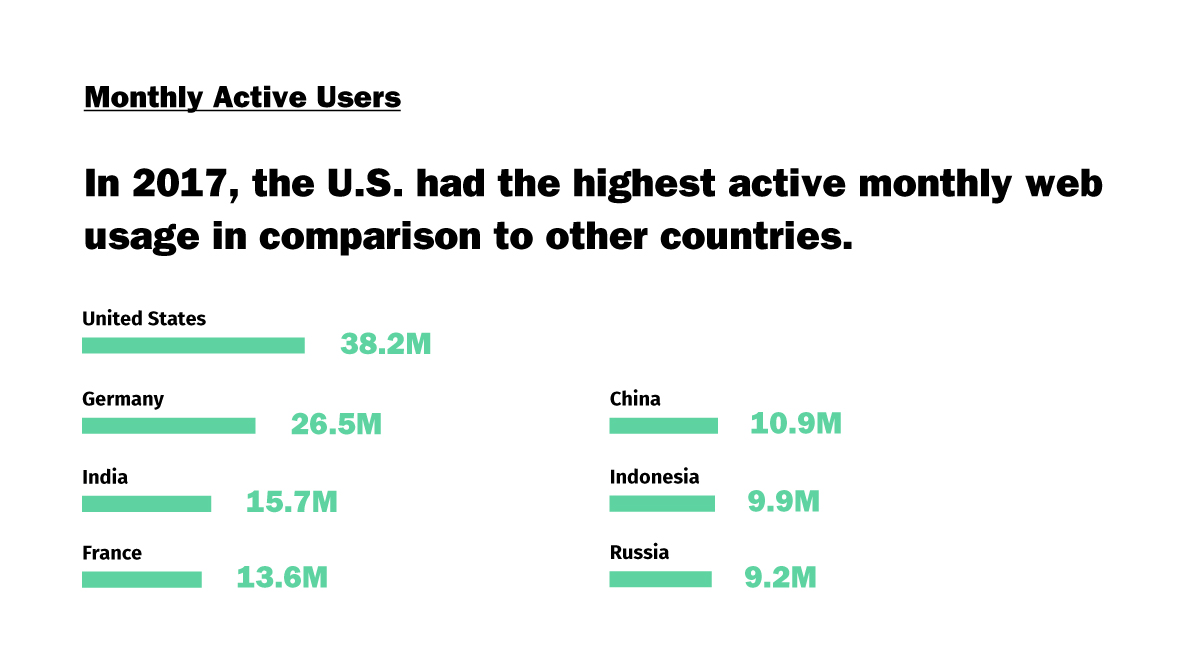
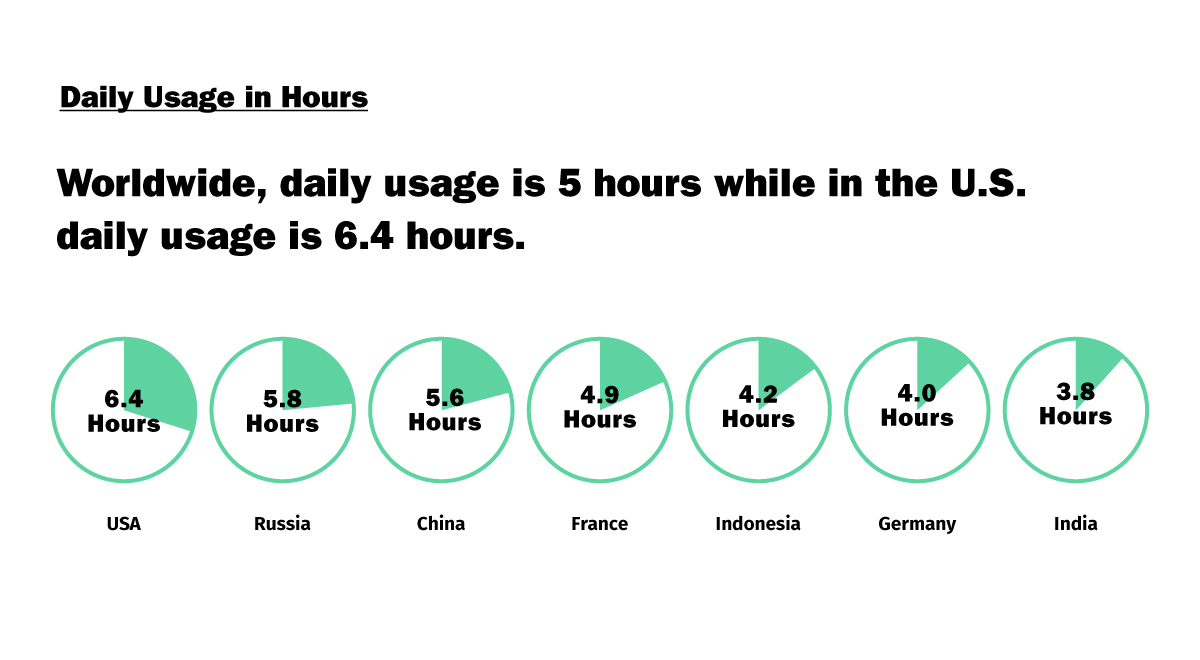
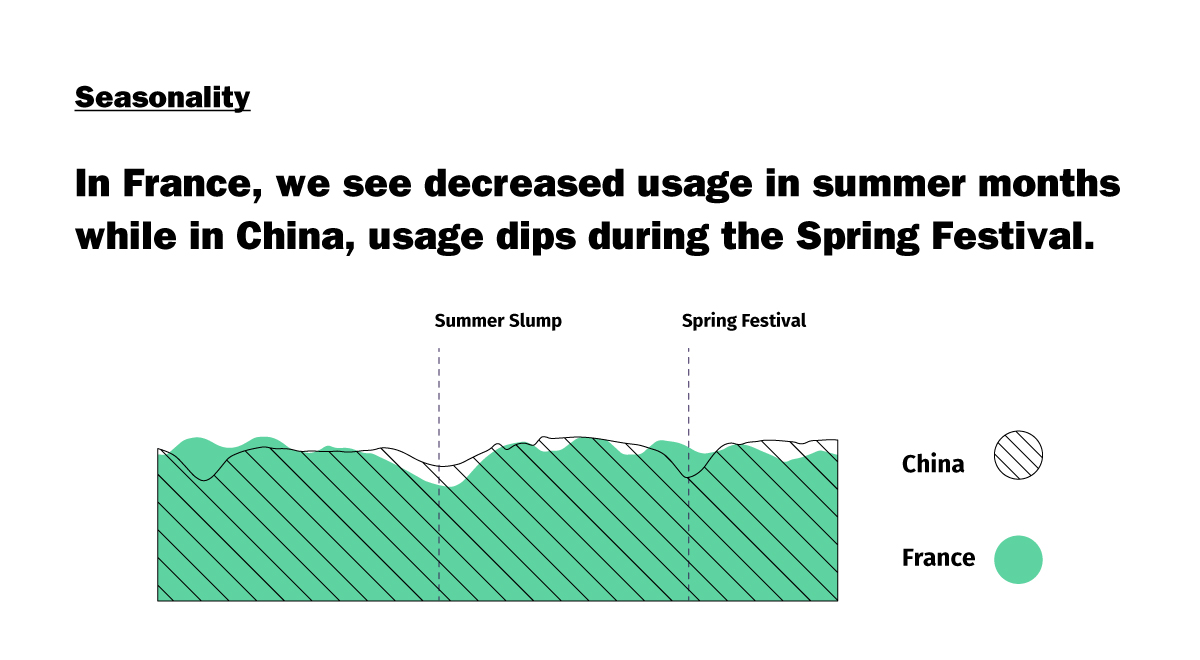
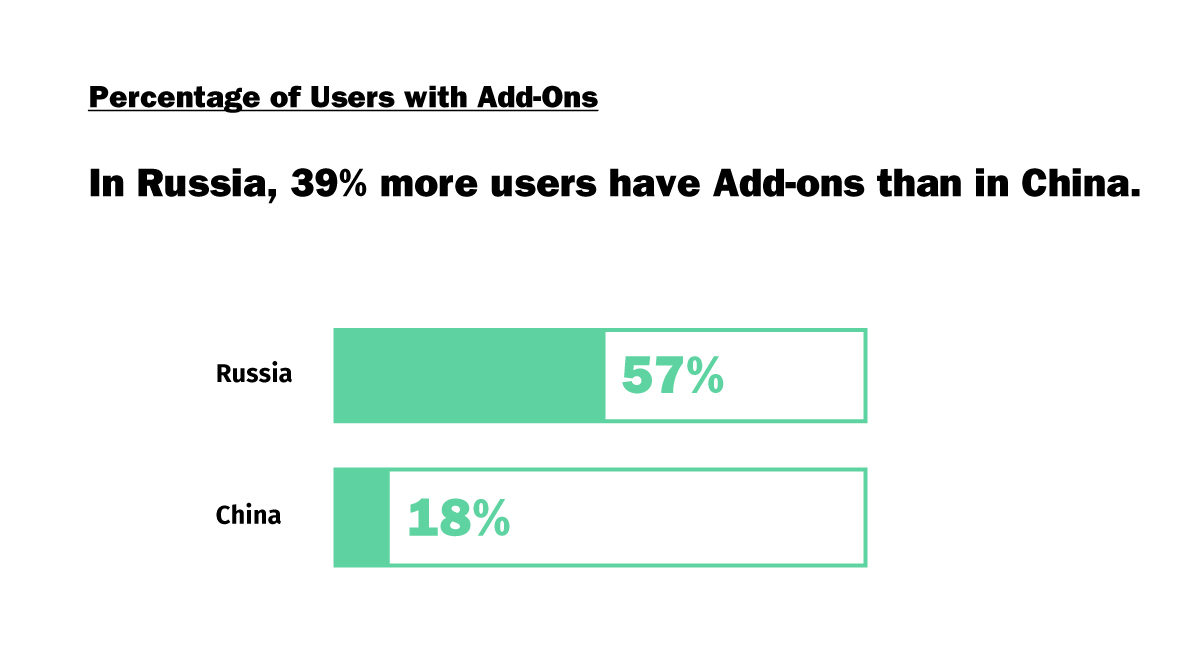
This year, we’re continuing the tradition by releasing the Firefox Public Data Report. This report expands on the hardware report by adding data on how Firefox desktop users are using the browser and the web. Ever wanted to know the effect of Spring Festival on internet use in China? (it goes down.) What add-on is most popular this week in Russia? (it’s Визуальные закладки.) What country averages the most browser use per day? (Americans, with about 6 to 6.5 hours of use a day.) In total there are 10 metrics, broken down by the top 10 countries, with plans to add more in the future.

Similar to the hardware report for developers, we hope the report can be a resource for journalists, researchers, and the public for understanding not only the state of desktop browsing but also how data is used at Mozilla. We try to be open by design and users should know how data is collected, what data is collected, and how that data is used.

We collect non-sensitive data from the Firefox desktop browsers’ Telemetry system, which sends us data on the browser’s performance, hardware, usage and customizations. All data undergoes an extensive review process to ensure that anything we collect is necessary and secure. If you’re curious about exactly what data you’re sending to Mozilla, you can see for yourself by navigating to about:telemetry in the Firefox browser (and if you’re uncomfortable with sending any of this data to Firefox, you can always disable data collection by going to about:preferences#privacy.)

With this data, we aggregate metrics for a variety of use cases, from tracking crash rates to answering specific product questions (how many clients have add-ons? 35% this week.) In addition we measure the impact of experiments that we run to improve the browser.

Firefox is an open source project and we think the data generated should be useful to the public as well. Code contributors should be able to see how many users their work impacted last month (256 million), researchers should be able to know how browser usage is changing in developing nations, and the general public should be able to see how we use data.

After all, it’s your data.

Resources and visual assets:

The post Let’s be Transparent appeared first on The Mozilla Blog.

04 Sep 04:34

Hey Jack, Sheryl, and Sundar: It’s Time to Call Out Trump On Fake News.

by John Battelle

Next week Sheryl Sandberg, COO of Facebook, and Jack Dorsey, CEO of Twitter, will testify in front of Congress. They must take this opportunity to directly and vigorously defend the role that real journalism plays not only on their platforms, but also in our society at large. They must declare that truth exists, that facts matter, and that while reasonable people can and certainly should disagree about how to respond to those facts, civil society depends on rational discourse driven by an informed electorate.

Why am I on about this? I do my very best to ignore our current president’s daily doses of Twitriol, but I couldn’t whistle past today’s rant about how tech platforms are pushing an anti-Trump agenda.

Seems the president took a look at himself in Google’s infinite mirror, and he apparently didn’t like what he saw. Of course, a more cynical reading would be that his advisors reminded him that senior executives from Twitter, Facebook, and Google* are set to testify in front of Congress next week, providing a perfect “blame others and deflect narrative from myself” moment for our Bully In Chief.

Trump’s hatred for journalism is legendary, and his disdain for any truth that doesn’t flatter is well established. As numerous actual news outlets have already established, there’s simply no evidence that Google’s search algorithms do anything other than reflect the reality of Trump news,  which in the world of *actual journalism* where facts and truth matter, is fundamentally negative. This is not because of bias – this is because Trump creates fundamentally negative stories. You know, like failing to honor a war hero, failing to deliver on his North Korea promises, failing to fix his self-imposed policy of imprisoning children, failing to hire advisors who can avoid guilty verdicts….and all that was just in the last week or so.

But the point of this post isn’t to go on a rant about our president. Instead, I want to make a point about the leaders of our largest technology platforms.

It’s time Jack, Sheryl, Sundar, and others take a stand against this insanity.  Next week, at least two of them actually have just that chance.

I’ll lay out my biases for anyone reading who might suspect I’m an agent of the “Fake News Media.” I’m on the advisory board of NewsGuard, a startup that ranks news sites for accuracy and reliability. I’m running NewsGuard’s browser plug in right now, and every single news site that comes up for a Google News search on “Trump News” is flagged as green – or reliable.

NewsGuard is run by two highly respected members of the “real” media – one of whom is a longstanding conservative, the other a liberal.

I’m also an advisor and investor in RoBhat Labs, which recently released a plugin that identifies fake images in news articles. Beyond that, I’ve taught journalism at UC Berkeley, where I graduated with a masters after two years of study and remain on the advisory board. I’m also a member of several ad-hoc efforts to address what I’ve come to call the “Real Fake News,” most of which peddles far right wing conspiracy theories, often driven by hostile state actors like Russia. I’ve testified in front of Congress on these issues, and I’ve spent thirty years of my life in the world of journalism and media. I’m tired of watching our president defame our industry, and I’m equally tired of watching the leaders of our tech industry fail to respond to his systematic dismantling of our civil discourse (or worse, pander to it).

So Jack, Sheryl, and whoever ends up coming from Google, here’s my simple advice: Stand up to the Bully in Chief. Defend civil discourse and the role of truth telling and the free press in our society. A man who endlessly claims that the press is the enemy is a man to be called out. Heed these words:

“It is the press, above all, which wages a positively fanatical and slanderous struggle, tearing down everything which can be regarded as a support of national independence, cultural elevation, and the economic independence of the nation.”

No one would claim these are Trump’s words, the prose is far too elegant. But the sentiment is utterly Trumpian. With with apologies to Mike Godwin, those words belong to Adolf Hitler. Think about that, Jack, Sheryl, and Sundar. And speak from your values next week.

*Google tried to send its SVP of Global Affairs and General Counsel, Kent Walker, but members of Congress have said they are tired of hearing from lawyers. It’s uncertain if the company will step up and send a leader of an actual business P&L, like Jack or Sheryl. 


04 Sep 04:33

✚ How to Make Better-Looking, More Readable Charts in R

by Nathan Yau

Defaults are generalized settings to work with many datasets. This is fine for analysis, but data graphics for presentation benefit from context-specific design. Read More

04 Sep 04:33

Firefox Nightly Secure DNS Experimental Results

by Patrick McManus

A previous post discussed a planned Firefox Nightly experiment involving secure DNS via the DNS over HTTPS (DoH) protocol. That experiment is now complete and this post discusses the results.

Browser users are currently experiencing spying and spoofing of their DNS information due to reliance on the unsecured traditional DNS protocol. A paper from the 2018 Usenix Security Symposium  provides a new data point on how often DNS is actively interfered with – to say nothing of the passive data collection that it also endures. DoH will let Firefox securely and privately obtain DNS information from one or more services that it trusts to give correct answers and keep the interaction private.

Using a trusted DoH cloud based service in place of traditional DNS is a significant change in how networking operates and it raises many things to consider as we go forward when selecting servers (see “Moving Forward” at the end of this post). However, the initial experiment focused on validating two separate important technical questions:

  1. Does the use of a cloud DNS service perform well enough to replace traditional DNS?
  2. Does the use of a cloud DNS service create additional connection errors?

During July, about 25,000 Firefox Nightly 63 users who had previously agreed to be part of NIghtly experiments participated in some aspect of this study. Cloudflare operated the DoH servers that were used according to the privacy policy they have agreed to with Mozilla. Each user was additionally given information directly in the browser about the project. That information included the service provider, and an opportunity to decline participation in the study.

The experiment generated over a billion DoH transactions and is now closed. You can continue to manually enable DoH on your copy of Firefox Nightly if you like. See the bottom of the original announcement for instructions.


Results

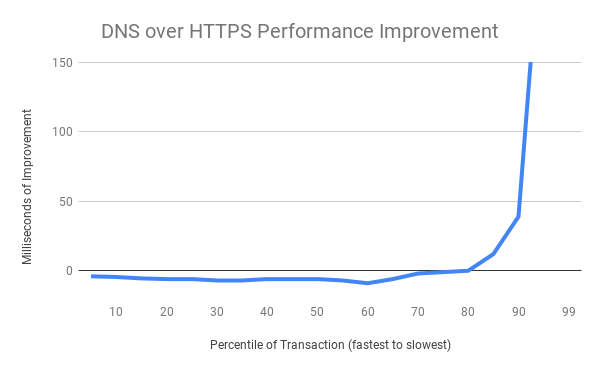
Using HTTPS with a cloud service provider had only a minor performance impact on the majority of non-cached DNS queries as compared to traditional DNS. Most queries were around 6 milliseconds slower, which is an acceptable cost for the benefits of securing the data. However, the slowest DNS transactions performed much better with the new DoH based system than the traditional one – sometimes hundreds of milliseconds better.

The above chart shows the net improvement of the DoH performance distribution vs the traditional DNS performance distribution. The fastest DNS exchanges are at the left of the chart and the slowest at the right. The slowest 20% of DNS exchanges are radically improved (improvements of several seconds are truncated for chart formatting reasons at the extreme), while the majority of exchanges exhibit a small tolerable amount of overhead when using a cloud service. This is a good result.

We hypothesize the improvements at the tail of the distribution are derived from 2 advantages DoH has compared to traditional DNS. First, is the consistency of the service operation – when dealing with thousands of different operating system defined resolvers there are surely some that are overloaded, unmaintained, or forwarded to strange locations. Second, HTTP’s use of modern loss recovery and congestion control allow it to better operate on very busy or low quality networks.

The experiment also considered connection error rates and found that users using the DoH cloud service in ‘soft-fail’ mode experienced no statistically significant different rate of connection errors than users in a control group using traditional DNS. Soft-fail mode primarily uses DoH, but it will fallback to traditional DNS when a name does not resolve correctly or when a connection to the DoH provided address fails. The connection error rate measures whether an HTTP channel can be successfully established from a name and therefore incorporates the fallbacks into its measurements. These fallbacks are needed to ensure seamless operation in the presence of firewalled services and captive portals.


Moving Forward

We’re committed long term to building a larger ecosystem of trusted DoH providers that live up to a high standard of data handling. We’re also working on privacy preserving ways of dividing the DNS transactions between a set of providers, and/or partnering with servers geographically. Future experiments will likely reflect this work as we continue to move towards a future with secured DNS deployed for all of our users.

04 Sep 04:33

“To Obama: With Love, Joy, Anger, and Hope.”

by Andrea

The Atlantic: The Education of Bill Oliver. “How a letter to Barack Obama tells the story of two strangers who became family, and one lifelong Republican’s journey to a new kind of patriotism.” By Jeanne Marie Laskas.

“Word came that President Barack Obama wanted to see some of the mail just the day after he took office. Mike Kelleher was the director of the Office of Presidential Correspondence (OPC). He got the call from the Oval saying the president wanted to see five letters. Then they called back with a correction. The president wanted to see 15 letters. They called back one more time. He wanted to see 10 that day, and every day.

“It was a small gesture, I thought, at least to resist the bubble,” Obama later told me. “It was a way for me to, every day, remember that what I was doing was not about me. It wasn’t about the Washington calculus. It wasn’t about the political scoreboard. It was about the people who were out there living their lives, who were either looking for some help or angry about how I was screwing something up.”

And why should the president be the only one reading 10 letters a day? What about everyone else in the West Wing? Surely Obama’s advisers and senior staff could benefit from seeing this material.
[…]
Fiona Reeves, an OPC staffer who soon became the office’s director, developed a distribution list, kept adding to it. Letters to the president, dozens of them, just popping into people’s inboxes. Why not? And not just the 10LADs—the president’s 10 letters a day—but also others from the sample piles. “We send out batches of letters we think are striking,” she said. At first she worried about being an annoyance, but then she got bold. “I hope people read them; that’s why I spam them. But I mean, they don’t have to read them.”

They did. Soon people started asking why they weren’t on the distribution list. The people in OPC came to know which people in the West Wing were particularly tuned in to the letters. The OPC staff came to regard these people as special agents, ambassadors, and they had a name for them: Friends of the Mail.”

04 Sep 04:33

If You Don’t Communicate, Members Create Their Own Stories

by Richard Millington

Around 18 months ago, a client’s community points system failed.

All members had their points reduced to zero.

The client spotted it at the weekend, filed a report to their vendor, and waited for a response.

On Monday, a member created an angry post asking why her points had been removed.

The client didn’t want to respond until they could explain what happened and when it would be fixed (against our advice).

By Tuesday, members were working themselves up into a fury. Why had the client removed their points without warning? Was this a cynical attempt to save money on promised reward schemes?

Many members had said they would no longer participate or help other members of the community. Accusations were flying without response.

The problem was eventually communicated and fixed, but the accusations had already done lasting damage. The community team were treated with a lot more hostility and a lot less trust going forward.

The lesson is pretty clear. Communicate what you know as early as possible. If our client had even said “hey, this is broken, we’re trying to get it fixed” the reception would have been a lot better.

When you leave a void to fill, members will (sadly) often fill it with the most negative, cynical, stories imaginable. So, don’t leave a void to fill.

04 Sep 04:32

Algorithmic art shows what the machine sees

by Nathan Yau

Tom White is an artist who uses neural networks to draw abstract pictures of objects. What looks blobby and fuzzy to us looks more concrete to the machine.

James Vincent for The Verge:

That “voice” is actually a series of algorithms that White has dubbed his “Perception Engines.” They take the data that machine vision algorithms are trained on — databases of thousands of pictures of objects — and distill it into abstract shapes. These shapes are then fed back into the same algorithms to see if they’re recognized. If not, the image is tweaked and sent back, again and again, until it is. It’s a trial and error process that essentially ends up reverse-engineering the algorithm’s understanding of the world.

Tags: algorithms, neural network

04 Sep 04:32

The Start of a New Era

by Ms. Jen
The Start of a New Era

Tues. 08.28.18 – It what may seem like a cryptic blog post, a completely new era starts today. And so far it is good.

04 Sep 04:32

The Daily Promo – Keena

by A Photo Editor

Keena

Who printed it?
AlphaGraphics in Golden, Colorado printed it. I had the hardest time finding a printer I could trust to get exactly what I was looking for. I’m slightly obsessed with getting the correct paper, the way the ink is absorbed, how the color reads and all of that, so finding a printer that really cared about the details was trickier than I’d thought. Also, the zine has a mix of color and black and white so it was important to find a printer that could keep their black and white images neutral, not skewed cyan or green. I’m glad I only had to go through the printer search once because it’s too much of a rollercoaster to get your hopes up to see your work printed like you imagined it and then have your heart broken over and over.

Who designed it?
I designed it myself. Art buyers get sooo many mailers these days, and they’re all SO good, so it’s definitely a challenge to stay out of the recycling bin, but I love it. It pretty much comes down to “What would I want to keep?”, so that’s what I strive to make. I just imagine a huge pile of mailers on someone’s desk and then figure out how to actually stand out from it. I do zines for all my promos and every one is different, but still the same size, so I dream about people keeping them all on a shelf somewhere. Design can also make or break the photos, so until I meet some rad designers I can trust, I’m still in charge of my own fate. I also love writing out words and drawing so these zines give me the chance to do some of that old-school hands-on work. I still spend hours with a pen and ink, writing words out over and over till they look just right.

Tell me about the images?
I had reached out to a stylist, Taura Deacon, when I was moving near her and we had really wanted to work together, but she was already in the process of moving away to Phoenix. So we stayed in touch and I ended up flying down to Arizona a few months later where her and her husband picked me up at the airport before midnight on Friday, we met for the first time, hung out, produced and shot all Saturday until midnight, and then I flew out at 5 am on Sunday morning. The whole idea behind this zine was exercising “teenage logic”. As a teenager, I remember so many ideas popping up into my head and then just rounding up my friends to go do them! Back then no one asked if it was a good idea, if it was cool, if it was safe, or if there were consequences, but we knew it would be FUN. I had put together a shot list and a location wish list and Taura street cast the people and found two dream locations- one for the day shots and a second with both a pool for skating AND a second pool for swimming for the night shots. The images are supposed to be very experiential feeling, like the viewer is at the party with their friends, not just watching it. Of course, it was a produced party, but I like to think that everyone partied as they normally would, and I was able to find the moments in there. The dirtbike shot has been a dream shot for a few years now so I’m beyond psyched to see it come to fruition. I also shot a lot of film and underwater housing for this, which is also a fun part of promos made from personal work. You get to bring out all the toys and be as creative as ever.

How many did you make?
This zine was a run of 350 total. A limited run of 200 to send out to specific people I’ve worked with or want to work with, and then I kept 150 for meetings and my library at the studio. They’ll all find a home eventually, but I believe in “less is more” for promos. I think each mailer should be intentional as to whose hands it ends up in.

How many times a year do you send out promos?
When work and life are in balance, I try to do two zines per year, but on busier years I’ll just do one because they definitely take a lot of time to plan, execute, design, print, and mail.

Do you think printed promos are effective for marketing your work?
I’m never positive on how effective they are, but I think that if I get one good job out of them, then at least I didn’t lose money on it. Plus art buyers get so many emails that I think printed pieces are something special if you put the time into them. Sometimes printed promos seem like screaming in the dark, but it seems common to go into meetings and have people tell me they still have my past zines, so that keeps me believing in them. These days it’s also important to show agencies that you’re creative beyond just using a camera, and printed promos are great for that because you have to inject some of your personality into it. I’m always super inspired when I see other photographer’s killer promos so I constantly feel the burn to try to make something rad as well.

All business numbers and returns aside, mailers are super important for me to get out for me to feel creatively balanced. I’ve always loved photo zines and photo books since I was a kid, so now I have the photos to really fill out a zine and the resources to get them printed exactly how I would want to, how could I not? We’re living in such a digital world now and I grew up on analog when everything was handmade and hand printed, so it’s healthy for my creative brain to get my photos off the screen and into someone’s hands. If the internet died tomorrow, I’d still have zines out there with my photos in them, and for some reason, that feels comforting. I always hope that the types of agencies and producers that I’d want to work with still appreciate the process and the tactile feel of getting a zine on their desk, the weight of the paper, and the story behind it. If I was only shooting for money and never for fun, I would definitely burn out on photography as a career. Seeing people’s reactions to the zine always makes it worth to me and having a promo with a good story behind it also sparks some awesome conversations when doing meetings! I’ve already got the next two zines in the design phase and I never want to be predictable as a photographer, so they’re all different subject matter, but shot and designed to have my look to them. It’s a never-ending cycle of dreaming and making but it keeps me so excited about shooting and creating that I would never stop doing promos.

------------------------

Visit our sponsor Photo Folio, providing websites to professional photographers for over 10 years. Featuring the only customizable template in the world.

------------------------

04 Sep 04:32

Data Science is Hard: Counting Users

by chuttenc

Screenshot_2018-08-29 User Activity Firefox Public Data Report

Counting is harder than you think. No, really!

Intuitively, as you look around you, you think this can’t be true. If you see a parking lot you can count the cars, right?

But do cars that have left the parking lot count? What about cars driving through it without stopping? What about cars driving through looking for a space? (And can you tell the difference between those two kinds from a distance?)

These cars all count if you’re interested in usage. It’s all well and good to know the number of cars using your parking lot right now… but is it lower on weekends? Holidays? Are you measuring on a rainy day when fewer people take bicycles, or in the Summer when more people are on vacation? Do you need better signs or more amenities to get more drivers to stop? Are you going to have expand capacity this year, or next?

Yesterday we released the Firefox Public Data Report. Go take a look! It is the culmination of months of work of many mozillians (not me, I only contributed some early bug reports). In it you can find out how many users Firefox has, the most popular addons, and how quickly Firefox users update to the latest version. And you can choose whether to look at how these plots look for the worldwide user base or for one of the top ten (by number of Firefox users) countries individually.

It’s really cool.

The first two plots are a little strange, though. They count the number of Firefox users over time… and they don’t agree. They don’t even come close!

For the week including August 17, 2018 the Yearly Active User (YAU) count is 861884770 (or about 862M)… but the Monthly Active User (MAU) count is 256092920 (or about 256M)!

That’s over 600M difference! Which one is right?

Well, they both are.

Returning to our parking lot analogy, MAU is about counting how many cars use the parking lot over a 28-day period. So, starting Feb 1, count cars. If someone you saw earlier returns the next day or after a week, don’t count them again: we only want unique cars. Then, at the end of the 28-day period, that was the MAU for Feb 28. The MAU for Mar 1 (on non-leap-years) is the same thing, but you start counting on Feb 2.

Similarly for YAU, but you count over the past 365 days.

It stands to reason that you’ll see more unique cars over the year than you will over the month: you’ll see visitors, tourists, people using the lot just once, and people who have changed jobs and haven’t been back in four months.

So how many of these 600M who are in the YAU but not in the MAU are gone forever? How many are coming back? We don’t know.

Well, we don’t know _precisely_.

We’ve been at the browser game for long enough to see patterns in the data. We’re in the Summer slump for MAU numbers, and we have a model for how much higher the numbers are likely to be come October. We have surveyed people of varied backgrounds and have some ideas of why people change browsers to or away from Firefox.

We have the no-longer users, the lapsed users, the lost-and-regained users, the tried-us-once users, the non-human users, … we have categories and rough proportions on what we think we know about our population, and how that influences how we can better make the internet better for them.

Ultimately, to me, it doesn’t matter too much. I work on Firefox, a product that hundreds of millions of people use. How many hundreds of millions doesn’t matter: we’re above the threshold that makes me feel like I’m making the world better.

(( Well… I say that, but it is actually my job to understand the mechanisms behind these  numbers and why they can’t be exact, so I do have a bit of a vested interest. And there are a myriad of technological and behavioural considerations to account for in code and in documentation and in analysis which makes it an interesting job. But, you know. Hundreds of millions is precise enough for my job satisfaction index. ))

But once again we reach the inescapable return to the central thesis. Counting is harder than you think: one of the leading candidates for the Data Team’s motto. (Others include “Well, it depends.” and “¯\_(ツ)_/¯”). And now we’re counting in the open, so you get to experience its difficulty firsthand. Go have another look.

:chutten


04 Sep 04:31

How you can achieve Ikigai, fulfillment

by Josh Bernoff

There’s a graphic making the rounds; I first saw it posted by Jeremiah Owyang. It’s about the “Japanese concept” of Ikigai, or “a reason for being.”   This graphic attracts us because the circles — what you’re good at, what you love, what the world needs, and what you can make money at — are … Continued

The post How you can achieve Ikigai, fulfillment appeared first on without bullshit.

04 Sep 04:30

Free Reeder 3

The Mac Observer reports that Reeder 3 is free for Mac and iOS.

A tweet from @reederapp says:

Reeder is free until version 4 is released later this year as a paid upgrade. No subscription.

This is great news — go get it!

* * *

For one second I had that sinking feeling in my stomach about a competitor doing something that might hurt sales of my own app…

…but then I remembered that I’m not selling an RSS reader. I’m writing Evergreen, and making it free and open source, out of love, and because I want to ensure that RSS remains uncontrolled and widely used.

And people using Reeder absolutely fits with that goal. There should be multiple RSS readers, since that will help make sure more people find an app they like.

So, really — go get it! It’s a great app. And be sure to take a look at Reeder 4 when it comes out later this year.

04 Sep 04:28

Ready for More Price Tags? Please Donate.

by PT Editors

From newsletter to blog, Price Tags has provided a balanced and often unique perspective on urbanism. So do our commenters: Price Tags is a forum for civil, spirited dialogue — something increasingly needed in our disruptive times.

To keep hearing those voices and maintain that forum, we’re asking you to make a sincere gesture with a small donation.

For a limited time, all contributions will be matched, to a total of $10,000, thanks our very first donor. Your donation will be effectively doubled — and here’s where the money will go.

These funds will allow us to reach more people with more dynamic content:

  • More coverage of the civic elections across the Metro Vancouver region.
  • Commissioning our own writing and research on the issues that you care about: transportation, housing, and all that keeps our cities livable.
  • Expanding our reach with podcasts, public events and new partnerships.

Your financial support will help us reach those goals, allowing us to continue to deliver our perspectives and a platform for dialogue.

Any donation is appreciated. Contributions of $25, $50 or more let us know you’ve been enjoying Price Tags as a source of informative, engaging, and sometimes entertaining perspectives on urbanism — and that you’re ready for more.

Thank you for your readership, and your support.

Gordon Price
Editor-in-Chief and Publisher
Price Tags

Price Tags Media Society is a not-for-profit organization, incorporated under the Societies Act of British Columbia. Photo credit: Jennifer Friesen.

04 Sep 04:27

West End Heritage Tour – Sep 29

by Gordon Price

The Vancouver Heritage Foundation is hosting a brand new event that explores Vancouver’s diverse West End neighbourhood. The self-guided tour offers an exclusive look at 15 sites between Robson Street and English Bay, and Burrard Street and the edge of Stanley Park.

For one day only, explore the buildings and sites that help tell the story of the West End.  The tour is well-navigated by foot, bike, transit or car. Tour goers will have access to private residences, gardens and commercial spaces as well as community buildings and sites.

For those who missed the Queen Charlotte Apartments on our 2015 Heritage House Tour, or for those who loved the building and would like another chance inside, this historic residence will be open including an apartment not previously shown. Ticket holders can also explore the Leslie Lane House, spaces within the Mole Hill Housing Society, the Mid-Century Modern interior of the Vancouver Board of Parks and Recreation office, two churches, private gardens and more.


Saturday, September 29

12 pm – 5 pm

To purchase tickets visit www.vancouverheritagefoundation.org or call 604 264 9642.

04 Sep 04:27

The Spook Index – 2

by Gordon Price

Maybe we could have seen the housing crisis coming if we had only listened to the spookmeister when his ‘experts’ were in town.

The Province, 2007:

The Sun 2010:

Thanks to Ron Usher.

04 Sep 03:57

"Whether or not it draws on new scientific research, technology is a branch of moral philosophy, not..."

“Whether or not it draws on new scientific research, technology is a branch of moral...
04 Sep 03:57

"A new technology does not add or subtract something. It changes everything. In the year 1500, fifty..."

“A new technology does not add or subtract something. It changes everything. In the year 1500,...
04 Sep 00:45

Sonos opens up the Sonos Sound Platform

by Volker Weber

IMG 6453

Starting today you will read in the press that Sonos will open up its Control API to everybody without requiring an invitation. This will let developers build Sonos control hardware and software without coordination with Sonos.

Before we get into this, let's step back for a minute:

  • You have been able to find third party apps to control your Sonos players, that have all been built using a reverse engineered LAN wire protocol. Developers have figured out what Sonos players talk on the LAN to coordinate and mimicked the behavior without providing higher abstractions like bonding speakers.
  • Sonos has invited a number of integration partners to use a LAN-based Control API. These partners operate under an NDA and cannot release any source code. The reason for this closed ecosystem is that the APIs were still in flux and partners needed to coordinate their solutions with Sonos.
  • Recently Sonos has started to publish a stable cloud-based API that will let developers write integrations without coordinating with Sonos. That is what is going to come to you.

In order to understand this Control API you need to know how Sonos works. Sonos players are smart speakers. They play multiple sound streams in multiple rooms, from multiple accounts, controlled by multiple users using multiple interfaces. You control Sonos speakers using the Sonos app, hardware buttons, third party apps or hardware, and voice. Because of the variety of controls, Sonos encourages continuity of control. No matter where you started the music, you can pause it, skip it, or change its volume without having to use the same device.

Continuity of control is a big thing. For example, you can ask Alexa to start playing your favorite track, turn the volume up with the Sonos app, skip the next song using a button on the speaker, and stop the music with a third-party hardware remote. Control of Sonos is seamless and integrated.

The first thing your integration needs is authorization from the user. Sonos provides a login service to authenticate with a Sonos user's household. The login service uses the OAuth 2.0 authorization framework and three-legged authentication. Three-legged authentication includes three participants, the user, your integration, and Sonos.

This separates the new Control API from the old LAN based method of just discovering players and taking control. And it's not entirely new. When you integrate your Sonos household with Alexa, then Amazon is using this Control API. The three legs in the OAuth scheme are yourself, Amazon Alexa and Sonos.

You will see a lot more third party controllers very soon. And to make them work, you do need to authorize them with a Sonos ID. And that is why Sonos has been pushing you to register one for a few months now.

Always remember: Sonos does not just build speakers. It makes players. And their API game is strong. Dozens of services integrate with their platform and provide steams. This will now expand from content to control. And it will work for you, even if you are not logged into your WLAN.

04 Sep 00:38

Sonos Amp

by Volker Weber

Today, Sonos (Nasdaq: SONO) unveiled the all-new Sonos Amp, a powerful and versatile home audio hub that powers traditional wired speakers with sound from nearly any source, and fully integrates these speakers into Sonos’ easy-to-use wireless home sound system. The all-new Amp is twice as powerful as its predecessor, supports Apple’s AirPlay 2 and more than 100 streaming services, and includes an HDMI Arc port for TVs. Launching globally in February 2019, the $599 Amp will be available to professional installers in the United States and Canada starting Dec. 1, 2018.

Amp is designed to fit perfectly into standard AV racks used by custom install professionals, and can power up to four speakers with 125 watts per channel—more than enough for even the most demanding set-ups. Onboard HDMI and line-in ports means TVs, turntables, CD changers, and other audio components can easily connect with Amp and become part of the Sonos system.

Think: rich people's homes.

Besides being more powerful than Connect:Amp, the new Amp has an HDMI-ARC port to finally make it easier to combine your own speakers with a TV. Amp is very versatile in that you can build out this setup with your own sub or connect a Sonos Sub wirelessly. You can also add rear speakers for surround by either bonding other Sonos speakers or another Amp. This is an integrator play. You build speakers into walls, run wires to a rack and then connect it all up there. I don't know yet whether you can use an Amp for the front and Connect:Amp for the back but I think this should be possible. That is a lesser known setup today: put a Playbar in the front and two speakers driven by Connect:Amp in the back.

More >

03 Sep 20:20

NewsBlur Blurblog: If Toronto council is dysfunctional, don't blame the size — blame Giorgio Mammoliti

sillygwailo shared this story from CBC | Toronto News.
Toronto Giorgio Mammoliti

The longtime councillor is a master of sparking chaos at public meetings, Matt Elliott writes, but a series of factors may lead to the controversial councillor losing his seat in October's election.

03 Sep 20:20

Twitter Favorites: [jen_keesmaat] Toronto needs better transit. John Tory promised so-called “SmartTrack” in 2014, but we now know it was a mirage. I… https://t.co/VL4jtF5j0n

Jennifer Keesmaat @jen_keesmaat
Toronto needs better transit. John Tory promised so-called “SmartTrack” in 2014, but we now know it was a mirage. I… twitter.com/i/web/status/1…
03 Sep 17:33

Fragment: From Jupyter Notebooks to Online Interactive Textbooks

by Tony Hirst

One of the things on my to do list is try out a workflow for publishing something like a web-book along the lines of Gitbook from Jupyter notebook source documents.

Ish via Simon Willison (again?!), I note a recipe used to publish the Computational and Inferential Thinking: The Foundations of Data Science online textbook for the Berkeley course Data 8: The Foundations of Data Science. This uses Jupyter notebooks for the chapter source documents, and Jekyll to build the book from markdown files generated from the notebooks; a python script / command line utility generates the markdown files from theoriginal Jupyter notebooks: generate_textbook.py [data-8/textbook repo]. A switch allows notebooks to be executed – or not – before generating the markdown. Another script (generate_summary_from_folders.py) can be used to create a summary.md page which scaffolds the notebook/chapter order if one is not provided. Image paths required by Jekyll are set automatically. Another nice feature is that the generated book can link to Binder run versions of the source notebooks too.

From the textbook repo, it looks as if the recipe could quite easily be separated from the actual book. It’d be nice to see this in the form of a minimal repo that can be downloaded and used to bootstrap a new book published to the same workflow. A template repo from which you can bootstrap your own textbook is available here: choldgraf/textbooks-with-jupyter. There’s also a handy deployment guide.

Another possible approach would be to use a gitbook workflow. It looks like there was an early attempt at this here: Jupyter WebBook [repo].

One of the problems with separating the static HTML site from the runnable notebooks is that the user is forced to move from one environment – the static HTML site – to another – the Binderhub environment – in order to run any interactive elements. A preferable approach is to run interactives within the HTML textbook environment; one way of doing this is to use something like the early demonstrated ThebeLab. Whilst this is great for one off pages, ThebeLab is not built into simple publishing workflow.

However, it looks like the new-to-me nbinteract [repo] package does provide a simpler way of publishing interactive webpages from Jupyter notebooks, with HTML pages hosted wherever and interactives powered from a Binder backend. nbinteract can generate multiple HTML pages in one go from notebooks contained in a single directory, although it doesn’t at the moment look like it can produce a structured output such as a gitbook website. (By the by, a simple guide to publishing nbinteract powered books on Github Pages is also provided.)

One of the nice features is that if you have interactive widgets across multiple HTML documents, once a Binderhub instance is started it can provide backend services to other pages viewed in the same session so you don’t have to repeatedly wait for further instances to launch.

A Masters thesis about nbinteract is available here: nbinteract: Generate Interactive Web Pages From Jupyter Notebooks, Samuel Lau.

The docs site is built using Gitbook, so there may be a workflow / recipe for creating nbinteract powered Gitbooks available somewhere? Indeed, the online interactive textbook for another Berkeley course, DS100 – Principles and Techniques of Data Science [repo] – uses both both Gitbook and nbinteract, so the setup guide may be worth a look…

03 Sep 17:28

Instagram Updates Two-Factor Authentication and Verification Process

by John Voorhees

You may not see the changes yet, but Instagram has announced that it has begun rolling out changes to two-factor authentication. The company is also changing the account verification process but not the standard by which accounts are verified.

In the wake of recent high-profile Instagram hacks, the company has added the ability to use authenticator apps to its two-factor authentication setting. Receiving a code by text message is still an option, but it’s a technique that has come under scrutiny due to its susceptibility to SIM card hacking. The new option requires a code generated by an app like Google Authenticator, 1Password, or Authy.

Instagram has also modified the account verification process. A form requesting verification will be available from the app’s settings. After a request is reviewed, Instagram will contact the user accepting or denying it.

A new ‘About this Account’ section is also being added to Instagram accounts with large followings to help users judge the authenticity of qualifying accounts. Information like when the account was set up, its country of origin, ads it runs, and other data will be listed beginning in September.


Support MacStories Directly

Club MacStories offers exclusive access to extra MacStories content, delivered every week; it's also a way to support us directly.

Club MacStories will help you discover the best apps for your devices and get the most out of your iPhone, iPad, and Mac. Plus, it's made in Italy.

Join Now
03 Sep 17:27

Apple Updates AirPort Express Firmware with AirPlay 2 Support

by John Voorhees

Apple has released version 7.8 of the firmware for compatible AirPort Express WiFi routers to add AirPlay 2 support. Although there had been hints in iOS betas that the latest iteration of Apple’s peer-to-peer streaming technology was coming to the Express routers, its addition still came as a surprise since the routers were discontinued in April.

One of my favorite features of the AirPort Express is an audio out port that works with a 3.5mm analog or digital cable. Add an amplifier and speakers, and you’ve got a nice music streaming setup.

The Griffin 20 and first-generation Airport Express.

The Griffin 20 and first-generation Airport Express.

As soon as I heard about the new firmware, I had to try it. I have a Griffin 20 that was designed for use with the first generation AirPort Express that looked more like a MacBook power brick than an Apple TV. Unfortunately for Griffin, Apple changed the form factor of the Express in 2012, the same year its amp was released.

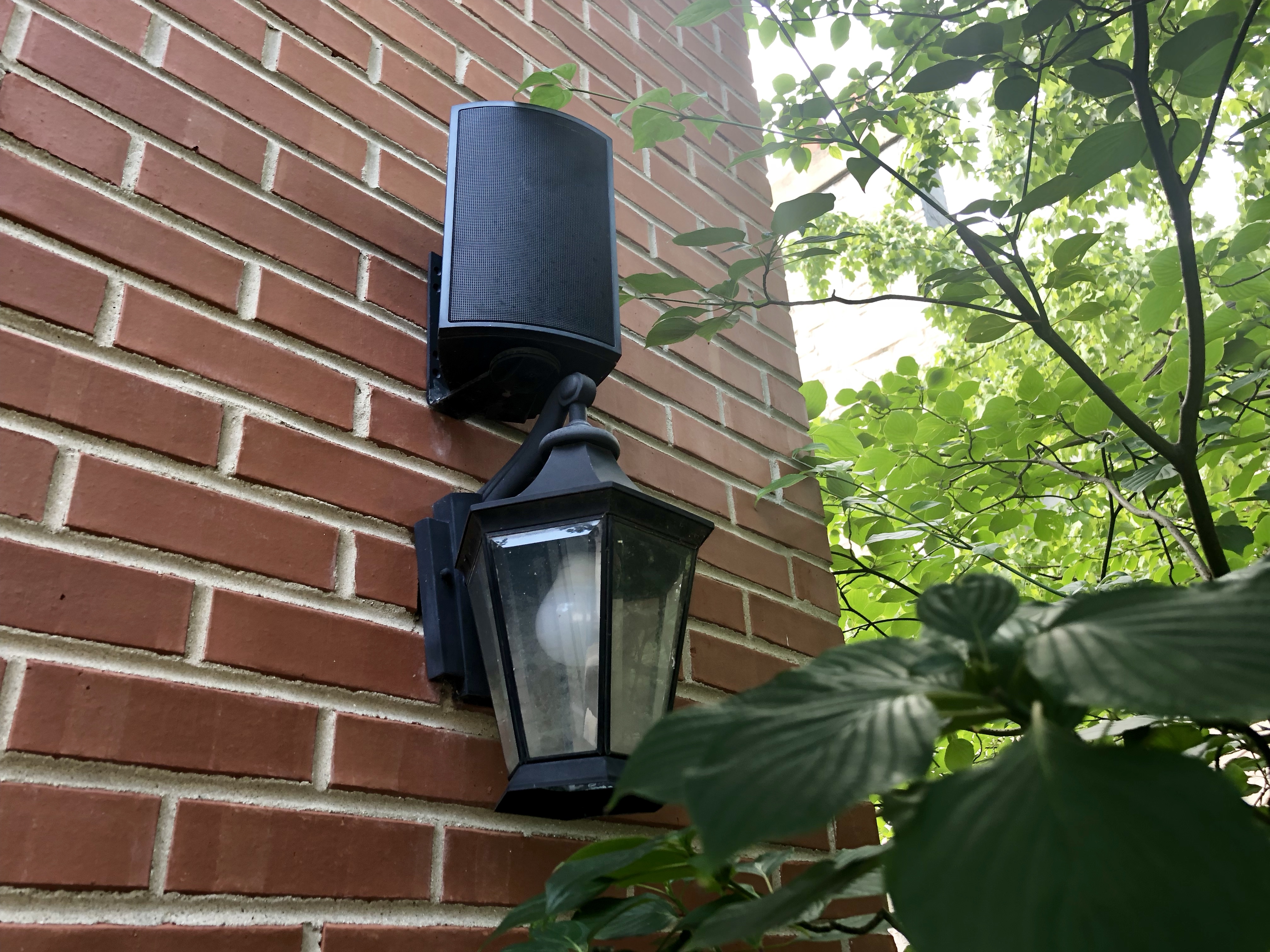
My outdoor AirPlay 2-connected speakers.

My outdoor AirPlay 2-connected speakers.

Still, I used the Griffin 20 and a first generation AirPort Express to drive speakers on the outside of my house for years. It was a simple way to enjoy music outside. It came with the downside that the original iteration of AirPlay had buffering issues, so I usually needed to leave my iPhone inside the house to stream. More recently, my six-year-old Express started to become flakey too.

Step one was to update a long-neglected AirPort Express.

Step one was to update a long-neglected AirPort Express.

I couldn’t update the first-generation Express to the new firmware, but I had a newer second-generation model in a box in my basement. I dusted it off, plugged it in, and updated the firmware using the Airport Utility app. I had to fiddle with my overly-complicated network setup to get it to work properly, but it didn’t take long before the Express was working.

I changed the Express' name and added it to the Home app.

I changed the Express' name and added it to the Home app.

The final step was to go into the Home app and add the Express as a new accessory. Because it predates HomeKit accessories, I couldn’t scan a code to add the Express. Instead, I added it manually using the ‘Don’t Have a Code or Can’t Scan?’ button in the Home app. Now, I have music playing perfectly synced on our back patio using the AirPort Express and in our living room using my HomePod and Apple TV. I also have the convenience of picking my outdoor speakers from the sources list in Control Center and using Siri to move music to those speakers without the buffering issues I experienced with the first version of AirPlay.

Music, everywhere.

Music, everywhere.

It’s a shame the AirPort Express was discontinued. Not every situation justifies the expense of a HomePod. Nor are those devices practical outdoors or in other environments. Fortunately, the AirPort Express remains an option for now if you already own one or can find a used or refurbished one for sale.


Support MacStories Directly

Club MacStories offers exclusive access to extra MacStories content, delivered every week; it's also a way to support us directly.

Club MacStories will help you discover the best apps for your devices and get the most out of your iPhone, iPad, and Mac. Plus, it's made in Italy.

Join Now
03 Sep 17:27

Due 3.0 Adds Pure Black Theme, Custom Snooze Times, and Haptic Feedback

by John Voorhees

My task manager is packed with personal and work tasks. I rely on it to keep me on track day-to-day and week-to-week. The reason my task system works though is that it doesn’t include absolutely everything. If I started adding the minute-to-minute minutiae of life, I’d get bogged down in the volume of tasks each day.

For a while now, I’ve been using Apple’s Reminders app to keep track of one-off tasks, little things I might forget to do, errands, and tasks with deadlines. I’ve found that it’s a great way to stay on top of items that don’t have a home in a formal project. For the past couple of weeks though, I’ve largely replaced Reminders with Due, which was updated to version 3.0 today.

Due is a pro-user implementation of reminders and timers. The app has one of the best quick-entry UIs I’ve used in an app. Picking dates and times is a clunky, laborious process in most apps, but Due gets it right making it simple to add a date and time to a reminder with a combination of natural language recognition and a unique date and time grid. The app also makes fantastic use of gestures.

Development of Due has been slow and steady focusing on improving the core functionality of the app without cluttering it up with new features, which I appreciate. Version 2.0 of Due, which was released in early 2015, added the quick-entry grid system, which we covered in-depth in our review, so I won’t repeat it here. Since then, the app’s developer, Lin Junjie, has added a companion Apple Watch app, which enables you receive alerts and mark items as completed or snooze them. Due also added integration with Apple’s Reminders app, which lets you designate Reminders lists from which you can manually or automatically import tasks.

Above all else, it’s Due’s integration with Reminders that drew me back to using it. Whether I’m at my desk with my iPhone X sitting on its Qi charger or walking around the house within earshot of my HomePod, I’ve gotten into the habit of asking Siri to remind me of tasks as I think of them. I’ve even started to use Reminders while out running. Reminders is one spot where Siri works well nearly every time, and with the Due integration, I benefit from alert and snooze features that Reminders doesn’t offer.

Today’s update to Due adds three new features. The first is haptic feedback, which has been added throughout the app. Swiping down to search or add a reminder provides a little tap, as does swiping left to mark an item complete or delete it. There’s also a little feedback as you tap the quick-entry grid. The haptics work particularly well with the existing swipe gestures letting you know when you’ve swiped far enough to trigger an action.

The second new feature is a Pure Black Theme, which looks fantastic on the OLED screen of the iPhone X. Everyone has had inconvenient times when they want to add a quick reminder but don’t want the light of their phone to disrupt people around them. Pure black is perfect for those occasions. Plus, it just looks cool.

Custom snooze times.

Custom snooze times.

Finally, Due 3.0 adds custom snooze times for notifications. Due notifications provide three snooze options. If you turn on the custom snooze setting, tapping the third option displays the same quick-entry grid used to create reminders. It’s a handy way to dial in the exact amount of time you want to snooze a reminder.

Of the three new features, haptic feedback is available for no extra charge to existing users. The black theme and custom snoozes are included in the $4.99 purchase price if you are a new customer. Existing users can add those two features via a $2.99 In-App Purchase.

Due used the same upgrade process for version 2.0. However, the features added with version 2.0 were more fundamental to the day-to-day use of the app than today’s update. Due is an excellent app that I think is well worth its $4.99 price for new users. However, while I like the black theme and custom snooze option a lot, the $2.99 price feels high relative to the price new users are charged for the full app. Both are features I could probably live without, but I plan to buy them anyway because over the eight years I’ve used Due on and off, I’ve gotten multiple times its cost in value.

Due 3.0 is available on the iOS App Store for $4.99, existing users can add the black theme and custom snoozing for $2.99, and there is also a macOS version on Mac App Store for $9.99.


Support MacStories Directly

Club MacStories offers exclusive access to extra MacStories content, delivered every week; it's also a way to support us directly.

Club MacStories will help you discover the best apps for your devices and get the most out of your iPhone, iPad, and Mac. Plus, it's made in Italy.

Join Now
03 Sep 16:43

How I got blocked by Tom Peters - you must bow to the cult of Leadership or be rejected as an apostate

Donald Clark, Donald Clark Plan B, Sept 12, 2018


Icon

Donald Clark reports on his spat with Tom Peters that erupted after he posted a thousand words on Why these best selling books on 'Leadership' got it disastrously wrong featuring Peters in a leading role. "BusinessWeek claimed he had ‘faked’ the data. Chapman even wrote a book called In Search of Stupidity, showing that his list of ‘excellent’ companies were actually poor to indifferent." Though, as Clark notes, at least they tried to use data; many business books are filled with nothing but cherry-picked anecdotes. More to the point, though, " We have fetishised 'Leadership'. You're a leader, I'm a leader, we're all leaders now - rendering the very meaning of the word useless." I think Clark is right, I think Peters helped start this trend, and I think the concept of 'leadership' has become empty and meaningless.

Web: [Direct Link] [This Post]
03 Sep 16:38

Big Fish in a Small Pond

by Ton Zijlstra

At the back of our house is a small water way (part of the water management system in the area). In the past days we heard splashing we couldn’t determine the source of. Today we saw the likely source swim by, a big fish in a small body of water.

Big Fish in Small Pond

Not sure how it got there, maybe when the water authorities pumped water from the nearby IJsselmeer into our area, during the recent weeks of draught. Not sure if it could get out again by itself (the available passage seems too small for it).

03 Sep 16:36

PiPod: the Raspberry Pi Zero portable music player

by Alex Bate

We’ve seen many Raspberry Pi-powered music players over the years. But rarely are they as portable (and snazzy) as the PiPod by Hackaday user Bram.

PiPod Raspberry Pi music player

Portable music

My biggest regret in life? Convinced I wouldn’t need my 160GB iPod Classic anymore thanks to Spotify, I sold it to CEX for a painfully low price. But not only was I mistaken as to how handy it would have been to hold on to, the money I made doesn’t seem to justify parting ways with such an iconic piece of technology no longer available to purchase anew.

Which is why the PiPod project from Netherlands-based Hackaday user ‘Bram’ caught my attention instantly.

The PiPod

I made this music player because I wasn’t satisfied with the current playback methods that are available. The music streaming services available started to feel like radio stations with the same music repeating, they are also depended on an online internet connection while there might be offline functionality it is still limited by the available storage on your phone.

We hear ya, Bram.

With his mind set on creating a music player of their own to overcome the limitations on offer without having to pay hundreds of Euros for high-end portable devices, Bram got to work.

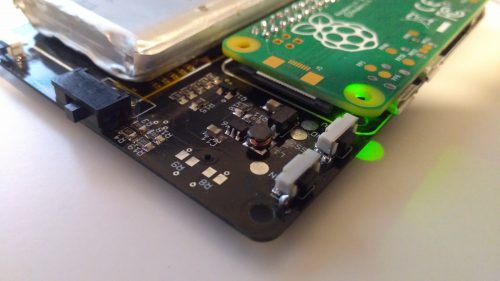
The PiPod, now in its third iteration, offers users a range of functionality and can be made fairly cheaply using Bram’s custom PCB.

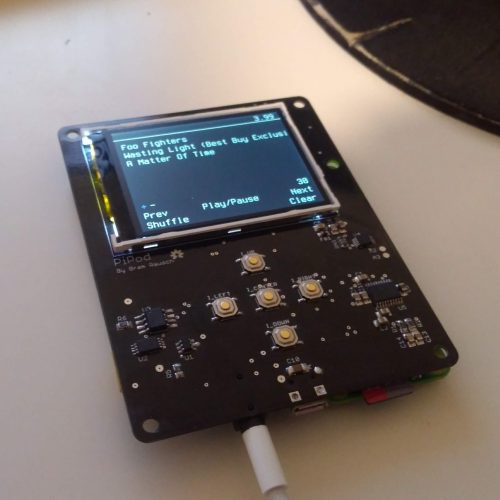
PiPod Raspberry Pi music player

For the display, Bram uses a 2.2″ TFT screen connected to a Raspberry Pi Zero. As can be seen above, the screen offers all the information you could ever require of your media player despite the low 320 by 240 resolution.

For music playback, the PCB also includes the PCM5102A a 24-bit I2S DAC that offers a high-quality audio output accessible via a 3.5mm jack. And for power, Bram has done his homework, incorporating a series of components to protect the device from overcurrent, thermal overload and various other power-related concerns.

PiPod Raspberry Pi music player

The music interface itself uses VLC for backend playback and PyGame at the frontend, and all information and code for the project can be found on the Hackaday project page, including the 3D-printable files for the rather snazzy casing and its fantastic dock.

PiPod Raspberry Pi music player

Such snazziness

We’re sure Bram’s PiPod isn’t the only portable music device with a Pi inside. What have we missed? Share yours with us in the comments or on social media so we may bathe in their glory and give them the attention they deserve.


The post PiPod: the Raspberry Pi Zero portable music player appeared first on Raspberry Pi.

03 Sep 16:30

coolkidsofhistory: Frank Sinatra playing poker with a dog,...


coolkidsofhistory:

Frank Sinatra playing poker with a dog, 1955.

03 Sep 16:26

Android 9 Pie: 75+ New and Hidden Features

by Rajesh Pandey
Earlier this month, Google released the final build of Android 9 Pie to its compatible Pixel devices whilst also pushing the source code of the browser to AOSP. Android Pie comes with plenty of new features and enhancements which aim to deliver an even better user experience than Nougat. Continue reading →