Shared posts

04 Sep 04:38

The Accountable Capitalism Act: It’ll Never Happen, But At Least Now the Conversation Will

by John Battelle

The past week or so has seen a surge in commentary on the role of corporations in society, a theme familiar to readers of this site. While it might be convenient to peg the trend to Senator Elizabeth Warren’s newly minted Accountable Capitalism Act (more on that in a second), I think it’s more likely that – finally – our collective will is turning to our most logical and obvious instrument of social change, namely, the instrument of business.

We humans like to organize ourselves into social units. They range from the informal (pickup basketball games) to the elaborately structured (Senate hearings). Our ability to harness collective will is unsurpassed in the animal kingdom, it’s one of our key evolutionary adaptations, driving the success of our species across the globe.

As I’ve argued elsewhere, one of our most sophisticated social structures is the corporation, which has co-evolved with our various systems of government over the past half millennium or so. The very first corporations were in fact formed (or chartered) by governments – the Dutch East India Company is the most common example of this. In the past century, however, corporations have largely sought to shake the yoke of government regulation – and nowhere have corporations won more freedoms than in the United States, where firms are now considered legal persons with an unrestrained right to “free speech” (IE, the ability to fund political positions).

So this is where we are today: Large corporations have the legal right to exercise unlimited influence over our political sphere, and the commercial imperative to control (and profit from) nearly all our society’s data. That kind of power will necessarily produce a backlash, one that’s found an articulate, but highly unlikely, argument in Senator Warren’s proposed legislation. From the release announcing the Accountable Capitalism Act:

For most of our country’s history, American corporations balanced their responsibilities to all of their stakeholders – employees, shareholders, communities – in corporate decisions. It worked: profits went up, productivity went up, wages went up, and America built a thriving middle class.

But in the 1980s a new idea quickly took hold: American corporations should focus only on maximizing returns to their shareholders. That had a seismic impact on the American economy. In the early 1980s, America’s biggest companies dedicated less than half of their profits to shareholders and reinvested the rest in the company. But over the last decade, big American companies have dedicated 93% of earnings to shareholders – redirecting trillions of dollars that could have gone to workers or long-term investments. The result is that booming corporate profits and rising worker productivity have not led to rising wages.

Additionally, because the wealthiest top 10% of American households own 84% of all American – held shares-while more than 50% of American households own no stock at all – the dedication to “maximizing shareholder value” means that the multi-trillion dollar American corporate system is focused explicitly on making the richest Americans even richer. 

Here are a few of the act’s key proposals:

  • Companies with more than $1 billion in revenues must register with, and agree to be regulated by, a new Federal oversight body known as the Office of United States Corporations.  By registering, firms are obliged to “consider the interests of all corporate stakeholders – including employees, customers, shareholders, and the communities in which the company operates.” This enshrines what is often called a “multi-stakeholder philosophy,” the underpinning of B Corps like Patagonia and Kickstarter, into federal law.
  • A corporations’ workers would be empowered to elect at least forty percent of their firms’ board of directors.
  • Long term restrictions on the sale of stock by board directors and corporate officers – three years for stock buy backs, and five years for everything else. This is to insure that a large firms’ managers plan for the long term.
  • A prohibition on political spending of any kind without approval from 75 percent of both directors and shareholders.

There’s more, but I think you’ve got the point – this is a sweeping and presently impossible piece of legislation that radically rethinks the governance of our most powerful corporations. It guts corporate political spending, upends business’s current compensation structure (often based on stock grants), radically reshapes board governance (giving a near majority control to workers), and creates a massive conservative bogeyman in the form of yet another Federal government oversight entity. In today’s political environment, Warren’s legislation is DOA.

But in tomorrow’s? Quite possibly not. Senator Warren is widely considered a front-runner for the Democratic nomination in 2020, and her initial opponent won’t be Trump – it’ll be Bernie Sanders, whose supporters likely will find plenty to love in Warren’s new plan.

Regardless of whether the act has any chance of passing without a strong Democratic majority in both houses of Congress, Warren has smartly identified a central issue in our country’s political conversation, and declared it to be fundamental to the Democrats’ platform for 2020. It’s about time someone did.

More recent reading on the role of capitalism in our society: 

Louis Hyman: It’s Not Technology That’s Disrupting Our Jobs

L.M. Sacasas: Technopoly and Anti-Humanism

Tom Wheeler: Time to Fix It: Developing Rules for Internet Capitalism

Neil Irwin: Are Superstar Firms and Amazon Effects Reshaping the Economy? 


04 Sep 04:38

Show Tunes

by David Turner

Eight years ago, before his alt-right pivot, Kanye West came up with the concept of GOOD Fridays. The rapper was working on his album My Beautiful Dark Twisted Fantasy, and decided to drop a song every Friday through the summer and fall of 2010 to build up anticipation. The material included early versions of eventual album cuts (“Devil in a New Dress”), remixes of popular songs from the day (Justin Bieber’s “Runaway Love”), and songs that were eventually left on the cutting room floor (“Christian Dior Flow”). Apart from the album itself, fans came to anticipate the spectacle of each week’s release: Would Kanye hit the Friday release date? What artist would appear this week? Is this the last week of releases?

Earlier this year West announced a similar collection of GOOD Music projects, starting with Pusha T’s Daytona in late May, and including Kanye West’s Ye; West and Kid Cudi’s Kids See Ghosts; Nas’s Nasir; ending with Teyana Taylor’s K.T.S.E. in June. Each album was seven tracks long (Taylor’s being the exception), and arrived (often late) with dramatic listening sessions on their designated streaming music platforms. The idea, though not given a catchy name, repeated the same strategy of West’s GOOD Fridays: Music not as a product in itself, but an entry point to a conversation.

As the industry has monetized fan dynamics, moving toward participation as product, the perceived value of music has changed: it’s less about the artist than “engagement” itself

The 2010s had amplified this idea of album as spectacle, and spectacle as product. Beyoncé’s 2013 album Beyoncé generated so much attention not initially because of the music, which no one had heard yet, but because of its out-of-nowhere sudden release, a trend with artists from Drake (If You’re Reading This It’s Too Late) to U2 (Songs of Innocence) has since become nearly cliche. Back in 2011 when Drake released the cover art for Take Care, people made memes of the artwork to laugh at and with the budding Canadian superstar, even before fans heard the album. This approach has carried into viral dances and challenges, the most recent one being the #InMyFeelingsChallenge, spawned by a deep cut (“In My Feelings”) from Drake’s most recent album, Scorpion.

This is the industry’s response to changing listener modes and expectations. The need to buy an album — off iTunes, much less an actual record store — has mostly vanished: Apple Music launched in the summer of 2015, around the time Spotify was starting to see major growth through its mobile app. The business model for music doesn’t require a must-have album, then, but rather a week-to-week narrative within the music world to justify a monthly subscription.

The connection that fans in decades past built through purchasing music is now better observed through YouTube or even Instagram comments — fan engagement is connected to how much time one is willing to spend hunting for leaks or standing in line for a pop-up shop. The ideal fan doesn’t pay for a singular release, but instead spreads memes and creates enough online noise to keep their favorite artist trending: Recently the indie rock artist Mitski reposted memes in the run-up to her latest album, Be The Cowboy, to Instagram; fans returned the favor, throwing the hashtag #BeTheCowboy across social media. As the industry has monetized fan dynamics, moving toward participation as product, the perceived value of music has changed: it’s less about the artist, or even the artist’s relationship to their fans, than “engagement” itself.


In the early ’70s, the rise of the album format pushed record labels to devalue the single in favor of more expensive LPs. A CBS documentary from 1974 expressed concern that rising album prices, and the refusal of stores to stock singles, could potentially dampen sales to younger shoppers, who would grow up to become the next generation of music consumers. By the 1990s, exploitative pricing, and the consolidation of musical formats into more expensive products — RIP the cassingle and the CD single — left the industry susceptible to a radical shift once file sharing was introduced. With CDs fetching nearly $20 a piece by late in the decade, and without a less expensive way to buy their favorite singles they heard on the radio, illegal piracy felt to fans like a justified finger to a bloated business.

Music fans aren’t paying for the opportunity to access music — most listeners take access for granted — but instead to integrate it meaningfully into their lives

Once it was clear that physical consumption of music was ending — iTunes merely delayed this fact — music companies understood the need for a deeper reimagining of how fans would engage and, most importantly, pay for music. From 2001, major labels backed two proto-streaming services, Pressplay and MusicNet, envisioning a world where listeners would pay a monthly fee for catalog access to music. Both products fell on their face due to highly restrictive streaming and download limits that couldn’t compete with file-sharing services like Soulseek and Kazaa. Napster, the site that broke down the wall of piracy to the mainstream, was eventually tamed by the music industry and offered a limited subscription music service in the 2000s. But it took streaming until the mid-to-late 2010s to go mainstream.

The emergence of profitable streaming ventures coincides with the overall trend in tech toward the idea of products as services — “software as service,” for instance, where instead of selling a piece of software like Microsoft Office and its suite of products, the company offers it to you for “free” and charges you a monthly fee for access, updating constantly rather than requiring you to make a whole new purchase. Video games took the model and morphed the practice of offering new sequels for sale every year into subscription fee services for Massive Multiplayer Online games or season passes in games like Fortnite. The model increases the amount of money a consumer puts into a single product, and further commits them to a platform because of how much they’ve already invested.

The ultimate success of music streaming can be credited to both Apple and Spotify, and to the understanding that music fans aren’t paying for the opportunity to access music — most listeners take access for granted — but instead to integrate it meaningfully into their lives.

Spotify arrived in the United States as a desktop app, but the company didn’t start making major inroads until the introduction of their mobile app in 2014: thanks to the iPhone, there was now a device to provide people with seemingly infinite music on the go, without the need to hunt for MP3 files. When Apple introduced Apple Music in 2015, the shift away from digital ownership had already started — after a while one doesn’t own music, but instead perpetually rents out a music library which can accompany them always.


With so much music available, listener experience becomes paramount. Music streaming services understand the importance of hooking consumers with something more than a catalog. Access to the music itself is easy to take for granted, or find illegally elsewhere, but features like playlists are meant to keep subscribers passionate and connected, and specific libraries competitive.

Some streaming services have built on the album’s legacy as an event in its own right, capitalizing on pre-existing listener loyalties. The album, in this mode, is not a product but the center of a “conversation,” and to be part of it you need to sign up for exclusive access. Tidal, Jay-Z’s streaming service, attempted their own version of owning the conversation back in 2016: Rihanna debuted her album Anti exclusively on Tidal, Kanye West followed-up with the Life of Pablo, Beyoncé did the same with Lemonade. According to Tidal, these three albums in total drew over 4 million subscribers, though that number was heavily disputed. That’s where the music flow stopped, however — once the trial subscription ran out, fans could simply return to the platform of their choice. Beyoncé and Jay-Z’s latest project, Everything Is Love, was only a Tidal exclusive for less than two days.

Some streaming services have built on the album’s legacy as an event in its own right, capitalizing on pre-existing listener loyalties. The album, in this mode, is not a product but the center of a “conversation”

Streaming services like Spotify take a different approach to listener engagement, operating on the idea that music is less monumental — that it should soundtrack your day-to-day moments. The service aims to make music fluid and infinitely adaptable to consumer desires. The marketing of context-specific musical products dates at least back to the 1950s, when record labels would release albums to be played while eating dinner or engaged in other home activities. Christmas music can even be dated back to Bing Crosby’s 1942 hit “White Christmas”; this seasonal repackaging can now happen with minimal fuss or overhead cost. (During the holiday season Spotify followed up one of their most followed playlists, Peaceful Piano, with Christmas Peaceful Piano.)

Individuals can connect specific songs to moments, but the industry more broadly sees a calendar where some of the old hits are trotted out until that moment passes. Spotify playlists like Sleep, Feel Good Dinner, or Songs to Sing in the Car are designed not for their specific contents, but to convey a sense of general ease for listeners. Just press play, let it go, and your life receives a light musical accompaniment. Increasingly these playlists receive banner ads promoting television shows, movies, or fast food restaurants, ostensibly cued to your tastes.

Spotify, in their F1 filing when listing on the New York Stock Exchange, boasted that 30 percent of listening on their platform happens through curated or algorithmically generated playlists. Last year the streaming service started a nationwide tour to promote the RapCaviar playlist brand; earlier this year they announced a similar tour for their Latin pop playlist Viva Latino. These playlists function as large branding exercises to try and woo potential investors in the real-world value of their brands; they also provide another site at which fans can engage with those brands (and not only the artists they’re built on) in stadiums rather than through headphones.

Thirty percent, however, is just that — seventy percent of listening on Spotify happens outside of their curatorial control, which, along with recent reports of Apple Music outperforming Spotify on recent major album releases raises the question over the real influence of Spotify playlists. The passive consumption that playlists offer isn’t made to trigger the same amount of obsession and passion that West triggered with GOOD Fridays. You may attend a RapCaviar concert to see your favorite rappers, but the playlist itself isn’t leading the conversation; it’s simply piggybacking off of recognition of the top-billed acts. Songs don’t debut on RapCaviar, artists don’t have beef with RapCaviar, there isn’t even a RapCaviar T-shirt one could wear. If one can’t show their fandom or support for an artist, label, or curatorial service, can it really sustain a conversation?


Fandom in 2018 has evolved beyond the need to buy physical albums or digital files. Social media opens up nearly endless ways to engage with an artist: following their tweets or Instagram stories, or watching them goof around on Twitch. The GOOD Friday series helped build on organic developments in music fandom, wherein fans of the same artist could form a networked community, uniting on forums and gathering digital files to share, and upped the ante. Community can’t meaningfully grow without new content, and that content can be teased and promoted in ways that play directly to fan dynamics. The music industry adjusted and further monetized this model, where a subscription, not a concert ticket or a boutique record store, allows one to enter into a fan community.

With a surplus of music available, the “community” itself, or rather the sense of oneself as participant, is increasingly the point. The walls around genre and niche have crumbled, only to be replaced with credit card transactions. The hunt for a “Song of the Summer” — a popular song that one won’t be able to escape during the warm months of the year — is a long-standing tradition that has been lately commodified into an endless content creation race. Billboard even dedicates an entire chart to the “official” most popular song of the season. This takes the streaming-first mode of music appreciation to the next level: fans aren’t rallying around an artist, or a cluster of artists, but an ephemeral zeitgeist, into which any artist could possibly fit.

This event-styled mode of music consumption isn’t about diving into a single album, but rather swimming in a sea of constant new releases, fighting to stay up-to-date on the latest musical trends and ideas. Fans aren’t encouraged to connect too deeply with a single project, because there’s always another coming next Friday. This is a business model that supports those who control the catalog, and leaves the musicians and fans constantly recalibrating their relationship to each. Knowing what artist is on a playlist matters less than if you skipped a track or not.

04 Sep 04:36

Why does everyone admire John McCain? Because he was a leader who knew how to argue.

by Josh Bernoff

I have been struck by the overwhelmingly positive and admiring comments about John McCain from people at all points on the political spectrum, including not just Republicans but the likes of Bernie Sanders, Bill and Hillary Clinton, and Barack Obama.There’s a lesson here in leadership for today’s politicians, on how to argue on principle. You … Continued

The post Why does everyone admire John McCain? Because he was a leader who knew how to argue. appeared first on without bullshit.

04 Sep 04:36

Weekend in Malmö Among Friends

by peter@rukavina.net (Peter Rukavina)

As usual, we spent too little time in Malmö, didn’t get to do all the visiting we wanted to do, didn’t get to have all the conversations we wanted to have. But we made a valiant effort to squeeze in as much as we could, and our efforts reached their peak over the weekend.

Olle and Oliver

We started off meeting up with Olle and Luisa just up the street at ReBike, which was holding a bicycle auction. The auction proved to be dissatisfying, so we redirected to the nearby flea market. We emerged hungry for lunch, and a stop at the McDonalds next door was proposed, an atypical emergency measure given hunger levels (and an opportunity for us to spend our “we’re allow to go to McDonalds once on every European trip if circumstances dictate” allowance). Some of our party being vegans, our visit was predicated on the presence of the McVegan on the menu (yes, this is a thing). It was not on the menu, so we decamped.

At this point Luisa returned home and Olle, Oliver and I redirected to Mitt Möllan, where Olle had Indian food and Oliver and I enjoyed pizza from the excellent Pizza dal Sud.

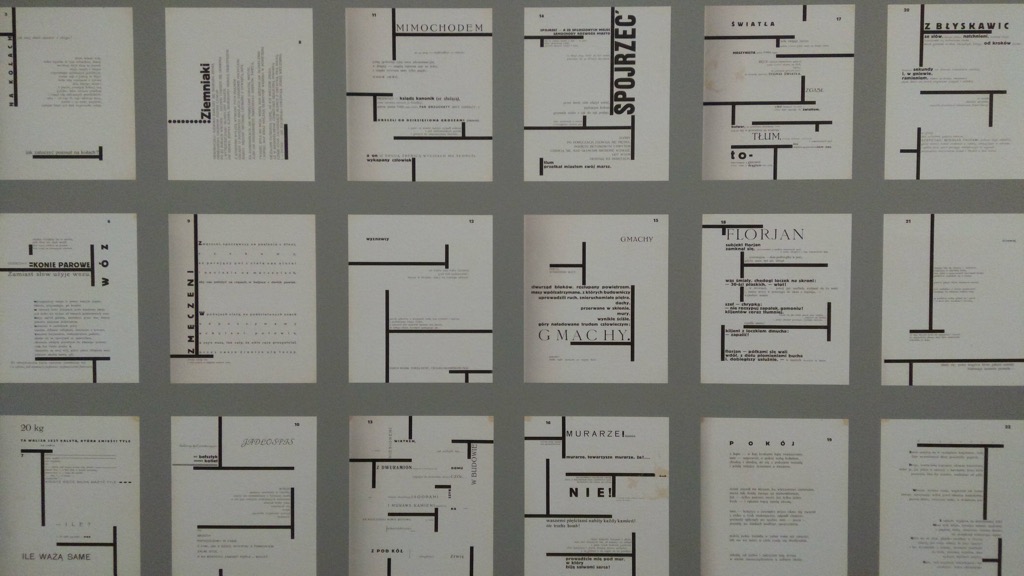
Sated, we caught a taxi, magically invoked by Olle’s phone, and headed to the Moderna Museet Malmö where we rendezvoused with Olle’s friend David, and took in an exhibition of 19th century photography (upstairs) and a retrospective of the work of Polish artists Katarzyna Kobro and Władysław Strzemiński (downstairs).

Katarzyna Kobro and Władysław Strzemiński Art

Katarzyna Kobro and Władysław Strzemiński Graphic Design

After our visit, we retired to the stratospherically orange café, where we enjoyed coffee and cake and got to know David a little better. He is, we learned, a practitioner of “stealthy” photography–the taking of photos in such a way as the moment is captured without artifice. I decided to try my hand, and, in the flick of a moment, took this photo, which is either a photo of David and Olle, or a photo of the tiny man in the background talking on his mobile.

Olle and David

At this point we left David and Olle, and the newly-joining Eric, to their own devices, and headed off in search of an early supper, hopeful that the rain would hold until we were under cover.

We found both food and cover from the rain at Nguyen’s Sandwiches, where we enjoyed tofu bánh mì.

Outside the impending rain became driving rain, and so I quickly pulled out my phone to see if there was a movie we might watch, so as to avoid a soggy walk home. The Children Act, an Emma Thompson film, was starting in 15 minutes just a few blocks away, so we scubaed through the rain and made it just in time. And, in so doing, we got to experience interesting aspects of the Swedish cinema-going experience: reserved seating, a convenience store-like concession (similar to what we saw in Oslo in 2015), and a phalanx of political advertising during the pre-show.

When we emerged 2 hours later, the rain had passed and it was a brisk, bright Saturday evening, perfect for a walk home. While walking I texted Olle to invite him over for tea, and when we arrived he was standing in front of our apartment waiting for us; we did, indeed, drink tea, and ate potato chips, and talked well into the evening.

Sunday morning’s task was to do our laundry.

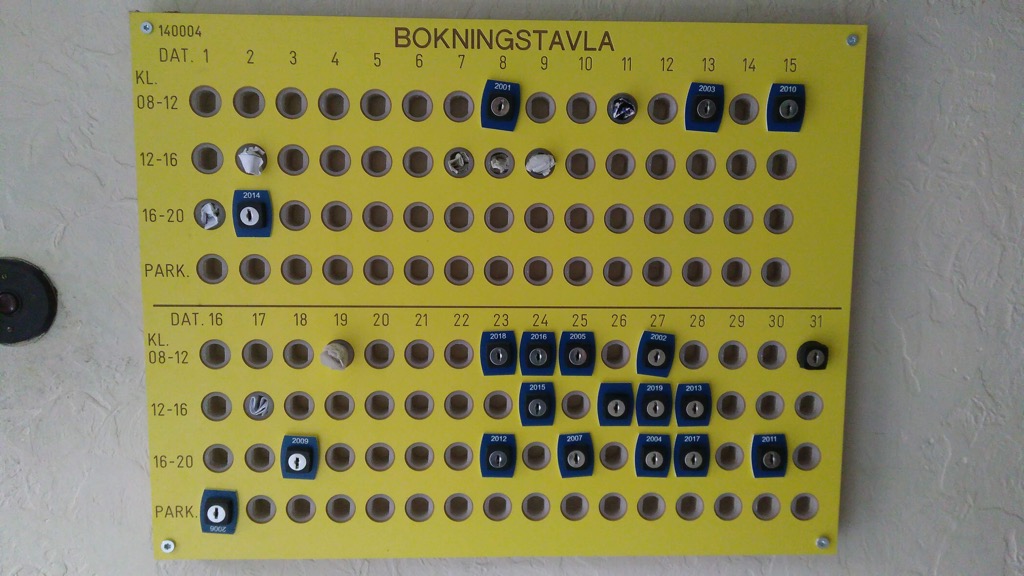
Our Malmö apartment had a communal laundry room in the basement that we could reserve the exclusive use of for 4 hours using a board in the lobby, affixing a lock to the hour range we wanted. As our key was in the countryside with our apartment’s owner, we were advised to stick a piece of paper in our slot:

Laundry reservation board in our apartment

At 8:00 a.m. I packed up our near-week’s worth of laundry and headed down. Only to find the door locked. This was quickly resolved by a ping to our Airbnb host, who had a neighbour unlock the door, and by 8:30 a.m. I was in business, decrypting the not-all-that-hard-to-decrypt Swedish washing machine.

The highlight of the experience, though, was not the washing but the drying, as the drying was done in a C.S. Lewis-sized drying cabinet, with swing-out bars on which to arrange wet clothes. It did an amazing job at drying everything quickly and completely and without wrinkles.

So the laundry was done and folded by 11:00 a.m.

It being Sunday, Oliver expected waffles. Fortunately I had Malmö-based experience in this regard, and we walked down to Kungsgatan Café for its weekend brunch, which included cheeses and meats and buns and granola and yogurt. And make-your-own waffles.

Waffles at Kungsgatan Cafe

After lunch we took a walk in the sunshine, and then headed to Olle and Luisa’s apartment–just 5 minutes walk away–for a fika they had kindly organized in our honour. In attendance were friends I’d met before–Nene and Loe and Johanna–along with Lovisa and Mikael, who were new. There were cakes, and tarts, and ice cream, and cardamom-infused coffee and delightful company.

The highlight of the fika for me was an extended conversation with Nene about our shared love of fountain pens (her love is deeper than mine, which only served to deepen my own). Nene brought her entire fleet of pens, and kindly allowed me to try them all, and provided helpful commentary about each. She then left me with the unexpected gift of a pen and some intriguing inks. We will, I’m sure, have more to talk about on this in future.

As fika wound down, friend Jonas, who’d had to miss the afternoon to attend a baptism, radioed in and offered to drive us out to his allotment (which, in the Swedish sense, is a community garden plot cum modest summer cottage). We got a cook’s tour of the allotment, followed by a tasty take-out supper of vegetarian bibimbap from Spoonery.

Jonas and Oliver and Olle at the Allotment

Jonas dropped us back at our apartment late Sunday night, and I finished the day in a frantic drive to clean things up and get organized for our departure for Berlin this morning.

Which is where I type right now, en route presently from Fredericia to Hamburg, with Oliver across the way, wearing a red wool sweater that Olle loaned and then gifted him:

Oliver on the Train

Next stop, Berlin.

04 Sep 04:36

Dear Venmo: Update Your Privacy Settings

by Ashley Boyd

Last month, privacy researcher and Mozilla Fellow Hang Do Thi Duc released Public By Default, a sobering look at the vast amount of personal data that’s easily accessible on Venmo, the mobile payment app.

By using Venmo’s public API and its “public by default” setting for user transactions, Hang was able to watch a couple feud on Valentine’s Day, observe a woman’s junk food habits, and peer into a marijuana dealer’s business operations. Seven million people use Venmo every month — and many may not know that their transactions are available for anyone to see.

Privacy, and not publicity, should be the default.

Despite widespread coverage of Hang’s work — and a petition by Mozilla that has garnered more than 17,000 signatures — Venmo transactions are still public by default.

But on August 23, Bloomberg reported that “In recent weeks, executives at PayPal Holdings Inc., the parent company of Venmo, were weighing whether to remove the option to post and view public transactions, said a person familiar with the deliberations. It’s unclear if those discussions are still ongoing.”

Today, we’re urging Venmo: See these important discussions through. Put users’ privacy first by making transactions private by default.


Ashley Boyd is Mozilla’s VP of Advocacy.

The post Dear Venmo: Update Your Privacy Settings appeared first on The Mozilla Blog.

04 Sep 04:36

Four questions for the smart city

by AG

After a few solid years of thinking, writing and consulting about smart cities, I’ve distilled my recommendations down to four questions any municipal administrator or concerned citizen should ask when presented with propositions for the technological improvement of everyday urban life:

0. What does it do?
This question seems so obvious that you mightn’t think it needs to be posed explicitly. Incredibly, though, in my travels I’ve met a huge number of people, both in and out of government, who are so enamored of technological intervention both for its own sake, and for the gloss of modernity they think comes along with it, that they forget to ask just what it is they’re signing up for. Sometimes, indeed, they don’t even care. They should care, and so should you. What is the thing supposed to do in the first place?

1. Does it work?
Does the proposed intervention do what it’s supposed to do? This is by no means a settled matter of fact, even when dealing with technologies that might work stably and well in other contexts. Demand some kind of evidence that the proposed intervention actually functions in the way its vendors and advocates claim it will when deployed in an urban environment like yours, not just for a few weeks, but on an ongoing basis. If no such evidence is forthcoming, feel free to drive a much harder bargain, or to walk away entirely.

2. Do we agree that what it’s supposed to do is something worth doing?
A proposed technology might indeed do what its manufacturers say it will, but that thing might be monstrous — or at the very least, not something that a majority of citizens consider to be an end worth pursuing as a matter of public purpose. Say that someone is proposing to license and install new facial-recognition software for the city’s CCTV network, and that software reliably identifies 95% of the individuals that pass before its cameras. Is this a goal that the public has passed collective judgment on, and considers to be an acceptable expression of its will? (Are there procedures in place to reverse the deployment and its effects, should that collective judgment change in the future?)

3. Does it do that thing at reasonable cost, compared to other ways of addressing the issue at hand?
Maybe the proposed technological deployment serves an end that’s more or less universally regarded as desirable in your city, like reducing violence or vehicular traffic. And maybe the system on offer does actually (consistently, demonstrably, reliably) function toward that end. So far, so good. Are you convinced, though, that you’ve exhausted available ways of addressing the issue at hand that might be cheaper, less complex or less dependent on long-term systems integration, maintenance and upkeep commitments? Perhaps a summer jobs program is more effective at reducing youth violence than a cutting-edge predictive policing suite, and achieves its goals at a fraction of the cost (and without either abrogating the community’s rights or abrading its sensitivities). It might not be as superficially glamorous, and it won’t necessarily get your city talked about in puff pieces on cutting-edge urban innovation, but shouldn’t you exhaust that and other possible alternatives before shelling out in perpetuity for the complicated, big-ticket item?

Again, this almost shouldn’t need to be said in so many words, but: if you can’t come up with affirmative answers to questions 1 through 3, you should strongly reconsider whether the investment at hand is one worth making.

Note too that the framework I offer here limits itself to a consideration of the smart city at face value and on its own terms, i.e. those of financial cost-effectiveness and process efficiency. The truth, of course, is that are other ways of accounting for cost and benefit, and that the costs reckoned in dollars are neither the only ones incurred in any given deployment of informatic technology, nor by any stretch of the imagination the ones that matter most. But for the moment, let’s agree to place all such considerations to one side. What you might find startling, in doing so, is that the smart city very often cannot even justify itself on its own, artificially constrained terms.

04 Sep 04:36

“This is about our survival.”

by Andrea

Outside: Yosemite Finally Reckons with Its Discriminatory Past. “Pioneers, the government, even John Muir helped kick out Native Americans from their homes on national parks. But in Yosemite, the Miwuk Tribe is getting its village back.”

“Though nobody will live in the wahhoga, the agreement is nonetheless a watershed moment in the park’s relationship with local Native Americans, who have long sought to reestablish their cultural and subsistence connection with the park. The wahhoga could also function as an example for other NPS units, nearly all of which were created following forcible or coerced removal of the Native population. “Our ancestors used to live there, and we always felt that what was available to our ancestors should’ve been available to us,” James says.

James, who chairs the Wahhoga Committee, sees this as one more step toward indigenous tribes reconnecting with their ancestral homeland. Next on the docket, he plans to start programs that teach Native youth about traditional plant and animal harvesting. As James says, “This is about our survival.””

Fresno Bee: Decades after destruction, Yosemite welcomes home Native Americans.

“Wahhoga’s return has been decades in the making. The American Indian Council of Mariposa County/Southern Sierra Miwuk Nation finally got the OK to begin construction a decade ago, only to have their work halted for nearly seven years by Yosemite’s former superintendent, who cited safety concerns.

“We knew how to build a roundhouse from traditional knowledge that’s been passed down. … The park service didn’t understand that,” said Tony Brochini, former tribal chairman and executive director of the Wahhoga Committee. “That is where we butted heads. The park service wanted us to follow project management protocol and we were moving forward with our traditional methods.”

Links via MetaFilter.

04 Sep 04:36

2102 Keith Drive

by ChangingCity


Who knew there was a Keith Drive in Vancouver? And who anticipated that there would be such an innovative office building proposed here? And one that could now be even bigger than when we first posted in August, when it was 125,000 square feet , and eight storeys?

Now it’s proposed to be two storeys taller, and 167,000 square feet of space. The site is just by the VCC/Clark SkyTrain station, and the proposal has a mass timber frame. The zoning has allowed an office building here for many years

Designed by Dialog, the irregularly shaped building is the result of the main trunk sewer cutting across the site at an angle. The building will be headquarters of food group Nature’s Path, currently based in Richmond.

The architects explain the structural elements of the design: “The structural design of the building utilizes an innovative perimeter structural system of diagonally oriented braces which are integrated into the architecture of the building to create the primary expression of the building. These diagonal elements are celebrated within the facade as an expression of the way that the building resists the lateral and seismic forces of the site. By mirroring the orientation of the brace bays as facing pairs and alternating their orientation floor by floor, a repeating two-storey cellular pattern emerges, breaking down the overall scale and mass of the building.” There are balconies, which also act as solar shading, formed by the horizontal elements of the cell structure.

04 Sep 04:36

Simplifying World Tile Grid Creation with geom_wtg()

by hrbrmstr

Nowadays (I’ve seen that word used so much in journal articles lately that I could not resist using it) I’m using world tile grids more frequently as the need arises to convey the state of exposure of various services at a global (country) scale. Given that necessity fosters invention it seemed that having a ggplot2 geom for world tile grids would make my life easier and also make work more efficient.

To that end, there’s a nascent ggplot2 extension package for making world tile grids called (uncreatively) worldtilegrid🔗. It’s also at GitHub if you’re more comfortable working from code from there.

The README has examples but we’ll walk through another one here and work with life expectancy data curated by Our World in Data. Rather than draw out this post to a less tenable length with an explanation of how to pull the XHR JSON data into R, just grab the CSV linked with the visualization on that page and substitute the path in the code for where you stored it.

We do need to clean up this data a bit since it has some issues. Let’s do that and carve out some slices into two new data frames so we can work with the most recent curated year and some historical data:

library(hrbrthemes) # gitlab/github :: hrbrmstr/hrbrthemes (use devtools installers)
library(worldtilegrid) # gitlab/github :: hrbrmstr/worldtilegrid (use devtools installers)
library(tidyverse)

cols(
  Entity = col_character(),
  Code = col_character(),
  Year = col_integer(),
  `Life expectancy (Clio-Infra up to 1949; UN Population Division for 1950 to 2015)` = col_double()
) -> le_cols

read_csv("~/Downloads/life-expectancy.csv", col_types = le_cols) %>%
  set_names(c("country", "iso3c", "year", "life_expectancy")) -> lifexp

# clean it up a bit since it's not great data and bust it into groups
# that match the vis on the site vs use continuous raw data, esp since
# the data is really just estimates
filter(lifexp, !is.na(iso3c)) %>%
  filter(nchar(iso3c) == 3) %>%
  mutate(
    grp = cut(
      x = life_expectancy,
      breaks = c(10, 20, 30, 40, 45, 50, 55, 60, 65, 70, 75, 80, 85),
      include.lowest = TRUE
    )
  ) -> lifexp

last_year 

Now we can use it to make some cartograms.

Using the World Tile Grid geom

You can reference a previous post for what it would normally take to create these tile grids. The idea was to simplify the API down to the caller just needing to specify some country names/ISO[23]Cs (to a country aesthetic) and a value (to a fill aesthetic) and let the package do the rest. To that end, here's how to display the life expectancy data for 2015:

ggplot(last_year) +
  geom_wtg(aes(country = iso3c, fill = grp), border_col = "#2b2b2b") + # yep, you can sum up the entire blog post to this one line
  viridis::scale_fill_viridis(
    name = "Life Expectancy", discrete = TRUE, na.value=alpha(ft_cols$gray, 1/10),
    drop = FALSE
  ) +
  coord_equal() +
  labs(
    x=NULL, y=NULL,
    title = "Life expectancy, 2015",
    subtitle = "Shown is period life expectancy at birth. This corresponds to an estimate of the average number\nof years a newborn infant would live if prevailing patterns of mortality at the time of its birth were to\nstay the same throughout its life",
    caption = "Data source: "

  ) +
  theme_ft_rc(grid="") +
  theme(axis.text=element_blank()) +
  theme(legend.position = "bottom")

You can add labels via geom_text() and use the wtg stat for it as it provides a number of computed variables you can work with:

  • x,y: the X,Y position of the tile
  • name: Country name (e.g. Afghanistan)
  • country.code: ISO2C country code abbreviation (e.g. AF)
  • iso_3166.2: Full ISO 3166 2-letter abbreviation code (e.g. ISO 3166-2:AF)
  • region: Region name (e.g. Asia)
  • sub.region: Sub-region name (e.g. Southern Asia)
  • region.code: Region code (e.g. 142)
  • sub.region.code: Sub-region code (e.g. 034)

Labeling should be a deliberate decision and used sparingly/with care.

Easier World Tile Grid Facets

Making faceted charts is also straightforward. Just use ggplot2's faceting subsytem:

ggplot(a_few_years) +
  geom_wtg(aes(country = iso3c, fill = grp), border_col = "#2b2b2b") +
  viridis::scale_fill_viridis(
    name = "Life Expectancy", discrete = TRUE, na.value=alpha(ft_cols$gray, 1/10),
    drop = FALSE
  ) +
  coord_equal() +
  labs(
    x=NULL, y=NULL,
    title = "Life expectancy, 1900-2015 (selected years)",
    subtitle = "Shown is period life expectancy at birth. This corresponds to an estimate of the average number of years a newborn infant\nwould live if prevailing patterns of mortality at the time of its birth were to stay the same throughout its life",
    caption = "Data source: "
  ) +
  facet_wrap(~year) +
  theme_ft_rc(grid="") +
  theme(axis.text=element_blank()) +
  theme(legend.position = "bottom")

(You may want to open that one up in a separate tab/window.)

Animation might have been a better choice than facets (which is an exercise left to the reader 😎).

FIN

The package API is still in "rapidly changing" mode, but feel free to kick the tyres and file issues or PRs on your community coding platform of choice as needed.

As noted in the package, the world tile grid concept credit goes to Jon Schwabish and the CSV data used to create the package exposed wtg data frame is the work of Maarten Lambrechts.

04 Sep 04:36

Thank You, Cathy Davidson

by Mark Surman

Cathy Davidson joined the Mozilla Foundation board in 2012, and has been a force helping us broaden our horizons and enter new areas. Cathy was the first person to join the Foundation board without a multi-year history with browsers or open source. This was an act of bravery!

Cathy is a leading educational innovator and a pioneer in recognizing the importance of digital literacy. She co-founded HASTAC (Humanities, Arts, Science, and Technology Advanced Collaboratory) in 2002.  HASTAC is dedicated to rethinking the future of learning in the digital age, and is considered to be the world’s first and oldest academic social network (older than Facebook or even MySpace). She’s been directing or co-directing HASTAC since its founding.

Cathy has been using the Mozilla Manifesto in her classes for years, asking students to describe how the Manifesto is applicable in their world.

Cathy has been a forceful figure in Mozilla’s expansions in learning, outreach and more broad-based programs generally. She set the stage for broadening the expertise in the Mozilla Foundation board. We’ve been building a board with an increasing diversity of perspectives ever since she joined.

Three years ago, Cathy took on a new role as a Distinguished Professor and the Director of the Futures Initiative at the City University of New York, a university that makes higher learning accessible to an astounding 274,000 students per year. With these new responsibilities taking up more of her time, Cathy asked that she roll off the Mozilla Foundation board.

Cathy remains a close friend of Mozilla, and we’re in close contact about work we might continue to do together. Currently, we’re exploring the limitations of “STEM” education — in particular the risks of creating new generations of technologists that lack serious training and toolsets for considering the interactions of technology with societies, a topic she explores in her latest book, The New Education: How to Revolutionize the University to Prepare Students for a World in Flux.

Please join me in thanking Cathy for her tenure as a board member, and wishing her tremendous success in her new endeavors.

The post Thank You, Cathy Davidson appeared first on The Mozilla Blog.

04 Sep 04:35

Emergency Photo Triage

by Rui Carmo

One of the yearly chores I keep putting off is triage of Summer photos, and this year is no exception (rather, it is an especially telling occasion, since I have nearly two years of photos to consolidate and file)

I don’t usually need actual editing functionality when I am doing triage–I just need a fast way to go through hundreds of photos in one sitting, toss as many away as possible and file the rest away like I want. In essence, what I need is:

  • Brutally fast thumbnail viewer (ideally with an EXIF sidebar and a full-screen preview on a secondary monitor)
  • (Some) support for RAW (CR2 and DNG, in my case1) and video, so I can at least see what I’m filing
  • Batch rename files to YYYYMMDDhhmmss.foo format based on EXIF data (I have Automator scripts for it, but I don’t want to use just those)
  • Quick way to rate/reject photos (more reject than rate, really, but rating is nice)
  • XMP metadata support (for ratings and as sidecar data for non-destructive editing)

Photos, of course, is a joke and cannot do (or even think about) most of the above, especially since it abhores the filesystem and, like most modern Apple apps, has no clue about hierarchical filing, let alone scalable file operations across hundreds of files.

The Finder is slated to get a Gallery view with Mojave (which, in typical Apple style, seems to do the basics really well, but will certainly not do “pro” things like display a full screen preview on a secondary monitor), but I can’t really wait for it.

So I groaned and griped and fiddled and diddled and swore, and after trying to do as much as I could with Darktable, ended up installing Adobe Bridge CC 2018 to do most of it, and near the end got a tip from Benjamim Silva2 and installed Microsoft Expression Media 2, which is a “pure” Digital Asset Manager (DAM) from times of yore.

Looking back, I probably ought to have started with the latter, but here’s a summary of my findings feature-wise:

Application Batch Rename Image Preview Triage
Adobe Bridge CC 2018 Multiple criteria, duplicates end up with (1) suffix, does not rename XMP sidecars Pane that you cannot move to secondary monitor anymore, because pleasing users does not make money Reject with Backspace (delete by adding Cmd), Cmd plus number keys to rate
Darktable Issue #8507, open over 7 years ago Cannot use dual displays at all Quick rating/reject with R and number keys
Expression Media 2 Multiple criteria, duplicates end up with _1 suffix Separate window you can move to secondary monitor, with histogram and exposure warnings Quick rating/reject with Ctrl and number keys, color labels with number keys alone

And a more subjective take:

Application Pluses Minuses
Adobe Bridge CC 2018 Free, modern app, fairly fast, supports smart folders, supports dragging and dropping files between folders Chock-full of Adobe spyware
Darktable Full-blown non-destructive RAW editing, asymptotally converging towards the Lightroom feeature set, Open Source and cross-platform Excruciatingly slow on Retina Macs because it redraws the entire lighttable upon mouse move (Issue #10764, filed over two years ago). Tiny percentage of Mac users, single Mac dev/packager
Expression Media 2 Nominally free if, like me, you got it with ancient Office versions (even if you ignored it). Runs like greased lightning, old-school multiple-palette crop/edit with file versioning, Has no clue about XMP. 32-bit app completely outside any kind of support. Old(ish) GUI, but remarkably sensible and usable (more so than Photos)

I also looked at simpler things like Spect (which is promising) and am toying with the notion of building a very simple Cocoa previewer and EXIF/XMP inspector that just syncs with whatever is in focus inside the Finder, but there are only so many hours in the day and, at least for now, my needs are met.

In the long run, I’m still (sort of) betting on Darktable, but the excruciating slowness on my Mac means I’ve taken to use Affinity Photo for editing, and just file new copies manually when I’m done. Affinity is also clueless about XMP and doesn’t have a DAM of their own (seems like they never will), but at least it’s fast.

Addendum

For the sake of completeness, here’s the Python script I run inside Automator to rename files, using sips to extract creation dates:

#!/bin/env python2
from time import gmtime, strftime, localtime
from subprocess import check_output
from datetime import datetime
import sys, os, re

pattern = re.compile(".+\.(png|gif|heif|jpg|jpeg|mov|avi|3gp|wmv|mp4|m4v|cr2|nef)$", re.IGNORECASE)

def rename(f,p,c,e,alt=''):
  n = "%s/%s%s.%s" % (p,c,alt,e.lower())
  if f == n:
    print f
    return
  if os.path.exists(n):
    if alt is '':
      alt='a'
    else:
      alt=chr(ord(alt)+1)
    rename(f,p,c,e,alt)
  else:
    # TODO: handle aae|xmp
    os.rename(f,n)
    print n

for f in sys.stdin:
  f = f.strip()
  matches = pattern.match(f)
  if matches:
    e = matches.group(1).lower()
    p = os.path.dirname(f)
    c = check_output([ 'sips','-g','creation',f])
    d = ' '.join(c.strip().split(' ')[-2:])
    try:
      datetime.strptime(d, '%Y:%m:%d %H:%M:%S')
      c = d.replace(":",'').replace(' ','')
      rename(f,p,c,e)
    except ValueError:
      c = strftime("%Y%m%d%H%M%S",localtime(os.path.getmtime(f)))
      rename(f,p,c,e)

  1. I’m still not shooting RAW by default, although I care about it enough to pick the right camera for the occasion. But most of the stuff I need to go through is still cameraphone output. ↩︎

  2. Who, incidentally, is a kick-ass photographer whose portfolio you should browse through. ↩︎

04 Sep 04:35

Flickr Heroes of the Week

by Leticia Roncero

This week our two cover photos on our Flickr social media channels are: ‘Silent journey’ by Explorer151 on Tumblr and Twitter & ‘Uttakleiv Beach’ by Yiannis Pavlis on Facebook and Google+

Silent journey
Uttakleiv Beach

Interested in having your photo featured as a cover image on our social media pages? Join the Flickr Heroes group!

The Honorable Mentions for the week are below:

DSC09432-1
Grange Over Sands 2018
on the bridge

If you want your photo to be considered for next week, submit your best images to the Flickr Heroes group pool by Monday morning. Hint: we’re not big fans of watermarks. Winners are announced in the Flickr Heroes Group, on the blog, and across our social media accounts. Check them out before they change next Monday!

Flickr on Facebook

Flickr on Twitter

Flickr on Tumblr

Flickr on Instagram

Flickr on Google+

04 Sep 04:35

SUMO Days Firefox 62: you are invited!

by rmcguigan

Firefox 62 SUMO Days are around the corner! In a week!

On September 5th, Firefox 62 will be updating for both Desktop and Android platforms. Please join the community for the following SUMO Days focusing on answering questions from Firefox users on Twitter and in the Support Forums:

  1. Thursday, September 6th
  2. Friday, September 7th
  3. Monday, September 10th
  4. Tuesday, September 11th
  5. Friday, September 14th.

On these days, Support contributors will be online answering questions live and hanging out. If you do not see anyone active online, please contact Rachel (username: guigs) or another Administrator or Operator in the #sumo IRC channel listed in the wiki.

There is also the two Telegram channels that are active for assignments of tweets and collaboration. You may need an account to participate, so just send a message to social Telegram group – there are guidelines on how to set up Tweetdeck for social if you would like your own workspace, or you can message guigs to add your trello account to the trello board with delegated tweets for the day.

If you do not like live chats, you can check out our forums with all the updates for both social and support forum dwellers to collaborate on: Firefox 62 SUMO Days MozWiki page

Like Twitter and we have not seen you in a while? That is OK!

Welcome back! Please say “hello”! We have some new friends answering questions, you can ask them for help on the live chat IRC channels #aoa or #sumo.

We also have updated Common Responses that you can use when replying with the #fxhelp tweet tag.

If you need a quick reminder of how things work, please use the guidelines to get started again. We can always use your help.

See you online real soon!

04 Sep 04:35

Explaining The Rules vs. Explaining the Enforcement of The Rules

by Richard Millington

A year ago, I was invited on Al-Jazeera to explain why Facebook was so secretive about their rules.

The answer is they’re not. Nor is Twitter, Snapchat, LinkedIn, or any other large organization. Some form of terms and conditions, community standards, and rules have been publicly available since the very earliest days of each platform.

They are secretive about how the rules are enforced.

For example, violent content is banned but what counts as violent content is down to Facebook’s discretion.

Hate speech is banned but what counts as hate speech is only loosely defined. Racism is clearly wrong, but what happens when it’s within a broader context, perhaps as a joke by a member of the same minority? Who gets to define what’s a harmless joke and what’s a cruel joke?

There’s a good reason why you don’t explain how rules are enforced. It would tell bad actors exactly how to beat the system.

In my earliest gaming community, we once banned swearing and used a language filter to prevent it. Members naturally began to use ‘Fook’, ‘f|_|ck’, or “FCUK” instead. We clamped down on them too and they just use rhyming words instead (“you plucker!”).

Imagine this on a global, far more sophisticated, scale. Add in some machine learning and you see the problem.

Once people know the tripwires they can easily avoid them and still have the same harmful impact.

It’s far better to train moderators well, help them get it right 99% of the time, and do a better job of addressing the perceived inconsistencies.

04 Sep 04:35

Pinball isn’t random

by Nathan Yau

Pinball feels like a game of chance that is uncontrollable from any angle. In typical Vox fashion, the video explains the game and its predictability.

Tags: pinball, Vox

04 Sep 04:34

Glow

by Tom MacWright

Technology didn’t have to glow.

The iPod Shuffle was a music player with no display. Mostly you’d use it for its namesake: shuffling a library. It contained a set amount of music, stored on a memory chip. It didn’t connect to the internet: you plugged it into a computer using a headphone-to-USB cable.

Watch

There were also GPS watches that didn’t glow, and that didn’t require your attention. They used LCD screens, and though some had backlights, the only reason you’d use the light is if you were running at night. They also connected to computers with USB cables.

There was an entire display technology based on not glowing - e-ink - and book-like devices that used it. Some of those had backlights, too, but you’d only use them at night. They didn’t do anything other than read books. Or, well, they had other functions but they were so frustrating and slow at anything besides showing books, that you’d use them to read books.


There were devices that simply did what they were for, without demanding attention. For their makers, they had some real problems. They had moving parts, which meant that they required more factory tooling and had more warranty returns. They were terrible for displaying advertisements. Without always-on internet connections, they were really bad for buying other things with.

These were problems for the makers, not the users. But both manufacturer and consumer recognized the addictive properties of the glow, and everything became flat, glowing, and covered with sturdy glass. Even a car, the Model 3, put everything on a single glass display.

Non-glowing devices became an expensive niche. The iPod Shuffle was discontinued with no replacement. Running watches merged with smart watches and started buzzing for phone calls and messages. Everything became less physical, leaving human capabilities unused and leaving us all staring at light bulbs.

Written on a glowing screen at night.

04 Sep 04:34

Randonneur and Transporteur Bags Restock with FAQs!

by noreply@blogger.com (VeloOrange)
by Igor

We just received a nice restock of our popular RandonneurTransporteur, and Snapper Bags in Burgundy, Teal, and Black.

Since we've introduced this line, we've had a few re-occurring questions that we thought we could combine into a nifty FAQ:
  • Can I use the Randonneur Bag without a decaleur?
    • In theory yes, but you'll need a rack at least as wide if not wider than the bag's footprint: 27x19.5cm. We designed the bag to work perfectly with our Randonneur and Campeur Racks, so that is what we suggest for an ideal setup.
  • Does the Transporteur fit on the Surly 24-Pack Rack?
    • Yes. You'll need to arrange the movable velcro straps to really cinch it down, but it works great.
  • Is the Randonneur Bag waterproof?
    • The Cordura outer layer and a truck tarp liner makes for a waterproof combination, but the entire bag cannot be thought of as waterproof as it has a lid. It isn't a dry bag. For our purposes as bike riders, you can safely store things inside the main compartment and be confident that they will be dry. Though, if you open the bag up during a storm, things get wet, obviously.
  • Is the Transporteur Bag waterproof?
    • When the top is rolled down snugly, it is waterproof.
  • Does the bag come with a shoulder strap?
    • Both bags include a simple shoulder strap for off-the-bike fashion shows.
  • Are the bags vegan?
    • They sure are!
  • What's the largest camera that fits in the Snapper Sack?
    • Largest? A mirrorless camera with a pancake lens is probably the biggest. I use a Lumix LX100 as my everyday camera and it is based (loosely) off those proportions. The bag is roughly 16cm deep and 8.5cm across, so take that for what it's worth. Anything bigger and I'd suggest putting it inside the main compartment of the Randonneur Bag. It's also a great fit for SLR lenses!

  • Can I fit a waterbottle in the Snapper Sack?
    • You sure can. It makes a great additional bottle location for smaller sized frames and those using frame bags that take up prime main triangle space. Drink up!
  • Do the Snapper Sack and Cell Phone Pockets work on Wald style baskets?
    • 10-4!

04 Sep 04:29

Back to Public Washrooms in the City

by Sandy James Planner

40056646_10155468518401296_9077706588923363328_n

40056646_10155468518401296_9077706588923363328_n

Price Tags Vancouver has been pondering why this city does not have public washrooms associated with public transit, biking and walking routes.  There is a need for washrooms that are universally accessible, and some writers have described this need as a basic human right.

Even the Downtown Vancouver Business Association published a map of public toilets saying  “There’s no doubt that access to clean and safe washrooms is necessary, and especially so in an area frequented by tourists and locals.  While the City of Vancouver requires all city buildings to have accessible washrooms, there is no similar rule for public toilets on streets and in or near new plazas. Visiting a bathroom in a coffee shop or other business isn’t an option for many people on limited incomes, when many businesses restrict their washrooms to customers who have made a purchase.”

An article by Ken MacQueen in the Vancouver Sun 18 years ago noted that in 1896 Vancouver began installing public toilets, but at the start most of these facilities were for men~they were urinals. By the  1920’s women also had the use of underground toilets that were installed at busy intersections including the south side of the Granville Bridge, Kingsway and Broadway, and the only underground facilities still remaining, outside Carnegie Community centre at Hastings and Main.

These used to be pristine, run rather like clockwork by a couple who took pride in making sure the facilities were clean and safe and useable. But something is amiss at the last underground public washrooms~School Board Trustee and former Park Commissioner Christopher Richardson posted publicly on Facebook that “The Downtown Eastside~to some home,  to some ‘their neighbourhood’, to some ‘the Heart of the City’  has had a change in the maintenance of the underground washrooms. Where before Christopher would refer tourists and family there, he has lately found the washrooms unkempt, and in one visit saw that  several of the toilets were out of service.

But what has happened? Judy Graves a well-respected former City of Vancouver staff person observed that these washrooms used to be pristine and were very well-managed by City of Vancouver Engineering Department. The City does have policy encouraging the use of public toilets in the downtown eastside, and was addressing the need for safe, clean washrooms at night.

Other locals have worked vociferously to advocate for public washrooms accessible to all residents. What can be done to ensure that everyone has access to these existing washroom facilities? And what can be done to ensure that existing facilities are well maintained and safe for all members of the public?

Here is a Youtube Video published by the Vancouver Sun on some of the issues with  public washrooms in Vancouver and other cities.

Image by Christopher Richardson

04 Sep 03:58

Photo


04 Sep 03:57

The undertakers of Silicon Valley: how failure became big business

The undertakers of Silicon Valley: how failure became big business: The undertakers of Silicon...
04 Sep 03:57

"There was always a minority afraid of something, and a great majority afraid of the dark, afraid of..."

“There was always a minority afraid of something, and a great majority afraid of the dark,...
04 Sep 00:45

Surface Go ab morgen in Deutschland

by Volker Weber

Sketch

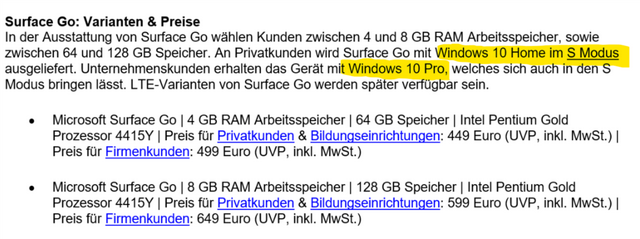
Microsoft liefert Surface Go mit Windows 10 Home oder Windows 10 Pro aus. Bei Privatkunden ist der S-Modus aktiviert, bei Firmenkunden nicht. Im S-Modus lassen sich nur Apps aus dem Store installieren. Die Idee ist gut, die Ausführung aber nicht, da der Store nicht alles abdeckt, was man braucht. Bei mir z.B. Sonos Controller. S ist deshalb kein Erfolgsmodell. Schaltet man den S-Mode ab, kommt man da auch nicht mehr hin.

Interessant sind die unterschiedlichen Preise, die man bei den Geräten noch durch das teurere Pro erklären kann. Aber warum kosten die Tastaturen für Unternehmenskunden 10 Euro mehr? Ich vermute mal, damit für Rabatte Platz ist.

Vorteil Apple: Es gibt nur eine Version von macOS und die kostet für Macs stets das Gleiche: Ist im Preis enthalten. So sollte es Microsoft mit Surface auch machen.

03 Sep 16:54

Dark Patterns: When Companies Use Design to Manipulate You

Justin Pot, How-To Geek, Sept 09, 2018


Icon

The concept of dark patterns is making a bit of a comback this summer as new regulations are inspiring companies to be at their sneakiest. A 'dark pattern' is a characteristic ploy used by websites in order to manipulate you into doing things you don't want to do. This article lists a few of them: confirm-shaming, bait-and-switch, won't-read, and more. There's a dark pattern Twitter Feed with an almost endless supply of examples.

Web: [Direct Link] [This Post]
03 Sep 16:53

Before difficult conversations happen, create your one-pager

Ewan McIntosh, No Tosh, Sept 09, 2018


Icon

I don't know if this is a paid placement, but if it is, it's a very good one. Ewan McIntosh is referring to a tip offered by Canadian astronaut Chris Hadfield's course in MasterClass (note that this link will take you to a subscription wall). I recently heard this advertised on TWIT and looked at it myself; it's basically for-pay courses offered by celebrity spokespeople. The advice is good advice: "If you’re learning something new that can help you in an everyday aspect of your job... create an aide-memoire and then push yourself to revisit it frequently: these are one-pagers." I've done this a lot; I called them 'cheat sheets' and you'll find examples all over the internet. But the best are the ones you create for yourself. Anyhow: my post is not paid placement, and I hope the same is true of Ewan McIntosh

Web: [Direct Link] [This Post]
03 Sep 16:48

Highlights from JupyterCon in New York 2018

Mac Slocum, O'Reilly, Sept 09, 2018


Icon

I flagged all of these articles for inclusion, but in the end decided to wrap them up in this single link. O'Reilly summarizes a number of talks and presentations for the recent Jupyter Notebooks conference. There's a lot of overlap into ed tech, even though the notebooks are currently tools primarily for computer and data scientists. The idea of working software that can be edited and run inside a learning resource has far-reaching implications. Even if you don't read the dozen or so articles, watch "Sea change: What happens when Jupyter becomes pervasive at a university?"

Web: [Direct Link] [This Post]
03 Sep 16:47

The Time for Open and Interoperable Annotation is Now

Alexander Naydenov, Heather Staines, The Scholarly Kitchen, Sept 11, 2018


Icon

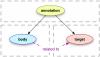
I've resisted covering the recent buzz around the hypothes.is annotation service on the ground that most of it seemed like marketing buzz.I still do. This article introduces annotation as an ancient scholarly trend. I view annotation as an ancient technology trend; I was covering it more than a decade ago - here's Annotea, here's Wikalong, and there's more. Annotation is a hard problem, and the web is littered with failures. Hard because it requires so much cooperation between vendors. Hard because it allows strangers to comment on your web site. Hard because a billion web users can create a deluge of content. But hey - there's a W3C standard for annotations, and the idea just won't go away.

Web: [Direct Link] [This Post]
03 Sep 16:47

How to Incorporate Self-Directed Learning in Your Online Course

Laura Lynch, LearnDash, Sept 11, 2018


Icon

This article is introductory but it's good advice and offers a good starting point for generating your own ideas about creating self-directed learning. The two most important principles, I think, as as follows: "Turn over the keys... one of the hallmarks of self-directed learning is that it requires instructors to turn control of the learning experience over to the learners themselves"; and "Give them a challenge," especially a community challenge. "The more your learners can see fellow learners working toward the same goal, the stronger their motivation will be to keep up." Like I said: pretty basic advice, but useful.

Web: [Direct Link] [This Post]
03 Sep 16:39

Wedding With A View

by Ton Zijlstra

The three of us spent the past days in Tuscany for a very dear friend’s wedding. Was his best man, as well as officiating, at the Dutch language civil ceremony, with 45 family members and friends attending (after the Italian official one).

Stunning views over the olive and grape covered hills. The incredible smell of the abundant rosemary bushes after a bit of rain.

Visited other dear friends both on the way down and the way up, half-way in Switzerland.

20180825_191839

20180822_200411
20180822_200041

03 Sep 16:36

Beautiful and inspiring plinky-plonky conductivity

by Alex Bate

Recently shared by Bare Conductive, Hwan Yun‘s interactive installation, Intuition, uses a Raspberry Pi and Bare Conductive tech to transport you to the calm wonder of Icelandic nature.

Intuition (2017)

Interactive sound installation electric paint on paper Listhús Gallery

Incorporation Bare Conductive

Bare Conductive’s water-based Electric Paint allows users to incorporate safe conductivity into their projects. With the use of a Raspberry Pi 3 and the brand’s Touch Board and Pi Cap, this conductivity can be upgraded to take distance, as well as touch, into consideration.

bare conductive Hwan Yun Raspberry Pi

Intuition

For his installation, Hwan created several patterns on paper using Electric Paint, with six patterns connected to the Touch Board and a further six to the Pi Cap.

This irregularity allows users to experiment, further exploring the sounds of nature that inspired the installation.

bare conductive Hwan Yun Raspberry Pi

The sounds themselves are less actual recordings and more a tribute to the way in which Hwan believes the picturesque beauty of the island communicates within itself.

Getting done with #interactive #soundinstallation for #contemporaryart #exhibition. Using #bareconductive

7 Likes, 1 Comments – HWANYUN (@_hwanyun_) on Instagram: “Getting done with #interactive #soundinstallation for #contemporaryart #exhibition. Using…”

Follow Hwan

If you’d like to see more installations from Hwan Yun, including behind-the-scenes posts from the creation of Intuition, be sure to follow him on Instagram. You can also learn more about his past and future projects on his website.

Bare Conductive

Bare Conductive products are available through many of our Approved Resellers, as well as the Bare Conductive website. As mentioned, their Conductive paint is not only water-based but also non-toxic, making it an ideal addition to any maker cupboard. For more inspiration when using Bare Conductive products, check out their Make page.

Low-tech cardboard robot buggy

And for more Bare Conductive products and Raspberry Pi makery, check out this low-tech Raspberry Pi robot by Clément Didier, previously covered on our blog.

The post Beautiful and inspiring plinky-plonky conductivity appeared first on Raspberry Pi.

03 Sep 16:27

Samsung Galaxy Note 9 Gets the Teardown Treatment

by Rajesh Pandey
With the Galaxy Note 9 now on sale, the iFixit team has gone ahead and posted a detailed teardown of the handset. The teardown makes it pretty clear that accessing the internals of the Note 9 is as tough as its predecessor, the Note 8. Continue reading →