Gestern habe ich geschrieben, dass Apple mehr iPhones als je zuvor unterstützt. Auch ein fünf Jahre altes iPhone 5S bekommt noch sämtliche Software Updates und wird mit iOS 12 sogar schneller. Kurzfristig mag das dazu führen, dass Apple weniger neue iPhones verkauft, weil die alten länger halten. Aber langfristig erzeugt das einfach zufriedene Kunden. Wer alle zwei Jahre ein neues iPhone kauft, der hat zwei Jahre später eins mit sehr gutem Wiederverkaufswert. Besser noch, er kann es in der Familie behalten und weitergeben. Und man sollte sehr ernsthaft darüber nachdenken, auf einen Vertrag umzustellen, in dem die Ratenzahlung für ein neues Gerät alle zwei Jahre nicht versteckt ist.
Es war letztes Jahr schon sehr schwierig zu begründen, warum man ein iPhone 7 durch ein iPhone 8 oder gar ein iPhone X ersetzen sollte. Dieses Jahr wird es nicht wesentlich besser. Ein iPhone Xs ist einem X sehr ähnlich. Ich denke, ein großer Sprung war das Upgrade auf das Doppelkamera-System beim 7 Plus. Auch das 8 Plus hatte mehr drauf als das 8. Und dieser Unterschied besteht beim Xs nicht mehr. Xs und Xs Max haben die gleiche Hardware-Ausstattung, bis auf das größere Display und die größere Batterie.
Es gibt einen wesentlichen Unterschied der neuen Generation, der erst noch richtig herausgearbeitet werden muss. In den Xs ist der Kamerasensor größer. Das führt zu größeren Pixeln, die mehr Licht einsammeln. Und es gibt wesentliche Verbesserung bei der Bildverarbeitung. Eine Kamera nimmt ja heute nicht nur einen Frame auf, sondern eine ganze Reihe. Daraus baut die Software dann ein einziges Bild auf. Das schärfste Bild wird ausgewählt, schatten werden aufgehellt, überbelichtete Stellen korrigiert. Smart HDR nennt Apple das, und das ist den neuen Modellen vorbehalten. Ich spekuliere hier, aber ich erwarte das ein Xr mit nur einer Kamera bessere Bilder produziert als das X mit zweien. Sowas sieht man nicht, wenn man bei hellem Tageslicht draußen fotografiert. Aber wenn das Licht ungünstig ist, dann spielt die Software die erste Geige. Licht von hinten, wenig Licht, viel zu viel Licht. Das sind alles Bedingungen, untern denen die neuen iPhones bessere Bilder produzieren werden. Ein Fotograf meidet diese Bedinungen, aber ein Knipser hält einfach drauf und freut sich wenn "die Kamera gute Bilder macht".
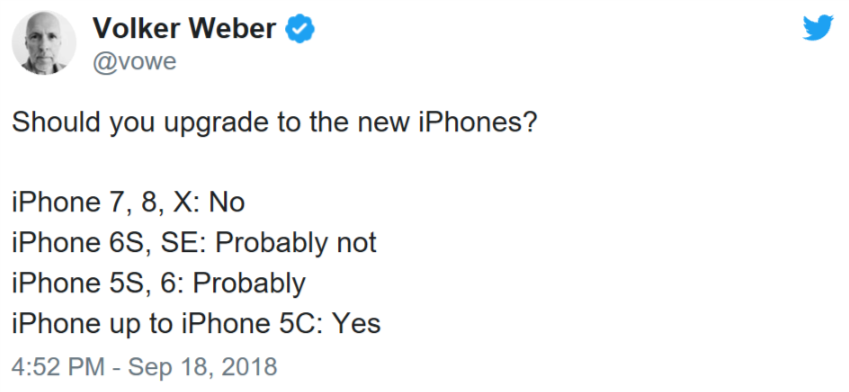
Und das führte mich dann zu dem Tweet da oben. Wer ein iPhone 7 und neuer hat, wird wahrscheinlich nicht viel von den neuen Geräten haben. Selbst ein SE und ein 6S sind noch prima. Beim 5S und 6 würde ich ein Upgrade empfehlen und bei allem, was noch älter ist, sowieso. Wir haben damit zum ersten Mal die Situation, dass der zweijährige Turnus eigentlich zu kurz ist. Beim iPhone reicht mittlerweile ein vierjähriger Turnus aus, ohne dass man viel verpasst. Die iPhones sind erwachsen geworden. Und das finde ich gut.
Wo es aber richtig stürmisch vorangeht, das sind die Apple Watches. Die erste Generation war noch voller Mängel, die in mehreren Softwareupdates behoben wurden. Die zweite Generation war merklich schneller und damit eigentlich die erste, die man empfehlen konnte. Die dritte Generation hat für mich einen riesigen Satz nach vorne getan, weil sie erstmals auch ohne iPhone in Verbindung blieb. Ich kann jedem nur anraten, sich ein LTE-Modell zu kaufen. Das hat mich davon entwöhnt, mein iPhone überall hinzuschleppen.
Und jetzt gibt es noch mal einen großen Sprung mit der Apple Watch 4. Ich sehe das ähnlich wie beim iPhone. Das erste iPhone war wie die erste Watch nur ein Geschmack dessen, was da kommt. iPhone 3G und 3GS brachten jeweils wichtige Verbesserungen. Zunächst 3G und dann einen viel schnelleren Prozessor. Und dann kam das Retina-iPhone 4, mit dem das iPhone erst so richtig abhob. Und genau das passiert dieses Jahr mit der Apple Watch.
Wie wäre es, statt eines neuen iPhones einfach eine dieser Uhren zu kaufen?
The European Parliament has voted for a new copyright directive that changes the rules of the internet. Dozens of prominent internet pioneers and thinkers, including Web inventor Tim-Berners-Lee, issued a statement condemning the directive. The spirit of the letter is on target, but the execution is a muddle. The European Union Directive on Copyright in the … Continued
Every couple of years I'll read through a favorite book of mine, Code: The Hidden Language of Computer Hardware and Software. I originally bought it in 2003, and the first time I read Code I couldn't get through it. A bunch of the concepts were over my head and I just didn't grasp certain ideas. Which made me feel a bit stupid because supposedly I was a professional computer programmer. A self-taught professional programmer, but still a programmer.
But if I'm anything, it's stubborn and determined. So I read it again after having more experience and I got farther this time, understood more, and even had a bunch of aha! moments. Things that I sort of knew and kind of understood at the lower levels of the computer clicked into place.
And then later on I read it again and understood more.
Lately I've been having the itch to read it again, but then I thought maybe I'd try something else. Why not do some real coding around some lower level stuff that I kind of understood, but don't completely get? What about libffi?
I've run across libffi before when working with Mocha, which is a JavaScript to Cocoa bridge that my project Cocoa Script uses. libffi is not as low level as you can get, but it is interesting because you get to deal with things like making room on the stack for returning values from functions. You also get handle a bunch of pointers and deal with memory alignment and other fun things that the compiler usually just handles for you. So as a side project, this might be a fun learning experience.
Plus, JavaScript is an important feature of both Acorn and Retrobatch, and probably even more so in future versions of Retrobatch. If it's going to play a big part of Retrobatch I really want to know it through and through and I want things structured the way my particular brain works.
So that's how FMJS was born. It's very incomplete, but it's a start. In fact, just yesterday it could finally load up Core Image and use a filter.
It's also been educational and interesting. And it helps that it's useful too.
IndieWebCamp Nürnberg 2018 is a gathering for independent web creators of all kinds, from graphic artists, to designers, UX engineers, coders, hackers, to share ideas, actively work on creating for their own personal websites, and build upon each others creations.
I’ll be driving there with Frank Meeuwsen. Had already registered, but this is a test to see if RSVPing from my own blog works (using webmention, and microformat to state that this is a rsvp). If a reference to me shows up at the mentioned URL, then yes, it worked.
And it did work. Here’s a screenshot of the event page.
Having a phone that works just like it does at home when you’re traveling internationally is probably the best thing you can do to reduce stress and maximize your ability to enjoy wherever you are. Being able to use Google Maps and Translate, staying in touch with friends and family at home, having easy access to booking sites like Orbitz and Expedia in the event of delays—these are only a few of the ways Internet access is invaluable while overseas.
But depending on your carrier, using data outside the US can be costly. The dreaded roaming fees alone can cause stress, with every moment you spend online potentially racking up budget-destroying bills.
It doesn’t have to be that way. As someone who’s traveled to 12 different countries in the past year alone, I’ve learned many ways to travel with your current phone cheaply—or at least for cheaper than you might think.
Every major cell phone company has some sort of international roaming option. These range from excellent to extortionate and are your easiest (though not often best) option.
If your carrier is T-Mobile, Sprint, or Google Project Fi, you’re covered with some kind of unlimited data in most countries around the world. It’s hard to beat that for easy. With T-Mobile and Sprint, you get unlimited—but relatively slow—2G data. It’s fast enough for most messaging apps, translation tools, and maps (just be sure to download offline maps on Wi-Fi). But it’s too slow to easily use image-heavy social media like Instagram or Snapchat—check out Options 2 and 3 below for ways to get faster service, if that’s a priority. With Google Project Fi, you get pretty much the same high-speed 4G you have at home.
For the most part, for any of the three aforementioned carriers, you simply enable “roaming data” in your phone’s settings to start using the data. But it’s best to check with your provider to be sure.
If you have AT&T or Verizon (PDF), make sure roaming and mobile data are turned off. The pay-per-use international roaming rates for both companies are exorbitant. These companies offer temporary data packs, but they’re also expensive. We’ll cover those in the next section.
Fortunately, if you’re on AT&T or Verizon and don’t want to pay their rates, it doesn’t mean you’re cut off from the Internet entirely while you travel. Public Wi-Fi is everywhere, and any data you use while connected to it doesn’t count as roaming. Depending on where you’re headed, you’ll likely find free Wi-Fi in restaurants, tourist spots, and even some public parks and metro stations. And of course, nearly every hotel and hostel will have Wi-Fi. However, the more expensive the accommodation, the more likely it is that you’ll have to pay extra for Internet access.
If you’re on public Wi-Fi, it’s best not to access banking or other sensitive info without a VPN, just to be safe.
Without question, these are all expensive, albeit less so than traditional roaming fees. If you can’t unlock your phone (it’s new, say), data passes might be your only way to use your phone while traveling without bankrupting yourself. For T-Mobile and Sprint, buying a data pass—which you can do whenever you want before you leave or while you’re traveling—is a way to temporarily relieve the annoyance of slow 2G data. And some monthly plans, such as Verizon’s Above Unlimited, include a few free data passes each billing period.
As for Project Fi, it doesn’t sell passes, as you’re already getting 4G data, wherever it’s available, at the same rate you’re paying for data at home.
For most non-Fi people, a far better option to data passes is getting a local SIM card.
Option 3: Get a local SIM card
This is an option that’s common everywhere except in the United States. A SIM, or subscriber identity module, is a removable chip roughly the size of a microSD card. It lets your current phone work in another country as if you bought the phone there: local number, cheap and fast data, and so on.
When you land in a new country, just go to a local telecom store (the equivalent to Verizon or AT&T, in other words), and buy a temporary SIM. It’s that easy. These are often called “pay-as-you-go” SIMs, but some areas have special SIM offers for travelers. Either way, they’re usually good for a month and include more data than you’ll probably use. The store will likely help you install it too, which takes seconds. After a phone restart and a few minutes more, your phone works just as if you bought it new in that country. When your trip is over and you’re heading home, put your old SIM back in and your phone returns to normal (make sure you’ve disabled data-roaming till you’re back in the US, though).
I’ve done this dozens of times in countries all over the world. It takes maybe half an hour out of my first day in the country, and makes traveling much easier; my phone works just as it does at home. The only two drawbacks: you won’t be using your “home” number while you’re traveling, and you’ll be without service from the time you arrive in the country till you can get to a telecom store. (This is where a $5 to $10 data day pass might come in handy, if you’re worried about getting into town or finding your lodgings without phone service.)
You can also buy SIMs at the airport and many tourist/souvenir shops, but these are often more expensive. I stick with SIMs from the main telecoms in a country, assuming they’ll offer the best coverage and service. For example, if there’s an issue with my Vodafone SIM in the UK, I can go into countless Vodafone stores everywhere. Not so much with “Joe’s Travel SIM XXXtrafast” from a random travel stand. Wikipedia lists the main providers in Europe, Asia/Pacific, Africa and the Middle East, and the Americas, so you can have an idea of what to look for when you arrive.
There are also “travel SIMs” that you can buy ahead of time that claim to work everywhere in the world, but I’ve researched these extensively, and all are more expensive than buying a SIM at your destination. Though prices vary, most local SIMs cost $10 to $20 and are good for a month with several gigs of data. I’ve paid as much as $35 and as little as $6.
The trick with this option is that your phone needs to be unlocked. Each company has different requirements to do this. Generally, the phone needs to have been on the company’s network for a certain length of time, and you need to have paid the phone off (or fulfilled your contract, if you still have one). To find out more on how to do this, check out the Unlocking your phone section of our “Best Cell Phone Plan for Frequent International Travel” guide.
One drawback for some people is if someone calls your “real” number, it will just go to voicemail, and you won’t see any texts from them till you put your old, home-carrier SIM back in your phone and access a cell network or, depending on your carrier, Wi-Fi. Your phone is essentially a different phone. You can give friends/family your “new” temporary number for emergencies, or ask them to use a data-based messaging service like WhatsApp or Facebook Messenger. You might also put your temporary number on your “real” outgoing voicemail message.
Option 4: Rent a hotspot
You rent a small device, perhaps slightly larger than a phone, that creates a little zone of Wi-Fi for you and your family. Connect all of your devices to it, then turn it off when you don’t need it.
The main advantage to this option is if you’re traveling with others, you and all of your gear can tether to the single hotspot instead of you all having to buy travel data. Of course, any member of the group who leaves your little Wi-Fi bubble to explore solo will have to give up Internet access while doing so.
This is something to look for at an airport, or research before you go, because you have to return the physical device. That means either dropping it off where you got it, or mailing it back when you get home.
This is not something I’ve tried, nor does it seem very popular, but it could work for you if the other options here aren’t exactly what you’re looking for. I’ve seen prices in the under-$10-a-day range, which is expensive compared with other options, but for a family traveling for two weeks somewhere, the cost of getting local SIMs for everyone may rival the cost of renting a hotspot.
Also keep in mind that most phones can create their own Wi-Fi hotspots, so if you get a local SIM card, you can tether a tablet, a computer, or another phone to yours and share your Internet without having to pay extra for a physical hotspot device. Some SIMs don’t allow this, though, so best to check before you buy.
Option 5: Use an old phone (or get a cheap one) instead
If you’re the type of person who holds on to old phones, dust off the newest of them and it could be your key to easy international travel. As long as it’s not too old (under four years is a safe bet), and the battery can still hold a charge, and you’re able to update its software via Wi-Fi, you should be able to use it when you travel by buying local SIM cards. Check with whatever cell phone company you used the phone with to make sure that the phone is unlocked.
Oh, and if you go this route, keep in mind that some providers will unlock only one phone per account in any 12-month period. I found this out the hard way.
Once it’s unlocked (if it wasn’t already), follow Option 3 above. You’ll still have to get a new phone number with every SIM card, but otherwise you’ll be using your familiar old handset with all of your contacts and apps just as you left them.
If you don’t have a usable old phone, you could instead buy a new, but inexpensive and unlocked, phone. For example, our pick for a budget Android phone is great for the money, takes good pictures, can create a Wi-Fi hotspot, and costs $160. After three or four trips using $20 local SIMs instead of month-long data passes, you’ll have made back your investment.
The Sun’s previous civic affairs reporter Jeff Lee (still missing your columns, Jeff) weighed in with a comment on this story: pre-campaigning attack ads under scrutiny. Turns out he agrees (forcefully) with Ken Ohrn’s take on Hector Bremner’s dis-ingenuousness.
It is specious in the extreme for politicians and their election teams to say they don’t know who has undertaken expensive advertising on their behalf. For Bremner to say he did not know means he’s getting bad advice. Transparency is critical if you expect people to place trust in you and vote for you.
Having covered Vancouver politics for better than two decades (and now retired from it) I am always amazed at how people wanting the keys to City Hall make such dumb mistakes.
“There was something about Vancouver’s abomination that stood out. Maybe it was the sad guy in the white shirt. Maybe it was the ugly jersey barrier. Maybe it was just the desolation,” wrote Gersh Kuntzman of Streetsblog.
The Pitt Meadows bus stop nominated as the “sorriest” in North America has won that dubious distinction. In a contest of online voting, the stop along the Lougheed Highway’s westbound lane, just before the Pitt River Bridge, got the most “support.”
How long will it take for shame to have an effect? Or, since this location is the property of BC’s Ministry of Transportation and Infrastructure and this is about transit …
UBC’s Dropbike is in operation at the Point Grey campus. You can see the bright orange and white bikes rolling by here and there.
It’s a newer generation of bike-share tech that doesn’t require a fixed dock. The security, electronics and communications are self-contained. The bikes are meant to be dropped at existing racks, or at specified drop zones around the campus.
The system is now very small at 150 bikes, as befits it’s startup mode. It should eventually get much larger, since it’s serving a potential user group of over 40,000 people travelling around the 4 sq. km. Point Grey campus. Apparently, UBC has no financial stake in Dropbike, but is participating closely in managing the roll-out to ensure it becomes an attractive and orderly system. No masses of unused bikes will flood Point Grey, as we have seen in some cities in China. Not going to happen.
Rides cost $1 for 60 minutes. Bring your own helmet.
The bike’s design is familiar. Step-through frame, adjustable seat, 3-speed hub gears, rear hub brake, solid puncture-proof tires, on-line communications (probably via GPRS, a sub-set of cell network data services). Some things are different from, say, Mobi — on-board GPS, solar panels in both front carrier and rear light, front light rim generator, on-board lock, on-board flimsy rack-attach cable and QR code unlock electronics.
A customer uses Dropbike’s smartphone app to find a bike, and unlock it by scanning the bike’s onboard QR code panel. The app transmits the code to the mothership, which checks the rider’s account status (credit-card based) and unlocks the bike’s beefy rear wheel lock with a distinctive “clank”. Away you go.
You can check Dropbike’s cost and related commercial details HERE. Via the GPS capability, you’ll get dinged if you take the bike outside of the operational area, or commit other commercial or operational sins. There are consequences, my friend.
A few of Dropbike’s other locations are: Kelowna, U Manitoba, Westmount (Montreal), Kingston (Ontario).
When Cynthia Shanan from Clean Technica decided it was time for her to get back on a bike, she wanted to go electric. The Blix Aveny Step-Through provided her with a “comfortable and cute” step-through frame. While it may have been the end of her day, Cynthia said that the boost of the Aveny helped her “go further and further and further” since she could “sit back and cruise” without any pedaling assist!” Notice her emphasis on the word “any.”
Cynthia enjoyed her ride so much that she “seriously considered shedding [her] Nissan Leaf for an electric bike!"
Electric bikes, such as the Blix Aveny, produce a much lighter carbon footprint making them a great alternative to all cars, even electric ones. More importantly, Cynthia found the most joy in her newfound liberation and ability to explore the outdoors on her Aveny.
With electric bikes we can “get out and ride in spite of limitations” meaning more freedom, exercise, and time spent outdoors with family and friends. Cynthia suggests our Blix Aveny because of its reasonable price point, safety, and joy it brings to riders!
The dichotomy here is dramatically overstated, and yet there are these two tensions, characterized by these two technologies, that illustrate a tension between competing technological approaches. On the one hand we have AI, characterized by big data and machine learning, which conjures up the sceptre of the surveillance state. On the other hand we have crypto technologies, including Bitcoin and anonymity and secret messages, that conjures up the sceptre of the libertarian ideal. Obviously neither end state is desirable, but these are both presented to us as though there could be no compromise, no dilution. I don't believe that's true, of course, and I think there are other technologies at work as well. This is a short article and long (2 hour) video of the Peter Thiel interview.
Firebox announces anouther step closer to the immersive web (which isn't what we will all use all the time, but which will make for a really interesting experience some of the time). And they're beginning to comprehend some of the finer points of the new medium. For example, "the ability to search the web using your voice. Text input is still a chore for virtual reality, and this is a great first step towards solving that. With Firefox Reality you can choose to search using the microphone in your headset." In addition to clients announced here there are dev resources and a call for feedback.
The Daily Nous (which despite appearances employs no fewer than 13 separate CSS stylesheets) discusses an essay from psychologist Lee Ross describing "the illusion of personal objectivity." This is the belief we tend to have that our own beliefs were formed objectively, and that therefore other people would believe what we do if we explained it to them, and that if they persist in not believing they are being irrational and unreasonable. And it's not easy to see the matter from the other person's perspective, as illustrated by the difficulty people feel when in an exercise that "obliges those on the two sides to try to present the other side’s position—and to keep trying until those on the other side agree that they are getting it right."
Apple is following a clear and defined product strategy. Last week, Apple provided the latest look at this strategy by unveiling new iPhones and a redesigned Apple Watch. These products represent clues that help paint a picture of where Apple is headed.
Mission Statement
Tim Cook kicked off Apple’s most recent product event at Steve Jobs Theater with an overview of the company’s mission statement. Here’s Cook:
“Apple was founded to make the computer more personal. Of course first with the Apple II, and then later with the Mac. Over the years, we’ve taken this mission further than anyone could have imagined. We’ve created several categories of technology that have had a profound impact on people’s lives - from the iPod to the iPhone to the iPad to the Apple Watch…
Of course we aim to put the customer at the center of everything that we do. That’s why iOS is not just the world’s most advanced mobile operating system. It’s the most personal. We’re about to hit a major milestone. We are about to ship our two billionth iOS device. This is astonishing. iOS has changed the way we live - from the way we learn, to the way we work. To how we’re entertained, to how we shop, order our food, get our transportation, and stay in touch with one another. And of course, how we capture the moments of our lives and share them with those we love. It’s amazing how our mission started with personalizing technology for the desktop to now seeing the many ways that we’ve made it more personal in so many aspects of our lives.
So it’s only fitting that today, we’re going to tell you about two of our most personal products - the ones that are with you everywhere that you go - and how we are going to take them even further.”
Along with announcing three iPhone X successors, Apple unveiled the most significant year-over-year change to Apple Watch since its unveiling in 2014.
My full review of Apple’s event is available for members here (major themes and takeaways) and here (full notes).
iPhone XS / XR
In order to push the iPhone X experience forward, Apple focused on three items:
Larger screens (A 6.5-inch screen with the iPhone XS Max and s 6.1-inch screen with the XR.)
Smarter brains (The A12 Bionic gives Apple an even larger lead over the competition.)
Better eyes (The dual-camera system is giving iPhone the ability to see the surrounding world with a more intelligent perspective.)
The following image does the best job at describing the current state of the iPhone business:
There is a reason Apple spent nearly 10% of the presentation talking about the A12 Bionic chip. Apple has spent the past decade working to control the core technologies powering its devices. The end result is an Apple chip that is providing the company a significant competitive advantage in the marketplace. With each new iPhone release, Apple’s custom silicon is responsible for an increasing portion of the iPhone experience. Apple didn’t just announce three new iPhones last week. Instead, thanks to the A12 Bionic and increasingly capable cameras, Apple announced three AR navigators serving as laptop and desktop alternatives.
Apple Watch Series 4
While the new iPhones were impressive, Apple Watch Series 4 stole the show. Two slides from the Apple Watch portion of the presentation stood out. The first of these covers improved optical heart sensor on the back of Apple Watch. The second shows Jeff Williams demonstrating some findings from Apple's multi-year research into falls.
Both slides depict Apple Watch as a proactive digital assistant. The device is capable of monitoring everything from our heart rhythm to whether we have fallen and need help. By being worn on the body, Apple Watch is able to handle tasks that will never be given to iPhone. When combined with the independence found with cellular, Apple Watch contains an incredibly powerful value proposition.
Apple Product Theory
The iPhone and Apple Watch represent the two most personal devices in Apple’s product line. While it may seem like these products lack any obvious connection with their larger siblings, there is a single philosophy connecting each of Apple’s major product categories. Introduced in 2015, my Grand Unified Theory of Apple Products is worth revisiting given the significant changes that have taken place within Apple’s product line.
Apple’s major product categories are interconnected by the roles they play in making technology more personal. Each product is given a goal that ends up describing its design attributes.
Mac desktops. Designed to be powerful and capable enough to push the boundaries of a computer.
Mac portables. Designed to handle tasks that may have traditionally went to a desktop.
iPad. Designed to serve as an alternative to laptops and desktops.
iPhone. Designed to be powerful enough to reduce the need for iPad and Mac.
Apple Watch. Designed to handle an increasing number of tasks so that less time has to be given to iPhone and iPad.
Apple’s product strategy is based not on coming up with replacements for existing products, but on using personal technology to come up with alternatives to more powerful computers. By relying on new form factors in addition to new user inputs and outputs, Apple has seen much success in coming up with products that contain less in the way of barriers between the user and technology. Intuitiveness is used to harness technology’s potential. Apple’s goal with iPhone has been to give the product enough functionality to serve as a Mac and iPad alternative. Meanwhile, Apple’s goal with Apple Watch is to give the product enough functionality to reduce the need for an iPhone.
The Grand Theory also does a good job of explaining why Apple uses a hands-off approach when it comes to telling consumers which product(s) fit best in their lives. While some think this has been a strategic error on Apple’s part, ultimately management wants customers to determine the degree of personal technology that makes sense for their needs. For some customers, a Mac may be required. For others, an iPhone is the only computer needed. Based on the most recent Mac and iPad Pro ad campaigns, Apple management has become comfortable in allowing each product category to stand on its own and not necessarily lift up one category at the expense of the other.
Connecting the Dots
Based on the most recent iPhone and Apple Watch updates, Apple’s longer-term ambition has become crystal clear. This is a company that believes Apple Watch will serve as a viable alternative to iPhone. As a result, the environment will become more hospitable for new form factors capable of making technology even more personal than is possible with Watch. As shown below, the Grand Unified Theory will likely expand to include a new product category beneath Apple Watch: Apple Glasses.
Apple Glasses fit perfectly within the theory as a product category given the job of handling tasks currently given to Apple Watch and iPhone. This would be accomplished by new user inputs (such as glances and voice) and outputs. The work Apple is doing with its custom silicon, along with miniaturization techniques it is using on Apple Watch will come together to make a pair of lightweight smart glasses possible. With the iPhone continuing to gain new capabilities as an AR navigator and the Watch becoming a new kind of proactive digital assistant, there will be room for a simpler device. This device will be designed to break down technology even further to provide an enhanced view of the world around us. There won’t be too many things as intuitive as a pair of smart glasses.
Consequences
One of the major consequences of the Grand Theory is shown below. Apple’s various product categories have dramatically different user base sizes based on the amount of personal technology found with each product. While the Mac has a combined user base of around 100M users, the iPad has almost three times as large of a user base. Meanwhile, the iPhone will soon exceed a user base that is nine times as large as that of Mac.
For more information on the methodology and calculations used to derive these estimates, visit here (iPhone), here (iPad), and here (Apple Watch).
Apple Watch’s user base has grown to 40M in just three years. For context, the iPhone user base stood at 55M after three years. Considering that an Apple Watch still requires an iPhone, the 40M user base figure is that much more remarkable.
As shown below, my expectation is that Apple Watch and Apple Glasses will one day be used by more people than will the iPhone. Such a radical idea may seem like fantasy, especially given how pivotal of a role the iPhone is playing in our lives. However, the appeal found with intuitive devices capable of making technology more personal will prove too powerful.
As new form factors allow Apple to harness technology’s potential, the scope to which those products are able to connect with humans intensifies. Multi-touch was a leading factor in iPhone having a user base that is nine times larger than that of Mac. A proactive digital assistant on the wrist will give Apple Watch a user base that eventually exceeds that of iPhone. The key to my projection is the eventual decoupling of Apple Watch from iPhone. This is an inevitable development. The only question is found with timing.
When it comes to glasses, a product that will be tasked with making technology more personal than iPhone or Watch, providing enhanced vision will be one of the more attractive value propositions in existence. While a user base of 900M people may seem impossible for Apple Watch or Apple Glasses to surpass, there are 7.5B people on Earth. Everyone can benefit from a device that delivers an enhanced view of the world around us.
The Current Era
With smarter brains and better eyes, the iPhone XS and XR will continue the trend of iPhones gaining functionality. It is not a surprise that we see iPhone pricing begin to move higher as a result. However, despite these advancements, the Apple Watch Series 4 was the star of the show at Apple’s recent product event. While this may have come as a surprise to some observers, there have been signs that this day would come. The Watch’s ability to proactively monitor our life is game changing.
When we look back at the late 2010s for Apple, we will likely refer to this as the early stages of the Apple Watch and Apple Glasses era. Apple’s multi-decade quest to make technology more personal is based on using intuitiveness to knock down the barriers that exist between humans and technology. One way of accomplishing this is push the boundaries found with today’s most personal products. The faster Apple runs with iPhone and Apple Watch, the closer the company will get to announcing its most personal product yet: glasses.
Receive my analysis and perspective on Apple throughout the week via exclusive daily updates (2-3 stories per day, 10-12 stories per week). Available to Above Avalon members. To sign up and for more information on memberships, visit the membership page.
Seven or so years ago, a famous VC penned a manifesto of sorts. Writing at a time the world was still skeptical of the dominance to which his industry has now ascended (to think, such a time existed, and so few years ago!), Marc Andreessen had a message for the doubters, the naysayers, and the Wall St. analysts who were (credibly!) claiming that his investments amounted to not much more than a bubble:
Seven years later, no one can dispute Andreessen’s prescience. The man was right: If you had purchased a basket of his favorite stocks back then – he name-checked Apple, Amazon, and Facebook directly – you’d be up at least 10X, if not more. Software, it seems, has indeed eaten the world, and those smart (and rich) enough to put money into technology, as Andreessen has been, have done very, very well for themselves.
Of course, not many people have in fact been that smart (or that rich). As of last year, ten percent of investors own 84 percent of the stock market, and that ratio only gets worse as time goes by. Most of our society simply isn’t benefiting from this trend of software eating the world. In fact, most of them live in the very world that software ate.
***
We – us, all of us – have turned the world to data. Some of us – the founders of software companies, the funders of those founders, the cheerleaders who run the capital markets – took that data and used it to change the world. Along the way, the world didn’t disappear like some unfortunate animal distending a python’s midsection. No, the world remains.
Who are we now that we’ve been eaten? What have we become?
These are questions, it turns out, that almost none of technology’s leadership have deeply pondered. It certainly never came up in Andreessen’s manifesto. And it’s manifestly evident in the behavior of our most treasured technology founders. They are puzzled by these newfound demands from United States senators and European socialists. Don’t they understand that regulation is damage to be routed around?
***
But the world is not just software. The world is physics, it’s crying babies and shit on the sidewalk, it’s opioids and ecstasy, it’s car crashes and Senate hearings, lovers and philosophers, lost opportunities and spinning planets around untold stars. The world is still real. Software hasn’t eaten it as much as bound it in a spell, temporarily I hope, while we figure out what comes next.
Software – data, code, algorithms, processing – software has dressed the world in new infrastructure. But this is a conversation, not a process of digestion. It is a conversation between the physical and the digital, a synthesis we must master if we are to avoid terrible fates, and continue to embrace fantastic ones.
What is the easiest way to make an existing functions more functional? It’s quite a simple technique and you can apply it today.
Transcript
Eric Normand: What is the easiest way to get started in functional programming and to make your existing code just a little bit more functional today?
Hi, my name is Eric Normand. These are my thoughts on functional programming. I think the easiest refactoring you can do right now is the following. Find a function that reads in global mutable variables.
You probably have a few and it’s being called somewhere. Make sure that this function doesn’t do any other actions. Remember, reading a global mutable variable is an action because it depends on when you run it, you’re going to get a different answer depending on when you read that value because it can change over time.
What you want to do is take that function. Make sure there’s no other actions in it besides reading global variables. Go through and find each time you read a global variable. Make that an argument to your function. Instead of reading from the global variable, you’re just going to read from the argument. You can even use the same name as the global variable. That’s fine.
You do that for all your reads of global variables, then you have to go to the functions that call that one. Instead of calling it with the old arguments, they are going to read the value from the global variables and pass those in. You’ve moved the responsibility of reading the global variables up one level of the calls. What you had before was an action that called an action.
You had some function that called this function that you just changed. Both of those were actions. The function that you just added all this arguments to, that one was an action because it read from global mutable state. The function that called that one was an action, because it called that one. Now, you’ve moved all the actions out of this function. Now, it’s a calculation.
Now, it is a pure function from arguments to return value. Therefore, you’ve made your total code base incrementally a little bit more functional. You have more code that’s in a calculation and less in actions. That means this function is now more testable because you can call it as many times as you want. You don’t have to setup these global variables in their environment.
Often, one of the reasons why these kinds of functions are so hard to test is because we don’t realize all the possible states that could exist in those global variables. There’s always code that could write to that anytime. We just don’t think of all the values. Now, you can test it a lot more thoroughly because it’s all self-contained.
I hope that helps you make your code a little bit more functional. You can always get in touch with me if you have any questions or any suggestions. I’m on Twitter @ericnormand. You can also email me anytime. I love getting into discussions. My email address is eric@lispcast.com. Thank you very much.
In the millions of ties on Facebook that connect relatives, co-workers, classmates and friends, Americans are far more likely to know people nearby than in distant communities that share their politics or mirror their demographics. The dominant picture in data analyzed by economists at Facebook, Harvard, Princeton and New York University is not that like-minded places are linked; rather, people in counties close to one another are.
There are two main parts to the piece. The first one is a county map that you can mouse over to see the likelihood of friendship with those in other counties. The second part imagines a country split up into regions based on Facebook connections. Be sure to catch them both.
So you know how it is, you are trying to write an internal paper about something (in this case lecture capture) and as part of your research (aka distraction tactics) you put out a message on twitter just to see if anyone is there/ cares/ can actually help you- and then you get slightly taken overwhelmed with the response.
In response to to the this tweet
to lecture capture or not to lecture capture – what do you think?
Here’s a thought: each lecturer asks students to draw up agreement about when they want it, why, and how they intend to use it. Then outsource actual recording and sharing of videos to students themselves, giving them access to data usage & review. Make it part of the curriculum.
I also think that if I were at an institution “capturing” my teaching I’d want damn sure for it to be in writing somewhere how long they kept those recordings for (until end of term no later) and what restrictions on use were.
(For a very relevant and thought provoking exploration of that very issue, I highly recommend watching Melissa Highton’s recent presentation at this year’s ALT conference )
And the success stories
@HullYorkMed Have had it for 3 years now & it runs without a hitch & it is no intrusion to teaching. Students valued it so much they lobbied for it to be rolled out across all @UniOfHull. So now we have @Panopto & it’s great! @LTE_Hullpic.twitter.com/Rq68AHBA13
To quote from Tressie McMillian Cottom’s keynote (again from the ALT conference) the devil is always in the context.
My context is this. My institution does not have a lecture capture system, but it seems everyone else does, so our senior management are asking about it. I have to prepare a discussion paper for our Senate. So whilst I see the benefits that lecture capture can bring – there are many – I am also acutely aware of the costs (not just hardware/software) but the staff resources, and the wider CPD issues for both staff and students. At at time when we are not awash with money for anything, I have to ask is it worth spending a substantial amount of money on lecture capture? Or should we not just do something because everyone else, but instead focus our resources and efforts around changing our expectations for both staff and students on the role of not lecture capture but learning capture – those key suggests/points of knowledge transfer that really make the difference to understanding. And in doing so, take another look at the tech we already have and see how we can extend its use.
As part of my research I came across this preprint of a review of the impact of lecture capture. In terms the value students get from lecture capture it states:
“the literature clearly indicates that for the majority of students the greatest value of recordings is as a learning resource. They use recordings to revisit and clarify complex confusing topics”
Of course there are benefits for students with disabilities, non native speakers etc, in being able to access lecture recordings, but again do they need the whole lecture? There were more responses like this
Fair point but I converted my 2 hr chemistry lectures into 20 min videos (converted narrated PPT) and uploaded to YouTube in about 30 mins each. Not BBC standard but probably better than LC
Which is more of what I think we need to be doing. In turn investing in cpd to help support staff develop relevant digital capabilities. There’s then of course the need to provide time from staff to actually think about the wider issues around lecture/learning capture and not just a tech solution, that provides resource for students, but with a bit more thought could provide a better, accessible resource for students. This would provide a way to refocus our institutional approach to more active learning.
For me the question just now is not to lecture capture or not to lecture capture, it is much deeper. In fact I don’t really think it is one question. It’s a number of them around what, who, how and when we should be investing in people, learning spaces (both physical and digital) and tech to improve and advance learning and teaching.
We are happy to let you know that Friday, September 28th, we are organizing Firefox 63 Beta 10 Testday. We’ll be focusing our testing on: Firefox Customize, Font UI, Tracking protection.
Check out the detailed instructions via this etherpad.
No previous testing experience is required, so feel free to join us on #qa IRC channel where our moderators will offer you guidance and answer your questions.
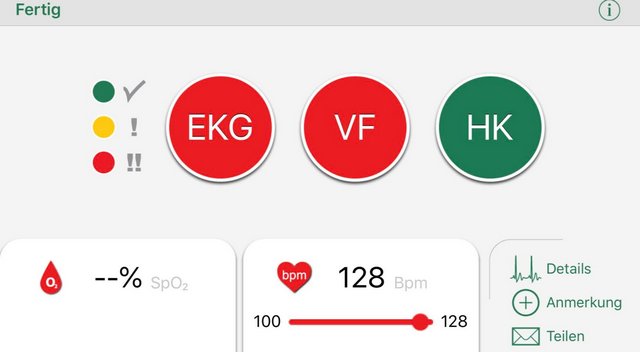
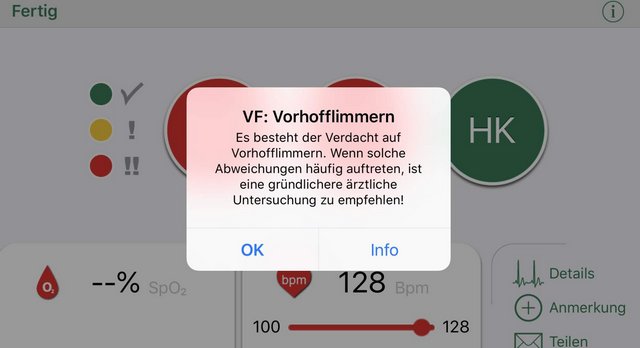
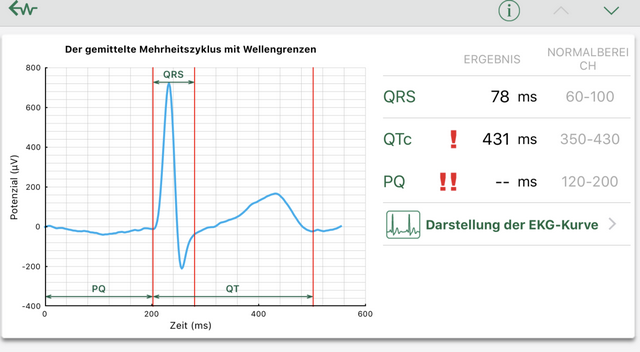
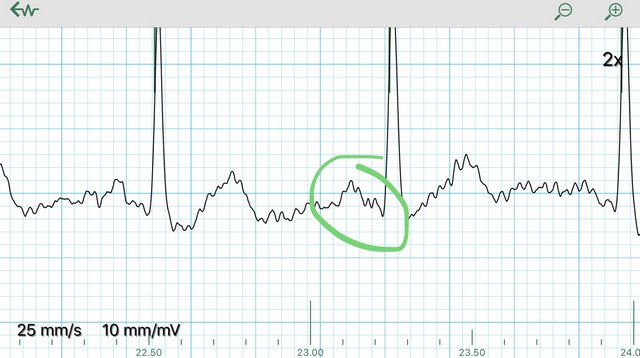
Einer meiner Freunde, selbst Mediziner, hat Probleme mit Vorhofflimmern. Und er weiß auch ohne EKG, wann das auftritt. Es wird stets begleitet von einem sehr hohen Puls ohne körperliche Belastung. Auch davor warnt die Apple Watch bereits seit watchOS 4. Heute haben wir uns das Herz in so einer Phase mal mit dem WIWE angeschaut. Die App bildet einen Mittelwert aller Zyklen binnen sechzig Sekunden und kann PQ nicht ermitteln. Das ist die Welle vor der Kontraktion der Hauptkammer, also genau der Moment, in dem die Vorkammer arbeiten sollte:
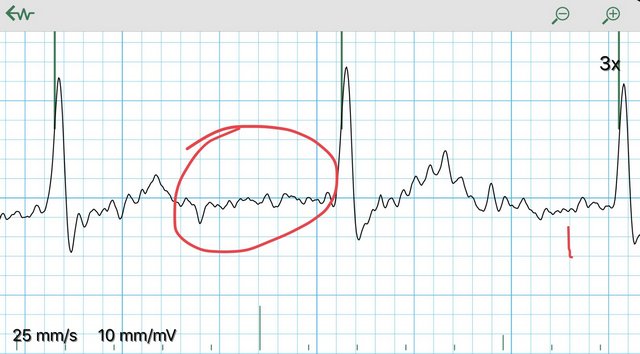
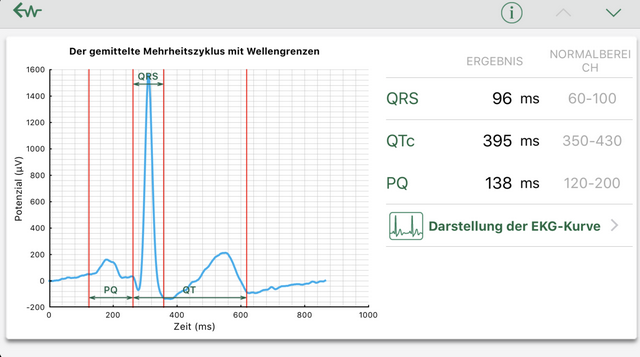
Schaut man sich den EKG-Streifen an, dann sieht man tatsächlich keine signifikante Welle vor dem großen Aussschlag. Zum Vergleich ein gesundes Herz:
Man mag so ein Einkanal-EKG als Spielzeug ansehen. Dabei erkennt es deutlich, dass hier ein Problem vorliegt, dem man nachgehen kann. Das kann das WIWE heute und die Apple Watch hoffentlich bald.
GUIDED TOURS is a look at a historical or cultural site undertaken on Street View, led by a knowledgeable escort. Tours can last the length of one long exposure or block; others can take in multiple sites and last for decades. If you’d like to nominate a place, please walk us through it.
In the 1990s, when I lived in Tucson, I used to make the 400-mile drive to Las Vegas fairly regularly to visit my family. Up I-10 to I-17, then across the Carefree Highway to U.S. 93, a winding, once mostly two-lane road that went through the jagged cliffs and parched arroyos of an especially barren reach of the Sonoran Desert. I usually made this drive alone, and I would dread the segment from Wickenburg to Kingman. There were no guardrails for miles, as I remember it, and there was lots of time to daydream about going over the edge.
On this stretch of what was then mostly two-lane road, radio reception would fade to static and tractor-trailers would pile up at the passes and slow speeds to a crawl. Since then the populations of Phoenix and Las Vegas both nearly doubled, and the road has since been widened to four lanes to accommodate the increased commerce — a project that appears to have taken the better part of a decade and cost more than a quarter billion dollars — but you can still see here how the Street View camera car gets stuck behind an oil tanker for a while, until it breezes past it here.
Back when I had to drive U.S. 93, though, that pass would have been a white-knuckle maneuver: gas pedal floored, my four-cylinder Toyota Tercel lurching along in the opposing-traffic lane, me wondering whether something was on its way over the horizon to kill me. Whenever I had to make these daredevil passes, I would think about the white crosses that lined that road in the right-of-way, marking the traffic fatalities. According to this report, those crosses were once placed by the state highway patrol as grim warnings, a practice since discontinued. I clicked through Street View looking for examples, but I couldn’t find any, not at any of the curves or canyons or crossing where I thought I remembered them. They may have been removed during the road construction. In 2016, the Arizona Department of Transportation began removing roadside memorials erected by the bereaved. “The point is, we want them to go in and really not be visited,” an ADOT spokesman told the Arizona Capitol Times. “They’re not to be having people pull over and tend them constantly.”
Remembrance, it appears, can be hazardous. ADOT has since modified its policy to removing only those that aren’t up to its code, which is geared toward making memorials as maintenance-free as possible and, somewhat ironically, less likely to distract drivers. Remember, but don’t notice.
During those drives, it was easy to lose perspective on how far I had left to go, so it was always a relief to reach Nothing. Then I knew I was getting somewhere.
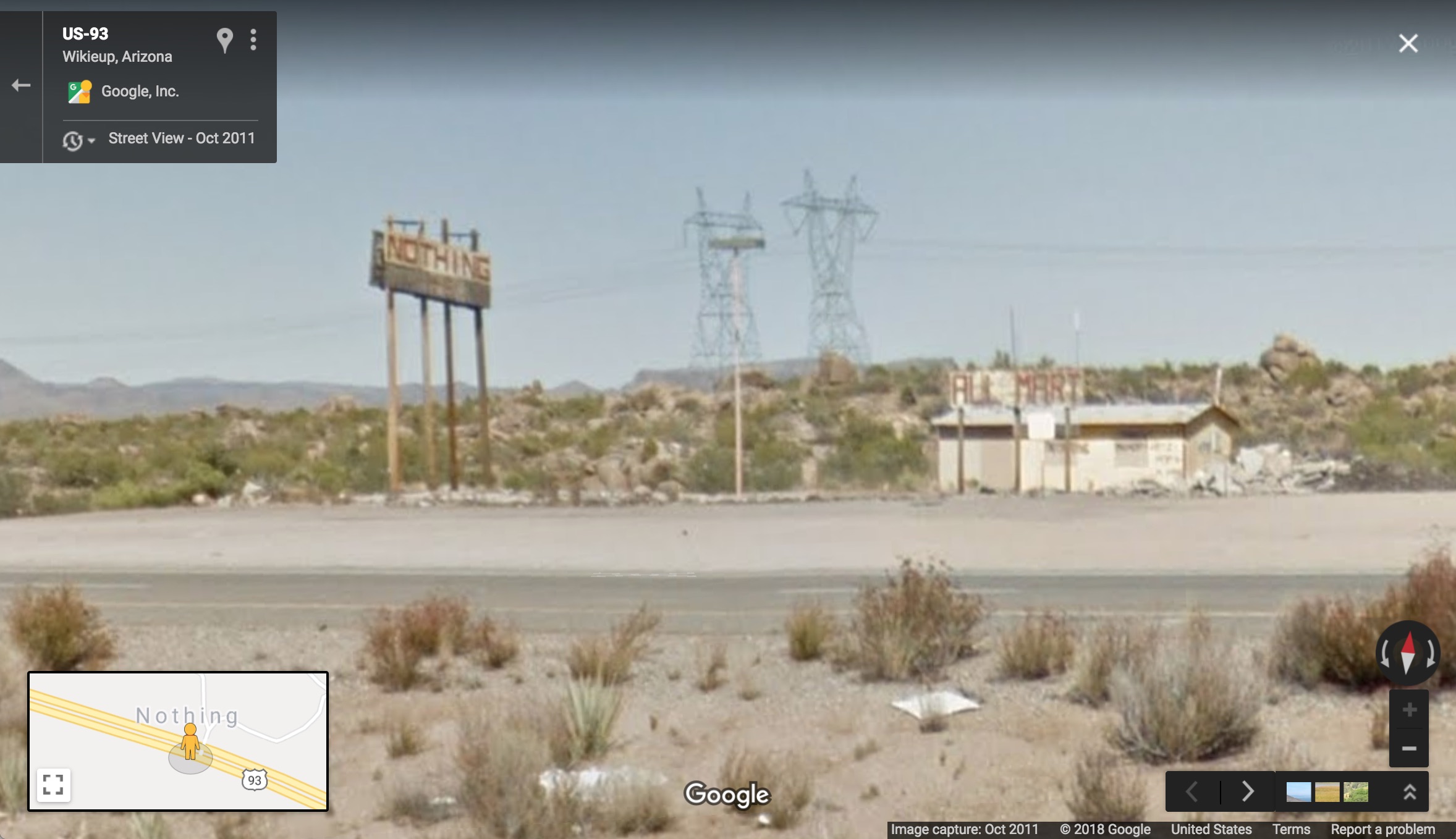
Nothing was mostly dilapidated outpost on the loneliest part of U.S. 93 in Arizona, with dramatically overpriced gas and washrooms for customers only and possibly free ice water, like Wall Drug. It was the only turnout for a while with more than a emergency call box and a steel-drum waste can. It had a rock and gem shop and a contextually comic sign that read ALL MART.
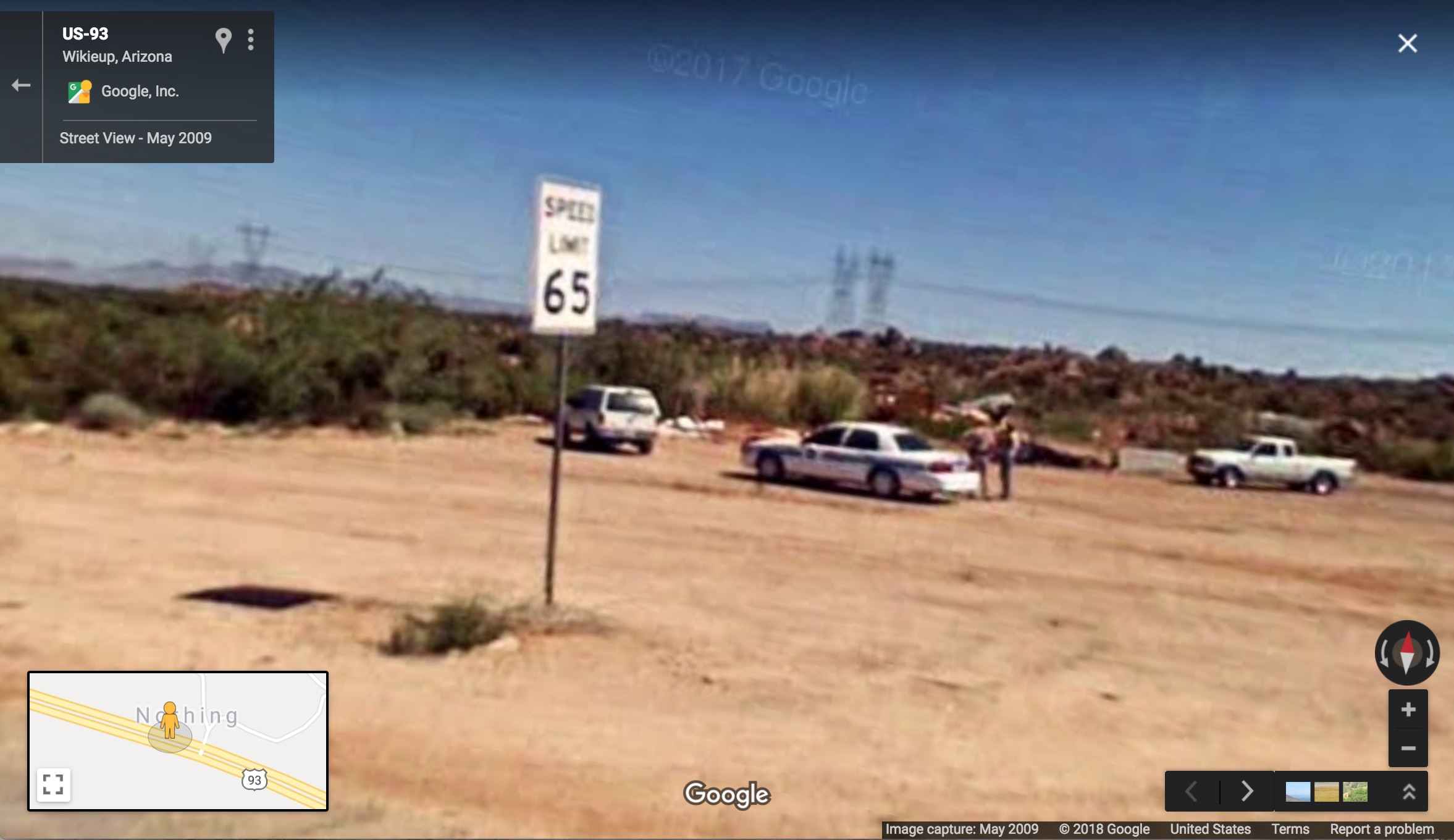
When I would drive by, it usually looked fringy and forlorn, less a rest stop than a dusty catch basin for desert refuse — broken-down cars and faded hand-painted signs amid the scrub. Currently it is marked on Google Maps as Isaiah’s Place. From the overhead perspective you can see what are possibly solar panels where the rock shop was. Zoom all the way in on the Street View image from 2009and you can see proof that the police stop at Nothing.
I never stopped at Nothing myself — I usually got my emergency gas at the Chevron in Wikieup, about 25 miles away — but Nothing invariably sparked in me annoying trains of thought about its semi-ironic gimmick name: how the place was self-refuting; how in choosing to be Nothing it became more of something than Wikieup or Wickenberg. And I would invariably get mad at myself for falling for the dumb “Who’s on first”-ness of it, for the name working on me and getting me to think about it. Why is there something instead of nothing? How can you get something from Nothing? Does declaring something nonexistent actually affirm its existence? And so on. I hated how the proprietors of Nothing turned the flexibility and fundamental ambiguity of language into a tourist trap.
Recently I had Nothing in mind because I was reading sociologist George Ritzer’s The Globalization of Nothing, in which he decides to assign a new and completely counterintuitive theoretical meaning to the word. “In many, many ways,” he warns, “nothing as it is used here is in near-total opposition to the way people conventionally use that term. As a result, if readers do not make the definitional and broader mental switches required here, the conclusions they draw from this book will be totally different from, if not diametrically opposed to, those that I intend.” Okay, then.
It seems a strange choice to anchor a theoretical insight on a term you fully expect many people to misread and misunderstand, but such are the tempting paradoxes of “nothing.” Ritzer wants to use the word to signify the absence of difference among mass-produced or highly rationalized experiences, in which anything potentially distinctive or personal or of local character has been refined away, standardized. Ritzer’s idea of “nothing” is an extension of Marc Augé’s “nonplace,” allowing it to apply not only to places but to things and practices and people. In his view, any distinctive character in a thing creates friction that makes circulation and consumption less efficient, so things that are meant to be consumed at scale aspire to be “nothing.” Ritzer argues that “that which is nothing is more likely to be disenchanted, to lack mystery or magic,” and he cites things like Lunchables and Domino’s pizza as examples, contrasting them with gourmet meals and artisanal chocolate. He claims, for instance, that there would be little demand for a novel called Like Water for Lunchables.
But who wouldn’t want to read that? How one experiences the friction of distinctiveness is fairly subjective. Lunchables can be juxtaposed in ways that make processed food compelling and strange, and quirky “difference” can become its own kind of monotony, as with the decor of coffeeshops and boutique hotels (what Kyle Chayka has described as AirSpace) or with Instagram influencers. The folksy corniness of Nothing, Arizona, always struck me as a particular kind of contrived hokum, untempered by whatever species of desperation leads one to run a convenience store miles deep into nowhere. It was exactly what you would have expected it to be, in all its unlikeliness and remoteness.
The more I read about “nothing,” the more I found myself wanting to resist “something,” Ritzer’s examples of which — farmers markets, mom-and-pop businesses, diners, artisanal foods — all now seem like overfamiliar elitist clichés. There seems to be more mystery in the sheer fact of mass production, in implausible feats of standardization. And there is something uncanny in nonplaces that can make them unexpectedly haunting in their very familiarity. When I first saw a Wawa in Florida, I had this feeling.
It doesn’t look like Isaiah’s Place is currently in operation. What’s there now looks nothing like the Nothing I remember, though from the 2011 Street View image, it appears that its billboard-size sign is still up. Judging by a Google image search, the sign has become somewhat iconic. A few years ago, it featured prominently in Century 21’s viralmarketingploy on Father’s Day, in which you were invited to buy a piece of the Nothing acreage and so give your dad the “nothing” he probably asked for. Before that, someone called Pizza Man Mike, a nomadic chef who sold pizzas baked in his mobile wood-fired oven, tried to revive Nothing after the gas station shut down in 2006. (The highway improvements may have rendered the pumps less remote, less exploitable.) According to Pizza Man Mike’s own account, he ran afoul of some state bylaws and couldn’t stay in business there:
The Health Dept. refused to issue a Mobile Food License if I was Based in Nothing, Building, Planning and Zoning stated it was residental and need to apply for comerical and basicly start over. as Nothing existis in Nothing and the DOT wanted me to pave the whole front and maintain it as my right a way. With all this said an done , since I could not sell anything in Nothing, not even water without a heafty fine. It left me no choice but to leave Nothing.
Part of what makes Ritzer’s something/nothing continuum so confusing is that, as he somewhat grudgingly points out, people are just as likely to fervently pursue nothing as something — to prefer the certainty of fast food to idiosyncratic local restaurants, to prefer the efficiency and expediency of Starbucks, all those things that health departments and licenses help ensure, to the unpredictabilities of a quirky coffee shop. As the manager of another very Nothing-looking locale, the Fat Trout Trailer Park, once said, I’ve already gone places. I don’t want every cup of coffee to necessarily come with ersatz authenticity.
In Ritzer’s terms, Nothing was something, a singularity, but when I looked at Nothing on Street View, it didn’t feel uncanny or idiosyncratic at all, just anachronistic. Even the most unlikely places feel like nonplaces when assimilated to Google’s interface. You can’t even go where there is nothing to get away from digital capture, from the standardization with which Google is “organizing the world’s information,” making Nothing no different in certain respects from the Chevron down the road. Nothing’s name implied a time where you could really feel lost, far off the grid. Now you can find Nothing onscreen, observable from several different angles, from the comfort of home. It seems like a fitting memorial. Nothing exists in Nothing, as Pizza Man Mike says.
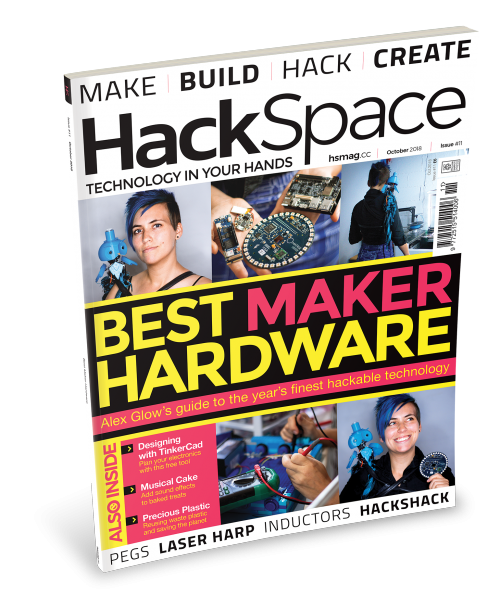
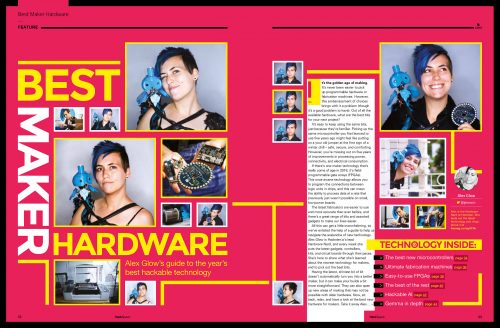
Today is that glorious day of the month when a new issue of HackSpace magazine comes out!
HackSpace magazine #11: All you can hardware
The cream of this year’s hardware crop
You’re on safe and solid ground with an Arduino, or one of Adafruit’s boards — so much so that many makers get comfortable and never again look at the other options that are out there. With the help of Hackster’s chief hardware nerd Alex Glow, we’re here to open your eyes to the new devices and boards that could really kick your making into gear. We know it’s easy to stick with what you know, but trust us — hacker tech is getting better all the time. So try something new!
One man and his shed shack
If you want to learn stuff like how to build a workbench that includes a voice-activated beer dispenser, then check out Al’s Hack Shack on Youtube.
We went to see the man inside the shack to learn about the maker community’s love of sharing, why being grown-up means you get more time to play, and why making is good for your mental health.
Hacky Racers
Maker culture shows itself in all sorts of quirky forms. The one we’re portraying in issue 11 is the Hacky Racers: motorsport meets Robot Wars meets mud. Lots of mud. If you feel the need, the need for speed (or mud), then get involved!
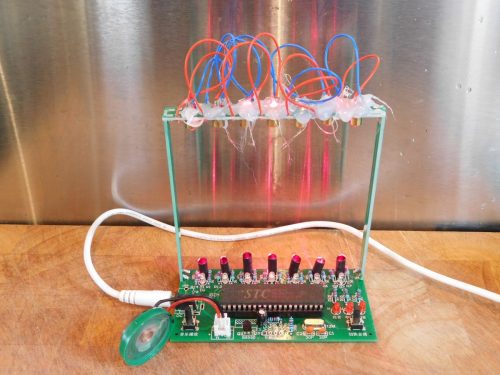
Laser harp
Yes, you read that right! At HackSpace magazine, we get a lot of gear coming in for us to test, but few items have given us more joy than this laser harp.
It’s easy to build, it’s affordable, and it poses only a very small risk of burning out your retinas. It’s the most fun you can have for £8.59 including postage. Promise. Read our full review in this month’s issue!
And there’s more!
We demystify PAT testing, help you make sense of circuit design with a beginners’ guide to Tinkercad, tell you why you need an angle grinder, and show you the easiest way we’ve ever seen of keeping knives sharp. All this and more, in your latest issue of HackSpace magazine!
Get your copy of HackSpace magazine
If you like the sound of this month’s content, you can find HackSpace magazine in WHSmith, Tesco, Sainsbury’s, and independent newsagents in the UK. If you live in the US, check out your local Barnes & Noble, Fry’s, or Micro Center next week. We’re also shipping to stores in Australia, Hong Kong, Canada, Singapore, Belgium, and Brazil, so be sure to ask your local newsagent whether they’ll be getting HackSpace magazine. And if you’d rather try before you buy, you can always download the free PDF.
Subscribe now
“Subscribe now” may not be subtle as a marketing message, but we really think you should. You’ll get the magazine early, plus a lovely physical paper copy, which has really good battery life.
Oh, and twelve-month print subscribers get an Adafruit Circuit Playground Express loaded with inputs and sensors and ready for your next project. Tempted?
“The only reason the body adapts with resistance training is because it’s challenged beyond its present capacity,” Brad Schoenfeld, PhD, an exercise scientist and author of The M.A.X. Muscle Plan, told me for Wirecutter’s guide to adjustable dumbbells. “It’s called the overload principle. If the weights are too light, you can’t do that.”
Overload your muscles
Creating effective overload and benefiting from it is a matter of balancing four factors:
a) the amount of weight lifted
b) the number of reps completed
c) the number of sets of said reps
d) the amount of rest taken between sets
Figuring out (a) is relatively simple: It’s the load you can move in an exercise for the desired number of repetitions (reps) with good form. If your aim is to improve general fitness, you’re looking at 8 to 12 reps (b) for up to three or four sets (c), in a workout done in circuit form—one exercise after another—with minimal rest (d) between exercises and only a minute or two between sets (keeping moving elevates the heart rate to reap cardio benefits, too).
If you feel like you could do many more reps once your first set is complete, the load wasn’t challenging enough. On the other hand, if you’re unable to get through even a few reps—or if the last couple barely resemble the exercise you set out to do—you’ve gotta go lighter.
The number of reps (as well as sets and other programming attributes) will come from whatever plan you’ve decided to follow, whether it’s one you found on your own or received from a personal trainer. If your goal is general fitness, alternating multi-muscle exercises such as squats, lunges, and deadlifts for the lower body and overhead presses (seated or standing), chest presses, and rows for the upper body will cover your bases.
Add weight safely
First, learn to do your desired exercises with good form using bodyweight only. “Do the movement and be sure you’re comfortable with the entire range of motion,” said Rachel Straub, a certified strength and conditioning specialist and coauthor of Weight Training Without Injury: Over 350 Step-by-Step Pictures Including What Not to Do!. “Understand how to do it and what you’re going to get out of it.” For example, if the exercise targets the chest, you should feel the muscles of the chest contract on the lifting portion of the movement.
Once you’re sure of your form, add additional resistance with weights or bands. Start out with a lighter load than you think you can manage. Do a full set of reps at the upper end of your workout’s prescribed range (so 12 reps, if your workout calls for 8 to 12), and be honest: How many more reps do you think you can do with good form? If the answer is greater than five, add more weight until the answer is “one or two.” Conversely, if you find yourself struggling to complete the set at all, lighten your load.
Keep in mind that you’ll need different weights for different movements: You can’t expect to be lifting the same load when targeting different muscle groups (the back or chest, for example, are going to be a lot stronger than the arms in isolation).
Progress with care
Take however much rest you need to feel like you can tackle the next exercise or next set with vigor. As you get stronger, reduce your rest time to a minute between sets before adding weight. “It’s good to take things slower,” Straub said. Otherwise, “you [can] get hurt and it can take so long to recover.”
Keep track of your number of reps, sets, and how much weight you use in each exercise. Increase your sets until you’re at three or four (based on your program), then increase weight as you get stronger and your last rep gets easier—but also vary your reps, sets, and loads, with some lighter-intensity days and some heavier days, to allow for maximum adaptation.
With different fitness goals, your (a) through (d) will vary—but you’ll still gauge the weight based on your ability to complete reps and sets with good form. For example, building muscle mass (hypertrophy) typically means lifting greater weight for more reps or sets with some rest for recovery. Building muscular strength means even more weight for fewer reps with more rest to fully recover between sets. And building muscle endurance (important for certain types of athletes or people with jobs that require physical stamina) means more reps of comparably lighter weight.
Be consistent—not in a rush
If you do sustain an injury, follow your doctor’s recovery orders. When you return to resistance training, start with bodyweight-only or light loads, and build your way back up gradually. The same advice applies if you take a long while off and are just getting back into it. Don’t worry about a temporary loss in strength. In the end, said Schoenfeld, “It comes down to challenging the muscles … The major results come from being consistent.”
Turns out that fast-moving, hungry misinformation
operations are better at YouTube than YouTube is.
This is not too much of a surprise. Resting and
vesting makes you stupid. It's like a resource
curse
for code. Sometimes I think I
should start an imposter syndrome cure sanitorium.
Main activity for patients will be watching the
JavaScript console for all the errors and warnings on
sites built by the so-called tech elite. (Look who's
still typing = sometimes instead of == or ===.)
Anyway, what do you do when you want to send someone
a link to a YouTube video, but you don't want the
engagement anti-features to kick in?
How about addressing the problem on the client side?
Here's an experimental Firefox
extension
that will remove the recommended videos sidebar
and keep you on the same video even if the pwned
engagement algorithm tries to auto-play a
different one. So if I send a family member a link,
I can have fewer worries that they'll end up in a
rat hole.
Bug reports and pull requests
welcome. (yes,
I know that I should be using a MutationObserver
instead of a timer. At some point I'll try to figure
that out.)
Using the “Custom Audiences from your Customer List” product specification, advertisers can upload certain customer lists to Facebook – based on e.g. emails, phone numbers, Facebook user IDs or mobile advertiser IDs – from their CRM database, which are first ‘hashed’, meaning they are transformed into checksums (hash values), and compared with other checksums generated from Facebook user data. If the checksums match, then existing and potential customers can be deliberately shown targeted ads on Facebook, Instagram and in apps and on mobile websites via Audience Network. Facebook also provides this feature for retailers, calling it “Offline Custom Audiences”.
This is going to be an interesting natural experiment.
Will ad-supported media do better in jurisdictions
where Facebook Custom Audiences are not available?
If Facebook advertising represents an increase
in marketing budgets, then probably not so much.
If Facebook advertising squeezes out other items
from the marketing budget, then this could be a win.
(My best guess is that small companies are spending
more on marketing because Facebook is easy and
self-service, but Facebook is just one of many places
that larger companies can spend. The ease of use
of Facebook from the advertiser side makes Facebook
ads a contender for small businesses that would have
trouble dealing with a legit site.)
And it's hard to address the problem of creepy stuff
on the Internet without talking about housing costs.
If the California powers that be can drive up prices
to the point where workers need a top-10-percent
income for what would have been a basic middle-class
lifestyle elsewhere, then it's easier to pressure
them into more questionable practices.
For most software teams or projects that use GitHub, the process to push code to a production environment looks similar. A developer opens a pull request, or PR, which then gets reviewed by another developer who might suggest some changes. After the changes are made, the PR gets merged into the project’s master branch. When the team is ready to make the updates public, they’ll tag the commit or branch as a new release and get the option to add a release note.
More often than not, the release notes get left off because they’re tedious to add.
Release notes are a way to track the changes that are part of a particular release and monitor the progress of a project over time. They are particularly helpful if you want to find out if a release contains a feature you’re interested in, need a reference of where a bug could have been introduced.
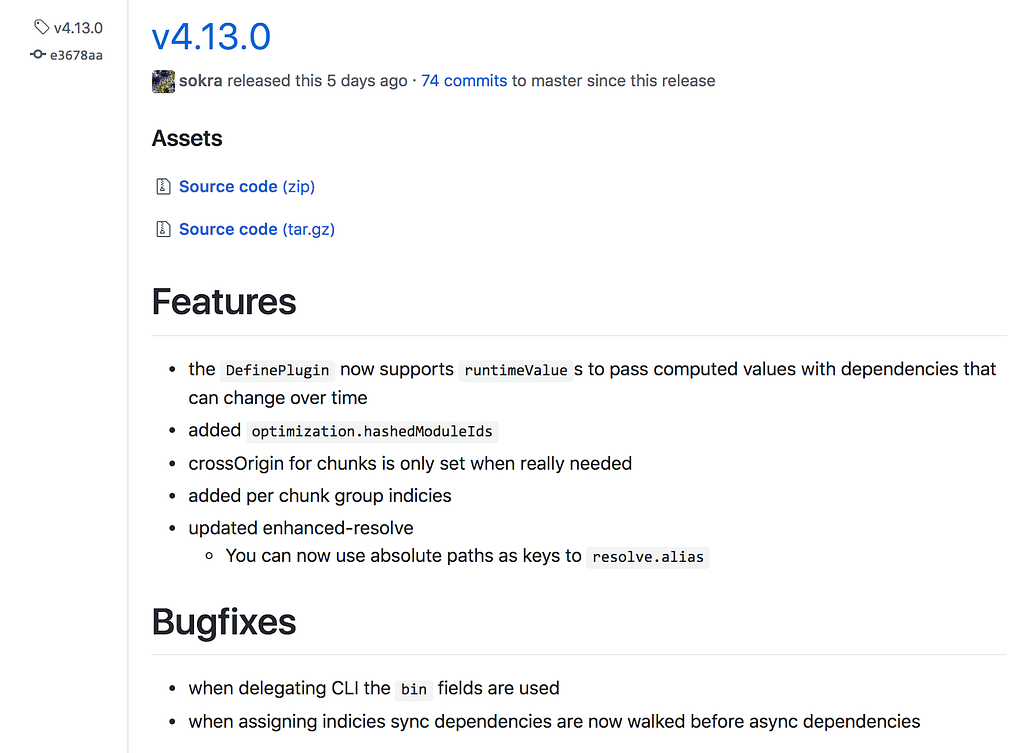
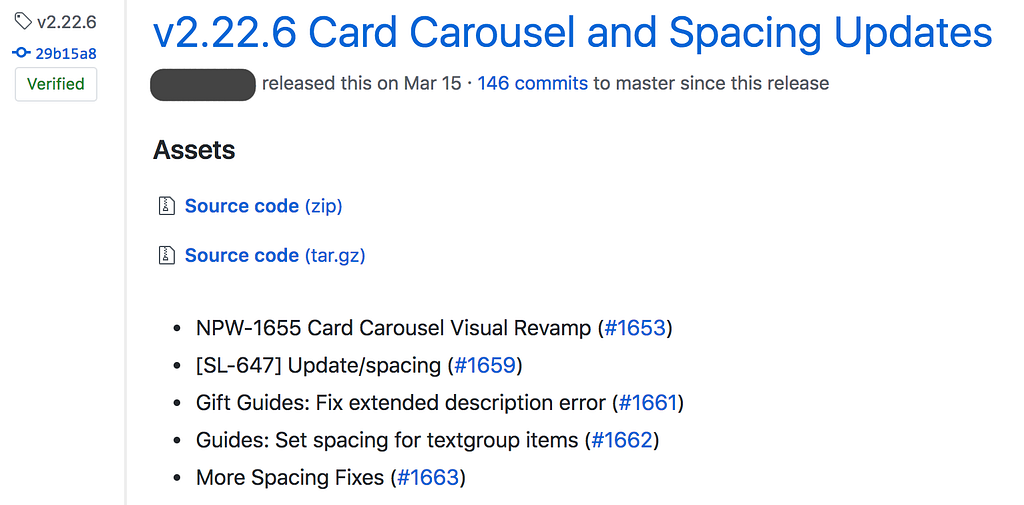
A quick look at Webpack’s releases (below) shows that with every new tag, they include a list of features and bug fixes in their notes, making it easy to see exactly what changes occured.
Screenshot of a Webpack release note
The New York Times Reader Experience team uses release notes to keep track of what we build to our production environments. This helps us communicate to stakeholders when new features or bug fixes are available, gives QA engineers a heads up on what changes to verify on staging and provides us with some insight if rolling back to a previous build is necessary.
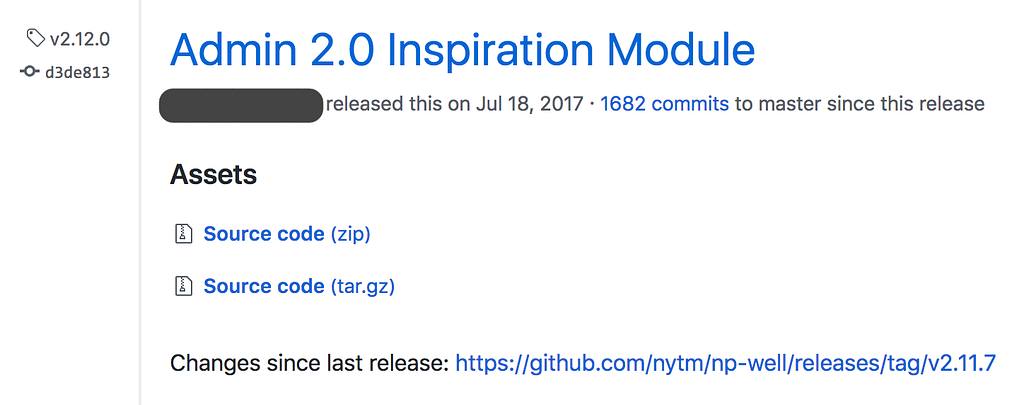
But as useful as release notes can be, they’re only as good as you write them. In the past, our dev team begrudgingly wrote releases manually. It’s a time consuming task and we found that it was hard to remember everything going out in a release, especially if it had been a few days since the previous build. Our negligence in writing release notes sometimes resulted in unhelpful notes, like this one:
Screenshot of a poorly drafted release note
All of the benefits of writing release notes go right out the window as soon as we start letting them slip. So, like any proper (lazy) engineer, I decided to automate the process. My team later adopted it for our projects.
What we built
We built Chronicler, a simple Node.js app that automatically adds merged pull requests to a release note draft. When we’re ready to push a release to production, we tag the latest release draft with its list of PRs and off it goes. Here’s what our neatly packaged releases look like since replacing a dev with Chronicler.
With automated release notes we know exactly what PRs are going out with each release and we only have to tag, name and publish the release.
How it works
The two major players in our release-drafts tool are the GitHub API and GitHub Webhooks. GitHub Webhooks subscribes a service, like Chronicler, to receive events related to a repository. Whenever a specific event occurs, like a pull request being merged, Webhooks sends Chronicler data about that pull request. When Chronicler receives a Webhook event for a merged pull request, it makes a call to the GitHub API for a list of that repo’s releases. When it receives the list, it inspects the most recent release to see if it is a draft. If it is a draft, it will append the PR title and number of the webhook event to the draft body and send a POST request to update the release note draft. If the most recent release note is not a draft, Chronicler will make a request to the GitHub API to create a new release note draft using the PR data from the webhook event.
Using the tool for your projects
For anyone who wants to free themselves from manually creating release notes, we’ve open sourced Chronicler. You’ll need to clone the Chronicler app and set it up in your own environment (we’re using a simple instance of Google App Engine, but Chronicler can work with a variety of configurations), create a GitHub personal Access Token and secure app secret, then connect your Chronicler instance to your repository’s Webhook settings. Check out the repo README file for more details on how to get started.
I'm not worried about the future of xAPI, even if the adoption rate has been low thus far. The value proposition of xAPI becomes apparent once you begin using multiiple e-learning applications and want a single activity record. That's not so clear a value when you only use one LMS, but as the technology landscape becomes more distributed, the benefits of xAPI (or something like xAPI) will be come much more clear. For my own part, xAPI is something I want to integrate into gRSShopper (I just have to figure iut the API).
This summer hasn’t been particularly good for Toronto. So maybe it’s a good time remind ourselves of all the fun and beauty that exists here, writes Shawn Micallef.


















 TORONTO STAR.

