Shared posts

08 Oct 04:08

Get your own Pocket OAuth token

Get your own Pocket OAuth token

I hate it when APIs make you jump through extensive hoops just to get an access token for pulling data directly from your own personal account. I've been playing with the Pocket API today and it has a pretty complex OAuth flow, so I built a tiny Flask app on Glitch which helps go through the steps to get an API token for your own personal Pocket account.

Via Source code for your-pocket-oauth-token.glitch.me

08 Oct 04:04

Google’s Chrome is not a browser, it’s advertis...

by Ton Zijlstra

Google’s Chrome is not a browser, it’s advertisement delivery software. Adtech after all is where their profit is. This is incompatible with Doc SearlsCastle doctrine of browsers, so Chrome isn’t fit for purpose.

Removing Chrome
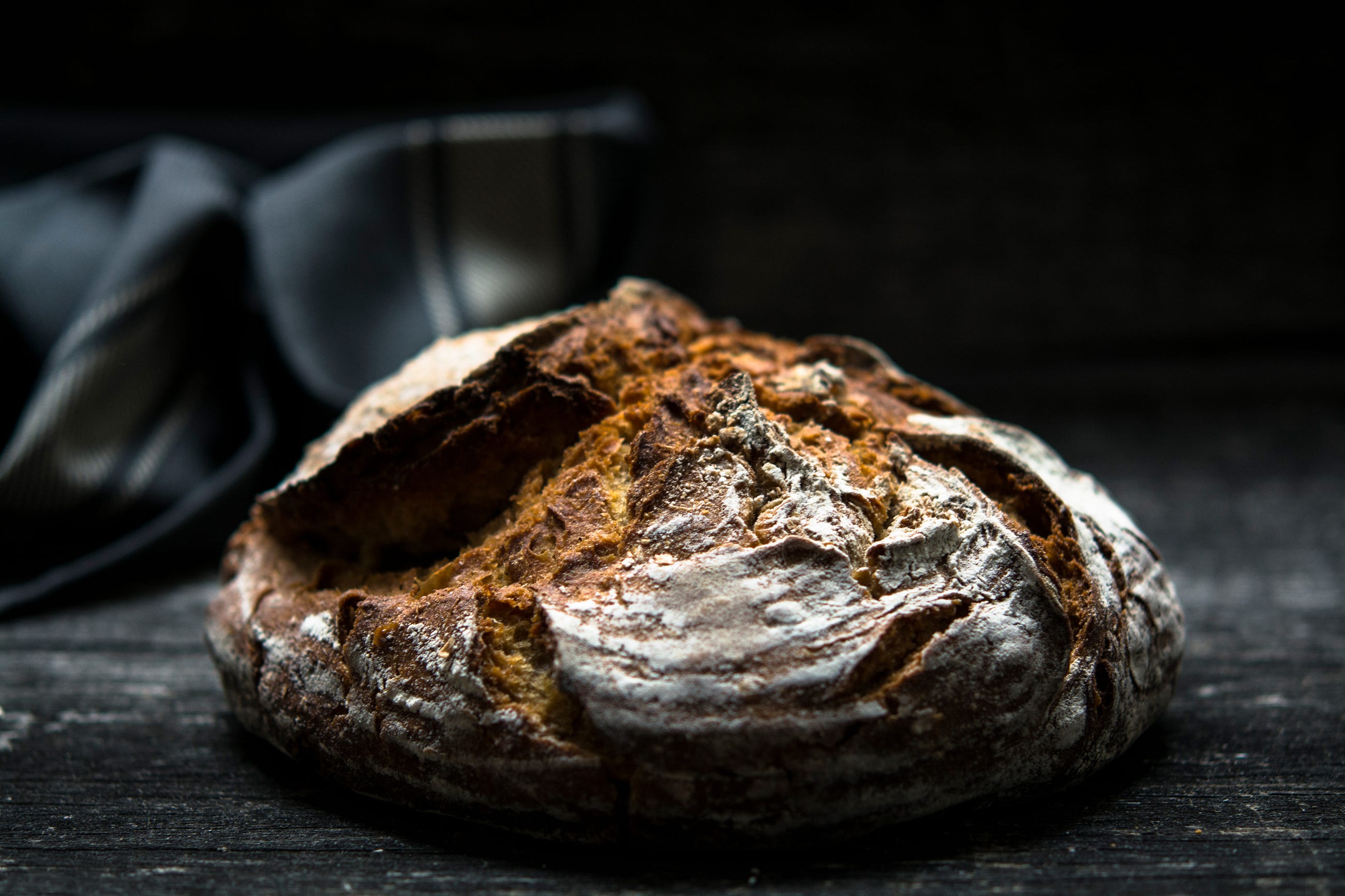
image by Matthew Oliphant, license CC BY ND

Read Chrome to limit full ad blocking extensions to enterprise users - 9to5Google (9to5Google)
Google shared that Chrome's current ad blocking capabilities for extensions will soon be restricted to enterprise users. SEC filing: "New and existing technologies could affect our ability to customize ads and/or could block ads online, which would harm our business."
08 Oct 04:04

Promote The Community On Your Best Days

by Richard Millington

It might sound obvious, but if you are going to undertake a big promotion of the community to an external audience, make sure you do it on your best days.

Clean up the community first.

Ensure most discussions have a response, initiate some topical questions for newcomers to join in.

Check the onboarding journeys for newcomers work effectively (and the formatting of emails looks great).

Plan for greeters to help newcomers.

Line up quality blog posts and new ideas from members shared in the community.

Do all the things that will make the community look great.

And if you can’t do these things, don’t do the big promotion.

08 Oct 04:03

First Person Things That Call The Cops

by Tom

From Phil’s weeknotes:

Last night I came across a Lime e-bike, dead on its side in a disabled car-parking space. I set about rescuing it, thinking that its conventional home, annoyingly littering the pavement, would be less bad.

As soon as I picked it up it started beeping, loudly. Then a computery woman’s voice began saying, “Please unlock me to ride me or I’ll call the police!”

I set the bike upright on its stand but the beeping and the verbal warning repeatedly alternated. I continued walking home, quickly, while the once quiet street was filled with the alarming noise, which slowly faded as I turned a corner. Maybe it’s still going.

First Person Things. Genuine People Personalities. The age of Surveillance Capitalism. The “Smart City”. Alexa-as-cop. Join the dots, write your own blogpost.

Somewhere deep at the intersection of “everything is tech” (tech, the all-consuming industry, rather than technology), “everything is a service” (and thus somebody else’s property you pay to rent), and “everything is increasingly awful in order to service a minority” (in this case: the owners of the bike, frankly, who are interested in preserving their property whilst acquiring new customers).

We joked that the future was rubbish because we still don’t have a jetpack; it is, in fact, more rubbish (and made up of more rubbish) than we perhaps could have imagined. We are all Joe Chip.

08 Oct 04:03

The early beginnings of visual thinking

by Nathan Yau

Visualization is a relatively new field. Sort of. The increased availability of data has pushed visualization forward in more recent years, but its roots go back centuries. Michael Friendly and Howard Wainer rewind back to the second half of the 1800s, looking at the rise of visual thinking.

On the first construction of the periodic table of elements:

On February 17, 1869, right after breakfast, and with a train to catch later that morning, Mendeleev set to work organizing the elements with his cards. He carried on for three days and nights, forgetting the train and continually arranging and rearranging the cards in various sequences until he noticed some gaps in the order of atomic mass. He later recalled, “I saw in a dream, a table, where all the elements fell into place as required. Awakening, I immediately wrote it down on a piece of paper.” (Strathern, 2000) He named his discovery the “periodic table of the elements.”

I sometimes wonder what they will say about current visualization work a couple of centuries from now. At what point will the historians say, “This is when visualization crashed and burned, never to be seen again.” Or, maybe it’ll go the other way: “This is when everyone understood and communicated with data, and visualization was the vehicle to do it.”

Tags: history, Howard Wainer, Michael Friendly, visual thinking

08 Oct 04:02

Work Futures Daily | Breadcrumbing

by Stowe Boyd

|Two weeks in the West | Breadcrumbing at Work | Better Diversity at the Fed | Rudiger Dornbusch | Uber Ambitious | Subpriming Cars |

Continue reading on Work Futures »

08 Oct 04:02

41 East Hastings Street

by ChangingCity

We looked at the small 2-storey building developed by C E Robinson in 1909, and now demolished, (almost hidden behind the tree on the left), in an earlier post. Next door was a three storey building that was recently home to ‘United We Can’, the bottle and can recycling business that works with street binners. (We saw this street looking the other way in 1905 in an earlier post).

The three storey building has proved elusive. It included numbers 33 to 49 East Hastings. It first appears around late 1899 or early 1900 as the ‘St Clair Lodging House’, run by Daniel H McDougall. The 1901 census says Dan McDougall was from Ontario, as was his wife, Margaret, and their 15-year-old son, Percy. We can find the family in 1891, where Dan was a merchant in the town of Perth. He first appears in Vancouver in 1900, spelled out as Daniel Howard McDougall, to distinguish him from the Dan McDougall who was a milkman and who had lived in the city for several years. A few years later he was living at 320 E Hastings, and he was there until 1910. Whether he is the retired Daniel H MacDougal who was listed in the street directory at Parker Street in 1911 we can’t be sure, especially as the 1911 census apparently didn’t find him.

The building changed names, and proprietors, on a regular basis – more than almost any other building we’ve looked at. In 1905 this had become the Kootenay Rooming House, run by Frank E Woodside and in 1910 Batchelor’s Rooming House, run by Margaret Kroll. By 1914 it had gone back to being known as the Kootenay Rooms, run by M Brown, and after the war the Glengarry Rooms, run by Mrs Margaret Stewart. The building briefly disappears from the street directory in 1920, following an auction in April 1919 that saw the entire contents of the rooms sold off, including the cookers, heaters, furniture and linoleum flooring.

It reappeared as the Dundee Rooms, run by Miss E Fenton, in 1920, although in 1926 it was run by Mrs E A Rippey. (We don’t know if Miss Elizabeth Fenton married John Rippey and became Mrs Elizabeth Rippey in 1925, but it seems possible). She managed the rooms into the 1930s. By 1935 Ted Kreutz was running the rooms, and when the war started Stan Fox was in charge. By the end of the war Wong Foo was proprietor, in 1949 T H Malahoff was running the building. The Vancouver Sun reported “Thief who raided Dundee Rooms, 41 East Hastings, was successful. Thomas Melahoff reported to police that $200 in cash was stolen from a hiding place in the office”. This wasn’t the only loss; throughout the 1940s there are reports of residents losing money from their room – sometimes as they slept. Some of the tenants were also in court on charges of theft – but stealing from other rooming houses in the area rather than from the building they lived in. (This wasn’t a new situation – there were similar reports when it was the Glengarry Rooms in the 1910s).

These aren’t likely to be all the changes of proprietor – we sampled on a five year basis. In 1955 there was another name change, to the Edmonton Rooms, and another manager;  Q F Wong. BC Assessment indicates that the building dates from 1945, although it had continuity of ownership through that period (with Woo Fong) and no newspaper reports to suggest any sort of change in status – and this 1925 Frank Gowan image also shows the same building here (beside the Interurban tram). It’s possible there was an extensive rebuild to justify the revised date, but the façade stayed the same.

When the photograph on the left was taken this was home to the clothing store of William Dick, who a year later moved to his new store further west. He appears to have owned this building – and much of this block – in the 1910s, carrying out a number of repairs and remodeling exercises.

His store was replaced by ‘The Hub’, another clothing store. The store catered largely to loggers and miners, and Max Freeman, a leader in Vancouver’s Jewish Community, was the firm’s proprietor from  around 1910 (when he was on Carrall Street) until his retirement in 1958, when his son-in-law Morris Saltzman became manager. B.C. historian Cyril Leonoff notes that Freeman “acted as trusted ‘banker’ for the loggers and miners who came to town, leaving their ‘stakes’ in a big safe at the rear of the premises.”

To the east was the Princess Theatre, (later The Lux), initially owned by Italian hotel owner Angelo Calori. Both feature in this Fred Herzog image from 1958.

By the time it closed in the early 2010s the building was known as the Universal Rooms. However, the building was in such a poor state that the 37 SRA-designated rooms on the second and third floors had not been occupied since the mid-1970’s.

It was replaced by Olivia Skye, a mixed tenure building developed by Atira with financial support from BC Housing and The Street to Home Foundation. It has 198 units of rental housing, with a mix of market, subsidized and welfare rate apartments.

0910


08 Oct 04:02

Cycle Cycle Cycle

by peter@rukavina.net (Peter Rukavina)

Oliver and I have now been bicycling to the Charlottetown Farmer’s Market every Saturday for two months.

Since we began in August, quite literally from a standing start, the weather has turned cool and the trail’s gotten a little muddy, but Oliver’s cycling has improved, bit by bit, every week.

As the University of PEI is only a few hundred metres up the trail, every Thursday we also cycle the same route up to campus for Oliver’s Thursday afternoon class.

Our only real issue now (other than the incline from Joe Ghiz Park to the 1911 Jail, which we both complain about every time we encounter it uphill), is that I haven’t found a safe way to transport Ethan the Dog with us, so he’s had to stay home on Saturdays and Thursdays.

We’re going to try and keep this up until the snow means we can’t.

08 Oct 04:02

Our Happy Life

by peter@rukavina.net (Peter Rukavina)

From my friend Vivian comes a pointer to Our Happy Life, an exhibition at the Canadian Centre for Architecture that closes this week:

The exhibition Our Happy Life is a three-act study on the new spatial models founded on the measurement of happiness; including a dissection of the political project behind methods of city data collection and application, an investigation of the emotional component of the real estate market, and a demystification of the idea of social space. Our Happy Life is a narrative anti-manual which explores and interprets recent paradigms that are shaping our present perception of place, giving new identity to the materials of the private space of our homes, reconceiving our working environments, and transforming development itself through the planning of our cities.

Our Happy Life exhibit

Photo by Vivan Beer
Our Happy Life: Architecture and Well-Being in the Age of Emotional Capitalism

Installation view, Canadian Centre for Architecture, Montréal, 2019. © CCA

08 Oct 04:01

The Bones We Leave Behind

by Os Keyes

It can seem as if the tide has begun to turn against facial recognition technology. Controversies — from racist and transphobic implementations appearing in policing to the concerns of privacy advocates about the billions of images these systems gather — have drawn attention to the risks the technology poses and its potential to strengthen an already overwhelming carceral state while perpetuating so-called surveillance capitalism.

Citing concerns around civil liberties and racial discrimination, the cities of Oakland, San Francisco, and Somerville, Massachusetts, have all recently banned the technology’s use by law enforcement. The state of California is considering a bill to curtail facial recognition use in body cameras. And activists from Chicago to Massachusetts have mobilized to prevent the expansion of facial recognition systems in, for example, public housing. It’s almost as though the techno-dystopia of ubiquitous state and corporate surveillance could be stopped — or at least delayed until the next train.

Focusing on “facial recognition” treats the technology as if it were a discrete concept that could be fought in isolation

All this organizing and protesting is good and vital work; the groups doing it need support, plaudits, and solidarity. Facial recognition is a dangerous technology, and prohibiting it — and in the interim, resisting its normalization — is vital. But focusing on “facial recognition” — a specific technology, and its specific institutional uses — carries risks. It treats the technology as if it were a discrete concept that could be fought in isolation, as if it could simply be subtracted to “fix” a particular concern. But facial recognition, like every other technology, is dependent on a wide range of infrastructures — the existing technologies, practices, and flows that make it possible. Pushing back against facial recognition technology without considering its supporting infrastructure may leave us in the position of having avoided future horrors, but only future horrors.

Some of the preconditions for facial recognition technology are cultural and historically rooted. As I’ve previously pointed to, the work of Simone Browne, C. Riley Snorton, Toby Beauchamp, and many others shows how unsurprising it is that much of this technology — originating as it does in a society built on xenophobia, settler colonialism, and antiblackness — has been developed for biased and oppressive surveillance. The expansion of surveillance over the past few decades — as well as the pushback sparked when it begins to affect the white and wealthy — cannot be understood without reference to the long history of surveilling the (racialized, gendered) other. U.S. passports originated in anti-Chinese sentiment; state-oriented classification (undergirded by scientists and technologists) often structured itself around anti-indigenous and/or anti-Black efforts to separate out the other. Most recently, the war on drugs, the border panics of the 1990s, and the anxious paranoia of the Cold War have all legitimized the expansion of surveillance by raising fears of a dangerous other who seeks to do “us” (that is, normative U.S. citizens) harm and is either so dangerous as to need new technologies, so subtle as to be undetectable without them, or both.

It is that history which works to justify the current development of technologies of exclusion and control — facial recognition, fingerprinting, and other forms of tracking and biometrics. These technologies — frequently tested at borders, prisons, and other sites “out of sight” — are then naturalized to monitor and control the “normal” as well as the “deviant.”

But beyond the sociocultural conditions that make it ideologically possible, a facial recognition system requires a whole series of other technological systems to make it work. Historically, facial-recognition technology worked like this: a single static image of a human face would have points and lines mapped on it by an algorithm. Those points and lines, and the relationship between them, would then be sent to a vast database of existing data from other images, with associated names, dates, and similar records. A second algorithm would compare this extracted structure to existing ones and alert the operator if one or more matching photographs were found. To make this possible, we needed cultural conventions and norms (presenting identity cards when asked; the acceptability of CCTV cameras) but also technical infrastructure — those algorithms, that database, the hardware they run on, and the cables connecting them to an operator and their equipment.

Unfortunately (or fortunately) this approach to facial recognition did not work very well. As late as this 2010 report on the impact of lighting on its accuracy, the bestperforming algorithm in “uncontrolled” settings (i.e. any environment less consistent than a passport-photo booth) had a 15 percent false-positive rate. The reason you have to make the same face on the same background in every passport photo isn’t just because the State Department wants to make you suffer (although, for clarity, it absolutely does); it’s because facial-recognition algorithms for the longest time were utterly incapable of handling even minor differences in head angle or lighting between a “source” photo and “target” photos.

There is no standalone facial-recognition algorithm

The technology has since improved, but not because of a series of incremental algorithmic tweaks. Rather, the massive increase in high-resolution cameras, including video cameras, over the past decade has led to an overhaul in how facial-recognition technology works. Rather than being limited to a single hazy frame of a person, facial-recognition systems can now draw on composite images from a series of video stills taken in sequence, smoothing out some of the worst issues with lighting and angle and so making the traditional approach to facial-recognition usable. As long as you had high-quality video rather than pixelated single-frame CCTV shots, you could correct for most of the problems that appear in uncontrolled capture.

But then researchers took this one step further: Realizing that they had these such high-quality image sequences available from these new (higher resolution, video-based) cameras, they decided to write algorithms that would not simply cut out the face from a particular image and assess it through points and lines, but reconstruct the face as a 3D model that could be adjusted as necessary, making it “fit” the angle and conditions of any image it might be compared with. This approach led to a massive increase in the accuracy of facial recognition. Rather than the accuracy rate of 85 percent in “uncontrolled capture” that once prevailed, researchers in 2018 testing against 10 data sets (including the standard one produced by the U.S. government) found accuracy rates of, at worst, 98 percent.

This level of accuracy in current facial recognition technology allows authorities to dream of an idealized, ubiquitous system of tracking and monitoring — one that meshes together pre-existing CCTV systems and new “smart” city technology (witness San Diego’s default integration of cameras into their new streetlights) to trace individuals from place to place and produce archives that can be monitored and analyzed after the fact. But to buy into this dream — to sign up for facial recognition technology — a city often also has to sign up for a network of HD video cameras, streaming data into central repositories where it can be stored ad infinitum and combed through to find those who are at any time identified as “suspicious.”

A contract for the algorithms comes with a contract for the hardware they run on (or, in the case of Amazon’s Ring, free hardware pour encourager les autres). There is no standalone facial-recognition algorithm; it depends on certain other hardware, other software, certain infrastructure. And that infrastructure, once put into place, always contains the potential for facial recognition, whether facial recognition is banned or not, and can frequently be repurposed for other surveillance purposes in its absence.

The layers of infrastructure involved make facial recognition technology hard to constrain. San Francisco’s ordinance, for example, bans facial recognition outright but is much more lenient when it comes to the camera networks and databases feeding the algorithms. If a city introduces facial-recognition technology and you spend a year campaigning against it and win, that’s great — but the city still has myriad video cameras logging public spaces and storing them for god knows how long, and it still has people monitoring that footage too. This process may be much less efficient than facial recognition, but it’s still the case that we’ve succeeded in just swapping out analytics technology for a bored police officer, and such creatures aren’t widely known for their deep commitment to anti-racism. And this isn’t hypothetical: 24/7 monitoring of live, integrated video feeds is exactly what Atlanta does.

Leaving the skeleton of the surveillance infrastructure intact means that it can be resurrected

Beyond that, leaving the skeleton of the surveillance infrastructure intact means quite simply that it can be resurrected. Anyone who watches horror films knows that monsters have a nasty tendency to be remarkably resilient. The same is true of surveillance infrastructure. Facial recognition is prohibited in Somerville now. In one election’s time, if a nativist wind blows the wrong way, that might no longer be the case. And if the city was using the technology prior to banning it and has left the infrastructure in place, switched on and recording, it will be able to surveil people not only in the future but in the past to boot. It becomes trivial, when the technology is re-authorized, to analyze past footage and extract data about those who appear in it. This enacts what Bonnie Sheehey has called “temporal governmentality,” where one must, even in the absence of algorithmic surveillance, operate as if it were occurring because it might in the future be able to retroactively undertake the same biased practices. And when facial recognition is as cheap and easy as a single software update, it’s not going to take long to turn it back on.

Luckily, the movie solutions to killing monsters line up with facial recognition too: removing the head or destroying the brain. That is, eliminating the infrastructures on which it depends — infrastructures that can, in the interim, be used for less efficient but still dangerous forms of social control. Banning facial recognition formally is absolutely a start, but it provides lasting protection only if you plan to print off the ordinance and glue it over every surveillance camera that’s already installed. We must rip out those cameras, unplug those servers. Even “just” a network of always on, eternally stored HD cameras is too much — and such a network leaves us far more vulnerable to facial recognition technology’s resurrection than we were before its installation.

There is nothing wrong with the tactics of activist movements set up around facial recognition specifically; protesting, organizing, forcing transparency on the state and using that to critically interrogate and educate on surveillance practices is both good work and effective. But what we need to do is ensure we are placing this technology in context: that we fight not only facial recognition, a single symptom of this wider disease, but the underlying condition itself. We should work to ban facial recognition, and we should celebrate when we succeed — but we should also understand that “success” doesn’t just look like putting the technology in the grave. It looks like grinding down the bones so it could never be resurrected.

08 Oct 04:00

Why We Should Ban SUVs in Cities

by Sandy James Planner

Image-from-iOS-2

Image-from-iOS-2

I have been writing about how SUVs and trucks which make up 60 percent of all vehicle purchases have been responsible for a 46 percent increase in pedestrian deaths.

Never doubt the power and strength of the motor vehicle lobby. A SUV  (sport utility vehicle) is a vehicle built on a truck platform with a “high profile” on the street. Statistics show that SUVs with the high front end grille are twice as likely to kill pedestrians because of the high engine profile, but this information has not been well publicized. In the United States a federal initiative to include pedestrian crash survival into the vehicle ranking system was halted by opposing automakers.

It was the City of London England that banned a certain type of truck when the city realized that it was responsible for 50 per cent of all cycling mortalities and over 20 per cent of all pedestrian deaths. Of course there was pushback, but the Mayor of London just said no.

Laura Laker  in  the Guardian  now asks the question~is it time to ban SUVs from our cities? SUVs are heavily marketed and are highly profitable for car companies, but they are also deadly. Drivers have an 11 percent increase in the chance of fatality in them, as their size and bulk is connected with more reckless driving. They are also killing machines in the conventional sense. In September a SUV driver in Berlin lost control of his vehicle and killed four people on a sidewalk, a grandmother and grandson and two twenty year old men.

That was the tipping point for citizens in Berlin who called for size limitations on vehicles allowed in city centres, asking for a national policy permitting local authorities to restrict vehicles based upon size.

As Laker writes; SUVs are a paradox: while many people buy them to feel safer, they are statistically less safe than regular cars, both for those inside and those outside the vehicle. A person is 11% more likely to die in a crash inside an SUV than a regular saloon. Studies show they lull drivers into a false sense of security, encouraging them to take greater risks. Their height makes them twice as likely to roll in crashes and twice as likely to kill pedestrians by inflicting greater upper body and head injuries, as opposed to lower limb injuries people have a greater chance of surviving. Originally modelled from trucks, they are often exempt from the kinds of safety standards applied to passenger vehicles, including bonnet (hood) height. In Europe legislation is being brought in to end such “outdated and unjustified” exemptions.

In Europe,  SUVs are nearly 40% of all vehicle sales. If you are struck by a SUV you are twice as likely to be killed by its high motor profile. “British academics who analysed police collision data have identified pedestrians as 70% more likely to be killed if they were hit by someone driving a 2.4-litre engine vehicle than a 1.6-litre model.”

Europe does not collect statistics on vehicular fatalities by type, and researchers indicate that the lack of specific collision data and finger pointing means the car industry is creating bigger, heavier vehicles that are rolling family rooms. But large engine vehicles because of their size and profile are deadly.

SUVs are also ‘Climate killers’. There has been little progress on reducing  road transport carbon emissions in Europe, comprising 27% of all emissions. While the automobile industry blames regulators for turning away from diesel (lower in carbon but more toxic)  regulators blame the lack of progress on SUVs “driven by carmakers’ aggressive marketing”.

And here are the numbers~the size and larger engines in SUVs mean they have CO2 emissions that are 14% higher, with every market shift towards SUV’s increasing
CO2 emissions by 0.15g CO2/km on average. A 2018 Committee on Climate Change report noted that “the popularity of SUVs is cancelling out emissions savings from improvements in technology”.

We simply cannot drive our way out of climate change and increasing CO2 emissions, but we can take a stand. There is no place for SUVs in cities from an environmental standpoint. Being driven these are killing machines, and have no place in walkable, cyclable cities. It’s time to tell automakers that SUVs don’t belong here.

Kansas-City-Street-Accident

Kansas-City-Street-Accident

Images:Newcentre1tv.com

08 Oct 04:00

The Best Ebook Reader

by Nick Guy
The Best Ebook Reader

With an ebook reader, you can carry thousands of books at a time and access a library of millions more on a device that is smaller than a paperback, lasts for weeks on a single charge, and gives you a better reading experience than a tablet or phone. After testing every competitive ebook reader available in the US, we can say that the Amazon Kindle Paperwhite is the right choice for almost everyone.

08 Oct 03:59

Migrate from Dynalist to Outlinely - Paul Korm

I read this blog post when I was considering whether to stick with Dynalist or move to something else. Made a lot of sense to me.

https://vincentntang.com/how-i-use-dynalist-io/

08 Oct 03:42

The e-bike is taking over the world …

by Gordon Price


… or at least Italy, from where John Graham reports:

In the south of Italy – here in Sorrento at the end of the Amalfi coast – the e-bike with fat tires is taking over. And not by the mountain-biker demographic, as you can see from the front basket and rear child seat.

This bike on the main pedestrian shopping street is their version of the mini SUV. The fat tires are for the rough and variable cobblestones.

The rider was a woman in her 40’s who got off and went into the cosmetic shop behind.


08 Oct 03:42

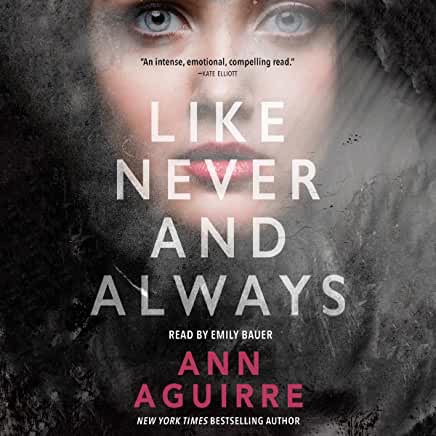
Like Never And Always

Liv Burnham is riding with her date in a car, heading home. In the back seat, her best friend Morgan is canoodling with her date’s scary but handsome older brother. The car swerves; there’s a terrible accident. She wakes up in the hospital, in Morgan’s body.

This enactment of multiple childish fantasies (you’ll be sorry/you’d be happier if I was someone else/I wish I was part of my friend’s family and not this disaster) is a lovely setup for a problem novel, which Aguirre pulls off with style and without more mystic nonsense than the premise absolutely requires. Liv is smarter than Morgan, which is both an opportunity and a challenge. Liv liked science, and Morgan liked art and fashion: who, now, are her friends? If she dates Morgan’s boyfriend, is she cheating on Liv’s? Morgan is rich but her single-parent father is distant; is it her duty to resent him, or is that yet another betrayal? The book’s framework is sometimes flimsy, but there’s some plain, fine writing here.

08 Oct 03:42

"Even a light wind sounds like someone’s ripped your mic in half..."

by peter@rukavina.net (Peter Rukavina)

Ten top simple field recording tips from Cities and Memory; includes:

You might think that’s only a gentle breeze, and it can’t possibly do anything to your recording, but IT WILL. Even a light wind sounds like someone’s ripped your mic in half, and will render your recording unusable. Use wind shields, use shelter, avoid wind at all costs.

The recording here is a classic example of it: riding our bicycles by the metal fence surrounding the Charlottetown Event Grounds on Saturday, I noticed the the gusty winds were making beautiful music through the slats. So I pulled out my phone and pressed “record,” trying to shield it from the wind. I failed. So you’ll have to take my word for it.

See also diy (do it yourself) from Quiet American.

Link provenance: William Denton to Radio Apogee to this exhortation to make field recordings of decent quality.

08 Oct 03:32

Fall 2019 Surface event thoughts

I’m a biased source, given my employer, but last week’s Surface event was pretty impressive. I really appreciated the effort that Panos and his team put into it and I really loved the way the event was paced. And, it’s cool that the public speaking experts are taking notice, like Carmine Gallo writing for Inc. magazine about the presentation skills on display.

Oh, and the way Panos did the “you got it all right, except for one thing” transition for the Surface Duo introduction was handled was beautiful.

Since I use Windows most every day (again, given my employer) in addition to my Macs, I was looking forward to a solid update to the Surface Laptop. The original version has been my go-to Windows machine since it was released. It’s well designed with great balance and a wonderful keyboard. It’s my favorite bit of laptop hardware from the last few years. All I really wanted to see was a solid CPU update, USB-C, and a built in LTE modem.

Two outta three ain’t bad.

If you’re a Windows user and need a laptop to get, but don’t need serious gamer level graphics, this is the laptop to get. It might not be the next Windows machine I get, however.

The ARM-based Surface Pro X caught my interest in a way that I wasn’t expecting. It does have an LTE modem. And, while the last go around from Windows on ARM in the form of the Surface RT had a lot of limitations. It seems that many of those limitations are addressed this time around and, important for this Unix geek, the 20H1 release of Windows 10 will support WSL 2 on ARM. Yes!

I’ll have to do some more research to be sure, but it might just be my next Windows device. At least, until the Surface Neo ships sometime next year. Then, all bets are off.

08 Oct 03:32

Weeknotes: Dogsheep

Having figured out my Stanford schedule, this week I started getting back into the habit of writing some code.

Dogsheep

Dogsheep is the collective name I've given to a suite of tools I'm building around the concept of personal analytics.

I generate a lot of data, and while much of it ends up in the silos of the internet giants, thanks to the GDPR most of those silos now feature an "export a copy of your data" button.

Wouldn't it be cool if you could convert that data into a SQLite database and then use Datasette to run queries against it?

So that's what I'm doing! The tools I've built so far include:

  • healthkit-to-sqlite for my Apple HealthKit data (mostly collected by my Apple Watch).
  • twitter-to-sqlite, by far the most developed tool. For Dogsheep purposes it lets me import my tweets and the tweets I have favourited, but it's growing all kinds of other useful features for retrieving and analyzing data from Twitter. More on this in my previous weeknotes.
  • swarm-to-sqlite for my Foursquare Swarm checkins.
  • inaturalist-to-sqlite for my iNaturalist observations.
  • google-takeout-to-sqlite for the wealth of data available from Google Takeout. I've barely scratched the surface with this one but it does have the ability to export my location history from Google Maps - 215,000 latitude/longitude/timestamp records dating back to select min(timestamp) from location_history July 2015!
  • github-to-sqlite for importing my GitHub repositories and the repositories I have starred.
  • pocket-to-sqlite (built over this weekend) for articles I have saved to Pocket.
  • genome-to-sqlite for my 23andMe genome, because being able to run SQL queries against my genetic code is really funny.

My biggest achievement this week is that my own personal Dogsheep is no longer vaporware! I got a Datasette instance running on a AWS Lightsail VPS (using the systemd recipe from this ticket) and started loading in copies of my data.

Securing this instance well is important. In addition to running it behind datasette-auth-github I've followed up on a long-term ambition of deploying something protected by client certificates. If your browser doesn't have the required certificate installed it gets rejected by nginx before it's even proxied through to Datasette.

I have the certificate successfully installed on my iPhone and my laptop browsers. Setting this all up wasn't particularly straight-forward - I ended up following this excellent tutorial by Nathan Wittstock for the nginx part of it, then randomly Googling for tips on installing the certificate in Firefox and on my iPhone.

I think there's a great opportunity for tooling that makes this much easier. Adding that to my maybe-someday pile.

datasette-auth-github asset caching

Dogsheep is a great opportunity for eating my own dogfood. I've been having a lot of fun using it to explore my data... but I noticed that there was a suspicous delay every time I clicked a link. Datasette is mostly JavaScript-free but usually it responds so fast (~100ms or less) that clicking around feels "app-like" - but here I was really feeling the delay, often of more than a second.

I fired up the Firefox Network inspector and quickly spotted what was happening. I have the datasette-vega plugin installed so I can create charts, and that weighs in at nearly 1MB of JavaScript. According to Firefox my browser was loading that entire 1M file from scratch for every page load!

The culprit there turned out to be my datasette-auth-github plugin.

As detailed in issue #6, the ASGI middleware adds a cache-control: private header to every HTTP response - to make sure authentication-required content isn't accidentally cached by any intermediary proxies (I originally designed Datasette to run effectively behind Varnish and Cloudflare).

This was applied to everything... including the static JavaScript and CSS served up by the plugin!

To fix this, I shipped a new release of datasette-auth-github with a cacheable_prefixes setting, which defaults to /-/static/ and /-/static-plugins/ when run as a Datasette plugin. See issue 47 for details.

Areas of research

Connection pooling

My most significant ongoing project for Datasette right now concerns database connection pooling.

For Datasette Library I want to be able to support potentially hundreds of attached databases, and Datasette Edit calls for the ability to use a writable (as opposed to read-only) connection.

This means I need to get smarter about database connections, and last week I finally made some solid progress on figuring out more advanced connection pooling. Still more work to go but I'm finally feeling unblocked on this after sweating over it for a couple of months without writing any code.

I also added a /-/threads page to Datasette (demo) to make it easier to understand the threads being run by the application.

Recursive CTEs in SQLite

twitter-to-sqlite generates a tweets table with both id and in_reply_to_status_id (nullable) columns.

SQLite supports recursive CTEs, documented here. In theory, this means it should be possible to write SQL queries that analyze Twitter threads - showing me the tweets that are at the bottom of the longest reply chain, for example.

I was feeling lazy and asked if anyone knew how to do that on Twitter. Robin Houston, Matthew Somerville and Piers Cawley all chipped in with useful tips, which I've collected in this gist.

I particularly enjoyed learning how Piers uses recursive SQL queries to help run his bakery.

logging

I finally made some progress on getting my head around the Python standard library logging module, a long-time nemesis.

The breakthrough was to sit down and actually read the source code - which helped me understand that the entire point of the library is to be a globally configured logging system that makes careful use of threading primitives to ensure you can log without worrying about concurrency.

I've been worrying about that aspect of logging for years, so it's reassuring to see that Vinay Sajip has that comprehensively covered already.

Easier installation for Datasette

I want journalists to be able to install Datasette. I don't want to have to talk them through installing xcode to install homebrew to install Python 3 first!

Raffaele Messuti did some great work investigating pyinstaller for this a while ago. I started a conversation on Twitter a few days ago after investigating pex (neat but not quite what I want, since users still have to install Python). From that thread I got some interesting further leads:

  • Freezing your code in the The Hitchhiker's Guide to Python describes the problem space in general.
  • Briefcase is the part of the BeeWare suite that deals with for converting a Python project into a standalone native application (for a bunch of different platforms).
  • PyOxidizer is a relatively new tool for building standalone executables that bundle a Python interpreter, on top of the Rust and Cargo build ecosystem.
  • Conda Constructor helps you construct an installer for a group of Conda packages (I need to figure out Conda).

Next step: actively try some of these out and see what I can do with them.

My longer term goal is to package Datasette up with Electron and make it available as a regular Windows and OS X application, for people who aren't comfortable using the command-line directly.

Books

I've been mostly working through required reading for my Stanford courses. Strategic Communication in particular has some excellent text books:

08 Oct 03:31

First Major Android 10 Patch Addresses Pixel Gesture Issues, Slays Bugs

by Mahit Huilgol
Android 10 has already been treated to a minor update. The patch is the first major Android 10 update and is available for all Pixel devices. The update arrives with improvement in gesture navigation and slays several bugs including the infamous Pixel gesture issue. Continue reading →
08 Oct 03:31

Un (dernier ?) En Vrac

by Tristan

velo en bord de mer

J’ignore ce que cette rubrique En Vrac va devenir. En effet, j’ai arrêter d’utiliser Twitter pour l’instant, comme je l’expliquais dans le tweet ci-dessous. Avec mes nouvelles responsabilités, je n’ai plus envie d’utiliser mon temps et mon énergie à débattre sur Internet. Arrêter Twitter est difficile (c’est une addiction) et un soulagement (de mettre fin à une addiction). On verra si je reprends un jour. On verra. En attendant, je suis sur Mastodon, pour ceux que cela intéresse.

Comme une sourde envie de fermer mon compte Twitter. Ras le bol de ce feu de poubelle permanent où s’entrechoque des egos alimentés par des certitudes absolues à géométrie variable

Voici donc une série d’articles qui m’ont intéressé :

08 Oct 03:31

The New York Times on Blues Guitarist Robert Johnson

"And yet, in the late 20th century, the advent of rock ’n’ roll would turn Johnson into a figure of legend. Decades after his death, he became one of the most famous guitarists who had ever lived, hailed as a lost prophet who, the dubious story goes, sold his soul to the devil and epitomized Mississippi Delta blues in the bargain."

I discovered Robert Johnson in college while learning the guitar and playing blues with friends. Johnson's recording were simple and raw, but full of … something.

Johnson only ever had 41 recordings of almost 30 different songs, but his influence on blues guitar has been immeasurable.

08 Oct 03:26

macOS Catalina is out

by Rui Carmo

I am definitely going to wait this one out. About half of the folk I know is actually considering waiting for the .2 minor release.

Update: there seems to be a chance of data loss in Mail.app, which is borderline criminal in terms of QA. I have no idea what Apple is doing to macOS in general other than killing it with a million paper cuts…


08 Oct 03:26

SQL Murder Mystery in Datasette

SQL Murder Mystery in Datasette

"A crime has taken place and the detective needs your help. The detective gave you the  crime scene report, but you somehow lost it. You vaguely remember that the crime  was a murder that occurred sometime on ​Jan.15, 2018 and that it took place in SQL  City. Start by retrieving the corresponding crime scene report from the police  department’s database." - Really fun game to help exercise your skills with SQL by the NU Knight Lab. I loaded their SQLite database into Datasette so you can play in your browser.

Via @knightlab

08 Oct 03:22

Amazon Canada refreshes Fire HD 10 with octa-core CPU, launches new kids tablets

by Brad Bennett

Hot on the heels of its new lineup of Alexa enabled products, Amazon is also releasing a new 10-inch tablet and bringing its slate of kids tablets from the U.S.

The new 10-inch tablet is called the All-New Fire HD 10, which has a 30 percent faster processor, a new Wi-Fi modem and a new picture-in-picture mode.

The new tablet features an octa-core processor with 2.0 GHz clock speeds. To supplement this, Amazon has packed in 2GB of RAM as well. Overall, it’s the fastest tablet the company has ever built and in my brief hands-on with it, the tablet seemed very responsive.

The Fire HD 10 starts at $199 CAD for the model with 32GB and then jumps up to $239 for a model with 64Gb of onboard storage. This can be upgraded via a MicroSD Card up to 512GBGB. This new model comes in both black and white.

It also features a USB-C port for the first time ever.

The Fire tablets for kids

The Fire HD 10 is Amazon’s top of the line tablet for adults, and now for the first time, Amazon’s kids focused tablet range is coming to Canada.

There are three kids versions of Amazon’s tablet range — a 7, 8, and 10-inch version — each one is the same tablet as the adult-focused version, but comes with an ultra-protective case and a child-friendly version of the software called Amazon FreeTime Unlimited.

The service costs $3.99 for Prime Members and $5.99 for non-Prime Members, and it gives kids access to 1,000s of safe apps, games, books, TV shows and movies on the tablet.

The software even lets parents tailor the OS to suit their kids’ needs. This means you can set an age range for content, set daily limits on specific types of content and more. This can all be done remotely from the parents’ phone or any other device that can connect to the web from Amazon.parents.ca.

For example, you could set the tablet up so your kids need to spend at least 30 minutes reading before they can use apps and games on the service.

Since the tablet is just a regular Amazon tablet with a bulky case, users can take it off and remove the FreeTime software to turn it into an adult tablet as the kids get older.

The tablets each come with a year of FreeTime Unlimited, so you don’t have to worry about what your kids are using for the first year.

The Fire HD 7 Kids costs $129.99; the eight-inch variant costs $169.99 and the larger All-New Fire HD 10 rings in at $260.

All of the new devices and software features will be available for purchase on October 30th, and you can pre-order the tablets now.

Source: Amazon Canada

The post Amazon Canada refreshes Fire HD 10 with octa-core CPU, launches new kids tablets appeared first on MobileSyrup.

08 Oct 03:22

macOS Catalina is now available

by Patrick O'Rourke
macOS Catalina

macOS Catalina, Apple’s new desktop operating system, is finally publically available.

The operating system, which launched in public beta back in June following its reveal at WWDC, is now downloadable on all compatible Macs, including the following devices: 2015 and later MacBooks, 2012 and later MacBook Airs, 2012 and later MacBook Pro, 2012 and later Mac minis, 2012 and later iMacs, iMac Pros 2017 and later and Mac Pros 2013 and later.

While the final version of the operating system offers largely the same experience as it did when I tested out the beta in July, there are a few new features that weren’t included in earlier developer and public beta versions of Catalina.

For example, Apple Arcade, the company’s new mobile game subscription platform, is now available in macOS Catalina, giving mac owners access to a selection of the service’s titles. Currently, not every Arcade game is available in the Mac version of the platform. There are roughly two dozen titles at launch, including Big Time Sports, Card of Darkness, Operator 41 and Sayonara Wild Hearts.

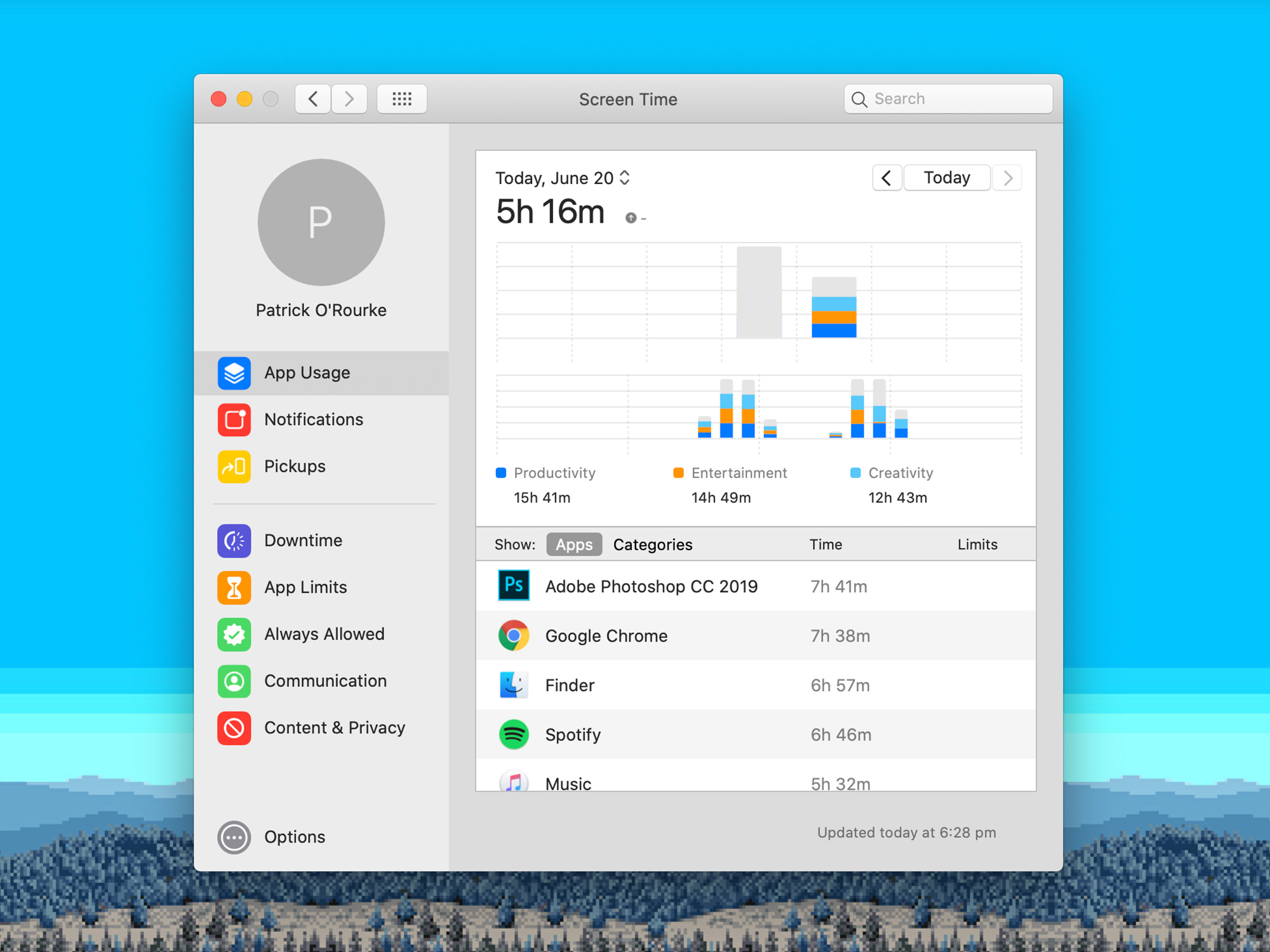
Major macOS Catalina features include functionality like Screen Time and the ability to use an iPad as an external display with Sidecar. Apple has also finally killed iTunes in favour of three distinct apps: Apple Music, Podcasts and Apple TV.

macOS Catalina Screen Time

Other apps have been revamped as well. Just like with iOS, Apple has added more sections to the Photos app, a new layout in Notes and a new workflow to Reminders.

To download macOS Catalina, click the Apple logo in the top left corner, then ‘About This Mac,’ ‘ Software Update’ and finally, ‘Update your Mac to Catalina.’

You can read a more in-depth breakdown of what macOS Catalina offers users by reading MobileSyrup’s coverage. 

The post macOS Catalina is now available appeared first on MobileSyrup.

08 Oct 03:20

Google releases October security patch, first for Android 10

by Dean Daley
Pixel 3 XL

Google has released the first monthly security patch and update for Android 10. Every month Google launches security patches for Android devices. However, this is the first one since the release of Android 10.

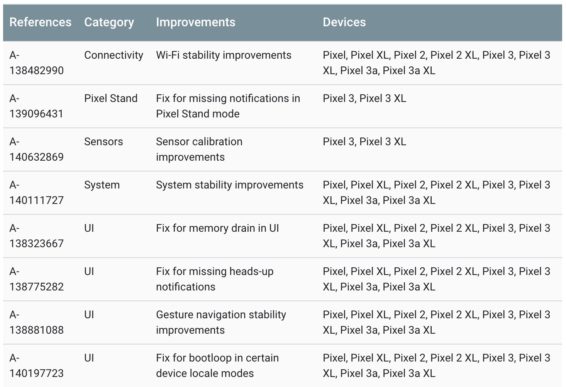
The patch fixes bootloop issues that many Pixel XL users had experienced since updating to Android 10. Additionally, there’s the memory drain concern that many have noticed, which is also getting fixed.

One issue I experienced, that is now fixed, are the notifications in Pixel Stand mode. Prior to the fix, the phone did not show any of the notifications you’re getting.

The patch also fixes an issue with the original Pixel and Pixel 2 that could have hackers take complete control of your device after installing a malicious app.

The bulletin includes three security fixes and eight functional updates.

The Pixel OTA and full factory images are rolling out now.

Essential’s October security update for Android 10 users is also now available.

Source: Android Security Bulletin 

The post Google releases October security patch, first for Android 10 appeared first on MobileSyrup.

08 Oct 03:20

Tesla buys Ontario-based battery manufacturing company Hibar Systems

by Brad Bennett

Tesla has quietly bought the Richmond Hill, Ontario battery manufacturing company Hibar Systems to use its knowledge in battery manufacturing.

Public records show that the EV manufacturer bought the battery company sometime between July and October of 2019, according to Electric Autonomy Canada.

Both Tesla and Hibar have yet to comment on the matter, but federal documents show that prior to July 2019, Tesla Canada didn’t own any subsidiary companies, and now its most recent documents list Hibar as a company that it holds, reports Electric Autonomy Canada. 

Hibar’s website is now just a simple landing page with some contact information, but according to reports, it previously said that it’s “truly unique in its capability to provide the world’s leading manufacturers with innovative advanced automation solutions that are engineered specifically to suit their production automation requirements.“

It also mentioned, how it was, “well-known for its high-speed integrated battery assembly lines and filling system,” plus, the website which can be found by using the Wayback Machine, mentioned the company holds some “intellectual property” related to battery manufacturing technology.

Hibar also made headlines in April 2019 when it received a$2 million grant from the National Research Council of Canada Industrial Research Assistance Program, as reported by YorkRegion.com The government’s program website says that its focus is to help “small and medium-sized businesses increase their innovation capacity and take ideas to market.”

The cash injection was to help the Ontario company develop a form of high-speed lithium-ion battery manufacturing process.

Since then, the company has flown under the radar until the reported acquisition from Tesla.

This isn’t Tesla’s only connection with the Canadian battery industry. It also works with Jeff Dahn and a team of researchers at Dalhousie University in Halifax, Nova Scotia. This team is developing next-generation battery technology that Tesla uses. You can read about it here. 

There’s no solid information about what Tesla is using Hibar’s tech for, but it seems that it’s for its manufacturing process. The EV company also bought the battery manufacturer Maxwell in February of 2019.

Source: Electric Autonomy Canada, YorkRegion.com

The post Tesla buys Ontario-based battery manufacturing company Hibar Systems appeared first on MobileSyrup.

08 Oct 03:18

Yes, there could be legal consequences if an unlicensed person kills someone with your car

mkalus shared this story .

Vehicle owners who knowingly allow unlicensed drivers to get behind the wheel could be held criminally and civilly liable if someone gets hurt, according to legal experts.

That means there is potential for legal consequences for the family members of 86-year-old Theodore Finlay Levick, a B.C. man whose licence had been cancelled 15 years before he struck and killed a young woman near Trail.

Police have confirmed Levick was driving his wife's car at the time.

Personal injury lawyer Jacqueline Small told CBC that a family member could be held liable for wrongful death in a case like this.

"What it really depends on is consent," Small said. "The law in British Columbia places a very heavy burden on vehicle owners who allow others to drive their vehicles. If that driver is negligent and causes the accident, then the registered owner will be vicariously liable for the driver's negligence — as long as that consent was given."

Just last month, Levick was sentenced to two months in jail for criminal negligence in the 2016 death of 27-year-old motorcyclist Meaghan Brown.

Doctors testified that Levick had been legally blind for years. His licence was cancelled in 2001, but the trial heard that Levick was a daily fixture at the drive-through window of the local Tim Hortons.

Levick told the court he didn't see Brown at all in the moments before he abruptly cut out in front of her on the day of the crash.

Levick and his wife Margaret, the owner of the 2014 Subaru Forester that he was driving, are also facing a lawsuit filed by Brown's partner. The claim relies on B.C.'s Family Compensation Act, which allows families to sue for financial losses caused by a wrongful death but not emotional damages like pain and suffering or loss of companionship.

The Levicks have denied wrongdoing in the crash, alleging that Brown was speeding at the time and "failed to take any precautions for her own safety," according to a response filed in B.C. Supreme Court last year.

Margaret Levick declined an interview when reached by phone, saying she had nothing to do with the crash. None of the allegations in the civil claim or the response have been proven in court.

Sgt. Chad Badry of the RCMP's West Kootenay Traffic Services said he couldn't comment on whether there was a criminal investigation into Margaret Levick in connection with Brown's death.

In general, though, anyone who lets an unlicensed person drive his or her vehicle could be found criminally responsible for a fatal crash, Badry said, and "that's something that we would definitely look into."

The most important thing, according to Badry, is that the person who actually caused the crash is held accountable.

"The main culprit is him in driving without a driver's licence, knowing that he shouldn't be driving — particularly for the reasons that he wasn't driving," Badry said.

Anyone who knows someone who's driving without a licence or is otherwise a danger to the public should call their local police, Badry said.

He explained that officers can visit the driver in question, and then make a report to the Superintendent of Motor Vehicles requesting a medical review if necessary. The superintendent can then order the driver to visit their doctor for an assessment.

"The bottom line is that when you're worried about someone's driving, it's not just your loved one that you should be worried about. What if they kill someone else's child or a friend or a neighbour or somebody you don't know? It's a terrible thing," Badry said.

According to ICBC, it is possible for an unlicensed person to insure a vehicle, but they would need to list someone with a valid licence as the driver.

08 Oct 03:18

Why We Should Ban SUVs in Cities

by Sandy James Planner
mkalus shared this story from Price Tags.

Image-from-iOS-2Image-from-iOS-2

I have been writing about how SUVs and trucks which make up 60 percent of all vehicle purchases have been responsible for a 46 percent increase in pedestrian deaths.

Never doubt the power and strength of the motor vehicle lobby. A SUV  (sport utility vehicle) is a vehicle built on a truck platform with a “high profile” on the street. Statistics show that SUVs with the high front end grille are twice as likely to kill pedestrians because of the high engine profile, but this information has not been well publicized. In the United States a federal initiative to include pedestrian crash survival into the vehicle ranking system was halted by opposing automakers.

It was the City of London England that banned a certain type of truck when the city realized that it was responsible for 50 per cent of all cycling mortalities and over 20 per cent of all pedestrian deaths. Of course there was pushback, but the Mayor of London just said no.

Laura Laker  in  the Guardian  now asks the question~is it time to ban SUVs from our cities? SUVs are heavily marketed and are highly profitable for car companies, but they are also deadly. Drivers have an 11 percent increase in the chance of fatality in them, as their size and bulk is connected with more reckless driving. They are also killing machines in the conventional sense. In September a SUV driver in Berlin lost control of his vehicle and killed four people on a sidewalk, a grandmother and grandson and two twenty year old men.

That was the tipping point for citizens in Berlin who called for size limitations on vehicles allowed in city centres, asking for a national policy permitting local authorities to restrict vehicles based upon size.

As Laker writes; SUVs are a paradox: while many people buy them to feel safer, they are statistically less safe than regular cars, both for those inside and those outside the vehicle. A person is 11% more likely to die in a crash inside an SUV than a regular saloon. Studies show they lull drivers into a false sense of security, encouraging them to take greater risks. Their height makes them twice as likely to roll in crashes and twice as likely to kill pedestrians by inflicting greater upper body and head injuries, as opposed to lower limb injuries people have a greater chance of surviving. Originally modelled from trucks, they are often exempt from the kinds of safety standards applied to passenger vehicles, including bonnet (hood) height. In Europe legislation is being brought in to end such “outdated and unjustified” exemptions.

In Europe,  SUVs are nearly 40% of all vehicle sales. If you are struck by a SUV you are twice as likely to be killed by its high motor profile. “British academics who analysed police collision data have identified pedestrians as 70% more likely to be killed if they were hit by someone driving a 2.4-litre engine vehicle than a 1.6-litre model.”

Europe does not collect statistics on vehicular fatalities by type, and researchers indicate that the lack of specific collision data and finger pointing means the car industry is creating bigger, heavier vehicles that are rolling family rooms. But large engine vehicles because of their size and profile are deadly.

SUVs are also ‘Climate killers’. There has been little progress on reducing  road transport carbon emissions in Europe, comprising 27% of all emissions. While the automobile industry blames regulators for turning away from diesel (lower in carbon but more toxic)  regulators blame the lack of progress on SUVs “driven by carmakers’ aggressive marketing”.

And here are the numbers~the size and larger engines in SUVs mean they have CO2 emissions that are 14% higher, with every market shift towards SUV’s increasing
CO2 emissions by 0.15g CO2/km on average. A 2018 Committee on Climate Change report noted that “the popularity of SUVs is cancelling out emissions savings from improvements in technology”.

We simply cannot drive our way out of climate change and increasing CO2 emissions, but we can take a stand. There is no place for SUVs in cities from an environmental standpoint. Being driven these are killing machines, and have no place in walkable, cyclable cities. It’s time to tell automakers that SUVs don’t belong here.

Kansas-City-Street-AccidentKansas-City-Street-Accident

Images:Newcentre1tv.com

08 Oct 03:18

British politics today in one sentence. Someone wake me up when David Cameron steps out of the shower and realises it’s all been a fever dream twitter.com/polhomeeditor/…

by ShippersUnbound
mkalus shared this story from ShippersUnbound on Twitter.

British politics today in one sentence. Someone wake me up when David Cameron steps out of the shower and realises it’s all been a fever dream twitter.com/polhomeeditor/…

Asked if Boris Johnson ever used to pole dancing pole in the living room of her London flat, Jennifer Arcuri says: "I'm never going to tell you that."


197 likes, 56 retweets


408 likes, 77 retweets