Das hier ist ein Test.
Es sollte unten einen Link auf Google Translate gezeigt werden.

This is a RSS only posting for regular readers. Not secret, just unlisted. Comments / webmention / pingback all ok.
Read more about RSS Club
Das hier ist ein Test.
Es sollte unten einen Link auf Google Translate gezeigt werden.
mkalus
shared this story
from  DmitryOpines on Twitter. DmitryOpines on Twitter.
|
First the Benn Act and now this?
The scariest part of Boris Johnson's deal is its apparent merging of Nigel Farage and @mrjamesob into a single pundit territory. twitter.com/PropertySpot/s…
Nigel Farage warns that negotiations during the transition phase will be much tougher: "Anybody that thinks that we're nearing the final phase of this hasn't got a clue... The Withdrawal Agreement will prove to have been the easy bit." 🙃 pic.twitter.com/bJ5w5n5Mhu
541 likes, 234 retweets
mkalus
shared this story
from  ShippersUnbound on Twitter. ShippersUnbound on Twitter.
|
Johnson’s three letter strategy has been signed off by government lawyers and the attorney general. They point out he was told to send a letter not sign one. They fully expect to go to court
This involves a certain amount of chopping stuff up, also attention to hygiene, but requires no particular technical skill and has never ever failed to get rave reviews.
A barbecue. Charcoal is said to produce better flavor but gas is immensely faster and easier.
Skewers. Metal or wood, whatever.
Chicken. I’m lazy, I buy it skinless & boneless from the supermarket. Breasts are easier to work with but thighs come out a little better. A kg will satiate four large hungry people.
Lemons. You could use the stuff that comes in bottles but that would be lame. Juicing lemons is easy.
Olive oil. If you think it makes a difference you can pay up for “Extra Virgin”. I do recommend looking for a respectable brand because I gather there is some seriously sketchy stuff upstream of the liquid labeled as “olive oil” on many store shelves.
Garlic. You could be sincere and slice or mash it, or you could buy a jar of garlic paste or minced garlic at the aforementioned supermarket, as I do.
Black pepper. Fresh-ground really does make a difference.
Other things to go on the skewers. The only essential thing is onions (but shallots are better). Also popular: Small tomatoes, mushrooms, sweet peppers (Aussies: I mean capsicum).
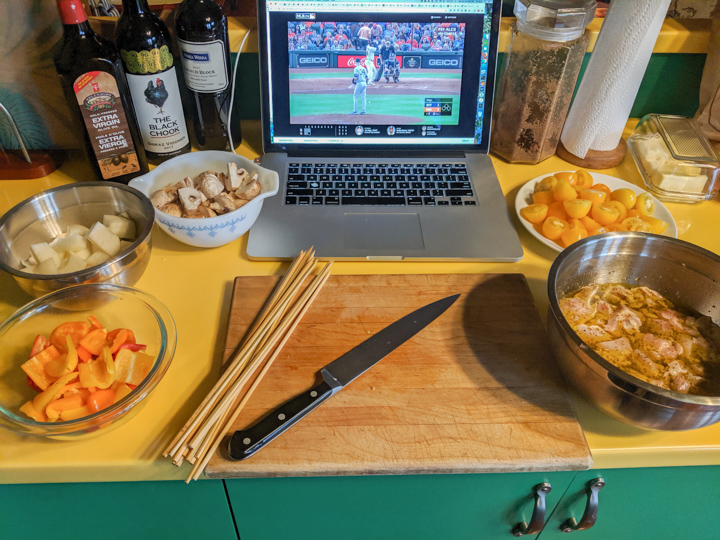
The chopping part is kind of boring, so I watched the ALCS.
Safety note: Several of these steps require getting intimate with uncooked chicken. Which can contain the sort of microorganism that causes major unhappiness. So a hot-soap-and-water hand-wash is in order whenever you move from the raw-chicken part to any other part. And then give the part of the counter where you did the raw-chicken stuff a good scrub.
First, you make the marinade. Mine is equal-ish parts olive oil and lemon juice, with several large dollops of garlic paste, and lashings of black pepper. If I have oregano (dried not fresh) handy I throw some in; if not I don’t worry about it. Mix vigorously. You need enough marinade to cover your chicken and a little bit goes a surprisingly long way. Say 3 juicy lemonsworth and the same or a little more olive oil.
Cut up your chicken. You want pieces of a size and shape that go comfortably on the skewer. I tend to favor smaller rather than larger to increase the surface-area ratio, because the surface is where the marinade soaks in.
Drop the chicken into the marinade and swish it around. Put it in the fridge and ignore it for a while. I think two or three hours is plenty, but purists do all this the day before. Important: Count the pieces as you cut them up.
Now we’re getting ready to cook. Here’s where you need to get quantitative. Figure out how many skewers you want to make (or maybe just how many you have) and look studiously blank while you sip a glass of preprandial wine and calculate how many pieces of chicken per skewer. Since each chicken chunk should have one or more non-meat items separating it from the next, you now have sufficient information to calculate how many pieces of (for example) onion, mushroom, pepper, and so on you need. The one I did today had three pieces of chicken, two pieces of onion, one piece of pepper, two pieces of mushroom, and two cherry-tomato halves (one red, one yellow) on each skewer. I had forty meat morsels, and I made twelve skewers for the four of us, so the veggie numbers were easy to work out.

Ready for the grill.
Stop here and, if you are using wooden skewers, drop them in a sink-full or pot-full of water to get somewhat fireproof.
Cut up all your vegetables and fungi. I like to grab a bunch of cereal bowls, one for each ingredient. I try to cut them roughly the same size as I did the chicken, so that when I put them on the barbecue you won’t have a big hunk of onion shielding the meat from the flame, or the other way around. If you have a compost bin, move it from wherever it is to where you’re slicing, to capture the waste.
OK, pull the meat out of the fridge. Pour the marinade down the drain. Grab a big plate to put the completed skewers on. Arrange the chicken and all the other skewer-fodder and the plate as seems best to you. I’m a soulless geek so I work out a repeatable skewer script (e.g. tomato, chicken, onion, mushroom, chicken, pepper, mushroom, chicken, onion, tomato) and stick with it.
At some point halfway through, wash your hands and go fire up the barbecue.
Once you’re done you’ll have a satisfying heap of skewers on the plate, and quite a bit of chicken pollution on your hands and the counter. If you miscalculated and there are bits of leftover vegetable or chicken stick the ones you can on skewers and throw the rest out, they’re unsanitary.
Slap ’em on the barbecue, wait till one side is done, turn ’em over, wait again, then enjoy. Tongs help. If you’ve kept the size of the chicken morsels down, then when one side is visibly seared I find it’s reliably cooked inside. Four or five minutes each side works for me, but that’s on my barbecue with my preparation habits. You do really need to make sure the chicken’s done.

Rice works well. I like to toss asparagus or broccoli on the part of the barbecue that isn’t full of skewers, but whatever. White wine, or (wouldn’t have said this even a couple of years ago) a good artisanal cider.
There won’t be any. The lemon-soaked garlic-loaded flame-kissed skewer payloads are ravishing. And it’s hard to get this one wrong.
[Disclosure: The attentive observer will notice that the pictures are of a different batch than the one the text describes.]
| mkalus shared this story . |
Greta Thunberg travelled to Fort McMurray Friday, following her speech at a large rally in Edmonton.
The climate activist arrived in northern Alberta Friday night for a private meeting with Athabasca Chipewyan First Nation Chief Allan Adam.
"We talked about what was going on in our region," said Adam. "Where we come from, the Athabasca Chipewyan First Nation, everything you [Fort McMurray] do affects us."
Adam said residents of the Athabasca Chipewyan First Nation are feeling the effects of climate change, and he wants more action.
"When Greta comes around, as a chief... I am obligated to meet her. To understand what she's all about," he said.
He said that the community uses the money it gets from the energy industry to fund projects like community-based monitoring, in an attempt to see what effects climate change is having in the region.
"It took someone from Europe, a young little woman who had the courage to stand up to Canada and the United States, to say to them your emission of greenhouse [gas]... has a global catastrophe to all humanity."
Thunberg was in Edmonton Friday, where she spoke to thousands at a rally outside the legislature. There will be no such rally in Fort McMurray where her presence is divisive.
Robbie Picard, founder of the activist group Oilsands Strong, said he's feeling very conflicted about the teen's visit.
"I'm torn on Greta's visit," he said. "She's a 16-year-old girl who we should be kind to and she's trying to make the world a bit better."
But he also said Thunberg is just the latest in a slew of celebrities to weigh in on the oilsands.
Among those who have done tours of Fort McMurray's oilsands are Neil Young, Leonardo DiCaprio, Martha Stewart, Desmond Tutu, James Cameron, and, most recently, Jane Fonda–who Picard confronted in a Fort McMurray parking lot in 2017.
"Not one bit of her [Thunberg's] trip has not involved fossil fuels from the Tesla she's driving, to the food she's eating, and the plastic forks she's using."
"I think it's very important that she realizes quickly that one, the oilsands provide economic reconciliation and that pipelines are the new traplines."
Picard said he thinks "the war on fossil fuels needs to change to a positive outlook on how we can always continuously improve the world we're in and make it better."
He said many First Nations in the region have hundreds of millions of dollars invested in the industry. "This is a very complex issue and a very important issue for our Indigenous people in this region."
For Patricia Menon, a Grade 10 student in Fort McMurray, Greta's visit to the province is exciting.
Menon is a member of EnviroMentor, a program that pairs high school students with fourth graders, in an effort to teach kids about the environment.
"Many people don't like that she's coming here because of the oilsands, they feel like she's trying to shut it down… but I'm glad she's here because she's also educating us on climate change," said Menon.
She added that it's not about shutting the oilsands down, but rather it's about stopping the global temperature from rising and making the industry more eco-friendly.
Thunberg did not respond to multiple media requests from CBC.
 Google recently announced the Pixel 4 and Pixel 4 XL, its latest and greatest Pixels. This time around, the company has focused on improving the overall experience of using the phones rather than just focus on the camera. If you plan on buying the Pixel 4 or Pixel 4 XL, check out our detailed FAQ below which should answer some of your questions surrounding the device.
Continue reading →
Google recently announced the Pixel 4 and Pixel 4 XL, its latest and greatest Pixels. This time around, the company has focused on improving the overall experience of using the phones rather than just focus on the camera. If you plan on buying the Pixel 4 or Pixel 4 XL, check out our detailed FAQ below which should answer some of your questions surrounding the device.
Continue reading →

Smart lights have been around for ages, and Philips’ Hue line is one of the more popular products on the market.
Back in July, the company expanded its main lineup with a new version of its smart lights that connect via Bluetooth as opposed to using its Zigbee hub.
While there are limitations to using the Bluetooth lights, they’re the perfect starter smart light for most people since they don’t require Hue’s connection bridge.
Why are they a great starter light? Well, for one, you don’t need to cough up the $70 CAD that the bridge usually costs, so the upfront price is considerably lower.
The setup of the Bluetooth lights is also more streamlined. All you need to do is download an app called the Philips Hue Bluetooth, and it guides you through a straightforward setup. Next, you screw in the bulb, start the app, flip the light switch off and then back on, and voila, you’re good to go.

The experience in the Bluetooth version of the app is similar to the regular Hue app. However, there are some drawbacks. For instance, you’re unable to set routines, which is a convenient feature featured in the standard Hue app.
One thing worth noting is that it seems like the Bluetooth lights are a bit snappier when you change their colours, compared to the regular Hue’s. It’s not that this makes a huge difference, but is still worth noting
You can also only control 10 lights via the Hue Bluetooth app, which is considerably less than the 50 lights the regular Hue Bridge is capable of managing. This is another reason why the Bluetooth lights are great starter lights. You can buy a few as you move to a dorm or your first apartment, then purchase more later on.
Once you get more than the ten lights, you can buy a bridge and connect the Bluetooth lights to it, just like the regular Hue lights.
While you can’t set up rooms or Routines within the Hue Bluetooth app, you can add the lights to either the Google Home app or the Amazon Alexa app and control the lights. While this isn’t as seamless as connecting the assistants to the Hue lights with the bridge, it does open more possibilities for the starter lights.

After spending time with these lights, I can say that they’re great smart lights that work well. I like to use the lights with the bridge since they then offer more customization options in terms of rooms and routines. That said, the Bluetooth lights are perfect for the budding tech enthusiast to start a simple smart home.
You can buy a single soft white Hue Bulb with Bluetooth for $20 CAD on Amazon. The prices do go up if you want options that change colours. That said, I rarely change my lights from their default settings and typically leave them on soft white.
On the other hand, don’t be afraid to spend the upfront cost because the lights last a long time. I got my first set of three for Christmas in 2015, and they all still work.
The post Philips Hue Bluetooth: The perfect starter smart light appeared first on MobileSyrup.
mkalus
shared this story
from  Das Kraftfuttermischwerk. Das Kraftfuttermischwerk.
|
Die hätte ich gerne fürs Fahrrad. Roaaarrrr.
(Direktlink, via BoingBoing)
What promised to be a normal but active week, turned into where I was mostly ill. I did get to do some work but not much.
 (photo by me in 2008 during our first ever Birthday Unconference, on University Twente’s campus. 42 is the building’s number, the Faculty Club, where we had lunch that day, isn’t called 42, alas.)
The big takeaway: if you want to keep your brain healthy both today and in the future as you age, you should be consuming coffee, tea, or cacao.
Coffee every morning and sometimes in the afternoon, and if not then I'll drink some tea. I had been eating a ton of dark chocolate but have recently cut back. Maybe I'll reconsider. Mrs. Mueller will never cut back from dark chocolate.
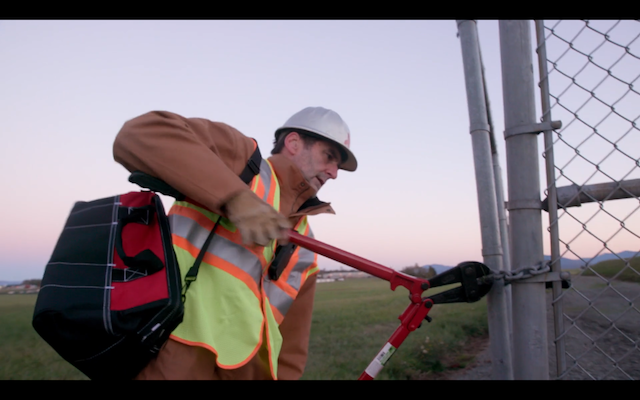
Image of Ken Ward in 2016 Valve-Turners action, from the film The Reluctant Radical.
Last week, Donald Zepeda was found guilty by a jury in Washington State for his actions to disrupt the flow of Alberta tar sands bitumen sludge to the US by turning off a pipeline valve. He was allowed, thanks to some encouraging earlier cases involving the valve-turners, to use the “defence* of necessity” .
Sadly, the defence failed, and Donald explained why he thought it did. This week he was sentenced to 60 days in jail on three counts, but other than 5 days’ time already served, the remaining sentence can be served as community service. All sides considered the sentence “lenient”, though the judge suggested that any repeat offences will not be treated as lightly (it was Donald’s first conviction).
Even before the verdict was rendered, Washington State prosecutors had already decided to recharge Ken Ward for a third time for the original “valve-turners” action, which they can do — if they allow the defence of necessity, since the state supreme court refused to review the ruling throwing out (but not overturning) the verdict in the second trial because introducing this defence had been refused. The third trial is now scheduled to begin on Feb. 10, 2020.
Ken welcomes the opportunity to use the defence, even though he may be opening himself up to a longer prison sentence if he loses (he got ‘time served’, for a single charge of burglary, in the second trial). Ken is not optimistic that the defence will be successful, and he is prepared to go to jail. (If you want to support him and other valve-turners with their legal costs, here’s where to donate.)
Reading more about the guilty verdict against Donald, and Donald’s post-mortem on the trial, it seems to me that the fix is in: The defence failed because the jury didn’t think they met the 4th clause of the defence, “that no reasonable legal alternative existed”. The wording of the defence provision (as it applies in the US anyway) says the onus is on the defence to “prove” all 4 clauses are met “on the preponderance of evidence”. But especially in our byzantine legal system, how do you prove “no reasonable legal alternative exists”? How do you prove something doesn’t exist? I’m no lawyer, but it seems to me that this defence is so onerous that it is almost no defence at all.
My guess is that the prosecutors in both the Washington State cases are being encouraged and provided with free legal advice by legions of other closely-watching prosecutors all over the world, who want to make the point that this defence is basically useless, so that it will not be used again in climate actions.
The necessity defence has a long history, and the precedents lean heavily towards discouraging its use; they say its use must be “strictly controlled and scrupulously limited” lest it lead to, as an early British precedent put it, “anarchy and disorder”.
In countries where it is has been used, all seem to have a “no reasonable alternative” requirement, which has been taken to mean no alternative from the perspective of an “objective reasonable person” rather than the more liberal “no alternative that the defendant could reasonably foresee in the circumstances”.
So, firefighters are allowed to speed to get to a fire, and to destroy a house to prevent the fire from spreading to other homes, but the defence could not be used if someone speeding to hospital with a woman about to give birth caused an accident in the process (or probably even to beat the speeding ticket).
The other three criteria needed to prove necessity (i. defendant didn’t cause the harm they were trying to prevent; ii. defendant genuinely believed they were preventing a harm; and iii. defendant’s harm was less than the harm they were trying to prevent) are not that difficult to prove, but the fourth criterion is a hugely challenging one, and precedents suggests it’s deliberately there to make this defence almost impossible to prove. It has been successfully used in climate action in the US just once, and that was a judge’s decision, not a jury’s.
Canadian law apparently attaches the words “urgent” and “immediate” before the word “harm”, and applies a standard of “imminent peril” to the situations where it can be applied, making it even harder to use. It continues to work its way through the courts (lower courts refused to allow its use) as a defence in the Burnaby Mountain case (blockade of the Trans Mountain pipeline construction by several groups that included two members of Parliament; the MPs plea bargained and paid fines to avoid jail time). The use of the defence of necessity in the Burnaby case would be based on Ken’s precedent-setting success, but IMO it’s even less likely to succeed because of those additional words. I hope I’m wrong.
However, since Canada’s Parliament did approve a motion declaring a “Climate Emergency” in Canada, this should make for an interesting case — does a nationally declared “emergency” make actions to deal with it automatically “urgent” and “immediate”?
I think, sadly, this defence will ultimately fail on the same grounds (the 4th, “no reasonable [legal] alternative” criterion) that the defence in Donald’s case failed on, and I fear that Ken’s next trial defence might fail on the same grounds, depending, of course, on the sensitivities of the jury and the instructions of the judge.
The necessity defence also has a dark side, that climate activists would be wise to keep in mind when using it: It has been used (thankfully unsuccessfully) by right-wing anti-abortion groups to justify the blockage of access to medical facilities offering (constitutionally-defended) abortions, and even to justify the murder of abortion providers. And it has been considered for use to justify torture of alleged terrorists.
If use of the defence continues to fail, then this will likely put a damper on what XR can and will do, and it will likely embolden enforcement authorities to arrest XR participants in future actions with the knowledge this defence is unlikely to work.
Of course, it is possible that, as climate collapse deepens, juries may actually start to conclude that there is no longer a “reasonable alternative” to direct action. It would appear that this is still a way off, however.
So why is Ken so equanimous in facing a third trial when it seems quite likely the necessity defence will fail again, and the sentence may be considerably less lenient? Ken is committed to the end to what he is doing, and not afraid of serving time in jail. His presence in a jail cell, while the Tar Sands perpetrators of the atrocities he’s fighting on our behalves just go on destroying our planet, will hopefully be sufficiently galling and outrageous that it will drive more citizens to join the fight — in government, in the courts, in the streets, and ultimately, almost assuredly, in front of the bulldozers and in the jails.
At the same time, Ken must be aware of the potential dampening effect the failure of the necessity defence on the numbers of XR and other direct climate activists willing to pursue direct action, and on the courage these activists will have in the face of the threat of jail time. But Ken knows that as the situation we face, if we fail to take drastic action to reduce our environmental destruction, becomes more obviously and unavoidably horrific, the number of people with the courage to take direct action to stop mega-polluting activities will eventually surge, and eventually those numbers will reach the level at which arresting and incarcerating everyone becomes impractical and unarguably ineffective, and the level at which these destructive activities become uneconomic, reputationally ruinous, and ultimately illegal.
Ken and other climate activists are determined to drag not only the worst perpetrators of climate crimes, but the large majority of acquiescent and wilfully ignorant citizens, to the point they realize the urgency, vital importance, and massive degree of coordinated change needed (most notably to our economy and our lifestyles) to prevent runaway climate change, the rendering of much of our planet uninhabitable and much of the rest horrifically impoverished and desolated, and unimaginable suffering in the face of the resultant ecological, economic and civilizational collapse.
So what then?
Revolutionaries (and XR is in every sense revolutionary) have long acknowledged that challenging laws can lead to incarceration or worse before public opinion shifts and insists on changes to those laws and political action to stop the catastrophic destruction of our environment. Opinion polls suggest that waiting for public opinion to shift isn’t an option — even the majority of those agreeing there’s a climate crisis are opposed to spending any taxpayer money to deal with it, let alone the draconian changes to laws and lifestyles needed to achieve XR’s demands (and to prevent catastrophic climate collapse).
And I think hoping the legal system will be in any way an ally in our fight is absurdly idealistic. The legal system exists to protect the status quo that is destroying our world.
And direct action (break it, block it, take it) generally makes most people anxious, not inspired. But increasingly disruptive direct action is going to be needed, IMO, to jump-start the utterly inadequate pace of current climate actions.
So we have a broken economic system, a broken legal system, and a broken political system — and a largely ignorant and complacent citizenry all too willing to believe the media propaganda that denies, grotesquely understates, misrepresents and makes excuses for the accelerating climate catastrophe.
Hard road ahead, I think.
Thank you, Ken, the Valve Turners, Donald, Greta, XR, and all those climate activists putting it on the line at such great risk and against such powerful opposition. We’re cheering for you. And struggling with the decision on when to join you.
_____
(*Americans are free to substitute an “s” for the “c” in “defence”; I’m Canadian and the defence was originally a British precedent.)
Deutsche Welle: Bundeswehr trainiert für möglichen Atomkrieg. “Es ist das schlimmste denkbare Szenario: ein atomarer Konflikt mitten in Europa. Genau für diesen Alptraum üben deutsche Kampfflieger gemeinsam mit Alliierten der NATO. Russland dürfte sehr genau hinsehen.”
“Die Gefahr eines auch mit Atomwaffen geführten Krieges gilt derzeit als deutlich höher als in den vergangen drei Jahrzehnten. Grund ist vor allem das Ende des INF-Vertrags zum Verzicht auf landgestützte atomwaffenfähige Mittelstreckensysteme. Die USA hatten das Abkommen im Sommer mit Rückendeckung der NATO-Partner aufgelöst, weil sie davon ausgehen, dass Russland es seit Jahren mit einem Mittelstreckensystem namens 9M729 (NATO-Code: SSC-8) verletzt.
Militärexperten rechnen damit, dass es nun zu einem neuen Rüstungswettlauf kommen könnte. So arbeiten die USA bereits an einem neuen mobilen, bodengestützten Mittelstreckensystem, das in Zeiten des INF-Vertrags illegal gewesen wäre. Es soll nach derzeitiger Planung ausschließlich konventionelle – das heißt nicht-atomare – Sprengköpfe transportieren. Ob es dabei bleibt, ist allerdings unklar.”
From the introduction to Come As You Are: The Surprising New Science that Will Transform Your Sex Life:
And finally, in Chapter 9, I describe the single most important thing you can do to improve your sex life. But I’ll give it away right now: It turns out what matters most is not the parts you are made of or how they are organized, but how you feel about those parts. When you embrace your sexuality precisely as it is right now, that’s the context that creates the greatest potential for ecstatic pleasure.
From the introduction to Bicycle/Race: Transportation, Culture & Resistance, by way of explaining how focusing on building cycling infrastructure misses the mark:
I disagree with this approach, both as an advocate for bicycling and as an anthropologist. The development-based strategy sidesteps key questions about race, place, and mobility: Who decides what to build, who gets paid to build it, and who will frolic in those future streets? If the answers point to inequity, and they very often do, so will the fruits of the strategy. My approach to changing street culture takes a step back from designing new street systems and focuses instead on the human infrastructure that shapes our current mobility. Culture, social networks, who we spend time with; the relational nature of being social creatures plays a fundamental role in where we live, how we travel, who we value, and, crucially, how we transition to more sustainable lifestyles. We carry our identities and histories with us as we mobilize into public spaces like streets, and from within our individual bodies we transmit norms and new ideas. We can’t design a future where race and other hierarchical structures don’t matter in transportation unless we reckon with how they’re embedded in today’s unequal mobility landscape.
Both authors are saying, in essence, the same thing: embrace your infrastructure as you find it, and focus, instead, on the personal, cultural and social issues layered on top of it.
In the last year I’ve been reading a lot of lesbian fiction, mostly romance. I’ve been enjoying myself, but it also feels a bit like a dirty little secret. Romance books are the stereotypical realm of the middle-aged woman, and well I’m a shining stereotype I guess. I’ve gotten so much joy from some of these books and I feel like it’s such a weird thing to be shamed for, so I’ve decided to just go ahead and own it, and share with others.
The real takeaway for me is discovering lesbian fiction, regardless of the romance part. I mean, I’ve known that lesbian fiction is out there, but in my mainline consumption of mostly sci-fi and fantasy fiction I hadn’t run into any on the regular and didn’t give it much thought, because well that’s what it’s like to be a minority in some aspect of society. Then I got a recommendation for some historical fiction that opened up my reading list considerably. So for folks who may be interested in checking out some lesbian fiction, I figured I’d share some of what I’ve read and what drew me in.
Last year I asked Twitter for book recommendations as I was heading out for vacation. I got a bunch of good stuff, but my favorite of the list was the Alpennia series by Heather Rose Jones. It is a set in a fictional European country and has a magic/supernatural system, but it is very much well-researched historical writing for Europe in the 19th century. I dove into it without even fully reading the summary, so I wasn’t sure what I was in for. What I discovered was a sword-fighting woman and a lesbian love story set in a time where both were difficult territory to navigate. The book is great writing and story either way, and I would have loved it without the lesbian part as well, but with that pleasant surprise I realized that I’d found something I didn’t know I was missing—representation. The love stories in the series are sweet and real, and while important, they don’t necessarily drive the plot. I should also point out that while there are love stories, there are no sex scenes. I refer to these as love stories versus the more widely used “romance”, which to me means the romance drives the plot and that it most likely contains sex scenes.
After reading up what I could of Heather’s books I began my search for more fiction with lesbians. I pretty quickly discovered The Lesbian Review site which provides book (and movie) reviews for lesbian fiction. I was like a kid in a candy shop. Of course I immediately started to track down the recommended sci-fi books and discovered The Caphenon, which is the first of the extensive Chronicles of Alsea series by Fletcher Delancey. I basically fell in love with this series, the world of Alsea, and the rich characters. It’s just great sci-fi writing and dives into the complexities of people (whether they are human or Alsean), ethics, politics, and relationships. It reminds me of another epic sci-fi series that I love, The Vorkosigan Saga by Lois McMaster Bujold because it is so wonderfully character-driven, just this time it has women as the main leads and a universe where the whole hangup over gay, straight, or whatever just doesn’t exist. Do your thing with whoever you want. It even has an asexual main character (in Outcaste). On the romance front, first you should know that the Alseans are similar to humans but they don’t have exactly the same, um, equipment, so the sex scenes are a bit different while still essentially being lesbian. And there are sex scenes, though not in all of the books. You don’t actually hit explicit sex until book 3, Without a Front: The Warrior’s Challenge. That said, again these stories aren’t based on the love stories or the sex. That is just one part of the bigger picture of who these characters are and their history. When I finished the books written so far (at that time Outcaste had just been released) I had a pretty big sad and stopped reading for a few weeks because nothing else I started captured me like Alsea had. I missed the characters and the world so much, I wanted to crawl into those books and never leave. (By the way, Fletcher is still writing the series so it isn’t completely over yet.) These books are strong sci-fi with a romance aspect to some of them, but again, not “romance” novels.
I’ve traversed a lot of lesbian fiction ground over the last year, with many good reads, great reads, and of course a bunch not so great. One more author that definitely captured my attention though is E.J. Noyes. She fits firmly in the romance category with the love story being front and center of her books, but her character development and the way she tackles the fullness of humans is noteworthy. It turns the books into an exploration of human relationships which also happen to have good sex scenes. The first book she published, and the first I read, is Ask, Tell, which is about U.S. soldiers in Afghanistan during the “Don’t Ask, Don’t Tell” era. The follow up to that book is Ask Me Again, which dives into PTSD from events in the first book. It’s intense and told very well. Most of her books deal with people who have dealt with some serious issues in their lives and try to figure out how to both heal and weave that into a relationship. One thing that I think makes these books stand out and had such an effect on me is that they are written in first person, which is unusual. That drives some people crazy, but I find it very effective. And oh boy, every time Sabine says to herself “Stop it Sabine.” I feel that echoing in my own head. Been there. I guess that is why I am drawn to these stories because there are aspects to them that I feel from my own experiences and sometimes it feels like she’s writing out my own thoughts.
So those are a few of my favorites and they span quite a range, both topically and in levels of romance and/or sex, but they all feature complex women in well-written stories. There are a ton more authors and books (romance and not) that I’ve also very much enjoyed recently and perhaps as I go along, I’ll share more thoughts on the way. If you’re not into the genres I am or are looking to explore more on your own, I highly recommend checking out The Lesbian Review to get you started.
The City of Vancouver is holding an event to “Decode Congestion“.
They say
“We believe that the combination of data, technology, and talented Vancouver residents can create solutions that optimize street use for an efficient, safe, and reliable transportation network.”
I am not convinced that this is actually necessary. I think we know how to deal with congestion. The problem is that the straightforward, already well demonstrated, policy approach has been studiously avoided.
In part it is because we use the word “congestion” to suggest that this is somehow just a technical issue and that cities can be decongested by some formula or other. Cities work by concentrating people into a relatively compact space. Instantly, our planning process states that is somehow an evil – “overcrowding”. And that the real issue is that it just takes too long to get anywhere.
Look at the way cities have evolved over time and the pattern that emerges is remarkably consistent – and that things don’t really start to fall apart until the advent of the motor vehicle. Even then things get sorted out, until it becomes some kind of desirable objective that every household has at least one car and uses it for most trips. At that point things get really messed up. And the problem is not just that it takes 30 minutes to get 6.7 kilometres – but that anyone has the expectation that they can do that at the same time as everyone else, each in an SOV. It’s even worse when the SOV is an SUV.
Analysing our issues of urbanity – making a place that is worth living in – as though the only problem worth examining is where to park and how many lanes of freeway you need is why we have problems. Congestion is not a sensible way to summarize that. But the answers to that particular conundrum are simple geometry. Go read Human Transit to find out more. The tl:dr is that famous picture which has many versions now that all say the same thing

We can move many more people through the same width of roadway/right of way if we use space efficient modes. Walking is the most important but distance that can be travelled is limited – so bikes (and things like bikes) and public transit are essential. Cars aren’t. Very few vehicle trips really need a vehicle. And places that take this stuff seriously have been demonstrating how to do that for years. Copenhagen and Amsterdam come top of mind. And they did the math long before everybody had a computer in their pocket.
Getting rid of on street parking, giving buses priority over all other traffic, giving people on bicycles a safe, protected pathway – and allowing anyone on foot to move safely through the area – solves most of the people moving issues.
For cities that have been car dependent for fifty years or more the real problem isn’t congestion – it is sprawl. Low density development that demands automobility. To connect to those places you need higher speed trains – all day, every day not just weekday peak hour peak direction.
Then when you have done that (bought a lot more buses, given them exclusive bus lanes, completed your sidewalk and bikeway networks, built safe intersections and crosswalks) you will also need to deal with goods movement. By that time, the last mile vans will have been replaced by cargo bikes and things will already be a lot simpler. Most large scale freight movement in urban areas will have to be rescheduled to times when there is capacity available. Monopolising rail corridors for freight movement in daytime may be highly profitable but it is also sociopathic.
I do not see any of this as a data problem or requiring any new technology at all. Bicycles and electric trams were all over cities before the end of the nineteenth century. It was just the “success” of the automotive industry (“If it’s good for General Motors, it’s good for the USA” was a flat lie) at dominating the debate.
Then we can get on with placemaking, which generally translates as replacing soulless suburbs with interesting urbanity – AKA mixed land use. Which greatly reduces trip length – but can’t be done nearly as fast as reorganising urban streets.

Last week I changed this site to provide better language mark-up. However, even though it changed mark-up correctly, it didn’t solve the issue that made me look into it in the first place: that if you click a link to a posting in my rss-feed, your browser would not detect the right language and translate the posting for you.
As it turns out, Google Translate doesn’t make any real effort to detect the language or languages of a page. It only ever checks if there is a default language indicated in the very first <html> tag of a page (which my WordPress sets to English for the entire website), and only if there is no such default set it uses a machine learning model (CLD2) to detect what language likely was used, and then only picks the most likely one. It never checks for language mark-up. It also never contemplates if multiple languages were used in a page, even though the machine learning model returns probabilities for more than one language if present in a page.
This is surprising on two levels. One, it disregards usable information even when provided (either the language mark-up, or probabilities from the ML model). Two, it makes an entire family of wrong assumptions, of which that something or someone will always be monolingual is only the first. While discussing this in a conversation with Kevin Marks, he pointed to Stephanie Booth‘s presentation at Google that he helped set up 12 years ago, listing all that is wrong with the simplistic monolingual world-view of platforms and tech silos. A dozen years on it is still all true and relevant, nothing’s changed. No wonder Stephanie and I have been talking about multi-lingual blogging off and on for as long as we’ve been blogging.
Which all goes to say that my previous changes weren’t very useful. I realised that to make auto-translation of clicked links from my feed work, I needed to set the language attribute for an entire page in the <html> tag, and not try to mark-up only the sections that aren’t in English. (Even if it is the wrong thing to do because it also means I am saying that everything that isn’t content, menu’s, tags etc, are in the declared language. And that isn’t the case. When I write postings in Dutch or German, the entire framework of my site is still in English.). After some web searching, I found a reference to writing a small function to change the default language setting, and calling that when writing the header of a page, which I adapted. The disadvantage is this gets called for every page, regardless if needed (it’s only ever needed for a single post page, or the overview pages of Dutch and German postings). The advantage is, almost all language adaptations are now in a single spot in my theme. I’ve rolled back all previous changes to the single and category templates. Only the changes to the front page template I’ve kept, so that there is still the correct language mark-up around front page postings that are not in English.

The function I added to functions.php in my child theme.

An example of changed page language setting (to German), for a posting in German. (if you follow that link and do view source, you’ll see it)

After announcing the shutdown of Kik Messenger last month, Waterloo, Ontario-based Kik is selling the chat platform.
Kik Messenger will live on under new ownership, according to a blog post from the company. MediaLab, a holding company that owns an anonymous messaging app called Whisper and mixtape-sharing service DatPiff, purchased Kik Messenger.
Kik announced the plan to shut down its chat app to focus on selling its ‘Kin’ cryptocurrency and fighting an ongoing battle with the U.S. Securities and Exchange Commission (SEC) over said cryptocurrency.
MediaLab committed to continuing the development of Kik Messenger in the blog post. The holding company plans to make the app “faster, more reliable, [and] less buggy,” as well as get rid of spam bots and unwanted messages.
However, to cover the cost of maintaining Kik, MediaLab said it would introduce ads in a “non-intrusive” way in the coming weeks.
Further, MediaLab plans to keep the Kin cryptocurrency in the app and partner with the Kik team to expand Kin integration. It’s not clear how that integration will look.
The blog also doesn’t mention anything about the 100 employees Kik said it would fire in the original shutdown post. It’s not clear if those firings happened already, or if those employees will move to MediaLab.
Unfortunately, all this may be too little, too late. It’s hard to come back from a shutdown announcement, and injecting more cryptocurrency into the platform likely isn’t the booster Kik Messenger will need to succeed.
The post Kik Messenger returns from shutdown, will live on after MediaLab acquisition appeared first on MobileSyrup.
I’ve often railed against the standard marketing trope of “here’s our proven system for solving problem X.” Proven systems pitches classify problems as simple to solve and, by implication, those with problems as either ignorant or lazy. My objection is that this offers little help for hard problems and we live in a world with lots of hard problems.
Suppose your interests lie in attacking hard problems? Call them wicked problems or management messes, these are the problems that constitute more of our agenda.
One answer is to acknowledge that answers to hard problems have to be custom crafted, with solutions tailored to the environment and the circumstances. Can we glean some value from the “proven systems” hawkers even as we recognize that our problems of interest don’t fit their premises?
MacGyver provides the essential strategy here. The point is to treat a proven system as design input to crafting a custom solution. To do this effectively, the first step is to reverse engineer the proven system. First, to understand the assumptions about the problem structure and environment driving the system design. Second, to extract the components and subsystems comprising the system. Third, to pattern match between the problem characteristics of the two systems—those of your problem and those built into the assumptions of the proven system. Fourth, to adapt and apply the subsystems that apply.
This approach depends on recognizing that you own the problem. That means rejecting an implicit premise of the proven systems perspective that you can transfer ownership and responsibility to the system.
The post What’s the value of proven systems in a roll your own world? appeared first on McGee's Musings.
mkalus
shared this story
from  mrjamesob on Twitter. mrjamesob on Twitter.
|
If Theresa May had done this ‘deal’, Brexiters would be queueing up to condemn the EU’s ‘annexation’ of Northern Ireland. It’s a funny old game.
Rolandtj

I enjoyed this article as it grapples with the question of how to close the discussion of political or controversial topics in a classroom. Two major schools of thought are presented: the idea of deliberative democracy, which aims to use rational debate to reach a consensus, and agonism, which allows that people may remain on different sides even after the discussion. The author appears to advocate a middle position, hegemony, which allows one side to win (if you will) while accepting that there will be another side that did not prevail on this day. A good object lesson for how to handle such debates as adults. There are good side-discussions on the role of rationality and identity in such discussions, and how to decide what points of view ought to be excluded from any such discussion. Image: an Interview with Chantal Mouffe.
Web: [Direct Link] [This Post]
Back in pre-history - thirty years ago, say - software designers wanted to make their work available for free, but commercial companies would take it, make a small change (maybe), and call it their own, charging money for it. Open source licensing changed all that, because vendors couldn't simply cash in on someone's work to create an entirely closed and proprietary version of it. But all that was before the cloud and software as a service. And so open source designers are facing the same problem they did in pre-history: a company like Amazon comes along, takes an open source database, and builds a closed and proprietary service out of it, and contributes nothing back to the original project. That's why, according to this article, a number of open source companies changed their licensing this year. They feel they're being taken advantage of. And they're right.
Web: [Direct Link] [This Post]
There is an import driver and firmware update for Thinkpads with Thunderbolt ports. It affects a whole lot of machines:
ThinkPad X1 Tablet 3rd Gen
ThinkPad X1 Yoga 2nd/3rd Gen
ThinkPad X1 Carbon 5th/6th Gen
ThinkPad P72
ThinkPad P52s
ThinkPad P52
ThinkPad P71
ThinkPad P51s
ThinkPad P51
ThinkPad T580
ThinkPad T570
ThinkPad T480s
ThinkPad T480
ThinkPad T470s
ThinkPad T470/ThinkPad 25
ThinkPad X380 Yoga
ThinkPad Yoga 370
ThinkPad X280
Lenovo recommends users immediately update the applicable systems with these Intel Driver and Firmware packages. Both update packages (Driver and Firmware) must be installed. Lenovo recommends the Driver Package (Intel Thunderbolt software) be installed first, followed by the Firmware Package (Intel Thunderbolt firmware) second.
Everyone is writing long thoughtful pieces about how some social media company CEO should do this or that.
What a waste of carpal tunnels. Social media CEOs know what they're doing about as much as Clostridium botulinum knows that it's giving people botulism.
If your brand is all about canned beans, and you find out that some of the the cans have C. botulinum in them, you don't write a long think piece about how C. botulinum should carefully consider its impact on human health. You don't go to a conference and get on a panel about how botulism is an industry-wide problem. You don't invite C. botulinum to give a talk at a college campus.
Brand safety is a little behind food safety, though. For a long time, think pieces and conference talks have taken the place of action, while brands end up in worse and worse places. That is the brand marketer's responsibility. David Kohl writes,
[A]dvertisers have the power to reduce the spread of misinformation by withdrawing media dollars from platforms that enable its distribution. Consumers are nearly three times less willing to associate with brands that advertise alongside unsavory, offensive content (see Magna’s Brand Safety Effect). And according to Edelman, 48 percent of consumers feel it is a brand’s own fault if their advertising appears near inappropriate social media content. Simply said, advertisers put their brands at risk by placing their media budgets in the hands of platform providers that fail to take full responsibility for the content they distribute.
Starting in 2020, when a brand runs an ad on
social
and it ends up sponsoring a death threat
against a journalist, or a video of someone abusing
their kids, or a domestic terrorist recruiting page,
the people who made that bad advertising decision are
going to find out. Starting in 2020, California gets
the California Consumer Privacy Act (CCPA).
When people see brand ads running on all the evil shit that the social media companies are pushing out, they're not going to fill out some ToS report form when CCPA is available. And those CCPA demands will come to the brands responsible.
Which is great news. Handling CCPA demands is likely to be costly. So avoiding them gives everybody a reason to do the right thing, and move ads away from problem activities. Brand safety and isn't just another marketing checklist item. Do it right and it's your ticket to getting on the right side of history.

Microsoft just open sourced their data exploration tool known as SandDance:
For those unfamiliar with SandDance, it was introduced nearly four years ago as a system for exploring and presenting data using “unit visualizations.” Instead of aggregating data and showing the resulting sums as bar charts, SandDance shows every single row of a dataset (for datasets up to ~500K rows). It represents each of these rows as a mark that can be colored and organized into different areas on the screen. Thus, bar charts are made of their constituent units, stacked, or sorted.
Nice. I hadn’t heard about SandDance until now, but I’m saving for later. You can grab the source on GitHub.
Tags: Microsoft, open-source, SandDance

Steve Wheeler recognizes that the word 'tribe' "can be a contentious term" but in this series of posts he goes ahead and uses it anyway. He could just as easily have used the terms 'culture' and 'family' and his arguments and evidence could be the same. There is certainly cultural sharing and cultural grouping on the web - a quick breeze through TikTok provides ample evidence of that. But the meaning inherent in the word 'tribe' suggests a much more organized social structure (or, at least, should) including leadership, decision-making processes, common values and religion, physical or geographical integrity, and more.
Web: [Direct Link] [This Post]
Google has stirred some security concerns after admitting that its Pixel 4’s facial authentication system unlocks even when your eyes are closed.
BBC News discovered the facial authentication system unlocks when a user is sleeping or pretending to be asleep.
Proof, for those asking #madebygoogle #pixel4 pic.twitter.com/mBDJphVpfB
— Chris Fox (@thisisFoxx) October 15, 2019
In comparison, Apple’s Face ID system has an “Attention Aware” feature that only allows the device to unlock if the user’s eyes are open.
Google has admitted to the flaw in a support page that says, “Your phone can also be unlocked by someone else if it’s held up to your face, even if your eyes are closed. Keep your phone in a safe place, like your front pocket or handbag.”
Security experts have said that the flaw is a significant problem that could lead to unauthorized access to the phone.
Google told BBC News that the system cannot be fooled by masks or photos. The tech giant also said that it “will continue to improve Face Unlock over time.”
The post Google admits Pixel 4’s Face Unlock works even if your eyes are closed appeared first on MobileSyrup.
Part 1: The Intro
It’s tempting to glorify the past.
(Mighty tempting.)
I wrote recently, in my eulogy to Robert Frank, that MAGA is really one more expression of the desire to return to the 1950’s.
It’s easy to mock that desire, (and I did,) because it so easily connects to a whiter, more racist and sexist America.
If we were to try to understand it on less nefarious terms, we might agree people associate the 50’s with American dominance, and a more naive, safer, more small-town version of ourselves.
(Before Walmart and the Malls killed small-town shopping districts. Oh wait, I said I’d stay positive.)
Last week, I wrote about #1983, and it came about in the most fascinating, subconscious way.
But the more I thought about it this week, the more the connection made sense. 1983 was a year before a presidential election, with a Republican president who’d begun a massive rightward shift for this country.
As the fall of the Berlin Wall was still years away, the end-of-the-world fear of pending nuclear war, after decades of Cold War, was real.
The Apocalypse was in, as “War Games” came out around then, and then “The Terminator.” (1983 and ’84, respectively.)

My point is that it’s easy to pick a time, as perhaps some people are now doing with the 90’s, and think that life was easier then.
If we were to peg each decade that was once held up as the ur-decade, (like the 60’s) we’d see there was plenty of drama, strife and difficulty too.
Part 2: West Coast Style
I write about photography here each week, (or most weeks these days,) and sometimes I admit to getting bored of it. In my current work, I’ve begun to experiment with sculpture as a way of extending my creativity in other directions.
But in order to keep up a column that is about photography these many years, I find it fun to create mini-themes, and let them play out naturally.
(It always happens best that way.)
So the last three weeks, we’ve had Robert Frank’s photographs from the 1950’s, Hugh Mangum’s images from the early 20th Century, all that 19th Century work from last week, and now…
1972-74.
That’s right: the early 70’s.
If we’re looking for parallels to now, there are none better.
The Nixon years.
I was born in 1974, so technically I was alive when Nixon stepped down, but it’s not in my frame-of-reference. I remember TV and pop culture from about 1977 on. (Close Encounters was ’77, I just checked.)
But this mini-era came just after the raging 60’s, and represents the heart of the Vietnam War.
It was chaotic to the extreme.
Dudes wore beards. (Sound familiar?)
A criminal president got busted, and it was so egregious that his own party finally broke, so he resigned, living in ignominy for a few decades, before being re-embraced shortly before he died.
Clint Eastwood’s Dirty Harry was the big thing going, Charles Bronson terrorized the bad guys, and Steve McQueen was still on the scene too.
A rough-and-tumble America was fighting the Cold War, pointed straight towards a political catastrophe of epic proportions.
Yeah, I think we can all agree it’s a relevant phase to contemplate, RIGHT NOW.
How convenient that when I looked at my bookshelf, I noticed “Boardwalk Minus 40,” by Mike Mandel, published as a part of Subscription Series #5 by TBW Books in Oakland. It happened to be filed a foot or so away from “Sweetheart Roller Skating Rink” by Bill Yates, published by Fall Line Press in Atlanta. (Which Bill gave me when he came through Taos this summer.)
I grabbed Mike Mandel’s book first, and recognized some of the images from a show I’d seen of his work at SFMOMA in Spring 2017. (And I later realized I’d reviewed the Subscription series as well.)
The pictures were made around the Santa Cruz boardwalk in 1974, and it’s kind of dry, compared to some of the other work from that show. The pictures are mostly in black and white, but there are two color images that really pop, early on.
Including one featuring a perfect, vintage Pepsi can.

I once spent a long while contemplating William Eggleston’s Coca-Cola red in a show at Pier 24, but Pepsi is a totally different reference.
Pepsi?
We’re Number 2, not Number 1!
The depiction of a place-in-time feels generic, and outside the palm trees, I’m not sure what places me in California.
Is that the point?
That California was generic?
The pictures feel a little like they’re leering, and it’s something I see more clearly now, in #2019, with my 12 year old son calling out sexism on TV and media with regularity.
(They see it so easily, the young, and yet the ideals were so hard won.)
Then it gets a step beyond, as a young woman leans over to show off her breasts, and we see her nipples. Then more, as two images shows men performing or simulating cunnilingus.
It’s important to remember the artist was young at the time, and even today, people photograph sex and nudity. But it’s hard not to see this book through today’s “woke” lens as well.
As to the pictures, they owe a debt to Garry Winogrand, and Henry Wessel, (RIP,) and it makes a lot of sense. In the end text, Mike Mandel admits that as he made conceptual work at SFAI with visiting professor Robert Heinecken, his main professors, Linda Connor and the aforementioned Wessel, would not graduate him with his MFA in 1974.
So he went to Santa Cruz, leaned into a “for fun” project he’d been messing around with, and shot this series of pictures on the boardwalk, seemingly with a 35mm camera.
It was done as an “I’ll show you,” or a spite project, and it worked, because they gave him his degree. I can see why the sex photos, in that era, would have given the work an extra-edgy feel, as “Deep Throat” and “Debbie Does Dallas” came out in ’72 and ’78 respectively.
Mike Mandel’s end-notes close with a Larry David joke, (if you can believe it,) but to me, pulling these photos out, 40 years later, does justice to the aging process, rather than their inherent strengths.














Part 3: Florida Kids
With “Sweetheart Roller Skating Rink,” though, we have an equally compelling backstory. Bill Yates had just graduated from University of Southern Florida, after a stint in the Navy, and was soon headed to RISD for an MFA, to study with Harry Callahan and Aaron Siskind.
He’s roaming around Florida in 1972, looking for something to photograph, and stumbles upon the Sweetheart Roller Skating Rink in a rural spot outside Orlando. He asks to photograph the place, and the owner invites him back at night, when things are hopping.
Thus began a 7-month-deep-dive into 1973 for Bill, where he came back again and again. Everything was shot with a super-crisp medium format set-up, and I think that repeated engagement, plus the extra photo juice from the bigger negative, makes these pictures more memorable.
That the two books were so close on the book shelf was coincidental, but they have so much in common. The West Coast and East Coast versions of sleepy communities about to be eaten by much larger capitalist forces.
(Silicon Valley and Disney World.)
As to the photographs, like Mike Mandel’s antecedents were clear, here the imprint of Diane Arbus is ever-present, nowhere more so than the photo, on page 76 of the wall-eyed young woman and her less-than-intelligent-looking boyfriend.

But that’s a time-jump, so let’s take a step back.
The book opens with a very 50’s feel to it. Some greaser hair, the old signage, and there’s that Pepsi logo.
Pepsi binding the two books together?
So strange.
It’s only bit-by-bit that the 70’s-era-hair and clothing make an impression, versus the more Southern, rural feel we get out of the locals.
These pictures are awesome, and make me think of some working class images from Northern England.
The kids smoking.
The world-weariness in the eyes.
The book also has a bit more flesh-ogling than I think you’d see today. However, there’s a photo: a guy, kissing a girl, mad-dogs the crap out of the photographer, so it’s almost like he gets his comeuppance.
Though he trained with some amazing people, (as did Mike Mandel, who’s had a long career as an artist and academic,) Bill Yates went into a career as a commercial photographer.
He more or less pulled these pictures out of a box, 40 years later, and quickly ended up with this book, and a big solo show at the Ogden Museum of Art in New Orleans.
It’s a killer project, and it comes out favorably in comparison “Boardwalk Minus 40.”
But comparing and contrasting, saying which is better, is such a 20th Century concept, man.
Now is the age of win-win, and collaboration, so I’ll just say these two books make quite the pairing, and help give us visual reminders that America, and the world, have lived through tough times before.
Photography stops time and saves it for future generations.
So I suppose these last few columns have been my attempt, (subconsciously,) to remind myself, and all of you, that the arc of history is long.
Bottom Line: two cool books showing two Americas in the early 70s
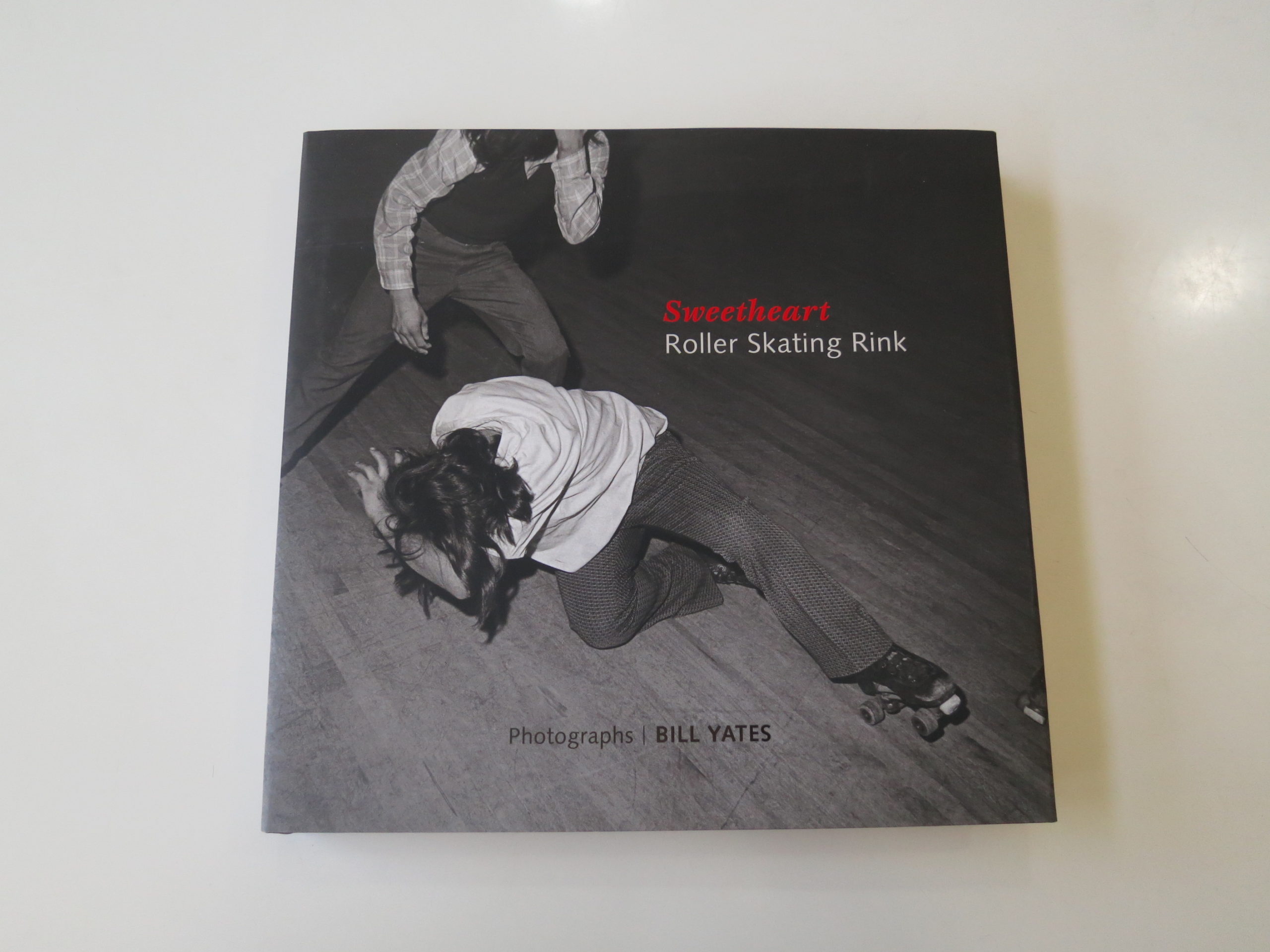













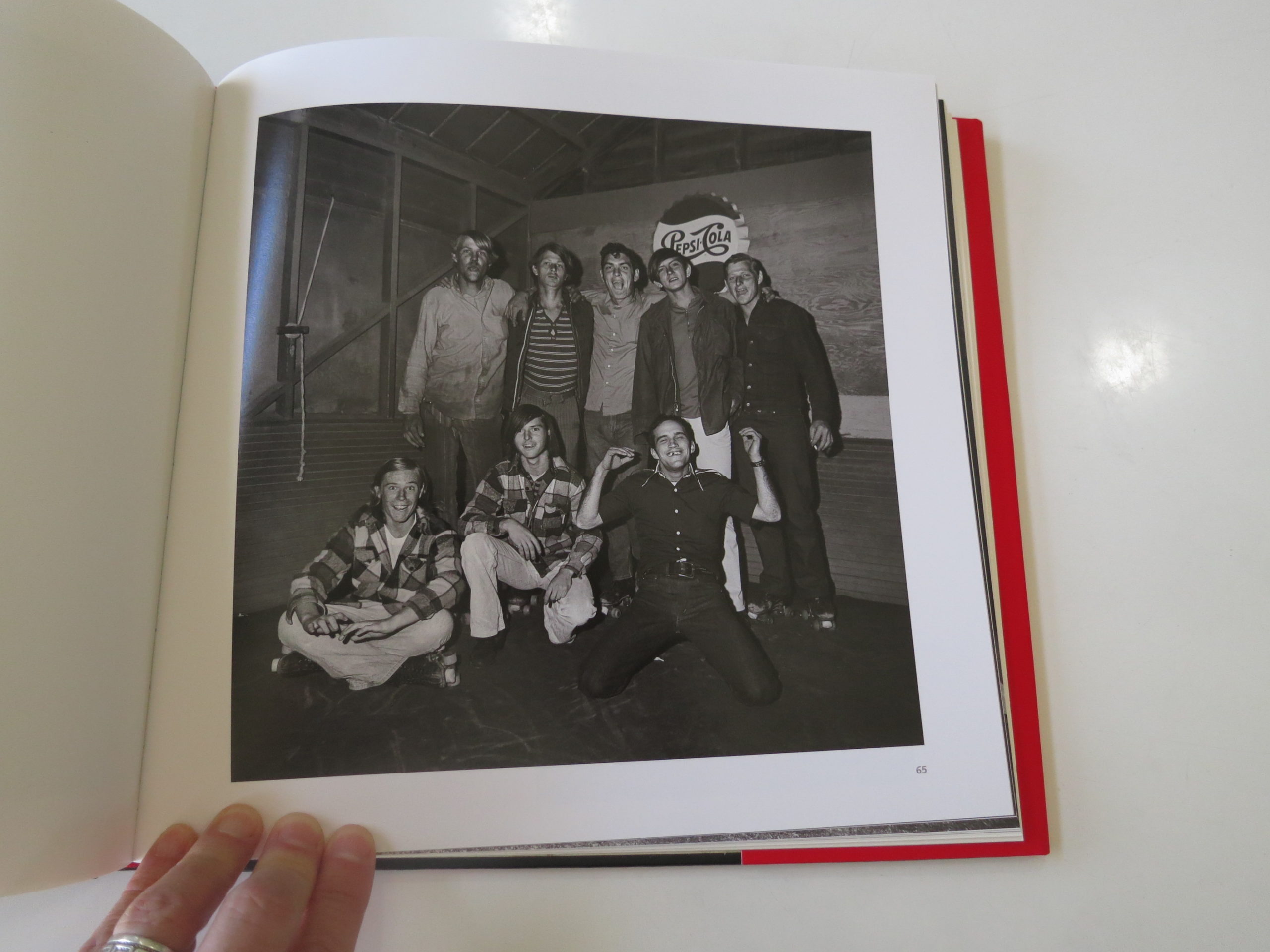
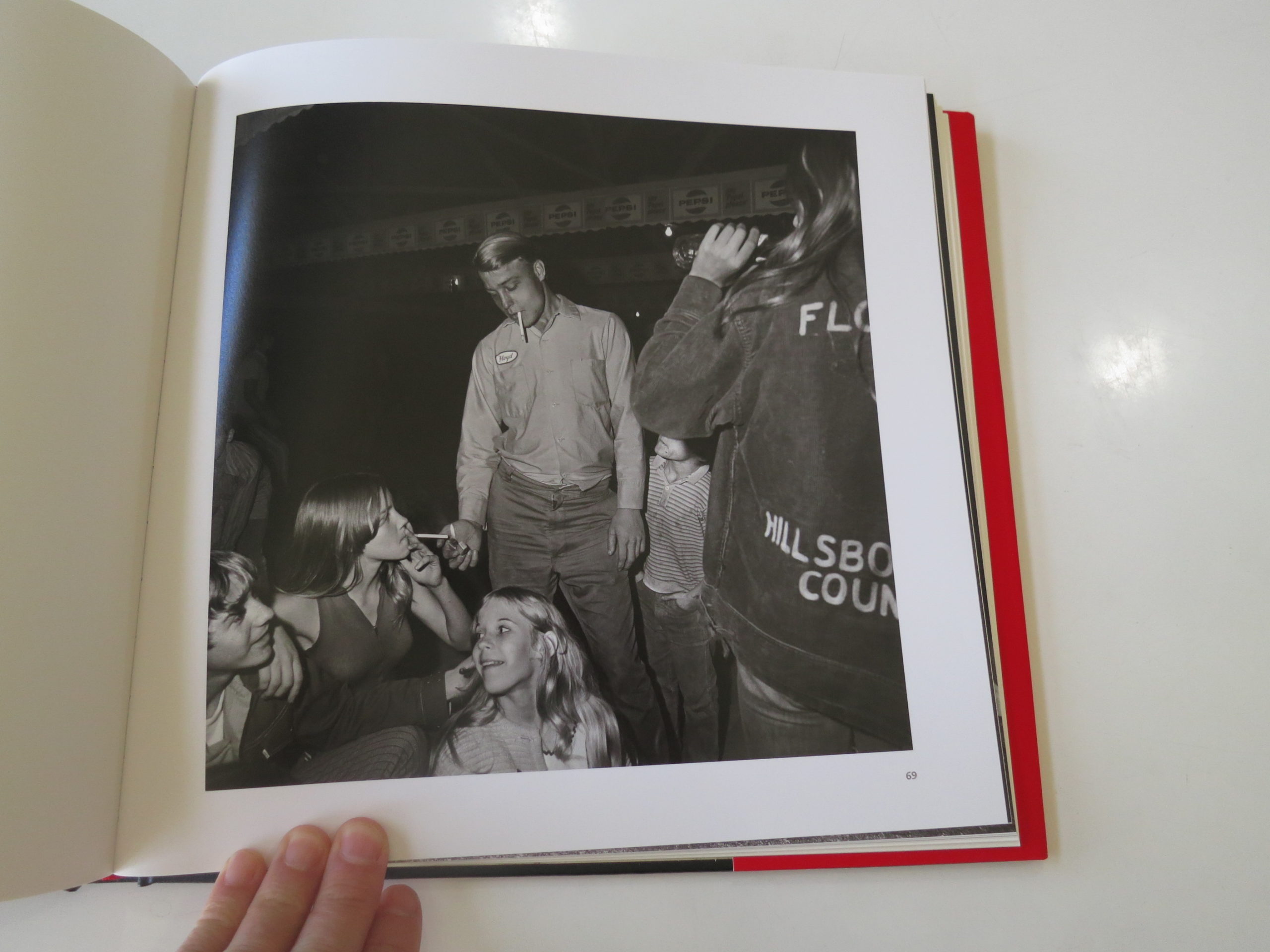






Bottom Line: two cool books showing two Americas in the early 70s
The post This Week in Photography: The early 70’s appeared first on A Photo Editor.
------------------------
Visit our sponsor Photo Folio, providing websites to professional photographers for over 10 years. Featuring the only customizable template in the world.
------------------------


