
When President Trump was elected in 2016, my wife Elly and I vowed we would stay and fight for others more marginalized than ourselves as…
When President Trump was elected in 2016, my wife Elly and I vowed we would stay and fight for others more marginalized than ourselves as…


iOS users can now set Gmail as their default mail app on their iPhones and iPads, as Google has released a new update to support the feature.
Version 6.0.200825 of Gmail is now rolling out in the App Store. Once you open the app, you’ll be prompted to set the app as the default mail app, or you can go set it as your default through the settings.
With iOS 14, you can now set #gmail as your default email on iPhone or iPad → https://t.co/iODOD2y2ot pic.twitter.com/a0RGjQsDtI
— Gmail (@gmail) September 21, 2020
You just have to go into settings, select Gmail and then click Default app. Gmail has also tweeted a GIF that provides a visual step-by-step guide on how to change the settings.
If you have already deleted the standard iOS Mail app, then Gmail will become your default mail app without any user action.
iOS users can also now set Google Chrome as their default browser, but it’s worth noting that some users have discovered that when their device restarts, the operating system will reset the default browser back to Safari. Hopefully Apple is already working on fix for this.
Image credit: Gmail
Source: Gmail
The post iOS users can now select Gmail as their default email app appeared first on MobileSyrup.
“Why do you run around looking for the truth? Be still, and there it is—in the mountain, in the pine, in yourself.”
– Lao Tzu, Conscious Arrival
(via Libby)

Microsoft announced a slew of new improvements and features across its Microsoft 365, Azure and other product lines at its annual Ignite developer conference. Although the conference is all-digital this year because of the ongoing pandemic, the company still had lots to talk about.
Since many of the Ignite announcements are developer-focused, we decided to highlight some big news for consumers. Read on to see all the latest from Ignite this year.
First up, Microsoft’s software suite — previously called Office 365 and now called Microsoft 365 — got several tweaks and updates across the included apps. The company’s business communication platform, Teams, will get new ‘Together mode’ scenes. Microsoft announced Together mode back in July to make video meetings suck a lot less.
Essentially, Together mode uses some artificial intelligence trickery to put everyone in a video meeting into the same digital space. It launched with an auditorium view that made it look like all the participants were sitting together in a theatre. At the time, Microsoft teased other scenes, some of which will arrive soon. That includes conference rooms and coffee shops, which Microsoft says will be available “later this year.”

Moreover, Microsoft plans to improve one apparent flaw with Together mode using machine learning. Together mode places each participant into a ‘seat’ in the digital scene, but if that person isn’t centred in their camera’s view, Together mode might show them in the wrong place. Additionally, someone sitting closer to their camera might appear bigger than someone sitting further away. Soon, Together mode will use machine learning to automatically scale and centre participants in their virtual seats.
Finally, Teams will get a ‘custom layout’ option for its Dynamic View setting, ‘Breakout rooms’ to allow a meeting to split into smaller groups before returning everyone to the main meeting, and in October, Teams’ meeting extensions will move to general availability. There are over 20 partners with meeting extensions, which people can add from either ‘AppSource’ or the Teams store.

Microsoft announced that its Surface Hub 2S 85-inch model is available for pre-sale reservations. Unfortunately, it’s only available for commercial customers in the U.S. for now. Hopefully that expands to other places in the near future.
The company notes availability will begin in January 2021.
Along with availability, Microsoft announced it would bring the “full Windows 10 desktop experience” to the Surface Hub 2S. It’ll offer both Windows 10 Pro and Windows 10 Enterprise configurations.
Finally, there will be a new Windows 10 Team 2020 Update in October for Surface Hub screens designed for Surface Hubs used in meeting rooms. The update will ensure protocols for wiping data from the device between meetings, new cloud authentication for accounts and more.

Microsoft announced new wellbeing features for Teams as well. While it may sound odd, the company suggests people are missing their commutes. Maybe not the aspect of sitting in traffic for an hour or two after work, but the meaningful transition between the end of the workday and the beginning of one’s personal time in the evening. For example, that time can allow people to reflect on their day and de-stress, which in turn can increase productivity as much as 15 percent, according to Microsoft.
As such, the company will add a way for people to ‘virtually commute’ in Teams sometime in the first half of 2021. Microsoft partnered with Headspace to integrate a curated set of mindfulness exercises in Teams to help with this. Moreover, Teams will get a new ‘stay connected’ feature designed to help coworkers build relationships with each other.
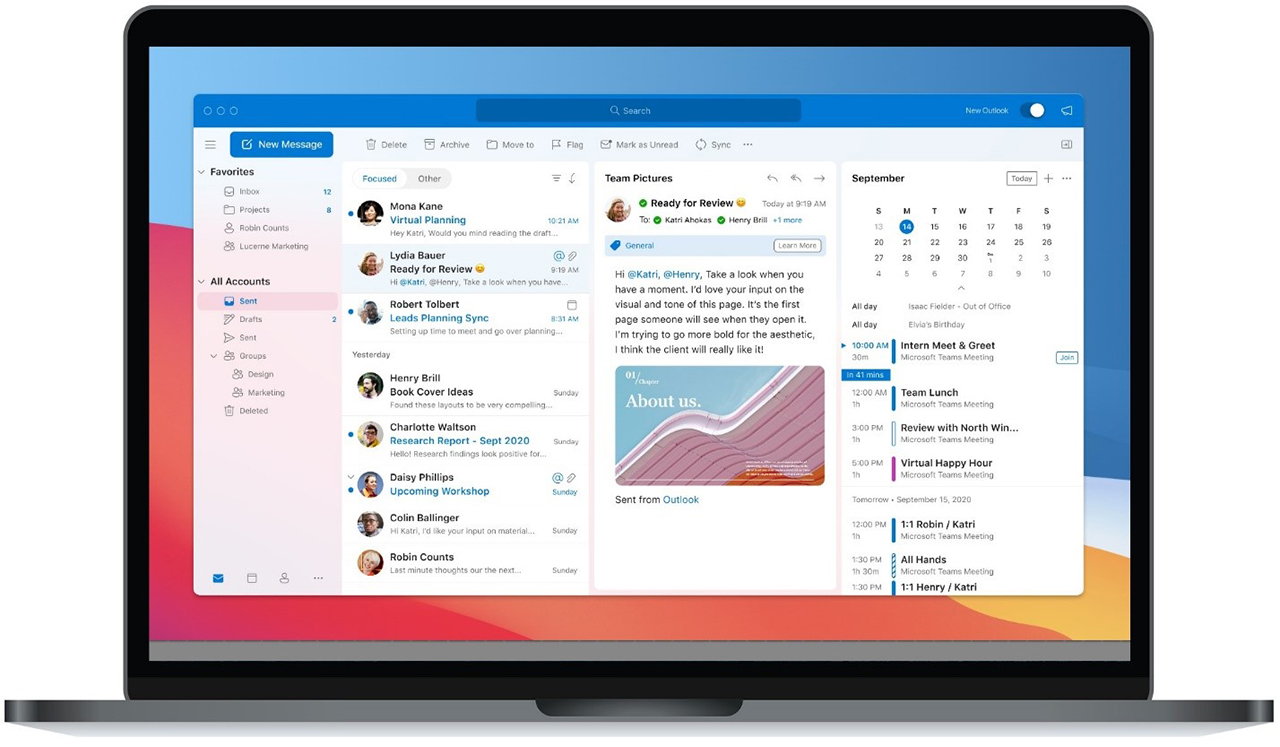
Some other updates include a new Outlook experience on Mac, which you can learn more about here. Microsoft Edge is also getting a meaningful new update: Linux support. The company planned to bring its new Chromium-based browser to Linux, but it hasn’t happened until now. Starting in October, people will be able to preview Microsoft Edge on Linux from the Edge Insider website.
Of course, these highlighted new features are only a small look at all the news from Microsoft Ignite. There’s plenty more, although much of it won’t have much significance to the typical person.
The post Microsoft Teams getting wellbeing features, Edge is coming to Linux appeared first on MobileSyrup.

TikTok says it removed more than 104 million videos globally for violating its guidelines during the first half of 2020, which represents less than one percent of all videos uploaded.
The social media giant says that of these videos, it found and removed 96.4 percent of them before a user reported them, and 90.3 percent were removed before they received any views.
TikTok’s transparency report notes that 30.9 percent of videos were removed for containing “adult nudity and sexual activities.” Further, 22.3 percent of videos were removed for “minor safety,” while 19.6 were removed for containing “illegal activities.”
Around 13 percent of the videos were removed for “suicide, self-harm, and dangerous acts.” Other reasons for removal include harassment, hate speech, integrity and authenticity.
The transparency report reveals that it received a single request from the Canadian government to restrict or remove content on its platform. Following the request, TikTok removed or restricted one piece of content on the platform.
The Canadian government did not submit any legal requests, but did submit 11 emergency requests. In emergency situations, TikTok will disclose user information without a legal process if the information is required to prevent the imminent risk of death or serious physical injury.
In its emergency requests, the Canadian government specified 13 accounts. TikTok’s compliance rate with these requests was 73 percent.
The release of TikTok’s transparency report comes as the company is proposing a global coalition to protect against harmful content. It also comes as TikTok is facing scrutiny for failing to stop the spread of a harmful video depicting a graphic suicide.
Source: TikTok
The post TikTok says it removed 104 million videos globally in the first half of 2020 appeared first on MobileSyrup.

iOS and iPadOS’s 14’s customization options don’t end at widgets. The OS updates also let users change their default email and browser apps for the first time. The feature is a little buggy in iOS and iPadOS 14.0, but I wanted to share how to set it up and explain what your current options are for anyone looking to switch away from the default Safari and Mail apps from Apple.
Switching is simple. The first step is to download a browser or email client that has been approved to serve as an alternative to Apple’s defaults. Developers must request permission to offer their apps as an alternative browser or email app, meeting certain requirements for each type of app. It’s an extra step in the app submission process, so not all browsers and email apps can be swapped in for Safari and Mail from the get-go. Still, less than a week after the public release of iOS and iPadOS 14, users have several options.

Microsoft Edge, Outlook, and Google Chrome are all default browser and email client options now.
New alternatives are being released all the time, but so far, it’s possible to swap out Safari for:
Probably the most popular browser that hasn’t been approved as a Safari alternative yet is Brave, the privacy-focused browser, although The Verge reports that the feature is coming.
Email apps available include:
Between the two quartets of alternatives, a significant portion of the browser and email markets have been covered already.

Picking a new default browser or email client from the Settings app.
Getting back to the process of switching apps, once you’ve installed one of the approved alternatives, go to the Settings app on your iPhone or iPad. Scroll down to the entry for the app you’ve just downloaded, and tap it. There you’ll find a new entry for ‘Default Mail App’ or ‘Default Browser App,’ depending on which you’re changing. Tap it and pick the alternative you want to use, and that’s it.
As easy as the process of switching is, though, the feature is not bug-free. I have been unable to get iOS or iPadOS to recognize my new default email client after I switch it. I’ve tried several apps and email links in multiple apps and on the web, but every time I tap one, the system Apple Mail-based compose sheet opens. Federico has had the same issue. I read somewhere that switching email apps only works if you change your browser first, but that didn’t work for me either. Perhaps MacStories readers will have better luck than I’ve had, but at the moment, I cannot change email clients.
9to5Mac also reported last week that if you restart your iPhone or iPad, any default browser or email changes you’ve made are lost. It’s not hard to reset your defaults, but it’s an annoying bug that I expect will be fixed in a later update to iOS and iPadOS 14.
Personally, I use both Safari and Mail and am happy with them, though I wish Mail would adopt some of the modern features of apps like Spark. Still, I’m glad users have been given greater choice when it comes to the default app experience.
Club MacStories offers exclusive access to extra MacStories content, delivered every week; it’s also a way to support us directly.
Club MacStories will help you discover the best apps for your devices and get the most out of your iPhone, iPad, and Mac. Plus, it’s made in Italy.
Join Now
I moved to the USA in 1999 and two months ago I became a citizen. I can finally say: I AM A VOTER.
Today we launched our Tattly x @iamavoter partnership to help increase voter registration and voter turnout in this election. See you at the polls!


I should have spent more time in the textiles department at school.
In the past two decades, 75% of companies worldwide have tried to gain the advantages of agility – primarily, acceleration of speed-to-market. The ability to accelerate the delivery of products and services is dependent on many internal and external variables, and more importantly the combination of those variables which can interact in complicated and systemic ways.
Some examples of those variables are:
These organizational variables are systemic, and balancing them - that is, adopting agile - is much more difficult than simply writing user stories. It’s no wonder that 70% of transformations fail.
Agile transformation requires optimizing the organization as a whole. Not just piecemeal practices like writing user stories.
Many attempts at Agile Transformation approaches are unidirectional, whether they are full-on top-down organizational change or bottom-up team-level training. Top-down Enterprise Agile often involves standardizations of a popular agile or lean framework, a tool that works for some teams and not for others, and a new role that holds people accountable. Bottom-up team training starts out mimicking agile practices blindly rather than understanding the purpose. For instance, this often involves breaking work into smaller pieces focusing on functional contribution, not deliverable value and having two team meetings – one that sounds like a justification of yesterday’s efforts and one that generally devolves into predicting the future by way of estimating the time it takes to complete work. Even if these teams are just going through the motions of agility, what generally results is an uncomfortable awareness: there are unresolved systemic issues within the organization as a whole. Agile transformation makes these systemic issues evident. Therefore, the optimal acceleration of agile requires top-down and bottom-up support.
Common pitfalls of agile transformation:
Pitfall 1: Organizations believe that “self-organizing teams” are responsible for driving all the change, often without support.
Advice: Working and thinking differently occurs at all levels of an organization, including leadership and strategy, portfolio management and product roadmapping, and refactoring your codebase to accommodate new features. Even self-organizing teams are teams within an organization – a system that requires coordination at a minimum. Self-organizing doesn’t mean flying solo.
Pitfall 2: Change Management initiatives and rhetoric are often rooted in concepts and abstractions that are disconnected from the work.
Advice: Adopting Agile requires consistent, concrete change management. Even basic Agile practices like smaller cross-functional teams, collaborative specification, and continuous improvement, require an explicit opportunity to change. Transformative change presents itself through intentional, evaluative experience and experimentation–trying things and seeing what works best. This results in getting real feedback, working new ways, learning new things.
Pitfall 3: Organizations assume that Agile frameworks do all the work and fix all the impediments.
Advice: Agile isn’t a one size fits all. Agile will make evident what slows down an organization’s ability to increase its speed-to-market. If done right, not only will the challenges be evident, but the options to adjust will also be evident. (Often through knowledge workers and meaningful metrics.) Optionality is a competitive advantage that agile presents - it does not replace the brainpower and the courage to choose an option.
Accelerating Agile adoption requires a bidirectional approach to optimize for the organization as a whole.
Given that transformation involves change, organizations need a holistic structure that embraces that change. Here’s a governance model that maximizes the bidirectional communication to align and accelerate day-to-day (tactical) work with organizational (strategic) goals, which is the point of agile.

A governance model like this provides a structure that facilitates momentum. When done well it creates the organizational safety for an experiential mindset, which reveals opportunities that accelerate agile. Self-organizing teams require focused feedback loops and support from change leaders and leadership to align on acceptable constraints (that impede acceleration). Leaders need to consider optionality, enabling aligned actions that balance organizational constraints with speed-to-market. This allows for decisions and tradeoffs to be made safely at every level of the organization. Being directionally aligned consistently, choosing acceptable impediments, and taking action requires discipline that isn’t learned overnight. To accelerate agile, organizations first and foremost need to standardize the values and principles (the why and what), not the tactical execution (the how).
Accelerating agile is a journey that requires commitment, patience, and a healthy amount of pragmatism.
Whatever method of agile you choose whether it be top-down, bottom-up, or some combination, consider your environment–your teams, your organization, your customers, and the products and services that unites you all together. Moving together isn’t easy, but what we know for sure is that if nothing changes nothing changes! So we still must try! I hope this helps :)
References
The Standish Group Chaos Report 2015
McKinsey. A Conversation with Harry Robinson: Why do most transformations fail. 10 July 2019
TechBeacon. Survey: Is Agile the New Norm?
CollabNet VersionOne. State of Agile.
Gothelf, Jeff and Seiden, Josh. Sense and Respond: How Successful Organizations Listen to Customers and Create New Products Continuously. 2017.
Heath, Chip and Health, Dan. Switch: How to Change Things when Change is Hard. 2010.
I think about this Twitter thread from @kimbert in 2017 a bunch:
A thing from art school that helped my drawing/comics practice a lot is I took a ceramics course. It taught me a lot about disposability.
– Kim (@kimbert), 6:29 AM, May 25, 2017
It’s about accepting that your pieces can break in the kiln, sometimes because somebody else’s creation shatters.
She says: But your skill + practice + vision still stays in your hands and your mind and you just quietly make another one, faster and usually better than the one that broke.
There’s another bit of advice that’s been in my head recently:
When stumped by a life choice, choose “enlargement” over happiness. I’m indebted to the Jungian therapist James Hollis for the insight that major personal decisions should be made not by asking, “Will this make me happy?”, but “Will this choice enlarge me or diminish me?”
– Oliver Burkeman (The Guardian), The eight secrets to a (fairly) fulfilled life
Which is a similar approach to risk, I think, in a way.
An absolute age ago, I was visiting San Francisco and - for some reason that now escapes me - I decided to get my Tarot cards read at one of the grotty tourist trap shops, just off Union Square.
I’m not a “believer” but, you know, open mind to new perspectives and all that.
It was a memorable experience. The psychic was texting on her phone a bunch. She asked if I had pets, and said it was good that I did because it was good for my energies. She was getting agitated about something in the texts so I suggested she get a pet too, but she snapped at me about the size of her apartment and that it wouldn’t be feasible, living in the city.
Anyway so the cards were read, my fortune told, and she gave me three pieces of advice.
One, I should phone my mum more.
Which is solid for most people, I feel. Smart for the cards to open with this.
Second: Take the easy road and not the hard road.
This was a surprise. I was expecting the cards to recommend I push on through, give me support and strength, etc. Everyone’s got some shit or another going on, and it would have been an easy win for the cards to focus their cosmic recommendations on surviving the challenge because it’ll all be worth it, and so on and so forth.
But like the recent advice, discussed here, about appreciating hedonism, this was counterintuitive. This is the Protestant work ethic in me speaking, drummed into me at school, but surely everything worthwhile is hard? The path the success and happiness is necessarily paved with struggle? Maybe not, say the cards.
Maybe taking the easy road is good because, yes, things break, but it’s fine, take it in your stride and remember the skill stays in your hands.
Dunno.
But I come back to this periodically, because at the time I dismissed it as ridiculous, and now I ask myself: ok, so what if taking the easy road is genuinely the life advice I need, and so how should I interpret that and what are the implications?
Third: I should move some things around.
At this point I was frustrated from the texting and all the rest and sarcastically said, “what, like the sofa,” and the psychic snapped “yes if you want,” and that was that.
As it happens I did move the sofa when I got back home. It opened up the sight lines between the rooms and caught the summer sun.
Anyway.
Have a new overhead camera setup for #vinylcasting on #ds106radio which will allow me to stream easily to #ds106radio and #ds106tv -will be testing that out for a bit. Tine in here https://t.co/2JURcwd59M or here https://t.co/GzpExUBnn6 for the vertical and the horizontal
pic.twitter.com/vasWs1Q7wp
— Jim Groom (@jimgroom) September 21, 2020
This is my new overhead camera setup for vinylcasting, and it rules. My first iteration was a bit more DIY and while it worked in the short term, I needed a more stable alternative. And the Manfrotto super clamp and heavy duty flexible 520MM Arm were the ticket for sure. I can mount the clamp right onto the front of my desk and then the arm easily bends over the record player for optimum vinyl viewing.
I am able to pull in the DSLR thanks to a recent acquisition of a Elgato Cam Link 4k that essentially makes an HDMI device into a USB input that OBS can pickup. I do love being able to actually take advantage of all the features a DSLR brings to the table, such as advanced lighting, focus, lighting, lenses, etc. In particular, I was able to use the wide angle lens in this event to capture the entire record player. I just tested in out with side 1 of Van Halen II, which was an homage to Grant Potter’s RH!

Facebook has warned that it may pull out of Europe if the Irish data protection commissioner enforces a ban on sharing data with the US, after a landmark ruling by the European court of justice found in July that there were insufficient safeguards against snooping by US intelligence agencies.
Never issue a threat you’re not really willing to follow up on… FB says it might stop servicing EU citizens because it isn’t allowed to transfer their data to US servers over data protection concerns. To me it would seem good news if the FB data-kraken would withdraw its tentacles. It is also an open admission that they can’t provide their service if it is not tied to adtech and the rage-fed algorithmic timeline built on detailed data collection. Call it, I’d say.
Companies are tracking what you do online. You know this. But it can be a challenge to know the extent, because the methods are hidden on purpose. So The Markup built Blacklight:
To investigate the pervasiveness of online tracking, The Markup spent 18 months building a one-of-a-kind free public tool that can be used to inspect websites for potential privacy violations in real time. Blacklight reveals the trackers loading on any site—including methods created to thwart privacy-protection tools or watch your every scroll and click.
We scanned more than 80,000 of the world’s most popular websites with Blacklight and found more than 5,000 were “fingerprinting” users, identifying them even if they block third-party cookies.
We also found more than 12,000 websites loaded scripts that watch and record all user interactions on a page—including scrolls and mouse movements. It’s called “session recording” and we found a higher prevalence of it than researchers had documented before.
Try it out here. Just enter a URL, and you’ll see a real-time count of the ad trackers, third-party cookies, cookie evaders, and keystroke recorders on any given site.
This is why I got rid of Google Analytics, social media widgets, and ad-serving snippets on FD years ago.
Tags: ads, privacy, The Markup


From Paul Caune~What about a moving theatre project that centres on a train? That’s exactly what this project from Jörn Hintzer and Jacob Hüfner, who are both media artists and professors at the Bauhaus University in Weimar Germany provides.
With a direct allegory to the every present changing visual media screens online, these two artists reverse the stationary and moving images, providing vignettes of art performance to train passengers along a 30 kilometer route. The train public art is set through the Saal Valley in Germany where fifty live art performances were repeated for 26 trains over two days.
The Bewegtes Land project incorporates live performances from four hundred residents who live along the route. A couple fishing in a lake tip over in a canoe when a shark “attacks”. There is a burning tree and running bushes. There is a group of east German produced cars (which were completely unreliable) chasing a new Volkswagen. And there is a runner who paces along the train, rides a horse, and somehow ends up at the train station terminus ahead of the train.
As Jessica Stewart in My Modern Met writes ” In one town, Dornburg-Camburg, almost all of the residents took part in the project. And mayor Dorothea Storch hoped that the weekend would have another effect. “For one thing, it’s a great weekend, but also people get to notice the beauty of the countryside,” she told Deutsche Welle. “This is not a typical tourist area so maybe this will attract more people.”
You can watch some of the extraordinary performances in the YouTube video below.
Image:DW

In the last three years there has been a lot of chest thumping at how autonomous vehicles would infiltrate the market, and how fast this technological change would happen. I have written about the autonomous vehicle that drove across the United States. The vehicle achieved that only on the highway, and had to avoid being autonomous in cities.
While the technology is being developed for the trucking industry as an advanced driving assistance system (ADAS), it is telling that it can only be used on highways. The reason is that this technology called “Copilot” cannot differentiate narrow streets, oncoming traffic, pedestrians and cyclists, all the components at play in a city setting. Despite the claims of autonomous vehicle boosters that the technology is close to being adopted in cities, the sophistication of the systems to recognize and respond to the multitude of discrete movements in a city have still not been developed.
Some of the speakers in the excellent AARP Transportation conference held last week were even more blunt. They posit that the Level Five completely autonomous technology is being developed by software engineers that live in a certain part of California, are used to certain populations of people, and have designed software based upon their own experience of open space and streets.
There have been suggestions that the current technology does not recognize human shadows, and has difficulty recognizing the human form in darker clothes or shapes.
Last year I wrote about the tragic death of a woman walking a bicycle across the road in Tempe Arizona. There is an unfortunate video that shows not only the moment of Ms. Herzberg being struck, but the face of the Uber driver who appears to be looking at a cell phone instead of the road.
Ms. Herzberg was struck and killed by an autonomous vehicle moving at 40 miles an hour (63 km/h) at 10:00 p.m. on a clear and dry evening. But the autonomous technology is only a decade old, and “now starting to experience the unpredictable situations that drivers can face.”
As reported by Kate Conger in The New York Times, the National Transportation Safety Board investigation has now “attributed the crash mostly to human error, but also faulted an “inadequate safety culture” at Uber.” The 46 year old driver apparently was watching a television show on her device at the time of the crash and has been charged with negligent homicide. The Uber driver has entered a not guilty plea.
There is not yet state and federal laws that regulate liability for crashes with autonomous vehicles. In fact states like Arizona perceive the autonomous vehicle as not responsible, saying that Uber would not be liable for the crash.
I previously met the lawyers working on the autonomous vehicle legislation for the European Economic Union (EEC) in Frankfurt. They suggested it would be several years of work to ensure adequate legislation and coverage in Europe for Level Five autonomous vehicle operation.
As the technology develops, one challenge in autonomous vehicles is establishing whether liability rests with the vehicular operating system, the service using/insuring it, or with the driver of the vehicle. It appears that will be a moving target as precedents develop and technology moves forward.
Today, just as in the Alberta example of Tesla occupants sleeping while driving, autonomous vehicles still require a driver who has hands on the steering wheel and paying attention.
As the county attorney in the Tempe Arizona fatality observed:
“Distracted driving is an issue of great importance in our community. When a driver gets behind the wheel of a car, they have a responsibility to control and operate that vehicle safely and in a law-abiding manner.”

Images: Horsepoweronline,Automotiveworld

I'm not as pessimistic as Douglas Rushkoff though I would certainly agree there is cause for concern. "When I search my heart, I look at the problem as being that we never recognized the awesome power of corporate capitalism... The underlying operating system of the world is capitalism, which is how we extract time and resources from people and places and convert it to capital. When you decide to energize capitalism with digital devices, you amplify its power." That's when wealth extraction, rather than human well-being, becomes the dominant activity of society, and when therefore society begins to fail. I think we can put the brakes on this, though some countries may have already traveled too far down this path to recover.
Web: [Direct Link] [This Post]
I love the inventiveness of this. And it's a great way of demonstrating the ubiquity of data. "This tool turns tables from any Wikipedia Article into a working JSON API." I looked around a bit for ways to embed this dynamically in a web page, and while there are several options, none of them would work seamlessly in this post (not, at least, in the five minutes I am dedicating to the project). Still, the idea that live Wikipedia data could be made accessible to any web application is still delicious. Via ProductHunt.
Web: [Direct Link] [This Post]Welcome to another release of Windows Terminal Preview and Windows Terminal! Windows Terminal Preview is now on version 1.4 and will have the new features listed below. Windows Terminal has moved to version 1.3 and will have all the features from our previous preview release. You can download both of these builds from the Microsoft Store as well as from the GitHub releases page. Let’s check out what’s new!
You can now launch Windows Terminal Preview with a specific profile from the start menu or task bar!
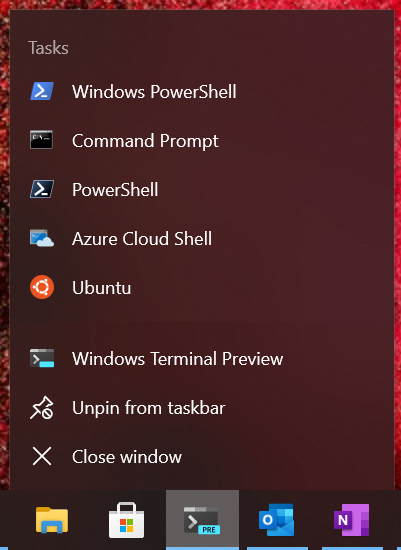
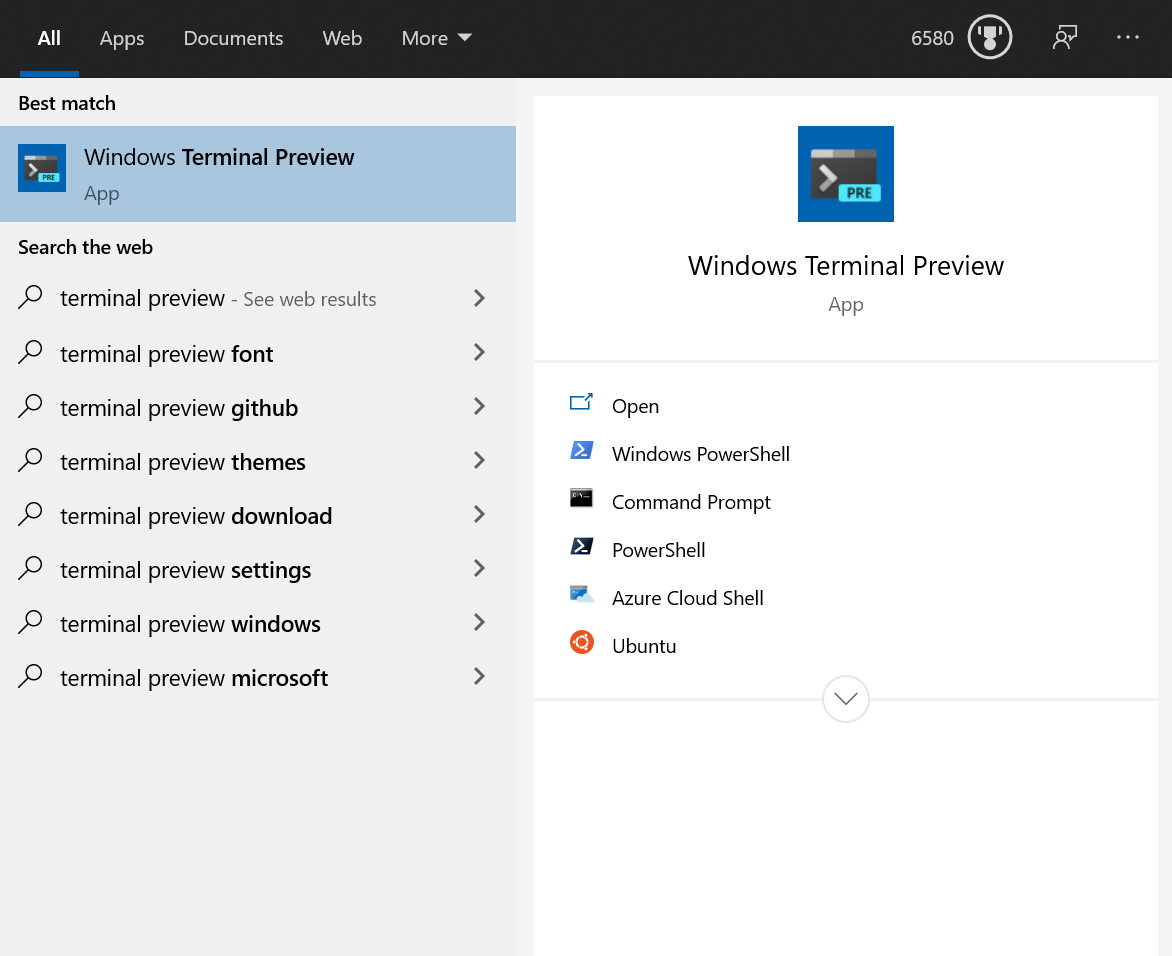
 Note: Icons in settings.json must be written as Windows-style file paths in order for them to appear in the jump list.
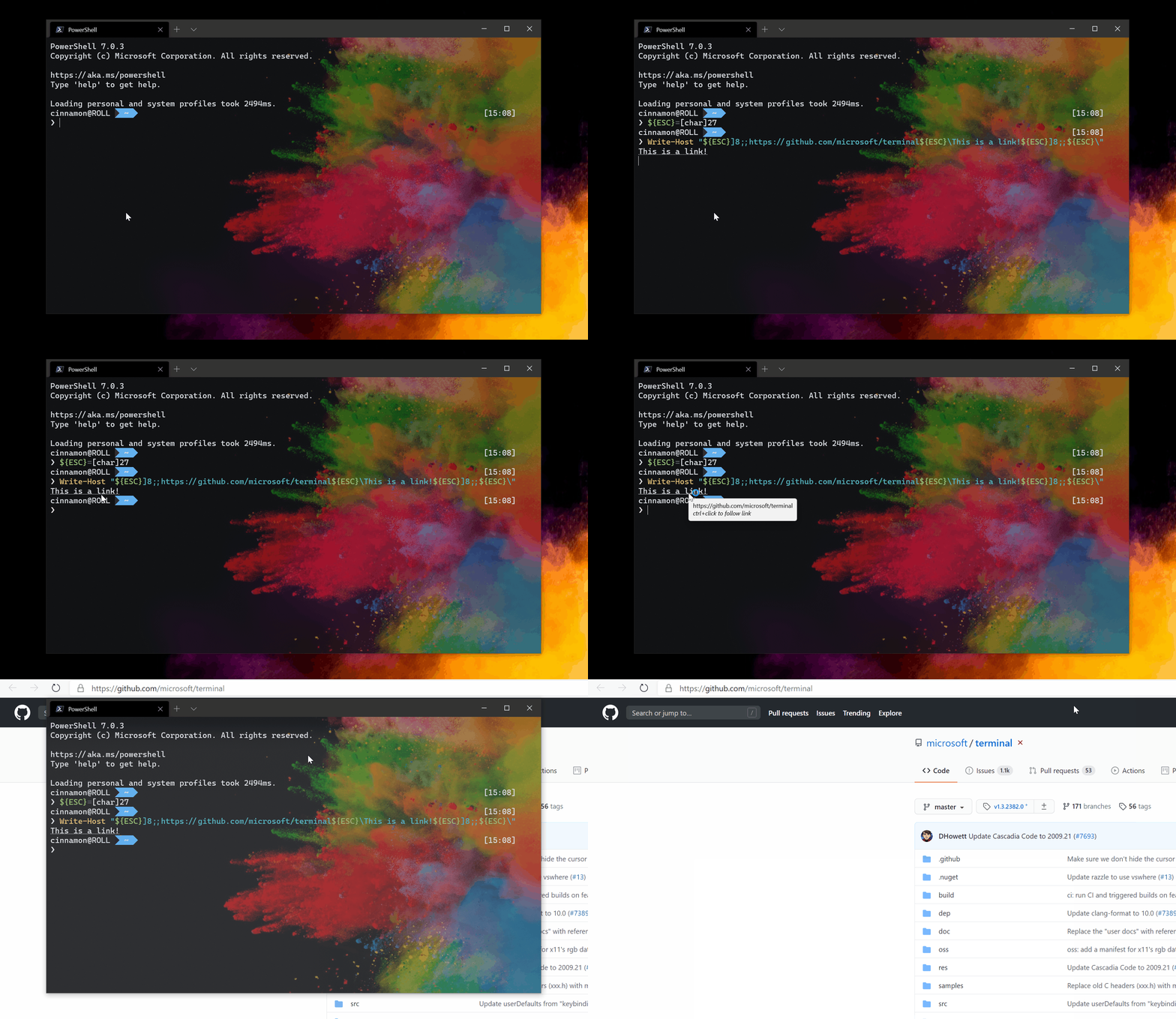
We have added hyperlink support for embedded hyperlinks. These links will appear with an underline and can be opened by holding Ctrl and clicking on the link. Support for automatically detecting plain text links is coming very soon!
Support for rendering the blink graphic rendition attribute SGR 5 has been added to Windows Terminal. (Thanks @j4james!) This lets you have fun blinking displays inside the text buffer.
 Vim will no longer start in
 replace mode.
The Terminal will no longer crash when selecting an out-of-bounds range through Narrator or NVDA.
We love recognizing those who made an impact on each release, so we’d like to acknowledge our top contributors for this month!
For additional documentation on all of our features, you can visit our docs site. If you have any questions or feedback, feel free to reach out to Kayla (@cinnamon_msft) on Twitter. If you find any bugs or would like to file a feature request, you can do so on GitHub. We hope you like the latest releases of Windows Terminal Preview and Windows Terminal!

The post Windows Terminal Preview 1.4 Release appeared first on Windows Command Line.
This blog post highlights the WSL updates being made over the past few months, in addition to some sneak previews of our upcoming features and future plans.
We’ve heard feedback on how many users have enjoyed using WSL 2 and have made WSL 2 available to more Windows users with this backport. Customers running Windows 10 version 1903 and 1909 can now enjoy faster file system performance, 100% system call compatibility, and be able to use Docker Desktop with the WSL2-based engine. Read more about these updates, including how to ensure your machine has them, in the blog post announcement.
GUI app support in WSL is becoming a reality! We are getting closer to an initial preview and happy to announce a preview release for Windows Insiders within the next couple of months.
Below is an early look at an internal build running GUI apps in WSL! You can see that WSL will support many different types of applications, including IDEs running fully in a Linux environment. We have included lots of fit and finish details, such as showing the icons for Linux apps in the task bar and support for audio with your microphone (and yes, that really is the Linux version of Microsoft Teams running in WSL).

Stay tuned for more details about this feature coming soon. If you’d like to learn more about the architecture behind this change, check out the X11 and Wayland talk at the XDC 2020 conference from Steve Pronovost.
At the BUILD 2020 conference we announced that we will be adding a new command that will allow you to fully install WSL called wsl --install. The first iteration of this feature is currently available in Windows Insiders. Within the next couple of weeks, the --install argument will include the ability to install WSL distros, meaning you will be able to fully set up WSL on your machine, along with your chosen distro, with just one command.
Starting with Windows Insiders preview build 20211, WSL 2 offers a new feature: wsl --mount. This new parameter allows a physical disk to be attached and mounted inside WSL 2, enabling you to access filesystems that aren’t natively supported by Windows (such as ext4). You can also navigate to these files inside of Windows File Explorer.

To learn more about this feature read the WSL 2 mount disk doc or announcement blog post.
WSL includes support for GPU compute workflows, available now in Windows Insiders builds. Read more about this change and how to get started in our docs: GPU accelerated machine learning training. Additionally, we made the source code of TensorFlow-DirectML, an extension of TensorFlow on Windows, available to the public as an open-source project on Github. TensorFlow-DirectML broadens the reach of TensorFlow beyond its traditional Graphics Processing Unit (GPU) support, by enabling high-performance training and inferencing of machine learning models on any Windows devices with a DirectX 12-capable GPU through DirectML. DirectML is a hardware-accelerated deep learning API on Windows. You can learn more about this change on the announcement blog post.
Earlier this year, we announced that the Linux kernel in WSL 2 will be serviced out of the Windows image. This means you can have greater control over your Linux kernel version, as well as your Windows version, enabling you to stay safe and secure as Windows keeps you up to date. The new kernel versions are no longer only for Windows Insiders, now any device that has WSL enabled and has opted in to Microsoft Updates will automatically receive the latest kernel version! Find our Linux kernel release history on the WSL docs.
Let us know what you think about these changes via Twitter, you can follow me @craigaloewen and find all the WSL team members in this twitter list. If you run into any issues, or have technical feedback and feature requests for our team please file an issue on our WSL repo in Github.
The post What’s new in the Windows Subsystem for Linux – September 2020 appeared first on Windows Command Line.

Through feats of creative engineering, Tesla has been able to halve the cost of batteries and make them more efficient.
This new battery uses a new tiled spiral design that allows the company to make larger battery cells that can still fast-charge. Tesla CEO Elon Musk said that this new battery improvement can result in an average EV range increase of 16 percent and storage of five times as much energy.
The next step in Tesla’s new battery uses a dry process of adding electrodes to a foil that uses a lot less manufacturing and time. That said, Musk mentioned that the company is still working to scale up this process, so it’s not quite ready for mass production yet.
Average battery production uses huge factories to do a wet version of this process. Tesla’s process should remove this step and, thus, remove the need for these factories.
The company hopes to start using this new process in a year to 18-months, according to Musk. For now, the company needs to focus on scaling up the battery production and ironing out any production wrinkles.
After the company talked about removing the wet electrode process, it mentioned how it’s been tackling the assembly line problems facing battery production.
One goal is to create a faster and denser factory that can replace what four or five factories might currently do. Musk says one of Tesla’s new goals is to become the best at manufacturing in the world.
Through a step called formation, Tesla tests each battery and charges it. The new process should use a lot less space and take less time.
Silicon starts as metal, so Tesla decided to use raw silicon that gets stabilized dryly with an ion coating. This is then added to the batteries to make them cheaper, and Tesla says that also helps extend the range.
Cathodes are small sections that sit in batteries to separate the ions within the battery. Many batteries use cobalt or cobalt mixed with nickel. Tesla is working to move away from cobalt to just nickel since it’s cheaper and can work just as well.
There are even different nickels that Tesla can use to activate diverse range and stability ratings depending on what vehicle. For instance, the Tesla Semi and vehicles will use high-nickel, so they get the most range.
Other items like powerwall can use less than 100 percent nickel since it’s not under as much stress as a car. This should also make some batteries cheaper.
Tesla is also looking to mine and develop metal with a much more scalable solution that should take less time to refine as well. This is also greener since its smaller and easier to reuse the wastewater.
Tesla has found a new way to use salt to extract lithium. The company said that all they do is mix clay with salt and water, and the lithium will combine with the salt so Tesla can then use it for battery production.
This and everything else is going to be done in one factory. Musk said that raw materials would go in, and batteries will come out.
Tesla uses a giant casting machine and a new alloy of metal that can be formed into giant car pieces.
These two pieces are then attached to a new structural battery pack. Since the batteries are larger now, they can be used as part of the frame. The new filler that goes into the battery pack is a flame retardant glue that’s super stiff, creating a super-rigid frame piece.
Musk says that a convertible car made with this new bottom design would be stiffer than a regular gasoline-powered car.
This is also a 10 percent mass reduction in the body of the car and a massive simplification in the factory.
This brings the cost of this battery 56 percent cheaper for Tesla than using a competitor’s battery unit.
The company is also saying that the cell is going to have a 54 percent increase in range. That said, the new batteries are much larger than traditional batteries, so the company may use fewer in each car. This means that while each battery might have more range, they may not result in substantial range increases for the company’s cars.
The company isn’t going to stop using its supplier’s batteries right away. The company only plans to make 100-gigawatt hours by 2022, so it still needs manufacturing help.
By 2030 or even earlier, the company hopes to produce three-terawatt hours of batteries.
Tesla hopes to start seeing the gains from this new method in a year to 18 months and it thinks that in three years, it can make a $25,000 USD (roughly, $33,000 CAD) car.
Source: Tesla
The post Tesla plans to halve the cost of batteries appeared first on MobileSyrup.
There are two kinds of towns in the Okanagan (and most of BC).
It depends on the provincial roads that connect them. Some, as in Osoyoos, have a highway that divides the centre-right through its heart.

Very often the highway, like Crowsnest, is literally Main Street – a ‘stroad’ that has looked essentially the same for more than half a century: broad, muscular, low-slung and unambiguous. Mid-century motordom, which even today, despite attempts to make them more friendly for people not in cars (which is the way most of them got there), are still car dominant.
Main Street in 2009:

In 2018:

In the other kind, the main highway and arterials bypass the old downtown. As in Penticton:
From what I could see in southern BC, Main Streets have held on even when not fed by a major highway. Many of them look and feel better than ever. And now, especially in the year of the pandemic, they appear to functioning well enough for people to gather, shop, do business and entertain themselves. Independent entrepreneurs thrive. There are still real hardware stores, small theatres, government services, and not a lot of vacancies. The vitality of a pleasant, safe, diverse urban environment has become even more appealing, unlike in some of the bisected town where truckloads of timber still roar through or the surrounding blocks still remain for most of the day vast acreages of parking.
In the bypass town, there are still lots of vehicles, but the people in them are coming to stay, not pass by.

Alexander Street, Revelstoke
Every town I visited was one or the other: a town where the highway bisected it, or one where it bypassed.
What these towns were able to do depended on the health of their local economy, the will of their leaders, the support of their communities and the skills of their staff – but also whether they were prepared or able to make a serious attempt to tame motordom.
With towns that had bypasses, it was easier to redo downtown with the toolkit of interventions from the 1980s and 90s that engineering firms and urban designers all seemed to use when they had a contract for downtown revitalization: pink sidewalks of rose-coloured interlocking pavers, luminaires in antique black, hanging baskets, pedestrian bulges, dense rows of trees, abundant landscaping, benches, bike racks – all cosmetics, yes, but accompanied by real and regulatory changes in how the spaces could be used and developed. Especially the commitment to sizable population increases.
The results are in; we can make a judgement looking back a half century. Post-motordom urbanism has been successful. Trends have changed and the quality of design and materials has improved (as in the Penticton example below), but the investments made from the 80s to today in good urbanism have paid off.
Now we’ll see how they survive the pandemic. But this summer, with the additional presence of so many people like me from the coast and from Alberta, they look to have made the first economic hurdle. Tourism, in particular, survived, with the prospect of a better year if word on the Okanagan’s appeal gets out.
Just like this.

Main Street in Penticton


We’ve all been bested by the rain: drenched in a sudden downpour, let down by a leaky trench, or soaked through at a kid’s soccer game. But if you’re armed with the right outerwear, wet weather needn’t dampen your spirits.
Since 2019, we’ve researched 196 raincoats and rain jackets and tested more than 50.
We’ve found three standouts—suited for a range of tastes, sizes, and budgets—that keep you comfy and dry when the skies open up.
Our picks include a well-priced, packable nylon shell; a classic fisherman-style slicker; and a wear-anywhere women’s raincoat. With one of these in your corner, you might even find yourself wishing for showers.

Well, this was extremely unexpected. Microsoft just got itself a bunch of key AAA game studios for around $7.5B (three times what it paid for Minecraft), just in time to boost the recent Game Pass refresh and the very day before Xbox pre-orders.
And that includes two PlayStation 5 launch titles. Ha.
I’m still digesting this in the context of the broader game industry landscape (good thing I keep reading EDGE), but the weirdest thing my brain keeps looping back to is that my current employer now owns Quake.
I wasn’t expecting this to (ever) happen in a million years…
Cue jokes about freezing hell by getting into the Doom simulator business.
 Here is how to clean your bike chain the easy way! Bike chains need to be kept clean and lubed to keep your gears working smoothly. But the good news is that regular light maintenance will keep your bike in great shape. This post with videos shows the quick and easy way to clean your bike chain, and keep it lubed too.
The post How To Clean Your Bike Chain the Easy Way appeared first on Average Joe Cyclist.

Freestanding, 30-inch electric ranges (also called stoves) are the unsung heroes of the American kitchen. They’re affordable, safe, and efficient, with versatile (and increasingly powerful) cooktops and the most consistent ovens. They’re also a lot more sophisticated than they used to be.
Our top pick is the GE GRF600AV. This range offers a basic convection oven and a flexible, powerful cooktop for a good price, and you can choose from four finishes.
We also recommend five other ranges in a variety of styles, including a good budget option, a range with a baker-friendly true-convection oven, a stove with an induction cooktop, a bare-bones model that’s built to last, and a double oven.

Over the years, we’ve helped many people –– photographers, institutions, artists, and more –– get started on Flickr. These one-on-one conversations have helped us learn about what people are hoping to accomplish on Flickr and how we can help them get there. Whether that’s getting feedback on your photography and art, sharing your work with a wider audience, or finding people who share your interests, all of our work is aligned around helping you reach these goals.
In this spirit and in an effort to welcome new members as they join Flickr, we’re recording an interview that addresses some of these frequently asked questions, including:
What other questions or topics do you think should be addressed? What information helped you get started and find value in being a member of the Flickr community?
Share your feedback with us here and we’ll follow up soon with our launch date for the orientation video. Thank you!
From time to time, often around a new release of NetNewsWire, a person will praise NetNewsWire and, in the same breath, run down some other RSS reader.
Please don’t do this!
We’re lucky in that we have a number of very-good-to-excellent RSS readers these days. They’re all pretty different, which is cool — it means, among other things, that most people would be likely to find one that they like.
Me, I’m just happy when people use RSS readers at all! I’m happy when people step forward with the open web and not back to the outrage web of Twitter and Facebook.
But, again, let me be clear: there are a bunch of pretty damn great RSS readers these days, and I don’t want to see the name of NetNewsWire anywhere near any criticism of any other RSS readers.