Shared posts

17 Nov 02:36

Maple Tree Square 2

by ChangingCity

We looked at Maple Tree Square as it appeared just before the 1886 fire in an earlier post. We’ve examined pretty much all the buildings in this shot over the years. Just on the left hand edge is the Alhambra Hotel, and on the right is the Packing House; offices today, but once the Swift Meat Packing facility (and before that the site of the Alexandra Hotel). Further up the Malkin Warehouse is a six storey brick warehouse with huge old growth timbers forming the frame, and today hidden by street trees in the summer.

One notable difference is that in 1970 the newly installed statue of Gassy Jack used to look along Water Street. Now he’s moved across the street, in front of the Alhambra, looking eastwards. There was a commemoration of Maple Tree Square as the founding location of the settlement here – originally called Granville, and then Vancouver after 1886. It was a drinking fountain, installed in 1925 in what was still an industrial street. The attempts to revitalize the run down neighbourhood in the late 1960s, once the decision had been taken not to bulldoze the entire street for a freeway, included the commission of the sculpture by real estate developer Larry Killam. Fritz Jacobson made a sketch, and Okanagan-born artist Vern Simpson sculpted it. It was presented to the City, although mayor Tom Campbell apparently wanted it towed to the City dump. The 1925 plaque from the fountain is now incorporated into the plinth the statue sits on.

Jack Deighton was a sea captain, gold prospector, riverboat pilot and bar owner, originally from Hull, in England, who squatted in a clearing just beyond the Hastings Mill boundary and built the first non-native structure in the area that would become a town, and then a city (although he died many years before that came about). Fond of talking, ‘Gassy’ Jack was the basis for Granville being known locally as Gastown. The first government survey of Granville was careful to ensure his his original saloon ended up in the middle of the street, forcing Jack to acquire a legal plot nearby to rebuild his Globe Saloon, where the Alhambra would be built after the 1886 fire. More recently ‘Gassy’ Jack has been covered in paint; a protest about celebrating someone who married his second Indian wife when she was about 12 years old. It’s possible he may move again, perhaps away from Maple Tree Square.

Image source: City of Vancouver Archives CVA 780-770

1026

17 Nov 02:36

How Tim Ferriss Digests Books

by swissmiss

I loved this video in which Tim Ferriss breaks down how he reads and synthesizes books. Super interesting.

17 Nov 02:36

HyperX Solocast und HyperX Quadcast S :: Ein Vergleich

by Volker Weber

9aa634069a295000855b5849dd078fb1

Ich bin bekanntermaßen ziemlich begeistert vom HyperX Quadcast S und als sich die Gelegenheit ergab, das HyperX Solocast auszuprobieren, musste ich zuschlagen. Das ist ein wirklich schnuckeliges Mikrofon, kompakt, solide, mit einem stabilen Standfuß. Vor allem aber hat es wie das HyperX Quadcast S einen Sensor oben drauf, mit dem sich stummschalten kann. Die rote LED auf der Vorderseite geht dann von Dauerlicht auf Blinken über, um anzuzeigen, dass Solocast jetzt nicht mithört.

Damit Ihr mir nicht glauben müsst, dass Mikrofone einen großen Einfluss darauf haben, wie die eigene Stimme ankommt, habe ich mal ein paar Vergleichsaufnahmen gemacht:

Aus 30 cm Entfernung mit den eingebauten Mikros des iPad Pro 12.9 aufgenommen:

Mit dem AONIC 50, einem hervorragenden Bluetooth Headset, das bei der Wiedergabe fantastisch klingt, aber in der Aufnahme eher nicht:

Mit dem HyperX Quadcast S in etwa 15 cm Entfernung, auf mittlerem Pegel. Hätte ich den Pegel kontrolliert, dann wäre die Aufnahme etwas lauter ausgefallen:

Und schließlich das HyperX Solocast, das an exakt der gleichen Stelle stand wie das HyperX Quadcast S:

Ich hoffe, man hört, wieviel besser ein dediziertes Mikro ist. Ich persönlich finde das Quadcast noch mal eine Ecke besser als das Solocast. Wichtig ist dabei, dass diese Beispiele in einer akustischen Hölle aufgenommen wurden: nur glatte, harte Oberflächen und nichts, was den Schall bremsen könnte.

3afd41beef1533c848b5c08241536138

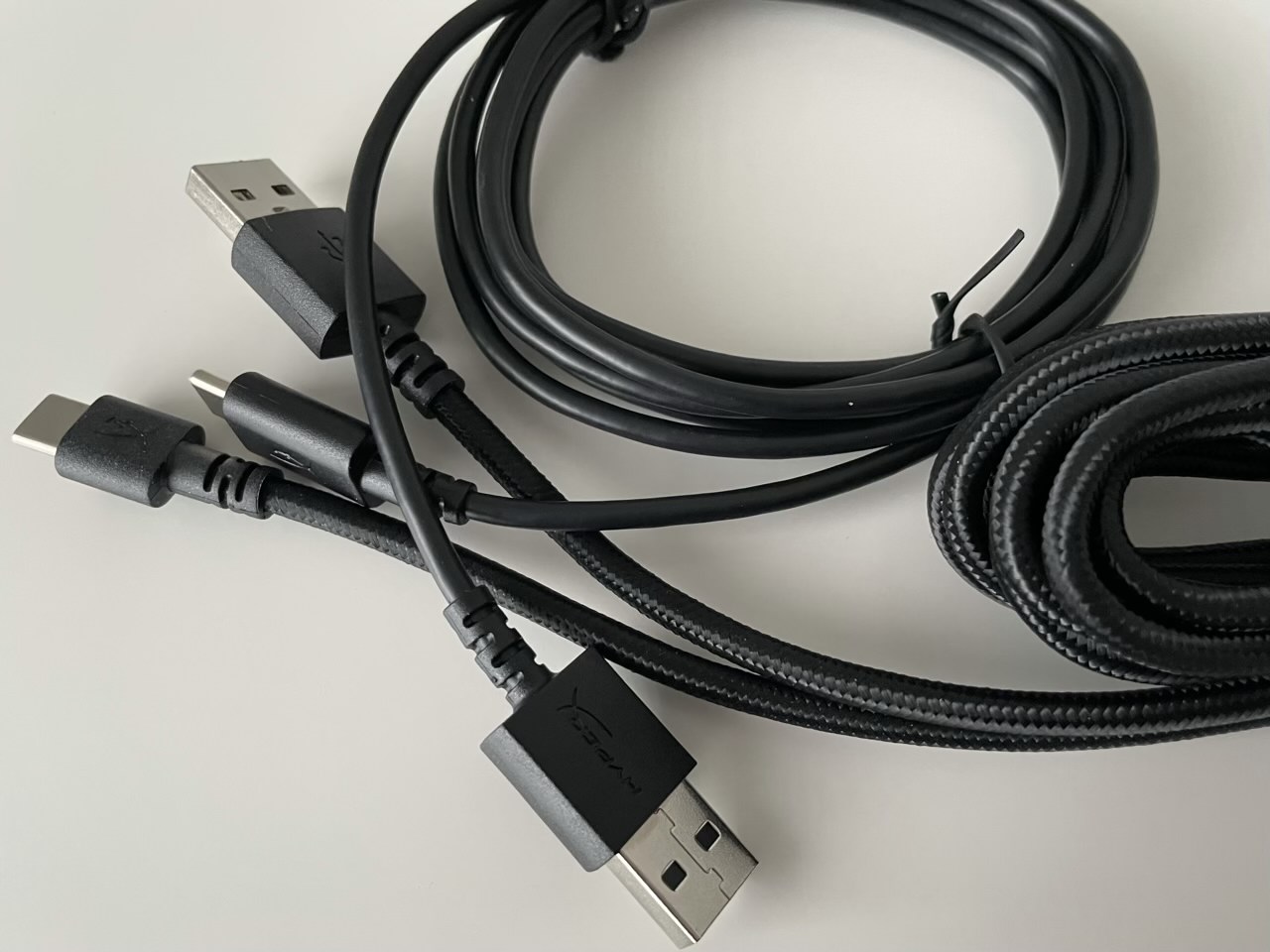
Keine (entbehrliche) Innenbeleuchtung, nur die (wichtige) Nierencharakteristik, eine Mute-Tastem, ein stabiler Standfuß, so weit ist das Solocast wirklich prima. Das Kabel ist ein bisschen einfacher geworden, aber immer noch solide. Je nach Budget kann man eins von beiden nehmen. Ein Fehler ist das sicher nicht. Als Schnäppchenempfehlung hätte ich noch das alte Quadcast mit MiniUSB-B statt USB-C und dem permanenten Rotlicht:

Alle drei kann man wahlweise auch an einem Mikrofongalgen aufhängen. Beim Solocast sind die beiden gängigen Gewinde an der Unterseite ausgeführt, für die beiden Quadcast liefert HyperX den soliden Adapter mit.

Nachtrag: Raymond hat mal mit seinem traditionellen und wesentlich teureren Equipment eine Aufnahme gemacht. Analoge Technik, besserer Raum, und eine viel bessere Stimme. Das klingt dann so:


17 Nov 02:35

Extralinguistics

Language is the most concrete way we communicate. We can write down symbols for the words we speak, and refer to them and study them easily. As a result, it’s easy to fall into the trap of thinking that much of our communication is in the language we speak.

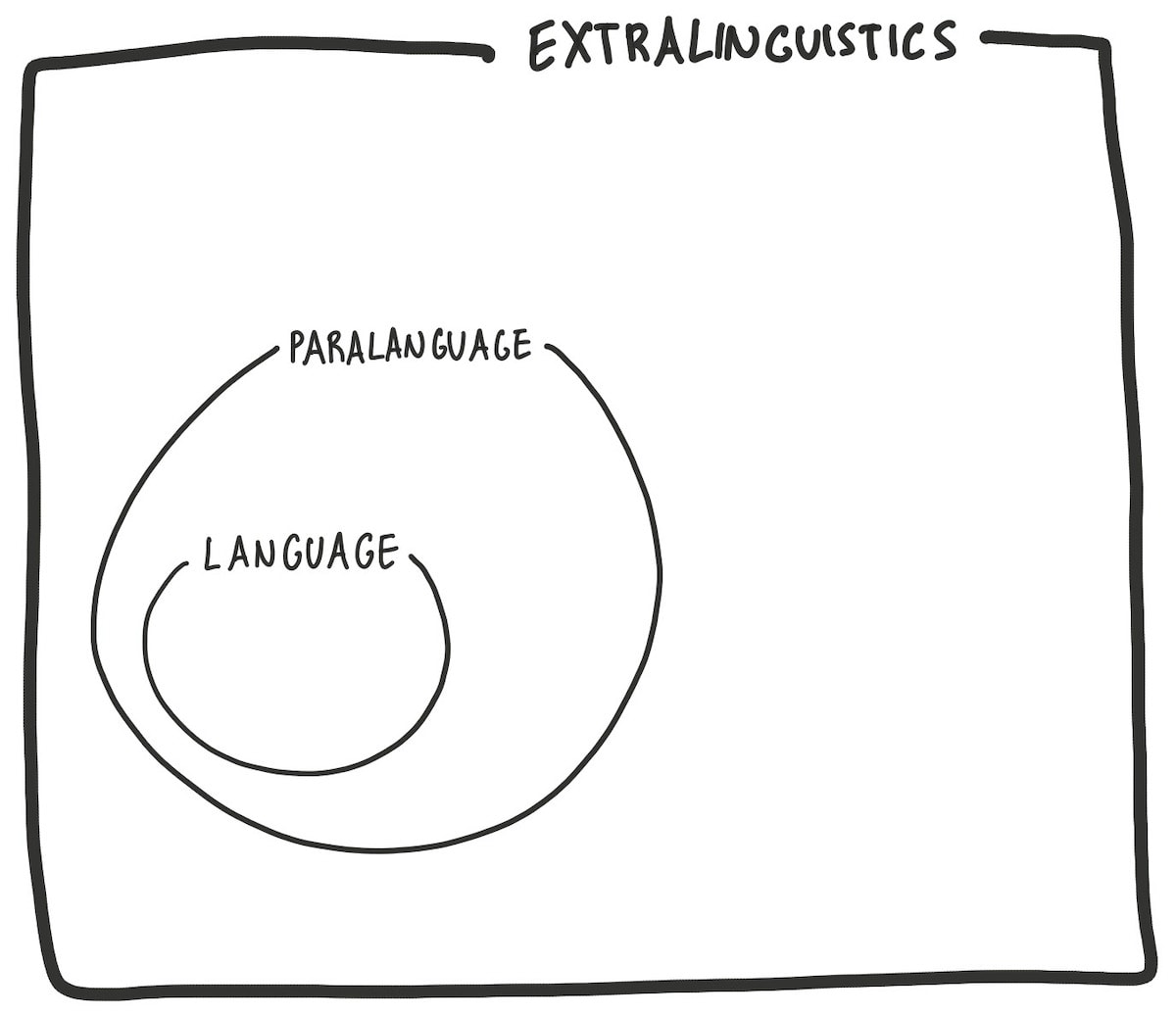
Of course, this isn’t the case. Common knowledge tells us that most of communication is actually non-verbal. There are behavioral aspects to non-verbal communication, like how we orient and move our bodies and how we gesture. There is also the way in which we speak – things like pitch, pace, prosody, and volume – that influence the meaning of the words spoken. The field of paralinguistics studies these peripheral considerations of how we communicate with language.

A Venn diagram of language, paralanguage, and extra-linguistics, from inside out

But even language and paralanguage only scratch the surface of how we communicate. Communication is a side effect of perception, and anytime we perceive something in the environment from another person, there’s some degree of communication happening. A better word for these extra-linguistic ways of communication might be “signals” or “hints”. We find signals about other people in the way we dress and carry ourselves in space. When we show up early or late to a conversation, there’s meaning embedded in it. We may hold something while speaking, or gather our hands together out in front. These small hints add up to produce nuanced layers of meaning that are not only absent in language, but impossible to express with just words. We might call these circumstantial, behavioral signals of communication that support linguistic communication extralinguistic cues.

Like verbal language and paralanguage, extralinguistic behaviors are interpreted in context. Whether you’re early or late to a meeting changes its meaning depending on the occasion or the cultural background that we each share, for example. If I interrupt your sentence mid-thought to add an anecdote, you could interpret that in any number of ways, from rudeness to enthusiasm, depending on numerous other factors surrounding the conversation. While extralinguistic behaviors provide context for what’s being spoken, they are also themselves influenced by other, deeper context of the situation.

One less-talked-about instance of (extra-)language is the set of common metaphors and imagery that we use in our speech. Each community or linguistic tribe has some common set that its members reach for, that might sound strange or out of place to outsiders. If you’re in the Silicon Valley tribe, as I am, you might tell someone to “optimize for” a goal in their life or talk about how some intangible benefit like relationships “compound faster” over time. People in this industry talk about “outliers,” in reference to Malcolm Gladwell’s book of the same name, or doing things “at scale.” These expressions sound completely out of place to outsiders, but to a certain crowd of people, these phrases are a core part of a shared lexicon that provides vocabulary with more nuance than simple, generic words. Though I’m less familiar with other linguistic communities, I imagine there are equivalent shared vocabularies of metaphors and references in nearly every subculture.

I think it’s not a stretch to think of these sub-cultures of shared vocabulary and extra-linguistic behaviors as different languages. If you speak as a Silicon Valley investor does, in a sense, you’re speaking a different language than a Midwesterner who’s spent their entire life working in the government. Languages don’t just vary across borders, they also vary across subcultures in more subtle but nonetheless important ways.

When we understand language more deeply in these two ways – first, by accounting for behavioral signals and second, accounting for a shared universe of metaphors and expressions – “translating” language becomes a much more daunting task. We’re getting better at translating a sequence of words to a sequence of different words in another language that carry similar meaning, but in translating just the words (which it itself a lossy and imperfect process), we flatten the multi-dimensional space of communication to just one task: stringing words together and speaking them in succession.

The problem with this understanding of translation will be obvious to anyone who has watched a foreign film, translated. You may have been able to understand what was being said, but it’s a far cry from watching a story of characters not only speaking in your native tongue, but also acting in the way that you’re familiar with, in the context of cultural mannerisms and popular references you know by heart. Communication is more than language or even paralanguage, and a purely linguistic picture of translation throws the influence of culture and linguistic tribes by the wayside.

Does this mean better translation and translation technology is in vain?

Not necessarily. Obviously, being able to understand some meaning is better than no meaning at all. But I think it’s much more constructive to think of translation as an aid, rather than a solution. Communicating across cultures and even subcultures is a complex task that requires us to understand the meaning of behaviors and cultural references and the vocabulary of a specific tribe, in addition to the words being spoken. Language is mostly how people use it, not how it’s constructed. When we view communication and language as the complex, multidimensional processes of negotiation that they are, rather than a simple problem of combinatorics of words, I think we prepare ourselves much better for understanding each other more fully and collaborating more deeply.

17 Nov 02:34

Fintech 2025: The Next Wave

by Adam Nash

When I first joined Greylock at the end of 2011, Fintech wasn’t even a word that was commonly used in the venture capital community. Less than a decade later, however, Fintech has become almost ubiquitous. The category has not only proven that it can generate real revenues and scale, but also that it can create a large number of multi-billion dollar companies.

Unfortunately, when you are looking at seed stage opportunities, you have to think clearly about markets where there is the potential to build new multi-billion dollar product & companies.

When the bubble burst in 2000-2, there was a lot of thought put into what had worked and what hadn’t worked with Web 1.0, and those insights formed the basis of the next wave of software companies (Web 2.0 / Social). Some of those same issues have plagued Fintech 1.0, and may instruct how to think about Fintech 2.0.

As 2019 drew to a close, I took the opportunity to spend some time thinking about exciting new opportunities in consumer fintech. These continue to be areas that I’m investing against both as an angel and as a founder.

Beyond Millennials

For the last decade, a vast majority of consumer fintech startups have focused on millennial customers. This really isn’t surprising because the traditional financial services industry is so heavily invested in their older customers. By the numbers, households tend to build income and assets as they age, and the incumbents have spent decades servicing this customer base.

Young people, on the other hand, were the perfect market for new, unproven products and services. Young people are less tied to existing brands and services, more likely to be technophilic, and have simpler financial needs.

As we enter the next decade, however, consumer acceptance of new financial products & services will continue to grow, leaving new demographics open to new products & services. This would have been true regardless, but it seems clear that the COVID-19 pandemic has accelerated this opportunity.

These customer segments will be more competitive, but also potentially more valuable, as they collectively are much larger than the millennial market.

Single Player to Multiplayer

Traditional financial products & services are single player, which makes sense since people tend to expect a high degree of privacy around their finances, and products built for individuals are much simpler to design, market, and activate.

However, many new fintech services are built around a subscription-model, where three numbers tend to dominate: acquisition costs, average revenue per user, and churn rate. The last, of course, is a heavy determinate of lifetime value.

Multiplayer products & services have a number of advantages. Multiplayer products are inherently viral, pulling more people into the system and lowering average acquisition costs. More importantly, multiplayer products are fundamentally stickier, leading to lower churn rates and higher lifetime values.

One of the big shifts from Web 1.0 to Web 2.0 was designing products & services to be intrinsically multiplayer. This was one of the fundamental differences between the design of LinkedIn (Web 2.0) and Monster.com (Web 1.0).

Novel Products & Services

When web development began in earnest in the 1990s, most initial product concepts were just moving existing products & services online. Mail order catalogs already existed, but we put them online. Yellow pages already existed, but we put them online. There were a few novel products (eBay), but for the most part, we collectively just moved a lot of products into the cloud, with all the advantages that global reach & distribution brought.

Fintech 1.0 has also mostly replicated existing products, put them on modern technology platforms, and made them broadly available to customers (like young adults) who have been mostly underserved.

However, one of the great opportunities in Fintech long-term is leveraging technology platforms and distribution to create products & services that were not viable, or even possible, in the physical world. With Web 2.0, we saw a large number of products & services that just couldn’t have existed offline.

2020 Examples

Not surprisingly, ambitious founders have already started building products & services along these new dimensions.

Carefull is a novel service that connects Millennial & Gen X adults with the finances of their aging parents. Once connected, it provides peace of mind for customers that if anything unexpected happens with their parents’ or grandparents’ finances, they will be alerted.

PaceIt, led by Prof. Shlomo Benartzi, is working to tackle the problem of retirement income directly by building a service designed with retirees (or near retirees) in mind. This is one of the most challenging and potentially valuable financial services, and PaceIt believes they can deliver a highly differentiated service based on sound insights from behavioral economics.

Braid is a novel debit card designed from the ground-up for households and small groups (e.g. roommates), providing a standard way to transparently share expenses between groups of people.

Pillar Life is a digital platform that helps people protect and care for their aging loved ones. Pillar replaces outdated & messy physical files with a secure online vault where you can easily store, organize, and share all your family’s most important information like financial accounts, legal documents, medical records, and more.

2020 may have been a terrible year on most dimensions, but as an angel investor for over nine years, it turned out to be my most active one yet. Hopefully, this bodes well for the future of Fintech, and for the financial products & services we’ll all be able to enjoy in the coming years.


 

17 Nov 02:34

Apple Launches an Embeddable Web Players for Podcasts

by John Voorhees

Apple Podcasts now supports an embeddable podcast player for shows in its directory along with other marketing tools.

The player comes is responsive and can display either a show with multiple episodes or an individual episode along with playback controls and navigation options. There are controls for play/pause and to skip forward 30 seconds and back 15 seconds, as well as a timeline scrubber that appears after you click or tap play. An ellipsis menu button provides options to open a show or episode in Apple’s Podcasts app, copy a link to the show or episode, and copy embeddable code. The player is also responsive, making it look terrific on mobile and desktop devices. It’s worth noting that content blockers will hide the embedded players, so if you don’t see them below, disable content blockers and reload the page.

To create the code to embed the Podcasts player, visit the Apple Podcasts Marketing Tools webpage. Here’s an example of the large version of this week’s episode of AppStories:

And an embed for the show itself:

The embed for a show plays the latest episode by default with additional episodes available to the right of the player. The ‘See More Episodes’ button opens the Podcasts app. In addition to the new player, the Podcasts Marketing page offers badging resources, show and episode short link generation, Apple Podcasts iconography that can be embedded or downloaded, and QR code generation.

We’ve tested Apple’s new embeddable player with AppStories and I’ve been extremely happy with it. First of all, it’s dead simple to implement. The player uses an iframe, which means it should work out-of-the-box with little, if any, fiddling for most websites. MacStories uses WordPress and all I needed to do was paste the iframe code into the story.

What’s more, the embeds look fantastic, far better than most of the options available from podcast hosting services. Most important of all, though, the user experience is excellent, allowing MacStories readers to sample a show inline and jump to the Apple Podcasts app on any platform to learn more and subscribe.

Apple has had a similar widget system for Music content for a while, and I’m glad to see it’s been implemented for shows in Podcasts too. Podcast fans already have their preferred ways to access their favorite shows. What Apple Podcasts web embeds provides, though, is discoverability. The embeds are a simple, frictionless way for readers to sample the show and hopefully become subscribers.


Support MacStories Directly

Club MacStories offers exclusive access to extra MacStories content, delivered every week; it’s also a way to support us directly.

Club MacStories will help you discover the best apps for your devices and get the most out of your iPhone, iPad, and Mac. Plus, it’s made in Italy.

Join Now
17 Nov 02:34

As we’ll be spending a lot of dark winter days ...

by Ton Zijlstra

As we’ll be spending a lot of dark winter days inside because of pandemic lock-down measures, we bought the most traditional Dutch family pastime, a sjoelbak, shuffleboard in English. When I grew up this was what we did on New Year’s Eve.

20201111_113838

An unpacked image of our sjoelbak can be seen here on E’s blog.

17 Nov 02:33

The Best External Optical Drives for DVDs and Blu-rays

by Andrew Cunningham
External optical drives surrounding a laptop.

If you thought you were done with physical media, think again: As TV shows and movies vanish from streaming services, DVDs and Blu-ray discs are becoming relevant once more.

Most modern computers lack a physical disc drive, but an external optical drive allows you to watch, rip, or burn movies and shows that may be found only on disc. If you have a massive library of DVD movies, the Verbatim External Slimline CD/DVD Writer is fast and affordable. For Blu-rays, we recommend the Archgon MD-8107 External UHD Blu-ray Optical Drive, which is the fastest, most reliable Blu-ray drive we tested.

17 Nov 02:33

Remembering My Dad

by peter@rukavina.net (Peter Rukavina)

My father died a year ago today, marking the start of difficult season of loss and grieving that lasted, two months to the day, to Catherine’s death this January, and beyond.

It has been hard going, by times, and settling into this changed life is still a work in progress. Time has healed some things, and amplified others. There’s anger in grieving, all manner of it, and things to be reckoned with; as the anger subsides it reveals gentler layers underneath, and, for both my father and for Catherine, many of those gentler layers are only just now coming to the surface.

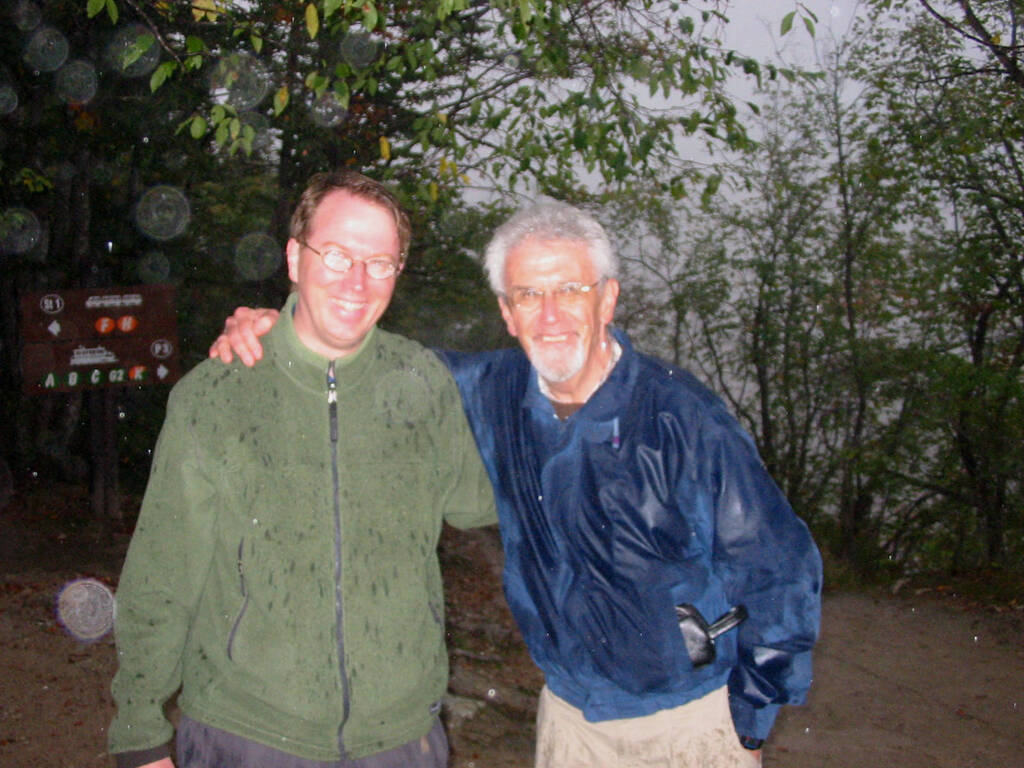
Of all the photos I have of me and Dad together, I like this one the best: in the fall of 2004, sixteen years ago, we were visiting Plitvice Lakes National Park in Croatia, part of an epic father-and-son trip to the old country. Toward the end of our walk through the park it started to rain.

And rain.

And rain.

We got soaked. Really really soaked.

But, as you can see from the smiles on our faces, we didn’t mind at all.

Me on the left, my father on the right, soaked from the rain, in a forest in Croatia, with our glasses fogged up.

My father and I, especially in my teenage years, didn’t have the gentlest of relationships; of the arguments I’ve had in my life, the longest and most dug-in were with him. That we found ourselves in deepest Croatia, in the rain, with smiles on our faces, was a testament to our working through that.

You are missed and loved, Dad.

17 Nov 02:33

An atlas for the world’s development indicators

by Nathan Yau

The World Bank tracks global development through a number of indicators. (You can see and download much of the data through their catalog.) With a story-based approach, they published an atlas for 2020 that focuses on 17 development goals, such as end poverty, end hunger, and stop global warming. There’s one story per goal, charting out multiple indicators in each story.

There’s a lot to look at, but one thing you’ll probably notice across all of the topics is progress. It’s not all spikes and waves out there.

Tags: atlas, development, scrollytelling, World Bank

17 Nov 02:33

New York City’s Prospect Park Restores 160 Year Old Pedestrian Entrance

by Sandy James Planner


City of New York Parks Commissioner Mitchell Silver sends on this  update on the restoration of Endale Arch in Prospect Park, Brooklyn. You can see in the remarkable photos what this arch restoration shows about the importance of park entrance and access at the time it was first constructed 160 years ago. This element was designed by  landscape designers Frederick Law Olmsted and Calvert Vaux, to provide a gesture of separation from the urban noise and business of Grand Army Plaza to the field like Long Meadow which is one mile long.

The original intent was for the Endale Arch to blend seamlessly into the landscape. When it was opened in the 1860’s it provided a pedestrian entrance into the park separated from horse riders carriage drivers and people on bicycles.  Over a century the arch had deteriorated.

With a $500,000 grant from the Tiger Baron Foundation and through participatory municipal budgeting  the arch was restored to how it would have appeared in the 1860’s. One cross vault was left exposed to show the the brick and granite components beneath the wood.  LED lighting was added to brighten the interior of the arch.

When Prospect Park opened in 1867 it was seen as a pastoral large park of  526 acres, without the tight confines of Central Park.  Articles at the time describe Prospect Park as  30 minutes away  from New York City’s Wall Street. Central park in 1867 took an hour to access from Wall Street. New York City’s remarkable subway system was not in operation until decades later in 1904.

In New York City there are “conservancies” and “alliances” that take care of parks. The Prospect Park Alliance is the  non-profit organization that sustains “Brooklyn’s Backyard,” in partnership with the City of New York. The Alliance was formed in 1987. Volunteers care for the natural areas and landscapes and provide free or very low cost education and recreational programming. The rehabilitation of Endale Arch is in keeping with the Alliance’s mandate to restore the park for the community by the community. You can find out more about the Alliance and its structure here. 

With the Alliance’s guidance, “Prospect Park is an international model for the care of urban parks, and one of the premier green spaces in the United States.”


Images: ProspectParkAlliance, Paul Martinka

17 Nov 02:33

Winter Covid, Commercial Areas, Snowy Icy Sidewalks & Why This Should Matter to Cities

by Sandy James Planner

It seems strange that in a place that says in their Transportation Plan that  pedestrians and cyclists are the first priority  that we still have not become serious about ensuring that the most vulnerable road users  have clear, accessible sidewalks and bike lanes when it snows. From the perspective of anyone with a mobility deficit, in a wheelchair, or walking with a baby stroller unimpeded sidewalks cleared from snow just makes sense. Add in the fact that everyone should be shopping locally to support businesses hit by the pandemic.  So why are cities not providing this basic service, of ensuring cleared sidewalks for residents  to access local commercial areas?

I have previously written about the City of Winnipeg that gives  their crews a 36 hour window for priority cleaning, and that includes sidewalks, which just like roads are labelled priority one or priority two. After a blizzard  the City of Winnipeg  will be clearing 2,900 kilometers of sidewalks stating “The sidewalks are done the same way as the streets”.

In Vancouver? Nada. Vancouver makes it the responsibility of residents to clean the section of sidewalk in front of their house, and makes business owners responsible for the areas in front of their store fronts.  But the City of Vancouver does not respond equitably by  clearing their own snowy sidewalks adjacent to city parks and services, and pedestrian curb crossings can be treacherous. It just makes sense to snow plough out the corners where pedestrians cross, keep the snow out of bike lanes, and give Vancouverites a fighting chance when the snow falls, freezes, and stays.

It was balmy in Toronto last week, but the Toronto Star Editorial Board is not fooled and has bluntly  told the City of Toronto to start cleaning snow off sidewalks.

Just as in Vancouver, “Toronto leaves the responsibility for clearing sidewalks in the central core, the densest part of the city with the most pedestrians, to individual business owners and residents. Not surprisingly, they do a fairly haphazard job of it. And it’s pedestrians, including vulnerable seniors and those with disabilities, who face the dangerous consequences of that.”

With the pandemic curve not looking so positive, walking might be one of the few safe, open activities if there is another lockdown.

There’s statistics showing that in Toronto there were 3,000 complaints last year over snow covered sidewalks, 624 inspections and only 44 fines. The whole problem is that the complaints, inspections and fines still don’t produce what a city’s residents need~ clear, safe winter sidewalks.

There is specialized equipment for clearing sidewalks, and Ottawa and Montreal clean sidewalks, as well as Winnipeg. It’s no biggie. The estimated insurance cost of what the City of Toronto pays out annually for slips and falls on icy sidewalks is nearly seven million dollars, which you would think would be a major incentive for making sidewalk clearing a priority.

In Vancouver we only have to look back on February of 2018 when the snow came, stayed, and provided slippy boot punching snow on sidewalks throughout the city that remained grudgingly uncleared. The City has a Snow Angel Program that matched seniors and others looking to have their front sidewalk shovelled with someone that is willing to do that. But on a citywide basis in every commercial area and on the connecting streets we need the City to do the same service, providing snow removal on sidewalks so that everyone can have the chance to be mobile.  That’s how you give pedestrians and cyclists transportation priority all year around.

With over 460,000 views, here’s a YouTube  example of a snow removal machine made specifically for dealing with snow on sidewalks.


https://www.thestar.com/opinion/editorials/2020/11/15/toronto-be-smart-this-winter-shovel-all-the-sidewalks.html

17 Nov 02:33

The Icepick is Back

by Gordon Price


In 2015, Toronto-based developer Cadillac Fairview attempted to get approval for a 26=storey office building at 555 Cordova, shoe-horned up against the east side of Waterfront Station in Vancouver. (Cadillac Fairview owns Waterfront Station, and the proposed building site has been the eastern access and parking lot for the Station since it opened in 1914.)

The building, dubbed the Icepick, was withdrawn in 2015, following wide-spread concerns expressed by the Urban Design Panel and the public.  The proposed site is not a separate building lot and far too small to accommodate a giant office building.

Now Cadillac Fairview is back with Icepick 2, a slightly revised version of the original. Responding to design objections, the developer rotated and pushed the building a little further west and north, slightly reduced its footprint, and made it possible to see and walk through the ground floor.

With these changes, the developer seems intent on getting approval at a Development Permit Board Meeting scheduled for March 22, 2021.

It’s important to know that that in 2009, Council-endorsed Central Waterfront Hub Framework to deal comprehensively with the many issues in this part of the city – our most important transportation hub and a last remaining part of the waterfront still to be connected to the publicly accessible

Because the proposed building is not consistent the Hub Framework, in October 2017, Council approved a program to update the Framework and resolve implementation issues. This work is in progress.

The proposal does not conform to planning guidelines for the area. The most recent proposed building is more than twice the suggested height of 11 stories, and six times the recommended floor space. It overwhelms heritage buildings on either side and provides an uninviting gateway to Historic Gastown.

The Hub Framework requires removing the top of the garage at the end of Granville to provide views of the ocean, mountains, cruise ships and access to a public walkway along the north side of the city.  Cadillac Fairview owns the parkade at the foot of Granville but has not agreed to an extension of Granville Street to the waterfront.

Removing part of the parkade’s top level was a central concept of the original Hub Framework. It would open the street to the waterfront, and provide an opportunity to build a public walkway connecting Stanley Park, the waterfront, Gastown, Chinatown and False Creek. This space at the entrance to Gastown would also make a splendid public plaza.  As the most important transportation hub in the region, this site is critical to the future of the city.

Approving Cadillac Fairview’s latest proposal will preclude the current planning process and seriously undermine future options for the City’s waterfront.  Does it make sense to put approvals before planning? Should a private developer be able to sabotage a public planning and design process?

You can send your views to the Mayor and Council, and to the Development Permit Board through kaveh.imani@vancouver.ca.  And you can send your comments to https://shapeyourcity.ca/555-w-cordova-st.

From notes provided by the Downtown Waterfront Working Group

17 Nov 02:33

Mac Script to Update Photos Dates to match EXIF

by peter@rukavina.net (Peter Rukavina)

Because of various excavations of photos from platform to platform to platform (Flickr, OVI, Google Photos, iPhoto) over the years, now that I’ve settled on Apple’s ecosystem to maintain my photos, I’ve ended up with a bunch of photos that have the wrong date.

By “have the wrong date,” I mean, for example, “Photos thinks they’re from May 2020 when, in fact, I took them in March 2013.”

The thing is, the right date is burned into the EXIF data in the photo itself, so I needed a way to say to all the affected photos “change your date to match what’s in the EXIF.”

I wasn’t up to mystically incanting this in AppleScript, but I figured that I could give JavaScript a try, now that JavaScript is an equal scripting partner under macOS.

So here’s a try at a JavaScript that does just that:

var Photos = Application("Photos");
var path = Path("/Users/peter/Desktop/photos");

for (var photo of Photos.selection()) {
	var filename = photo.filename();
	Photos.export([photo], {to: path, usingOriginals: true});
	var tmpfile = Path("/Users/peter/Desktop/photos/" + filename);
	app = Application.currentApplication();
	app.includeStandardAdditions = true;
	var newDate = app.doShellScript("/usr/local/bin/exiftool -T -DateTimeOriginal '" + tmpfile + "'");
	if (newDate != '-') {
		var d = new Date(newDate);
		photo.date = d;
	}
}

With that script in Script Editor, I can select one or more photos in Photos, run the script, and have those photos with an EXIF date get their date updated.

You’ll notice that there’s a kludgey export of the original photo to a working directory; that serves two purposes:

  1. I couldn’t for the life of me figure out how to identify the original path for a photo in Photos, so as to run exiftool against it; this saves me the trouble.
  2. I end up with a working directory filled with the original photos should something go horribly wrong with the script.

To get this to work you’ll need to install exiftool, and adjust the path to it in the script as necessary.

Your mileage with the script may vary, but it worked for my purposes, and that glut of May 2020 photos are now safely back in March 2013.

17 Nov 02:29

Quebec to ban the sale of new gas-powered cars by 2035

by Brad Bennett

The Quebec government’s environmental plan looks to halt the sale of new gas-powered vehicles in the province.

On November 15th, Quebec Premier François Legault announced a $6.7 billion fund to help deal with climate change. A bulk of those funds will be used to subsidize the cost of EV for Quebec residents.

The ban on gas-powered vehicles won’t apply to commercial vehicles or used cars.

Some climate change experts warn that this mandate isn’t enough since electric vehicles will already be widely adopted by 2035, according to a CBC News report.

That same report also mentions that 40 percent of the province’s greenhouse gases come from gas-burning cars and trucks.

British Columbia has a similar plan in place. It plans to ban the sales of all gas-powered light-duty cars and trucks by 2040.

Image credit: YouTube screenshot (GMC)

Source: CBC News

The post Quebec to ban the sale of new gas-powered cars by 2035 appeared first on MobileSyrup.

17 Nov 02:29

Google launches Pixel 4a baby blue colour variant in the U.S. [Update]

by Dean Daley

Back in September, it was revealed that the Google Store’s servers featured a render of a ‘Barely Blue’ Pixel 4a with an orange accented power button.

Now, it seems the phone is officially available in the United States.

In the U.S., the Barely Blue colour variant costs the same as the ‘Just Black’ version at $349. The description also states that this is a limited edition product that is available while supplies last.

Unfortunately, it’s only the original Pixel 4a that’s getting the new colour and not the 5G variant.

On Google’s Canadian website, there still seems only to be the Just Black version of the Pixel 4a and not the new baby blue version.

Google Canada confirmed that this colour variant will not be launching in Canada.

Update 16/11/2020 6:26pm: Google has confirmed that the Barely Blue Pixel 4a will not launch in Canada.

Via: The Verge

The post Google launches Pixel 4a baby blue colour variant in the U.S. [Update] appeared first on MobileSyrup.

17 Nov 02:29

macOS Big Sur update reportedly bricking some older MacBooks

by Patrick O'Rourke
MacBook Pro running macOS Big Sur

Following issues preventing the update from downloading, macOS Big Sur, the latest version of Apple’s desktop operating system, is reportedly bricking some older MacBooks.

There are reports of several users trying to update their late 2013 and mid-2014 13-inch MacBook Pro laptops to Big Sur, only to be greeted with a black screen while the update is installing. Resetting the laptops’ NVRAM and SMC, which usually solves issues like this, doesn’t rectify the situation.

Delving into the Reddit and Apple support forum posts about the problem, it seems like an engineer was able to solve the issue after removing an IC chip for the HDMI chip, but it’s unclear if that’s the actual root of the glitch.

It’s unclear what’s causing this issue or how many MacBook Pro laptops it affects. For what it’s worth, macOS Big Sur seems to be running relatively smoothly on my MacBook Pro (2020).

The only issue I’ve encountered so far beyond the initial download crashing a few times is that the Logitech unifying receiver I use to connect my mouse and keyboard to my Mac seems to no longer work properly when plugged into my USB-C hub.

macOS Big Sur features more rounded icons, a transparent menu system and an overall design that more closely resembles iOS and iPadOS. Other new features include Messages featuring improved overall search functionality, Safari getting a new privacy shield similar to FireFox’s and increased compatibility with Apple’s new ARM-based M1 MacBook Air, 13-inch MacBook Pro and Mac mini.

Image credit: Apple 

Source: Reddit, Apple Via: Engadget 

The post macOS Big Sur update reportedly bricking some older MacBooks appeared first on MobileSyrup.

17 Nov 02:29

HP surpasses Lenovo as largest global notebook PC vendor in Q3 2020: report

by Aisha Malik

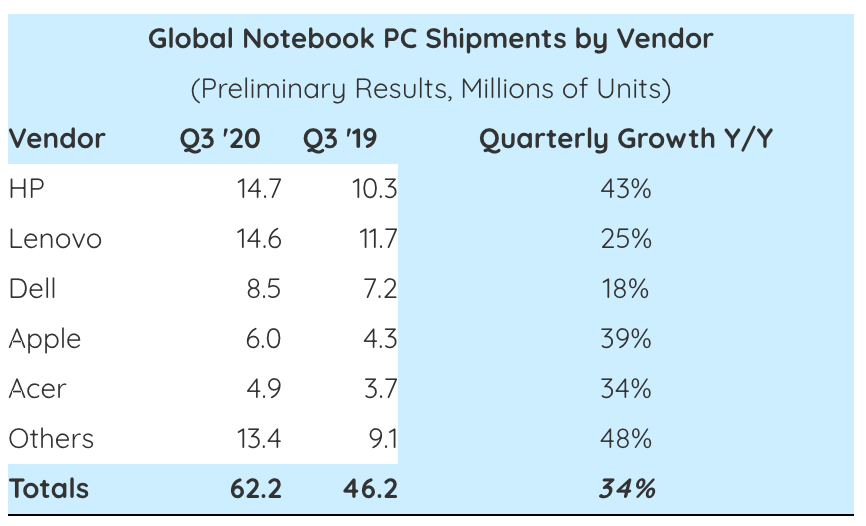
HP has narrowly won the title as the largest global notebook PC vendor in Q3 2020, according to a new report from Strategy Analytics.

The manufacturer had 14.7 million notebook PC shipments in the quarter and made up 23.6 percent of total shipments.

Lenovo wasn’t far behind with 14.6 million shipments, also making up 23.6 percent of total shipments. It’s worth noting that this is the first time in years that HP has managed to surpass Lenovo.

Dell followed with 8.5 million shipments and Apple made it to fourth place with six million shipments, with the manufacturers representing 13.7 percent and 9.7 percent of total shipments, respectively.

There were a total of 62.2 million shipments in the third quarter of the year, which is a 34 percent increase from the 46.2 million shipments in the same period a year ago.

Strategy Analytics outlines that the industry picked up pace as the world moves to new remote working and learning options. The report reveals that there was a 24 percent year-over-year increase in shipments.

Although there was an increase in shipments, the high growth rate was limited by tight supply due to record demand. This will likely continue towards the end of the year as the holiday season and more COVID-19 lockdowns approach worldwide.

“The third quarter would have been even more productive for some vendors if they were able to deliver more devices to meet high demand,” said senior research analyst, Chirag Upadhyay, in the report.

“With the pandemic still lingering across the globe, consumers have started their purchases before the holiday season to prepare for the new ‘normal’ of working and studying from home.”

Image credit: Strategy Analytics 

Source: Strategy Analytics 

The post HP surpasses Lenovo as largest global notebook PC vendor in Q3 2020: report appeared first on MobileSyrup.

16 Nov 07:05

Hypertexts Reinvented as Roam Books and Roam Newsletters

by Ton Zijlstra

Today in a conversation at the IndieWebCamp East 2020 someone mentioned the book Ergodicity by Luca Dellanna. I haven’t decided yet if I would want to read the book, but one thing did stand out: the book is not just available in various e-book formats, but also as a Roam-research graph. This means it’s available as JSON data file, where various parts of the book’s content are interlinked. This allows you to non-linearly explore the book.

This allows you to load the book directly into your note taking environment. If you use Roam research.
I myself wouldn’t want to load someone else’s book sized content directly into my own collection of Notions. Only stuff in my own words goes in there. But I do think it would be a great experience to go through an entire book like that. So I am curious to do something like that, separate from my own vault of notes.

Dellanne claims to have invented the future of e-books, with roam-books, but of course there’s a long history of book hypertexts where links are a key part of the content and experience (Victory Garden an early hypertext novel was published in 1987). Eastgate’s tool Tinderbox also allows multiple types of visualisation to let you navigate through (and automatically manipulate) a chunk of content, and it too is saved and shareable in a XML format. Then again, a Roam-book could be a website just as much, except for the graph view.

He’s now also sending out a newsletter published as a Roam-research file. I can see the appeal, with things like block transclusion and graphical representation. In Obsidian doing something like that would be a collection of small interlinked text files. Which basically is a …. website… you would send in the mail. As both Roam and Obsidian are only viewers. So that might be something, offer a newsletter in e-mail format, as a pdf or as a interlinked collection of notes. Different formats for different viewers. The added benefit is that loading a newsletter into your note-taking tool means you can immediately put it through your own summarisation / processing, throwing out the things you’re not interested in, basing additional stuff on the things you are interested in. Another benefit is that if you use generic link titles (e.g. things like [[Indieweb]]) the newsletter will automatically link to your own mention of that term (and to previous mentions of it in earlier editions of the newsletter). I don’t want to load another project on Frank‘s plate, but it sure does sound like something he might be interested in exploring.

16 Nov 07:02

Garden and the Gazebo

My current setup for this site I’m calling the Garden and the Gazebo.1

The Garden is what you’re looking at and browsing: inter-linked notes, the portion of my [[Second Brain]] that I keep public.

The Gazebo is where I keep my private notes. A day-to-day [[Worklog]], TODOs, notes from meetings, and various notes to self.

Garden

I haven’t used my root bmannconsulting domain for things for a while. The [[Archive]] has 12 years of lightly pruned blog posts. I ran a separate wiki for a while, mostly about food and travel, but it was very useful for notes on [[ChromeOS]] and other non-food things, so the Garden is back to being a wiki-like interface for notes, concepts, and other snippets that aren’t blog posts.

Calling it a garden because it’s organic, messy, sprawling, and where things grow. It’s also an area that people can “walk around in”, much like a physical garden.

Wikis have fallen out of fashion these days, although their concepts in tools like [[Notion]] are perhaps bigger than ever. “wiki gardening” is a term that I’ve used and an activity I’ve practiced in the past, so that fits, too.

[[Ton Zijlstra]] wrote about his own digital notes on his blog as Planting the Garden of Forking Paths.2

[[Processing]] is where I’m stashing articles I intend to quote and keep and other snippets of information. I’ve got [[Working Copy]] on my phone, so I can copy / paste information and check it in. Right now, I have to get back to my computer to publish it, which isn’t ideal.

Gazebo

Maybe locked garden shed would be another analogy, but Gazebo is what popped into my mind and what I’m running with.

I am mostly in the Gazebo, using [[LogSeq]], day-to-day.

I can’t seamlessly move from private to public.

Blog posts vs Notes

What’s the difference between a blog post and a note? When I say it like that, it seems simple. But, this note is a great example. I’m writing it for myself – to figure out what I think – and I’m writing it in public, so I can share it and point people at it when they ask about my setup.

But a blog post would never make it public in this shape. I’m playing with using the [[WIP]] tag – for myself, so I can know which notes need some more work. Which is kind of like the [[Processing]] page, too. Lots of loose ends, but in a good way.

[[WIP]]

  1. The [[Colophon]] has the history of the site and some other setup details, for which the TLDR really is [[Digital Garden Jekyll Template]] for the public portion, and [[LogSeq]] for the private portion.

  2. Yes, that refers to the short story by Borges (Wikipedia).

16 Nov 07:00

Wood fired pizza to-go in Mauerpark, Berlin • i...

Wood fired pizza to-go in Mauerpark, Berlin • iPhone 12 Pro Max night mode

📲 My iPhone XS Pro Max arrived on Friday. By the time I unpacked it and set it up, it was after dark so I took it on a walk. I’m upgrading from an iPhone X and night mode on this new model is insane. It’s still no replacement for putting a bigger camera on a tripod and getting a long exposure — but then, the iPhone isn’t a bigger camera and it doesn’t need a tripod.

🦠 It’s time to hunker down. Zeynep Tufekci in The Atlantic: “We have reasons to celebrate, but—and you knew there was a but—a devastating surge is now under way. And worse, we are entering this dreadful period without the kind of leadership or preparation we need, and with baseline numbers that will make it difficult to avoid a dramatic rise in hospitalizations, deaths, and potential long-term effects on survivors.” (via Apple News)

🔐 Katerina and I have been talking a lot about the trend lines and watching the data here. It’s not as bad as in America, but Germany is also setting new records for new infections here. There’s been a slight flattening of the curve here, but it’s “not clear whether the perceived decline was linked to the partial lockdown or the fact laboratories doing COVID-19 testing have reached their limit.” More restrictions are probably coming, but whether they do or not, we’re going to be upping our own personal guard. Again.

😷 Stay safe. #WearAMask.

16 Nov 07:00

University Heritage

by Richard

Faced with the need to get some sunshine and exercise the day before it was expected to rain in Toronto, I flipped through Toronto Architecture: A City Guide by Patricia McHugh and Alex Bozikovic, looking for the closest tour I haven't done yet. University Avenue was the logical choice, as The Globe and Mail had just featured Bozikovic's article on a proposed redevelopment of the boulevard that runs north-south between Front St. and College, with the intersection of College and University marking the confluence of the University of Toronto, the Legislature of Ontario, and a major hospital district.

I started mid-afternoon, on a mid-fall day, so the sun was not cooperative in lighting my shots. Almost every photo in my set on Flickr has a shadow in it, and trees that shed their leaves have lost all of them by this point. Nevertheless, it was a worthwhile jaunt on a very wide street. It is 4 lanes for vehicle traffic. with a recent edition of bike lanes, bisected by trees and places to sit.

University Ave. landscape

University Avenue is rich with architecture, old and new, big and very big. (Not much about University Ave. is small.) I had to laugh at how big the U.S. consulate building it, but how small it is compared to pretty much everything else on the street.

U.S. Consulate General in Toronto

The most interesting building (other than the building with a weather forecast on top of it) is what was originally the Shell Oil Building: “The ornamented, windowless mechanical floor midway up used to be the topmost: the upper seven levels were added In 1966.”

The Ornamented, Windowless Mechanical Floor

University Avenue gave its name to the subway line underneath it (it is now officially called Line 1 Yonge-University), though due to the COVID-19 pandemic, I haven't taken the subway since the end of May. Normally I would take it down to either Osgoode or St. Patrick station, but thanks to the pleasant weather, I biked south, using Toronto Bike Share.

To see the route the tour took me on, see the activity on Strava.

16 Nov 07:00

Week Note 20#46

by Ton Zijlstra

In terms of work a better week than last week, with its overkill of video calls. But I do feel a bit dogged down, not much sparkle at the moment.
This week I:

  • Worked on my usual projects for two provinces for most of the time
  • Prepared for next week’s general assembly of the Dutch Creative Commons chapter (I’m its treasurer)
  • Learned about using CSS grids
  • Made up a new Dutch word
  • Was interviewed for two hours about the Impact through Connection project I did with Frisian libraries. They are working on a low threshold guide for librarians to do these type of things themselves.
  • Celebrated the St Maarten with Y, the Dutch ‘trick or treat’ version (singing a song for some candy)
  • Worked on writing and finishing a project proposal
  • Discussed another project proposal with a client
  • Got asked to discuss a third potential project. With the other two it means the first half of 2021 is looking busy already
  • Did some invoicing
  • Participated in the biggest Dutch actually existing conspiracy, and perpetrated on children, Sinterklaas, who arrived in the country this Saturday, and Y receiving a first small gift in her shoe this morning. It was two Playmobil figurines of a queen and king, both with crowns. (I had accidentally stepped on and broken a crown of a Playmobil queen that was actually my own toy from 40 yrs ago.) To be rewarded with “Oh, this is really perfect!” My old queen figurine has now become the queen mother (she already had a little princess, so three generations of Playmobil queens now reside in the toy house she has.)
  • Participated in IndieWebCamp East 2020, enjoying two good introductory talks on designing for cognitive bias and variable fonts
  • As part of IndieWebCamp started shaping my site for presentation slides. At tonz.eu I’ve now uploaded some presentations in English. At tonz.nl I have a Dutch language one. Still playing around with those sites, but for the presentations I uploaded I have now embedded them in the blogposts they belong in. A page for a presentation, e.g. this one at Open Belgium in 2018 about data inventories, points to my blog, the download, the slide viewer, and shows the slides, or if available a video. They all have nice short memorable urls (e.g. tonz.eu/inventories/, that I can put on the slides themselves before giving the presentation. Next week I am giving a guest lecture, and I will put this set-up to use pro-actively for the first time.


This is a RSS only posting for regular readers. Not secret, just unlisted. Comments / webmention / pingback all ok.
Read more about RSS Club
16 Nov 06:59

Lenovo Qreator 27 :: Erste Eindrücke

by Volker Weber

21717c52c816843071c7fa71fc0db5c5

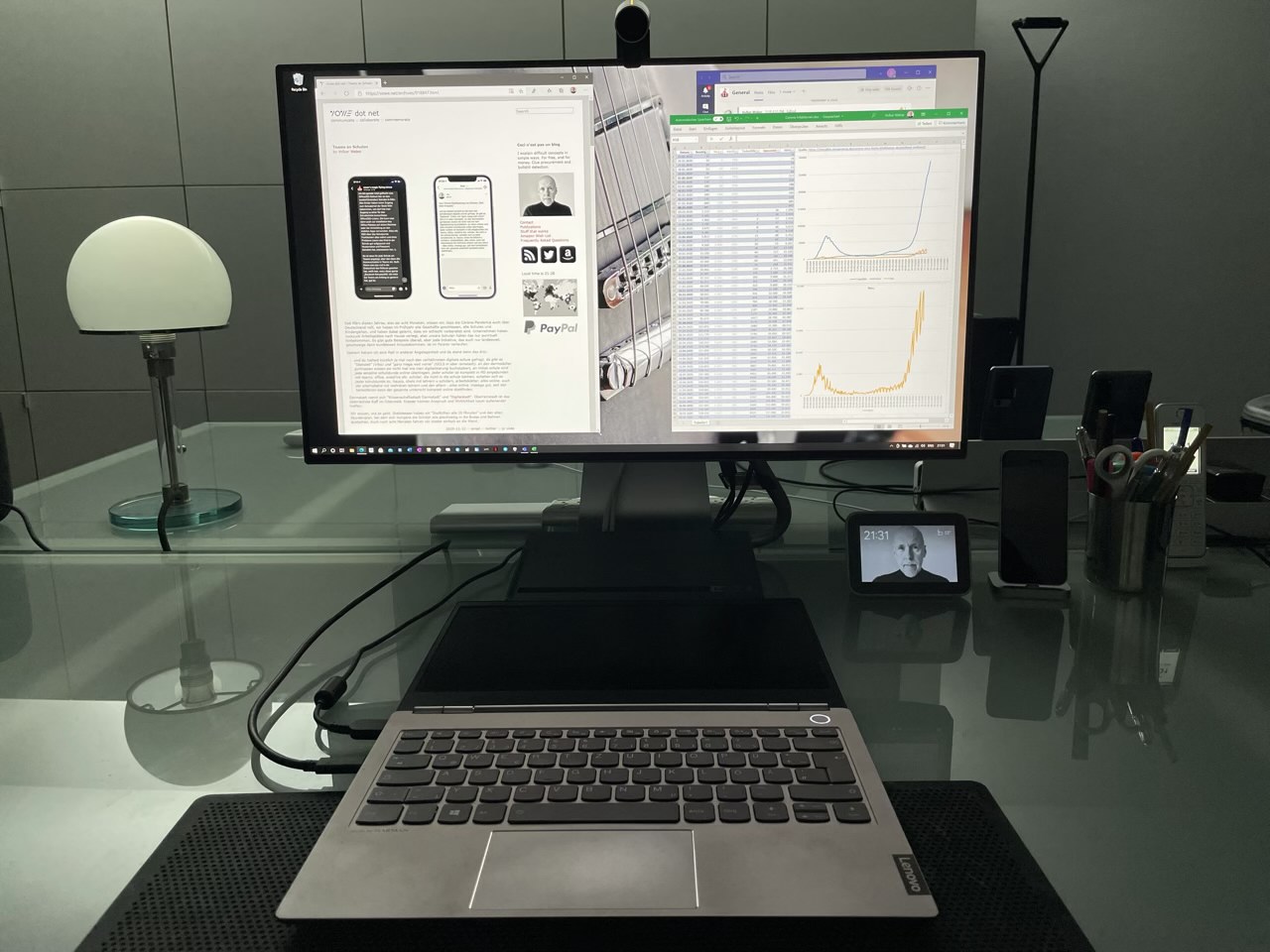
Letzte Woche habe ich einen 27"-Monitor von Lenovo ausgetauscht und ich habe erstmals einen 4k-Bildschirm dieser Größe. Mein ThinkPad Yoga hat ebenfalls 4k-Auflösung, aber der steht in 40 cm Abstand vor mir. Bei mir gleichen sich dort Kurz- und Alterssichtigkeit in perfekter Balance aus. Die Scheffin aber braucht einen Monitor am anderen Ende des Schreibtisches, weil sie dort perfekt sehen kann. Nun ist sie von 1920x1080 über 2560x1440 bei 3840X2160 angekommen. Doppelt so viele Bildpunkte horizontal und doppelt so viel vertikal, das wären dann vier von den Bildschirmen, die sie im Büro hat. Eine so große Excel-Tabelle hatte sie noch nie vor sich. Totale Begeisterung!

c6f16942a73435ddc0d491779ee38e0b

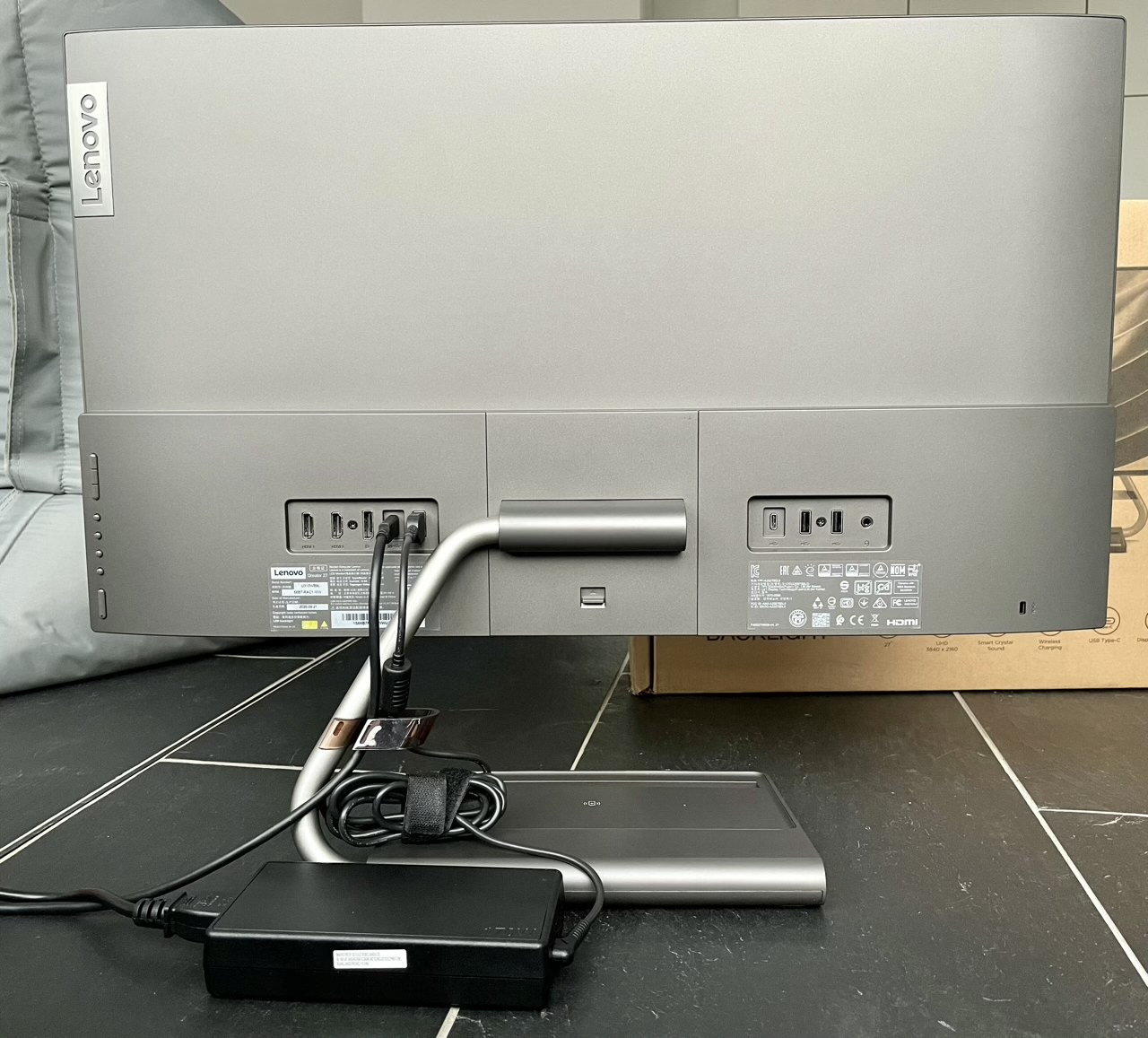
Der Qreator 27 ist kein Office-Bildschirm. Das sieht man schon an der fehlenden Höhenverstellung. Ich wusste aber, dass die Höhe stimmt, denn sie hatte vorher den flexibleren Screen auf genau diese Höhe eingestellt. Der asymmetrische Arm entspricht nicht meinem Geschmack, aber er tut auch nicht so richtig weh wie viele andere Designs. Man kann halt die Kabel hinter der filigranen Konstruktion nicht perfekt verstecken. Am ThinkBook 13s der ersten Generation muss man ohnehin noch ein zusätzliches Stromkabel zum Rechner ziehen, erst das 13s der zweiten Generation kann auch über das USB-C-Kabel seinen Saft beziehen. 80 W Ladestrom liefert das fette Netzteil, das wir unter dem Tisch versteckt haben an mein ThinkPad über USB PD, dicke genug. Der Standfuß lässt sich auch durch eine 10er-VESA-Halterung ersetzen, aber dann entgeht einem eine nützliche Funktion. Die horizontalte Fläche enthält einen Qi-Lader und dient deshalb als ideale Ablagefläche für das Handy.

129e36d94ea8236bd428c355da0b840d

Zwei Vertiefungen mit Anschlüssen sind auf der Rückseite angeordnet: 2 x HDMI 2.0, 1 x DisplayPort 1.4, USB-C und Power auf der einen Seite, 2 x USB 3.2, 1 x USB-C, und ein 3.5mm Headset auf der anderen. Der Monitor hat eingebaute Mikrofone und gibt Sound über die gesamte Bildschirmfläche aus.

786989f3e4247c15884edf6e6fbfbd94

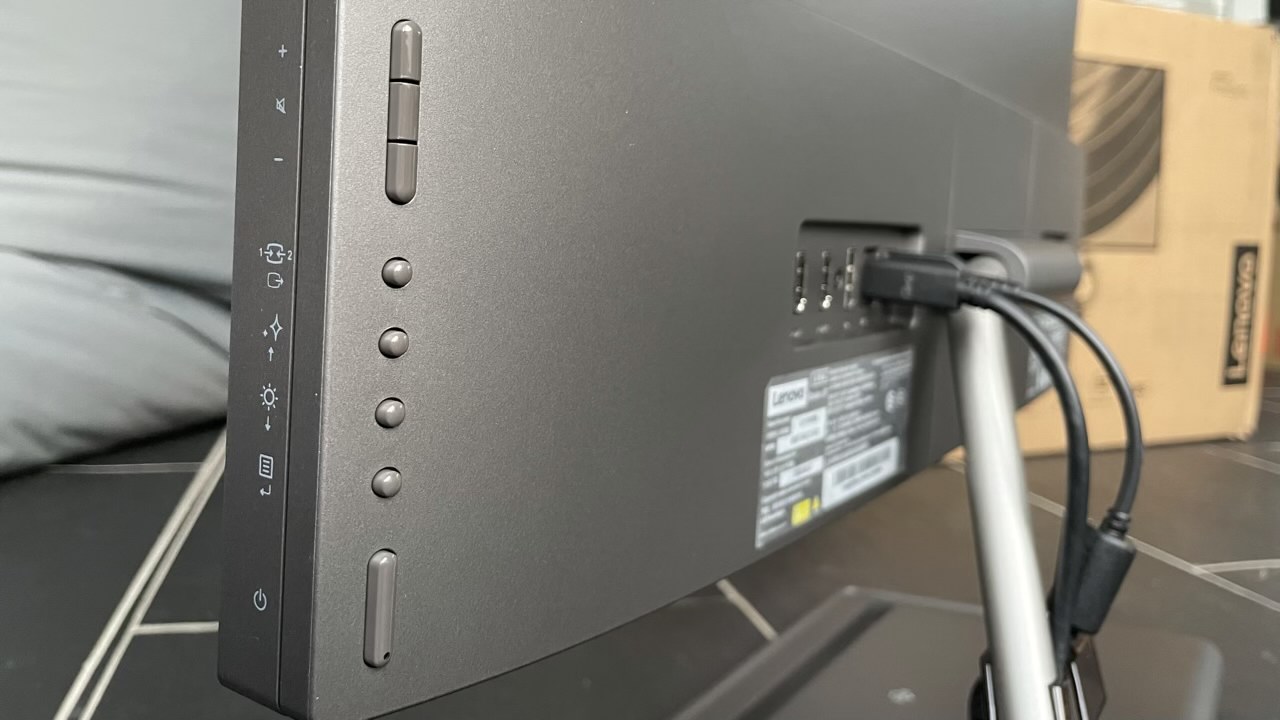
Die Bedienung des Bildschirms mit den Knöpfen an der hinteren Kante ist sehr gewöhnungsbedürftig. Am besten lässt man seine Finger davon. Das entspiegelte Display ist bereits ab Werk kalibriert und das Messprotokoll liegt bei.

6f4632c061a585a83177e4b470376dec

Mit Office-Arbeit ist der Qreator 27 definitiv unterfordert. Das Gerät besitzt ein IPS-Panel mit DisplayHDR-400-Zertifizierung und 10 bit Farbtiefe. 99 Prozent sRGB, 98 Prozent DCI-P3, ein 1300:1-Kontrast und ein Delta-E-Wert von unter 2 verspricht Lenovo. Gamer wird das Display nicht ansprechen: Die Reaktionszeit liegt Herstellerangaben zufolge bei mindestens vier Millisekunden und die Bildwiederholfrequenz bei 60 Hertz, gleichwohl wird AMD FreeSync unterstützt. Was von der Eye Comfort Certification des TÜV Rheinland zu halten ist, weiß ich nicht.

Lenovo bietet ein einfacheres Modell mit WQHD-Auflösung und einfacherem Standfuß ohne Qi-Lader, aber im selben Design für 350 Euro an.

16 Nov 06:59

Inconsequential Updates

by Rui Carmo

This weekend I upgraded to Big Sur and nothing whatsoever broke unexpectedly1 (yet), so I did a round through the various places I take notes and realized there was a fair bit I hadn’t managed to write about and hadn’t been worth writing standalone posts for as yet.

Creature Comforts

Even though I try to spend as much time as possible using my standing desk, I do sit at my regular one every day (usually in the evenings), and in order to reduce the clutter on it and increase actual usable desk space, I’ve been looking at VESA mounting arms to lift the monitors that flank my iMac off the desk.

Unfortunately, my original 24” Apple/LG Ultrafine Display’s VESA back panel is currently MIA2, so I was only able to to do half the job–I got an Invision MX150 monitor arm to hold my LG 29WL500, which besides rotating and tilting manages to hold it at exactly the right height for me to be able to reach the entirety of the desk on that side without any constraints.

Of course I’ve since filled the space underneath with equipment and mugs and whatnot, but at least now it’s all within easy reach.

A SHIELDed Nook

Another thing I did was move the NVIDIA SHIELD to my office so I can sit on my tiny reading couch and watch TV news over the ridiculously small amount of time I can spare for lunch or at the end of the day without having to warm up the rest of the house or distract the kids from their homework.

What I originally told myself was that it would be the perfect one-stop console–besides NVIDIA’s own service (and the Steam games I can run on it) I was going to set up all the retro emulators I’ve been meaning to run but never had the time. But hasn’t yet come to pass.

I ran the xCloud public preview on it for a couple of weeks and found it much more convenient to play Halo than messing about with DeX on my Samsung S8, but in practice my attention span wavered due to the pandemic and I haven’t yet had the time to side-load the new Xbox Game Pass app to try it out.

But there were two things of note that have been lingering in my drafts folder from when it was still in my living room:

  • xCloud gave me trouble until I disabled AI-enhanced upscaling (which was incredible on my 4K TV, but not very useful on the 24” monitor I’m using now)
  • The HDR color space handling is a bit weird, and markedly different from what the Apple TV puts out (HDR or not, there is a brownish tint to most things that I never quite figured out).

The former may well apply to emulators as well (which is why I’m making a note of it), and I’ve yet to read up on the latter, but I suspect getting the right kind of colorspace aligned between source material, the SHIELD itself and the TV is something that needs sorting out.

Waiting For Time To Play With Godot

Since that time I have kept playing around with Godot a little more (maybe half an hour a week, if that), and have come to two conclusions:

  • Compared to Unity, it has an absolutely tiny default footprint and runs on all my machines including the little netbook I have taken to use as the weather warmed up.
  • There is a sizable chance they will “pull a Blender” and become the go-to platform for an entire generation of game developers, which makes it worth exploring regardless of any other consideration.

I currently lack the time (and inspiration) to actually build a game, but I see a lot of entertainment potential in using it as an animation engine, and it is quite (surprisingly) good for basic cross-platform GUI tools (the editor itself is written in Godot), to the extent where I’m currently toying around with the idea of using it to replace a touchscreen dashboard I have running on a Pi (as soon as this is fixed).


  1. Obviously, the usual suspects like my ancient version of Steam and other 32-bit-only apps like Caustic are dead, but nothing broke that I really need right now (and, quite ironically, the Epic Games Launcher still works…) ↩︎

  2. If you happen to have one of these VESA backplates laying around and have no need for it, reach out and I’ll pay for shipment–I’d love to get rid of the original monitor stand and sort out that side of my desk… ↩︎


Want to show your appreciation?
16 Nov 06:58

2020-11-15

The Secret Language of Coders
16 Nov 06:58

Weeknote - 15 November 2020

Happy 260th day of March in the Year of Covid.

The wonders of smell. Not from the lack of smell from Covid–19, but the muted smells from wearing a mask. Losing a sense seems like a great tragedy, be it hearing or sight. But the senses don’t stop there, as we have touch - which seems like it would be detrimental to lose yet that is what happens when someone becomes paralyzed. Taste, I’m realizing is an odd one, as it is so heavily intertwingled with smell that it isn’t fully clear what would be lost.

It is the muted smells and the temporary loss of smells that has me in awe from wearing masks (other than it is God’s way of reminding you that you didn’t brush your teeth). Taking off one’s mask when outside is something magical. The muted sense of smell from wearing a mask, becomes magical when taking it down or taking it off getting a solid direct nose full of the wonderful world around. The background scents that go un-fully noticed on walks of trees, freshly wet pavement, a car engine cooling, all the different flowers and plants, the creek that has filled or when it is drier than usual, fires in fireplaces, and wafts of food being prepared. Taking off one’s mask when nobody is around, or just lowering it is like a firework show finale with all the scents hitting full saturation at once. It is a bit magical. Yet, within a few minutes the smells fade into the background and seem difficult to pull out of the air unless masked again, which does happen. The one scent I don’t find all that magical is vehicle exhaust, which I’m finding is one smell that really lasts. I’ve never noticed it before Covid times, but it is sure present now.

Thanks to Covid–19 and one of its traits of infection can be the loss of scent, one of the first things I do each day after waking is smell things. I smell the back of my hands, fingers, and wrist and then wash my face and hands and smell. Every morning I am relieved that I can smell.

Related, I restumbled upon Monocle’s “The secret to putting on perfume” video that focusses on scent and the use of it as a personal layer of attire, as in scenting for the occasion or work role or environment.

Watched

I finished up Season 3 of The Crown on Netflix so I’m good to start Season 4. I’m utterly impressed with the story telling and film work. The stories don’t seem to fully hew to what I remember reading and hearing retold, but I’m fine with that. I’ve really liked the crafting and developing of characters.

This week I also have been watching some recent and older Monocle Videos, which some seem to be fully Monocle productions and some are Gestalten produced with Monocle. What strikes me is how well they are made as the color grading, edits, cuts, transitions, and tempo are all well done, but they also all are similar going back years to older Monocle videos.

I was good to watch a Netherlands win today over BIH, as they have been a bit lifeless scoring under the new coach. There may be hope.

Listened

I found the 1998 Grace Jones album Private Life: The Compass Point Sessions, which has an 8 minute version of “Slave to the Rhythm”, which is a Hot Blooded Version mix. This song brings back a lot of memories of college, nights out in San Francisco, living in England, and wandering Paris. The odd thing is I didn’t own Island Life the album the original version was on, nor have it on mix tapes. It was ambient life sound track. I have some music that I owned and had on tape and I can tell you the shoes, socks, coat, and places quite vividly when I hear that music. Slave to the Rhythm always seemed to be background soundtrack to some wonderful times and this 8 minute version, which is largely instrumental fills to get to 8 minutes is the perfect background for running errands after the sun has gone down.

Food

This weekend’s grocery errands had a bit of focus on Thanksgiving, as far as sorting out what is stocked and where. With my county back down to Level 1 Covid reopening stores are down to 25% capacity and counting the number of customers in the store and lines starting again.

The weather turned a little bit cooler so made a pot of chili (beef and black bean) that was quite dense, but also really good. My son went through two bowls and it was gone in 3.5 bowls.

Play

A couple days after work I took some time to play through a bit more of Ghosts of Tsushima. I am still amazed withe the scenery and I’m looking forward to being done and just wandering the open map.

Productivity

I’ve been reworking how I’m going to handle blogfodder in Obsidian notes, which start as a link to a piece from someone or some other source. I have been keeping a list in notes, but that was one of the things that I had reworked and been keeping it in an outline, just a tag one note files, and a link on the source in Pinboard. I started a blog fodder note file that links to the source, person, and a note page for what could follow. These may turn into mid-week posts as the notes seems to be turning into 50% to 75% done responses.

16 Nov 06:56

Researching programming languages

by Derek Jones

What useful things might be learned from evidence-based research into programming languages?

A common answer is researching how to design a programming language having a collection of desirable characteristics; with desirable characteristics including one or more of: supporting the creation of reliable, maintainable, readable, code, or being easy to learn, or easy to understand, etc.

Building a theory of, say, code readability is an iterative process. A theory is proposed, experiments are run, results are analysed; rinse and repeat until a theory having a good enough match to human behavior is found. One iteration will take many years: once a theory is proposed, an implementation has to be built, developers have to learn it, and spend lots of time using it to enable longer term readability data to be obtained. This iterative process is likely to take many decades.

Running one iteration will require 100+ developers using the language over several years. Why 100+? Lots of subjects are needed to obtain statistically meaningful results, people differ in their characteristics and previous software experience, and some will drop out of the experiment. Just one iteration is going to cost a lot of money.
If researchers do succeed in being funded and eventually discovering some good enough theories, will there be a mass migration of developers to using languages based on the results of the research findings? The huge investment in existing languages (both in terms of existing code and developer know-how) means that to stand any chance of being widely adopted these new language(s) are going to have to deliver a substantial benefit.

I don’t see a high cost multi-decade research project being funded, and based on the performance improvements seen in studies of programming constructs I don’t see the benefits being that great (benefits in use of particular constructs may be large, but I don’t see an overall factor of two improvement).

I think that creating new programming languages will continue to be a popular activity (it is vanity research), and I’m sure that the creators of these languages will continue to claim that their language has some collection of desirable characteristics without any evidence.

What programming research might be useful and practical to do?

One potentially practical and useful question is the lifecycle of programming languages. Where the components of the lifecycle includes developers who can code in the language, source code written in the language, and companies dependent on programs written in the language (who are therefore interested in hiring people fluent in the language).

Many languages come and go without many people noticing, a few become popular for a few years, and a handful continue to be widely used over decades. What are the stages of life for a programming language, what factors have the largest influence on how widely a language is used, and for how long it continues to be used?

Sixty years worth of data is waiting to be collected and collated; enough to keep researchers busy for many years.

The uses of a lifecycle model, that I can thinkk of, all involve the future of a language, e.g., how much of a future does it have and how might it be extended.

Some recent work looking at the rate of adoption of new language features includes: On the adoption, usage and evolution of Kotlin Features on Android development, and Understanding the use of lambda expressions in Java; also see section 7.3.1 of Evidence-based software engineering.

16 Nov 06:54

Generating English village names with neural networks

Roll 13/02

I'm trying to wrap my head around the new generation machine learning tools: deep neural networks and the like. It feels like this technology is approaching where databases were 20-30 years ago: the tooling is getting easy enough that an idiot like me can have a stab at wiring something up, even if I don't quite understand all the magic incantations that I need to type. And it's pretty clear it's going to be important.

The world seems to be settling on Tensorflow, for now, so I had a go at getting something stupid up and running. I ended up making an English village name generator, using a corpus from OS Open Names (with a healthy amount of awk and grep), and a character level recurrent neural network written in Tensorflow.

Like I was with SQL many moons ago, I think I understand some of the principles, what's possible and what's not, and I can make sense of someone else's code - but it's a bit of struggle getting all the words in the right order when I have to change anything.

Anyway, the results are quite fun - here's 20 of them:

Allers
Bottom
Culack
Swrarby
Fenwall
St Eastake
Anbarth
St Ninhope
Thawkanham Water
Green Mige Lane
Up Maling
Firley
Dinch
Lindlemere
Stan Hill
Hiddlesley
Pibley
Hunmastreet
Shenworth
Strough
Hendrelds Hill
Scottedane
Crickines
Stranal
Footh

And here's another 980.

Update: I turned this into a Twitter bot, @urnowentering.

16 Nov 06:50

Internet Research #1

1. I've been enjoying noodling around with some electronics recently. One of the things I'm working on is converting a pair of beautiful old Bang and Olufsen CX50 speakers into an open source Sonos-esque multiroom audio system. I'm following HifiBerry's guide for the hardware part, and in it there's two 3D printed parts you need.

So I go on 3D Hubs, upload the two .stl files provided, get a quote, credit card, and now it's printing somewhere in Farringdon. You still need to know whether you want PLA or ABS or whatever, but I was very impressed at how easy the whole thing was. Just another mundane e-commerce transaction. We're out the other side of the hype cycle.

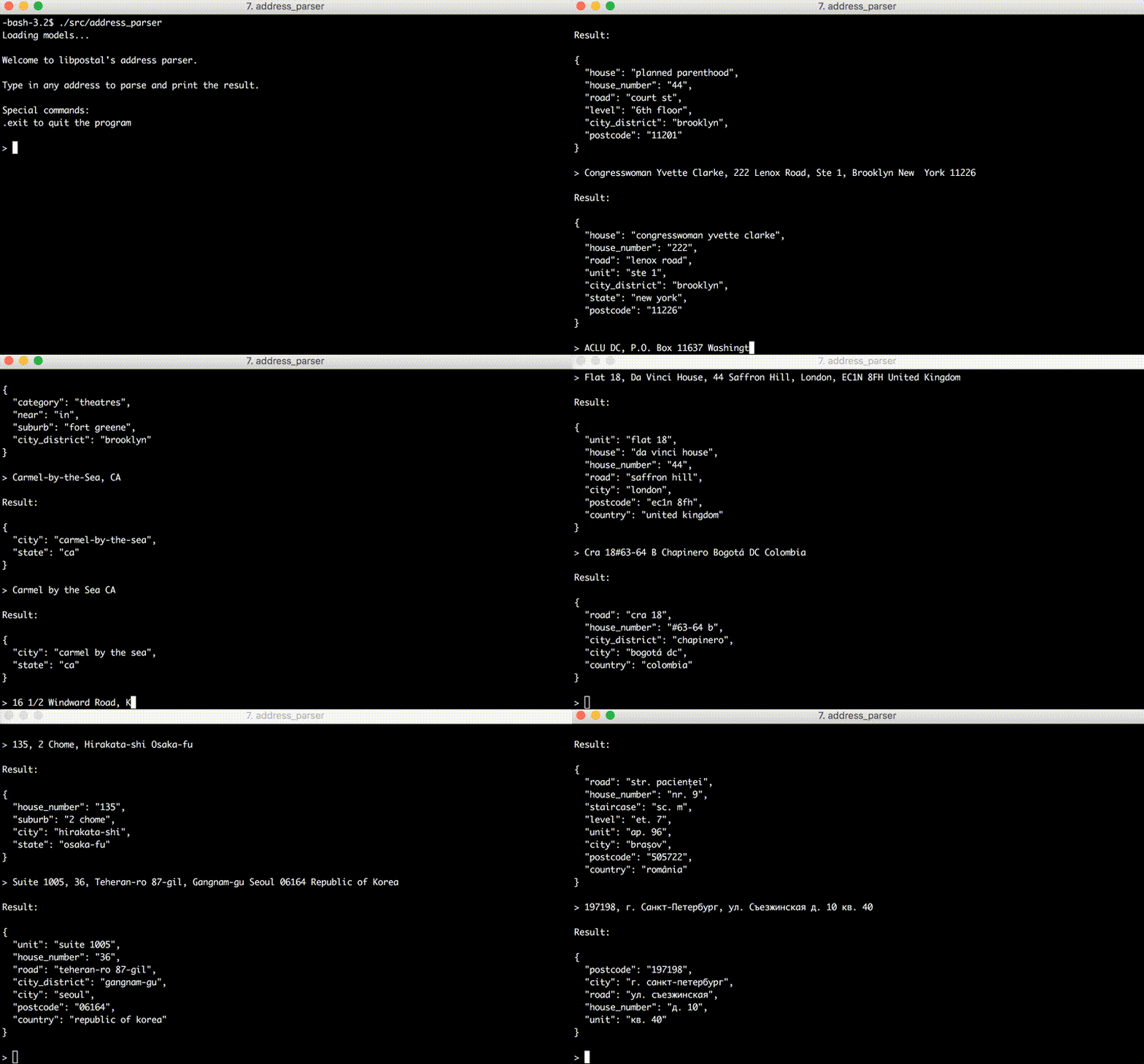
2. Simon Willison linked to libpostal on Twitter. On the surface, a useful library for turning unformatted addresses into structured data. Useful, but nothing out of the ordinary. But on a closer look:

libpostal's international address parser uses machine learning (Conditional Random Fields) and is trained on over 1 billion addresses in every inhabited country on Earth.

Increasingly, just chunking loads and loads of data at a problem becomes an option. Why bother writing a parser to handle every condition and edge case if you can just throw all the known address data in the world at it and let the computer work it out? The writeups on how it works are interesting and thorough.

Statistical NLP on OpenStreetMap: Part 1, Part 2

libpostal screenshot

3. Mapzen funded libpostal, and loads of other brilliant geodata projects. Sadly they're shutting down, but because it's all open source the tens of £millions of value won't be lost. Their migration guide walks through the alternatives to all their hosted services.

Aaron's post about Who's On First, the gazetteer of places, is a brilliant example of how to ensure an important project lasts beyond the lifespan of a single organisation or corporate strategy. Lots of loosely joined pieces, many easy to self or community host. Designing your project to be defended against the organisation that hosts it means designing that in from day one.

In many ways everything about the way Who’s On First has been designed has been done with this day in mind. We all endeavour to achieve the sort of “escape velocity” that immunizes us from circumstance but that is rare indeed and there was always a chance this day would come. So while “success” was the goal in many ways preventing what I call “the reset to zero” has always been of equal importance.

Who's On First, Chapter 2

DRAWING, THE CHROMO CUBE, 1980

4. I think spotted this on FaveJet probably via Russell.

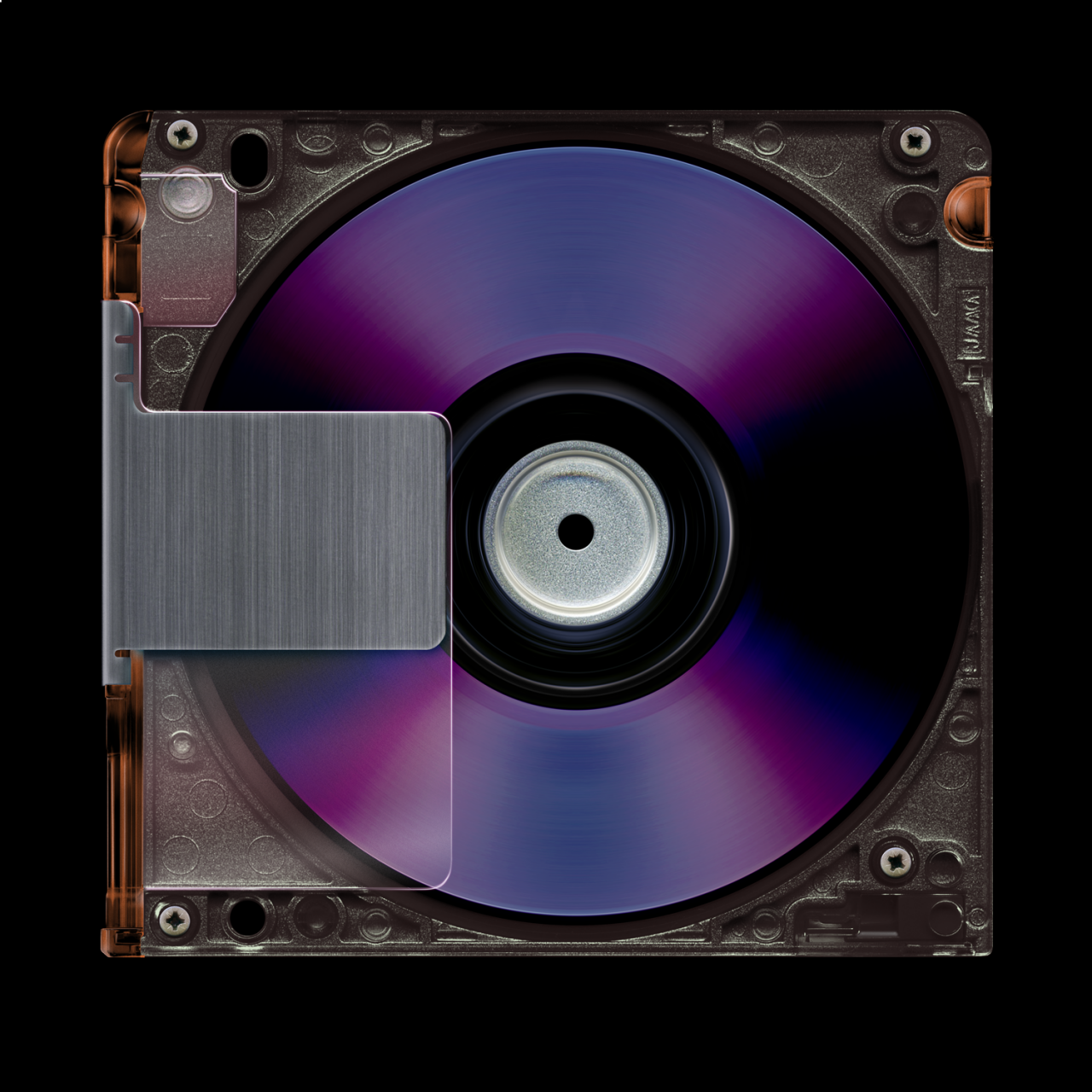
David Rudnick's beautiful drawings of MiniDiscs. Drawings. In Photoshop.