The faulty batteries that Samsung shipped in millions of Galaxy Note 7 units worldwide have led consumers to doubt the QA testing done by the company for its devices. After all, with so many Note 7 units exploding, how could Samsung not detect the issue in its internal testing? As it turns out, Samsung tested the batteries that it used inside the Galaxy Note 7 in its own labs instead of the 28 third-party labs certified by CTIA.
Continue reading →
Slack (or any chat-room) is terrific for encouraging participation.
It offers frictionless participation, real-time feedback, less mental energy, stronger familiarity between members etc…You can make some interesting integrations too with Zapier and other tools.
The best Slack channels have a large group of people with the channel open who are happy to dive into discussions at any moment. That’s a powerful real-time feedback group to help you with any problem. Slack prioritizes the level of activity and sense of community above all else.
When a sense of community is king, Slack is your castle.
But it’s less good for building up a useful knowledge base. The same questions might be repeated endlessly. Knowledge is lost once it rolls off the edge of the top of the page. You lose your search traffic (which accounts for 70%+ traffic in many communities). It’s harder to shine attention on your stars or build content on top of it.
People can’t easily learn from what others have done before. It’s terrible for lurkers (who comprise the bulk of membership). And if you’re based in an awkward time-zone, you’re largely excluded from discussions.
This ultimately comes down to a single decision. Is your priority on the smaller group of people that do participate in communities or on the larger group of people that don’t?
“There’s an App for that.” was trademarked by Apple in 2009. It was a time when the mobile software market was erupting with revenue and raining cash onto developers, in the same way Vesuvius rained it’s ashes onto Pompeii. Developers were buried alive in profits, and during that time, could afford to take risks, make mistakes, and innovate freely without having to face the consequences of being outranked by the competition… because there wasn’t any.
In early 2009 it was easy to decide on the App you wanted to use. There was only about 10,000 to choose from. To search for food, Urban Spoon was the best for sorting near-by choices and Yelp was the best for looking at reviews. If you wanted to book or track your flight you would use Flights. To track your calories you would use Lose It, and to message your friend you would most likely use AIM. Ahhh, the nostalgia.
Now, in today’s world of more than 2 million Apps, if you’d like to message your friend, it all depends: what country they’re in, what country you’re in, what type of media you’d like to send, whether or not you’re using a VPN, where you’ll be having dinner that night, who will pay for dinner, if your girlfriend will check your messages later, and of course, what kind of emojis and stickers you want to leverage for maximum flirtivity. The choices range from WeChat, Whatsapp, KakaoTalk, Line, Messenger, Snap, Slack, Allo, Messages, Rawr, Kik, Tango, TanTan, Tinder, Tawkers, Voxer, and thousands of others that most people have never heard of.
**The point is… the market is not only saturated, but it’s flooding with competition, copycats, innovators, and niche ideas that are completely diluting the active-user base and making discovery for the new guys nearly impossible.
With so many users engaged in these powerhouse platforms, it leaves startups without a chance. User acquisition is expensive, and the need for community is so vital that retention is next to impossible. So how to be successful? Like they say, if you can’t beat’ em, join ‘em.
There’s been a popular video circulating tech forums from the New York Times, done by Jonah Kessel and Paul Mozur. The video is titled, “How China Is Changing Your Internet” and shows how China is ahead of the curve when considering the future of the internet. The subject primarily focuses on WeChat and how users can perform all sorts of functions while never having to leave the app. Things like 1. wash your corgi, 2. share with friends, 3. pay a vacuum service, 4. chat with friends., 5. order food., 6. order taxi, etc… you get the point. Keep in mind, WeChat’s DNA is a messaging App, but with the industry changing in such a dramatic way, it has morphed itself into something new. Many would call it a platform, some would even call it an operating system.
In many cases WeChat acts as “the new home screen”. After users unlock their phone that’s where they go. Whether it’s conscious or subconscious, WeChat (in China) is where users spend the majority of their time. The user-loop is filled with seamless momentum and dopamine rushes. The addiction is tough to crack.
With WeChat becoming such a vice for users, other companies have been taking notice. For example, in Apple’s recent iOS 10 update, the native messaging App has been decorated with it’s own “Mini-App” store to create a diversified experience with an embedded ecosystem of functionality and services. Facebook’s messaging App has done the same, with their integration of commerce and customer support functionality.
For smaller companies and startups, rather than building a separate App, they are using the business model to their advantage by developing new “Mini-Apps” or “official accounts” on the pre-existing monster platforms like WeChat. As the entire user loop, from acquisition to conversion, can seamlessly take place inside of this messaging App, it becomes a win-win solution, for both the “Super-Apps” and the “Mini-Apps”.
New companies have an easier time being discovered and an infinite community to leverage. They can engage and monetize the users they wish, while at the same time, the “Super-App” benefits from increased user engagement and retention, and in some cases, a revenue share. Everyone sleeps with a smile, and the platform evolves to new heights. Surely, this is future.
WeChat has quietly innovated into this business model over the past two years, and some may even argue it was an accident. Either way, they have been trend setters for companies like Apple, Google, and Facebook, now all trying to play catch-up with the idea. Surely, conversational engagement is easy through a messaging platform, but would this “App-in-an-App” or “Super-App” business model work on other platforms?
For this business model to be viable it requires two parts to the formula, users and an active community. The higher the level of active community members on the existing platform means a larger opportunity for these “Mini-Apps” to engage and convert users through value-added services. The size of the platform is directly correlated to the potential for conversion. To define success, increased user-engagement and conversion is the goal, for both the “Super-App” and the “Mini-App”.
If the equation checks out, it would make sense for large companies struggling with engagement or conversion to adopt this business model. Health Apps like Keep, MyFitnessPal, FitTime, or BabyTree could leverage “Mini-Apps” on their platform to provide personalized health services to enhance conversion for their users. Creative Apps like Meitu, Instagram, Prisma, or Sketch could leverage “Mini-Apps” to provide a wider range of filters, brushes, effects, or add-ons to convert more users on their non-monetizing, user saturated platforms. Even eCommerce Apps like Taobao, JD, Amazon, or Tmall could leverage review services, comparison models, virtual product testing, or try-on features, simply by enabling the integration of “Mini-Apps”.
The possibilities are endless and it’s now become a race for innovation. The days of “There’s an App for that.” are far behind us. The conventional wisdom of developing an App for a service has been debunked. Welcome to the next generation of mobile software. Say hello to “Mini-Apps”.
Editor’s Note: This post is contributed by Sean Konieczny, a tech entrepreneur and extensive traveller who believes that miles traveled is directly correlated to the level of EQ and decision making quality. While in Asia, he settled in Beijing and co-founded a digital health data company to provide precision healthcare services that correspond with user health data. You can reach him at seankon@me.com.
Verb. Literally, to fight using stickers (we think the name “Sticker Duel” better fits the sport)
Origins: Undocumented, but claims are that this tradition of emoticon bombardment (sharing) has been around since the early days of QQ messaging. The name was not coined until around early 2015, after the mass advent sticker packs in WeChat.
The stickers hurled in a “dou tu”combat are often of the vulgar, sarcastic, or satirical variety — frequently rage comics hailing from Baozou (暴走漫画). Sometimes these are best loved trophies from past fights — when someone shoots a sticker your way, simply long press to collect and claim your own.
The common way to provoke a sticker duel is by throwing one or two stickers into the midst of a conversation. If your friend responds with the same, then fire at will. The only ceasefire is when one side gets bored (runs out of fresh, funny one) of the the dull game.
Though it may sound like a pathetic pastime, it’s also an unfailing way to draw some chuckles and instantly add some zest and personality into a chat. Entire websites and chat groups are devoted to helping people keep their stickers trendy and up to date, so that one day if you’re challenged, you won’t be sheepishly resorting to something like this:
“Jin Guanzhang” (Master Kim) is an omnipresent personage you’re sure encounter in sticker duels. The unmistakable sneer of Master Kim–a character from a Korean martial arts comedy– are ubiquitously superimposed upon a range of characters from Tom the cat to Pikachu:
Another enduring favorite and integral character in Chinese dou tu matches is Leonardo Di Caprio. Just last week, when the actor opened up an official Weibo account, ecstatic netizens showed a zealous welcome by lavishly showering him with emoticons in his honor (more than 10 thousand comments in three hours of his first post), transforming his message board into a nationwide sticker duel.
More considerate fans were concerned that Xiao Lizi (Leonardo’s nickname in China) would be taken aback by intense greetings. One user tried to console him: “Hello!We hope you will love these expression packs, which represent our enthusiasm. You know, the more expression packs you have, the more popular you are in China.”
Next time someone shoots a couple of funny stickers your way, don’t back down. Dou tu the Chinese way, and proudly respond with some of your favs. As Sun Tsu preached, “opportunities multiply as they are seized”. The same goes for stickers.
40m tracks and a search box does not a service make.
Amazon has plugged an obvious hole in its push to create a consumer ecosystem with the launch of a music service that brings its catalogue into line with that of Apple Music, Spotify and so on.
The new service called Music Unlimited costs $9.99 per month ($7.99 for Prime members) and features the now standard 40m tracks and a search box.
In addition, Amazon is also clearly reacting to the very real threat posed by Google Home by offering the music service for just $3.99 a month on the Echo.
For $3.99 the service is only available on the Echo and I see this as Amazon attempting to compensate for the fact that Google’s Assistant is far brainer and more useful than Alexa (see here).
I also suspect that Amazon had a very easy time licensing the music as I see the labels being keen to democratise music streaming as much as possible.
This is because the writing is on the wall for the music labels as the music streaming companies will soon be able to distribute music from artists much more effectively than the music labels can.
Furthermore, once the artists have figured out that distribution via streaming can be just as good, if not better and they get to keep far more of the revenues, then an exodus will begin.
However, the more the labels can keep the market fragmented, the less power each service will have to replace them slowing their inevitable obsolescence.
Consequently, I think that it is easier than ever to licence all the music a service needs which will hasten the commoditisation of music streaming.
This is why I have long believed (see here) that the music itself is incidental and what really matters is the data that the service generates and the algorithms that make sense of it.
This is what allows a music streamer to understand its subscribers and match them with great accuracy to the bewildering 40m items that are available for them to listen to.
This also allows the addition of innovative features to be deployed on top of the service which is becoming an important area of differentiation.
On this front, I do not see Amazon doing very well.
The Alexa digital assistant underperforms Google, Cortana and Siri indicating that a vast amount of work is required to improve it.
This is a major reason why I think that as long as Google executes well, it should be able to dominate the segment that Amazon has created.
The net result that Amazon is a me too service that will have some attraction for existing Prime members but is not going to cause Spotify or Apple Music to lose much sleep.
Hence, I see no change to the landscape where Spotify is adding subscribers at double the rate of Apple Music despite Apple Music being installed on over 1bn devices.
Auf allen Märkten kämpfen mobile Betriebssysteme um Marktanteile. Meist ist ein Kampf iOS vs. Android, der sich aber je nach Land sehr unterscheidet. Wir neigen dazu, Englisch-sprachige Quellen dafür zu nutzen, auch unsere Märkte zu verstehen und Handlungsempfehlungen abzugeben. Das kann sehr schnell ins Auge gehen, wie ich anhand der Marktanteile der mobilen Betriebssysteme in den USA, Großbritannien und Deutschland zeigen möchte.
Basis für die Zahlen ist das beliebte Kantar Worldpanel, in dem gerade die aktuellen Zahlen (Stand August 2016) veröffentlicht wurden.
Deutschland
War früher Deutschland Nokia-Land, so hat heute Android diese Rolle übernommen. mit über 81 Prozent Marktanteil ist es (zurzeit) uneinholbarer Primus. Apples iOS kommt auf gut 14 Prozent. Windows sinkt weiter und landet derzeit bei vier Prozent.
Samsung ist in Deutschland mit 46 Prozent Marktanteil der führende Hersteller, auch wenn die Verkäufe im abgelaufenen Jahr um 3,6 Prozentpunkte zurück gingen. Am häufigsten wurde das Samsung Galaxy S7 verkauft, gefolgt vom Galaxy A5 und A3. Wie sich die aktuellen Probleme mit dem Galaxy Note 7 auf diese Zahlen auswirken, werden wir erst später beurteilen können.
Großbritannien
Wir betrachten Großbritannien oftmals als sehr ähnlich zu unserem deutschen Markt. In UK unterscheiden sich die Marktanteile jedoch sehr von denen in Deutschland. Zwar führt auch hier Android die Liste an, aber dies „nur“ mit knapp 59 Prozent. Apple kommt hier mit seinem iOS auf satte 36 Prozent. Das ist mehr als doppelt so viel wie in Deutschland. Windows allerdings spielt auch in Großbritannien kaum noch eine Rolle.
In Großbritannien konnten sowohl iOS als auch Android Zuwächse in den vergangenen 12 Monaten verzeichnen, wobei das iPhone SE das meist verkaufte Gerät gewesen ist.
USA
Die USA ist das traditionelle Apple-Land. Hier konnte iOS immer große Marktanteile erzielen und halten. Aktuell kommt Apples iOS, nach einem Wachstum von 2,5 Prozentpunkten im vergangenen Jahr, auf knapp 31 Prozent, was immer noch unter dem Marktanteil in Großbritannien liegt, aber weit über dem in Deutschland. Android erreicht mit einem Rückgang von 1,7 Prozentpunkten 65 Prozent und Windows spielt mit 2,3 Prozent keine relevante Rolle.
Die drei größten Hersteller von Android-Geräten in den USA, Samsung, LG und Motorola, verzeichneten im abgelaufenen Jahr alle rückläufige Verkaufszahlen. Samsung bleibt mit knapp 34 Prozent jedoch der Primus in dieser Liste.
Für alle Länder gleichermaßen gilt: Willst Du Reichweite, geh auf Android. Willst Du eine nicht nur zahlungskräftige sondern auch zahlungswillige Kundschaft, nimm lieber iOS.
Wie sich die Machtverhältnisse und der Kampf iOS vs. Android in den kommenden Monaten durch Messenger, Bots und künstliche Intelligenz verändern werden, muss für den Moment noch offen bleiben. Google hat jedenfalls den Turn-around im Visier und schlägt mit dem Google Assistant einen neuen Weg ein. Wie erfolgreich sie damit sein und wie die anderen Player darauf reagieren werden, schauen wir uns auf jeden Fall an.
Darius Kazemi@tinysubversions
I get that Obama made a good rebuke of Silicon Valley. In the same breath he jokes about the devastation he's caused in the Middle East.
I was sitting on the sidewalk when I suddenly realized you were standing over me. Well, not directly on the sidewalk: I was sitting on top of my kicking, screaming, 10-year-old son. I thank heaven that you were the police officer who came to the scene.
We were on Burrard Street, in the heart of downtown Vancouver, at the beginning of rush hour. Business people were streaming past, staring at our little wrestling match. I’ve learned to ignore the stares, because they keep me from doing my job: keeping my autistic son safe, even when he’s raging.
On Wednesday, he was raging at my refusal to let him watch YouTube on the way home from school. After-school YouTube time has become an important part of his transition back to school: after two years of homeschooling, he’s back in school full time, and the prospect of end-of-day YouTube helps him push through the days when his anxiety makes it hard to go to class. But on this particular day, he’d refused to go to class at all, even when I reminded him that would mean a YouTube-free afternoon.
He regretted that decision as soon as the school day ended. Just as he was getting the car, he asked to watch YouTube on my phone, and as soon as I refused, he screamed and jumped out of the car. I chased him through the parking garage, catching up to him just as he reached the elevator. Tears streaming down his face, he begged for his YouTube time, telling me that he was afraid that without it, he’d lose his mind. When I pulled him out of the elevator and back into the garage, he lay down in the middle of the car lane, saying he would rather just die.
I stood over him, so we’d be visible to any drivers, until he was ready to get to his feet. He seemed calmer, so when he walked back to the elevator, I guessed that he was heading to his dad’s office just across the street. I followed him into the elevator, up to the office lobby, and out onto the sidewalk. It wasn’t until he was almost at the curb that I realized he was planning to throw himself into traffic. I reached him just in time. He tried to tug away, back towards the street, so I pulled him down onto the sidewalk, where I could hold onto him while calling my husband for backup.
Thankfully, these moments of existential despair don’t come around often—maybe only every month or two. When they do, it takes all my emotional strength to hold fast to whatever limit-setting has occasioned my son’s rage. I know that if I relent in the face of his threat to hurt himself, it will become his instinctive threat, and even more dangerous, his habitual thought pattern.
As our son has grown bigger, these situations have also taken a lot of physical strength. He’s now too big and strong for me to restrain with just my arms, so if he’s threatening to hurt himself, I have to pin him down. More and more often, I have wondered whether I will have to call the police to help. But I’ve been terrified to do so, because I’m worried about scaring him—or worse yet, getting into a conflict with law enforcement.
When I looked up to see a uniformed officer standing over me, I briefly thought those fears were coming true. But the police uniform and buzz cut framed the face of a kind, concerned woman.
“Is everything OK?” you asked, in a voice that was miraculously free of judgment.
“My son is autistic,” I explained. “He just tried to run into the street.”
“How can we help?” you asked.
“I just need to keep him safe until his dad gets here.”
You knelt down and spoke to him in a quiet, calm voice. You offered him a sticker, and you didn’t blink when his response was, “leave me alone, you bitch!” You just kept speaking to him quietly while he raged—and while your partner, also a woman, stood watch over the three of us. Your police car was stopped in the middle of the road, lights flashing, but neither of you were trying to rush us to a resolution.
“He’s upset because I won’t let him have YouTube, but I can’t give in,” I explained, and you nodded in a way that told me you got it, and that what I was saying made perfect sense. I was smiling despite the insanity—because if I didn’t see the humor of a wrestling match on a rush hour street, how would I survive—but from the way you looked at me, I knew you were seeing a mom who took the situation seriously.
When my husband answered the phone you gently took over the job of restraining my son…something that no public servant has ever dared to do. We’ve had teachers and support workers tell us that they’re not allowed to touch a child, even when it’s a matter of keeping our son safe. But you held him firmly and respectfully, as gently as you could, without a trace of anger or fear on your face.
“I have a lot of experience with autistic kids,” you told me, and it showed.
When my husband arrived he took over the job of helping me restrain our little guy, who was still kicking and screaming.
“Is there anything else we can do to help?” you asked.
The only thing I wanted was your business card, so I could send you an email. If I do have to call the cops in the future, I would love your notes and name on our file. But it took another 45 minutes before our son was calm enough to get in the car and go home, and by the time we got there, I had lost your card.
I know how lucky I was to get that kind of police response: as a white, middle-aged, middle-class woman, I got the benefit of many possible doubts about why I was holding my kid down on the sidewalk. I also felt incredibly grateful for our recent autism diagnosis, which makes the situation much easier to explain.
But what made me feel really lucky was encountering you, a police officer who approached our family with concern and calm. You were kindness, and for my son, you were safety.
And sometimes safety is the one thing I fear I can’t provide my growing boy. It was great to know that in that particular moment, somebody had my back. It’s what every parent of a special needs child—every parent, period—should be able to count on.
Update: The Vancouver Police Department helped me find our helpful officers! A huge thank you to Constables Karma and Jackie.
While I talk about many products, I use very few tools to work with. They have to be efficient, very low maintenance and purposeful. I never mess with them, I don't install unnecessary software and I clean them up weekly.
I also use the products I write about extensively, so they may seem more important once in a while. But they are not. All of them are inferior in one way or the other. Sometimes the hardware is excellent but the software gives me headaches.
You don't see anything surprising in the photo above. MacBook Pro, iPad Pro, Apple Pencil, iPhone, Plantronics Voyager Edge, Manfrotto Pixi, ShoulderPod. And a bag. What may surprise you: I don't use pen and paper. Everything created is digital. And not everything is new. The MacBook Pro for instance is a late 2013 model. The endangered species here is the Plantronics headset. I have already tried the AirPods but I could not take them home.
There is a bit of redundancy in my toolset. The first thing I could live without is the iPad Pro with Pencil. The last two things I would keep are the MacBook Pro and the iPhone.
Isn’t it delicious that after trafficking in racism, promoting sexism and using a lie about Barack Obama’s birthplace as a pivot into political relevance, Donald Trump could receive his final death blow from a black woman: the president’s wife?
And isn’t it interesting that after so many years of keeping a studied distance from the ugliness of the political arena, the first lady is throwing herself with such passion into this grotesque campaign?
That says everything about the singular threat that Trump poses, and she’s emerging as the fiercest counter to it: Michelle Obama, octopus slayer. She’s effective because she has never gone looking for a fight — we know that about her. She acts when she has something to defend, and as she made clear in a stirring, searing speech late last week, that’s more than her husband’s legacy, which a Trump victory would decimate. It’s her dignity as a woman. It’s the dignity of all women.
I don’t mean to overstate her impact: Trump was going down before she joined the chorus of condemnation. But her eloquence is sealing the deal. First at the Democratic convention in late July and then in New Hampshire on Thursday, she embodied the nation’s conscience and staked her claim as the most earnest guardian of our most important values.
a CD or “Compact Disc”, is a small, shiny round surface containing optically-readable, microscopic bumps used to encode music or data. They are an obsolete technology that existed in the latter quarter of the twentieth century and enjoyed a brief metamorphosis into the DVD (“digital versatile disc”) and Bluray formats at the beginning of the twenty-first century before fading away forever.
Hi!
I recently wrote about my efforts to get iTunes out of my life. It’s going well, thanks, but there was one piece that was still missing for me: ripping CDs.
For most people living in the modern age of streaming music, this probably won’t matter, but for the collectors out there with shelves full of old discs, it might still be important. If this is something you still do from time-to-time, read on.
iTunes is Terrible
Let me reiterate: iTunes is not good software. It is a pain to use, deliberately makes some things difficult or impossible (e.g., dragging music files out of it for copying or transfer to a non-iOS music player) and is bad at its job! In this case, the job I’m referring to is ripping audio from a CD.
Most CD rippers have some notion of error correction. Spinning discs are susceptible to errors picked up from vibration or scratches on the surface. Most good ripping software will attempt to verify what was read to ensure an accurate copy. If they find an inconsistency, they reread the chunk. Easy enough.
iTunes’ idea of error correction is to take an average across the error. Instead of rereading to see what was actually there, it will interpolate a value that makes sense. Apply enough of these smoothing treatments to a copy and you’ve just ruined that carefully-mastered recording. Worse, you have no idea what it’s done.
enter X Lossless Decoder
… or XLD for short. Usually, when I see something with an X prefix in its name, I tighten up in anticipation of a terrible user experience, but XLD isn’t bad at all. It has a bunch of options you probably won’t need and pretty sane defaults. The first time you open it, you’re presented with the preferences screen. Take a look around. The General tab is where you’ll want to select your output format.
It’s ok. It’s not that scary. Just go to the file menu, select “Open Audio CD” and you’re in business. It’ll output to just about any format, though I’m still on Apple Lossless because of old habits. It’s fine. Most things can deal with that now.
What’s great about XLD is that when it’s finished ripping, it checks every track against a global checksum. You get a nice report on each track it’s ripped along with an OK/No Good indicator so you know what didn’t get copied correctly. Of course, there’s not much you can do if you get a bad rip short of trying to hunt down a copy of that CD and ripping the bad tracks over again.
There’s another piece of software I use for converting between different audio formats.
xACT
Yes, it’s another one of those pieces of software with X in the name. This one stands for (x) “Audio Compression Toolkit”, but I eXpect they want you to pronounce it “eXact”. Pretty cool, guyz. Also impossible to google. There are a number of different pieces of software with these four letters as a name.
It’s pretty straightforward. Just drop a list of files into the Encode list, pick your output format and hit Encode. It has a bunch of other options like checksum validation, splitting and joining audio tracks and a tagging utility, but this is the feature I use the most.
Education, says Hank Green, is impossible to optimize. Hank and his brother John are the creators of Crash Course, a YouTube educational channel, now being touted on Patreon. "We create free, high-quality educational videos used by teachers and learners of all kinds," says the Patreon description. "That's all we want to do. After 200,000,000 views, it turns out people like this." In this article Green writes about talking to rich people about the success of Crash Course. "They get really excited really fast," thinking they could scale it up and 'fix' education. But there's no one-size fits-all. "Different schools face different problems. There are no one-size-fits-all solutions. You can’ t innovate your way into the kind of traditional cost-savings the internet brings." So instead "we keep doing what we’ re good at… making great content about difficult subjects that help students and teachers." And giving them away for free.
Flashing lights and bikes are strongly associated together, but flashing bike lights can actually cause problems at times. When should you use flashing bike lights, and when is it not a good idea? Here’s a guide to when to use your bike lights on flashing mode.
We’re building the Model 01, a hackable ergonomic keyboard with mechanical keyswitches, programmable RGB LEDs, opensource firmware, and a gorgeous hardwood enclosure. We expect to ship later this year. You can pre-order one today at https://shop.keyboard.io. The discount code “BOXOFCRAP” will take fifteen bucks off your order.
Last summer, we ran a pretty successful Kickstarter campaign for our first product, the Model 01 keyboard. Since then, we’ve been hard at work getting the first run of a few thousand keyboards manufactured. It’s been a bit more of an adventure than we’d expected, but things are proceeding apace.
Unsurprisingly, setting up manufacturing has meant that Jesse’s been spending…rather a lot of time in Shenzhen. Mostly, his days at the factory start at 9:30 AM and wrap up somewhere between 8 and 10 PM. But on Sundays, he’s been at loose ends. This trip, he decided to do something about that.
We’ve long been fascinated by the Huaqiangbei electronics market area of Shenzhen. (Hereafter, we’ll just call it HQB.) If you need some bit of electronics or a phone accessory, you can find it in HQB. There is an entire multi-floor shopping mall that sells nothing but phone cases. There’s one that specializes in smartwatches. There’s a mall that sells cellphones wholesale. There’s one just for surveillance cameras. And then there are the component markets. Need a chip? Or 250,000 chips? Somebody there can get them for you.
While most vendors in the markets will (grudgingly) sell you one of something, that’s not really why they’re there. HQB is where you go to buy new products in volume. The price for one of something is…a little bit higher than the unit price if you’re buying a bunch of something.
Up until now, we’ve had only the vaguest sense of what volume purchase in the markets was really like. We, of course, were never going to be in the business of buying smartwatches, drones, or SD cards in volume. Or were we?
About a month back, Jesse asked friends on Twitter if they’d pay fifty bucks to get a box of random crap from Shenzhen. It quickly became clear that we weren’t going to have any trouble finding customers for this one.
Once in Shenzhen, Jesse enlisted the help of his friend Helen Tan. They made a plan to spend Sunday in the market and Jesse posted the following product listing to the Keyboardio store:
We’ll send you a box of worthless amazing crap from the electronics markets in Shenzhen, China.
We’ve got some idea of what will get thrown into your box, but we won’t know for sure until after we’ve gone shopping. It’ll probably include some computer or phone accessories, maybe an input device or actual phone or something if we see something weird and cool and crappy enough. If you have specific requests, send them to @obra on Twitter.
To maximize the amount of dreck we can send you, slow-boat shipping to anywhere in the USA is included in the price of the box. Expedited shipping and delivery to addresses outside the USA are not available at this time.
None of this stuff comes with any warranty. It’s exceeding likely that the box will contain items known to the State of California to cause cancer.
Limit: one to a customer.
Not really being sure what we were getting ourselves into, we limited this run to 25 boxes. Jesse tweeted about the new product offering and we sold out in less than an hour.
Sunday rolled around and Jesse and Helen met up to go shopping. We didn’t really know what we were going to be buying. Our initial budget was that we wanted to spend about $30 on crap, $10 on shipping and take home a $10 profit. Things didn’t quite work out like that, but it gave us a decent framework.
Our first purchase was a soldering stencil for doing chip-level repair to an iPhone 6S+.
In the west, we generally treat a phone’s logic board as a single component. If it’s fried, it’s fried. Just toss it out and replace it.
In Shenzhen, it’s not uncommon for a phone-repair tech working in a tiny little market stall to perform incredibly fiddly chip-level repairs to a mobile phone.
This is the tool they would use to apply new solder paste when replacing individual chips on an iPhone’s logic board.
There was no volume discount for buying the stencils. The shopkeeper thought we were a little bit odd for buying 30 copies of the same stencil, rather than a kit of different stencils for a variety of late-model phones.
The shop we bought the stencils from sold a variety of tools and supplies for electronics repair. That included the regular stuff like tweezers and solder, but also a bunch of weirder stuff.
One of the items we really wanted to buy for the boxes was a set of *cough* unofficial iDevice repair manuals. These books each weighed at least a pound and featured detailed documentation of every chip, screw and component of a given Apple device. They walked through how to remove, test, repair and replace each chip, with detailed photos.
Our next stop was the iRing store. The iRing is a curious item. It’s incredibly popular in China and something almost nobody in the US has. The concept is really simple. It’s ring you stick to the back of your phone. You can use it to hold your phone or as a cute little integrated stand. We decided to splurge and buy the version that had reusable adhesive and an included hook for hanging up your phone. (We still don’t really “get” the hook, but the ring is amazing enough on its own that we’re sure we’ll fall in love with the hook.)
There are four or five shops that sell nothing but iRings in HQB. The one we ended up at had a selection of probably over 1000 designs, ranging from simple unbranded rings with single-use adhesive to rings studded with fake gems to rings with pictures of your favorite Disney characters, NBA teams and multinational brands. The cheapest rings went for $0.37. The most expensive topped out at nearly $2.
We knew there was no way we could ship the boxes of crap without a selfie fan.
What is a selfie fan you ask? Why, it’s a fan to give your hair a nice windswept look when you’re taking selfies. The model we chose is especially interesting because it features a combined USB+MicroUSB connector. That means that it will work great with your Android phone or with your USB powerbank.
Everybody got a blue fan, except for one lucky individual. That person got a true box-of-crap experience. Their fan is missing the blade. If they write to us, we’ll drop the blade in the mail.
Later in the day, we found ourselves in a slightly more remote part of HQB and asked another vendor what they’d charge for these fans. Turns out, we’d been ripped off. This second vendor only wanted $0.38 cents per fan.
The next product in the box of crap is a cute little bendable USB light. You plug it into a USB port and it lights up. If you happen to have a USB powerbank, you now have a somewhat unwieldy flashlight.
“32GB” MicroSD card
$2.13 (Compare at ???)
It’s a MicroSD card. It is marked as being a 32GB card. If you stick it in your phone or computer, it will report that it is a 32 GB card. But it’s not. It’s an 8GB card with trick firmware. You should always be able to get at the last 8GB you wrote to the card, but….don’t try it with any important data or in any important device.
It was a lot easier to buy guaranteed fake cards than we expected. We had to go to one of the slightly seedier electronics malls. We had to go up to the second or third floor. We had to look for one of the vendors who didn’t have a prominent flash chip testing machine on their counter…and that was about it. There was some discussion of how much “real” storage we wanted in the cards. We asked about getting cards with only 2GB of real storage, but the vendor said 8GB was the lowest she could go. After the sale was finalized, the salesperson admitted that she would have charged us the same amount for the “256GB” cards
Interesting fact: The card can be modified to report any amount of storage as being available. The vendor said that she couldn’t do it at her booth and that she didn’t have a data sheet, but that if we wanted, she could send the cards back to the factory to be reprogrammed for us.
For a bunch of fascinating technical detail about fake SD cards, check out this post and this post from bunnie.
Stickers
$0.06 (Compare at ???)
We’d hoped to include some genuine fake Apple and Samsung “Do Not Tamper” stickers in the boxes of crap, but couldn’t find any for sale at the first few sticker booths we stopped at. We briefly considered sending “QC OK” or “Inspected by 13” stickers, but fell in love with these warning stickers. And hey, they didn’t exactly break the bank.
Lunch break
On our way to lunch, we totaled up how much we’d spent during our morning shopping spree. A whole $3.95. We knew we were going to have to up our game after lunch or we weren’t going to have nearly enough stuff to make our customers feel like they got their money’s worth.
After recharging ourselves with spicy noodles, we set out for HQ Mart. Specifically, we set out for the top two floors of HQ Mart, which may well house the world’s greatest concentration of LED vendors. It’s a mix of LED sign vendors, RGB LED strip vendors and LED factories. We considered buying RGB LED strips and wireless controllers. We gaped at gorgeous LED-base reproductions of old-fashioned lightbulbs. We got headaches from giant walls of some of the brightest LEDs we’ve ever seen. We recoiled in horror when we realized some of the glowing LED strips we were handling were plugged directly into 220 volt AC.
And then we stumbled on an LED sign vendor selling cute little programmable LED name badges. They seemed about right for the box of crap, but, at $4.20 for their cheapest model, the price felt a little high. We took the vendor’s name card and went wandering around to try to find another source. After talking to another three or four vendors selling the same badges for $5 or $6, we circled back to the original vendor and made the purchase.
While they were counting out the 30 units, we noticed that the giant screen behind the vendor’s desk appeared to show her sitting there counting out product. With a little bit of pantomime and a little bit of translation by Helen, they explained that it was actually an interactive wall that they’d built around a Kinect sensor. The vendor made me sit down at her seat and practice AR bowling and taking snapshots with a handwave gesture.
The LED badge comes with a MiniCD with Windows drivers on it, but you can download the same software from the manufacturer’s website: http://www.minileddisplay.com/en/download/
(Trivia: it looks like the LED sign has a more powerful CPU than the Keyboardio Model 01.)
Inside each box is an H6 Smart Watch. There is no brand name on it, nor anything that points to the name of the factory. That’s not too surprising, because there’s a fruit company in Cupertino who might have some issues with their industrial design.
We’d actually done a bit research during the week before we went shopping. We knew we wanted to get a smartwatch or a drone into the boxes. We figured that either was likely to run us $15–20 and were pleasantly surprised when the first few vendors we talked to quoted us prices in the $12–15 range.
Wandering around the smartwatch mall on the ground floor of the “SEG Factory Store” building, we saw the same products in every shop. Except each had a different build quality, model number, and a slightly different firmware build. Some vendors needed to show us two or three sample units before one would turn on. Each time, we’d ask them to quote a price for 30 pieces. Prices hovered around $12.
(If we knew then what we know now, we probably would have skipped both of them and gone for more crap without Lithium Ion batteries.)
Yes. The device looks a lot like an Apple Watch, but the functionality is a little bit different. Sure, it has a pedometer and a sleep tracker. If you pair it with your phone, it can act as a bluetooth speaker and microphone. What sets this device apart is what you’ll find when you pop off the battery cover and remove the tiny little battery. There’s a SIM slot and an SD card slot. If you drop a SIM into the watch, you can make calls and surf the web. If you drop an SD card into the SD slot, you can use the phone’s camera to shoot grainy, low-resolution photos from your wrist. The vendor assured us that the watch would last about 3 days on standby.
Unlike the Apple watch, you can’t change watch bands. If you look carefully, you’ll see that the GSM antenna is integrated into the molded silicone rubber band.
Inside the watch is either a MediaTek chipset or a local clone of one. The watch is, we believe, running Nucleus, MediaTek’s watch operating system.
The watches are running Mediatek Nucleus. Its version numbers are…somewhat opaque.
The watch vendor was very clear with us that the devices only came with a six month warranty. For a variety of reasons, including the fact that it cost less than ten bucks and the fact that we described the contents of our box as “useless crap”, we are not passing that warranty on to our customers.
The economics of how to make a watch phone for $9.74 were completely bewildering to us. If we could get the price down to 65 CNY just by buying 30, how much could they possibly cost to make?
As it happens, a friend of ours in Shenzhen has a friend who is a salesperson at a smartwatch factory. We talked him into calling his friend and asking her what she knew about watches like the ones we bought.
She asked for photos….and then told us that her factory sells an identical model. She told us that next time, we should just deal with her directly, as we could have saved a lot of money. If we bought 30 watches directly from the factory, they would only cost us $7.49 each. So, the reseller made about $67 profit on us.
If the factory sold the watches for $7.49, how much could they possibly cost to make? That’s a question that can be awfully hard to get answered. Not really expecting an answer, we asked our friend to ask his friend. She was happy to tell us: $6.
Six dollars.
Six dollars for: a GSM chipset, a CPU, an LCD screen, a battery, a PCB, a metal housing, a molded silicone watch band, a MicroUSB cable, and a box. And the labor to assemble and test all of that.
At this point, we were still feeling really good about our budget. We had ideas and set off in search of a cheap drone store that had been recommended to us.
On the way to the drone store, we cut through a back alley and saw a small shop selling wireless chargers and little flexible circuit boards. Upon closer inspection, we discovered that the flexible circuit boards were Qi-compatible wireless charging adaptors for phones that didn’t support wireless charging out of the box. You just stick them on the back of your phone (or inside your phone case) and thread the connector into your charging port.
On a lark, we asked what these things might cost. We were told that the wireless charging adaptors were $0.94 each if we bought 30, and that the charging bases were $1.35.
We hadn’t been planning on throwing a wireless charger into the box, but it sounded like a good deal, so sure. Why not?
As soon as we said ok, the vendor admitted that they didn’t have 30 of the inexpensive chargers. We’d have to go up to the next cheapest unit. It cost 10% more. What did we get for that extra $0.15? Well, the space-ship like charging base had an additional embossed marking on it: “NCC-1701”
Sold.
Lightning / MicroUSB cable
$0.75 (We couldn’t find them on Amazon)
The first drone store we visited was a total bust. Their cheapest option was a budget-busting $14.99. Asking around, we were told that there might be another drone store down the street that had more affordable options.
As we made our way down the street, we ran across a cable vendor selling…what may be the most wonderfully wrong cable we’ve seen in years, a combined lightning and MicroUSB cable. Not one of those cables that splits and has a lightning connector next to a MicroUSB connector. Not one of those cables that has a MicroUSB connector and a lightning adaptor.
A cable that has a regular USB connector on one end and a reversible connector on the other end that fits inside a MicroUSB port and also fits inside a lightning port.
It violates the MicroUSB spec. It violates the Lightning spec. It’s wrong. Yet, somehow, it’s also incredibly right. It should not work. Yet, somehow, it does. When we showed one to a friend who works for Apple, it pretty much reduced him to distraught gibbering.
When we visited Shenzhen in July, we found these cables at one or two shops. Now, they are everywhere. We’ve seen five or six different variations on the connector design. Some are pretty well made. And some will probably fall apart after only a few uses.
When we asked how much, we were told they were about $1.50 each. As we explained that we wanted thirty, the price came down to a more reasonable $0.75. The vendor experience wasn’t the best. These folks were the only vendor the entire day who didn’t seem to appreciate our business and who didn’t provide us with a receipt. Even the woman who sold us three dollars worth of LED lights gave us a receipt.
At this point, we probably should have stopped, declared success and headed off to the DHL office to package up the boxes of crap. But if we could find a drone cheap enough, we wouldn’t completely blow our budget.
A thirteen dollar iPhone-controllable camera drone.
We finally found the “other” drone stores. The first one didn’t have anything under $20. Not expecting much, we walked into the drone store next door and Helen asked them what they could do for an order of 30 units. They said that their cheapest drone was $10.19, but that it was really worth it. The shop was pretty cramped, but it was live demo time. They found us seats, handed us bottles of water and as we got comfortable, they put a very cute little drone up in the air. As someone who we’re pretty sure was the owner’s son demoed the drone’s abilities, they talked up its features and what great reviews their drones got on Amazon. Helen managed to talk them down to $9.74 per drone.
Jesse splurged and bought himself one of their nicer mini drones. You can control it over WiFi from your iPhone or Android phone. It has a built in camera that can stream video in real-time. Sadly, at $14.99, it was just a little bit too expensive to add to the boxes of crap this time around.
At this point, we were really done shopping, so we headed back to the shipping broker’s office to split up the loot into 30 boxes.
On our way, we narrowly avoided a run-in with a vicious street gang.
Shipping
$28.46
There’s a whole street in HQB known as “Shipper’s Alley.” It’s a mix of express shipping offices and packaging vendors. Thankfully, Helen was able to recommend a shipper she’d worked with before.
We brought our bags and boxes in at about 6pm, just as most shops started to close. We’d planned to use Hong Kong Post’s weight-based shipping option for the boxes of crap. It was inexpensive (About 12 USD per box) and relatively quick.
After a bit of discussion with the shipping agent, we realized we had a bit of a problem. She’d noticed that the smartwatches had Lithium Ion batteries. Hong Kong Post’s rules don’t allow shipping of Lithium Ion batteries. The agent suggested that the most cost effective solution would be to split the shipments up — The watches would go by DHL and everything else would go by the less expensive HK Post service. In retrospect, we think it would have been cheaper to just send everything by DHL.
(Astute readers might guess that the drones and LED signs also have embedded LiIon batteries. The shipping agent did not.)
So, off we went to buy boxes for the HK Post shipments, while the shipping agent started work on address labels. The boxes cost $0.12 each. Initially, the shipper thought that the watches could be shipped without a separate shipping box, but later reconsidered. They ended up giving us those boxes for free.
We handed the shipping agent a USB stick with a spreadsheet containing everybody’s addresses. She got to work filling out shipping labels.
Jesse borrowed a computer from the shipping agent to write a brief letter to our customers and ran off 30 copies.
Helen and Jesse sat down and started to fill up 60 boxes with worthless crap.
Turns out, kitting and packing boxes is fairly time consuming. It probably took us an hour.
The professionals are…a lot faster. They are truly wizards with tape guns.
We ended up sitting around for another hour while the professionals wrapped each of our boxes in an impregnable tape barrier and the shipping agent continued to work on address labels. We ran into a small snag when she discovered that not all of our customers had provided a delivery phone number. We got around this by using Jesse’s US cell number for all of the missing customers. About three days later, he started to get…rather a lot of status update SMSes from DHL.
Because of the battery SNAFU, shipping ended up coming out to a lot more than we’d expected. The DHL boxes each cost $16.49 to ship and the HK Post boxes each cost another $11.85. We tried hard to convince the shipping agent that we’d be fine with everything getting put on a boat and showing up some time in November, but she told us that we’d need to be shipping a lot more stuff for the economics of ocean freight to even begin to make sense.
This was a one-day project, but it was a pretty long day.
Summing up
Every box-of-crap recipient got $31.76 worth of stuff at Shenzhen prices. If they’d bought everything on Amazon, they would have paid over $130.36. (We couldn’t find the fake SD card, flippable cable or stickers on Amazon.) Those Amazon prices aren’t always the cheapest option, but represent at least a little bit of bargain hunting. That maps pretty closely to how hard we fought for deals in HQB.
Because of the shipping issue, we lost $10.22 per box. Over all, though, the experiment was a success.
We got to learn a little bit about “volume” purchasing in Shenzhen, found out some interesting details about things we’d seen in the markets before and learned about some of the headaches of shipping packages from China to the US. (There’s a reason we’re paying professionals to help us ship the Model 01.)
Based on this first experiment, we’d be willing to do another set of boxes the next time we have a day to kill in Shenzhen, but might try to find someone to help us pack and ship boxes a bit more…efficiently. If you think you might want a box of crap next time around, follow us on Twitter or sign up for our mailing list.
We’re building the Model 01, a hackable ergonomic keyboard with mechanical keyswitches, programmable RGB LEDs, opensource firmware, and a gorgeous hardwood enclosure. We expect to ship later this year. You can pre-order one today at https://shop.keyboard.io. The discount code “BOXOFCRAP” will take fifteen bucks off your order.
The PlayStation game No Man’s Sky promised a revolution for its medium before its release two months ago, getting attention from gamers and non-gamers alike for its “procedurally-generated universe” in which a single 64-bit seed number could randomly create 18 quintillion distinct planets via algorithmic logic, each replete with its own weird flora and fauna. The space explorers playing the game would effectively create each planet upon discovery: Arriving somewhere undisovered would spur the procedural generation of a random, new, and hopefully fascinating world. It was going to be a major step toward humans getting out of computers’ way in yet another domain, after giving the machines sufficient instructions to make 18 quintillion of something that other people would actually want.
Not surprisingly, No Man’s Sky was boring. Its beautiful graphics couldn’t overcome the fact that, on one planet randomly selected from the infinite possibilities in the procedurally generated universe, nothing was happening. The variety among these planets was shallow and nominal, the 99.999% virgin territory untouched by any hand that could form it into something interesting. As one reviewer wrote, “There are no grand civilizations sequestered somewhere in this galaxy with Turing Test-passable aliens waiting to wow us with riveting conversation.” The procedural generation process, additionally, means the only parts of the universe that exist are the ones you see—a solipsistic vision of reality that is, again, boring.
no man's sky is a truly terrifying commentary on the possibility that we will travel the cosmos and find out there's nothing fun to do there
Maybe some of the No Man’s Sky planets did end up with compelling advanced civilizations and weird creatures, but they’re too hard to find. Every baseball season has roughly 24,000 games and if you watch a random handful of these you’ll find them boring as well (unless you go to the games and sit in the sun and eat hot dogs and do everything but watch). Each baseball game is somewhere on a bell curve of expected outcomes so a single randomly chosen game probably won’t yield a no-hitter or two grand slams by one player in the same inning.
The randomness of baseball is more interesting than that of No Man’s Sky though, because it’s wrapped in the context of an existing culture and infused with meaning from that culture. There are also other ways to make baseball (slightly) more interesting for yourself: Become a fan of one team whose 162 games will excite you more than the other 2,268. The 70 to 90 games that your team wins will especially excite you, and the ones with lots of home runs even more so. Or you could adopt a different strategy and only watch the postseason, in which every game matters and is inherently nonrandom.
What a procedurally generated planet looks like
What a random universe really needs is editing, in other words. 18 quintillion of something is great for advertising copy but terrible for experience. Some work by other people is still required to make a massive procedurally-generated universe interesting, to put some meaning into it—a map or search mechanism to guide players toward the best parts; a cultural context that imposes meaning on the existing randomness; or a few planets created by human hands. Most games that painstakingly create one world are better than this game with its quintillions of mass-produced worlds.
The 55 snapshots of imaginary cities in Italo Calvino’s 1972 novel Invisible Cities are the opposite of the ennui in No Man’s Sky. Each fantastical city that Calvino’s Marco Polo recalls from his world travels, while also invented (and generated by Calvino’s “rules”), is rich with the meaning and magic that No Man’s Sky promised but couldn’t produce. Calvino’s own work—the brilliant imagination that enabled him to craft each city’s description as well as the editing that removed the meaningless noise in between those vignettes—is why his 55 worlds will outlive the 18 quintillion in No Man’s Sky. 55, it turns out, is plenty.
The idea has been making the rounds recently. This article summarizes some comments in favour from Martin Weller, opposed from Audrey Watters, and breezes through some comments take take the discussion in all sorts of directions. "I’ m left with the feeling that maybe a discipline isn’ t what we need," says Tim Kapdor in this post, "but we do need something." Right now PopEdu gets all the attention - Sal Khan and the Gates megamoney. Against this, "Ed-tech and using digital technology for learning is something distinct and relatively new. It’ s not computer, neuro or information science, or humanities or education – it sits outside the normal traditions. It needs staking out, research, evidence and practices in order to take a seat at the table." I get the point - there needs to be a way to weed out the fads and fashions, the quacks and the cretins. But pretending that we're physicists isn't the answer either. If there is to be a centre to this discipline, it needs to be an open centre. Because as Maha Bali says, "I don’ t know how becoming a discipline won’ t again exclude certain people from the table."
Recently I gave a keynote address to the Mind The Product Conference in London, and in that talk I wanted to illustrate, by example, the essential role that very strong product managers play for their team and their company. Most people noticed that all six of my examples were female. I didn’t call that out explicitly during my talk because my view is their performance speaks for itself. But many people did ask me about the gender aspect afterwards (If you haven’t yet read that article, I hope you read it first as this article will make much more sense if you know just what traits are necessary for strong product managers).
When I first started working on the keynote, I realized I had a unique perspective having had the opportunity to work with such a large number of technology product teams for over 35 years. So I wrote a list of all the “rock star” caliber product managers I knew, and I immediately noticed that more than half my list was female. While females are 50% of the general population, it is not at all representative of the technology product manager population, or of corporate America in general.
My observation was in no way statistically significant, but it did beg the question if women tend to be so under-represented as product managers, why are so many of them exceptional at the job? Is there something bigger to learn from these women? And ultimately, should more product teams work harder to actively bring in women product managers?
I have long held opinions on this topic, but this is the first time I’m sharing my thoughts publicly. Let me state upfront that what follows are my personal theories about why women so often make the best product managers. Let me also say this entire article is based on generalizations, and I personally know exceptions to each point I make below. But I’m putting these theories out there in the hope that people find the points worth considering and discussing.
As a final disclaimer for those that don’t know me, I’m male. But I think that makes it easier for me to have this discussion because if a women said the exact same things, it might appear self-serving.
So I hope people of all genders take this in the spirit it is given. While I am focusing here on the advantages women bring, I strongly believe that every product manager benefits from these traits.
Table Stakes
Just to be clear, I believe strongly that for any product manager, male or female, to be competent, they must be smart, creative and persistent. This is admittedly a high bar (and far too many teams suffer from the lack of a competent product manager), but I don’t see differences across gender in these aspects.
In this article I’m not talking about what makes a competent product manager; I’m talking about what distinguishes the competent ones from the best.
PLEASE NOTE: I am not arguing here that these traits below make someone a better human being; I am just arguing that the product manager job in a tech company is extremely difficult, and that these skills substantially improve your ability to succeed. It's also important to acknowledge that sometimes the way we acquire these skills or traits is not through positive and constructive coaching from a skilled manager or mentor, but rather through very painful lessons learned.
BALANCED EGO
In my view, the absolute biggest advantage women have stems from having a well-balanced ego. I’ll define that as someone being confident yet modest. It is the rare woman who is over-confident. Even someone as famously accomplished as Sheryl Sandberg didn’t assume she was the smartest person in the room (even when she clearly was). Confidence is a necessary ingredient for success, but it is most effective when it doesn’t drift towards arrogance, or an over-inflated belief in one’s point-of-view.
One of the main reasons I see otherwise capable product managers fail is due to ego. So much depends on the relationship of the product manager with the other members of the team, and especially with the alpha leaders of the company. It is essential for product managers to not take disagreement as a personal affront.
The balanced egos many women possess let them hear what’s being said without it reflecting as a challenge to themselves. This lets them work effectively with even the alpha males. This balanced sense of self also shows up as women being much more likely to give credit to the team when things go well, yet take the blame on themselves when things go poorly.
As an example of what I mean here, for each of the six women I highlighted, in every case, their only real hesitation was that readers of my article might not give enough credit to their team.
EMOTIONAL INTELLIGENCE
In a recent article about Lady Catherine Ashton’s crucial role in negotiating Iran halting development of its nuclear program, emotional intelligence is defined as the ability to both identify and manage one’s own emotions, pick up on the emotions of others, manage them and, in so doing, build trust, grow influence and achieve better outcomes all round.
It’s not one skill, as much as many skills deployed to navigate people and situations of all types, from brilliant but sometimes dogmatic engineers, to passionate designers, to executives that might be genuinely fearful of, or threatened by, technology, to angry customers, and the many people that just don’t like change.
This emotional intelligence allows the product manager to engage constructively with each of these people, actually listening closely enough to identify the underlying issues and constraints the person is trying to express, and working creatively to find solutions that work for the various parties involved.
So much about the product role boils down to navigating the complexities of people and constraints to come up solutions that work for customers and work for your company. It’s hard to do this consistently without serious emotional intelligence skills.
HUMILITY
You could argue that being humble is a consequence of having a balanced ego, but I think it goes further than that. I would argue that to be a strong product manager, you need to consistently question yourself and your decisions. The truth is we’re all very often wrong. Good product managers get that, and are comfortable with that. They even embrace it.
So often with males, I find them taking it personally when they’re wrong on something. Women seem to be much better at separating their personal self-worth, from whether or not particular ideas turn out to work well with customers. This mindset and attitude rubs off on the whole product team, and I believe is a necessary ingredient for consistent innovation.
Related to this, or maybe because of this, I find that women product managers take self-improvement seriously. Women more naturally bring a growth mindset. In my coaching sessions with women, they tend to be so much more productive because we can talk openly about weaknesses and how to tackle them. All too often I struggle to convince the male product manager that they have a weakness we need to work on.
STAMINA
Anyone that has ever been involved in technology product efforts, especially in larger companies, knows that they are their own sort of marathons.
To be able to persist for months and usually years, constantly evangelizing, inspiring, problem solving, handling people with difficult personalities at every level of the company, dealing with those that resist change; this takes a special level of stamina. It requires a form of patience, but definitely not acquiescence. Male product managers very often get so frustrated with the sheer duration of the struggle that they eventually lose their composure. Don’t get me wrong, it’s frustrating for all of us, it’s just that I find that women can typically persist much longer.
So this is my theory as to why I see a disproportionate number of very successful technology product managers that are female. A balanced ego, strong emotional intelligence, humility, and extraordinary stamina.
Hiring Women Product Managers
If you agree with my reasoning, then there’s one very important consequence of all this that you’ll need to be cognizant of: you need to find ways to encourage more women to apply to product management jobs, even if they haven’t done it before.
I can’t tell you how many companies complain to me that they want more women as product managers, but simply not enough women apply for the product jobs.
Here’s the thing: if you post a job for a product manager, many exceptionally qualified women will not actually think they’re qualified, and they won’t apply.
For example, if your job description asks for 4 years of technology industry experience, then as a general rule, a man will apply if he has at least 1 year, but a woman will only apply if she has at least 5 years. You may think I’m exaggerating on this but I’m really not.
Part of the problem is the job description itself. Many people have obsolete or overly simplistic beliefs about what is required. A degree in computer science is not required. Good understanding of technology and how to apply it to solve problems is required. An MBA is not required. Good understanding of the workings of business is required. Go take a look at the LinkedIn profiles of the six women I highlighted.
I’ve found that I have to actually go and personally approach the women I think are especially well-suited for the product manager job, and explain to them that they really need to apply, and that they should please trust me, that I’m really good at spotting talent, and the fact that they are not sure they’re prepared for the job, is part of what makes them so good.
The best women product managers are often those who never thought about doing the job, but are natural fits by how they think, work and act. Find them. Actively recruit them into the discipline. Train and invest in them. Your product teams, your company, and ultimately the entire tech industry will be the better for it.
Three years ago at the Heathrow airport, the handle on my roller bag snapped, and my luggage leaped to its death on a series of stairs. Trauma is a good source of writing inspiration as evidenced by the subsequent article that documents my obsessive compulsive travel habits.
One other habit I neglected to document was that whenever I arrive in a new hotel room, I follow the same pattern. I examine the room and assess the view, the bed, storage, and the bathroom. I sigh when there is no bathtub; I do a little dance when the minibar has Pringles. After an assessment, I immediately unpack. No matter the degree of jet lag, I unpack.
Nesting describes this compulsion. As an introvert who is deeply concerned with the precise location of all my stuff, the process of unpacking gently places me in my temporary home.
Unpacked? Good. Not done, yet.
Next up, I assess the network. Once I jump through whatever login hoops the hotel has presented me, I run Speed Test to assess both ping, download, and upload speed. This quick test gives me a high-level assessment of my potential network comfort while in my temporary nest. Worldwide, wireless networking and networking has vastly improved over the last five years. Not only do I now expect download speeds of 10+ megabits per second (Mbps), it’s usually much faster.
In the infrequent case that something smells off in the network, I perform a deeper triage. My old lame move here used to fire up terminal and type “ping cnn.com.” The new hotness is MTR. Written in 1997, MTR combines the functions of traceroute and ping and “probes routers on the route path by limiting the number of hops individual packets may traverse, and listening to responses of their expiry.”
It looks like this:
What you see in the image is both the route to Yahoo and all the results of pings to all of the routers on that path. O
Most often, Speed Test tells me what I need to know about my network, but when something is off either in my temporary or permanent nest, MTR gives me a clearer picture of my network situation.
You can install MTR via brew. Once installed, here’s a handy bash alias to fire up MTR with minimal terminal fuss:
alias netwtf='sudo /usr/local/Cellar/mtr/0.86/sbin/mtr -n 8.8.8.8'
Erm… a Word document with some images and captions – styled as such:
Some basic IT knowledge – at least – it should be basic in what amounts to a publishing house:
The .docx file is just a zip file… That is, a compressed folder and its contents… So use the .zip…
So here’s the unzipped folder listing – can you spot the images?
The XML content of the doc – viewed in Firefox (drag and drop the file into a Firefox browser window). Does anything jump out at you?
Computers can navigate to the tags that contain the caption text by looking for the Caption style. It can be a faff associating the image captions with the images though (you need to keep tallies…) because the Word XML for the figure doesn’t seem to include the filename of the image… (I think you need to count your way through the images, then relate that image index number with the following caption block?)
So re: the email – if authors tag the captions and put captions immediately below an image – THE MACHINE CAN DO IT, if we give someone an hour or two to knock up the script and then probably months and months and months arguing about the workflow.
PS I’d originally screencaptured and directly pasted the images shown the above into a Powerpoint presentation:
I could have recaptured the screenshots, but it was much easier to save the Powerpoint file, change the .pptx suffix to .zip, unzip the folder, browse the unzipped Powerpoint media folder to see which image files I wanted:
Toys invite people to play. Play is how we learn new things.
Toys don’t have directed goals. When something is truly new, you don’t know what it is good for. Use-cases don’t exist yet. A toy lets you find your use-case through exploration.
Toys don’t threaten incumbents. Instead of squashing you, an incumbent will ignore you. (First they ignore you, then they laugh at you, then they fight you, then you win.)
Power users find it difficult to accept toys. They’re used to the way the axe handle fits the palm. The tool has become an extension of self. GUIs will never be as powerful as command lines. Laptops will never be as powerful as desktops. Phones will never be as powerful as laptops…
Large organizations find it difficult to justify funding toys. A large organization is hungry for large profit, but a toy can’t justify itself with a large bottom line. This pushes incumbents toward well-trodden paths with measurable bottom lines and away from exploration.
When a measure becomes a target, it ceases to be a good measure. (Goodhart’s Law)
Just because you can measure it doesn’t make it important. We measure what is easy to measure.
We protest lack of evidence, but rarely question whether the evidence is relevant. If you look at the wrong thing, you’ll arrive at the wrong conclusion.
The data that is uncollected is infinite. What makes you think the data you do have is the right data? – Asymcar #36
There is always bias in the data, because there was someone who collected the data and an instrument that allowed them to do the collection.
There is a hidden benefit to not having this data. All data is a creation and it tends to lead thinking in directions led by whatever is being measured (and whoever chose those measures and their motives). And yet without data there is no evidence and no credibility. In other words: You can’t manage without measurement but you can’t be sure what to measure. – Horace Dediu
War is always cruel and harsh. But sometimes, somewhere, we can still find several happy times from everyday life of children. American photographer and veteran Lance Nix had recorded these rare moments when he served during Vietnam War.
These lively color photos captured everyday life of children in the Mekong Delta of Vietnam from late 1968 to early 1969.
Seit Anfang September stellt die Deutsche Bahn () (DB) ihre WLAN-Technik im ICE um. Das Mitglied nexus des Chaos Computer Clubs (CCC) in Hannover ist durch Zufall auf eine Sicherheitslücke im System gestoßen. Demnach können Informationen wie die GPS-Koordinaten des Zuges und die MAC-Adresse der verbundenen Geräte ausgewertet werden. Möglich ist das durch die Einbindung eines Skripts auf einer beliebigen Webseite.
Durch das eingebundene Skript kann sich ein Angreifer Zugang auf Statusinformationen des Netzwerks verschaffen. Besucht ein Nutzer eine Webseite, auf der das Skript eingebunden ist, erhält der Angreifer Zugriff auf diese Informationen. Aufgrund der ungesicherten Verwendung von JSONP zur Übertragung von Informationen in der neuen Infrastruktur der Deutschen Bahn ist diese Sicherheitslücke entstanden. Der Nutzer nexus hat eine genaue Beschreibung auf der Webseite des CCC Hannover verfasst.
Problem mit der Privatsphäre
Durch den ungesicherten Zugang zu sensible Daten der Nutzer ergeben sich Probleme mit der Privatsphäre. So können zum Beispiel durch Werbebanner Verbindungsdaten ausgelesen und Bewegungsprofile erstellt werden. Selbst mit einem aktivierten Ad-Blocker könnten entsprechende Skripte auf zum Beispiel gehackten Seiten eingebunden werden. Ein Webseiten-Betreiber könnte das Skript auch selbst in seine Seite einbauen.
In dem Beitrag von nexus wird erwähnt, wie man sich vor dem Skript schützen kann. Demnach soll in der Firewall die TCP-Verbindung zu der Adresse 172.16.0.1 blockiert werden.
Laut Aussage eines -Sprecher DB-Sprecher reagiert aber auch bereits die Bahn selbst und will die Sicherheitslücke noch heute schließen:
Wie bei Einführungsphasen üblich, testen wir das neue WLAN-System permanent auf Funktionsfähigkeit und Sicherheit. Wir haben die vom Chaos Computer Club beschriebene vermeintliche Sicherheitslücke identifiziert. Wir haben bereits begonnen, ein Softwareupdate aufzuspielen, so dass das Problem bis zum Ende des Tages bei allen Zügen behoben sein wird.
Nicht vergessen: Wer seine Privatsphäre in offenen Netzen schützen will, sollte grundsätzlich mit einem VPN surfen.
Update: Wir haben inzwischen auch ein Statement von nexus, der die Sicherheitslücke aufgedeckt hat:
Für ein Unternehmen wie die Deutsche Bahn finde ich es peinlich, dass es offensichtlich nicht möglich ist, neue Systeme in funktionierendem und sicheren Zustand auszurollen. Offensichtlich wiegen Kostendruck, Rentabilität und öffentlich wirksame Deadlines mehr als die Sicherheit der Kunden.
Weiterhin wäre nun ein guter Zeitpunkt für die Bahn gekommen, um mit gutem Beispiel voranzugehen und auf Vorschaltseiten zu verzichten. Offensichtlich stellen diese Seiten nicht nur eine ärgerliche Zugriffshürde dar, sondern bergen auch ein Sicherheitsrisiko für die Nutzer.
Update 2: Anscheinend ist von der Sicherheitslücke nicht nur die Deutsche Bahn betroffen. Ein Nutzer aus Schweden hat sich bei nexus gemeldet. Mit dem bereitgestellten Skript war er auch bei der staatlichen Eisenbahn (SJ) erfolgreich. Die für das System verantwortliche Firma Icomera ist für mehrere Bahnunternehmen in Europa tätig. Es wäre daher durchaus denkbar, dass es nicht nur in Deutschland und Schweden dieses Problem gibt.
A 1940s teenage boy is looking for a Saturday night date. Includes politically incorrect tips for choosing the right girl and asking her out, through to a chaste "good night" parting. Examples are also given of inappropriate behaviour whilst dating, including a "good night grope" that may well have inspired by the antics of a young Donald Trump!
WDTVLIVE42 - Transport, technology, and general interest movies from the past - newsreels, documentaries & publicity films from my archives. #Dating #Romance #1940s
 The faulty batteries that Samsung shipped in millions of Galaxy Note 7 units worldwide have led consumers to doubt the QA testing done by the company for its devices. After all, with so many Note 7 units exploding, how could Samsung not detect the issue in its internal testing? As it turns out, Samsung tested the batteries that it used inside the Galaxy Note 7 in its own labs instead of the 28 third-party labs certified by CTIA.
Continue reading →
The faulty batteries that Samsung shipped in millions of Galaxy Note 7 units worldwide have led consumers to doubt the QA testing done by the company for its devices. After all, with so many Note 7 units exploding, how could Samsung not detect the issue in its internal testing? As it turns out, Samsung tested the batteries that it used inside the Galaxy Note 7 in its own labs instead of the 28 third-party labs certified by CTIA.
Continue reading →


 For smaller companies and startups, rather than building a separate App, they are using the business model to their advantage by developing new “Mini-Apps” or “official accounts” on the pre-existing monster platforms like WeChat. As the entire user loop, from acquisition to conversion, can seamlessly take place inside of this messaging App, it becomes a win-win solution, for both the “Super-Apps” and the “Mini-Apps”.
 Editor’s Note: This post is contributed by Sean Konieczny, a tech entrepreneur and extensive traveller who believes that miles traveled is directly correlated to the level of EQ and decision making quality. While in Asia, he settled in Beijing and co-founded a digital health data company to provide precision healthcare services that correspond with user health data. You can reach him at seankon@me.com.
 Though it may sound like a pathetic pastime, it’s also an unfailing way to draw some chuckles and instantly add some zest and personality into a chat. Entire websites and chat groups are devoted to helping people keep their stickers trendy and up to date, so that one day if you’re challenged, you won’t be sheepishly resorting to something like this:








![[可爱]](http://img.t.sinajs.cn/t4/appstyle/expression/ext/normal/14/tza_org.gif "[可爱]")



 Kickstand Comics featuring Yehuda Moon.

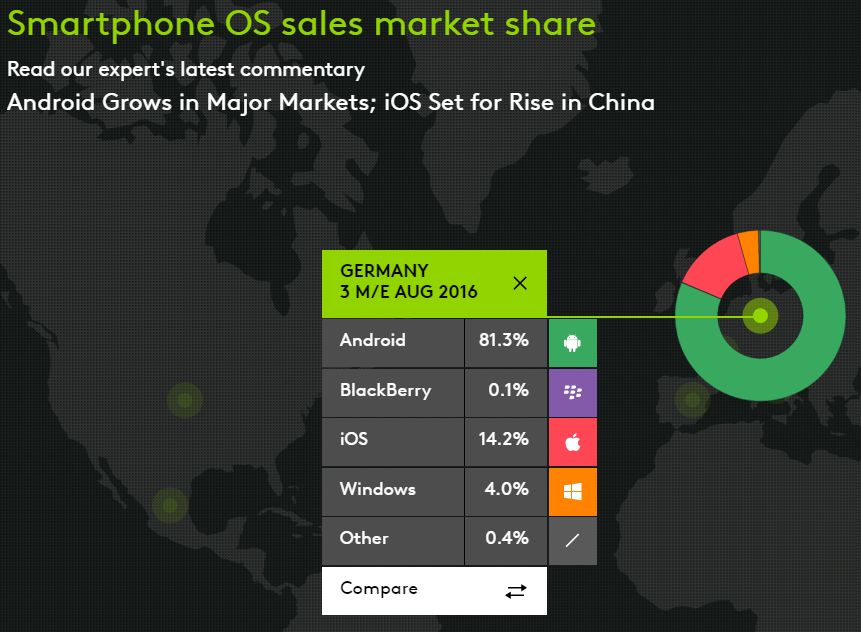
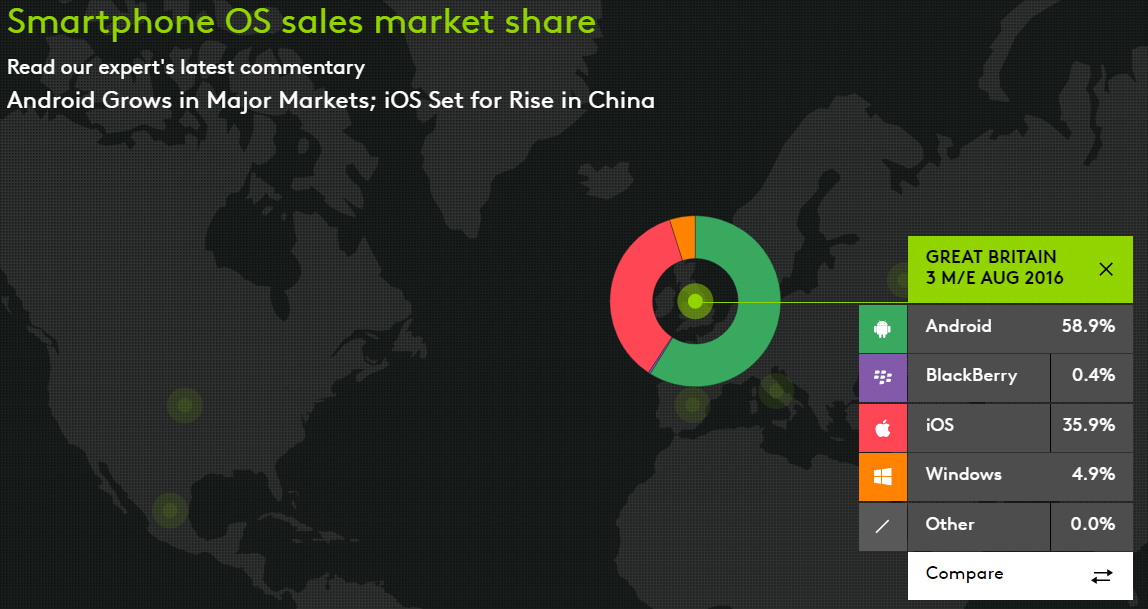
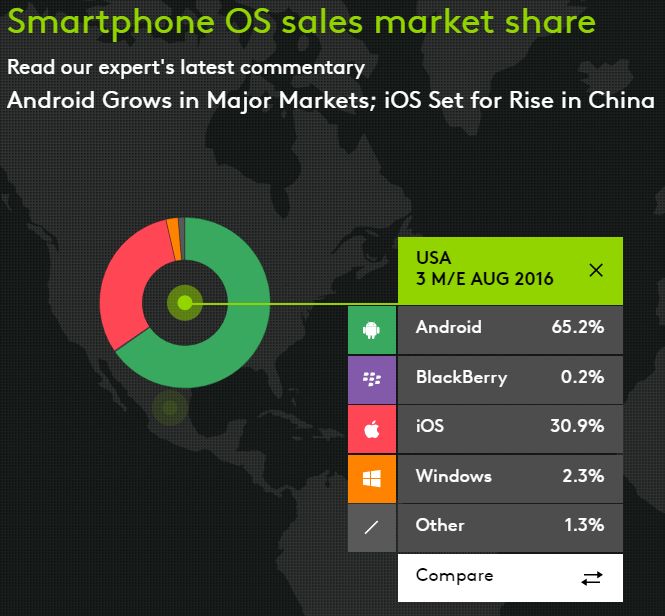

 Darius Kazemi @tinysubversions





 Flashing lights and bikes are strongly associated together, but flashing bike lights can actually cause problems at times. When should you use flashing bike lights, and when is it not a good idea? Here’s a guide to when to use your bike lights on flashing mode.


 Kneeling Bus.





 vintage everyday.

 netzpolitik.org.

 wdtvlive42's YouTube Videos: