What I like about this article is that it speaks directly against the sort of magical thinking that characterizes Silicon Valley innovations, the latest being 42, a college built "around the idea of peer learning, without the interference of teachers. " Inge de Waard writes, "MOOCs and 42 are not the solution for education, just as humans are not the solution for peace (clearly). It is a positive, engaging combination of elements that makes things happen." Fair enough. Yet at the same time 42 does tap into the need for self-managed tuition-free learning. And 42 does speak to a certain culture of self-made do-it-yourself autodidacts. But there's a model here based on rigorous competition and a live-in 4-week boot camp that suggests something more is going on, one that makes me just wish their design (illustrated in the diagram) weren't so phallic.
I'm not a fan of holiday-themed articles (they're far too easy and forrmulaic) but I thoroughly enjoyed Audrey Watters's rant on the monsters of educational technology (even if I did make the list). I'm glad it's not a taxonomy nor a morphology, tools far to lightly wielded in our discipline. Structurally, I would have jumped into the list much earlier in the talk, offering my caveats and explanations in the context of the descriptions of our Frankensteins and our Draculas. But I like the way it ends: "Technology, education technology, is our creation. It need not be our monster."
P.S. Audrey Watters's unofficial slogan is "Be less pigeon" - "a companion species gone awry, a border creature that might mark its own and our own trainability" and a warning of a future where "our cyborg fantasies, despite their subversive theoretical promise, turn out to be quite submissive to the technologies of command and control." If I had my own version of the slogan, it would be be more sparrow. It's a huge world, but we can (and must) explore and discover and make our way across vast distances even where danger looms above and below, and it only works if we look out for each other and let none fall to the ground without our taking notice.
The end of the startup chime is a small thing, but as Hackett observes:
…the startup chime is ingrained into the experience of having a Mac, I’m sad to see it go. A Mac without the chime feels broken, even if I know it isn’t. I don’t power down my machines often, but I liked hearing the chime when I power them back up.
It makes me a little sad and nostalgic to lose the Mac’s familiar chime too. It’s not a big deal, but it’s one more link to the Mac’s origins that is gone, which feels like a loss.
I saw a passage attributed to Søren Kierkegaard
that I might translate as:
The life of humanity could very well be conceived
as a speech in which different people represented
the various parts of speech [...]. How many people
are merely adjectives, interjections, conjunctions,
adverbs; how few are nouns, verbs; how many are copula?
This is a natural thing to ponder around my birthday.
It's not a bad thing to ask myself more often: Which
part of speech will I be today?
Charlie Brooker is the force behind Black Mirror, and his notion of how we’ll look 30 years in the future seem prescient to me, especially the VR contact lenses:
I used to smoke and the first thing I did was reach for a cigarette. Now the first thing I do is that [reaches for iPhone]. In 30 years’ time there will be a drama series set in 2016. Characters will be on their phones and the viewers will look at it like we do with Mad Men and smoking: “Look at them! They’re all on their phones in meetings! Well, of course, they didn’t know about the thumb cancer those things give you…” Having said that, I remember life before smartphones, and it was fucking boring. The most exciting thing you could do was get a cover for your phone, or play Snake. I don’t think we’ll replace them until we get in-eye contact lenses that do the same thing; so we can stare at people while we’re ignoring them. We should try and make people more interesting than phones.
Yes I agree that we should make people more interesting than phones.
“Here we are, though, eight years later, at the end of a revolution that has not yet happened, in an election season during which seemingly everything has happened.”
Throughout our careers, we are taught to conform — to the status quo, to the opinions and behaviors of others, and to information that supports our views. The pressure only grows as we climb the organizational ladder. By the time we reach high-level positions, conformity has been so hammered into us that we perpetuate it in our enterprises. In a recent survey I conducted of more than 2,000 employees across a wide range of industries, nearly half the respondents reported working in organizations where they regularly feel the need to conform, and more than half said that people in their organizations do not question the status quo. The results were similar when I surveyed high-level executives and midlevel managers. As this data suggests, organizations consciously or unconsciously urge employees to check a good chunk of their real selves at the door. Workers and their organizations both pay a price: decreased engagement, productivity, and innovation.
She finds that there are three main reasons we conform at work:
We fall prey to social pressure.
We become too comfortable with the status quo.
We interpret information in a self-serving manner.
She suggests we need to promote constructive nonconformity. As she says,
going against the crowd gives us confidence in our actions, which makes us feel unique and engaged and translates to higher performance and greater creativity.
Read her research findings, and her 12 recommendations on countering the perils of conformity. It’s important work.
I want the
author piece linked in the sidebar to be a
full disclosure of the financial interests of the person who’s writing
what you’re reading. I think online writing without such a
disclosure is troubling. Anyhow, my financial disclosures no longer include Google, because I
sold all my shares last week.
Not an insider
Because this ongoing fragment touches on money, I
should be clear that I have no material non-public information that might
give me insight into the future of the Google share price.
(In fact, I’m not sure I ever did, even when I was working there.)
Why?
I don’t understand the business model, that’s all. I’m convinced that Larry
Page is a really smart guy, but I don’t understand his opinions.
If I read the
Alphabet
Q3 financials correctly, the revenue is about 88% advertising. The
advertising business is another thing I don’t understand.
The year-over-year growth rate
is 20%. About
40% of
humans are on the Net, which includes everyone in the world with much money.
I have no idea if YouTube is profitable. Or Maps. Or Music, or Photos, or
Plus.
Which is to say, I don’t see any reason to think that Google’s future
results will be any different from their past ones. Or that they’ll stay the
same.
Still a fan
In my day job, of course
Google’s Cloud business is a direct competitor. But I still use the consumer
products at home all the time.
I enjoyed working there, and think they on balance improve the world.
Also, I and my savings account really appreciate those shares.
Thanks!
We’re reading a lot of books and seeing a lot of movies these days about dead children. Mia is young, beautiful, talented, and madly in love. She’s about to be admitted to Julliard. A car accident intervenes.
We’ve also got The Fault In Our Stars, Allegiant, Me and Earl and the Dying Girl, and I don’t know what else.
We’ve had similar outbreaks before. In the 1980s, we killed a lot of kids in horror movies and thrillers: Jaws, Nightmare on Elm Street, all the slasher movies. But those were about fear and resentment of teenagers, about old folks getting revenge on kids who dared to use those excellent low-mileage bodies.
This is different, I think. None of these kids does anything wrong, or even mildly transgressive; Mia’s fatal mistake is to go along with the family on an outing instead of rebelliously pouting at home. Tris in Divergent was asked to express her true nature, answered honestly that she was dauntless, and she was not wrong. In The Fault In Our Stars, Hazel Lancaster has metastatic thyroid cancer. It’s not their fault.
If the dead children of the 80s were an expression of generational resentment, Archie Bunker’s imagined revenge for losing the arguments on civil rights and Vietnam, I guess the dead children of the teens concern global warming, ecological catastrophe, and the sense – shared I guess by boomers and millennial – that in the long run we’re all dead and they don’t make “long” runs like they used to.
One reason I notice this is I’ve just finished a big hypertext fiction, Those Trojan Kids, based on The Trojan Women. It’s set in an elite boarding school in a contemporary, post-colonial, occupied country. Bad things happen after the fall of Troy, and sometimes they happen to kids. I spent a lot of time trying to write around and through this. So, I think, did Seneca.
Headline No. 1 is that instead of that function-key row above the keyboard, it has a thin, touch-sensitive screen, which displays useful buttons that change as you switch from program to program.
The MacBook Pro’s touch bar in action.
Headline No. 2 is more troublesome. Apart from a headphone jack, the laptop has no jacks you’d recognize. No USB jacks. No video-output jack (DVI, VGA, or HDMI). No SD card slot. Not even the magnetic MagSafe power jack that Apple itself invented!
The new laptop has only USB-C jacks. Two or four of them. (Apple calls them Thunderbolt-3, but for most people’s purposes, they’re USB Type C.)
The new MacBook Pro has four USB-C ports. (The base model has only two.)
In the short term, this means that you’ll need a lot of adapters. No existing flash drive, camera, monitor, inkjet printer, Apple power cord, or USB hard drive will connect without an adapter.
Incredibly, even the iPhone’s own Lightning cable won’t connect without an adapter! (Which costs $25.)
You’re going to need a lot of adapters.
Apple says: Welcome to the future.
I say: Well, if USB-C is the future, then you may as well get to know it.
A crash course in USB-C
If Apple had to use only one jack on its new laptops, at least it picked a winner. USB-C is fantastic.
Apple laptops have had the same power connector for at least two–time to change!
In the big picture, USB-C is technology that will save us time, money, and frustration. It’s a breakthrough that will even keep tons of e-waste out of the landfills.
This single, tiny connector can carry power, video, audio, and data—simultaneously. It can, in other words, replace a laptop’s power cord, USB jacks, video output jack, and headphone jack. (On the new MacBook Pros, for example, you can plug the power cord into any of the four USB-C jacks.)
Meet USB-C: The Wonder Jack.
And a USB-C cable is identical top and bottom, so you can’t insert it the wrong way. (Woohoo!)
It’s identical end for end, too, so it doesn’t matter which end you grab first.
It feels more secure than USB when you insert it; you get a physical click instead of just relying on friction to hold it.
USB-C can charge your gadget faster and transfer data faster than what’s come before, too.
It’s tiny—about the size as micro USB—so the same cable can charge your phone and tablet and laptop.
And the brand doesn’t matter. My Samsung USB-C cable can charge your MacBook Pro and his Surface tablet.
Can you imagine? You’re witnessing the dawn of the universal charging cord. We can all dump out our drawers full of ugly, mismatched, proprietary charging bricks, long since separated from their original devices, and recycle it all. Now we’ll need only one kind of cable for everything.
The specifications for USB-C were finalized late in 2014. That’s astonishing for two reasons: First, it was dreamed up by engineers and executives from every major electronics company, working side-by-side for three years—even blood rivals like Apple and Google (GOOG).
Second, you can already buy phones, tablets, and laptops that come with USB-C jacks—from Google, Microsoft (MSFT), Nokia, and others. (Apple’s strange, expensive, slow 12-inch MacBook was the first to have a USB-C jack. One.)
Already, you’ll find USB-C on all of Google’s phones, tablets, and laptops; Microsoft’s laptops; the Samsung Galaxy Note 7 (kaboom); the Motorola Z series; the OnePlus 2 phone; the Asus ZenPad 8; the Nokia N1; and so on.
The MacBook Pro does have a headphone jack—but USB-C is perfectly capable of conducting audio, too.
(For my exclusive interview with the leaders of the team that created USB Type C, click here.)
What it all means
So USB-C has fantastic promise. Eventually, the payoff will be gigantic, convenient, and universal.
But clearly, the world isn’t ready to go all USB-C yet. Change is annoying. We’re in for a couple of years of transition and fumbling with adapters that accommodate all our old USB gear: flash drives, hard drives, scanners, printers, cameras, and so on.
So why did Apple switch to USB-C so suddenly, and with such total commitment? Does it just want to make us livid?
The obvious answer is size and weight. Inside a laptop, there’s a block of metal that has to receive every kind of connector, and some of them prevented the MacBook from getting thinner. It’s the age-old Apple story: Toss the old, embrace the new, and drag the world along with it.
USB-C is a fantastic, genius, intelligently designed universal jack. For the sake of Apple fans, let’s just hope the world makes the switch as soon as possible.
David Pogue, tech columnist for Yahoo Finance, welcomes non-toxic comments in the Comments below. On the Web, he’s davidpogue.com. On Twitter, he’s @pogue. On email, he’s poguester@yahoo.com. Here’s how to get his columns by email.
Susan Jones is a very diligent researcher, and a great source of information in matters pertaining to the Massey Tunnel Replacement Project. She circulated the following bunch of clippings to the Fraser Voices group. I thought that my readers would appreciate the following and I encourage them to spread the word.
Letter in Richmond News quotes B.C. Transportation Minister, Todd Stone, October 25, 2016
“And let me be clear – there are no plans to dredge the Fraser River.”
There are definitely plans to dredge 34 kilometres of the Fraser and the BC Government has been involved in the planning. It is the $90 million Fraser River Channel Deepening Project to dredge the navigation channels from 11.5 metres to 12.8 metres.
March 31, 2015 Report on: Gateway Transportation Collaboration Forum
A letter from the Gateway Transportation Collaboration Forum to BC Government and specifically to Todd Stone: (scrolled pages 4 and 5/49)
“Thank you for your letter dated February 2, 2015, providing support to the Gateway Transportation Collaboration Forum (GTCF) and direction for us to work with your recommended staff.
We are pleased to provide an update on the progress of the GTCF. The Steering Committee and Working Groups have been actively engaging with municipalities, First Nations and stakeholders to identify
potential gateway-related infrastructure projects of national significance in Greater Vancouver.
…
The British Columbia Ministry of Transportation and Infrastructure (MOTI) is participating on the forum to understand various stakeholders’ interests and support coordinated gateway planning and infrastructure development…”
Scrolled Page 17/49 – note BC Government logo at top of page
Fraser River Channel Deepening Project
Capital Dredge of the Fraser River to 12.8 m to the 34 km mark
A material enhancement project to increase the depth of the Fraser navigation channel, from km 0 to 34, from its current draft of 11.5 meters (m) tidal to to 12.8 (m) tidal assist.
The Project will allow vessels currently calling the Fraser River to be loaded to their maximum capacity and to accommodate increased vessel draft for new growth opportunities and market demands. Increases the capacity of the two navigational channels.”
In solving a problem, the answer must be guessed at before a proof can even begin, and guesses are usually made from a knowledge of facts, experience, and hunches.
The truly creative mathematician must be a good guesser first and a good prover afterward.
The news in the last couple of weeks indicates that regardless of where Apple is on the secret car project called ‘Project Titan,’ plans have been trimmed significantly. However, Apple definitely has been making a number of moves in the business surrounding cars, and that includes hiring from BlackBerry subsidiary QNX Software.
After a scoop on the Apple car plans from Bloomberglast week, BlackBerry put out a post correcting several ‘facts’ from the article, as well as reinforcing the strength of QNX as a real-time automotive software system.
In the post, BlackBerry clarifies a few facts, including the fact that former QNX CEO Dan Dodge was not ‘poached’ from QNX, but instead retired and was subsequently hired by Apple. The post also refutes the fact that a former QNX manager, Derrick Keefe, was actually a senior engineer who had been at the company for 10 years. Finally, while QNX admits that 24 former QNX employees have left the company to go to Apple in recent years, few had direct automotive experience, and only three were QNX kernel engineers.
All of this suggests that while Apple is definitely interested in real-time operating systems, which QNX specializes in, not all the evidence points to exclusive work on a car project. The also reinforces that QNX’s work in the automotive industry will continue in earnest and that many companies rely on QNX technology for their car businesses.
The post doesn’t deny that Apple is setting up an office in Ottawa as reported, and we can say with some confidence that “Canada is, in fact, pretty great!”
I think that out of all the reactions to the last keynote (which Michael Tsai has been putting together in a massive collection of mostly negative pushback), Chuq’s both the most balanced and the most damaging to Apple, especially when he points out the need to “think about where we stand with Apple if we’re using or depending on niche products”.
The thing is, the Mac desktop is starting to look like a niche product now. And worse, one driven purely by aesthetics rather than functionality; performance and ability to deliver have been tossed out the window in favor of gimmicks.
It’s not just about their removing the startup chime, or expansiblity. It’s about the honest reviews, the way marketing has taken over and the realization that the Mac, the foundation of what became Apple’s empire and still the only platform people can develop on for iOS, is effectively neglected, and that whatever Apple needs to do to try to regain their Pro user base, the new MacBooks are not it — or, at least, definitely not enough.
I have been dreaming of this vacuum since I first researched "best vacuums for small spaces" last year. See, we have had a Roomba for many years and while we initially loved it, we always had to supplement with a handheld vacuum to get the nooks and crannies. And, as our small space gained more baby gear and furniture, the effort of moving everything in order for Roomba to do it's thing became more trouble than it was worth. Roomba was great when it was just two adults living in a small space but It was time to upgrade. I needed something small and light and ideally cordless with limited assembly and handheld functionality. Basically I needed as few barriers to vacuuming as possible as life right now feels like there are a lot of barriers to cleaning up (see: crying baby, naughty toddler, sleep deprivation etc. etc.).
My extensive research found that while there are other great cordless vacuums, the Dyson V6+V8 were the best. In our efforts to have less but better we sold our Roomba, gave away our basic handheld and worked out how we could own a Dyson V6. We opted for the basic model without all the bells and whistles and a 20 min clean time (with a full charge) which is just enough for our tiny place that is capable of big messes. We patiently waited for a sale at The Bay and used all of our Aeroplan miles to buy it. It really lives up to its reputation and we are so happy with our purchase. Currently, we have it tucked under our couch for storage. I wish we could wall mount it somewhere out of sight but all of our electrical outlets with wall space are spoken for at the moment.
I'm not saying this is the right vacuum for everyone but for our small space with big messes it has made vacuuming easier and taken up less space doing so. I feel that if we can keep making innovative improvements to our space like this, the possibility for staying here longer keeps growing (can you tell I've been getting more sleep ?! Things are looking up!)
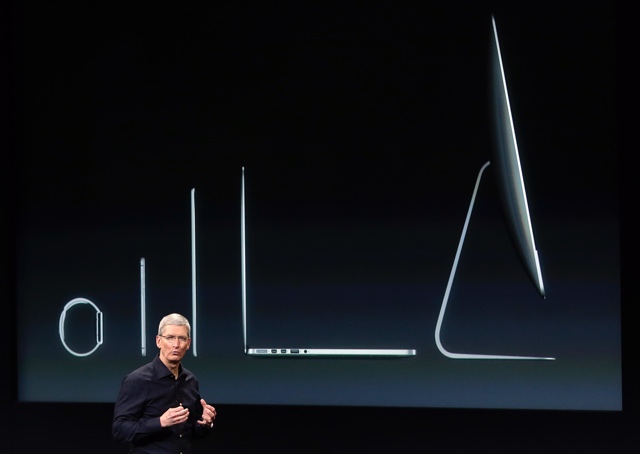
Announcing the Mac event as 'Hello Again' may have set the expectations too high. Everybody reads their own wish list into an iconic event like Hello where the original Mac was introduced, and Hello (Again) which was the debut of the Bondi Blue iMac.
I can see how Apple has viewed the introduction of the Touch Bar as a defining new moment. But most people expected nothing more than a complete refresh of the Mac line-up. Given the fact that Apple has been unable to keep their announcements secret lately, that expectation was probably misguided.
Here is my view on the state of the desktop Mac:
The iMac line does not need a design refresh. I find it perfect as it is. There need to be regular refreshes of the technology inside, and that is happening. You see these iMacs everywhere, from offices to retail locations, and I think they are doing their job very well.
The Mac Pro is dead. I think the machine has not been selling as much as Apple would like it to have. And thus it got neglected. There could be a tech refresh, but I don't see that coming. There would have been a few already.
Apple does not make screens anymore. That goes inline with my statement about the Mac Pro. This is just not a good business to be in. Profit margins for screens are very slim and I think people are no longer willing to pay a 50% premium for an Apple enclosure. Not in the professional space, where Apple needs to sell them.
Mac mini? No idea about that.
That means the iMac is the desktop Mac. It is a sustainable, profitable business. Go back to the photo above. You can sometimes see the future even without announcements. Watch, iPhone, iPad, Macbook, iMac. And that was not this week. This Macbook has ports.
Speaking of ports, do you know what else is a profitable business? Adapters and cables.
Last week, Nintendo revealed its new console called the Nintendo Switch. The new device seems set to offers more varied capabilities than any handheld video game console that’s come before it, allowing users to take it on the go, but also dock the Switch in a base and play it on a television. While little is known about the Switch right now, as the days pass, we’re slowly learning more about Nintendo’s successor to the Wii U.
This week, several sources have stated that the Switch actually comes equipped with a multi-touch display, a feature that was not mentioned during the console’s initial reveal. It was also revealed that the system’s screen 6.2-inches across and features a 1280 x 720 pixel resolution.
It’s unclear exactly how much of the Switch’s functionality will actually rely on touch interactions since the device also comes with detachable controllers, but in terms of viewing media, touch control will certainly come in handy when using it as a tablet. As for when Nintendo might give more information about the Switch’s touch screen capabilities, a media briefing is set for January 13th where the company will likely reveal more about the upcoming console, including launch titles and its release date.
Ziggy Stardust plunges into the deep-end in a new, Olympic-sized mural from street artist Ten Hundred, a.k.a., Peter Robinson. Recently, the artist posted a video of the mural's development process, carefully documenting every step. From establishing the piece's outline by applying a huge paper sketch, to marking off the portrait in white and taking a break for an arcade game, to finally fleshing out the extraterrestrial details in color-retentive swimming pool paint, it's an exhaustive work cycle to witness in less than three minutes.
In reality, the project took about five days to complete inside a pool on Seattle's Vashon Island. Ten Hundred himself describes his inspirations as ranging from street art and graffiti to anime and child-like imagination. Sounds like the perfect ingredients for any Bowie fan.
Watch as David Bowie: The true Space Oddity comes to full realization in a few stills and the full video below.
See more of Ten Hundred's mural works on his YouTube channel, here, and click here to visit the artist's website.
With the release of iOS 10.1, Apple’s heavily touted iPhone 7 Plus Portrait Photography mode is now available to all Plus owners, following a brief beta released a few weeks ago.
In typical Apple fashion, while various Android manufactures have offered similar ‘bokeh’ depth-of-field features over the years, the California-based company has taken this software feature and developed a way to create the same effect with the iPhone 7 Plus’ dual shooter.
This mode makes use of the 7 Plus’ 56mm-equivalent telephoto lens. Unfortunately, more often than not, the features only works well while shooting in bright, well-lit conditions Some argue that the bokeh effect is closer to that of a standard prime 50mm portrait lens, though regardless of your opinion regarding the feature, under perfect conditions, the 7 Plus has the ability to shoot incredible photos.
Here’s how it works: You’re looking at the photo via the 7 Plus’ main lens, but its wide-angle shooter is also operational in Portrait Mode, just like it is when utilizing 2x zoom.
The secondary lens measures the distance between what it’s able to see and what the telephoto lens is able to view, creating a nine-point depth map.
This map is then utilized to create the artificial depth-of-field mode the feature is known for. Unfortunately, unlike similar, though less effective features present in Android devices, the level of blur cannot be altered. There are also no zoom options available whether digital or optical, as well a Live Photos, the ability to use a flash or even filters.
To access Apple’s fancy bokeh mode, open the iPhone 7 Plus’ camera app, then slide the camera wheel over to Portrait Mode.
Next, line up the shot you want to take within a distance of 243 cm (8 feet) from your subject. The face and body detection then automatically identifies your subject. While the feature works on more than just people, it tends to add a blur effect around objects that doesn’t always look great (see the above photo).
Once you’ve met Portrait Mode’s required distance and light conditions (if there isn’t enough light, then the 7 Plus will display a notification. Once everything is set properly, “depth effect” show up on the screen, allowing you to finally snap a photo.
That’s it, you’ve snapped a Portrait mode shot. Apple considers the feature in beta mode, so it does run into occasional issues. Sometimes activating the feature takes longer than expected, even when conditions are ideal. In less frequent cases, the camera app also crashes.
I
griped on
Twitter
and got a storm of responses, mostly on the subject of other ways I might
be able to get what I want from a computer.
Sidebar 1
First off: Apple may well be right. Over the past couple of decades, the
vast majority of their product launches have hit the sweet spot, turning out
to be what people needed even if that’s what they didn’t think they
wanted.
Sidebar 2
At work, I use a Mac and it suits me just
fine.
I run IntelliJ and Emacs and lotsa shells and office-y stuff, and I use a
meaty Linux box for building and testing embryonic AWS services.
As long as it’s got a built-in Retina screen and support for a
big
honking outboard monitor and keeps the IDE snappy, I’m good.
Also, I note that IBM is
getting
good mileage by dealing Macs out to employees, so I suspect that Apple
laptops have a bright future as office computers.
But my concern right now is about my personal computer.
What I Want
In a personal computer, I mean.
MacOS
It’s a mature, smooth, slick, powerful
GUI that I have entirely mastered and would hate to leave behind. Also, for a
power user, the integration between GUI and command-line is wonderful; I
positively glow when I blast a “find | xargs” shell incantation’s output
into
pbcopy.
Massive power
I want a meat-grinder CPU to make photo-editing, and my occasional forays
into video, fast. I want a modern video card so game-playing is cool when I
feel like it. I want ludicrously excessive amounts of memory. I want a
keyboard with high-quality mechanical keys that don’t get in my way when I’m
going 100WPM. I want lots of connectors so I can plug in my current USB
drives and mouse and keyboard. I want a PS Card reader because I shoot RAW
so my photo files are huge and they ingest faster from a card.
And also because I’m disorganized and lose dongles.
Oh, and I want a big fantastically high-res beautifully color-managed
screen. I mention this separately because it seems like the only area where
I’m at one with Apple.
Unix
By which I mean Linux I guess. I need a real shell (liking zsh these
days), and apt-get or brew or equivalent, and Emacs, and I need to run Apache
httpd so I can
stage the page you’re now reading on my lap.
Lightroom
A photog’s gotta choose his ecosystem, and for better or for worse I’m on
Adobe’s. I still like Lightroom, and the integration between the Android and
OS X versions through their cloud is just bewitching.
A pony
By which I mean a donkey. I’ve always had a soft spot for donkeys.
Um, I don’t seem to have mentioned “thin and light”. I guess I’d be happy
with “not much heavier than the 2013 15" Retina MBP I’m typing this on”.
Thin? Meh.
Infrastructure
My next computer needs on OS: MacOS, Windows, or
Linux. Then I might need to run stuff that’s foreign to that operating system,
and the options there are a VM (probably VirtualBox?) or a cloud-box. If I’m
gonna do a cloud-box it probably makes sense to package it up on my personal
computer with Docker or whatever.
Windows?
This would have been inconceivable at one time, but I observe that the
screens of Windows boxes no longer hurt my eyes, and while I’m a direct
Microsoft competitor at work, they no longer seem to have the stench of
evil.
MacOS? Nope.
Massive power? No problemo, and for a lot less than the equivalent
Mac. I look at some of the gaming laptops and drool.
Unix? Well, maybe, I hear good things about Win10’s Linux
subsystem, and it deserves a try. Also, I could run Ubuntu in a virt or
cloud-box. Could I really get httpd and MySQL going?
Lightroom? Yep.
MacOS
Am I willing to overpay Apple for hardware if they sell hardware I want to
buy? Sure thing.
MacOS? Yep.
Massive power? Not an Apple focus any more, it seems. Don’t see a
workaround.
Unix? Close enough for me.
Lightroom? Hunky dory, but faster would be nice.
Linux
I do worry: Will I be able to plug in an outboard screen and have
it Just Work? And will there will be modern eye-friendly fonts? TBD.
MacOS? Sigh.
Massive power? In spades.
Unix? D’oh.
Lightroom? In a Windows virt, right? Which means I have to pay for
Windows, too. And I’d need to be really sure I got acceptable
performance.
Take-away
My best bet is to buy a future Mac that’s aimed at people like me.
Which requires that Apple wants to build one; they don’t at the moment, but
maybe they will again before this box I’m typing on
runs out of gas.
But some of the combos above don’t sound terrible.
Google’s Pixel and Pixel XL sure are pricey, but they are also among the best Android smartphones available in the market right now. Running Android 7.1 Nougat, the handsets pack in plenty of new features that one can play around with.
Continue reading →
Are learning objects making a comeback? We saw Cengage basically lay claim to the term last week with its announcement of a platform called Learning Objects. In this paper we read of a project evaluating learning objects using the Learning Object Review Instrument (LORI), another blast from the past. But the interesting part of the paper isn't the evaluation process. It's the effort to assemble learning activities from reusable learning resources in an entirely peer-to-peer environment. "The result is, for the first time, a self-contained end-to-end, P2P eLearning system with no reliance of any sort on client-server eLearning systems. This research on quality assurance has successfully contributed in achieving the overall goal." Alas, not the first. P2P learning object networks are yet another Canadian invention ahead of is time.
Apple is continuing a near-decade-long process of making its PC operating system act like a phone. Apple’s front-loads its innovations into its mobile operating system, which demands a more frequent flow of new ideas. Demos of the Touch Bar are full of shortcuts first introduced on iOS, many of them shortcuts to compensate for the limitations of a small screen and soft keyboard. One of Apple’s best uses of AI is the often dead-on suggestions for a one-touch summoning of the most logical “next word.” I find it fascinating that this feature, created because of the limitations of a tiny touch keyboard, now appears as an addition to a full-size physical keyboard.
And is this the first step toward replacing the keyboard with a second screen? One that is principally oriented toward displaying and acting as a keyboard?
Imagine a not too-distant day when my ‘laptop’ is actually two devices that can connect physically and digitally into what acts as a ‘laptop’ is supposed to: one, the topmost, acts as a display, and the second acts as a keyboard. However, the two could be detached, and each could be used as tablets, and each tablet could have features more like a phone: they could make calls, act as a wifi hotspot, and so on. Also, if I have additional devices — let’s call them panels, to avoid the terms tablet, screen, keyboard, laptop, and so on, all of which have existing limited meanings — those panels could cooperate wirelessly, as well, acting as additional displays, drawing tablets, or almost any other use.
The Touch Bar may be the camel’s nose under the tent, and the result will be the dissolving of the hard distinction between the various devices we use. They may all be ‘panels’ soon.
Developers can display pretty much whatever they want whilst their app is in the foreground; this includes swapping out views and buttons depending on the current window of their app (a compose window necessitates different Touch Bar accessory views than the inbox window). However, the Touch Bar does not allow persistent widgets, status items or similar features like always-visible news tickers. These constraints are unlikely to be lifted either; Apple is imposing the restriction so that the UI under the user’s finger isn’t constantly changing due to spurious notifications or text messages.
Apple wants the bar to display peaceful relatively-static UI based on the current task. Major changes to the Bar should only happen when the application state drastically changes, such as opening a new tab or beginning a new modal activity. To repeat: once an app’s window is not active, it loses its control to influence what is shown on the Bar. The system Control Strip sits to the right in a collapsed state by default, but can be disabled entirely in System Preferences if desired.
This makes sense to me: the Touch Bar is intended to be an extension of the keyboard that deals with input – it's not a smaller Dashboard or a widget container. This means that apps like PCalc won't be able to persistently display their controls in the Touch Bar unless they're the frontmost (active) app.
The more I think about it, the more the Touch Bar feels like the natural evolution of QuickType and the Shortcut Bar from iOS – to the point where I wonder if we'll ever get this kind of evolution on the iPad Pro as well (where the current app is always the frontmost one and system controls could use a faster way to be engaged than Control Center). Perhaps with a new external keyboard with its own embedded Touch Bar and T1 chip?
I thought he might be talking about where we host our stuff as our castles, but he means it in a much more personal and direct way – web browsers (and other internet-abled apps, I would add) are extremely personal spaces where we invite content and code from outside the walls. I think I have the right to make sure guests leave surveillance devices and weapons outside before entering.
So here is a helpful fact: we don’t go anywhere when we use our browsers. Our browser homes are in our computers, laptops and mobile devices. When we “visit” a web page or site with our browsers, we actually just request its contents (using the hypertext protocol called http or https).
In no case do we consciously ask to be spied on, or abused by content we didn’t ask for or expect. That’s why we have every right to field-strip out anything we don’t want when it arrives at our browsers’ doors.
In Annotating the wild west of information flow I responded to President Obama’s appeal for “some sort of curating function that people agree to” with a Hypothes.is thought experiment. What if an annotation tool could make claims about the veracity of statements on the web, and record those claims in a standard machine-readable format such as ClaimReview? The example I gave there: a climate scientist can verify or refute an assertion about climate change in a newspaper article.
“Bird-dogging is a term coined by high-level Clinton staffers who openly talk about it in the video. They boast about inciting violence at Trump rallies, paying for every protest…”
Mike knows better.
Wait, what? Bird-dogging is about violence?
I was a bird-dogger for some events in 2008 and as a blogger got to know a bunch of bird-doggers in my work as a blogger. Clinton didn’t invent the term and it has nothing to do with violence.
So he annotates the statement. But he’s not just refuting a claim, he’s explaining what bird-dogging really means: you follow candidates around and film their responses to questions about your issues.
Now Mike realizes that he can’t find an authoritative definition of that practice. So, being an expert on the subject, he writes one. Which prompts this question:
Why the heck am I going to write a comment that is only visible from this one page? There are hundreds (maybe thousands) of pages on the internet making use of the fact that there is no clear explanation of this on the web.
Mike’s annotation does two things at once. It refutes a claim about bird-dogging on one specific page. That’s the sweet spot for annotation. His note also provides a reusable definition of bird-dogging that ought to be discoverable in other contexts. Here there’s nothing special about a Hypothes.is note versus a wiki page, a blog post, or any other chunk of URL-addressable content. An authoritative definition of bird-dogging could exist in any of these forms. The challenge, as Mike suggests, is to link that definition to many relevant contexts in a discoverable way.
The mechanism I sketched in Annotating the wild west of information flow lays part of the necessary foundation. Mike could write his authoritative definition, post it to his wiki, and then use Hypothes.is to link it, by way of ClaimReview-enhanced annotations, to many misleading statements about bird-dogging around the web. So far, so good. But how will readers discover those annotations?
Suppose Mike belongs to a team of political bloggers who aggregate claims they collectively make about statements on the web. Each claim links to a Hypothes.is annotation that locates the statement in its original context and to an authoritative definition that lives at some other URL.
Suppose also that Google News regards Mike’s team as a credible source of machine-readable claims for which it will surface the Fact Check label. Now we’re getting somewhere. Annotation alone doesn’t solve Mike’s problem, but it’s a key ingredient of the solution I’m describing.
If we ever get that far, of course, we’ll run into an even more difficult problem. In an era of media fragmentation, who will ever subscribe to sources that present Fact Check labels in conflict with beliefs? But given the current state of affairs, I guess that would be a good problem to have.
Posted in response to the weekly photo challenge that appears on the WordPress Daily Post
“To change in appearance or form, especially strangely or grotesquely; transform.”
I was a bit stumped by the challenge this week. I was wondering how you can use one picture to illustrate the process of change. When I have tried to do that myself I tend to use more than one picture and either post as a diptych or triptych (don’t worry there’s a website for that). So I started scanning my flickr stream and came across a wine bottle label. It has a picture which actually changes as you look at it. It can either be a skull, or someone falling out of a tree. What seems to be a row of teeth is a wattle fence. Transmogrification right before your very eyes!
The wine is a South Australia Chardonnay vintage 2013 called Skulls. It was quite nice really. But what makes you pick it up in the store is the label, which is very clever marketing.
This week, you might have seen a number of Twitter or Facebook ads show up in your stream for Trajectory Book 1. While I didn’t pick friends directly, it means the ad targeting “sciency, tech-savvy, smart-looking people” found you and included you in the population. There just aren’t that many of you on the planet.
The reason for all this hullabaloo is that I ran an Amazon Countdown Deal on Book 1 in the US. It was an experiment in marketing and it worked pretty well. I ended up in and around the top 100 in Hard Science Fiction in the US for the last week in October, peaking somewhere in the low 60s. That’s not bad. Don’t worry if you missed it, I’m going to be rolling promos over the next couple of months leading up to the release of Book 3 in every market I can. I’d be interested to hear if you end up in my netting. Or you could use an adblocker or something, which you probably should anyway. Watch the twitters or facebooks for deets about promotions.
Which brings us into November: It’s (inter)National Novel Writing Month! I’ve been working hard to get into a spot where I can crank out something resembling 50k words in thirty days and then carve that into a finished book in a month or two afterwards. I hope it works. The story I’m working on has been evolving and changing shape. The characters are coming together and forming posses and taking themselves where they will, so that’s an encouraging sign.
I’ll try to find some time mid-month to write something for my newsletter, but other than that, and the occasional bit of robot noises, I’ll probably be pretty quiet. If you get bored, I did a little interview with Ralph Kern over on SFFWorld recently and think it turned out pretty well. And they’ve got a ton of interviews and reviews on there that you’ll probably enjoy if you’re looking for stuff to read.
I don’t know how I’ll be able to do all this without a touch bar enabled keyboard, but I will persevere. Probably with coffee.


 P.S. Audrey Watters's unofficial slogan is "


 Screencaps by the author,


 Google’s Pixel and Pixel XL sure are pricey, but they are also among the best Android smartphones available in the market right now. Running Android 7.1 Nougat, the handsets pack in plenty of new features that one can play around with.