Shared posts

29 Oct 21:48

Tsawwassen Shuttle: A Google Bus for Our Time

by pricetags

From Gladys We:

Spotted the Tsawwassen Mills employee shuttle at the Scott Road Park-and-Ride around 5:30 pm:

shuttle

shuttle-2Here’s the Google map of the bus’s parking spot. It’s actually parked in the passenger waiting zone of the park & ride, and it’s a VERY tight squeeze for cars to get through the gap:

shuttle-3

shuttle-4Where they were parked  is incredibly busy all day long, as it’s a main passenger pickup area for both the bus loop and the Skytrain — and is supposed to be a two-minute stopping zone only.


29 Oct 21:48

They Live and the secret history of the Mozilla logo

by jwz
mkalus shared this story from jwz.

I'm going to draw a line through 1930s agitprop, Ronald Reagan, methane-breathing zombie space aliens, the Mozilla logo, Barack Obama and the International Commiunist Conspiracy. It's a long walk, so please stick with me.

Let's start with They Live.

I've talked to a number of people recently who haven't seen They Live, and that's a real tragedy, because even though it is technically a sci-fi / horror movie, it is also the best documentary about the Reagan Administration you're likely to see.

If you haven't seen it, it is a 1988 film by John Carpenter whose premise is this: an out-of-work construction worker finds a box of special sunglasses near his homeless encampment. These glasses let you see the world as it really is: the Earth has been invaded, and all of the "one percenters" and most of the cops are actually skinless space zombie free-enterprisers.

"Earth is being acclimatized. They are turning our atmosphere into their atmosphere. Deplete the planet. Move on to another. They want benign indifference. We could be pets. We could be food, But all we really are is livestock."

And most importantly for our story, the glasses also let you see that all advertisements are actually black text on a white background with simple exhortations such as "OBEY", "CONSUME", "MARRY AND REPRODUCE".

It is not necessarily a great movie: it is extremely low budget, and somewhat slow-paced. As a horror movie, perhaps it hasn't aged well. But as a political statement, it is still absolutely fantastic and relevant.

Though, a friend tells me that some of his friends in their 20s watched it recently and thought it was very dated: it was "too 2011". It was entirely too "Occupy Wall Street".

Last week I was bicycling through The Mission and absentmindedly beginning to compose this story in my head. I glanced to my left and said aloud, "You have got to be fucking kidding me," because this is what I saw on a building across the street:

Apparently our local muralists find it to be still relevant as well.

And speaking of graffiti...

There's an artist you may have heard of, Shepard Fairey. He did the Obama "Hope" poster in 2008. But long before that, in the early 90s he had this semi-anonymous graffiti campaign, "Andre the Giant Has a Posse". It was everywhere. Stickers, stencils, wheat-paste posters, I saw them in every city I ever visited. It was a global propaganda campaign whose goals and meaning, if any, were completely obscure. I loved the mindfuckery of it, a campaign with no purpose, for which he had somehow managed to mobilize a worldwide army of helpers, primarly by intentionally giving up control of it and allowing it to take on its own life.

In the mid 90s, his Andre the Giant has a Posse campaign morphed into OBEY GIANT. Andre glowers out at you from under his enormous brow in a style referencing the Big Brother posters from the 1956 film of 1984 as well as the Futurist propaganda art of the 1930s and 40s.

Since then, the OBEY brand has grown tremendously, nearly outstripping even Hot Topic in our suburban malls. It has become the go-to fashion statement for backwards-baseball-cap-wearing bros across the nation. But let us not forget! It is a direct reference to They Live.

So why am I telling you about this odd series of un-ad campaigns? Well.

I was one of the founders of this company called Netscape. You might not have heard of it, because it was a while ago. We built the world's first web browser that mattered. The first one that normal, everyday people could use. It was the browser that your parents used. We did a pretty excellent job of it, too, and our success ushered in the first "tech bubble".

I'm sorry about that part.

Well, in the fullness of time, 1998 to be precise, the company began its process of self-destruction. And through a long series of bizarre events, it turns out that some things I had written about free software led my bosses to decide that we should give away the source code to the web browser. This sort of thing was utterly unheard of at the time.

So we created Mozilla.org.

Though the world knew the web browser as, alternately, "Mosaic Netscape", "Netscape Navigator" or just "Netscape", we had always known it internally by the name "Mozilla". (These days, you know it as "Firefox".)

Mozilla had a cartoon dinosaur as a logo and mascot. In the early years of Netscape, this little guy was plastered all over our web site, in banners at the top of every page, and scattered throughout. The artist was Dave Titus, and he went for a very "cute" look with the art. But some time in 1994, before Dave's vision of Mozilla came to be, I threw together a version to hang on the wall above our cubicle farm, pictured to the right. It's about 4' tall. The original source was a 2" high picture of Godzilla from a newspaper ad for a local toy store. I blew this up on the company photocopier one late night, zooming and zooming and zooming. I spent a lot of late nights slaving over photocopier-based art projects back then, while waiting for things to compile. Every now and then we'd get email from facilities asking why we seemed to burn through so much toner.

I wasn't able to find a contemporary photo of that protozilla, but fortunately, my strict data retention policy applies also to grainy black and white pieces of paper, so I was able to dig the original out of a very old cardboard box that I haven't opened since, I'm guessing, 1996.

When Dave started working on the mascot, I remember that one of the references I passed along as a suggestion was this manga called Gon, a dialogue-less story about a baby tyranosaur just trying to make his way in the world. I'm not sure if he used that as inspiration, but I hope so.

There were many illustrations of our little lizard in various thematic poses. That lasted until, of course, at some point the marketing department decided that for our (already fantastically successful, publically traded) company to appear to be "professional", any trace of fun or whimsy, no matter how harmless, must be scraped away. As they do. Because they are terrible people.

Also, at one point we were threatened with a trademark infringement lawsuit by Toho, the Japanese company who own the Gozilla franchise! They contested our trademark on "Mozilla". They were in the habit of attacking anyone with "zilla" in their name, but our legal staff reached a settlement with them when Toho realized that our t-shirt sales were literally beneath their notice.

For the purposes of this story, here's a glamour shot of Mozilla wearing sunglasses. You know, just the sort of sunglasses that allow one to pull the veil of lies from the face of the world:

With the launch of Mozilla.org, I felt we needed to distance ourselves to some degree from Netscape itself, and that meant that, beloved though our little lizard was, we needed a new look. What we were trying to accomplish here was something of a radical idea, so I wanted artwork with a revolutionary feel...

So I called up Shepard.

I didn't know the guy, but I was a fan, so I figured I might as well give it a try.

I remember giving him a brief explanation of what "free software" was all about, how it was based on the principle that when people work on the things they personally care about, but share their work with others, then everyone benefits. That sharing is not inimical to competition and so on. He said, "That's interesting, because that's kind of how 'Andre the Giant Has a Posse' took off," and I said, "I know! I thought you'd get it, which is part of why I thought of you!"

He asked if I had seen his more recent work, and I said, "Yeah, in fact, right now I'm looking at a poster on my wall that you did for Crash Worship, Circus Maxiumus." He said, "Wait, what? How did you get that?" I said, "I bought it at the show." He said, "Oh, well you probably bought it from me, then, because I think I only printed like 50 of those!"

I like to think that the Crash Worship bonding sealed the deal.

So he designed our new mascot:

A much more imposing lizard, rising above the industry that spawned it.

So that was the time that I somehow convinced a multi-billion dollar corporation to give away the source code to their flagship product and re-brand it using propaganda art by the world's most notorious graffiti artist.

At the time that this was happening, the "free software" world had not yet been rebranded as "open source" -- in fact, I attended the meetings of the Secret Cabal where that decision was made, though it was a lot less Eyes Wide Shut than you might expect -- and so, much of the rest of the software industry didn't know what to make of what we were doing. Even though the internet had been built on free software, part of our job was convincing Capitalists, Libertarians and methane-breathing space zombies that giving away the source code to your products and allowing outsiders to participate in your development process actually made sense from an economic point of view, that it was compatible with unfettered free market capitalism, red in tooth and claw. We had to convince them that these "open source" people weren't just a bunch of hippies and Communists.

To that end, the branding strategy I chose for our project was based on propaganda-themed art in a Constructivist / Futurist style highly reminiscent of Soviet propaganda posters.

And then when people complained about that, I explained in detail that Futurism was a popular style of propaganda art on all sides of the early 20th century conflicts; it was not used only by the Soviets and the Chinese, but also by US in their own propaganda, particularly in recruitment posters and just about everything the WPA did, and even by the Red Cross. So if you looked at our branding and it made you think of Communism, well, I'm sorry, but that's just a deep misunderstanding of Modern Art history: this is merely what poster art looked like in the 1930s, regardless of ideology!

That was complete bullshit, of course. Yes, I absolutely branded Mozilla.org the way for the subtext of "these free software people are all a bunch of commies." I was trolling.

I trolled them so hard.

I had to field these denials pretty regularly on the Mozilla discussion groups; there was one guy in particular who posted long screeds every couple of weeks accusing us of being Nazis because of the logo. I'm not sure he really understood World War II, but hey.

I'm not sure how much more explicit I could have made the gag than the t-shirts we gave away at our launch party that said PARTY MEMBER!

So that was all pretty fun, but back to They Live.

If you've ever been to DNA Lounge, at this point you might be thinking, "Oh, hey, there's all that weird shit on your ATMs. That's all just another reference to They Live, isn't it?"

Yes. Yes it is.

And finally, to wrap it all up, here's a photo of me in (one of) my Halloween costumes for 2016 (since we have three different parties at DNA Lounge this year!)

And as the rat's milk returns to the sewer, the cycle of life is complete.

The hat is, of course, a reference to Donald Trump's 2016 presidential campaign slogan. For truly, the monsters of the 1980s are still with us, perhaps now more than ever.

And do you see that poster over my shoulder there? That's a poster for Alamo Drafthouse's 2011 revival of They Live... this poster created by Shepard Fairey, specifically for that event. Shepard said at the time, "They Live was the basis for my use of the word 'obey,' The movie has a very strong message about the power of commercialism and the way that people are manipulated by advertising. [...] One of my main concepts with the Obey campaign as a whole was that obedience is the most valuable currency. People rarely consider how much power they sacrifice by blindly following a self-serving corporation's marketing agenda, and how their spending habits reflect the direction in which they choose to transfer power."

In this upcoming presidential election, please vote against the methane-breathing zombie space alien.

Because we're all out of bubblegum.


Previously, previously, previously, previously, previously, previously, previously, previously, previously, previously, previously.

29 Oct 21:48

Apple’s Phil Schiller says new MacBook Pro maxes out at 16GB of RAM to save battery life

by Igor Bonifacic

While the new MacBook Pro lineup gained early notoriety for its lack of USB-A ports, Apple’s latest computer has since become the subject of scrutiny for other reasons. In the 24 plus hours since Apple announced the device, consumers have poured over the company’s website, configuring the new MacBook Pro in every way possible way only to find that it is not possible to buy a model that includes 32GB of RAM.

Given the Pro lineup’s expensive price tag (the base model, sans Touch Bar, starts at $1,899 in Canada), as well as the fact that it is ostensibly aimed at professionals, has left many wondering why the company decided not to include a 32GB RAM option.

One MacRumors reader emailed a general Apple line to ask about the company’s decision. In a surprise twist, Phil Schiller answered the email, noting that the company decided against including a 32GB RAM option due to battery life concerns.

Question: “The lack of a 32GB BTO option for the new MBPs raised some eyebrows and caused some concerns (me included). Does ~3GBps bandwidth to the SSD make this a moot issue? I.e. memory paging on a 16GB system is so fast that 32GB is not a significant improvement?”

Answer: “Thank you for the email. It is a good question. To put more than 16GB of fast RAM into a notebook design at this time would require a memory system that consumes much more power and wouldn’t be efficient enough for a notebook. I hope you check out this new generation MacBook Pro, it really is an incredible system.” 

It’s interesting to note that Schiller doesn’t answer the question about memory bandwidth directly. Given the company’s past laptops, however, it’s not surprising Apple compromised on performance to eek out more battery life.

SourceMacRumors
29 Oct 21:48

How to Make Your New Biking Habit Stick

by Thea Adler

In an idealistic world, habits are formed by deciding to adopt a new practice, and following through with it struggle free. However, this is not the reality that we live in. Building any habit is in effect transforming some aspect of your lifestyle. Which is big! And also why it is going to take time, patience, and lots of practice. Luckily, there are many many people have successfully (and unsuccessfully) done this, and recorded it! Here are a few pointers we can offer you:

Set Goals

Identify why you want to start biking.

This is vitally important. You can do anything for two or three days without real reason, but if you want something to really stick, you will have to give it meaning. Reflect within yourself why you would like to start biking and write it down. Give yourself the logic you will need to help sustain your new practice. 

Visualize 

Visualize yourself practicing it.

Many people will often over fantasize about their end goal, fixating on the product forgetting about the process. This can sometimes negatively impact your chances of success because forming your new habit is essentially creating a new process. When scientists asked participants to also visualize themselves practicing the new habit they stuck with their new practice much more than if they had only visualized the results.

Graphic is from Bikeyface! 

Routine

Start Small

The simpler the task, the more likely you are to stick to it. For this reason, when first starting out biking begin small, commit to no more than 15 minutes of riding a day. Make it enjoyable for yourself and pick the same time of day Before you begin to tackle larger transformations such as becoming a full-time bike commuter- begin by riding every day for 5 minutes.

Set yourself up

Make it insanely easy to get yourself ready for biking. Do some minor rearranging, if necessary, and place your bike lock and helmet next to the front door.

Create a Trigger

Give your new habit a place to live. What is the last thing you do before you leave the house? Do you put your lunch in your bag? Put your shoes on? Lasting habits exist largely on routine triggers, knowing this you can create your own trigger. In order to do this, you will identify the last thing you would do before you set out on your bike ride (grabbing the keys, putting on your shoes, etc.) and attempt to do it in the same exact order every time. This will help your brain begin to prepare to go for your ride every time you grab your helmet and put on your sneakers. 

“We are what we repeatedly do. Excellence then, is not an act, but a habit.” Aristotle

Self-awareness & forgiveness

Don’t let one day discourage your progress

Research is providing evidence that in order to transform a new lifestyle habit successfully, it requires frequent repetition over an extended period of time. However, it is not detrimental for you to miss one day ( or even two!). If you were to miss a whole week, there might be negative impacts on your progress.

Your thoughts have power!

Another hot tip from Darya Rose: Utilize positive thought while practicing your new habit. When you are beginning a new practice it’s easy to lean-out and feed into discomfort, however, negative thoughts are not going to bring about desirable results. Instead, focus on the positive- embrace the outdoors, think about how good your body is going to feel, tell yourself how proud you are for sticking with your new habit. It will help reinforce the idea of the habit as a positive experience and increase the likelihood of it becoming second nature.

Beware the Fatigue!
Sheer willpower is not really enough. Often times when people begin to build a new habit they rely heavily on willpower to force themselves into a new pattern. This, after a period of time, becomes exhaustive. A deeper insight into this is offered by Darya Rose of Summer Tomato in her piece about willpower fatigue. Heeding Darya Rose’s advice, you will need something more solid than willpower alone to have your back in solidifying a new habit. Enter- logic! Find out your moments of “Ah Screw it” and address them head on. There is almost certainly a logical dialog you can use to pep yourself up so when you feel the urge to hop in the car instead of biking there is a long list of positive reasons and feelings you know you are guaranteed to feel if you bike instead.
Eliminate “Ah Screw its”
Find out where your “Ah Screw it” moments are and address these head on. These “Ah Screw it” moments are found when your alarm is going off at 6 am and you planned to get up and work out but the air is cold and you're so warm, and all of a sudden you’ve hit the snooze button ten times. This is where a logical thought comes in handy. First, do everything you can to set yourself up so that when these moments come around ( because they undoubtedly will) you have done everything you can to give yourself a help.Sometimes all it takes is having your sneakers close enough that you can easily put them on, once they’re on it usually goes easy from there.
29 Oct 21:48

Mozfest 2016

by Bryan Mathers
mozfest 2016

I’ll be up to my usual shenanigans at Mozfest this year, with my colleagues from @WeAreOpenCoop. If you’re there too, come say hello. If not, come say hello anyway…

The post Mozfest 2016 appeared first on Visual Thinkery.

29 Oct 21:47

The Bird (or is it a fox?)

by Bryan Mathers
The bird (or is it a fox?)

An idea often develops itself – or it certainly feels that way. An idea is most vocal when you return to it. When I shared this artwork on twitter, I wondered whether it was like the blank tile in a game of Scrabble, where I get to dictate how you see it. But Amy Burvall reckoned it looked like a fox, and I think fox > bird… How do you see it?

29 Oct 15:41

The Big 3

by Jonathan Blaustein

Make America Great Again.

It implies this country of ours used be great, but it’s not anymore. We’ve gone to seed, like Ron Jeremy, and only a strong man with ridiculous hair can bring us back.

Restore our luster.

Polish the family silver to a gleaming sheen. A massive shiny cock, like the Trump Tower in Chicago. (Bad example. I actually like that building.)

It’s hard not to think about Donald J Trump when you consider America. A man this delusional is still within spitting distance of the power to conduct nuclear war. That scares me more than knowing we had a President who couldn’t even pronounce the word. (Nook-u-lur. #GodblessGeorgeWBush)

Donald Trump speaks for a segment of America that has not fared well in the new Millennium. You could argue our national economy recovered from 9/11 only by absorbing crooked money into a bubble system that crashed so badly, it took down the Entire.Global.Economy.

For all of Barack Obama’s excellence, his skills were spent just getting America about back to where we were before the Twin Towers came down.

Make no mistake. America is a flawed place with a history of causing misery elsewhere. Places like Guatemala or Nicaragua. Iraq and Libya.

But despite our black marks, I still think this country is the best in the world. I really do.

Our freedoms, of speech, thought and movement, are profoundly important. Our system of regulated Capitalism, while imperfect, creates wealth and allows for entrepreneurial opportunity.

Our people, in certain cities, represent a true mix of the all cultures and races on Earth. Everyone mashed together, living parallel lives. Striving toward parallel dreams.

A nice place to live. A safe place for your family. A new 2017 Ford mustang GT, all black, tinted down.

The American Dream.

I visited Chicago, New York and LA in the last month, the three biggest cities we have, and came away thinking the US of A was in pretty good shape.

I’ll admit from the outset I did not see the neighborhoods on the South Side of Chicago where so many people are being killed. Nor did I check in on homeless encampments near the train tracks in LA.

I visited each place for five days or less, and mostly stuck to the city centers and art destinations. So make of that what you will, whether I had a representative enough sample to make informed judgements.

But you know I’m never short on opinions, so here we go.

Chicago has the nicest skyline of the 3 cities. Which means it has the nicest skyline in America. Hands down, the best architecture.

It’s also much cleaner than New York. That perpetual layer of grime that covers the ex-New Amsterdam is a part of its character. A gritty charm, I suppose.

But at 42, I was attracted to a beautiful American urbanscape, filled with phallic buildings, that looked so very good without the dirt.

Nice people there, too. Good Midwestern values. And you know what I think of the Lake.

I walked along the Brooklyn waterfront with my friends and our children at night. It was safe and developed, in 2016. There is a magic in the air, in New York, that you just don’t get elsewhere. I’ve felt it before, and so have you.

That feeling like your life could be in a movie at any minute. New York is soooooooo cinematic.

We crossed the Brooklyn Bridge, on foot, for the first time. My daughter was on my shoulders. It was late. We dodged bikers in the narrow walker’s lane.

And I think of all three cities, that experience was the one that sticks with me now. New York is iconic on a level that’s hard to match.

But LA can do iconic too. There, the mega-architecture is less about how tall, and more about how cool. I’ve seen Frank Gehry’s Disney Center before, and didn’t get to check out the new Broad Museum. But I spent hours at the Richard Meier-designed Getty Center, and that is something that you just can’t get in New York or Chicago.

Standing in the baking sunshine, looking out over the Pacific Ocean, the city at your feet. Light glinting off travertine tile. Curved building overhangs cutting up the blue sky. World class art, for free, at your disposal for as long as you’d like to be there. (I hung out for 4.5 hours. Parking costs $15, but the museum does not charge admission.)

Speaking of museums, the Kerry James Marshall exhibit at MCA Chicago was among the best I’ve ever seen. I thought I’d have to taunt you with tales of its awesomeness, but I just read on Twitter that it’s opening this week at The Met Breuer, so you need to go see it, if you can.

I didn’t get to The Met Bruer, unfortunately. Nor have I seen the new Whitney. Instead, I went to the Morgan Library, which is underrated, and the Brooklyn Museum to see the Sports photography show. I’d heard through the grapevine, (via Bill Hunt,) that it was excellent. It seemed an odd topic for an art show, but as I love sports, I had an open mind.

It’s a killer, killer exhibition, and I fell in love with a profound portrait of Lou Gehrig in the opening room. (They don’t have the jpeg available, I’m afraid.) I saw the show with my friends Richard Bram, who used to live in London and just moved back there from NYC, and Matjaz Tancic, a Slovenian who used to live in London but is based in Beijing. (Confused?)

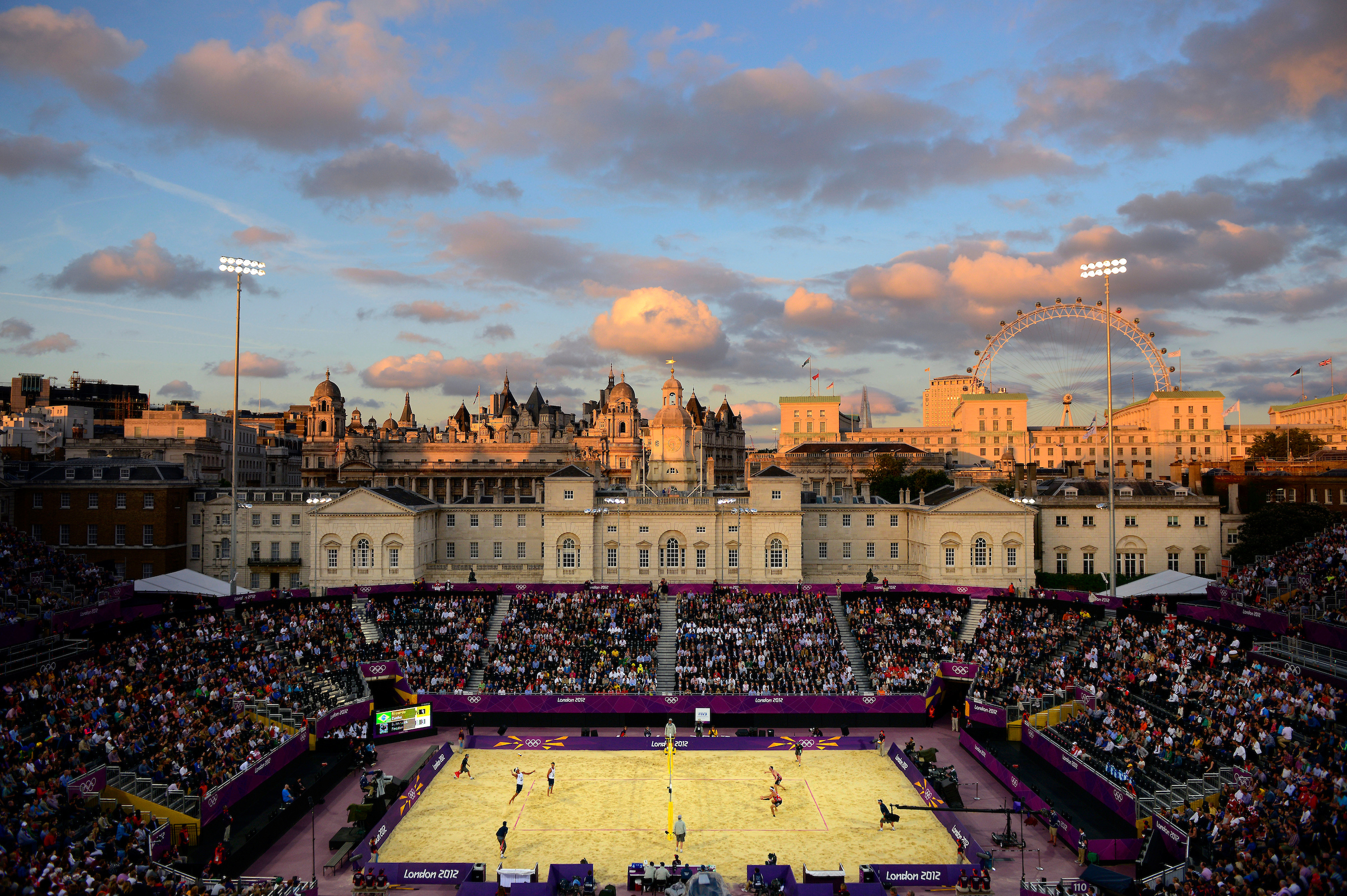
Anyway, the two of them were arguing, playfully, in front of a London Olympics photograph with perfect light. They were discussing the intricacies of where the photographer might have stood to get the shot. They gesticulated like a couple of Brooklyn locals bickering about where to get the best pizza.

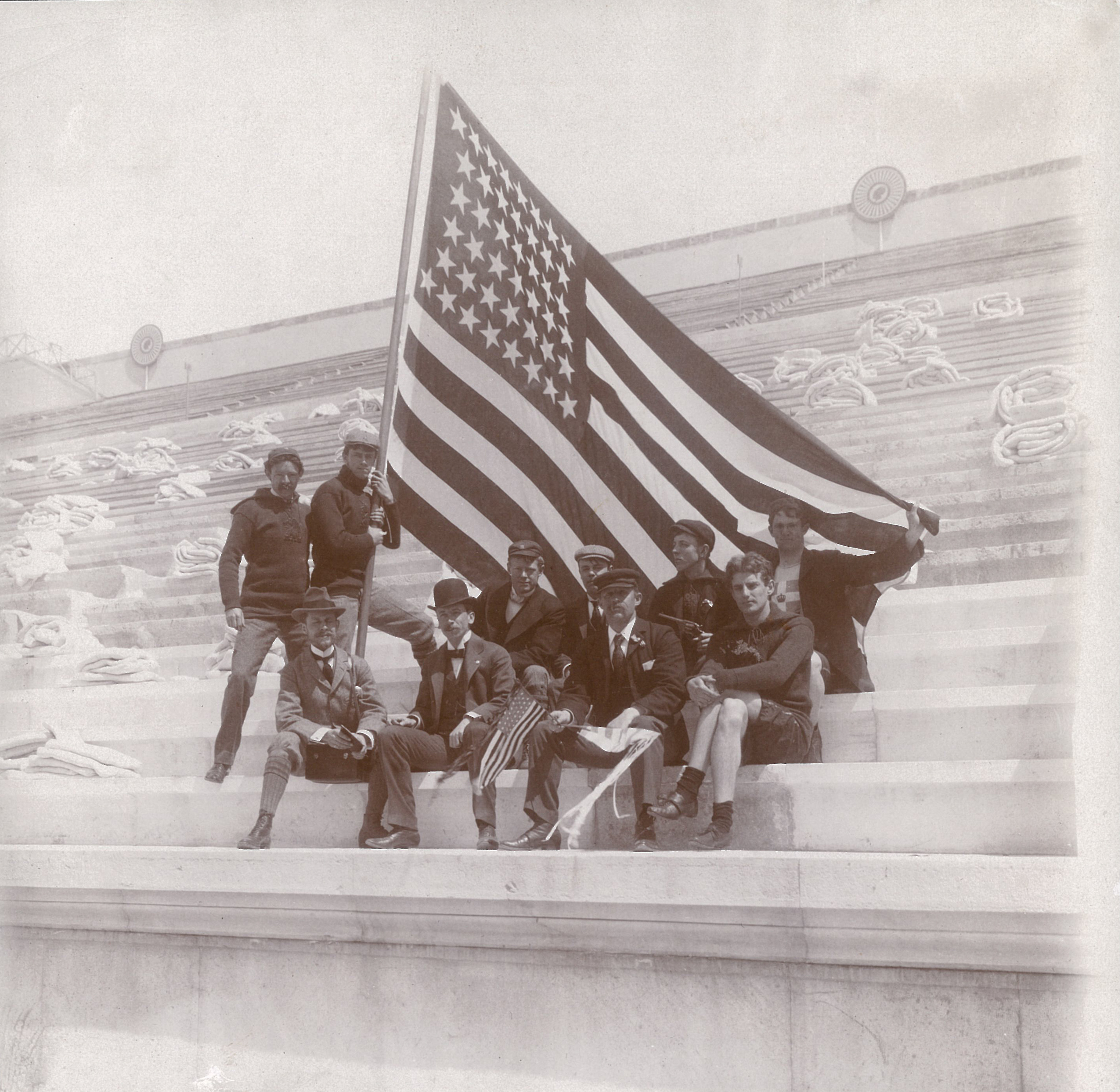
Nearby, we saw a photograph of Olympians at the first Olympic Games in Greece in 1896. Of course I know that photography existed back then, but somehow, things like that seem more like memories or myths than simple organized activities. I was surprised at myself that something like that would seem so surprising, if that makes sense.

New Jersey had the best pizza, if I’m being honest. (And I’ll ask you to trust me.) I don’t feel much like a Jersey boy lately, but Luigi’s in Lincroft was totally brilliant. Big ups, guys.

I covered thousands of miles in the last month, and came away totally inspired. Chicago, New York and LA were fun as hell. Great art, great weather, great food. So many super-cool, interesting people.

Now that I’m home, and the road is behind me, I’d like to thank everyone I met who showed me a good time, and reminded me that we need no Orange King to make us great again.

We’re pretty fucking great already.

Thomas Pelham Curtis (American, 1873–1944). American Olympic Team at the 1896 Athens Olympics, 1896. Vintage photograph, 4 3/4 x 4 1/2 in. (12.1 x 11.4 cm). Collection of Thomas Pelham Curtis II

Thomas Pelham Curtis (American, 1873–1944). American Olympic Team at the 1896 Athens Olympics, 1896. Vintage photograph, 4 3/4 x 4 1/2 in. (12.1 x 11.4 cm). Collection of Thomas Pelham Curtis II


Donald Miralle (American, born 1974). Men's Beach Volleyball match between Brazil and Canada, London Olympics, The Horse Guards Parade ground, London, 2012. Archival inkjet print, 40 x 60 in. (101.6 x 152.4 cm). Leucadia Photoworks Gallery, courtesy of the artist

Donald Miralle (American, born 1974). Men’s Beach Volleyball match between Brazil and Canada, London Olympics, The Horse Guards Parade ground, London, 2012. Archival inkjet print, 40 x 60 in. (101.6 x 152.4 cm). Leucadia Photoworks Gallery, courtesy of the artist

------------------------

Visit our sponsor Photo Folio, providing websites to professional photographers for over 9 years. Featuring the only customizable template in the world.

------------------------

29 Oct 15:41

The TV App as a Supporting Actor

by Federico Viticci

Joe Steel makes a good point in his look at this week's Apple TV announcements:

Why is TV the app an app and not the Home screen on the device? It’s obviously modeled after the same ideas that go into other streaming devices that expose content rather than app icons, so why is this a siloed launcher I have to navigate into and out of? Why is this bolted on to the bizarre springboard-like interface of tvOS when it reproduces so much of it?

You could argue that people want to have access to apps that are not for movies or TV shows, but I would suggest that that probably occurs less often and would be satisfied by a button in the TV app that showed you the inane grid of application tiles if you wanted to get at something else.

As I argued yesterday on Connected, I think the new TV app should be the main interface of tvOS – the first thing you see when you turn on the Apple TV. Not a grid of app icons (a vestige of the iPhone), but a collection of content you can watch next.

It's safe to assume that the majority of Apple TV owners turn on the device to watch something. But instead of being presented with a launch interface that highlights video content, tvOS focuses on icons. As someone who loves the simplicity of his Chromecast, and after having seen what Amazon is doing with the Fire TV's Home screen, the tvOS Home screen looks genuinely dated and not built for a modern TV experience.

I think Apple has almost figured this out – the TV app looks like the kind of simplification and content-first approach tvOS needs. But by keeping it a separate app, and by restricting it to US-only at launch, Apple is continuing to enforce the iPhone's Home screen model on every device they make (except the Mac).

That's something the iPad, the Watch1, and the Apple TV all have in common – Home screen UIs lazily adapted from the iPhone. I wish Apple spent more time optimizing the Home screens of their devices for their different experiences.


  1. The Watch is doing slightly better than the other ones thanks to watchOS 3 and its Dock, but the odd honeycomb Home screen is still around, and it doesn't make much sense on the device's tiny screen. ↩︎

Like MacStories? Become a Member.

Club MacStories offers exclusive access to extra MacStories content, delivered every week; it’s also a way to support us directly.

Club MacStories will help you discover the best apps for your devices and get the most out of your iPhone, iPad, and Mac. Plus, it’s made in Italy.

Join Now
29 Oct 15:34

Will Apple ever make a touch MacBook?

by Volker Weber

ZZ65F9010F

This question comes up time and again. Will Apple ever make a touch MacBook? I believe they will not. Let me explain:

We started this journey with 80 character wide text screens. To navigate this screen we used a cursor, a reverse blinking box. We moved the box around with four cursor keys and you could insert text or overwrite text.

With the Graphical User Interface (GUI) we added a mouse pointer. That was an extra layer on top, which also let you move the cursor, now a caret, to a certain place in your text. You were able to select text, sometimes even multiple blocks of texts. But when you started typing, it did not matter where the mouse pointer was. Text was inserted where the caret was. In order to not confuse the user, we switched off the mouse pointer while he was typing.

Fast forward. When Microsoft introduced touch into Windows (a long time ago), your finger would move the mouse pointer. Touch became another input device, competing with mice and trackpads. This was mildly confusing because the mouse pointer always trailed your finger.

Then came the iPhone and that did not have a mouse pointer. This layer was completely replaced. I still get this question: why doesn't this iPad keyboard have a trackpad? Simple. There is no concept of a mouse pointer in iOS. iOS was built from the ground up for touch. Apple has two UIs: one is optimized for touch, the other for pointers.

Microsoft went a different route. They have one OS and basically one UI for Windows 10. Windows 8 was leaning more towards touch, Windows 10 is leaning more towards pointers. You can switch between a tablet mode and a desktop mode. In tablet mode, touch targets become larger, but you always have these three layers: text, pointer, touch.

When Apple introduced the Touch Bar, it quickly became apparent that this was not a step towards touch macOS. This is another input device. You have a keyboard, a (huge) trackpad, and a new subsystem, the Touch Bar. Subsequently it became apparent that technically it works almost like an Apple Watch. It's a little computer in itself and it's quite possible that in the future, you can keep it alive while the Mac is asleep.

I strongly believe that Apple will not make a three layer device that combines touch, pointer and text. It's either touch or pointer. And I think that both work better than the hybrid Microsoft created.

29 Oct 15:34

Picturing Italy

by Reverend

I think I vaguely remember something about this technology called blogging where you share the inane things of your life. I might have even done it once upon a time….

I’m back, relatively guilt free, from a month long mix of work and personal travel to the U.S. and Bologna, Italy.  I only blogged twice for all of October thus far, but I enjoyed the hell out of it. I do have some catching up to do, and that means, at least for me, clearing the dust off the keyboard and just clicking publish. To prime the pump, I did want to share a small moment that made me happy. While traveling I noticed that the Italy Daily Pics Twitter account—a relatively new account that highlights gorgeous places in Italy—tweeted one of the pictures I took in Verona.

It’s a view from one of the Arena’s windows, and I think I took it almost a year ago when visiting the site with Shannon Hauser. It was cool to see one of the innumerable images I have posted of Italy over the last year retweeted by this account. And I was reminded of it this morning by today’s Daily Pic:

One of the things about Italy is there are so many beautiful cities to see that folks often settle on the big three of Rome, Florence, and Venice. All gorgeous, no doubt, but I have enjoyed the lesser known attractions like Verona, Bologna, Ravenna, Trento, and Trieste (and that’s just Northern Italy!) even more this past year. I guess it is a good problem for a country to have, so many riches in terms of natural, architectural, and artistic beauty that it’s hard to go wrong no matter where you end up.

I have said this before, but I will repeat it. Hands down the best part of finally getting a phone has been the camera, which is why the iPhone 7’s new insane camera is so attractive (Timmmmyboy will be making me jealous shortly!). I love taking photos in general, and given my current surrounding it is even more fun. That said, I am not so good about lugging a bulky camera around, so to think the camera in my pocket could almost be DSLR quality is enticing to say the least. Who know, I might even get another image featured on the worldwideweb one day!

29 Oct 15:33

They Live and the secret history of the Mozilla logo

by Rui Carmo

In which Jamie Zawinsky tells us how he effectively trolled the entire Internet while influencing the design of the Mozilla brand. Well worth a read — I’d always wondered about the faux-revolutionary design aesthetic.

29 Oct 15:33

Kanye McDonald’s Poem

by Matt

You might need a reason to smile today. If so, Kanye’s poem for Frank Ocean’s Boys Don’t Cry zine, illustrated by Dami Lee at the Verge, might be that reason.

29 Oct 15:33

The Wix Mobile App, a WordPress Joint

by Matt

Anyone who knows me knows that I like to try new things — phones, gadgets, apps. Last week I downloaded the new Wix (closed, proprietary, non-open-sourced, non-GPL) mobile app. I’m always interested to see how others tackle the challenge of building and editing websites from a mobile device.

I started playing around with the editor, and felt… déjà vu. It was familiar. Like I had used it before.

Turns out I had. Because it’s WordPress.

If I were being charitable, I’d say, “The app’s editor is based on the WordPress mobile app’s editor.” If I were being honest, I’d say that Wix copied WordPress without attribution, credit, or following the license. The custom icons, the class names, even the bugs. You can see the forked repositories on GitHub complete with original commits from Alex and Maxime, two developers on Automattic’s mobile team. Wix has always borrowed liberally from WordPress — including their company name, which used to be Wixpress Ltd. — but this blatant rip-off and code theft is beyond anything I’ve seen before from a competitor.

Dear Wix,

This explicitly contravenes the GPL, which requires attribution and a corresponding GPL license on whatever you release publicly built on top of GPL code. The GPL is what has allowed WordPress to flourish, and that let us create this code. Your app’s editor is built with stolen code, so your whole app is now in violation of the license.

I suppose we’ll take this as a compliment — I’m sure the hundreds of people who have contributed to WordPress Core and our mobile apps are flattered that you chose to build one of your company’s core features using our code. We’re also excited to see what great things you create with all the time you saved not having to write your own mobile editor.

You know what’d be even more exciting? To see you abide by the GPL and release your source code back to the community that gave you that jump start.

I’ve always said that the GPL isn’t about limits, it’s about possibilities. In open source software, you trade some of your control as a developer to better serve the developer community and the people using your sites and products. I don’t think that’s a limit, I think it’s a way to make sure we encourage innovation and momentum. If you want to close the door on innovation, Wix, that’s your decision to make — just write your own code. If you’re going to join the open source community, play by the open source rules.

Release your app under the GPL, and put the source code for your app up on GitHub so that we can all build on it, improve it, and learn from it.

Love,
Matt and the open source community

An Update

The CEO of Wix has posted a response on their blog. I’ll also try to post my response it to the comments there. Miriam Schwab also has a very good response.

We were all very surprised by your post, as you have so many claims against us.

Wow, dude I did not even know we were fighting.

It’s not a fight: the claim is that the Wix mobile apps distribute GPL code and aren’t themselves GPL, so they violate the license.

First, you say we have been taking from the open source community without giving back, well, of course, that isn’t true. Here is a list of 224 projects on our public GitHub page, and as you can see they are all dated before your post. We have not checked if WordPress is using them, but you are more than welcome to do so, some of them are pretty good.

Very glad your company has projects on GitHub! Thank you for the offer to use them; if we do, we’ll make sure to follow the license you’ve put on the code very carefully.

Releasing other open source projects doesn’t mean that you can violate the license of the editor code you distributed in your mobile apps. To repeat my earlier points: since you distributed GPL code with your apps, the entire apps need to be released at GPL, not just your modifications to that one library.

As this Hacker News comment put it, “Open source is not a swap meet; you can’t violate a license if you voluntarily release some other code to make up for it.”

We always shared and admired your commitment to give back, which is exactly why we have those 224 open source projects, and thousands more bugs/improvements available to the open source community and we will release the app you saw as well.

If you were to release the entire source code of the apps under GPL that would bring you back into compliance with the license you violated. I think you’re saying you will do that here, but can you clarify? When should we look for the app code to be released, and where? That would resolve this issue completely.

Next, you talk about the Wix App being stolen from WordPress. There are more than 3 million lines of code in the Wix application, notably the hotels/blogs/chat/eCommerce/scheduling/booking is all our code.

I said the app includes stolen code. It doesn’t matter if it’s 30 lines or 30 million lines: because it includes GPL code and you distributed the app, the entire thing needs to be GPL. If you release the entire app’s code, as I think you said you would, then that resolves the license violation.

Yes, we did use the WordPress open source library for a minor part of the application (that is the concept of open source right?), and everything we improved there or modified, we submitted back as open source, see here in this link – you should check it out, pretty cool way of using it on mobile native. I really think you guys can use it with your app (and it is open source, so you are welcome to use it for free). And, by the way, the part that we used was in fact developed by another and modified by you.

Thank you for admitting you used the code and not trying to hide it. The issue isn’t the changes you made, it’s that including the editor means you need to submit the entire app as open source, which you have not yet — it’s completely proprietary.

If you want to read the account from Tal Kol, one of the leading engineers on this project, here it is. He was really happy to share his side of the story.

I have seen it, and it already has a number of good comments on it, including this one: “Can you address this point made in Matt’s post: ‘This explicitly contravenes the GPL, which requires attribution and a corresponding GPL license on whatever you release publicly built on top of GPL code’.” It appears you and Tal might share a misunderstanding of how the GPL works — software licensing can be tricky and many people make honest mistakes. (If you want to get into serious detail, this comment lays the licensing requirements out clearly.) It is easy to rectify this one: release your apps as open source under the GPL.

Now, what is this thing about us stealing your branding? Our product was always called Wix and our website Wix.com, we never borrowed from your marketing or brand.

Sorry for including this distraction; I was referring specifically to the fact that Wix used to go by “Wixpress.” You can see this in your Form F-1, and there used to be a support page about this on your site:

Although that is still in Google, the page it links to now mysteriously returns a 404 error, which you may want to look into.

In fact, if I remember correctly, until recently the Automattic home page was all about blogs and only recently it has become “websites.” Also, your business model changed to almost exactly the one we had for years. Can it be that you guys are borrowing from us? If so, again, you are welcome to it.

The Automattic home page has been a series of haiku about our products since 2009, pretty much unchanged — I think you mean the WordPress.com home page here. WordPress has been used for creating websites, not just blogs, since our 1.5 release in 2005 added themes and pages. In my 2014 State of the Word address I talked about how 87% of WordPress sites use it as a CMS. We regularly test dozens of variations of the WP.com homepage and some of them definitely emphasize website creation. I will say we look to Wix, Weebly, and Squarespace as innovators in the space with products that reach many small businesses, and Wix especially should be commended for its success and growth as a public company.

If you believe that we need to give you credit, that you deserve credit, I must say, absolutely yes. You guys deserve a lot of credit, but not because of a few lines of source code, you deserve credit because you guys have been making the internet dramatically better, and for that we at Wix are big fans. We love what you have been trying to do, and are working very hard to add our own contribution to make the internet better.

Thank you very much, that is kind. I do think there are a lot of values we share in common and would love to see this one issue resolved.

If you need source code that we have, and we have not yet released, then, most likely we will be happy to share, you only need to ask. We share your belief that making the internet better, is best for everyone.

That’s what my post was asking, for you to release the code. To quote my original letter: “Release your app under the GPL, and put the source code for your app up on GitHub so that we can all build on it, improve it, and learn from it.”

Finally, during the last couple of years, I reached out a couple of times trying to meet with you. Could I do that again here? I believe in friendly competition, and as much fun as it is to chat over the blogosphere, maybe we can also do it over a cup of coffee?

Once this is resolved I’d be happy to meet up. I believe when we exchanged emails in 2014 there was trouble finding overlap in our travel schedules.

I hope the above clarifies where we think Wix made a mistake, and how to fix it.

28 Oct 21:28

Writing Ethnographies that Everyone Can Read

Writing Ethnographies that Everyone Can Read:

literary-ethnography:

An interview I did with Alma Gottlieb.

I ordered a copy. Review to follow. Ghodsee sounds like a fascinating person.

28 Oct 21:27

Samsung To Share Galaxy Note 7 Explosion Findings in ‘Open Manner’

by Rajesh Pandey
The Galaxy Note 7 fiasco has hurt Samsung’s bottom line big time. The company reported a 96% drop in its quarterly operating profit on a yearly basis, with its share prices dropping to 2014 levels. Worse, without any upcoming flagship handset, Samsung will have to get by this holiday season by selling its six months old Galaxy S7 and S7 edge. Continue reading →
28 Oct 21:27

A new dawn for Open Badges

by Doug Belshaw

Today it’s been announced that Mozilla will transition development of Open Badges to the IMS Global Learning Consortium, a non-profit that maintains and develops technology standards in education.  Alongside this announcement comes the long-awaited refresh of openbadges.org, the dissolution of the Badge Alliance, and the continued harmonisation with the work of the W3C Open Credentials work.

Having had this news previewed to me a couple of weeks ago, I can’t say it’s a huge surprise. Mozilla, with financial backing from the MacArthur Foundation incubated Open Badges and ensured that it was kept going. However, it’s been the enthusiasm and dedication of the community that has ensured its success.

Although I couldn’t make it to Bologna for the ePIC conference this week, I am at the Mozilla Festival this weekend. Both there, and over the next few months, I’m looking forward to working with the community to ensure that there’s a ‘human’ side to badges, to complement Open Badges as a technological  standard.

This is a new dawn for Open Badges, a new chapter in its successful, history. There’s so many people who have been, and continue to be, part of the story — certainly far too many to list here. But you know who you are, and today, as we celebrate the continued viability of a movement built upon a technical standard, I’m raising a glass to you all.

Image via Sweet Ice Cream Photography

28 Oct 21:26

The New MacBook Pro: Our Complete Overview

by Alex Guyot

At yesterday morning's Hello Again keynote event, Apple announced the long-awaited update to their professional laptop line. The new MacBook Pro comes in two sizes and features a thinner body and upgraded internals. It also comes equipped with Apple's brand new Touch Bar, a Retina touchscreen display which replaces the row of function keys atop the keyboard, and a Touch ID sensor.

These new machines mark the first significant spec advancements for the MacBook Pro since they moved to Haswell processors in 2014, and the first notable hardware changes since going Retina in 2012. As such, it's no surprise that the new MacBook Pro is an improvement in nearly every way over previous models. This is truly the next generation of Apple's flagship laptops.

Touch Bar

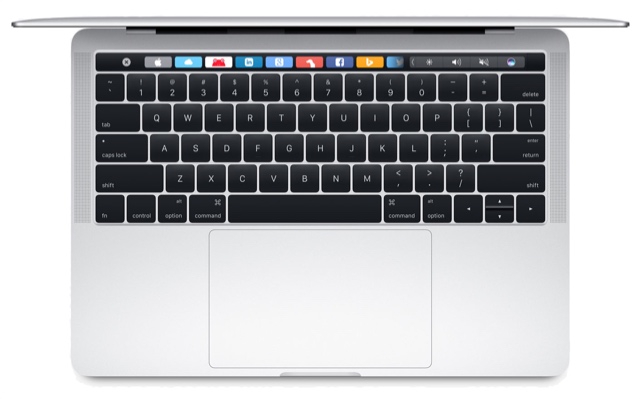
Apple's new Touch Bar is a slim multitouch display located above the keyboard where the function keys used to be. At 2070px wide by 60px high (equivalent to 1085pt by 30pt), the display has Apple's official blessing as "Retina". The Touch Bar provides a programmable interface which developers can take advantage of to expose controls specific to their apps directly on the keyboard. When developers are not controlling the display, Touch Bar will show a system interface of buttons and controls which users can customize to their liking from System Preferences.

The beauty of the Touch Bar is this: by placing the display directly on the keyboard, the controls are located in the most convenient place possible for laptop users. What has always bothered me about the shift toward Windows laptops with touchscreen displays (and, for that matter, using an iPad with a keyboard), is that you constantly have to lift your entire arm and stab at the screen. It's imprecise and tiring over time, and in general just not the best experience. Of course, it very much remains to be seen whether the Touch Bar is truly a better solution for bringing the power of multitouch displays to the laptop paradigm, but on paper it certainly seems like an idea with great potential.

To demonstrate this, Apple demoed several apps on stage which already make use of the new Touch Bar. Final Cut Pro will show an interactive display of an active project's timeline in the Touch Bar. Swiping across this timeline allows for quick navigation through the project, and buttons on either side of it may provide other functions depending on what you're doing in the app. Another demo was from an Adobe employee, and showed off the way an upcoming update to Photoshop will allow interaction through the Touch Bar. In this case, the touch interface allowed for quick changing of brush size with one hand as the other hand used the trackpad to edit a photo.

Microsoft has also announced an update to its Office suite to work with the Touch Bar. The Word update enables a mode where everything is hidden other than the document and the toolbars are relocated into the Touch Bar. The PowerPoint update is geared toward making graphics manipulation easier by changing layer positions and rotating objects with slides of a finger across the Touch Bar. Excel moves function suggestions and other common tools down to the keyboard layer.

Microsoft's take on this strikes me as the most common approach we'll see from developers, but I'll be interested to watch trends as more apps release Touch Bar support. Will they all just converge around the same tropes, or are there more innovative uses for the new interface that Apple hasn't yet thought of?

One of the uses of the Touch Bar that I'm most excited about is using it as an emoji picker. The current macOS emoji picker is slow to load and only lets me use one emoji at a time before being automatically dismissed (yes, I know I can drag it away to keep it open permanently, but I don't want that either). To open up a nice view of emoji right on the Touch Bar and be able to use as many as I want to before dismissing them will be great.

Touch ID

On the far right side of the Touch Bar is a small black square which is not part of the display. This square is the new MacBook Touch ID sensor. The sensor, which is actually a clickable button, has three main functions at this time. First off is the obvious: the new MacBook Pro can be unlocked using the Touch ID sensor instead of having to type in your password. I'm sure this will be a much faster and more reliable method of auto unlock than the Apple Watch Unlock method introduced with macOS Sierra earlier this year.

The second function of the Touch ID button is making a payment with Apple Pay in Safari. This feature was made available in macOS Sierra by kicking the payment to an iPhone with Touch ID to authenticate it. Now the entire process can occur directly on the Mac.

Finally, the Touch ID sensor can store and differentiate the fingerprints of different users on the computer. If one user is logged in and another comes by to use the Mac, they can simply place their finger on the Touch ID sensor and the MacBook Pro will automatically transition into their user account – no logout/login necessary.

I'm sure it won't be long until the rest of the features we're used to from Touch ID on iOS (I think it's only missing native in-app payments) come to the Mac as well. With all of these great functions, Touch ID is an incredibly strong addition to the MacBook Pro.

Design

The new MacBook Pro comes in the same two sizes as before, with both a 13-inch and a 15-inch model. The 13-inch model weighs in at a mere 3 pounds, and is 14.9 mm thick. The 15-inch model is 4 pounds and 15.5 mm thick, making both machines quite a bit thinner than the 13-inch MacBook Air (which is 17 mm thick).

The general exterior design of the machines has remained relatively unchanged. Despite some rumors to the contrary, the MacBook Pro has not transitioned to a tapered design akin to the MacBook Air. Rather, it just looks like a thinner version of the same MacBook Pro design that we're used to. The Pro also didn't receive the options for Gold and Rose Gold colors like the standard MacBook line, but it did get the option for Space Gray.

That's right, you heard me, we can finally purchase MacBook Pros in a color other than silver. This will be the same Space Gray that standard MacBooks have been available in since 2015, and it looks great. 1

Display

The Retina display on the new MacBook Pro has been updated to support the wide color gamut previously seen on the iMac, 9.7-inch iPad Pro, and iPhone 7. The display also sports brighter LED backlighting and an increased contrast ratio. Drawing inspiration from the iPad Pro, the new MacBook Pro display supports a variable refresh rate, letting it conserve more energy by refreshing non-changing pixels less often.

Audio

The new MacBook Pro has an all new speaker design with double the dynamic range and 58% more volume. Apple is also boasting 2.5x louder bass on the speakers. The edges of the computer to the left and right of the trackpad seem to now have speaker grills to aid in the dispersal of the improved sound.

Keyboard and Trackpad

The keyboard on the new machine has been updated to include the second generation of the butterfly switches which Apple debuted on the first version of the current MacBook in 2015. The mechanism creates a uniform downward movement even when pressing keys on the edges. Apple did mention in the keynote that the MacBook Pro version has more key travel than that of the standard MacBook.

The new trackpad is 2 times larger than the trackpad on the previous MacBook Pro for the 15-inch machine. It's slightly less than 2x larger for the 13-inch. Other than the increased size this is the same Force Touch trackpad that has been shipping on MacBook Pros since last year.

Ports

The ports on the new machine are perhaps the greatest caveat about it. All ports that existed on the previous MacBook Pro generation (except, ironically, the headphone jack) are gone. In their place are four Thunderbolt 3 ports. Since Thunderbolt 3 uses the same connector as USB-C, these ports all function as USB-C ports as well.

Sadly, this change spells the end of MagSafe on Apple's MacBook Pro line. No longer are MacBooks safe from people tripping over power cords while they are charging. On the bright side, though, the new MacBook Pros can be charged from any of the four Thunderbolt 3 ports.

Thunderbolt 3 may not yet be as universal on external devices as the ports that it is replacing, but it is more capable than all of them combined. Thunderbolt 3 can connect to displays via HDMI, VGA, DisplayPort, or Thunderbolt. It can input and output power for charging, and work with any peripherals that are compatible with USB-A, and Micro or Mini USB. It's also blazingly fast and powerful with up to 40-Gbps data transfer and support for pushing up to two 5K displays.

Sadly, Apple did not announce a new Apple-branded 5K display to use with these ports, but it did recommend a new LG display, which the two companies collaborated on.

Performance

The new MacBook Pro massively outperforms the previous generation. The 15-inch model features a Radeon Pro discrete GPU which delivers up to 130% faster graphics. The 13-inch model packs an Intel Iris Graphics 540 with up to 103% faster graphics than the previous 13-inch model.

All new MacBook Pros come with solid-state drives, the performance of which have improved to 3.1 GB/s read speeds and 2.1 GB/s write speeds (2.2 for the 15-inch). The 13-inch comes with 256 GB of storage baseline, and can be updated to up to 1 TB. The 15-inch model also comes with 256 GB baseline storage, but it includes the option to upgrade to a 2 TB SSD, the first time such a huge solid-state drive has been available on a Mac.

For processors, the 13-inch model can be purchased at the baseline with a 2.9GHz dual core and 3.3GHz Turbo Boost Intel Core i5. This can be upgraded at checkout to an up to 3.3GHz dual core and 3.6GHz Turbo Boost Intel Core i7 processor. The 15-inch model can be purchased at the baseline with a 2.6GHz quad core and 3.5GHz Turbo Boost Intel Core i7. This can be upgraded at checkout to an up to 2.9GHz quad core and 3.8GHz Turbo Boost Intel Core i7.

Both sizes provide 10 hours of battery life.

Conclusion and Pricing

Through this new generation of MacBook Pros, Apple has rocketed its aging flagship laptop line back to the forefront. With greatly improved performance, refreshed hardware design, and innovative additions like the Touch Bar and Touch ID, Apple is delivering what looks to be an extraordinary new line of products.

The Touch Bar in particular is a possibly game-changing feature. We'll have to wait for reviews to see how well it works in practice, but the idea of putting a multitouch display directly under your fingertips on a laptop has strong potential. I can't wait to see what developers start cooking up to make use of the new interface.

The last thing to talk about here is pricing. Unfortunately, Apple has increased the base prices across all models of the new MacBook Pros. The starting price of the 13-inch MacBook Pro with Touch Bar and Touch ID is $1,799, a significant increase over the starting price of the previous MacBook Pro generation, which started at $1,299.

To fill this gap, Apple is also offering another 13-inch model, available at $1,499. However, this lower priced model does not include the Touch Bar, nor Touch ID. Instead, the top keyboard row is reverted back to the standard function keys that we are used to. This model also has lower powered specs than the others in the lineup.

On the 15-inch side, Apple is only offering models which include the Touch Bar and Touch ID. The starting price here is $2,399.

You can compare all models of Apple's new MacBook Pro lineup here. The MacBook Pro without Touch Bar or Touch ID is shipping already as of yesterday, and the MacBook Pro models with Touch Bar and Touch ID will start shipping in 2-3 weeks.

You can also follow all of the MacStories coverage of today's Apple's keynote through our October 27 Keynote hub , or subscribe to the dedicated October 27 Keynote RSS feed.


  1. Side note: the new MacBook Pro's display maxes out at a brightness of 500 nits. That's half as bright as the 1,000 nit screen of the Apple Watch Series 2. ↩︎

Like MacStories? Become a Member.

Club MacStories offers exclusive access to extra MacStories content, delivered every week; it’s also a way to support us directly.

Club MacStories will help you discover the best apps for your devices and get the most out of your iPhone, iPad, and Mac. Plus, it’s made in Italy.

Join Now
28 Oct 21:25

Fixed Link to the Sunshine Coast?

by Sandy James Planner

fjord-bridge-980x500

The Vancouver Sun has reported on the latest open houses held in the Gibsons area once again chatting about a new link for access to the Sunshine Coast. This idea has been discussed in 1998 and 2001-and it is back again.

By virtue of geography — and unsteady, expensive B.C. Ferries service — Gibsons and the rest of the Sunshine Coast that stretch another 180 kilometres north are, according to local tourism promotional fluff, the province’s “best kept secret.”

There’s now a plan brewing, an ambitious scheme that would bridge the ocean-filled gap. B.C.’s Ministry of Transportation and Infrastructure is floating proposals that would allow cars and trucks to bypass or traverse Howe Sound, the body of water that separates Gibsons and points north from the hurly-burly south.

The Vancouver Sun attended the Thursday evening session of The Sunshine Coast Fixed Link Study in a Gibsons’ hotel meeting room filled with inscrutable maps and busy display boards

The latest discussion involves several different plans. One or all could be adopted, eventually. The most viable, say people at Thursday’s open house, is a suspension bridge/road that would see traffic divert from the highway near Horseshoe Bay, cross Howe Sound at its narrowest point, touch land for a bit at tiny Anvil Island, then complete the crossing on a second bridge that would reach the shore north of Gibsons.

Now here is the interesting part-the estimated construction costs are between $ 2 Billion and $ 2.5 Billion dollars.Does that sound familiar? That is close to the estimate for the Massey Bridge across the Fraser until the Provincial Government said the exact cost was not $2.5 billion but  would be $ 3.4997 billion as reported in Price Tags last Monday.

While a fixed link would encourage local development, raise real estate prices and create jobs, an Anvil Island crossing has one more hurdle-the Island Trust which manages the islands in the Salish Sea and in Howe Sound.  A local Islands Trust trustee, Kate-Louise Stamford has stated that“It is Islands Trust policy that we do not support fixed links on any of the islands.” So despite the fact that the link to Anvil Island seems the most expedient, the Trust and the 18 property owners on the island may not think so.

And if past experience is any guide, that may be enough to sink this fixed link alternative and bring other options back to the drawing board, such as circuitous highway from Howe Sound up towards Powell River on the north end of the Sunshine Coast.


28 Oct 21:24

Green Roofs get the Green Light!

by Sandy James Planner

135534d1238294806-greenist-building-san-francisco-grass-roof-green

The National Geographic news has written about another San Francisco first:

This week, San Francisco became the first U.S. city to require that certain new buildings be built with a green roof—an eco-friendly design technique that sows plants above a roofline. This latest action builds on a growing trend that has taken root around the world, and which boosters say offers significant benefits for the planet.

The new by-law enacted in January 2016 will mean that 15 to 30 per cent of roof space on new office construction projects must  incorporate solar, green roofs, or both. An earlier by-law requires new residential and commercial buildings under ten storeys to install solar panels or a solar heating system with fifteen per cent roof coverage.

Green roofs reduce stormwater runoff, improve air quality, and help mitigate the urban heat island effect. For building tenants and owners, green roofs reduce the need for heating and cooling. They also can provide food and a recreational area for residents. Combining solar panels and green roofs can actually make each component work better. Solar panels can provide shade for plants and grasses, reducing the need for watering, while the panels work best when they are cool (green roofs can help lower temperatures compared to conventional ones).

Other cities such as Chicago has already planted their city hall roof, lowering summer temperatures in the building. Bonn Germany has led the green roof innovation and been an early adapter to this roof form in Europe.

Green roof legislation is being passed around the world. Cordoba became the first city in Argentina to require green roofs in July. France’s new legislation mandates at least partial coverage of green roof or solar technology on all new construction and goes into effect next March. In 2009, Toronto mandated green roofs on industrial and residential buildings. Germany’s green roof industry has been legislated and supported by the government in various ways since the 1970s.

There are approximately 25 North American cities that support green roofs to some extent, from bigger cities to medium and smaller communities like Syracuse and Port Coquitlam in British Columbia. Washington D.C. has a de facto requirement for large buildings through its stormwater regulations. New York City has tax abatements.

Valuable green building certifications, such as LEED, also award points for green roofs, so they are popping up across the country even without legislation. Green roofs offer an environmental solution and provide a range of benefits as regional climates become hotter and populations in cities continue to grow. Kudos to San Francisco for showing the way forward.

smithgroup_sfo1


28 Oct 21:24

100K On Mobi

by Ken Ohrn

Vancouver’s Mobi bike-share system has hit 100,000 rides.  Most trips appear to be short one-way rides, as expected, from the 80 stations (800 bikes) now in place.

mobi-hornby-shopping

My experience is unchanged.  The system, with all its moving parts, just works.  And it’s a positive addition to the transportation options we have.

From the City of Vancouver press release:

Comparable cities with similar or larger-sized bike share systems have passed 100,000 rides in anywhere from two to nine months; Vancouver’s program reached that milestone in just three months. . . .

. . . .  The top five most popular Mobi stations are:

  1. Granville and Georgia
  2. Hornby and Nelson
  3. Hornby and Pender
  4. Bute and Robson
  5. Ontario and the False Creek Seawall.

These are all locations that are near transit connections or active transportation routes.


28 Oct 21:23

Noam Scheiber, As Freelancers’ Ranks Grow, New York Moves to See They Get What They’re Due

Noam Scheiber, As Freelancers’ Ranks Grow, New York Moves to See They Get What They’re Due:

Great news in New York City for freelancers, as a result of pressure from groups like the Freelancers Union, led by Sara Horowitz. The New York City Council has unanimously voted in favor of regulations that will protect freelancers against wage theft, and may be the first in the country:

Known as the Freelance Isn’t Free Act, the measure requires anyone hiring a freelance worker to agree in writing to a timetable and procedure for payment, and increases the potential awards to freelancers bringing legal complaints against those who have failed to pay them promptly.

The bill represents one of the earliest policy efforts to grapple directly with the growth in the so-called gig economy — a term that typically refers to the likes of temporary workers, contract workers, independent contractors and freelance workers. According to one estimate by the economists Lawrence Katz and Alan Krueger, this group grew to almost 16 percent of the work force in late 2015 from roughly 10 percent in early 2005.

“New York is in some ways at the center of the gig economy, of the evolution of the economy to more independent and contingent work,” Brad Lander, the councilman who introduced the legislation, said.

But Mr. Lander, Democrat of Brooklyn, added that the existing employment and labor laws are “so badly outdated they don’t give the basic protections all workers expect, much less broader support and benefits to all workers in the growing gig economy.”

The Freelancers Union, a group that played a key role in shaping the measure, estimates that there are nearly 4 million freelancers in the New York metropolitan area. A recent survey by the group found that half of all freelancers nationwide said they had encountered trouble getting paid in 2014, and that more than 70 percent struggled to collect payment at some point in their careers.

Sara Horowitz, the union’s executive director, said one of the bill’s most consequential provisions could be the requirement of a written contract for any freelance relationship for which the compensation is at least $800 over a four-month period.

“One of the things that trips people up is they go to sue in Small Claims Court and try to get a judgment and they don’t have a contract,” she said. “You’re left with, ‘We had a conversation. I wrote down these notes.’”

The bill also stipulates that freelancers who do not receive full payment on time are to receive double damages if they win in court. So, for example, freelancers who previously would have been awarded $5,000 in damages from a company that failed to pay them would collect $10,000 if they prevailed. On top of that, the court would automatically require the company to pay their legal fees and would award an additional amount if there were no contract or an incomplete contract.

Next step, getting these sensible and forward-looking regulations enacted state-by-state, and nationally.

28 Oct 21:23

“Our Precious Urban Lives”

by pricetags

A New York Times op-ed by Lisa Pryor:

… urban villages, once diverse melting pots, became shiny, wealthy and inward-looking. The big ideas became small and hard and sparkling as diamonds.

This is how it is playing out here in Sydney. In every direction the city center is ringed by desirable neighborhoods with exorbitant housing prices, where residents can dine, work and shop without ever traveling far from home.

It is a beautiful life, and effective at reducing car travel. But there is a darker side to it. The urban village ethos has encouraged prosperous neighborhoods to turn inward and even take pride in not connecting with fellow citizens in the suburban areas beyond.

sydneyThe language we still hold on to about the inner city disguises the changes that have taken place. We still invoke the social justice battles of urban neighborhoods of the past — community, environment, heritage, people power — in an endless war to fight for even greater advantages for ourselves. …

The language — against developers, in favor of public assets — served as a linguistic sleight of hand that disguised the fact that an influential, overwhelmingly city-based and white cultural elite was mounting a fight against sharing resources with a less privileged part of the Sydney area. …

In Western Sydney more than anywhere, our future nation is being formed. The streets are not built for street life, but there is life, in spite of the streets. Thousands of years of culture are being woven into something loose we call Australian. And it is passing by those who refuse to venture beyond the inner city.

The challenge for our city and many like it is to think beyond the urban villages. The passion for well-designed communities needs to be directed outward instead of inward, geographically and in spirit. We need to let go of some of our resources; we need to learn to share. And if we are going to fight for our perfect little villages, the most honorable fight is the one to retain and expand public housing, to keep what little diversity we have left.

Culture is more than expensive and refined tastes in wine and food. I don’t want to live in the kind of city where we endeavor to know our grains and our meat, but not our fellow citizens.


28 Oct 21:23

Airfoil 5.5: Now Playing on Chromecast!

by Paul Kafasis

We’re now shipping Airfoil for Mac 5.5, a major update to our tool for streaming music around your house, and we’re very excited about it! With this update, it’s now possible to stream any audio from your Mac to the Google Chromecast, using Google’s Cast protocol. After many months of work, we’re delighted to be able to provide full Chromecast support in a free update for all of Airfoil 5 users. Read on for more details.

Airfoil and Chromecast Pair Beautifully

To reiterate, Airfoil now supports sending audio to any device that supports the Google Cast protocol. As pictured above, that includes the Google Chromecast Audio, as well as both the current Google Chromecast Video and the original (stick-shaped) model.1 Further, there are also many televisions and stereos which support Google Cast, and Airfoil works great with those as well.

Better still, Airfoil can send to multiple devices, all in sync! Of course, if you’ve got AirPlay or Bluetooth devices, Airfoil will still send to those as well. With this new version, you can get the party rocking with more devices than ever before.

Airfoil Satellite Improvements

We’ve made some big improvements to the companion Airfoil Satellite app as well. As you may know, running Airfoil Satellite on another computer turns it into an audio receiver. Now, Airfoil Satellite for Mac is easier to use than ever.

Airfoil Satellite is now AppleScriptable, enabling it to offer full support for an enhanced experience when it’s set as the source in Airfoil. This is especially useful when using Airfoil to send from iOS to multiple outputs. By setting Airfoil Satellite as your source in Airfoil, you can then send audio from iOS to your Mac, then from your Mac out to any and all supported devices. When you do, metadata will flow through to your outputs, and remote control will be available as well.

In addition, we’ve added optional global shortcuts for controlling Airfoil Satellite. Now with a quick press of your custom keyboard shortcuts, you can make Airfoil Satellite appear, hide it, and even control playback of supported applications.

And More

That isn’t all we added in Airfoil 5.5. This update also removes the separate sections Airfoil and Airfoil Satellite previously used to group remote outputs. You’ll now find all of your remote outputs in one section, regardless of what type they are. We’ve also fixed several minor bugs in Airfoil, and improved how it handles missing audio output devices (as used by the Computer output). Of course, as usual, we’ve also made myriad backend improvements for stability and improved performance.

Get Airfoil 5.5 Now!

This is a free update for all those who’ve already upgraded to Airfoil 5, first released back in February. To download the latest, just open Airfoil and select “Check for Update” from the Airfoil menu.

If you’re still using Airfoil 4 (or older!), there’s no better time to upgrade to version 5! You can download the free trial from our site, then purchase a discounted upgrade.

Of course, if you’ve never used Airfoil before, now’s a great day to learn more. Airfoil lets you stream any audio from your Mac all around your network. With version 5.5, Airfoil now supports sending audio to thousands of different devices that support AirPlay (like the AppleTV and AirPort Express), Bluetooth (like countless speakers and headphones), and Google Cast (like the Chromecast and more). Learn more, and download the free trial, on the Airfoil page.

Coming Soon to Airfoil for Windows

Fear not, Windows users, because we’re hard at work on adding Chromecast support to Airfoil for Windows as well. We’re working hard on a free Airfoil for Windows update that adds Chromecast support, and hope to ship that by early next year. Stay tuned for more on that!


Footnotes:

  1. We’re still waiting to get one of the new 4K Chromecast Ultra devices, but we expect it to work just fine. ↩︎

28 Oct 21:22

Timeout Triage

by gbrown-mozilla

Many of our frequent intermittent test failures are timeouts. There are a lot of ways that a test – or a test job – can time out. Some popular bug titles demonstrate the range of failure messages:

  • This test exceeded the timeout threshold. It should be rewritten or split up. If that’s not possible, use requestLongerTimeout(N), but only as a last resort.
  • Test timed out.
  • TEST-UNEXPECTED-TIMEOUT
  • TimeoutException: Timed out after … seconds
  • application ran for longer than allowed maximum time
  • application timed out after … seconds with no output
  • Task timeout after 3600 seconds. Force killing container.

We have tried re-wording some of these messages with the aim of clarifying the cause of the timeout and possible remedies, but I still see lots of confusion in bugs. In some cases, I think a complete explanation is much more involved than we can hope to express in an error message. I think we should write up a wiki page or MDN article with detailed explanations of messages like this, and point to that page from error messages in the test log.

One of the first things I do when I see a test failure due to timeout is look for a successful run of the same test on the same platform, and then compare the timing between the success and failure cases. If a test takes 4 seconds to run in the success case but times out after 45 seconds, perhaps there is an intermittent hang; but if the test takes 40 seconds to run successfully and intermittently times out after 45 seconds, it’s probably just a long running test with normal variation in run time.

This suggests some nice-to-have tools:

  • push a new test to try, get a report of how long your test runs on each platform, perhaps with a warning if run-time approaches known time-outs, or perhaps some arbitrary threshold;
  • same for longest duration without output (avoid “no output timeout”);
  • use custom code or a special test harness mode to identify existing long-running tests, for proactive follow-up to prevent timeouts in the future.
28 Oct 21:22

100 Stories: The Impact of Open Access

files/images/Impact_of_Open_Access.JPG


Jean-Gabriel Bankier, Promita Chatterji., Bepress, Oct 31, 2016


From the abstract: "This report is a pre-print that has been submitted for publication with UNESCO. It looks to answer the question: "why does open access matter?" We examined 100 stories of impact to produce a framework for describing the concrete benefits of open access for readers, authors and institutions. We aspire to move the open access conversation forward by making the case, backed by data, that the benefits of open access are real, widespread and significant." 27 page PDF. The article is mostly an overview, with each of the stories taking up about one paragraph.

[Link] [Comment]
28 Oct 21:22

Wind Mobile starts promoting LTE network launch and support for Wi-Fi calling

by Ian Hardy

With the launch of the LG V20, Wind Mobile says it has its first “future ready” device.

“The LG V20 is the first phone future ready for upcoming WIND services like LTE and Wi-Fi calling,” says Wind on its website. The V20 is band 66 compatible and will work on the carrier’s AWS-3 LTE network when it launches sometime in the next few months.

Wind Mobile, which is now owned by Shaw, has not confirmed when its LTE service will launch.

However, as we previously reported in June, an internal document obtained by MobileSyrup reveals the carrier is “scheduled to start rolling out LTE at the end of 2016.” In addition, Wind plans to launch Voice over LTE (VoLTE) and Voice over Wi-Fi (VoWiFi) service.

The LG V20 is the first of many LTE-enabled devices Wind plans to offer.

Related: Wind Mobile to launch LTE ‘at the end of 2016,’ will also deploy VoLTE and VoWiFi services

28 Oct 21:22

Ars Technica on the T1 Chip in the New MacBook Pro

by Federico Viticci

Andrew Cunningham, writing for Ars Technica, got Apple on the record about the T1 chip and what it does for security and the Touch Bar:

At any rate, the T1 is an interesting chip that does much more than support Touch ID and Apple Pay. Apple tells us that it has a built-in image signal processor (ISP) related to the ones Apple uses in iPhone and iPad SoCs, something which Troughton-Smith suggests could protect the camera from malware hijacking. And its Secure Enclave handles the encryption and storage of fingerprint data and protects it from the rest of the operating system and its apps, much as it does in iOS.

When you interact with the Touch Bar, Apple tells us that the majority of the processing is being done by the Intel CPU, although the T1 also appears to do some processing in specific situations for security’s sake, as when Apple Pay is used. But to keep the Touch Bar from counting toward the number of external monitors you can use (Intel’s GPUs support a total of three separate displays, AMD’s support six), the T1 is used to drive the Touch Bar’s screen. From what Apple told me, it sounds like the image you’re seeing is actually being drawn by the main system GPU but is being output to the display by T1, not unlike the way other hybrid graphics implementations work.

Between A-series chips, the W1, and the T1, Apple's most fascinating work is happening in the custom silicon space. The whole T1-Touch Bar deal is extremely intriguing.

→ Source: arstechnica.com

28 Oct 21:22

Perpendicular Philosophy

by Federico Viticci

Jason Snell:

Apple, in contrast, believes that touchscreen interfaces are great and computers are great and they’re not the same thing. Apple has steadfastly resisted adding touchscreens to the Mac, and when you ask the company’s executives why, they have been remarkably consistent on this point for the past few years.

What defines a computer, they’ll say, is that it’s made up of two perpendicular surfaces. There’s a vertical display surface, more or less up and down, right in front of you. And there’s a horizontal control surface—a table or desk or the base of a laptop—that you use for input and control. If you want a Mac, that’s what you get. If you want a touch-based device, get an iPad.

Seen through this philosophy, the new MacBook Pro and its Touch Bar interface fit perfectly. The Touch Bar brings the things Apple loves about touchscreen interfaces—customizability and support for multitouch—and adds it to the control surface of the Mac, right above the keyboard. It doesn’t break Apple’s definition of a computer at all, because it’s a new sort of touchscreen, and it’s part of the keyboard area, not the display area.

I don't use a Mac as my daily computer anymore, and I don't plan to switch from my iPad Pro, but the Touch Bar is the first change to the Mac line to pique my curiosity in years. Probably because it borrows from what makes iOS great.

→ Source: sixcolors.com

28 Oct 21:21

Our Role in Protecting the Internet — With Your Help

by Richard Barnes

Protecting the security of the Internet requires everyone. We talked about this theme in a recent post, and in this post we’ll expand on the role Mozilla plays, and how our work supports and relies on the work of the other participants in the Web.

Building a secure browser

Firefox is a critical part of the Internet, and it’s Mozilla’s job to protect it.  Hundreds of millions of people use Firefox to connect to the web. That’s a huge audience for the user-facing security features and protections we build into Firefox, but at the same time, a single security vulnerability can put all of our users at risk of having their computers or phones taken over by bad actors. So we put a lot of effort into finding and fixing vulnerabilities in Firefox as quickly as possible. In addition to our own team of expert bug-hunters, Mozilla runs one of the longest-standing bug bounty programs on the web in order to encourage security researchers to report security vulnerabilities. So far this year, independent researchers reported more than 130 serious vulnerabilities that we hadn’t found yet. Without our community of security researchers, every Firefox user would be more at risk.

Mozilla is also investing in fundamental technologies to prevent these security vulnerabilities from arising in the first place. The Rust programming language is specially designed to ensure that several major types of security vulnerability simply can’t happen, including the one that lead to the famous Heartbleed vulnerability. It is literally impossible to write a program in Rust that has one of these security vulnerabilities. Even though Rust started out at Mozilla, however, it wouldn’t have been possible for it to mature so quickly into a production-ready language without more than 1,500 contributors helping get it there. We’ve started using Rust in Firefox for a few things, but other members of the community have already used Rust to create a Doom renderer, a replacement for core Unix utilities, and even a whole operating system — all inherently safe from large classes of security vulnerabilities.

Another way we’re pushing the envelope on browser security is through our close collaboration with the Tor Project. The Tor Browser is a variant of Firefox that provides users with enhanced privacy features and the ability to browse the web anonymously. For example, the SecureDrop system uses Tor to let anonymous sources deliver documents to reporters without fear of being identified. We’re tremendously grateful for all the new ideas and good code that the Tor community is contributing to the web, and we’re working closely with the Tor Browser team to integrate their innovations into Firefox to give all users more privacy options.

Building a secure web

The web is not just Firefox, though — it’s a whole network of computers, people, and companies working together. Mozilla security engineers are constantly working with other players in the web ecosystem to upgrade the security of the fundamental technologies that make the web work.

Part of the way we do this is through standards organizations, like the Internet Engineering Task Force and the World Wide Web Consortium. Those organizations serve as a meeting point for web browser makers, web server operators, and other people who want to help make the web better. Mozilla staff are leading efforts to do things like upgrading the basic encryption systems for the web and enhancing security for web logins. But these efforts only succeed when we do them in collaboration with lots of other organizations. For example, we recently got together with Google, Facebook, Cloudflare, INRIA, and others to test out the latest encryption protocols, and demonstrated several different systems from different vendors all working together.

Another role we play is as the maintainer of the Mozilla Root Certificate Program, which is used by Firefox and many other open-source projects to determine what digital certificates they should accept to identify websites. Maintaining trust in the digital certificate system is central to maintaining trust in the web, and Mozilla is the only browser with a fully open, community based process for making decision about which certificates are trusted.

Finally, sometimes we have to create a part of the ecosystem when we find one that’s missing. A few years ago, we noticed that the complexity and expense of getting a certificate was holding back security in the web. So we teamed up with EFF, Cisco, Akamai, and others to create Let’s Encrypt, a certificate authority that provides websites with certificate automatically and free of charge. In less than a year, Let’s Encrypt has helped secure more than 14 million websites – most of which had never had security before. It wouldn’t have been possible without the whole team of industry partners and community contributors.

Building a community around security

Of course, securing the Internet is not just a technical challenge. It requires a whole community of informed people to help guide companies and governments to make good decisions that make the Internet more secure. That’s why earlier this year, we started a campaign to educate more people about encryption, and we continue to provide tools to educate people about how to stay safe on the Web.

We’re also helping our peers in the open source community make their security better. The Mozilla Open Source Support program has provided more than $800,000 in funding to open source projects this year, much of it focused on improving security. MOSS grants are supporting Tor, the TAILS privacy-enhanced operating system, the Caddy HTTP server (which provides automatic security), a bunch of security audits, and several other security projects across the open source ecosystem.

It takes a village

As you can see, our security work at Mozilla is deeply tied with work that the rest of the community is doing — independent researchers, government agencies, industry partners, interested users, and more. Every part of this intricate machine is critical; remove any part, and everyone gets less safe. If you’d like to follow along with what the Mozilla security team is up to, please keep an eye on our Security blog.

28 Oct 21:21

Mozilla Campus Clubs @ Grace Hopper Open Source Day

by Emma

Mozilla Campus Clubs @ Grace Hopper Open Source Day

Open Source Day at Grace Hopper was my absolute, most favourite, ‘conference thing’ I did last year, and it was with little hesitation that I got involved again for the 2016 version.

Before I say anymore I want to acknowledge the amazing work of two volunteers in making our day successful.

  • Semirah Dolan, who joined me in Houston to run a session that build a VR activity for Campus Clubs, and who truly leads by example — student leadership and activism in open source.
  • Safwan Rahman, who (no exaggeration) saved my day, by pulled together a Python project, working with me to the last minute to get it right.

Also thanks to my colleague Larissa Shapiro for bringing her wisdom and empathy into the discussion & brainstorming portion of the program.


This year we brought Campus Clubs for contribution. Unlike last year, where we jumped right into code, we spent time talking about Mozilla, our mission and Campus Clubs — and introduced three problem statements for the day.

  • Opportunities & Barriers: What makes a good open source experience?
  • How do we design a program that is inclusive of technical AND non-technical people?
  • What incentivizes students on Campus to engage in clubs at the intersection of technology and activism?

As a group, we did some rapid brainstorming to identify who on campus would be interested in FOSS participation. We were fortunate with this group , to have mostly students and also a professor who includes Mozilla participation in her curriculum!

What emerged where 5 distinct audiences: Wide-eyed Freshman (not spoken for yet), Professors /Lab Techs, Other Clubs, Non-technical majors(business, language-arts, journalism, bio-medical engineer) and of course computer science students.

Next — we did some rapid brainstorming on motive, and incentive for getting and saying involved in Open Source.

Employment and ‘Doing Good’ surfaced as the primary motivation with some interesting considerations like ‘Connecting with like-minded people’, fun and skill building surfaced by many. Swag(t-shirts) received only one mention.

We did the same exercise — this time thinking about barriers, and deterrents for FOSS participation.

Lack of invitation, opportunity, familiarity and clarity in HOW to get involved — topped the list of barriers. ‘Lack of Confidence’ (shy, scared, intimidation) was identified by the majority of participants.

Another trend focused on poor response times, limited diversity, and unwelcome channels .

I suspected many women were speaking of their own experiences. I have no doubt that young women do feel scared, and intimidated just stepping through the front door.

Getting involved in clubs with goals intersecting both technology and advocacy seems to resonate on a number of levels : skill building, ‘trying something new’, innovation, mentorship and fun.

I put a heart around a ‘ship it’ postit — not knowing exactly the context — loved the idea of getting things done as a motivation for joining clubs!

What did we build?

We asked people to join in one of two groups: The first focused on building our Personas into a Python/Django framework (for the coders in the room). I kept this project super simple, given the codeathon only given the limited time, and the majority of work was setting up Python locally, and updating Python code for the template we created.

The second, non-technical activity focused on building a VR activity for Campus Clubs using Mozilla’s AFrame. The group identified a Person (Dr. Database), and a VR project they might want to build: ‘Wire your iOven before it explodes’. They documented the opportunities, barriers and workshops that might form a VR activity for clubs and submitted their work as a PR.

The VR activity led by Semirah was a hit, probably more for how excited people were to learn about AFrame — one participant pledging excitement to home and learn and play more with VR. I think that was the win of the day — seeing participants recognize the potential of the technology they were working with — a signal that bringing AFrame VR activities to Campus will inspire creativity and innovation for the open web.

Overall, I think the day went well. Although the ‘timing’ of the event could have been better — scheduled exactly at the same time as the Open Source track was problematic for many (myself included) who would have liked to attend or chaired those sessions. Many participants did leave for sessions, or for interviews setup in the career fair. I was happy to see everyone return as well though.

As with last year, the most compelling part of the day was meeting, and working along side a group of smart, smart women — this time on the cause of mobilizing students on campus for the open web.


FacebookTwitterGoogle+Share