A third reason for the prevalence of conformity is that we tend to prioritize information that supports our existing beliefs and to ignore information that challenges them, so we overlook things that could spur positive change. Complicating matters, we also tend to view unexpected or unpleasant information as a threat and to shun it — a phenomenon psychologists call motivated skepticism.
15,000 attendees packed Houston’s Toyota Center for the opening of the Grace Hopper Celebration of Women in Computing. Tessa Ann Taylor/The New York Times
Members of The New York Times Developers recently made their first group trip to the Grace Hopper Celebration. At 15,000 attendees, GHC is the world’s largest gathering of women in computing. We chose it because nowhere else could we find so many women software engineers coming together to talk about what we do with technology, and what it’s like to work as a woman in technology.
The conference was overwhelming and…dare we say it…awesome. Not only did we meet hundreds of women from all sorts of backgrounds, industries and levels of experience, we ourselves got the opportunity to let people know the breadth and depth of our work. Those things alone made the experience worth it.
It is rare to see so many women technologists all at once, and the experience made us reflective in a way that felt important to share. So below, some thoughts from some of the team that attended.
I came to the Grace Hopper Celebration representing The New York Times with the hope that my presence and interactions as an underrepresented woman of color could encourage women of all shades and labels to continue exploring roles in technology. What I got in return was that plus so much more. Not only did the conference re-energize my love for all things code, it solidified the importance of being a role model for engineers who are also women of color. It was gratifying to have young women come up to me and tell me how reassuring it was to see a face that looks a lot like theirs talking to them about what it is like being an engineer at The New York Times. The conference also ignited a firestorm of ideas for exploration in solving civic and social problems using data and diversity considerations in natural user interactions for emerging technologies.
I learned that I am capable of a lot more than I may give myself credit for and that I can use my vast experience as both an engineer and an artist to become a person of influence. More importantly, I discovered there is still so much work to do to advance women in technology, so many open questions that need to be answered, and many conversations that need to be had. Looking ahead I want to continue searching for gaps in diversity that have yet to be bridged and help the The New York Times diversity initiative stay dynamic and progressive, while continuing to raise the bar with innovative thinking. —Corina Aoi, Software Engineer, Home team
I left Grace Hopper thinking about what it means to be an ethical programmer. As software engineers we are continuously making architectural decisions, like how to store and interpret sensitive user data. These choices carry weight, and have real, sometimes unforeseen, consequences.
This year’s first keynote speaker was Dr. Latanya Sweeney, who is the director of Harvard’s Data Privacy Lab, focusing on data privacy and the societal impact of technology. Her keynote speech covered her most famous research findings that proved algorithm-based ad delivery can perpetuate racial discrimination. She first became aware that this was even possible when a search of her name surfaced an ad falsely suggesting she’d been arrested. Her research proved this was a systemic problem, with far-reaching implications.
We know that there is a diversity problem, but we don’t know how that lack of diversity costs us. The rise of the internet has had a meaningful impact on all our daily lives; women and other underrepresented groups need to be given a voice in shaping what our online reality looks like. I’m bringing back from Grace Hopper an increased sense of responsibility to advocate for diverse perspectives at The Times. —Nicole Baram, Associate Engineer, Subscriber Experience Group
Just being in a space where the minority becomes the majority was disorienting and exhilarating. The presence of the students — so many highly qualified young women at the very beginning of their careers — was energizing and provided a glimpse into a future when technology teams will be more diverse. In the workshops, I discovered just how much we are not alone in the challenges we face in recruiting, retaining and advancing women in technology. I learned that important factors in retaining and developing women include dealing with a lack of role models and the feeling of isolation, and lack of support of a robust women’s community. One aspect of my experience that may end up being the most significant takeaway over the long run, was making contact and building a network of powerful women who are effecting organizational transformation in their companies throughout the industry. I’m hoping to continue to mine their insight and experience as I contribute to the planning and execution of Women’s Network initiatives here at The Times. —Rachel Goldstein, Director, Advertising Layout & Production Systems
My intention at the Grace Hopper Celebration was to learn from other companies about retention and advancement. My experience was quite moving in an unexpected way. For the first time, I was surrounded by 15,000 people who support women in computing. It was quite the contrast from the tech environments I have been in in the past. I was in a majority group: straight white female — among other subgroups such as women of different racial backgrounds who code, lesbians who code, etc. I was able to relate to the straight white male in a way — learning that subgroups have challenges dissimilar to my own, wanting to help, curious and nervous of how much I belong, but unsure how to contribute. I will bring this learning back to The New York Times, to embrace inclusion as we expand the scope of our programs from women in digital to diversity in digital. As we broaden our diversity initiative, I will dedicate myself to digging deeper into the unique challenges of subgroups, bi-racial, moms, LGBTQ-A, and others. I will encourage an open, welcoming environment to be able to ask questions at the risk of using wrong language for the sake of learning. —Jessica Kosturko, Development Manager, Article Experience team
I had a non-traditional path through the study of computer science — I began my studies at an all-girls high school (Annie Wright School in Tacoma, Wash.) and received my degree from a women’s college (Smith College in Northampton, Mass.). Attending these institutions meant that I spent my time as a female computer science student as the rule rather than the exception. That is the power of Grace Hopper — the next group of female engineers (as well as current engineers) get to spend a few days as the rule. We’re surrounded by people who look like us, and we can seek inspiration, find solace, and learn from each other. I particularly enjoyed the LGBTQ-A lunch — I’ve never seen that many queer techies in one room. Who knew there were so many of us?
Though Grace Hopper is a nice respite, the lack of female and minority representation in computer science is very real. I focused my time at Grace Hopper on ally-ship — what it means to find and nurture allies and what it means to be an ally. I first attended Sharon Mason’s talk about empowering and engaging male allies, “Advocates and Allies: Engaging More Men in Institutional Transformation.” She pointed out that women are often stretched thin acting as gender equality advocates, unconscious bias educators, etc., in addition to our regular responsibilities. To redistribute this workload, Sharon suggested empowering male allies to share responsibility for this extra work by training other allies and taking on equal responsibility for promoting gender equality. To learn how to be a better ally myself, I also attended Hazel Havard’s talk, “Trans Issues in Tech.” She brought up issues that’d I’d never considered, like the discomfort of having to select a gender on HR onboarding forms, and the struggle to choose a gendered bathroom or find a gender-neutral bathroom.
In an ideal world, conferences like Grace Hopper wouldn’t need to exist because “women in computing” would be synonymous with “people in computing.” I will keep pushing for that day, and until then, I look forward to next year’s Grace Hopper Conference. —Tessa Ann Taylor, Senior Software Engineer, Content Management Systems (CMS)
Going to Grace Hopper was something I pushed for at The Times, and I was fortunate to have the support of upper management to make it happen. We wanted to meet other women in the profession. We, as women technologists at The Times, wanted to be more visible in the community. And each of us defined personally important aspects of diversity in a way that could make our collective outcome more inclusive.
I am one of the approximately 6 percent of Americans who identify as Asian. As someone whose personal, racial and ethnic history in the U.S. contains explicit acts of exclusion, inclusion broadly defined has always been my personal and professional motive.
It was neat to be able to talk with women who look like me and represent the broad spectrum of what it is to be Asian in America and around the world. The attendees we met made a point to tell us how excited they were to talk us, the technologists who make it possible for New York Times journalism to reach the public. It was a good reminder that our engineering work matters — and that our perspectives as a team of diverse women matter too. Our input shapes the company’s technical output and its culture, and our presence shows others that it is possible to couple the desire to work in technology with the desire to do work that means something to others.
The “old-school Chinese” part of me can’t bring myself to talk about pride, but gratitude is universal. I’m grateful to the people outside The Times who, thanks to GHC, are including us in their efforts to create vibrant networks of local women technologists. I’m grateful to have had the chance to work alongside my colleagues — each of whom work on different teams within The Times — to bring our best game to the conference. And I am looking forward to the changes that will come because of what we are bringing back to The Times. —Chrys Wu, Developer Advocate, Technology
Members of The New York Times Developers at the final day of the Grace Hopper Celebration of Women in Computing. Marcella Park
FBI director James Comey has now dominated election news with his letters to Congress and to his staff about new developments in the Hillary Clinton email investigation. But the letters are the political equivalent of a rice cake: crunchy, but with no actual nutritional content. First, the sordid background. The FBI is investigating former Congressman Anthony … Continued
I got multiple emails last week about React’s patent license, and this analysis made the rounds. So a few quick thoughts.
tl;dr: React’s patent license (1) isn’t a bad idea, because the BSD license is not explicit about granting patent rights; and (2) probably meets the requirements of the Open Source Definition.
Disclaimer: I have in the past counseled Facebook, but I do not currently represent them, and have never advised them on React.
Why are we here?
Big software companies who genuinely want to give away infrastructure code like React generally have three slightly conflicting goals:
be super-permissive (because you want maximum use)
(a) including GPL-compatibility! (if you take maximum use seriously)
give users confidence that you won’t sue them over patents
(optional) have defensive patent clauses (if you want to discourage your users from suing you over patents)
Here’s the problem: historically, there hasn’t been a license that meets all of those needs. No license gives both #1(a) and #3, because FSF has historically considered patent termination an incompatibility with GPL v2. BSD/MIT does #1, but doesn’t do 3 – and may not give you confidence about patents (#2).
BSD doesn’t give patent confidence?!?
You might be surprised when I say the BSD license may not give users confidence around patents. You’re not alone! El Camino Legal writes:
I’ve never heard any lawyer postulate that [the BSD license] does not grant a license to fully exploit the licensed software under all of the licensor’s intellectual property. … Developers-licensees (or, more to the point, their lawyers) have traditionally been very confident that the BSD License does not leave room for a licensor to successfully sue under patents.
I personally think a court should and probably would read the BSD license in this way. But I — and many other FOSS experts — are not “very” confident about this, especially for clients at high patent risk for some reason.
Why not? In short, the BSD license does not actually say “you have a license to use our patents” — it just says “you can use our software”. Courts should in this case say “of course allowing you to use their software also allows you to use their patents”. (In US patent law, this is called an implied license.) But whether a court will do this varies from country to country, and even court to court. And in an era (hopefully ending soon!) of mass litigation over software patents, some large companies — and individuals — reasonably want more confidence than that.
Don’t over-react by deleting all your BSD-license code! BSD’s implied patent license is probably fine, the vast majority of the time. But if you use BSD-licensed code and face increased patent risk (say, you compete with the author, and they have a lot of patents) then it is reasonable to investigate more. And if you publish code under BSD there is no harm, and some potential benefit, in resolving the uncertainty up front with explicit patent language. This is exactly what Facebook seems to have tried here.
Is it well-written?
Since (until recently) there were no standard permissive licenses with an explicit patent license, concerned companies have used custom-drafted licenses. Unfortunately, virtually no one gets new open licenses right on the first try. For example, Google revised their WebM patent language after early feedback from the open license community. And even the most careful open license drafters have a clause they regret. (Ask me over a beer sometime.)
Given that history, it isn’t surprising that this new license is somewhat inelegant. For example, El Camino is correct that the “Necessary Claim” language comes from standards rather than software. (I suspect Facebook got it from either the Apache license and the WebM patent grant.) I’d personally add that “for the avoidance of doubt” is usually not good practice. And I’m curious why they called this an “additional” grant in the title of the document — on the one hand, that could be read to acknowledge the implicit grant in the BSD license (great!), but on the other hand it could be read to weaken the value of the termination clause (not so hot). (And of course, Facebook also had some second thoughts, updating the license to allow countersuits – against themselves!)
Is it open?
El Camino’s blog post has gotten attention in large part for claiming that the React license is not open source. Respectfully, I think they’ve gotten this wrong, and I want to correct the record.
Their claim that React is not open source hinges on the definition of a “fee” in section 1 of the Open Source Definition. The Definition says:
The license shall not require a royalty or other fee for such sale.
El Camino argues that the React license clause that requires you not to sue Facebook over patents is a “fee”, since the licensee “pays a price… not… paid with money” to use the software. This interpretation is not unreasonable! Giving up your options is, indeed, a “price” in some sense.
However, the OSI and the broader open source community have always interpreted “fee” to mean monetary payment. This is reflected in the annotatedOpen Source Definition, which states that this clause “require[s] free redistribution” (emphasis mine).
More conclusively, the GPL (indeed, all copyleft licenses) also require you to give up some options — the option to make proprietary derivatives! If “fee” was defined as “giving up options”, then the GPL would never have been treated as an open license. Instead, GPL has always been considered open by the Open Source Initiative — pretty conclusive evidence that “fee” means monetary payment.
And of course, as El Camino noted in an update to their original post, OSI approved similar patent language when they approved MPL 1.1.
I’m not going to firmly claim that the React license is compliant with the Open Source Definition, since it hasn’t gone through a full OSI review. But I think the concern raised by El Camino is based on a (well-intentioned) misunderstanding of the Open Source Definition, and the language would likely pass an OSI review for OSD compliance.
Is it a good idea?
Of course, a license can meet the requirements of the Open Source Definition and still not be a great idea. For example, when drafting MPL 2.0 we realized that narrowing MPL 1.1’s patent termination clause would encourage use in some cases while not hurting Mozilla’s contributors. I suspect that, overall, React’s license would be better if it made the same change. But, again, “you might not want to use it if your company is a frequent patent litigator and/or huge Facebook competitor” is not the same as “not open”.
License protects users, not just Facebook
It is important to note that there are two key ways that this clause protects React’s users, not just Facebook.
First, there is the obvious one: this gives users a very explicit patent license. If Zuckerberg retires tomorrow (or, um, sells their open source components to Oracle) React’s users will still have a very clear license to those patents.
Second, this clause gives Facebook the ability to protect React users who are sued over React-related patents, not just Facebook. Would Facebook actually protect React users that way? No idea! But if I’m a troll and considering suing React users en masse, this language at least gives a reason to pause and think twice. (MPL 2.0’s patent retaliation clause, canceling not just the patent license but also the copyright license, would have even more teeth – something for Facebook to consider if they revise this again :)
Bottom line
Is the React license elegant? No. Should you be worried about using it? Probably not. If anything, Facebook’s attempt to give users an explicit patent license should probably be seen as a good faith gesture that builds some confidence in their ecosystem.
But yeah, don’t use it if your company intends to invest heavily in React and also sue Facebook over unrelated patents. That… would be dumb. :)
You take your nice modern Android, you factory-reset it, and you give (or
sell) it to a relative (or friend, or stranger). (In my case, “give” and “son”.)
But when they turn it on they see a screen labeled “Verify your account” with
text reading “This device was reset. To continue, sign in with a Google
Account that was previously synced on this device.” Here’s one way to fix the
problem.
You, the original owner, grab the phone.
Sign in with the primary account you used.
Say No to all the sync options you get offered (to save time).
Say No when asked if you want fingerprint protection, nodding at the
text that warns you that if you bypass it, your device will be usable by a
thief after reset. Wishing that it also pointed out that if you want to pass
the device on, you need to unset this.
Factory reset again.
Give the device back to the intended recipient.
Otherwise…
Suppose you’re the person who received the phone. And for some reason this
procedure isn’t available to you. As in, maybe you’re a thief. Or maybe you
bought it from Some Guy At The Airport and didn’t double-check that it’d sign
you in.
Well, if you poke around the net there are video instructions, most at a
site named “RootJunky” (uh-huh), that instruct a thief how to overcome this
feeble and annoying protection. But I’m not linking to them.
[This entry, obviously not of general interest, placed here for Google
juice and to inform the increasing number of people who are going to think
that using fingerprint protection, and then subsequently passing on a phone,
are a perfectly natural pair of things to want to do.]
Your answers to these questions will play a critical role in your strategy.
Quick Example
Imagine you want to increase the quantity of useful knowledge shared about your sector.
You could target top members who already share knowledge to do more of it (perhaps via a reward program or habit-building process).
You could target regular members to improve the quality of knowledge they share (perhaps with training, newsletters, and other content).
You could target people who already share great knowledge to join your community and do it there (perhaps via a growth strategy).
There are three very different audiences and three very different strategies.
Determine Your Target Audience
Before you do anything else today, decide which of the four quadrants you’re working on.
Do you want existing members to do more of what they’re doing? Do something new? Or do you want new members?
The strategy for each of these will be very different.
Once you have your answer, it becomes a lot easier to identify the kind of tactics you need.
p.s. This material is taken from our upcoming Strategic Community Management program. We’re going to train a group of passionate community managers to rethink their work and take a strategic approach to everything they do. Registration will open in two weeks.
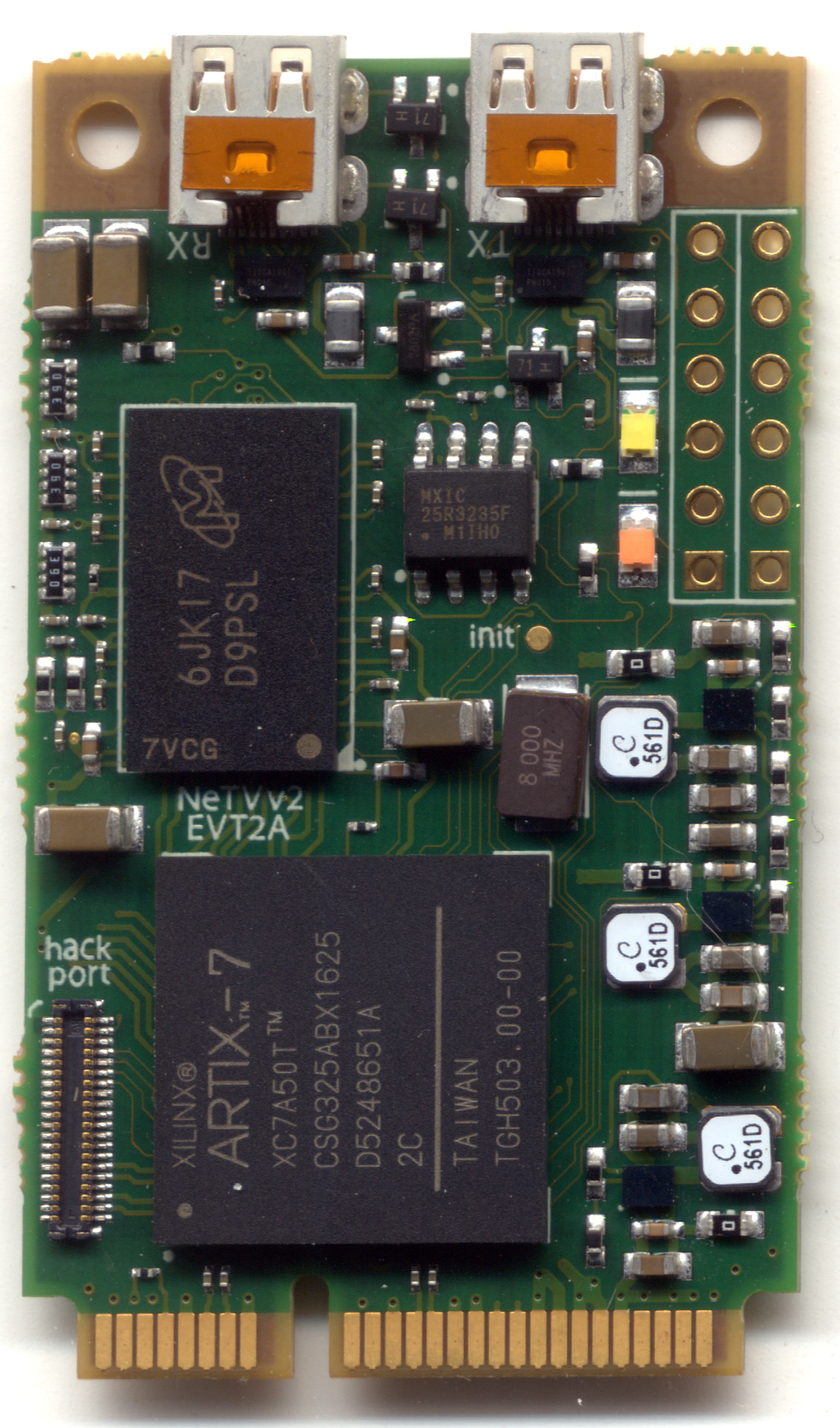
Alphamax LLC now has details of the NeTV2 live, including links to preliminary schematics and PCB source files.
The key features of NeTV2 include:
mPCIE v2.0 (5Gbps x1 lane) add-in card format
Support for full 1080p60 video
Artix-7 FPGA
FPGA “hack port” breaking out 3x spare GTP transceiver pairs
512 MB of DDR3-800 @ 32-bit wide memory for frame buffering
I adopted an add-in card format to allow end users to pick the cost/performance trade-off that suited their application the best. Some users require only a text overlay (NeTV’s original design scenario); but others wanted to blend HD video and 3D graphics, which would require a substantially more powerful and expensive CPU. An add-in card allows users to plug into anything from an economical $60 all-in-one, to a fully loaded gaming machine. The kosagi forum has an open thread for NeTV2 discussion.
As noted previously, we are currently seeking legal clarity on the suite of planned features for the product, including highly requested features such as alpha blending which require access to the descrambled video stream.
I decided to go for three of them since they looked so pretty. They arrived around the beginning of October, just two months after they were originally promised, which is great by Kickstarter standards.
Two small Aluminum ones in different colours, and one large Ti one.
The acid test: first how loud are these. The second point: are these going to ring properly while wet.
Note that the relative volume of the bells is a bit different between the two clips as the microphone placement on my phone and my camera are a bit different.
Comments:
The Cateye and the Incredibell are my standard bells, and they are both plenty loud.
I like the double strike of the Cateye.
If you’re tight for space, the incredibell is smaller and just as loud. It also has the advantage that the azimuthal angle of the striker is adjustable.
I’m afraid that I can’t recommend the small Aluminum version of the Oi. Its size makes it possible to fit in odd places like under a brake lever, but it is not loud enough to be an effective bell. Very pretty, though.
The large Ti Oi bell puts out a sound that I would say is adequate for use.
Bottom line: My impression of the Oi is mixed. They are pretty, but the smaller one is not recommended, at least for use in the hustle and bustle of downtown Toronto.
December 2016: the retail versions of the Knog bells are now in retail shops. I tested the small bell at Hoopdriver Bicycles, and it was louder and more sustained than the ones I have, to the point that it is a decent bike bell.
I can attest from personal experience that the microbarriers described in this article existed in my university days and exist in my life to this day. It's true, in my experience, that "a relatively tiny difference in culture can make a huge difference in access." There are numerous opaque systems and unwritten rule sets. In searching for opportunities, employment and even internships, for example, "successful people are playing an entirely different game. They don’ t flood the job market with ré sumé s, hoping that some employer will grace them with an interview. They network." And even the little things. "Your shoes and belt should match."
But our approach differs. Where J.D. Vance, the author of Hillbilly Elegy, wants to open up this culture of privilege and teach its nuances to those lucky enough to get into the system, I want to make it irrelevant. Widening access to privilege does not eliminate privilege, it entrenches it. We need to eliminate it. That's why I want to see learning and networking available to everyone, not the merely wealthy and their acolytes.
CNET spoke with Craig Federighi after last week's keynote, and one of the questions they ask him is whether there will be a touchscreen Mac (around 2:30 in the video):
Craig Federighi: At Apple we build prototypes around all sorts of ideas. So we certainly explored the topic deeply many years ago and had working models, but we decided it really was a compromise. For a device you hold in your hand like a phone or tablet it is very natural to rest your hand on the tablet and work that way. We think touch is at its best and we wanted to build, and have built, a really deep experience around a multi-touch first user interface. Grafting touch onto something that was fundamentally designed around a precise pointer really compromises the experience.
Those were carefully chosen words by Federighi. He does not say that there won't be a touchscreen Mac, instead he notes that the simple addition or "grafting" on of a touchscreen to the Mac would be a compromise. Importantly, the compromise that he refers to is not one related to ergonomics, but rather the fact that macOS is currently designed around an interaction model driven by a precise pointer.
I agree with Federighi. I certainly wouldn't want to see a Mac with a touchscreen bolted on, with no adjustments to the UI of macOS. But as someone who regularly uses the iPad Pro in a laptop-esque configuration with the Smart Keyboard, I see the value in having a touchscreen on a Mac, provided that there are also UI changes to macOS. I don't expect this any time soon, but I do think it will happen.
The label’s become too big to be useful, and tech could suffer for it.
Quick: What do an auto leasing provider, a condiment company and the producers of a serious TV drama have in common? If your answer is “almost nothing”, then you’re right. If your answer is “they have such similar roles in society that they should be regulated and reported on the same way”, then congratulations—you still believe there’s “tech industry”.
Uber is providing predatory sub-prime leases to its drivers through its subsidiary Xchange. Mayonnaise startup (yes, 🙄) Hampton Creek is under SEC investigation for buying back its own mayo. Amazon is going toe-to-toe with companies like HBO with a prestige series like Transparent. And absurdly, we’re expecting lawmakers, the media and average consumers to understand these wildly different offerings—and countless more ranging from mattresses to medical testing—as part of one single, endlessly complex, industry.
That’s an impossible task, and a bad way to think about technology’s role in society. Perpetuating the myth of a monolithic “tech industry” overtaxes our ability to manage the changes that technology is making to society, and that overload threatens to have increasingly negative impacts.
Once upon a time, it made perfect sense to talk about “the high tech industry” in America — pioneering companies like Intel or Fairchild Semiconductor or IBM or Hewlett Packard made computer processors and related hardware, and most of the companies in Silicon Valley dealt with actual silicon from time to time. These companies offered competing products that shared a market, a set of customers, and sometimes even had employees in common when talent would move from one company to another.
But today, the major players in what’s called the “tech industry” are enormous conglomerates that regularly encompass everything from semiconductor factories to high-end retail stores to Hollywood-style production studios. The upstarts of the business can work on anything from cleaning your laundry to creating drones. There’s no way to put all these different kinds of products and services into any one coherent bucket now that they encompass the entire world of business.
It’s no wonder that those who most closely follow the challenges of today’s media environment feel that “coverage of the tech sector presents one of the most profound accountability challenges in modern journalism” — what journalist could credibly switch from covering Apple’s water consumption at its newest data center to evaluating whether fashionistas will embrace the latest Hermès-branded Apple Watch accessory?
The danger isn’t simply that some blogger won’t know how to review the latest gadgets. Put simply, every industry and every sector of society is powered by technology today, and being transformed by the choices made by technologists. Marc Andreessen famously said that “software is eating the world”, but it’s far more accurate to say that the neoliberal values of software tycoons are eating the world. Peter Thiel is all-in for Donald Trump, who publicly suggested replacing our military’s digital communications with human couriers carrying paper missives—clearly this techie’s top priority is not feeding the planet to the all-consuming software beast.
Similarly, it’s easiest to understand Uber as a machine for converting publicly-planned metropolitan transportation networks into privately-controlled automated dispatch systems; the fact that an app is used to achieve that transition is almost incidental to the overarching goal of owning a market. And what does a company like Uber have in common with a social platform like Pinterest, except that both employ some coders who know how to make iPhone apps? Precious little.
But why is a “tech industry” bad?
“So what?” you ask. Sure, technology companies have become complex conglomerates, but why does it matter what we call the industry overall? The reason is simple: A reductive name for the industry masks an enormous set of social challenges that we need to tackle quickly. Mature industries develop their own regulatory frameworks, their own systems for self-regulation, and their own standards for monitoring transgressions within the industry. Today, tech as an industry is almost completely lacking in all of these areas.
When the financial meltdown happened in 2008, we knew that banks and other financial institutions were part of an industry for which we had created a regulatory and administrative framework, even if that infrastructure was woefully unprepared to handle the task. We can criticize how the SEC responded to the financial crisis, but what would it have looked like if we hadn’t even had an SEC? That’s the situation we may find ourselves in soon as the financial arms of technology companies continue to present themselves as tech rather than finance, even as Uber sets up Xchange to be a new-era GMAC.
When we see a company like Theranos unravel from being a widely-lauded medical technology pioneer to being investigated in a criminal probe for misrepresenting its products, one of the reasons the scam could be perpetuated for so long was because the company, its founder and its investors all shielded themselves under the cultural cover of being a glamorous member of the “tech industry” rather than a prosaic medical supplier.
This also contributes to spreading tech’s well-known shortcomings around inclusion and diversity into new fields. Today, companies described as tech startups are doing everything from making mayonnaise to preparing grilled cheese sandwiches to delivering pizza. But given that companies ranging from AirBNB to Uber have relied on their status as “tech companies” to systematically shirk inconvenient laws in each new city they enter, we can expect that at least one of these food companies entering the market as part of the “tech industry” are going to similarly find the rules around sanitation and inspection too onerous and use their tech status to evade health regulations.
So what’s the answer? The first place to start may be simply be in more precise language about the companies that are shaping our society. Rather than accepting that a company like Facebook, which knows more about our personal lives than any entity that’s ever existed, is simply “tech”, we should talk about it as an information broker, as an agent of government surveillance, as a media publisher, as a producer of unmanned drones, or in any other specific description that will assign appropriate accountability and context to their actions. Should Facebook be regulated like an airline if they eventually develop a fleet of flying aircraft? Maybe! Or maybe not! But we should allow experts in that domain make the determination—and that will only happen if we talk about the company as it is.
Similarly, when we talk about a young company, simply describing it as “a tech startup” is not a meaningful signifier. Every single new company in existence relies on technology, so we must be diligent in calling a mayo company a condiment provider, lest we allow it to end up with “tech industry”-style economics that drive it to absurdities like secret bulk purchasing of aioli.
All it takes is a little discipline in how we communicate. How we talk to each other, to our lawmakers, to the media—each of those little shifts will affect how we think about the impact that tech-enabled companies are having on the world. There’s no doubt that technology itself can have a hugely positive impact. But ensuring that it does may depend on us taking apart the idea that technology is created or sustained by a “tech industry” in the first place.
After a lot of work and negotiations, all assets in Narrative, digital and physical, have been acquired by a group of people from the team of the former company. We have put years of our lives into Narrative and we’re committed to not seeing all the value we have created go away. We want to continue running the service, investigate if it’s possible to restart the production of Narrative Clip 2, and look for funding to achieve all of this.
We’re happy and proud to make as our very first announcement that the Narrative service will NOT shut down today. All the apps and software will stay functional and safe exactly as they have always been. However, in order to achieve this we will need to start charging a small monthly subscription fee for storage. We need to have a sustainable solution that is not depending on external financing to keep running. More information on how this will work is to come as soon as possible.
No data will be deleted on October 31st, but there will be 1-2 days of downtime while it’s being transferred to the new company. There’s a risk of further disruptions the coming weeks while necessary adjustments are made.
We’re financing the transition out of our own pockets and we’re doing this because we’re enthusiastic about Narrative. Unfortunately, it’s not possible for us to assume all the obligations of the former company. There is a small number of customers to the former company that have seen problems with their Clips. We can’t resolve any of those cases today, but we’ll try to find ways to offer repairs or other kinds of help, and hope to be able to provide information about this down the line.
Hopefully you share our great relief that Narrative has been saved! We hope we can pull together a tight community around Narrative that share our enthusiasm. Our commitment is real. If we intended to walk away from Narrative, we would have already done so. Saving Narrative required us to spend a lot of hard work and money. We want to keep developing the product and service, but keep in mind that our resources today are very slim. We can only do this with your friendly help and support.
Seeking to end speculation about whether or not the governor of the BOE would announces an early departure this week, moments ago the BOE issued a statement from Mark Carney, in which the head of the central bank made it clear that he would extend his term until the end of June 2019, putting any speculation about his early resignation to rest.
Governor Mark Carney makes announcement on his term 31 October 2016
In a letter to the Chancellor, published this evening (Monday 31 October), the Governor said he would extend his term to the end of June 2019.
The Governor said:
“I would be honoured to extend my time of service as Governor for an additional year to the end of June 2019. By taking my term in office beyond the expected period of the Article 50 process, this should help contribute to securing an orderly transition to the UK's new relationship with Europe.
It is an honour and a privilege to serve in this important role. I deeply appreciate your support, that of the Prime Minister, and that of colleagues at the Bank, and I look forward to continuing to promote the good of the people of the United Kingdom during this crucial time for the country.”
In his reply, the Chancellor said:
“I am very pleased to hear that you intend to continue as Governor of the Bank of England until the end of June 2019. This will enable you to continue your highly effective leadership of the Bank through a critical period for the British economy as we negotiate our exit from the European Union.”
Wer braucht schon systemübergreifende Schnittstellen, wenn man für alles einen Adapter haben kann? Ich habe mit jedem neuen MacBook in den letzten Jahren auch immer gleich mindestens einen neuen Adapter kaufen müssen. Sollte ich mich irgendwann für den Kauf des jetzt neuen MacBooks mit USB-C entscheiden, wird wohl ein neuer Adapter nicht reichen. Aber Apple hat da so einiges im Angebot, das reinste Adapterparadies. Weil: warum auch einfach, wenn es kompliziert sein kann, oder wie Martin es nennt: Apples am schnellsten wachsende Produktkategorie.
A 25-year-old Markham man has been charged with impaired and distracted driving after the York Regional Police state they found him slumped over the wheel with his phone in his hands “mid-text message” in the middle of traffic.
The man was purportedly found stopped on the Highway 404 off-ramp at Steeles Avenue at 4:30AM on October 30th. After officers attempted to wake him by boxing in the vehicle with their cruisers, the driver then removed his foot from the brake and rolled into one of the cruisers.
14 others in the region were also charged with impaired driving offenses over the Halloween weekend. The police reminded citizens to call 911 if they saw instances of impaired or distracted driving in progress.
Everyone has had this happen before. You launch the Play Store and navigate over to the top listings section, hoping to find an app actually worth downloading. Instead, you’re unfortunately greeted with a variety of apps you’ve never heard of and that when you actually download them, they don’t seem to work properly and instantly ask you for an in-app purchase unlock.
Then you probably wonder to yourself, “why is this in the top listings anyways?”
This is one of the dangers of the open nature of Android’s app store and its relatively lax — at least when compared to Apple’s iOS App Store — review policy. According to Google, however, this issue will quickly become a problem of the past thanks to new efforts to remove apps trying to game the system
In a recent blog post, Google details that while it has always tried to maintain a high level of quality in the Play Store when it comes to app discoverability. It has noticed that some publishers are playing the App Store’s alogirthm system to increase their app’s ranking. Methods of boosting an app’s ranking include generating a significant number of installs via fraudulent methods and posting fake five star reviews reviews. Googel’s post reminds app developers and publishers that utilizing these methods in order to boost an app’s ranking is a violation of Google’s Developer Policy.
To combat this, Google says it’s rolling out new back-end Play Store features that are able to detect when an app is being boosted in an unfair way, though doesn’t detail exactly how it’s going to know when app creators are being dishonest.
“if an install is conducted with the intention to manipulate an app’s placement on Google Play, our systems will detect and filter it. Furthermore, developers who continue to exhibit such behaviors could have their apps taken down from Google Play,” reads a section from the blog post.
It’s unclear how effective Google’s detection methods will be, though given the sometimes disparate state of the Play Store, it will almost certainly play a role in bringing more order to the company’s sometimes confusing app marketplace.
Is obsession with social media metrics a heritable trait?
That’s the fear that led to my latest piece for The Orange Dot, on the growing preoccupation with social media metrics. As I write in that piece,
Thoughtful adults may be able to keep their social media narcissism in check by dialing back their metrics—checking when they see signs that it’s getting out of hand, whether it’s looking at your follower numbers on a daily basis or counting the likes on your latest Facebook post every five minutes. But for young people who are still in the process of developing an individual identity—and who are often subject to tremendous peer pressure—these metrics reinforce the message that external validation is more important than personal integrity, and that peer attention matters more than self-reflection.
Narrative says that it is no longer completely shutting down and that all of its assets, digital and physical, have been acquired by “a group of people from the team of the former company.”
“No data will be deleted on October 31st, but there will be 1-2 days of downtime while it’s being transferred to the new company. There’s a risk of further disruptions the coming weeks while necessary adjustments are made,” said Narrative.
The company says that its service is no longer shutting down and that all apps and software will remain functional. Narriative, however, will soon start charging a small subscription fee.
“We’re financing the transition out of our own pockets and we’re doing this because we’re enthusiastic about Narrative. Unfortunately, it’s not possible for us to assume all the obligations of the former company. There is a small number of customers to the former company that have seen problems with their Clips. We can’t resolve any of those cases today, but we’ll try to find ways to offer repairs or other kinds of help, and hope to be able to provide information about this down the line.”
It’s unclear if Narrative’s new owners plan to start producing more Clips or if the company is working on a successor to the Clip 2.
The glass covering the LG V20’s camera might have a tendency to shatter too easily, according to several reports from users. The issue has come up several times, leading one Redditor to compile a thread of known instances in which the phone’s camera glass shattered under minimal stress.
One particularly interesting instance shows the camera glass shattering after YouTuber Jerry Rig Everything makes a superficial scratch.
Other instances reported include a user who claims they simply set it down on their desk, and one who had been running their flashlight for 30 minutes.
The LG V20 hit the shelves in Canada about three days ago, on October 28th.
Many Nexus 6P owners are having serious battery issues following the upgrade to Android 7.0 Nougat, according to user reports on Reddit,
Users are reporting sudden and unexpected battery drops followed by shut down. One user-created video shows the device dying after taking a few photos at about 50 percent battery life. He then attempts to bring the handset back to life by holding down the power button but ultimately has to resort to plugging the phone into its charger before it will turn on.
The user in the video states he’s using a new Return Merchandise Authorization (RMA) phone. For those unfamiliar with the term, RMA refers to the process of returning a product to the original vendor — in this case Google — rather than the distributor. He also shows viewers that he is using 7.0, not a beta version of the OS.
The video post was highly upvoted on Reddit and received comments such as “Mine literally dropped from 23 percent to zero percent whilst watching the video.”
Updating to Android 7.1.1 might solve the issue, though some commenters have stated that the bug is present there too.
The fundamental problem with most designers of complex systems intended for mass market use is that they decide to hide complexity. They won’t admit it — they’ll deny it even — but it’s because they’re disdainful of their users. They think their users are stupid, so they need to present them with a design for stupid people. If they weren’t stupid they wouldn’t be confused, right?
Gruber is not wrong, but he misses three important phenomena.
Developers are not children. This should be obvious, but a generation of management gurus have insisted – often abetted by designers themselves – that developers are childlike naifs whose enthusiasms must be restrained. This addressed a perceived problem in UI design in the 1980s, one that has been settled for eons everywhere beyond the swamps of the EMACS/vi religious wars, but persists because it feeds the vanity and corporate ambitions of some managers. Developers don’t really believe that users are idiots.
Then again, it’s not unreasonable to believe that users really are stupid. Mass-market software designers can’t talk to all the users; if they did, they wouldn’t have time for design. So lots of experience is simply invisible to designers.
Good experiences are especially invisible. First, when things go right, people smile and get on with their work. If they ever do tell the company about the good experience, management is going to say “thank you” and pocket the credit. Nobody’s going to tell the designers.
Bad experiences sometimes penetrate. Two kinds of voices are especially likely to be heard. First, as we’ve seen in this election, trolls will be heard because being heard is what trolls do. Second, the lonesome and the desperate are likely to get through whatever obstacles the bureaucracy puts in their way. This is a constant that runs through all kinds of software; you can be working on scientific software used exclusively by quantum mechanicians, but even among brilliant physicists you’re going to find some lonely people and some people who've just had everything blow up in their face and intend to blame it on you. So, these are the voices that software designers tend to hear, and in time it’s easy to believe that The Audience is all like that.
A little later, Gruber does get carried away.
If people are confused with a design, the problem is with the design, not with the users.
Sometimes, the design is the problem. Sometimes, it really is the user.
Sometimes, the problem is the problem. Some problems are hard. Long division is, let’s face it, a mess. Quantum mechanics has some nifty moments, but it’s a lot to wrap your head around, too. Kinematics – figuring out how to move a robot arm from here to there – is really hard; it shouldn’t be, but just look how much trouble babies have figuring it out. We can make easy things easy and hard things as simple as we can make them, but that’s all.
Sometimes, software is confusing because the problem is confusing. It’s a mad world.
Early brand twitter is a delightful place. Because the first people posting in the company account will likely be the same people who thought to set it up — people so ebullient and excited about talking to the users that their tone is informal, casual, playful. Certainly was the case for us. Still is.
For almost the first year, only a few hands touched the SlackHQ twitter account. The CEO, founders, early employees: the same people running the company and building the product. It was a small team: all hands on deck. And the tone, reflecting the people, was conversational, slightly off-kilter, playful, and informative. Confident, but self-effacing—helpful, but slightly odd.
As we’ve grown, the number of mentions has exploded from a couple dozen to hundreds (sometimes thousands) every day. But we’ve still tried to maintain the same tone, whoever is tweeting. It’s the place that the Slack voice is the most playful, but it’s also high pressure — which makes it a tricky one to scale.
These aren’t suggestions for other companies necessarily to follow, partly because that would be weird, but mainly because every company has its own voice and values. This is just how we do.
The style guide for our main Twitter handle comes in two parts — the one for the few, and the one for the many. There are a lot of people answering individual questions, offering support, and dealing with feedback, but that requires a slightly different tone (and more scalable version) of the voice we use for tweeting out to the world from SlackHQ. In a later section we’ll get to “how we expand that single voice to a much larger support one” — but we couldn’t go there without going here first. So here we are.
Step one: SlackHQ in the planning
What do we tweet?
We need to be clear about what this account is for, so our outbound tweets (that is, posts we initiate that are not responses to questions or comments) fit into one of the following categories.
Product news
Tips
Announcements
Nonsense
That’s it.
And all in moderation.
With any of these, we always first ask “is this worth tweeting?” Will this impact enough people to make the broadcast worth it? If not, let’s find a better way.
What you’re doing is important
It’s not important because of who started the account, or who has done it before you. And it’s not important because it’s high-profile. And it’s not important because your words are special.
It’s important because the tweets we put out represent the end point for a lot of people’s work, and the starting point for a lot of others. If it’s a feature announcement, then the work of dozens of product managers, user researchers, designers, developers, QA engineers, product marketing managers, and many others have been part of bringing this thing to the point of release. The work of hundreds of Customer Experience agents, account and sales managers, who will be explaining it to people, will start from the moment it’s released.
You’re shining a light on the work of hundreds of our team, and putting it out into the world — you owe it to them to do a good job of it. Or at least spell everything right.
Step two: SlackHQ in the writing
Content is more important than character
People need to understand exactly what you’re trying to tell them more than they need to be impressed with how you’re saying it. Be clear; be concise. If you’re announcing an updated app or a new feature, use #changelog, so people who don’t care about the rest can search for it.
Emoji are far from mandatory
Never ever replace words with emoji. If you add emoji, they should be funny/celebratory. But they’re not required. Look back at our account to a time when we were using them in every tweet and you’ll see why. It’s painful.
Use words that people know
Avoid puns. I know, I’m British, that’s tantamount to storming the palace and throwing my passport at the Queen, but avoid them. Wordplay is slightly different, but particularly avoid puns that require a particular cultural understanding or educational experience to get. Puns make some people feel smart, and others left out. Let’s not do that.
Use words that give people joy
Explore the thesaurus and dig through the dusty corners of your brain to find the words you’ve squirreled away in there for the winter. Or say something plain and simple but allow the music or meter of the words to make it dance in people’s minds as they read it. You don’t have to shock or annoy or provoke; words that are charming are just as disarming when used in an apposite way.
Don’t take words that don’t belong to you, do not use words that could offend
Cultural appropriation is not a good look on a corporation. Also avoid ableist language, or words that could hurt. We’re not going to use words that are a slur in another dialect or language, so ask around if there is any doubt.
It’s ok to sit and watch the bandwagons pass by
And we won’t join in on whatever the current meme is going around Twitter, whether it’s a reference to a current event, or Talk Like a Pirate Day or anything else. It will age badly and make us look like we’re trying to be cool. We don’t care about cool. Doesn’t mean we’re not. Doesn’t mean we are. Either way, we’re not going out of our way to try and be cool.
In fact, it’s ok to sometimes be way way way behind the curve
Sounding like you’ve just tap-danced off a movie lot in 1934 or been coughed up by the cellar of the British Library can be, if used sparingly, SO fetch.
Do the work
Don’t use the first thing you think of. Write it down somewhere, but then write down every joke you think of after it, look at it sideways, flip it — spend 15 minutes, then ask someone else: writers rooms exist for a reason.
Throw ideas around. Or get people to vote on options. But always have a time limit to brainstorms, a vote limit on the best tweet and a power of veto. You cannot write by committee. There can only be one hand holding the pen when it hits the paper.
We will not take ourselves too seriously
And we do not brag. While we’re always proud of the work we do, let’s keep perspective. We’re just making software. Be self-effacing: think of it as our Canadian side coming through.
We always take people who use Slack seriously
We may take ourselves lightly, but people who use Slack? Those people we take seriously. When we’re putting out a new thing, be light about our part in it, but serious about how it can improve people’s working lives.
It’s why we don’t say, “We’ve been working so hard” in announcements. No one cares. Of course we have. So never mind that: this thing we’re telling people about, what does it do for them?! Put the user at the center of every story: even 140 character stories.
But mainly: Don’t overthink it.
Lol. We know, we just reread everything above. Seriously though, you’ll be fine. It’s only Twitter.
Step three: SlackHQ in the tweeting
Check that it’s an appropriate time to tweet
Before you tweet, check the news and check Twitter to see if there are news events that would make it an inappropriate time to tweet. If there are, hold off. Check with the Customer Experience team to make sure there are no known service problems, that you’re not going to be adding to the support load unnecessarily. This is why we don’t schedule tweets — courtesy to our team, and an understanding that we live in uncertain times.
Take responsibility
“You break it, you pay for it.”
We don’t just fire things into the world and walk off — if you’ve written a tweet that’s confusing people or causing a lot of questions and feedback on twitter, be prepared to step in and deal with it, be around the tweeters channel to provide helpful phrasing, or follow up on Twitter with a clarification.
We have a conversational tone, so be prepared to be conversational
Be involved in the conversation — follow the replies to whatever it is that you’ve tweeted out. If you see people replying to something you tweeted, don’t just reply to them in the channel that feeds all our tweets into Slack. They can’t hear you. Go and say it to them on Twitter.
The serious business of nonsense
SlackHQ isn’t just about announcements and serious news. The real humans building Slack like to talk to the real humans using Slack sometimes. Person to person. Those are important moments too.
So occasionally tweet a word. Or a random collection of words that sound good, or encouraging. Or a question, or an invitation to talk. And then if people want to talk to us, we will. It’s like walking past someone in the street and telling them their hair looks good today. You don’t want anything, you’re not expecting anything, you’re just being human.
Because it’s enjoyable to do so. People are good. Talk to them.
Anyone who has ever picked up the baton for tweeting as SlackHQ has a part to play in this last thing. And in the second part of this, we’ll go deeper into that half of the Twitter voice — the support voice. How the tone is different, and how the voice is scaled.
What has precipitated this great outpouring of angst (as I’m sure you’ve seen similararticlesaround)? The Apple event last week launched their newest generation of MacBook Pros. As well as hinting which parts of the Mac line up would perhaps be not much longer for this world, by virtue of their lack of updates.
I have the mid-2012 MacBook Air 11", beefed up with the 2Ghz i7 processor. That makes my laptop almost 4 and a half years old. This is the longest I have gone without upgrading my main machine. This is also my favourite machine, ever. It’s small, it’s light, it’s powerful.
…the 11-inch will join my other past computer loves — the hinge-arm iMac, my PowerBook Duo, and the original Bondi iMac — in my memories and Photos library as we move forward into the next era of portable computing
That last bit: the next era of portable computing, is interesting.
To make iOS apps, you need a Mac. To make #VR, you need Windows.
Do I need a new laptop? No, not right now. But I am worried about how much longer my 4.5 year old machine will last. The battery doesn’t last as long as it used to. The keys are wearing thin. I’ve replaced the power adapter once already. And, I have some incentives related to taxes to buy a machine before the end of the year.
Note: I’m based behind the #maplesyrupcurtain way up in Canada. To keep things simple, I’ve actually kept all pricing in $USD.
My Options for Buying a MacBook
I want a meat-grinder CPU to make photo-editing, and my occasional forays into video, fast. I want a modern video card so game-playing is cool when I feel like it. I want ludicrously excessive amounts of memory. — Tim Bray, After Mac?
I don’t need the things Tim lists from my personal laptop. I am freelance consulting, so I don’t have a second “work machine”, but the lightweight coding and other tasks I do need a professional desktop operating system environment, but they don’t need a lot of oomph.
I would like to play (more) games, since it is my one computer, but realistically none of the MacBooks have powerful enough graphic cards for modern games, even when booted into Windows. The MacBook Air played (for instance) both Skyrim and Diablo III.
When buying a new machine, I do want longevity, and buying a powerful machine is one of the ways to get that (which is why I usually bump the processor and/or memory, especially when both are non-upgradeable). As well, I do want to experiment with new interface elements like the TouchBar (the non-TouchBar Pro makes zero sense to me).
MacBook Air 13"
There are no 11" machines versions any more. This basically means re-buying the same machine I already have, except bigger.
13" version with 2.2Ghz i7 and 256GB drive is $1349 (Apple Store).
MacBook 12"
The MacBook seems to be the machine that Apple wants to replace the MacBook Air with. It’s smaller, thinner, and simpler than the Pro series.
higher end MacBook 12” 1.2Ghz m5 retails for $1599 (Apple Store).
MacBook Pro 13" TouchBar
Then the question is, get the most powerful model (more expensive, but potentially long life) or a more modest version (cheaper, but potentially needs to get replaced sooner).
I think a lot of us who have been long time members of the Mac ecosystem have had it easy. Buy a new machine when your old one breaks, and/or buy one shortly after a new release to maximize the longevity of your purchase. Perhaps with a dose of family hand-me-downs.
And it’s been predicated on the concept of committing to macOS. In discussing this with other professional desktop operating system users, there is of course the main point: the productivity win of a stable, graphical operating system, with a full UNIX system underneath. I thought briefly about Windows driver issues — and the general “rot” of a Windows install that I’ve always experienced — and I shivered.
But let’s give this some serious thought. Yes, I have an iPhone, and iMessage is great, but there are many messaging platforms to choose from that also happen to be cross-platform. And generally, I don’t use any other iPhone + macOS features. So what do I use?
Dropbox syncs my working files. I have longer term archives with Amazon and with Microsoft OneDrive.
Google powers my email and calendaring sync between devices. I recently switched reminder & contact syncing to Fruux.
So it’s feasible to think beyond macOS. But why? Because we don’t actually think we’re going to be well served by the company that makes the operating system and the hardware that we rely on. We’re committed to what looks like a niche product:
The thing is, the Mac desktop is starting to look like a niche product now. And worse, one driven purely by aesthetics rather than functionality; performance and ability to deliver have been tossed out the window in favor of gimmicks. — Rui Carmo, On Apple and Niche Products
Rui is actually commenting on Chuqui’s excellent post, which is much more realistic about the state of things. Chuqui does do photo editing and a 13" MBPro does make sense for him. But he also points out:
Apple’s unwillingness to admit the Mac product line is a cluster and their users and supporters need some re-assurance that it’s being fixed. — Chuqui
So now I’m back to defining what I need out of a computer that is beyond the Mac.
Finding a small & beefy laptop
The MacBook Air 11" is small. It’s not cheap because it’s a Mac. I wouldn’t quite call it beefy, but of course miniaturizing the components drives the cost up versus a 15" laptop (for example).
I need something that can run a professional desktop-class operating system and has a good keyboard. Nice to have would be a powerful graphics card for games (and VR?). Realistically, the very first Windows laptops that support VR are just coming out.
I initially started searching Windows Ultrabooks as being the “small & beefy” option I was after. After some clicking around, the obvious thing to do is to just go ask The Wirecutter, and they tell you the Best Windows Ultrabook:
After more than 85 hours of research and testing since 2015, we found that the Dell XPS 13 is the best Windows ultrabook for most people. In addition to a big, beautiful screen, it has the longest battery life of any Windows ultrabook, a great keyboard, and a solid trackpad, all in the smallest, lightest, best-designed package of the ultrabooks we tested.
HP updated our cheaper, convertible laptop pick, the Spectre x360, with Intel’s new Kaby Lake processors, as well as with an edge-to-edge display and a thin, light design. Unlike with the Dell XPS 13 or the 13-inch HP Spectre, this update is substantial enough that we’re going to test before recommending whether you should purchase the model with the newer processors. We’ve added the refreshed Spectre x360 to the What to look forward to section below, and we’ve called it in for testing.
Dell XPS 13
There are a bunch listed, but they’re actually super annoying to configure. I don’t think I want a full touch screen — it’s more expensive, and I just don’t believe in poking at a screen with my finger.
i5 up to 3.1Ghz* with 8GB Memory and 256GB drive $1099 (Dell.com)
i7 up to 3.5Ghz* with 8GB Memory and 256GB drive $1299 (Dell.com)
*these are the burst numbers, and with the Mac I used the base numbers
HP Spectre x360
This was the original top recommendation by The Wirecutter. It actually has a great option selector. In fact, so great that it deserves a screenshot:
I mentioned under the Dell that I didn’t need a touch screen. Well, these are convertibles — they flip around into a tablet mode where you can use them just with the touch interface, which seems to make more sense.
These are all spec’d with i7 chips. The i5s are only about $100 less.
7th gen i7 spectre laptop (no touch), 8GB memory, 256GB drive $1249 (HP Store)
The Ultrabook category doesn’t really cut it when it comes to graphics performance. So I definitely won’t be doing much in the way of gaming or VR on those machines. Although, the graphics cards and processor are much faster than what I’d get on an equivalently priced Mac. But this kind of led me right back to thinking about what kind of laptop to even look for.
I mean, buying a 13" i7 MacBook Air is right around the same price, at $1349.
At this point, I’m completely down the rabbit hole. There are super cheap 11" machines (as in $249 for 4GB memory & a 32GB hard drive on a Windows laptop), there are cheap budget gaming laptops that are 15". There are Chromebooks.
Chromebooks
Wait, Chromebooks? I got a free Chromebook via Google I/O way back in 2011 and found it really slow. I did find it an interesting Linux machine.
I’m not one prone to knee-jerk reactions, but I’m also not one to sit about idly without considering alternatives. So the first thing I did after the Applekeynote was to download a copy of Elementary and burn it to an SD card.
An hour or so later, after checking that my Chromebook would work OK with it, I installed from the live image to the SSD and began the process of figuring out whether, three years after I first tried it, Elementary is finally good enough for me as a development environment.
Why a Chromebook? That’s a good question. Supported operating system where you’re not paying for Windows. And because it’s built on ChromeOS, compatible with other Linux distributions (Here’s the ElementaryOS one click install script).
Chromebooks are about to get more exciting, though, with new sensors and touchscreens to help them run Android apps, so we expect to update this guide again in a few months with a bunch of new stuff.
There is a very wide variety of Chromebooks. I got briefly excited when I saw the 11" ones ($200 — $300) but then looked closer and found them really underpowered. With Intel m3 processors (aka like the MacBook), i3, or i5 processors, the pricing is more like $400 — $800.
And, I don’t think I could use just ChromeOS (not a professional desktop-class operating system!), which would mean installing Linux. I’m skipping pointing out specific Chromebook configs and prices for this reason.
Linux Laptops
This could be a very broad category, since you can install Linux on lots of things. In fact, it would be a good thing to do anyway on the Windows Ultrabooks that I listed earlier.
So, where does one buy a Linux laptop? Well, I’ve been wrestling with this whole to Mac or not to Mac thing on Twitter for the past couple of days, and Peter Hebert pointed me at System76.
I’m sure there many other Linux laptop vendors, but I dug into System76 a bit based on the recommendation. They make laptops ranging in size from 14" — 17". Since I want small, I focused just on the 14" Lemur.
There are all sorts of other options (yay configurability!). For the above specs, I opted for 16GB of memory because it was only +$80 versus 8GB, and picked the +$20 faster WiFi. You can also pick a PCIe SSD, a second hard drive, or even go up to 32GB of memory.
Other Choices
Yes, there still are other choices!
Superbook
Pointed out to me by Campbell Macdonald, the Superbook is an interesting direction where your Android smartphone is connected to a laptop “shell”. It powers the operating system but the accessory has the interface of a large screen and a full keyboard and trackpad.
I don’t have an Android smartphone, so this becomes less interesting. Can Android alone by a professional desktop-class operating system? Not today. And yes, that phrase is an entire other blog post I need to write.
Razer Blade Stealth + Core
One of the first Windows laptops that showed up as interesting (before I got horribly confused and just trusted The Wirecutter) was the Razer series.
I know Razer for making gaming accessories and laptops, some of them gigantic powerful beasts.
Also of interest is the Thunderbolt 3 Razer Core, which is an external graphics card enclosure. It’s interesting to see that these latest USB-C/Thunderbolt connections are now fast enough that pieces of the computer can start migrating out of the main enclosure. This, of course, fixes any concerns about laptops not having enough graphics power, while still maintaining their portability.
Conclusion
My best bet is to buy a future Mac that’s aimed at people like me. Which requires that Apple wants to build one; they don’t at the moment, but maybe they will again before this box I’m typing on runs out of gas. — Tim Bray, After Mac?
I agree with Tim. Does the machine I’m on have another 6 or 12 months left in it? I hope it does. A 13" MacBook Pro TouchBar is $700 — $1200 more expensive than a Windows PC that is more powerful.
Like Rui, I feel like I want to have a Plan B. And I think I need to investigate a Plan B that isn’t Windows. Windows is an easy choice in many ways. I can get a Dell XPS 13" and be done.
Apple has an uninspiring hardware refresh and I’m looking to sink some time into investigating “Linux on the Desktop”.
Well, 2016, you’ve been full of wackiness so far, why should you stop now?
There are a ton of articles flooding out about what people think of Apple’s latest machines, or what their focus on mass market computing means. I’d be interested in hearing what your current machine is, what apps or use cases keep you on the Mac (or drive you from it, in the case of VR!).
It's the sort of issue that tends to turn out poorly in a free market environment: people prefer bot assistants that have female voices, and a significant number of users want their bots to behave in a subservient fashion. So these bots "must now suffer the indignities unethical bosses inflict on their human assistants, especially sexual harassment." You might say, "So what? They're bots." Yes, but if they're representative of women to the user, they're more than just bots. They become part of the way the user interacts with women generally. Anyhow, so far, bot-makers are trying to take the responsible route. For example, "Kasisto designed its bot to avoid demure or deferential responses when confronting sexual innuendo, or inappropriate personal questions such as asking Kai out on a date." And Microsoft's Deborah Harrison says "We wanted to be really careful that Cortana... is not subservient in a way that sets up a dynamic that we didn’ t want to perpetuate socially."
When Apple released iOS 10, the latest system software for the iPhone/iPad, it made a big deal out of the major features, like a redesigned Music app and contextual predictions in autocorrect.
But Apple’s engineer elves worked for a year to overhaul iOS 10, and they’ve planted lots of hidden gems.
Today, I’m happy to present another of the best iOS 10 features that Apple forgot to mention.
The tiny camera icon in the lower-right corner of the Lock screen—for quick access to the Camera app—is gone.
In iOS 10, getting to the point of taking a photo is even faster.
Click the Home button to wake the phone—and then swipe left anywhere on the screen.



 , to a fully loaded gaming machine. The






 Zero Hedge.


 Das Kraftfuttermischwerk.