Shared posts

04 Jan 20:48

That City Walk Can Kill You in “The Pedestrian Death Capital of Canada”

mkalus shared this story from Rolandt shared items on The Old Reader (RSS).

5f12ff_7dbfaa6573734e26872738535b4338c2mv2

The statistics have just been released that there were 11 murders in the City of Vancouver in 2016.  The 11 murders did not include the 11 pedestrians who died by being crashed into by vehicles on city streets. And some sobering statistics for  Metro Vancouver-“the coroners’ research found that 40 per cent of pedestrians killed in Greater Vancouver were struck at intersections and in crosswalks. Of those killed in crosswalks, two-thirds were crossing while the light was green”.

Concerned citizens nationally note that somehow we view the death of walkers  by cars as an inevitable side effect of motordom, an unavoidable collateral to the convenience of the car. Indeed one of the rationales for driverless vehicle technology is that less pedestrians will be maimed and die.

Torontonians call this carnage “road violence”, a term first used when the car started to take over public streets in the early part of the 20th century. Earlier in that century cars in Paris were even regulated to only go the speed of a walker, to ensure that pedestrians had a chance. Vancouver pedestrians are dying by vehicle crashes at twice the rate per capita of Toronto, where one person is injured every four hours, and over 44 pedestrians were killed in 2016. But in Vancouver there is not the outrage, not the insistence that we look clearly at the four items that can ameliorate this awful paradigm-visibility, driver behaviour, speed and road design. We don’t have a  city councillor or mayor  that is taking this task on, and many people deride the obvious statement that reflectivity is very important for pedestrians in our low light winters. Wearing reflective items markedly decreased pedestrian deaths in Scandinavia.

We need political will to change driver behaviour, speed,and road design in Vancouver. Visibility? Pedestrians can assist with this piece. Noted journalist Daphne Bramham has written in the Vancouver Sun that  “At least half a dozen times since the rains have come, I’ve been startled by pedestrians — dressed all in black — darting across the street in the middle of the block or against a red light…Sure, it’s fashionable and comfortable to wear black. But it’s also bloody risky, especially on dark, rainy Vancouver nights.

“There is data showing that Vancouver (closely followed by Surrey) is the pedestrian death capital of Canada. During this past, bleak, rainy October, twice as many B.C. pedestrians died as were killed in the six previous years. Ten pedestrians died in five Lower Mainland communities, which brought the provincial death toll for 2016 to 47. Usually, January is usually the worst month. Data for 2010 to 2015 collected by the B.C. Coroners Service shows that, on average, 7.4 pedestrians die every January. In November, the average is 7.2, and in December, 6.3.”  And in Tsawwassen, one of those lower mainland communities, two seniors were mowed down and killed on 56th Street in two separate incidents. They were  in a marked crosswalked intersection killed  by cars making left turns.And in the Lower Mainland a disproportionate number of those killed by vehicle crashes are seniors.

Daphne also noted that “A good and caring friend gave me some reflective bands to wear. Yet even though I knew I was safer, I felt foolish wearing them”. That is the work that the Walk and Be Seen Project at Kitsilano Neighbourhood House is undertaking with seniors to change how pedestrians feel about using reflective items in our rainy winters.

Mountain Equipment Co-op (MEC) makes a universal reflective sash that can be used by anyone, and there are textiles, sprays and even reflective wool that can be knitted. We need to insist that winter clothes have reflectivity and are not all black as is the current style. Until we can change the paradigm with the car, being visible at night  is one thing that pedestrians can do, as well as contacting their Metro Vancouver Mayors and City Councillors and demanding that pedestrian safety be made a priority. It is a matter of life or death.

pedestrian-accident


04 Jan 20:47

Meiji 100 Years

by Jean Snow
mkalus shared this story from Jean Snow [.net].

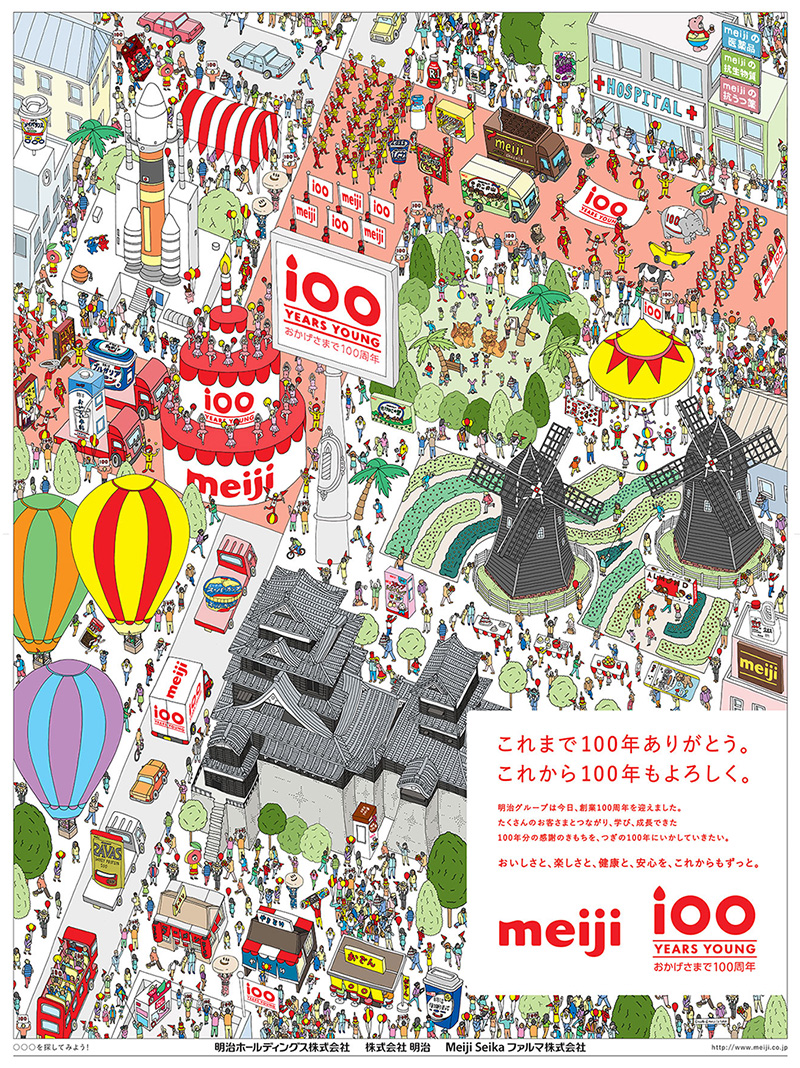
Andrew Joyce‘s biggest project in 2016 was a massive work produced for Meiji’s 100th anniversary, representing a parade that travels the length of Japan, featuring Meiji’s products. This post covers all of the images produced, which were printed in newspapers, and formed a mural at Shibuya station.

04 Jan 20:47

HERE – Pole position.

by windsorr

Reply to this post

RFM AvatarSmall


HERE is closing the gap to Google with the Chinese and Intel joining up. 

  • HERE gets one over on Google by filling the biggest hole in its portfolio with the formation of a strategic partnership with NavInfo to provide maps and services into the Chinese market.
  • It has also announced a key partnership with Tencent which, together with GIC (Singapore sovereign wealth fund) and NavInfo, will become 10% shareholders in HERE.
  • HERE has also announced that Intel will become a 15% shareholder
  • Details include:
    • First: a 50/50 joint venture with NavInfo to supply maps and services into mainland China.
    • I see this relationship as NavInfo having the data and HERE having the software and services to bring it to life in the Chinese market.
    • This will begin with the HERE Auto SDK for in car services and then continuing into HD maps, autonomous driving and advanced location based services.
    • I suspect that foreign car makers selling their models in China will be the first customers but it to be successful the local makers need to also be won over.
    • This is a major challenge to Baidu which uses NavInfo data in its map which has helped it to become by far the leader at home in all things to do with location.
    • It is also a big challenge to Alibaba which owns AutoNavi, the mapping company that supplies much of the Chinese auto industry as well as its map of China to Google.
    • Second: Tencent looks set to use HERE’s location platform and its map in all areas of its ecosystem both in and outside of China.
    • This is HERE’s second win of a major ecosystem which, combined with Facebook, gives it the world’s two largest ecosystems by number of users.
    • However, both of these ecosystems are very immature but should they successfully execute their strategies, then HERE will find itself as the leading provider of location globally.
    • Third: NavInfo, Tencent and GIC will jointly acquire a 10% stake in HERE with the three existing shareholders (Audi, BMW and Daimler) correspondingly reducing their shareholdings.
    • Fourth: HERE will work with Intel to ensure that all of HERE’s systems are optimised to run on Intel’s chips which should provide Intel with a good boost to getting its silicon more deeply embedded in the car.
    • Having Intel as a shareholder will provide HERE with a big boost to its credibility in its objective to become the pre-eminent supplier of global location.
  • These announcements are a major step forward for HERE as it has fixed its previously blank spot in China as well as added another major ecosystem and the global silicon leader to its stable.
  • Furthermore, this will increase and enrich the data that is available to HERE to train its algorithms which should help it to make its services smarter and richer than those of its competitors.
  • This will also help HERE close the gap on Google which has an excellent map in China (from Autonavi) but which is effectively useless as it does not work when the user is in China without a VPN.
  • I suspect that data from Tencent and NavInfo will be used to create points of interest, thereby enriching the Chinese map.
  • This is an area where HERE has really struggled to keep up with Google historically.
  • I see the risk of the China transaction lying in the regulatory approvals.
  • Both the j.v. with NavInfo and the co-operation with Tencent require Chinese regulatory approval which may not be as straightforward as it would seem.
  • This is because HERE is a foreign company whose venture with NavInfo is a significant challenge to two of the homegrown ecosystems Baidu and Alibaba.
  • China has a history of making it difficult for non-Chinese companies to compete in its home market where the foreign company threatens to take share from locals.
  • The one exception is Apple, but I have long believed that Apple has succeeded in China by taking share from Samsung rather than any of the local companies and hence it has represented no real threat.
  • Hence, I think that HERE needs to tread carefully and show that in China, it is its local partners (Tencent and NavInfo) that will derive the most benefit from working with HERE.
  • Should these announcements win regulatory approval then HERE will have filled the biggest hole in its global coverage as well as moved into pole position to become the biggest supplier of global location to the digital ecosystems.
  • Just Japan remains as a blank spot.


04 Jan 20:47

Google Posts Android January Security Bulletin; Releases OTA and Factory Images for Pixel and Nexus Devices

by Rajesh Pandey
Google today posted the January 2017 Security Bulletin for Android whilst also uploading the factory images and OTA files for its Pixel and Nexus devices. The latest build of Android 7.1.1 featuring the January security patch carries the build number NMF26U/V for the Pixels. Continue reading →
04 Jan 20:46

Start With The Fewest Possible Restrictions

by Richard Millington

If gratitude, recognition, and power are the engine, then rules, restrictions, and instructions are the brakes.

People want to feel creative, they want to have autonomy, they want to feel good about what they’re doing. They want to build relationships with people like them.

Anything that you do to satisfy these needs will increase their motivation, anything that stops this will damage their motivation.

Sure, you might not be able to get every single person eager to help do exactly what they want. But be aware every restriction loses people and reduces their motivation to help you.

As you grow, the challenge is to find and manage the balance between the two.

The secret is, to begin with very few restrictions and add them as needed until you find the balance – not the other way round.

04 Jan 20:46

Chuq on Apple in 2016

Chuq Von Rospach: Apple’s 2016 in review:

The whole post is really good, and section on the Mac Pro is spot on:

"It’s been over a thousand days since this product has seen an update. As Apple’s high end flagship, this is unconscionable. It shows a lack of respect for its high end power users that have depended on it."

"But here’s the problem: in retrospect, what they built was a device based around their own ego needs of proving their critics wrong, not a device that served the purposes of their power users. It’s not configurable, it’s not upgradeable, it’s not expandable: It’s pretty, and full of (for 2013) innovative hardware design, but is that really what Apple’s power users needed?"

I sold my Mac Pro early last year. It was a fun machine for a small period of time, but it sooo wasn't worth the money I spent on it. I really miss the previous generation of Mac Pros.

Via @benthompson

04 Jan 04:29

I Wake Up And Everything’s Wrong

by Stephen McNulty

Rihanna - Work

Part 1: Work, Work, Work, Work, Work, Work

Running short on money and in desperate need of luxuries like health insurance, food, and booze I scoured the Internet for part time jobs. My primary source of income, as a dissertation fellow, pays a small stipend (nowhere near enough to live on in any city, much less a major one) and affords no benefits. And so, pockets empty, I began my search. My first stop was H-Net, though I wasn’t holding out much hope for a well-paid, part-time, quick-hire. After about 5 minutes I gave up and transitioned to Idealist and Indeed, looking for any jobs that might be intellectually stimulating, somewhat ethical, or at least tangentially related to my interests. Forty-five minutes later I was depressed on Craigslist.

From a young age we are taught to think in relation to work. We are asked what our aspirations are in the form of what we want to be when we grow up. Primary and secondary school are meant to shape those desires into some form of productive identity. College is supposed to give you the precision to master a particular subset of knowledge, enshrined in the diploma. And graduate school is for when you discover that all of your previous education has been a resounding failure, either because you are somehow still not qualified for any job or you simply have no idea what else to do. Of course this also carries with it the gross inflation of an already substantial debt load further skyward, but you think that debt is useful if it gets you somewhere.

In these things, education aims constantly towards something, a trajectory meant to culminate in an effective product. It also holds a promise, that by becoming a particular kind of person, by surviving a decades-long educatory gauntlet you are rewarded with financial security and care (health benefits especially in the U.S.). In the 21st century, for those of at least moderate privilege anyway, however, work is defined not simply by safety and security, but also as an expression of one’s fundamental identity. In looking for the ideal job, we seek to be an ideal representation of ourselves. Contemporary capital has thus made our relation to work fundamental to our being. If I become this, then I will be a particular kind of person, and I will be protected and safe. Unfortunately, however, in order for that ideal to be perpetuated, one still has to be able to get that job.

So what happens when there is no ideal job to be had? That realization, though far from being a majority opinion, is prevalent. The façade of American dream politics is being recognized by a growing number of millennials with few prospects and fewer social structures to help them.

A brief aside: This is not some nostalgia piece on how there was a time when people had endless opportunities and their relation to work was utopian. People work because under neoliberal capital they have to, as they have always had to under all forms of capital. Most don’t do something they enjoy. The very framework of capital is built on hierarchy and exploitation, even if it is not readily seen. Nor is this an attempt to flatten precarity under the universal category of work. Race, class (not the same as work), gender, sexuality, ability, citizenship, and religion make the intersectional terrain of work topographically diverse.

The lack of ideal work, across the board, however, is emblematic of our time, but it is a symptom, not a cause. It is a symptom of the toxic relation we share to work, how it defines us, shackles us, and enlists our help in perpetuating a job as a de facto necessity when more than enough wealth exists to provide adequate care for the population. In short, it is an act of perverse alchemy that heralds work as both an enduring necessity and a category of pure economy. And when work is described solely in its relation to economy, we are only offered economic solutions to its problems. The answer becomes a deification of unemployment rates rather than an assessment of the ethical implications of being a worker; a measure of the stock exchange instead of an ecological look at exploitation for profit.

Work, therefore, is an identarian vector that informs more than your economic status, it carries with it a whole host of political and ethical ideals, a constellation of material and ideological realities implicit to contemporary capital. So in a time of widespread economic turmoil, despite rose-tinted stock exchange indices and unemployment numbers, what kind of work are we doing?


Part 2: Flexible, Mobile, Fixed

Like me, a lot of people find themselves needing multiple jobs. And in scrolling through pages of craigslist job ads one particular kind of work seemed more prevalent than the rest. Benignly referred to as part of the ‘sharing’ or gig economy (and more accurately named here as access economy), services offered by companies like Uber, Postmates, Amazon Flex, and others, are distributed, yet individuated service networks. Each of these companies offers a technological infrastructure to act as middlemen between potential labor and potential clients. More than this, each relies on a mutually constitutive tandem of mobility and fixity to secure their ‘employees’ as incredibly precarious subjects.

It is no accident that Uber has become the prototypical model of an access economy company. Besides being backed by serious investor capital, it was an early proponent of utilizing the near-ubiquity of digital access to offer potential employees local, part-time, employment. Conveniently coinciding with the financial collapse of 2008, Uber provided a means for financially struggling people to collect some much needed cash, without the pesky need to provide benefits, the possibility for unionization, or even actual employment (Uber drivers are independent contractors, not actual employees). What makes this possible for companies like Uber and others is both a long lineage of eroding employee rights, one that dates to well before the smartphone age, and an ecosystem that balances the tension between mobility and fixation.

If anyone reading this has been an employee independent contractor for Uber, Postmates, Amazon Flex, or Wag (just a small sampling of the tons more that can be found here) you know how these apps work. But for anyone who doesn’t here is the process. Once you have been hired you open your app and wait…Depending on the time of day, how busy your given area is, or how willing you are to travel, you might spend a lot of time waiting. But when an opportunity comes up you are put into direct competition with other contractors attempting to work as well. This has several implications, the first being that you are made antagonistic to your fellow contractors and the second being that you have to be constantly affixed to your device. Since their inception, many have decried the constant access that smartphones (and their less advanced palm pilot/blackberry/cell phone antecedents) provide, making you constantly available for work interactions. Uber and others take this further, making constant attention to one’s device a core aspect of the job itself. Once you have (possibly) edged out the competition and gotten a fare/walk/delivery, the second part of the job is enacted, work as body in motion.

What a lot of think pieces on access economy jobs seem to omit amidst their constant attentiveness to technology and infrastructure are actual working bodies, what they are doing and what the implications of those actions are. If the archetypal worker of the late twentieth century was the office drone, trapped in a cubicle, and irresolutely affixed to their computer screen, the past several years have given rise to a new species, the data drone. The data drone is both constantly fixed and constantly mobile, sutured to their smartphone and delivering, walking, cleaning, or driving. Moreover, with the ‘help’ of their augmented technologies the data drone is solitude rather than meek solidarity, they have no water cooler, no means of employee-to-employee communication. They are beholden to multiple vectors of data aggregation including customer feedback, location tracking, built in time stamping, and are in many cases building the infrastructure for their own obsolescence. They also never know when the next job will come, if ever. In short, the data drone is itself an object of perpetual circulation. These hybrid drives of perpetual fixity/mobility evidence the primary aspect of the data drone, their precarity.

Despite this, the data drone is nevertheless a privileged subject, a referent to a much older (yet still very present) employment phenomenon, the migrant worker. A data drone needs a driver’s license, a smartphone, and citizenship. Migrant workers often don’t have access to these things. To this, in 2008 (a year before Uber came into being) Alex Rivera’s dystopian film Sleep Dealer envisions a future where migrant workers can only enter the U.S. virtually to do work. Rivera’s insight into the amalgam of exploited human and technology is to recognize the long-standing site of human as technology for profit. The maquiladora is not some faraway invention of science fiction, it is here today. Moreover, people have been standing and waiting for the possibility of a job for which they will have to be in constant motion for a long time. The genealogy of mobility and labor goes back even further than this in the United States. The U.S. was built through a series of systemic violences to the bodies of those forcibly extracted from Africa, to the indigenous peoples of the Americas continually compressed and compartmentalized, and to migrants circulating to find work and escape persecution. So when we talk about mobility and its relation to technology it is important to contextualize.

In sum, work is always about competition, contemporary technology has simply been mobilized in a way that makes this easier. The technology itself is benign. It could just as easily be used for anti-capitalist purposes, to crowdsource solidarity rather than competition. What Uber and others have figured out, however, is that many citizens are in situations dire enough to accept a position without almost any of the benefits that citizenship (read also: white, cis-male, ableness) at one point afforded. What is particularly appalling then about the state of things, is that it has taken the precarity of those once-(and still to an extent)privileged subjects for the media at large to cry foul. Insecurity, alienation, and poverty make it easier to exploit people and to misdirect who is at fault. To recognize a shared, yet substantively gradated and diverse, precarity is the first step towards combatting the hegemonic oppression of work. To be mindful of these things is to ensure that going forward we do not remake the same mistakes of the past.


Stephen is a PhD candidate in American Studies at Rutgers University-Newark where he advocates for ethics and ontology beyond the human through analyses of media, science, and culture. He can be found on Twitter @mcnultyenator

04 Jan 04:28

That City Walk Can Kill You in “The Pedestrian Death Capital of Canada”

by Sandy James Planner

5f12ff_7dbfaa6573734e26872738535b4338c2mv2

The statistics have just been released that there were 11 murders in the City of Vancouver in 2016.  The 11 murders did not include the 11 pedestrians who died by being crashed into by vehicles on city streets. And some sobering statistics for  Metro Vancouver-“the coroners’ research found that 40 per cent of pedestrians killed in Greater Vancouver were struck at intersections and in crosswalks. Of those killed in crosswalks, two-thirds were crossing while the light was green”.

Concerned citizens nationally note that somehow we view the death of walkers  by cars as an inevitable side effect of motordom, an unavoidable collateral to the convenience of the car. Indeed one of the rationales for driverless vehicle technology is that less pedestrians will be maimed and die.

Torontonians call this carnage “road violence”, a term first used when the car started to take over public streets in the early part of the 20th century. Earlier in that century cars in Paris were even regulated to only go the speed of a walker, to ensure that pedestrians had a chance. Vancouver pedestrians are dying by vehicle crashes at twice the rate per capita of Toronto, where one person is injured every four hours, and over 44 pedestrians were killed in 2016. But in Vancouver there is not the outrage, not the insistence that we look clearly at the four items that can ameliorate this awful paradigm-visibility, driver behaviour, speed and road design. We don’t have a  city councillor or mayor  that is taking this task on, and many people deride the obvious statement that reflectivity is very important for pedestrians in our low light winters. Wearing reflective items markedly decreased pedestrian deaths in Scandinavia.

We need political will to change driver behaviour, speed,and road design in Vancouver. Visibility? Pedestrians can assist with this piece. Noted journalist Daphne Bramham has written in the Vancouver Sun that  “At least half a dozen times since the rains have come, I’ve been startled by pedestrians — dressed all in black — darting across the street in the middle of the block or against a red light…Sure, it’s fashionable and comfortable to wear black. But it’s also bloody risky, especially on dark, rainy Vancouver nights.

“There is data showing that Vancouver (closely followed by Surrey) is the pedestrian death capital of Canada. During this past, bleak, rainy October, twice as many B.C. pedestrians died as were killed in the six previous years. Ten pedestrians died in five Lower Mainland communities, which brought the provincial death toll for 2016 to 47. Usually, January is usually the worst month. Data for 2010 to 2015 collected by the B.C. Coroners Service shows that, on average, 7.4 pedestrians die every January. In November, the average is 7.2, and in December, 6.3.”  And in Tsawwassen, one of those lower mainland communities, two seniors were mowed down and killed on 56th Street in two separate incidents. They were  in a marked crosswalked intersection killed  by cars making left turns.And in the Lower Mainland a disproportionate number of those killed by vehicle crashes are seniors.

Daphne also noted that “A good and caring friend gave me some reflective bands to wear. Yet even though I knew I was safer, I felt foolish wearing them”. That is the work that the Walk and Be Seen Project at Kitsilano Neighbourhood House is undertaking with seniors to change how pedestrians feel about using reflective items in our rainy winters.

Mountain Equipment Co-op (MEC) makes a universal reflective sash that can be used by anyone, and there are textiles, sprays and even reflective wool that can be knitted. We need to insist that winter clothes have reflectivity and are not all black as is the current style. Until we can change the paradigm with the car, being visible at night  is one thing that pedestrians can do, as well as contacting their Metro Vancouver Mayors and City Councillors and demanding that pedestrian safety be made a priority. It is a matter of life or death.

pedestrian-accident


04 Jan 04:26

Let’s Do More of What Works

by Ken Ohrn

Separated bike lanes are extremely effective at attracting people to the two-wheeled transportation alternative.  But there is less attention paid to the larger component of Vancouver’s continent-dominating cycling infrastructure.  Namely, neighbourhood streets  changed into cycling routes. Traffic calming, lower speed limits, bike buttons at arterials — all contribute to making it easy to get around the city by bike.

Mike Hagar looks at this cheap and effective infrastructure in the Globe and Mail.  Replete with extensive quotes from Gordon Price.

Urban-planning and transportation experts have long feted Vancouver’s extensive system of bike-friendly side streets as a cheap and uncontroversial way for bike-resistant North American cities to create the infrastructure that gets people out of their cars and onto two wheels.

It’s very simple,” says Gordon Price, a six-term former city councillor and former director of Simon Fraser University’s City Program. “All you have to do is put in traffic signals where these side streets cross another arterial.” . . .

. . .  Price was a councillor from 1986 to 2002, after which he says his Non-Partisan Association party committed to fomenting a “bikelash” among Vancouver’s more conservative residents to oppose any expansion to the city’s cycling infrastructure. This movement began to reach a fever pitch in the run-up to council reallocating a car lane of the Burrard Street Bridge in 2009 to create a separated path for cyclists riding in and out of downtown.

It’s territorial, it is tribal – it doesn’t matter what the data says,” Mr. Price says of the resistance toward such separated bike lanes. “People just feel like ‘you’re taking space; the congestion’s bad already; you’re deliberately making my life worse. For who? A bunch of jerks who aren’t obeying the law. Why don’t you licence them and make them pay their way? Anyway, we don’t have room and blah blah blah.’ And guess what happens [after a new bike lane is built]? Nothing.”

Nothing, that is, except a steady rise in mode-share for the two-wheeled alternative. Today, roughly 10% of trips to and from work are made by bicycle, and that number seems likely to continue its rise.


04 Jan 04:26

Changing your mind – Ten Learnings

by Bryan Mathers
Changing your mind

I recieve Maria Popova’s Brain Pickings by email as I’m sure many of you do, and I’m often drawn in by both the imagery and insight she shares in and around other creatives. A couple of months ago, I came across her Ten Learnings from Ten Years, which I thought immediately demanded to be brought to life with some visuals of their own. So I thought I’d give it a go. Here’s no.1…

The post Changing your mind – Ten Learnings appeared first on Visual Thinkery.

04 Jan 04:26

Project Vote

Today is the first Tuesday after the first Monday of the month*. Last December, Flying Meat donated 100% of revenue that day to the Southern Poverty Law Center. This time we're donating all of today's revenue to Project Vote:

"American democracy is always a work in progress. Our nation was founded on the dream of a system of government that truly represented the will of the people. However, who those people were, and how loudly they spoke, has been contested—often bitterly. Today, more than 200 years after our country’s founding, Americans are still fighting—in the streets, in the courts, and in legislatures—to expand the franchise and achieve a more perfect electorate.

"Project Vote is a national, nonpartisan, nonprofit organization founded on the belief that an organized, diverse electorate is the key to a better America. Project Vote’s mission is to build an electorate that accurately represents the diversity of this nation’s citizenry, and to ensure that every eligible citizen can register, vote, and cast a ballot that counts."

If you haven't purchased Acorn, now would be a nice time if you'd like to support this organization and get a nice app too. If you already own Acorn but want to help, you can always buy a copy for a friend.

* The first Tuesday after the first Monday in November, is election day for Americans.

04 Jan 04:26

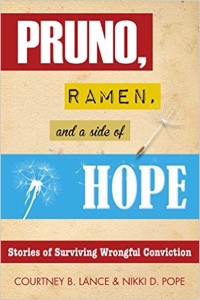
Pruno, Ramen, and a Side of Hope

In recent years, more than a thousand Americans who were serving long prison sentences have been freed because, as it turned out, they were demonstrably innocent.

The criminal justice system is absurdly stacked against people who, for one reason or another, were wrongly convicted. It’s not enough to cast doubt on the conviction; in some states, convicts must show that no reasonable jury could possibly have convicted them. Convicts have had to sue to force the state to disclose that it possesses evidence that could exonerate them, and then must sue again to force the state to permit that evidence to be tested. Prisoners released on parole at the end of their sentence benefit from programs intended to prevent repeat offenses; because the exonerated never committed a crime in the first place, they can’t receive any of these benefits.

This book offers a number of close looks at some people who spent a long time in prison for crimes with which they had nothing to do. Some of the people are remarkable. Many are worthy of emulation.

The book’s one flaw is that it lacks a call to action. Our treatment of exonerees is unjust; finding it so, we should put a stop to it. Where do we begin?

04 Jan 04:26

Chuq Von Rospach on Apple in 2016

by Federico Viticci

Good collection of various criticisms surrounding Apple's performance in 2016 by Chuq Von Rospach. I don't agree with all of his points (such as 3D Touch), and most of the problems he mentions don't affect iOS users directly, but I understand where he's coming from, and I think Apple should improve in those areas – especially estimating ship dates and catering to pro users.

→ Source: chuqui.com

04 Jan 04:23

The Best SD Card Readers

by Justin Krajeski

After researching nearly 50 card readers and testing 15 over the past year, we found that the Unitek USB-C Card Reader is the best option for anyone who needs an SD card reader for a new laptop with USB-C ports. The Unitek delivered fast, consistent speeds in a compact, easy-to-use package, and it supports SD, microSD, and CF cards.

04 Jan 04:23

What I Want From Mirrorless in 2017

You might have noticed that I took the separate "still missing from..." commentary for each system out of the Article section and consolidated it into a single article, Missing Items in Each System.

This is a good point to assess what it is we really want from each mirrorless system in a more general way rather than call out specific products and features. …

04 Jan 04:23

Lindy West on Leaving Twitter

She writes:

On 29 December, Twitter CEO Jack Dorsey tweeted: “What’s the most important thing you want to see Twitter improve or create in 2017?” One user responded: “Comprehensive plan for getting rid of the Nazis.”

“We’ve been working on our policies and controls,” Dorsey replied. “What’s the next most critical thing?” Oh, what’s our second-highest priority after Nazis? I’d say No 2 is also Nazis. And No 3. In fact, you can just go ahead and slide “Nazis” into the top 100 spots. Get back to me when your website isn’t a roiling rat-king of Nazis. Nazis are bad, you see?

04 Jan 04:23

‘The Devastation Is Very Important to Me’

During the Cold War, I was a kid, and then a teenager, and I often thought about the end of human life. Maybe an all-out nuclear war followed by nuclear winter would not have killed everybody, but maybe it would have.

I imagined a billion people vaporized. Then I imagined just one person vaporized a billion times.

I imagined one person dying in flames a billion times. I imagined one person coughing and sick and dying of radiation poisoning a billion times. I imagined one child dying of hunger, in the dark, a billion times.

Every single good thing a human hand ever did is wiped away. Every argument made meaningless. Spoken and written words all vanish — the very idea of words is gone.

The legs of every single table break, and not a single table stands to hold a vase of flowers. No windows hang on anywhere. Buildings subside, dams allow the water through, and airplanes sink into the ground.

Dogs, if they live, reshape back into wolves, over generations, and cats forget our warmth. Animals know things, but they don’t know they know things. If they feel love, they can’t name it.

The wind rushes over the poisoned ground, touching no one forever, and the sun shines for billions more years but never again on human consciousness. The sun illuminates no human grace or tenderness or mercy, because we are gone, and, in this terrible end, it would have been better had we never lived.

Nobody knows the nothingness or calls it nothingness.

* * *

So fuck anybody who says that more countries should have nuclear weapons, or that we should have more bombs, or that an arms race would be just fine.

Fuck fucking off.

04 Jan 04:18

How Times Have Changed!

by ljvintageads@gmail.com
mkalus shared this story from Vintage Ads:
The "Note to Mothers" is especially funny.

04 Jan 04:18

Bring your pics in a box

by Allan

Keep your old photos safe with the Photolab’s Photo Scanning Box

Much like my estranged Uncle Larry, printed photographs do not age well. Unlike Uncle Larry, the cause is not poor life choices; it’s mostly due to environmental factors like light, heat and humidity. Photos printed between 1936-1990 are especially at risk of fading due to the processing technology used during those years. If you have photos from this era, you probably have a great many of them stored in old shoeboxes and musty photo albums—which, although it is very common practice, is pretty darn risky if you think about it. After all, in and amongst all those regrettable shots of you with a perm and bell bottoms or sporting a mullet while decked out in the finest Miami Vice pastel linen suit, there are probably some of the most cherished—and un-replaceable—memories of your life and your family history.


Even worse than gradual degradation over time, if you leave them in a box or a stack of photo albums, they are also vulnerable to fire, floods and other disasters we tend not to think about until they happen to us. People who have lived through such catastrophes almost always count their photos as the item of property they most wish they could have back.

As I proclaim repeatedly on this blog, no one loves photos and photography more than the good people at the London Drugs Photolab. So leave it to these stewards of the craft to offer the most foolproof solution to photo degradation: the Photo Scanning Box. It’s been the subject of a previous and more detailed blog post, but here is a quick and easy recap of the process:

  1. Pick up a free photo scanning box from your local Photolab. Take it home and fill it with up to 800 photos.
  2. Bring the full box back to the Photolab, where your photos will be scanned using professional grade high-resolution digital scanners by professional grade Photolab technicians who know how to optimize the process for the best quality possible.
  3. When all your scans are finished, your images will be saved on a USB drive for you to take home along with your box of photo originals.

You can then save your digital images to a hard drive and/or the cloud, i.e. your online photo album(s). Actually, it makes the most sense to do both—the more places you save your files, the more likely it is they will remain safe for all eternity.

Also, once they’ve been saved digitally, you can then do really cool things like create a beautiful photobook of your childhood photos or family history. Or make use them to make unique gift items. Imagine the look on your granddad’s face when you give him a beer stein with a photo of him in his Naval uniform.

Scanning your photos digitally both protects them forever and gives them a brand-new life. And at just $179.99 for the entire service, it’s a reasonable investment considering that a lifetime’s worth of memories are priceless (but if you want to leave those perm and mullet photos out of the box, that may be for the best ;-)).

For more details, visit your local Photolab.

Pick up a Photo Scanning Box from your local London Drugs Photolab and start archiving your memories today.

The post Bring your pics in a box appeared first on London Drugs photolab blog.

04 Jan 04:16

Announcement: Donate to OLDaily

Yes, it has only been a year, and I'm asking again. I have maintained OLDaily and the rest of this website at my own expense since 2001. It is not subsidized by my employer or anyone else. I've always been happy to do it, but now I need your help. Click here to Donate.

This site gets a lot of traffic - 400K unique viewers and almost a million page views in 2016. 2290.70 gigabytes of traffic. On average, it has cost $125 a month for the last ten years (currently, it's $US 140, or almost $200 Canadian, per month). Thank you to everyone who helped last year. I raised just over $3000, which paid for the server and the traffic.

I am committed to keeping all my services and resources free, and will not add a subscription to any part of my website, ever. That's a promise. So if you help me provide this service, I'd be happy to recognize your contribution, as thanks, on my Donation Page.


04 Jan 04:16

“What’s really wrong with millennials?” asks Simon Sinek

by Josh Bernoff

“What’s wrong with millennials?” What’s really wrong is anyone who thinks they can characterize an entire generation. A video, which I’ve embedded below, purports to explain everything about millennials in the workplace. It’s from “Inside Quest” and has accumulated 61 million views. Tom Bilyeu, the interviewer, is cofounder of Quest Nutrition. Strangely, there is no … Continued

The post “What’s really wrong with millennials?” asks Simon Sinek appeared first on without bullshit.

04 Jan 04:13

Get a grip: Vancouver finds out what it’s like to live in Canada, as ice and snow cover city streets

by Ian Young
This winter, Vancouverites are getting a taste of what it’s like to actually live in Canada. And honestly, we’re not coping very well at all. Weekly snowfalls over the past month, coupled with uncommonly low temperatures in between have turned many of the city’s streets - including mine - into ice rinks. The glassy sidewalks are no better. Unsteady pedestrians shuffle along, limbs akimbo and backsides thrust out like haemorrhoidal penguins. We’re baffled by the cold...
04 Jan 04:13

LeEco Unveils Smart Bikes With Android on Board

by Evan Selleck
LeEco is a company that wants to make popular Android phones, but it also wants to make popular cars, TVs, and other things, too. Continue reading →
04 Jan 04:12

Green’s Dictionary of Slang

mkalus shared this story .

‘Quite simply the best historical dictionary of English slang there is, ever has been […] or is ever likely to be’​ — Journal of English Language and Linguistics

Log in for quotations, search, and bibliography

Forgotten password?Institutional loginSubscribe
04 Jan 04:12

Why We Need to Teach Kids Philosophy & Safeguard Society from Authoritarian Control

by Josh Jones
mkalus shared this story from Open Culture.

Several friends and relatives of mine teach philosophy, writing, and critical thinking to undergraduate college students. And many of those people have confessed their dismay in recent months. Threats and McCarthyite attacks on higher educators have increased (and in places like Turkey escalated to full-on war against academics). Many educators are also filled with doubt about the meaning of their profession. How can they stand in the pulpits of higher learning, many wonder, extolling the virtues of clear expression, logic, reason and evidence, ethics, etc., when the world outside the classroom seems to be telling their students none of these things matter?

But then there are some with a more optimistic bent, who see more reason than ever to extol said virtues, with even more rigor and urgency. Philosophy improves our mental and emotional lives in every possible situation. While millions of people in supposedly democratic countries have decided to put their trust in autocratic, authoritarian leaders, millions more have determined to resist the curtailing of civil liberties, democratic rights, and social progress. Educators see the tools of language and critical thinking as integral to those of political action and civil disobedience. And not only do college students need these tools, argue the executives of UK’s Philosophy Foundation, but children do as well, and for many of the same reasons.


Created in 2007 to conduct “philosophical enquiry in schools, communities, and workplaces,” the Foundation works with both children and adults. In the Aeon Magazine video above, COO and CEO Emma and Peter Worley explain the special appeal of philosophy for kids, making the case for teaching “thinking well” at a young age. Rather than lecturing on the history of ideas or presenting a thesis, their approach involves getting children “thinking about things together, working together collaboratively, coming up with counter-examples… really doing philosophy in the true sense.” Young students see problems for themselves and apply their own philosophical solutions, using the nascent reasoning faculties most of us can access as soon as we’ve reached school age.

The Foundation has shown that the teaching of philosophy to children “has an impact on affective skills and also on cognitive skills.” In other words, kids become more emotionally intelligent as they become better thinkers, developing what Socrates called “the silent dialogue” with themselves. These benefits are goods in their own right, argues Emma Worley, and as valuable as the arts in our lives. “We need philosophy because it’s a human thing to do,” she says, “to think, to reason, to reflect.” But there is a decided social utility as well. Philosophy can “safeguard against the ways in which education might sometimes be used to control people,” says Peter Worley: “If we have something like philosophy within the system, something that steps outside that system and asks questions about it, then we have something to protect us” against authoritarian means of thought and language control.

via Aeon

Related Content:

Free Online Philosophy Courses, a subset of our collection 1200 Free Online Courses from Top Universities

Noam Chomsky Defines What It Means to Be a Truly Educated Person

Why Socrates Hated Democracies: An Animated Case for Why Self-Government Requires Wisdom & Education

Henry Rollins Pitches Education as the Key to Restoring Democracy

Josh Jones is a writer and musician based in Durham, NC. Follow him at @jdmagness

Why We Need to Teach Kids Philosophy & Safeguard Society from Authoritarian Control is a post from: Open Culture. Follow us on Facebook, Twitter, and Google Plus, or get our Daily Email. And don't miss our big collections of Free Online Courses, Free Online Movies, Free eBooksFree Audio Books, Free Foreign Language Lessons, and MOOCs.

03 Jan 14:43

Charting friend demographics over time

by Nathan Yau

We tend to think of demographics on a large scale. Countries, counties, and cities. Then we look at trends over time for thousands or millions of people. But it can be equally, if not more, interesting to look at the same trends at a personal level. This is what Dorothy Gambrell did. She charted her ten closest friends in New York.

I like how even though the charts are for only ten people, we see similar patterns that we might see for millions.

Tags: demographics, Friends

03 Jan 14:43

Creating a Self-Updating WordPress Post Using WordPress Transients and Data from a Third Party API

by Tony Hirst

In the post Pondering a Jupyter Notebooks to WordPress Publishing Pattern: MultiMarker Map Widget, I described a simple pattern I started exploring last year that used a custom WordPress shortcode plugin to render data added to one or more custom fields associated with a WordPress post; the post text (including shortcode) and custom fields data were themselves posted into WordPress using some Python code executed from a Jupyter notebook. The idea behind that pattern was to provide a way of automating the creation of custom posts largely from a supplied data set, rendered using a generic shortcode plugin.

Another pattern I explored last year used the WordPress Transients API to cache data pulled from a 3rd party API in the WordPress database, and allow that data to be used by a custom plugin to render the post.

Here’s some example code for a plugin that renders a map containing recent planning applications on the Isle of Wight: the data is grabbed via an API from a morph.io webscraper, which scrapes the data from the Isle of Wight council website.

The two key bits of the script are where I check to see if cached data exisits ( get_transient( 'iwcurrplanningitems' ); and if it doesn’t, grab a recent copy from the API and cache it for 8 hours (set_transient('iwcurrplanningitems', $markers, 60*60*8);).

<?php
/*
Plugin Name: IWPlanningLeafletMap
Description: Shortcode to render an interactive map displaying clustered markers. Markers are pulled in via JSON from an external URL. Intended primarily to supported automated post creation. Inspired by folium python library and Google Maps v3 Shortcode multiple Markers WordPress plugin
Version: 1.0
Author: Tony Hirst
*/

//Loaded in from multimarker shortcode
add_action( 'wp_enqueue_scripts', 'custom_scripts' );
add_action( 'wp_enqueue_scripts', 'custom_styles' );


// Add stuff to header
add_action('wp_head', 'IWPlanningLeafletMap_header');
add_action('wp_head', 'fix_css');

/*
function fix_css() { 
	echo '<style type="text/css">#map {
        position:absolute;
        top:0;
        bottom:0;
        right:0;
        left:0;
      }</style>' . "\n";
 } 
*/


function IWPlanningLeafletMap_header() {
}

function IWPlanningLeafletMap_call($attr) {
// Generate the map template

	// Default attributes - can be overwritten from shortcode
	$attr = shortcode_atts(array(	
									'lat'   => '50.675', 
									'lon'    => '-1.32',
									'id' => 'iwmap_1',
									'zoom' => '11',
									'width' => '800',
									'height' => '500',
									'markers'=>''
									), $attr);

	$html = '<div class="folium-map" id="'.$attr['id'].'" style="width: '. $attr['width'] .'px; height: '. $attr['height'] .'px"></div>

   <script type="text/javascript">
      var base_tile = L.tileLayer("https://{s}.tile.openstreetmap.org/{z}/{x}/{y}.png", {
          maxZoom: 18,
          minZoom: 1,
          attribution: "Map data (c) OpenStreetMap contributors - http://openstreetmap.org"
      });

      var baseLayer = {
        "Base Layer": base_tile
      }

      /*
      list of layers to be added
      */
      var layer_list = {
      };

      /*
      Bounding box.
      */
      var southWest = L.latLng(-90, -180),
          northEast = L.latLng(90, 180),
          bounds = L.latLngBounds(southWest, northEast);

      /*
      Creates the map and adds the selected layers
      */
      var map = L.map("'.$attr['id'].'", {
                                       center:['.$attr['lat'].', '.$attr['lon'].'],
                                       zoom: '.$attr['zoom'].',
                                       maxBounds: bounds,
                                       layers: [base_tile]
                                     });

      L.control.layers(baseLayer, layer_list).addTo(map);

      //cluster group
      var clusteredmarkers = L.markerClusterGroup();
      //section for adding clustered markers
      ';
	
	$markers =  get_transient( 'iwcurrplanningitems' );
	if ( false === $markers ) {
		$url='https://api.morph.io/psychemedia/iwplanningscraper/data.json?key=*****MORPHIOKEY****&query=select%20*%20from%20IWPLANNING%20where%20date(%22Consultation%20End%20Date_t%22)%3Edate(%22now%22)';
		$json = file_get_contents($url);
		$markers=json_decode($json, true);
		set_transient('iwcurrplanningitems', $markers, 60*60*8);
	}
	
	
	for ($i = 0;$i < count($markers);$i ++){
		$arrkeys=['Agent or Applicant','Location','Proposal'];
		foreach($arrkeys as $arrkey){
			$markers[$i][$arrkey] = str_replace("\n", "<br/>", $markers[$i][$arrkey]);
			$markers[$i][$arrkey] = str_replace("\r", "<br/>", $markers[$i][$arrkey]);
		}	
		$html .='
			var marker_'.$i.'_icon = L.AwesomeMarkers.icon({ icon: "info-sign",markerColor: "blue",prefix: "glyphicon",extraClasses: "fa-rotate-0"});
      		var marker_'.$i.' = L.marker(['.$markers[$i]['lat'].','.$markers[$i]['lon'].'], {"icon":marker_'.$i.'_icon});
      marker_'.$i.'.bindPopup("<strong>Consultation start:</strong> '.$markers[$i]['Consultation Start Date'].'<br/><strong>Consultation end:</strong> '.$markers[$i]['Consultation End Date'].'<br/><strong>Location:</strong> '.$markers[$i]['Location'].'<br/><em> '.$markers[$i]['Parish'].' parish, '.$markers[$i]['Ward'].' ward.</em><br/><strong>Proposal:</strong> '.$markers[$i]['Proposal'].'<br/><strong>Agent or Applicant:</strong> '.$markers[$i]['Agent or Applicant'].'<br/><strong>Case Officer:</strong> '.$markers[$i]['Case Officer'].'<br/><em><a href=\'https://www.iwight.com/planning/'.$markers[$i]['stub'].'\'>View application</a></em>");
      marker_'.$i.'._popup.options.maxWidth = 300;
      clusteredmarkers.addLayer(marker_'.$i.');
      
     		//add the clustered markers to the group anyway
      		map.addLayer(clusteredmarkers);

    	';
	}
	$html .= '</script>';
	return $html;
	?>

<?php
}
add_shortcode('IWPlanningLeafletMap', 'IWPlanningLeafletMap_call');
?>

One thing I started to wonder over the Christmas break was whether this approach could provide a way of sharing “data2text” content. For example, having a plugin that creates a canned summary of jobseeker’s allowance figures from data cached from the ONS website? A downside of this is that I’d have to write the data2text script using PHP, which means I couldn’t directly build on related code I’ve written previously…

I also wonder if we could use custom fields to permanently store data for a particular post. For example, we might check whether or not a custom field exists for the post, and if it doesn’t we could create and populate it using data pulled from an API, (possibly keyed by plugin/shortcode parameters, or the post publication date), using a WordPress add_post_meta() function call?


03 Jan 11:03

Google’s Appetite for Training Data

by Tony Hirst

A placeholder post – I’ll try to remember to add to this as and when I see examples of Google explicitly soliciting training data from users that can be used to train its AI models…

Locations – “Popular Times”

tesco_extra_ryde_isle_of_wight_-_google_search_and_tesco_extra_ryde_isle_of_wight_-_google_search

For example: Google Tracking How Busy Places are by Looking at Location Histories [SEO by the Sea] which also refers to a patent describing the following geo-intelligence technique: latency analysis.

A latency analysis system determines a latency period, such as a wait time, at a user destination. To determine the latency period, the latency analysis system receives location history from multiple user devices. With the location histories, the latency analysis system identifies points-of-interest that users have visited and determines the amount of time the user devices were at a point-of-interest. For example, the latency analysis system determines when a user device entered and exited a point-of-interest. Based on the elapsed time between entry and exit, the latency analysis system determines how long the user device was inside the point-of-interest.


03 Jan 11:02

2016 – A Year In Music

by Steve

2016 was a really interesting year for music for me:

  • I released more solo music than in any year ever
  • Got my first new bass in well over a decade
  • Played gigs with a visual artist and an amazing dude playing a large bowl of water
  • Did a mini tour of Germany and Holland
  • Played bass on Songs Of Praise…

Let’s break that down a little!

Releases:

The plan from the start of the year was to put out a new album in the summer – The Surrender Of Time was planned, but the rest of this years solo releases were more of a surprise!

The Surrender Of Time by Steve Lawson

But before all the solo stuff came Language Is A Music – this live recording of Michael Manring and I from 2012 is one I’d revisited from time to time, but never carved out the time to properly mix and master. At the start of 2016, I got that sorted and released it for my subscribers. I really enjoyed coming back to this over the year, reliving such a fun show!

The solo releases started with ‘Well, Say Hello Then…’ – a low-key subscriber only introduction to my new Elrick ‘SLC’ signature bass. Recorded within just a few days of the bass arriving at my house, it was also my first recorded output using the amazing Jule Monique Preamp that I got at the start of the year. The Monique is one of those bits of equipment that, after using it, you can’t imagine being without…

May was a crazy-busy month, that included a mini-tour of the Netherlands and Germany, that included an amazing show playing at the launch of Marc Mennigmann’s ‘Hands’ exhibition. Marc has been taking beautiful black and white photos of musicians’ hands for years, collecting them, and compiling a photobook and set of large prints that tell an amazingly rich story about how music is made. This was the first gallery launch, and he asked me to go play at it. The resulting recording ended up being released for subscribers later in the year, and judging by the feedback has become quite a few people’s favourite thing of mine in quite a while…

I drove back from Germany and was home for about three days before flying back to Berlin for Music Tech Fest – this time, helping out with a symposium on audience interaction, and then playing for a beautiful improv piece with singing genius Eska. It was also at MTF that I first encountered the MOD Duo – an incredible multi-FX processor that a few months later replaced the Lexicon unit I’d been using for almost 20 years…

And to top it off, May featured the unlikely scenario of me playing in a chamber group for a recording of Songs Of Praise in Leeds. It was a whole lot of fun to be back reading, following a conductor, and playing 4 string bass in the background… a change is as good as a holiday :)

June rolled around and the country was properly shaken up by the Referendum. After I ran out of words to throw at it, I started recording music – firstly in the run up to the vote, channelling my fears, hopes and expectations, and then on the morning the result was announced, a couple of sad, broken improvisations. I released the album pretty soon after and it resonated with quite a few people. There are only so many times you can type the letters ‘WTF’ before it ceases to mean anything… at that point, you (I) pick up an instrument…

Referendum by Steve Lawson

The recording sessions for Referendum soon became the preliminary sessions for The Surrender Of Time – experimenting, exploring, seeing where things took me. I took time to get to know the Quneo better (the electronic percussion/synth controller that I first used on A Crack Where The Light Gets In/The Way Home) and experiment with some more esoteric sounds there… I filmed a lot more of the sessions, and was able to share a lot of the process of the album coming together with my subscribers. Will do a lot more of that in the future!

The album came out to a lovely response from press and listeners – a fabulous review in Jazzwise Magazine, and some radio play on 6Music and a few US stations. I also played an album launch gig, with special guest Mike Flynn – a proper Birmingham Bass Night, of which there need to be many more in 2017!

I tend to alternate years of solo focus and collaboration focus… this was definitely a solo year, but a few amazing collaborations happened too. Divinity and I played at the Bass Bash at NAMM in January, and had fun despite some serious tech trouble… we realised that our duo is not one you can just roll in and set up in 10 minutes. Lesson learned! That was followed by a tour with John Lester – one of my favourite singer/songwriters in the world, that included a LOT of collaboration, and a beautiful guest-spot by Daniel Berkman at one show.

After that in March, Poppy Porter and I had our first show – Poppy’s a visual artist, who is synaesthetic – she ‘sees’ sound, so while i play, she draws what she sees. It’s a pretty amazing experience for me as a musician to see it emerging, and we’ll be doing a LOT more of that this year as it features pretty heavily in the research plans for my PhD (as well as being immensely enjoyable and creatively satisfying!)

I got to revisit my occasional collaboration with musical polymath Beardyman with a couple of tech-swamped days in the studio. We’ll see what from that makes it into the public arena, but it was a hugely creative couple of days and introduced me to Emre Ramanazolgu – not only an *incredible* drummer but one of the nicest people I’ve met in years. So it was a special treat to get to play my first ever gig (at least, first gig that wasn’t an insane corporate covers gig in Thailand) with Mike Outram – 6 years after we released an album together (!) – with Emre on drums, in September! More from that trio in 2017 too…

Talking of amazingly lovely people who happen to be great musicians, I recorded a beautiful improv session in October with saxophonist Pete Fraser – after a couple of years of chatting back and forth online, we met up outside the studio, went in and played for a couple of hours. A fabulous day, with an album lined up for release in the first couple of months of this year…

Back in the land of strangeness, another remarkable collaboration was the Beneath The Waves gig with Gawain Hewitt – Gawain and I played together a bit in the early 00s, last collaborating about 13 years ago, so coming back together at this point was a real treat. His set-up features live sampling of water and some amazing analog synths. That was, obviously, recorded and videoed, and will makes it way out into the ether at some point in 2017!

Although it was recorded in 2015, 2016 also saw the release of my first collaboration and co-write with one of my 90s musical heroes – Tanya Donnelly (out off of Throwing Muses and Belly) and I met at a Muses gig in 2014, swapped a track back and forth in 2015, and she released it on her Swan Song vinyl compilation in 2016. It’s a beautiful song called Silver In Your Palm, and I REALLY hope we get to do more.

And finally, in November, I was invited to open for Divinity at the Jazz Cafe in London – another gig mired by tech gremlins, the highlight for me was definitely Divi joining me for an impromptu bass and beatbox improv thing. Her set was *outstanding*, and I so so hope we get to play together again this year.

Capping off the year, December saw the release of three subscriber-only recordings – first there was my ‘Christmas single’ that wove a couple of carols into an ambient improv, then Ley Lines II with my genius trio buddies Phi Yaan-Zek and Andy Edwards (released for the public yesterday here), and then Towards A Better Question – the companion album to The Surrender Of Time – released on my birthday, as this weird and often terrible year breathed its last…

Ley Lines II by Steve Lawson, Andy Edwards & Phi Yaan-Zek

…and that’s without getting into all the fun masterclass/teaching/seminar stuff that happened, at PMT in Birmingham, for Scotts Bass Lessons, playing on the Dunlop booth at NAMM, giving a masterclass at Leeds Beckett and getting through the first year of my PhD!!

So yeah, a busy, busy year, musically. Lots of recording, and some fun gigs – I’m most looking forward to playing and recording with Lobelia again after a loooong hiatus – her forthcoming album is extraordinary, and we’re planning a duo one for later in the year too.

I really want to play live a lot more in 2017, teach more, and do more collaborating… Let’s see how that works out.

Let’s finish with a recap – here’s ALL the video of me that went on Youtube this year. Enjoy!

03 Jan 11:02

Samsung Gear S3 Frontier :: Return to sender

by Volker Weber

84536a05d53f4447618f3a0020a69d3d

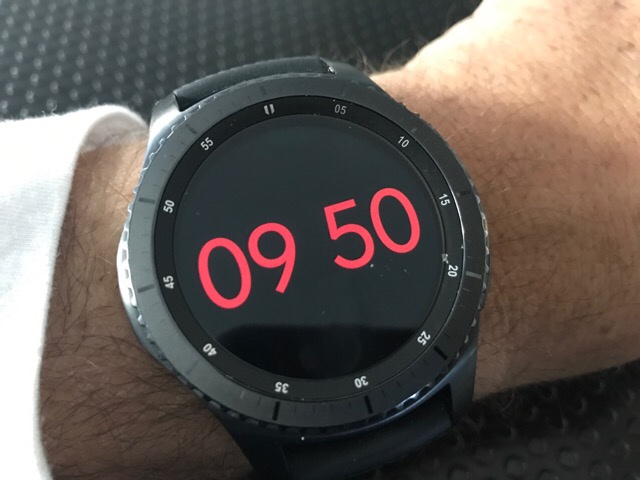
Both the Gear S3 and S2 are on their way back to Samsung. No editor-refuses-to-give-it-back award. But a simple recommendation:

If you have an iPhone, get an Apple Watch. If you don't have an iPhone, get the Gear S3. It's really good. And don't bother with the S2. The S3 is much better. More battery, more memory, better hardware. And a final plus: standard 22mm bands. Customize with any 3rd party watch band.

None of the Android Wear watches can hold a candle to the Gear S3. Terrible UX and terrible battery life. On top of that I find them ugly. And they are failing. Moto is getting out of the market.

Previously:

Samsung Gear S3 Frontier :: First impressions
Samsung Gear S3 Frontier :: Tizen & Software
Samsung Gear S3 Frontier :: Fitness Tracking mit S Health
Samsung Gear S3 Frontier :: Dinge, die beinahe funktionieren
Samsung Gear S3 Frontier :: Auto Workout
Samsung Gear S3 Frontier :: The Verdict
Samsung Gear S3 Frontier :: Spotify arrives