Shared posts

24 Jan 21:50

Mobike to double annual bike production through partnership with iPhone maker Foxconn

by Emma Lee

Chinese bike-sharing Mobike is starting the New Year with good news. Just three weeks after receiving 215 million USD fresh funding, the startup announced a strategic partnership with Foxconn, the Taiwanese manufacturing giant behind Apple’s iPhone and numerous other major electronics devices.

As part of this deal, Foxconn has also become a strategic investor in Mobike. The details of the deal, however, were not disclosed.

Partnership with iPhone maker will be a strong boost for Mobike’s hardware business in terms of smart bike production, distribution, as well as enhancing its design and user experiences. A company statement disclosed that the tie-up would boost the annual production capacity for Mobike’s proprietary smart bikes to 10 million, up 5.6 million units annually.

Foxconn also intends to locate production hubs in a number of its facilities globally, in locations close to Mobike’s priority markets. Foxconn will also leverage its strengths in industrial design, R&D, and high-tech manufacturing to enhance the Mobike design, with a particular focus on optimizing the user experience and ride quality, the company pointed.

Despite the fashionable designs, Mobike’s innovations in its proprietary smart bike have always been shadowed by criticisms for its exceedingly high production cost.

The cost of the company’s first generation bike is around 20 times of the 299 RMB deposit, company CEO Davis Wang once told local media. That means that a single Mobike could have cost nearly 6,000 RMB (874 USD) when the service was first officially launched in April last year.

The firm has managed to lower the production cost to less than 2,000 RMB and Mobike Lite, a lighter version, costs between 200 RMB and 500 RMB. But this is still much higher than the per unit cost of its arch-rival Ofo, which has a per bike product cost of around 300 RMB for its bikes. Apart from that, Ofo allows users to register their own bikes on the platform in a model to connect bikes rather than make them, said Ofo representative to TechNode.

Of course, Mobike’s bikes are more sturdy and thus have a longer life cycle, but still, higher cost per unity may leave the startup capital dependent, a negative factor for a company that has been entangled in a land-grabbing battle with a mounting number of competitors.

Additionally, the high production cost makes Mobike a really asset-heavy startup given it’s now operating in 13 cities across China. These include China’s largest Tier 1 cities – Beijing, Shanghai, Guangzhou, and Shenzhen – where Mobike operates over 100,000 bikes in each location.

Taking too much effort to peddle is another problem beset the company’s smart bike. Getting the wheels rolling on an uphill is no easy feat: Mobike weighs a whopping 25kg, twice the weight of a regular bike. Non-adjustable seat and no damper were among the criticism that raised by local users.

The tie-up with Foxconn is definitely a partnership in need for the company to optimize its hardware and facilitate more quick expansion globally.

“This partnership is all about bringing more bikes to more cities around the world,” said Davis Wang, co-founder, and CEO of Mobike. “In 2017, we aim to enable residents in a hundred cities in China and internationally to enjoy our unique and convenient solution to the global challenge of last-mile travel, and Foxconn is the ideal partner to support these ambitious expansion plans. They are globally renowned for their extremely efficient, high-tech and cost-effective production, and their strengths in design and global supply chain management.”

24 Jan 21:50

Apple Inc: A Pre-Mortem

by Federico Viticci

Dan M., writing on Medium about the state of Apple as a pre-mortem:

It is not easy to evaluate a company I love as if they have failed. I have spent tens of thousands of dollars on Apple products, and devoted countless hours studying, admiring and defending the company. However, I started noticing too many uncharacteristic cracks, and I realised turning a blind eye would not help Apple.

I don't agree with all of the assumptions and conclusions taken for granted in this piece. For all its problems (above all, a slow rollout of third-party domains), I wouldn't call Siri "souped-up Voice Control". I don't feel comfortable with any third-party narrative around Apple's leadership and internal conflicts inferred from the outside. And, I'm not sure rethinking watchOS and iOS around "contextual triggers" would be the best idea for the majority of customers who, unlike techies, just want to open their 5 most-used apps quickly. In general, it feels like there's a disconnect between some of the realities painted in this story and how I see people in real life use Apple devices and software.

But, there is also a lot I agree with: the Apple TV analysis is pretty much spot-on, and Dan raises solid questions about Apple's approach to services and how their privacy stance may prove problematic in the future. Besides personal opinions and experiences, this article outlines potential problems with today's Apple fairly, and it's worth reading and discussing.

→ Source: medium.com

24 Jan 21:50

Are China’s bike-sharing platforms really part of the sharing economy?

by Junse Lee

China’s O2O market has seen quite a few companies doing interesting things, some succeeding, some failing. The latest hot vertical is bike-sharing.

According to the China’s bike sharing industry mini-report by China Channel, Mobike (backed by Tencent and Foxconn) and Ofo (backed by Didi and Xiaomi) are clear market leaders amongst growing competitors. Founded in January 2015, the orange Mobike boasts about 400K Tencent Android app store downloads, mostly in Shanghai. The Beijing-based yellow Ofo bike, on the other hand, lags behind with about 170K Tencent Android app store downloads.

Both companies have their apps, but Ofo lowers friction by linking the app to WeChat without having to download a separate app. The users can either register their mobile phone or log in via WeChat account and unlock bikes on the streets at their convenience.

While many business analysts predict how the two rivals will merge eventually, Jeffrey Towson, consultant and professor at Guanghua Peking University, thinks otherwise. He explains why bike-sharing is nothing like ride-sharing of Didi and Uber. The professor compares the bike-sharing economy to a vending machine business than a ride-sharing one. 

“Unlike ride-sharing, bike-sharing does not have a network effect,” he says. “The ride-sharing experience is a two-sided network, in which additional riders increases the networks’ value to the drivers and each new driver increases to value each rider. Through customer rating and recording of wait-time, the service gradually improves as its user population grows.”

“The problem with bike-sharing, however, is that there is no second population of drivers using the platforms and providing the bikes,” he adds. “The bikes are constantly replenished by companies themselves as opposed to each rider adding any value to the other riders. It seems that bike-sharing isn’t really part of the sharing economy.”

Bike-sharing (or more accurately, bike-rental) is simply a traditional merchant B2C service. It’s the size of the company that helps (seeing Mobike and Ofo’s leads) but does not prevent other competitors from joining the market (i.e. Bluegogo, Unibike, Ubike, WeBike, etc). Ofo and Mobike should thrive as they are in the short-term by providing innovative new service. However, unless they come up with some means to actually share, it’s hard to predict the long-run.

Another question bike-sharing companies face is their compatibility to other modes of transportation. Bike-riding isn’t the only cheapest way to run around the city. The most affordable new bike costs about 200 RMB, less than the cost of the Mobike deposit (299 RMB). The value of bike-sharing limits itself to convenience than replacement of traditional means of transportations.

Bike-sharing is a welcome change from the usual transportation problems. The business had substantial contributions to the way people commute, reshaping the dynamics of the city. As Chinese urban population grows, there will be demand for more innovative ways to commute. Only those who adapt in the most creative and fastest ways will survive.

24 Jan 21:50

Review of rotring Tikky 3in1 Pen

by Thejesh GN

If you know me then you would probably know that my biggest weakness is stationery stores. I love everything they have from notebooks to erasers. I love buying pens, notebooks and watches. Unlike watches I do use notebooks and pens on daily basis. For a long time I used Reynolds Jetter Ballpen. Its cheap, works really well on all kinds of paper and fits well in your back pocket. Most of my engineering was Jetter.

Very recently my note taking has become more visual or Sketchnotes, or what we used to call doodling. It packs more things on a small yellow sticky notes or even a napkin. But soon I figured I need colours. Only black wouldn’t be that great. So I started looking for pens.

My notebook and  Tikky 3in1

My notebook and Tikky 3in1

I came across rotring. They have great mechanical pencils. But I wasn’t exactly looking for pencils. They I chanced upon Tikky 3in1 pen. It has two pen colors and a pencil. It even packs a small eraser at the back. It can store more leads, so no issues there.

I use regular pencil  leads

I use regular pencil leads

I was never a pencil guy. Except for engineering drawings I never used pencil. I used pens to draw even in exams. So this is my pencil time again. I am using regular 2B as of now. I will probably change to darker 4B.

More of an engineers pen but can be used for other purposes too.

More of an engineers pen but can be used for other purposes too.

The pen looks like an engineers pen. So if you are wearing formals it may not be a great match. But if you are at a desk or on field it will match your work clothes. That said it writes very fluently so one can use it for letter writing.

UART over BLE whole flow on a sticky notes

UART over BLE

In my case I have been mostly using it for doodling. I have been very happy.

24 Jan 21:50

laughingsquid: World Song Map, A Detailed Poster That Imagines...

24 Jan 21:50

The Problem With Measuring Satisfaction

by Richard Millington

If you use a satisfaction feedback score, community managers will only reply to questions when they are sure the answer will be happy.

That’s not in the best interests of the member (or your business).

If you measure engagement metrics, you’ll get more competitions, events, games, and off-topic discussions.

If you measure registrations, you’ll get pop-up boxes, clickbait, and rewards for people when they sign up.

If you measure activity per active member, you’ll get community managers removing the less active members.

If you measure the % of discussions you reply to, community managers will give shorter, repetitive, answers to each question.

And if you use all five, you might just get all five. None of which bodes well for the community.

Always supplement any data metrics with common sense and qualitative data. Use surveys, interviews, and your own observations.

If you use data-driven metrics alone to set targets, assess performance, and give bonuses, you’re setting yourself up for problems.

24 Jan 21:49

The Flatter Organisational Structure Of The Future

by Doug Belshaw

My third of three posts for The Nasstarian has now been published. Entitled The Flatter Organisational Structure Of The Future, it’s a look at organisations that do very well because of less organisational hierarchy (and bureaucracy).

Here’s an excerpt:

The three examples below are primarily from the world of technology: these are fast-moving organisations who can’t let layers of middle-management get in the way of getting a product or service to market. What I hope this overview of flatter hierarchies inspires you to do is to think carefully about your next re-organisation. Instead of shuffling the deckchairs, could you instead introduce one of these approaches?

Click here to read the post in full!

Note: I’ve closed comments here to encourage you to comment on the original post.

24 Jan 21:49

Getting straight to the Punkt

by Alex Guest
Getting straight to the Punkt

As I slipped the SIM card into the Punkt MP 01, I was fully aware that my other assorted devices still had wifi connectivity. Only if I left them behind would I be truly bereft of the myriad digital services that punctuate my day with information, entertainment and connections.

Punkt is a Swiss company based in the beautiful region of Lugano, and the MP 01 is a mobile phone capable of… well, not a great deal really: calls and SMS, alarms and reminders. It has less functionality, in other words, than the Nokia 6100 that I’ve had for about 15 years. The makers call it a ‘dumb phone’.

Marek Pawlowski, founder of MEX, had passed the phone to me shortly before Christmas, and I was delighted to receive a device that I thought might help me break from obsessive phone checking: I can’t tell you how often I catch myself picking up my iPhone seconds after I’ve put it down, just to check on… who knows what?

Punkt has this to say: “The more our phones do, the more they demand of us. Sometimes it’s good to take a break. But until now, the only alternative to hyper-connected smartphones has been the kind of phone you find at the back of a drawer. The Punkt MP 01 is a stylish, well-crafted mobile phone which focuses on modern simplicity, inside and out. It makes phone calls and sends texts. That’s all.” Perfect, I thought.

As I unboxed the phone, noting the 1970s retro-styling, I opened up the fat little instruction manual and turned to the heading “Inserting a SIM card”. Immediately, I encountered the first problem: “the MP 01 is designed to be used with a Micro-SIM (3FF) only… Incompatible SIM cards can damage the card or device…”. My iPhone 7 uses a Nano-SIM.

So Christmas was a digitally-enhanced event. Taking my iPhone along to the family gatherings, I was able to take various pictures, and share them instantly with one or two friends over WhatsApp and iMessage. And I was able to book a cab home using Uber.

Then Marek informed me that there was a Nano- to Micro-SIM converter somewhere in the packaging. I had missed it, although it had been hiding in the same little black envelope in which the SIM tray opener pin (does this thing have a name?) was to be found. To be fair to Punkt, the manual does also say: “Permanent use of SIM adapter is not recommended.” However, the omission of the definite article (“the”) leaves some ambiguity.

A short time passed and I found myself back at work, unable to relinquish my smart device. The MP 01 remained in its box. Until last weekend. I was going to see a preview of the film Fences, followed by a Q&A with Viola Davis, who plays the principal female character. The plan was to put the SIM into the MP 01, and head down to the BFI. Who needs a phone at the cinema?

But I couldn’t do it. Despite the fact that my iPhone always goes into airplane mode before a film starts, and remains so for the duration, I still felt the need to have it with me. The moments around the viewing are where it plays a leading role. At MEX/16, Apala Lahiri Chavan of Human Factors International, made reference to the term ‘unwaiting’, the act of shifting, through a mobile device, to another world. Like many others on the tube, I find myself so immersed in my phone that I would struggle without it: whether it’s communicating via email or text, picking up a signal at each station along the way; or listening to music, from my own library or downloads on Spotify; or scrolling through Twitter and Instagram; or, quite frequently, using the time to compose my own words on the tiny keyboard.

Before I even get on the tube, I’m checking Citymapper to ensure I optimise my time by standing at the ideal end of the platform for the exit at the other end. And on this specific occasion, after the film, I took out my phone and snapped a couple of photographs of Viola Davis, which I shared on Facebook and Instagram on my way back home.

A recent article in Wired UK rails against the notion of the digital detox: digital devices are not de facto bad for us, and I find myself agreeing, while noting, on the other hand, that there are potential side effects. The huge utility that my device, with the various applications running on it, brings to me is so obvious that to say so seems superfluous. Modifying notification settings is important to avoid being repeatedly distracted while in mid-flow. However, the compulsion just to pick it up and to have a speculative look is more problematic. So is setting out to take some specific action and being drawn elsewhere, whether by a visual notification such as a banner or a badge, or an another, unconscious motive.

The solution might be to take short breaks from the iPhone, coping with the Punkt alone. But when? Perhaps I don’t need it when I go to do my groceries, perhaps I don’t need any sort of phone. Then again, I have my shopping list on it, and often make use of the time to listen to a podcast. I don’t carry any sort of device when I’m out running, but on a ramble? Well, in that case I like to take pictures of things I see, and occasionally take notes, but I would have to carry a notebook, pencil, camera… Ironically, I could handle being without the telephony, or the messaging.

To make good on my promise to Marek, I finally made the switch. First, I set a reminder. With an iPhone, you can ask Siri to remind you to do something at a particular date and time, at the press of the home button. But when you take away voice activation and a touchscreen interface, you’re left with multi-level, hierarchical decision trees. While these are logical, they are not natural. Yes, of course, we see them in biology: trees, veins etc. But in our daily activities, the rigid, linear paths rarely occur. So the simplicity of the device engenders a particular kind of complexity arising from the unfamiliarity of the system.

Creating a contact follows a similar process, and is not particularly difficult. Press the contacts key, scroll to ‘add contact’, ‘create new’, and follow the rest of the steps… But being used to having all the fields visible and appropriately sized, it felt strange to step through each one individually. Of course, with regular use, this sort of thing could become more natural.

Next, try typing a text message that says “I’ll call you in 10 minutes”. The lack of a full keyboard on the MP 01 means you input this: 4550225509680460######10#06467*HOME. The multiple # strokes toggle the input mode to enable numerals. I realised it would have been quicker to write “ten” (08360 – zero is a space). There is predictive text, but it is no surprise that txt spk came into existence, along with emoticons, during Nokia’s reign. To send the thing, you have to go through a whole decision tree again, unless you select the contact first, and go down the path before composing the message.

Now to make that call. It’s fairly easy to assign numeric keys 2-9 to speed-dial favourite numbers. But you’ll have to remember which is which, because it dials the number instantly, rather than giving you the opportunity to confirm the selection. It is simpler, when you have just one contact in your phone, to press the contacts key, select the contact and hit the ‘send’ key.

I will find opportunities to use the MP 01. Perhaps meeting up with friends in the evening. I’ll need to make sure I know where I’m going and how to get there before setting out, but otherwise all should be good. Unless they communicate a last-minute venue change on the WhatsApp group.

Punkt MP01

There are certain things that I instantly loved about the device. First of all, the styling is gorgeous. While you might feel ashamed to pull out a 15-year old phone in public, the MP 01 makes a statement. I love the silk matte finish on the chocolatey brown. The shape of the back, with its dimpled surface, is unusual, but it fits very snugly in the hand, and is quite delightful to hold. At 88g it is only slightly heavier than the Nokia 6100, and 50g lighter than the iPhone 7. The screen is big enough for its limited functionality; while the typeface and the range of type sizes are good, albeit in monochrome. It has a micro-USB socket for charging, synchronising with your laptop, and using the handsfree earpiece. Just like the iPhone 7, there is no dedicated headphone jack, and it is Bluetooth-enabled.

A few design choices seem strange to me. The mic is at the bottom, off to the right, which could affect call quality. The USB socket has a cover with a rather flimsy looking hinge. I can’t see it withstanding much use. And while I like it that the volume and lock buttons are flush, it would be easier to change the volume during a call if the buttons had some shape for the thumb to find.

A moment ago, I picked up an email on my iPhone (over wifi), sent via Paperless Post, inviting me to an event. With one tap, I accepted the invitation; and with two taps, I added all the details to my calendar. Shortly, I will go for a run. When I get back, I will log the time and distance in Strava, and the data will then be imported, via the Health app, to Zingy, in which I’ve been logging today’s food, so that it can calculate my energy expenditure and modify my nutritional requirements for the day.

The world has adapted to the smartphone: many pre-existing systems have been uprooted. It is difficult to do things the way we used to do them. It is not only the phone that has changed, but the world itself, both society and individuals. We do things differently, and many of the processes and objects that we once used have disappeared. There was a time when the A-Z was many people’s most helpful  possession, residing in handbags, jacket pockets and glove compartments all over the country. Attempting to turn back the clock is about as easy as choosing to heat your home from time to time with coal.

The MP 01 is a philosophical statement: it is not a phone.

Editors note: we were kindly sent a Punkt MP 01 by the manufacturer after mentioning it as an example of the nostalgia trend in a MEX/16 provocation, entitled: ‘Industrial rhythm, migration, nostalgia: the societal fabric enveloping UX‘.

24 Jan 21:48

Recommended on Medium: This is Psychological Warfare

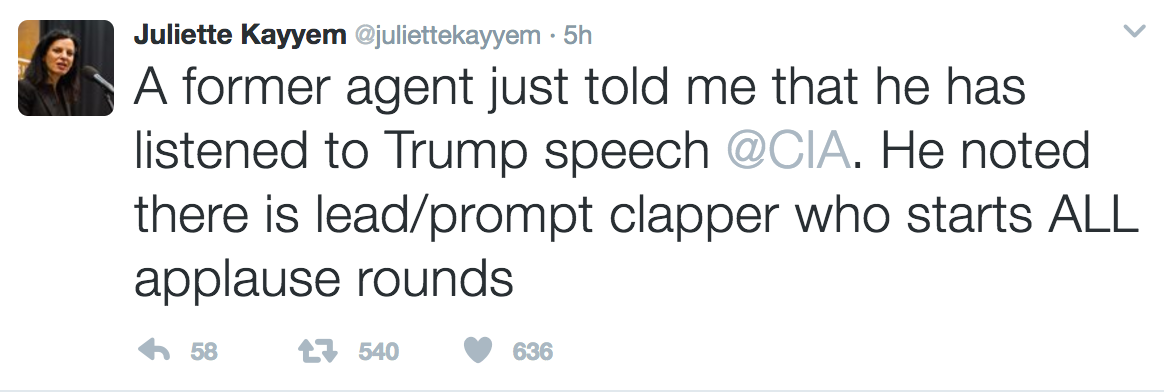
Trump’s Laugh Track is Tricking America

Continue reading on Medium »

24 Jan 21:48

Twitter Favorites: [kevinmarks] Starting #100daysOfIndieweb: https://t.co/RIJCuM0uRA

24 Jan 21:06

"Global capital doesn’t have a social conscience. It will go where the returns are."

“Global capital doesn’t have a social conscience. It will go where the returns are.”

-

Kevin W. Sharer, cited in Call to Create Jobs, or Else, Tests Trump’s Sway

Yeah, but it’s not a law of the universe. It’s not physics. It’s social policy, erected and maintained to benefit those controlling the capital at the expense of everyone else. His statement is equivalent to saying ‘when you land on Go To Jail in Monopoly, you have to move your player to Jail’. However, unlike a board game like Monopoly, we can change the rules.

24 Jan 21:06

Photo


24 Jan 19:50

One Dataset, Visualized 25 Ways

by Nathan Yau

"Let the data speak" they say. But what happens when the data rambles on and on? Read More

24 Jan 19:50

How I Built that Free Microlearning Template

files/images/desktop-flipcard.png


Tom Kuhlmann, The Rapid E-Learning Blog, Jan 27, 2017


'Microlearning' is the new buzzword in the rapid e-learning community, but be careful. As this article shows, it is often realized as a quick Flash animation. I, however, am viewing the internet on a 4K screen. These  animations appear like postage stamps in the middle of my screen (which makes sense, since they were designed for mobile). Designers, however, should create learning resources that can be viewed well on any screen - from a tiny handheld to a living-room television. This takes more care than dashing  quick Articulate animations provides. By contrast, look at my  presentation pages, which show (imperfectly) how  presentations and videos can be sized up and down to fit any screen.

[Link] [Comment]
24 Jan 19:50

Diversity in the Open Access Movement

files/images/open_access.PNG


Kent Anderson, The Scholarly Kitchen, Jan 27, 2017


This is a good two-part article (part one, part two) discussing some of the divisions in the open access movement. Part two lays them out quite nicely: are embargoes permitted, yes or no; is charging for access permitted, yes or no; and is the non- commercial license permitted, yes or no. Me, I can live with embargoes and I certainly allow for non-commercial licenses, but I am opposed to a definition of 'open access' that permits enterprises to put up tolls blocking access. I am opposed by primarily commercial agencies seeking to monetize open access by banning non-commercial licenses and enabling tolls for access.

[Link] [Comment]
24 Jan 19:31

"Put simply, much of the economy functions as if children did not exist. Parents receive scant time..."

Put simply, much of the economy functions as if children did not exist. Parents receive scant time off to care for young children, unlike in any other affluent country in the world. Public school doesn’t start until children turn 5. Most employers make it impossible for people who spend time outside the work force to climb a career ladder.

[…]

For many adults, parenthood brings wrenching dilemmas, because so few good jobs and career paths acknowledge parenthood. Women, of course, pay a much higher price for these dilemmas than men. Much of today’s gender pay gap, research shows, stems not from blatant discrimination but from the penalties for working fewer hours or taking time off.


- David Leonhardt, Brenda Barnes’s Wisdom, and Our Anti-Parent Workplace
24 Jan 19:30

Verizon Acquisition Of Yahoo Still Going Ahead As Planned

by Laura Northrup
mkalus shared this story from Consumerist.

Since the announcement of data breaches consisting of 1.5 billion Yahoo accounts, Yahoo-watchers have had one question: what’s going to happen to the former internet titan’s agreement to sell its internet operations to Verizon for a mere $4.8 billion? In its quarterly and annual earnings report today, Yahoo announced that the deal is still on. It’s just taking a while.

Revenue for the company’s “emerging businesses,” like mobile, video, and advertising, increased, and revenue from online search notably decreased. Fortunately, it’s those internet content businesses that Verizon wants, not necessarily the search business.

Those hacked accounts are a problem, though. “In addition to integration planning, our top priority continues to be enhancing security for our users,” CEO Marissa Mayer said in a statement. Sure, now it is.

While the Verizon deal is still on, it has been delayed. In today’s report, the company noted that the deal will close in the second quarter of 2017, not the first quarter as originally planned.

The deal will send Yahoo’s online businesses to Verizon to hang out with the remains of AOL, and keep the parts of the company that are financially valuable, including 15% of Chinese e-commerce giant Alibaba and the company’s share of Yahoo Japan.


24 Jan 19:30

The Business That Would Evolve Into Taco Bell Started Out Selling Hot Dogs

by TodayIFoundOut
mkalus shared this story from TodayIFoundOut's YouTube Videos.

From: TodayIFoundOut
Duration: 05:53

→Subscribe for new videos every day!
https://www.youtube.com/user/TodayIFoundOut?sub_confirmation=1
→How "Dick" came to be short for 'Richard': https://youtu.be/BH1NAwwKtcg?list=PLR0XuDegDqP2Acy6g9Ta7hzC0Rr3RDS6q

Never run out of things to say at the water cooler with TodayIFoundOut! Brand new videos 7 days a week!

More from TodayIFoundOut

Two Major Companies Who Settled Their Differences the Old Fasioned Way
https://youtu.be/XmpKOejVPrk?list=PLR0XuDegDqP33-NUx7wuKb-3PDj-gRKgR

Ben & Jerry's Was Originally Going to Be a Bagel Company
https://youtu.be/fcoWcvbEjC0?list=PLR0XuDegDqP33-NUx7wuKb-3PDj-gRKgR

In this video:

In 1946, Glen Bell left the Marine Corps at the age of 23. Like many of his comrades, he was looking forward to post-war activities and settling into a career when he returned home. Luckily for him, the fast food business was booming, and Bell had an idea: a hot dog stand.

Want the text version?: http://www.todayifoundout.com/index.php/2014/01/taco-bell-started-hot-dog-stand/

Sources:

http://www.lascal.com/lascalNH/history.aspx
http://www.tacobell.com/Company
http://www.tacobell.com/Company/newsreleases/Glen_Bell_Legacy
http://foodimentary.com/2012/03/21/march-21-national-crunchy-taco-day/
http://en.wikipedia.org/wiki/Taco_Bell_chihuahua

24 Jan 19:30

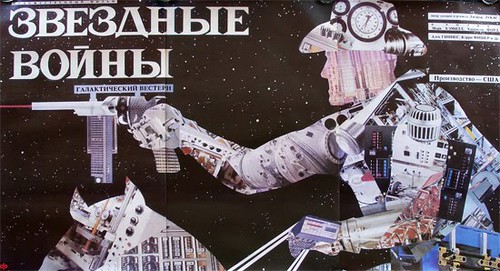
Russian Star Wars Posters

by ljvintageads@gmail.com
mkalus shared this story from Vintage Ads.


24 Jan 19:29

President Trump Told That Strong Copyright Laws Are in His Interest

by Andy
mkalus shared this story from TorrentFreak.

trumpdOn Friday January 20, Donald J. Trump was inaugurated as the 45th President of the United States after one of the most controversial election campaigns of modern times.

For those who watched the historic inauguration, the message from the new president was clear.

From now on and even at the expense of outsiders, America will come first. Time and time again the president reiterated that the power would be put back into the hands of the people to “Make America Great Again.”

With vows to boost America’s economy by supporting local businesses ringing loud, President Trump has now received a letter from a powerful group hoping that their interests will receive a boost from his incoming policies.

The Copyright Alliance, which claims to represent 1.8 million creators and 13,000 pro-copyright organizations in the United States, begin by reminding the President that they’re already on the very same page.

“Throughout the long history of our country, few, if any, Presidents have had a more sizable and diverse copyright portfolio than you,” CEO Keith Kupferschmid writes.

“Your experiences as a businessman have afforded you insights into the value and importance of copyright and how copyright protections help drive the U.S. economy and create millions of well-paying jobs and small businesses.”

With the RIAA, MPAA and 3,000 music publishers as members, the Copyright Alliance believes that its sheer horsepower should be enough to grab the President’s attention, particularly alongside reminders that in 2015 the copyright industries’ 5.5 million workers added $1.2 trillion to the US GDP.

“The growth within core copyright industries far surpasses the average growth rate for other industries; in fact, between 2012 and 2015, those industries grew at a rate of more than 127% greater than the remainder of the economy,” Kupferschmid notes.

But this huge contribution to the economy doesn’t exist in a vacuum, the Alliance adds. It only works thanks to a strong copyright system that rewards creativity and discourages piracy, which in turn is good for the economy and indeed, President Trump himself.

“You, as an author and holder of numerous copyrighted works, know first-hand that creators rely on copyright law for their livelihood and careers, and they are harmed when the system fails to adequately protect their valuable creations in the United States and abroad,” Kupferschmid adds.

Noting that piracy in the Internet age has an adverse effect on U.S companies and the economy as a whole, the Copyright Alliance says that stronger copyright law boosts culture and as a result supports Trump’s mission to ‘Make America Great Again.’

“We need to enhance the protections afforded to the creative communities, not dilute them. We hope you will support a strong and vibrant copyright system in the United States that protects copyright holders from online theft and ensures that creators share in the massive profits being made by internet platforms from these copyrighted works,” the Alliance concludes.

While the Copyright Alliance certainly expects action against mainly overseas ‘pirate’ sites, the use of the word “share” in the above paragraph suggests companies a little closer to home. Google’s YouTube, for example, that stands accused by the music industry of “gaming” the safe harbor provisions of the DMCA.

When compared to the outgoing Democrats, Hollywood in particular has a less than great relationship with President Trump. Nevertheless, Trump will be acutely aware of the contributions made by the creative industries as a whole and how largely overseas websites have some capacity to undermine that.

Only time will tell how America’s new President will respond, but keeping in mind his promise to always put the United States first, the next report from the USTR has the potential to be quite a read. Will it maintain the status quo? Or will it serve as a shot across the bows of countries who dare to undermine the US economy? Stay tuned.

The full letter is available here (pdf)

Source: TF, for the latest info on copyright, file-sharing, torrent sites and ANONYMOUS VPN services.

24 Jan 19:29

Firefox Gets Better Video Gaming and Warns of Non-Secure Websites

by Nick Nguyen

Today’s release of Firefox includes various features for developers and users that enable a richer and safer experience on the web.

WebGL 2 enables a new generation of 3D graphics on the web

Firefox is the first browser to support the new WebGL 2 standard, which gives developers the ability to utilize compelling 3D graphics that are available for the first time on the web. Expanding on the solid foundation of WebGL 1, WebGL 2 allows content creators to leverage more modern accelerated rendering features, like transform feedback, expanded texturing functionality, and multisampled rendering support. This will make it possible for developers to create more sophisticated and engaging visual content on the web.

The full WebGL2 feature set works on Windows, MacOS, and Linux. Developers interested in learning more about WebGL 2 can read about it on the Hacks blog.

If you’d like to try running a WebGL 2 demo, upgrade to Firefox 51, and check out the After the Flood by PlayCanvas. Here’s a quick video of the demo if you haven’t upgraded yet.

Helping users identify non-secure Web sites

Keeping users safe online has been a key priority for Mozilla, and we’ve long been a vocal proponent for using HTTPS to secure a user’s Web experience through efforts like Let’s Encrypt. HTTPS encrypts your connection to help protect you from eavesdropping and tampering when doing everything from online banking to communicating with your friends.

Starting today in the latest Firefox, web pages that collect passwords, like an email service or bank, but have not been secured with HTTPS will be more clearly highlighted as potential threats.

Up until now, Firefox has used a green lock icon in the URL bar to indicate when a website is secure (using HTTPS) and a neutral indicator (no lock icon), otherwise. In order to more clearly highlight possible security risks, these pages will now be denoted by a grey lock icon with a red strike-through in the URL bar.

BEFORE

Secure (HTTPS) connection

BeforeNon-secure (HTTP) connection

Before nonsecure

NOW

After

Clicking on the “i” icon, will display the text, “Connection is Not Secure” and “Logins entered on this page could be compromised”.

You can read more details about how we help users identify non-secure sites on the Mozilla Security blog.

Continuing to improve responsiveness with multi-process Firefox

Last year, we started the process of rolling out multi-process Firefox to desktop users. Instead of running all of Firefox in one process, Firefox now runs in two processes: one for the browser’s user interface and another for web page content. The result is a Firefox that is faster and more responsive. Today, more than half of desktop users are running Firefox in multiple processes.

There’s more for developers in the new release, too, including IndexedDB 2, a big upgrade to a powerful standard API for local storage.

The post Firefox Gets Better Video Gaming and Warns of Non-Secure Websites appeared first on The Mozilla Blog.

24 Jan 19:29

Worlds of Pain

by Jacqueline Feldman

The first and decisive question would rather be to know whether animals can suffer. “Can they suffer?” asks Bentham, simply yet so profoundly.
— Jacques Derrida

Here is a suggestion: there are two little men in the pain center, and when the light goes on one starts beating the other with chains.
— Daniel C. Dennett, “Why You Can’t Make a Computer That Feels Pain,” 1978


Machines, especially ones cold to the touch, seem robotic to us, displaying no affection. When a panel snaps, or a program loops infinitely, we notice without pity, recalculating our way around the breakage. Pain works inductively. Here none has been seen. So we respond robotically.


Recent experiments at Leibniz Universität Hannover have let human researchers bear witness to something like the pain of robots. In a paper published early last year, Johannes Kuehn and Sami Haddadin describe the artificial robot nervous system they have developed, a computational model, which they hope will help robots deal with unforeseen circumstances that would cause them harm. For some experiments, these researchers have simulated robot nervous tissue, which signals self-protectively as the model teaches it to, but lately, more dramatically, they have attached a tactile sensor to a robotic arm and subjected this ensemble to the model. (Here is video.) The sensor logs heat and, as voltages, compressive stress. The arm reacts. A prodding human finger makes it flinch. When a cup of steaming water alights on the sensor, the arm ducks. It dips, hangs, and returns to its original position slowly or quickly depending on the intensity of the pain. After a very severe pain, it takes a moment to rise, as if fearful.

The harassment of bots, which can’t fight back, reveals societally typical impulses to harass workers and women

Just as artificial neural networks take after the human brain but are far simpler, Kuehn’s and Haddadin’s artificial robot nervous system is inspired by the human nervous system; their robot nervous tissue works analogously to human skin. This simulated tissue is deeply seeded with artificial robot neurons that respond to contact, registering the velocity of penetration as well as depth and compressive stress. Like the pain receptors of humans, they occur in layers and send spike-like signals. A “spike train” — successive signals — reads as pain to the system, prompting a reflex.

“If you grow up as a human, you learn the way your body reacts to the world, and you become very dexterous,” said Haddadin, who specializes in soft robotics, the field involving robots composed of materials that bear deformation, such as silicone, plastic, rubber, fabric, and springs. “And after lots of training, the human is able to react purposefully and sensitively to the world.” He coaxes robots to interact with their environments nimbly, so that they can avoid hurting humans; soft robots meet the world flexibly.

Even in humans, I have found it difficult to tell whether pain precedes sensitivity or vice versa. I watch the motion of Haddadin’s robotic arm, and though it is a hard robot, I think it makes recourse to unusual dexterity.

It is tempting to worry about the insensitive majority of robots because they lack such self-protective reactions. But when robots perform tasks under harsh conditions that humans cannot countenance, their advantage is that they trigger no pity. Both Haddadin and Kuehn mentioned Isaac Asimov’s Three Laws of Robotics in our talks, agreeing with the hierarchy the science-fiction author devised: First, protect humans; second, obey them; last, preserve yourself.

I, too, try to work dexterously, bending to meet the requirements of a complex world, so I have been thinking about interviews I gave recently dealing with my job designing a personality for a bot. I have explained that I provided it with lines to deter users who abuse it; however, I cannot reasonably claim that it suffers pain, or even hurt feelings.

Why should we care how bots are treated? The sociologist Katherine Cross recently proposed an answer: The harassment of bots, which can’t fight back, reveals societally typical impulses to harass workers and women. Humans behave illustratively, she argues, when no one’s watching. When a question about treating robots ethically was put to a panel at the New Museum in New York City recently, the artist Sondra Perry answered: “What are our ethics around people we wish would labor for free?”

These responses struck me as revelatory, but I struggle to imagine myself actually reprimanding any user who maybe experimentally fed my bot invective, as one friend told me she liked to do to bots. However, since the election of an American president whose candidacy was powered by insults, it has seemed important to monitor cheap shots wherever they occur. They tend to co-present with harm, even when they do not cause it.

I asked Kuehn whether he ever felt guilt after inflicting pain on a robot. “I was imagining the robot in a very dangerous situation,” he said. “Like, it’s going down and hitting a very hot object, or a very sharp nail. And I was imagining the robot retracts and avoids it. So I was imagining it approaching it very slowly, and I would hit it, and it would retract. So I was imagining this kind of stuff, rather than that I would actually hurt the robot. I am more on the controller side.” Laughing, he added, “My wife said, ‘The poor robot — why do you do that?’”


Conceiving of robot pain in terms of human pain may not be fair to the robot. Vegans insist fish feel pain, even if the pain of fish is alien to us. Philosophers have assigned moral standing to beings, divvying up ethical obligations to them, based on suffering, but while some of them have privileged cognitive ability, the animal scientist Temple Grandin has criticized hierarchies assigning primacy to larger-brained animals based on their keen pain perception. While amphibians and fish “represent a ‘gray area’ ” of feeling pain, she writes, fear, which happens by an evolutionarily more basic mechanism, can cause any vertebrate to suffer.

Though the workings of nociception are clear, pain itself is not. With so many varieties of pain, how can we choose which to impose on a robot?

Descartes thought animals were robots — bêtes machines, soulless automata, ruled entirely by the mechanistic laws that govern matter. William James suggested that some animals become overwhelmed by the intensity of pain, rendering them helpless. They feel only it. “The stronger the pain the more violent the start,” as Psychology: A Briefer Course (1892), his condensed textbook, puts it. “Doubtless in low animals pain is almost the only stimulus; and we have preserved the peculiarity in so far that to-day it is the stimulus of our most energetic, though not of our most discriminating, reactions.” Pain strikes its mark, producing “ill-coordinated movements of defense,” and dissipates.

In Superintelligence (2014), philosopher Nick Bostrom admits that the pain of robots, if it existed, would be morally significant (he writes as if it might arise by accident), but from his perspective it is irrelevant, because pain is no prerequisite for intelligence. In his view, true AI will show itself through cognitive performance — what the AI system can accomplish, not subjectivity or qualia like pain.

It may be a mistake to anthropomorphize pain, but experiments have shown that when robots are constructed to approximate humans, humans ascribe pain to them. In 2015, researchers found that the sight of a robot hand in seemingly painful situations gave humans similar brainwaves to those elicited by a human hand in the same positions.

All the same, another study suggests this apparent fellow feeling will hardly prevent humans from inflicting pain on robots. Researchers at Eindhoven University of Technology reproduced Stanley Milgram’s famous obedience experiment — in which 65 percent of participants administered what they thought were excruciating electric shocks to wailing human actors — replacing the actors with small humanoid robots and found that every single participant was willing to administer the largest shocks. These participants were undeterred by the robots’ cries: “The shocks are becoming too much.” “I refuse to go on with the experiment.” “My circuits cannot handle the voltage.” “That was too painful, the shocks are hurting me.” “Please, please stop.”


In a 1978 essay “Why You Can’t Make a Computer That Feels Pain,” Daniel Dennett writes crankily that our views on pain are so confused, we can barely explain them to other humans, let alone computers. All we know about pain is that humans feel it and can’t be told they don’t. “It is a necessary condition of pain,” he notes, “that we are ‘incorrigible’ about pain; i.e., if you believe that you are in pain, your belief is true; you are in pain.”

Such a definition will obviously be inadequate for those who seek to replicate pain in a robot, Dennett writes, particularly if they want it to be “real”:

If pain is deemed to be essentially a biological phenomenon, essentially bound up with birth, death, the reproduction of species, and even (in the case of human pain) social interactions and interrelations then the computer scientist attempting to synthesize real pain in a robot is on a fool’s errand. He can no more succeed than a master cabinetmaker, with the finest tools and materials, can succeed in making, today, a genuine Hepplewhite chair.

What Haddadin and Kuehn are copying in their robotic arm is not pain as such, but nociception, the transmission of pain signals by the nervous system. This process is straightforward; scientists understand it well. Though the workings of nociception are clear, pain itself is not. Pain encompasses multiple concepts that we speak about only unclearly, with difficulty.

For one, emotional and physical pain are hard to separate. In 2010, a study indicated that a dosage of acetaminophen may dull both these varieties of pain. People experience pain differently. Women and men handle pain differently; women recover more quickly. Some people are born with a genetic disorder that prevents them from feeling pain, and they lead short, hard lives, riddled with injuries and the effects of joint stress, for they lack the information that would prompt them to shift position from time to time as they sit in a chair.

Also, we trick ourselves out of pain in contradictory ways: There is lateral stimulation, diminishing the perception of pain by adding a different sensation to the mix — as a child, I was taught by other children to claw an X into my skin with a fingernail where a mosquito had bitten me. “There is a part of our psyche that is pure timekeeper and weather watcher,” Diane Ackerman writes, describing those who put mind over matter in order to cross hot coals. Some Buddhists find that concentrating on pain fixedly causes it to subside.

In The Evolving Self (1982), developmental psychologist Robert Kegan writes of pain arising as resistance to pain:

When the body tenses and defends against its reorganization, this causes greater pain than the reorganization itself; if we relax immediately after stubbing our toe the pain subsides.

Pain is conceptually so ambiguous that it provokes our suspicion as we battle to establish its reality, endeavoring to detect which parts of ourselves sense it best. They may be pain’s ports of entry. William James wrote of research unveiling “special ‘pain-spots’ on the skin” that are “mixed in” with “spots which are quite feelingless.” He writes of this latter category as if the spots were duplicitous — covert agents.

The modern concept of nociception involves no “spots,” but it confirms some body parts (like fingertips) as more sensitive to pain than others (like torsos), for the density of nerve endings varies, though they exist across the whole of the skin’s surface.

In my conversation with Kuehn, he gamely clarified that what we were calling robot pain differs from human pain, which, I gather, depends on consciousness. I read a psychology textbook: When we see a fire, the sight seems to reach us from it; when we touch one, the pain seems to arise in our fingers. The location of pain in the mind is tantalizing. We feel as if we just might pin it down. Our minds feel like home and, like home, they are deceptively familiar. We might be forgiven for thinking ourselves capable of taking their inventory.


In the 1960s, some scientists believed the major task ahead of them in developing artificial intelligence was describing human intelligence: Once that was done, they’d be able to replicate it. In this way, they were incentivized to simplify the human mind. A vogue ensued for articulating “micro-worlds”: situations from life simple enough to be itemized. One day, the thinking went, these micro-worlds might be amalgamated, making up the universe, preparing computers to take on any of the experiences humans do. In the meantime, they were useful proofs of concept.

In his 1979 paper “From Micro-Worlds to Knowledge Representation: AI at an Impasse,” Hubert L. Dreyfus cites an example devised by the MIT AI Laboratory researchers Marvin Minsky and Steven Papert, “the micro-world of bargaining.” Minsky and Papert began enumerating the concepts that a child — or a computer — would need to correctly understand this set of sentences: “That isn’t a very good ball you have. Give it to me and I’ll give you my lollipop.”

Time                      Things              Words
Space                     People               Thoughts
Talking: Explaining; asking; ordering; persuading; pretending.
Social relations: Giving, buying, bargaining, begging, asking, stealing; presents.
Playing: Real and unreal; pretending.
Owning: Part of; belongs to; master of; captor of.
Eating: How does one compare the value of foods with the value of toys?
Liking: Good, bad, useful, pretty; conformity.
Living: Girl. Awake. Eats. Plays.
Intention: Want; plan; plot; goal; cause, result, prevent.
Emotions: Moods, dispositions; conventional expressions.
States: Asleep, angry, at home.
Properties: Grown-up, red-haired; called “Janet.”
Story: Narrator; plot; principal actors.
People: Children, bystanders.
Places: Houses, outside.
Angry: State caused by: insult, deprivation, assault, disobedience, frustration; or spontaneous.
Results: Not cooperative; lower threshold; aggression; loud voice; irrational; revenge. (…)

Eventually, Minsky and Papert leave off listing things, but they do not concede defeat — they assert that the list “is not endless. It is only large.” Minsky would propose other theories, “frames” for memories, “mental agents” responsible for particular behaviors.

By the time I read these later writings of his, I had noticed unusual tics in Minsky’s prose, persisting over the decades: He ended lists with the appositive “or whatever.” He used many exclamation marks as if struggling to muster the bright determination required for classifying the whole world. Perhaps he had tired.

Abstracting pain mystifies us. We understand it best within contexts of causes and symptoms. Isolated, it means little

In his paper, Dreyfus rejects the entire micro-worlds premise, referring to an internal memo that Minsky and Papert circulated at MIT describing each micro-world as “a fairyland in which things are so simplified that almost every statement about them would be literally false if asserted about the real world.” They acknowledge the micro-worlds’ “incompatibility with the literal truth.” Dreyfus argues that micro-worlds will never add up, for they erroneously assume the universe breaks down into modules. In fact, any such situation, whether bargaining, a party, or building with blocks, requires reference to the whole world. They are meaningless without that tangled web of customs, physics, weather. They are sub-worlds. “As a result of failing to ask what a world is,” Dreyfus writes, “five years of stagnation in AI was mistaken for progress.”

To build utopia, we must do more than enumerate use cases.


Noticing that I was asking him some unscientific questions, Kuehn recommended a few writings that had helped him, including C.S. Lewis’s The Problem of Pain, a work of Christian theology that begins by establishing the shame Lewis feels at its difficulty. Pain is a subject he cannot hope to treat perfectly; he cops to overawe.

I recently counted 37 instances of the word in Dante’s Inferno, in Robin Kirkpatrick’s melodic translation. Thirty-seven sounds like a lot, but I think actually there may have been even more. When as many as 15 pages passed without any mention of “pain” I jumped again, worried I had missed one. There are several mentions of plain, each of which left me reeling for a second, jumping, jarred out of the poetry, reaching for the pen only to put it down dourly.

Some lines demand from the word a physical or geographic denotation that it lacks, making them a bit puzzling to parse:

the wood of pain creates a fringe
the pain they felt erupted from their eyes
their iron barbs sharp-tipped with pain and pity

Other usages were synesthetic:

They make their presence felt in such pained sighs

Or insane:

for us the pain would be far less
if you would choose to eat us

In lines that bring pain to mind more readily, the word itself is missing, for it is superfluous:

From all of them, rain wrings a wet-dog howl.

They squirm, as flank screens flank. They twist, they turn,
and then — these vile profanities — they turn again.

where souls, well boiled, gave vent to high-pitched yells.

Then one came round with both his hands cut off.
He raised his flesh stumps through the blackened air;

Each rent her breast with her own fingernails.

Abstracting pain mystifies us. We understand it best within contexts of causes and symptoms. Isolated, it means little.

“It will not do,” Dennett writes, “to suppose that an assessment of any attempt at robot synthesis of pain can be conducted independently of questions about what our moral obligations to this robot might be.”

While Haddadin’s robot cannot be said to feel pain as humans do, he did bring up ethical questions that will need answers as his field progresses. For example, prosthetics: Should pain be incited in a prosthetic worn by a human? Would the human want this? Could it help them?

With so many varieties of pain, how can we choose which to impose on a robot?


Science-fiction robots are bestowed with emotions like pain so that humans can relate to them. In 2001: A Space Odyssey, the astronaut Dave is asked by a BBC interviewer whether he believes his talking onboard computer HAL 9000 has genuine emotions. “Well, he acts like he has genuine emotions,” Dave responds. “Um, of course he’s programmed that way to make it easier for us to talk to him, but as to whether or not he has real feelings is something I don’t think anyone can truthfully answer.”

What is meant by “easier” in this context? For whom or what do things ease up?

Last February, Boston Dynamics, a firm known for BigDog, a quadrupedal robot developed to help U.S. soldiers, published video of its humanoid robot Atlas, a new version, interacting with humans. A shot of Atlas and a human walking side-by-side through a wood is hilariously tender, but a large part of the video’s 37,638 comments focus on superficially conflictual interactions. A man makes trouble for Atlas as it tries to lift a box, moving the box away, knocking at Atlas with a hockey stick, and finally tipping the box out of its hands, causing the robot to reorient itself. It looks like Atlas is being teased.

I jotted down some of the comments:

give the poor guy some shoes
I can’t believe that i felt sad once I saw a human hurting a machine…
bye bye jobs
that is so great i love robots glad they got one to walk
KNOW YOUR PLACE, TRASH
WE WILL PREVAIL
i cried watching it
I wanna see it get mauled by wolfes
I am become death
what a fucking dick
we are all going to die
No more violence against robots!!

Below a similar video of Boston Dynamics robots interacting with humans, the comment section brims with people policing other people’s feelings. “Why do I even feel bad when the robot is pushed and falls?” asked Blitz Clashil. John Anonil replied, “Die in a fire spammer troll.” Nancy Mitchell wrote, “That’s amazing. I felt really bad when he was shoved around. Just glad he got up again.” Daniel Rayil wrote, “Hey Nancy… Why don’t you just shut the fuck up. Thanks.”

Also among the comments were #RobotLivesMatter hashtags. One commenter wrote: “It’s amazing how everyone feels bad for a robot. A metal non biological piece of machinery that only slightly resembles a human form. But half of yall feel nothing when an innocent black man is gunned down. Smh.”

Websites of uncertain seriousness sound the alarm about harms done to robots. The website StopRobotAbuse.com embeds short videos showing the Boston Dynamics robots staggered by kicks or unsettled by poles. Another site, People for the Ethical Treatment of Robots, authored a comment on one of Boston Dynamics’ videos. Insofar as there’s a joke behind these sites, it is uncannily driftless. If anything, they send up the relief humans feel when apparent pain can be explained by the presence of a bully. As Susan Sontag writes in Regarding the Pain of Others, “The sufferings worthy of representation are those understood to be the product of wrath, divine or human.”

God in all justice! I saw there so many
new forms of travail, so tightly crammed. By whom?

I tried emailing StopRobotAbuse.com and got no response, but its site linked to aspcr.com, which turned out to be the site for the American Society for the Prevention of Cruelty to Robots. When I asked that organization whether StopRobotAbuse.com was serious, it strongly disavowed any connection, explaining that StopRobotAbuse.com looked like a joke on ASPCR’s mission: Defending the rights of robots, or, rather, cultivating a readiness to defend them once robots feel pain. ASPCR’s site explains:

If this still sounds a little too “futuristic” for you to credit, remember that the ASPCA (The American Society for Prevention of Cruelty to Animals), when founded in the 1890s, was ridiculed and lampooned mercilessly for daring to assert that “dumb” animals had certain rights.

“Some disasters,” Sontag writes, “are more apt subjects of irony than others.”

Responding to the September 11 attacks in the September 24, 2001, issue of the New Yorker, Sontag ridiculed politicians who would soothe their constituents with the idea that unity had ensued among Americans.

Those in public office have let us know that they consider their task to be a manipulative one: confidence-building and grief management. Politics, the politics of a democracy — which entails disagreement, which promotes candor — has been replaced by psychotherapy. Let’s by all means grieve together. But let’s not be stupid together.

The hope Sontag reserves is the hope of refusal. Refusing simple descriptions of the world — insisting on the world and not a micro-world — constitutes political resistance.


In a 1974 essay, “A Framework for Representing Knowledge,” Minsky imagines the mind as a collection of “frames,” calling the model more accommodating of reality than his earlier ideas. He offers a definition of normalization emphasizing not habituation but the assemblage of new frames to fit new concepts. But, he writes, “we should not expect radically new paradigms to appear magically whenever we need them.”

The relationships between pain, watching pain, empathy, and action are delicate. The links of the chain do not close automatically

It is a cliché to speak of the modern condition as one of desensitization to the onslaught of media images, but this has been and remains a danger. News consumers who presume themselves relatively unthreatened by the Trump presidency — we worry. We fear the warning of normalization has been normalized.

Sontag wrote hauntingly about the pleasures and reassurances, some of them secret, that humans take from the sight of the pain of others. Some humans watch pain as they do, say, The Apprentice. They are likelier to look for pain in far-off places than to find it at home — viewing pain has an estranging effect. Sontag writes, “The more remote or exotic the place, the more likely we are to have full frontal views of the dead and dying.” In this way, harms visited on that exotic object of our fantasies, the robot, are funny.

As dangers go, overexposure to gory photojournalism is a bit banal. Often, it is painless. For those who are in pain, it may already be too late. Unlike for the robotic arm, pain is not useful to them; it is a cruel told-you-so, an objectless joke.

“Our sympathy proclaims our innocence as well as our impotence,” Sontag writes. So sympathy is “impertinent.”

I thought Dante described a robot crying.

Within those caves an aged man stands tall.
His back is turned to Egypt and Damaitta.
Rome is the mirror into which he stares.
His head is modeled in the finest gold.
Of purest silver are his arms and breast.
Then downwards to the fork he’s brightest brass,
and all below is iron of choicest ore.
The right foot, though, is formed of terracotta.
On that he puts more weight than on the left.
And every part that is not gold is cracked.
Tears drizzle down through this single fissure,
then, mingling, penetrate the cavern wall.


Minsky writes:

Whenever our customary viewpoints do not work well, whenever we fail to find effective frame systems in memory, we must construct new ones that bring out the right features. Presumably, the most usual way to do this is to build some sort of pair-system from two or more old ones and then edit or debug it to suit the circumstances. How might this be done? It is tempting to formulate the requirements, and then solve the construction problem.

But that is certainly not the usual course of ordinary thinking!

In such a mood, the exhausted human sees new frames eagerly and celebrates them.

After the election, many people on social media steeled themselves as if they would be called upon personally to bear witness for the next four years, perhaps by wearing safety pins, circulating a meme made from the old quotation that ends, “They came for me.”

This contributed to a bewildering slippage between vigilance and the signs of its performance. In the days after the election I scrolled through Twitter endlessly. I read the feed of journalist Shaun King, who was aggregating hate crimes, which were multiplying.

I do not propose we turn away. But the relationships between pain, watching pain, empathy, and action are delicate. The links of the chain do not close automatically.

How much pain have we been able to examine coolly, aestheticizing it, by attributing it to robots? Delineating two categories, human and subhuman, has been performed to justify seizing labor, land, and bodies belonging to the latter category.

The condition of pain afflicts humans who are variously imperiled. As for the robotic arm with its tactile sensor, when pain hits, it drops rather than swerve away or snap up. Pain overtakes us, as James has it. Like his dumb animals, we are reactive.

Sentimentality is kind of a hack. The program loops through every option to check whether any is right. It runs like this: If I let my natural shame, humility, or sensitivity limit my watching, then the largest share of watching will be left to the monstrous who can watch, and they cannot be entrusted with the information watching brings; they are unfit witnesses. In time, we decide we, too, can bear this. So we all become monstrous.

24 Jan 19:26

Ohrn Image — Ducks Walking

by Ken Ohrn

Perhaps because the water is cold and hard.  January 2017


24 Jan 19:26

Cycling on Sidewalks In London England

by Sandy James Planner

11852216576_731caa89d3_m

The BBC wades in on how the Police in London are dealing with a bicycle planning issue-Police officers in Camden Borough will no longer be charging cyclists who ride on the sidewalk or “pavements”, but instead examine why the cyclists are choosing sidewalks instead of the road. These officers are also following a protocol first adopted by the West Midlands Police, who are also enforcing a vehicular passing distance of 1.5 meters when overtaking a cyclist. Get closer to a cyclist, you will be stopped.

The intent is to discover what areas the cyclists feel “forced” off the road. It is the 1835 Highways Act which makes it an offence to ride on the sidewalk, and includes a penalty of 50 British pounds (about 82 Canadian dollars).  Enforcement is up to the Police, and discretion is asked when dealing with children riding on sidewalks.

There is also some pushback from pedestrians, some that feel “more at risk from cyclists than cars and would not like to see the police dropping fines”.   Many seniors are also very wary of cyclists on sidewalks, fearing the sudden movement will make them fall. Research undertaken by Victoria Walks in Australia shows that the ramifications of a fall to an older senior can mean death in months.

maxresdefault1

Sustrans, an organisation promoting sustainable transport noted “Many people in the UK do not feel confident or safe riding a bicycle on our roads. If we are to encourage cycling as an efficient and healthier way to get around our towns and cities whilst reducing cycling on pavements we need to better understand the concerns and needs of people and provide adequate cycle provision for them.”  

Meanwhile,” Living Streets, a campaign group for pedestrians, wants better enforcement of the law, not less. Dr Rachel Lee, policy and research coordinator for Living Streets, says: “We know most cyclists prefer to use the road, but a small minority continue to ride their bicycles on the pavement for reasons of convenience or safety. This can make pedestrians feel vulnerable – especially those who are visually impaired, suffer hearing loss or have mobility issues. Although Camden’s emphasis on education is welcome, cycling on pavements is illegal. We want better enforcement of the law.”

riots-worlds-end_1968325i


24 Jan 19:26

Federal Bucks for Housing

by Ken Ohrn

As the Federal Liberals get set to publish their 2017 budget, the Federation of Canadian Municipalities (FCM — 2,000 members representing 90% of Canada’s population) have urged a focus on social housing. The Feds downsized their participation in development and maintenance of affordable housing, starting in 1993. Maybe they’re back.

Many.Colours

Alexander Street Community — more HERE

The FCM’s position paper, and backgrounder, is HERE.

The FCM recommended $12.66B over 8 years be devoted to social housing — old and new.

Thanks to Bill Curry in the Globe and Mail.

The Federation of Canadian Municipalities has asked Ottawa to devote $12.6-billion of the $20-billion already pledged for “social” infrastructure to social and affordable housing.

The request was initially met with skepticism late last year from federal officials, including the head of the Canada Mortgage and Housing Corp., the federal housing authority. However, Calgary Mayor Naheed Nenshi said that the mayors received positive signals Friday morning on the request for $12.6-billion.

I was very, very, very happy to hear the Prime Minister say today that their investments in social housing, they think, will come in close to what the FCM is asking for. If that’s actually true, that will be an unprecedented investment in affordable housing across the country,” he said.


24 Jan 19:21

LG G6 image leak reveals glass and metal design with barely-there bezels

by Rose Behar

The LG G6’s new sleek glass and metal design has been revealed through what appears to be a press image leaked by The Verge, along with information about several key hardware elements.

According to The Verge, the handset will feature a 3.5mm headphone jack and sealed battery. The device is also set to be waterproof, though the specific dust and water resistance rating has not been revealed.

Features on the rear of the phone are not shown in the image, but the publication notes that the smartphone is expected to have a dual-camera setup and rear-mounted fingerprint sensor, like the previous G iteration.

The picture, which only covers the top half of the device, also shows a minimal look with exceedingly slim bezels and a rounded metal frame. The company has previously confirmed that the G6 will feature a 5.7-inch, 18:9 ratio display with a screen resolution of 2880 x 1440 pixels.

The device is set to to make its official debut on February 26th, 2017, one day before the start of the Mobile World Congress. LG no doubt has high hopes for the device after the G5’s modular design failed to entice customers.

Source: The Verge

24 Jan 19:20

Quebec passes law that requires automakers to sell a minimum number of electric cars

by Jessica Vomiero

Quebec provincial legislators have automakers in a panic after passing a new law that will require them to sell a minimum number of electric, plug-in and hydrogen fuel-cell vehicles.

As the Waterloo Record reports, the standard will apply to the 2018 model year and beyond, at which point 3.5 percent of all auto sales in the province will have to be derived from those kinds of vehicles.

That is, until 2025, when 15.5 percent of all auto sales in the province will have to meet that standard. Quebec is the only province to institute such a law.

The legislation was passed last October, though some regulators believe it should be delayed further. While sales of electric vehicles have grown, they still make up less than one percent of total auto sales in Quebec. Across Canada on the other hand, they make up just o.5 percent.

Companies that don’t meet the threshold will be forced to buy credits from other automakers that do, however it’s not clear what other penalties automakers who violate the law will face.

Image credit: Frank Hebbert 

Source: The Waterloo Record

24 Jan 19:20

You can now search for friends in Snapchat’s iOS app

by Bradly Shankar

Snapchat’s new redesign is now available on iOS.

The update (version 10.0.0) introduces a search bar that makes it easier to find people and groups to follow. Here, the app displays recently added friends from your contact list that can be added to Snapchat.

You can also now tap and hold someone’s card to see their mini-profile, as well as tap your Bitmoji beside the search bar to bring up your own profile.

This update follows Snapchat cracking down on inappropriate and misleading stories shared in its Discover section. It’s unclear if Snapchat also has plans to update the Android version of its app.

You can download Snapchat for iOS here.

24 Jan 19:19

Update your Apple devices now

by Volker Weber

Sketch

Lots of fixes for Apple devices. iPhones, iPads, Mac, TV, Apple Watch, they all got a fix yesterday and it was immediately available to everybody everywhere. Go get it.

24 Jan 19:19

Tolle Logistik

by Volker Weber

Image

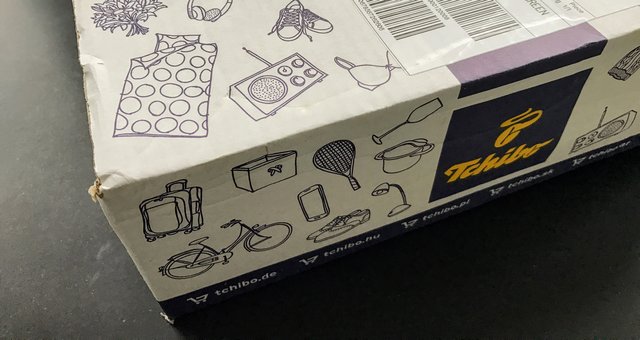
Ich bin mittlerweile richtig begeistert von der Logistik der Online-Shops. Die Scheffin hatte am Samstag beim Einkauf etwas aus dem Tchibo-Regal mitgebracht, das uns richtig gut gefallen hat. Statt noch einmal loszufahren, auf Verfügbarkeit zu hoffen und sich dann in einer langen Schlange an der Kasse anzustellen, haben wir einfach drei weitere Artikel online geordert.

Den Warenkorb zu füllen ist ja einfach. Aber beim Kaufabschluss lauern dann Formulare, die ausgefüllt werden müssen, Accounts die angelegt werden wollen, mit Passwörtern, die man sich nicht merken kann, usw. usf. Nicht so bei Tchibo. Das ging noch reibungsloser als bei Amazon. Weiter zu Paypal hieß es da. Einloggen, Kauf bestätigen, fertig. Die Lieferadresse hat Paypal gestellt, man musste schlicht gar nichts angeben.

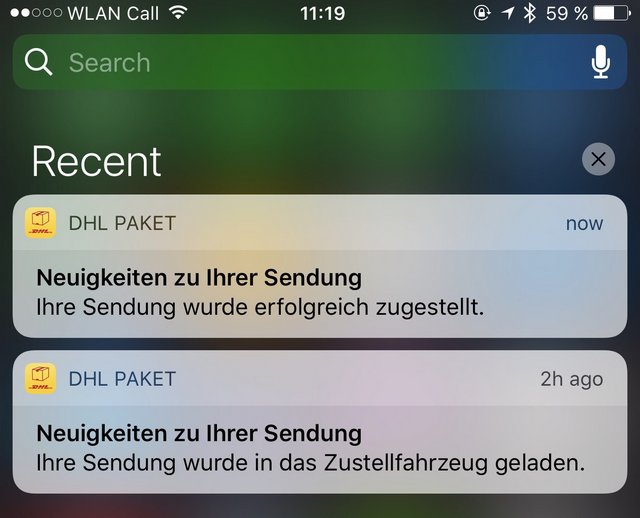
Montag morgen, Nachricht von DHL: "Sie kriegen ein Paket." Automatisch in der App eingetragen, weil ich mich dort einmal registriert habe für die Packstation, Dann gestern abend: "Sie kriegen morgen ein Paket. Passt das?" Heute noch mal zwei Updates, und da ist es. Volle Transparenz und Kontrolle, mit weniger Aufwand als ein Bareinkauf. Super.

Image-1