Shared posts

15 Apr 23:57

[Op-Ed] Taking a ride with Mobike outside of China

by Guest Editor
Rolandt

jj

Editor’s note: This op-ed was contributed by Tay Choon Chong, Managing partner of Vertex Ventures. Vertex Ventures China invests in high-growth internet and technology start-ups across mainland China and provides funding support and value-add services to portfolio companies in their growth stage.

With Mobike launching in Singapore, it’s first market outside of China, we thought we’d take a look at how we at Vertex Ventures China ended up embarking on this bicycle ride.

In 2014, we had our annual Vertex network conference. It’s our change for partners, associates, and teams from all of our five funds get together to share updates, methodologies, and insights from across the world. That year, it was in California, the golden state. And as most know, who’ve pilgrimaged to the holiest site of the tech world, the Bay Area is a beautiful place. Despite being the tech capital of the world, where cement, bits, and technocracy supposedly rule, San Francisco and the Silicon Valley stretch across endless green.

Since it was our first time there, we thought we’d take a bike ride from San Francisco to Sausalito, we’d heard recommendations about its wine country, and figured what more romantic or scenic a way than to go by bike. Buses, cars, and trains were either too confined or too cramped or just nonexistent. Bikes were the best option. So we jumped over to the nearest Citibike stand and grabbed 10 bikes for our 10 team members. Our Beijing and Shanghai natives, who grew up in China’s era of bicycle empire, were titillated. After we got to Sausalito, we were pretty exhausted.

The problem for us was not only was the pricing quite exorbitant, but we also had to return the bikes back to the exact location that we got it, or at least, to find another specific rack. We were quite tired, but we still had to bike it back to a rack, instead of discarding it where we were.

This made no sense. How was it that a bike excursion could cost so much and be so inconvenient? That’s when we started thinking about models that could solve this problem: making bike rides cheaper and more immediately available to travelers and residents. What we really wanted was to pick up a bike wherever we were and drop it off at our destination.

When we returned to China after this trip, we hunted for a bike sharing site. And we were lucky enough to stumble upon Mobike. At the time, Mobike was still nascent. It didn’t have much for numbers. It had just 300 to 400 bikes deployed across a campus in Shanghai. They were fundraising just a little. We saw that this opportunity was large.

Mobike Singapore

Mobike’s first launch event in Singapore and the first one outside of China

Why Mobike?

Besides the obvious pricing discrepancies, we saw that Mobike had a potential for China. After all, it was just a few decades ago that you walked the streets of China and saw bikes as far as the eye could see. But as China progressed, the cost of maintaining and owning a bike, next to the opportunity cost of owning a car and commuting in China’s burgeoning new industrializing working class, reached an impasse. Public transit, cars, and motorbikes slowly killed the need and wont of having a bike.

And don’t forget, as studies have begun to show, even with self-driving cars and car booking services, they’re actually bringing more congestion onto the streets. For a country approaching 1.5 billion, this is an increasing problem. The prospect of traffic jams is only increasing. Shared bikes come into this space as potentially adding another option that limits congestion as well as being good for the environment (not to mention good exercise for the biker). Bikes can actually be more convenient than a car.

Mobike tackles these problems with a holistic solution. Since it uses a QR code, and your account linked to your mobile, you can pay with either Alipay or WeChat Pay (or as is the case with Singapore, you can pay with credit card). With China’s high penetration of mobiles and online payment methods, virtually everyone can use a Mobike. You can also return the bikes to any location, and usually find bikes at almost any location. This means that it unlocks bike usage for a whole new middle ground. If you need to travel for more than 5 kilometers, public transit, taxi, or the Didi car booking app make sense. But below that, Mobike carries you to your destination.

Since Mobike’s explosive growth, we’ve seen unique use cases for the platform that convince us that this is still a long and exciting journey. In the wee hours of the morning, around 2 to 3 am, we see a spike in usage for Mobike, this coincides with the time that public transport (trains and buses turn off). We’ve also seen a large amount of usage for factory workers, who find Mobike to be an affordable way to get home and around, in place of owning their own car or motorbike. We’ve even seen some users go on “Mobike dates”, renting Mobikes for a romantic date around the city. It’s these use cases that show us that having a bike sharing platform unlocks new activities for people that were before not possible. Users are making Mobike their own.

No doubt, as Mobike proceeds to new cities and countries, we again see unique usage of bikes we didn’t anticipate. And it’s heartwarming to know that the solution is fulfilling a social and environmental impact wherever it goes. It’s this unique proposition that makes Mobike such an exciting opportunity for the infrastructure of cities. As Mobike moves outside of its comfort zone of China, it’s keen to partner with cities throughout the world to unlock the potential of their moving people.

The innovation riding out from China

For the past few decades, we’ve seen various shifts in the perception of Chinese innovation. As China rose as a manufacturing juggernaut, it came to be seen as the place where cheap plastic products are manufactured for the world. But as China watchers know, China has been able to leverage its massive talent pool, diaspora, and Chinese speaking neighbors to move up the chain of the industrial ecosystem. In the past decade, China has become the backbone of the great innovators of the world. And in the age of the internet, mobile, and more, China has again shifted its image, producing the likes of Baidu, Alibaba, and Tencent. And although these companies, special as they are, might resemble counterparts in the Valley and elsewhere, are innovators in their own right. Indeed, there’s considerable literature that the Valley is watching China for new ideas now.

In light of this, I believe we are at the cusp of a new wave of innovation where altogether new business models, companies, and strategies will find their starting point in China. The Chinese consumer is waking up and its companies are sometimes waking up with them or nudging them awake. But the world is still daunting, despite local success with its advantages of a big market and a walled garden, Chinese companies are finding a new humility as they push out to the world. Mobike is one of these companies. With only a few years of operation under its belt, it’s pushing into Singapore. Young Chinese companies want to be global sooner. And at Vertex, we’re happy to be along for that ride.

Edited by Anh-Minh Do.

TechNode does not necessarily endorse the commentary made in this opinion piece.

15 Apr 23:57

Scaffolding in Microlearning

files/images/image.jpeg


Christy Tucker, Experiencing E-Learning, Apr 16, 2017


The interesting part of this post occurs when Christy Tucker says "Maybe you don’ t need to scaffold within a microlearning module. Maybe the microlearning itself is the scaffolding." Indeed, if we can get past the idea that learning resources are single unified wholes, then we can imagine a constellation of resources around a particular activity, where each resource provides a bit of scaffolding and support.

[Link] [Comment]
15 Apr 23:57

How To Survive Your Morning Commute

by Andrea Kopp

And now for a brief interruption of your regular programming: A look into the mind of an e-bike commuter. 

Make coffee.


Make Breakfast.


Wolf it all down.


Brush your teeth.


Make more coffee, there’s time, right?


Check that the e-bike is charged. Whew.


The bag’s packed. Wait, the laptop charger! And snacks. Always snacks.


It’s all good, I’ve got plenty of time.


Did I pump my tires up? Not in a week?! Better pump them up.


It’s drizzling now!? Where’s my jacket?


Oh no, now it’s getting close!!!


I jump on my e-bike and off I go. Good thing I have fenders, look at the skunk stripe on that rider there!


Dang, I’m tired, better use the maximum assist on those hills.


Gridlock gridlock everywhere. Have fun sitting still! Oh, I think I just passed Bob from work...he’lll be late with that traffic. Good thing I rode in today.


Whoa, better take the lane, people always take that next right turn without signaling! Yep, look at that guy cutting right across the bike lane. It’s so much safer taking the lane when this motor helps me keep up with traffic.


Here I am. The parking lot’s packed! That bike rack right by the door is empty, lucky me.


Well, that was a nice little bit of cardio, I’m feeling ready to tackle mountains of work...mostly I can’t wait for the ride home.


Written by Blix's Andrea Kopp

15 Apr 23:55

China’s “Apple of electric scooters” announces new series aimed at broader user base

by John Artman

Niu (小牛 in Chinese) has announced the launch of a new line of electric scooters: the U series. Short for “Ultra lite,” the U1 is designed for a broad market. Whereas the N and M series are for enthusiasts, the U series references the electric bicycles seen on many of China’s streets. The U series is set to appeal to a variety of users and, indeed, solves a big pain point for any bicycle rider: how to carry your stuff from place to place.

China has increasingly become a place for cars. For many, however, bikes and their electric counterparts are the main modes of transportation, with many not even owning a car. With no car, storage capacity becomes an important consideration when purchasing the next vehicle. U1 solves this neatly by allowing users to add on as much or as little storage racks as they like. In fact, with 30 bracket mounts and an open modular accessory system, the U1 offers a degree of customization never seen before for China’s e-scooters.

WechatIMG17

Beyond aesthetics, user problems and cool features, the U1 also solves a legal problem: compliance with China’s fragmented regulations.

“Based on national standards and the position of our own product line, we decided to design an ultra lite scooter and introduce more innovative features, so we create a platform that makes more product requirements and thinking come true,” said Token Hu, founder of Niu. “We hope everyone could enjoy the fun of science and technology urban travel.”

Sharing some similarities with federal systems (such as the US and Australia), China’s central government usually allows provinces and municipalities to determine the details when it comes to certain types of regulations. In the case of electric scooters, Zhengzhou, the capital of Henan, for example, has more e-scooters than cars, but the regulations around getting registered are unclear. Shanghai, on the other hand, has strict rules that do not allow e-scooters and e-bikes into certain areas of the city. From the size and weight to the pedals and labeling, the U1 was designed to meet all national standards so that users, no matter where they live, can get properly registered and licensed.

According to Li Yan, COO of the company, they expect to sell 300,000 U1 units within 12 months of the launch.

Literally driven by data

Niu isn’t just an e-scooter company; they are also an IoT and big data company. With onboard GPS and other sensors and processors, Niu collects data about every aspect of the bike: from location and velocity to battery levels and health. At the event, Li Yan also revealed some interesting facts about Niu riders (affectionately called 牛油 in Chinese, a play on 友 meaning “friend”).

WechatIMG29

From their analysis, a Niu bike was ridden on China’s top 10 most congested road almost 14,000 times, saving each rider an estimated 6 days of travel.

WechatIMG36

He also showed how different cities have widely different paces of life.

The last 6km problem

While Mobike and ofo are duking it out for dominance over the last mile, Niu has few competitors of the same caliber in the last 6 kilometers. Certainly, there is a bevy of electric scooter makers, but many of them are specifically for the low-end Chinese market. Niu is riding the consumption upgrade trend where Chinese consumers, especially young and middle class, want higher quality products (both in use and design) and are willing to pay for it.

While the U1 is certainly targeting more than just middle-class millennials, you can be certain that many in that demographic will be buying one, if not for themselves, then for their parents or grandparents.

153057m8g9ggf95zgfycgy-1024x423Similar to previous models, the U1 will come in different versions with different top speeds, battey capacities, and prices.

15 Apr 23:55

“Didn’t You Bother To Read The Previous Responses?”

by Richard Millington

That’s not a helpful response.

Think of the absurdity of that statement too.

Did someone new to the community take the time to search for every previous thread related to the question (every answer) to see if any of those solutions worked?

Let’s assume this is expected. How would a newcomer know the right terminology to search for? How would they know if the previous answers were still current? How would they know if the listed solution was the best solution to their particular variation of the problem?

They could try multiple searches and test every solution, or they could simply ask the community and hope someone can help. Which, unsurprisingly, is exactly what most people do.

Don’t drive people away with snotty responses here. The questions they have, the words and phrases they use, and their satisfaction with the community brings in more traffic and participation over the long-run.

That time you spend chastising newcomers for trying to get a quick answer to their problem is far better spent getting them a quick answer to their problem.

15 Apr 23:55

A Beginners Guide for Manual Controls in iPhone Photography: ISO

by Jack Hollingsworth

Welcome to the fifth and final feature in our series of Beginners Guides for Manual Controls in iPhone Photography. You can find the other installments here:

  1. Focus
  2. Exposure
  3. White Balance
  4. Shutter Speed
  5. ISO (this post)

Definitions and Acronyms: ASA & ISO

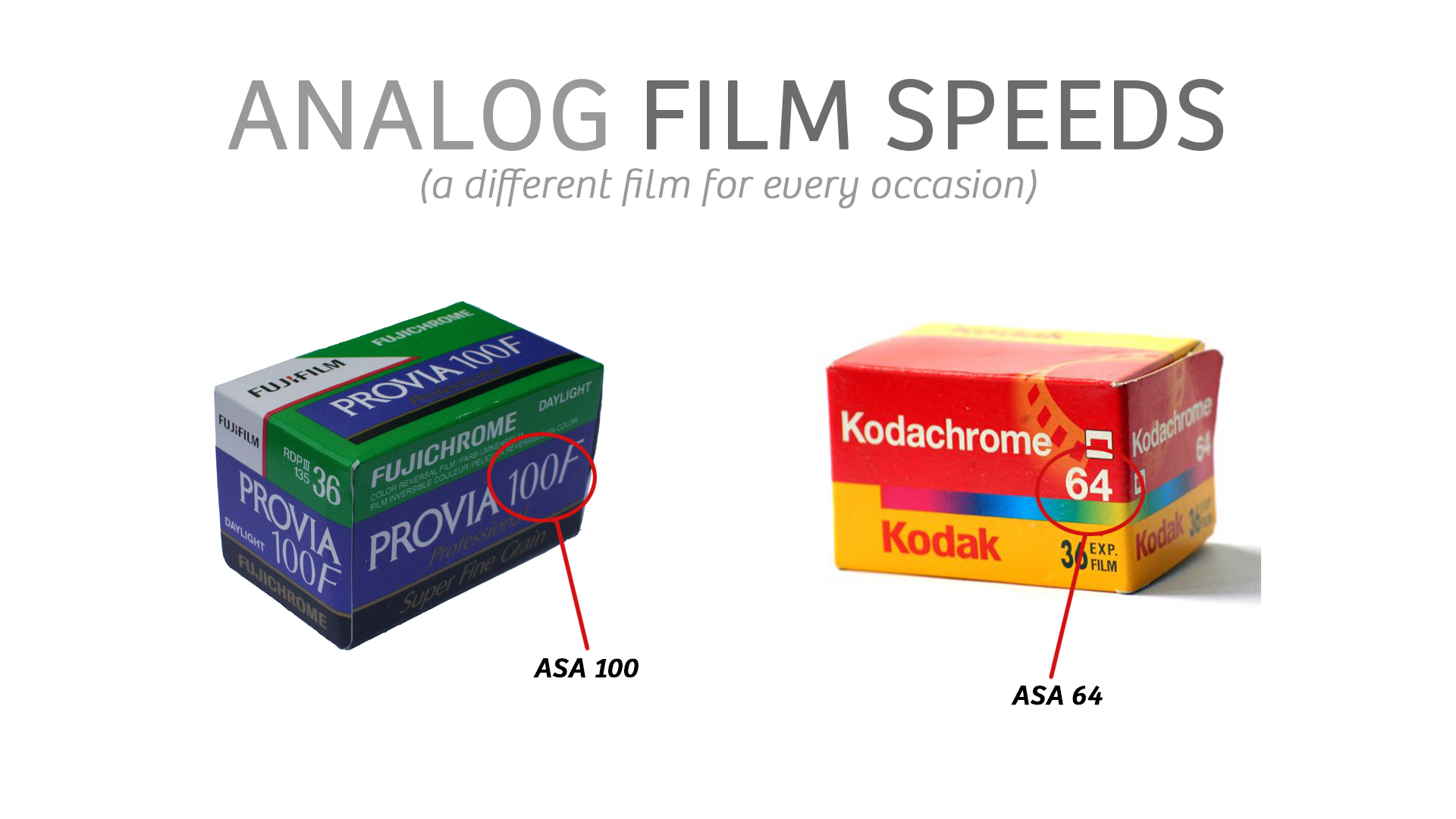
In photography-speak, for purposes of this general discussion, ASA and ISO are the same thing. ASA is a scale created by the American Standards Association that measures film speed. ASA, with few exceptions, is no longer used today. It was replaced by ISO in 1987 by the International Organization for Standardizations. (Oddly enough, it seems like it would be more justly called ISO – understandably confusing ). ASA is an old-school film acronym. ISO has more to do with the sensitivity of the sensor to light. 
 

A Brief History Lesson

When I was learning about photography (before digital came around) if I wanted a high or low ASA (ISO) film stock, I had to go and buy it. It was time consuming and expensive. There were different “film speeds” (ASA/ISO) for every occasion. There was ‘indoor’ film, ‘outdoor’ film, ‘sport/action’ film, etc. Now in the digital day and age, instead of being burdened with having to buy various film stocks you just change the ISO dial and viola. It couldn’t be easier – or cheaper. Long live digital!

Analog Film Speeds

Technically Speaking

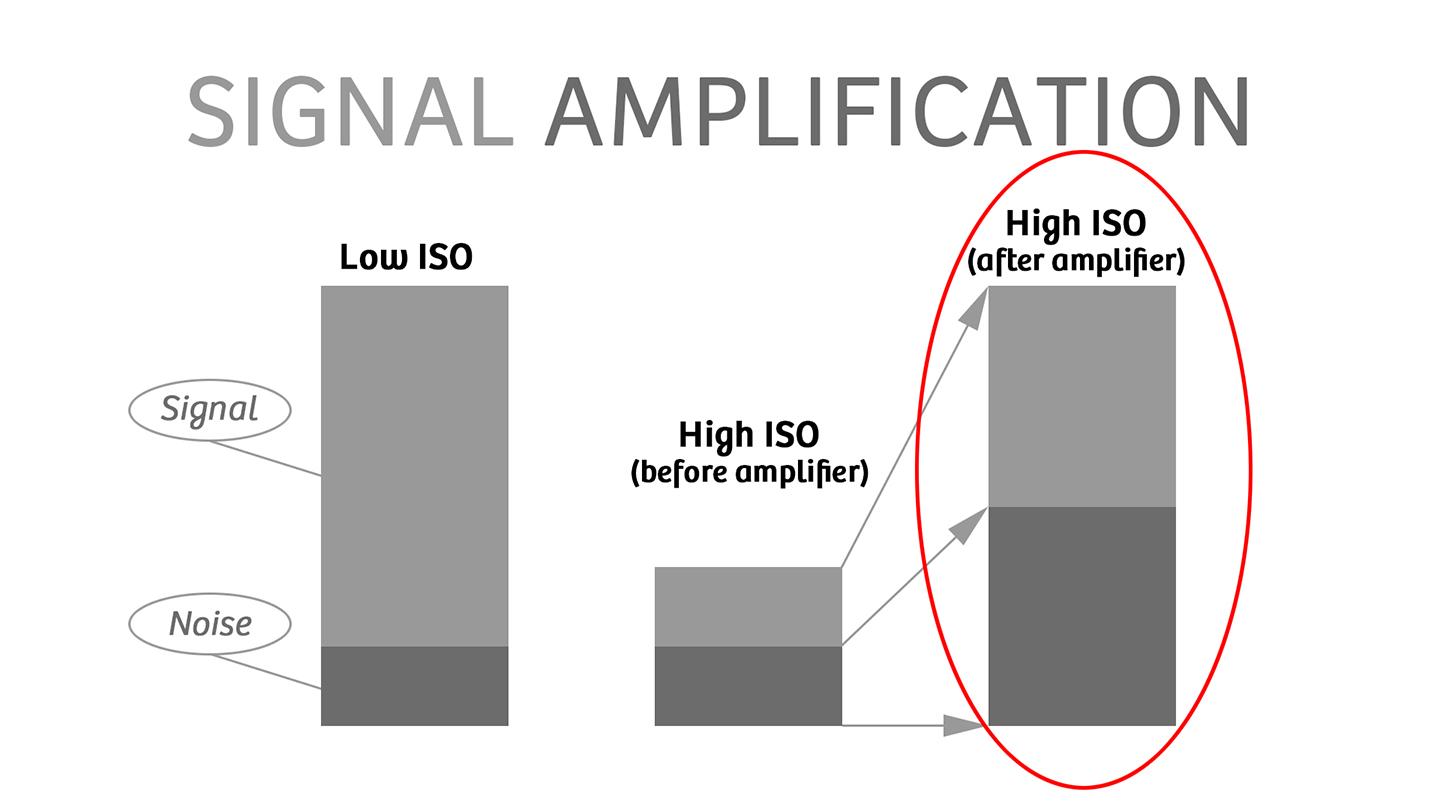
ISO sets the amount of light-sensitivity for the camera sensor. The higher the ISO, the higher the amplification factor of the sensor. The good part of amplifying light is that the photo obviously gets brighter. The bad part of amplifying light is that you’re also amplifying the noise. So the higher the ISO setting you use, the “noisier” the photo will be. Trust me, you don’t want digital noise in your photographs. It’s ugly and distracting.
            
Like most of photography, it’s a matter of compromises and trade-offs to get the shot that you want. Having a working knowledge of ISO will help you make wise shooting choices so you can take the best photos for any given situation. 

Signal Amplification

Since the aperture on the iPhone camera is fixed, you really only have two variables to work with in controlling exposure – shutter speed and ISO. When freezing or blurring of the subject is most important, then I make sure I get the optimum shutter speed. And when having a low-noise photograph is my top creative priority, I then focus on controlling the ISO.


The iPhone is Optimized for Low ISO Shooting

I want you to go outside in full, bright, sunlight and snap off a dozen photographs. Then come inside and look at the EXIF data. What you’re going to find is that most of the images will indicate being shot at a low ISO – somewhere in the neighborhood of ISO 25 to ISO 50. Why? Simple – because low ISO photos create low noise photos. So our friends at Apple have optimized the iPhone camera to shoot at a low ISO setting in bright light. 

A few weeks back I was down in Galveston, Texas shooting Pleasure Pier. I randomly pulled these eight photographs shot over a two-hour window, and every single one of them indicated that it had been shot at ISO 25. Again, the iPhone is optimized for low-ISO shooting. That is the way Apple built it.

ISO

What to Do When the Light is Not Bright?

Because your iPhone sensor needs more light to get an exposure, the ISO, by default, will continue to remain low while the shutter speed gets slower (i.e. ISO 25/1000s, ISO 25/500s, ISO 25/250s, ISO 25/125s, etc.). Once the shutter speed goes all the way down to what is ideal for getting a crisp photograph (i.e. 1/60s, 1/30s, 1/15s), the ISO begins to increase. It can potentially go all the way up to the maximum of ISO 2000. As the ISO increases, so does the amplification signal as does the resulting “noise” (an important distinction to make here is that “noise” is not the same as “grain” – see the tips below for further explanation). Low ISOs create low-noise photographs and high ISOs create high-noise photographs. 

Noise Comparison

ISO Comparison

Extended ISO and Shutter Speed Ranges

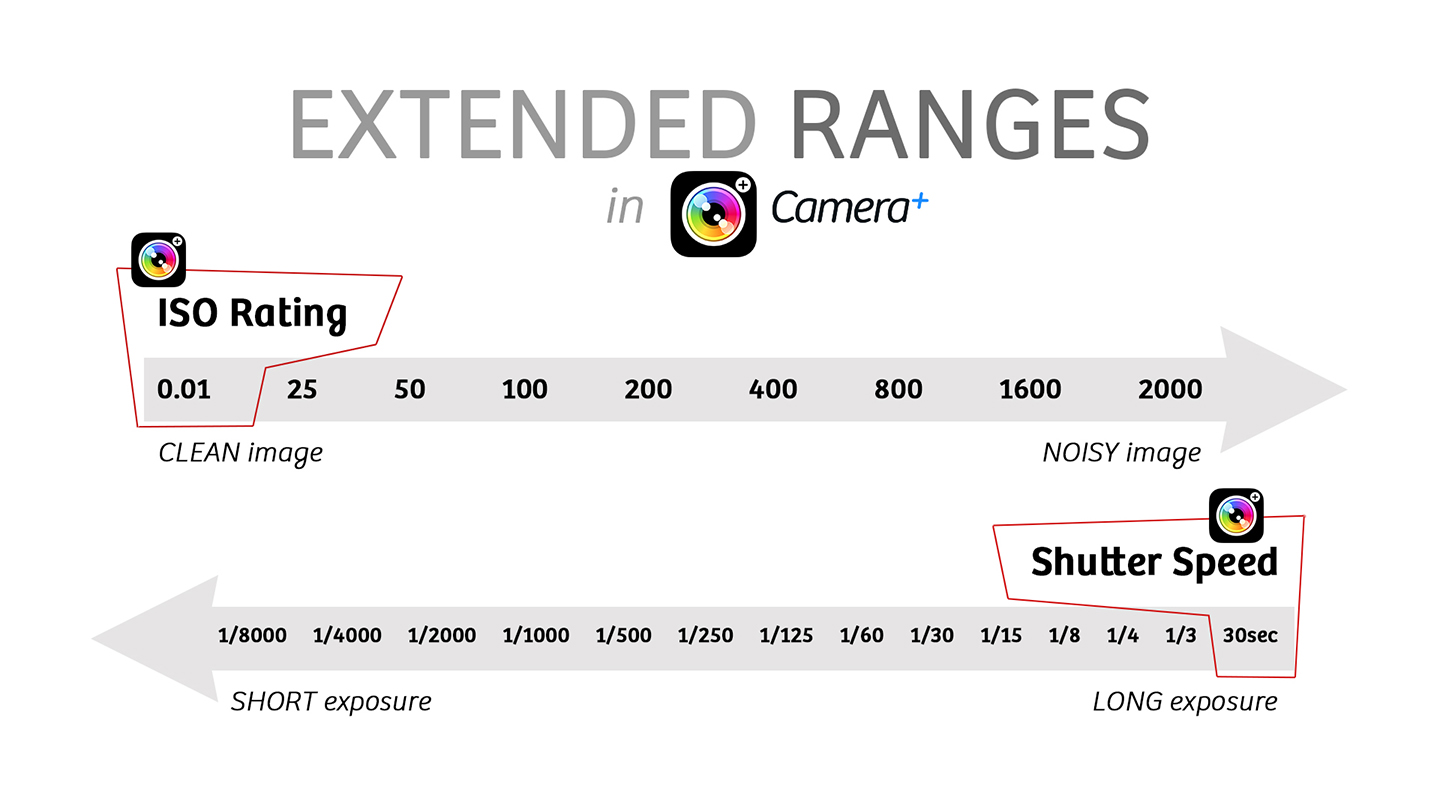
One of the benefits of using Camera+ is that it has extended ISO and shutter speed ranges that go beyond what the standard Camera app is capable of. To understand what these extended ranges give you, you need to first understand what the default app gives you.
 

ISO Rating

  • On the iPhone, ISO range is approximately ISO 25 to ISO 2000
  • Camera+ gives you an extended ISO range to ISO 0.1


Shutter Speed

  • iPhone shutter speed range is 1/8000s (fast) to 1/3s (slow)
  • Camera+ gives you an extended shutter speed range up to a full 30 seconds

Extended Ranges

General Tips on Manual-Controlled Photography with Your iPhone


Manage Your Expectations

As much as I love my iPhone, it simply does not have a full-frame sensor. It’s getting better all the time, but don’t expect it to be a DSLR…just yet. Which means you need to learn to work within the 8-stop dynamic range of an iPhone sensor (half of the range of most DSLRs). Do not let this discourage you. By making sure that the dynamic range of the scene (8 stops) does not exceed the dynamic range of the sensor (8 stops) and blowing out highlights or losing shadow detail, you can create photos that will trick people into thinking you own a fancy DSLR.

Low-Light/Low-ISO

One of the cool experiences I have had shooting with Camera+ in full manual mode is finally being able to get low-ISO photos in low light. (Hint: you need a steady tripod.) As we discussed, by default the native camera defaults in bright light conditions to a low ISO and high shutter speed, and the exception is when you are shooting indoors under low-light conditions. In these instances, the native camera defaults to a high ISO (meaning high noise) But now, with Camera+, because you have control over your shutter speed, you can create low-noise photographs, even indoors under very low-light conditions.

Noise in the Shadows

ISO “noise” is most apparent in the shadowy darker areas of the photograph, so be careful. Digital noise in the highlight areas is quite forgiving.
 

Grain vs. Noise

“Grain” is not the same as “noise”. “Grain” is a false throwback from analog, and generally is a positive in its adding to the emotional, nostalgic or cinematic feel of the photograph. “Noise”, on the other hand, is annoying and unattractive. It is clumps of colored speckles that look terrible. 
 

Small Sensors – More Noise

Small sensors, like on the iPhone, are prone to produce much more noise at higher ISOs than larger sensors, so pay attention. 
 

80/20 Rule 

I shoot approximately 80% of the time in auto mode and 20% in manual, for the trickier shots with irregular lighting. I’ve found this to be a good balance.
 

Last Resort

Remember the exposure triangle – the three factors that control exposure – are aperture, shutter speed and ISO. The aperture on the iPhone is fixed – nothing you can do about it. That leaves both the ISO and the shutter speed to control. It is preferable to play with the shutter speed and then change the ISO as a last resort.
 

Web vs. Print

If you are primarily posting your photos to social media the “noise” won’t play as significant a part when you go to print your images. Social media is forgiving to noise-laden photos. Print is not!
 

Live Exposure Display

It is always preferable to see what shutter speed and ISO the camera is on. That’s exactly why I shoot with Camera+. It has a “live exposure display” feature so there is no guesswork.
 

Optimized for Under 100 ISO

To get the best photos that you can, the iPhone camera is optimized for best results between ISO 25 and ISO 100.
 
Happy shooting!

15 Apr 23:54

Frontier Diary #3: Built-in Verbs Configuration

Frontier’s standard library is known as its built-in verbs. There are a number of different tables: file, clock, xml, and so on. Each contains a number of verbs: file.readWholeFile, clock.now, and so on.

Most of these verbs are implemented in C, in the kernel, rather than as scripts. At the moment, to add one of these kernel verbs, you have to jump through a few hoops: edit a resource, add an integer ID, add to a switch statement, etc. It’s a pain and is error-prone.

So I want to re-do this in Swift, because I’m all about Swift. And I want adding verbs to be fool-proof: I don’t want to remember how to configure this every single time I add a verb. Adding a verb needs to be easy.

My thinking:

  • Give each table its own class: ClockVerbs, FileVerbs, etc.
  • Have each class report the names of the verbs it supports. These need to be strings, because we get a string at runtime.
  • Run a verb simply by looking up the selector, performing it, and returning the result.

To make things easy and obvious, I think it should work like this: the selector for a given verb is its name plus a parameter. Then there’s not even a lookup step.

Each verb will take a VerbParameters object and return a VerbResult object.

dynamic func readWholeFile(_ params: VerbParameters) -> VerbResult

The flow goes like this:

  1. We have the string file.readWholeFile.
  2. We see the file suffix and so we know we need a FileVerbs object.
  3. We check fileVerbs.supportedVerbs (an array) to see if readWholeFile is in the list. It is.
  4. We construct a selector using the readWholeFile part of the string and we add a : character: NSSelectorFromString(verbName + ":")

This is great! We’re almost home free. Then we run the verb:

if let result = perform(selector, with: params) as? VerbResult {
    return result
}

That doesn’t work. We get:

Cast from 'Unmanaged<AnyObject>! to unrelated type 'VerbResult' always fails

Nuts.

* * *

It was so close.

In Objective-C this would have worked. And obviously, apparently, I still think in Objective-C.

I investigated some other options. At one point enums were abused, because there’s always, in Swift, an enum-abuse step. But everything I tried was more code and was more error-prone, and my goal here is to improve the situation.

I think, in the end, I’m going to do something that looks kind of ugly: a switch statement where the cases are string literals.

switch(verbName) {
case "readWholeFile":
    return readWholeFile(params)
…
}

“Nooooo!” you cry. I hear ya.

My experience as an object-oriented programmer tells me this: if I write a switch statement, I blew it.

And my experience as a programmer tells me that string literals are a bad idea.

But the above may actually be the easiest to configure and maintain. Each string literal appears only in that one switch statement and nowhere else in the code. And the mapping between a verb name and its function couldn’t be more clear — it’s right there.

(Yes, instead of using a string literal, I could create a String enum and switch on that. But that’s actually more code and more room for error. I’m going to have to type those string literals somewhere, so why not right where they’re used?)

It does mean that readWholeFile appears three times in the code (the string literal, the call, and the function itself), and in an Objective-C version it would appear only twice (in a supportedVerbs array and the method itself).

But. Well.

I’m torn between shuddering in abject and complete horror at this solution and thinking, “Hey, that’s pretty straightforward. Anybody could read it. Anybody could edit it.” Which was the plan all along.

And I get to stick with Swift, so there’s that.

But, sure as shootin’, some day someone’s going to come across this code and say, “Brent, dude, are ya new?” And I’ll send them the link to this page.

* * *

Update the next day: well, the performSelector thing would work, if only I’d known about Swift Unmanaged objects.

Joe Groff told me how this works.

Here’s the gist: the Unmanaged<AnyObject> just needs to be unwrapped by calling takeRetainedValue or takeUnretainedValue. Once unwrapped, it can be cast to VerbResult.

All this means that I can use my original design, which is great news.

* * *

Update April 25, 2017: I ended up using enums after all. See MathVerbs.swift for an example.

15 Apr 23:54

Weeknote 15/2017

by Doug Belshaw

This week I’ve been:

  • Recovering from climbing Ben Nevis and other mountains last weekend. I wrote up that trip, which I made towards getting on the Mountain Leader course, here.
  • Posting various quotations, most of them from Richard Sennett’s magnificent book Together, to my Discours.es blog.
  • Keynoting the Annual Learning & Teaching Conference at Queen’s University Belfast. I presented on The Essential Elements of Digital Literacies and my slides can be found here. It was great to bump into Ibrar Bhatt (who’s just started working at QUB) while I was there!
  • Spending half of the working week in Northern Ireland, because of the above. I didn’t rush to get back home, as the rest of my family have headed down to Devon for Easter. I’m flying down tonight.
  • Setting up new 2.1 Sony soundbar + subwoofer system in my home office, as the power of my existing solution just wasn’t cutting it.
  • Working with Laura Hilliger on our session for the Creative Commons Summit in a couple of weeks’ time.
  • Catching up with Averil Morrow and John Peto while I was in Belfast, Jessica Garcia-Kohl from LRNG, and Verena Roberts about upcoming work I’m doing in Calgary.
  • Curating and sending out Issue #008 of Badge News, a regular newsletter for those interested in the world of Open Badges and digital credentials.
  • Advising MyKnowledgeMap on developing one of their products around eportfolios and badging. I wish some of these tools had been around when I was younger, I really do.
  • Helping with a job advert for London CLC and planning for a writing workshop I’m leading for them next week.
  • Collaborating with Richard Speight on some potential work We Are Open Co-op may do with him now he’s self-employed!
  • Conversing with Eylan Ezekiel in a critical friend role. I really enjoy this kind of work, and I reckon it’s possibly the most effective work I do, from terms of a cost/value point of view.
  • Writing:

Next week, apart from a bit of work in London on Tuesday, I’m not working during the first three days of the week. Thursday is a Co-op day, and then I’m working from home on Friday, planning upcoming work in Canada.


I make my living helping people and organisations become more productive in their use of technology.  If you’ve got something that you think I might be able to help with, please do get in touch! Email: hello@nulldynamicskillset.com

15 Apr 23:53

Geth 1.6 – Puppeth Master

by Péter Szilágyi

puppethCramming in a lot more goodies than originally anticipated, the Go Ethereum team is proud to finally deliver the first incarnation of the 1.6 Geth release series! Glimpsing through the commit list, this is going to be a monster post!

Toml configuration files

For a very long time now, people were requesting that we support configuration files to aid in switching between different public and pirate chains. We didn’t focus much on private networks, so we’ve always pointed people towards using shell scripts in those cases. Although they are suitable for many scenarios, shell scripts aren’t portable across different operating systems, especially Unix and Windows.

By popular demand, we’ve reworked the entire configuration and flag handling for Geth 1.6, finally landing support for this much requested feature. The configuration file uses the TOML format and the fields that can be set map one-to-one to the config structures go-ethereum uses internally. Certain fields have been omitted to prevent sensitive data circulating in configuration files.

Figuring out how to create a “proper” config file for your node with all the correct fields set up just the way you’d like it – whatever the field names even are – can be daunting. Instead, Geth 1.6 ships with a command that you can invoke to print the exact config file you’ll need based on your custom invocation flags (geth --your-favorite-flags dumpconfig). This dump can then be loaded up via geth --config yourfile.toml. We’re also planning to allow embedding the genesis configurations, but that needs a bit more thought to finalize.

Pure Go ethash

Since the very beginning, Ethereum had a C ethash implementation, shared between the various clients. This helped reduce maintenance efforts while the algorithm was evolving, at the expense of adding a big chunk of non trivial C code to go-ethereum.

This began to hurt more and more as time progressed. Without C knowledge on the Go Ethereum team, we couldn’t properly handle performance issues and inherently couldn’t implement optimizations essential for mobile devices. The design of the C ethash prevents it from running on big endian processors that would require invasive redesign. Lastly, depending on C code significantly hurts our portability and maintainability.

Starting with Geth 1.6, we’ve deprecated our use of the original C ethash and reimplemented it fully in Go. This permits us to generate mining DAGs concurrently on all available CPUs, rotate old mining DAGs out instead of storing them indefinitely, use memory mapped verification caches essential for fast mobile startup times, and run on any platform Go supports. For details, performance numbers and CLI flags, please consult the pure Go ethash PR.

Router CPU compatibility

We’ve always taken pride in supporting the go-ethereum codebase on a variety of exotic platforms, which were severely limited by the weight of a full node. However, with the light client slowly maturing, it makes more and more sense to expand our platforms towards previously unfeasible directions.

With the 1.6 release family of Geth, we are further pushing the envelope by introducing support for MIPS CPUs, most commonly found in consumer router devices. Geth 1.6 runs on both 64 bit and 32 bit MIPS CPUs in both little endian and big endian mode (courtesy of our new ethash code). You can find pre-built stable and develop binaries for these MIPs CPUs on our downloads page from now on.

Although we’ve successfully put a consumer router on the mainnet, there’s still much to do make the experience smooth. The most notable bottleneck is the memory hardness of ethash, requiring non-negligible amounts of storage and memory capacity… one more reason to switch to PoS! 😉

Plugable consensus engines

Over the last few releases we’ve been slowly working towards abstracting consensus related concepts in our codebase, with the long term goal of preparing for Casper and proof-of-stake. It was a lower priority feature as there were so many other tasks hanging around. Priorities changed when the Ropsten testnet was spammed to an unusable state.

The root cause of the attack’s success was that a proof-of-work network is only as secure as the computing capacity placed behind it. Restarting a new testnet from zero wouldn’t solve much, since an attacker could mount the same attack over and over again. The time seemed ripe to put some effort into the consensus model within go-ethereum and allow using alternatives to proof-of-work for smaller networks, where a different security model is more suitable.

The result is that Geth 1.6 features a plugable consensus model where developers, wanting to roll their own fork of Ethereum with wildly different ways of agreeing on block validity, can now do so by implementing a simple Go consensus engine interface. The current ethash backed proof-of-work consensus model is also “just” another implementation of this interface.

Clique PoA (proof-of authority) protocol

With the old Ropsten testnet down the drain, different groups scrambled to create a new testnet that would suit them, but may or may not suit others much. These efforts gave birth to a reverted Ropsten testnet from the Parity team (relying on custom soft-fork code, bootnodes and blacklists) and the Kovan testnet from a Parity conglomerate (relying on a then undocumented Parity consensus engine). Both solutions lock out other clients.

Our solution was to propose a cross client proof-of-authority consensus engine called Clique (EIP 255). The main design considerations behind Clique were simplicity (i.e. minimize the burden of adding to different clients) and compatibility (i.e. support existing sync techs in all clients). The proposal was accepted by all client developers on the 17th of March, 2017.

With our 1.6.0 release, go-ethereum also features a full implementation of the Clique proof-of-authority consensus engine. In addition to all the consensus related functionality, the engine also supports customizable block times for private network scenarios. As to how you can create your own Clique network… 😉

Puppeth network manager

Do you like setting up a private network? Don’t answer that! Truth be told, if you’ve ever tried to set up your own private Ethereum network – whether for friendly fun, corporate work, or hackathon aid – you’ll certainly know the pain it takes to do so. Configuring a genesis block is one thing, but when you get to bootnodes, full nodes, miners and light clients, things start to wear thin fast… and we haven’t even talked about monitoring, explorers, faucets, wallets. It’s a mess.

Geth 1.6 ships a new tool called puppeth, which aims to solve this particular pain point. Puppeth is a CLI wizard that aids in creating a new Ethereum network down to the genesis, bootnodes, signers, ethstats, faucet, dashboard and more, without the hassle that it would normally take to configure all these services one by one. Puppeth uses ssh to dial into remote servers, and builds its network components out of docker containers using docker-compose. The user is guided through the process via a command line wizard that does the heavy lifting and topology configuration automatically behind the scenes.

Puppeth is not a magic bullet. If you have large in-house Ethereum deployments based on your own orchestration tools, it’s always better to use existing infrastructure. However, if you need to create your own Ethereum network without the fuss, Puppeth might actually help you do that… fast. Everything is deployed into containers, so it will not litter your system with weird packages. That said, it’s Puppeth’s first release, so tread with caution and try not to deploy onto critical systems.

Rinkeby test network

As mentioned in this post already, the Ropsten testnet fell apart a few months back. There are ongoing efforts to revive it as it’s a valuable component of the Ethereum ecosystem. That said, we find it essential to provide developers with a network they can rely on, one that cannot be attacked so easily. One such network is the second half of the EIP 255 proposal, the Rinkeby testnet.

On the 10th of April we launched the alpha version of Rinkeby, a new proof-of-authority testnet based on the Clique protocol. Rinkeby is currently upheld by three (3) Foundation signing nodes, but we eagerly look forward to promote external entities too, so that the network’s resiliency may be furthered. The network also features a public GitHub authenticated faucet that is accessible to everyone under the same conditions. As to why it’s an alpha version, Rinkeby is the first live incarnation of Clique and we have yet to see how it fares under global load.

So, how can you access it? Being alpha, we didn’t yet add a flag for it into Geth 1.6, however we went out of our way to make it beyond trivial do connect and use it… via it’s own website at https://www.rinkeby.io/! Dashboard, ethstats, faucet and connectivity tutorials for Geth, Wallet/Mist and Android/iOS! If you’re wondering how we made all this, Puppeth of course! This is what Puppeth was born for, and you can have the same for your own private networks too!

Mounting swarm data

If you’ve used our experimental swarm implementation before, you’ll know that operating with files is easy enough, but when it comes to working with entire folders – possibly nested – it can become cumbersome. Fine for a program, but less so for manual user interaction.

To try and address this shortcoming, the Swarm implementation shipped with our current release features a few milestone features, notably the ability to upload and download entire directories via tarball streams in the HTTP interface, as well as mounting an entire folder into your local filesystem via FUSE! This should make Swarm a lot more viable both for file backup purposes as well as for easily exploring complex directory structures.

Apart from these neat features, Swarm saw various stability improvements and bugfixes, gained the ability to manipulate manifests via the command line, as well as to create listings/sitemaps out of them.

64 bit gas calculations

The Ethereum Yellow Paper specifies that gas included with transactions can be an arbitrary value up to the ludicrous amount of 2^256 (which could cover almost as many transactions as the number of atoms in the known universe). As such, the go-ethereum EVM was implemented to work with these insanely large numbers for gas calculations, causing equally large performance penalties while running every transaction.

As there is simply no meaningful reason to use big-number arithmetic for gas calculations, Geth 1.6 switched over to working with 64-bit values, which is a native hardware-supported type on any modern CPU. If you are wondering whether this would pose any limitation, a single block with a gas limit of 64-bits could fit in 44 times more transactions than the number of red blood cells in the human body. I think we’re safe for the foreseeable future.

Regarding performance improvement, we don’t have an exact number, but it is safe to say that shaving off hundreds of memory allocations per every single transactions can’t be a bad thing.

Closing remarks

Besides all the highlighted features mentioned above, a numerous number of bug fixes have also been merged in, ranging from ethstats reporting, to singleton miner networks, star topology propagation fixes and more. Please check the Geth 1.6.0 release notes for a condensed rundown.

Other smaller features include constant improvements to the light protocol, heavy development in the Whisper protocol (getting very close to a public v5 release), and we’ve even swapped out our entire logging system to a much nicer and more robust version.

As always, you can install Geth via your favorite package manager, or download a pre-built binary for a variety of supported platforms.

Happy puppetheering! The go-ethereum Authors.


IMPORTANT NOTICE

Given the nature of this release, which includes heavy rework around gas calculations in the Ethereum virtual machine and heavy refactors around plugable consensus engine split, we ask production users to exercise caution and care when upgrading. We consider Geth 1.6 as a pre-release until large scale stability is confirmed.*

It is important for all production users to understand the risks involved in new releases such as this one. There may be undetected bugs and unexpected consequences that could lead to loss or other unwanted results. This release is for sophisticated production users who understand the Geth platform, the impact it may have on the users and the risks that new releases of this nature involve.

The post Geth 1.6 – Puppeth Master appeared first on Ethereum Blog.

15 Apr 23:53

Joan is a no brainer

by Stowe Boyd
Joan

I think Joan is a smart fix to a perennial problem: booking conference rooms. Yes it integrates with your existing calendar.

But why is it €400 when I can buy an android tablet for $40? It’s a tablet with an app, right?

15 Apr 23:53

Android O Feature Highlight: AAudio API

by Rajesh Pandey
Android has long struggled with high latency for audio. Due to this, professional audio apps were never possible on the platform. Google has been trying to solve the issue since Lollipop and has made great strides on that front.  Continue reading →
15 Apr 23:52

King Lear With Sheep

Inspired: a theatre director takes on King Lear. His cast, being sheep, are inclined to be silent and mutinous; it would drive anyone mad. New York Times. YouTube.

15 Apr 21:36

The Taming of the iBook

by Stephen Hackett

Last month, I took a look at the Clamshell iBook G3, the most colorful notebook Apple ever made.

The Clamshell saw just one speed bump, and was replaced in less than two years. The second-generation iBook introduced the form factor most people think of when they think of the notebook:

Everything's New But the Name

Introduced at Town Hall in 2001, the updated iBook G3 was a huge departure from the curvy, rubber-injected notebook it replaced.

The official name of this iBook G3 is the "iBook (Dual USB)." As the name implies, this model put its new flat sides to great use, packing Ethernet, a Modem, 2 USB ports, Firewire 400, VGA and audio-out ports along the left-hand side. On the opposite side, the tray-loading optical drive sat flush with the case, without any of the awkward visual lines found on the Clamshell.

The new notebook was smaller in every dimension, and weighed a full two pounds less than its curvy ancestor. Apple claimed 5 hours of battery life, and like the Clamshell, this notebook could be outfitted with an AirPort card.

Gone were the colors of the past; this iBook was all white and silver. This machine picked up the nickname "Icebook" because of its case construction. While later iBooks would be made of white plastic, the outer shell of this machine was actually transparent, with white paint applied to the inside of the shell. This gave it a sheen that still looks good today, in my opinion.1

The notebook came with a 500 MHz G3 processor, and could be optionally specced with a CD-burning, DVD-playing Combo drive for $1799. Every six months or so, Apple bumped the specs of the machine to support faster G3 chips and (eventually) more RAM.

This iBook shipped with a 12-inch, 1024 x 768 display, which Jobs touted as a huge improvement to the Clamshell's 800 x 600 resolution. He pointed out that Mac OS X really benefitted from the extra pixels, and he was right; OS X felt cramped and crowded on the older models. Jobs claimed that it was the first consumer notebook with this resolution of display.

iBook in the Classroom

In his 2001 keynote, Jobs preached the value of wireless notebooks in the classroom. Instead of having a computer lab, he advocated a mobile-first approach using laptop carts that could travel to the students. At the time, Apple was leading the pack in terms of education customers, and he believed the iBook was going to allow Apple to stretch out its lead.

The event wrapped with a conversation with the superintendent of the Henrico Country School District, which had ordered 23,000 of the new notebooks.

Two More Inches

In October 2001, Apple announced a 14-inch variant. Packing the same 1024 x 768 resolution but in a larger panel, the picture wasn't as good on this model, but if the number of 14-inch models I saw out in the world was any indication, most consumers didn't mind. It clocked in at 5.9 pounds.

After the 14-inch model came out, Apple revved the line several more times, this time increasing the notebook's GPU as well as CPU. Eventually, it started booting into OS X by default and climbing all the way to a 900 MHz G3.2

iBook G4

In October 2003, the iBook was upgraded to use a G4 processor.

The G4 retained both the 12 and 14-inch sized options in slightly updated cases. This machine broke the 1 GHz barrier for the first time in a consumer notebook from Apple, while claiming an extra hour of battery life over the G3.

The system also brought USB 2.0, Bluetooth support and 802.11g support via an optional AirPort Extreme card.

The Early 2004 revisions brought twice the built-in RAM and an option for the DVD-burning SuperDrive, but otherwise was a speedbump to the proven recipe. The iBook G4 saw two more revisions, the last coming in June 2005. Later models can run OS X Panther, Tiger or even Leopard.

Farewell, Old Friend

With 2006's Intel transition, the iBook met its end. The 13.3-inch MacBook replaced both sizes of iBook with an all-new design and articheture.

In fact, the 12-inch screen size was absent from the product line until the MacBook with Retina display showed up in 2015.3


  1. This design had one critical flaw: the keyboards smell like body odor. I wish I was kidding, but I'm not. ↩︎
  2. These late iBook G3s have some of the most descriptive AppleCare names I've ever seen. The last two models were named "iBook (800/900 Mhz 32 VRAM)" and "iBook (14.1 LCD 900 MHz 32 VRAM.)" What a mouthful. ↩︎
  3. The 14-inch screen size has not been resurrected to date. ↩︎

Support MacStories Directly

Club MacStories offers exclusive access to extra MacStories content, delivered every week; it’s also a way to support us directly.

Club MacStories will help you discover the best apps for your devices and get the most out of your iPhone, iPad, and Mac. Plus, it’s made in Italy.

Join Now
15 Apr 21:36

What Is Digit, And Why Are Users Upset That It’s Charging A Fee?

by Laura Northrup
mkalus shared this story from Consumerist.

Maybe you’re familiar with Digit, an app that analyzes your bank account and tucks away money that you won’t miss. The app has a lot of fans, who credit it with helping them build more savings than they would have on their own. This week, though, the company announced that it will start charging a $2.99/month fee.

Digit is great for people who simply don’t remember to stick money in savings. It’s a more sophisticated version of what you can do yourself by having a certain percentage or amount of your pay diverted to a savings account every week, but the service is phone-based and fun, and gained lots of fans. When it didn’t cost anything.

In an announcement this week, which was also emailed to customers, Digit explained that in looking for a way to make money, it didn’t want to go the way of what we traditionally think of in “free” web and mobile apps. That would include selling user data, “recommending” bank accounts or credit cards, or serving up ads within the app.

Those are all ways that services that most of us use every day make money, but Digit went for a straightforward option of charging a monthly fee. Instead of interest, Digit pays users a quarterly Savings Bonus. That’s currently .25% annually, and will go up to 1% when it becomes a paid app. For the bonus to offset the entire fee, users would need to keep a balance of at least $3,600 in their accounts.

“As Digit becomes a more important part of our customers’ financial lives, we’ve decided to make a conscious decision about how we want to make money: We work for you, and you pay us. It should be that straightforward,” the company wrote in an email that some users complained that they found unprofessional.

Forbes recounts that in an interview a year ago, the CEO of Digit said that the company hadn’t really considered yet how it was going to make money, and that it had enough money from investors that it was able to take “a long-term mentality around monetizing.”

Users were pretty transparent about their reasons for leaving on the company’s social media channels, explaining that they didn’t find the service worth $3 per month, or simply that there are too many competitors out there whose services are free.

There really are a lot of competing apps. Lifehacker encouraged readers to try Digit in the past, and now offers a list of alternatives that function in similar ways and don’t charge fees. Instead, they earn money from the interest on users’ accounts, which was Digit’s sole revenue source before this change. The problem is that interest rates depend on factors outside of the company’s control, and interest rates aren’t great right now.

“Relying on interest income is difficult in the current interest rate environment,” a Digit spokesperson told Consumerist. “By charging a monthly fee, we’re no longer motivated by interest.”

Instead, the company chose a “transparent monthly fee” so customers would understand what they were paying for the service and getting in return.

Web and mobile apps that help users save or manage their finances (fintech, or financial technology) are a growing market, and also a market that has to grow up eventually. While some users will simply migrate to whatever app is offering the most services for free, others may find that Digit is working for them.

“Fintech companies aiming to disrupt big banks must figure out how to monetize in a way that continues to deliver value for their customers,” the Digit spokesperson told Consumerist. “Digit chose a monthly fee instead of selling customer data or unnecessary products so we can continue building only for the benefit of our customers.”

Current users have 100 days to decide whether they want to pay for the service, while new users will have to pay the fee right away.


15 Apr 21:34

Chrysler Deletes Its Dating Apps, Decides To Remain Single For Now

by Ashlee Kieler
mkalus shared this story from Consumerist.

They say you can’t have a healthy relationship until you’re happy with yourself. That appears to be the new mantra for Fiat Chrysler: After several attempts to woo General Motors and more recently Volkswagen, the carmaker’s top executive says he plans to ditch his lovelorn ways to concentrate on his company’s bottom line. 

Bloomberg reports that CEO Sergio Marchionne has turned his focus to eliminating FCA’s debt rather than eliminating its single status.

Marchionne has set a goal of erasing FCA’s debt by 2019, the same year he’s set to retire. To do that, he says the company needs to do a little work on itself.

“We need to be very careful that we don’t start unrealistic dreams about consolidation as we are on our way to achieve historically important results and a debt-free position,” Marchionne told investors at the carmaker’s annual meeting in Amsterdam, as reported by Bloomberg. “We are not at a point of time to discuss any alliance.”

Yes, you heard that right: The man who “never closes any doors” and has pushed for several different mergers with his company has allegedly extinguished the long-held flame for GM, and more recently Volkswagen.

The change isn’t entirely surprising, as the carmaker has been rebuffed several times by GM, which made it clear it just wasn’t that into FCA. CEO Mary Barra said just last month that the company wasn’t “interested before and we’re even less interested now.”

Of course, the current change of pace doesn’t mean FCA won’t be looking for a life partner in the future. In fact, Bloomberg reports that by cutting down on debt, FCA could be looking to make itself more attractive — cue movie-makeover montage.

Any future couplings don’t necessarily have to be of the car-kind, either. Marchionne noted at the annual meeting that he’s also looking for cooperation agreements with tech companies to reduce costs.


15 Apr 21:34

Amazon’s Jeff Bezos shareholder letter has some gems . . . and some clunkers

by Josh Bernoff

Jeff Bezos’ latest Amazon shareholder letter is striking in its clarity, directness, honesty, and meatiness. That’s unusual in communications from a CEO. Here’s a look at what’s great — and not so great — in this 1800-word letter. It’s well organized, with an effective lead In a read-on-screen world, you should start everything with a summary, but that summary doesn’t … Continued

The post Amazon’s Jeff Bezos shareholder letter has some gems . . . and some clunkers appeared first on without bullshit.

15 Apr 21:33

JSONPath

Or should be that be JsonPath? Whatever, it’s a tool I’ve been using lately and generally like. But it could use a little work.

The last project I worked on, Step Functions, has a JSON DSL for State Machines, which makes use of JSONPath (see Paths and Input and Output Procesing) to solve a tricky problem in a way that people seem to find easy to understand and use.

Early on in that project we adopted the Jayway JsonPath library and it seems to mostly Just Work.

But, we’ve had a few questions from customer along the lines of “Your service rejected my InputPath, but it looks OK to me.”

Which raises the question: What is a legal JsonPath, anyhow?

To the extent there’s an “official” definition, the most obvious candidate would be Stefan Goessner’s JSONPath - XPath for JSON. Standards wonks will sneer at it, not a shred of BNF in sight. But I like it, because it applies the most important lesson from Mark Pilgrim’s immortal Morons and Assholes essay: Have lots of examples.

Having said that, it’s kind of skinny. And if you go back to that Jayway JsonPath spec and start scrolling the README.md, well, you can keep scrolling and scrolling, and there’s a lot of goodness there.

But still, is $.blog-entry a valid JSONPath? Or should you have to say $['blog-entry']? Because blog-entry is not, after all, a JavaScript “Name” construct.

For the purposes of AWS Step Functions, JsonPath means what Jayway says it means. But I’d be happier if there were an RFC or something because, good as Jayway is, people do [*gasp*] write code in languages other than Java.

So, an RFC maybe? The idea’s not crazy.

Capitalization

Let me settle one dispute right here: Stefan Goessner says “JSONPath”, Jayway says “JsonPath”. Stefan’s right, because it’s called JSON not Json, and by the analogy with XPath.

15 Apr 21:32

A Marketplace in Confusion

files/images/33867411241_f54860f0de_o2028129.jpg


Rick Seltzer, Inside Higher Ed, Apr 17, 2017


This article takes the perspective of private colleges that are reacting with concern after the state's announcement of a free college tuition program. They "reacted with a mix of dismay, confusion, criticism and, in some cases, resolve in the days after New York leaders struck a deal to start a tuition-free public college program this fall." At the same time, public universitties in the state are launching a  major expansion of OER programs (which make much more sense once tuition is free). “ This isn’ t a nice one-off innovation,” Hatch said. “ This is something that can be incredibly impactful for our students. If you can save students $700 a semester, that’ s a month’ s rent.”

[Link] [Comment]
15 Apr 21:31

Why VR Is Failing

files/images/xl-2016-virtual-reality-1.jpg


Rob Enderle, E-Commerce Times, Apr 17, 2017


It might be a bit early to say that virtual reality (VR) is "failing" but the arguments in this article are sound (and have been the basis behind my own caution to fully embrace the technology (as much as I really really want to)). "Where VR gets into trouble is in RPGs (role-playing games) and FPSes (first-person shooters). This is because when VR demands movement from the player, it gets not only less realistic but also dangerous."

[Link] [Comment]
15 Apr 20:03

New machine learning models can detect hate speech and violence from texts

files/images/emtions_in_text.PNG


Myriam Douce Munezero, Phys.org, Apr 17, 2017


This dissertation presents "a framework that can be used for the automatic detection of antisocial behavior in text. The framework is based on the emotion and language theories." I'd call this an early study as it depends on models of anti-social behaviour and then detects for them; a fuller study would develop its own models to capture a wider range of anti-social content. Still, we can see how this is useful in the context of online and learning communities. Via Helge Scherlund.

[Link] [Comment]
15 Apr 20:03

Cross Buns and Cross Chaining

by noreply@blogger.com (VeloOrange)
By Scott


When I started riding, one of the "rules" of cycling that was passed down from more experienced cyclists was never to have the chain in big and big or small and small. This meant you did not want the chain aligned with the largest cog in the back and the largest ring in the front  or the smallest size cog in the back and the small ring in the front.

(big and big)

There are certainly some good reasons not to do this:
  • This combination puts more strain on the chain. Chains run best when they are as straight as possible.
  • It also puts more stress/wear on the chain rings and cassette.
  • Some rear derailleurs can't handle the range of the cog and the front chain ring, and if the chain is short, putting it in big and big could do damage to the rear derailleur
  • When using small and small with a compact double, the chain can strike/rub against the large ring due to the angle that the chain is at as well as the size difference between the small and large ring.
  • It can make a hideous noise due to the chain being at an extreme angle
So instead of being in big and big, you should be in a small and mid range cog. The big and big gear combination (46T x 28T) works out to a gear inch of 42.7 inches. If I use the inner ring and a middle cog (30T x 18T), I get a gear inch of 43.3 and a much straighter chain line.

(small and mid- better chain line)
    Now while chains have certainly become stronger over the years, some things have stayed the same. More folks seem to use the larger cogs while being in the big ring. This might be a reaction to the increasing popularity of 1 X systems. Just make sure your chain is long enough and most drive trains can handle it for a short period of time.

    (small and small)

    Small and small is still something we don't recommend. The chain can get caught on the pins on the inside of the large chain ring (they are there to help shifting on 10 speed set ups, due to the narrowness of those chains). Typically the gear ratio that is the small and small is replicated by using the large ring and a middle cog in the back, similar to our earlier example of big and big.

    If you want to learn about gear inches/ratios the late Sheldon Brown's site has the best set up for figuring out the gear ratios on your bike. You can find it here.

    Owing that it is Good Friday, our resident baker Clint, took it upon himself to bake some hot cross buns. We'll be enjoying these today at the office with a coffee or tea.

    Recipe can be found here


    15 Apr 19:52

    The literacy of messiness for philanthropy

    by Chris Corrigan

    A couple of years ago I wrote a post that was critical of the way in which the Representative for Children in Youth in British Columbia drove practice changes among social workers. In short the reason had to do with apply too much order (rules and checklists) in a complex space (social work practice). At a certain point, when you are trying to prevent deaths that have occurred in the past, you end up outlawing all but the deaths that will surprise you in the future. We look at reviews of child deaths as if they were expected and predictable and create highly ordered accountability mechanisms to prevent them from happening again. The problem with this, as anyone knows who works with complexity, is that you create a break between good social work practice which is sensitive to nuance and context, and rigorous accountability standards. While no one is arguing that social workers should not be accountable, what is required is the ability for social workers to develop and rely on their practice, because no amount of rules will prevent children from dying in novel ways, but good social work practice does have an effect. In fact, checklists over practice almost ensure children will die in increasingly novel ways because as social work becomes constrained simply to what is on the checklist, social workers narrow their gaze too much and are unable to detect the weak signals in a situation that would otherwise anticipate a problem before it happens.  This is the dilemma between anticipatory and predictive awareness and getting it wrong is costly.

    It’s a brutal example, but I do believe it points to the the consequences of accountability models that assume that all outcomes are predictable and negative effects can be prevented with best practices even when its proven that they can’t be. (the confusion in that link is perfectly illustrative, by the way.  “Child deaths are preventable” on the one hand and “we lack the most basic information about why children die” on the other.)  That can be true in ordered systems but not in complex ones.  This particular problem has a major implication for philanthropic organizations that are seeking to have “impact.” In many cases, the impact is a pre-defined outcome of a process taken largely in a narrowly defined strategic context. Real life is messy but logic models are sweetly and seductively clean.

    Messiness is important and working in messy ways is a critical skill of philanthropic workers, donors and directors.  In this recent article Martin Morse Wooster argues for a loosening of constraints on philanthropic work and although he doesn’t provide a solid theoretical basis for his assertions, but good theory on the limits of managing and measuring impact backs him up.

    Many front line philanthropic workers – grants administrators, programs staff and consultants – know this approach but they are often constrained by donors, Boards and executives who demand simple outcomes, simple metrics and clear impact. I’m increasingly interested in putting together specific trainings and learnings for boards and donors that will increase their literacy of messiness in support of making smart changes and supporting good in a way that is much more aligned with how community actually works.

    One such offering is currently open for enrolment. We are gathering in June in Glasgow and will be repeating the workshop in October in Vancouver. If you’d like it in your neck of the woods, let me know.

    15 Apr 17:11

    Point Grey Greenway– Blossoming

    by Ken Ohrn

    Work continues, and is steadily transforming Vancouver’s Point Grey Road from a roaring, dangerous arterial into a lovely place for people on foot and on bikes.

    Here, the first landscape plantings are in the ground at the eastern end — and actively blossoming.  In the coming years, this Greenway will be a multi-faceted attraction for everyone in Vancouver. Walk, bike, visit parks, be active, be outdoors, admire the cherry blossoms, be by the sea.
    PGR.April.14.2017 Click to expand


    15 Apr 17:10

    Inside the World's Greatest Scavenger Hunt, Part 1

    In the fall of 2015, my teenage daughter Tia crafted a spectacular, life-sized poodle out of feminine hygiene products.

    “It’s a tampoodle,” she told me.

    She made this, uh, artwork as an audition piece—to showcase her creative skills, as a tryout for an elite team in some kind of national scavenger hunt. (She made the team.)

    I thought the tampoodle was cute and clever. I thought it was great fun that Tia was joining some kind of scavenger hunt.

    I had no idea what kind of ride was ahead.

    Meet GISHWHES

    When most people think of a scavenger hunt, they probably imagine the list of items includes, you know, “Get the dean’s signature” or “Find a dog with a curly tail.”

    GISHWHES is not that.

    It stands for the Greatest International Scavenger Hunt the World Has Ever Seen. (Its creator acknowledges GISHWHES may be the Ugliest Acronym the World Has Ever Seen.)

    Teams of 15 have one week to complete about 200 extremely difficult or hilarious tasks. They prove they’ve completed each item by submitting a photo or video of it; their $20 entry fees go to a charity, and the winning team gets a trip to some exotic location.

    Sample items from past GISHWHES lists:

    • Do a dramatic reading of your grade-school report card.
    • Find someone you love and butter them up—literally. Cover them in butter and then give them a big hug.
    • Glaciers are melting—so act accordingly. Pose at a major glacier wearing a swimsuit with floaties.
    • Have a tea party with a pediatric cancer patient, where you’re dressed as a character from “Alice in Wonderland.”
    • Tour a sewage treatment plant dressed in formal attire with an accompanying violinist or flutist.
    • Get a child to write a letter to the universe. Launch the letter into orbit.
    • Film an erotically charged conversation between a housewife and pizza delivery man. The actors can ONLY talk about grammar and fonts.

    What astonished me is what a big deal GISHWHES is. Last year, 55,000 people registered to participate—not including all the friends and family members who lent favors, assistance, and props.

    image
    Some participants had to dress up as a prospector and pan for gold in a public fountain. Photo courtesy of David Pogue

    GISHWHES holds seven Guinness World Records, including Biggest Media Scavenger Hunt, Largest Online Photo Album of Hugs, Longest Chain of Safety Pins, Most Pledges for a Charitable Campaign, and Largest Gathering of People in French Maid Outfits. (Why is there a Guinness record for Largest Gathering of People in French Maid Outfits!?)

    But in the end, GISHWHES is an event that does good in the world. Over the years, GISHWHES list items have persuaded players to a) raise over $1 million for charity, b) donate hundreds of thousands of pints of blood, c) volunteer at soup kitchens, d) register thousands of citizens to vote, and e) register to become bone-marrow donors. (That last item has already saved two lives, according to GISHWHES producers.)

    And the 2016 hunt raised $250,000 to buy homes for five Syrian refugee families.

    So yes, GISHWHES is a do-gooder enterprise. But it’s also brilliantly clever, gut-bustingly funny, and positively unforgettable.

    So my question is: Why haven’t people heard of GISHWHES? Why isn’t it a cultural thing?

    Why isn’t it, at the very least, a reality show? It’d be the most entertaining show on TV.

    Well, if you want something done right, you have to do it yourself. With the tolerance of my superiors at Yahoo, I decided to make my own darned reality show. Above on this page is Episode 1 of a five-part series.

    Misha Collins

    image
    Misha Collins attends the “Supernatural” special video presentation and Q&A on Day 4 of Comic-Con International on Sunday, July 27, 2014, in San Diego. (Photo by Richard Shotwell/Invision/AP)

    GISHWHES was created, and is run to this day, by TV actor Misha Collins, a costar of the CW series “Supernatural.” (His heartthrob status helps explain why GISHWHES participants are predominantly female.)

    “I went to the University of Chicago,” he told me. “The University of Chicago has a scavenger hunt that we call Scav, that has been running about 30 years now. It took place over the course of a long weekend. We would completely abandon our academics and our sense of decency for those three days, and go all-out for this scavenger hunt. And I loved it. I actually think that it was one of the most educational aspects of my college experience, and infused with the most joy.”

    Years later, after a decade of struggling as an actor in Los Angeles, Collins finally landed a show. “I got on this TV show ‘Supernatural,’ and I developed a little bit of a fandom following, and I started to notice that there was a high level of creative engagement from our fans. That got my wheels turning. What can I do with this? How can I have fun with it?”

    Collins’s first side project with his fans was a charity called Random Acts. “We’ve done some pretty big projects. We built an orphanage in Haiti; we’re finishing building a high school in Nicaragua right now. But we also do myriad smaller projects all over the world—as small as bringing roses into a senior citizen home.”

    Then, in 2009, as a lark, Collins ran a little scavenger hunt from his Twitter account. About 300 people participated; they were instructed to photograph their submissions and send them to an email address that Collins set up.

    “People engaged in it with an enthusiasm and a committedness that I could not’ve anticipated,” he says now. “I remember sitting in my apartment, looking at the submissions that had come in, and thinking, ‘This is amazing!’ The art people were creating, the tasks that I thought were impossible that people were pulling off—! I remember, ‘This is what I wanna do for my life’s work. This is awesome.’”

    And so, in 2010, GISHWHES was born.

    For the 2016 hunt, I embedded myself with my daughter’s GISHWHES team for the week. I filmed their efforts and followed their frustrations and joys. In the coming episodes, you’ll get to meet them—and you’ll get go to inside world’s biggest scavenger hunt.

    More from David Pogue:

    The David Pogue Review: Windows 10 Creators Update

    Now I get it: Bitcoin

    David Pogue tested 47 pill-reminder apps to find the best one

    David Pogue’s search for the world’s best air-travel app

    The little-known iPhone feature that lets blind people see with their fingers

    David Pogue, tech columnist for Yahoo Finance, welcomes non-toxic comments in the Comments below. On the web, he’s davidpogue.com. On Twitter, he’s @pogue. On email, he’s poguester@yahoo.com. You can read all his articles here, or you can sign up to get his columns by email


    15 Apr 17:10

    Record High Multi-Family Construction Set To Wreak Havoc On Apartment Rents

    by Tyler Durden
    mkalus shared this story from Zero Hedge:
    I wonder if we're going to see something similar in Canada too? I have my doubts. As long as CHMC is bankrolling the Mortgage Casino I doubt things will change.

    Softening apartment rents, particularly in the massively over-priced, millennial safe-spaces of New York City and San Francisco, have been a frequent topic of conversation for us over the past several quarters...here are just a couple of recent examples:

    Now, a new report from Goldman's Credit Strategy Team, led by Marty Young, helps to highlight some of the key data points that suggest that sinking rent will likely not be just an ephemeral problem.

    To start, an just like almost any bubble, sinking rents are the symptom of a massive, multi-year supply bubble in multi-family housing units sparked by, among other things, cheap borrowing costs for commercial builders.  Per the chart below, multi-family units under construction is now at record highs and have eclipsed the previous bubble peak by nearly 40%.

    Goldman


    Rents have already started to rollover but we suspect the correction has only just begun.

    Goldman


    And while much of the rent compression has come in high-cost and commodity-exposed regions...

    • Rent growth appears particularly challenged in then highest cost areas. San Francisco, CA, San Mateo, CA and New York, NY counties have seen negative rent growth over the past year, while more moderately priced counties have tended to have stronger rent growth.
    • Regions exposed to commodity sector pressures –n including oil and coal – are also seeing weaker rent growth. Apartment rents in the Houston, TX MSA fell over the past year, while rents in Dallas, TX grew.

    ...per the chart below, dozens of low-cost markets are also starting to experience substantial rent declines.

    Goldman


    Of course, despite all the warning signs for multi-family projects, not to mention the recent slew of retail bankruptcies which are about to flood the market with vacant commercial real estate, investors just can't seem to get enough CMBX to satisfy their demand for 'juicy' 450 bps spreads.

    Goldman

    15 Apr 17:09

    European couple stunned as UK-born children denied residency

    by Lisa O'Carroll Brexit correspondent
    mkalus shared this story from EU referendum and Brexit | The Guardian.

    Monica Obiols and Jan-Dinant Schreuder, who have lived in Britain for decades, devastated by bureaucratic nightmare

    A Dutch and Spanish couple who have lived in Britain all their adult lives have told of their “devastation” after the Home Office refused their post-referendum application to have their two London-born children recognised as permanent residents of the country.

    Jan-Dinant Schreuder and Monica Obiols, both 49, found themselves in a “bureaucratic nightmare” when they were told their 15-year-old son and 12-year-old daughter had to provide more evidence that they lived permanently with their parents.

    Continue reading...
    15 Apr 17:08

    How to install the Windows 10 Mobile Creators Update via Microsoft’s Insider Program

    by Mike Simpson
    Microsoft Lumia 640 XL

    Microsoft has announced that the Creators Update for Windows 10 will be released this month. Hailed as the biggest revision of the OS since last year’s Anniversary Update, the Creators Update includes new features for Windows 10 PC’s and some potentially handy enhancements to Windows 10 Mobile.

    Unless you want to jump the queue using the Windows Update Assistant or an ISO file, you’ll have to wait until at least April 11th to get the Creators Update on a desktop or laptop. The OTA rollout to Windows 10 Mobile users, meanwhile, won’t begin until April 25th. You might not have to wait that long, however, if you become a Windows Insider. To find out how to sign up for Microsoft’s online beta-testing program and get the Creators Update for Windows 10 Mobile early, just follow the steps in our guide below.

    Each update to Windows 10 includes a Build number. The version of the Creators Update that is currently available to Insiders is Build 15063. You can find out which Build your phone is currently running by going to the Settings app and tapping on System. In the System submenu, look for the last option, ‘About,’ tap that. 

    Windows Creators Update screenshot

    When you are in the About screen, look for the ‘More Info’ box under ‘Device Information.’ Press on that to bring up a list of your phone’s specifications.

    A few entries down this list you should see the words OS Build followed by a number. The number after 10.0 is the Build that your device is currently running.

    Windows creators update screenshot

    To download the Creators Update, you will have to sign up for the Windows Insider Program.

    To do this, go back to the ‘Settings’ menu and select the penultimate entry, ‘Update & Security.’ Within the ‘Update & Security’ submenu, tap the last entry, Windows Insider Programme.

    Windows Creators Screenshot 3

    The first screen you will see gives a short explanation of what the Insider Programme is and what you get for signing up. Read that and then tap Get Started.

    You might then be asked to link your e-mail account to the Insider Program. When you follow the on-screen prompts, you will be shown the e-mail address that you use to sign in to Windows 10 or you could be asked to enter your Microsoft, workplace or school account username and password.

    Windows Creators update screenshot 4

    After you have signed in, you will be prompted to decide the pace at which you want to receive new Builds. There are three options: Release Preview, Slow and Fast. The first will give you updates that are likely to be almost identical to the final version that will be released to the public. These are the most complete and well-tested updates and you take a relatively low risk by installing them.

    At the other end of the scale is the Fast option, which is also known as the Fast ring. Selecting this will give you updates that are in the early stages of testing. These will probably have experimental or new features that are absent from Release Previews or Slow ring builds.

    Updates from the Fast ring are likely to have the most bugs and could be unstable. They probably won’t blow up your device but they might be inadvisable if your data has not been backed up. The Creators Update is available on the Fast and Slow rings so you can select either to move ahead with this guide.

    Windows Creators Update ScreenshotWhen you have decided which Build ring you want to be in, tap Confirm. You will then be given a message letting you know that you might need to restart your phone if you decide to leave the Insider Programme. That’s because you could be running a preview version of the OS. When you exit the Programme, it will have to be removed and replaced with the most recent publicly available version. Tap Confirm again if you’re satisfied with this condition.

    The last step in signing up for the Insider Programme is to give your device permission to reboot. Tap ‘Restart Now’ and your phone will power down and back up again

    Windows Creators screenshot 6

    To confirm your enrolment in the Windows Insider Program, you will have to go back to the option for the Program that is under ‘Update & Security’ in the ‘Settings’ menu.

    What you should now see is a different screen from the one that was presented when you signed up for the Program. The new screen has an option to stop getting Insider Preview builds and also confirmation of the update ring you chose. The next and final step is to do the actual update. First, you’ll need to go back to the ‘Update & Security’ heading on the Settings menu and tap ‘Phone Update.’

    Windows Creators Update Screenshot 6

    In the next screen press ‘Check for Updates.’ If the Creators Update is available for your device, your phone should start downloading it automatically and show the Build number.

    The download is likely to take several minutes. Installation will then begin and your phone should reboot so the update can finish. You will know if it’s working because you will see two spinning cog wheels on your screen. After that, your phone should restart running the latest build of the Creators Update.

    The post How to install the Windows 10 Mobile Creators Update via Microsoft’s Insider Program appeared first on MobileSyrup.

    15 Apr 17:08

    Building Your Own iPhone in China

    by Rui Carmo

    This guy built a 16GB iPhone 6S entirely from parts bought in the public markets in Shenzhen, and the video is well worth watching – one thing is being intellectually aware of the place’s existence and dynamics, but following this little adventure and its dips into a strange, right-round-the-corner Gibsonian reality is something else entirely.

    Update: here’s the blog post, which gives a bit more background.

    15 Apr 17:07

    Twitter Favorites: [bmann] I have Mastodon running for @frontierfoundry. Surprised that even geeky friends are not running their own instance https://t.co/TNPBtiyEst

    Boris Mann @bmann
    I have Mastodon running for @frontierfoundry. Surprised that even geeky friends are not running their own instance mastodon.frontierfoundry.co/@boris
    15 Apr 17:07

    Science Seeks Regularity

    by Eugene Wallingford

    A week or so ago I tweeted that Carver Mead was blowing my mind: an electron a mile long! I read about that idea in this Spectator interview that covers both Mead's personal life and his professional work in engineering. Well worth a read.

    Mead is not satisfied with the current state of physics and biology, or at least with the incomplete theories that we seem to have accepted in lieu of a more coherent conceptual understanding of how the world works. Ultimately, he sides with Einstein in his belief that there is a more coherent explanation:

    I think Einstein was being a scientist in the truest sense in his response to the Copenhagen interpretation. He said that none of us would be scientists if deep down we didn't believe there is a set of regularities in the operation of physical law. That is a matter of faith. It is not something anybody has proven, but none of us would be scientists if we didn't have that faith.

    Like Einstein, Mead believes that unpredictability at the lowest levels of a system does not imply intrinsic uncertainty. We need a different view that brings regularities to the forefront of our theories.

    I also like this line from near the end of the interview:

    People don't even know where to put the decimal point.

    Mead says this as part of his assurance that artificial intelligence is nowhere near the level of what even the fruit fly can do, let alone the human brain. A lot has happened in AI during fifteen years since this interview; a computer program even beats our best players in Go now. Still, there is so much that we don't understand and cannot replicate.

    I wonder if Mead's "decimal point" aphorism also might apply, metaphorically, to his view of the areas of science in which we have settled for, or are currently stuck with, unsatisifying theories. Our mathematical models cover a lot of ground, decimal point-wise, but there is still a simpler, more coherent picture to see. Maybe, though, that is the engineer in Mead showing through.