Shared posts

19 Apr 18:36

Chris Buck: The Story Behind Newsweek’s Michele Bachmann Cover

by A Photo Editor

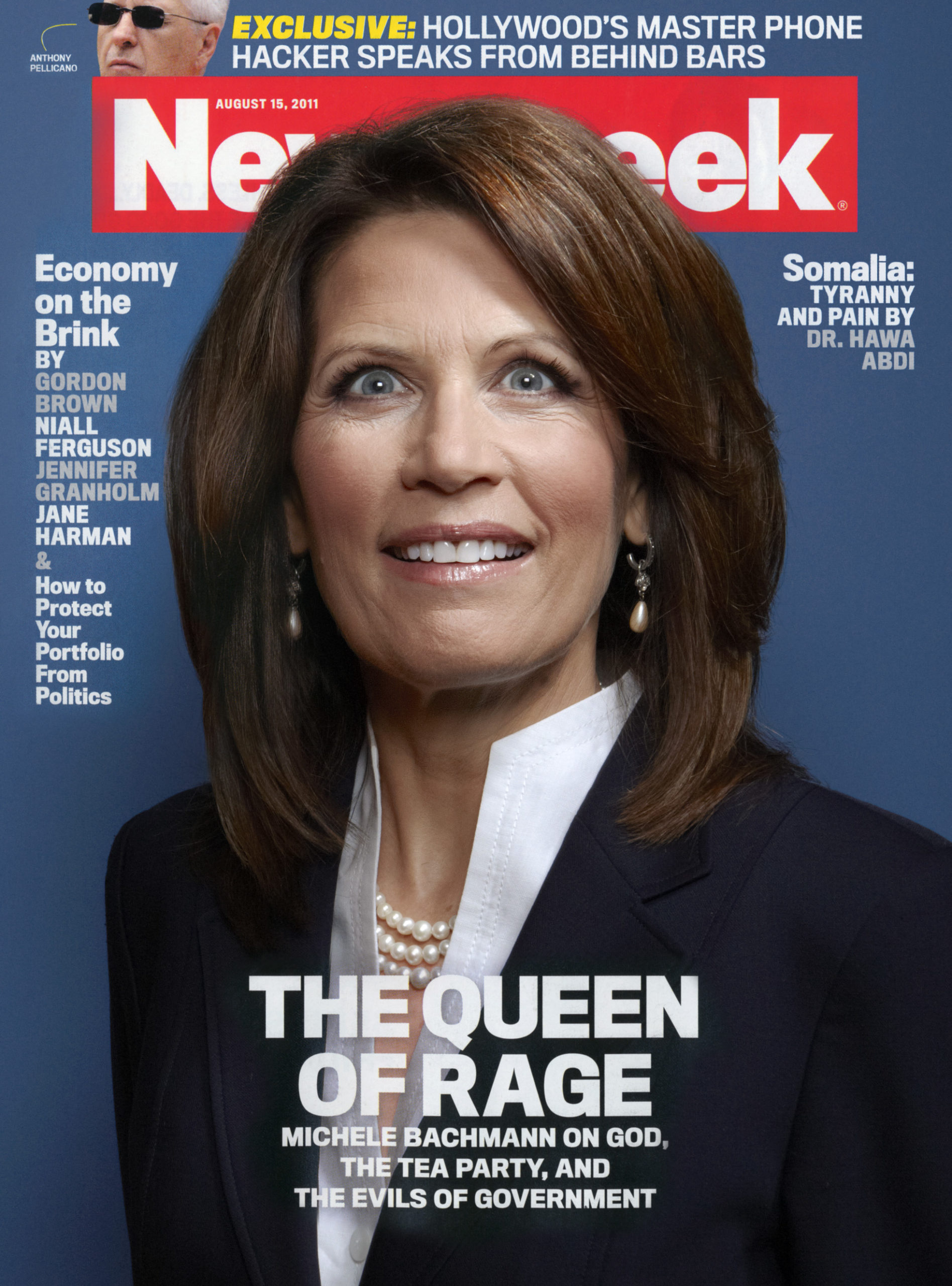
On August 11, 2011, Newsweek ran a photograph of Congresswoman, GOP presidential candidate, and tea party darling Michele Bachmann that ignited a media firestorm. The image taken on assignment by Chris Buck earned her the nickname, “Crazy Eyes” and marked a turning point as she went from leading candidate for the Republican presidential nomination to eventually abandoning the race in 6th place. Newsweek Editor-in-Chief Tina Brown defended the image choice and headline “the Queen of Rage” as merely portraying intensity, but many felt it was unnecessarily unflattering and sexist. In May of 2013, under investigation for ethics violations, Michele Bachmann announced she would not seek re-election in 2014.

The image also marked a turning point for Chris Buck as he had spent the previous year campaigning photo editors to assign him serious political work and this breakthrough image sent him on a path shooting more and more A-List covers in the years to come.

On November 11, 2011, I interviewed Chris about the cover and he was refreshingly candid about how it all went down. Unfortunately, the controversy had just simmered down and Newsweek was afraid to reignite it again, so we shelved the interview. Luckily, Chris has a new retrospective book out titled Uneasy (https://www.chrisbuckuneasy.com/buy-now) and this image is included so we can now tell the story behind the Michele Bachmann cover. I think you’ll find it just as relevant today.

— aPE
Rob Haggart: I want to start with Newsweek calling you to shoot a politician for the cover. That’s not something that probably happens very often with you, is it?

Chris Buck: Let’s go back to the 2008 presidential election, which I felt was such a special time, because the electorate was ignited in a way that I’ve never seen in the years I’d lived in the US. I was upset about having not gotten any of those jobs. So I decided to do whatever I could, to try to get that work for the 2012 cycle.

Rob: What did you do to try and get that work?

Chris: I put up a section on my website of political portraits. Then I made an e-mail newsletter addressing that question specifically. I featured my shoot with William F. Buckley Jr. from 2004 and had the portrait of him plus some funny out-takes. Then I contacted a number of clients more directly who I knew commissioned political shoots, like GQ, New York Magazine, and ultimately Newsweek.

Rob: It worked…

Chris: I have now shot three politicians in this election cycle for different magazines. It’s all very, very last minute. I’m basically given the heads-up a few days ahead and then I just sit around waiting for the phone call where they’re like, “Go to the airport now!” And I rush off to the airport.

Rob: And that’s because of both the approval process and the scheduling?

Chris: There’s no approval process.

Rob: They don’t have people who approve photographers?

Chris: Not that I know of. I would imagine that it could come up as a First Amendment issue if politicians were appearing to pointedly dictate terms to the press.

Rob: It’s not the same as with a celebrity then? I guess I just assumed it was. Ok, how did the assignment go down?

Chris: Newsweek contacted me, the photo editor emailed me saying, “Would you be available for this?” and he said, “It will be either Sunday or Monday, or on the weekend, we’re not sure.” My schedule was open enough. I said, “Yes, just let me know.”

I put the assistant on hold, got together the equipment I needed and just waited. Then, at the last second it was, “Go to Washington. No, no, go to Iowa. No. Go to Washington. No, no. Wait. Wait. Go to Iowa.” In the end I went to Iowa. We were actually in Iowa for a day with the campaign and then went to Washington the next day, which is where the portraits were made. The scheduling was quite chaotic.

Rob: Why do you think Newsweek hired you to shoot Michele Bachmann? Did they want something besides the traditional power portrait for the cover?

Chris: I’m not going to go into detail about my conversations with Newsweek but I think that it’s reasonable to assume that they hired me for what I do. My guess is that they wanted something a little bit more human and vulnerable.

Rob: They said, “Do your thing.”

Chris: We had a more detailed conversation than that because it is a cover. But, yes, they did say something along those lines at some point. Of course I know since it’s a cover I need to get a variety of shots. I feel a professional obligation that I give them some choices, partly, even to surprise me. Maybe it would be something I wouldn’t think of as my first choice and maybe that would be the most interesting thing. You never know.

Rob: Take me to the shoot. You’re in D.C. now.

Chris: Her campaign team were staying at the Willard Hotel; I met up with Ms. Bachmann and her people in their room. They were pushing for me to shoot there but I didn’t want to, I didn’t like the idea that the space I was going to shoot in was also going to be the suite of rooms where they are spending the day doing their business. It just made me uncomfortable. So, I looked around with the hotel staff and found another space to shoot and rented it.

Rob: How much time are they giving you to do the pictures?

Chris: We were told we’d have a half an hour.

Rob: OK, that’s good.

Chris: I didn’t realize how little time politicians often give, but it turns out that wasn’t bad. With Rahm Emanuel for Bloomberg Businessweek, we followed him around for a day, and they were trying to give us 60 seconds at a time for portraits. And I was like, “That just won’t do”. And after three long conversations, they got me a five-minute block, which they considered very generous.

Rob: Wow, OK.

Chris: So half an hour seemed kind of reasonable. If the subject is cooperative and you’ve got time to prepare ahead of time, it’s totally workable.

We had different setups in this suite of rooms. The back room was a small conference room, so we moved the conference table over, and set up the blue backdrop and some lighting. I closed the drapes so I could see what my model lights were doing. It was now a semi-dark mini photo studio.

The candidate came in a little bit late and then we waited a few minutes for the makeup artist. I went over to chat with her and she was really distracted, barely acknowledging that I was standing there. I was kind of surprised, because at the rally she was very engaged with people. And even when I saw her earlier that day, she was relaxed and happy to chat.

Rob: Did you get a sense at all that she didn’t trust you, or didn’t trust Newsweek, that she thought they had an agenda behind what they were doing?

Chris: I didn’t really know what to make of it. I just thought that she had something on her mind, and that once we stepped into the other room that she’d be engaged and it would be all good. But that’s not what happened.

It’s very important that I have a meaningful or even non-meaningful conversation with a subject as we’re going into a shoot. It’s not necessarily that I want my subjects to be super-relaxed, but there is some basic level of decorum. We’re moving into this space and we’re going to work together on this. A portrait is collaboration, and it’s laying the groundwork for that. In doing my reading ahead of time I try to pick up on little details about them and their stories, so that they know that I’ve done my homework, and I’m genuinely immersed in what’s going on. I think it shows in the work too.

So we go in the room, I have her in the frame, and she is very stiff. I said, “I’d like you to relax, and maybe even if you want to gesture a little bit, we can even talk so you can be more relaxed. I want something more animated with more life.” And she said something like, “I’m not going to do that. I’m not going to look foolish for you. I’m not going to gesture in some way that you’re going to capture that’s going to make me look foolish or awkward.”

Rob: [laughs] Holy crap.

Chris: And she said “I’m not going to be portrayed this way by the left-wing media. I’m not going to let the left-wing media frame me in some way that is going to be damaging to me.” I’m paraphrasing, but it was along those lines.

I was shocked, because one, it’s amazing for someone just to speak their mind so directly, but two, we had really just begun. And I was asking for something pretty standard, you know? Not to say that she has to do everything I say, but there are other ways to deflect or refigure something without directly accusing me and my client of trying to disparage her.

She also started talking about how when Obama was running. “He was always portrayed so favorably, and that’s the kind of treatment I want.” I was just… I mean, I didn’t know how to respond to this. And she started talking about specific Time Magazine covers that she thought were unflattering. She mentioned one of Laura Bush. I had never seen this picture, but she described it as a black-and-white picture of the first lady where every pore and line is showing.

And she asks, “that’s not how this lighting is, right? That’s not this kind of lighting?” And I said, “Well, we’ll show you or your representatives a frame so you can see how the lighting looks.” So we did a few frames so we could show her one that might look good.

Rob: So you showed them a frame to try and get her to relax.

Chris: Yes, and basically what I said to her was, look, Newsweek wants a really interesting picture, and you want a picture where you look great. And I kind of did this gesture of two circles in the air. And I said, you know, Newsweek wants this — and then I added one with my other hand — and I said there’s this other circle, and here’s where they overlap – like a quarter of each circle kind of overlaps in the middle. “Let’s find this sweet spot in the middle where you can feel confident about the way you’re portrayed, and they’re going to have a really great, interesting picture. Let’s aim for that.

And she agreed. But as we tried to move towards something I realized that, basically she agreed in theory, her attitude was already set. She was already upset and defensive. One of the things I found surprising about the whole thing that it wasn’t one of her staff who was saying, “We’re hoping we can do something like this with the candidate. Can we start that way at least, and see where we go?” That’s the kind of conversation that usually happens with a handler.

Rob: There are no handlers involved in this?

Chris: Well, there were handlers there, but surprisingly it was the candidate who was fighting her own battle.

Rob: So, you’re four minutes in, the clock is ticking down and you’re arguing with Michele Bachmann. She said, “I’m not giving you anything.” And you’re trying to tell her, “Let’s try and meet in the middle,” and she’s still refusing. So when does this picture happen?

Chris: I’m shooting and talking, it’s just a photographer’s instinct, you don’t stop shooting, at least not entirely. Of course, part of my thinking is “I’ve got to get something.”

Rob: And snap, you took the picture. Amazing. So she basically came in super defensive and said “I’m not going to give you anything,” and as she was saying that the picture that you made is the one…?

Chris: I’m not 100% sure, because I’m shooting as we’re talking. But looking at it, clearly she has either just finished talking or she is about to talk.

Rob: Incredible. Then what?

At a certain point her people are like, “Look, she needs to get back on to the Hill to do a vote. We need to leave in 10 minutes.” I’ve learned to be stubborn about protecting the time I’ve been promised because people will happily take that away from you. I said, “Look, you’re not ready to do this. You should leave. Go do your vote. Go do whatever obligations you have. And I hope you can come back later, maybe in an hour and a half, two hours or whatever, and we can do this right. Think about how you might want to do this in a way that we can both be happy.”

Rob: Wow. So you sent her away because she’s not giving you what you need.

Chris: My feeling is it’s much better to come in positive but cautious than to come in negative and defensive. No one looks good when they’re saying, “I don’t trust you.”

Rob: OK, so take me through the second session. What happened?

Chris: I’ve worked out some locations that her handler felt would help the candidate relax. I was wary about shooting outside because it gives us less control, and it sucks up time, but he felt that she’d be more relaxed in a real-world environment. He said that the room with the blue background, because it was small and dark, spooked her.

So that’s what we did first when she first came back, and clearly they had spoken with her and she was much more relaxed. Plus, she had gotten some of her duties out of the way and her schedule was less pressed. Some of the pictures from this next section are much more relaxed, and she looks great.

We shot there a bit, but I wasn’t really liking what I was getting. I was feeling like, for both my client and for myself, that these were looking like PR pictures.

Rob: Right. They’re not cover pictures.

Chris: I still needed to get something that was a great portrait for Newsweek and hopefully point towards something really interesting as a photographer for me. So, we went to this semi-rooftop of the building, and we did some more outdoor shots there. She was a little bit more relaxed but her hair wasn’t looking so great. She had already had a long day and she’s a little distracted now, and some of these pictures don’t have the same kind of focus as earlier. Then we went down to the oval room, and we shot maybe a dozen frames and that was it. But it was really a shame, if they’d given us another 20 minutes; I think we could have found that sweet spot that would have been a great Newsweek picture as well as something that she would have felt more comfortable with.

Rob: So when you’re doing your edit and you see this picture, are you thinking, “Yeah, that’s a Chris Buck shot”?

Chris: I turned in 21 images and I think we did five different set-ups, so I handed in a mix from two frames to five frames from each scenario. I had three favorites. The one that became the cover, the one in that Oval Room that became an inside picture, and then the one I showed as an outtake on my blog.

By the way, one thing I’ll mention to you, is that I did something I almost never do, which is when the shoot was done I let the handler who was there hang around and look over our shoulders a little bit while we were looking at the material. I wanted him to know that what I had said before was genuine, that I really was trying to find a place that both the candidate and the magazine could be happy.

Rob: So he saw all the pictures?

Chris: We didn’t sit and specifically walk him through the pictures because the last thing I want is for him to say something like, “That picture is something I don’t like. I’d rather you not use it.” But he knew perfectly well he wasn’t there to influence the edit.

Rob: So Newsweek orders the high res…

Chris: They order four high res: the praying shot, the one that became the cover, the oval room picture, and then one at the rally.

Rob: Did you know that this shot was going to be the cover?

Chris: No, when he gave me the image order, he said, “We might come back and ask for more.” In fact, on Friday night, he came back and asked for two more. And one of them was one of the rooftop shots and one of them was another shot from the blue background set-up.

I was a little worried because those shots were more conventional and less interesting to me, I was really pleased with their initial edit and I told them so. A lot of people assume that the edit was entirely Newsweek’s doing and ultimately what ran was their choices, but I know if I include something in my edit, it could be used. I stand by my edit.

Rob: Did you have any idea of the controversy that would come after running this picture on the cover?

Chris: I did have some idea, but the scale of it was larger than I expected. They released the cover to the media on Sunday night, so I Googled, “Newsweek Bachmann cover” and already it was on “Gawker” or a site like that. They sent out a pretty high res pdf of the cover. So sites were blowing it up really big, just on the face, and it was already being talked about as being like a controversial cover. Let’s just say, I didn’t sleep very well that night.

Rob: [laughs] You didn’t?

Chris: No.

Rob: Really? You were distressed?

Chris: I have mixed feelings about it. On one hand, I was pleased they picked a really interesting picture. But at the same time, I’m a human; ultimately I would love it if people liked the pictures I take of them. It’s not my first thought, it’s not my first obligation, but I’m human. I prefer they like it, than not like it. And I understood that she was unlikely to be happy with this choice.

Rob: Then you must battle with that constantly because I can’t imagine ever hiring Chris Buck and not trying to get some kind of moment like that.

Chris: I’m not saying that it’s not fair and that it’s not reasonable. I included it in the edit not only because I think it’s interesting but because on some level I feel that it captures something of who she is, something of her character and something of her campaign. It was one of the most intense and aggressive photo shoots that I’ve ever experienced in my career. So in a way, she helped make this portrait happen. The edit reflects the environment in the room; it conveys the intensity of the session.

Rob: And that’s what makes it an amazing story, but also understand that doing that is what makes you Chris Buck, what makes you a unique photographer. I can name a dozen photographers that will shoot a heroic portrait no matter what happens in the room and so it’s just how you approach photography. It’s who you are. It’s also what makes you an interesting choice, for Newsweek and any other magazine shooting politicians.

Chris: Thanks. I find it surprising that the media is quite happy to write about politicians as being flawed and yet when doing portraits sittings they seem hesitant to go down that line. They kind of fall into the convention of doing the power portrait instead of doing something that might be a little more challenging.

Rob: And, as far as your body of work goes, without the controversy that this cover created does it stand up on its own with the other pictures that you’ve made?

Chris: Oh, absolutely. One of the things I really like about this is that the two pictures I was best known for before this were the one with Steve Martin with the bread hands and the Citibank ad where the dog has fake teeth, so this being my best-known picture is something I’m much more comfortable with. It shows a little awkwardness.

People ascribe an anti-Republican or anti-Bachmann thing to me because of the impact it had in the culture, but it’s not how I feel about it. As a portrait, I stand by it. I don’t champion the right or the left; it’s not the point of this. The point was, as a photographer, to do good work for my client, to make interesting work for the public, and also to reflect, from a subjective viewpoint, what she might be about.
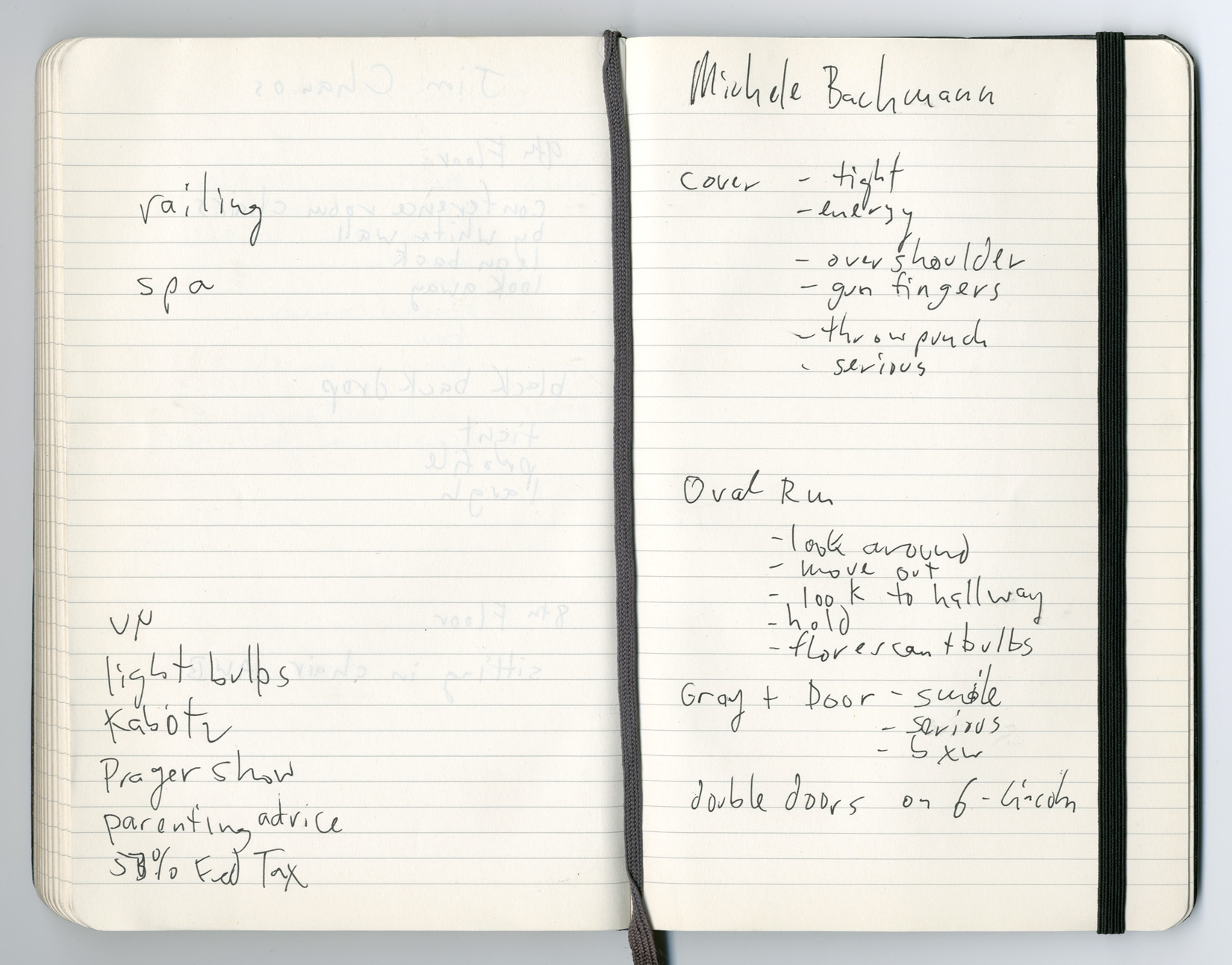
Photographer’s on-set note book for the Michele Bachmann session. Note “throw punch.”
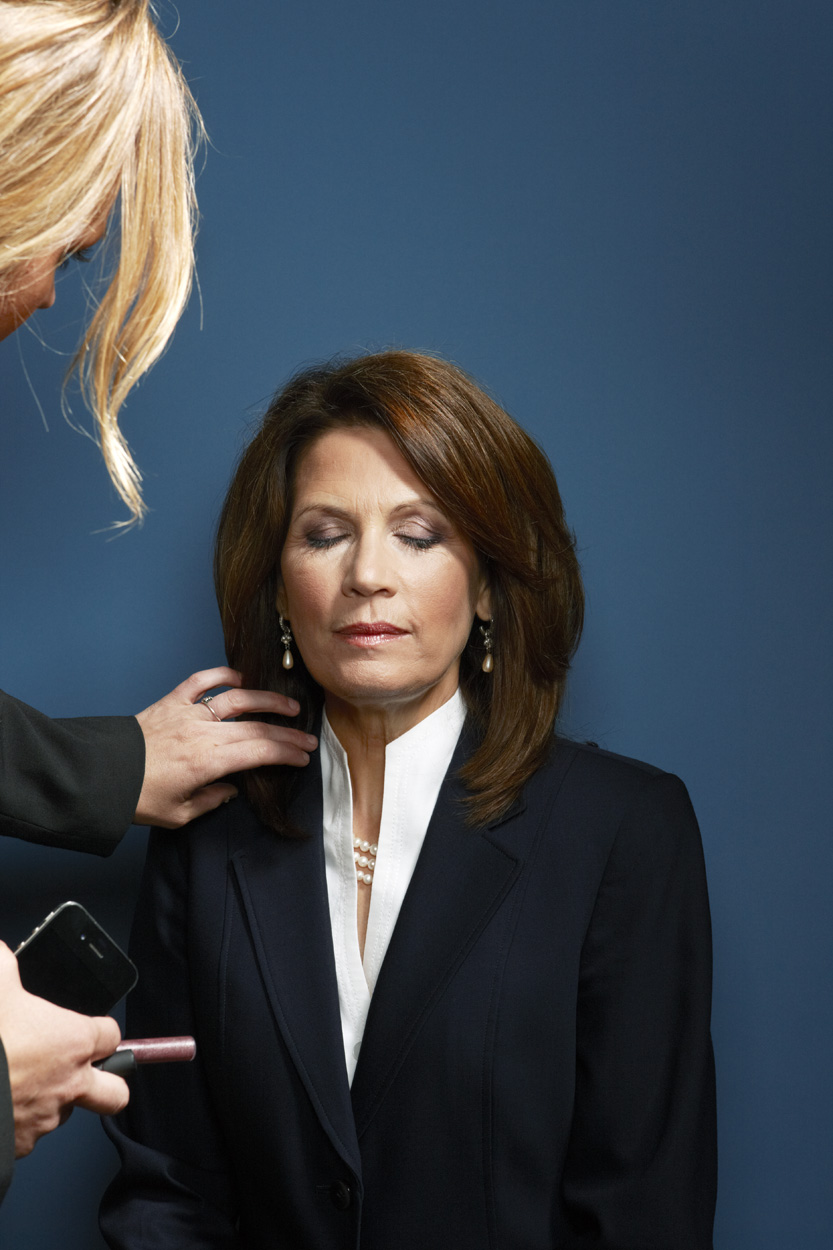
Representative Bachmann accused Buck of submitting a light test for the Newsweek cover. This is the actual light test frame.
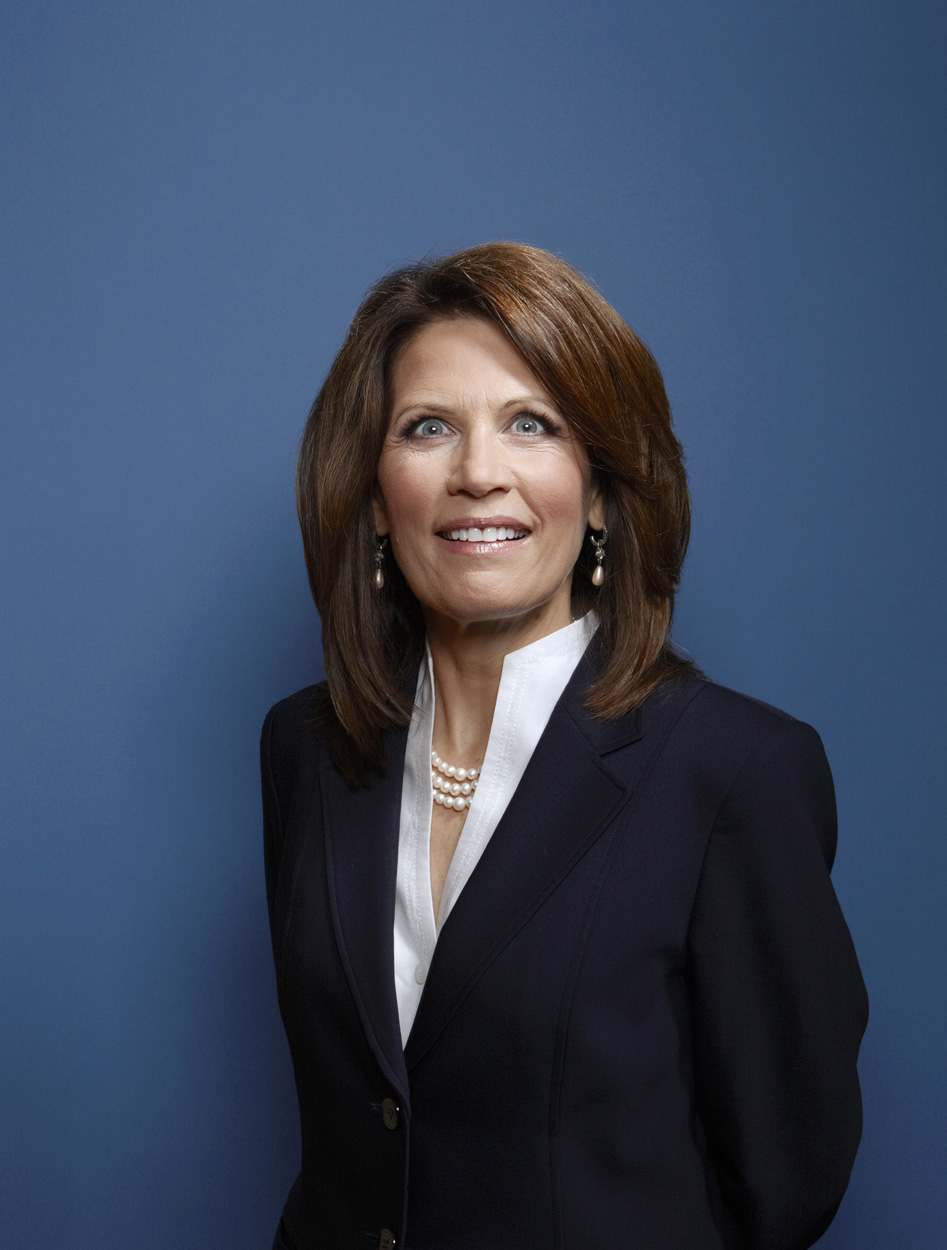
Chris Buck’s portrait of Michele Bachmann, as it appears in his 30 year retrospective UNEASY.
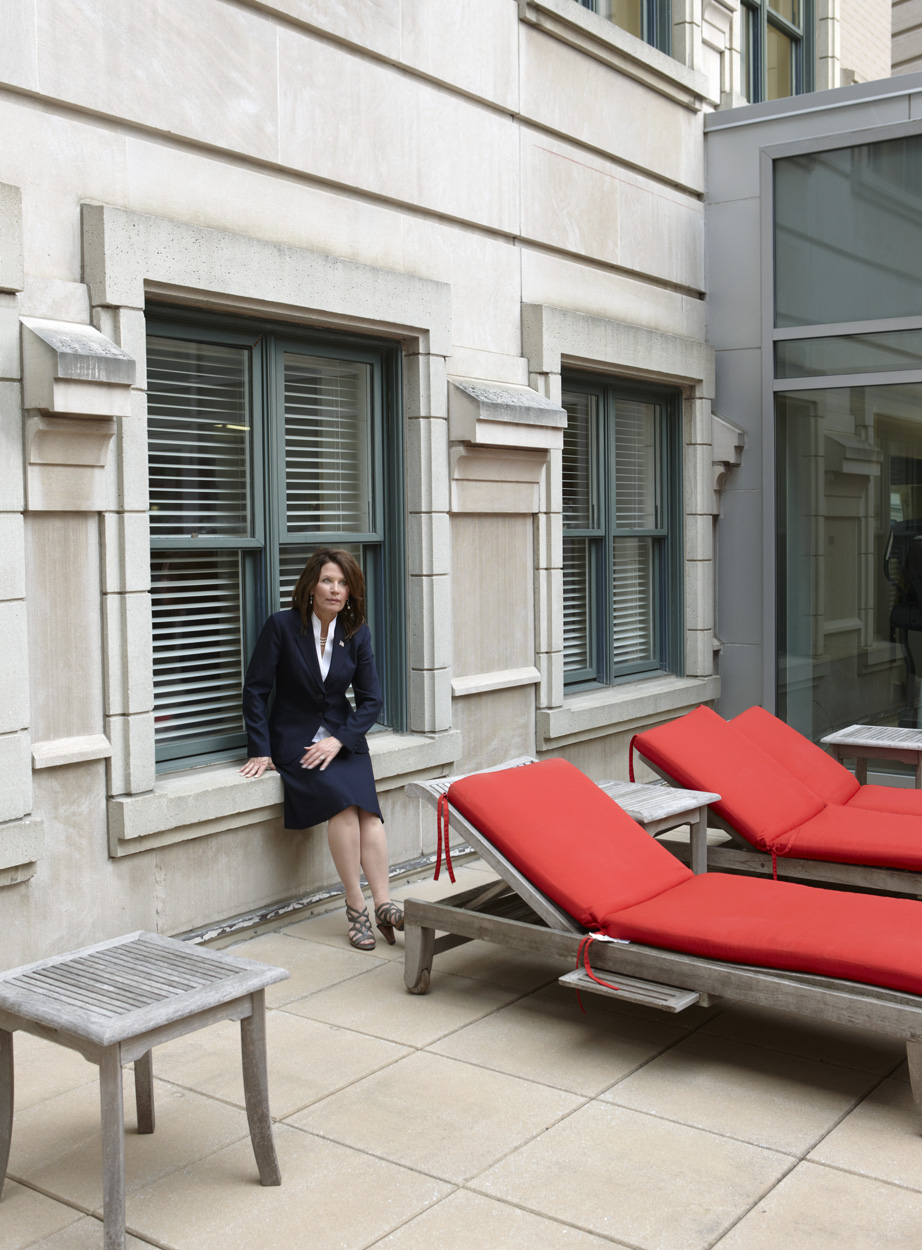
Buck’s favorite frame from the Bachmann sitting.

------------------------

Visit our sponsor Photo Folio, providing websites to professional photographers for over 9 years. Featuring the only customizable template in the world.

------------------------

19 Apr 18:35

The Psychology of Online Communities Course

by Richard Millington

Today we opened enrollment for our Psychology of Community course.

We believe understanding psychology is critical to building successful online communities.

Our goal is to help you use principles of psychology to sustainably drive a high level of engagement.

This is a guided training program which will take place over 6 weeks from May 22 to July 7 (everything is recorded so you can quickly catch up after your vacation).

This course will cover:

  • How to diagnose community problems and develop psychology-driven solutions. We’re borrowing from the field of UX (among others) to provide you with the process to diagnose engagement problems yourself and develop solutions rooted in psychology.
  • How to get difficult audiences to participate. Especially those in senior roles or who claim to be too busy to participate.
  • How to increase member satisfaction. Learn engagement systems which will help each member feeling satisfied (as shown by feedback scores) and more supportive of your brand.
  • How to sustain and increase participation. We’re going to help you hook newcomers and satisfy the motivations which will keep members actively contributing.
  • How to gain the support of your organization. Understand this is a persuasion problem and we’re going to help you provide the right people with the right information at the right time.
  • How to build reward and recognition systems. Most reward systems are highly patronizing, use outdated principles from behaviorism, and don’t resonate with members. We’re going to teach you to design systems that work in the modern environment
  • How to hook top contributors and VIPs in your field to participate. You’re going to get a clear step to keep your top members happy and more engaged than before.
  • How to unite the group in a strong, shared, sense of community. We’re going to provide you with an updated framework to unite community members based upon testing on over a dozen communities.

This is a hands-on guided training program which will require about 2 hours per week for 6 weeks.

Our focus is on the application. We don’t want you to soak up information, we want you to use it.

Our coaches and I are going to answer questions, help you apply every principle and provide a safe place for you to refine your ideas before you introduce them into your community.

Registration opens today. You can get a 25% early-bird discount if you sign up by April 28.
www.feverbee.com/poc.

I hope we see some of you on the inside.

p.s. We’ve also re-opened enrollment for our Strategic Community Management program. This has easily been the highest attended and the best-reviewed course we’ve ever run. You can sign up for both courses for $1100 (group rates available) before April 28.

19 Apr 18:35

IBM's revenue down for 20 consecutive quarters

by Volker Weber

ZZ25515271

In October 2011 Ginni Rometty assumed the role of president and CEO of IBM. A year later she took on the added role of chairman of IBM. She is also part of a White House business-advisory council under the Trump Administration.

Five years seems to be quite a long time to right this ship. Whatever she is doing, it isn't working.

19 Apr 18:35

Es geht los! Die X-CHANGE #1

by Heike Scholz
Mit dem Format X-CHANGE möchte ich einen offenen Raum für den persönlichen Austausch schaffen, jenseits von Konferenzen, Vorträgen, Barcamps und Podiumsdiskussionen. Unabhängig von bestimmten Branchen, Buzzwords oder technologischen Konzepten soll die X-CHANGE ein kleines und feines [...]
19 Apr 18:35

ShatChat

19 Apr 18:34

Sky Mining

by Siobhan Leddy

Here’s what’s going to happen. It will get hot. Very hot. The oceans will expand and the ice caps will melt, and nearly half of the Netherlands and a quarter of Vietnam will be submerged. We’ll move: first to the Polar Regions and then, when crops start to fail, to other planets, where we can start again. There, we’ll drive hovercars to work each day. Or maybe there is no work, our human labor having been rendered unnecessary. Holographic cooking shows will show us how to spice up our Soylent dinners, which we’ll watch as we squabble with our AI lovers.

All of this is — for now, at least — science fiction. But for NASA, this kind of speculative fantasy can be used to excite the public imagination about their work. When, on February 22, NASA discovered a series of potentially habitable new planets around the dwarf star Trappist-1, about 40 light years from Earth, they set to work visualizing a future. The agency commissioned a series of artworks to celebrate the discovery, including imagined landscapes, a 360-degree interactive illustration, and a hypothetical travel poster inviting humans to what is thought to be the most habitable of the planets: Trappist-1e.

The nostalgia the NASA poster draws on is a recoding of capitalism’s animal spirits, not a wistful dream of escape. Space colonization becomes conditional on extraction

The poster shows a landscape vaguely reminiscent of the Australian outback: dry, seemingly deserted, with silhouetted mountains lining the horizon. The sky, a deep blue seeping into fuchsia, is crowded with the other planets of the Trappist-1 system. In the very center of the poster, floating on a glittering sheet of water, is a large glass building. This dome — seemingly the default shape of all imagined space architecture — radiates luminescent blue light, while spider-like spindles extend outward from its hub. In the foreground, looking through the window of a space shuttle, are three figures in deep shadow, one open-mouthed in awe. They are approaching the space colony of Trappist-1e, ready to begin their vacation on what the poster claims to be the “best ‘hab zone’ vacation within 12 parsecs of Earth.”

With its “ultracool” dwarf star off toward the Aquarius constellation, Trappist-1e evokes 1960s counterculture, which the poster nods to in its typeface and lightly textured block colors. But it also looks back to another aesthetic tradition of the 20th century: the illustrated travel poster. It is just one of an entire series NASA has commissioned to engage the general public — part of what the agency calls its Exoplanet Travel Bureau.

Once, before the age of airport pat-downs and forcible “re-accommodations,” overseas travel was a glamorous, expensive affair. Travel posters were meant to illustrate the exotic appeal of other countries, evoking national identities (or ad agencies’ ideas of them) with several flicks of a paintbrush. One poster dating from the 1950s, designed to promote travel to Egypt, shows two affluent white tourists on camelback, gazing onto the pyramids of Giza. It’s alluring, elegant, and exotic. But an image can conceal as much as it reveals. From this poster it would be near impossible to know that at almost the same moment Egyptians were fighting to end the British colonialist occupation.

NASA’s nostalgic space travel posters have a similar dimension. The palpable air of adventure is meant to be playful, evoking the same curiosity that has birthed countless science fiction books and movies. But in using the visual language of fantasy, the poster obfuscates fact: We are genuinely facing an enormous, multi-species threat here on Earth. Sea levels will absolutely rise, and we will face unprecedented famine, mass migration, and suffering. By the end of the century, it is estimated that we will lose about 50 percent of terrestrial flora and fauna to extinction. Capitalism has spent more than two centuries spewing out carbon dioxide, nitrogen, and other pollutants, causing profound planetary harm. And yet we inhabit a world where political leaders deny this reality. The NASA poster posits an alternative to trying to anticipate and forestall the chaos that global warming will unleash. In the face of earth’s decline, space colonization is both possible and inevitable.

That echoes the spirit of Elon Musk, whose company SpaceX shares similar ambitions. Within the next 50 to 100 years, he claims, we’ll have a self-sustaining and permanent human colony on the Red Planet. When he outlined SpaceX’s colonization plan last year, Musk made clear that “two fundamental paths” lie ahead of us: “One is that we stay on Earth forever and then there will be an inevitable extinction event. The alternative is to become a spacefaring civilization and a multiplanetary species.”

This is more than crackpot futurism. Musk is a key member of the Strategic and Policy Forum, Donald Trump’s business advisory assembly — a group that also includes the CEOs of JPMorgan, Pepsi, and IBM. Musk’s membership should ensure that SpaceX’s hyperbolic ambitions reach the president’s ears. Moreover, back in January, Trump made a (characteristically vague) statement about wanting to “unlock the mysteries of space.” Not coincidentally, he also proposed cutting funding for climate research on earth. For Trump, it is space and not his home planet that will offer “the energies, industries, and technologies of tomorrow.”

But Trump is not the only recent U.S. president who has been interested in space projects. In 2015, President Obama signed a bill that opened up the rights for miners to extract, use, and trade mineral resources found in space. The Spurring Private Aerospace Competitiveness and Entrepreneurship Act — otherwise known as the SPACE Act — extends capitalism’s already global tentacles to outer space. The amount of money at stake is almost hard to imagine: The value of near-Earth asteroids alone, anticipated to be the first target for space mining, is estimated at $100 trillion, roughly equivalent to the GDP of all of Earth.

From the vantage point of 2017, outer space appears to serve two apparently contradictory functions in the public imaginary. It offers a way out of the climate change brought on by rapacious global capitalism and its heedless reliance on extracted fossil fuels, yet it also provides private enterprise with irresistible new sites for further extraction. These minerals and resources will prop up capitalism as we know it, and its inevitable effects. Paradoxically, outer space is both an escape from, and subsistence for, capitalism.


Capitalism, as Rosa Luxemburg once wrote, requires something outside itself, a periphery not yet negotiated by capitalist relations: Like Kiefer Sutherland in The Lost Boys, it must devour, or die. Marx traced European capitalism to an initial act of “primitive accumulation” between the 15th and 18th centuries, when common lands were expropriated and privatized. This, as Marx put it, “clears the way for the capitalist system”: the means of production are taken from the many and given to a wealthy few.

In 2017, however, there’s nowhere “outside” left. There is no periphery from which to accumulate. Capitalism is global. If you’re reading this, it’s likely that every aspect of your life is steeped in it. If a cash injection is needed, where else can it be found but outer space?

Today, there are more than 1,000 private space initiatives in operation in the U.S. One of the largest is Planetary Resources, a commercial mining company that lobbied heavily for the SPACE Act. The company’s slogan echoes the spirit of adventure on display in the NASA poster, with an added dose of juvenile provocation: “We dare you to change the course of humanity with us.” It describes the extraterrestrial resource grab as the “next Gold Rush,” evoking all the Wild West fantasies that accompany that idea. It calls asteroids “low-hanging fruit,” as if their minerals should be understood as being simply there for the taking.

Trump says he wants to “unlock the mysteries of space.” Not coincidentally, he also proposed cutting funding for climate research on earth

The SPACE Act, much like the 1967 Outer Space Treaty before it, forbids anyone to “assert sovereignty, or sovereign or exclusive rights or jurisdiction over, or the ownership of, any celestial body.” This means that, although private companies are permitted to mine in space, they cannot claim the land itself. Space and its territories were considered to be an international commons even before space travel was a possibility. (Thus Moon Estates, which claims to sell prime lunar real estate for just $20 an acre, is selling snake oil.)

The SPACE Act creates a legal loophole of sorts, in which one can extract everything an asteroid’s got without claiming formal ownership of the territory itself. But is there really much of a difference between claiming ownership of land and claiming all its resources? Chris Lewicki, Planetary Resources’ CEO, doesn’t seem to think so. He sees his company’s work as a direct precursor to other more ambitious projects. “The first space colonies, tourist destinations, commercial laboratories all will be enabled by [our] business,” he says. For him and others like him, the future shown in NASA’s Trappist-1e poster, a planet terraformed for human consumption, depends ultimately on the profit-making initiative of private interests. The nostalgia for adventure it draws on is a recoding of capitalism’s animal spirits, not a wistful dream of escape to a world without capitalism. Space colonization becomes entirely conditional on extraction.

History would seem to bear this out: In the 18th century, when the East India Company was at the height of its powers, it accounted for half the world’s trade — buying, selling, and transporting commodities like cotton, tea, and opium. Its business model was one of extraction and exploitation, what Stanford economist Paul Baran describes as “plunder thinly veiled as trade.” In India, the company even held its own private army, fought in several wars and, as the Mughal Empire began to decline, seized territorial control. Indian territory remained with the company until 1858, when sovereign powers were handed over to the British Empire. Needless to say, the legacy of such widespread colonial theft can still be felt in the Global South to this day.

The illustrated posters of the 19th century were key in constructing and maintaining imperialist ideology. Tea, coffee, cocoa — all products from colonial regions — required the creation of new market desires in Europe. Posters played a huge part in this, stimulating fantasies in European consumers while simultaneously erasing colonial oppression and subjugation. In an 1892 advert for Lipton’s Teas, for example, a woman in traditional Sri Lankan dress sips from a teacup, her face fixed with a slight Mona Lisa smile. Through an exoticized visual language of desire, these posters served to create new wants that could substantiate an entire regime of economic imperialism. NASA’s Trappist-1e poster can be seen as having similar ambitions, offering an idealized depiction of space colonization that both obscures and rationalizes the capitalist imperatives that drive it.

Looked at in these terms, space colonization begins to look less visionary and more like maintenance of the status quo. Scrambling for resources to uphold a broken system, whether in the Global South or on Trappist-1e, is a centuries-old story. In The Case for Mars (1996), Robert Zubrin certainly makes no bones:

Mars is to the new age of exploration as North America was to the last. The Earth’s Moon, close to the metropolitan planet but impoverished in resources, compares to Greenland. Other destinations, such as the Main Belt asteroids, may be rich in potential future exports to Earth but lack the preconditions for the creation of a fully developed indigenous society; these compare to the West Indies.

For Zubrin, resource extraction from space is directly analogous to extraction from colonized nations. It’s all just frontier.


Faced with a blank canvas, we’re all, to some extent, toddlers with a fistful of crayons. Our imaginations run wild when we think about what we could achieve with other planets. We could leave this trash-can planet behind, with all its wars and climate change and corrupt politicians, and start over. Earth doesn’t have to be the main event but rather a rehearsal for utopia. It certainly sounds easier than trying to fix the mess down here.

In Ursula K. Le Guin’s novel The Dispossessed, this is almost exactly what happens. After attempting to forge a revolution on their own Earth-like planet, a group of separatists flee to the neighboring planet Anarres. Here they create a collectivist society on anarcho-socialist principles and, despite the planet’s harsh conditions and resource scarcity, society functions relatively smoothly. Could a more palatable version of space colonization take this form? Could it provide us with a less, for want of a better word, alienated existence?

It’s the same impulse that drives people to move to a new city after a difficult breakup or losing a job. But when we start losing entire countries to rising sea levels, or when crops fail year after year from the heat, who will get to be the ones to flee? There is simply no reason that the same power structures that dominate earth will dissipate in space. It is likely, rather, that any otherworldly getaway will be reserved for a more privileged class. For the rest of us, it means abandonment — or even servitude — in the intergalactic equivalent of today’s Global South. And, in the present moment, how can we possibly resist, organize, if we believe we can leave this planet all behind?

As it stands, we have no idea whether life already exists in the Trappist-1 system. Bacterial cells may be swapping DNA in a primordial soup, or there may be intelligent pulses of energy or electric radioactive serpents. Maybe there’s no life at all. But even the possibility raises questions about our right to disrupt communities we may not even be able to detect, let alone understand.

Nonetheless, NASA’s poster, with its ebullient faces peering out onto the Trappist-1 settlement, shows that before we’ve even begun to imagine what, or who, may already live on this planet, we imagine ourselves making a claim to it. To suggest that these planets — and the resources they contain — can be claimed simply because they exist, echoes a long and painful history. Space colonization, particularly one that expands the field of capitalism, cannot also be a decolonizing project.

19 Apr 18:34

Customer Says Bose Wireless Headphones Are Tracking What You Listen To & Sharing That Info Without Permission

by Chris Morran
mkalus shared this story from Consumerist.

Listening to music on headphones is supposed to be a very private experience; just you and your tunes, minding your own business. Yet a new lawsuit claims that Bose is improperly collecting and sharing information about users of certain wireless headsets.

According to the complaint [PDF] filed yesterday in a federal court in Illinois, when owners of Bose wireless headsets use the Bose Connect app on their smartphones, it collects the information about the songs you listen to and allegedly transmits this data — along with other identifying information — to third parties.

The lawsuit contends this collection and sharing occurs without the users’ permission, and amounts to a “wholesale disregard for consumer privacy rights.”

The Bose Connect app is not a music player. Instead, it’s a companion app that is intended to give the owners of various Bose headsets — QC35, SoundSport wireless, SoundSport Pulse wireless, QuietControl 30 and SoundLink wireless II — and speakers — SoundLink Color II, SoundLink Revolve and SoundLink Revolve+ — more control over their devices. For example, it allows for more variable levels of noise cancelling. It also lets you split the same audio between two Bose wireless devices.

The plaintiff also claims that Bose Connect is programmed to “continuously record the contents of the electronic communications that users send to their Bose Wireless Products from their smartphones, including the names of the music and audio tracks they select to play along with the corresponding artist and album information, together with the Bose Wireless Product’s serial numbers.”

The serial number information is important, notes the lawsuit, because if a customer has registered their product with Bose, then then company can put together all the collected audio information along with the personal data provided during the registration process: name, email address, and phone number.

One of the third parties that allegedly receives information from the Bose Connect app is Segment.io, a company whose homepage touts, “Collect all of your customer data and send it anywhere.”

By designing the Bose Connect app to “contemporaneously and secretly collect” information about what a user is listening to, and then sending that allegedly intercepted information on to a third party, the lawsuit contends that Bose has violated the Federal Wiretap Act.

“No party to the electronic communications alleged herein consented to [Bose’s] collection, interception, use, or disclosure of the contents of the electronic communications,” reads the complaint, adding that users of these devices weren’t even given the option of consenting.

“This case shows the new world we are all living in,” says Jay Edelson of Edelson PC, the firm representing the plaintiffs in this potential class action. “Consumers went to buy headphones and were transformed into profit centers for data miners.”

We’ve attempted to reach out to Bose and to Segment (even though it is not named as a defendant in the lawsuit) for comment and will update if we receive any response.


19 Apr 18:33

Saturday Morning Breakfast Cereal - Sex When You Have Children

by tech@thehiveworks.com
mkalus shared this story from Saturday Morning Breakfast Cereal.


Click here to go see the bonus panel!

Hovertext:
Not that I know anything about this sort of thing.

New comic!
Today's News:

You wouldn't believe this, but hey, me and Kelly have a new book out! 

19 Apr 18:30

The Handmaid’s Tale Season 1 releasing May 1 on iTunes in Canada

by Bradly Shankar
The Handmaid's Tale iTunes
The first season of the TV series The Handmaid’s Tale, based on Canadian author Margaret Atwood’s novel of the same name, will release on iTunes on May 1st in Canada.
A Season Pass will be available exclusively on iTunes for $31.99 CAD in HD and $22.99 in SD and will include all current and future episodes of Season 1.

The Season Pass is available now for pre-order, ahead of the show’s double-episode premiere on May 1st.

As per the iTunes synopsis: “The Handmaid’s Tale is the story of life in the dystopia of Gilead, a totalitarian society in what was formerly part of the United States. Facing environmental disasters and a plunging birthrate, Gilead is ruled by a twisted fundamentalism regime that treats women as property of the state. As one of the few remaining fertile women, ‘Offred,’ is a Handmaid in the Commander’s household, one of the caste of women forced into sexual servitude as a last desperate attempt to repopulate a devastated world.”

For more on The Handmaid’s Tale, an iTunes collection is also available, which includes versions of the story in iBooks, Movies and more.

The post The Handmaid’s Tale Season 1 releasing May 1 on iTunes in Canada appeared first on MobileSyrup.

19 Apr 18:30

Estefannie’s Automated French Press

by Alex Bate

Why press a French press when the French press can press itself? Here’s Estefannie to explain it all…

Internet Button Controlled Automated French Press

Hey World! What’s better than making coffee? Not making coffee. But still drinking coffee. I decided to make my own automated French Press machine. To automate it, I used a Raspberry Pi, a Photon (Internet Button), two stepper motors, wood, glue, and a lot of imagination.

Okay, okay. I’m sure you get it by now. Here at Pi Towers, we love a good coffee hack. In truth, we love any coffee hack. And we also love Estefannie … so you can see where today’s blog is going.

Building an automated French press

For the build, Estefannie uses the Particle Internet Button to tell a wooden castle when it’s ready to press her coffee. Wooden castle? We’ll get there – hold on.

Estefannie Explains it All Raspberry Pi French Press

Wait, I said hold on … never mind.

The Internet Button houses a Photon, a small programmable WiFi development board for Internet of Things (IoT) prototyping. Alongside RGB LEDs, tactile buttons, and an accelerometer, the Internet Button allows wireless control, via the cloud, to the Raspberry Pi. Perfect for the self-pressing French press.

Esteffannie Explains it All Raspberry Pi French Press

Like so…

So, wooden castles? Two wooden castles act as housings for servo-powered screws that raise and lower the French press pressing bar. When the coffee is ready to be pressed, they turn in one direction, lowering the bar. When the press is complete, they turn the other way to raise it, giving access to the perfectly brewed coffee. Everything is controlled using Python code on the Raspberry Pi, triggered by the press of the Internet Button.

Esteffannie Explains it All Raspberry Pi French Press

The button has three states. Green indicates that everything is ready to press. Magenta indicates the four-minute brew time, and a rainbow tells you that your coffee is ready for consumption. Beautiful.

Automate your own

Once you have perfected the basic build, the same rig could be used to automate no end of household chores. How about setting a timer to slowly press tofu? Turning the rig on its side to open and close a door? Or how about raising and lowing the bar much more quickly to plunger the toilet? Too much? Yeah, I thought the same as I typed it.

You can find the code for the build on Estefannie’s Github. I also suggest subscribing to her YouTube channel for more fun tech hacks and Raspberry Pi builds.

Afterthought

If Simone Giertz is the Queen of Shoddy* Robots, is it fair to say that Estefannie is rightly claiming her spot at the Queen of un-Shoddy ones?

*Helen made me make this word ‘universally friendly’. No swears. Helen is such a spoilsport. In retaliation, I have incorporated a Mamrie Hart-style drinking game into today’s blog. Take a shot every time I use the word ‘press’. Take that, Helen. TAKE THAT!

The post Estefannie’s Automated French Press appeared first on Raspberry Pi.

19 Apr 18:30

Samsung Galaxy Note 8 To Feature Dual-Camera Setup That Will Be Much Better than iPhone 7 Plus

by Rajesh Pandey
In a new note issued to its investors and obtained by 9to5Google, KGI Securities analyst Ming-Chi Kuo has made certain predictions surrounding Samsung’s latest flagship handsets, the Galaxy S8 and S8+, and the upcoming Galaxy Note 8. Continue reading →
19 Apr 18:30

Galaxy Note 8 rumoured to feature dual-camera and 6.4-inch display

by Dean Daley
Samsung Galaxy Note 7 in the bushes

The Samsung Galaxy S8 hasn’t officially launch yet, but the rumour mill is already turning out more news about the still unannounced Note 8.

Not to be mistaken for the Galaxy Note 8.0 tablet released in 2013, the Note 8, currently codenamed ‘Great,’ is rumoured to measure in at 6.4 inches, 0.2 of an inch larger than the S8+, according to Ming-Chi Kuo of KGI Securities.

The bigger size may not come as a shock to many considering Samsung’s Note brand of phones is usually larger than its ‘S’ series. The Note 8 is also not the largest Samsung smartphone on the market, however, as the South Korean company released a 7-inch Samsung Galaxy W, which never made it to the American market.

Note 8

The report suggests the Note 8 will feature 6.4-inch QHD+ OLED display, according to Kuo. The device is also set to feature a rear fingerprint scanner like the S8. Furthermore, depending on release region the Note 8 reportedly features Samsung’s Exynos 8895 processor or the Snapdragon 835.

The Galaxy Note 8 is also tipped to feature a dual-rear camera setup which is a first for the South Korean company. The phablet’s shooter reportedly features 3X optical zoom, a 12-megapixel wide-angle lens featuring “CIS supporting dual photodiodes, with a 13-megapixel telephoto CIS, dual 6P lenses and dual OIS,” according to Kuo.

Kuo initially predicted that Samsung will sell between 40 and 45 million Galaxy S8 and S8+ devices, but has increased that number to between 50 and 55 million devices.

While a Note 8 seems to be coming at some point, don’t expect the phone to be released until the end of 2017.

Image credit: Weibo

Source: 9to5 Google

The post Galaxy Note 8 rumoured to feature dual-camera and 6.4-inch display appeared first on MobileSyrup.

19 Apr 02:05

Arbutus Greenway – Provisional Progress

by Ken Ohrn

Just north of Broadway, the temporary Greenway surfaces are coming into shape. All the better to encourage many types of user, and so to improve breadth of commentary during the final design consultations.

A huge heap of bark mulch (for walking) awaits spreading on 2 m of the eastern side of the Greenway. Meanwhile, on the west, the asphalt now has demarcations:  1.5 m for walking, 2.5 m for cycling (see plan below).

Arbutus.Plan.Temp

The plan for a variety of temporary surfaces.


19 Apr 02:05

Writing And Electronic Literature

From Kyle Rowan’s hypertext opera, “Not Quite A Sunset” (via Em Short)

The dehydrated food of the first astronauts were a thing of the past, they were proudly told during training, but these meals were clearly developed to favor ease of storage and transport over flavor. It took quite a bit of creativity to alter them for personal taste, as the kitchen next door was not much more than a glorified microwave, but after a shift she was usually so hungry it didn’t matter. Ration Pack 5A/Chicken – good enough. She moved next door and placed the Pack in the food preparer.

We have interstellar travel, it seems, but our points of reference remain NASA space food and the kitchen appliances of the 1970s. We have artificial gravity: why do we not have a spice rack? Hell, we probably have a hydroponics bay to do CO2 exchange and stuff like that: we can grow some fresh thyme there, because if thyme grows in Provence it’ll grow anywhere. Take it from me, no future with interstellar travel will feature machines called “food preparers.” Autokitchen? Robochef? Escoffier-bot? Dave? Replicator? PFC Mies N. Place? I’ll buy any of them, but not “the food preparer.”

For that matter, why label the thing “Ration Pack”? It’s planned interstellar exploration, not the flight into Egypt. Also, the tenses of those verbs won’t really stand up to interrogation, enhanced or otherwise, and “food” is singular.

Part of the trouble in this passage is that we’re employing past tense throughout, so NASA has to be past perfect and it’s not. But that trouble is a sign: why are we in past tense in the first place? Music never happens in the past tense: it’s always now, and this is an opera. Also, you’re making choices for the narrator, and if this whole thing is past tense, then you've already chosen which link to follow and that messes with our head. Present tense narrative brings its own woes, and I have the scars to show for it, but I wish we were sure it was a thoughtful, argued choice we could learn from, rather than just what came to hand.

Later:

"Morning." The sun was beginning to emerge from behind the planet, which was still shrouded in a slowly receding shadow. As she moved to join Ada, a glint of color caught Sara's eye. On the table in the far corner of the room, there was a vase with a single yellow sunflower that Sara didn't remember ever seeing before. She stared at it for a moment, then walked behind the couch and slowly over to the table, never breaking her gaze. She placed her coffee down on the table, and cocked her head, considering the sunflower. It looked real enough.

Consider the sunflower that Sara didn’t remember ever seeing before. What is the meaning of “ever” here? The Haggadah is full of analysis like this:

And with an outstretched arm: this refers to the sword, as it is said: “His sword was drawn, in his hand, stretched out over Jerusalem.”

“Ever” can only mean that Sara had never seen this specific, individual flower before. Why is that surprising? What makes this sunflower different from all other sunflowers? From sunflowers we once knew? (Alternatively, I suppose this could turn into a time travel story and Sara didn’t remember seeing that particular flower either in her present or in her past, but on the whole I don’t think that’s very likely. )

But this too shall pass.

Nothing, not even an early morning wakeup, ever fazed Ada, she thought to herself, smiling softly. She finished her coffee, then slowly got up and followed Ada out the door, taking her empty mug to the kitchen before heading to the control room for her shift.

We’re on an interstellar space ship on a voyage of discovery, in orbit around a Strange New Planet which has a Mysterious Alloy, which might harbor tiny little life forms, and Ada is remarkable because nothing fazes her – not even an alarm clock?


The music strikes me as impressive. There’s a lot of recitative – I think it’s all pretty much recitative – and it reminds me a bit of Adam Guettel’s Light In The Piazza. But Guettel’s book gives him some rhythm to work with:

But it's there

It is there

All I see is

All I want is tearing from inside

I see it

Now I see it everywhere

It's everywhere

It's everything and everywhere

Fabrizio

The Light in the Piazza

Poor Kyle Rowan saddles himself with the task of setting lines like

Eventually my path narrows, and the river with it; I can no longer avoid getting my feet wet.


All that said, the idea of hypertext opera is fascinating. I think there are intriguing possibilities for hypertextuality at much finer scale, for choices that affect tonal modulation, for example. How about a melodic idea that can be turned on its head by adding a different inner part? Or a different bass line? Discuss.

There’s the famous passage in Don Giovanni where Mozart has three bands, simultaneously playing three different dances, and yet staying within the boundaries of classical form for measure after measure. That feels a lot like Sleep No More, Punchdrunk’s wonderful hyper drama. What could be done with it? Discuss.

Or, suppose we have a family of constraints on the sound track to our hypertext. We avoid singing the text – acting the text has been tried from the first Voyager Expanded Books and it’s seldom been convincing. (Exceptions: language instruction and acting lessons, in which I’d include the remarkable readings of The Sonnets in the Faber ebook). But suppose you have rules when different characters are on stage. When Emily is around, G# is a constantly iterated note. Steve brings 3/4 time. Where we find Madison, we also find sustained diminished fifths. It might be impossible, but it might be interesting to try. Discuss.

19 Apr 02:05

A Look At Vancouver’s Look

by Ken Ohrn

The Capture Photo Festival has two events that focus on Vancouver’s look, and specifically caught my interest.  There are plenty of other Vancouver-related photo events in the festival, if you’re interested.

Herzo.Modern.ColourAt the Equinox Gallery, my photo hero Fred Herzog is showing some of his street pix from mostly early days, as published in the terrific new book “Modern Colour“.  Mr. Herzog is among the few at the top of the game when it comes to colour pix, along with Eggleston, Shore and the other big doggies in this world. But most of Herzog’s work is from the streets of Vancouver.  As such, his view shows a side of Vancouver’s heritage as almost a byproduct of the photos.

The New York Times lists this in the top ten photo books of 2016.  Here’s a review from Kenneth Tanaka via Mike Johnston at The Online Photographer.

At the same time, we get a collection photos of Art Deco architecture and design at The Lost Vancouver: An Art Deco Tour. At the Space Gallery, 552 Clark Drive.

burrard-light-2016
This exhibition around art deco architecture and design in Vancouver draws a parallel between the work of British Columbian photographer Simon Desrochers and its interpretation by Parisian illustrator Mathieu Persan.

The Lost Vancouver also raises questions about the place and the future of the arts, and their necessity in the development of Vancouver.


19 Apr 02:05

Samsung Galaxy S8 :: First impressions

by Volker Weber

Sketch

When you unpack the S8, you will see the best Android phone on the market. Design, performance, display, cameras, everything is top-notch and you will not find any other device from any vendor that can hold a candle to this phone, and that includes Apple. It's beautiful, the display wraps around the sides and almost covers the complete front.

69d613c632c9027407b1f1b32aaa18a6

And then Samsung ruins it all with their software. Android Nougat 7.0 is already outdated, TouchWiz is now called Samsung Experience, and when you get to Bixby, the new landmark feature, it all crumbles. Samsung really wants you to use Bixby. It gets an extra button, and no, you cannot do anything else with that button. Samsung quickly patched an accessability loophole that enabled mapping this button. Samsung wants you to use Bixby. Samsung commands you to use Bixby. And for using Bixby, you first have to create a Samsung ID. That's where you get a second Big Brother.

If you speak Chinese or Korean, Bixby may understand you. If you don't, sorry. American English will follow later, German much later. Bixby also shows up in the camera and the idea is that it should be able to identify objects it sees and then show you more products like it. Maybe you want to buy one, through Samsung? As of now, the only thing it recognized was the Coca-Cola logo. Bixby also wants to replace Google Now. It sits where Google Now should be, left of your home screen. But since Bixby doesn't know anything about me, everything it presented there was junk. And no, you cannot avoid Bixby. It's like Office Clippy.

It's a tragedy. Samsung fails again by aiming too high. They put too large a battery into the Galaxy Note 7, and now they put the wrong software into the Galaxy S8. With stock Android 7.1 this would be the best phone in the world. But Samsung has other plans:

The customer is collateral damage in this war.

19 Apr 02:04

Samsung Galaxy S8 Review Roundup: Probably The Best Phone You Can Buy Right Now

by Evan Selleck
Last year, Samsung launched the Galaxy Note 7, which, despite what would eventually become of it, was hailed as simply one of the best smartphones you could buy before the end of 2016. Continue reading →
19 Apr 02:04

Snapchat Introduces New AR Feature: World Lenses

by Ryan Christoffel

One of the most popular Snapchat features since its launch has been Lenses, the AR tool that enables you to overlay photo subjects with all kinds of fun, sometimes wacky filters – you can make yourself or someone else look like a dog, bunny, or bumblebee, give them disproportionate features, colored hair, and more.

Today Snapchat has launched an expansion of its Lenses feature called World Lenses. Snap shares the news:

While Snapping with the rear-facing camera, simply tap the camera screen to find new Lenses that can paint the world around you with new 3D experiences!

There are a wide variety of Lenses available today, including floating bubbles, speech phrases, a house of mirrors-like effect, and more. Many of the Lenses contain several options within themselves – the speech phrases, for example, can be tapped on to cycle through alternate words and styles.

The current number of World Lenses available in the app seems healthy, but there are apparently many more in the pipeline. The Verge reports that the lineup of Lenses will change daily.

Snap has released a short video that shows World Lenses in action.


Support MacStories Directly

Club MacStories offers exclusive access to extra MacStories content, delivered every week; it’s also a way to support us directly.

Club MacStories will help you discover the best apps for your devices and get the most out of your iPhone, iPad, and Mac. Plus, it’s made in Italy.

Join Now
19 Apr 02:04

The hotel industry's secret plan to bring down AirBnB


It’s always been pretty obvious why the hotel industry might not be big fans of AirBnB. After all, AirBnB lets us find lodging that’s homier, less cookie-cutter, and far less expensive than renting hotel rooms.

But this week, The New York Times reported on just how much AirBnB bothers the hotel industry: Its trade group, the American Hotel and Lodging Association (AHLA), which has a multimillion-dollar budget, has actually developed a secret program to cause trouble for AirBnB.

So far, the plan has succeeded in virtually shutting down AirBnB operations in New York City. (The AHLA helped persuade New York lawmakers to impose a law that issues fines as high as $7,500 for people who repeatedly advertise their apartments on AirBnB for less than 30 days if they’re not also staying there.) Los Angeles, San Francisco, Boston, Miami, and Washington, D.C. are the trade group’s next targets.

Clearly, the hotel lobbyists are concerned about losing business to AirBnB and similar services. But they’re also unhappy with the uneven playing field. “Airbnb hosts often do not comply with rules imposed on hotels, like anti-discrimination legislation, local tax collection laws, and safety and fire inspection standards,” the Times reports.

The hotel industry’s other complaints: Lots of people are abusing the AirBnB model by buying many apartments and then renting them, essentially operating as a big hotel business. City governments are also concerned that these AirBnB businesspeople are, in the process, snapping up the supply of housing that city residents desperately need.

Needless to say, AirBnB suspects that the hotel industry has other motivations. “The hotel cartel is intent on short-sheeting the middle class so they can keep price-gouging consumers,” AirBnB spokesman Nick Papas told the Times.

Only one thing about AirBnB’s road ahead is sure: the hotel industry intends to make it as rough a ride as possible.

More from David Pogue:

Inside the World’s Greatest Scavenger Hunt, Part 1

The David Pogue Review: Windows 10 Creators Update

Now I get it: Bitcoin

David Pogue tested 47 pill-reminder apps to find the best one

David Pogue’s search for the world’s best air-travel app

The little-known iPhone feature that lets blind people see with their fingers

David Pogue, tech columnist for Yahoo Finance, welcomes non-toxic comments in the Comments below. On the web, he’s davidpogue.com. On Twitter, he’s @pogue. On email, he’s poguester@yahoo.com. You can read all his articles here, or you can sign up to get his columns by email


19 Apr 02:03

Rogers Q1 2017 results show jump in wireless revenues, subscribers rise to 10,292,000

by Ian Hardy
Rogers

Rogers capped off 2016 with a total of 10,274,000 wireless subscribers across all its brands.

Leading into 2017, with its new CEO Joe Natale about to take the helm, Rogers announced its Q1 2017 results and continued collecting wireless subscribers and increased revenues.

Rogers reported an increased wireless revenue of $1.968 billion CAD for the three months ended March 31st, up four percent over the same period last year. Total subscribers are now 10,292,000 (8,617,000 postpaid and 1,675,000 prepaid), which is up 18,000 from Q4 2016. Blended ARPU (average revenue per user, both prepaid and postpaid) is $59.96, representing an increase of $1.42 from Q1 2017 and was mainly from growing adoption of Rogers ‘Share Everything’ plans.

Postpaid ARPA (average revenue per account) is $119.61 and Rogers noted that postpaid churn declined seven basis points from Q1 2016 to 1.10 percent, which reportedly is the “the lowest first quarter postpaid churn rate since 2010.”

“We delivered on all wireless fundamentals, including a substantial reduction in postpaid churn, as we pursue an ever-improving experience for our customers.”

“We are pleased to report strong growth in revenue, adjusted operating profit, and free cash flow this quarter, underpinned by impressive subscriber metrics,” said Alan Horn, interim president and CEO.

“We delivered on all wireless fundamentals, including a substantial reduction in postpaid churn, as we pursue an ever-improving experience for our customers. Our results are an excellent start to 2017. We are of course excited to welcome Joe Natale as President and CEO starting tomorrow and look forward to Joe’s leadership in continuing to build on this momentum.”

As at March 31st, 2017, Rogers’ LTE network now reaches approximately 95 percent of Canada’s population and its 700 MHz LTE network reaches 91 percent of Canada’s population.

Total revenue for Rogers in Q1 2017 rose three percent to $3.338 billion, which its media assets, including the Toronto Blue Jays, attributing $474 million to the total.

Last week, Rogers announced that Joe Natale will join the company as its president and CEO effective April 19th. Rogers noted it reached “a confidential agreement was reached with Telus Corporation to secure his early arrival.”

While the details are scarce as to how Natale will run Rogers, analysts are suggesting he will follow a similar path to how former CEO Guy Lawrence operated by focusing in on customer service, improving wireless subscriber churn and investing in growth opportunities.

Source: Rogers

The post Rogers Q1 2017 results show jump in wireless revenues, subscribers rise to 10,292,000 appeared first on MobileSyrup.

19 Apr 02:03

Bixby Voice will launch in Canada ‘later this Spring,’ says Samsung Canada

by Patrick O'Rourke
Samsung Galaxy S8

Last week after announcing that Bixby Vision, Home and Reminder, will be available at launch with the Galaxy S8 and S8+, Samsung also indicated that its heavily touted Bixby Voice feature has been delayed.

However, at the time, the South Korean smartphone manufacturer did not indicate when Bixby’s voice assistant would launch. According to Samsung Canada, Bixby voice will launch in Canada “later this Spring.”

“We are very excited to be launching Bixby, the intelligent interface that will help Canadians get more out of their phone. Key features of Bixby, including Vision, Home and Reminder, will be available with the global launch of the Samsung Galaxy S8. We will be rolling out additional features and expanding its capabilities, including Bixby Voice, later this Spring,” said Samsung Canada.

It’s still unclear why Samsung opted to delay the release of Bixby Voice. At a behind closed-doors hands-on session, I watched Bixby Voice in action and the voice activated assistant seemed to work well, though it’s worth noting that the demo device I tested out did not include Bixby’s voice functionality. If you’re interested in learning more about Samsung’s Galaxy S8 and S8+, check out MobileSyrup’s full review of the company’s latest flagship devices.

The post Bixby Voice will launch in Canada ‘later this Spring,’ says Samsung Canada appeared first on MobileSyrup.

19 Apr 02:02

Off the rails: What a billion-dollar LRT line means for Hamilton

Rolandt

i love hamilton and hamiltons but for some strange reason they continue to say no to transit! it's the wrong side of history sad face

mkalus shared this story from The Globe and Mail - Toronto.

Patrick Guilbault picked the spot to open a café specifically because a light-rail line was being proposed to run right by. A few kilometres east, Tina Pellegrini is planning to pre-empt the LRT by closing her collectibles business. She’ll sell her house if the project goes through.

These are the two solitudes of Hamilton, a city in the midst of renewal and bitterly divided about its future, as local politicians decide whether to accept an almost $1-billion offer from the province to build one of the biggest surface transit projects in the country.

Supporters see the LRT as the best city-building opportunity to come along in decades, one that will help revitalize the long-struggling downtown. Opponents call it a disaster-in-the-making, arguing it’ll wreck traffic on one of the key roads through the core and suck up scarce tax revenue to run it.

The fight, which comes as Ottawa and Ontario are promising to spend billions on transit, illustrates that the challenges of building new transportation infrastructure go beyond financing, especially in cities that have spent decades emphasizing the primacy of car travel. In a similar municipal battle, Brampton, to the west of Toronto, turned down hundreds of millions in provincial funding for an LRT in 2015 because a majority of councillors didn’t want it to run on the main downtown road.

The debate has turned nasty in Hamilton. Opponents of the LRT proposal have been painted as anti-downtown Luddites. A public deputant at a recent meeting equated “LRT fever” with the SARS and AIDS epidemics. At another meeting, a councillor suggested that the mayor, not having young children, doesn’t appreciate the importance of spending time with family.

Patrick Guilbault, co-founder of a coffee bar on King Street West, supports the LRT.

Glenn Lowson/The Globe and Mail

After dozens of votes related to the project, a key council decision is scheduled for Wednesday. In what is expected to be a marathon meeting, municipal politicians have to decide whether to submit a revised environmental project report (EPR) to the province.

With the meeting looming, a Forum Research poll commissioned by nine Hamilton councillors showed 48 per cent of residents were opposed to the project and 40 per cent were in favour, with the remainder undecided. Support was highest among those of ages 18 to 44, and opposition strongest among those 55 and older.

Although killing the project is not officially on the table Wednesday, a vote that would normally be a routine procedural moment in the life of the project has taken on outsized importance. Voting not to submit the EPR would effectively put the project into limbo, a precarious place to be as the next provincial election approaches.

“I think that this is kind of the crucible moment for the forces of old Hamilton versus the forces of new Hamilton,” said Keanin Loomis, president of the local chamber of commerce.

“How demoralizing [stopping] would be for all the progress and change we’ve seen in the last 10 years.”

The city is divided on the LRT. Polls show 48 per cent are against, 40 per cent support it, the rest are undecided.

Glenn Lowson/The Globe and Mail


A selective boom

Hamilton was hit hard by the decline of its steel industry but has been bouncing back in recent years. Its population has risen 6.4 per cent since 2006, according to Statistics Canada.

In 2015, millennials surpassed baby boomers to become the biggest demographic group in the city, making up 28 per cent of the population. Some of these are people drawn by the relatively cheap real estate, while others grew up in Hamilton and stayed in a city that has evolved from its blue-collar past.

The number of children is also strong. Those born after 2001 number about 15 per cent of the population.

Alongside these changes, real estate values have surged in Hamilton, which was dubbed the hottest market in Canada late last year. Figures from the Realtors Association of Hamilton-Burlington show reliable year-over-year average price increases in every part of the city over the past decade.

“It’s one of those communities that was a sleeper for a very long time, but over the last three years has exploded,” Re/Max broker Conrad Zurini said.

The average freehold sold last year for about $450,000, he said, up almost 90 per cent over the past decade. Housing prices jumped 27.8 per cent in March compared with the previous year.

But the progress has been uneven, with the central areas lagging. Kerry Jari, the head of the downtown business improvement area, said development incentives have helped, but the biggest thing the area needs now is more people.

The buses that run through the city wear the logo of HSR, which stands for Hamilton Street Railway.

Glenn Lowson/The Globe and Mail

Mr. Zurini agreed one of the key issues facing the downtown is that its population isn’t growing. “There’s some fragility in the market, unless we start to see more density coming in and the city allowing for that,” he warned.

Anyone walking through the downtown will see immediately what they mean. Although there are encouraging signs of growth in the core – including a McMaster University health-sciences facility, condo development and some well-regarded restaurants – the area still faces major challenges.

There is a vast amount of surface parking available and cars roar along the one-way arterial roads. Empty storefronts have proliferated and hip new offerings are still outnumbered by down-market businesses. There is a strong presence of payday-loan outlets. Signs warn of a video-surveillance net cast across the central area.

It doesn’t help that downtown Hamilton has a sketchy reputation in the rest of the city, where some residents refer to the core with a mixture of fear and loathing. “It’s so violent … a Twilight Zone down there,” one resident said. LRT supporters say the project will make the downtown a more attractive place to do business and will draw people in, giving the area a new life.

This view is bolstered by analysis by the Canadian Urban Institute, which shows that an earlier version of this project would almost triple development in the area over the next 15 years and generate about $82-million in new taxes and other revenue over that period. The same analysis concluded that buildings within a block of the line would go up 4 per cent in value, while those farther out but within a five-minute walk of a station would go up 2 per cent.

Detractors argue, though, the LRT route isn’t long enough to bring substantial improvements and that displacing street parking will hurt the downtown.

“It comes down to people who don’t see it, who don’t believe it, who haven’t come downtown in a long time and have written it off,” said Ryan McGreal, of the pro-LRT activist group Raise the Hammer.


Where it goes

The buses that run through the city wear the logo of HSR, which stands for Hamilton Street Railway. The name is a holdover from the days of streetcars, which ended in the early 1950s, but would become accurate again if the LRT plan goes through.

As currently proposed, the LRT – which is pitched as the first leg of a five-line network – is a smaller version of an earlier plan. The route was cut down this year, and the promise of bus service from the waterfront to the airport was added.

It’s not possible now to trace the entire LRT route, which will require a new bridge over Highway 403. But walking the portion that exists today is an 11-kilometre trip through Hamilton’s history, from suburbia through the old city and out again.

Beginning around the McMaster Children’s Hospital, the LRT would start its route on a five-lane road flanked by single-storey or low-rise chain outlets. For blocks, one of the only signs of urbanity is a cluster of bike-share bicycles locked up near a gas station. By the time the highway has been crossed, the road is a one-way pipeline for cars heading west through the city.

“King Street is a highway. We couldn’t have the door open in the morning because we wouldn’t be able to hear ourselves talk,” said Mr. Guilbault, co-founder of the Ark + Anchor Espresso Bar, which opened 16 months ago.

“If nothing else, the LRT seems like it’ll make the downtown seem more like a downtown,” he added. “The hope would be it starts a refurbishment through the whole city.”

The road narrows as it heads through the core, which feels a bit like Toronto’s Yonge Street of a generation ago. But the downtown proper is small, and soon King Street is back up to four lanes. This is the inner suburbs: a wide roadway, big gas stations and people riding their bicycles on the sidewalk. On a recent weekday afternoon, in a modern take on the tumbleweed, stormy winds were pushing a rolled-up foam mattress around a parking lot.

The LRT’s trip would finish at Queenston traffic circle, where an auto dealer has mammoth lots and a Tim Hortons does a good trade.


A closed storefront downtown displays pictures of Hamilton’s past.

Glenn Lowson/The Globe and Mail

A better plan?

Few argue outright that Hamilton shouldn’t get more transit, particularly when funded by another level of government. But opponents have a list of ways they want to change this particular project.

There are those who argue that there need to be parking lots at the LRT’s ends. Others want some of the money set aside for beefing up GO train service. Some argue that LRT is obsolete technology or that autonomous vehicles are set to change transportation. And many believe the province’s money – although earmarked for capital expenditure – would be better spent on improved bus service.

“I think they should just add some more bus and leave our city alone,” said Ms. Pellegrini, the owner of the Coin & Stamp Hut, which has been in the area since the mid-1980s. She’s convinced the LRT plan will be “a disaster” that will go vastly over budget. “If this goes through, I’m selling my house and I’m gone.”

Amid the litany of complaints about the LRT, little seems to get people more upset than the prospect of private vehicles being slowed down or motorists losing some parking. And the part of the route that narrows to two lanes through the core raises the most concerns.

“Main and King were the regional roads that connected the highways,” Councillor Terry Whitehead said. “The urbanites do not want a highway going through the downtown … but that’s the way we evolved.”

Mr. Whitehead is often painted as an LRT opponent but says he is officially open-minded. He argues that a route along Main Street, which is consistently at least four lanes, makes more sense.

The regional transit agency Metrolinx notes Hamilton’s own planning process identified King as more suitable for transit and Main as a through street. The streetscape helps explain that decision. Main, with its multiple lanes and institutional architecture, has few commercial outlets compared with King. It is inhospitable to pedestrians and few are seen.

Hamilton Mayor Fred Eisenberger called it “a little late in the game” to be fiddling with the plan and its route. He says the current LRT proposal will create jobs and help drive economic opportunity. And he argues that it’s not a bad thing if traffic slows somewhat.

“There has been traffic changes and there should be traffic changes in the core,” the mayor said. “Public transit is a way to make it more people-oriented.”


TRANSIT: MORE FROM THE GLOBE’S OLIVER MOORE

Editor's Note: The accompanying map of the proposed Hamilton LRT project has been corrected to show park land in a grey/green colour, not blue, which indicates water.


19 Apr 02:01

Is Facebook responsible for hosting a murder broadcast?

by Josh Bernoff

Facebook user Steve Stephens used Facebook on Sunday to build an audience for murder, posting videos of his plan to shoot somebody, the shooting itself, and his confession. Facebook explained the changes it will make in reviewing videos like this, but avoiding taking responsibility or apologizing. In the end, how much fault lies with Facebook? While … Continued

The post Is Facebook responsible for hosting a murder broadcast? appeared first on without bullshit.

19 Apr 02:01

Judge Says Uber Can’t Use “Deficient” Sign-Up Process To Strip Users Of Their Right To Sue

by Chris Morran
mkalus shared this story from Consumerist:
Yeah, another reason to not deal with Uber.

Can Uber use some contractual language that users never actively acknowledge to force wronged customers out of the courtroom and break up class-action lawsuits? Currently, that depends on which federal judge you ask, with yet another court ruling that Uber may not be doing enough to tell users that they are giving up their right to a day in court.

This latest ruling involves a lawsuit [PDF] filed last year in a California federal court over fees that Uber charges for canceled rides.

Before this lawsuit, which was seeking class-action status, could really go anywhere, Uber pulled out its “get out of jail free” card: the clause in its user agreement that forces all legal disputes to be resolved outside of the legal system through private arbitration, and prohibits similarly wronged users from joining together in any sort of group action against Uber, even in arbitration.

READ MORE: From Credit Cards To Mail-Order Steaks: 87 Companies That Are Taking Away Your Right To Sue

But the plaintiff in this case argued that he never actively agreed to that arbitration clause. That alone isn’t enough to get out from under the terms of an agreement; you have to show that you were not properly notified about the agreement.

Like others who have made similar claims, this plaintiff originally signed up for Uber using his smartphone. At no point during that process did he have to sign anything, check a box, or otherwise indicate that he had read and agreed to the Uber Terms of Service.

The only indication these terms existed, he notes, is during the step where the new user enters their payment information. On the bottom half of that screen is a tiny-type statement that says, “By creating an Uber account, you agree to” the company’s terms of service and privacy policy.

Not only was this too small to serve as adequate notice, argued the plaintiff, but he would never have seen it. He claims that when you get to that page in the sign-up process, it automatically brings up your keypad so you can enter in the payment card information. The keypad, according to the plaintiff, covers up the terms and condition notice.

The judge in this case wasn’t bowled over by the arguments that the notice was too small or did not adequately alert the user to the existence of an arbitration clause, but the judge did see something in the claim that the pop-up keyboard would have hidden the notice.

In fact, notes the judge, Uber did not dispute that the keyboard could cover up the notice. The company’s argument was that the plaintiff would have seen the notice before the keyboard popped up, and that he could have still seen it if he’d scrolled all the way down the page. This was not enough to convince the judge.

“For one thing, Uber never explains why [the plaintiff] would have scrolled down to find a terms of service alert he was not otherwise aware of, especially when the registration and payment screen neither instructed him to scroll down nor presented any reason for him to do so,” writes the judge in his order [PDF] denying Uber’s motion to compel arbitration. “Moreover, although it is true that the terms of service alert would have been visible… when he first
reached the payment and registration screen, it would have been obscured immediately when [the plaintiff] pressed any field asking for his credit card information. As these fields are at the top of the screen, and entry of payment information is one of the primary purposes of this page, the Uber app essentially prompts a user to enter his credit card information as soon as he reaches the payment and registration screen.”

The judge concluded that your typical new Uber user would likely go straight to filling in the credit card information without looking elsewhere on the page for a terms and condition alert. So when that user presses the “REGISTER” button, they have probably not even seen the notice and linked user agreement.

According to the judge, having this important notice obstructed by the phone’s keyboard is a “fatal defect to the alert’s functioning. That defect turns what would be a sufficient notice process into a deficient one.”

Uber has repeatedly attempted to use this arbitration clause to get out of lawsuits — to varying degrees of success.

Last summer, a federal judge in New York rejected a motion to compel arbitration and ridiculed the design of Uber’s sign-up process, finding that there was a good argument to be made that Uber had deliberately designed this page so that users’ eyes were “drawn seamlessly to the credit card information and register buttons instead of being distracted by the formalities in the language below.”

Uber also uses arbitration clauses to prevent its drivers from suing the company. In 2015, a federal judge in California ruled that the company’s arbitration clause is “procedurally and substantively unconscionable, and therefore unenforceable as a matter of California law,” but that decision was overturned by the Ninth Circuit Court of Appeals last fall.


19 Apr 02:01

Facebook launches augmented reality Camera Effects Platform

by Bradly Shankar
Facebook Mark Zuckerburg F8 Event

Facebook is rolling out its augmented reality Camera Effects Platform today, the company announced at its F8 Developer Conference. The feature was originally revealed back in March. 

Intended for developer use, Camera Effects offers new ways for users to share and express themselves, powered by an augmented reality (AR) engine.

AR Studio includes tools for building masks, animations and advanced scripted effects. Effects can be designed that respond to motion, facial expressions, gestures and more.

Facebook says many effects can be built without the need to write any code. However, more complex interactivity and animation can be added with scripts, such as making art react to facial movements or taps or connecting other mobile apps directly to the Facebook camera for sharing.

On the other hand, the Frame Studio tool allows artists to create frames for images, which can be used for profile pictures. These can also be discovered by other users in the Facebook camera.

Frame Studio is now available. while applications for the beta version of AR Studio can be found here.

In other news from the F8 event, Facebook is bringing a major update to Messenger, as well as adding an app called Spaces to its Oculus Rift virtual reality headset.

Source: Facebook

The post Facebook launches augmented reality Camera Effects Platform appeared first on MobileSyrup.

19 Apr 02:01

Of Progress, Problems, and Partnerships


David Wiley, iterating toward openness, Apr 21, 2017


So we know now why students will have to pay for Lumen learning's new 'open' educational resources. "The partnership also adds, for the first time, the option for students to pay Lumen’ s course support fee rather than the institution. (Previously our model only allowed institutions to pay these fees, and that has made it difficult for some schools to work with us.)" Note the use of the passive voice ("the option to pay...") which suggests that this is something students would voluntarily choose. I'm glad David Wiley is excited, because I'm not. Will the students who opt not to pay still have access to the materials? Or is Lumen now just the Wal-Mart of learning?

In another post,  Wiley answers the questions  pose directly: "No one is ever denied access to the OER in Lumen courses for any reason.... If you don’ t pay, what you won’ t have access to are personalization features, assessments, teacher analytic and communications tools, LMS integration, gradebook write back, and things like that." That's very nice, but: in the case where institutions have chosen to have students given 'the option' can they just get their $25 back? No, clearly not. There isn't any option except to pay the cost (though the cost is now putatively for personalization, etc).

Phil Hill also has an  extended post on the story, but given the close relationship between MindWires and the companies involved I'm not going to consider it arm's length coverage.

[Link] [Comment]
19 Apr 02:01

University of California researchers make lithium ion batteries last five to ten times longer

files/images/lithium.jpg


Jayson MacLean, CanTech Letter, Apr 21, 2017


Because of concerns about the  availability of lithium I am not sanguine about this technology in general for the long term. I expect carbon (and more specifically, graphene) to offer a long-term solution. But meanwhile this looks like a nice advance in battery technology. "The new approach came about when researchers coated their lithium ion battery with an organic compound called methyl viologen which form a stable coating on the metal electrode and can eliminate dendrite growth, substantially increasing the battery’ s life and stabilizing its performance." As this article makes clear, though, there are grounds for scepticism. It’ s kind of like cold fusion. Here is an experiment that is unbelievable,” said Dahn, to Quartz Media. “ There could be a small possibility that it is right.”

[Link] [Comment]
19 Apr 02:01

University to monitor student social media to gauge well-being

files/images/collegr.jpg


Richard Vaughan, iNews, Apr 21, 2017


This is a couple of weeks old but I don't want to let it pass without comment. The interesting thing here isn't that the school is using analytics to help students succeed - this is becoming common - but rather that they are  drawing content not only from the LMS but also from social networks. "The move is being considered as part of the private university’ s plans to become a 'positive' place of learning, which will teach students modules in mindfulness and positive psychology." The contribution of social media data is, of course, optional. For now.

[Link] [Comment]
19 Apr 02:01

Making Flickr Fully Responsive

by Phil Dokas

After nine years of diligent service, it’s time for us to bid m.flickr.com adieu and say hello to the mobile-ready www.flickr.com!

The mobile web has come a long way since we first introduced m.flickr.com, and nowadays there are better ways to build web pages for mobile devices. In fact, the pages we’ve redesigned in the last few years have been mobile-ready from day one. Streamlining the existing mobile pages lets us improve and enhance our mobile web experience at a much quicker pace.

Screenshot 2017-04-04 17.01.26.png Screenshot 2017-04-04 17.04.15.png

With this update, when you visit Flickr on a mobile device, you will now see all the pages you would have accessed through the pared down m.flickr.com as a fully responsive experience. Instead of small thumbnails and text-heavy pages, you’ll get a much nicer layout scaled to fit your device. All of your old bookmarks should work normally, as should links around the web. Anything anyone shared with you over time will remain intact and function as intended.

Screenshot 2017-04-04 17.09.44.png

We hope you’ll like the new mobile experience and we invite you to share your feedback with us in the Help Forum.


19 Apr 01:51

Twitter Favorites: [ReneeStephen] What I really need, though, is to see men to step up and say the same. Because today in history you will be heard on this in a way I won't.

Renée Stephen @ReneeStephen
What I really need, though, is to see men to step up and say the same. Because today in history you will be heard on this in a way I won't.