Economy
This article says that BC’s unemployment rate dropped to 6.6% in June, down from 7% in May and 7.1% in April. However, full-time work is down.
This article says that BC’s unemployment rate dropped to 6.6% in June, down from 7% in May and 7.1% in April. However, full-time work is down.
Today in The Wall Street Journal, I offer an expert-driven roadmap to managing employees who’ve been changed by the experience of remote work. As I write in today’s story,
They have spent over a year adjusting to a radically different rhythm—both in terms of work and their personal lives. They have shifted their working hours, and learned to manage their own tasks without oversight. They may place more value on their family time or personal priorities, and perhaps been forever changed by a loss or health concerns. After a year of working in solitude, many have come to expect more control over how, when and where their work gets done, and to have greater autonomy relative to their managers and organizations.
What does that mean for managers? Read the story to find out.
I am able to walk much further these days, mostly managing OK in the house and able to go out every day with some interludes of using my manual chair in the house (and powerchair for most outings). My new foot and ankle PT exercises are much harder and I’m venturing out of the house on foot (to visit next door or 2 houses down- a very steep hill) Today I figured I’d try to get to the bottom of the hill and back. I have a new cane with 3 legs that unfolds to become a seat so I used that on one side and my normal cane on the other. Down was OK, I sat for a bit on Mission and listened to the music coming out of the club on the corner, thought about whether I could make it across the street to Walgreens and buy something and not suffer too much from it now or tomorrow. On reflection I was somewhat weepy feeling from the intensity (physical and emotional both) of my half block journey so maybe better to take this more slowly.
Uphill was way harder and I stopped to rest twice (the cane with the fold out seat was a good idea.)
I’ll try icing my ankles and doing gentle stretches now – maybe an Advil and a tylenol – I hate the feeling of the entire arch of both feet spasming – so many separate weird little muscles. It also gets just a little bit of the “snake squeeze” feeling that is so scary (because it can get really bad)
Maybe going down just 3 houses, stopping, and coming back and doing that for the next week. It would be neat to have a small challenge like that, daily.
I need to install my pull up / toe stand bar somewhere under the deck – it doesn’t fit in any door frame upstairs but i’d like to start the combination toe-stands and pull ups again.
And maybe learn to do a push-up properly now that I have stronger toes! Ambition!
What will it be like if I can walk more? It was very strange seeing Mission as a vertical person. I felt so tall and unshelled.
I have been trying to imagine as I ride the bus, whether I could get to the bus stop, and then take the bus somewhere, and then I’d need to get across a street and probably a block or at least half a block the other direction to catch the bus home. Then another half block + up the hill again and then half a flight of stairs. Fucking yikes! I’m not there yet.
Keeping firmly in mind that I was in more or less this state in 2011 and then was felled for an entire year by bilateral achilles problems which have lasted a DECADE and which i’ve only just improved in the last 2 years to the point where I can walk flat footed and stand on my toes for a few seconds. So. Must not fuck this up ! NO MOON BOOTS!!
If you see me walking around, please know I’m struggling and having my own kind of private journey over here and just keep your comments and assumptions to yourself!!!!
Was als nächstes passiert, wird dich überraschen. pic.twitter.com/NZrkoy9fZi
— Volker Weber (@vowe) July 10, 2021
Letzte Woche war ich verreist. Das war superanstrengend für mich, an der Grenze meiner Leistungsfähigkeit. Hatte zwei Autofahrten von ca. 600 km in jede Richtung, mit wenig Schlaf dazwischen. Danke an Thomas, Nils und Ralf, bei denen ich kurz Station machen konnte. Ohne Euch hätte ich es nicht geschafft. Übrigens auch nicht ohne die ganzen Helferlein, die vorgeschriebene Geschwindigkeiten und Abstände einhalten.
Seit dem gehen mir viele Dinge durch den Kopf:
Nun beginnt die gefährlichste Phase der Pandemie. Die Ungeimpften werden in den nächsten Monaten durchseucht, weil die Solidarität schwindet. Die bereits privilegiert Geimpften pochen auf ihre “Freiheiten”, der Rest kann sehen, wo er bleibt. Das sind vor allem die jungen Menschen, denen wir dann eine in die Klimakatastrophe gewirtschaftete Erde überlassen.
Ich wünsche mir mehr natürliche Intelligenz. Und damit bin ich hoffentlich nicht allein.
In this episode, we explore why Clojure's stance of not wrapping data much is so powerful in the world we live in.
The post Why is data so powerful? appeared first on LispCast.
In The Chess Master and the Computer, Garry Kasparov famously wrote:
The winner was revealed to be not a grandmaster with a state-of-the-art PC but a pair of amateur American chess players using three computers at the same time. Their skill at manipulating and “coaching” their computers to look very deeply into positions effectively counteracted the superior chess understanding of their grandmaster opponents and the greater computational power of other participants. Weak human + machine + better process was superior to a strong computer alone and, more remarkably, superior to a strong human + machine + inferior process.
The title of his subsequent TED talk sums it up nicely: Don’t fear intelligent machines. Work with them.
That advice resonates powerfully as I begin a second work week augmented by GitHub Copilot, a coding assistant based on OpenAI’s Generative Pre-trained Transformer (GPT-3). Here is Copilot’s tagline: “Your AI pair programmer: get suggestions for whole lines or entire functions right inside your editor.” If you’re not a programmer, a good analogy is Gmail’s offer of suggestions to finish sentences you’ve begun to type.
In mainstream news the dominant stories are about copyright (“Copilot doesn’t respect software licenses”), security (“Copilot leaks passwords”), and quality (“Copilot suggests wrong solutions”). Tech Twitter amplifies these and adds early hot takes about dramatic Copilot successes and flops. As I follow these stories, I’m thinking of another. GPT-3 is an intelligent machine. How can we apply Kasparov’s advice to work effectively with it?
Were I still a tech journalist I’d be among the first wave of hot takes. Now I spend most days in Visual Studio Code, the environment in which Copilot runs, working most recently on analytics software. I don’t need to produce hot takes, I can just leave Copilot running and reflect on notable outcomes.
Here was the first notable outcome. In the middle of writing some code I needed to call a library function that prints a date. In this case the language context was Python, but might as easily have been JavaScript or SQL or shell. Could I memorize the date-formatting functions for all these contexts? Actually, yes, I believe that’s doable and might even be beneficial. But that’s a topic for another day. Let’s stipulate that we can remember a lot more than we think we can. We’ll still need to look up many things, and doing a lookup is a context-switching operation that often disrupts flow.
In this example I would have needed a broad search to recall the name of the date-formatting function that’s available in Python: strftime. Then I’d have needed to search more narrowly to find the recipe for printing a date object in a format like Mon Jan 01. A good place for that search to land is https://strftime.org/, where Will McCutchen has helpfully summarized several dozen directives that govern the strftime function.
Here’s the statement I needed to write:
day = day.strftime('%a %d %b')
Here’s where the needed directives appear in the documentation:

To prime Copilot I began with a comment:
# format day as Mon Jun 15
Copilot suggested the exact strftime incantation I needed.
This is exactly the kind of example-driven assistance that I was hoping @githubcopilot would provide. Life's too short to remember, or even look up, strptime and strftime.
(It turns out that June 15 was a Tuesday, that doesn't matter, Mon Jun 15 was just an example.) pic.twitter.com/a1epnaZRF9
— Jon Udell (@judell) July 5, 2021
Now it’s not hard to find a page like Will’s, and once you get there it’s not hard to pick out the needed directives. But when you’re in the flow of writing a function, avoiding that context switch doesn’t only save time. There is an even more profound benefit: it conserves attention and preserves flow.
The screencast embedded in the above tweet gives you a feel for the dynamic interaction. When I get as far as # format day as M, Copilot suggests MMDDYYY even before I write Mon, then adjusts as I do that. This tight feedback loop helps me explore the kinds of natural examples I can use to prime the system for the lookup.
For this particular pattern I’m not yet getting the same magical result in JavaScript, SQL, or shell contexts, but I expect that’ll change as Copilot watches me and others try the same example and arrive at the analogous solutions in these other languages.
I’m reminded of Language evolution with del.icio.us, from 2005, in which I explored the dynamics of the web’s original social bookmarking system. To associate a bookmarked resource with a shared concept you’d assign it a tag broadly used for that concept. Of course the tags we use for a given concept often vary. Your choice of cinema or movie or film was a way to influence the set of resources associated with your tag, and thus encourage others to use the same tag in the same way.
That kind of linguistic evolution hasn’t yet happened at large scale. I hope Copilot will become an environment in which it can. Intentional use of examples is one way to follow Kasparov’s advice for working well with intelligent systems.
Here’s a contrived Copilot session that suggests what I mean. The result I am looking for is the list [1, 2, 3, 4, 5].
l1 = [1, 2, 3]

l2 = [3, 4, 5]

# merge the two lists

l3 = l1 + l2 # no: [1, 2, 3, 3, 5]

# combine as [1, 2, 3, 4, 5]

l3 = l1 + l2 # no: [1, 2, 3, 3, 5]

# deduplicate the two lists

l1 = list(set(l1)) # no: [1, 2, 3]

# uniquely combine the lists

l3 = list(set(l1) | set(l2))  # yes: [1, 2, 3, 4, 5]

# merge and deduplicate the lists

l3 = list(set(l1 + l2)) # yes: [1, 2, 3, 4, 5]
The last two Copilot suggestions are correct; the final (and simplest) one would be my choice. If I contribute that choice to a public GitHub repository am I voting to reinforce an outcome that’s already popular? If I instead use the second comment (combine as [1, 2, 3, 4, 5]) am I instead voting for a show-by-example approach (like Mon Jun 15) that isn’t yet as popular in this case but might become so? It’s hard for me — and likely even for Copilot itself — to know exactly how Copilot works. That’s going to be part of the challenge of working well with intelligent machines. Still, I hope for (and mostly expect) a fruitful partnership in which our descriptions of intent will influence the mechanical synthesis even as it influences our descriptions.
We are pleased to announce that Firefox 90 will support Fetch Metadata Request Headers which allows web applications to protect themselves and their users against various cross-origin threats like (a) cross-site request forgery (CSRF), (b) cross-site leaks (XS-Leaks), and (c) speculative cross-site execution side channel (Spectre) attacks.
The fundamental security problem underlying cross-site attacks is that the web in its open nature does not allow web application servers to easily distinguish between requests originating from its own application or originating from a malicious (cross-site) application, potentially opened in a different browser tab.
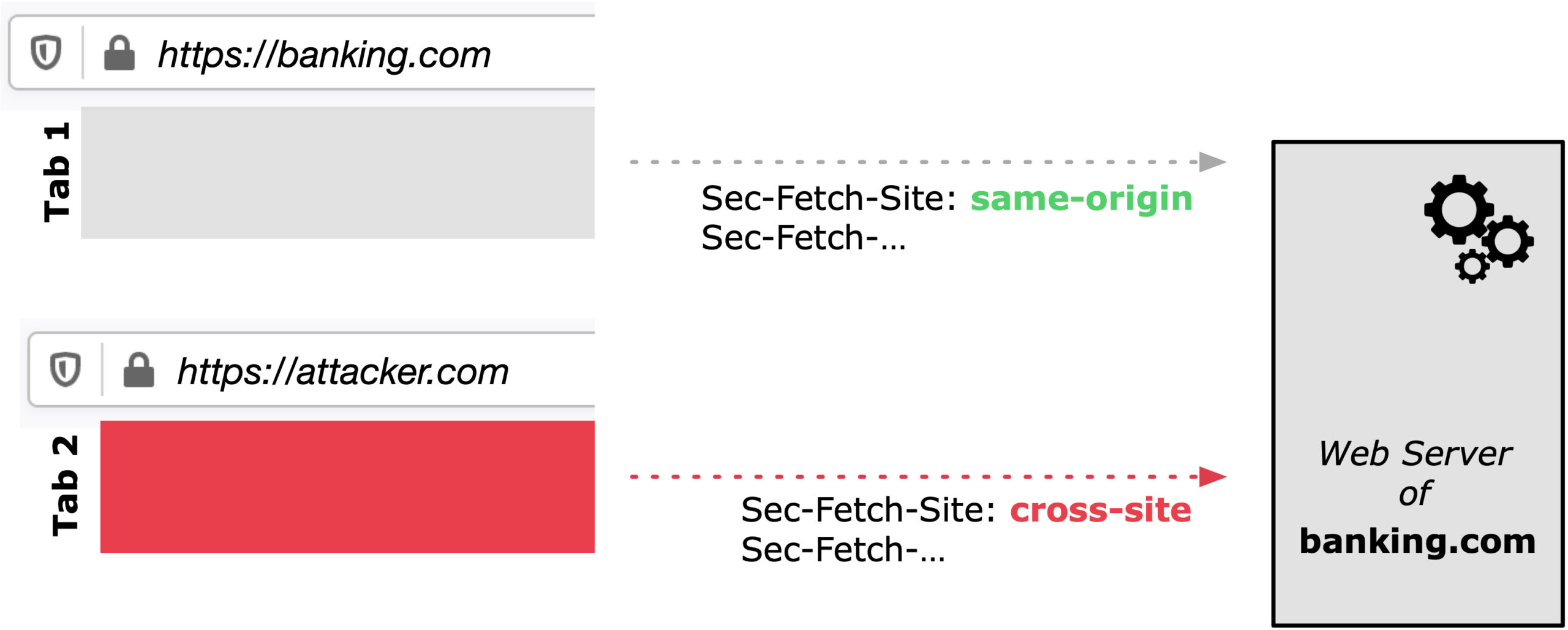
Firefox 90 sending Fetch Metadata (Sec-Fetch-*) Request Headers which allows web application servers to protect themselves against all sorts of cross site attacks.
For example, as illustrated in the Figure above, let’s assume you log into your banking site hosted at https://banking.com and you conduct some online banking activities. Simultaneously, an attacker controlled website opened in a different browser tab and illustread as https://attacker.com performs some malicious actions.
Innocently, you continue to interact with your banking site which ultimately causes the banking web server to receive some actions. Unfortunately the banking web server has little to no control of who initiated the action, you or the attacker in the malicious website in the other tab. Hence the banking server or generally web application servers will most likely simply execute any action received and allow the attack to launch.
As illustrated in the attack scenario above, the HTTP request header Sec-Fetch-Site allows the web application server to distinguish between a same-origin request from the corresponding web application and a cross-origin request from an attacker-controlled website.
Inspecting Sec-Fetch-* Headers ultimately allows the web application server to reject or also ignore malicious requests because of the additional context provided by the Sec-Fetch-* header family. In total there are four different Sec-Fetch-* headers: Dest, Mode, Site and User which together allow web applications to protect themselves and their end users against the previously mentioned cross-site attacks.
While Firefox will soon ship with it’s new Site Isolation Security Architecture which will combat a few of the above issues, we recommend that web applications make use of the newly supported Fetch Metadata headers which provide a defense in depth mechanism for applications of all sorts.
As a Firefox user, you can benefit from the additionally provided headers as soon as your Firefox auto-updates to version 90. If you aren’t a Firefox user yet, you can download the latest version here to start benefiting from all the ways that Firefox works to protect you when browsing the internet.
The post Firefox 90 supports Fetch Metadata Request Headers appeared first on Mozilla Security Blog.
I pulled on an actual collared shirt last week because I was meeting a friend for lunch, a plaid shirt, and I happened to have a call first before going out.
As I started the video before the meeting, I caught sight of myself in the webcam preview and the chequer pattern on my shirt. “Aha,” I thought automatically, “I’m not in a simulation.”
David Cronenberg’s eXistenZ (1999) is about a virtual reality video game, and you see some of the movie in-game and some out of the game. (It’s aesthetically unlike anything else – the game pods are pulsating meat objects, connecting is, um, highly charged, and the setting lacks the usual tech signifiers. It’s low key rural.)
There’s some confusion about what reality is (a kinda pre-Inception Inception thing going on) but it turns out that the in-game scenes are subtly visually signposted. Here’s Cronenberg:
… we were replicating some of the style of some video games. If you want a character to wear a plaid shirt, it takes up a lot of memory, so it’s much easier if he has a solid beige shirt. So I was trying to replicate the blandness or blocking’s of the polygon structure of some games.
– Sight and Sound, Game Boy (1999)
Incidentally that is a FANTASTIC article and you should totally read it. Cronenberg expounds on the nature of reality and also dips into cyborg ideas. And Chris Rodney, the author of the piece, produces turns of phrase that you just know you’d be looking at the screen and quietly nodding in satisfaction if you managed to pull off something like that yourself:
Although the “reality bleeds” continually signalled throughout the movie are not an original device, they presage a massive narrative haemorrhage at the end, so much so that it’s impossible to give an in-depth synopsis of the film without literally giving the game away.
Narrative haemorrhage!
I don’t remember reading that interview at the time but I must have done, or one very similar, because Cronenberg’s costume design trick is a thought that lives in my head now for, yes, 20 years and more and emerges from time to time: oh yes, that’s a shirt texture that would cost a bunch of clock cycles to render, I must be in reality right now, good to know.
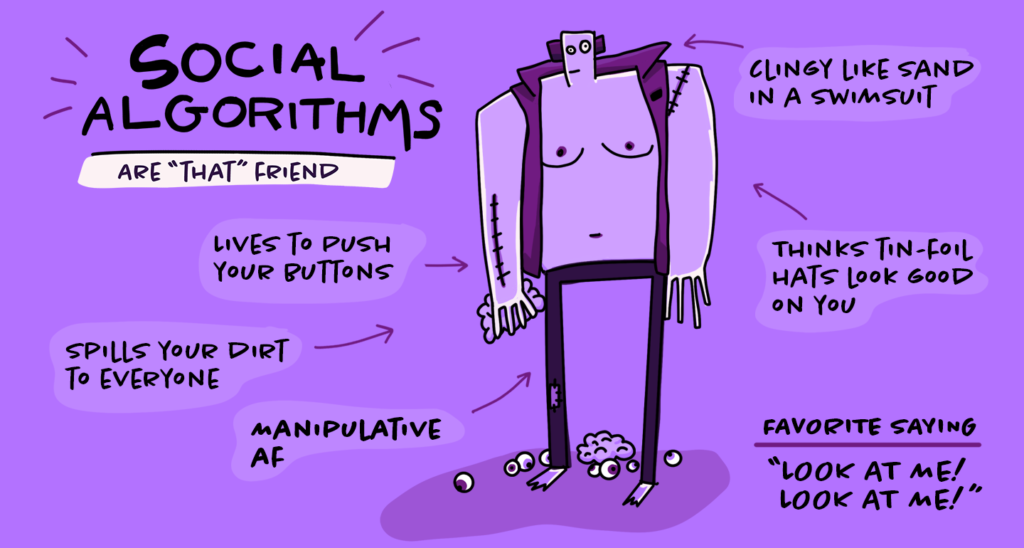
Last year a new phrase crept into the zeitgeist: doomscrolling, the tendency to get stuck in a bad news content cycle even when consuming it makes us feel worse. That’s no surprise given that 2020 was one for the books with an unrelenting flow of calamitous topics, from the pandemic to murder hornets to wild fires. Even before we had a name for it and real life became a Nostradamus prediction, it was all too easy to fall into the doomscroll trap. Many content recommendation algorithms are designed to keep our eyeballs glued to a screen, potentially leading us into more questionable, extreme or ominous territory.
Pocket, the content recommendation and saving service from Mozilla, offers a brighter view, inviting readers to take a different direction with high-quality content and an interface that isn’t designed to trap you or bring you down. You can get great recommendations and also save content to your Pocket, both in the app and through Firefox, every time you open a new tab in the browser. Pocket doesn’t send you down questionable rabbit holes or bombard you with a deluge of depressing or anxiety-producing content. Its recommendations are vetted by thoughtful, dedicated human editors who do a lot of reading and watching so you don’t have to dig through the muck.
“I’ve always loved reading, and it is definitely a thrill to read all day at my desk and not feel like I’m procrastinating. I’m actually doing my job,” said Amy Maoz, Pocket recommendations editor.
Amy and colleague Alex Dalenberg are two members of Pocket’s human curator team, and they are some of the people who look after the stories that appear on the Firefox new tab page.
Every day, Pocket users save millions of articles, videos, links and more from across the web, forming the foundation of Pocket’s recommendations. From this activity, Pocket’s algorithms surface the most-saved and most-read content from the Pocket community. Pocket’s human curators then sift through this material and elevate great reads for the recommendation mix: in-depth features, clever explainers, curiosity chasers, timely reads and evergreen pieces. The curator team makes sure that a wide assortment of publishers are represented, as well as a large variety of topics, including what’s happening in the world right now. And it’s done in a way that respects and preserves the privacy of Pocket readers.
“I’m consistently impressed and delighted by what great content Pocket users find all across the web,” said Maoz. “Our users do an incredible job pointing us to fascinating, entertaining and informative articles and videos and more.”
“Saving something in your Pocket is different from, say, pressing the ‘like’ button on it,” Alex Dalenberg, Pocket recommendations editor, added. “It’s more personal. You are saving it for later, so it’s less performative. And that often points us to real gems.”
It makes sense that a lot of big, juicy stories end up in Pocket; articles from The New York Times, The Guardian, Wired and The Ringer are regularly among the top-saved by readers. Pocket’s algorithms also flag stories from smaller publications that receive a notable number of saves and highlight them to the curators for consideration. That allows smaller publications and diverse voices to get wider exposure for content that might have otherwise flown under the radar.
“The power of the web is that everybody owns a printing press now, but I feel like we’ve lost a bit of that web 1.0 or 1.5 feeling,” Dalenberg said. “It’s always really exciting when we can surface exceptional content from smaller players and indie web publications, not just the usual suspects. It’s also great to hear people say how much they like discovering new publications because they saw them in Pocket’s recommendations.”

Scalawag magazine is a small nonprofit publication dedicated to U.S. Southern culture and issues, with a belief that great storytelling and reporting can lead to policy changes. Last June, Scalawag published a round-up piece entitled Reckoning with white supremacy: Five fundamentals for white folks to share how they had been covering issues of systemic racism in the South and police systems since it launched in 2015.
“I wrote it mostly for other folks on the team to use as a guide to send to well-meaning friends who found themselves suddenly interested in these issues in the summer of protests, almost as a reference guide for people unfamiliar with our work but who wanted to learn more,” said Lovey Cooper, Scalawag’s Managing Editor and author of the piece.
Cooper published it on a Wednesday evening and sent it to a few friends on Thursday. By Friday morning, traffic was suddenly overwhelming their site, and Pocket was the driver. The Pocket team had recommended Cooper’s story on the Firefox new tab, and people were reading it. Lots of them.
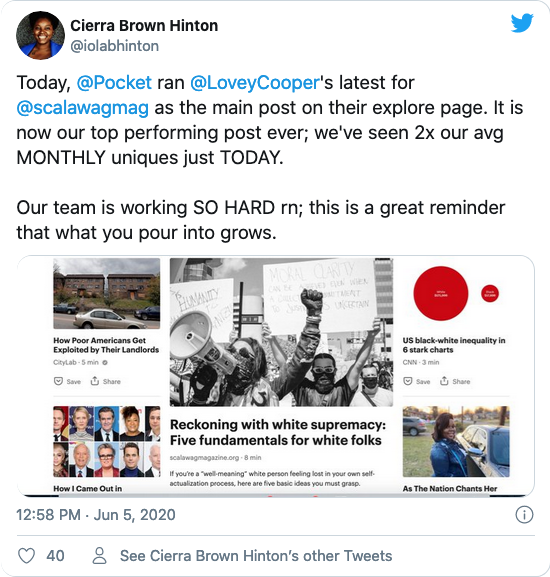
“I watched the metrics as I sat on the phone with various tech gurus to get the site back up and running, and within two hours — even with the site not working anywhere except in-app viewers like Pocket — the piece became our most viewed story of the year,” she said.
By Sunday, Scalawag saw more than five times its usual average monthly visitors to the site since Friday alone. They gained hundreds of new email subscribers, and thousands in expected lifetime membership and one-time donation revenue from readers who had not previously registered on the site. It became the most viewed story Scalawag had ever published, beating out by a huge margin the couple of times The New York Times featured them.
“The rest of June was a whirlwind too,” Cooper said. “We were being asked to speak on radio programs and at events like never before, due to our unique positioning as lifelong champions of racial and social justice. Just as those topics came into the mainstream zeitgeist, we were perfectly poised to showcase to the world that, yes, Scalawag has indeed always been fighting this fight with our stories — and here are the articles to prove it.”
Cooper’s piece was also included in a Pocket collection, What We’re Reading: The Fight for Racial Equity, Justice and Black Lives. Pocket has continued to publish Racial Justice collections, a set of in-depth collections curated by Black scholars, journalists and writers.
“We saw this as an opportunity to use our platform to amplify and champion Black voices and diverse perspectives,” said Carolyn O’Hara, Director of Editorial at Pocket. “We have always felt that it’s our responsibility at Pocket to highlight pieces that can inform and inspire from all across the web, and we’re more committed to that than ever.”
Scalawag’s story shows how Pocket’s curated recommendations can provide hungry readers with context and information while elevating smaller publishers whose thoughtful content deserves more attention and readership.
The idea that everyone has a printing press thanks to the internet is a double-edged sword. Anyone can publish anything, which has also opened the door to misinformation as a cottage industry. Then it shows up on social media. And with more people turning to social media as their news and information sources, even when it isn’t vetted, misinformation quickly takes off and does damage. But you won’t find it in Pocket.
The Pocket editorial team works hard to maintain one bias: quality content. Along with misinformation, you won’t find clickbait on Pocket, nor are you likely to find breaking news. Those are more in the moment reads, rather than save it for later reads. Maoz asserts that no one really saves articles like Here’s what 10 celebs look like in bikinis to read it tomorrow. They might click it, but they don’t hold onto it with Pocket.

Here’s what you need to know about the growing cybersecurity threat.
And when it comes to current events and breaking news, you’ll find that Pocket recommendations often have a wider or higher altitude view. “We’re not necessarily recommending the first or second day story but the Sunday magazine story,” Dalenberg adds, since it’s often the longer, more in-depth reads that users are saving. That would be the history of the bathing suit, for example, rather than a clickbait celeb paparazzi story, whose goal might solely be to deploy online tracking and serve ads more so than to provide quality content.
“People are opening a new tab in Firefox to do something, and we aren’t trying to shock or surprise them into clicking on our recommendations, to bait them into engaging, in other words,” said Maoz. “We’re offering up content we believe is worthy of their time and attention. ”
Curators won’t recommend content to Pocket that they believe is misleading or sensational, or from a source without a strong history of integrity. They also avoid articles based on studies with just a single source, choosing instead to wait until there is more information to confirm or debunk the story. They also review the meta-image – the preview image that appears when an article is shared. Since they don’t have control over what image a publisher selects, they take care to avoid surprising people with inappropriate visuals on the Firefox new tab.
As part of the Mozilla family, Pocket, like Firefox, looks out for your privacy.
“Pocket doesn’t mine everyone’s data to show them creepily targeted stories and things they don’t actually want to read,” Maoz said. “When I tell people about what I do at Pocket, I always tie it back to privacy, which I think is really cool. That’s basically why we have jobs — because Mozilla cares about privacy.”
The post Break free from the doomscroll with Pocket appeared first on The Mozilla Blog.
DPReview just published Apple still hasn't made a truly “Pro” M1 Mac – so what’s the holdup? Following on the good performance and awesome power efficiency of the Apple M1, there’s a hungry background rumble in Mac-land along the lines of “Since the M1 is an entry-level chip, the next CPU is gonna blow everyone’s mind!” But it’s been eight months since the M1 shipped and we haven’t heard from Apple. I have a good guess what’s going on: It’s proving really hard to make a CPU (or SoC) that’s perceptibly faster than the M1. Here’s why.

Attribution: Henriok, CC0, via Wikimedia Commons
But first, does it matter? Obviously, people who (like me) spend a lot of time in compute-intensive programs like Lightroom Classic want those apps to be faster. To make it concrete: I’d cheerfully upgrade my 2019 16" MBP if there were an M1 version that was noticeably better. But there isn’t.
But let’s be clear: The M1 is plenty fast enough for the vast majority of what people do with computers: Email, video-watching, document-writing, slideshow-authoring, music playing, and so on. And it’s quiet and doesn’t use much juice. Yay. But…
Check out this benchmark in the DPReview piece.

If you’re interested in this stuff at all, you should really go read the article. There are lots more good graphs; also, the config and (especially) prices of the systems they benchmarked against are interesting.
I sorely miss the benchmark I saw in some other publication but can’t find now, where they measured the interactive performance when you load up a series of photos on-screen. These import & export measurements are useful, but frankly when I do that kind of thing I go read email or get a coffee while it’s happening, so it doesn’t really hold me up as such.
To date, I haven’t heard anyone saying Lightroom is significantly snappier on an M1 than on a recent Intel MBP. I’d be happy to be corrected.
Anyhow, this graph shows the M1 holding its own well against some pretty elite Intel and AMD silicon. (On top of which, it’ll be burning way fewer watts.) (But I don’t care that much when I’m at my desktop, which I usually am when doing media work.) So, right away, it looks like the M1 already sets a pretty high bar; a significant improvement won’t be cheap or easy.
If you look a little closer, the M1 clock speed maxes out at 3.2GHz, which is respectable but nothing special. In the benchmark above, the Intel CPU is specced to run at up to 5.1GHz and and the AMD at up to 4.6. It’s interesting that Apple is getting competitive performance with fewer (specced) compute cycles.
But there’s plenty more digging to do there; all these clock rates are marked “Turbo” or “Boost” and thus mean “The speed the chip is guaranteed to never go faster than”. The actual number of delivered cycles you get when wrangling a big RAW camera image is what matters. It’s not crazy to assume that’s at least related to the specced max clock, but also not obviously true.
So, one obvious path Apple can take toward a snappier-feeling experience is upping the clock rate. Which it’s fair to assume they’re working on. But that’s a steep hill to climb; it’s cost Intel and AMD billions upon billions of investment to get those clock rates up.
Obviously, the M1 is evidence that Apple has an elite silicon design team. They’ve proved they can squeeze more compute out of fewer cycles burning fewer watts. This does not imply that they’ll be able to squeeze more cycles out of today’s silicon processes. I’m not saying they can’t. But it’s not surprising that, 8 months post-M1, they haven’t announced anything.
It’s a long time since Moore’s law meant faster cycle times; most of the transistors Moore gives you go into more cores per chip and more threads per core. Also, memory controllers and I/O.
In the benchmark above, the M1 has something like half the effective threads offered by the Intel & AMD competition. So, is it surprising that the M1 still competes so well?
Nope. Here’s the dirty secret: Making computer programs run faster by spreading the work around multiple compute units is hard. In fact, the article you are reading will be the seventy-sixth on this blog tagged Technology/Concurrency. It’s a subject I’ve put a lot of work into, because it’s hard in interesting ways.
I guarantee that the Lightroom engineers at Adobe have worked their asses off trying to use the threads on modern CPUs to make the program feel faster. I can personally testify that over the years I’ve spent with Lightroom, the speedups have been, um, modest, while the slowdown due to camera files getting bigger and photoprocessing tools more sophisticated have been, um, not modest.
A lot of times when you’re waiting, irritated, for a computer to do something, you’re blocked on a single thread’s progress. So GHz really can matter.
Here’s another fact that matters. As programmers try to spread work around multiple cores, the return you get from each one added tends to fall off. Discouragingly steeply. So, I have no trouble believing that, at the moment, the fact that the M1 doesn’t have as many threads just doesn’t matter for interactive media-wrangling software.
Which means that an M2 distinguished by having lots more threads probably wouldn’t make people very happy.
Yep, one problem with the M1 is that it supports a mere 16G of RAM; the competitors in the benchmark both had 32. So when the M2 comes along and supports 64G, it’ll wipe the floor with those pussies, right?
Um, not really. Let’s just pop up the performance monitor on my 16" MBP here, currently running Signal, Element, Chrome, Safari, Microsoft Edge, Goland, IntelliJ, Emacs, and Word. Look at that, only 20 of my 32G are being used. But wait, Lightroom isn’t running! I can fix that, hold on a second. Now it’s up to 21.5G.
The fact that that I have 10G+ of RAM showing free shows that I’m under zero memory pressure. If this were a 16G box, some of those programs I’m not using just now would get squeezed out of memory and Lightroom would get what it needs.
OK, yes, I can and have maxed out this machine’s memory. But the returns on memory investment past 16G are, for most people, just not gonna be that dramatic in general and specifically, probably won’t make your media operations feel faster. I speculate that there are 4K video tasks like color grading where you might notice the effect.
I’m totally sure that if supporting 32G would take Apple Silicon to the next level, they’d have shipped their next chip by now. But it wouldn’t so they haven’t.
Before we leave the subject of memory behind, there’s the issue of memory controllers and caching architectures and so on. Having lots of memory doesn’t help if you can’t feed its contents to your CPU fast enough. Since CPUs run a lot faster than memory — really a lot faster — this is a significant challenge. If Apple could use their silicon talents to build a memory-access subsystem with better throughput and latency than the competition, I’m pretty sure you’d notice the effects and it wouldn’t be subtle. Maybe they can. But it’s not surprising that they haven’t yet.
Where does the stuff in memory come from? From your disks, which these days are totally not going to be anything that spins, they’re going to be memory-only-slower. It feels to me like storage performance has progressed faster than CPU or memory in recent years. This matters. Once again, if Apple could figure out a way to give the path to and from storage significantly lower latency and higher throughput, you’d notice all right.
And to combine themes, using multiple cores to access storage in parallel can be a fruitful source of performance improvements. But, once again, it’s hard. And in the specific case of media wrangling, is probably more Adobe’s problem than Apple’s.
Everybody knows that GPUs are faster than CPUs for fast compute. So wouldn’t better GPUs be a good way to make media apps faster?
The idea isn’t crazy. The last few releases of Lightroom have claimed to make more use of the GPU, but I haven’t really felt the speedup. Perhaps that’s because the GPU on this Mac is a (yawn) 8GB AMD Radeon Pro 5500M?
Anyhow, it’d be really surprising if Apple managed to get ahead of GPU makers like NVidia. Now, at this point, based on the M1 we should expect surprises from Apple. But I’m not even sure that’d be their best silicon bet.
If Apple wanted to build the M2 of my dreams, a faster clock rate might help. A better memory subsystem almost certainly would. Seriously better I/O, too. And a breakthrough in concurrent-software tech. Things that probably wouldn’t help: More threads, more memory, better GPU.
Where by “awesome” I mean “Tim thinks Lightroom Classic feels a lot faster.” Honestly: I don’t know. I suspect there are a whole lot of Mac geeks out there who just assume that this is going to happen based on how great the M1 is. If you’ve read this far you’ll know that I’m less optimistic.
But, who knows? Maybe Apple can find the right combination of clock speedup and memory magic and concurrency voodoo to make it happen. Best of luck to ’em.
They’ll need it.

I’ve been running all of Apple’s betas, with the sole exception being watchOS 8. So far, the experience has been good. There are bugs, apps have crashed, and devices have restarted spontaneously here and there, but I haven’t been significantly slowed down on my iPhone, iPad, or Mac. In fact, I’m doing things like editing AppStories in Logic on Monterey, which isn’t the type of thing I’ve ever been able to do this early in a macOS beta.
However, audioOS, the OS that controls HomePods, has been as rough as Apple’s other OSes have been solid. I’ve been running the HomePod beta since the very beginning, and it’s been nothing but trouble. I haven’t seen overheating, which some users have reported, but I’ve had trouble with AirPlay and getting my HomePods, especially the minis, to stay connected to the Internet. So, when I heard that beta 3 was out and adds lossless streaming, I set out to update my HomePods right away.
My pair of original HomePods took a few tries, but I eventually got them updated using the Home app. The HomePod minis were more stubborn. The one in my office refused to connect to the Internet, so I couldn’t update it. I factory reset it not long ago, and I considered doing that again, but instead, I unplugged and replugged it, hoping that a restart would get it back on WiFi. I couldn’t tell if it had finished restarting, so I gave it a tap, which is when this started to play:
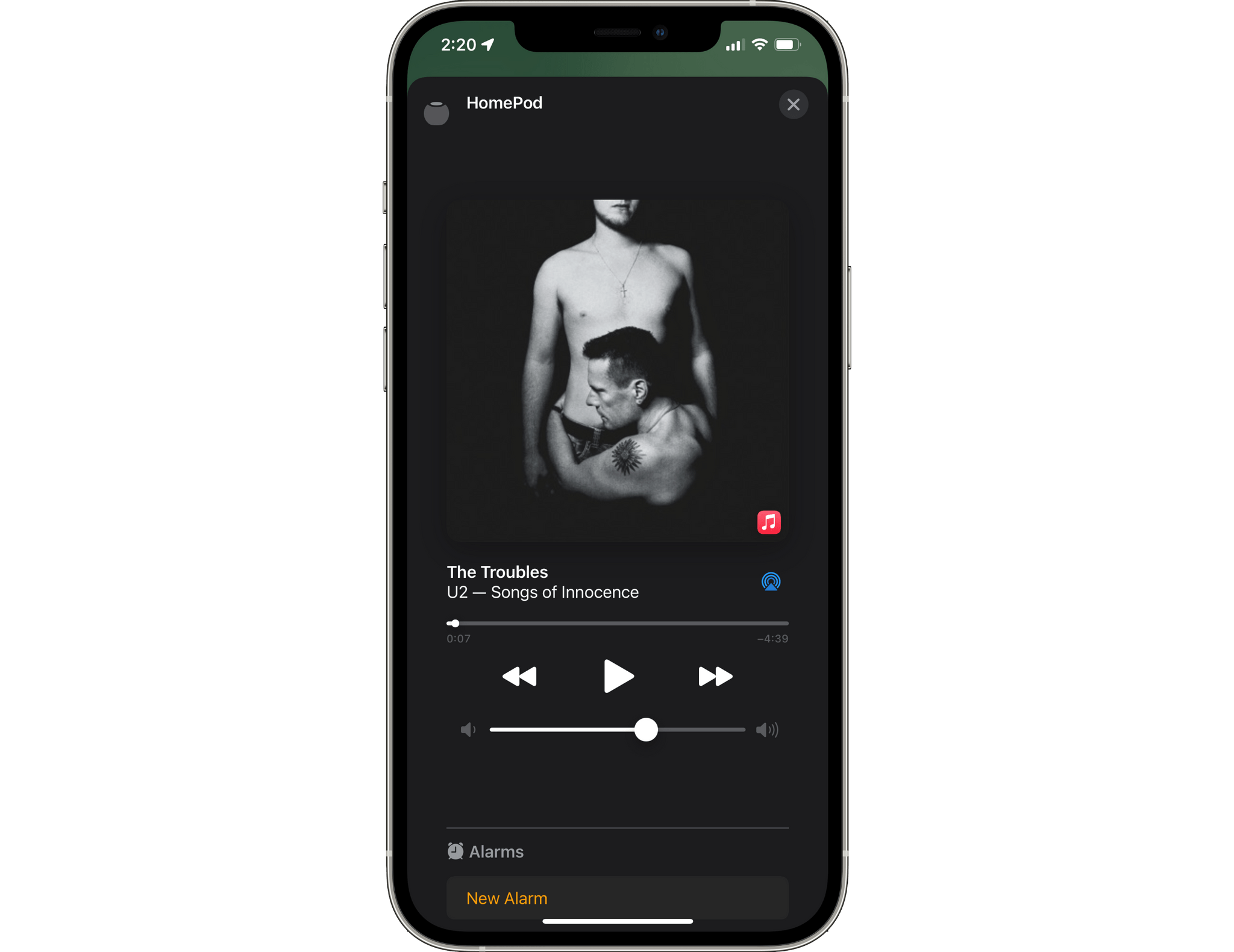
My HomePod was giving me Troubles alright.
Yes, U2’s Songs of Innocence, the album that was given away to 500 million people with an iCloud account in 2014 that, as Russ Frushtick discovered and wrote about for New York Magazine, lives in an odd limbo in so many people’s music libraries around the world. Frushtick was frustrated because the album played automatically when he connected his iPhone to CarPlay. Was something similar at play here?
The odds that it was random chance certainly seemed too far-fetched to be a coincidence. With nearly 19,000 songs ripped, purchased, and added to my music library for well over a decade, I felt like I was being trolled by my HomePod mini as Bono belted out The Troubles. Even the title of the song felt like an elaborate troll.
I had to know, so I unplugged the HomePod mini a second time and then plugged it back in again. I waited a couple of minutes, tapped the top, and:
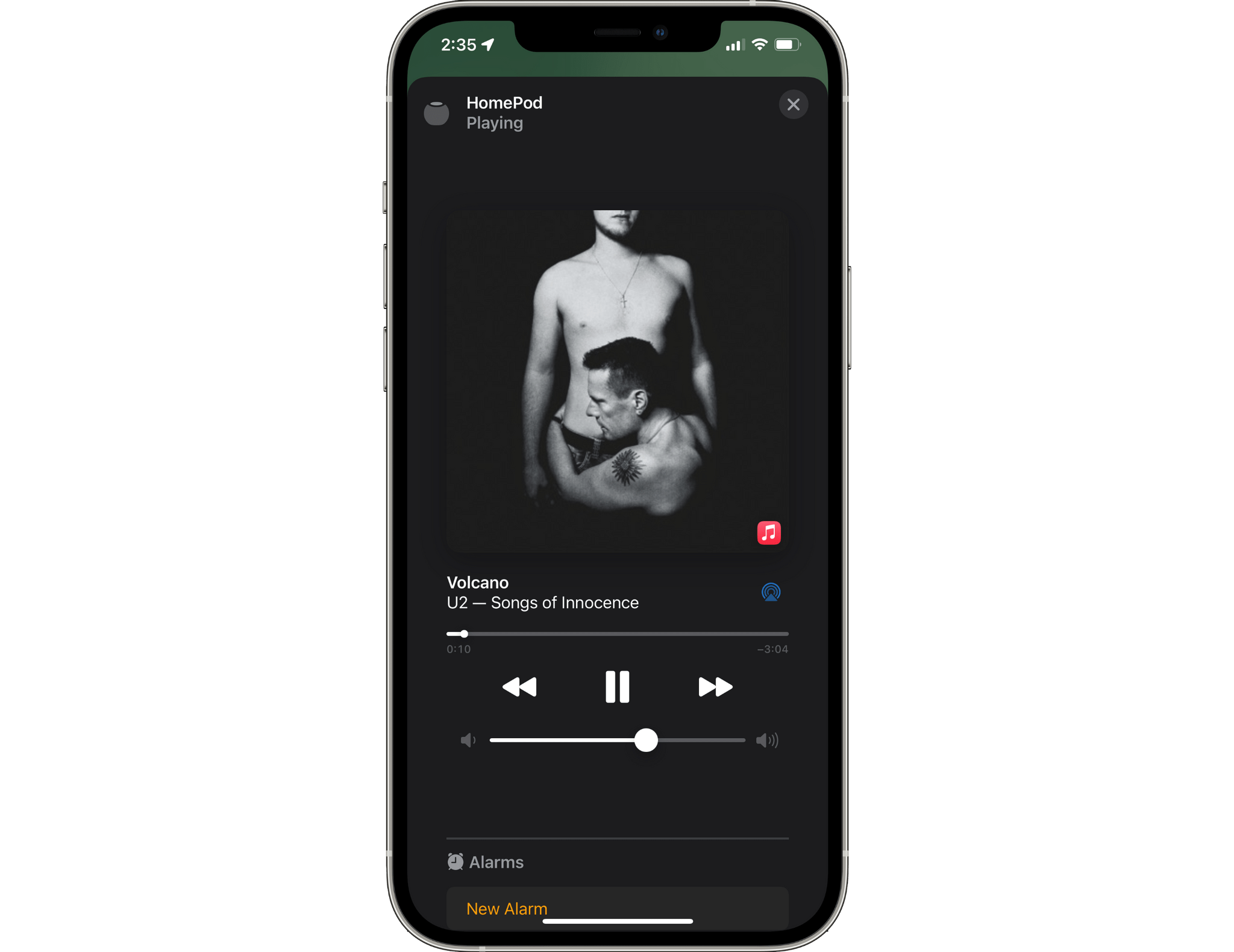
Not even the next song on the album.
I couldn’t help but laugh. I also couldn’t help but wonder: Was I finger tapping Bono or Tim when I reached out to tap my HomePod mini?
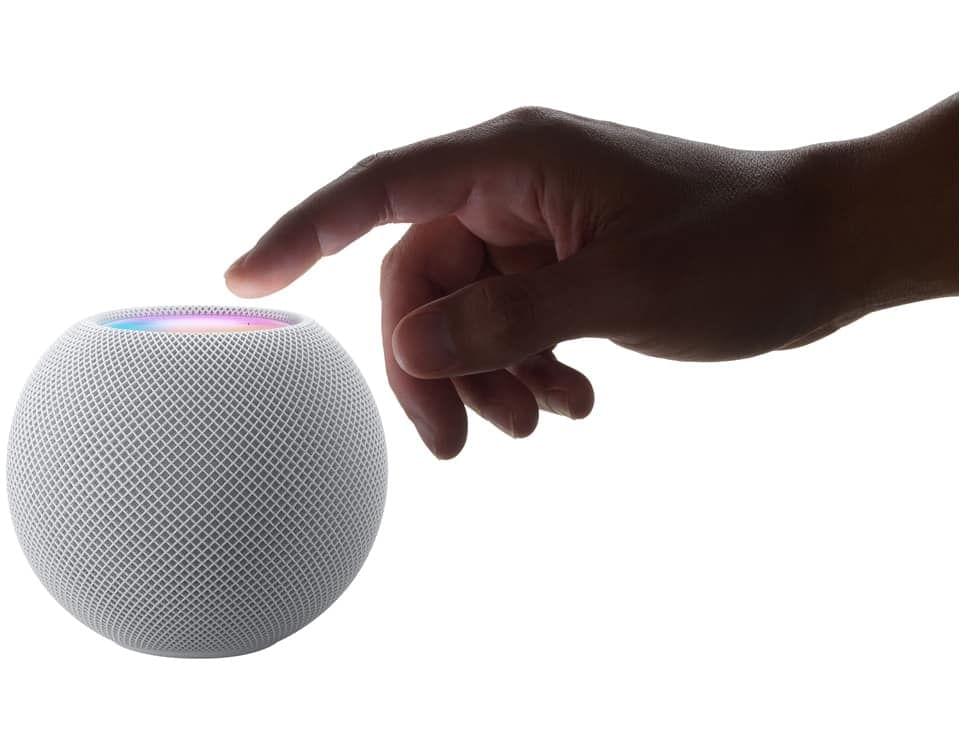
Is that you in there Tim?
Such is #betalife. The happy ending to the story is that after some more fiddling around, I managed to get my HomePod mini working again, playing my complete Music library, which is all I really care about.

All’s well that ends well.
I’ve always thought the uproar over Songs of Innocence was a little overblown, but then again, I’m a U2 fan, even if that album isn’t anywhere near the top of my favorites. At least with The Troubles out of the way, I can see if I can stream some lossless Doja Cat now.
Club MacStories offers exclusive access to extra MacStories content, delivered every week; it’s also a way to support us directly.
Club MacStories will help you discover the best apps for your devices and get the most out of your iPhone, iPad, and Mac. Plus, it’s made in Italy.
Join NowWhile you can and should take breaks by stepping away from your devices and screens, you may not always have the time or the autonomy to do so. But if you choose the right screen-based breaks, they can provide you with similar benefits as the offline variety and help you take more breaks throughout the day. And sometimes technology can also augment a largely screen-free respite. So don’t get caught in the trap of what one research team termed “screen guilt”: the idea that a break doesn’t really count unless you step away from your devices.
That’s the advice I offer in my latest piece for the Harvard Business Review: Taking a Break Doesn’t Always Mean Unplugging. Find out how to take better, more enjoyable breaks on-screen by reading the story here.
Nobody is born knowing how to work remotely. That’s exactly why we need to invest time and energy in learning how to make the most of our days at home—a skill that will be just as important when offices reopen, and we start forging a path to the hybrid workplace.
That insight helped set the stage for a terrific conversation with Charles Yao, Director of Intellectual Talent at the Lavin Agency. I’m delighted that Lavin represents me as a speaker, particularly now that there’s so much interest from organizations looking for support in the transition to remote work.
For more excerpts from my recent presentations, check out my speaking page.
 |
mkalus shared this story . |
WARNING: This story contains details some readers may find distressing.
The Penelakut Tribe in B.C.\'s Southern Gulf Islands says it has found more than 160 "undocumented and unmarked"\xc2\xa0graves in the area,\xc2\xa0which was also once home to the\xc2\xa0Kuper Island Residential School.
The tribe informed neighbouring First Nations communities of the discovery in a newsletter posted online on Monday morning.
"We are inviting you to join us in our work to raise awareness of the Kuper Island Industrial School, and Confirmation of the 160+ undocumented and unmarked graves in our grounds and foreshore," the notice said.\xc2\xa0
No further details were provided. The tribe did not say\xc2\xa0how the graves were found, whether children\'s remains are suspected of being buried there or whether ground-penetrating radar was used.\xc2\xa0
Officials did not respond to multiple requests for interviews.\xc2\xa0
The school operated\xc2\xa0from 1890 to the 1970s on Penelakut Island, formerly known as Kuper Island, which is among the\xc2\xa0Southern Gulf Islands.
On Thursday, the\xc2\xa0Tk\'eml\xc3\xbaps te Secw\xc3\xa9pemc First Nation near Kamloops, B.C., is expected to reveal further details of its recent discovery, on the grounds of another former residential school, of what were said to be the buried remains of an estimated 215 children.
A series of similar, grim announcements followed, linked to former residential\xc2\xa0schools in B.C. and Saskatchewan.
Penelakut Chief Joan Brown encouraged residential school survivors to heal\xc2\xa0in the newsletter.
"It is impossible to get over acts of genocide and human rights violations. Healing is an ongoing process, and sometimes it goes well, and sometimes we lose more people because the burden is too great," Brown said.
She invited community members to participate in the March for the Children in Chemainus, B.C., on Aug. 2 to remember the students who were forced to attend the Kuper Island Residential School and to move forward on the path to healing and reconciliation.
Support is available for anyone affected by their experience at residential schools, and those who are triggered by the latest reports.
A national Indian Residential School Crisis Line has been set up to provide support for former students and those affected. People can access emotional and crisis referral services by calling the 24-hour national crisis line: 1-866-925-4419.
Here are graphs of BC’s first and second dose rates by age:


I mentioned in yesterday’s General post that the Netherlands is seeing a meteoric rise in cases. There are two things I should have mentioned:
The Dutch case counts started inching up on four days after restrictions were lifted, and really took off on about ten days later. We saw cases inch up five days after restrictions were lifted. Today is eleven days after restrictions were lifted, and while our cases went up a little, they appear to be stable.
However, Malta’s recent cases graph looks as scary as the Dutch one, and Malta has vaccinated a higher percentage of people than BC, and in fact higher than almost anywhere else in the world. On 30 June, they allowed tourists to enter without quarantining, and look what happened:

Malta’s first/second dose vax rate is 84.1%/79.1%. (This article says Malta mostly used mRNA vaxes; this article said they also used AZ.) This article says that 12.5% of the recent cases were in fully vaccinated people.
Bottom line: fear the Delta!
The province wants to remind people of mental health resources and announce a few new ones.
There have been four days in a row with no deaths, yay!
Currently 66 in hospital / 14 in ICU, 658 active cases, 145,722 recovered.
Over the weekend, an average of 6,493 first doses and 52,077 second doses.
| first doses | second doses | |
| of adults | 79.9% | 47.7% |
| of over-12s | 78.8% | 44.6% |
| of all BCers | 71.9% | 40.7% |
Moderna still owes us 845,840 doses from two weeks ago.
We have 823,159 doses in fridges; we’ll use it up in 12.7 days at last week’s rate. We’ve given more doses than we’d received by 14 days ago.
We have 758,549 mRNA doses in fridges; we’ll use it up in 11.7 days at last week’s rate. We’ve given more doses than we’d received by 14 days ago.
We have 64,610 AZ doses in fridges; we’ll use it up in 150.5 days at last week’s rate.


Hey SUMO folks,
Welcome to a new quarter. Lots of projects and planning are underway. But first, let’s take a step back and see what we’ve been doing for the past month.
KB Page views
| Month | Page views | Vs previous month |
| June 2021 | 9,125,327 | +20.04% |
Top 5 KB contributors in the last 90 days:
Top 10 locale (besides en) based on total page views
| Locale | Apr 2021 page views | Localization progress (per Jul, 8) |
| de | 10.21% | 100% |
| fr | 7.51% | 89% |
| es | 6.58% | 46% |
| pt-BR | 5.43% | 65% |
| ru | 4.62% | 99% |
| zh-CN | 4.23% | 99% |
| ja | 3.98% | 54% |
| pl | 2.49% | 84% |
| it | 2.42% | 100% |
| id | 1.61% | 2% |
Top 5 localization contributors in the last 90 days:
Forum stats
| Month | Total questions | Answer rate within 72 hrs | Solved rate within 72 hrs | Forum helpfulness |
| Jun 2021 | 4676 | 63.58% | 15.93% | 78.33% |
Top 5 forum contributors in the last 90 days:
| Channel | Jun 2021 | |
| Total conv | Conv handled | |
| @firefox | 7082 | 160 |
| @FirefoxSupport | 1274 | 448 |
Top 5 contributors in Q1 2021
We don’t have enough data for the Play Store Support yet. However, you can check out the overall Respond Tool metrics here.
If you know anyone that we should feature here, please contact Kiki and we’ll make sure to add them in our next edition.
|
mkalus
shared this story
from  Das Kraftfuttermischwerk. Das Kraftfuttermischwerk.
|
Ich habe in den letzten Jahren eine echte Liebe f\xc3\xbcr alte R\xc3\xa4der entwickelt. Meistens dann Damenr\xc3\xa4der, immer unmotorisiert, weshalb mich in diesem aufw\xc3\xa4ndigen Stop Motion des Fotografen Paul Bush ganz besonders der vordere Teil sehr abholt. Aber der folgende Part ist handwerklich zweifelsfrei gro\xc3\x9fartig gemacht.
\n\n\nHundreds of motorbikes are animated frame by frame in this homage to the iconic motorcycle design and culture of the 1950s and 60s. A rider prepares his bike and departs on an idealised journey into the countryside and into the future.
(Direktlink, via Nag on the Lake)
'Stopped in at the new Nemesis next to Emily Carr. Incredibly gorgeous building, filled with delicious coffee & pastries & a bit of brunch.


|
mkalus
shared this story
from  Viewpoint Vancouver. Viewpoint Vancouver.
|
Michael Gordon, resident flaneur, reports in:
Have you noticed that most Starbuck’s do not allow you to sit in their café? Sometimes there is outdoor seating and sometimes not:

Also, I’ve noticed that in a few short months in the past year, Starbucks closed five of their cafés within a 15-minute walk of where I live. It’s notable that the two remaining open near me have a parking lot in front of them rather than being street-fronting cafés.
Starbucks Chief Operating Officer Roz Brewer assured customers recently that there will still be cafés with sitting but new innovations to build sales are being pursued such “like drive-thru only stores that have no seating, very small units, the side-by-side drive-thru lanes”.
 Yes you read that right: innovations like no-seating outlets, just driveway space for cars.
Starbucks is planning to close 400 stores in North America by the end of 2021 and open 300 with a focus on pickup and takeaway – no chairs, no Wi-Fi. (Apparently, every 15 hours a new Starbucks outlet opens in Mainland China.)
Still, there are five indie cafés with seating within a five-minute walk from where I live despite the Starbucks’ closures, so I’ve not noticed the closures. One new one is opening soon called ‘Lumien.’ They offer seating, tables, coffee, food, WIFI and will host us when we are looking for one of our third places.
I am intrigued with what is replacing Starbuck’s in their former locations. For example, you can now find at the foot of Yew at Cornwall a café sharing the same space as an eyewear shop staffed with baristas and eyewear stylists – now that’s the kind of innovation I appreciate.
On 4th Avenue, a former Starbucks location will soon be a ‘Turkish Bakery.’ Hmm yum! I’m liking that innovation for a bakery.

Regrettably for Starbucks and thankfully for us, the zoning in Vancouver does not allow drive-thrus anywhere except in some industrial areas. This helps to keep cars off our sidewalks.
The character for shopping and restaurant areas in Vancouver is that they be street-oriented as required by the City’s commercial zoning.
But don’t despair drivers, there is a drive thru Starbuck’s on industrial land at 850 Powell Street.

I recently got home to San Francisco after a long drive from Montana with my son. Over two weeks, our family took turns driving with him from Boston across the United States. Why? My son just graduated from college, and we wanted to create liminal space for him to celebrate what he accomplished and to prepare himself for the future.
Liminal space is the “in between” as you go from one state to another. Think about how many rituals we have to mark transitions: professional ones, like orientation. Personal ones for graduations, weddings, funerals, and informal “purges” to mark moves or breakups. We mark the passage of time with anniversaries and birthdays and New Year celebrations.
“Liminal” comes from the Latin word meaning “threshold,” and it’s an unavoidable part of change. Unfortunately, many organizations view change as something to go through as fast as possible. But as I shared in my livestream last week, a more effective and disruptive way to change is to slow down and actually create the liminal space of in between. This also creates space mentally and emotionally to expand on possibilities and opportunities.
One word: uncertainty. It’s tough when what you hold dear dissolves away. Even if you’re eager for the change, it’s uncharted territory! Liminal space gives meaning and structure to the change, which helps us manage uncertainty.
It’s important to treasure these liminal spaces and treat them with respect. These rituals help us move from the current state we know to a new state. But I see very little liminal space being intentionally created within organizations. How can we harness liminal space to embrace change?
If you’re anticipating change in your organization — and who isn’t as we go back to the office or transition to a fully hybrid workforce? — make sure you create liminal space to support seamless change:
Many times we skip the preparation for a change. We don’t ask ourselves, what does it mean to let go of here so we can be there?
To prepare with open eyes you must embrace the fact that you’re going through a change and be clear on what it is. It’s also important to say goodbye. Give yourself time to tie up loose ends and clear the decks. If you don’t separate from the past, you can’t let it go.
When I see organizations going through digital transformations, what separates successful from unsuccessful transformations is structure.
If you’re not clear on the sequence of events, the uncertainty inherent in change becomes unmanageable. You also need a master of ceremonies: somebody in charge of guiding this process. That’s why the leader’s role is so important! You are the person people turn to for reassurance, because they need continuity while going through uncertainty and change.
Once you’ve discovered the “new you” or “new organization,” you must bring it all together. How can you intentionally engineer the outcomes you desire so everyone feels comfortable and understands how to move forward?
The challenge for disruptive leaders is that we are tasked with creating huge amounts of change. And there’s a tendency and pressure for us to lead people through the change as quickly as possible. Because, frankly, it’s disconcerting to be in that transition space!
I urge you to take a different approach. Build into any change that sacred liminal space so that you and your team can move through uncertainty and embrace a new state with open arms.
The post Why You Need Liminal Space for Seamless Change appeared first on Charlene Li.
|
mkalus shared this story : |
| ""It will obscure views, which will affect property values and sell-ability," MC Marciniak, one of the petition's signatories, wrote in the comments. " Yeah NIMBYs. Want to live in a desirable neighbourhood but don't want people to come there. |
A towering sculpture of a distressed young boy cradling a melting shark in his arms will not become a fixture in Vancouver's False Creek neighbourhood, according to the city's head of public art.
The art piece, titled Boy Holding A Shark, is the work of Chinese artist Chen Wenling and is part of the Vancouver Biennale, a public art exhibition held every two years. According to a description on the biennale website, the 7.8-metre installation is a "reflection on the growing tension between humans and the ocean."
And the prospect of its arrival definitely caused tension.
More than 1,500 people signed a petition to stop the city from installing it on the southern edge of Vancouver's False Creek at a small elevated park space bordering the bike path near Stamps Landing.
At issue was the sculpture's height, its proximity to neighbours and the foot traffic it could draw in the middle of a busy bike route.
"It will obscure views, which will affect property values and sell-ability," MC Marciniak, one of the petition's signatories, wrote in the comments.
Now, according to Eric Fredericksen, Vancouver's head of public art, the city has completed an internal review and will not approve installation of the piece at the proposed site.
"The proposed site for Boy Holding a Shark carries high volumes of people walking and cycling, and the detailed site review, along with relevant comments from the public, identified conflicts with seawall traffic and integration with the surroundings," Fredericksen said in a July 7 statement.
Cameron Cartiere, a professor at Emily Carr University of Art and Design, said Friday on CBC's The Early Edition she respects that this is democracy in progress and that while the people have spoken, art is about generating conversation and she hopes all parties involved seize the opportunity for dialogue.
"Fifteen hundred people signed this petition, so that's 1,500 people who are in some ways engaged in the conversation," said Cartiere.
"I think that this is a moment where the biennale and the city could keep those engaged citizens in conversation. And if that doesn't happen, then in my opinion, then the process failed rather than the work failing."
She said this could be a starting point for the city to take stock of its process when deciding to install public art and find out if they need to speak with residents further in advance so future decisions go smoother.
The city said it will work with the Vancouver Biennale to find a more suitable location for the sad boy and his shark.
Bruno Schaatsbergen pulled together details about how AWS Lambda works under the hood from a detailed review of the AWS documentation, the Firecracker paper and various talks at AWS re:Invent.
Via Hacker News
I suffered a massive loss of productivity for a few days last week because I started reading the first of this series and found that I had to read them all pretty much without stopping.

Several people on social media and in real life, people whose taste I respect, had recommended these books by Martha Wells, but to be honest I was put off by the title. Right at this point in time I’m not looking for dark dystopian ultraviolence.
What happened was, Lauren found Network Effect (vol. 5) in one of the local Little Free Libraries and raved, so we both went back to the start and moved on from there. Hmm, I’m wondering if the increasingly ubiquitous LFL’s are becoming a force in book culture. Our experience suggests that publishers of extended series might benefit from driving around dropping individual books into LFL’s here and there.
But back to the books. Yes, there is ultraviolence. But the people and bots on the receiving ends pretty well all deserve what they’re getting. And anyhow that’s less than half the material. The majority is occupied by the protagonist’s internal monologue. Which is misanthropic, cynical and amusing, and has much more depth than would really be needed to just move the story along. It is impossible — well, it was impossible for me — to avoid starting to care about them.
The central issue is that while the protagonist does not think it’s human, it oozes humanity all over the place. And isn’t terribly happy about it.
Anyhow, fun stuff, super well-written, unqualifiedly recommended.
These days, any time you find yourself enjoying a fiction series, you have to wonder how it’ll play in extended-story-arc streaming TV.
Murderbot, well, I dunno. The ultraviolence could be done with lots of sci-fi-eye candy in The Expanse style, I imagine. But all that running commentary? It could be done — you’d need a super strong voice actor in perfect command of a broad range of tones. And I sense (but don’t have a clear picture of) an opportunity to break the fourth wall, where the diary itself becomes a character in the story.
Anyhow, if you haven’t read it already, chances are you’d enjoy it.
[Disclosure: There’s a link above to the books at Amazon and if you click it I might make a few pennies. Click like mad!]
Kaisereck on Granville Island now has a patio.
Currywurst, Schnitzel plates, and German wheat beer. The fries are excellent!
And it’s @rtanglao’s birthday!


This first week of the latter half of 2021 started with two days dominated by something unusual: face to face work meetings.
It left me with two notions:
But feeling energised was the main benefit, as if a fog had lifted.
I had a week that felt right because of it.
This week I
Meanwhile the case numbers in the Netherlands have started rising dramatically, two weeks of weekend clubbing under reduced restrictions put us back 7 months it seems. This may come to mean we won’t be able to visit Denmark. If the Danish admission rules don’t change by next weekend we should still be ok, but if it means a return to quarantine obligations we can’t go.

Went for a coffee in town, next to the local pop-up space port. Image Ton Zijlstra, license CC BY NC SA

Y crossing some water, image Ton Zijlstra license CC BY NC SA

image by greentumble.com
In his articles and books, Richard Manning describes high-maintenance monoculture, which has prevailed in much of the world since the early days of civilization, as “catastrophic agriculture”. He uses that term not because of its impact on the environment, but because of what it requires humans to do to maintain it — precipitate an endless series of simulated, unnatural ecological catastrophes (in the form of poisoning crops with toxins to kill pests and weeds, addition of unnatural fertilizers, elimination of complementary crops in favour of a single crop, and using unnatural amounts of water).
The result is a very fragile system, dependent both on a high degree of weather stability and on constant human (and now machine) interventions, to “force” the soil and the monoculture crops to produce a maximal amount of one specialized type of human (and human-consumed animal) food. Most gardeners today practice catastrophic agriculture, because they never learned any other way.
In similar terms, our current untrammelled hyper-capitalist economy might well be described as “catastrophic capitalism”. Artificial interventions in markets (like the 2008 bailouts, the vast and constant corporate subsidies of many industries, notably petrochemicals and the military, and the deliberate suppression of interest rates to encourage endless and reckless borrowing while punishing savers and those on fixed incomes) are now absolutely essential to “market growth” and hence global industrial capitalism’s continuance.
The result, again, is a desperately fragile system, with ghastly amounts of waste and inequality, leaving the system and its citizens utterly dependent on these artificial interventions, and requiring blind citizen/consumer obedience to enable them to continue, despite their destructiveness, unfairness and the massive suffering they cause.
This is what a culture (and a Ponzi scheme) does in its death throes. It desperately tries to perpetuate the existing system even when the costs vastly outweigh the advantages. The whole system is deemed “too big to fail” because knowledge of less dysfunctional systems has been lost and forgotten. History is replete with stories of the collapse of civilizations and societies that went “all in” on one way of doing things, even when that way of doing things was no longer viable, and even when it was utterly dysfunctional and self-destructive.
When systems of catastrophic agriculture begin to collapse, due to climate change, exhaustion of soils and water, or epidemic disease, the attempt to perpetuate such systems anyway might more accurately be called “Extinction Agriculture”. The Irish potato famine is one extreme example of what can happen. Complete dependence on a fragile and unsustainable system, with no viable replacement system available, will inevitably lead to the extinction of critical elements of the system and, as it collapses, the extinction of those dependent on it.
Similarly, our modern, fragile, unsustainable system of catastrophic (fragile, overextended, artificially supported, and perpetuated against all reason) capitalism, has now reached the stage it might accurately be called “Extinction Capitalism”. Like our modern industrial food system, it is killing us, and our planet, and still, ludicrously, we continue to support it.

image from XR, by Vladimir Morozov/akxmedia
Extinction Capitalism is, like other self-destroying systems, the result not only of forgetting possible alternatives to the prevailing but now dysfunctional system, but also of incapacity to imagine and hence create a more viable system.
I have argued that we live in an age of immense imaginative poverty. Imagination is a capacity that must be learned and practiced. Children were once encouraged to develop that capacity, but now the toys, games and media they are exposed to actively discourage and stunt the imagination, replacing it with rigid instructions and rules, preset boundaries and options, and a bunch of tech-induced visual thrills that make them passive consumers of the culture, primed for more kits, sequels and simplistic binary plots and precluded from considering any possibilities other than those the programmers, who suffer from similar imaginative poverty, have preconceived. Everything in our modern technology-obsessed culture is formulaic, constraining, artificially thrilling and relentlessly numbing.
That is not to say we are not creative. The detritus of human productivity that now weighs down our world came about because we have a predilection to make stuff, to create. But in a world of imaginative poverty, that creativity is derivative, replicative, devoid of novelty and originality, and lacking in any appreciation of the astonishing lessons that the natural world, outside our prosthetic human one, has to offer.
So instead of new ideas and possibilities inspired by practiced, collaborative, imaginative thinking, learning from the more-than-human world, we instead have a bunch of bored billionaires competing to see which of them can make or buy his way into outer space first. And numb, equally unimaginative media passively reporting on this competition and on other ‘celebrity’ activities.
And, instead of inventors and experimenters, we have dimwits running our political and technological systems, people who have never had an imaginative thought in their entire lives. As a result we have ever-more-derivative social media that offer all of the exploitativeness and none of the potential that global connectedness and collaboration might have offered, had it been imbued with imagination rather than simply harnessed for private profit.
So Facebook is a ghastly, dysfunctional, time-wasting replicator of unoriginal material, much of it deceptive or simply wrong, essentially a clone of an earlier tool that didn’t get big enough fast enough or ruthlessly enough to control the market. We are now its product, not its customers.
Amazon is just a private monopoly that did what a properly-run and properly-funded post office could have done much better, and could have run as a public utility for everyone’s benefit — had the 1% not conspired to starve public institutions in the interest of private “enterprise”.
And Twitter is just a pathetic, useless addiction — a machine for public masturbation, the ultimate manifestation of what Neil Postman called “amusing ourselves to death”.
So this is where we are, much like many previous civilizations that grew too large and too sclerotic to continue to function, and then collapsed, mostly unmourned. Most of our civilization’s citizens have developed a common and utterly useless specialty — we have become mindless, unimaginative, overweight, malnourished, placid obeyers of authority, unthinking consumers of more and more stuff that we don’t need, can’t afford, and which is killing our planet, and capable only of doing what we’re told, because we can’t imagine doing anything else. And this tragic state has not even made us happy.
Extinction Capitalism isn’t the cause of our disease, just the instrument of our execution. We are so busy looking at the barrage of messages and sparkly colours on all the pretty, irresistible screens we are surrounded with, that we can’t see the noose, slowly lowered and tightening around our necks. And the footing on the road ahead, especially when we’re not looking, is pretty precarious.
In Part Two I’ll speculate on where I think Extinction Capitalism is taking us over the next ten rocky years.
I’ve been grousing about WHY ISN’T THE PROVINCE VAXXING FASTER, but I think I understand why now.
This article said that there was exposure in the Cabana Lounge nightclub in Vancouver between 1 July and 4 July. Sigh.
This article says that the Sputnik V vaccine is turning out to be a good one, with effectiveness in the 90% range — and not just with Russian data, either. (I still wouldn’t get one because of the quality control problems which Brazil uncovered.)