Shared posts

09 Nov 15:34

Life On The Slippery Slope

by B

Two scenarios for what a world with a declining resource and energy availability could look like

Photo by Trevin Rudy on Unsplash

We, the lucky 1 billion living affluent lives, are completely technology-blind. We take all what has been discovered, developed and scaled up in the past as a given for eons to come. Electricity. Food in the supermarket. Gas at the pump. Everything just magically pops up in a veritable cornucopia of choices. ‘Hey, we’ve got plenty of resources, food and energy. It’s just not evenly distributed!’ — the modern sentiment goes. Neither the more historically minded, nor the live for the day types realize, however, that all this relative abundance was made entirely possible by the drawdown of a set of finite, easy-to-access mineral resources — fossil fuels chief among them. All of our technologies are built from this one-off burst of resource extraction, without exception. The issue, however, is that extracting non-renewable resources cannot go on indefinitely — they’re called non-renewable for a reason… (And we haven’t even talked about a similarly unsustainable drawdown of natural resources, consuming them way beyond their ability to regenerate, and polluting ecosystems surpassing their ability to cope.)

Whenever this topic comes up, however, there will be at least one person shouting at the top of their lungs: ‘Malthusian thinking!’ — as if vehemently rejecting the idea of biophysical limits could make them go away. Sure, we have proved to be extremely resourceful in the past when it came to kicking the can down the road, but now there are just way too many warning signs to ignore. And if what we as a civilization do cannot go on for much too long, it means that we must start seriously thinking about what happens when we find ourselves on the slippery slope of ecological, resource, energy and economic decline. We must move past both short term outlooks generated by economists based solely on the amount of dollars invested, and views based on historical cycles. Let us thus draw up two scenarios out of the many possibilities — two potential future histories if you like. This time, however, by placing biophysical realities into the center as opposed to human ambitions.

Thank you for reading The Honest Sorcerer. If you value this article or any others please share and consider a subscription, or perhaps buying a virtual coffee. At the same time allow me to express my eternal gratitude to those who already support my work — without you this site could not exist.

Global outlook

World oil production peaks, then begins to decline in the coming years (1). As ageing fields take more and more energy to maintain production from, and as the US shale revolution fizzles out due to oil companies running out of sweet spots that can be drilled at a low cost, global crude oil extraction begins it’s final, long decline. This worsening situation remains hidden in plain sight, however, as more and more hydrocarbon “liquids” get added to the mix from other sources, even though less and less actual fuel can be made out of them. World oil production from all sources reaches a high point at 110 million barrels a day around 2030.

Global diesel fuel production, however, is on the decline already. Lacking enough conventional crude oil to make diesel from, refineries resort to ever costlier (and energy intensive) methods to produce the fuel on which trucks, agriculture, mining, long distance transport and construction depends. These increased costs, however, get reflected in prices companies pay for transport, or people pay for food. Price inflation of essential items — the making of which happen to take up at least a third of the world’s diesel consumption — continue unabated. The rest of the world economy, producing all the non-essential consumer goods, on the other hand, experience a deflationary crisis due to a lack of demand, linking back to the cost of living crisis now becoming widespread among the once most affluent people of the world.

Towards 2030 diesel output falls further still, with no hope of returning to previous levels — making the shortage of this essential fuel a chronic predicament. Growth in the extraction of coal and other minerals stall, then begin to fall as a result, as more and more mines become unable to pay for ever increasing fuel costs, while struggling with depleting rich deposits at the same time. The same goes to many agricultural regions: the diesel shortage begins to hamper grain output as well, making the world even more reliant on what remains of the world’s biggest bread basket regions. Food shortages — especially in the Global South — become increasingly challenging to overcome.

On a positive note, world CO2 emissions peak at last, then begin their terminal decline. Environmental organizations declare victory over fossil fuels, as power generation from carbon based fuels begin to fall and electricity from “renewables” continue to rise. As oil and mineral extraction embarks on their long decline, though, the manufacturing (let alone recycling) of wind turbines and solar panels becomes even more challenging. Raw material shortages, price spikes, skyrocketing logistic costs and bankruptcies slowly put an end to the green energy transition. The continued reliance on fossil fuels results in a peak in “clean energy” output as well, albeit with a few years delay.

World population begins to shrink as the fertility crisis gets even worse throughout developed nations (mostly due to the now pervasive cost of living and housing crisis), and to food shortages and healthcare issues in the global south. All major economies are now in a state of permanent decline — even though heavily massaged and sometimes doctored GDP figures suggest otherwise. A global financial crisis, due to many private companies and households going bust and defaulting on their debt, slowly becomes inevitable.

The optimistic scenario

Realizing the severity of the crisis — after a few years of mumbling and fumbling — world leaders finally take proactive measures to slow resource and ecological decline, ease social tensions, redistribute wealth and grant access to food in an equitable manner. Governance boards and citizen assemblies are set up to direct resource flows at a local and national economy level, prioritizing access to healthcare, food and housing to all. New infrastructure development and expansion halts to save energy and raw materials for infrastructure conservation and repair. Sorry, no more new data centers, highways or airports. Existing mines, oil fields, the electric grid, water and sewage systems, as well as agricultural lands are treated as a common good, operated on a strictly non-profit basis and in full knowledge of the fact that eventually all of our easy-to-get, non-renewable resources will deplete one day. Commodities are no longer traded on the “market” but bought and sold based on long term contracts, providing much needed stability and predictability.

A free public debate about resource decline, governance and power structures are encouraged. The louder and more vehement the debate gets the better: let all emotions come out, let fears be addressed and hopes contrasted with reality. Deniers are called out and confronted in public. Companies and astroturfed campaigns are excluded from the discourse, their financing is exposed and shown to voters. Political debates are taken back where they belong: citizen assemblies, town halls and every place people meet. Corporations, hedge funds, billionaires etc. are now entirely excluded from politics. Their wealth, profits and dividends are taxed to the hilt — effectively killing the stock market and putting an end to the obscene levels of wealth inequality so pervasive nowadays. (Think of it as a controlled demolition, as opposed to letting the everything bubble burst violently and abruptly with consequences to match.) Campaign donations, lobbying, special interest groups are banned. Political campaigns become modest, and get financed entirely from taxes. Electing a government is a public good and must be paid for from a public budget.

Militaries and their budgets are also scaled back drastically, after having their primary purpose reduced to protecting boarders and helping citizens during natural disasters. Foreign missions and interventions are called off; bases and command centers are given back to their respective owners. The geopolitical chess-game is over: international treaties now treat each nation as equals, limiting the size of their armies and nuclear arsenals to the bare minimum. Disputes are handled through negotiations and low cost concessions — as opposed to costly military adventures abroad.

Nationwide re-skilling and training programs begin to enroll millions, teaching them basic technical skills necessary for growing food, repairing broken equipment, re- and upcycling consumer goods, repurposing industrial machinery and handling plastic waste. Rural communities are actively prepared to become self-sufficient, off-grid, self-contained local economies to save energy for keeping cities livable. Plans for moving out people from large metropolises is being prepared and implemented, entirely on a voluntarily basis. The transition back to a more modest lifestyle is accepted for what it is: an absolute necessity… A marathon, not a sprint.

Automation in the industrial and agricultural sector is reversed, encouraging more and more people to participate in the production process of real goods satisfying real demand… Not pent up desires for the latest smartphone, but answering needs for things which help people thrive in a radically shifting, new world. Solar water heaters, easy to repair farm machinery, low voltage backup household electricity systems. Large corporations are broken up, and small businesses are encouraged to innovate low-tech, resource and energy saving products. Supply chains get increasingly re-localized, which might raise costs, but prevent abrupt shortages and breakdowns. The world is slowly becoming a smaller, more prudent place. Economic growth and world spanning corporate empires are now things of the past.

Many previous industrial workers now find jobs in caring for children and the elderly. Medical services are now prioritizing prevention, screening and keeping people as healthy as possible — not extending human life to 90+ years via costly procedures. Junk (ultra-processed, high fat, high sugar, high salt) food gets banned entirely (sorry) together with smoking. Birth control and education for women is made free. People are encouraged to have kids, but not three, four or five. The ongoing population decline is increasingly seen as a way back to a more sustainable human society, not as an enemy to fight. The social safety net, together with benefit programs and the pension system gets completely redesigned around granting access to food, housing, clothing and basic services.

Thanks to these measures the supply and demand of natural resources and energy remains in balance, even as both continues to decline in the decades ahead. When the steepest phase of the bell-shaped decline curve is over (around the end of this century) humanity arrives at an eco-technic future, a low-tech, low-energy, low-consumption lifestyle. Renewable energy is no longer harnessed by complex and resource intensive, totally non-renewable devices, but locally sourced low-tech equipment: wind and water mills made from wood and recycled machine parts. Fossil fuels are now completely abandoned, together with high-rise buildings and large metropolises. Transportation is done mostly by barges on rivers and canals. Railroad tracks see very little traffic, just like highways, used mostly by horse drawn carts made out of used vehicle parts.

World population stabilizes around 1 billion, living in small towns and villages. Electricity and the internet — together with what remains of this blog — disappears entirely. Knowledge is only available in printed format, placing libraries again at the center of human civilization. Nuclear weapons — no longer usable in the absence of technology — all end up buried under mountains, alongside spent fuel rods and other dangerous waste. Nature begins to reclaim abandoned cities and agricultural land alike, resulting in a rapid plant material growth, soaking up much of the carbon released to the atmosphere and limiting the extent of climate change. Wildlife begins to regenerate and reclaim lost habitats. The world becomes a quiet, peaceful place.

While perhaps a little too over-optimistic, the above scenario at least paints a viable-looking pathway to a more sustainable future. Not through more technology, domination and destruction, but through collaboration and allowing the human enterprise to contract and shrink below biophysical limits. If you want a happy ending, though, stop reading here and feel free to jump to the Conclusion of this essay.

The not-so-optimistic scenario

What follows is a scenario based on our present cultural, political and economic realities, dominated by institutional inertia, elite infighting and a general inability to comprehend the reality of civilizational decline — both from the elites, and the voting public in general. Shall we call this the realist’s vision then? Or a pessimistic outlook? I leave it up to you to decide. Either way, let’s see how the slow moving train wreck of societal disintegration might unfold against the backdrop of modernity hitting biophysical limits.

Europe, the birthplace of industrial civilization, now turns into it’s first casualty. Having used up all of their cheap coal, metal ores and oil from the North Sea, and after waging an economic war on their biggest supplier of raw materials and energy for years, European economies have found themselves in a state of permanent decline. A cost of living crisis, combined with de-industrialization, and a self-inflicted security dilemma on its border (and increasingly within its member states) results in a series of government failures and rising tensions. Unable to procure enough cheap energy to sustain its economic output — let alone that of a war economy — and incapable to chart its own way, the EU becomes a non-entity in both economic and geopolitical terms, used merely as a tool in great power competition.

As a result of chronically high energy prices, tariffs, part shortages and lost market shares, once famous European corporations go bankrupt, or get sold to outside competitors one-by-one. Lacking adequate tax revenues to maintain them, social and welfare programs are cut back to bare bones, even as unemployment and the number of pensioners grow — together with the risk of a major government and private debt crisis. In order to retain control, the economic block turns itself into an Orwellian surveillance state, attempting to monitor and censor dissent in an effort to quell violence and to prevent political chaos from erupting.

As pressures continue to mount, the fabled attack on NATO countries fail to materialize, and as the radical right grabs power in a number of its core member states, the EU itself becomes ungovernable — turning into a bunch of bickering nations, unable to arrest their decline. Organized crime and minority groups take over the role of government in many areas. The once proud nations of Europe are now in the process of rapidly becoming third world countries with intermittent electricity, dilapidated infrastructure and failing services. And while this might look implausible today, no one in the Soviet Union would have thought in the mid-1980’s either that their entire block could fall into ruins in less than a decade.

Meanwhile America keeps struggling with its own internal contradictions. No longer being able to impose its will on India, China and Russia, while feeling increasingly threatened by the rise of alternative payment systems (outside the dollar), not to mention the profound shock from the loss of its energy independence as the shale revolution fizzles out, it lashes out on allies and enemies alike. In an effort to maintain its energy security and internal stability the US shifts from fighting just a handful of forever wars to fighting everyone, everywhere; attriting not only its external but internal enemies as well. Waging war, “killing all the right people” and destroying as much of its rivals’ economic and military capacity as possible, becomes its sole reason of existence (2).

Seeing US insecurity, combined with a deepening economic recession throughout the entire West and the rise of rivals, trust in the Eurodollar system (3) evaporates. First slowly, then all at once. The system which granted the efficiency of lending needed to facilitate international trade in dollars so far, seizes up. Disappearing collateral and liquidity quickly leads to an abrupt halt in international trade. This event finally bursts the everything bubble (spearheaded by the AI mania), and plunges the stock and housing markets to record lows. However, since many of these assets were used as collateral for domestic loans, this event also triggers a banking crisis rapidly spreading around the world. The western financial system collapses in a rapid cascade of events.

The rift between the West and Asia, initiated by the trade war earlier in the 2010’s and intensified in the mid 2020’s, helps to protect Asian markets from the worst effects of this financial collapse. However, it still leads to a number of business failures and bankruptcies, pushing even the Chinese economy into recession and many South-East Asian nations into deep crisis. The world enters an economic depression not seen since 1930. Demand for industrial products, and therefore energy and mineral resources, plummets — leading to a collapse in oil prices and a bankruptcy of many oil companies. Oil production falls further still, as ever costlier (and energy intensive) to maintain fields are abandoned for good. The resulting rebound in oil prices, however — together with a lack of credit and a general impoverishment of customers — prevents an economic recovery from happening, and leads to a further fall in oil demand, as well as production. The world economy transitions into an advanced stage of decline.

The recession, turning into a depression, heightens political tensions fueled by rampant inequality in the US (and elsewhere) and results in a complete loss of faith in the federal government. Riots, burning cars, looting become everyday sights on both sides of the Atlantic. “Developed” nations plunge into a state of permanent civil war. States secede from both the US and EU one after the other, only to form unstable blocks subject to the same pressures. China uses its military to quell civic unrest, but struggles mightily to remain stable. Local currencies appear to replace the failed dollar and Euro, but the world remains without a universally accepted and widely available reserve currency. Local wars break out over ethnic tensions, and to gain control of freshwater supplies, energy, viable agricultural land and mineral resources. The damage to infrastructure caused by these conflicts and the ever worsening effects of climate change, takes forever to repair, and in many cases, do not get repaired at all. World industrial and agricultural output continues to fall, together with population.

As we get closer to the middle of this century, solar panels and wind turbines, manufactured at the height of industrial civilization in the 2020’s, start to reach the end of their lifecycle and fail in droves, presenting the local population with a large amount of industrial waste. Due to the lack of industrial capacity and an adequate level of fossil fuel supply, their recycling (let alone replacement) has by now become impossible. The same goes — to an even greater extent — to nuclear power plants. As global mining and manufacturing grinds to a screeching halt, and as the easy-to-get portion of uranium resources deplete, more and more NPP-s remain without fuel to burn. And while many of these reactors were shut down some time already, spent fuel ponds still must be refilled and cooled constantly, even as electricity supply becomes increasingly spotty and unpredictable. How this predicament can be “managed” in failed states lacking energy to provide even basic services is yet to be seen.

As global trade fades into distant memory, well into the second half of this century, the amount of goods traversing the globe has now been reduced to a mere trickle. Those societies who could not localize their economies (becoming more or less self-sufficient within a ~10 km radius) by now, disintegrate. Members of formerly highly organized societies join the ranks of the millions of refugees wandering around the planet in search for food and shelter. Some join bands of raiders while others try to settle in the far North. Global population continues to fall.

Lacking shipping fuel, or at least wood to build large sailboats from, there is not much sea trade either. (All suitable trees were cut down to provide heat in the winter and fuel for cooking a long time ago.) All of our high tech gimmicks, including refrigeration, telecommunication networks, the electric grid etc. fall into ruins; providing plenty of raw materials for local blacksmiths and tinkerers to make ploughs and small hand tools from. The vast treasure trove of data stored on hard drives around the world is now either completely useless or lost. Books printed throughout the 20th and early 21st century disintegrate into dust, as the combined effect of air pollution and age destroys the paper on which they were printed. Literacy rates fall, and a new dark age sets in. World population dwindles below 1 billion.

Following the fall of industrial societies around the world, the chance of re-building a global high-tech economy is now reduced to zero. All the easy to mine, smelt and use minerals and fossil fuels are now gone, together with the technology and knowledge how to work with them. So as long as resources salvaged from the lost metropolises of a bygone age last, there will be at least some metallurgy (powered by charcoal) possible, but lacking a cheap and abundant energy resource as coal or oil, restarting modernity will be out of the question. On the other hand, and if pollution and temperature levels allow, there will be plenty of opportunities to build small cities connected by roads and canals, ripe with opportunities for re-establishing regional trade over time. These re-emerging city states will be, however, scattered around a narrow habitable belt between the North Pole and the expanding deserts to the South, separated by vast oceans. Save for small clusters of towns around them, people of the future will barely know a thing about each other. The world, once more, will become huge… and empty.

Conclusion

You see, this is the difference between a controlled, managed simplification of the economy, and uncontrolled chaos, aka collapse fueled by the denial of reality and a lack of trust. And while both takes decades to fully unfold, the first option minimizes suffering and the loss of lives, while the latter results in the diametric opposite. Although neither of the two scenarios are likely to come true in their entirety or as described above, they can at least help us get a grip on the situation. Always keep in mind that the future is unlikely to turn out to be as bad as we fear, nor as good as we hope.

Nothing is set in stone at the moment. Who knows? Our future might hold some pleasant surprises as well. In order to seize opportunities to turn things for the better, however, we need to form “islands of coherence” first — as complexity scientist Ilya Prigogine put it. We need a lively civic discourse around the topic of civilizational decline (as much as it’s possible in our fragmented world) to develop a world view rooted in reality together. We are entering uncharted territory here as global growth tips into decline. The world will become even more chaotic than today, but instead of falling into despair over what might be ahead of us, let’s actively seek opportunities to turn things for the better instead — no matter how small their effect may seem to be.

Until next time,

B

Thank you for reading The Honest Sorcerer. If you value this article or any others please share and consider a subscription, or perhaps buying a virtual coffee. At the same time allow me to express my eternal gratitude to those who already support my work — without you this site could not exist.

Notes:

(1) While crude plus condensate extraction (the strictest category of oil) has peaked in November 2018 already, and fell off sharply in 2020, it briefly returned to 2019 levels by 2025. That doesn’t mean that it can stay up for much too long: mature oil fields require an increasing amount of energy to offset natural depletion as they age, making extraction ever costlier with every passing year.

(2) If you are interested in the power dynamics behind forever wars merging into one big, global, networked war, I highly recommend the exceptional blog of fellow writer Nel, “a PhD candidate exploring the fascinating intersections of Migration Sociology, Social Geography, and Conflict Studies.” Start with her two part series: Weaponizing Time (Part 1 and Part 2).

(3) The eurodollar system is a global network of US dollar-denominated bank deposits held at banks located outside the United States, which are therefore free from US federal regulation. In practice, these non-US banks can then provide loans to other non-financial institutions (such as car leasing companies) using their dollar reserves. While highly cost efficient (compared to regular US onshore banking due to the fewer regulatory reserve requirements), this system also increases the risk for excess credit, as these loans might not be as well secured as if the loan was extended by domestic banks. Since none of the institutions involved are subject to federal oversight, and due to the trillions of dollars involved, this practice creates a systemic risk to the entire world economy.

09 Nov 15:29

Paco de Lucía: “Fui de izquierdas, hasta que gané los 2 primeros millones de pesetas y los guardé en el banco. Y no hice ninguna escuela ni doné a los niños de Africa, ni hice nada por los demás… Ya nunca más dije públicamente que era de izquierdas”

by Fino
09 Nov 15:28

Wait for it…

by Fino

Ver post completo: Wait for it…

09 Nov 15:23

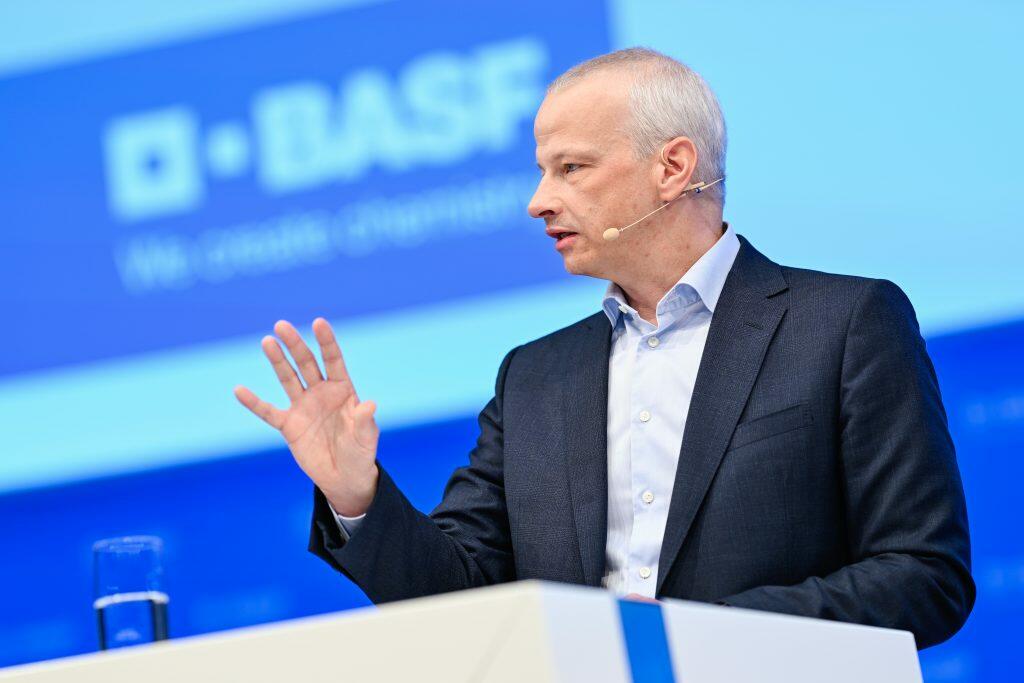
BASF CEO: EU CO₂ Trading Is A "Destruction Mechanism" For European Industry

by Tyler Durden
BASF CEO: EU CO₂ Trading Is A "Destruction Mechanism" For European Industry

Submitted by Thomas Kolbe

The roadmap is already set: in the coming years, the EU and its member states will make both businesses and consumers pay even more for CO₂ emissions. BASF CEO Markus Kamieth warns of the enormous destructive potential of this policy.

Truth comes on pigeon feet – Friedrich Nietzsche already knew that. And apparently, the same applies to European climate policy: slowly, but inevitably, the reality of the true costs of the green transformation and its impact on Germany’s industrial foundation is emerging.

On October 29, BASF’s CEO Markus Kamieth faced the press during the quarterly results presentation. What he announced was another cold shower for anyone still hoping for a new economic miracle.

Weak Results in a Stable Environment

The world’s largest chemical company reported a 3% decline in revenue in Q3 2025 compared to last year, while EBITDA fell by 5%. BASF is under massive pressure and has already cut 1,400 jobs to meet growing cost pressures.

BASF’s numbers have to be seen against the backdrop of a slowly recovering global economic cycle. Especially the U.S. economy, growing nearly 4%, is driving strong demand. Economies in China and India continue to expand dynamically, particularly in sectors critical to the chemical industry.

While the global economy gains momentum, BASF – like much of Germany’s chemical sector and the broader industry – continues to lose ground.

BASF CEO Markus Kamieth

The company’s main site in Ludwigshafen is hit hardest, leaving its 33,000 employees facing an uncertain future.

Criticism of the Climate Course

Kamieth was unexpectedly outspoken during the presentation. In addition to criticizing EU trade policy and rising energy costs in Germany, he struck at a rarely openly discussed wound: the EU’s climate policy.

Kamieth didn’t mince words, calling the European CO₂ emissions trading system (EU ETS 2) what it is: an attack on Europe’s industrial foundation.

For BASF alone, if the current climate course within CO₂ trading remains unchanged, annual additional costs of around €1 billion will arise from 2027 onward, when exemptions are removed – costs borne exclusively by European industry, while the rest of the world simply does not participate.

Kamieth hit a sore spot. EU industry is being financially squeezed by an ideologized CO₂ policy. Deindustrialization is – whether unspoken or suppressed – the result of Brussels’ policies and their national enforcers, whose only response to their self-inflicted disaster is ever-new subsidies.

Rare Criticism

Criticism of this centrally planned climate disaster for industry is rare. All the more remarkable are the unmistakable words of the BASF CEO – just two weeks after the sharp critique from Evonik CEO Christian Kullmann. Both direct their warnings to the same address: European isolationism in climate policy.

Kullmann also called for a comprehensive reform of CO₂ emissions trading – or even the complete abolition of the system. He openly called it “economic madness.”

Both CEOs understand global competition. And they know: nobody will follow the Brussels line.

Climate Club Increasingly Isolated

The global climate club is becoming increasingly isolated. At COP30 in Brazil, the U.S. exit from the Paris Agreement confirmed that even leading industrial nations no longer follow Europe’s push for CO₂ dominance.

This development exposes cracks in the belief in a solely CO₂-driven climate change – a signal European climate policy cannot conceal.

Both COP30 and the increasingly frequent EU climate summits reveal the lengths to which authorities go to prevent these doubts from taking root in public consciousness.

Too much is at stake: the gigantic CO₂ tax machine, which in the coming years is designed to funnel massive funds primarily to Brussels’ central EU apparatus.

Ironclad Media Curtain

The situation is similar to nuclear power. Behind an ironclad media curtain spun by the political-media complex around this energy source, the German public remains unaware that nuclear power is making a global comeback – aiming to nearly double capacity in the next three decades.

The silence in climate policy has been bought at a high price – through the climate redistribution machine, which increasingly restrains large parts of the economy.

The annual volume of CO₂ trading is set to nearly triple to around €100 billion in the coming years, plus CO₂ taxes and other climate levies that also hit consumers.

Consider, for instance, the flight levies that are literally wiping Germany off the map as a location for air travel.

Enormous Economic Losses

The actual capital misallocation forced by climate policy and lawmakers is difficult to quantify. We are dealing with a tangle of taxes, subsidies, fiscal advantages, hidden support, and price guarantees.

Yet, it is realistic to estimate that around 4–5% of GDP is being burned outside market mechanisms.

With the expansion of the trading system and the massive increase in climate subsidies, Germany will lose €150–200 billion in productive capital annually. It is therefore no exaggeration to call Brussels’ climate policy a poverty engine – one that is systematically draining Europe’s industrial base in global competition.

The EU has established a Climate Social Fund (CSF), initially equipped with around €10 billion per year, to support households and small businesses in the so-called green transformation. This shows Brussels is fully aware of the consequences – making this policy ethically all the more reprehensible.

We are witnessing increasing centralization of political power in Brussels – justified by the moral imperative of carbon dioxide – a civilizational bow to the climate cult.

* * * 

About the author: Thomas Kolbe, born in 1978 in Neuss/ Germany, is a graduate economist. For over 25 years, he has worked as a journalist and media producer for clients from various industries and business associations. As a publicist, he focuses on economic processes and observes geopolitical events from the perspective of the capital markets. His publications follow a philosophy that focuses on the individual and their right to self-determination.

Tyler Durden Sun, 11/09/2025 - 08:10
09 Nov 15:20

Punto de fuga

by Rosana Ferreres

Redes de pesca (1893), de Joaquín Sorolla

Un caos entre dos silencios, eso es la vida (Samuel Beckett).

Qué maravilla la charla con Manuel Vicent en el videopodcast Tercer Acto de El País Semanal. En realidad, todas ellas.

Aun con 89 años, cuando habla pone tanto foco en lo sensorial que en vez de escuchar una entrevista parece que hayas pasado una mañana en un barco de pescadores. El conocimiento, dice, llega por los cinco sentidos: sin comida y sin agua podemos morir, pero por falta de conocimiento no se muere nadie.

El pueblo natal de Manuel Vicent, La Vilavella, está a 6 kilómetros del mío. Escucharle me ha dejado ensimismada porque ese acento y ese timbre me han recordado todo lo que ya no está.

Su pasión por el mar me hace pensar en cómo, hasta hace unas décadas, en pueblos muy pegados al Mediterráneo -no más de 7 kilómetros- unas familias miraban al mar y otras a la montaña. La mía era de las segundas. Ver el mar desde lo alto de la montaña era como presenciar un  milagro, igual que les pasó a Don Quijote y Sancho al llegar a Barcelona.

De la entrevista a Manuel Vicent me voy a apropiar de su concepto del punto de fuga: esos momentos -en el jazz o en el mar, en su caso- que, dice, dan la vida, incluso después de puñaladas como la que sufrió él al morir su hijo, Mauricio Vicent, en 2023. Siempre, siempre tiene que haber puntos de fuga.

09 Nov 15:20

Por qué soy infiel | @SomosEstupendas

by Somos Estupendas

🎙️ ¡Bienvenida a un nuevo episodio del podcast de Somos Estupendas!

¿Es la infidelidad una forma de escapar de lo que duele en la pareja o de buscar una parte de nosotras mismas que sentimos perdida?

La infidelidad puede sentirse como un secreto cargado de culpa. Y aunque suele estar rodeada de juicios, la realidad es que es un fenómeno mucho más complejo de lo que solemos imaginar.

En este episodio conversamos con Marcela, psicoterapeuta de Somos Estupendas, sobre lo que significa la infidelidad hoy, qué nos lleva a cruzar esos límites y cómo influyen factores como la autoestima o la necesidad de sentirnos vistas de nuevo. 

También reflexionamos sobre las nuevas formas de infidelidad digital y por qué resulta tan difícil hablar de este tema sin caer en blancos y negros.

Una conversación profunda y necesaria, para abrir matices y comprender qué hay detrás de algo que tantas veces se vive en silencio.

🫂 Si este episodio tocó fibras sensibles en ti, recuerda: no tienes por qué atravesar sola lo que estás viviendo.

❤️‍🩹 Nuestro equipo de terapeutas puede acompañarte, para explorar lo que hay detrás de tus relaciones y aprender nuevas formas de vincularte. Aquí estamos si lo necesitas: Online | Madrid | Barcelona

🎧 Escúchalo y cuéntanos: ¿Qué significa para ti la infidelidad? ¿Dónde crees que empieza la infidelidad: en los actos, en los pensamientos, en lo digital?


👉🏻 Síguenos en Instagram, ¡ya somos 804.000! 🎊
https://www.instagram.com/somosestupendas/
No olvides dejar un "me gusta" y suscribirte a nuestro canal. Recuerda que también puedes escucharnos todos los domingos en https://somosestupendas.com, Ivoox y Spotify.
__________________________________
¿CÓMO PODEMOS AYUDARTE?👇🏼
Recursos y herramientas para tu bienestar:
🎙 Podcast de Psicología: ⁠⁠https://somosestupendas.com/podcast-psicologia/
🧘Meditaciones para Florecer: https://www.youtube.com/@Meditacionesguiadasflorecer
🖥 Blog de Psicología: https://somosestupendas.com/blog-de-psicologia/
🌿 Retiro VAM: https://somosestupendas.com/retiro-vam/
🏠 Presencia: https://somosestupendas.com/arteterapia-barcelona/
👩🏼‍💻 Descubre nuestra escuela: https://somosestupendas.com/la-escuela/
❤️‍🩹 ¿Sientes que necesitas ayuda? Reserva ahora tu sesión de psicoterapia online: https://somosestupendas.com/terapia-online/
__________________________________
🌷 ¿QUÉ ES SOMOS ESTUPENDAS?
Somos Estupendas es la mayor plataforma online de salud mental y bienestar. Un lugar para mirar hacia dentro y florecer. Nuestro trabajo es darte herramientas, aprender contigo, profundizar emocionalmente, y acompañarte en este camino de conocimiento y autocuidado.
Un punto de encuentro en el que crecer y mimar todas las parcelas de tu vida para sentirte plena.
__________________________________
💌 hola@somosestupendas.com
#bienestar #saludmental #psicología
09 Nov 15:16

Psiquiatra #1: Cómo Entender tu Sufrimiento Sin un Diagnóstico Psiquiátrico - LFDE

by Uri Sabat

Gestiona tu facturación de forma 100% digital y adaptada a Verifactu con Odoo: https://www.odoo.com/r/Yzdp *Publi.

En este episodio del podcast, hablamos con el psiquiatra Dr. José Luis Marín, Presidente del Foro Internacional para la Formación en Psicoterapia y nos desmontará los mitos de la psiquiatría convencional y revelará por qué estamos ante una pandemia de diagnósticos, no de enfermedades.
Una conversación esencial sobre psiquiatría crítica, trauma, medicalización de la vida cotidiana y alternativas reales a los psicofármacos. Si buscas entender las verdaderas causas del sufrimiento psicológico y encontrar caminos de sanación auténticos, este video es para ti.

👉🏽 Únete al canal de WhatsApp de LA FORMULA 👉🏽 https://whatsapp.com/channel/0029VaFJABr1t90eJODlFh12

❤️ Canal Secundario, Mismo propósito: documentar el éxito desde dentro 👉🏻 https://www.youtube.com/@DetrásdelÉxito-n3r

📈 Unete a la comunidad de LFDE: No necesitas cambiar el mundo hoy, solo mejorar un 1%. Aquí, lo hacemos juntos 👉🏽 https://www.skool.com/101

📩 NEWSLETTER: "La Fórmula"
Suscríbete aquí 👉🏽 https://urisabatlfde.substack.com

💕 Aviso de transparencia: Algunos episodios de “La Fórmula del Éxito” pueden incluir colaboraciones o enlaces de afiliado. Todas las menciones responden a colaboraciones reales y a productos o servicios que recomendamos por convicción.
09 Nov 15:16

Exposición de motos antiguas.

by El Camionero Acrata TEIS
09 Nov 15:15

China no busca controlar los chips de Taiwán, es algo que ya hace

by Adrián Díaz 李安
09 Nov 15:14

“No tengo relación con Ábalos, Aldama o Koldo” | Juan Guaidó #ESDLB Cap.597

by El Sentido De La Birra con Ricardo Moya

Hablamos con Juan Guaidó sobre la fragilidad de la democracia, la personalización del poder y sobre la oposición en Venezuela.

Una conversación sobre la pérdida de confianza en las instituciones, el agotamiento de las sociedades ante la polarización y la necesidad de recuperar el sentido real de la política.

🎟️ ¿Quieres venir a ver el podcast en directo? Compra tu entrada:
https://www.elsentidodelabirra.com/Venta_Entradas

—----------------------

50€ fácil y sin trucos con N26. Nos hemos aliado con N26 para que te lleves dinero solo por abrir una cuenta:

+20€ al abrir tu cuenta y hacer un primer pago de 20€ o más

+30€ si haces 10 pagos con la tarjeta dentro de los 30 días siguientes

Abre tu cuenta aquí: https://n26.com/es-es/elsentidodelabirra y no olvides introducir este Código: ELSENTIDON26 en el proceso de apertura!!

-----------------------

Nuestras entrevistas se publican en exclusiva en Podimo 👉 go.podimo.com/es/elsentidodelabirra 👈y compartimos 2 fragmentos en YouTube y después de 3 meses las publicamos completas aquí.

¡Suscríbete y activa las notificaciones para no perderte ningún estreno!

-----------

Redes sociales del invitado, Juan Guaidó:

Instagram: https://www.instagram.com/jguaido/
Facebook: https://www.facebook.com/JGuaido
X: https://x.com/jguaido

-----------

SÍGUENOS EN:
Instagram: https://www.instagram.com/elsentidodelabirra
TikTok: https://www.tiktok.com/@esdlb
X: https://twitter.com/esdlbirra
09 Nov 12:44

Rafael Fontán, estudioso del olivo: "Si plantas un hueso de aceituna no saldrá un olivo. Saldrá un acebuche. La semilla vuelve al origen, al abuelo, la planta silvestre ancestral"

by El_dinero_no_es_de_nadie

Rafael Fontán, de 73 años y de Quintamnar de la Orden, aunque vive en Cáceres, ha publicado el libro 'La almazara de Catón. Olivos y aceites en Grecia y Roma'. El olivo llegó a la península "gracias a los fenicios. Lo llevaron a Egipto, Jonia, Creta, el Egeo, el norte de África, las penínsulas Itálica e Ibérica: traían plantones a Tartessos... a cambio de estaño". "Lo curioso es que si plantas un hueso de aceituna... no saldrá un olivo. Saldrá un acebuche. La semilla vuelve al origen, al abuelo, la planta silvestre ancestral"

etiquetas: olivo, acebuche, aceitunas, hueso

» noticia original (www.mundodeportivo.com)

09 Nov 12:42

Trump ordena negar residencia a extranjeros con obesidad y avanzada edad

by Ateo
El Departamento de Estado de EE.UU. envió una nueva directriz a los funcionarios de embajadas y consulados
09 Nov 12:41

Las personas y sus perros comparten bacterias intestinales tras un mes de convivencia

by Ateo
Un equipo japonés analizó a 25 parejas persona-perro y detectó 11 bacterias comunes tras un mes de convivencia.
09 Nov 11:20

Los Países Bajos dispuestos a ceder el control de Nexperia si se reanuda el suministro de chips [EN]

by TooBased

El Gobierno neerlandés está dispuesto a suspender la orden que le otorgaba la facultad de bloquear o modificar decisiones corporativas clave en el fabricante de chips Nexperia si China reanuda las exportaciones de chips críticos, según informó Bloomberg News el viernes, citando a personas familiarizadas con el asunto. Reuters no pudo verificar inmediatamente la información. Nexperia no respondió de inmediato a una solicitud de comentarios de Reuters.

etiquetas: nexperia, control, holanda, china

» noticia original (www.reuters.com)

09 Nov 11:20

El 80% de las denuncias por viviendas ocupadas en Catalunya son de pisos vacíos de grandes tenedores

by JuanCarVen

Según datos de los Mossos d'Esquadra, las ocupaciones han descendido un 18,1% entre enero y octubre de este año, pero crecen los intentos frustrados

etiquetas: ocupación, problemas, fondos

» noticia original (www.eldiario.es)

09 Nov 11:19

Moriscos en los Tercios: lealtad y mestizaje en las guerras del Siglo de Oro

by Ripio

La historia militar de la Monarquía Hispánica suele narrarse a través de grandes campañas, caudillos gloriosos y batallas decisivas. Sin embargo, detrás de esas hazañas bélicas late una realidad humana más compleja y, en ocasiones, incómoda (para algunos): la de aquellos súbditos que, procedentes de minorías culturales o religiosas, apostaron por servir al Rey como soldados. Este artículo reconstruye esa historia poco conocida, explorando la transición de los moriscos desde la marginalidad al servicio militar.

etiquetas: moriscos, tercios, siglo de oro

» noticia original (elretohistorico.com)

09 Nov 11:19

"¿Tú qué hiciste durante el genocidio?": la provocadora pregunta con que la escritora Arwa Mahdawi reflexiona sobre la ofensiva de Israel en Gaza.

by onainigo
"Cuando las futuras generaciones lean sobre Gaza con horror y se pregunten cómo permitimos que ocurriera un genocidio transmitido en directo, ¿qué dirás?", señala la periodista y escritora británica Arwa Mahdawi
09 Nov 11:18

Dos fallecidos y 15 heridos en varios incidentes por golpes de mar en la isla de Tenerife

by Josecoj

Dos personas han fallecido y 15 han resultado heridas este sábado en distintos incidentes relacionados con el mar en Tenerife, en una jornada en la que Canarias está en prealerta por fenómenos costeros.

etiquetas: muertes, tenerife, oleaje

» noticia original (efe.com)

09 Nov 11:18

La Comunidad de Madrid dio resultados negativos de cáncer de colon a pacientes con pruebas positivas

by luspagnolu

En febrero, cerca de 571 madrileños recibieron cartas erróneas sobre los cribados de cáncer de colon. Notificaban falsos negativos a pacientes que podían padecer la enfermedad y necesitaban más pruebas e incluso a quienes aún no se la habían realizado.

etiquetas: comunidad, madrid, resultados, negativos, cáncer, colon, pruebas, positivas

» noticia original (www.lasexta.com)

09 Nov 11:13

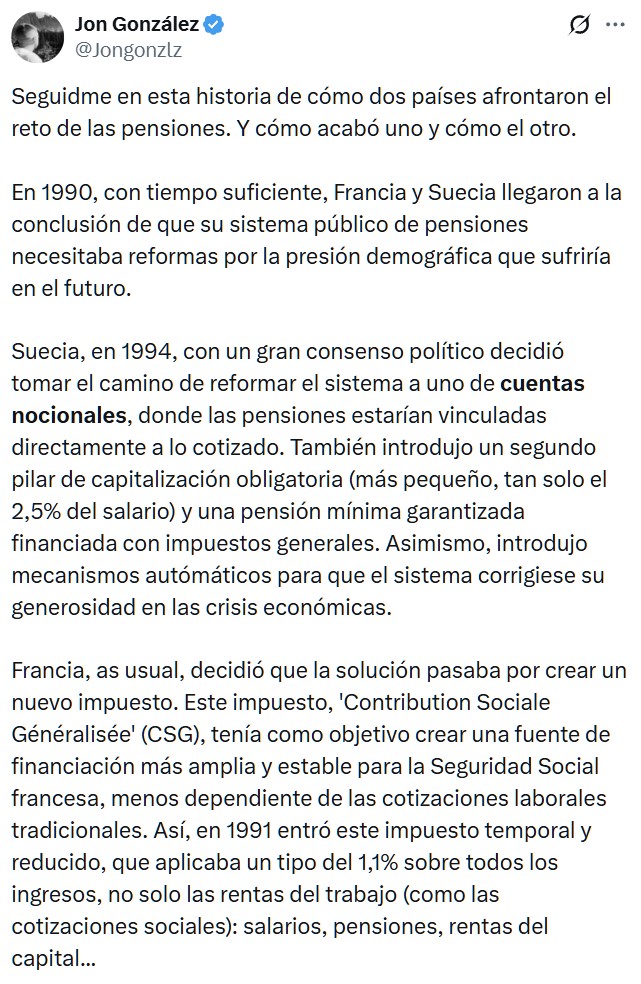
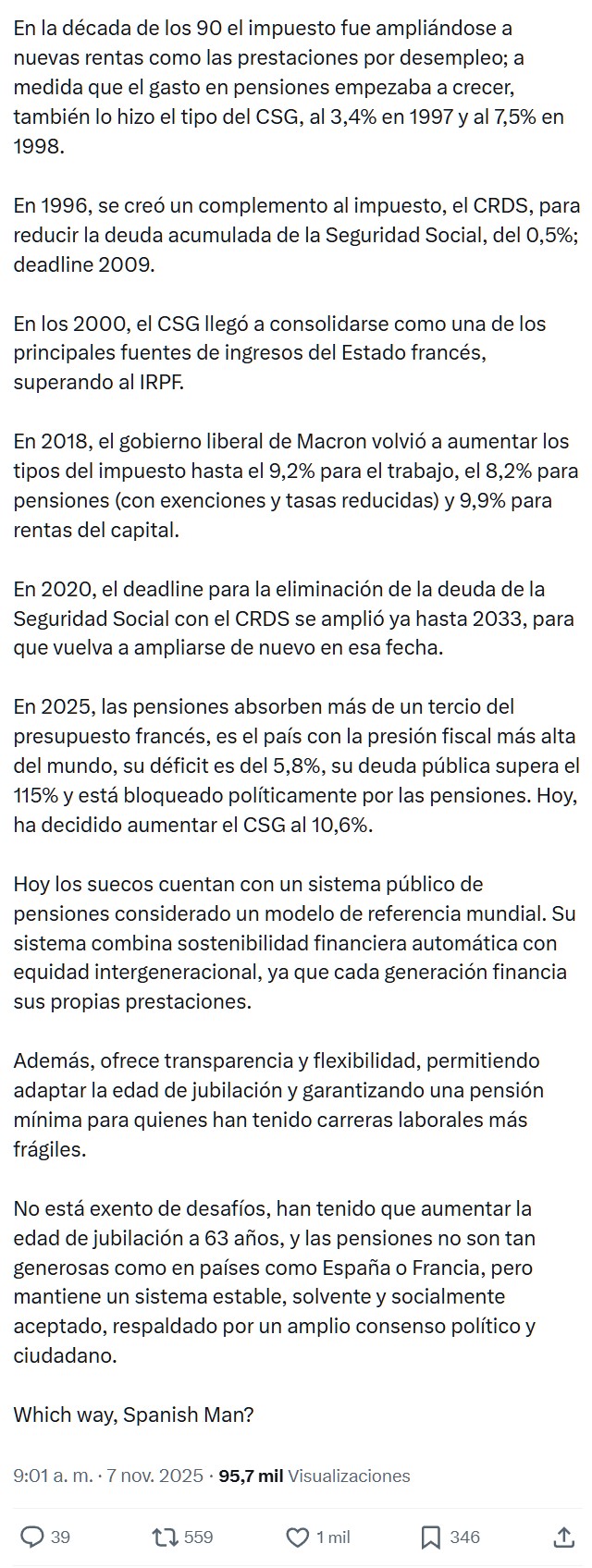
Francia sube el CSG del 9,2 al 10,6%, un impuesto creado para complementar las cotizaciones sociales y poder pagar las pensiones.

by Fino

El aumento del impuesto CSG del 9,2% al 10,6%: la izquierda y los partidarios de Macron han acordado que los ahorradores paguen por la suspensión de la reforma de las pensiones deseada por la izquierda y la Agrupación Nacional… @JL7508

Ojito porque Francia recauda mucho más con ese impuesto que con el IRPF…

  • CSG: más de 120.000 millones de euros al año.

  • IRPF: en torno a 85.000–90.000 millones de euros.

Francia sube el CSG del 9,2 al 10,6%, un impuesto creado para complementar las cotizaciones sociales y poder pagar las pensiones. Francia sube el CSG del 9,2 al 10,6%, un impuesto creado para complementar las cotizaciones sociales y poder pagar las pensiones.

@Jongonzlz

Ver post completo: Francia sube el CSG del 9,2 al 10,6%, un impuesto creado para complementar las cotizaciones sociales y poder pagar las pensiones.

09 Nov 11:10

“Parking solo para gays”.

by Fino
09 Nov 11:01

Los "errores" en las predicciones. Diferenciar el error fundamental del error temporal.

by quark

 Cualquiera que se dedique a la divulgación y proponga fechas importantes como cambio de tendencia, se va a equivocar, no una sino muchas veces.

En el blog tengo una persona (JR) que se dedica a recopilar mis "errores" de predicción y con ello justifica que mi tesis, "el final del ciclo civilizatorio" no se cumplirá nunca o se retrasará lo suficiente para que no lo veamos. Puesto que tiene razón en muchas de sus "acusaciones", me veo obligado a hacer una reflexión que puede servir para interpretar cual es el verdadero mensaje.

Antes de empezar, quiero entonar el "mea culpa" si las predicciones vienen acompañadas de fechas "sin margen de error" y acompañadas de un tono de altivez propio de los que tienen una certeza absoluta en sus previsiones. Sin duda soy culpable y pido disculpas por ello. 


Mi tesis es sencilla, la humanidad ha vivido un momento explosivo con la llegada de los combustibles fósiles y después de un pulso energético salvaje (de más de 200 años) volverá a un nivel muy inferior al actual, cuando los fósiles desaparezcan. Aparte de esa contabilidad de las fuentes energéticas, la cantidad de deuda generada en el intento de ganar tiempo y prolongar la bonanza, hará de gasolina para avivar el incendio, cuando el crecimiento se vea sustituido por la contracción económica generada por la persistente escasez de petróleo.

Con el recálculo de las reservas de petróleo (algo que como todo el mundo sabe, solo puede concebirse como estimaciones) y la tasa de reposición en torno al 15-20% de la última década, la cuestión del agotamiento no es sí, sino cuando. Y por ello, me aventuro a dar unas cifras de la posible quiebra del sistema, cuando la producción de petróleo inicie su pertinaz descenso.

A partir de aquí, podemos calificar los errores en las predicciones en dos grupos, claramente diferenciados.


1º) Errores fundamentales. 

Las premisas de la tesis del final del ciclo civilizatorio son falsas.

- Error en las reservas de petróleo.

O bien las reservas de petróleo son infinitas (petróleo abiótico que se regenera casi instantáneamente, porque si tarda millones de años, sería lo mismo) o la tasa de descubrimientos supera el 100% de la tasa de reposición y las reservas vuelven a aumentar.

- Error en el crecimiento de la deuda.

La deuda deja de crecer y comienza a disminuir, quitando presión al sistema y permitiendo nuevas inversiones masivas en todo tipo de fuentes energéticas.

- Error en otras fuentes de energía que permitan sustituir a los fósiles.

Estamos hablando (por ejemplo) , del éxito de la transición energética 100% renovable.


2º) Errores temporales.


El típico error en la predicción de un punto de giro que no se produce en la fecha indicada. 

Este error no invalida la tesis principal, puesto que solo se gana tiempo.


Con esta descripción ya podemos calificar el tipo de error como incapacitante o aceptable.

El primer caso es un fallo en las premisas fundamentales que inhabilita la tesis. Fin de la historia.

El segundo procede del intento de ganar tiempo por parte de las autoridades mundiales, que no se resignan a aceptar lo inevitable. Aumentar la deuda, acelerar la extracción de todo tipo de recursos (incluso a costa de agotar más rápidamente las reservas restantes). Este error puede llegar a ser importante en términos temporales. Es decir, no es lo mismo el pico del petróleo en 2020 que en 2040, para los que vivimos actualmente. Pero es un error de redondeo en la historia de la humanidad.

Hay que dejar claro que estamos hablando de una tesis que supone el final de un ciclo civilizatorio de cientos de años. Un error de dos décadas puede ser muy grande para nosotros, pero no tiene ninguna importancia ante las consecuencias de la tesis. Pasar de 8 o 9 mil millones de personas a 1.000 millones o menos es lo suficientemente importante como para dejarnos de críticas, al hecho de un retraso en el inicio del decrecimiento sostenido. 


No estamos hablando de una crisis cíclica que concluya como si fuera la gran depresión de los años 30 (del siglo pasado). Fue una gran crisis, pero solo fue un alto en el camino del ciclo. Incluso las guerras mundiales tuvieron una importancia episódica en el devenir del ciclo completo.

Hay que comprender esto bien , para entender en que consiste la predicción y por qué el error temporal no cambia nada, si lo que estamos estudiando es un colapso completo de la humanidad.


Con el tiempo, hemos apreciado que el agotamiento del petróleo no se circunscribe al combustible fósil únicamente, sino que forma parte del agotamiento generalizado de los recursos como se predijo en "los límites del crecimiento". Pero no solo eso, hay un conjunto de características que anticipan el final del ciclo civilizatorio por degradación sistemática de la naturaleza. la contaminación, los microplásticos, la acidificación de los océanos, el agotamiento de los acuíferos, él resto de los límites planetarios sobrepasados, ya nos están advirtiendo que  vamos a toda velocidad hacia el acantilado. Este largo informe describe con amplitud (y muchas fuentes) toda esa devastación sistemática.

El inicio de las guerras por los recursos, camufladas de episodios "imperialistas" es otro síntoma del final.

El fracaso de la transición energética es inevitable cuando se comprende que todo sistema energético creado ad hoc para eludir los combustibles fósiles, termina dependiendo de ellos. No podemos crear un parque eólico sin petróleo, tampoco un parque solar, ni la infraestructura del hidrógeno o la generación de millones de baterías. En el intento, estamos trasladando el problema mientras esta transición requiere de numerosos minerales y metales, que tampoco son más abundantes que el petróleo y que necesitan de su uso para ser extraídos, refinados y trasladados.

Los sistemas renovables son inestables por su propia generación. No luce el sol cuando queremos y no sopla el viento. Los procesos complejos que son necesarios hoy día para mantener la civilización, necesitan una energía constante y duradera para tener éxito y las renovables no consiguen el mismo grado de fiabilidad que los combustibles fósiles.

En la historia nunca ha habido ninguna transición energética. Solo expansiones cuando se pasa de la biomasa al carbón (seguimos consumiendo la misma biomasa o más que al principio), tampoco se dejó de usar el carbón al pasar del carbón al petróleo. Y lo mismo con la actual transición, donde el petróleo sigue incrementando su uso, para "sorpresa" de los defensores a ultranza del nuevo sistema verde.

En el camino hemos agotado todo. Y lo sabemos porque cada vez se descubre menos petróleo, menos gas, menos cobre, menos plata que lo que se consume. Son matemáticas, si consumes  sin reponer lo que extraes, finalmente las reservas se agotan. La trampa de incrementar las reservas de los minerales-metales, bajando el punto de corte (concentración mínima para considerar reservas los recursos) solo funciona mientras exista suficiente energía para conseguir extraer mayores cantidades.


La humanidad (mas bien sus dirigentes) ha entrado en desesperación absoluta. No solo la cantidad de deuda es abiertamente impagable y crece sin cesar (al fin y al cabo, el dinero es infinito), sino que las reservas de los principales elementos se agotan rápidamente. Y cuanto más tiempo intentamos ganar para postergar el catastrófico desenlace, menos recursos dejamos para la fase del decrecimiento.

Ya hemos llegado a un punto de no retorno. Es decir, el decrecimiento no será ordenado. La caída en la producción de petróleo, como consecuencia de los procesos acelerados de extracción, ha dejado las reservas en mínimos y cuando la extracción de petróleo comience su descenso después de una larga meseta, prolongada artificialmente para extender el crecimiento económico hasta sus últimas consecuencias, todo se hundirá en una retroalimentación de dimensiones desconocidas. 

La complejidad alcanzada no permite hacernos ilusiones de sostenimiento organizado. Hemos pasado de tener cientos de fábricas en cada país, que permitía producir tecnología para seguir creciendo, a concentrar y especializar los procesos tecnológicos en solo dos o tres empresas en todo el mundo, de las que dependen todas las cadenas de suministros de alta tecnología. Esto ocurre porque se necesitan inversiones de decenas de miles de millones de dólares , para cada fase de mejora y ya solo unas pocas empresas en el mundo son capaces de invertir. Cualquier fallo en una de estas empresas, nos envía al "cuaternario".  


Antes de iniciar el descenso, viviremos  rodeados de guerras entre quienes no quieren perder su parte del pastel, mientras los países pobres se quedarán sin acceso a los recursos , casi inmediatamente.


Esta es una predicción que no admite errores. Pero no tenemos una bola de cristal, por lo que lo único que podemos hacer es establecer una hoja de ruta con una referencia y modificarla según los datos que vayan apareciendo. Si no entendemos esto, no seremos capaces de aceptar el futuro, porque lo de "prepararnos" es inútil, más allá de ganar unos pocos años al destino de la humanidad.

Como le decía a mi interlocutor en el blog, esto no es cuestión de ponerse medallas por acertar el momento exacto, ni utilizar el "te lo dije", porque es la humanidad (todos nosotros) la que pierde y no hay ganadores.

Por supuesto, nada me haría más feliz que estar completamente equivocado. 

La fusión nuclear, las baterías de estado sólido, los reactores de torio, o cualquier cosa que se puede descubrir sería bienvenida, pero nos estamos quedando sin tiempo y sin recursos.

Y la economía circular, no parece que esté avanzando.     


Este gráfico explica muchas cosas sobre lo que es un "pulso". Contiene la población mundial histórica y las previsiones hasta 2100, donde ya se aprecia un giro descendente. No tiene en cuenta la finitud de los recursos, por lo que es una predicción "optimista". Hoy contamos 8.257 millones de personas. 

Solo sirve para ver como ha evolucionado la población y aceptar que solo hemos crecido a lo largo de la historia (2.000 años), gracias a los combustibles fósiles. Está por ver si conseguiremos encontrar esa fuente energética perfecta, que nos permita seguir creciendo indefinidamente.


Salvando las distancias, uno no puede dejar de pensar en la similitud con este otro gráfico.   


09 Nov 11:00

Resumen del festival Metal Nostrum

by El Camionero Acrata TEIS
09 Nov 08:54

Redadas cada vez más violentas: el ICE, "fuera de control"

by Verdaderofalso

¿Redadas en guarderías y residencias de ancianos, detenciones arbitrarias y, próximamente, cazarrecompensas privados? La persecución de extranjeros y otros migrantes considerados como delincuentes se agrava en EE. UU. También se han denunciado numerosas violaciones de derechos humanos en los centros de detención de inmigrantes. Human Rights Watch ha documentado varios casos en los que, supuestamente, los agentes presionaron a los detenidos para que aceptaran la "salida voluntaria". Según esos informes, los detenidos fueron esposados horas

etiquetas: ddhh, ice, redadas, trump, fuera de control, violencia, eeuu, detenciones

» noticia original (amp.dw.com)

09 Nov 08:53

Irán, el país de musulmanes radicales, dedica estación de metro a la Virgen María

by Verdaderofalso

Las comunidades armenia y asiria valoraron el reconocimiento de su fe con este signo oficial en la estación del metro, cerca de la catedral, construida entre 1964 y 1970 por la Hermandad de San Sergio, que es el corazón del cristianismo armenio de Teherán. Se restauró en 2006. Los cristianos no llegan al 1% de la población de Irán, un país que tiene 92 millones. Los cristianos están reconocidos oficialmente por la Constitución y se les permite la práctica de su fe, aunque se les prohíbe el proselitismo.

etiquetas: irán, teherán, metro, musulmanes, radical, islam

» noticia original (es.zenit.org)

09 Nov 08:53

Los bomberos forestales de la Generalitat Valenciana denuncian su "precariedad y abandono" un año después de la DANA

by NPCMeneaMePersigue

El comité de empresa de la Sociedad Valenciana de Gestión Integral de los Servicios de Emergencias (Sgise) exige que en el plazo de una semana se habilite el personal y el presupuesto necesario para garantizar la puesta en marcha del tercer turno desde el 1 de enero

etiquetas: valencia, dana, pp, bomberos

» noticia original (www.eldiario.es)

09 Nov 08:53

Fabricar armas no genera apenas empleo: los datos desmontan el mito

by carakola

Últimamente no hay quien no se haga eco de la gran oportunidad para el sector de defensa, los inversores y la economía en general de la lluvia de millones para armamento que viene de Europa. No hay que ser economista para saber que los recursos son escasos y que dedicar más al gasto militar obviamente antes o después significará dedicar menos a otro gasto público.

etiquetas: industria armamentística, creación de empleo, mito

» noticia original (rebelion.org)

09 Nov 08:53

Han abierto una lata de salmón caducada desde los años setenta. Los científicos no se esperaban encontrar esto dentro

by pingON

Un grupo de investigadores de la Universidad de Washington ha descubierto que las latas de salmón olvidadas en un almacén desde los años setenta guardaban mucho más que pescado. En su interior, encontraron parásitos marinos tan bien conservados que han permitido reconstruir décadas de historia ecológica del océano. Lo que parecía simple basura caducada se ha convertido en una auténtica cápsula del tiempo. Las latas, acumuladas durante años por la Seattle Seafood Products Association como parte de su control de calidad, contenían restos de ani

etiquetas: salmón, caducada, años setenta, científicos

» noticia original (www.elconfidencial.com)

09 Nov 08:52

Estados Unidos: los controladores aéreos comienzan a renunciar ante el impacto del cierre del gobierno [EN]

by Dragstat

Sobrecargados de trabajo y sin cobrar, hay renuncias “cada día” debido al cierre del gobierno. Los que quedan están trabajando al límite de su capacidad y muchos se están dando de baja por agotamiento. “Nunca habíamos visto algo así, nos faltan 400 controladores, más que durante el cierre de 2019”, “nos llevará meses recuperarnos". Algunos ya tienen un segundo empleo y otros llaman a su empleador y dicen: 'no tengo gasolina, o no puedo pagar el cuidado de mis hijos, ¿los puedo traer al trabajo?'.

etiquetas: estados unidos, cierre gobierno, controladores aéreos, salarios, pagos

» noticia original (www.thedailybeast.com)

09 Nov 08:52

La obesidad tiene una causa: comer mucho y mal

by Leclercia_adecarboxylata

El gasto energético total diario no difiere entre sociedades industrializadas y aquellas que mantienen modos de vida ancestrales. La cifra promedio ronda las 2.600 kilocalorías diarias para hombres adultos, con variaciones menores al 5% entre un cazador hadza y un contador noruego. La inactividad no es el motor principal de esta epidemia. Los resultados concuerdan con estudios previos como el macroensayo PURE, que demostró que el 73% del riesgo de obesidad se explica por exceso calórico dietético. Comemos demasiado y no solo en cantidad.

etiquetas: obesidad, comer, mucho

» noticia original (www.cambio16.com)