https://youtu.be/bboDuF-zq7I
Este enlace le remitirá a un vídeo en el que el equipo de HOPLA tratamos nuestro análisis sobre los efectos económicos en SPX, Bitcoin y liquidez de la guerra de Irán.
Suscríbase al canal de Youtube de HOPLA Finance (https://www.youtube.com/@HOPLAFinance)
Shared posts
14 Mar 12:47
Si las manos débiles tienen tanto miedo, es porque el suelo está muy próximo. José Luis Cava
by Jose Luis Cava
Raul Barral Tamayo likes this
14 Mar 12:47
Todo lo que necesitas saber sobre el Trastorno de Ansiedad Generalizada
by Elizabeth Diaz
Durante mis más de 14 años de experiencia profesional , he podido profundizar en la comprensión del [Trastorno de Ansiedad Generalizada](/clinica/trastorno-ansiedad-generalizada) (TAG), un cuadro clínico que va mucho más allá de la preocupación cotidiana y que representa una de las formas más extendidas y, a la vez, más silenciosas de sufrimiento psicológico en la actualidad.
He logrado comprender en mi práctica clínica que el TAG se caracteriza por una preocupación excesiva, persistente y difícil de controlar, que se mantiene durante un período prolongado y que se extiende a diversas áreas de la vida. No se trata de una preocupación puntual ante una situación específica, sino de una tendencia constante a anticipar escenarios negativos. **La mente se posiciona en el futuro, casi siempre en su versión más amenazante**. La persona siente que debe estar preparada para cualquier eventualidad, como si relajarse fuera sinónimo de descuido.
## ¿Qué efectos genera el Trastorno de Ansiedad Generalizada?
En consulta, quienes presentan este diagnóstico suelen expresar frases como: “Mi cabeza no descansa nunca”, “Siempre estoy esperando que algo salga mal”, “Si no me preocupo, siento que soy irresponsable”, “Estoy agotada, pero no puedo parar”. Estas expresiones reflejan no solo el [componente cognitivo](/inteligencia/cognicion-definicion-procesos) de la ansiedad, sino también el profundo desgaste emocional y físico que implica vivir en un estado de alerta sostenido.
A nivel sintomatológico, el TAG integra dimensiones cognitivas, emocionales y fisiológicas. En el plano cognitivo, predominan pensamientos anticipatorios de amenaza, dudas constantes, necesidad de certeza y dificultad para tolerar la ambigüedad.
En el plano emocional, aparece una sensación persistente de inquietud, nerviosismo o tensión interna. Fisiológicamente, es frecuente encontrar tensión muscular crónica, cefaleas, molestias gastrointestinales, [alteraciones del sueño](/clinica/trastornos-del-sueno), fatiga y sensación de hiperactivación. El cuerpo se convierte en un escenario donde la ansiedad también se manifiesta con claridad.
**Desde una mirada contextual y funcional, la preocupación cumple una función: intenta prevenir el dolor o el fracaso**. Muchas personas con TAG han aprendido que anticiparse es una forma de protección. En algunos casos, esta estrategia pudo haber sido adaptativa en etapas tempranas de su historia, especialmente en contextos donde la imprevisibilidad o la exigencia eran elevadas. Sin embargo, lo que en algún momento funcionó como mecanismo de supervivencia, con el tiempo se convierte en una trampa. La mente no distingue entre posibilidad y probabilidad; responde como si cada escenario imaginado tuviera altas probabilidades de ocurrir.
Vivimos en una cultura de rendimiento, inmediatez y comparación constante.
Las demandas académicas, laborales y sociales se intensifican, mientras que la tolerancia al error disminuye. **Las redes sociales amplifican la comparación y la idea de que debemos “hacerlo todo bien”**. Este contexto favorece la internalización de estándares rígidos y la sensación de que siempre hay algo pendiente por resolver. La incertidumbre, que es inherente a la vida, se experimenta como una amenaza intolerable.
En términos evolutivos, el TAG puede presentarse en diferentes etapas, pero **suele volverse especialmente determinante en la adolescencia tardía y en la adultez joven**. Estas etapas implican toma de decisiones significativas, construcción de identidad, elección de carrera, establecimiento de relaciones de pareja y definición de proyectos de vida. Cuando la ansiedad generalizada se instala en este periodo, puede interferir en la consolidación de una identidad segura y en la capacidad de asumir riesgos necesarios para el crecimiento.
En adolescentes, el TAG puede confundirse con responsabilidad excesiva o perfeccionismo. Son jóvenes que destacan académicamente, pero que internamente viven con un miedo constante a fallar. En adultos jóvenes, suele manifestarse como una autoexigencia intensa y una necesidad de control que impacta tanto en el desempeño laboral como en la vida afectiva. En la adultez media, **el peso de las responsabilidades familiares y económicas puede exacerbar los síntomas**, especialmente cuando la persona siente que no puede mostrarse vulnerable.
Uno de los aspectos más significativos del TAG es su impacto en las relaciones interpersonales. Las relaciones interpersonales se dan en un espacio de intercambio emocional, negociación y cierta cuota inevitable de incertidumbre.
Para alguien con ansiedad generalizada, esta incertidumbre puede resultar profundamente activadora. Es frecuente observar patrones de búsqueda constante de confirmación: “¿Estás seguro de que todo está bien?”, “¿No te molestó lo que dije?”, “¿Sigues queriéndome?”. También puede aparecer la evitación del conflicto por miedo a que cualquier desacuerdo signifique abandono.
El sobreanálisis de interacciones sociales es otro rasgo habitual. Después de una conversación, la persona puede repasar mentalmente cada frase dicha, intentando detectar errores. “Seguro dije algo inapropiado”, “Creo que notaron que estaba nerviosa”, “Debí haber respondido diferente”. Este diálogo interno erosiona la autoestima y genera una percepción distorsionada del vínculo.
En la relación consigo misma, el impacto es aún más profundo. **El diálogo interno suele ser crítico y exigente**. La persona se define a través de su ansiedad: “Yo soy así”, “Siempre he sido ansiosa”, “Nunca voy a cambiar”. Desde las terapias de tercera generación, uno de los ejes fundamentales es trabajar la desidentificación entre la persona y sus eventos internos. No se trata de negar la ansiedad, sino de modificar la relación con ella.
## ¿Cómo se trabaja en psicoterapia ante el TAG?
En psicoterapia trabajamos el desarrollo de [flexibilidad psicológica](/psicologia/flexibilidad-psicologica-predictor-cambio), entendida como la capacidad de contactar con la experiencia interna, incluida la ansiedad, sin que esta determine rígidamente la conducta. Esto implica entrenar habilidades como la aceptación emocional, la atención plena al momento presente y la clarificación de valores personales. La persona aprende a reconocer sus pensamientos como eventos mentales transitorios y no como verdades absolutas que deben obedecerse.
La psicoterapia ayuda en la construcción de una relación más compasiva con uno mismo. **Cuando el paciente comienza a observar su ansiedad sin fusionarse completamente con ella, se abre un espacio de elección**. Ya no actúa únicamente desde la evitación del malestar, sino desde aquello que considera valioso. Por ejemplo, puede decidir iniciar una relación significativa aunque exista miedo al rechazo, o asumir un reto profesional aunque aparezcan pensamientos de fracaso.
También abordamos la dimensión corporal de la ansiedad.
El sistema nervioso de las personas con TAG suele estar en un estado de activación sostenida. En psicoterapia trabajamos técnicas de regulación fisiológica, ejercicios de respiración consciente y prácticas de conexión corporal que permiten experimentar momentos de seguridad. Esto no solo reduce la sintomatología, sino que enseña al paciente que es posible transitar la activación sin que esta escale de manera descontrolada.
Es fundamental comprender que **el objetivo terapéutico no es la eliminación absoluta de la ansiedad**. La ansiedad es una emoción humana necesaria. Lo que buscamos es que deje de ocupar el centro de la vida. Que la persona no reduzca su existencia a intentar controlar cada variable del entorno. La psicoterapia aporta muchísimo en ampliar el repertorio conductual, en recuperar actividades placenteras que fueron evitadas y en fortalecer vínculos desde una posición más auténtica.
Cuando el TAG no recibe intervención, puede cronificarse y coexistir con otros cuadros como depresión o trastornos del sueño. La restricción progresiva de experiencias por miedo a la incertidumbre empobrece la calidad de vida. Por ello, considero crucial la detección e intervención temprana, especialmente en etapas formativas donde se están consolidando patrones de afrontamiento.
Desde mi formación en terapias de tercera generación, entiendo el TAG no solo como un conjunto de síntomas, sino como un patrón rígido de relación con la experiencia interna. El trabajo terapéutico implica ampliar esa rigidez, fomentar la apertura emocional y promover acciones coherentes con valores personales. Cuando esto ocurre, la persona empieza a experimentar cambios significativos: disminuye la lucha constante contra sus pensamientos, aumenta su tolerancia a la incertidumbre y mejora su capacidad de disfrute en el presente.
He observado que, a medida que el paciente aprende a sostener la ansiedad sin huir de ella, las relaciones interpersonales se dan de manera más genuina. **Se reducen las demandas excesivas de confirmación, aumenta la comunicación asertiva y se fortalece la confianza en el vínculo**. En paralelo, la relación consigo mismo se vuelve menos punitiva y más comprensiva.
@professional(2064716)
En definitiva, el Trastorno de Ansiedad Generalizada representa un desafío clínico relevante en el contexto actual. Sin embargo, también es un espacio de enorme potencial terapéutico. Cuando la persona comprende que su ansiedad no es un defecto, sino una respuesta aprendida que puede transformarse, se abre la posibilidad de construir una vida más plena.
En psicoterapia trabajamos precisamente para que la ansiedad deje de ser el eje organizador de la existencia y para que el individuo pueda orientarse hacia una vida significativa, coherente con sus valores y proyectos personales, asi que si gustas que te acompañe en tu propio proceso con técnicas y herramientas, aquí estoy para ayudarte.
Raul Barral Tamayo likes this
14 Mar 12:44
Por qué tu seguro NUNCA te va a pagar (Datos reales)
by Preguntas Incómodas
Llevas años pagando tu seguro médico religiosamente y el día que lo necesitas… te dicen que no. ¿Estafa? Técnicamente no. ¿Un sistema diseñado para que pierdas? Absolutamente. En este video te explico con datos reales cómo funcionan las aseguradoras por dentro: el algoritmo de Cigna que rechazó 300.000 reclamaciones a 1,2 segundos por caso, la empresa que vende "denegaciones en masa" como producto, y por qué los reguladores de México, Colombia, España y Estados Unidos no pueden —o no quieren— hacer nada al respecto. Bienvenido al negocio más rentable del mundo: cobrar siempre y pagar lo menos posible.
SÍGUENOS EN REPTILIA, NUESTRO CANAL EN WHATSAPP ▸https://whatsapp.com/channel/0029Vb6xHri3GJOtZbfjDv3r
SUSCRÍBETE A NUESTRO PODCAST LA CRUDA VERDAD
▸ https://go.podimo.com/mx/lacrudaverdad
NUESTRO CANAL DE CINE Y SERIES
▸ https://www.youtube.com/@cinexplicacionyt
SÍGUENOS EN REDES
▸Twitter: https://x.com/preguntas_i
▸Facebook: 5preguntasincomodas
▸Instagram: @sabrina_tortora85
SUSCRÍBETE PARA VER MÁS VIDEOS
▸ https://bit.ly/2GRP4CH
ÚNETE A MIEMBROS DEL CANAL
▸ http://bit.ly/3uTEJf6
SÍGUENOS EN REPTILIA, NUESTRO CANAL EN WHATSAPP ▸https://whatsapp.com/channel/0029Vb6xHri3GJOtZbfjDv3r
SUSCRÍBETE A NUESTRO PODCAST LA CRUDA VERDAD
▸ https://go.podimo.com/mx/lacrudaverdad
NUESTRO CANAL DE CINE Y SERIES
▸ https://www.youtube.com/@cinexplicacionyt
SÍGUENOS EN REDES
▸Twitter: https://x.com/preguntas_i
▸Facebook: 5preguntasincomodas
▸Instagram: @sabrina_tortora85
SUSCRÍBETE PARA VER MÁS VIDEOS
▸ https://bit.ly/2GRP4CH
ÚNETE A MIEMBROS DEL CANAL
▸ http://bit.ly/3uTEJf6
Raul Barral Tamayo likes this
14 Mar 12:43
Cuando el analista no aconseja: por qué en psicoanálisis no se le dice al paciente qué hacer
by Ricardo Antonio Garcia Diaz
Una de las sorpresas más frecuentes para quien inicia un proceso psicoanalítico es esta: el analista no da consejos. No dice qué decisión tomar, no indica si conviene terminar una relación, cambiar de trabajo o confrontar a un familiar. Para muchas personas, esto puede resultar desconcertante. Después de todo, existe la expectativa cultural de que ir a terapia es “que te orienten”, “que te eduquen” o incluso “que te digan cómo vivir mejor”.
Sin embargo, en psicoanálisis esta abstención no es desinterés ni neutralidad fría. Es una posición ética y técnica fundamental. Desde Sigmund Freud hasta Jacques Lacan, **el psicoanálisis ha sostenido que el sufrimiento psíquico no se resuelve sustituyendo la voluntad del paciente por la del terapeuta**. Lo que está en juego no es simplemente qué hacer, sino por qué el sujeto hace lo que hace —aun cuando eso le cause dolor.
## La ilusión del consejo
Cuando alguien pide: “¿Usted qué haría en mi lugar?”, muchas veces no está buscando información objetiva, sino alivio frente a la angustia de decidir. El consejo ofrece una salida rápida: desplaza la responsabilidad. Si el otro me dice qué hacer, la carga disminuye. Pero también se pierde algo esencial: la posibilidad de que el sujeto se confronte con su propio deseo.
El psicoanálisis parte de la idea de que no siempre sabemos lo que queremos. Nuestro discurso está atravesado por contradicciones, repeticiones, identificaciones inconscientes y conflictos que no se resuelven con una instrucción externa. **Decirle al paciente qué hacer podría calmar momentáneamente la ansiedad, pero no transforma la estructura que produce el conflicto.**
Además, el consejo suele operar desde el sistema de valores del terapeuta. ¿Desde qué marco se aconseja? ¿Moral, cultural, personal? Incluso con la mejor intención, el analista correría el riesgo de imponer su propia visión de lo que considera “saludable” o “correcto”.
@professional(2084224)
## La ética del no saber
En psicoanálisis se sostiene una posición particular: el analista no ocupa el lugar de quien sabe sobre la vida del otro. Aunque tenga formación teórica y experiencia clínica, no sabe mejor que el paciente qué decisión es adecuada para su existencia singular.
Freud hablaba de la regla de abstinencia: no satisfacer directamente las demandas del paciente. Esto no significa indiferencia, sino evitar ocupar el lugar del que completa, salva o dirige. **Lacan radicaliza esta idea al señalar que el analista no debe colocarse como amo del saber, sino más bien como causa del deseo del analizante.**
Trabajar sin decirle al paciente qué hacer implica confiar en que el sujeto puede producir su propia respuesta. El análisis no busca adaptar al individuo a un ideal externo, sino permitirle escuchar lo que, en su decir, ya se manifiesta.
## ¿Entonces qué hace el analista?
Si no aconseja, ¿qué hace el analista? Escucha de una manera particular. Interviene señalando contradicciones, repeticiones, lapsus, silencios significativos. **Devuelve preguntas en lugar de respuestas cerradas. Interpreta, a veces de manera mínima, para abrir una vía de reflexión.**
En lugar de indicar “termine esa relación”, puede subrayar cómo esa relación reproduce un patrón que aparece en otras áreas de la vida. En vez de sugerir “cambie de trabajo”, puede explorar qué lugar ocupa el reconocimiento, la autoridad o el fracaso en la historia subjetiva del paciente.
Este modo de trabajo apunta a algo más profundo que la solución inmediata: busca que el sujeto se apropie de su posición. Una decisión tomada como efecto de un proceso analítico tiene un peso distinto que una decisión obedecida por consejo.
## El riesgo de la dependencia
Otra razón fundamental para no decirle al paciente qué hacer es evitar la dependencia. **Si el terapeuta se convierte en quien decide, el vínculo puede transformarse en una relación de autoridad. El paciente consulta cada paso, cada elección, esperando validación o directiva.**
Esto puede generar alivio a corto plazo, pero a largo plazo debilita la autonomía psíquica. El objetivo del psicoanálisis no es crear pacientes obedientes, sino sujetos más responsables de su deseo y de sus actos.
Paradójicamente, cuando el analista no responde a la demanda de consejo, produce un efecto distinto: devuelve la pregunta al paciente. “¿Usted qué cree?”, “¿Qué implicaría para usted esa decisión?”, “¿Qué teme que ocurra?”. Estas intervenciones invitan a asumir la propia palabra.
## Trabajar sin prescribir: un beneficio a largo plazo
Decirle a alguien qué hacer puede resolver el síntoma en apariencia, pero no necesariamente transforma la lógica inconsciente que lo sostiene. En cambio, cuando el paciente logra articular por sí mismo las razones de su repetición, cuando reconoce su participación en ciertos conflictos, se produce un movimiento subjetivo más duradero.
**El psicoanálisis no promete soluciones rápidas ni recetas universales. Ofrece un espacio donde el sujeto pueda escuchar lo que dice más allá de lo que cree decir. Y desde ahí, decidir.**
En un mundo que valora la inmediatez y las respuestas claras, la posición analítica puede parecer extraña. Pero justamente en esa negativa a dictar conductas reside su potencia. No se trata de enseñar cómo vivir, sino de acompañar a cada quien a descubrir cómo quiere vivir.
Por eso, cuando en psicoanálisis no se le dice al paciente qué hacer, no es por falta de orientación. Es porque la respuesta que importa no puede venir del otro. Tiene que construirse, palabra por palabra, en el propio recorrido del sujeto.
Raul Barral Tamayo likes this
14 Mar 12:42
⚠️ Ansiedad: la señal de que no estás viviendo tu vida | David Corbera
by David Corbera - Enric Corbera Institute
👉🏼 Aprende el método de la Bioneuroemoción y aumenta tu salud emocional junto a David Corbera https://bit.ly/DiplomadoBNE_YT0426
⚠️ La ansiedad no siempre es un enemigo. A veces, es una señal de que tu vida no refleja lo que realmente eres.
En este vídeo reflexionamos sobre cómo la finitud de la vida y la psicología existencial pueden ayudarte a entender mejor la ansiedad y qué te puede estar indicando sobre tu vida.
📚 Lecturas recomendadas: El hombre en busca de sí mismo – Rollo May | El concepto de la angustia – Soren Kierkegaard
🔔 Te invito a suscribirte y activar la campana para ver más videos como este
#Ansiedad #DavidCorbera #Bioneuroemocion #PsicologíaExistencial #VivirAutentico #SentidoDeLaVida #ReflexiónPersonal #CrecimientoEmocional
0:00 Trailer
0:35 ¿Qué estás haciendo con tu vida?
2:23 Hoy podría ser tu último día
4:50 El exceso de adaptación social
5:49 El miedo a morir
6:57 ¿Buscas controlar tu ansiedad?
8:27 La ansiedad es el vértigo de la libertad
10:47 Ejercicio práctico para que realices
12:15 ¿Qué esperas para hacer lo que quieres?
12:48 Recomendación de libros
⚠️ La ansiedad no siempre es un enemigo. A veces, es una señal de que tu vida no refleja lo que realmente eres.
En este vídeo reflexionamos sobre cómo la finitud de la vida y la psicología existencial pueden ayudarte a entender mejor la ansiedad y qué te puede estar indicando sobre tu vida.
📚 Lecturas recomendadas: El hombre en busca de sí mismo – Rollo May | El concepto de la angustia – Soren Kierkegaard
🔔 Te invito a suscribirte y activar la campana para ver más videos como este
#Ansiedad #DavidCorbera #Bioneuroemocion #PsicologíaExistencial #VivirAutentico #SentidoDeLaVida #ReflexiónPersonal #CrecimientoEmocional
0:00 Trailer
0:35 ¿Qué estás haciendo con tu vida?
2:23 Hoy podría ser tu último día
4:50 El exceso de adaptación social
5:49 El miedo a morir
6:57 ¿Buscas controlar tu ansiedad?
8:27 La ansiedad es el vértigo de la libertad
10:47 Ejercicio práctico para que realices
12:15 ¿Qué esperas para hacer lo que quieres?
12:48 Recomendación de libros
Raul Barral Tamayo likes this
14 Mar 12:42
Weekly Commentary: At the Brink
by Doug Noland
Crisis dynamics are reaching full force. WTI crude prices approached $120 in Sunday’s wild overnight session. Nasdaq futures were down as much as 2.6%. In Monday trading, Japan’s Nikkei 225 index sank as much as 7.7%, following the previous week’s 5.5% drop. South Korea’s Kospi was down almost 9%, adding to last week’s 10.6% slump. Global bond markets were under heavy selling pressure. UK gilt yields surged 17 bps Monday to almost 4.80% (14-month high), as two-year yields surged as much as 29 bps to 4.17%. Italian yields were up 17 bps at the day’s high to 3.77% (11-month high).
In early Monday trading, 10-year Treasury yields were seven bps higher to 4.21%, though the more alarming moves were in the swaps market. Indicative of mounting liquidity stress, the 30-year Treasury swap spread was down almost three points to a six-month low of 82 bps – continuing the steepest decline since April. High-yield CDS jumped to the high since May. Bank CDS also rose to 10-month highs. “Biggest High Yield ETFs Drop to Fresh Nine-Month Lows.” Precious metals prices were also under pressure (i.e., silver down 5.5%). In short, myriad levered strategies were under intense pressure, with no place to hide.
March 10 – Bloomberg (Nishant Kumar and Liza Tetley): “Some of the world’s biggest hedge funds known for their steady returns suffered hundreds of millions of dollars in losses last week after the war against Iran triggered wild market moves and hit portfolios across the industry. Coatue Management’s hedge fund lost 3.8% last week and was down 2.4% this year through March 6… Citadel’s main Wellington hedge fund lost 2% last week, with its macro business suffering declines… ExodusPoint Capital Management’s multistrategy hedge fund last week gave away all the gains it had notched up for the year… Hedge fund giant Millennium Management, which manages $86.7 billion, lost about $1.5 billion in the week through March 6… At Point72 Asset Management, the 1.1% decline during the week cut its advance this year through March 6 to 3.4%... Balyasny managed $32 billion, while Point72 oversaw $45.7 billion… Marshall Wace’s flagship Eureka hedge fund was down 3.7% last week…”
March 11 – Bloomberg (Denitsa Tsekova): “Hedge funds are experiencing the biggest drawdown since the Liberation Day tariff turmoil, as unwinds in crowded trades punish the fast-money cohort, according to JPMorgan… strategists. Since the start of the Iran war, quants like commodity trading advisers have been hit by their worst stretch in almost a year, the strategists said... Equity long-short hedge funds have also posted heavy losses due to their overweight positions in European and Korean markets and their underweight in software names, according to the bank.”
March 10 – Financial Times (Costas Mourselas, Ian Smith and Amelia Pollard): “Citadel and ExodusPoint are among the big-name hedge funds to have been stung by the market fallout from war in the Middle East… ‘The vibe is very negative.’ He added that Wall Street believed US President Donald Trump would ‘drop a few bombs’ and then exit the conflict. ‘But it’s gotten far uglier than people thought’.”
The KBW Bank Index opened Monday’s session 3.6% lower, with Citigroup down 4.2%, Goldman Sachs 3.1% lower, Bank of America 3.8%, Wells Fargo 4.3%, Morgan Stanley 3.8%, and JPMorgan 3.2%. At Monday’s lows, Bank of America had suffered a three-day decline of 7.0%, Goldman Sachs 8.4%, Citigroup 8.3%, Wells Fargo 8.1%, Morgan Stanley 8.0%, and JPMorgan 6.4%.
Monday morning headlines: “Iran Crisis May Accelerate Private Credit Downturn.” “Private Credit Gate-Crashers Are Forcing Funds Into Brutal Spot.” “Private Credit Woes Could Become Data Center Difficulties.” Things were turning panicky. At 35.3, the VIX (equities volatility) Index in early-Monday trading reached the highest level since April. Importantly, with only 10 sessions until a massive (after intense hedging activity over recent weeks) quarterly options expiration, systemic risk was approaching extremes. Sinking stock prices risked a self-feeding “flash crash,” with those on the wrong side of risk hedges forced into aggressive selling.
President Trump: “I think the war is very complete, pretty much.”
March 9 – Financial Times (Abigail Hauslohner, James Politi, Lauren Fedor and Jamie Smyth): “Donald Trump said the US war against Iran would end ‘very soon’ as he sought to calm chaotic trading in the oil market that had sent prices spiralling to their highest in four years and threatened the global economy. Speaking from his Doral resort…, the US president described the war the US has been waging against Iran since February 28 as a ‘little excursion’ that had succeeded ‘much faster than we thought’ but declined to specify when it would end… ‘We’re looking to keep the oil prices down,’ Trump said. ‘They went artificially up because of this excursion’.”
March 9 – Axios (Barak Ravid): “President Trump said the war with Iran will be over ‘very soon’ but made clear it will not happen this week. Ten days after the war started, Trump has begun for the first time to point to the possibility of it winding down soon… Some U.S. officials think Trump’s comments were aimed at calming the stock markets in the U.S. and around the world… Iran’s Islamic Revolutionary Guard Corps said in response to Trump’s comments that they ‘are the ones who will determine the end of the war,’ per state media.”
In a dramatic reversal, the VIX sank from 35 to close a wild session at 25.5. The Nasdaq100 ended Monday’s session 1.3% higher, rallying 2.8% off lows. The Banks (KBW Index) and the Broker/Dealers rallied about 3.5%, to erase earlier losses. High-yield CDS reversed 25 lower to 335 bps. Ten-year Treasury yields dropped from 4.21% to 4.10%. And after almost touching 4.80%, 10-year gilt yields reversed 16 bps. Indicative of acute instability in EM bonds, Brazilian local currency 10-year yields sank 43 bps from intraday highs to end Monday’s session at 13.82%.
A much-welcomed, well-timed Trump “put” subdued crisis dynamics, at least temporarily. Overhanging markets is the uncertainty of how much the President’s market-backstop credibility has left in the tank. By the end of the week, assertions that the war was “already won,” was “complete,” and will end “soon” with “practically nothing left to target” rang hollow. “PENTAGON IS MOVING MORE MARINES, WARSHIPS TO MIDDLE EAST.” “WSJ: USS TRIPOLI, ATTACHED MARINES NOW HEADED FOR MIDEAST”
Clearly, the President and his administration did not anticipate Iran’s intense and compressive war response. They also don’t appreciate our vulnerabilities. We undoubtedly have the most powerful military in human history. But there is also the greatest financial Bubble ever, which implies perilous market, financial, economic, and social risks. Understandably, Iran’s war effort is focused on exploiting our and the world’s vulnerabilities, starting with the Strait of Hormuz and oil prices.
March 12 – Financial Times (Vali Nasr): “Two weeks into the war, Iran’s strategy is coming into sharper focus. It initially set out to absorb American and Israeli strikes while retaliating against Israeli cities and US bases with drones and missiles in an attempt to deplete their stockpiles of interceptors. The long-term plan was to preserve larger and more lethal missiles for the second phase of the war. But Iran has also deployed a parallel — and potentially more effective — strategy: waging war on the global economy. Iranian missiles and drones attacked oil and natural gas facilities in Qatar, Saudi Arabia and the UAE along with oil tankers in the Gulf, and restricted passage through the Strait of Hormuz, in effect closing it and leading to spikes in oil prices… In war, geography matters as much as technology. Iran commands the entire northern shore of the Gulf, looming large over energy fields on its southern shore and all that passes through its waters. Its Houthi allies are perched at the entrance to the Red Sea and along the passage to the Suez Canal; Iran is thus perfectly positioned to squeeze the global economy from both sides of the Arabian Peninsula. Those in command of Iran today are veterans of asymmetric wars in Iraq and Syria. They are now applying the same strategy to fighting the US on the battlefield of the global economy. Drones, short-range missiles and mines setting tankers and ports on fire can have the same effect IEDs had in Iraq, only with greater impact — disrupting global supply chains and sending oil prices higher.”
The President’s talk of “regime change” and “unconditional surrender” has quieted. Iran has floated terms for a potential truce: an end to bombings, security guarantees, recognition of rights, and financial reparations. At some point, we’ll see how far from “unconditional surrender” President Trump can tolerate. But for now, the commander and chief is determined to hit Iran “very hard” – it will end “when I feel it in my bones.”
“Investors Confront Worst-Case in Strait of Hormuz.” If the U.S. cannot get tankers moving through the Gulf soon, it’s also a worst-case scenario for vulnerable global markets.
March 11 – Guardian (Jillian Ambrose): “It’s official: the International Energy Agency has ordered the largest release of government oil reserves in its history to help calm the oil price shock triggered by the US-Israeli attacks on Iran. The world’s energy watchdog said its 32 members had agreed unanimously to release about 400m barrels of emergency crude, a third of the group’s total government stockpiles and more than double the IEA’s previous biggest release. The emergency intervention far outstrips the 2022 release of 182m barrels of oil by IEA countries after Russia’s full-scale invasion of Ukraine.”
WTI traded below $80 in Tuesday afternoon trading. The Trump administration has aggressively moved to put a lid on oil and gas prices: offering 40% of the nation's strategic petroleum reserve; the easing of Russian oil sanctions; and Jones Act waivers. Ominously, crude closed the week up 8.6% to $98.71.
It’s not at all clear that the Iranian Revolutionary Guard (IRGC) will be bombed into submission. Can the U.S. military effectively and expeditiously gain control of the Strait of Hormuz and protect vessels in the Gulf and Red Sea? Will Gulf oil infrastructure be protected from Iranian and proxy force attacks? “Iran Deploys Explosive ‘Suicide Skiffs’ Disguised as Fishing Boats in Strait of Hormuz.” “Iran’s Sea Mines Are One of Its Most Powerful Weapons.”
March 13 – Bloomberg (Denitsa Tsekova): “Market stress is building at the fastest pace since last year’s tariff shock, as the war in Iran pushes oil prices higher, drives up borrowing costs and strengthens the dollar — a combination that is putting pressure on virtually every corner of financial markets at once. A Bank of America index that measures future price swings implied by global options markets in equities, rates, currencies and commodities has jumped to 0.79, not far from the 0.89 peak it reached during the Liberation Day turmoil in April last year…”
That “every corner of financial markets at once” is the urgent issue for such a highly levered system. Losing money across the markets quickly puts intense pressure on the leveraged speculating community. The BofA volatility index (noted above by Bloomberg) surged 0.71 over two weeks, comparable to moves during last year’s “liberation day,” March 2023’s SVB banking crisis, and the September 2022 gilts deleveraging.
After trading down to a Tuesday afternoon low of 22, the VIX closed the week at 27.21. The MOVE (bond volatility) Index spiked 12 points this week (to 91), trading Thursday (95) at the high since June. The Cboe high yield volatility index (VIXHY) spiked 62 in three sessions (Wed-Fri) to the high since “liberation day” instability. The Cboe crude oil VIX surged 54 in two weeks to 119, the highest level since Covid April 2020 instability.
The KBW Bank Index’s 4.2% drop put three-week losses at 13.1% - matching “liberation day” period losses. Declines this week included Fifth Third (8.3%), Western Alliance (8.0%), Wells Fargo (7.9%), and Regions Financial (7.5%). Goldman dropped 4.8%, Bank of America 4.0%, and JPMorgan 2.1%. Three-week losses are not pretty: Western Alliance (27.2%), Fifth Third (19.1%), Regions Financial (16.8%), Wells Fargo (16.5%) and Truist Financial 16.2%). Goldman was 15.2% lower over three weeks, Bank of America 12.0%, Citigroup 8.9%, and JPMorgan 8.8%. Robinhood fell 4.8% this week.
Morgan Stanley CDS jumped another five this week to 72 bps (high since April), with a notable three-week spike of 19 bps. Bank of America CDS rose five to 67 bps (3-wk gain 16bps), and Wells Fargo CDS gained five to 57 bps (3-wk gain 12bps) – both to highs since early May. Goldman (68bps) and JPMorgan (48bps) CDS gained three – both to 10-month highs. Investment grade CDS rose three to a 10-month high of 62 bps.
European (subordinated) Bank CDS rose another seven this week to 118 bps, the highest close since early May. This CDS spiked 27 bps in three weeks, the largest move since “liberation day.” European high yield (“crossover”) CDS jumped another 18 bps this week – to the high since June – with a three-week surge of 60 bps (largest since April).
Deleveraging has gained momentum in key global bond markets. UK 10-year yields spiked 20 bps this week to 4.82%. Yields have surged 59 bps since the outbreak of the war (2 weeks). Gilt yields are only six bps from January’s 18-year (2008) high. Greek yields jumped 18 bps to 3.78% - the high back to November 2023 (2-wk rise 51bps). Italian yields rose 17 bps to a post “liberation day” high of 3.79% (2-wk rise 52bps). French yields were up 45 bps in two weeks (3.67%), with German yields rising 34 bps (2.98%).
After massive “hot money” inflows into EM over recent quarters, flows have abruptly reversed. It’s fair to assume unprecedented leverage accumulated throughout the EM bond universe – “carry trades,” “basis trades” and myriad derivatives strategies. EM CDS surged 15 bps during Thursday/Friday trading (largest 2-session gain since “liberation day”), to the high (153bps) since October (19bps 2-wk gain).
EM bond market deleveraging is now in full force. Local currency bond yield rises this week include Turkey 47 bps, Brazil 44 bps, Philippines 42 bps, Mexico 34 bps, and South Africa 23 bps. Brazilian yields ended the week at the highest level (14.32%) since “liberation day.” Mexican yield spiked 60 bps in seven sessions to eight-month highs (9.42%). South African yields surged 65 bps in six sessions to 9.03%. Brazil’s dollar bond yields surged 22 bps this week to 6.23%, with Mexican dollar yields rising 22 bps to 5.95%.
The crisis of confidence encircling “private Credit” took a turn for the worse this week. Blue Owl sank another 11.5%, pushing 2026 losses to 41.4%. Ares Management slumped 7.5% (down 37.0% y-t-d), KKR 5.9% (down 32.6%), Apollo Global 3.9% (down 27.9%), and Blackstone 3.3% (down 30.7%). It has essentially become a “run” on illiquid holdings.
March 11 – Bloomberg (Olivia Fishlow): “Morgan Stanley and Cliffwater LLC capped withdrawals from their multibillion-dollar private credit funds after investors sought to redeem vastly more than the vehicles allow. Cliffwater’s $33 billion flagship private credit vehicle limited redemptions to 7% of shares in the first quarter, after investors sought to pull a record 14%. Morgan Stanley’s North Haven Private Income Fund, which has almost $8 billion in assets, returned around $169 million, or less than half of investors’ tender requests… The moves are among the starkest examples yet of private credit funds grappling with a wave of redemption requests amid growing concerns over the quality of their loans, particularly to software companies under threat from artificial intelligence.”
March 11 – Bloomberg (Olivia Fishlow): “Cliffwater LLC’s flagship private credit fund capped redemptions at 7% in the first quarter, after investors sought to pull about 14% of shares in one of the biggest withdrawal requests for such a vehicle in the $1.8 trillion market. Shareholders on Tuesday requested a record amount of their money back from the $33 billion Cliffwater Corporate Lending Fund, the second largest private credit vehicle targeting retail investors. As an interval fund, it’s required to repurchase shares every quarter.”
March 11 – Reuters (Manya Saini): “Wall Street banking giant Morgan Stanley has limited redemptions at one of its private credit funds after investors sought to withdraw almost 11% of shares outstanding… The Wall Street powerhouse signaled that the private credit industry faces several challenges, including uncertainty around an M&A recovery, speculation about credit deterioration and a contraction in asset yields.”
There are a series of big shoes to drop. Wall Street increasingly questions the quality of loans throughout the “private Credit” universe. So far, attention has been focused on software companies vulnerable to AI advancements. I’m increasingly of the view that portfolios of software company loans, having so ballooned over recent years, were likely of suspect quality all along. AI just sped up the inevitable day of reckoning. The collusion between “private equity” aggressive borrowing and “private Credit” lax financing is coming back to haunt “private markets”.
In software and throughout “private Credit” and “leveraged lending,” there are today hundreds of billions of loans facing serious refinancing risk, as the industry increasingly succumbs to illiquidity and market dislocation. Expect intense focus on loan valuation.
March 11 – Financial Times (Sujeet Indap and Antoine Gara): “Private credit lenders such as Blue Owl are obscuring weaknesses in their portfolios and a sharp correction in debt markets is approaching soon, a US distressed debt investment fund has told its investors. Glendon Capital Management, a $5bn… fund, wrote… that private credit funds managed by Blue Owl and many of its rivals had ‘misrepresented’ loss rates in their portfolios and were sitting on ‘larger losses than reported’… The fund focused its criticisms on how Blue Owl had valued loans inside one of its largest funds, the $17bn Blue Owl Capital Corporation. It noted the fund’s higher marks on its loans, made at the end of 2025, compared with current public trading prices of debts tied to the very same companies, which gave it ‘concerns about the true valuation’ of its portfolio. Glendon said loans at multiple companies inside the Blue Owl credit fund, called OBDC, where the lender had marked riskier junior slices of debts it held at values meaningfully above the recent public trading prices of safer, more senior debts issued by those same companies.”
This is still early crisis stage. Not much talk yet of insurance industry exposures or upheaval in the bloated annuities complex, both critical facets of this high-risk lending Bubble. Expect a wave of ratings downgrades. Importantly, the reversal of speculative flows has unleashed alarming “run” dynamics. The banks are getting nervous – and it certainly doesn’t help that yields are now rising, market risk indicators are surging, and uncertainty overwhelms. At least at the “periphery,” significant Credit tightening has commenced. Defaults to follow.
March 12 – Bloomberg (Claire Ruckin, Ellen DiMauro, and Paula Seligson): “Private credit funds, already on the defensive amid an unprecedented investor exodus and a number of defaulting borrowers, are now bracing for a battle with their go-to lenders: major banks. JPMorgan’s… recent decision to curb some lending after cutting the value of certain loans due to AI disruption has the industry on high alert about threats to ‘back leverage.’ This form of borrowing against a portfolio of assets, though hardly exclusive to private credit, has turbocharged the rise of direct lending. In good times, back leverage can potentially help tip 8% or 9% gains into double-digits… Exact numbers on back leverage are hard to come by. Moody’s Ratings has said US banks as of June extended about $300 billion of loans to private credit funds, direct lenders and business development companies, as well as securitized products like collateralized loan obligations.”
It was two weeks ago tonight (just as I posted the CBB) that I saw the initial headlines of U.S. bombing operations in Iran. I certainly didn’t feel good about the world last Friday. I am even more alarmed tonight.
“The Pentagon is Moving Additional Marines and Warships to the Middle East, as Iran Steps up its Attacks.” “Trump Says US ‘Obliterated’ Military Targets on Iran’s Kharg Island, Threatens Tougher Action if Hormuz Shipping is Disrupted.” “Iran Threatens U.S.-Linked Oil Targets After Trump Says Kharg Bombed.” “Iran, US Threaten Attacks on Oil Facilities.” “Israel Planning Massive Ground Invasion of Lebanon, Officials Say.” “Hezbollah says ready for long battle as Israel threatens Lebanese infrastructure.” “Iran is Gearing up for a Long War of Attrition Against Israel and the US.”
March 14 – AFP: “Iran’s armed forces threatened on Saturday to destroy US-linked oil infrastructure after President Donald Trump said the United States had bombed Iran’s oil hub Kharg Island. The military’s Al-Anbiya Central Headquarters said in a statement cited by Iranian media that oil and energy infrastructure belonging to firms that cooperated with the United States would ‘immediately be destroyed and turned into a pile of ashes’ if Iran’s energy facilities were attacked.”
The odds of war escalation spiraling completely out of control are not slim. Highly speculative and levered global financial markets are acutely vulnerable. The probability of a spiraling de-risking/deleveraging dynamic is alarmingly high. U.S. markets need to get through Friday’s quarterly expiration without an accident.
March 14 – Financial Times (Joe Miller): “One of Donald Trump’s close White House advisers has called for the US to ‘find the off-ramp’ in its conflict with Iran, the first public signal of discontent over the war from a senior figure in his administration. ‘This is a good time to declare victory and get out,’ David Sacks, Trump’s AI and crypto tsar, said… Such a move ‘is clearly what the markets would like to see’, he added.”
The entire world desperately wants President Trump to declare victory and find an off-ramp. While a Truth Social post could at any time shift momentum, the President appears more interested in bombing Iran into submission than seeking some type of negotiated settlement. And it’s difficult to contemplate anything good coming from the degree of death and destruction required for Iranian leadership to cry uncle.
Iran has oil, Russia, China, know-how, and a long history of perseverance. If the regime can only hold together, they can rebuild. Iran has, however, lost much of its deterrent. They’re determined to hold out long enough for intolerable pressure to force Trump to pursue an offramp. Their surviving deterrent is the will to inflict sufficient pain to ensure the U.S. and Israel think twice in the future. And it’s pretty obvious they are resolved to exploit all avenues to unleash as much economic and market chaos as possible. It’s such a hostile backdrop for so many things, including market leverage.
In early Monday trading, 10-year Treasury yields were seven bps higher to 4.21%, though the more alarming moves were in the swaps market. Indicative of mounting liquidity stress, the 30-year Treasury swap spread was down almost three points to a six-month low of 82 bps – continuing the steepest decline since April. High-yield CDS jumped to the high since May. Bank CDS also rose to 10-month highs. “Biggest High Yield ETFs Drop to Fresh Nine-Month Lows.” Precious metals prices were also under pressure (i.e., silver down 5.5%). In short, myriad levered strategies were under intense pressure, with no place to hide.
March 10 – Bloomberg (Nishant Kumar and Liza Tetley): “Some of the world’s biggest hedge funds known for their steady returns suffered hundreds of millions of dollars in losses last week after the war against Iran triggered wild market moves and hit portfolios across the industry. Coatue Management’s hedge fund lost 3.8% last week and was down 2.4% this year through March 6… Citadel’s main Wellington hedge fund lost 2% last week, with its macro business suffering declines… ExodusPoint Capital Management’s multistrategy hedge fund last week gave away all the gains it had notched up for the year… Hedge fund giant Millennium Management, which manages $86.7 billion, lost about $1.5 billion in the week through March 6… At Point72 Asset Management, the 1.1% decline during the week cut its advance this year through March 6 to 3.4%... Balyasny managed $32 billion, while Point72 oversaw $45.7 billion… Marshall Wace’s flagship Eureka hedge fund was down 3.7% last week…”
March 11 – Bloomberg (Denitsa Tsekova): “Hedge funds are experiencing the biggest drawdown since the Liberation Day tariff turmoil, as unwinds in crowded trades punish the fast-money cohort, according to JPMorgan… strategists. Since the start of the Iran war, quants like commodity trading advisers have been hit by their worst stretch in almost a year, the strategists said... Equity long-short hedge funds have also posted heavy losses due to their overweight positions in European and Korean markets and their underweight in software names, according to the bank.”
March 10 – Financial Times (Costas Mourselas, Ian Smith and Amelia Pollard): “Citadel and ExodusPoint are among the big-name hedge funds to have been stung by the market fallout from war in the Middle East… ‘The vibe is very negative.’ He added that Wall Street believed US President Donald Trump would ‘drop a few bombs’ and then exit the conflict. ‘But it’s gotten far uglier than people thought’.”
The KBW Bank Index opened Monday’s session 3.6% lower, with Citigroup down 4.2%, Goldman Sachs 3.1% lower, Bank of America 3.8%, Wells Fargo 4.3%, Morgan Stanley 3.8%, and JPMorgan 3.2%. At Monday’s lows, Bank of America had suffered a three-day decline of 7.0%, Goldman Sachs 8.4%, Citigroup 8.3%, Wells Fargo 8.1%, Morgan Stanley 8.0%, and JPMorgan 6.4%.
Monday morning headlines: “Iran Crisis May Accelerate Private Credit Downturn.” “Private Credit Gate-Crashers Are Forcing Funds Into Brutal Spot.” “Private Credit Woes Could Become Data Center Difficulties.” Things were turning panicky. At 35.3, the VIX (equities volatility) Index in early-Monday trading reached the highest level since April. Importantly, with only 10 sessions until a massive (after intense hedging activity over recent weeks) quarterly options expiration, systemic risk was approaching extremes. Sinking stock prices risked a self-feeding “flash crash,” with those on the wrong side of risk hedges forced into aggressive selling.
President Trump: “I think the war is very complete, pretty much.”
March 9 – Financial Times (Abigail Hauslohner, James Politi, Lauren Fedor and Jamie Smyth): “Donald Trump said the US war against Iran would end ‘very soon’ as he sought to calm chaotic trading in the oil market that had sent prices spiralling to their highest in four years and threatened the global economy. Speaking from his Doral resort…, the US president described the war the US has been waging against Iran since February 28 as a ‘little excursion’ that had succeeded ‘much faster than we thought’ but declined to specify when it would end… ‘We’re looking to keep the oil prices down,’ Trump said. ‘They went artificially up because of this excursion’.”
March 9 – Axios (Barak Ravid): “President Trump said the war with Iran will be over ‘very soon’ but made clear it will not happen this week. Ten days after the war started, Trump has begun for the first time to point to the possibility of it winding down soon… Some U.S. officials think Trump’s comments were aimed at calming the stock markets in the U.S. and around the world… Iran’s Islamic Revolutionary Guard Corps said in response to Trump’s comments that they ‘are the ones who will determine the end of the war,’ per state media.”
In a dramatic reversal, the VIX sank from 35 to close a wild session at 25.5. The Nasdaq100 ended Monday’s session 1.3% higher, rallying 2.8% off lows. The Banks (KBW Index) and the Broker/Dealers rallied about 3.5%, to erase earlier losses. High-yield CDS reversed 25 lower to 335 bps. Ten-year Treasury yields dropped from 4.21% to 4.10%. And after almost touching 4.80%, 10-year gilt yields reversed 16 bps. Indicative of acute instability in EM bonds, Brazilian local currency 10-year yields sank 43 bps from intraday highs to end Monday’s session at 13.82%.
A much-welcomed, well-timed Trump “put” subdued crisis dynamics, at least temporarily. Overhanging markets is the uncertainty of how much the President’s market-backstop credibility has left in the tank. By the end of the week, assertions that the war was “already won,” was “complete,” and will end “soon” with “practically nothing left to target” rang hollow. “PENTAGON IS MOVING MORE MARINES, WARSHIPS TO MIDDLE EAST.” “WSJ: USS TRIPOLI, ATTACHED MARINES NOW HEADED FOR MIDEAST”
Clearly, the President and his administration did not anticipate Iran’s intense and compressive war response. They also don’t appreciate our vulnerabilities. We undoubtedly have the most powerful military in human history. But there is also the greatest financial Bubble ever, which implies perilous market, financial, economic, and social risks. Understandably, Iran’s war effort is focused on exploiting our and the world’s vulnerabilities, starting with the Strait of Hormuz and oil prices.
March 12 – Financial Times (Vali Nasr): “Two weeks into the war, Iran’s strategy is coming into sharper focus. It initially set out to absorb American and Israeli strikes while retaliating against Israeli cities and US bases with drones and missiles in an attempt to deplete their stockpiles of interceptors. The long-term plan was to preserve larger and more lethal missiles for the second phase of the war. But Iran has also deployed a parallel — and potentially more effective — strategy: waging war on the global economy. Iranian missiles and drones attacked oil and natural gas facilities in Qatar, Saudi Arabia and the UAE along with oil tankers in the Gulf, and restricted passage through the Strait of Hormuz, in effect closing it and leading to spikes in oil prices… In war, geography matters as much as technology. Iran commands the entire northern shore of the Gulf, looming large over energy fields on its southern shore and all that passes through its waters. Its Houthi allies are perched at the entrance to the Red Sea and along the passage to the Suez Canal; Iran is thus perfectly positioned to squeeze the global economy from both sides of the Arabian Peninsula. Those in command of Iran today are veterans of asymmetric wars in Iraq and Syria. They are now applying the same strategy to fighting the US on the battlefield of the global economy. Drones, short-range missiles and mines setting tankers and ports on fire can have the same effect IEDs had in Iraq, only with greater impact — disrupting global supply chains and sending oil prices higher.”
The President’s talk of “regime change” and “unconditional surrender” has quieted. Iran has floated terms for a potential truce: an end to bombings, security guarantees, recognition of rights, and financial reparations. At some point, we’ll see how far from “unconditional surrender” President Trump can tolerate. But for now, the commander and chief is determined to hit Iran “very hard” – it will end “when I feel it in my bones.”
“Investors Confront Worst-Case in Strait of Hormuz.” If the U.S. cannot get tankers moving through the Gulf soon, it’s also a worst-case scenario for vulnerable global markets.
March 11 – Guardian (Jillian Ambrose): “It’s official: the International Energy Agency has ordered the largest release of government oil reserves in its history to help calm the oil price shock triggered by the US-Israeli attacks on Iran. The world’s energy watchdog said its 32 members had agreed unanimously to release about 400m barrels of emergency crude, a third of the group’s total government stockpiles and more than double the IEA’s previous biggest release. The emergency intervention far outstrips the 2022 release of 182m barrels of oil by IEA countries after Russia’s full-scale invasion of Ukraine.”
WTI traded below $80 in Tuesday afternoon trading. The Trump administration has aggressively moved to put a lid on oil and gas prices: offering 40% of the nation's strategic petroleum reserve; the easing of Russian oil sanctions; and Jones Act waivers. Ominously, crude closed the week up 8.6% to $98.71.
It’s not at all clear that the Iranian Revolutionary Guard (IRGC) will be bombed into submission. Can the U.S. military effectively and expeditiously gain control of the Strait of Hormuz and protect vessels in the Gulf and Red Sea? Will Gulf oil infrastructure be protected from Iranian and proxy force attacks? “Iran Deploys Explosive ‘Suicide Skiffs’ Disguised as Fishing Boats in Strait of Hormuz.” “Iran’s Sea Mines Are One of Its Most Powerful Weapons.”
March 13 – Bloomberg (Denitsa Tsekova): “Market stress is building at the fastest pace since last year’s tariff shock, as the war in Iran pushes oil prices higher, drives up borrowing costs and strengthens the dollar — a combination that is putting pressure on virtually every corner of financial markets at once. A Bank of America index that measures future price swings implied by global options markets in equities, rates, currencies and commodities has jumped to 0.79, not far from the 0.89 peak it reached during the Liberation Day turmoil in April last year…”
That “every corner of financial markets at once” is the urgent issue for such a highly levered system. Losing money across the markets quickly puts intense pressure on the leveraged speculating community. The BofA volatility index (noted above by Bloomberg) surged 0.71 over two weeks, comparable to moves during last year’s “liberation day,” March 2023’s SVB banking crisis, and the September 2022 gilts deleveraging.
After trading down to a Tuesday afternoon low of 22, the VIX closed the week at 27.21. The MOVE (bond volatility) Index spiked 12 points this week (to 91), trading Thursday (95) at the high since June. The Cboe high yield volatility index (VIXHY) spiked 62 in three sessions (Wed-Fri) to the high since “liberation day” instability. The Cboe crude oil VIX surged 54 in two weeks to 119, the highest level since Covid April 2020 instability.
The KBW Bank Index’s 4.2% drop put three-week losses at 13.1% - matching “liberation day” period losses. Declines this week included Fifth Third (8.3%), Western Alliance (8.0%), Wells Fargo (7.9%), and Regions Financial (7.5%). Goldman dropped 4.8%, Bank of America 4.0%, and JPMorgan 2.1%. Three-week losses are not pretty: Western Alliance (27.2%), Fifth Third (19.1%), Regions Financial (16.8%), Wells Fargo (16.5%) and Truist Financial 16.2%). Goldman was 15.2% lower over three weeks, Bank of America 12.0%, Citigroup 8.9%, and JPMorgan 8.8%. Robinhood fell 4.8% this week.
Morgan Stanley CDS jumped another five this week to 72 bps (high since April), with a notable three-week spike of 19 bps. Bank of America CDS rose five to 67 bps (3-wk gain 16bps), and Wells Fargo CDS gained five to 57 bps (3-wk gain 12bps) – both to highs since early May. Goldman (68bps) and JPMorgan (48bps) CDS gained three – both to 10-month highs. Investment grade CDS rose three to a 10-month high of 62 bps.
European (subordinated) Bank CDS rose another seven this week to 118 bps, the highest close since early May. This CDS spiked 27 bps in three weeks, the largest move since “liberation day.” European high yield (“crossover”) CDS jumped another 18 bps this week – to the high since June – with a three-week surge of 60 bps (largest since April).
Deleveraging has gained momentum in key global bond markets. UK 10-year yields spiked 20 bps this week to 4.82%. Yields have surged 59 bps since the outbreak of the war (2 weeks). Gilt yields are only six bps from January’s 18-year (2008) high. Greek yields jumped 18 bps to 3.78% - the high back to November 2023 (2-wk rise 51bps). Italian yields rose 17 bps to a post “liberation day” high of 3.79% (2-wk rise 52bps). French yields were up 45 bps in two weeks (3.67%), with German yields rising 34 bps (2.98%).
After massive “hot money” inflows into EM over recent quarters, flows have abruptly reversed. It’s fair to assume unprecedented leverage accumulated throughout the EM bond universe – “carry trades,” “basis trades” and myriad derivatives strategies. EM CDS surged 15 bps during Thursday/Friday trading (largest 2-session gain since “liberation day”), to the high (153bps) since October (19bps 2-wk gain).
EM bond market deleveraging is now in full force. Local currency bond yield rises this week include Turkey 47 bps, Brazil 44 bps, Philippines 42 bps, Mexico 34 bps, and South Africa 23 bps. Brazilian yields ended the week at the highest level (14.32%) since “liberation day.” Mexican yield spiked 60 bps in seven sessions to eight-month highs (9.42%). South African yields surged 65 bps in six sessions to 9.03%. Brazil’s dollar bond yields surged 22 bps this week to 6.23%, with Mexican dollar yields rising 22 bps to 5.95%.
The crisis of confidence encircling “private Credit” took a turn for the worse this week. Blue Owl sank another 11.5%, pushing 2026 losses to 41.4%. Ares Management slumped 7.5% (down 37.0% y-t-d), KKR 5.9% (down 32.6%), Apollo Global 3.9% (down 27.9%), and Blackstone 3.3% (down 30.7%). It has essentially become a “run” on illiquid holdings.
March 11 – Bloomberg (Olivia Fishlow): “Morgan Stanley and Cliffwater LLC capped withdrawals from their multibillion-dollar private credit funds after investors sought to redeem vastly more than the vehicles allow. Cliffwater’s $33 billion flagship private credit vehicle limited redemptions to 7% of shares in the first quarter, after investors sought to pull a record 14%. Morgan Stanley’s North Haven Private Income Fund, which has almost $8 billion in assets, returned around $169 million, or less than half of investors’ tender requests… The moves are among the starkest examples yet of private credit funds grappling with a wave of redemption requests amid growing concerns over the quality of their loans, particularly to software companies under threat from artificial intelligence.”
March 11 – Bloomberg (Olivia Fishlow): “Cliffwater LLC’s flagship private credit fund capped redemptions at 7% in the first quarter, after investors sought to pull about 14% of shares in one of the biggest withdrawal requests for such a vehicle in the $1.8 trillion market. Shareholders on Tuesday requested a record amount of their money back from the $33 billion Cliffwater Corporate Lending Fund, the second largest private credit vehicle targeting retail investors. As an interval fund, it’s required to repurchase shares every quarter.”
March 11 – Reuters (Manya Saini): “Wall Street banking giant Morgan Stanley has limited redemptions at one of its private credit funds after investors sought to withdraw almost 11% of shares outstanding… The Wall Street powerhouse signaled that the private credit industry faces several challenges, including uncertainty around an M&A recovery, speculation about credit deterioration and a contraction in asset yields.”
There are a series of big shoes to drop. Wall Street increasingly questions the quality of loans throughout the “private Credit” universe. So far, attention has been focused on software companies vulnerable to AI advancements. I’m increasingly of the view that portfolios of software company loans, having so ballooned over recent years, were likely of suspect quality all along. AI just sped up the inevitable day of reckoning. The collusion between “private equity” aggressive borrowing and “private Credit” lax financing is coming back to haunt “private markets”.
In software and throughout “private Credit” and “leveraged lending,” there are today hundreds of billions of loans facing serious refinancing risk, as the industry increasingly succumbs to illiquidity and market dislocation. Expect intense focus on loan valuation.
March 11 – Financial Times (Sujeet Indap and Antoine Gara): “Private credit lenders such as Blue Owl are obscuring weaknesses in their portfolios and a sharp correction in debt markets is approaching soon, a US distressed debt investment fund has told its investors. Glendon Capital Management, a $5bn… fund, wrote… that private credit funds managed by Blue Owl and many of its rivals had ‘misrepresented’ loss rates in their portfolios and were sitting on ‘larger losses than reported’… The fund focused its criticisms on how Blue Owl had valued loans inside one of its largest funds, the $17bn Blue Owl Capital Corporation. It noted the fund’s higher marks on its loans, made at the end of 2025, compared with current public trading prices of debts tied to the very same companies, which gave it ‘concerns about the true valuation’ of its portfolio. Glendon said loans at multiple companies inside the Blue Owl credit fund, called OBDC, where the lender had marked riskier junior slices of debts it held at values meaningfully above the recent public trading prices of safer, more senior debts issued by those same companies.”
This is still early crisis stage. Not much talk yet of insurance industry exposures or upheaval in the bloated annuities complex, both critical facets of this high-risk lending Bubble. Expect a wave of ratings downgrades. Importantly, the reversal of speculative flows has unleashed alarming “run” dynamics. The banks are getting nervous – and it certainly doesn’t help that yields are now rising, market risk indicators are surging, and uncertainty overwhelms. At least at the “periphery,” significant Credit tightening has commenced. Defaults to follow.
March 12 – Bloomberg (Claire Ruckin, Ellen DiMauro, and Paula Seligson): “Private credit funds, already on the defensive amid an unprecedented investor exodus and a number of defaulting borrowers, are now bracing for a battle with their go-to lenders: major banks. JPMorgan’s… recent decision to curb some lending after cutting the value of certain loans due to AI disruption has the industry on high alert about threats to ‘back leverage.’ This form of borrowing against a portfolio of assets, though hardly exclusive to private credit, has turbocharged the rise of direct lending. In good times, back leverage can potentially help tip 8% or 9% gains into double-digits… Exact numbers on back leverage are hard to come by. Moody’s Ratings has said US banks as of June extended about $300 billion of loans to private credit funds, direct lenders and business development companies, as well as securitized products like collateralized loan obligations.”
It was two weeks ago tonight (just as I posted the CBB) that I saw the initial headlines of U.S. bombing operations in Iran. I certainly didn’t feel good about the world last Friday. I am even more alarmed tonight.
“The Pentagon is Moving Additional Marines and Warships to the Middle East, as Iran Steps up its Attacks.” “Trump Says US ‘Obliterated’ Military Targets on Iran’s Kharg Island, Threatens Tougher Action if Hormuz Shipping is Disrupted.” “Iran Threatens U.S.-Linked Oil Targets After Trump Says Kharg Bombed.” “Iran, US Threaten Attacks on Oil Facilities.” “Israel Planning Massive Ground Invasion of Lebanon, Officials Say.” “Hezbollah says ready for long battle as Israel threatens Lebanese infrastructure.” “Iran is Gearing up for a Long War of Attrition Against Israel and the US.”
March 14 – AFP: “Iran’s armed forces threatened on Saturday to destroy US-linked oil infrastructure after President Donald Trump said the United States had bombed Iran’s oil hub Kharg Island. The military’s Al-Anbiya Central Headquarters said in a statement cited by Iranian media that oil and energy infrastructure belonging to firms that cooperated with the United States would ‘immediately be destroyed and turned into a pile of ashes’ if Iran’s energy facilities were attacked.”
The odds of war escalation spiraling completely out of control are not slim. Highly speculative and levered global financial markets are acutely vulnerable. The probability of a spiraling de-risking/deleveraging dynamic is alarmingly high. U.S. markets need to get through Friday’s quarterly expiration without an accident.
March 14 – Financial Times (Joe Miller): “One of Donald Trump’s close White House advisers has called for the US to ‘find the off-ramp’ in its conflict with Iran, the first public signal of discontent over the war from a senior figure in his administration. ‘This is a good time to declare victory and get out,’ David Sacks, Trump’s AI and crypto tsar, said… Such a move ‘is clearly what the markets would like to see’, he added.”
The entire world desperately wants President Trump to declare victory and find an off-ramp. While a Truth Social post could at any time shift momentum, the President appears more interested in bombing Iran into submission than seeking some type of negotiated settlement. And it’s difficult to contemplate anything good coming from the degree of death and destruction required for Iranian leadership to cry uncle.
Iran has oil, Russia, China, know-how, and a long history of perseverance. If the regime can only hold together, they can rebuild. Iran has, however, lost much of its deterrent. They’re determined to hold out long enough for intolerable pressure to force Trump to pursue an offramp. Their surviving deterrent is the will to inflict sufficient pain to ensure the U.S. and Israel think twice in the future. And it’s pretty obvious they are resolved to exploit all avenues to unleash as much economic and market chaos as possible. It’s such a hostile backdrop for so many things, including market leverage.
For the Week:
The S&P500 fell 1.6% (down 3.1% y-t-d), and the Dow lost 2.0% (down 3.1%). The Utilities added 0.2% (up 9.9%). The Banks sank 4.2% (down 10.4%), and the Broker/Dealers dropped 3.2% (down 6.9%). The Transports slumped 4.0% (up 2.2%). The S&P 400 Midcaps fell 2.0% (up 1.1%), and the small cap Russell 2000 lost 1.8% (down 0.1%). The Nasdaq100 declined 1.1% (down 3.4%). The Semiconductors rallied 1.8% (up 8.0%). The Biotechs were hit 2.7% (down 6.4%). With bullion down $152, the HUI gold index sank 7.3% (up 14.2%).
Three-month Treasury bill rates ended the week at 3.60%. Two-year government yields surged 16 bps to 3.72% (up 24bps y-t-d). Five-year T-note yields rose 13 bps to 3.86% (up 13bps). Ten-year Treasury yields jumped 14 bps to 4.28% (up 11bps). Long bond yields rose 15 bps to 4.91% (up 6bps). Benchmark Fannie Mae MBS yields surged 21 bps to 5.28% (up 23bps).
Italian 10-year yields jumped 17 bps to 3.79% (up 24bps y-t-d). Greek 10-year yields surged 18 bps to 3.78% (up 34bps). Spain's 10-year yields rose 14 bps to 3.50% (up 21bps). German bund yields gained 12 bps to 2.98% (up 13bps). French yields jumped 16 bps to 3.67% (up 11bps). The French to German 10-year bond spread widened four to 69 bps. U.K. 10-year gilt yields surged 20 bps to 4.82% (up 34bps). U.K.’s FTSE equities index slipped 0.2% (down 0.2% y-t-d).
Japan’s Nikkei 225 Equities Index dropped 3.2% (up 6.9% y-t-d). Japan’s 10-year “JGB” yields jumped nine bps to 2.26% (up 19bps y-t-d). France’s CAC40 lost 1.0% (down 2.9%). The German DAX equities index dipped 0.6% (down 4.3%). Spain’s IBEX 35 equities index was little changed (down 1.4%). Italy’s FTSE MIB index increased 0.4% (down 1.4%). EM equities were under pressure. Brazil’s Bovespa index declined 1.0% (up 10.3%), and Mexico’s Bolsa index dropped 2.4% (up 2.0%). South Korea’s Kospi fell 1.7% (up 30.2%). India’s Sensex equities index sank 5.5% (down 12.5%). China’s Shanghai Exchange Index declined 0.7% (up 3.2%). Turkey’s Borsa Istanbul National 100 index rallied 2.3% (up 16.3%).
Federal Reserve Credit increased $6.0 billion last week to $6.591 TN, with a 13-week expansion of $101 billion. Fed Credit was down $2.298 TN from the June 22, 2022, peak. Since the September 11, 2019 restart of QE, Fed Credit has expanded $2.865 TN, or 77%. Fed Credit inflated $3.781 TN, or 135%, since November 7, 2012 (696 weeks). Elsewhere, Fed holdings for foreign owners of Treasury, Agency Debt slipped $1.3 billion last week to $3.046 TN. “Custody holdings” were down $229 billion y-o-y, or 6.9%.
Total money market fund assets (MMFA) were little changed at a record $7.818 TN - with a 34-week surge of $795 billion, or 17.7% annualized. MMFA were up $794 billion, or 11.3%, y-o-y - having ballooned a historic $3.233 TN, or 71%, since October 26, 2022.
Total Commercial Paper expanded $13.0 billion to $1.410 TN. CP expanded $50.4 billion, or 3.7%, y-o-y.
Freddie Mac 30-year fixed mortgage rates jumped 11 bps to 6.11% (down 54bps y-o-y). Fifteen-year rates increased three bps to 5.50% (down 30bps). Bankrate’s survey of jumbo mortgage borrowing costs had the 30-year fixed rate up 20 bps to 6.45% (down 34bps).
Currency Watch:
For the week, the U.S. Dollar Index jumped 1.5% to 100.362 (up 2.1% y-t-d). On the downside, the Swedish krona declined 3.2%, the South African rand 2.3%, the New Zealand dollar 2.1%, the Swiss franc 1.9%, the Norwegian krone 1.9%, the euro 1.7%, the Brazilian real 1.6%, the British pound 1.4%, the Japanese yen 1.2%, the Canadian dollar 1.1%, the Mexican peso 0.8%, the South Korean won 0.7%, the Australian dollar 0.7%, and the Singapore dollar 0.4%. China's (offshore) renminbi was unchanged versus the dollar (up 1.22% y-t-d).
Commodities Watch:
March 9 – Bloomberg: “Oil’s wild ride continued late Monday as futures moved lower in post-settlement trading that took prices toward $80 a barrel after US President Donald Trump’s latest remarks on Iran sent volatility surging. The move lower came after Trump signaled the US war on Iran could be ending soon… ‘I think the war is very complete, pretty much,’ Trump told CBS News… During regular trading, West Texas Intermediate swung in a roughly $28 range — the widest range since prices briefly turned negative during the depths of the pandemic. Brent settled below $99, down from an intraday high of $119.50, marking the largest-ever drop from an intraday high to a closing price on record. WTI futures surged as much as 31% during a frenzied Asian trading session.”
The Bloomberg Commodities Index rose 2.6% (up 23.0% y-t-d). Spot Gold fell 2.9% to $5,020 (up 16.2%). Silver sank 4.7% to $80.5927 (up 12.5%). WTI Crude surged another $7.81, or 8.6%, to $98.71 (up 72%). Gasoline jumped 10.7% (up 77%), while Natural Gas declined 1.7% to $3.131 (down 15%). Copper slipped 0.9% (up 1%). Wheat gained 1.2% (up 22%), and Corn increased 1.2% (up 3%). Bitcoin gained $2,550 or 3.7%, to $70,950 (down 19.1%).
Market Instability Watch:
March 10 – Reuters (Jamie McGeever): “Every financial market crisis is different, but they do rhyme, and parallels are beginning to emerge between the tremors now rippling through private credit and those in U.S. subprime housing that led to the 2007-09 Global Financial Crisis. This isn’t to say a repeat of that historic crash is in the cards. But there is a growing risk that the mounting stress in private credit - scarce or nonexistent liquidity, opaque pricing, and spiking redemptions - could spill over into the public securities markets.”
March 9 – Reuters (Alun John, Yoruk Bahceli and Sophie Kiderlin): “Investors are now seriously considering the possibility that war in the Middle East could create a stagflationary shock, just as it did 50 years ago, when disruption to global energy supplies sent inflation surging, and battered growth ‘The risk of a 1970s scenario is rising,’ said Kaspar Hense, portfolio manager at RBC BlueBay Asset Management. ‘If there is another extended war, with oil prices going up significantly further, then the safe-haven status of government bonds are at risk, and with that, all assets’.”
March 9 – Bloomberg (Erica Yokoyama): “International Monetary Fund Managing Director Kristalina Georgieva said lengthy hostilities in the Middle East would risk hitting markets and economies, while throwing up unexpected challenges that require policymakers to prepare for a ‘new normal.’ ‘If the new conflict proves prolonged, it has clear and obvious potential to affect market sentiment, growth and inflation, placing new demands on policymakers,’ Georgieva said… ‘In this new global environment, think of the unthinkable and prepare for it,’ she added.”
March 13 – Bloomberg (Alice Atkins and Greg Ritchie): “A burst of volatility in European rates markets, unleashed by war in the Middle East, is reviving a discussion about the role hedge funds play in amplifying the swings. By some measures, Monday saw some of the choppiest trading since the early days of the pandemic. A key euro interest-rate swap curve inverted, only for the move to reverse within hours… At their root, the moves were triggered by the economic shock of soaring energy prices that forced a broad unwinding of popular investment strategies. While hedge funds aren’t the sole drivers of the volatility, brokers and fund managers interviewed by Bloomberg suggested that their reliance on borrowed cash to boost returns, as well as aggressive exit strategies during times of stress, had magnified the ructions seen this week. ‘The expansion of the speculative community over the last few years could have contributed to pockets of concentrated risk,’ said Tom Prickett, head of G10 rates trading for EMEA at Citigroup Inc. ‘Liquidation of positioning has definitely played a part — both in the outright move in front-end rates and the increase in volatility levels’.”
March 12 – Bloomberg (Ruth Carson): “Volatility in US Treasuries jumped to a nine-month high as the Iran war fanned inflation concerns and upended traders’ expectations on the Federal Reserve’s policy path. The ICE BofA Move Index, often referred to as the ‘fear gauge’ of the bond market, climbed to levels last seen in June as elevated oil prices stoke inflation fears, hurting the real return on Treasuries and limiting their haven appeal.”
March 9 – Politico (Charlie Cooper, Giorgio Leali, Ben Munster, Victor Goury-Laffont and Giovanna Faggionato): “It’s all starting to feel very 2022. That year lives in infamy for Europe’s leaders, who remember its security implications after Russia’s full-scale invasion of Ukraine but also — just as painfully — the energy supply and price shock that followed. Prices spiked, supply fears stalked the continent, and governments were forced to spend hundreds of billions of euros on bailouts for households and industry. Now, with oil and gas prices surging once again — because of another war beyond Europe’s control — leaders are scrambling to find a response.”
March 10 – Bloomberg (Michael Ball): “Investors already reeling from private credit-related headwinds are confronting added risks from the Iran war — a combination that has the potential to tighten credit and drain liquidity. That makes still-micro blowups in a few pockets of credit markets look more like an early warning for broader risk sentiment. Fresh stress in some of private credit’s biggest names adds to red flags that have been waving for some time, boosting the odds of spillover into risk assets and warranting closer scrutiny on how that transmission channel would look.”
March 13 – Bloomberg (Justina Lee): “The rapid surge in oil prices unleashed by conflict in the Middle East is jolting one of the most popular systematic strategies touted by big banks on Wall Street. The trade, known as commodity curve carry, goes short on near-dated futures for raw materials and long on contracts expiring later. The idea is to easily profit from the tendency of longer-dated futures to trade at a higher price to account for the costs of storage and transportation. Curve carry is the main commodity trade that banks package into quantitative investment strategies, or QIS. These are swap-based products that mimic popular systematic approaches, providing hedge funds, pensions and other large institutions easy access to complex exposures.”
U.S. Credit Trouble Watch:
March 8 – Bloomberg (Paula Seligson, Olivia Fishlow, Rene Ismail, Davide Scigliuzzo, and Laura Benitez): “For months, private credit executives sensed the reckoning was coming. High-profile blowups had rattled investors. Unease was mounting over heavy exposure to software companies vulnerable to AI. Retail clients they’d spent years courting began yanking money from the industry’s largest funds, straining limits designed to prevent fire sales of the loans they hold. Then BlackRock Inc. drew a line. The firm on Friday capped withdrawals from its $26 billion HPS Corporate Lending Fund at 5% after investors sought to cash in nearly double that amount — the first major instance of a private credit manager limiting redemptions on a perpetual vehicle since the market jitters began. For an industry that has ballooned to $1.8 trillion — and is on the cusp of prying open America’s 401(k)s and other retirement accounts — it was an uncomfortable step. It risks generating a backlash from retail investors who are growing increasingly anxious to access their money and, in so doing, reinforces the dangers long expressed by industry skeptics of selling illiquid assets to a twitchy customer base.”
March 7 – Bloomberg (Silla Brush and Olivia Fishlow): “It looked like a golden age of private credit when BlackRock Inc. plunked down $12 billion to buy HPS Investment Partners and crowed about the prospect of selling millions of retail investors on juicy returns from complex debt. But eight months later, BlackRock is facing a rush for the exits by some existing clients. On Friday, for the first time, HPS enforced limits on withdrawals from its flagship vehicle open to wealthy individuals: a $26-billion non-traded direct-lending fund.”
March 11 – Financial Times (Alexandra Heal and Toby Nangle): “The chair of Partners Group has warned that private credit default rates could double in the next few years, with lenders exposed to the full downside of AI-driven economic upheaval and only limited upside. Steffen Meister, whose firm manages $185bn across asset classes including private equity, debt, infrastructure and real estate, said annual defaults in private credit averaged 2.6% over the past decade. ‘There’s a good chance that we see default rates double in the next few years,’ he said. The comments from one of Europe’s largest private capital groups come as investors have rushed to pull money from US private credit funds.”
March 12 – Bloomberg (Paul J. Davies): “Back in 2008, executives at Goldman Sachs… were zealots for valuing their assets at exactly the prices where they could be sold. Critics said this fervor for fair value inflamed the financial crisis, while supporters argued it helped investors and lenders at least know where they stood. A similar debate seems to be coming to private credit now that Apollo Global… and JPMorgan… are leading the way in marking down the value of their loan portfolios. Two things are certain: The strongest firms will benefit most from the pressure on funds to take hits sooner rather than later; and these moves are another sign of a likely tightening supply of private credit. Today’s weaker players — the ones without the vast resources of an Apollo or who’ve maybe lent too much to ailing software companies — are just as likely to end up as zombies.”
March 9 – Financial Times (Robert Smith): “US investment bank Jefferies has accused Western Alliance and its chief executive of making ‘false and misleading’ statements during a dispute over loans tied to the collapse of First Brands. Western Alliance, an Arizona-based regional bank, filed a lawsuit last week alleging breach of contract and fraud over a loan it provided to a Jefferies-managed fund, which provided financing to First Brands… Western Alliance’s chief executive Ken Vecchione told investors… he had ‘never witnessed a breach of contract that so deliberately places the reputation and operating integrity of a counterparty at risk’, in reference to Jefferies’ alleged failure to repay $126mn still outstanding under the loan.”
Credit Excess Watch:
March 10 – Financial Times (Michelle Chan and Rafe Rosner-Uddin): “Amazon kicked off the busiest day on record for US corporate bond sales with plans to raise nearly $50bn as borrowers rushed to take advantage of calmer markets after US President Donald Trump hinted that the Iran war could end soon. The ecommerce giant had launched 11 tranches of dollar debt to investors on Tuesday to raise $37bn…, as it steps up a borrowing drive to finance its vast AI investments. The deal was upsized from the initial guidance of $25bn to $30bn after attracting about $123bn in orders… Amazon was targeting a further €10bn from an inaugural euro-denominated bond sale…”
March 10 – Bloomberg (Brian W Smith and Michael Gambale): “Amazon.com Inc. has drawn about $126 billion of peak demand for its US bond sale, one of the largest ever for a corporate offering… The demand underscores how investor appetite for hyperscaler debt remains strong even as rising uncertainty over the widening conflict in the Middle East and its potential impact on the US economy rattles markets. The Amazon deal still ranks behind the $129 billion in orders for Oracle Corp.’s bond sale last month, but above the $125 billion for Meta Platforms Inc.’s in October.”
Iran War Watch:
March 10 – Axios (Zachary Basu): “Ten days into President Trump’s Iran campaign, the war has gone global. At least 20 countries are now militarily involved — shooting, shielding or quietly supplying — while a widening energy shock punishes nations far from the front lines. This isn’t World War III. But it may be the closest we’ve come in decades — drawing in more countries, more great powers and more overlapping conflicts than any crisis since the Cold War. Iran has struck at least 10 countries since the war began, hitting U.S. and Israeli bases, Persian Gulf capitals, oil infrastructure and civilian areas in an attempt to impose maximum pain on Washington and its allies. Iran has effectively closed the Strait of Hormuz… sending prices for oil, gas, plastics and fertilizers soaring across the globe. Israel is fighting on two fronts — pounding Iran while battling Hezbollah on the ground in Lebanon, where more than 500,000 people have been displaced in a week.”
March 9 – Reuters (Samia Nakhoul): “Iran is wagering it can outlast the United States and Israel--not militarily, but by grinding the war into a brutal contest of endurance. Its strategy is stark: Unleash drones and missiles, cut vital energy routes and jolt global markets hard enough to force Washington to blink first. Despite the shock of the U.S.–Israeli strikes and the loss of key figures, the Islamic Revolutionary Guards Corps (IRGC)… is firmly in control… ‘For them, they are waging an existential fight. This is an all-out war,’ said Fawaz Gerges of the London School of Economics. ‘They believe their very survival is at stake. They’re willing to bring the temple down on everyone’s heads.’ Alex Vatanka, a senior fellow at the Middle East Institute and expert on Iranian politics, added: ‘They’re like a bleeding animal-- wounded, but therefore more dangerous than ever.’ That all-out war mindset is behind Iran’s escalating strikes across the Gulf, targeting energy hubs from Qatar to Saudi Arabia to maximise economic disruption in a calculated attempt to drive up costs for its neighbours, Europe and the United States and test Washington’s political will.”
March 11 – Reuters (Parisa Hafezi and Maya Gebeily): “Iran will fight on and keep the Strait of Hormuz shut as leverage against the United States and Israel, new Supreme Leader Mojtaba Khamenei said… in defiant first comments attributed to him since he succeeded his slain father. Hours later, Israeli Prime Minister Benjamin Netanyahu used his first press conference since the start of the war to make his own strong statement, issuing a veiled threat to kill Khamenei and defending the military assault on Iran. ‘I wouldn’t issue life insurance policies on any of the leaders of the terrorist organization ... I don't intend to give an exact message here about what we are planning or what we are going to do,’ Netanyahu said…”
March 8 – Financial Times (Najmeh Bozorgmehr and Andrew England): “Iran’s top clerics have chosen Mojtaba Khamenei, the son of the slain supreme leader, as his father’s successor in a move that signals the Islamic republic is likely to maintain its hardline policies towards the US, Israel and the west. The 56-year-old, who has close ties to Iran’s elite Revolutionary Guards… Some Iranian analysts had thought the regime would hold off announcing a new supreme leader until after the war ended, as Khamenei is now likely to be a prime candidate for US and Israeli strikes. His appointment is likely to be viewed as an act of defiance against US President Donald Trump, who this week described Khamenei as a ‘lightweight’.”
March 9 – Bloomberg (Marc Champion): “Iran’s appointment of Mojtaba Khamenei as supreme leader has been likely since the day US-Israeli air strikes ‘martyred’ his father. It became inevitable the moment Donald Trump said he’d be an ‘unacceptable’ choice for the US, better known to those doing the selecting as The Great Satan. Trump’s tone-deaf demand was just the latest in an accumulating body of evidence that suggests the US president profoundly misunderstands his opponents in Tehran. That failure to ‘become your enemy,’ as ancient China’s The Art of War advised, may now be threatening the future of the global economy. It is hard to imagine a scenario in which Mojtaba’s ascent turns out to be a good outcome for America’s latest war of choice in the Middle East, or for Iranians. Far from regime change, his selection as supreme leader represents regime consolidation. It makes any transition to a less confrontational Iran — let alone a secular democracy — still less likely than it was before.”
March 12 – Financial Times (Alice Hancock, Henry Foy and Jamie John): “Oil tanker owners fear their vessels have become ‘sitting ducks’ trapped in the Gulf as Iran extends its attacks on shipping, with little prospect of naval escorts commencing in the coming weeks. Two tankers were hit off the coast of Iraq in the early hours of Thursday, setting them ablaze… The attacks on the vessels… brought the total number of vessels struck in the past 36 hours to five, with Iran increasingly targeting tankers across the Gulf.”
March 9 – Reuters (Yousef Saba and Maha El Dahan): “Saudi Arabia’s Aramco, the world’s top oil exporter, said… there would be ‘catastrophic consequences’ for the world's oil markets if the Iran war continues to disrupt shipping in the Strait of Hormuz. Oil shipments have been largely blocked from using the shipping artery, where normally roughly 20% of the world’s oil would pass through daily. Iran’s Revolutionary Guards said… they would not allow ‘one litre of oil’ to be shipped from the Middle East if U.S. and Israeli attacks continue.”
March 10 – Bloomberg (Salma El Wardany and Anthony Di Paola): “The United Arab Emirates halted its huge Ruwais oil refinery, one of the world’s largest, as a precautionary measure after a drone strike caused a fire in the industrial area in which it’s located… The attack and shutdown of one of Abu Dhabi’s most high-profile assets adds to a series of similar incidents in the Middle East.”
March 10 – Financial Times (Amrita Sen): “President Donald Trump’s suggestion that the conflict will end soon has reignited hopes of more normal conditions in the not-too-distant future. That seems far-fetched… Even after accounting for diversions by Saudi Arabia and the United Arab Emirates, the flow of oil through the Strait of Hormuz has been reduced by at least 10mn barrels a day, according to our estimates. That’s nearly 2.5 times more than the Russian crude exports that were assessed to be at risk during the initial stages of the Ukraine war before Russian supply was directed to China and India instead of Europe. The flow of oil products and liquefied petroleum gas through the Strait of Hormuz has also been reduced by 5mn b/d and liquefied natural gas stuck at nearly the equivalent of nearly 85mn tonnes per annum, almost 20% of global supply.”
March 10 – Bloomberg (Weilun Soon): “At least a dozen ship clusters have appeared near the Strait of Hormuz, a likely sign of electronic interference around the waterway through which most transit has halted with the US and Israeli war against Iran. The groups, which can number more than 200 vessels for some clusters, contain ships of all types, with some that appear to be traveling at more than 100 knots, according to tracking data...”
March 11 – Wall Street Journal (James T. Areddy, Roque Ruiz and Carl Churchill): “Sea mines are simple weapons that could give Iran outsize power to wreak havoc with the global economy. U.S. officials said… Iran had laid mines in the Strait of Hormuz, the narrow waterway that carries 20% of the world’s oil exports from the Persian Gulf to the rest of the world. The U.S. Institute for the Study of War estimated that 10 mines had been laid, though President Trump cast doubt on such reports and encouraged shippers to traverse the strait. ‘It’s a good tool of asymmetric warfare,’ said Jahangir E. Arasli, a senior research fellow at Baku, Azerbaijan-based Institute for Development and Diplomacy who specializes in maritime threats. ‘The conventional capability is wiped out, but they have this asymmetrical capability,’ he said… Iran’s stockpile includes basic ordnance designed to drift or be anchored to the floor of the shallow Persian Gulf.”
March 10 – New York Times (Helene Cooper and Eric Schmitt): “Iran appears to be targeting what it views as American vulnerabilities, including air defenses meant to guard troops and assets in the region. The Iranian military is adjusting its tactics as the U.S.-Israeli bombing campaign progresses, senior U.S. defense officials said, even as the Trump administration insists that the United States is winning the war. In the 11 days since the conflict began, Iran has targeted key American air defense and radar systems in the region, according to U.S. military officials and military experts. Iranian-backed militias have attacked hotels frequented by American troops.”
March 10 – Wall Street Journal (David S. Cloud): “The war in the Middle East is pushing the U.S. military back into combat in Iraq against an old foe—Iran-backed militia groups that two decades ago battled American troops on the streets of Baghdad. Iraqi militias have attempted dozens of small-scale drone and rocket attacks since the war began in a show of support for Tehran, including against a U.S. military base and consulate in northern Iraq and a State Department facility at the Baghdad International Airport… The U.S. said Sunday it has been carrying out attacks against the militias, acknowledging that the war in Iran is spilling over into neighboring Iraq and drawing American forces back into a place where they spent years fighting insurgents and endured heavy casualties after the 2003 invasion that deposed Saddam Hussein.”
March 11 – Associated Press (Annika Hammerschlag): “As missiles and drones curtail energy production across the Persian Gulf, analysts warn that water, not oil, may be the resource most at risk in the energy-rich but arid region. On Sunday, Bahrain accused Iran of damaging one of its desalination plants. Earlier, Iran said a U.S. airstrike had damaged an Iranian plant. Hundreds of desalination plants sit along the Persian Gulf coast, putting individual systems that supply water to millions within range of Iranian missile or drone strikes. Without them, major cities could not sustain their current populations.”
March 12 – ABC News (Meredith Deliso and Nadine El-Bawab): “As Israel continued striking Beirut on Thursday, Israel’s military is preparing to expand its activity in Lebanon, Israel Defense Minister Israel Katz said. The IDF issued a new evacuation order on Thursday, expanding the area in the south of Lebanon from which residents have been told to leave… ‘I warned the Lebanese president that if the Lebanese government does not know how to control the territory and prevent Hezbollah from threatening the northern communities and firing at Israel -- we will take the territory and do it ourselves,’ Katz said…”
March 10 – Reuters (Laila Bassam): “Lebanon’s Hezbollah is applying lessons from its last war with Israel as it braces for a possible full-scale Israeli invasion and protracted conflict, returning to its roots in guerrilla warfare in south Lebanon, four Lebanese sources said. Operating in small units, fighters from the Iran-backed group are avoiding the use of communication devices that could be at risk of Israeli tapping, and are rationing the use of key anti-tank rockets as they engage Israeli troops… Heavily criticised in Lebanon for dragging the country into a war that has displaced 700,000 people, Hezbollah has described its actions as ‘existential defence’, framing it as a response to Israeli attacks that have continued since a 2024 ceasefire.”
March 11 – New York Times (Euan Ward, Catie Edmondson, Abdi Latif Dahir, Rebecca Elliott and Liam Stack): “Waves of airstrikes shook Beirut and Tehran on Wednesday and into Thursday morning, adding to the toll of the war in the Middle East, as the Pentagon told Congress that the U.S. cost of the war was more than $11.3 billion in just the first six days. The dollar figure, disclosed in a closed-door briefing on Capitol Hill, did not include many of the expenses associated with the operation, now in its 12th day, so the ultimate cost for American taxpayers is expected to be much higher.”
March 9 – Financial Times (James Shotter, Neri Zilber and Raya Jalabi): “Israeli officials are preparing for an extended campaign against the Lebanese militant group Hizbollah that is likely to continue beyond the end of the war against Iran… Israeli officials said last week that they expect the US-Israeli war with Iran to last ‘weeks’, as they attempt to destroy Tehran’s nuclear and ballistic missile capabilities as well as the main security pillars holding up the Islamic republic… People briefed on planning said the Israeli offensive against Hizbollah… would last at least as long as the onslaught against Iran and could even continue after any ceasefire with Tehran.”
March 9 – ABC News (Aaron Katersky and Josh Margolin): “The U.S. has intercepted encrypted communications believed to have originated in Iran that may serve as ‘an operational trigger’ for ‘sleeper assets’ outside the country, according to a federal government alert… The alert… cites ‘preliminary signals analysis’ of a transmission ‘likely of Iranian origin’ that was relayed across multiple countries shortly after the death of Ayatollah Ali Khamenei… The intercepted transmission was encoded and appeared to be destined for ‘clandestine recipients’ who possess the encryption key, the kind of message intended to impart instructions to ‘covert operatives or sleeper assets’ without the use of the internet or cellular networks.”
March 12 – Associated Press (David Klepper): “Pro-Iranian hackers are targeting sites in the Middle East and starting to stretch into the United States during the war, raising the risk of American defense contractors, power stations and water plants being swept into a wave of digital chaos that could expand if Tehran’s allies join the fray. Hackers supporting Iran claimed responsibility for a significant cyberattack Wednesday against U.S. medical device company Stryker. Since the war began Feb. 28, they also have tried to penetrate cameras in Middle Eastern countries to improve Iran’s missile targeting. They have targeted data centers in the region, as well as industrial facilities in Israel… Iran has invested heavily in its offensive cyber capabilities while cultivating ties to hacking groups.”
Iran War Ramifications Watch:
March 10 – Bloomberg (Gerry Doyle, Jen Judson, Courtney McBride and Becca Wasser): “When the first cruise missiles began detonating inside Iran, the strikes had all the hallmarks of previous successful US military campaigns — unstoppable, overwhelming force delivered without warning. But almost two weeks into the conflict, the US war effort is showing unexpected signs of strain against an adversary whose military budget is smaller than the GDP of Vermont — but which has an arsenal of missiles and drones unlike anything the US has ever faced. American forces have been forced to dig deep into inventories of expensive, hard-to-replace interceptors to counter the Iranian barrage. Even with the Pentagon saying Iran’s attacks are down more than 80%, Tehran is still hitting valuable military installations and energy infrastructure across the Mideast daily, part of its strategy to raise oil prices to economically punishing levels.”
March 12 – Wall Street Journal (Giulia Petroni): “The International Energy Agency slashed its forecast for oil supply growth a day after a historic emergency stock release, as the Middle East war chokes flows through one of the world’s most critical oil-transit routes. The… organization… now expects supply to grow by 1.1 million barrels a day this year—a dramatic cut from the 2.4 million barrels a day expected previously. All supply growth is expected to come from outside the OPEC+ alliance as the conflict forces major Gulf producers to curb output. In March, supply is projected to plunge by 8 million barrels a day to 98.8 million barrels a day, the lowest levels since the first quarter of 2022. ‘The war in the Middle East is creating the largest supply disruption in the history of the global oil market,’ the IEA said…”
March 9 – Associated Press (David McHugh): “The Iran war has put at risk some of the world’s most critical oil and gas infrastructure — the pipelines, refineries, and shipping terminals that keep energy flowing from the countries around the Persian Gulf to the global economy… ‘A lot of very critical energy infrastructure has been either forced to shut down because of direct damage from drones and missiles,’ said Torbjorn Soltvedt, principal Middle East analyst at risk intelligence company Verisk Maplecroft, ‘or because production is effectively being shut in as a result of shipping grinding to a halt. We’re already starting to see some of the global ramifications of that’.”
March 10 – Bloomberg (Prejula Prem): “A flotilla of at least 25 supertankers is heading to Saudi Arabia’s Red Sea port of Yanbu as the kingdom races to get its oil to market after the Iran war halted shipping through the Strait of Hormuz. The fleet would give the kingdom the capacity to ship 50 million barrels of oil from the port… Riyadh is rushing to ramp up flows through an export route that avoids the Strait Hormuz, through which it and other Gulf producers have been mostly unable to ship crude since the US and Israel launched their war with Iran.”
March 10 – Politico (Gabriel Gavin): “The U.S. and Israeli strikes on Iran are driving instability across the Middle East and ushering in a new, more dangerous geopolitical era that only helps the EU’s adversaries, European Council President António Costa warned... ‘The international system is changing dramatically. A world in which power politics are back in play,’ Costa told a meeting of the EU’s diplomatic corps... ‘We know the new reality — a reality in which Russia violates peace, China disrupts trade, and the United States challenges the international rules-based order.’ According to Costa, a former Portuguese prime minister, the U.S.-Israeli strikes that killed Iran’s Supreme Leader Ayatollah Ali Khamenei have created ‘severe consequences’ economically after the closure of the Strait of Hormuz, a vital waterway for international trade.”
March 12 – New York Times (Patricia Cohen): “Bombs are exploding in Iran and the Middle East, but the fallout is rattling households and businesses in neighborhoods all over the globe. In Kansas, home buyers saw 30-year mortgage rates edge above 6% this week. In Western India, families mourning the death of a loved one discovered that gas-fired crematories had been temporarily closed. In Hanoi, Vietnam, gas station owners posted ‘sold out’ signs. In Kenya, tea growers and traders worried their exports to Iran would rot on the dock. And across the United States, Canada, Europe, Britain and Mexico, farmers blanched at the surge in fertilizer costs. The widening war in Iran has delivered a stunning punch to a worldwide economy... ‘This really is the big one,’ David Goldwyn, a former U.S. diplomat and U.S. Energy Department official, said of the shutdown of the Strait of Hormuz… It is the emergency scenario everyone feared, he said.”
March 12 – New York Times (Kevin Draper): “Even before the war in Iran raised fertilizer and diesel costs, a majority of American farmers said they were ‘much worse off’ or ‘somewhat worse off’ than one year ago, and their biggest concern was the high cost of the essentials needed to plant their crops…The war in Iran has added to those pressures. With input prices already high, the attacks have sent prices soaring, as ships carrying materials to make fertilizer are largely unable to transit the Strait of Hormuz... The cost of a gallon of diesel fuel, which powers tractors that plant crops and the trucks that deliver farming supplies and haul away the harvest, is up almost $1 in just the last week. A ton of urea, a key nitrogen-based fertilizer, is now selling for $585 at the port in New Orleans, up from $470 before the war.”
March 9 – Financial Times (Verity Ratcliffe and Nassos Stylianou): “Asian and European buyers are battling to source liquefied natural gas after the war in the Middle East choked off shipments through the Strait of Hormuz, blocking a fifth of global supplies. In an indication of the intensifying contest for LNG since the US and Israel launched strikes on Iran, a handful of gas carriers have abruptly changed course while sailing to Europe and swung towards Asia instead, according to ship monitoring data analysed by the FT.”
March 12 – Wall Street Journal (Dean Seal): “The U.S. war with Iran is testing the limits of how much airlines can raise fares without puncturing demand. Average ticket prices were rising before the conflict and since then airlines have boosted prices even more. The sticker shock some fliers are experiencing is particularly acute for trans-Atlantic and Caribbean routes… People booking trips around the U.S. are feeling the war’s effect on jet fuel prices, which make up a large part of airfares, industry executives say. Among nine U.S. carriers, Spirit Airlines had the steepest week-over-week increase in fares for domestic flights booked 21 days in advance, the report said. The lowest listed price for one-way flights more than doubled from the prior week to $193…”
March 9 – Bloomberg: “Many of Asia’s richest families are reconsidering their exposure to Dubai as the Iran war rattles the city that has attracted billions from across the region in recent years. Several consultants told Bloomberg News they are getting calls from clients seeking to delay relocation plans while others are exploring ways to reduce their investments in an area once considered safe and stable. Those who are already in Dubai are drawing up contingency plans in case the turmoil escalates. Asia investors who went to the Middle East for investment opportunities and tax advantages ‘are re-thinking their decisions and probably moving their money back to Hong Kong or Singapore,’ said Nick Xiao, chief executive officer of Hong Kong-based multi-family office Annum Capital.”
March 12 – Bloomberg (Alastair Gale, Philip J. Heijmans, and Yian Lee): “When the US pulled its only aircraft carrier based in Asia to support the military surge in Afghanistan back in 2010, allies in the region had little concern that China or North Korea might look to take advantage. Today things are different. As the US continues to pour weapons into the Middle East for military operations against Iran, current and former defense officials in Asia are growing concerned that more American firepower will be shifted over time if the war drags on. And even if fighting wraps up soon, they warned that depleted stockpiles of munitions could also take years to replace, leaving Taiwan and other places vulnerable.”
March 12 – The Times: “When even Giorgia Meloni tells President Trump his war against Iran is illegal, it is clear he is struggling to get Europe on his side. Admittedly it took the Italian prime minister a few days to spit it out, longer than Spain’s Pedro Sánchez… At first, when Meloni was asked on TV on Sunday if she backed or condemned the US-Israeli bombing of Iran, she sat firmly on the fence. ‘Neither of the two,’ she said… After cries from the opposition to be better-informed, Meloni jumped off the fence in a long speech in parliament on Thursday. She said the attack was ‘outside the perimeter of international law’…”
Trump Administration Watch:
March 9 – Wall Street Journal (Alexander Ward, Josh Dawsey and Alex Leary): “President Trump said he was eyeing a quick end to the war in Iran, as some of his advisers privately urged him to look for an exit plan amid spiking oil prices and concerns that a lengthy conflict could spark political backlash… Trump characterized the military mission as mostly having achieved its goals. ‘We’re way ahead of schedule,’ he said, adding he thought it would be over ‘very soon.’ He didn’t provide a clear timeline for ending the Iran operation. When asked about helping the Iranian people who have risen up against the regime, Trump sounded ready for a quick conclusion rather than to continue to push for leadership change.”
March 12 – Axios (Marc Caputo): “President Trump’s advisers warn the Iran war could drag on longer if the regime succeeds in strangling the Strait of Hormuz and driving oil prices beyond his tolerance. ‘The Iranians f*cking around with the Strait makes him more dug in,’ a senior Trump administration official told Axios. Trump launched Operation Epic Fury to destroy Iran’s nuclear program, ballistic missiles, navy and regional proxies. But oil markets now are occupying as much of his headspace as battlefield data. ‘The president sees the briefings. He sees the numbers. And he feels good about his decision, militarily,’ one Trump adviser said. ‘Oil is another matter. No one is panicking, but it’s a concern. He’s pulling out the stops. There’s plenty of oil. It’s just getting it on the market that’s the thing’.”
March 9 – Financial Times (Gideon Rachman): “The official name for the US military campaign in Iran is Operation Epic Fury. The unofficial name should have been ‘Desperately Seeking Delcy’. Donald Trump’s decision to go to war in Iran was powerfully influenced by his military success in Venezuela in early January. A US president who came to office promising to end wars was clearly intoxicated by what he called a ‘stunning, effective and powerful display’ of military might. He was also openly delighted by the prospect of gaining access to Venezuela’s oil. Just a few weeks later the US, acting in concert with Israel, moved to overthrow the government of Iran. Trump saw the role that he had played in picking a new leader for Venezuela as a model for Iran. He told Axios: ‘I have to be involved in the appointment, like with Delcy [Rodríguez] in Venezuela’.”
March 9 – Reuters (Pete Schroeder): “U.S. President Donald Trump said… that when to end the war with Iran will be a ‘mutual’ decision made with Israeli Prime Minister Benjamin Netanyahu… Trump said Netanyahu will have input on resolving the conflict. ‘I think it’s mutual ... a little bit. We’ve been talking. I’ll make a decision at the right time, but everything’s going to be taken into account,’ said Trump.”
March 9 – Axios (Barak Ravid and Marc Caputo): “Israel’s strikes on 30 Iranian fuel depots Saturday went far beyond what the U.S. expected… The U.S. is concerned Israeli strikes on infrastructure that serves ordinary Iranians could backfire strategically, rallying Iranian society to support the regime and driving up oil prices... The IDF claimed in a statement that the fuel depots ‘are used by the Iranian regime to supply fuel to different consumers including its military organs.’ An Israeli military official said the strikes were intended in part to tell Iran to stop targeting Israeli civilian infrastructure… ‘We don't think it was a good idea,’ a senior U.S. official said. An Israeli official said the U.S. message to Israel was ‘WTF’.”
March 13 – Reuters (Ismail Shakil and Gleb Bryanski): “The United States issued a 30-day waiver for countries to buy sanctioned Russian oil and petroleum products currently stranded at sea, in what Treasury Secretary Scott Bessent said was a step to stabilize global energy markets roiled by the Iran war.”
March 12 – Yahoo Finance (Ben Werschkul): “The Trump administration… announced the US portion of a historic worldwide release of government oil in response to the war in Iran, announcing plans to sell 172 million barrels from the US Strategic Petroleum Reserve to steady global markets. The process, scheduled to begin next week and take approximately 120 days, would constitute a drop of more than 40% of America’s energy backstop and leave the reserve at levels not seen since the early 1980s.”
March 10 – Wall Street Journal (Anvee Bhutani, Lindsay Wise and Siobhan Hughes): “Republican lawmakers showed signs… they were getting nervous about the course of the Iran war and the economic impact on voters ahead of the November elections. In comments Tuesday…, Republicans voiced concern that rising gasoline prices could become a significant problem for the party heading into the midterms. Republicans are trying to hold on to a razor-thin majority in the House and preserve their edge in the Senate as well. ‘Things in Iran are certainly exacerbating things’ on gasoline prices, said Sen. John Boozman (R., Ark.). ‘I am worried about them. That’s something that makes a huge difference with our economy’… ‘Gas drives the affordability issue,’ said Sen. Thom Tillis (R., N.C.).”
March 8 – Bloomberg (Josh Wingrove): “President Donald Trump threatened to avoid signing any bill into law until a package of voting reforms is passed, his latest pressure tactic as the Republican-controlled Senate balks at the measure… Trump repeated his call for Republicans to partially eliminate the filibuster to pass the SAVE America Act, which among other things would require voters to show more identification at their polling places. The measure ‘MUST GO TO THE FRONT OF THE LINE’ and not as ‘THE WATERED DOWN VERSION,’ Trump said. He also insisted it include other measures, like restrictions on surgical procedures for transgender youth and a restrictions on eligibility of trans athletes in women’s sports. Trump said he ‘will not sign other bills until this is passed’.”
March 9 – Bloomberg (Annie Massa and Aaron Kirchfeld): “President Donald Trump’s eldest sons are investing in a new drone company, expanding their defense portfolio at a moment when the Pentagon is ramping up its own spending on unmanned aircraft systems. Powerus… said… it will go public in a deal backed by Donald Trump Jr. and Eric Trump. The company plans to combine with a Nasdaq-listed golf course operator, Aureus Greenway Holdings… Shares of Aureus Greenway jumped as much as 24%...”
Constitution Watch:
March 13 – AFP: “The Pentagon and White House slammed CNN over its Iran war coverage Friday -- with Defense Secretary Pete Hegseth saying he looked forward to an ally of President Donald Trump taking over the news network. Hegseth spent part of a news conference on US military operations against Tehran criticizing the media and CNN in particular, urging for what he called an ‘actual patriotic press.’ The former Fox News host was particularly incensed by a story the channel ran suggesting Washington had underestimated Iran's ability to disrupt global oil traffic in the Strait of Hormuz.”
March 13 – Bloomberg (Amara Omeokwe): “US Attorney Jeanine Pirro vowed to continue her investigation of Federal Reserve Chair Jerome Powell after a judge rejected subpoenas issued to the central bank, threatening to delay the confirmation of Kevin Warsh as Powell’s successor. US District Chief Judge James Boasberg said the government had advanced no evidence to justify the subpoenas — related to renovations of the Fed’s headquarters and Powell’s comments about the project — and said they clearly reflected an ‘improper motive’ of retaliating against Powell over policy differences. Pirro, who leads the US Attorney’s Office for the District of Columbia, called the ruling wrong and said she would appeal the decision.”
Trade War Watch:
March 11 – Axios (Courtenay Brown): “The Trump administration initiated a trade investigation — and signaled more to come — that will likely result in new tariffs on global trading partners. The White House is making good on its promise to reinstate the sweeping tariffs struck down by the Supreme Court. Officials see the investigations concluding before the global 10% tariff… expires in July… Greer said that the administration feels strongly about the issues under examination: ‘If we need to impose tariffs to help solve this we will,’ he said. ‘There is not a lot of controversy that these issues need to be addressed,’ Greer said, noting that countries… should not be surprised by the investigations.”
March 12 – Politico (Camille Gijs, Max Griera and Daniel Desrochers): “European and American officials are scrambling to avoid a return to their transatlantic trade war, amid increasing frustration in Washington over the EU’s failure to implement the transatlantic trade deal they agreed last summer. A trio of senior European lawmakers will travel to Washington next week, hoping to meet U.S. Trade Representative Jamieson Greer, who accuses the EU of implementing ‘zero percent’ of the trade accord reached at President Donald Trump’s Turnberry golf resort in Scotland last July 27.”
March 12 – Reuters (Ed White): “U.S. Ambassador to Canada Pete Hoekstra said Washington wants to renew the U.S.-Mexico-Canada trade pact but faces resistance from Canada, underscoring uncertainty as a mandatory July 1 review approaches. Speaking… at the Canadian Crops Convention…, he said the U.S. believes the USMCA pact… has worked well but there have been no ‘substantive’ talks with Canada since October.”
New World Order Watch:
March 13 – Politico (Nette Nostlinger and Hans Von Der Burchard): “German Chancellor Friedrich Merz criticized the Trump administration on Friday for temporarily lifting sanctions on Russian oil in an effort to bring down surging energy prices amid the U.S. and Israeli attacks on Iran. The U.S. temporarily lifted some of its Russia sanctions late Thursday, allowing the delivery and sale of Russian oil stranded at sea. ‘We think that’s wrong,’ Merz said, speaking alongside Norwegian Prime Minster Jonas Gahr Støre. ‘There is currently a price problem, but not a supply problem. And in that regard, I would like to know what other factors led the U.S. government to make this decision’.”
Ukraine Watch:
March 10 – Bloomberg (Michael Nienaber): “German Defense Minister Boris Pistorius has persuaded several European partners including the Netherlands to club together to provide around 30 PAC-3 guided missiles for Ukraine’s Patriot air-defense systems. Together with five additional units from the German armed forces, roughly 35 interceptor missiles will be delivered to Ukraine as soon as possible to bolster dwindling stocks... The Netherlands and several other nations had confirmed their commitments…”
U.S./Russia/China/Europe/Iran Watch:
March 9 – Bloomberg: “Russian President Vladimir Putin and his US counterpart Donald Trump discussed Iran in their first phone talk this year. The talks, which lasted about an hour, were constructive and business-like and ‘will undoubtedly have practical significance for the further work of the two countries in various areas of international politics,’ Tass news agency reported…”
March 9 – PTI (Alexandra Heal and Toby Nangle): “Putin congratulates Iran’s new supreme leader… ‘At a time when Iran is confronting armed aggression, your tenure in this high position will undoubtedly require great courage and dedication. I am confident that you will honourably continue your father’s work and unite the Iranian people in the face of severe trials,’ Putin said… ‘On my part, I would like to reaffirm our unwavering support for Tehran and solidarity with our Iranian friends. Russia has been and will remain a reliable partner of the Islamic Republic,’ Putin said.”
March 12 – Bloomberg (Natalia Drozdiak, Alberto Nardelli, and Ellen Milligan): “Russian intelligence support for Iran’s deadly retaliation against the US, Israel and Gulf allies — as well as concerns China may also be helping Tehran — demonstrates deepening ties among US adversaries as the war with Iran continues to widen. Moscow is currently providing Iran with various forms of intelligence, including satellite imagery and drone targeting tactics, in an effort to help Iran hit back at US forces in the region, according to people familiar with US and Western intelligence… ‘No one will be surprised to believe that Putin’s hidden hand is behind some of the Iranian tactics and potentially some of their capabilities as well,’ UK Defence Secretary John Healey said…”
Taiwan Watch:
March 13 – Bloomberg (Yian Lee): “China called on the US to stop selling weapons to Taiwan after a report that President Donald Trump could sign off on a $14 billion deal after his trip to Beijing later this month. Washington ‘should stop arms sales to Taiwan and take concrete actions to maintain the stable development of China-US relations, as well as peace and stability in the Taiwan Strait,’ Foreign Ministry spokesman Guo Jiakun said… The summit between Chinese leader Xi Jinping and Trump is high stakes, and top trade officials on both sides are set to sort out the framework for the summit in talks this weekend. On the agenda for negotiators from the world’s two biggest economies will be thorny issues such as tariffs, fentanyl and Taiwan.”
March 9 – Bloomberg: “China warned Japan of consequences after it allowed a rare visit by Taiwan’s No. 3 official, accusing Tokyo of fanning ‘provocations’ as tensions between the top Asian economies continue to simmer. A spokesperson for the Chinese Ministry of Foreign Affairs made the comment… in an angry response to what Taiwan’s Premier Cho Jung-tai called a personal trip to watch a baseball game featuring the Taiwanese team. ‘His clandestine and sneaky trip to Japan to engage in provocative schemes for ‘Taiwan independence’ is nothing but a collection of despicable and shameful tricks,’ ministry spokesman Guo Jiakun said. ‘Japan’s indulgence of such provocations and its reckless behavior will inevitably come at a cost’.”
AI Bubble/Arms Race Watch:
March 9 – Associated Press (Matt O’Brien): “Artificial intelligence company Anthropic is suing to stop the Trump administration from enforcing what it calls an ‘unlawful campaign of retaliation’ over its refusal to allow unrestricted military use of its technology. Anthropic asked federal courts… to reverse the Pentagon’s decision last week to designate the artificial intelligence company a ‘supply chain risk.’ The company also seeks to undo President Donald Trump’s order directing federal employees to stop using its AI chatbot Claude. The legal challenge intensifies an unusually public dispute over how AI can be used in warfare and mass surveillance…”
March 10 – Financial Times (Stephen Morris): “Microsoft has backed Anthropic’s lawsuit against the Pentagon, warning that the ‘drastic’ and ‘unprecedented’ moves against the AI start-up would have ‘broad negative ramifications’ for the US tech industry. The software giant in a filing… called for a temporary restraining order blocking enforcement of the defence department’s decision to brand Anthropic a supply chain risk while the court considers the start-up’s legal challenge. Microsoft is the first Big Tech company to take sides in Anthropic’s feud with the Pentagon over the terms governing military use of its AI models. The clash has split Silicon Valley, which has until recently carefully avoided openly challenging the Trump administration since the president’s return to office.”
Inflation Watch:
March 10 – Wall Street Journal (Paul Berger): “Diesel prices for U.S. truckers rose a record 96 cents a gallon this past week, an ominous sign for retailers and manufacturers juggling tariffs and bracing for higher shipping costs following the U.S.-Israeli attacks on Iran. The average on-highway price for diesel increased 25% for the week ended March 9 to $4.859… Avery Vise, a trucking analyst at FTR Transportation Intelligence, said the rise was the largest ever weekly increase in both price a gallon and percentage terms since the government started tracking diesel prices in 1994. Most large trucking companies will pass the added costs on to American stores and factories as fuel surcharges.”
March 12 – Bloomberg (Yoshihiro Sato): “Australia’s expected inflation rate rose to 5.2% in March, the highest level since July 2023, according to a survey… by the Melbourne Institute. Feb. consumer inflation expectations were at 5.0%. Inflation expectations were at 3.6% this time last year.”
Federal Reserve Watch:
March 10 – New York Times (Colby Smith): “The Federal Reserve was already struggling to get inflation back to its 2% target before President Trump opted for an all-out confrontation with Iran. Now, elevated energy costs, if sustained, risk delaying that progress further. That is entangling the central bank in yet another challenging debate about how to adjust interest rates at a time when the labor market looks increasingly fragile. The Fed has paused rate cuts after a series of reductions late last year and is widely expected to again hold rates steady… when officials meet next week. The questions they will no doubt discuss are whether the Fed should maintain this strategy in the face of rising energy prices, or if officials should begin to game out how to respond to a shock that may simultaneously lift inflation and also hinder growth.”
March 10 – CNBC (Jeff Cox): “Kevin Warsh could face a buzzsaw when he takes over as Federal Reserve chair — a Hobson’s choice between fighting inflation and protecting the labor market… Brewing economic conditions suggest, however, that when Warsh takes office, presumably in May, central bank policymakers could be facing both a wobbly jobs picture and sticky inflation made worse by spiraling energy prices. ‘He’s got a perfect storm awaiting him here,’ said Troy Ludtka, senior U.S. economist at SMBC Nikko Securities. ‘We’ve got some significant stagflationary pressures, particularly from the manufacturing and goods sectors of the economy. This is coming at a time when it seems like we’re really beginning to see the consumer — I don’t want to say break — but maybe begin to break’.”
March 10 – Bloomberg (Jonnelle Marte): “Preserving the US central bank’s independence is a top priority for the committee tasked with finding the next president of the Federal Reserve Bank of Atlanta, the leader of the committee said… ‘We’re making sure that the candidates that we look at understand the value of Fed independence, can elevate that, and can make sure, again, that they’re making decisions for the long-term interests of the country,’ said Gregory Haile, chair of the Atlanta Fed’s board of directors.”
U.S. Economic Bubble Watch:
March 13 – Associated Press (Paul Wiseman): “The U.S. economy, hobbled by last fall’s 43-day government shutdown, advanced at an unexpectedly sluggish 0.7% annual rate from October through December, the Commerce Department reported Friday in a big downgrade of its initial estimate. Growth in gross domestic product — the nation’s output of goods and services — was down sharply from 4.4% in last year’s third quarter and 3.8% in the second. And the fourth-quarter number was half the government’s first estimate of 1.4%; economists had expected the revision to go the other way — and show stronger growth.”
March 13 – Reuters (Lucia Mutikani): “U.S. consumer spending increased slightly more than expected in January, which together with continued strength in underlying inflation and the dragging war in the Middle East bolstered economists' views that the Federal Reserve would not resume cutting interest rates for some time. Consumer spending, which accounts for more than two-thirds of economic activity, rose 0.4% after increasing by the same margin in December… Inflation was already elevated before the war. The Personal Consumption Expenditures price index increased 0.3% in January after rising 0.4% in December…”
March 10 – Bloomberg (Jarrell Dillard): “Sentiment among US small-business owners declined for a second month in February on less optimism about the outlook for sales and the economy. The National Federation of Independent Business optimism index slipped 0.5 percentage point to 98.8… The survey was conducted throughout February and reflected sentiment before the Iran War pushed up energy prices. Four of the 10 components that make up the gauge decreased, while three increased. Three were unchanged. The net share of owners who said they expect inflation-adjusted sales to improve fell 8 percentage points to 8%, after reaching a one-year high in January. Meanwhile, the net percentage of businesses reporting positive profit trends rose 7 points to the highest since December 2021.”
March 12 – Associated Press (Matt Ott): “U.S. applications for unemployment benefits inched down modestly last week as layoffs remain at historically healthy levels despite a weakening job market. The number of Americans filing for jobless aid for the week ending March 7 fell by 1,000 to 213,000 the previous week… The total number of Americans filing for unemployment benefits for the previous week… declined by 21,000 to 1.85 million…”
March 10 – CNBC (Diana Olick): “Home sales made a small gain to start the year… Existing home sales in February rose 1.7% from January to a seasonally adjusted, annualized rate of 4.09 million units… Sales were down 1.4% from February of last year… There were 1.29 million units for sale at the end of February, an increase of 2.4% from January and 4.9% from February 2025. At the current sales pace, that is a 3.8-month supply, unchanged from January. A six-month supply is considered a balanced market… More sellers who delisted their homes last fall, due to slower sales and weak consumer confidence, are relisting their homes now, according to Redfin… Nearly 45,000 homes that were delisted last year were relisted for sale in January.”
China Watch:
March 13 – Bloomberg: “China’s credit expansion surprisingly picked up from a year ago in February, helped by improved corporate lending despite slower government bond sales. Aggregate financing, a broad measure of credit, increased 2.4 trillion yuan ($345bn)… That’s better than the median forecast of 2 trillion yuan… Financial institutions offered 900 billion yuan of new loans in the month, also beating expectations. The stock of loans to the real economy expanded 6.1% from a year ago, matching a record low reached in January… The government sold about 1.4 trillion yuan worth of bonds in February, according to the latest data, less than the 1.7 trillion yuan a year ago. Government bonds are playing an increasingly important role in fueling credit growth as demand languishes among private borrowers.”
March 10 – Wall Street Journal (Peter Landers): “China’s shipments of goods abroad surged at the beginning of the year and its trade surplus rose, showing the country’s export juggernaut is chugging along… After China’s record $1.2 trillion trade surplus in 2025, the latest numbers suggested friction is likely to continue with the U.S., Europe and other trading partners. In January and February combined, exports grew 21.8% compared with the same period a year earlier to $657 billion, backed by strong rises in semiconductors, autos, ships and other advanced industrial products favored by Xi Jinping’s government.”
March 8 – CNBC (Anniek Bao): “China’s consumer inflation recorded the biggest jump in more than three years… The consumer price index rose 1.3% in February from a year earlier… The increase, following a 0.2% rise in January, marked the strongest rebound since January 2023, according to LSEG data. On a monthly basis, prices gained 1% in February, above economists’ expectations for a 0.5% rise. Core CPI, which strips out volatile food and energy prices, climbed 1.8% last month from a year earlier, matching the pace last seen in March 2019…”
Central Banker Watch:
March 10 – Bloomberg (William Horobin): “The European Central Bank will ensure the war in Iran doesn’t inflict the same inflation pain on the euro zone as Russia’s invasion of Ukraine did, according to President Christine Lagarde. ‘We are in an economic situation that’s different, we are in a better situation and we have a greater capacity to absorb shocks,’ she told France 2... ‘We will do all that is necessary to ensure inflation is under control and French and Europeans don’t suffer the same inflation increases like those we saw in 2022 and 2023.’ The situation in energy markets has triggered concerns that inflation — which had settled at the ECB’s 2% target — could flare up again. That in turn could lead to interest-rate hikes.”
Japan Watch:
March 9 – Bloomberg (Toru Fujioka and Yoshiaki Nohara): “The surge in oil prices combined with a sagging yen raises the risk that Japan will slide into stagflation, prompting the government to ramp up fiscal spending while complicating the central bank’s mission to normalize its policy settings. Oil topped $100 per barrel Monday amid escalating hostilities in the Middle East and widening stress on oil shipping operations and the global energy infrastructure. The yen weakened against the dollar…”
Leveraged Speculation Watch:
March 10 – Wall Street Journal (Caitlin McCabe and Ben Dummett): “Hedge funds were off to a roaring start this year, overcoming market fears about artificial intelligence, tariffs and private credit to post two straight months of solid gains. Then came the U.S.-Israeli strikes on Iran. Some of the world’s savviest investors suffered big dollar-figure losses last week after the conflict in the Middle East sent global markets on a wild ride, with oil prices surging and bonds selling off. Citadel, Millennium Management and Point72 were among those hit by the market fallout…, as were Balyasny Asset Management and ExodusPoint Capital Management. Millennium and Point72 each lost $1.5 billion last week…, while Citadel lost about $1 billion in its fixed-income and macro business.”
March 9 – Financial Times (Amelia Pollard, Eric Platt, Joshua Franklin and Michelle Chan): “Goldman Sachs has pitched hedge funds on strategies to short corporate loans as investors look for new tools to bet against the debt of enterprise software companies and other industries threatened by AI. The… bank has offered clients complex trades that would allow them to profit from further falls in loans made to software companies that have come under pressure in recent months… Many of these companies are owned by private equity groups, which spent hundreds of billions of dollars between 2020 and 2024 snapping up makers of enterprise software whose business models are now under threat from advancements in AI.”
March 10 – Bloomberg (Jack Farchy and Isis Almeida): “The world’s biggest commodity traders are lining up billions of dollars in new credit lines as they position for further price spikes in oil and gas that could trigger giant margin calls. Vitol Group, Trafigura Group and Gunvor Group have all been holding talks with banks to raise new credit lines in recent days as the Iran war sparks dramatic price swings across energy markets. Trafigura… announced it had secured a $3 billion credit facility to provide a ‘liquidity buffer, if required during a period of heightened commodity price volatility.’ Vitol is also in talks to raise about $3 billion in credit, while Gunvor is seeking about $1 billion... Commodity traders use bank credit to finance the cargoes of commodities they ship around the world.”
Social, Political, Environmental, Cybersecurity Instability Watch:
March 10 – Bloomberg (Todd Woody): “The number of days where extreme heat makes it too dangerously hot to walk the dog, sweep the porch and engage in other ordinary pursuits has doubled around the world over the past 75 years… Scientists determined that on average, those 65 and older experience a month a year when heat prevents them from routine activities. Parts of Asia, Africa, Australia and North America are becoming unlivable for senior citizens, the researchers said. Younger adults also are losing time as climate-driven heat restricts their lives for 50 hours a year.”
Geopolitical Watch:
March 12 – Bloomberg (Tooba Khan): “Afghanistan said fresh Pakistani air strikes killed at least four people and hit a fuel depot site of a domestic airline, as fighting between the two sides intensified. The Taliban government and police said Friday that the targets included a fuel storage site of private airline Kam Air near Kandahar Airport in the south of the country and a house in the capital Kabul killing four people. The two sides renewed clashes last month, with Islamabad’s defense minister Khawaja Asif declaring “open war” against the Taliban government after striking military targets.”
The S&P500 fell 1.6% (down 3.1% y-t-d), and the Dow lost 2.0% (down 3.1%). The Utilities added 0.2% (up 9.9%). The Banks sank 4.2% (down 10.4%), and the Broker/Dealers dropped 3.2% (down 6.9%). The Transports slumped 4.0% (up 2.2%). The S&P 400 Midcaps fell 2.0% (up 1.1%), and the small cap Russell 2000 lost 1.8% (down 0.1%). The Nasdaq100 declined 1.1% (down 3.4%). The Semiconductors rallied 1.8% (up 8.0%). The Biotechs were hit 2.7% (down 6.4%). With bullion down $152, the HUI gold index sank 7.3% (up 14.2%).
Three-month Treasury bill rates ended the week at 3.60%. Two-year government yields surged 16 bps to 3.72% (up 24bps y-t-d). Five-year T-note yields rose 13 bps to 3.86% (up 13bps). Ten-year Treasury yields jumped 14 bps to 4.28% (up 11bps). Long bond yields rose 15 bps to 4.91% (up 6bps). Benchmark Fannie Mae MBS yields surged 21 bps to 5.28% (up 23bps).
Italian 10-year yields jumped 17 bps to 3.79% (up 24bps y-t-d). Greek 10-year yields surged 18 bps to 3.78% (up 34bps). Spain's 10-year yields rose 14 bps to 3.50% (up 21bps). German bund yields gained 12 bps to 2.98% (up 13bps). French yields jumped 16 bps to 3.67% (up 11bps). The French to German 10-year bond spread widened four to 69 bps. U.K. 10-year gilt yields surged 20 bps to 4.82% (up 34bps). U.K.’s FTSE equities index slipped 0.2% (down 0.2% y-t-d).
Japan’s Nikkei 225 Equities Index dropped 3.2% (up 6.9% y-t-d). Japan’s 10-year “JGB” yields jumped nine bps to 2.26% (up 19bps y-t-d). France’s CAC40 lost 1.0% (down 2.9%). The German DAX equities index dipped 0.6% (down 4.3%). Spain’s IBEX 35 equities index was little changed (down 1.4%). Italy’s FTSE MIB index increased 0.4% (down 1.4%). EM equities were under pressure. Brazil’s Bovespa index declined 1.0% (up 10.3%), and Mexico’s Bolsa index dropped 2.4% (up 2.0%). South Korea’s Kospi fell 1.7% (up 30.2%). India’s Sensex equities index sank 5.5% (down 12.5%). China’s Shanghai Exchange Index declined 0.7% (up 3.2%). Turkey’s Borsa Istanbul National 100 index rallied 2.3% (up 16.3%).
Federal Reserve Credit increased $6.0 billion last week to $6.591 TN, with a 13-week expansion of $101 billion. Fed Credit was down $2.298 TN from the June 22, 2022, peak. Since the September 11, 2019 restart of QE, Fed Credit has expanded $2.865 TN, or 77%. Fed Credit inflated $3.781 TN, or 135%, since November 7, 2012 (696 weeks). Elsewhere, Fed holdings for foreign owners of Treasury, Agency Debt slipped $1.3 billion last week to $3.046 TN. “Custody holdings” were down $229 billion y-o-y, or 6.9%.
Total money market fund assets (MMFA) were little changed at a record $7.818 TN - with a 34-week surge of $795 billion, or 17.7% annualized. MMFA were up $794 billion, or 11.3%, y-o-y - having ballooned a historic $3.233 TN, or 71%, since October 26, 2022.
Total Commercial Paper expanded $13.0 billion to $1.410 TN. CP expanded $50.4 billion, or 3.7%, y-o-y.
Freddie Mac 30-year fixed mortgage rates jumped 11 bps to 6.11% (down 54bps y-o-y). Fifteen-year rates increased three bps to 5.50% (down 30bps). Bankrate’s survey of jumbo mortgage borrowing costs had the 30-year fixed rate up 20 bps to 6.45% (down 34bps).
Currency Watch:
For the week, the U.S. Dollar Index jumped 1.5% to 100.362 (up 2.1% y-t-d). On the downside, the Swedish krona declined 3.2%, the South African rand 2.3%, the New Zealand dollar 2.1%, the Swiss franc 1.9%, the Norwegian krone 1.9%, the euro 1.7%, the Brazilian real 1.6%, the British pound 1.4%, the Japanese yen 1.2%, the Canadian dollar 1.1%, the Mexican peso 0.8%, the South Korean won 0.7%, the Australian dollar 0.7%, and the Singapore dollar 0.4%. China's (offshore) renminbi was unchanged versus the dollar (up 1.22% y-t-d).
Commodities Watch:
March 9 – Bloomberg: “Oil’s wild ride continued late Monday as futures moved lower in post-settlement trading that took prices toward $80 a barrel after US President Donald Trump’s latest remarks on Iran sent volatility surging. The move lower came after Trump signaled the US war on Iran could be ending soon… ‘I think the war is very complete, pretty much,’ Trump told CBS News… During regular trading, West Texas Intermediate swung in a roughly $28 range — the widest range since prices briefly turned negative during the depths of the pandemic. Brent settled below $99, down from an intraday high of $119.50, marking the largest-ever drop from an intraday high to a closing price on record. WTI futures surged as much as 31% during a frenzied Asian trading session.”
The Bloomberg Commodities Index rose 2.6% (up 23.0% y-t-d). Spot Gold fell 2.9% to $5,020 (up 16.2%). Silver sank 4.7% to $80.5927 (up 12.5%). WTI Crude surged another $7.81, or 8.6%, to $98.71 (up 72%). Gasoline jumped 10.7% (up 77%), while Natural Gas declined 1.7% to $3.131 (down 15%). Copper slipped 0.9% (up 1%). Wheat gained 1.2% (up 22%), and Corn increased 1.2% (up 3%). Bitcoin gained $2,550 or 3.7%, to $70,950 (down 19.1%).
Market Instability Watch:
March 10 – Reuters (Jamie McGeever): “Every financial market crisis is different, but they do rhyme, and parallels are beginning to emerge between the tremors now rippling through private credit and those in U.S. subprime housing that led to the 2007-09 Global Financial Crisis. This isn’t to say a repeat of that historic crash is in the cards. But there is a growing risk that the mounting stress in private credit - scarce or nonexistent liquidity, opaque pricing, and spiking redemptions - could spill over into the public securities markets.”
March 9 – Reuters (Alun John, Yoruk Bahceli and Sophie Kiderlin): “Investors are now seriously considering the possibility that war in the Middle East could create a stagflationary shock, just as it did 50 years ago, when disruption to global energy supplies sent inflation surging, and battered growth ‘The risk of a 1970s scenario is rising,’ said Kaspar Hense, portfolio manager at RBC BlueBay Asset Management. ‘If there is another extended war, with oil prices going up significantly further, then the safe-haven status of government bonds are at risk, and with that, all assets’.”
March 9 – Bloomberg (Erica Yokoyama): “International Monetary Fund Managing Director Kristalina Georgieva said lengthy hostilities in the Middle East would risk hitting markets and economies, while throwing up unexpected challenges that require policymakers to prepare for a ‘new normal.’ ‘If the new conflict proves prolonged, it has clear and obvious potential to affect market sentiment, growth and inflation, placing new demands on policymakers,’ Georgieva said… ‘In this new global environment, think of the unthinkable and prepare for it,’ she added.”
March 13 – Bloomberg (Alice Atkins and Greg Ritchie): “A burst of volatility in European rates markets, unleashed by war in the Middle East, is reviving a discussion about the role hedge funds play in amplifying the swings. By some measures, Monday saw some of the choppiest trading since the early days of the pandemic. A key euro interest-rate swap curve inverted, only for the move to reverse within hours… At their root, the moves were triggered by the economic shock of soaring energy prices that forced a broad unwinding of popular investment strategies. While hedge funds aren’t the sole drivers of the volatility, brokers and fund managers interviewed by Bloomberg suggested that their reliance on borrowed cash to boost returns, as well as aggressive exit strategies during times of stress, had magnified the ructions seen this week. ‘The expansion of the speculative community over the last few years could have contributed to pockets of concentrated risk,’ said Tom Prickett, head of G10 rates trading for EMEA at Citigroup Inc. ‘Liquidation of positioning has definitely played a part — both in the outright move in front-end rates and the increase in volatility levels’.”
March 12 – Bloomberg (Ruth Carson): “Volatility in US Treasuries jumped to a nine-month high as the Iran war fanned inflation concerns and upended traders’ expectations on the Federal Reserve’s policy path. The ICE BofA Move Index, often referred to as the ‘fear gauge’ of the bond market, climbed to levels last seen in June as elevated oil prices stoke inflation fears, hurting the real return on Treasuries and limiting their haven appeal.”
March 9 – Politico (Charlie Cooper, Giorgio Leali, Ben Munster, Victor Goury-Laffont and Giovanna Faggionato): “It’s all starting to feel very 2022. That year lives in infamy for Europe’s leaders, who remember its security implications after Russia’s full-scale invasion of Ukraine but also — just as painfully — the energy supply and price shock that followed. Prices spiked, supply fears stalked the continent, and governments were forced to spend hundreds of billions of euros on bailouts for households and industry. Now, with oil and gas prices surging once again — because of another war beyond Europe’s control — leaders are scrambling to find a response.”
March 10 – Bloomberg (Michael Ball): “Investors already reeling from private credit-related headwinds are confronting added risks from the Iran war — a combination that has the potential to tighten credit and drain liquidity. That makes still-micro blowups in a few pockets of credit markets look more like an early warning for broader risk sentiment. Fresh stress in some of private credit’s biggest names adds to red flags that have been waving for some time, boosting the odds of spillover into risk assets and warranting closer scrutiny on how that transmission channel would look.”
March 13 – Bloomberg (Justina Lee): “The rapid surge in oil prices unleashed by conflict in the Middle East is jolting one of the most popular systematic strategies touted by big banks on Wall Street. The trade, known as commodity curve carry, goes short on near-dated futures for raw materials and long on contracts expiring later. The idea is to easily profit from the tendency of longer-dated futures to trade at a higher price to account for the costs of storage and transportation. Curve carry is the main commodity trade that banks package into quantitative investment strategies, or QIS. These are swap-based products that mimic popular systematic approaches, providing hedge funds, pensions and other large institutions easy access to complex exposures.”
U.S. Credit Trouble Watch:
March 8 – Bloomberg (Paula Seligson, Olivia Fishlow, Rene Ismail, Davide Scigliuzzo, and Laura Benitez): “For months, private credit executives sensed the reckoning was coming. High-profile blowups had rattled investors. Unease was mounting over heavy exposure to software companies vulnerable to AI. Retail clients they’d spent years courting began yanking money from the industry’s largest funds, straining limits designed to prevent fire sales of the loans they hold. Then BlackRock Inc. drew a line. The firm on Friday capped withdrawals from its $26 billion HPS Corporate Lending Fund at 5% after investors sought to cash in nearly double that amount — the first major instance of a private credit manager limiting redemptions on a perpetual vehicle since the market jitters began. For an industry that has ballooned to $1.8 trillion — and is on the cusp of prying open America’s 401(k)s and other retirement accounts — it was an uncomfortable step. It risks generating a backlash from retail investors who are growing increasingly anxious to access their money and, in so doing, reinforces the dangers long expressed by industry skeptics of selling illiquid assets to a twitchy customer base.”
March 7 – Bloomberg (Silla Brush and Olivia Fishlow): “It looked like a golden age of private credit when BlackRock Inc. plunked down $12 billion to buy HPS Investment Partners and crowed about the prospect of selling millions of retail investors on juicy returns from complex debt. But eight months later, BlackRock is facing a rush for the exits by some existing clients. On Friday, for the first time, HPS enforced limits on withdrawals from its flagship vehicle open to wealthy individuals: a $26-billion non-traded direct-lending fund.”
March 11 – Financial Times (Alexandra Heal and Toby Nangle): “The chair of Partners Group has warned that private credit default rates could double in the next few years, with lenders exposed to the full downside of AI-driven economic upheaval and only limited upside. Steffen Meister, whose firm manages $185bn across asset classes including private equity, debt, infrastructure and real estate, said annual defaults in private credit averaged 2.6% over the past decade. ‘There’s a good chance that we see default rates double in the next few years,’ he said. The comments from one of Europe’s largest private capital groups come as investors have rushed to pull money from US private credit funds.”
March 12 – Bloomberg (Paul J. Davies): “Back in 2008, executives at Goldman Sachs… were zealots for valuing their assets at exactly the prices where they could be sold. Critics said this fervor for fair value inflamed the financial crisis, while supporters argued it helped investors and lenders at least know where they stood. A similar debate seems to be coming to private credit now that Apollo Global… and JPMorgan… are leading the way in marking down the value of their loan portfolios. Two things are certain: The strongest firms will benefit most from the pressure on funds to take hits sooner rather than later; and these moves are another sign of a likely tightening supply of private credit. Today’s weaker players — the ones without the vast resources of an Apollo or who’ve maybe lent too much to ailing software companies — are just as likely to end up as zombies.”
March 9 – Financial Times (Robert Smith): “US investment bank Jefferies has accused Western Alliance and its chief executive of making ‘false and misleading’ statements during a dispute over loans tied to the collapse of First Brands. Western Alliance, an Arizona-based regional bank, filed a lawsuit last week alleging breach of contract and fraud over a loan it provided to a Jefferies-managed fund, which provided financing to First Brands… Western Alliance’s chief executive Ken Vecchione told investors… he had ‘never witnessed a breach of contract that so deliberately places the reputation and operating integrity of a counterparty at risk’, in reference to Jefferies’ alleged failure to repay $126mn still outstanding under the loan.”
Credit Excess Watch:
March 10 – Financial Times (Michelle Chan and Rafe Rosner-Uddin): “Amazon kicked off the busiest day on record for US corporate bond sales with plans to raise nearly $50bn as borrowers rushed to take advantage of calmer markets after US President Donald Trump hinted that the Iran war could end soon. The ecommerce giant had launched 11 tranches of dollar debt to investors on Tuesday to raise $37bn…, as it steps up a borrowing drive to finance its vast AI investments. The deal was upsized from the initial guidance of $25bn to $30bn after attracting about $123bn in orders… Amazon was targeting a further €10bn from an inaugural euro-denominated bond sale…”
March 10 – Bloomberg (Brian W Smith and Michael Gambale): “Amazon.com Inc. has drawn about $126 billion of peak demand for its US bond sale, one of the largest ever for a corporate offering… The demand underscores how investor appetite for hyperscaler debt remains strong even as rising uncertainty over the widening conflict in the Middle East and its potential impact on the US economy rattles markets. The Amazon deal still ranks behind the $129 billion in orders for Oracle Corp.’s bond sale last month, but above the $125 billion for Meta Platforms Inc.’s in October.”
Iran War Watch:
March 10 – Axios (Zachary Basu): “Ten days into President Trump’s Iran campaign, the war has gone global. At least 20 countries are now militarily involved — shooting, shielding or quietly supplying — while a widening energy shock punishes nations far from the front lines. This isn’t World War III. But it may be the closest we’ve come in decades — drawing in more countries, more great powers and more overlapping conflicts than any crisis since the Cold War. Iran has struck at least 10 countries since the war began, hitting U.S. and Israeli bases, Persian Gulf capitals, oil infrastructure and civilian areas in an attempt to impose maximum pain on Washington and its allies. Iran has effectively closed the Strait of Hormuz… sending prices for oil, gas, plastics and fertilizers soaring across the globe. Israel is fighting on two fronts — pounding Iran while battling Hezbollah on the ground in Lebanon, where more than 500,000 people have been displaced in a week.”
March 9 – Reuters (Samia Nakhoul): “Iran is wagering it can outlast the United States and Israel--not militarily, but by grinding the war into a brutal contest of endurance. Its strategy is stark: Unleash drones and missiles, cut vital energy routes and jolt global markets hard enough to force Washington to blink first. Despite the shock of the U.S.–Israeli strikes and the loss of key figures, the Islamic Revolutionary Guards Corps (IRGC)… is firmly in control… ‘For them, they are waging an existential fight. This is an all-out war,’ said Fawaz Gerges of the London School of Economics. ‘They believe their very survival is at stake. They’re willing to bring the temple down on everyone’s heads.’ Alex Vatanka, a senior fellow at the Middle East Institute and expert on Iranian politics, added: ‘They’re like a bleeding animal-- wounded, but therefore more dangerous than ever.’ That all-out war mindset is behind Iran’s escalating strikes across the Gulf, targeting energy hubs from Qatar to Saudi Arabia to maximise economic disruption in a calculated attempt to drive up costs for its neighbours, Europe and the United States and test Washington’s political will.”
March 11 – Reuters (Parisa Hafezi and Maya Gebeily): “Iran will fight on and keep the Strait of Hormuz shut as leverage against the United States and Israel, new Supreme Leader Mojtaba Khamenei said… in defiant first comments attributed to him since he succeeded his slain father. Hours later, Israeli Prime Minister Benjamin Netanyahu used his first press conference since the start of the war to make his own strong statement, issuing a veiled threat to kill Khamenei and defending the military assault on Iran. ‘I wouldn’t issue life insurance policies on any of the leaders of the terrorist organization ... I don't intend to give an exact message here about what we are planning or what we are going to do,’ Netanyahu said…”
March 8 – Financial Times (Najmeh Bozorgmehr and Andrew England): “Iran’s top clerics have chosen Mojtaba Khamenei, the son of the slain supreme leader, as his father’s successor in a move that signals the Islamic republic is likely to maintain its hardline policies towards the US, Israel and the west. The 56-year-old, who has close ties to Iran’s elite Revolutionary Guards… Some Iranian analysts had thought the regime would hold off announcing a new supreme leader until after the war ended, as Khamenei is now likely to be a prime candidate for US and Israeli strikes. His appointment is likely to be viewed as an act of defiance against US President Donald Trump, who this week described Khamenei as a ‘lightweight’.”
March 9 – Bloomberg (Marc Champion): “Iran’s appointment of Mojtaba Khamenei as supreme leader has been likely since the day US-Israeli air strikes ‘martyred’ his father. It became inevitable the moment Donald Trump said he’d be an ‘unacceptable’ choice for the US, better known to those doing the selecting as The Great Satan. Trump’s tone-deaf demand was just the latest in an accumulating body of evidence that suggests the US president profoundly misunderstands his opponents in Tehran. That failure to ‘become your enemy,’ as ancient China’s The Art of War advised, may now be threatening the future of the global economy. It is hard to imagine a scenario in which Mojtaba’s ascent turns out to be a good outcome for America’s latest war of choice in the Middle East, or for Iranians. Far from regime change, his selection as supreme leader represents regime consolidation. It makes any transition to a less confrontational Iran — let alone a secular democracy — still less likely than it was before.”
March 12 – Financial Times (Alice Hancock, Henry Foy and Jamie John): “Oil tanker owners fear their vessels have become ‘sitting ducks’ trapped in the Gulf as Iran extends its attacks on shipping, with little prospect of naval escorts commencing in the coming weeks. Two tankers were hit off the coast of Iraq in the early hours of Thursday, setting them ablaze… The attacks on the vessels… brought the total number of vessels struck in the past 36 hours to five, with Iran increasingly targeting tankers across the Gulf.”
March 9 – Reuters (Yousef Saba and Maha El Dahan): “Saudi Arabia’s Aramco, the world’s top oil exporter, said… there would be ‘catastrophic consequences’ for the world's oil markets if the Iran war continues to disrupt shipping in the Strait of Hormuz. Oil shipments have been largely blocked from using the shipping artery, where normally roughly 20% of the world’s oil would pass through daily. Iran’s Revolutionary Guards said… they would not allow ‘one litre of oil’ to be shipped from the Middle East if U.S. and Israeli attacks continue.”
March 10 – Bloomberg (Salma El Wardany and Anthony Di Paola): “The United Arab Emirates halted its huge Ruwais oil refinery, one of the world’s largest, as a precautionary measure after a drone strike caused a fire in the industrial area in which it’s located… The attack and shutdown of one of Abu Dhabi’s most high-profile assets adds to a series of similar incidents in the Middle East.”
March 10 – Financial Times (Amrita Sen): “President Donald Trump’s suggestion that the conflict will end soon has reignited hopes of more normal conditions in the not-too-distant future. That seems far-fetched… Even after accounting for diversions by Saudi Arabia and the United Arab Emirates, the flow of oil through the Strait of Hormuz has been reduced by at least 10mn barrels a day, according to our estimates. That’s nearly 2.5 times more than the Russian crude exports that were assessed to be at risk during the initial stages of the Ukraine war before Russian supply was directed to China and India instead of Europe. The flow of oil products and liquefied petroleum gas through the Strait of Hormuz has also been reduced by 5mn b/d and liquefied natural gas stuck at nearly the equivalent of nearly 85mn tonnes per annum, almost 20% of global supply.”
March 10 – Bloomberg (Weilun Soon): “At least a dozen ship clusters have appeared near the Strait of Hormuz, a likely sign of electronic interference around the waterway through which most transit has halted with the US and Israeli war against Iran. The groups, which can number more than 200 vessels for some clusters, contain ships of all types, with some that appear to be traveling at more than 100 knots, according to tracking data...”
March 11 – Wall Street Journal (James T. Areddy, Roque Ruiz and Carl Churchill): “Sea mines are simple weapons that could give Iran outsize power to wreak havoc with the global economy. U.S. officials said… Iran had laid mines in the Strait of Hormuz, the narrow waterway that carries 20% of the world’s oil exports from the Persian Gulf to the rest of the world. The U.S. Institute for the Study of War estimated that 10 mines had been laid, though President Trump cast doubt on such reports and encouraged shippers to traverse the strait. ‘It’s a good tool of asymmetric warfare,’ said Jahangir E. Arasli, a senior research fellow at Baku, Azerbaijan-based Institute for Development and Diplomacy who specializes in maritime threats. ‘The conventional capability is wiped out, but they have this asymmetrical capability,’ he said… Iran’s stockpile includes basic ordnance designed to drift or be anchored to the floor of the shallow Persian Gulf.”
March 10 – New York Times (Helene Cooper and Eric Schmitt): “Iran appears to be targeting what it views as American vulnerabilities, including air defenses meant to guard troops and assets in the region. The Iranian military is adjusting its tactics as the U.S.-Israeli bombing campaign progresses, senior U.S. defense officials said, even as the Trump administration insists that the United States is winning the war. In the 11 days since the conflict began, Iran has targeted key American air defense and radar systems in the region, according to U.S. military officials and military experts. Iranian-backed militias have attacked hotels frequented by American troops.”
March 10 – Wall Street Journal (David S. Cloud): “The war in the Middle East is pushing the U.S. military back into combat in Iraq against an old foe—Iran-backed militia groups that two decades ago battled American troops on the streets of Baghdad. Iraqi militias have attempted dozens of small-scale drone and rocket attacks since the war began in a show of support for Tehran, including against a U.S. military base and consulate in northern Iraq and a State Department facility at the Baghdad International Airport… The U.S. said Sunday it has been carrying out attacks against the militias, acknowledging that the war in Iran is spilling over into neighboring Iraq and drawing American forces back into a place where they spent years fighting insurgents and endured heavy casualties after the 2003 invasion that deposed Saddam Hussein.”
March 11 – Associated Press (Annika Hammerschlag): “As missiles and drones curtail energy production across the Persian Gulf, analysts warn that water, not oil, may be the resource most at risk in the energy-rich but arid region. On Sunday, Bahrain accused Iran of damaging one of its desalination plants. Earlier, Iran said a U.S. airstrike had damaged an Iranian plant. Hundreds of desalination plants sit along the Persian Gulf coast, putting individual systems that supply water to millions within range of Iranian missile or drone strikes. Without them, major cities could not sustain their current populations.”
March 12 – ABC News (Meredith Deliso and Nadine El-Bawab): “As Israel continued striking Beirut on Thursday, Israel’s military is preparing to expand its activity in Lebanon, Israel Defense Minister Israel Katz said. The IDF issued a new evacuation order on Thursday, expanding the area in the south of Lebanon from which residents have been told to leave… ‘I warned the Lebanese president that if the Lebanese government does not know how to control the territory and prevent Hezbollah from threatening the northern communities and firing at Israel -- we will take the territory and do it ourselves,’ Katz said…”
March 10 – Reuters (Laila Bassam): “Lebanon’s Hezbollah is applying lessons from its last war with Israel as it braces for a possible full-scale Israeli invasion and protracted conflict, returning to its roots in guerrilla warfare in south Lebanon, four Lebanese sources said. Operating in small units, fighters from the Iran-backed group are avoiding the use of communication devices that could be at risk of Israeli tapping, and are rationing the use of key anti-tank rockets as they engage Israeli troops… Heavily criticised in Lebanon for dragging the country into a war that has displaced 700,000 people, Hezbollah has described its actions as ‘existential defence’, framing it as a response to Israeli attacks that have continued since a 2024 ceasefire.”
March 11 – New York Times (Euan Ward, Catie Edmondson, Abdi Latif Dahir, Rebecca Elliott and Liam Stack): “Waves of airstrikes shook Beirut and Tehran on Wednesday and into Thursday morning, adding to the toll of the war in the Middle East, as the Pentagon told Congress that the U.S. cost of the war was more than $11.3 billion in just the first six days. The dollar figure, disclosed in a closed-door briefing on Capitol Hill, did not include many of the expenses associated with the operation, now in its 12th day, so the ultimate cost for American taxpayers is expected to be much higher.”
March 9 – Financial Times (James Shotter, Neri Zilber and Raya Jalabi): “Israeli officials are preparing for an extended campaign against the Lebanese militant group Hizbollah that is likely to continue beyond the end of the war against Iran… Israeli officials said last week that they expect the US-Israeli war with Iran to last ‘weeks’, as they attempt to destroy Tehran’s nuclear and ballistic missile capabilities as well as the main security pillars holding up the Islamic republic… People briefed on planning said the Israeli offensive against Hizbollah… would last at least as long as the onslaught against Iran and could even continue after any ceasefire with Tehran.”
March 9 – ABC News (Aaron Katersky and Josh Margolin): “The U.S. has intercepted encrypted communications believed to have originated in Iran that may serve as ‘an operational trigger’ for ‘sleeper assets’ outside the country, according to a federal government alert… The alert… cites ‘preliminary signals analysis’ of a transmission ‘likely of Iranian origin’ that was relayed across multiple countries shortly after the death of Ayatollah Ali Khamenei… The intercepted transmission was encoded and appeared to be destined for ‘clandestine recipients’ who possess the encryption key, the kind of message intended to impart instructions to ‘covert operatives or sleeper assets’ without the use of the internet or cellular networks.”
March 12 – Associated Press (David Klepper): “Pro-Iranian hackers are targeting sites in the Middle East and starting to stretch into the United States during the war, raising the risk of American defense contractors, power stations and water plants being swept into a wave of digital chaos that could expand if Tehran’s allies join the fray. Hackers supporting Iran claimed responsibility for a significant cyberattack Wednesday against U.S. medical device company Stryker. Since the war began Feb. 28, they also have tried to penetrate cameras in Middle Eastern countries to improve Iran’s missile targeting. They have targeted data centers in the region, as well as industrial facilities in Israel… Iran has invested heavily in its offensive cyber capabilities while cultivating ties to hacking groups.”
Iran War Ramifications Watch:
March 10 – Bloomberg (Gerry Doyle, Jen Judson, Courtney McBride and Becca Wasser): “When the first cruise missiles began detonating inside Iran, the strikes had all the hallmarks of previous successful US military campaigns — unstoppable, overwhelming force delivered without warning. But almost two weeks into the conflict, the US war effort is showing unexpected signs of strain against an adversary whose military budget is smaller than the GDP of Vermont — but which has an arsenal of missiles and drones unlike anything the US has ever faced. American forces have been forced to dig deep into inventories of expensive, hard-to-replace interceptors to counter the Iranian barrage. Even with the Pentagon saying Iran’s attacks are down more than 80%, Tehran is still hitting valuable military installations and energy infrastructure across the Mideast daily, part of its strategy to raise oil prices to economically punishing levels.”
March 12 – Wall Street Journal (Giulia Petroni): “The International Energy Agency slashed its forecast for oil supply growth a day after a historic emergency stock release, as the Middle East war chokes flows through one of the world’s most critical oil-transit routes. The… organization… now expects supply to grow by 1.1 million barrels a day this year—a dramatic cut from the 2.4 million barrels a day expected previously. All supply growth is expected to come from outside the OPEC+ alliance as the conflict forces major Gulf producers to curb output. In March, supply is projected to plunge by 8 million barrels a day to 98.8 million barrels a day, the lowest levels since the first quarter of 2022. ‘The war in the Middle East is creating the largest supply disruption in the history of the global oil market,’ the IEA said…”
March 9 – Associated Press (David McHugh): “The Iran war has put at risk some of the world’s most critical oil and gas infrastructure — the pipelines, refineries, and shipping terminals that keep energy flowing from the countries around the Persian Gulf to the global economy… ‘A lot of very critical energy infrastructure has been either forced to shut down because of direct damage from drones and missiles,’ said Torbjorn Soltvedt, principal Middle East analyst at risk intelligence company Verisk Maplecroft, ‘or because production is effectively being shut in as a result of shipping grinding to a halt. We’re already starting to see some of the global ramifications of that’.”
March 10 – Bloomberg (Prejula Prem): “A flotilla of at least 25 supertankers is heading to Saudi Arabia’s Red Sea port of Yanbu as the kingdom races to get its oil to market after the Iran war halted shipping through the Strait of Hormuz. The fleet would give the kingdom the capacity to ship 50 million barrels of oil from the port… Riyadh is rushing to ramp up flows through an export route that avoids the Strait Hormuz, through which it and other Gulf producers have been mostly unable to ship crude since the US and Israel launched their war with Iran.”
March 10 – Politico (Gabriel Gavin): “The U.S. and Israeli strikes on Iran are driving instability across the Middle East and ushering in a new, more dangerous geopolitical era that only helps the EU’s adversaries, European Council President António Costa warned... ‘The international system is changing dramatically. A world in which power politics are back in play,’ Costa told a meeting of the EU’s diplomatic corps... ‘We know the new reality — a reality in which Russia violates peace, China disrupts trade, and the United States challenges the international rules-based order.’ According to Costa, a former Portuguese prime minister, the U.S.-Israeli strikes that killed Iran’s Supreme Leader Ayatollah Ali Khamenei have created ‘severe consequences’ economically after the closure of the Strait of Hormuz, a vital waterway for international trade.”
March 12 – New York Times (Patricia Cohen): “Bombs are exploding in Iran and the Middle East, but the fallout is rattling households and businesses in neighborhoods all over the globe. In Kansas, home buyers saw 30-year mortgage rates edge above 6% this week. In Western India, families mourning the death of a loved one discovered that gas-fired crematories had been temporarily closed. In Hanoi, Vietnam, gas station owners posted ‘sold out’ signs. In Kenya, tea growers and traders worried their exports to Iran would rot on the dock. And across the United States, Canada, Europe, Britain and Mexico, farmers blanched at the surge in fertilizer costs. The widening war in Iran has delivered a stunning punch to a worldwide economy... ‘This really is the big one,’ David Goldwyn, a former U.S. diplomat and U.S. Energy Department official, said of the shutdown of the Strait of Hormuz… It is the emergency scenario everyone feared, he said.”
March 12 – New York Times (Kevin Draper): “Even before the war in Iran raised fertilizer and diesel costs, a majority of American farmers said they were ‘much worse off’ or ‘somewhat worse off’ than one year ago, and their biggest concern was the high cost of the essentials needed to plant their crops…The war in Iran has added to those pressures. With input prices already high, the attacks have sent prices soaring, as ships carrying materials to make fertilizer are largely unable to transit the Strait of Hormuz... The cost of a gallon of diesel fuel, which powers tractors that plant crops and the trucks that deliver farming supplies and haul away the harvest, is up almost $1 in just the last week. A ton of urea, a key nitrogen-based fertilizer, is now selling for $585 at the port in New Orleans, up from $470 before the war.”
March 9 – Financial Times (Verity Ratcliffe and Nassos Stylianou): “Asian and European buyers are battling to source liquefied natural gas after the war in the Middle East choked off shipments through the Strait of Hormuz, blocking a fifth of global supplies. In an indication of the intensifying contest for LNG since the US and Israel launched strikes on Iran, a handful of gas carriers have abruptly changed course while sailing to Europe and swung towards Asia instead, according to ship monitoring data analysed by the FT.”
March 12 – Wall Street Journal (Dean Seal): “The U.S. war with Iran is testing the limits of how much airlines can raise fares without puncturing demand. Average ticket prices were rising before the conflict and since then airlines have boosted prices even more. The sticker shock some fliers are experiencing is particularly acute for trans-Atlantic and Caribbean routes… People booking trips around the U.S. are feeling the war’s effect on jet fuel prices, which make up a large part of airfares, industry executives say. Among nine U.S. carriers, Spirit Airlines had the steepest week-over-week increase in fares for domestic flights booked 21 days in advance, the report said. The lowest listed price for one-way flights more than doubled from the prior week to $193…”
March 9 – Bloomberg: “Many of Asia’s richest families are reconsidering their exposure to Dubai as the Iran war rattles the city that has attracted billions from across the region in recent years. Several consultants told Bloomberg News they are getting calls from clients seeking to delay relocation plans while others are exploring ways to reduce their investments in an area once considered safe and stable. Those who are already in Dubai are drawing up contingency plans in case the turmoil escalates. Asia investors who went to the Middle East for investment opportunities and tax advantages ‘are re-thinking their decisions and probably moving their money back to Hong Kong or Singapore,’ said Nick Xiao, chief executive officer of Hong Kong-based multi-family office Annum Capital.”
March 12 – Bloomberg (Alastair Gale, Philip J. Heijmans, and Yian Lee): “When the US pulled its only aircraft carrier based in Asia to support the military surge in Afghanistan back in 2010, allies in the region had little concern that China or North Korea might look to take advantage. Today things are different. As the US continues to pour weapons into the Middle East for military operations against Iran, current and former defense officials in Asia are growing concerned that more American firepower will be shifted over time if the war drags on. And even if fighting wraps up soon, they warned that depleted stockpiles of munitions could also take years to replace, leaving Taiwan and other places vulnerable.”
March 12 – The Times: “When even Giorgia Meloni tells President Trump his war against Iran is illegal, it is clear he is struggling to get Europe on his side. Admittedly it took the Italian prime minister a few days to spit it out, longer than Spain’s Pedro Sánchez… At first, when Meloni was asked on TV on Sunday if she backed or condemned the US-Israeli bombing of Iran, she sat firmly on the fence. ‘Neither of the two,’ she said… After cries from the opposition to be better-informed, Meloni jumped off the fence in a long speech in parliament on Thursday. She said the attack was ‘outside the perimeter of international law’…”
Trump Administration Watch:
March 9 – Wall Street Journal (Alexander Ward, Josh Dawsey and Alex Leary): “President Trump said he was eyeing a quick end to the war in Iran, as some of his advisers privately urged him to look for an exit plan amid spiking oil prices and concerns that a lengthy conflict could spark political backlash… Trump characterized the military mission as mostly having achieved its goals. ‘We’re way ahead of schedule,’ he said, adding he thought it would be over ‘very soon.’ He didn’t provide a clear timeline for ending the Iran operation. When asked about helping the Iranian people who have risen up against the regime, Trump sounded ready for a quick conclusion rather than to continue to push for leadership change.”
March 12 – Axios (Marc Caputo): “President Trump’s advisers warn the Iran war could drag on longer if the regime succeeds in strangling the Strait of Hormuz and driving oil prices beyond his tolerance. ‘The Iranians f*cking around with the Strait makes him more dug in,’ a senior Trump administration official told Axios. Trump launched Operation Epic Fury to destroy Iran’s nuclear program, ballistic missiles, navy and regional proxies. But oil markets now are occupying as much of his headspace as battlefield data. ‘The president sees the briefings. He sees the numbers. And he feels good about his decision, militarily,’ one Trump adviser said. ‘Oil is another matter. No one is panicking, but it’s a concern. He’s pulling out the stops. There’s plenty of oil. It’s just getting it on the market that’s the thing’.”
March 9 – Financial Times (Gideon Rachman): “The official name for the US military campaign in Iran is Operation Epic Fury. The unofficial name should have been ‘Desperately Seeking Delcy’. Donald Trump’s decision to go to war in Iran was powerfully influenced by his military success in Venezuela in early January. A US president who came to office promising to end wars was clearly intoxicated by what he called a ‘stunning, effective and powerful display’ of military might. He was also openly delighted by the prospect of gaining access to Venezuela’s oil. Just a few weeks later the US, acting in concert with Israel, moved to overthrow the government of Iran. Trump saw the role that he had played in picking a new leader for Venezuela as a model for Iran. He told Axios: ‘I have to be involved in the appointment, like with Delcy [Rodríguez] in Venezuela’.”
March 9 – Reuters (Pete Schroeder): “U.S. President Donald Trump said… that when to end the war with Iran will be a ‘mutual’ decision made with Israeli Prime Minister Benjamin Netanyahu… Trump said Netanyahu will have input on resolving the conflict. ‘I think it’s mutual ... a little bit. We’ve been talking. I’ll make a decision at the right time, but everything’s going to be taken into account,’ said Trump.”
March 9 – Axios (Barak Ravid and Marc Caputo): “Israel’s strikes on 30 Iranian fuel depots Saturday went far beyond what the U.S. expected… The U.S. is concerned Israeli strikes on infrastructure that serves ordinary Iranians could backfire strategically, rallying Iranian society to support the regime and driving up oil prices... The IDF claimed in a statement that the fuel depots ‘are used by the Iranian regime to supply fuel to different consumers including its military organs.’ An Israeli military official said the strikes were intended in part to tell Iran to stop targeting Israeli civilian infrastructure… ‘We don't think it was a good idea,’ a senior U.S. official said. An Israeli official said the U.S. message to Israel was ‘WTF’.”
March 13 – Reuters (Ismail Shakil and Gleb Bryanski): “The United States issued a 30-day waiver for countries to buy sanctioned Russian oil and petroleum products currently stranded at sea, in what Treasury Secretary Scott Bessent said was a step to stabilize global energy markets roiled by the Iran war.”
March 12 – Yahoo Finance (Ben Werschkul): “The Trump administration… announced the US portion of a historic worldwide release of government oil in response to the war in Iran, announcing plans to sell 172 million barrels from the US Strategic Petroleum Reserve to steady global markets. The process, scheduled to begin next week and take approximately 120 days, would constitute a drop of more than 40% of America’s energy backstop and leave the reserve at levels not seen since the early 1980s.”
March 10 – Wall Street Journal (Anvee Bhutani, Lindsay Wise and Siobhan Hughes): “Republican lawmakers showed signs… they were getting nervous about the course of the Iran war and the economic impact on voters ahead of the November elections. In comments Tuesday…, Republicans voiced concern that rising gasoline prices could become a significant problem for the party heading into the midterms. Republicans are trying to hold on to a razor-thin majority in the House and preserve their edge in the Senate as well. ‘Things in Iran are certainly exacerbating things’ on gasoline prices, said Sen. John Boozman (R., Ark.). ‘I am worried about them. That’s something that makes a huge difference with our economy’… ‘Gas drives the affordability issue,’ said Sen. Thom Tillis (R., N.C.).”
March 8 – Bloomberg (Josh Wingrove): “President Donald Trump threatened to avoid signing any bill into law until a package of voting reforms is passed, his latest pressure tactic as the Republican-controlled Senate balks at the measure… Trump repeated his call for Republicans to partially eliminate the filibuster to pass the SAVE America Act, which among other things would require voters to show more identification at their polling places. The measure ‘MUST GO TO THE FRONT OF THE LINE’ and not as ‘THE WATERED DOWN VERSION,’ Trump said. He also insisted it include other measures, like restrictions on surgical procedures for transgender youth and a restrictions on eligibility of trans athletes in women’s sports. Trump said he ‘will not sign other bills until this is passed’.”
March 9 – Bloomberg (Annie Massa and Aaron Kirchfeld): “President Donald Trump’s eldest sons are investing in a new drone company, expanding their defense portfolio at a moment when the Pentagon is ramping up its own spending on unmanned aircraft systems. Powerus… said… it will go public in a deal backed by Donald Trump Jr. and Eric Trump. The company plans to combine with a Nasdaq-listed golf course operator, Aureus Greenway Holdings… Shares of Aureus Greenway jumped as much as 24%...”
Constitution Watch:
March 13 – AFP: “The Pentagon and White House slammed CNN over its Iran war coverage Friday -- with Defense Secretary Pete Hegseth saying he looked forward to an ally of President Donald Trump taking over the news network. Hegseth spent part of a news conference on US military operations against Tehran criticizing the media and CNN in particular, urging for what he called an ‘actual patriotic press.’ The former Fox News host was particularly incensed by a story the channel ran suggesting Washington had underestimated Iran's ability to disrupt global oil traffic in the Strait of Hormuz.”
March 13 – Bloomberg (Amara Omeokwe): “US Attorney Jeanine Pirro vowed to continue her investigation of Federal Reserve Chair Jerome Powell after a judge rejected subpoenas issued to the central bank, threatening to delay the confirmation of Kevin Warsh as Powell’s successor. US District Chief Judge James Boasberg said the government had advanced no evidence to justify the subpoenas — related to renovations of the Fed’s headquarters and Powell’s comments about the project — and said they clearly reflected an ‘improper motive’ of retaliating against Powell over policy differences. Pirro, who leads the US Attorney’s Office for the District of Columbia, called the ruling wrong and said she would appeal the decision.”
Trade War Watch:
March 11 – Axios (Courtenay Brown): “The Trump administration initiated a trade investigation — and signaled more to come — that will likely result in new tariffs on global trading partners. The White House is making good on its promise to reinstate the sweeping tariffs struck down by the Supreme Court. Officials see the investigations concluding before the global 10% tariff… expires in July… Greer said that the administration feels strongly about the issues under examination: ‘If we need to impose tariffs to help solve this we will,’ he said. ‘There is not a lot of controversy that these issues need to be addressed,’ Greer said, noting that countries… should not be surprised by the investigations.”
March 12 – Politico (Camille Gijs, Max Griera and Daniel Desrochers): “European and American officials are scrambling to avoid a return to their transatlantic trade war, amid increasing frustration in Washington over the EU’s failure to implement the transatlantic trade deal they agreed last summer. A trio of senior European lawmakers will travel to Washington next week, hoping to meet U.S. Trade Representative Jamieson Greer, who accuses the EU of implementing ‘zero percent’ of the trade accord reached at President Donald Trump’s Turnberry golf resort in Scotland last July 27.”
March 12 – Reuters (Ed White): “U.S. Ambassador to Canada Pete Hoekstra said Washington wants to renew the U.S.-Mexico-Canada trade pact but faces resistance from Canada, underscoring uncertainty as a mandatory July 1 review approaches. Speaking… at the Canadian Crops Convention…, he said the U.S. believes the USMCA pact… has worked well but there have been no ‘substantive’ talks with Canada since October.”
New World Order Watch:
March 13 – Politico (Nette Nostlinger and Hans Von Der Burchard): “German Chancellor Friedrich Merz criticized the Trump administration on Friday for temporarily lifting sanctions on Russian oil in an effort to bring down surging energy prices amid the U.S. and Israeli attacks on Iran. The U.S. temporarily lifted some of its Russia sanctions late Thursday, allowing the delivery and sale of Russian oil stranded at sea. ‘We think that’s wrong,’ Merz said, speaking alongside Norwegian Prime Minster Jonas Gahr Støre. ‘There is currently a price problem, but not a supply problem. And in that regard, I would like to know what other factors led the U.S. government to make this decision’.”
Ukraine Watch:
March 10 – Bloomberg (Michael Nienaber): “German Defense Minister Boris Pistorius has persuaded several European partners including the Netherlands to club together to provide around 30 PAC-3 guided missiles for Ukraine’s Patriot air-defense systems. Together with five additional units from the German armed forces, roughly 35 interceptor missiles will be delivered to Ukraine as soon as possible to bolster dwindling stocks... The Netherlands and several other nations had confirmed their commitments…”
U.S./Russia/China/Europe/Iran Watch:
March 9 – Bloomberg: “Russian President Vladimir Putin and his US counterpart Donald Trump discussed Iran in their first phone talk this year. The talks, which lasted about an hour, were constructive and business-like and ‘will undoubtedly have practical significance for the further work of the two countries in various areas of international politics,’ Tass news agency reported…”
March 9 – PTI (Alexandra Heal and Toby Nangle): “Putin congratulates Iran’s new supreme leader… ‘At a time when Iran is confronting armed aggression, your tenure in this high position will undoubtedly require great courage and dedication. I am confident that you will honourably continue your father’s work and unite the Iranian people in the face of severe trials,’ Putin said… ‘On my part, I would like to reaffirm our unwavering support for Tehran and solidarity with our Iranian friends. Russia has been and will remain a reliable partner of the Islamic Republic,’ Putin said.”
March 12 – Bloomberg (Natalia Drozdiak, Alberto Nardelli, and Ellen Milligan): “Russian intelligence support for Iran’s deadly retaliation against the US, Israel and Gulf allies — as well as concerns China may also be helping Tehran — demonstrates deepening ties among US adversaries as the war with Iran continues to widen. Moscow is currently providing Iran with various forms of intelligence, including satellite imagery and drone targeting tactics, in an effort to help Iran hit back at US forces in the region, according to people familiar with US and Western intelligence… ‘No one will be surprised to believe that Putin’s hidden hand is behind some of the Iranian tactics and potentially some of their capabilities as well,’ UK Defence Secretary John Healey said…”
Taiwan Watch:
March 13 – Bloomberg (Yian Lee): “China called on the US to stop selling weapons to Taiwan after a report that President Donald Trump could sign off on a $14 billion deal after his trip to Beijing later this month. Washington ‘should stop arms sales to Taiwan and take concrete actions to maintain the stable development of China-US relations, as well as peace and stability in the Taiwan Strait,’ Foreign Ministry spokesman Guo Jiakun said… The summit between Chinese leader Xi Jinping and Trump is high stakes, and top trade officials on both sides are set to sort out the framework for the summit in talks this weekend. On the agenda for negotiators from the world’s two biggest economies will be thorny issues such as tariffs, fentanyl and Taiwan.”
March 9 – Bloomberg: “China warned Japan of consequences after it allowed a rare visit by Taiwan’s No. 3 official, accusing Tokyo of fanning ‘provocations’ as tensions between the top Asian economies continue to simmer. A spokesperson for the Chinese Ministry of Foreign Affairs made the comment… in an angry response to what Taiwan’s Premier Cho Jung-tai called a personal trip to watch a baseball game featuring the Taiwanese team. ‘His clandestine and sneaky trip to Japan to engage in provocative schemes for ‘Taiwan independence’ is nothing but a collection of despicable and shameful tricks,’ ministry spokesman Guo Jiakun said. ‘Japan’s indulgence of such provocations and its reckless behavior will inevitably come at a cost’.”
AI Bubble/Arms Race Watch:
March 9 – Associated Press (Matt O’Brien): “Artificial intelligence company Anthropic is suing to stop the Trump administration from enforcing what it calls an ‘unlawful campaign of retaliation’ over its refusal to allow unrestricted military use of its technology. Anthropic asked federal courts… to reverse the Pentagon’s decision last week to designate the artificial intelligence company a ‘supply chain risk.’ The company also seeks to undo President Donald Trump’s order directing federal employees to stop using its AI chatbot Claude. The legal challenge intensifies an unusually public dispute over how AI can be used in warfare and mass surveillance…”
March 10 – Financial Times (Stephen Morris): “Microsoft has backed Anthropic’s lawsuit against the Pentagon, warning that the ‘drastic’ and ‘unprecedented’ moves against the AI start-up would have ‘broad negative ramifications’ for the US tech industry. The software giant in a filing… called for a temporary restraining order blocking enforcement of the defence department’s decision to brand Anthropic a supply chain risk while the court considers the start-up’s legal challenge. Microsoft is the first Big Tech company to take sides in Anthropic’s feud with the Pentagon over the terms governing military use of its AI models. The clash has split Silicon Valley, which has until recently carefully avoided openly challenging the Trump administration since the president’s return to office.”
Inflation Watch:
March 10 – Wall Street Journal (Paul Berger): “Diesel prices for U.S. truckers rose a record 96 cents a gallon this past week, an ominous sign for retailers and manufacturers juggling tariffs and bracing for higher shipping costs following the U.S.-Israeli attacks on Iran. The average on-highway price for diesel increased 25% for the week ended March 9 to $4.859… Avery Vise, a trucking analyst at FTR Transportation Intelligence, said the rise was the largest ever weekly increase in both price a gallon and percentage terms since the government started tracking diesel prices in 1994. Most large trucking companies will pass the added costs on to American stores and factories as fuel surcharges.”
March 12 – Bloomberg (Yoshihiro Sato): “Australia’s expected inflation rate rose to 5.2% in March, the highest level since July 2023, according to a survey… by the Melbourne Institute. Feb. consumer inflation expectations were at 5.0%. Inflation expectations were at 3.6% this time last year.”
Federal Reserve Watch:
March 10 – New York Times (Colby Smith): “The Federal Reserve was already struggling to get inflation back to its 2% target before President Trump opted for an all-out confrontation with Iran. Now, elevated energy costs, if sustained, risk delaying that progress further. That is entangling the central bank in yet another challenging debate about how to adjust interest rates at a time when the labor market looks increasingly fragile. The Fed has paused rate cuts after a series of reductions late last year and is widely expected to again hold rates steady… when officials meet next week. The questions they will no doubt discuss are whether the Fed should maintain this strategy in the face of rising energy prices, or if officials should begin to game out how to respond to a shock that may simultaneously lift inflation and also hinder growth.”
March 10 – CNBC (Jeff Cox): “Kevin Warsh could face a buzzsaw when he takes over as Federal Reserve chair — a Hobson’s choice between fighting inflation and protecting the labor market… Brewing economic conditions suggest, however, that when Warsh takes office, presumably in May, central bank policymakers could be facing both a wobbly jobs picture and sticky inflation made worse by spiraling energy prices. ‘He’s got a perfect storm awaiting him here,’ said Troy Ludtka, senior U.S. economist at SMBC Nikko Securities. ‘We’ve got some significant stagflationary pressures, particularly from the manufacturing and goods sectors of the economy. This is coming at a time when it seems like we’re really beginning to see the consumer — I don’t want to say break — but maybe begin to break’.”
March 10 – Bloomberg (Jonnelle Marte): “Preserving the US central bank’s independence is a top priority for the committee tasked with finding the next president of the Federal Reserve Bank of Atlanta, the leader of the committee said… ‘We’re making sure that the candidates that we look at understand the value of Fed independence, can elevate that, and can make sure, again, that they’re making decisions for the long-term interests of the country,’ said Gregory Haile, chair of the Atlanta Fed’s board of directors.”
U.S. Economic Bubble Watch:
March 13 – Associated Press (Paul Wiseman): “The U.S. economy, hobbled by last fall’s 43-day government shutdown, advanced at an unexpectedly sluggish 0.7% annual rate from October through December, the Commerce Department reported Friday in a big downgrade of its initial estimate. Growth in gross domestic product — the nation’s output of goods and services — was down sharply from 4.4% in last year’s third quarter and 3.8% in the second. And the fourth-quarter number was half the government’s first estimate of 1.4%; economists had expected the revision to go the other way — and show stronger growth.”
March 13 – Reuters (Lucia Mutikani): “U.S. consumer spending increased slightly more than expected in January, which together with continued strength in underlying inflation and the dragging war in the Middle East bolstered economists' views that the Federal Reserve would not resume cutting interest rates for some time. Consumer spending, which accounts for more than two-thirds of economic activity, rose 0.4% after increasing by the same margin in December… Inflation was already elevated before the war. The Personal Consumption Expenditures price index increased 0.3% in January after rising 0.4% in December…”
March 10 – Bloomberg (Jarrell Dillard): “Sentiment among US small-business owners declined for a second month in February on less optimism about the outlook for sales and the economy. The National Federation of Independent Business optimism index slipped 0.5 percentage point to 98.8… The survey was conducted throughout February and reflected sentiment before the Iran War pushed up energy prices. Four of the 10 components that make up the gauge decreased, while three increased. Three were unchanged. The net share of owners who said they expect inflation-adjusted sales to improve fell 8 percentage points to 8%, after reaching a one-year high in January. Meanwhile, the net percentage of businesses reporting positive profit trends rose 7 points to the highest since December 2021.”
March 12 – Associated Press (Matt Ott): “U.S. applications for unemployment benefits inched down modestly last week as layoffs remain at historically healthy levels despite a weakening job market. The number of Americans filing for jobless aid for the week ending March 7 fell by 1,000 to 213,000 the previous week… The total number of Americans filing for unemployment benefits for the previous week… declined by 21,000 to 1.85 million…”
March 10 – CNBC (Diana Olick): “Home sales made a small gain to start the year… Existing home sales in February rose 1.7% from January to a seasonally adjusted, annualized rate of 4.09 million units… Sales were down 1.4% from February of last year… There were 1.29 million units for sale at the end of February, an increase of 2.4% from January and 4.9% from February 2025. At the current sales pace, that is a 3.8-month supply, unchanged from January. A six-month supply is considered a balanced market… More sellers who delisted their homes last fall, due to slower sales and weak consumer confidence, are relisting their homes now, according to Redfin… Nearly 45,000 homes that were delisted last year were relisted for sale in January.”
China Watch:
March 13 – Bloomberg: “China’s credit expansion surprisingly picked up from a year ago in February, helped by improved corporate lending despite slower government bond sales. Aggregate financing, a broad measure of credit, increased 2.4 trillion yuan ($345bn)… That’s better than the median forecast of 2 trillion yuan… Financial institutions offered 900 billion yuan of new loans in the month, also beating expectations. The stock of loans to the real economy expanded 6.1% from a year ago, matching a record low reached in January… The government sold about 1.4 trillion yuan worth of bonds in February, according to the latest data, less than the 1.7 trillion yuan a year ago. Government bonds are playing an increasingly important role in fueling credit growth as demand languishes among private borrowers.”
March 10 – Wall Street Journal (Peter Landers): “China’s shipments of goods abroad surged at the beginning of the year and its trade surplus rose, showing the country’s export juggernaut is chugging along… After China’s record $1.2 trillion trade surplus in 2025, the latest numbers suggested friction is likely to continue with the U.S., Europe and other trading partners. In January and February combined, exports grew 21.8% compared with the same period a year earlier to $657 billion, backed by strong rises in semiconductors, autos, ships and other advanced industrial products favored by Xi Jinping’s government.”
March 8 – CNBC (Anniek Bao): “China’s consumer inflation recorded the biggest jump in more than three years… The consumer price index rose 1.3% in February from a year earlier… The increase, following a 0.2% rise in January, marked the strongest rebound since January 2023, according to LSEG data. On a monthly basis, prices gained 1% in February, above economists’ expectations for a 0.5% rise. Core CPI, which strips out volatile food and energy prices, climbed 1.8% last month from a year earlier, matching the pace last seen in March 2019…”
Central Banker Watch:
March 10 – Bloomberg (William Horobin): “The European Central Bank will ensure the war in Iran doesn’t inflict the same inflation pain on the euro zone as Russia’s invasion of Ukraine did, according to President Christine Lagarde. ‘We are in an economic situation that’s different, we are in a better situation and we have a greater capacity to absorb shocks,’ she told France 2... ‘We will do all that is necessary to ensure inflation is under control and French and Europeans don’t suffer the same inflation increases like those we saw in 2022 and 2023.’ The situation in energy markets has triggered concerns that inflation — which had settled at the ECB’s 2% target — could flare up again. That in turn could lead to interest-rate hikes.”
Japan Watch:
March 9 – Bloomberg (Toru Fujioka and Yoshiaki Nohara): “The surge in oil prices combined with a sagging yen raises the risk that Japan will slide into stagflation, prompting the government to ramp up fiscal spending while complicating the central bank’s mission to normalize its policy settings. Oil topped $100 per barrel Monday amid escalating hostilities in the Middle East and widening stress on oil shipping operations and the global energy infrastructure. The yen weakened against the dollar…”
Leveraged Speculation Watch:
March 10 – Wall Street Journal (Caitlin McCabe and Ben Dummett): “Hedge funds were off to a roaring start this year, overcoming market fears about artificial intelligence, tariffs and private credit to post two straight months of solid gains. Then came the U.S.-Israeli strikes on Iran. Some of the world’s savviest investors suffered big dollar-figure losses last week after the conflict in the Middle East sent global markets on a wild ride, with oil prices surging and bonds selling off. Citadel, Millennium Management and Point72 were among those hit by the market fallout…, as were Balyasny Asset Management and ExodusPoint Capital Management. Millennium and Point72 each lost $1.5 billion last week…, while Citadel lost about $1 billion in its fixed-income and macro business.”
March 9 – Financial Times (Amelia Pollard, Eric Platt, Joshua Franklin and Michelle Chan): “Goldman Sachs has pitched hedge funds on strategies to short corporate loans as investors look for new tools to bet against the debt of enterprise software companies and other industries threatened by AI. The… bank has offered clients complex trades that would allow them to profit from further falls in loans made to software companies that have come under pressure in recent months… Many of these companies are owned by private equity groups, which spent hundreds of billions of dollars between 2020 and 2024 snapping up makers of enterprise software whose business models are now under threat from advancements in AI.”
March 10 – Bloomberg (Jack Farchy and Isis Almeida): “The world’s biggest commodity traders are lining up billions of dollars in new credit lines as they position for further price spikes in oil and gas that could trigger giant margin calls. Vitol Group, Trafigura Group and Gunvor Group have all been holding talks with banks to raise new credit lines in recent days as the Iran war sparks dramatic price swings across energy markets. Trafigura… announced it had secured a $3 billion credit facility to provide a ‘liquidity buffer, if required during a period of heightened commodity price volatility.’ Vitol is also in talks to raise about $3 billion in credit, while Gunvor is seeking about $1 billion... Commodity traders use bank credit to finance the cargoes of commodities they ship around the world.”
Social, Political, Environmental, Cybersecurity Instability Watch:
March 10 – Bloomberg (Todd Woody): “The number of days where extreme heat makes it too dangerously hot to walk the dog, sweep the porch and engage in other ordinary pursuits has doubled around the world over the past 75 years… Scientists determined that on average, those 65 and older experience a month a year when heat prevents them from routine activities. Parts of Asia, Africa, Australia and North America are becoming unlivable for senior citizens, the researchers said. Younger adults also are losing time as climate-driven heat restricts their lives for 50 hours a year.”
Geopolitical Watch:
March 12 – Bloomberg (Tooba Khan): “Afghanistan said fresh Pakistani air strikes killed at least four people and hit a fuel depot site of a domestic airline, as fighting between the two sides intensified. The Taliban government and police said Friday that the targets included a fuel storage site of private airline Kam Air near Kandahar Airport in the south of the country and a house in the capital Kabul killing four people. The two sides renewed clashes last month, with Islamabad’s defense minister Khawaja Asif declaring “open war” against the Taliban government after striking military targets.”
Raul Barral Tamayo likes this
14 Mar 12:39
Jeffrey Sachs The US wants to dismantle the UN
by Glenn Diesen
Full video: https://youtu.be/DeRETBWnNWA
#shorts
#shorts
Raul Barral Tamayo likes this
14 Mar 12:38
Novak Djokovic gana uno de los puntos más espectaculares que vais a ver.
by Fino

Raul Barral Tamayo likes this
14 Mar 12:37
Sutil…
by Fino

Doce medios situados en la órbita ideológica de la ultraizquierda han impulsado el manifiesto Por una esfera pública libre de acoso, amenazas y miedo, un texto que denuncia la existencia de campañas coordinadas de “mentiras, insultos, desinformación y violencia” contra voces “incómodas” para los ultras. Entre los promotores aparecen cabeceras como Público, infoLibre, Ctxt, Canal Red, El Salto, La Marea, El Plural, Sin Permiso, Luzes, Crític, Spanish Revolution y Pandemia Digital. Lo mejor de cada casa. @esdiario

Ver post completo: Sutil…
Raul Barral Tamayo likes this
14 Mar 12:36
Tоrbe acaba de entender que vivimos en la intro de Idiocracia.
by Fino

Enviado por @ThePoor_Bunny
Ver post completo: Tоrbe acaba de entender que vivimos en la intro de Idiocracia.
Raul Barral Tamayo likes this
14 Mar 12:35
ChatGPT habría ayudado a un tirador a cargarse a 8 niños.
by Fino


Un adolescente en Canadá usó ChatGPT como su compañero de asesinato secreto durante meses. Le contó a la IA todos sus planes malvados para atacar la escuela.
OpenAI sabía lo que hacía en todo momento. OpenAI ha declarado que consideró, pero no alertó a la policía, sobre las actividades de la persona que meses después cometió uno de los peores tiroteos escolares de Canadá.
Ahora los padres de un niño herido han demandado a OpenAI. Afirman que ChatGPT era el “compañero de confianza” del tirador.
Más info: @bbc
Ver post completo: ChatGPT habría ayudado a un tirador a cargarse a 8 niños.
Raul Barral Tamayo likes this
14 Mar 12:35
Nokia se centró en el hardware, pero el futuro sería del software.
by Fino

Raul Barral Tamayo likes this
14 Mar 11:20
Marruecos fortalecerá su posición en el mercado de fertilizantes por el conflicto
by J.M., Zuloaga
Un informe reciente de la plataforma energética "Energy", especializada en los mercados mundiales de energía y recursos, revela que las tensiones geopolíticas en la región del Golfo Pérsico podrían provocar cambios significativos en el mercado mundial de fertilizantes, lo que representa una oportunidad estratégica para que Marruecos fortalezca su posición como exportador internacional líder.
El informe indica que Qatar representa aproximadamente el 11% de las exportaciones mundiales de urea, y que cerca de un tercio del comercio mundial de nutrientes agrícolas, incluyendo amoníaco y urea, transita por el Estrecho de Ormuz. Además, alrededor del 45% de la producción mundial de urea depende de las instalaciones del Golfo, lo que hace que los mercados internacionales sean altamente vulnerables a cualquier inestabilidad en la región.
Destaca que Marruecos tiene la oportunidad de compensar cualquier posible escasez de suministro global mediante la expansión de sus exportaciones y el fortalecimiento de su posición en las cadenas de suministro internacionales.Se debe a su dependencia de la producción local de fosfato, lo que reduce el impacto de las fluctuaciones globales en los costos de producción, a diferencia de los productores del Golfo, que dependen en gran medida del gas natural, un recurso frecuentemente afectado en la región.
La ventaja de Marruecos radica en evitar la dependencia de rutas marítimas de alto riesgo como el Estrecho de Ormuz, lo que reduce los costos de seguro y transporte en comparación con algunos productores del Golfo. Además, su ubicación estratégica en el Mar Mediterráneo y el Océano Atlántico le proporciona una clara ventaja logística hacia los mercados europeos y americanos, lo que mejora su capacidad para satisfacer la creciente demanda durante la temporada agrícola en el hemisferio norte.
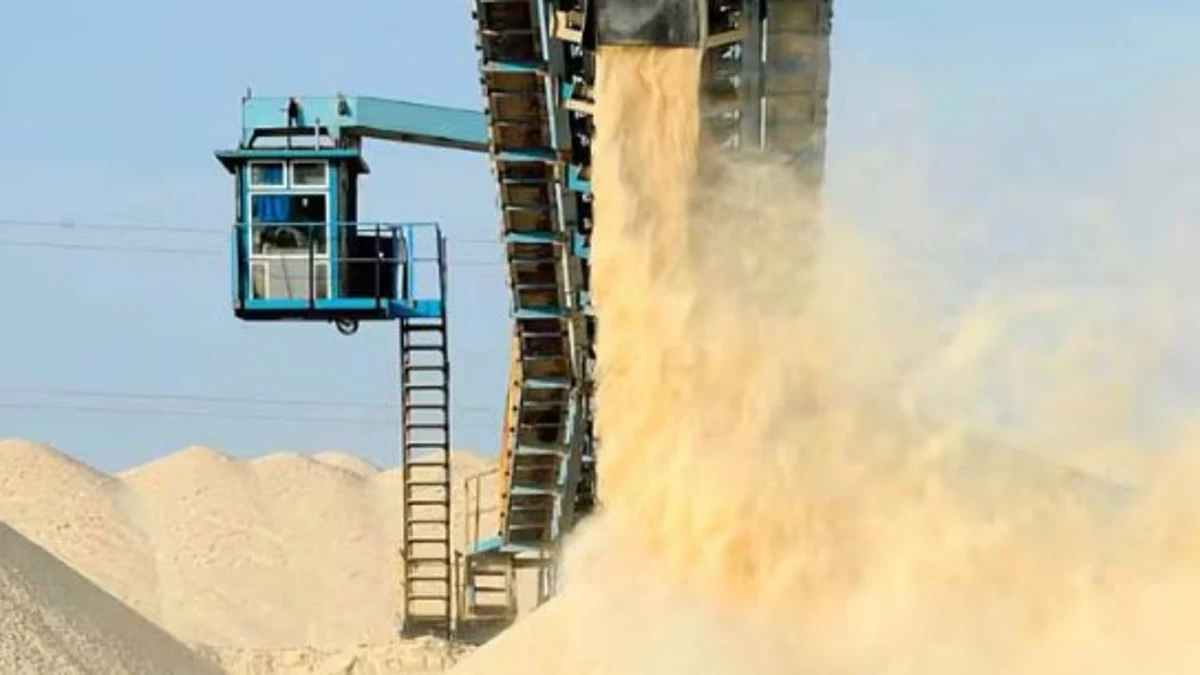
Raul Barral Tamayo likes this
14 Mar 11:19
Anónimo y su ADV
Hace tiempo, me declaré a una amiga que me gustaba, su respuesta fue: "no puedo salir con alguien en paro", ella trabajaba y yo estudiaba una oposición. Las cosas ahora son al revés; el karma se lo ha devuelto, yo aprobé y ella está en el paro. ADV

Raul Barral Tamayo likes this
14 Mar 11:18
Colaborando
by Rosana Ferreres
Qué emocionante es cuando un nuevo artista se sube al escenario a cantar el himno de otra generación.
Me gusta que las generaciones se den la mano, aunque he de decir que estoy en crisis con el término «generación» y voy a intentar evitarlo. Porque, como dicen los holísticos, al final somos energía.
De la colaboraciones de los últimos meses me han conmovido sobre todo estas dos:
La Mari de Chambao cantando Ahí estás tú con Judeline:
@movistararenaes @Lara cantando Ahí Estás tú de Chambao #chambao #ahiestastu #conciertob#judeline #movistararena ♬ sonido original – Movistar Arena España
Ana Torroja cantando Cruz de navajas con Martin Urrutia:
Ver esta publicación en InstagramUna publicación compartida de La Caja D Música TV (@lacajadmusica)
Raul Barral Tamayo likes this
14 Mar 11:18
El PSOE tiene funcionando a todo gas la máquina de influencers “afines”…
by Fino



En cambio ésta es real:

Ver post completo: El PSOE tiene funcionando a todo gas la máquina de influencers “afines”…
Raul Barral Tamayo likes this
14 Mar 09:42
LORENZO RAMÍREZ: Lucha a muerte en Irán, Europa al límite y el gran shock energético global
by Negocios TV
LORENZO RAMÍREZ: Lucha a muerte en Irán, Europa al límite y el gran shock energético global
La escalada militar entre Estados Unidos, Israel e Irán está provocando fuertes turbulencias en los mercados internacionales y elevando el temor a un nuevo shock energético global. La tensión geopolítica ha desencadenado un fuerte movimiento de aversión al riesgo, con caídas bursátiles, subidas en los rendimientos de la deuda y una búsqueda acelerada de activos refugio por parte de los inversores.
Las aerolíneas, el sector turístico y numerosas compañías vinculadas al comercio internacional se encuentran entre los sectores más afectados por la incertidumbre generada por el conflicto. Al mismo tiempo, el dólar se fortalece en los mercados de divisas mientras los rendimientos de los bonos suben ante las expectativas de inflación.
El periodista económico Lorenzo Ramírez advierte de que el escenario actual combina varios factores que aumentan la presión sobre la economía global. “Estamos ante un shock energético que ya es un hecho”, señala, en referencia al encarecimiento del petróleo y a la amenaza sobre las cadenas de suministro.
El precio del crudo se ha disparado tras los ataques a infraestructuras energéticas en Irán y ante el riesgo de interrupciones en el estrecho de Ormuz, uno de los principales corredores marítimos para el transporte de petróleo a nivel mundial.
El encarecimiento de la energía amenaza con trasladarse rápidamente al resto de la economía, especialmente en un contexto en el que las economías occidentales aún arrastran las consecuencias de la expansión monetaria de los últimos años.
Según Ramírez, la combinación de inflación previa, expansión monetaria y un shock de oferta energético crea un escenario particularmente complejo para los bancos centrales. “Si se suben los tipos de interés para combatir la inflación, se corre el riesgo de provocar una recesión más profunda”, explica.
En este contexto, los mercados comienzan a descontar que las autoridades monetarias tendrán dificultades para aplicar políticas restrictivas, lo que explica la subida en las rentabilidades de la deuda pública.
#iran #eeuu #trump #petroleo #energia #europa #orientemedio #guerra #internacional #geopolitica #negociostv
Si quieres entrar en la Academia de Negocios TV, este es el enlace:
https://www.youtube.com/channel/UCwd8Byi93KbnsYmCcKLExvQ/join
Síguenos en directo ➡️ https://bit.ly/2Ts9V3p
Suscríbete a nuestro canal: https://bit.ly/3jsMzp2
Suscríbete a nuestro segundo canal, másnegocios: https://n9.cl/4dca4
Visita Negocios TV https://bit.ly/2Ts9V3p
Más vídeos de Negocios TV: https://youtube.com/@NegociosTV
Síguenos en Telegram: https://t.me/negociostv
Síguenos en Instagram: https://bit.ly/3oytWnd
Twitter: https://bit.ly/3jz6Lpt
Facebook: https://bit.ly/3e3kIuy
🔞Exención de responsabilidad: Toda la información, material y / o contenido incluido en este programa es sólo para fines informativos y educativos. Invertir en acciones, opciones y futuros es arriesgado y no es adecuado para todos los inversores. Consulte a su propio asesor financiero independiente antes de tomar cualquier decisión de inversión.
Negocios TV no se hace responsable de las opiniones expresadas en el vídeo.
La escalada militar entre Estados Unidos, Israel e Irán está provocando fuertes turbulencias en los mercados internacionales y elevando el temor a un nuevo shock energético global. La tensión geopolítica ha desencadenado un fuerte movimiento de aversión al riesgo, con caídas bursátiles, subidas en los rendimientos de la deuda y una búsqueda acelerada de activos refugio por parte de los inversores.
Las aerolíneas, el sector turístico y numerosas compañías vinculadas al comercio internacional se encuentran entre los sectores más afectados por la incertidumbre generada por el conflicto. Al mismo tiempo, el dólar se fortalece en los mercados de divisas mientras los rendimientos de los bonos suben ante las expectativas de inflación.
El periodista económico Lorenzo Ramírez advierte de que el escenario actual combina varios factores que aumentan la presión sobre la economía global. “Estamos ante un shock energético que ya es un hecho”, señala, en referencia al encarecimiento del petróleo y a la amenaza sobre las cadenas de suministro.
El precio del crudo se ha disparado tras los ataques a infraestructuras energéticas en Irán y ante el riesgo de interrupciones en el estrecho de Ormuz, uno de los principales corredores marítimos para el transporte de petróleo a nivel mundial.
El encarecimiento de la energía amenaza con trasladarse rápidamente al resto de la economía, especialmente en un contexto en el que las economías occidentales aún arrastran las consecuencias de la expansión monetaria de los últimos años.
Según Ramírez, la combinación de inflación previa, expansión monetaria y un shock de oferta energético crea un escenario particularmente complejo para los bancos centrales. “Si se suben los tipos de interés para combatir la inflación, se corre el riesgo de provocar una recesión más profunda”, explica.
En este contexto, los mercados comienzan a descontar que las autoridades monetarias tendrán dificultades para aplicar políticas restrictivas, lo que explica la subida en las rentabilidades de la deuda pública.
#iran #eeuu #trump #petroleo #energia #europa #orientemedio #guerra #internacional #geopolitica #negociostv
Si quieres entrar en la Academia de Negocios TV, este es el enlace:
https://www.youtube.com/channel/UCwd8Byi93KbnsYmCcKLExvQ/join
Síguenos en directo ➡️ https://bit.ly/2Ts9V3p
Suscríbete a nuestro canal: https://bit.ly/3jsMzp2
Suscríbete a nuestro segundo canal, másnegocios: https://n9.cl/4dca4
Visita Negocios TV https://bit.ly/2Ts9V3p
Más vídeos de Negocios TV: https://youtube.com/@NegociosTV
Síguenos en Telegram: https://t.me/negociostv
Síguenos en Instagram: https://bit.ly/3oytWnd
Twitter: https://bit.ly/3jz6Lpt
Facebook: https://bit.ly/3e3kIuy
🔞Exención de responsabilidad: Toda la información, material y / o contenido incluido en este programa es sólo para fines informativos y educativos. Invertir en acciones, opciones y futuros es arriesgado y no es adecuado para todos los inversores. Consulte a su propio asesor financiero independiente antes de tomar cualquier decisión de inversión.
Negocios TV no se hace responsable de las opiniones expresadas en el vídeo.
Raul Barral Tamayo likes this
14 Mar 09:42
Riki Blanco, en El País, sección de viñetas [web] [facebook] [instagram] [twitter]

Raul Barral Tamayo likes this
14 Mar 09:32
Tel Aviv bajo fuego. EEUU prepara concesiones a Irán. Pánico en Europa con Ormuz
by calde
Se empiezan a escuchar voces pidiendo la dimisión de Hegseth. No habíamos sido conscientes de lo débiles que eran los estados árabes de la zona. Los radares destruidos por irán sobre que EEUU no sea capaz de darles ya protección. Irán está lanzando bombas de 1 Tn.
etiquetas: iran, eeuu, guerra, ormuz, hegseth, fracaso, geopolitica
» noticia original (www.youtube.com)
Raul Barral Tamayo likes this
14 Mar 09:31
Netanyahu pide terminar el "circo absurdo" de su juicio por corrupción; dice que necesita centrarse en la guerra
by MAVERISCH
"Lo correcto es terminar este circo absurdo, darle al Estado de Israel y a mí tiempo para lidiar con esta guerra, algo sobre lo que pienso durante todas las horas en las que permanezco despierto, que son muchas"
etiquetas: netanyahu, juicio, iran, israel
» noticia original (www.eluniversal.com.mx)
Raul Barral Tamayo likes this
14 Mar 09:31
Suiza rechaza el sobrevuelo militar de Estados Unidos [ENG]
by framirez8290
Suiza ha rechazado dos solicitudes de sobrevuelo del ejército de Estados Unidos. El Consejo Federal aún está examinando si el conflicto entre Estados Unidos, Israel e Irán califica como una guerra según la ley de neutralidad.
etiquetas: eeuu, iran, israel, suiza
» noticia original (www.bluewin.ch)
Raul Barral Tamayo likes this
14 Mar 09:31

Agitador de extrema derecha contra musulmanes a los que llama pedófilos cae en una trampa al chatear con adolescentes
by NPCMeneaMePersigue
Jake Lang es un conocido agitador de extrema derecha que incita el odio contra musulmanes, llama "pedófilos" a sus rivales y hace el saludo nazi. Ha caído en una trampa de cazadores de pedófilos al chatear con una supuesta adolescente de 15 años. [eng]
etiquetas: pedofilo, extrema derecha
» noticia original (www.thebulwark.com)
Raul Barral Tamayo likes this
14 Mar 09:31

Cómo mata la hipotermia
by Ripio
Según el diccionario médico-biológico de la Universidad de Salamanca, la hipotermia ocurre cuando la temperatura corporal baja por debajo de su temperatura normal. Se considera crítico en el momento en el que la temperatura es inferior a 35 ºC, ya que es entonces cuando comienzan las respuestas fisiológicas que intentan mantener la homeostasia. En una fase inicial, en la que nuestra temperatura corporal se sitúa entre 35 y 32 ºC, el hipotálamo, considerado el termostato de nuestro cuerpo, lo percibe y reacciona enviando señales.
etiquetas: hipotermia, muerte
» noticia original (culturacientifica.com)
Raul Barral Tamayo likes this
14 Mar 09:31

"Ha muerto en un bombardeo”: cómo han circulado teorías sin pruebas sobre la muerte de líderes y altos mandos de Israel
by Pertinax
Las teorías sin pruebas: entre el 9 y 12 de marzo se han difundido contenidos sobre que el ministro de Israel, Benjamin Netanyahu; su hermano menor, Iddo Netanyahu; el director del Mossad, David Barnea; o el ministro de Seguridad Nacional, Itamar Ben Gvir supuestamente habrían muerto en ataques de Irán, pero las publicaciones se comparten sin pruebas de lo que afirman.
etiquetas: israel, irán, eeuu, guerra, bulos
» noticia original (maldita.es)
Raul Barral Tamayo likes this
14 Mar 09:30
El secretario del Tesoro de EEUU visiblemente nervioso y con la voz entrecortada tras interrumpir una entrevista: "El presidente le necesita de inmediato"
by Icelandpeople
Tres cuartos de hora después, Bessent, de 63 años, regresa a la entrevista, y tras ser preguntado por Frost, respondió con voz entrecortada que había hablado con Trump sobre varios temas, que el presidente estaba de muy buen humor y que la misión en Irán está avanzando según lo previsto.
etiquetas: trump, bessen
» noticia original (www.20minutos.es)
Raul Barral Tamayo likes this
14 Mar 09:30

Casi la mitad de los contratos del Gobierno se adjudica a la única empresa que se presenta
by Jujutsu
El Gobierno adjudicó en 2025 más de 6.300 millones en contratos con un solo licitador. Son el 45% del total y reflejan falta de competencia.
etiquetas: contratación pública, falta de competencia, adjudicaciones, gasto público
» noticia original (theobjective.com)
Raul Barral Tamayo likes this
14 Mar 08:58
Anthropic no es lo que parece
by Lord Draugr
Anthropic ha roto con el Pentágono por querer poner dos condiciones para que las agencias de EEUU usaran Claud: que no se usara en armas autónomas y que no se usara para vigilar masivamente a estadounidenses. A partir de ahí Anthropic se ha beneficiado de una narrativa ética, pero no todo es lo que parece.
Adaptado de una de mis newsletters: https://lorddraugr.com/anthropic-no-es-lo-que-parece/
BIBLIOGRAFÍA
"Anthropic taps IPO lawyers as it races OpenAI to go public" -- Financial Times https://www.ft.com/content/3254fa30-5bdb-4c30-8560-7cd7ebbefc5f
"The haters guide to Anthropic" -- Ed Zitron https://www.wheresyoured.at/premium-the-haters-guide-to-anthropic/
GPTs are GPTs: An Early Look at the Labor Market Impact Potential of Large Language Models" — Eloundou et al. (2023)
https://arxiv.org/abs/2303.10130
"Labor market impacts of AI: A new measure and early evidence" — Anthropic (2026)
https://www.anthropic.com/research/labor-market-impacts
"Anthropic Made Pitch in Drone Swarm Contest During Pentagon Feud" — Bloomberg (marzo 2026)
https://www.bloomberg.com/news/articles/2026-03-02/anthropic-made-pitch-in-drone-swarm-contest-during-pentagon-feud
"Cursor at War" — Forbes (marzo 2026)
https://www.forbes.com/sites/rashishrivastava/2026/03/07/cursor-at-war/
"Jack Dorsey's 4,000 Job Cuts at Block Arouse Suspicions of AI-Washing" — Bloomberg (marzo 2026)
https://www.bloomberg.com/news/articles/2026-03-01/jack-dorsey-s-4-000-job-cuts-at-block-arouse-suspicions-of-ai-washing
"Dario Amodei — We are near the end of the exponential" — Dwarkesh Podcast (febrero 2026)
https://www.dwarkesh.com/p/dario-amodei-2
"Anthropic CEO Isn't Sure About Claude AI Consciousness" — IBTimes UK (febrero 2026)
https://www.ibtimes.co.uk/anthropic-ceo-ai-consciousness-possibility-1779157
Terence Tao: Hardest Problems in Mathematics, Physics & the Future of AI | Lex Fridman Podcast (junio 2025) https://www.youtube.com/watch?v=HUkBz-cdB-k
Adaptado de una de mis newsletters: https://lorddraugr.com/anthropic-no-es-lo-que-parece/
BIBLIOGRAFÍA
"Anthropic taps IPO lawyers as it races OpenAI to go public" -- Financial Times https://www.ft.com/content/3254fa30-5bdb-4c30-8560-7cd7ebbefc5f
"The haters guide to Anthropic" -- Ed Zitron https://www.wheresyoured.at/premium-the-haters-guide-to-anthropic/
GPTs are GPTs: An Early Look at the Labor Market Impact Potential of Large Language Models" — Eloundou et al. (2023)
https://arxiv.org/abs/2303.10130
"Labor market impacts of AI: A new measure and early evidence" — Anthropic (2026)
https://www.anthropic.com/research/labor-market-impacts
"Anthropic Made Pitch in Drone Swarm Contest During Pentagon Feud" — Bloomberg (marzo 2026)
https://www.bloomberg.com/news/articles/2026-03-02/anthropic-made-pitch-in-drone-swarm-contest-during-pentagon-feud
"Cursor at War" — Forbes (marzo 2026)
https://www.forbes.com/sites/rashishrivastava/2026/03/07/cursor-at-war/
"Jack Dorsey's 4,000 Job Cuts at Block Arouse Suspicions of AI-Washing" — Bloomberg (marzo 2026)
https://www.bloomberg.com/news/articles/2026-03-01/jack-dorsey-s-4-000-job-cuts-at-block-arouse-suspicions-of-ai-washing
"Dario Amodei — We are near the end of the exponential" — Dwarkesh Podcast (febrero 2026)
https://www.dwarkesh.com/p/dario-amodei-2
"Anthropic CEO Isn't Sure About Claude AI Consciousness" — IBTimes UK (febrero 2026)
https://www.ibtimes.co.uk/anthropic-ceo-ai-consciousness-possibility-1779157
Terence Tao: Hardest Problems in Mathematics, Physics & the Future of AI | Lex Fridman Podcast (junio 2025) https://www.youtube.com/watch?v=HUkBz-cdB-k
Raul Barral Tamayo likes this
14 Mar 08:55
Por ESTO eliges MAL tus RELACIONES
by Claudia Nicolasa Psicología
Por ESTO eliges MAL tus relaciones 🚫
Hay un error muy común que muchas personas cometen al evaluar sus relaciones, y entenderlo cambia bastante la forma de verlas.
Se llama sesgo de omisión.
Normalmente, cuando alguien decide romper una relación —de pareja, amistad o incluso familiar— la pregunta que suele recibir es: “¿Qué te hizo?” o “¿Te trataba mal?”. Hemos aprendido que las relaciones se rompen cuando alguien hace algo claramente negativo.
Pero esa forma de evaluar las relaciones tiene un problema.
El sesgo de omisión consiste en dar más importancia a lo malo que alguien hace que a lo bueno que deja de hacer, aunque esa ausencia también tenga un impacto importante en tu bienestar.
En otras palabras: muchas personas solo consideran motivo para romper una relación cuando aparecen conductas claramente dañinas, pero no cuando faltan elementos fundamentales como sentirse entendido, apoyado, priorizado o cuidado.
Esto hace que muchas relaciones se mantengan no porque funcionen bien, sino simplemente porque no ocurre nada lo suficientemente malo como para justificar irse.
Detectar este sesgo es importante, porque muchas veces es lo que nos mantiene en relaciones mediocres o insatisfactorias durante demasiado tiempo.
Comparte este vídeo si crees que alguien cercano necesita escuchar esta idea.
Hay un error muy común que muchas personas cometen al evaluar sus relaciones, y entenderlo cambia bastante la forma de verlas.
Se llama sesgo de omisión.
Normalmente, cuando alguien decide romper una relación —de pareja, amistad o incluso familiar— la pregunta que suele recibir es: “¿Qué te hizo?” o “¿Te trataba mal?”. Hemos aprendido que las relaciones se rompen cuando alguien hace algo claramente negativo.
Pero esa forma de evaluar las relaciones tiene un problema.
El sesgo de omisión consiste en dar más importancia a lo malo que alguien hace que a lo bueno que deja de hacer, aunque esa ausencia también tenga un impacto importante en tu bienestar.
En otras palabras: muchas personas solo consideran motivo para romper una relación cuando aparecen conductas claramente dañinas, pero no cuando faltan elementos fundamentales como sentirse entendido, apoyado, priorizado o cuidado.
Esto hace que muchas relaciones se mantengan no porque funcionen bien, sino simplemente porque no ocurre nada lo suficientemente malo como para justificar irse.
Detectar este sesgo es importante, porque muchas veces es lo que nos mantiene en relaciones mediocres o insatisfactorias durante demasiado tiempo.
Comparte este vídeo si crees que alguien cercano necesita escuchar esta idea.
Raul Barral Tamayo likes this
14 Mar 08:54
El retrogamer según la edad
by tendero-digital
Hace unos días entran un par de jóvenes a la tienda. Como mucho de segundo de bachiller (en mi época diríamos COU) o primero de carrera. Nos preguntan si tenemos para dejarles un restaurador o pulidor de Cd-Roms o si se lo podemos vender.

Mi socio les dice que se trata de un accesorio que no tenemos en la tienda desde hace más de 15 años. Que antes se usaba mucho, pero que ahora que nadie emplea ya CDs será complicado de encontrar. Y les pregunta para qué lo querían emplear. Le contestan muy ufanos que están montando un equipo para retrogamer y algunos CDs con juegos retrogamer no se los lee la regrabador. Mi socio les dice que los CDs no parecen mucho retrogamer, a lo sumo juegos “clásicos”. En la tienda había otro cliente también jugador veterano y comentó que para él eran juegos en disquetes. Pero como siempre alguien te gana, entra otro cliente y dice que lo suyo son disquetes flexibles para ser un verdadero juego retro.
Cuando mi socio me lo contaba a mi no puede evitar seguir el chiste, para mí serían juegos en cinta o directamente en máquina recreativa que solo tiene un juego. Esto de ser algo retro depende mucho de la edad que cada uno tiene. Y en estos casos siempre recuerdo la tira de Dilbert donde discuten qué programador es más veterano.
La entrada El retrogamer según la edad se publicó primero en Al otro lado del mostrador.
Raul Barral Tamayo likes this
14 Mar 08:50
La filosofía del éxito de Napoleon Hill
by Raul Barral Tamayo
 Título original: Napoleon Hill’s Philosophy of Success.
© by G&D Media, Napoleon Hill Foundation, 2022.
© de la traducción: María Maestro, 2022
Editorial: Alienta.
Tienes en tus manos los diecisiete principios del éxito que Napoleon Hill descubrió tras más de veinte años de investigación. La esencia de la sabiduría de quien, a pesar de llevar décadas muerto, sigue siendo considerando «el filósofo de la superación de todos los tiempos».
Autor de múltiples libros superventas, Hill te da las claves para alcanzar el éxito, la felicidad y la tranquilidad de espíritu. Líbrate de las limitaciones que te autoimpones y disfruta de la riqueza de la vida.
Trabajar para conseguir tu objetivo será más fácil y productivo si conviertes estas enseñanzas en tus nuevos hábitos. Aprende a definir tu meta en la vida, a ser una persona proactiva y con iniciativa, a mantener a raya las emociones negativas y a ganarte la confianza de los demás. Si lo haces, tu nueva actitud te allanará el camino mucho más de lo que puedas imaginar.
Usa esta obra como lo que es: la brújula que guio a un hombre que no sólo se hizo a sí mismo, sino que fue capaz de alcanzar todas las metas que se propuso. Porque, además de compartir los principios fundamentales del éxito, Napoleon Hill te da instrucciones detalladas sobre cómo aplicarlos.
Napoleon Hill considerado el autor de libros de superación más prestigioso del mundo, fue un escritor estadounidense que vivió entre 1883 y 1970. Comenzó a escribir a los trece años como reportero y nunca dejó la pluma. Gran observador de las leyes de la naturaleza y de la conducta humana, concentró todos sus aprendizajes en obras como Las leyes del éxito o Piense y hágase rico, uno de los libros más vendidos del mundo.
Dedicó gran parte de su vida a difundir los principios del éxito, basados en la autoconfianza y una actitud mental positiva, y afirmó haber asesorado a varios presidentes de Estados Unidos, como a Woodrow Wilson durante la Primera Guerra Mundial.
Su legado sigue vivo gracias al trabajo de la Napoleon Hill Foundation, una institución educativa sin ánimo de lucro con sede en Virginia, ciudad natal del autor, que cuenta con cientos de miles de seguidores en las redes sociales y tiene el propósito de hacer del mundo «un lugar mejor donde vivir».
Tiempo estimado de lectura: 23 minutos.
Objetivos de este libro:
- Este libro se ha concebido con el propósito de inducir un flujo de ideas en tu mente.
Ideas principales:
- Nadie puede ser realmente libre si la mayor parte del día está encadenado a un trabajo rutinario que sólo le permite la mera subsistencia.
- Todo lo que la mente pueda imaginar y creer, se puede conseguir.
- No puedes triunfar en la vida dispersando tus fuerzas y tratando de hacer una docena de cosas a la vez. Debes concentrarte en una sola cosa.
- El hábito de hacer voluntariamente más de aquello por lo que te pagan te aportará la atención favorable de quienes tienen oportunidades que ofrecer.
- La mayoría de la gente actúa primero y piensa después, si es que llega a hacerlo alguna vez.
- La mayoría de las personas permiten que la emoción gobierne sus vidas.
- Muchas personas confunden una verdadera razón con el mero deseo. Desear no te atraerá el éxito.
- El hombre que controla su mente puede controlar cualquier cosa que se interponga en su camino.
- Las naciones empiezan su declive cuando la visión creativa deja de ser la fuerza dominante de sus líderes.
- La derrota nunca es lo mismo que el fracaso a menos y hasta que se ha aceptado como tal.
- El éxito sin humildad de corazón sólo puede ser temporal e insatisfactorio.
- El uso que uno hace de su tiempo libre es un medio bastante preciso para predecir su futuro.
- Desde un punto de vista racional, la mayor parte de las dolencias son el resultado de desobedecer las leyes de la naturaleza.
- De vez en cuando, conviene hacer ayunos cortos, de uno a tres días, cuando uno se siente apagado y falto de vitalidad. A veces un solo día de ayuno hace maravillas en el estado físico de una persona.
- El núcleo de toda esta filosofía de realización personal reside en la fuerza cósmica del hábito.
Algunas de las cosillas que aprendí leyendo este libro que no tienen por qué ser ni ciertas ni falsas ni todo lo contrario:
- Las 17 lecciones originales para triunfar:
- Definición del propósito.
- La alianza de la Mente Maestra.
- El significado de la fe.
- Los treinta rasgos de una personalidad agradable.
- Ir más allá.
- Iniciativa personal.
- Autodisciplina.
- Atención controlada.
- Entusiasmo.
- Visión creativa.
- Aprender de la adversidad y la derrota.
- Estimación de tiempo y dinero.
- Una actitud mental positiva.
- Pensamiento preciso.
- Buena salud física.
- Cooperación.
- Fuerza cósmica del hábito.
- La definición del propósito es el punto de partida de cualquier logro. Es el gran escollo de noventa y ocho de cada cien personas, porque nunca llegan a definir sus metas o a dirigirse a ellas con un propósito definido.
- El 98 por ciento de las personas deambulan sin rumbo por la vida, sin la menor idea de para qué trabajo están capacitadas, y sin concebir siquiera la necesidad de un objetivo definido por el que luchar. Ésta es una de las mayores tragedias de la civilización.
- Este libro se ha concebido con el propósito de inducir un flujo de ideas en tu mente.
- El punto de partida de cualquier logro personal es la adopción de un objetivo principal y de un plan definido para su consecución.
- Las ventajas de decidir cuál es tu propósito en la vida:
- La definición del propósito desarrolla (a) la autonomía, (b) la iniciativa personal, (c) la imaginación, (d) el entusiasmo, (e) la autodisciplina y (f) la concentración de esfuerzos.
- La especialización tiende a la perfección. Te convertirás en un especialista del éxito.
- Estimación de tiempo y dinero. Te llevará a hacer una estimación de tu tiempo y tu dinero, así como a planificar tus esfuerzos en aras de lograr tu propósito principal definido.
- Alerta a la mente de las oportunidades. Te proporciona coraje para la acción. Hace que la mente esté más alerta para detectar las oportunidades relacionadas con tu propósito principal, inspirándote el coraje necesario para actuar cuando éstas se presenten.
- La capacidad de tomar decisiones con rapidez y firmeza. Las personas de éxito toman decisiones rápidamente en cuanto se dan las circunstancias necesarias, y tardan mucho en cambiarlas, de llegar a hacerlo alguna vez. Las personas fracasadas tardan mucho en tomar decisiones y las cambian a menudo y de forma acelerada.
- No sólo desarrolla la confianza en tu propia integridad y carácter, sino que «atrae atención favorable de otras personas e inspira su cooperación».
- Prepara a la mente para la «fe». El mayor de todos los beneficios que comporta la definición del propósito es que abre el camino para el ejercicio pleno del estado mental conocido como fe. Impregna a la mente de positividad. La libera de las limitaciones del miedo, la duda, el desaliento, la indecisión y la procrastinación.
- Te proporciona una conciencia de éxito y te protege de la influencia de la conciencia de fracaso. Tu mente se convence del éxito y se niega a aceptar la posibilidad del fracaso.
- La duda acaba, por lo general, en coartadas, excusas, o disculpas derivadas del fracaso.
- Las nueves razones básicas que inspiran toda acción voluntaria son
- (1) la emoción del amor;
- (2) la emoción del sexo;
- (3) el deseo de beneficios materiales;
- (4) el deseo de supervivencia;
- (5) el deseo de libertad del cuerpo y de la mente;
- (6) el deseo de autoexpresión y reconocimiento;
- (7) el deseo de vida después de la muerte;
- (8) el deseo de venganza; y
- (9) la emoción del miedo.
- Cuantas más razones positivas básicas tengas impulsándote, más probabilidades tendrás de conectar con tu subconsciente y sacar el poder de la Inteligencia Infinita.
- El verdadero bien del dinero estriba en el uso que se le da, no en su mera posesión.
- En la vida tienes que tener dinero, y mucho, si quieres disfrutar de la libertad del cuerpo y la mente: da la bendición de poder elegir.
- Nadie puede ser realmente libre si la mayor parte del día está encadenado a un trabajo rutinario que sólo le permite la mera subsistencia.
- Todo lo que la mente pueda imaginar y creer, se puede conseguir.
- Todas las grandes mentes han sido reforzadas a través del contacto con otras mentes. Cada mente necesita de la asociación y el contacto con otras mentes para crecer y expandirse.
- Un hombre con una actitud negativa puede influir en otros mil dentro de la organización sin pronuncia palabra. El medio de contacto es la telepatía. Tu mente está en constante sintonía con cualquier otra mente dentro de su esfera, cualquiera que sea ésta. A menos que dispongas de una técnica para protegerte de estas emisiones negativas, no puedes permitirte el lujo de permanecer en un ambiente negativo.
- Las doce grandes riquezas de la vida:
- Una actitud mental positiva.
- Buena salud física.
- Armonía en las relaciones humanas.
- Liberación del miedo.
- La esperanza del logro.
- La capacidad de la fe.
- La voluntad de compartir las propias bendiciones.
- Una labor de amor.
- Una mente abierta a todo.
- Autodisciplina.
- La capacidad de entender a las personas.
- Seguridad económica.
- No puedes triunfar en la vida dispersando tus fuerzas y tratando de hacer una docena de cosas a la vez. Debes concentrarte en una sola cosa.
- La fe y el miedo no pueden coexistir en el corazón.
- Los humanos son los únicos que, de entre todas las criaturas vivientes, tienen derecho a elegir; pueden desobedecer la ley y sufrir las consecuencias, u obedecerla y cosechar sus frutos.
- El hábito de hacer voluntariamente más de aquello por lo que te pagan te aportará la atención favorable de quienes tienen oportunidades que ofrecer.
- Hacer más de lo estrictamente necesario te lleva a desarrollar una actitud positiva y agradable, uno de los rasgos más destacados de una personalidad agradable.
- Andrew Carnegie: «Hay dos tipos de hombres que nunca llegan a nada. Uno es el que no hace lo que se le dice que haga. El otro es el que nunca hace más de lo que se le dice que haya y aquel que sale adelante hace lo que debe hacer sin que nadie le diga que lo haga, pero no se detiene ahí. Va más allá haciendo bastante más de lo que se espera de él».
- No se puede beneficiar al débil y al pobre limitando a los ricos y a los fuertes o privándoles de una razón para utilizar su iniciativa. Eso sólo tendría el efecto de obligar a todos los hombres a volverse débiles y pobres.
- Los ricos y fuertes ayudan proporcionando un liderazgo inteligente, iniciativa personal, visión creativa, imaginación y esfuerzo organizado, cualidades todas ellas que permiten que los débiles y pobres dispongan de las fuentes de ingresos y las oportunidades para enriquecerse y fortalecerse.
- No hay ningún requisito más importante para el éxito individual que la autodisciplina.
- Autodisciplina significa tomar posesión de tu propia mente.
- Si no controlas tus pensamientos, no puedes controlar tus actos; por consiguiente, en su forma más simple, la autodisciplina te hace pensar primero y actuar después. Casi todo el mundo hace exactamente lo contrario. La mayoría de la gente actúa primero y piensa después, si es que llega a hacerlo alguna vez.
- Las siete emociones positiva son el amor, el sexo, la esperanza, la fe, el entusiasmo, el romance y el deseo.
- Las siete emociones negativas son el miedo, los celos, el odio, la venganza, la avaricia, la ira y la superstición.
- La mayoría de las personas permiten que la emoción gobierne sus vidas; de hecho, en gran medida gobierna el mundo.
- Las siete emociones positivas también puede ser destructivas si no se organizan y liberan bajo tu absoluto control consciente.
- RBT457534Z5467
- Una razón que nos impulse es el verdadero punto de partida de todo logro. Todo cuanto un hombre hace gira en torno a la imperiosa razón positiva que se oculta tras su propósito principal definido. Esta razón debe ser tan potente que te obligue a supeditar todos tus pensamientos y esfuerzos a la consecución de dicho propósito.
- Muchas personas confunden una verdadera razón con el mero deseo. Desear no te atraerá el éxito.
- La autodisciplina trata de adoptar hábitos constructivos, e implica el dominio absoluto tanto de tus hábitos de pensamiento como de tus hábitos físicos.
- A veces, es necesario dejar por completo de lado tus emociones y seguir los dictados de la razón. Otras, en cambio, te decantarás a favor de tus emociones, pero siempre que hayan pasado previamente por el tamiz de la razón.
- Son las emociones las que proporcionan la fuerza motriz, la fuerza de acción, que nos permite poner en práctica las decisiones de la cabeza. Las emociones son la fuente del mayor poder del ser humano. Si destruyes la esperanza y la fe, ¿para qué vivir? Si matas el entusiasmo, o la lealtad, o el deseo de alcanzar metas, sólo te quedaría la razón, ero entonces, ¿de qué serviría? La cabeza estaría ahí para dirigir, pero no tendría nada que dirigir.
- La autodisciplina puede eliminar los aguijones de estas emociones y ponerlas al servicio de un propósito útil. A veces el miedo y la ira pueden inspirar una acción intensa.
- La fuerza de voluntad debe ser el juez último de cualquier situación o circunstancia, y tener la última palabra a la hora de permitir o no que la razón o las emociones ejerzan una influencia mayor.
- En ausencia de tal autodisciplina, el ego se ocupa de sus propios asuntos y deja que la cabeza y el corazón se peleen a su antojo. En este caso, el individuo suele salir mal parado.
- Necesitamos autodisciplina para controlar las emociones, especialmente en el caso de los otros cuatro puntos de la lista:
- el apetito por la comida y la bebida,
- la actitud mental,
- el empleo del tiempo y
- la definición del propósito.
- Una actitud mental positiva es la primera y más importante de las doce riquezas de la vida. Sin ella es imposible disfrutar de ninguna de las otras once.
- Si no decides lo que quieres y adónde vas, la Inteligencia Infinita, por muy poderosa que sea, tampoco te podrá ayudar.
- El hombre que controla su mente puede controlar cualquier cosa que se interponga en su camino.
- Los objetos sobre los que un hombre deliberadamente concentra su atención se convierten en las influencias dominantes de su entorno.
- Cuando el hombre fija su atención voluntariamente en un propósito principal definido de naturaleza positiva y, a través de sus hábitos cotidianos de pensamiento, obliga a su mente a detenerse en ese tema, condiciona su mente subconsciente a actuar conforme a ese propósito.
- General Douglas MacArthur: «Eres tan joven como tu fe, tan viejo como tu duda, tan joven como tu autoconfianza, tan viejo como tu miedo, tan joven como tu esperanza, tan viejo como tu desesperación. Los años pueden arrugar tu piel, pero abandonar el entusiasmo te arruga el alma».
- La imaginación es la llave de todos los logros humanos, el resorte de todo esfuerzo humano, la puerta secreta al alma humana.
- El genio es producto de la visión creativa, mientras que la mediocridad es producto de la imaginación.
- Poco importa dónde empiece un hombre, lo importante es hacia dónde va.
- La visión creativa no es una cualidad milagrosa con la que se está dotado o no al nacer. Puede desarrollarse.
- Las naciones empiezan su declive cuando la visión creativa deja de ser la fuerza dominante de sus líderes.
- Toda adversidad lleva consigo la semilla de un beneficio equivalente o mayor.
- El punto de inflexión en que uno empieza a alcanzar el éxito en las cotas más altas de la realización personal suele, por lo general, estar marcado por algún fracaso o derrota subrayable. El reconocimiento de este hecho puede señalar en sí mismo el punto de inflexión más importante de tu vida.
- La derrota nunca es lo mismo que el fracaso a menos y hasta que se ha aceptado como tal.
- Una larga enfermedad a menudo obliga a las personas a parar, mirar, escuchar y pensar. De este modo, uno puede acercarse y comprender la pequeña y apacible voz que le habla desde el interior y tomar así conciencia de las causas que le han llevado a la derrota y al fracaso en el pasado.
- Abraham Lincoln nació en la pobreza y el analfabetismo.
- El fracaso en sí no existe, sólo la circunstancia que se acepta como tal. Cuando te sientas abatido por circunstancias que consideres un fracaso, recuerda que puedes estar ante un punto de inflexión necesario en tu vida, a partir del cual puedes cambiar tu rumbo.
- Los beneficios compensatorios del fracaso y la derrota no suelen verse o reconocerse como tales hasta que, pasado un tiempo, uno no echa la vista atrás y analiza su experiencia con la perspectiva suficiente para poder curar las heridas.
- Un gran filósofo: «Dios nunca le quita nada a nadie sin sustituirlo por algo mejor».
- El tiempo acaba corrigiendo todos los males y enmendando todos los errores para aquellos que reconocen que la adversidad suele enseñar a los hombres lecciones que sólo aprenderían con la adversidad.
- La derrota pude reemplazar a la vanidad y la arrogancia por la humildad de corazón, allanando el camino para la formación de relaciones humanas más armoniosas.
- El éxito sin humildad de corazón sólo puede ser temporal e insatisfactorio.
- Los únicos que han alcanzado el éxito son aquellos que han aceptado la derrota como nada más que un mero impulso para una acción mayor y mejor planificada.
- El hombre que fracasa y persevera en la lucha, por lo general, descubre una fuente de visión creativa que le faculta para convertir la derrota temporal en éxito permanente. Ahí radica el mayor beneficio de la derrota. La derrota, como alguien dijo, obliga al hombre a decidir si es un hombre o un ratón.
- El hombre que abandona cuando la derrota le supera indica que ha confundido su arrogancia con la confianza en sí mismo.
- El fracaso o la derrota son sólo temporales, es la forma que la naturaleza tiene de hacer aflorar la humildad, la sabiduría y la comprensión.
- Todos tenemos excusas, pero recuerda que las excusas no te traerán lo que deseas en la vida.
- Nada se consigue nunca sólo deseando, esperando o soñando despierto.
- Todo lo que merece la pena tener tiene un precio definido, y ese precio debe ser pagado.
- El éxito no requiere una gran cantidad de conocimiento sobre nada, pero sí exige el uso persistente de cualquier conocimiento que se tenga.
- ¿Cómo estás usando tu tiempo? ¿Cuánto tiempo estás perdiendo, y cómo lo estás perdiendo? ¿Qué vas a hacer para frenar esta pérdida? Las preguntas son importantes y reclaman una atención seria.
- A grandes rasgos, hay dos clases de personas: los vagabundos y los no vagabundos.
- Un no vagabundo es una persona que tiene un propósito principal definido y un plan concreto para conseguirlo, y está ocupado en llevar a cabo dicho plan. Piensa sus propios pensamientos y asume toda la responsabilidad sobre ellos, ya sean correctos o incorrectos. Expresa la acción a través de la definición de propósito y practica el hábito de ir más allá al llevar a cabo su propósito. Se mueve por propia iniciativa personal sin la presión de otros. Controla todos sus hábitos, de pensamiento y de acción a través de la más rigurosa autodisciplina. Mantiene una actitud mental positiva y piensa en lo que más desea, no en lo que no desea. Respalda sus acciones con la fe aplicada. Reconocer sus debilidades y encuentra los medios para superarlas. Hace inventario de sí mismo con la misma regularidad que un comercial de primer orden hace inventario de sus existencias.
- La mayoría de la gente, los vagabundos, nunca se preocupan por elegir una ocupación que se adapte a su educación o a sus capacidades mentales o espirituales.
- El hombre medio presta más atención al cuidado de su automóvil que al cuidado de su propia salud.
- El vagabundo es una rara combinación de indiferencia, indecisión, confusión e irregularidad de hábitos, tanto de pensamientos como de obra.
- Para la mayoría de la gente, la religión es algo que abrazar y creer por una cuestión de decoro, pero que no hay que vivir necesariamente. Para la mayoría de los que la abrazan, la religión es más una teoría que una práctica.
- El uso que uno hace de su tiempo libre es un medio bastante preciso para predecir su futuro.
- El vagabundo suele ser tan descuidado con su tiempo como con su dinero.
- El círculo familiar es el lugar donde se forma el carácter y, habida cuenta de las responsabilidades que eso entraña, debería protegerse con profundo respeto.
- El cabeza de familia no puede triunfar en su profesión a menos que tenga la paz que surge de la armonía en el hogar.
- La mayoría de la gente cae en el hábito de adivinar en lugar de reunir, organizar y clasificar los hechos sobre los que construir planes y tomar decisiones.
- El vagabundo tiene opinión sobre prácticamente todo, pero rara vez se toma el tiempo para recabar información precisa sobre un tema concreto. El no vagabundo no tiene opinión, salvo la que se crea a partir de hechos meticulosamente recabados o de hipótesis razonables de los hechos. Se cuida de no expresar una opinión que no esté basada en hechos conocidos.
- El tiempo es un maestro de trabajo que cura las heridas de la derrota y la decepción, enmienda los errores y los convierte en capital, pero que sólo favorece a aquellos que matan la procrastinación y avanzan hacia la consecución de un objetivo preconcebido con firmeza.
- Fórmate una imagen mental de ti mismo como un pilar de fuerza y poder, bloqueando de inmediato cualquier pensamiento mental negativo.
- La mente está eternamente trabajando, construyendo o destruyendo, trayendo miseria, infelicidad y pobreza o alegría, placer y riquezas. Nunca está ociosa.
- El poder del pensamiento es el poder más peligrosos o el más beneficioso de que dispone el hombre, dependiendo del uso que se le dé.
- Los pensadores certeros, al tratar con los hechos, dan estos importantes pasos como medio para que su pensamiento sea eficaz:
- (1) separan los hechos de la ficción o de los rumores;
- (2) dividen los hechos en dos tipos: los importantes y los que carecen de importancia.
- La mayoría de la g ente no piensa; sólo piensa que piensa. La mayor parte de lo que llamamos pensamiento no es más que una expresión del sentimiento a través de las emociones, y las emociones no son fiables.
- El pensador certero somete siempre sus deseos y decisiones a su cabeza, para que ésta las examine concienzudamente antes de confiar en ellos como sólidos, pues sabe que su cabeza es más fiable que su corazón.
- Es una experiencia de lo más extraña encontrar una persona que viva su propia vida, piense sus propios pensamientos, desarrolle sus propios hábitos y que haga siquiera el más mínimo intento de ser ella misma. La mayoría de la gente es imitadora de otros y muchos son neuróticos que prefieren estar a la altura de otros antes que ser ellos mismos.
- La mayoría de la g ente va a remolque, aceptando y actuando en función de los pensamientos y hábitos de los demás, como a remolque unas de otras van las ovejas por los caminos trazados en los pastos.
- Para mantener una conciencia de salud, uno debe pensar en términos de buena salud, no en términos de enfermedad y dolencia.
- Si quieres mantener una conciencia de salud, el miedo y la preocupación no deben tener cabida en tu vida, ya que es más que probable que acaben socavando tu buena salud. Aprende el hábito del control emocional. Emociones como la malicia, la venganza y el resentimiento producen toxinas, venenos en la sangre. Mantén una actitud mental positiva en todo momento y esto generará una saludable influencia.
- Desde un punto de vista racional, la mayor parte de las dolencias son el resultado de desobedecer las leyes de la naturaleza, por lo que debemos pagar con dolor y sufrimiento.
- El sueño es una de las funciones más importantes de la vida.
- La creciente tendencia a acortar las horas de descanso para satisfacer muchas de las exigencias de nuestro tiempo es considerada por casi todos los investigadores como un insidioso peligro para la salud.
- Descubre cómo funciona tu cuerpo. Estudia la combinación de alimentos que tu propio sistema y tus hábitos de trabajo necesitan. Adquiere moderación en tus hábitos alimenticios.
- De vez en cuando, conviene hacer ayunos cortos, de uno a tres días, cuando uno se siente apagado y falto de vitalidad. A veces un solo día de ayuno hace maravillas en el estado físico de una persona.
- El núcleo de toda esta filosofía de realización personal reside en la fuerza cósmica del hábito.
¿Has leído este libro? ¿Algún libro parecido? ¿Tienes alguna cosa que decir sobre lo que expone este libro? ¿Recomiendas algún libro relacionado a este? Estaré encantado de leer lo que piensas sobre este libro en los comentarios.
Algunos enlaces relacionados:
Algunos libros relacionados:
- The one thing by Gary Keller with Jay Papasan.
- Cómo suprimir las preocupaciones y disfrutar de la vida de Dale Carnegie.
- El motor del éxito de Álex Marín.
- El éxito de los introvertidos de Sylvia Löhken.
- Vivir bien la vida de J.K. Rowling.
- How to win friends and influence people by Dale Carnegie.
- Billionaire de José Elías.
- Todo se puede entrenar de Toni Nadal.
- Hazte la cama de William H. McRaven.
- Mindset by Carol S. Dweck, Ph.D..
- Descubre el secreto de Janet Bray Attwood & Chris Attwood.
- Steve Jobs de Walter Isaacson.
raul
Raul Barral Tamayo likes this