“Trump Says Hormuz Strait Is Fully Open, Cites Iran.” “Hormuz Passage ‘Completely Open’ to Commercial Ships During Ceasefire: Iran FM.” “Trump Says Iran Will Suspend Nuclear Program as Hormuz Reopens.”
April 17 – AFP: “US President Donald Trump said Friday that Iran had agreed to never again shut the Strait of Hormuz, during a string of social media posts indicating a peace deal with Tehran was near. ‘Iran has agreed to never close the Strait of Hormuz again. It will no longer be used as a weapon against the World,’ Trump said on his Truth Social network…”April 17 – Bloomberg (Patrick Sykes): “Passage through the Strait of Hormuz ‘is not possible without the coordination of the Islamic Republic Guard Corps navy,’ Iranian state TV cites a senior military official as saying. Passage of military vessels through the strait remains forbidden. Ships can only pass via the route approved by the Ports and Maritime Organization of Iran.”“Iran to Close Strait of Hormuz if US Blockade Persists: Fars.” “Iran Hardliners Attack Araghchi’s Hormuz Tweet as ‘Incomplete and Misleading’.” “Iran TV: Ships Passing Through Hormuz Need IRGC Coordination.” “Iran’s Revolutionary Guard Says It Will Decide Who Crosses Hormuz: WSJ.” “Iran Considers a Naval Blockade to be a Violation of the Ceasefire.” “Iran to Take Action if US Blockade Persists: Foreign Ministry.” “Iran Tells Mediators Will Limit Ships Crossing Straight: WSJ” “Iran Tells Mediators Will Charge Tolls During Ceasefire: WSJ” “‘Ships Are Moving’ Through Hormuz, Lutnick Says: WSJ” “Hormuz Remains ‘Effectively Closed’ Despite Iran’s Pledge, Kpler Says.”
April 17 – Bloomberg (Alexander Pearson): “Asked if Iran agreed to stop enriching uranium, President Trump said ‘yes,’ according to an X post by a NewsNation reporter… ‘They agreed to everything,’ the reporter quotes Trump as adding.”“Trump Says Iranians Have ‘Agreed to Everything,’ Including Removal of Enriched Uranium.” “Trump Says Iran Has Agreed to Nearly All His Demands.” “Trump: ‘No Sticking Points’ Remain With Iran, Iran to Stop Backing Proxies.” “Trump: ‘Don’t Think There’s Too Many Significant Differences’ With Iran.”
“The U.S.A. will get all Nuclear ‘Dust,’ created by our great B2 Bombers - No money will exchange hands in any way, shape, or form. This deal is in no way subject to Lebanon, either, but the USA will, separately, work with Lebanon, and deal with the Hezboolah situation in an appropriate manner. Israel will not be bombing Lebanon any longer. They are PROHIBITED from doing so by the U.S.A. Enough is enough!!! Thank you! President DJT.”“Trump Says U.S. Will Work With Iran to Remove Enriched Uranium.” “U.S. Proposal Would Allow Iran to Access $20 Billion for Handing Over Enriched Uranium.” “‘No Money is Changing Hands’: Trump Rejects $20 billion Iran ‘Nuclear Dust’ Deal Claim.” “Trump Says US Will Not Release Frozen Iran Funds.”
April 17 – Bloomberg (Andrea Salcedo): “President Trump says the US will recover ‘nuclear dust’ from Iran ‘very soon,’ Reuters reports, citing a call with the president in which he discussed Iran’s enriched uranium… The administration will also bring Iran’s uranium to the US, Trump tells Reuters.”April 17 – AFP: “President Donald Trump said Friday that the United States and Iran would jointly remove uranium from Tehran’s nuclear sites with excavators under any peace deal, before the material is transferred to US territory… ‘Somebody said, how are we going to get the nuclear dust? We’re going to get it by going in with Iran, with lots of excavators,’ Trump told a gathering of the conservative Turning Point USA movement... ‘We need the biggest excavators you can imagine,’ he added. ‘But we’re going to go in together with Iran. We’re going to get it. We’re going to take it back home to the USA very soon.’”“Trump Boasts Iran ‘Agreed To Everything’ — Iran Quickly Says It Won’t Give Up Uranium.” “Iran Rejects US President Trump’s Uranium Transfer Claim.” “Iran Rejects Trump Claim on Deal to Surrender Nuclear Material Stockpiles.”
April 17 – Al Jazeera: “Iran’s Foreign Ministry spokesperson Esmaeil Baghaei dismisses Trump’s claim that Tehran has agreed to allow its enriched uranium to be moved to the US. ‘Enriched uranium is as sacred to us as Iranian soil and will not be transferred anywhere under any circumstances,’ Baghaei was quoted as saying by Tasnim news agency.”April 17 – AFP: “Iran’s foreign ministry on Friday said the country’s stockpile of enriched uranium would not be transferred ‘anywhere’, denying an earlier claim by US President Donald Trump that the Islamic republic had agreed to hand it over. ‘Iran’s enriched uranium is not going to be transferred anywhere,’ Iranian foreign ministry spokesman Esmaeil Baqaei told state TV. ‘Transfer of Iran’s enriched uranium to the US has never been raised in negotiations.’”“Trump Says Most Main Points ‘Finalized’ in Talks Toward Deal.” “Trump Says Iran Agreed Unlimited Suspension of Nuclear Program.” “Trump Tells Axios He Expects Iran Deal ‘In a Day or Two.’” “Iran’s Baghaei Says US Statements ‘Filled with Contradictions.’”
April 17 – Al Jazeera: “Iran’s Foreign Ministry spokesperson Esmaeil Baghaei has said remarks by US officials regarding the Strait of Hormuz have been contradictory, in a sign of ‘desperation and helplessness’. ‘We should not be influenced by the other side’s tweets,’ the spokesperson said. ‘The statements by American officials are filled with contradictions and lies, and this is nothing new.’”April 17 – Al Jazeera: “A Pakistani source has told Al Jazeera that much more needs to be done in talks between Iran and the US before a lasting peace in the region. An Iranian source said that the next steps between the US and Iran will involve agreeing on a framework for negotiations – not a final agreement.”Friday evening tweets from Speaker of the Parliament – and head of Iran’s ceasefire talks delegation in Islamabad - Mohammad-Bagher Ghalibaf (translated from Persian to English by Google).
1- The US President made seven claims in one hour, all of which are false. 2- They did not win the war with these lies and they will definitely not get anywhere in negotiations. 3- As the blockade continues, the Strait of Hormuz will not remain open. 4- Transit through the Strait of Hormuz will be carried out based on the ‘designated route’ and with ‘Iran’s permission.'5- The open or closedness of the Strait and the regulations governing it are determined by the field, not social networks. 6- Media warfare and public opinion engineering are an important part of the war, and the Iranian nation will not be affected by these tricks. Read the real and accurate news of the negotiations in the recent interview of the Foreign Ministry spokesman.”And, finally, late Friday night from the Wall Street Journal (Hannah Miao):
“President Trump said he may not extend the ceasefire with Iran if no deal is reached by Wednesday, when the current pause in fighting is set to expire. ‘Maybe I won’t extend it. So you have the blockade, and unfortunately we’ll have to start dropping bombs again,’ Trump told reporters… on Air Force One.”Teetering on the edge of a deal with Iran to end the war — or a deeper mess. While hopeful, all the bedlam has me leaning toward the latter. Markets are all in on the former, rendering the “markets hate uncertainty” maxim pathetically archaic. These days, uncertainty and mayhem are relished. The President is spooking the entire world – just not stock markets.
“Rally Drives Nasdaq 100 to Longest Winning Streak Since 2013.” All-time highs for the S&P500, Nasdaq Composite, Nasdaq100, S&P400 Mid-caps, small cap Russell 2000, NYSE Securities Broker/Dealers, Dow Transports, and the Value Line Arithmetic index (for starters).
The S&P500’s 4.5% gain this week boosted the rally off March 30th lows (13 sessions) to 13.0%. The Nasdaq100 jumped 6.2%, with the rally off lows at 17.0%. The MAG7 Index surged 8.5% this week, boosting m-t-d gains to 14.5%. The Semiconductors surged another 7.5% this week, boosting y-t-d gains to 34.9%. The Transports surged 10.2%, with 2026 gains up to 29.2%. The Broker/Dealers jumped 7.5% for the week.
The Goldman Sachs Most Short Index spiked 13.8% higher this week, with the rally off March 30th lows now at a spiffy 28.5%. How many extraordinary squeezes have we witnessed over recent years?
While stocks have recovered all war losses (plus some), bonds have been much more circumspect. Inflation. Yields were down this week, with 10-year Treasury yields seven bps lower. But 10-year yields remain 31 bps higher in the seven weeks of war. Two-year yields (down 9bps this week) remain 33 bps higher, five-year yields (down 10bps) 34 bps higher, and long-bond yields (2 lower) 27 bps higher. While down 13 bps this week, MBS yields have jumped 32 bps since the war’s onset.
Key global bond markets struggled to muster much of a rally. UK 10-year gilt yields (down 7bps) have jumped 53 bps since the war’s outbreak to 4.76%, Italian yields (down 17bps) 41 bps to 3.68%, and Greek yields (down 15bps) 38 bps to 3.65%. Retreating only a basis point this week to 2.42%, Japanese 10-year JGB yields remain 30 bps higher. French yields (3.58%) are 36 bps higher, German yields (3.06%) 32 bps, and Spanish yields (3.39%) 33 bps higher.
From crazy speculative market trading action to booming Q1 financial sector results, Bubble confirmation was rather conspicuous this week.
April 14 – Financial Times (Eric Platt): “BlackRock drew in $130bn of capital in the first quarter… Inflows in the quarter were driven by its iShares exchange traded funds business, with chief executive Larry Fink characterising the results as ‘one of the strongest starts to a year in BlackRock’s history’. ‘Our model is working, and we’re more confident than ever in the opportunity we see ahead for our firm,’ he said. BlackRock’s profits increased 46% from the previous year to $2.2bn as revenues jumped more than a quarter to $6.7bn… The $130bn the company collected included $72bn across its equity funds and $34bn to its fixed income vehicles in the quarter…”The major banks “crushed” Q1 earnings, as equities trading records were posted across Goldman, JPMorgan, Bank of America, and Citigroup. JPMorgan total revenues were up 10% y-o-y, with trading revenues 20% higher to a record $11.6 billion. Investment banking revenues rose 28%. Bank of America saw net income jump 17% to $8.6 billion, as revenues rose 7.2%. Citigroup revenues expanded 14% y-o-y, with its equities segment up 39%. Goldman Sachs revenues rose 14% y-o-y to $17.23 billion. Investment banking fees were 48% higher at $2.84 billion. Equities revenues were up 27%, while fixed income, currency, and commodities (FICC) disappointed with a 10% y-o-y decline.
JPMorgan Total Assets expanded $542 billion y-o-y to a record $4.90 TN. Loans were $148 billion, or 10.9%, higher y-o-y. Goldman Sachs Total Assets surged $253 billion, or 14% annualized, during Q1 to a record $2.062 TN. Total Assets expanded $296 billion, or 16.7%, y-o-y. Morgan Stanley total assets expanded 11.4% q-o-q to $1.581 TN, with y-o-y growth of $228 billion, or 17.5%.
Subtle perhaps, but bank stocks notably lagged the general market this week despite big quarters. Plenty to worry about.
April 17 – Bloomberg (Yizhu Wang): “The biggest US banks spent the past week tallying more than $185 billion of combined exposure to private credit, an asset class that’s come under pressure in recent months. Executives — many of whom sought to calm investors’ jitters — still see potential in the market. Citizens Financial Group Inc.’s private-credit portfolio will likely climb about 5% in 2026, in line with past years, according to Chief Executive Officer Bruce Van Saun. ‘It’s an area that we feel is important to some of our big relationships,’ Van Saun said. And the bank’s goal is to ‘cement that relationship and do a lot of other business’.”April 16 – Bloomberg (Laura Benitez, Ellen DiMauro, Hannah Levitt, Olivia Fishlow, and Weihua Li): “For years, Wall Street banks eagerly helped private credit funds amplify their investing firepower with hundreds of billions of dollars in loans, helping them notch ever-higher returns. Now, those same banks are tightening their arrangements, adding to the pressure on managers already reeling from an exodus of investors. Some big banks are raising interest rates for the leverage they provide, and they’re also marking down specific loans posted as collateral. Behind the scenes, that’s prompting private credit fund managers to swap out holdings from the pools as banks including JPMorgan…, Goldman Sachs… and Barclays Plc exercise their right to write down individual assets… The biggest US banks revealed this week that they’ve amassed roughly $180 billion of exposure to private credit firms. JPMorgan pegged its portfolio at $50 billion…”April 16 – Wall Street Journal (Telis Demos): “Washington has been trying to free up more of the resources of big banks. Banks have wasted no time putting them to work, but on Wall Street rather than Main Street. Big banks’ lending to consumers and midsize companies is moving modestly ahead. But demand for financing has boomed in their Wall Street trading businesses, which serve such clients as private-credit funds, hedge funds and institutional investors. This kind of lending can drive big profits, in part thanks to advantageous regulatory treatment and because it brings in lots of fees for arranging trades, doing deals and other services. But investors are starting to ask how much further banks can increase their Wall Street revenue—especially with growing risks in the current market, ranging from war to artificial-intelligence disruption.”April 14 – Bloomberg (Liza Tetley and Laura Noonan): “The growing dominance of a handful of banks supplying billions of dollars to help juice bets at hedge funds and proprietary trading firms is sparking new financial stability risks, ratings agency S&P Global Inc. warned. Its latest analysis shows disclosed revenues relating to ‘markets financing’ at four major investment banks — BNP Paribas SA, Barclays Plc, Goldman Sachs... and Morgan Stanley — jumped 25% between 2024 and 2025 to more than $24 billion, representing roughly 30% of these firms’ markets business at that time. Such scale and concentration creates a risk to financial stability, the S&P report warned. Banks’ prime-brokerage units — which includes a range of services to hedge funds and other investment firms — exceeded $2.5 trillion of lending in 2024, a figure that has doubled over the past four years… Hedge funds’ use of borrowed money to fuel their bets — known as leverage — has approached historic highs while assets overseen by those firms hit a record $5 trillion last year.”April 15 – Financial Times (Ortenca Aliaj and Jill R Shah): “Banks’ soaring exposure to hedge funds and trading firms has created ‘an inherent fragility’ in financial markets, with record leverage and the scale of financing advanced by a handful of big lenders adding to risks, according to a report. Trading firms such as Jane Street, Hudson River Trading and Citadel Securities have reshaped financial markets, with their growth fuelled by lending from traditional investment banks that have retreated from making proprietary bets. Banks’ gross exposure to hedge funds and trading firms was in the trillions, meaning tail risks, which have a low likelihood of occurring but can have a significant impact if they do, were ‘high’, a report from S&P Global Ratings said… ‘Together with record leverage and scale and the concentration of such exposures in a handful of banks, this means the ecosystem exhibits an inherent fragility that could be tested under severe stress,’ it added.” Despite prospects for peace and stability breaking out all over the world, a couple “crazies” (Torsten Slok and Hank Paulson) were out this week raining on the parade.
April 17 – Bloomberg (Ye Xie): “A buildup of leveraged hedge fund bets in Treasuries has left investors exposed to abrupt position shifts that could amplify stress across global bond markets, according to Apollo Global Management Chief Economist Torsten Slok. Hedge funds now own roughly 8% of the entire $31 trillion US Treasury market, according to Apollo calculations… That’s up from just 3% five years ago. The buildup has been fueled by heavy borrowing, with combined financing via repurchase agreements and prime brokerages now exceeding $6 trillion… ‘Any forced unwind of these leveraged positions could send shockwaves through global fixed income markets,’ he wrote.”April 16 – Bloomberg (Chris Anstey): “Former Treasury Secretary Henry Paulson called on US authorities to prepare a back-up plan in order to avert a potential collapse in demand for Treasuries — an event that he warned would have ‘vicious’ effects… Paulson said a breakdown in the $31 trillion market for US government debt would be different from the financial crisis he dealt with while at the Treasury’s helm two decades ago. ‘As bad as it was,’ the government had fiscal firepower to address the credit meltdown…”Hank Paulson with Wall Street Week’s David Westin:
“This crisis is different. When you hit the wall and you try to issue Treasuries and the Fed is the only buyer and the prices of Treasuries are going down – interest rates are up – that’s a dangerous thing. So, the thing I am talking about now is – people say, ‘when are you going to hit the wall?’ I obviously don’t know – it’s impossible to know. But the law of economic gravity – you’re not going to know that. And when we hit it, it will be vicious. So, we have to prepare for that eventuality. And I think we need an emergency break the glass plan, which is targeted and short-term, on the shelf – so it’s ready to go when we hit the wall.”Westin:
“If there is indeed a global shock to the economy (from the Iran War), you’ve dealt with that before with the financial crisis, at the time when you worked hard to bring the globe together… Right now, the globe seems to be going in all different directions – with the U.S. different from Europe, different from China.”Paulson:
“You’ve put your finger on the real difficulty. The first thing is, there’s much more sovereign debt – not just in the U.S., but in Japan and really all around the world. So, you’ve got more debt. And then you’ve got a diversity of economic performance. At the same time, the U.S. economy is strong, China is weak. There are other strengths and weaknesses. So different macroeconomic policies – different monetary policies around the world. So, it’s going to be very important to try to bring it together. That’s why I think it is so important that the U.S. be talking with China and other major economies - monitoring what’s going on, so they’ve got some basis to coordinate when - if and when - there is a global crisis...”Westin:
“When you took the job as Treasury Secretary, in your book “On the Brink,” you talk about debt – about entitlements, borrowing too much money. You were worried about it. It was part of the reason you took the job was to address that. Look at where we were then and where we are now. There’s so much less fiscal headroom to deal with any of the disruption you talk about.”Paulson:
“Wow, it’s breathtaking. The deficit is one trillion dollars. We’re on a path to have it be $3 trillion by 2035… And so you look at this, clearly – we use the word “unsustainable” a lot – but this is on a path to destroy our economic well-being and our national security, which is rooted in our economic strength. The first rule of holes is to stop digging. And we’re digging bigtime. The good news is we’re a rich country. And so there’s plenty we could do if we begin to act. It’s going to take increased revenues – taxes – and dealing with expenses. I know you can raise the revenues without a big drag on growth if you close preferences and loopholes in the tax code. And you can’t deal with the problem unless you deal with entitlements – social security and primarily healthcare… I’ve worked with Congress before, and Congress doesn’t like to do unpleasant things until there is an immediate crisis.”Westin:
“Are we any closer to having that emergency break the glass plan today than we were in 2007 when you were worried about it?”Paulson:
“I’m not there now, but I doubt it. I doubt it. There are so many things out there to deal with right now. To give credit to policymakers, when you look at wars in Ukraine, in Iran, you look at all the conflict around the world, you look at what’s going on with AI, you look what’s going on with the environment, there’s a lot of stuff going on. But we should not forget the deficit.” It’s worth noting that money market fund assets sank $176 billion last week, surpassing the previous record drop ($169bn) from the week of September 17, 2008. Institutional money funds accounted for $138 billion of the decline. While the contraction was associated with tax payments, it’s still a huge number.
For the Week:
The S&P500 surged 4.5% (up 4.1% y-t-d), and the Dow rose 3.2% (up 2.9%). The Utilities fell 1.8% (up 8.1%). The Banks gained 2.4% (up 3.1%), and the Broker/Dealers jumped 7.5% (up 10.2%). The Transports spiked 10.2% higher (up 29.2%). The S&P 400 Midcaps jumped 3.5% (up 10.3%), and the small cap Russell 2000 surged 5.6% (up 11.9%). The Nasdaq100 jumped 6.2% (up 5.6%). The Semiconductors surged 7.5% (up 34.9%). The Biotechs rose 4.1% (up 2.1%). With bullion up $81, the HUI gold index added 1.2% (up 22.0%).
Three-month Treasury bill rates ended the week at 3.597%. Two-year government yields fell nine bps to 3.71% (up 24bps y-t-d). Five-year T-note yields dropped 10 bps to 3.85% (up 12bps). Ten-year Treasury yields declined seven bps to 4.25% (up 8bps). Long bond yields slipped two bps to 4.89% (up 4bps). Benchmark Fannie Mae MBS yields dropped 13 bps to 5.12% (up 8bps).
Italian 10-year yields sank 17 bps to 3.68% (up 13bps y-t-d). Greek 10-year yields fell 15 bps to 3.65% (up 21bps). Spain's 10-year yields dropped 13 bps to 3.39% (up 10bps). German bund yields fell 10 bps to 2.96% (up 11bps). French yields dropped 13 bps to 3.58% (up 2bps). The French to German 10-year bond spread narrowed three to 62 bps. U.K. 10-year gilt yields declined seven bps to 4.76% (up 28bps). U.K.’s FTSE equities index added 0.6% (up 7.3% y-t-d).
Japan’s Nikkei 225 Equities Index jumped 2.7% (up 16.2% y-t-d). Japan’s 10-year “JGB” yields slipped a basis point to 2.42% (up 36bps y-t-d). France’s CAC40 rose 2.0% (up 3.4%). The German DAX equities index rallied 3.8% (up 0.9%). Spain’s IBEX 35 equities index increased 1.5% (up 6.8%). Italy’s FTSE MIB index rose 2.6% (up 8.7%). EM equities were mostly higher. Brazil’s Bovespa index dipped 0.8% (up 21.5%), and Mexico’s Bolsa index slipped 0.2% (up 8.5%). South Korea’s Kospi surged 5.7% (up 46.9%). India’s Sensex equities index gained 1.2% (down 7.9%). China’s Shanghai Exchange Index increased 1.6% (up 2.1%). Turkey’s Borsa Istanbul National 100 index jumped 3.7% (up 29.5%).
Federal Reserve Credit expanded $11.6 billion last week to $6.650 TN, with a 18-week expansion of $159 billion. Fed Credit was down $2.240 TN from the June 22, 2022, peak. Since the September 11, 2019 restart of QE, Fed Credit has expanded $2.923 TN, or 78%. Fed Credit inflated $3.839 TN, or 137%, since November 7, 2012 (701 weeks). Elsewhere, Fed holdings for foreign owners of Treasury, Agency Debt declined another $6.3 billion last week to $2.991 TN - the low back to October 2010. “Custody holdings” were down $302 billion y-o-y, or 9.2%.
Total money market fund assets (MMFA) sank $176 billion to $7.643 TN. MMFA were up $762 billion, or 11.1%, y-o-y - having ballooned a historic $3.059 TN, or 67%, since October 26, 2022.
Total Commercial Paper recovered a notable $51.2 billion to $1.413 TN. CP gained $20 billion, or 1.4%, y-o-y.
Freddie Mac 30-year fixed mortgage rates fell seven bps to 6.30% (down 53bps y-o-y). Fifteen-year rates dropped nine bps to 5.65% (down 38bps). Bankrate’s survey of jumbo mortgage borrowing costs had the 30-year fixed rate down four bps to 6.53% (down 43bps).
Currency Watch:
For the week, the U.S. Dollar Index declined 0.6% to 98.098 (down 0.6% y-t-d). On the upside, the Norwegian krone increased 1.6%, the South Korean won 1.6%, the Australian dollar 1.6%, the Canadian dollar 1.1%, the Swedish krone 1.0%, the Swiss franc 0.9%, the New Zealand dollar 0.8%, the South African rand 0.7%, the Brazilian real 0.6%, the British pound 0.4%, the Japanese yen 0.4%, the euro 0.4%, and the Singapore dollar 0.3%. On the downside, the Mexican peso declined 0.1%. China's (onshore) renminbi increased 0.16% versus the dollar (up 2.49% y-t-d).
Commodities Watch:
The Bloomberg Commodities Index slipped 0.5% (up 19.9% y-t-d). Spot Gold gained 1.7% to $4,830 (up 11.8%). Silver surged 6.6% to $80.892 (up 12.9%). WTI Crude sank $12.72, or 13.2%, to $83.85 (up 46%). Gasoline dipped 1.1% (up 75%), and Natural Gas recovered 1.0% to $2.674 (down 28%). Copper jumped 4.9% (up 9%). Wheat rose 3.5% (up 17%), and Corn gained 1.8% (up 2%). Bitcoin jumped $4,200, or 5.8%, to $77,130 (down 12%).
Market Instability Watch:
April 16 – Bloomberg (Alexandra Semenova): “The war in Iran that triggered a record oil spike and sent financial assets around the globe careening seems like a distant memory to investors — even before it’s over. Stock market indexes are back at all-time highs. Big Tech is in the driver’s seat again. A former sneaker company’s foray into artificial intelligence yielded a 582% gain in a single day. And perhaps most importantly, retail traders are diving back into the action, as shares favored by mom-and-pop investors are on track for their best month relative to those preferred by mutual funds since November 2020. ‘Animal spirits didn’t just return, they came back swinging,’ said Dave Mazza, chief executive officer at Roundhill Investments.”
April 14 – Financial Times (Ian Smith and Jonathan Vincent): “Move over Piigs. The latest problem children of European debt markets, according to investors, are the ‘Bifs’: Britain, Italy and France. The three economies suffered the biggest rises in borrowing costs among major European bond markets following the outbreak of war… The debt sell-off reflects investor fears that a prolonged period of high oil and gas prices will drive up inflation, and that the Bifs are among the worst placed to fund higher spending on defence and energy.”
April 13 – Bloomberg (Laura Noonan): “Private credit funds are facing higher risks from one-off hits that could threaten confidence in the wider sector, Bank of England Governor Andrew Bailey warned... In a letter to the Group of 20 finance ministers…, Bailey, who serves as chair of the Financial Stability Board, laid out how the conflict in the Middle East could test the $1.8 trillion global private credit market for the first time as some leveraged borrowers face stress. ‘There is a heightened risk that the opacity of these markets could trigger a wider loss of confidence, even when the precise causes of problems are idiosyncratic to particular borrowers,’ Bailey wrote…”
Leveraged Speculation Watch:
April 13 – Bloomberg (Gautam Naik): “Alternative investment managers are pouring unprecedented sums of money into the market for property cover, and reshaping a 180-year-old reinsurance model in the process. Allocations to catastrophe bonds and other insurance-linked securities popular among hedge funds and institutional investors rose 18% to reach a record $136 billion last year, according to… Aon Plc. That rise in alternative capital and ‘its influence in the broader reinsurance market is growing because of the record growth in catastrophe bonds,’ Aon told Bloomberg.”
April 11 – Wall Street Journal (Rebecca Feng, Joe Wallace and Peter Rudegeair): “A team led by a star trader at Vitol, the world’s biggest oil merchant, took a several hundred million dollar hit early in the Iran war after bets in the petroleum market went awry, people familiar with the matter said. Yaoyao Liu is legendary in the close-knit trading industry for his huge, often lucrative, wagers on energy derivatives for Vitol… Among the lossmaking wagers some suspect: bets that diesel prices would rise relative to jet fuel and that Dubai crude would fall in price compared with benchmark Brent.”
April 15 – Bloomberg: “Macro hedge funds in China, including Bridgewater Associates’ hugely popular onshore strategy, suffered heavy losses last month as the Iran war roiled markets. Bridgewater’s All Weather Plus strategy lost 5.6% between Feb. 27 and April 3… Shanghai Longlife Investment Co.’s Macro Hedging No. 1 fund, which was the best performer among macro funds last year with a 153% return, dropped 25% in March…”
U.S. Credit Trouble Watch:
April 14 – Bloomberg (Anders Melin and Eliza Ronalds-Hannon): “TCW Group has marked down its equity stake in Red Lobster by roughly 98% since acquiring it via the restaurant’s 2024 bankruptcy, leaving shares held by a private credit fund it oversees now worth less than $1 million… The asset manager ended up owning a significant chunk of the company after the restructuring converted loans provided by TCW and other lenders into shares.”
April 13 – Bloomberg (Silas Brown): “KKR & Co. has capped withdrawals at 5% of its asset-based finance fund K-ABF, after the vehicle saw redemption requests of roughly 7.2%. The private capital giant told investors… that K-ABF had seen redemption requests of about $38.4 million, equating to 7.22% of the fund’s aggregate $532.5 million net asset value.”
April 15 – Financial Times (Martin Arnold and Eric Platt): “Goldman Sachs’ president criticised investment firms for failing to clearly market private credit funds to individual investors, who have been blocked from exiting the vehicles as redemption requests have piled up. John Waldron, Goldman’s president and chief operating officer…, said private credit’s ‘enormous growth’ merited attention, as funds shifted from targeting institutional investors to raising more money from retail investors, who now comprise about a fifth of the market’s size. ‘Not everybody has marketed their product as clearly as, certainly we would like to see with the clarity that this is really not a liquid product,’ Waldron said… ‘It’s not semi-liquid. It’s really illiquid,’ he added. ‘Those retail investors, I think, have the perception of more liquidity than is the reality’.”
April 16 – Bloomberg (Scott Carpenter): “Bonds tied to US prime auto loans are weakening, signaling that investors are getting slightly more worried about the strength of consumers as more borrowers fall behind on car debt payments. Risk premiums on bonds backed by prime auto loans have climbed to their highest level in around a year, or about 1.45 percentage point above a benchmark… for securities rated in the BBB tier. That compares with 1.2 percentage point at the end of February. Just 0.42% of prime auto loans were delinquent at the end of February, but that level is around the highest since 2017… For subprime borrowers, the figure in that month was closer to 6.8%, near record highs.”
April 15 – Bloomberg (Rene Ismail): “Artificial intelligence is becoming a bigger fault line in credit markets, according to a Moody’s Analytics report that points to emerging signs of broader strain among exposed lenders. Business development companies, or BDCs, with 15% or more of their portfolios in the software or information technology sectors — a proxy for AI exposure — posted year-to-date equity value declines of 16.8%, Moody’s… said... That compares with an average decline of 8.1% for vehicles with less than 10% exposure…”
April 16 – Axios (Emily Peck): “Big banks are sending basically the same message on private credit risk this earnings season: It’s totally fine, nothing to see here. Over $1 trillion in risk is peanuts, actually, in the grand scheme of things. There’s a lot of nervousness in this corner of the lending market. Retail investors are looking for the exits. The shares of investment firms with private credit funds are slumping and at least some regulators appear concerned. On JPMorgan Chase’s earnings call…, CEO Jamie Dimon acknowledged that there has been ‘weak underwriting’ in these loans, and if there’s a credit cycle… ‘losses will be worse than people expect.’ But he also noted that private credit lending is ‘like $1.7 trillion,’ a relatively small market given that mortgage debt and investment-grade lending are each $13 trillion — and ‘there’s a lot of other stuff out there.’ ‘I don’t think it’s systemic… It almost can’t be systemic at that size relative to anything else’.”
Global Credit Watch:
April 14 – Bloomberg (Hannah Benjamin-Cook): “The UK sold 10-year bonds at the highest yield since the global financial crisis, drawing record numbers of buyers keen to lock in returns that may fall back if the Middle East war comes to an end. The 2036 gilt syndication raised a record £15 billion ($20.3bn) and attracted £148 billion of investor orders… The notes will hand investors a yield of 4.9158%, the UK Debt Management Office said. That’s the highest for any 10-year gilt sale since 2008…”
April 14 – Wall Street Journal (Paul Hannon): “The U.S. and China are set to drive a sharp rise in government debt over the remainder of this decade, while a prolonged conflict in the Middle East could see an even larger buildup, the International Monetary Fund said… In a twice-yearly report on government budgets, the Fund said debts are likely to match the annual output of the global economy by 2029, a year earlier than previously forecast. That level has only previously been reached in the aftermath of World War II. The Fund said debts could hit 117% of global gross domestic product by that year in adverse circumstances, and 121% if the war were to be prolonged. ‘The conflict in the Middle East could further strain government finances through higher food and fuel prices, tighter financial conditions, lower activity, and rising defense outlays,’ the Fund said.”
April 17 – Bloomberg (Gowri Gurumurthy): “A steady three-day rally and still-compressed spreads well below 300 bps powered a supply boom in the junk bond primary market this week. Large cash inflows into the asset class drove the week’s supply to $15b, the busiest since September 2025… The biggest ever data-center related junk bond sale from Meridian Arc Holdings for a Google-backed data center construction in Indiana, drove Thursday’s issuance volume to $7.6b, the busiest since Sept. 24.”
April 15 – Bloomberg (Tasos Vossos): “Financial borrowers rushed to sell riskier bonds in Europe at the fastest pace since before the war in the Middle East began… The likes of Goldman Sachs… and Swiss Re AG sold junior-ranked debt, taking weekly volumes to the highest since mid-February… Overall, Wednesday’s action featured the biggest number of issuers and tranches in the region’s primary market since January. The deal rush came after US President Donald Trump said the war with Iran is close to an end, lifting global sentiment.”
Iran War Watch:
April 12 – Bloomberg (Peter Martin, Eric Martin, and Chris Martlew): “Vice President JD Vance landed in Islamabad on Saturday tasked with ending six weeks of war and overcoming 47 years of enmity — 21 hours later, he flew home without a deal. The two sides left Pakistan with no resolution to thorny issues like Iran’s nuclear program or its control of the Strait of Hormuz. It was always unlikely that they’d reach a breakthrough in a single day even after their highest level meeting in nearly half a century. But by early Sunday morning, it was clear they weren’t much closer to resolving a war that’s killed thousands and roiled global energy markets. ‘We leave here with a very simple proposal — a method of understanding that is our final and best offer,’ Vance said… ‘We’ll see if the Iranians accept it.’ As Vance delivered his verdict in Islamabad — ‘they have chosen not to accept our terms’ — President Donald Trump was in Miami, ringside at an Ultimate Fighting Championship match, where he was joined by Secretary of State Marco Rubio and the 1990s rapper Vanilla Ice.”
April 15 – Financial Times (Najmeh Bozorgmehr): “For decades, Iran hinted that it could close the Strait of Hormuz if hostilities between the US, Israel or its regional rivals boiled over. Yet the ease with which it has finally done so surprised not only its rivals but members of the regime itself. While regional tensions have long centred on Iran’s nuclear or missile programmes, this previously untested weapon has become its most important point of leverage, triggering the biggest energy crisis in decades and dealing an immediate hit to the global economy. One person close to the regime described the closure as a strategic breakthrough for the Islamic republic… ‘It feels like having an atomic bomb,’ the person said, adding that enforcing the closure has been ‘easier than expected’ and claiming that it would not be reversed ‘under any circumstances’.”
April 13 – Bloomberg (Arsalan Shahla and Dana Khraiche): “Iran said it would target all ports in and close to the Persian Gulf if its own shipping hubs are threatened, heightening the standoff over the Strait of Hormuz after the US announced plans for a blockade of Tehran-linked vessels. The security of ports in the region is ‘either for everyone or for no one,’ Iran’s armed forces said in a statement on Monday, according to the state-run IRIB News. The US threat to block the strait would be ‘an act of piracy,’ it said, reiterating plans to permanently control the critical waterway even after the war.”
April 16 – Reuters (Parisa Hafezi, John Irish and Francois Murphy): “U.S. and Iranian negotiators have scaled back ambitions for a comprehensive peace deal and are instead seeking a temporary memorandum to prevent a return to conflict, two Iranian sources told Reuters. The shift follows last weekend’s inconclusive talks in Islamabad, where deep differences over Iran’s nuclear programme — including the fate of its enriched uranium stockpiles and how long Tehran should halt nuclear work — have continued to threaten progress, despite U.S. officials and Pakistani mediators talking up prospects. A senior Iranian official said the two sides had started to narrow some gaps, including over how to manage the Strait of Hormuz…”
April 12 – Wall Street Journal (Benoit Faucon): “The U.S. has destroyed most of Iran’s navy. But not the one Tehran uses to control the Strait of Hormuz. The regular navy operated Iran’s big battleships largely for prestige and occasional long-range deployments. The paramilitary Islamic Revolutionary Guard Corps, on the other hand, has its own extensive fleet of more nimble boats designed to control the crucial waterway with missiles, mines and harassment of commercial ships—and they are much harder to reach. Farzin Nadimi, an Iran-focused senior fellow with the Washington Institute, a U.S.-based think tank, said more than 60% of the Revolutionary Guard’s fast-attack craft and speedboat fleet remains intact. They are continuing to pose a threat.”
April 15 – Associated Press (Fatima Hussein, Aamer Madhani, Will Weissert and Seung Min Kim): “If the U.S. and Iran aren’t able to soon come to a deal to end the war or extend the ceasefire that expires next week, the Trump administration is setting the stage to shift its war campaign toward a more economic-focused effort aimed at choking Tehran into submission rather than relying on bombs alone. Treasury Secretary Scott Bessent told reporters… the U.S. plans to ramp up economic pain on Iran, and said the new moves will be the ‘financial equivalent’ of a bombing campaign. The threat of secondary economic sanctions on countries doing business with people, firms, and ships under Iranian control — including allies like the United Arab Emirates and competitors like China — represents an escalation of sanctions that the U.S. is already employing.”
April 15 – Reuters (Konstantin Toropin): “The world’s largest aircraft carrier, the USS Gerald R. Ford, broke the U.S. record Wednesday for the longest post-Vietnam War deployment, a nearly 10-month span that saw it take part in both the military raid in Venezuela and the Iran war.”
April 15 – CNBC (Spencer Kimball): “The Iran war has damaged as much as $58 billion worth of energy infrastructure, according to… consulting firm Rystad Energy… Iran has attacked the oil and gas infrastructure of its Gulf Arab neighbors, including production facilities, refineries and pipelines among other targets. Israel has bombed natural gas and petrochemical facilities in Iran. More than 80 energy facilities have been attacked in all…, said Fatih Birol, executive director of the International Energy Agency. More than a third of those are severely damaged... ‘This is one of the most critical issues and different than the past — many of the facilities are badly damaged,’ the IEA chief said… It could take as long as two years to repair facilities and restore oil and gas production to prewar levels, he said.”
Iran War Ramifications Watch:
April 12 – Bloomberg (Robert Tuttle, Christopher Charleston, Archie Hunter and Alex Longley): “While investors focused on the fragile Iranian ceasefire last week, a desperate scramble for cargoes has been playing out in the oil market, as traders and refiners scour the globe for immediately available supplies. In the North Sea… traders submitted 40 bids for cargoes last week, only four of which were met by offers. Cargoes for delivery in the coming weeks changed hands at unprecedented prices above $140 a barrel. Elsewhere, refiners have been hunting increasingly further afield for supplies, leading to a series of unusual trades and surging premiums for any oil that’s ready to ship right now. Traders said the panicky moves across the world’s key physical oil markets demonstrated the scale of the shortfall in crude that’s due to be felt as the loss of supplies from the Middle East leaves a growing gap.”
April 13 – Financial Times (Jamie Smyth): “The last oil tankers to traverse the Strait of Hormuz before the outbreak of war will reach refineries in the coming days, in a pivotal moment analysts warn could herald physical shortages in Europe and the US within weeks. The final ships to clear the strait before the Iran war began on February 28 are expected to reach their destination in Malaysia and Australia by April 20, intensifying the supply shock rippling across Asia. But with Asian refineries responding by buying up a record number of crude oil cargoes that would normally have sailed to Europe and the US, analysts said refiners in some of the world’s wealthiest countries may soon also face shortages. ‘It will hit the west in a month when all the Asian cargoes bought leave the Atlantic basin,’ said Nic Dyer, an analyst at Energy Aspects. ‘Refineries in Europe and the US will also have to cut runs from next month to share the pain of the shortage’.”
April 15 – Axios (Rebecca Falconer): “The Iran war is hurting countries far from the Middle East that have no direct involvement in the conflict — and while the U.S. has largely escaped the worst economic impacts, experts warn this could soon change. As American and Iranian negotiators inch toward a peac deal, the conflict is hurting countries the U.S. relies on for key imports… Obsidian Risk Advisors’ Brett Erickson tells Axios the situation is so bad in Asia, ‘there’s a very real possibility’ that some countries will experience ‘Cuba-like blackouts, where there’s just not enough oil and energy to keep the lights on’… The Philippines is ‘arguably the most vulnerable to the current crisis due to its extreme reliance on imported energy, particularly from the Middle East,’ supply chain expert Christopher Tang tells Axios. The country imports about 98% of crude oil from the Middle East… Vietnam imports an estimated 80%–85% of oil from the Middle East and Tang said rerouting shipments around the Cape of Good Hope due to the war increased shipping costs by 30%-50% and delayed arrivals by up to three weeks…”
April 15 – New York Times (Eshe Nelson): “Germany cut fuel taxes for two months, costing $1.9 billion. Canada announced a plan to slash taxes on gasoline, diesel and aviation fuels until early September — at a cost of $1.7 billion. Those actions took place just in the past few days. So far, since the war in the Middle East began, dozens of countries have cut taxes, subsidized energy bills and provided cash relief to households, racking up ever higher levels of emergency spending. Now, with the prospects for a prolonged energy crisis growing, even if a cessation of fighting were to take hold, policymakers are raising alarms about public debt and urging governments to show restraint with their support measures.”
April 16 – CNBC (Sawdah Bhaimiya): “Europe may have just six weeks left of jet fuel, with serious consequences for the continent’s economy, the International Energy Agency warned... ‘Several European countries may start to face shortages of jet fuel in the next 6 weeks, depending how much they are able to import from international markets to replace the lost supply from the Middle East, which accounted for 75% of Europe’s net imports of jet fuel previously,’ the IEA told CNBC… Earlier, IEA Executive Director Fatih Birol said the Strait of Hormuz blockade will result in ‘the largest energy crisis we have ever faced’…”
April 16 – Reuters (Gram Slattery and Humeyra Pamuk): “U.S. officials have informed some European counterparts that some previously contracted weapons deliveries are likely to be delayed as the Iran war continues to draw on weapons stocks, five sources familiar… said. The delays underline the degree to which the war against Iran, which began with U.S.-Israeli air strikes on February 28, has begun to stretch U.S. supplies of some critical weaponry and ammunition.”
April 13 – New York Times (Meaghan Tobin and Keith Bradsher): “The war in the Middle East has disrupted oil and gas supplies, jolting governments around the world to confront the urgent need for power grids that can withstand future shocks. But for many countries, the push to build grids based on renewable energy is creating a new dependence on technology from China. Chinese companies dominate the manufacturing of nearly every component of a modern grid, including solar panels, high-voltage cables, transformers and batteries that store energy for later use. Even before the war in Iran, they were expanding abroad, helping countries build grids designed to meet the heavy electricity demands of artificial intelligence. For decades, China has poured hundreds of billions of dollars into green energy, making it a cornerstone of the country’s drive for energy independence.”
April 15 – Bloomberg (Beril Akman): “Qatar’s finance minister warned of a bigger economic fallout from the Iran war over the coming months if the Strait of Hormuz isn’t reopened soon and trade remains restricted to countries reliant on everything from natural gas and fertilizers to helium… Ali bin Ahmed Al Kuwari said what the world had seen so far with higher energy costs is ‘the tip of the iceberg.’ ‘Full fledge impact is coming in one or two months,’ he said. ‘You’ll see huge economic impact as a result of this war’.”
April 15 – Reuters (Andy Home): “The Iran war is triggering an unprecedented crisis in the global aluminium market with potentially devastating knock-on effects across sectors as diverse as construction, packaging, transport and green energy. Even if the war were to end tomorrow, it could take up to a year for Emirates Global Aluminium to recover from the damage inflicted by a missile strike on its Al Taweelah smelter last month. Aluminium Bahrain, the largest single-site production plant outside of China, has also been hit… Alba had already reduced output prior to the attack, as had Qatar Aluminium, due to a shortage of power. With shipping through the Strait of Hormuz severely constrained, the loss of production could rise further as smelters run through their stocks of raw materials. The global market is looking at a supply deficit of up to 4 million metric tons this year, according to… Wood Mackenzie.”
April 14 – Bloomberg (Heesu Lee): “South Korea’s central bank governor nominee Shin Hyun Song warned that soaring oil prices and a weaker won are likely to push inflation higher, while weighing on economic growth, highlighting the policy challenges he is likely to face at the start of his tenure… ‘Geopolitical tensions in the Middle East remain elevated, and global oil prices are still significantly higher than before the war, while risks also persist from the global trade environment and major economies’ monetary and fiscal policies,’ Shin told lawmakers…”
April 14 – Bloomberg (Heesu Lee): “South Korea’s import prices posted their biggest surge in nearly three decades... Import prices jumped 16.1% in March from a month earlier — the fastest monthly increase since January 1998 — and rose 18.4% from a year earlier… Export prices also climbed 16.3% month on month…”
April 15 – Financial Times (Jamie Smyth): “US oil exports surged to a record last week as Asian and European buyers rushed to replace Middle Eastern crude lost because of disruption caused by the Iran war. US crude shipments jumped to 5.2mn barrels per day, up by just over 1mn barrels per day on the previous week… The US also exported about 7.5mn barrels of refined products, including gasoline and fuel oils, as overseas customers hunted for alternative suppliers amid worsening global shortages.”
April 15 – Financial Times (Joseph Cotterill): “Gulf monarchies have discreetly raised almost $10bn in private sales of bonds this month… Abu Dhabi has sold $4.5bn, Qatar $3bn and Kuwait $2bn in private placements of US dollar bonds since the start of April, sidestepping public markets… The sales highlight how Gulf states have been using a tentative ceasefire between the US and Iran as an opportunity to quickly raise money, as they tot up the costs of lost oil and gas revenues because of the near-complete closure of the Strait of Hormuz and damage from Iranian strikes.”
April 16 – Axios (Ben Geman): “Early signs are emerging that the energy shock could aid the global spread of renewable power, batteries, electric cars and other climate-friendly tech. The throttling of oil and gas transit — together with higher prices — has short- and long-term consequences for use and economics of different fuels. Very early data disputes the conventional wisdom that coal — the most carbon dioxide-emitting fuel — is a winner, per the Centre for Research on Energy and Clean Air…”
Trump Administration Watch:
April 13 – Associated Press (Samy Magdy, Julia Frankel and Mike Corder): “U.S. President Donald Trump said Monday the American military had begun a blockade of Iranian ports as part of his effort to force Tehran to open the Strait of Hormuz and accept a deal to end the war that has raged for more than six weeks. Iran responded with threats on all ports in the Persian Gulf and the Gulf of Oman, taking aim at U.S.-allied countries.”
April 13 – Reuters (Michel Rose and John Irish): “NATO allies said… they would not get involved in U.S. President Donald Trump’s plan to blockade Iranian ports, proposing to intervene only once fighting ends, in a move likely to anger Trump and increase strains in the alliance. Trump said the U.S. military would eliminate any Iranian ships that came near the blockade that began on Monday… But NATO allies, including Britain and France, said they would not be drawn into the conflict by taking part in the blockade, saying instead they were working on an initiative to open the strait, through which a fifth of global oil supplies normally passes.”
April 13 – Wall Street Journal (Summer Said and Jared Malsin): “Saudi Arabia is pressing the U.S. to drop its blockade of the Strait of Hormuz and return to the negotiating table, fearing President Trump’s move to close it off could lead Iran to escalate and disrupt other important shipping routes, Arab officials said. The blockade is aimed at raising the pressure on Iran’s already crippled economy. But the officials said Saudi Arabia has warned Iran might retaliate by closing the Bab al-Mandeb—a Red Sea chokepoint crucial for the kingdom’s remaining oil exports.”
April 12 – Reuters (Bo Erickson): “U.S. President Donald Trump said… the price of oil and gasoline may remain high through November's midterm elections, a rare acknowledgement of the potential political fallout from his decision to attack Iran six weeks ago. ‘It could be, or the same, or maybe a little bit higher, but it should be around the same,’ Trump… told… Maria Bartiromo when asked whether the cost of oil and gas would be lower by the fall.”
April 14 – Bloomberg (Samy Adghirni and Kamil Kowalcze): “After Viktor Orban’s massive loss in Hungary’s election on Sunday, far-right parties in Europe are reassessing the political cost of being seen as too close to US President Donald Trump’s administration. Orban and his brand of illiberal authoritarianism that fomented cultural divisions and sought to curb migration was a beacon for nationalist groups around the world, particularly in the US. Vice President JD Vance campaigned with Orban in the days before the election and Trump called into a rally to offer his support… Orban’s electoral loss comes after the main Dutch nationalist party collapsed last year… and ahead of a key presidential election in France next year with the far right already leading polls.”
April 13 – Politico (Joe Stanley-Smith): “Italian Prime Minister Giorgia Meloni has condemned U.S. President Donald Trump’s social media tirade against Leo XIV, even as the president continued his war of words with the first American pope. Meloni — a Trump ally who backed the president for the Nobel Peace Prize — has recently distanced herself from the American leader following a bruising referendum defeat last month. ‘I find President Trump’s remarks about the Holy Father unacceptable,’ Meloni said… ‘The Pope is the head of the Catholic Church, and it is right and proper that he call for peace and condemn all forms of war’.”
April 14 – Reuters (Kanishka Singh): “Treasury Secretary Scott Bessent said… the underlying U.S. economy remained strong and that growth could still exceed 3% or 3.5% this year despite the impact of the U.S.-Israeli war on Iran… ‘I think the underlying economy remains strong… I do think that the growth could easily exceed 3%, 3.5% this year, still’.”
April 14 – Reuters (Andrea Shalal): “U.S. Treasury Secretary Scott Bessent… said he was quite confident that core inflation would continue to go down in the United States despite the Iran war, and repeated his call for the Federal Reserve to cut its interest rates… Asked if the Trump administration would accept current Fed Chair Jerome Powell staying in the top spot after his term ends in May, if Warsh's nomination was not approved by the Senate by then, Bessent said, ‘We want Kevin Warsh in as soon as possible’.”
April 14 – Bloomberg (Laura Curtis): “President Donald Trump’s tariffs may be restored by July to the levels in place before the Supreme Court struck down many of his levies, Treasury Secretary Scott Bessent said. ‘We had a setback at the Supreme Court in terms of the tariff policy, but we will be implementing or conducting Section 301 studies, so the tariffs could be back in place at the previous level by beginning of July,’ Bessent said…”
April 15 – Bloomberg (Jennifer A Dlouhy and Jeff Mason): “Treasury Secretary Scott Bessent reaffirmed that the US would not renew general licenses that allowed for the temporary sale of certain Russian and Iranian crude. ‘We will not be renewing the general license on Russian oil, and we will not be renewing the general license on Iranian oil,’ Bessent said…”
April 16 – Reuters (Suzanne McGee, Saqib Iqbal Ahmed and Arasu Kannagi Basil): “A regulatory move allowing smaller, everyday investors to engage in more day trading could spur impulsive, high-risk ‘YOLO’, or ‘you-only-live-once,’ trades and allow eager individual traders to take an even bigger role in driving markets. The U.S. Securities and Exchange Commission… approved a proposal to remove restrictions that limited accounts under $25,000 to three day trades… within five business days, known as the ‘pattern day trader’ rule. The decision was a win for brokerage firms like Webull and Robinhood and retail traders who now have a much greater ability to buy and sell frequently... ‘Removing the restriction makes it easier for undercapitalized traders to take more ‘YOLO’ shots intraday,’ said Ophir Gottlieb, chief executive of… Capital Market Laboratories.”
April 13 – Financial Times (Martin Arnold): “A top US securities regulator said retail investors should ‘get out of the kitchen’ if they cannot ‘take the heat’ of investing in private credit, dismissing fears the asset class may threaten financial stability. The comments by Securities and Exchange Commission chair Paul Atkins indicate US regulators are doubling down on their push to encourage average American workers to put more of their retirement savings into the $1.8tn market for loans to riskier borrowers, including private equity-backed companies. Critics say the private credit industry’s relatively illiquid assets are poorly suited to the demands of retail investors to have quick access to their savings. Investors sought to pull more than $20bn from the asset class in the first quarter.”
April 15 – Bloomberg (Ben Bartenstein, Isis Almeida, and Nicola M White): “The top US derivatives regulator is investigating a series of suspiciously well-timed trades in the oil futures market ahead of recent policy pivots by President Donald Trump related to the war in Iran, according to people familiar… The Commodity Futures Trading Commission is leading the probe into trading of oil futures contracts on platforms belonging to CME Group Inc. and Intercontinental Exchange…”
April 16 – Bloomberg (Soo-hyang Choi): “In justifying the war they launched on Iran at the end of February, the US and Israel said they wanted to ensure the country wasn’t able to build nuclear weapons. North Korea… has long had these capabilities, and has recently significantly increased its capacity to produce such arms, according to the International Atomic Energy Agency. During the first Trump administration, the US tried to negotiate denuclearization with North Korea. But the country’s leader, Kim Jong Un, chose to retain the ‘nuclear shield and sword’ that state media says has protected the regime from operations such as the one against Iran. IAEA Director General Rafael Grossi said… the agency estimated the country’s arsenal at ‘a few dozen warheads’.”
Constitution Watch:
April 13 – Wall Street Journal (Corinne Ramey): “A federal judge… dismissed President Trump’s defamation lawsuit against the publisher of The Wall Street Journal. U.S. District Judge Darrin Gayles… ruled Trump hadn’t made a valid legal claim that he was defamed by an article about a letter to financier Jeffrey Epstein bearing Trump’s name. The judge said that to show defamation, Trump had to demonstrate that the Journal and its reporters acted with ‘actual malice’… Trump failed to show that the reporters acted with ill will and deliberately avoided investigating his claim that the letter was fake, the judge said. ‘The complaint comes nowhere close to this standard. Quite the opposite,’ wrote Gayles…”
Budget Watch:
April 15 – Bloomberg (Zach C. Cohen): “Some House Republicans pushed back on President Donald Trump’s request to supercharge the military’s annual budget at a meeting with Pentagon officials, spelling trouble for a cornerstone of his fiscal policy. Trump’s most recent budget request called for $1.5 trillion in base funding for the Pentagon. The Office of Management and Budget called for most of that funding to be enacted in bipartisan appropriations legislation while moving another $350 billion with just Republican votes through the budget reconciliation process.”
New World Order Watch:
April 13 – Politico (Milena Walde): “EU foreign policy chief Kaja Kallas… drew a direct parallel between Russia’s invasion of Ukraine and the war in the Middle East, saying they represent the ‘greatest breakdown of international law since the Second World War.’ ‘The breakdown of international law is evident in today’s two preeminent global crises: Russia’s war of aggression against Ukraine and the war in the Middle East,’ Kallas said in an address to the United Nations Security Council... ‘Together, the crises in Europe and the Middle East represent the clearest sign yet of an abandonment of the old rules, including the U.N. Charter.’ Kallas reserved her sharpest language for Moscow, calling Russia’s 2022 invasion ‘one of the most outrageous breaches of international law,’ while casting the current Middle East conflict — triggered by the U.S. and Israel’s attack on Iran — as part of the same systemic erosion.”
April 14 – Financial Times (Barney Jopson and Edward White): “Xi Jinping said the global order was beset by ‘disarray’… as Spanish Prime Minister Pedro Sánchez pushed for the Chinese president to use his clout to help end the Iran conflict. After meeting Sánchez in Beijing, Xi said Spain and China were ‘morally upright’ nations that should strengthen their co-operation to ‘resist any regression towards the law of the jungle’ in international affairs. ‘The international order is crumbling into disarray,’ Xi said. Sánchez, a vocal critic of the Iran war and China’s closest ally in western Europe, lamented the US and Israel’s ‘trampling’ of international law and amplified his call for Beijing to do more to end the conflict. ‘I find it very difficult to imagine any parties other than China that could resolve the situation in Iran and the Strait of Hormuz,’ Sánchez said…”
April 14 – Bloomberg: “Chinese President Xi Jinping touted the stability of ties with Moscow and pledged deeper bilateral coordination when he met with visiting Russian Foreign Minister Sergei Lavrov on Wednesday… ‘In the face of turbulence in the international situation, the stability and certainty of China-Russia relations are particularly valuable,’ Xi told Lavrov… The two nations should ‘pursue closer strategic coordination, firmly safeguard the legitimate interests of both countries, and uphold unity among Global South countries,’ Xi said.”
April 12 – Washington Post (David J. Lynch): “Twice in one year, the United States has been humbled by an adversary’s ability to weaponize its control over one of the global economy’s main arteries. First, China wielded its dominance over rare earth minerals to secure a truce in President Donald Trump’s trade war. Then, Iran effectively closed the Strait of Hormuz, taking hostage global energy markets and leading to a ceasefire in its six-week war with the United States and Israel. Washington once enjoyed a near-monopoly over this type of economic warfare, punishing wayward nations by barring them from using the dollar or enjoying access to Silicon Valley's most advanced technologies.”
April 12 – New York Times (Sheera Frenkel, Paul Mozur and Adam Satariano): “At a military parade in Beijing in September, President Xi Jinping and his special guests, President Vladimir V. Putin of Russia and the North Korean leader, Kim Jong-un, watched as Chinese forces showed off several models of drones that could autonomously fly alongside fighter jets into battle. The demonstration of technological might immediately set off alarm bells in the United States. Pentagon officials concluded that America’s program for unmanned combat drones was lagging China’s…”
April 14 – Wall Street Journal (Bojan Pancevski and Daniel Michaels): “A fallback plan to ensure Europe can defend itself using NATO’s existing military structures if the U.S. departs is gaining traction after getting buy-in from Germany, a long-term opponent of a go-it-alone approach. The officials working on the plans, which some officials are referring to as ‘European NATO,’ are seeking to get more Europeans into the alliance’s command-and-control roles and supplement U.S. military assets with their own. The plans… aren’t intended to rival the current alliance, participants said. European officials are aiming to preserve deterrence against Russia, operational continuity and nuclear credibility even if Washington withdraws forces from Europe or refuses to come to its defense, as President Trump has threatened.”
U.S./Russia/China/Europe/Iran Watch:
April 14 – Financial Times (Miles Johnson, Peter Andringa, Alison Killing, Charles Clover and Demetri Sevastopulo): “Iran secretly acquired a Chinese spy satellite that gave the Islamic republic a powerful new capability to target US military bases across the Middle East during the recent war, according to a Financial Times investigation. Leaked Iranian military documents show the satellite, known as TEE-01B, was acquired by the Islamic Revolutionary Guard Corps’ Aerospace Force in late 2024 after it was launched into space from China. Time-stamped coordinate lists, satellite imagery and orbital analysis show that Iranian military commanders later tasked the satellite to monitor key US military sites. The images were taken in March before and after drone and missile strikes on those locations.”
April 11 – New York Times (Mark Mazzetti, Eric Schmitt and Julian E. Barnes): “American intelligence agencies have obtained information that China in recent weeks may have sent a shipment of shoulder-fired missiles to Iran for its conflict with the United States and Israel, according to U.S. officials. The officials said that the intelligence is not definitive that the shipment has been sent… But even a debate in Beijing over sending missiles to Iran suggests the degree that China sees itself as having a stake in the conflict. Intelligence agencies have assessed that China is secretly taking an active stance in the war, allowing some companies to ship chemicals, fuel and components that can be used in military production to Iran for the war. Shoulder fired missiles, known as MANPADS, are capable of shooting down low-flying aircraft.”
April 13 – Bloomberg (Javier Blas): “The black market for Iranian oil wouldn’t exist without China. Before the Iran war began, Beijing bought 95% of all the crude Tehran shipped via a network of sanctioned tankers, mysterious traders and shadowy financial links. Hence, President Donald Trump isn’t just targeting Tehran with his blockade of the Strait of Hormuz — he’s aiming at Beijing, too.”
April 15 – Bloomberg: “Donald Trump’s bid to block Iran from using the Strait of Hormuz chokes a key Chinese energy supply and risks a showdown with Xi Jinping a month before the two leaders are set to meet in Beijing. Xi broke his near seven-week silence over the Iran war on Tuesday, warning the world order is ‘crumbling into disarray,’ while pledging to play a ‘constructive role’ in the Middle East… The Foreign Ministry in Beijing blasted the US president’s naval blockade imposed this week as ‘dangerous and irresponsible.’ The stronger language out of Beijing underscores how Trump’s war in the Middle East is testing a fragile detente between the world’s biggest economies. US threats to intercept, divert or capture ships violating its blockade risks a confrontation between Chinese aligned vessels and American Navy ships…”
April 14 – CNBC (Hugh Leask): “China has called the U.S. blockade of Iranian ports in the Strait of Hormuz a ‘dangerous and irresponsible act’ that will further enflame tensions in the region. The Ministry of Foreign Affairs said… the targeted blockade of the vital shipping channel… coupled with an increase in U.S. military deployment, risks undermining an ‘already fragile ceasefire situation’.”
April 14 – New York Times (Lily Kuo): “China’s leader, Xi Jinping, said… the world cannot risk reverting ‘to the law of the jungle,’ a thinly veiled criticism of the United States, in his most direct public comments on the U.S.-Israeli war with Iran. ‘To maintain the authority of international rule of law, we cannot use it when it suits us and abandon it when it doesn’t,’ he said in a meeting with the crown prince of Abu Dhabi in Beijing.”
April 14 – Politico (Hannah Roberts Rome): “U.S. President Donald Trump… branded Italian Prime Minister Giorgia Meloni as ‘unacceptable’ and complained she was ‘no longer the same person,’ a day after she criticized his attack on Pope Leo XIV… Trump said he was ‘shocked by her. I thought she was brave, but I was wrong.’ Asked about Meloni’s comments… where she branded Trump’s attack on Pope Leo XIV as unacceptable — the U.S. president retorted: ‘It’s her who’s unacceptable, because she doesn’t care if Iran has a nuclear weapon and would blow up Italy in two minutes if it had the chance’.”
April 15 – Politico (Milena Walde): “Russia-linked hackers are increasing cyberattacks targeted at Europe's critical infrastructure, Sweden's defense ministry said… ‘Over the past year, Russia’s methods have shifted,’ Civil Defense Minister Carl-Oskar Bohlin said… ‘Pro-Russian groups that once carried out denial-of-service attacks are now attempting destructive cyberattacks against organizations in Europe,’ he added… He pointed to a foiled attempt on energy infrastructure last year as a sign of Russia’s increasingly aggressive playbook.”
April 17 – Reuters (Josh Xiao and Alastair Gale): “China said the presence of a Japanese Self-Defense Forces vessel in the Taiwan Strait is provocative, in a sign that ties between Asia’s two largest economies continue to be strained. ‘Japan’s dispatch of a SDF vessel into the Taiwan Strait to flex its military muscle and deliberately provoke trouble is compounding its mistakes,’ China’s Foreign Ministry spokesman Guo Jiakun said… ‘The Chinese military has handled it in accordance with law’.”
Ukraine Watch:
April 13 – Bloomberg (Andrea Palasciano): “The European Union will seek to finalize a €90 billion ($105bn) loan for Ukraine following the election defeat of Hungarian Prime Minister Viktor Orban, who had been blocking the financing package. Cyprus, which holds the rotating presidency of the EU and sets many policy priorities, will bring the issue up at a meeting of the bloc’s ambassadors as soon as possible, according to a Cypriot official.”
Taiwan Watch:
April 12 – Bloomberg (Yian Lee, Miaojung Lin, and Rosalind Mathieson): “Taiwan will conduct new drills in the near future to ensure the island has access to critical supplies in the event of a Chinese blockade… A senior Taiwanese official said the government will carry out its first-ever joint exercise between the Interior Ministry and other departments to escort ships carrying natural gas and oil during a naval blockade. He also warned a large-scale denial of access to the area would hinder the entire region. ‘If the Taiwan Strait or the surrounding area of Taiwan will be blockaded, it is almost a 100% of the blockade of the regional energy supply,’ Sawyer Mars, Taiwan’s deputy interior minister, said…”
AI Bubble/Arms Race Watch:
April 16 – Financial Times (Martin Arnold, Sam Fleming, Claire Jones, Joshua Franklin and Akila Quinio): “Senior international financial officials have warned the latest AI models from US tech companies could threaten the world banking system by exposing weaknesses in lenders’ cyber defence. As finance ministers, central bankers and regulators met this week in Washington for the IMF and World Bank spring meetings, their discussions were dominated by concern over the latest AI model developed by… Anthropic. ‘It is a very serious challenge for all of us,’ said Andrew Bailey, governor of the Bank of England, who chairs the Financial Stability Board of global regulators. ‘It reminds us how fast the AI world moves’.”
April 12 – Wall Street Journal (Angel Au-Yeung and Robbie Whelan): “The artificial intelligence gold rush is rapidly drying up the supply of the one resource that AI developers can’t do without: computing power. The sharp capacity crunch has caused consternation among power users, forced companies to scuttle products and led to reliability problems. The issues are a warning sign for the AI boom, as they may limit the utility of powerful new AI tools just as massive amounts of users have begun to rely on them to boost productivity. Over the past few months, demand has exploded for ‘agentic’ AI, autonomous tools that use the technology to independently perform tasks… Companies have been scrambling to secure the availability of computing capacity needed to serve a growing base of customers... ‘Everyone’s talking about oil, but I think what the world is mainly short of is tokens,’ said Ben Pouladian, an engineer and tech investor... A token is a unit of measurement in AI to track how much computing resources are being used for a task.”
April 14 – Wall Street Journal (Jennifer Hiller): “U.S. utilities are planning a historic investment spree to patch up an aging power grid and meet rising electricity demand for the artificial-intelligence boom. Capital spending plans for 51 investor-owned utilities have reached an estimated $1.4 trillion for the next five years, according to… PowerLines… That is up more than 20% from a year ago, when the companies planned to spend about $1.1 trillion over a five-year period… The plans could trigger additional requests for rate increases at a time when rising power costs and affordability concerns have become a bipartisan political concern.”
April 13 – Reuters (Shivani Tanna and Gnaneshwar Rajan): “OpenAI’s $852 billion valuation is under scrutiny from some of its own backers as the company shifts its focus to the enterprise market to fend off competition from Anthropic, the Financial Times reported… Last month, OpenAI raised $122 billion in what would likely rank as the largest fundraising round in Silicon Valley history. However, the company has redrawn its product roadmap twice in the past six months in response to competitive threats… Some OpenAI investors said that the changes could leave it vulnerable to Anthropic and a resurgent Google, even as the company prepares for an initial public offering as early as this year. Some industry watchers have predicted that Anthropic's pace of revenue growth will eclipse that of OpenAI within a couple of months.”
April 15 – CNBC (Lola Murti and Gabrielle Fonrouge): “Allbirds made a surprising announcement Wednesday that it is pivoting from shoes to artificial intelligence. The move boosted shares of the miniscule market cap company — it was valued at about $21 million at Tuesday’s close — by 582%. The shares, which were under $3 a day ago, jumped to about $17. The company announced that it’s pivoting its business to AI compute infrastructure…”
Bubble Watch:
April 16 – Bloomberg (Muyao Shen): “Decentralized finance, once among the most dynamic corners of the digital-asset industry, is under pressure from almost every direction. Yields on some of DeFi’s most popular lending products have fallen near that of a vanilla government bond. Activity across a slew of blockchain networks has slowed. A $285 million hack blamed on North Korean state-backed operatives has renewed doubts about the security of a sector that has spent years insisting it was maturing. The lending market shows the strain. On Aave, the largest decentralized lending platform with around $26 billion in deposits, the rate on USDT — a widely used dollar-pegged token — has fallen to roughly 2.45%... DeFi once attracted waves of speculative capital with double- and triple-digit yields.”
April 15 – Bloomberg (Chris Bryant): “As private credit managers mount a spirited defense of their industry to discourage investors from fleeing, they’ve found at least one persuasive argument for why much of the cash they lent to software firms at the start of the decade shouldn’t be at risk. If the leveraged buyouts they financed do get into difficulties because of competition from artificial intelligence, the private equity owners are first in line to lose money. That could be bad news for the pension plans, sovereign wealth funds, university endowments and rich folk that funded private equity’s massive bet on software when euphoria peaked in 2021. It’s shaping up as a poor vintage.”
Inflation Watch:
April 13 – CNBC (Pippa Stevens): “Global energy prices are rising as traffic through the Strait of Hormuz remains more than 90% below where it was before the Iran war broke out Feb. 28. While the U.S. remains insulated to a certain extent, domestic prices are also moving higher — especially in California. The national average for a gallon of regular gas stood at $4.13 on Monday, according to AAA, but in California it’s $5.89. The price for a gallon of diesel in the state hit a record $7.75 on April 9. California typically has among the highest gas prices in the U.S., in part because of the state’s stricter fuel requirements… Almost 75% of the state’s crude oil is imported, with imports also shoring up gasoline and jet fuel supplies.”
April 12 – Axios (Neil Irwin): “It increasingly looks as if the inflation problem that emerged five years ago wasn’t a one-off event, but the defining economic challenge of the decade… Price pressures were already reaccelerating in the last few months, and that was before the U.S.–Israeli attack on Iran disrupted global energy supplies. Since the initial outburst in 2021, economists have taken solace that price spikes could be chalked up to one-time factors: pandemic supply chain snarls, excessive stimulus, the Ukraine war, tariffs and now Iran. But when those seemingly one-off events pile up on top of each other, it no longer looks like a spurt of bad luck… The 21.2% surge in gasoline prices in March was the biggest single-month percentage increase in records that date back to the 1960s. That drove the overall Consumer Price Index to its highest one-month surge since the peak of the Biden-era inflation in 2022.”
April 12 – Wall Street Journal (Rachel Wolfe): “An extra 3% for paying with a credit card. A 5% involuntary contribution to a restaurant’s employee wellness fund. $25 a month in addition to rent for trash collection. Consumers already weary of rising inflation are now contending with a new crop of costs that are hidden in plain sight. New fees or surcharges are popping up everywhere as companies search for ways to recoup their own rising costs while blaming outside pressures. In recent weeks, package-delivery companies and airlines have announced new or higher fees, citing increasing fuel prices… On Friday, the University of Michigan’s survey of consumers reported its lowest-ever sentiment reading, beating out the 2008 recession and the pandemic, pointing to Americans’ increasing concerns over rising prices.”
April 15 – Bloomberg (Caitlin Reilly): “Americans rushing to meet Wednesday’s tax filing deadline are getting bigger refunds on average thanks to President Donald Trump’s tax law… Trump’s centerpiece legislative achievement so far has helped drive the average refund up by nearly $350, though that’s far less than the president’s promised $1,000 boost… Yet the savings aren’t registering with large numbers of Americans as they confront a surge in gasoline prices driven the US-Israel war in Iran, economic uncertainty and the threat of job losses driven by advances in artificial intelligence.”
April 15 – Wall Street Journal (Anna Wilde Mathews): “One in seven people who signed up for Affordable Care Act plans this year failed to pay after premium costs rose sharply… Nationally, around 14% of those who enrolled in ACA plans this year didn’t pay their first monthly bill for January coverage. In some states, the share was a quarter or more, according to… actuarial firm Wakely Consulting Group… ‘It’s a big drop,’ said Michelle Anderson, a Wakely consulting actuary. Normally, the rate of falloff in ACA plan membership early in the year is in the midsingle-digit range.”
April 14 – Bloomberg (Mark Gongloff): “A standard complaint people have about economic data, especially inflation data, is that it doesn’t reflect their own experience and is therefore wrong… The price measure the Federal Reserve watches when deciding how to set interest rates catches only about half of the increase of home-insurance premiums in recent years, according to a new study by the Dallas Federal Reserve Bank… The personal consumption expenditures (PCE) index for household insurance rose 35% between 2019 and 2024… That may sound like a lot, but the actual rise in home insurance during that time was 62%, according to ICE McDash…”
April 13 – Wall Street Journal (Giulia Petroni): “Aluminum prices climbed to a four-year high after U.S.-Iran peace talks broke down and President Trump threatened to blockade the Strait of Hormuz, stoking concerns over prolonged disruptions to global supplies. In mid-morning European trading, three-month aluminum futures on the London Metal Exchange rose 1.7% to $3,571 a metric ton, their highest since March 2022. The Middle East accounts for about 9% of global aluminum… About one-fifth of U.S. aluminum imports come from the Gulf.”
April 14 – Associated Press (Paul Wiseman): “U.S. wholesale prices surged last month as the Iran war drove up the cost of energy. The… producer price index — which measures inflation before it hits consumers — rose 0.5% from February and 4% from March 2025. The year-over-year gains was the biggest in more than three years. Energy prices surged 8.5% from February. Excluding volatile food and energy prices, so-called core producer prices rose a modest 0.1% from February and 3.8% from a year earlier… Food prices… fell by 0.3% in March after surging by 2.4% in the previous month…”
April 15 – CNBC (Alex Harring): “Beef climbed to all-time highs on Tuesday, a bad sign for shoppers planning summer barbecues. Live cattle futures traded at the CME Group settled at $2.51 per pound…, the highest price on record going back to the 1960s… The contract has jumped more than 25% over the past 12 months as ranchers faced rising costs and slashed the size of herds.”
Federal Reserve Watch:
April 15 – Financial Times (Myles McCormick and Claire Jones): “Donald Trump has renewed his threat to fire Jay Powell and ruled out dropping a criminal investigation into the US Federal Reserve chair over renovations of the central bank’s Washington headquarters. The president said… that if Powell did not leave when his term ends on May 15 he would sack him and insisted the Department of Justice probe would continue despite mounting pressure to abandon it. ‘I’ll have to fire him. Ok? If he’s not leaving on time,’ Trump said… ‘I’ve held back firing him. I’ve wanted to fire him but I hate to be controversial’.”
April 15 – Financial Times (Claire Jones): “Donald Trump and Jay Powell are set for a showdown on whether the Federal Reserve chair has the right to remain in position should the US president fail to get his successor, Kevin Warsh, confirmed in time. Warsh is set to appear before the Senate banking committee next Tuesday — but he could struggle to secure congressional approval ahead of the end of Powell’s term as chair on May 15… Trump on Wednesday said he would fire Powell if he did not leave ‘on time’, but also ruled out dropping the probe into the Fed chair’s handling of a $2.5bn renovation of the central bank’s headquarters — raising the odds of a clash with Powell if Warsh is not confirmed soon. Even if the administration tries to bypass the committee, wider disquiet among Republicans over the DoJ probe, which many see as a threat to the Fed’s independence, means Warsh would struggle to reach the 51 Senate votes he needs to be confirmed.”
April 14 – CNBC (Matt Peterson): “Kevin Warsh’s wealth eclipses that of all recent Federal Reserve chairs, newly released financial disclosure forms show. Warsh is President Donald Trump’s nominee to succeed Federal Reserve Chair Jerome Powell. His financial filings show that Warsh and his wife Jane Lauder have holdings of approximately $192 million, and potentially far more. Holdings in Warsh’s name, separate from his spouse, total approximately $135 million to $226 million. Nominees disclose their holdings to the Senate in broad ranges. Warsh’s filings list holdings in two funds that are valued at over $50 million, without specifying an upper limit.”
April 15 – Financial Times (Claire Jones and Sam Fleming): “A top US central bank official has warned that the Federal Reserve faces a ‘double danger’ from the Iran war and Donald Trump’s tariffs in its attempt to convince the American public it can bring inflation back under control… Austan Goolsbee… told the FT that the US central bank was at risk from ‘a little bit of danger on two fronts’ at a time when inflation remained above its 2% goal. ‘If we’re going to have high oil prices, we may start seeing consumer inflation expectations rising notably. And to have piled this thing on before the tariff inflation went away, that’s a double danger,’ Goolsbee said…”
April 14 – Reuters (Michael S. Derby): “The Federal Reserve Bank of New York said… the U.S. central bank had a smaller unrealized loss on its expansive bond holdings last year relative to 2024. The paper loss on 2025 holdings stood at $844.2 billion after the 2024 unrealized loss of $1.06 trillion… In the report, the Fed said ‘the market value of the SOMA securities portfolio fluctuates with changes in the level of interest rates.’ It added, ‘unrealized gains and losses have no effect on net income or remittances to the Treasury or on the ability of the Federal Reserve to conduct monetary policy’.”
April 14 – Reuters (Ann Saphir): “Chicago Federal Reserve President Austan Goolsbee… said interest-rate cuts may need to wait until 2027, depending on how long oil prices stay high. ‘It’s our job to get inflation back to 2%,’ Goolsbee told AP… Before the Iran war he had thought tariff inflation would recede this year and allow the Fed to cut rates. ‘I thought there could be even multiple rate cuts in 2026; the longer this goes where we never got to see the decrease in inflation (and) if the inflation stays up, realistically, I think that starts pushing it out of '26’.”
U.S. Economic Bubble Watch:
April 15 – Yahoo Finance (Jennifer Schonberger): “The war in Iran is complicating investment and hiring plans and creating new cost pressures for businesses, according to the Federal Reserve’s Beige Book… Overall economic activity increased ‘at a slight to modest pace’ in most Fed districts… Consumer spending held up… and employment held steady… Energy prices, as expected, were up everywhere… That rise is also leading to ‘higher freight and shipping costs and higher prices for plastics, fertilizers, and other petroleum-based products,’ the Fed reported. While the rise in energy costs is relatively new, prices are also under pressure from a longer-running factor: tariffs. ‘Several Districts reported rising prices for metals due to tariffs, such as steel, copper, and aluminum,’ the report says.”
April 14 – Reuters (Lucia Mutikani): “U.S. small-business sentiment dropped to an 11-month low in March as a surge in oil prices because of the war in Iran overshadowed the benefits from low taxes, a survey showed. The National Federation of Independent Business said on Tuesday its Small Business Optimism Index dropped 3.0 points to 95.8 last month, the lowest level since April 2025… The survey’s uncertainty index jumped 4 points to 92, well above its historical average of 68… Businesses were pessimistic about profit and sales prospects. The share of owners expecting better business conditions dropped 7 points to a seasonally adjusted 11%, the lowest since October 2024 and marking the third consecutive monthly decline.”
April 16 – Associated Press (Matt Ott): “U.S. applications for unemployment benefits fell last week… The number of Americans applying for jobless aid for the week ending April 11 fell by 11,000 to 207,000 from the previous week’s 218,000… The total number of Americans filing for unemployment benefits for the previous week ending April 4 rose by 31,000 to 1.82 million, in line with analyst forecasts.”
April 13 – Associated Press (Alex Veiga): “Sales of previously occupied U.S. homes fell in March to their slowest pace nine months... Existing home sales fell 3.6% last month from February to a seasonally adjusted annual rate of 3.98 million units… Sales also fell 1% compared with March last year, weighed down by declines in the Northeast and Midwest. The latest sales figure fell short of the roughly 4.06 million pace economists were expecting… Home prices continued to rise last month. The national median sales price increased 1.4% in March from a year earlier to $408,800, an all-time high for any March on data going back to 1999, NAR said. Home prices have risen on an annual basis for 33 months in a row.”
April 15 – Reuters (Lucia Mutikani): “U.S. homebuilder sentiment deteriorated in April, hitting a seven-month low as the war with Iran led to higher prices for materials and mortgage rates as well as increased economic uncertainty, a survey showed… The National Association of Home Builders/Wells Fargo Housing Market index dropped four points to 34 this month, the lowest level since September 2025… NAHB chief economist Robert Dietz said 62% of builders reported suppliers had increased building material costs due to higher fuel prices, including gas and diesel.”
April 14 – CNBC (Sarah Agostino): “For a growing share of car buyers, paying for a vehicle is a seven-year commitment. A record 22.9% of financed new-car purchases in the first quarter involved loans of at least 84 months, according to… Edmunds. That’s up from 21.2% a year prior. A decade ago, it was 10%. The average amount financed for new cars also reached a record high, climbing to $43,899 in the first quarter, up from $41,473 a year earlier… The average sticker price on a new car in March reached $51,456, marking the 12th consecutive month that it’s been above $50,000, according to Kelley Blue Book.”
April 14 – Wall Street Journal (Rebecca Picciotto): “New York Gov. Kathy Hochul is planning to propose a tax on New York City’s second homes worth $5 million or more in an effort to fill the city’s yawning budget deficit.”
China Watch:
April 16 – Bloomberg: “China’s economic growth rebounded more than expected in the first quarter… Powered by strong manufacturing and exports, gross domestic product expanded 5% from a year ago, the fastest in three quarters… GDP also saw the quickest sequential growth since the final three months of 2024, with a gain of 1.3% from the prior quarter… Highlighting the divergence between major parts of the economy, industrial output grew a more-than-forecast 5.7% in March from a year ago. By contrast, retail sales fell short of expectations with an increase of 1.7%, down from a 2.8% expansion in the first two months.”
April 13 – Associated Press (Chan Ho-Him): “China’s exports grew 2.5% in March from a year ago…The March export data… missed analysts’ estimates and was sharply down from the 21.8% export growth recorded for January and February. Imports last month surged 27.8%, up from the 19.8% year-on-year increase in the first two months of this year. Technology-related exports including a jump in shipments of semiconductors from China on the global artificial intelligence boom have powered its robust exports in early 2026… China’s exports to the U.S. fell 26.5% year-on-year in March, widening from a 11% drop in January and February, while those to the European Union and Southeast Asia rose 8.6% and 6.9%...”
April 13 – Bloomberg: “China’s credit expansion slowed more than expected from a year earlier, as continued weakness in household and business demand holds back borrowing. Aggregate financing, a broad measure of credit, increased 5.2 trillion yuan ($765bn) in March, down from 5.9 trillion yuan a year ago… That was below the median forecast of about 5.6 trillion yuan... Financial institutions offered 3 trillion yuan of new loans in the month, also falling short of expectations. The on-year growth of outstanding credit slowed to 7.9% last month, the lowest level since November 2024… In a reflection of a soft property market, new household mid- and long-term loans — a proxy for mortgages — slumped to 295 billion yuan from about 500 billion yuan a year ago.”
April 15 – Bloomberg: “Home prices in China are still falling but the pace of the decline is now at its slowest in around a year… New-home prices in 70 cities dropped 0.21% in March, the second consecutive month of easing pressure and the smallest decline in 11 months… Resale home values slid 0.24%, their smallest decrease in a year.”
April 13 – Bloomberg: “A Beijing court has ordered the liquidation of Zhongzhi Enterprise Group Co. and its more than 300 affiliated companies, in a major step toward winding down one of China’s largest shadow banking conglomerates… The move signals regulators’ determination to draw a line under years of opaque shadow banking practices, as courts and administrators seek to untangle complex inter-company guarantees and recover assets amid broader efforts to contain financial risks. Zhongzhi, once a key player in China’s shadow banking system, filed for bankruptcy in 2024 after its troubles sent shockwaves through the nation’s markets and dented economic confidence.”
April 13 – Bloomberg (Trista Xinyi Luo and Kari Soo Lindberg): “A BlackRock Inc. private credit fund in Asia has suffered the first default by a borrower in its portfolio after a Chinese company failed to repay a loan… The delinquency occurred on April 1, after Metcold Holdings Ltd., a Shanghai-based cold-chain infrastructure service provider, failed to repay the loan’s outstanding principal of $27.5 million…”
Europe Watch:
April 13 – Bloomberg (Zoltan Simon, Marton Kasnyik, and Thomas Escritt): “Hungary’s next leader Peter Magyar said he wants to bring his country back into the European fold in a clean break with Prime Minister Viktor Orban’s 16 years of antagonistic rule… Magyar called for a swift transition of power following the country’s historic vote to allow him to move quickly to tap frozen European Union funds. While he criticized Orban for reducing Hungary to a ‘Russian puppet,’ he signaled he would be pragmatic in dealing with Moscow, which continues to supply most of his country’s oil and gas.”
April 12 – Politico (Max Griera and Jamie Dettmer): “The 16-year reign of Hungarian Prime Minister Viktor Orbán is at an end after a crushing election loss on Sunday that will send political shockwaves from Washington to Moscow. The EU’s most autocratic leader — a close ally of both U.S. President Donald Trump and Russian President Vladimir Putin — lost by a decisive margin in Sunday’s vote, amid the highest turnout in Hungary’s democratic history. With almost all of the votes counted, his opponent Péter Magyar looked set to win 138 seats in the 199-seat parliament. Orbán’s Fidesz party was on track to win only 55. Orbán conceded, with tears in his eyes, saying: ‘However it turned out, we will serve our country and the Hungarian nation from the opposition.’ A jubilant Magyar… stepped onto a stage on the banks of the River Danube to the strains of Frank Sinatra’s ‘My Way’ as his supporters cheered and popped Champagne corks. ‘Together, we have liberated Hungary,’ he said. With such an emphatic margin of victory, Magyar will secure a supermajority in parliament that will allow him to change the constitution and unravel key pillars of Orbán’s ‘illiberal democracy’ — demolishing the former prime minister’s tight control over the judiciary, state companies and the media.”
April 15 – Politico (Tom Foley): “Hungarian Prime Minister-elect Péter Magyar used landmark appearances on state-controlled media outlets on Wednesday to reaffirm his intention to suspend their broadcasts as soon as he’s sworn in. Over the course of his 16-year reign, outgoing Prime Minister Viktor Orbán gradually took over 80% of the Hungarian media. That dominance was cited as a major issue in EU investigations into the country’s democratic backsliding. During an interview on the state-controlled M1 television network, Magyar labeled the broadcaster a ‘factory of lies’ and promised to ‘immediately suspend the false news service that is operating here’.”
Japan Watch:







:format(jpg)/f.elconfidencial.com%2Foriginal%2F340%2F9c0%2Fff5%2F3409c0ff5f314154c7e49451a9e497f1.jpg)


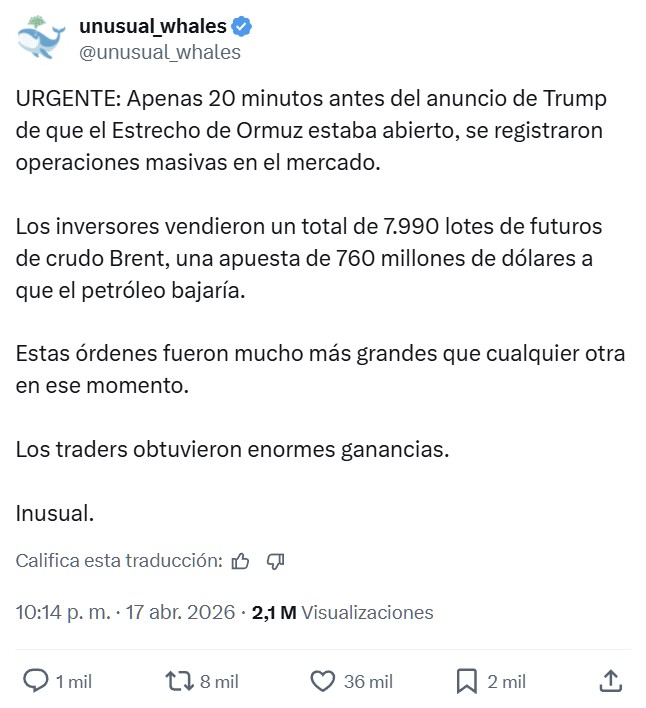







 Google censura el 'calvo' de un vitoriano al coche de Street View. 18- agosto- 2021