
Rafa Spoladore Ψ
Shared posts

29 Jan 18:39
 A União Europeia decidiu aplicar a bagatela de 1 bilhão de euros (arredondando para cima, 3 bilhões de reais) no Projeto Cérebro Humano, uma iniciativa de pesquisa com vários objetivos interligados. Entre eles, o de entender o funcionamento do cérebro bem o suficiente para que possamos derivar novos tipos de tecnologia daí -- "computação neuromórfica" é o nome -- e, no front da medicina, há a meta de integrar tudo o que sabemos sobre neurologia e doenças do sistema nervoso.
Tudo isso é muito importante e muito legal, mas uma das metas tem uma importância filosófica que não deve ser subestimada: a plataforma de simulação do cérebro. Citando a brochura informativa do projeto:
"A plataforma deve tornar possível criar e simular modelos do cérebro em diferentes níveis de detalhe, adequados a diferentes questões científicas (...) Ferramentas disponibilizadas pela plataforma gerarão os dados necessários para pesquisa em medicina (modelos de doenças e efeitos de drogas), computação neuromórfica (modelos do cérebro para implementação em hardware neuromórfico) e neurorrobótica (modelos de circuitos neurais para tarefas cognitivas e comportamentais específicas)."
E, mais adiante:
"Uma das questões mais complexas diante da ciência e do pensamento moderno é a da consciência. Quais os mecanismos neurais e princípios de arquitetura que permitem que seres humanos e outros animais transcendam o processamento básico e inconsciente que ocorre nos reflexos e nos animais inferiores, experimentando o mundo conscientemente? (...) As plataformas oferecerão uma oportunidade para testar modelos que já existem, criar novos e realizar experimentos 'in silico' ".
Resumindo, o projeto tem a ambição de ser capaz de simular os processos da consciência. O texto de apresentação é cauteloso, ao mencionar "correlatos neurais da consciência" e "mecanismos biológicos da consciência", expressões que estabelecem uma certa distância linguística entre o que acontece no cérebro e o fenômeno da consciência em si.
Sempre que leio algo assim, no entanto, lembro-me do ensaio clássico em que Alan Turing propôs seu famoso teste para detectar inteligência em máquinas.
A rationale por trás do Teste de Turing é tão simples quanto estarrecedora: se uma máquina é capaz de simular a consciência humana à perfeição, que critério teremos para dizer que aquilo é uma simulação e não a coisa real? O que distingue a simulação perfeita de uma qualidade da qualidade simulada? Ora, se a simulação é realmente perfeita, se o adjetivo não está ali só como força de expressão, a resposta é -- nada.
Para muita gente, no entanto, a questão da consciência é mais complicada que isso: afinal, há o (aparente) problema da experiência subjetiva.
Décadas de brincadeiras e de pesquisas sérias em torno do Teste de Turing mostraram que um computador pode ser treinado/programado para se comportar como uma pessoa -- ao menos, dentro de alguns escopos limitados, como na clássica "terapeuta" ELIZA -- mas, se seu chat bot lhe diz que está triste, ele está apenas reagindo de forma pré-programada a uma série de estímulos (como um programa jogador de xadrez selecionando um novo movimento) e não sentindo tristeza. Certo? Certo. Mas, pergunta: e quem diz que sentir tristeza não é "apenas" uma reação pré-programada a uma série de estímulos?
A suposta distinção entre atividade neurológica e conteúdo subjetivo muitas vezes é apresentada em termos mais ou menos assim: "O que eu sinto é amor, e isso não se parece nada com a sensação de elétrons saltando entre células". Mas para mim, ao menos, a objeção faz tanto sentido quanto dizer que "o que estou vendo é uma chama, e isso não se parece nada com fótons liberados pela excitação térmica de um gás". Ou, "o que estou ouvindo soa como uma sinfonia, e não se parece nada com ondas de pressão e rarefação de ar atingindo meus tímpanos".
Então, fico cá comigo imaginando se o Projeto Cérebro Humano um dia virá a produzir os "correlatos neurais" da tristeza, amor ou deleite estético in silico, e como poderemos saber se esses correlatos não são idênticos ao artigo legítimo -- e, em caso afirmativo, quais seriam nossas obrigações éticas, se alguma houver, para com o chip que fizermos "amar".


Cérebro virtual, numa garrafa idem
by Carlos Orsi
 A União Europeia decidiu aplicar a bagatela de 1 bilhão de euros (arredondando para cima, 3 bilhões de reais) no Projeto Cérebro Humano, uma iniciativa de pesquisa com vários objetivos interligados. Entre eles, o de entender o funcionamento do cérebro bem o suficiente para que possamos derivar novos tipos de tecnologia daí -- "computação neuromórfica" é o nome -- e, no front da medicina, há a meta de integrar tudo o que sabemos sobre neurologia e doenças do sistema nervoso.
Tudo isso é muito importante e muito legal, mas uma das metas tem uma importância filosófica que não deve ser subestimada: a plataforma de simulação do cérebro. Citando a brochura informativa do projeto:
"A plataforma deve tornar possível criar e simular modelos do cérebro em diferentes níveis de detalhe, adequados a diferentes questões científicas (...) Ferramentas disponibilizadas pela plataforma gerarão os dados necessários para pesquisa em medicina (modelos de doenças e efeitos de drogas), computação neuromórfica (modelos do cérebro para implementação em hardware neuromórfico) e neurorrobótica (modelos de circuitos neurais para tarefas cognitivas e comportamentais específicas)."
E, mais adiante:
"Uma das questões mais complexas diante da ciência e do pensamento moderno é a da consciência. Quais os mecanismos neurais e princípios de arquitetura que permitem que seres humanos e outros animais transcendam o processamento básico e inconsciente que ocorre nos reflexos e nos animais inferiores, experimentando o mundo conscientemente? (...) As plataformas oferecerão uma oportunidade para testar modelos que já existem, criar novos e realizar experimentos 'in silico' ".
Resumindo, o projeto tem a ambição de ser capaz de simular os processos da consciência. O texto de apresentação é cauteloso, ao mencionar "correlatos neurais da consciência" e "mecanismos biológicos da consciência", expressões que estabelecem uma certa distância linguística entre o que acontece no cérebro e o fenômeno da consciência em si.
Sempre que leio algo assim, no entanto, lembro-me do ensaio clássico em que Alan Turing propôs seu famoso teste para detectar inteligência em máquinas.
A rationale por trás do Teste de Turing é tão simples quanto estarrecedora: se uma máquina é capaz de simular a consciência humana à perfeição, que critério teremos para dizer que aquilo é uma simulação e não a coisa real? O que distingue a simulação perfeita de uma qualidade da qualidade simulada? Ora, se a simulação é realmente perfeita, se o adjetivo não está ali só como força de expressão, a resposta é -- nada.
Para muita gente, no entanto, a questão da consciência é mais complicada que isso: afinal, há o (aparente) problema da experiência subjetiva.
Décadas de brincadeiras e de pesquisas sérias em torno do Teste de Turing mostraram que um computador pode ser treinado/programado para se comportar como uma pessoa -- ao menos, dentro de alguns escopos limitados, como na clássica "terapeuta" ELIZA -- mas, se seu chat bot lhe diz que está triste, ele está apenas reagindo de forma pré-programada a uma série de estímulos (como um programa jogador de xadrez selecionando um novo movimento) e não sentindo tristeza. Certo? Certo. Mas, pergunta: e quem diz que sentir tristeza não é "apenas" uma reação pré-programada a uma série de estímulos?
A suposta distinção entre atividade neurológica e conteúdo subjetivo muitas vezes é apresentada em termos mais ou menos assim: "O que eu sinto é amor, e isso não se parece nada com a sensação de elétrons saltando entre células". Mas para mim, ao menos, a objeção faz tanto sentido quanto dizer que "o que estou vendo é uma chama, e isso não se parece nada com fótons liberados pela excitação térmica de um gás". Ou, "o que estou ouvindo soa como uma sinfonia, e não se parece nada com ondas de pressão e rarefação de ar atingindo meus tímpanos".
Então, fico cá comigo imaginando se o Projeto Cérebro Humano um dia virá a produzir os "correlatos neurais" da tristeza, amor ou deleite estético in silico, e como poderemos saber se esses correlatos não são idênticos ao artigo legítimo -- e, em caso afirmativo, quais seriam nossas obrigações éticas, se alguma houver, para com o chip que fizermos "amar".

Rafa Spoladore likes this
29 Jan 18:04


Owning vs. renting
by Seth Godin
You don't own attention or trust or shelf space. You don't even own tomorrow's plans.
It's all for rent, with a cancellation clause that can kick in at any time.
The moment you start treating the rental like a right, it disappears.
Osiasjota, Dark.saian and one other like this
28 Jan 10:52

Eleven things organizations can learn from airports
by Seth Godin
[Of course, this post isn’t actually about airports].
I realized that I don’t dislike flying--I dislike airports. There are so many things we can learn from what they do wrong:
- No one is in charge. The airport doesn’t appear to have a CEO, and if it does, you never see her, hear about her or interact with her in any way. When the person at the top doesn’t care, it filters down.
- Problems persist because organizations defend their turf instead of embrace the problem. The TSA blames the facilities people, who blame someone else, and around and around. Only when the user’s problem is the driver of behavior (as opposed to maintaining power or the status quo) things change.
- The food is aimed squarely at the (disappearing) middle of the market. People who like steamed meat and bags of chips never have a problem finding something to eat at an airport. Apparently, profit-maximizing vendors haven’t realized that we’re all a lot weirder than we used to be.
- Like colleges, airports see customers as powerless transients. Hey, you’re going to be gone tomorrow, but they’ll still be here.
- By removing slack, airlines create failure. In order to increase profit, airlines work hard to get the maximum number of flights out of each plane, each day. As a result, there are no spares, no downtime and no resilience. By assuming that their customer base prefers to save money, not anxiety, they create an anxiety-filled system.
- The TSA is ruled by superstition, not fact. They act without data and put on a quite serious but ultimately useless bit of theater. Ten years later, the theater is now becoming an entrenched status quo, one that gets ever worse.
- The ad hoc is forbidden. Imagine an airplane employee bringing in an extension cord and a power strip to deal with the daily occurrence of travelers hunched in the corner around a single outlet. Impossible. There is a bias toward permanent and improved, not quick and effective.
- Everyone is treated the same. Effective organizations treat different people differently. While there’s some window dressing at the edges (I’m thinking of slightly faster first class lines and slightly more convenient motorized cars for seniors), in general, airports insist that the one size they’ve chosen to offer fit all.
- There are plenty of potential bad surprises, but no good ones. You can have a flight be cancelled, be strip searched or even go to the wrong airport. But all possibility for delight has been removed. It wouldn’t take much to completely transform the experience from a chore to a delight.
- They are sterile. Everyone who passes through leaves no trace, every morning starts anew. There are no connections between people, either fellow passengers or the staff. No one says, “welcome back,” and that’s honest, because no one feels particularly welcome.
- No one is having any fun. Most people who work at airports have precisely the same demeanor as people who work at a cemetery. The system has become so industrialized that personal expression is apparently forbidden.
As we see at many organizations that end up like this, the airport mistakes its market domination for a you-have-no-choice monopoly (we do have a choice, we stay home). And in pursuit of reliable, predictable outcomes, these organizations dehumanize everything, pretending it will increase profits, when it actually does exactly the opposite.
Rafa Spoladore likes this
23 Jan 20:40
The Anatomy of a Scientific Gossip
by woit
The University of Birmingham has put out a press release today about new research by their computer scientists, on the topic of the spread of gossip about the Higgs via Twitter. This is all based on an arXiv paper, The Anatomy of a Scientific Gossip, and has been picked up by New Scientist, Phys.org, and Aidan Randle-Conde.
Since I’ve been designated as one of the Best Physics Gossips on this topic:
If the Higgs boson was a dead celebrity, Woit would be your TMZ — first to the scene, first to break it, and have it be right.
I think I should perhaps comment on what this research actually shows. From what I can tell, it just provides evidence that Twitter is a worthless swamp full of people who have no idea what they are doing “re-tweeting” stale information to each other. Getting their information from tweets, according to these researchers things began with
Period I: Before the announcement on 2nd July, there were some rumors about the discovery of a Higgs-like boson at Tevatron;
and went on from there. They start looking at the data only from July 1 on.
Looking back at what actually happened, I started posting about the coming LHC results on June 17 (the Tevatron results were a side-show). On June 18th, Matt Strassler had the story, accusing me of ruining the CMS and ATLAS blind analyses, for top-secret reasons that could not be revealed. June 19th saw a New York Times story about this with a link to my blog entry and by June 20th Sean Carroll and Jennifer Ouellette were writing about #HiggsRumors being a “Trending Topic” on Twitter.
I suppose it’s true that a couple weeks later there were about a million tweets about this, but why would you conceivably want to look at any of them? While I was writing this blog posting, an incoming e-mail from Twitter popped up on my screen.
We’ve missed you on Twitter!
So much is happening right now on Twitter, and building a great timeline is the way to really enjoy the service. Get to Twitter and start building a timeline that reflects you and your interests, you’ll see how quickly Twitter becomes an invaluable part of your life.
I don’t think so…
Update: At his blog, Matt explains that he wasn’t accusing me of anything. It was CMS and ATLAS physicists who, by telling me me about the results after unblinding, were guilty of ruining the blinded analyses for still top-secret reasons.
Rafa Spoladore likes this
23 Jan 20:40

25 aeronaves bizarras que parecem não voar (mas voam!)
by Attila Nagy
Engenheiros aeronáuticos, às vezes, aparecem com alguns designs revolucionários avançados inspirados incríveis malucos. Algumas vezes, estes sonhos nunca saem das pranchetas de desenho, mas em outras — e é maravilhoso quando isso acontece — eles se tornam reais. E quando estas máquinas, que parecem ter saído de algum filme de ficção científica, decolam, é como ver uma nave transportando a humanidade para o futuro. Dê uma olhada nesses aviões incrivelmente doidos:
Stipa-Carponi, uma aeronave experimental italiana com fuselagem em forma de barril (1932)

Foto: Wikimedia Commons
Vought V-173, a “Panqueca Voadora”, um avião experimental de combate para a Marinha dos Estados Unidos (1942)

Foto: San Diego Air & Space Museum/Scribd
Blohm & Voss BV 141, um avião alemão usado na Segunda Guerra Mundial para reconhecimento tático, notável por sua assimetria estrutural incomum

Foto: wwiiaircraftphotos.com
Douglas XB-42 Mixmaster, um bombardeiro experimental, projetado para ter uma velocidade máxima muito alta (1944)

Foto: Força Aérea dos Estados Unidos
Libellula, um avião bimotor experimental britânico de asas duplas que dá ao piloto uma excelente visão para aterrissar em porta-aviões (1945)

Foto: William Vanderson/Fox Photos/Getty Images
North American XF-82. Junte dois P-51 Mustang e você terá este caça de escolta de longo alcance (1946)

Foto: Força Aérea dos Estados Unidos
Northrop XB-35, um bombardeiro experimental do tipo asa voadora desenvolvido pelas Forças Aéreas do Exército dos Estados Unidos durante e logo após a Segunda Guerra Mundial

Foto: Força Aérea dos Estados Unidos
McDonnell XF-85 Goblin, um protótipo de jato de combate, pensado para ser atirado do compartimento de bombas do Convair B-36 (1948)

Foto: Força Aérea dos Estados Unidos
Martin XB-51, o caça-bombardeiro “trijato” americano para ataque ar-terra. Note o design nada ortodoxo: um motor na cauda e dois debaixo da parte da frente da fuselagem (1949)

Foto: Força Aérea dos Estados Unidos
Douglas X-3 Stiletto, construído para pesquisar que tipo de design era necessário para uma aeronave suportar velocidades supersônicas (1953 – 1956)

Foto: NASA/DFRC
Lockheed XFV, “O Salmão”, um protótipo experimental de caça de escolta do tipo tailsitter (1953)

Foto: Força Aérea dos Estados Unidos
De Lackner HZ-1 Aerocycle, uma plataforma voadora desenhada para carregar um soldado em missões de reconhecimento (1954)

Photo: Exército dos Estados Unidos/army.arch
Snecma Flying Coleoptere (C-450), um avião francês experimental com asas em forma de anel e propulsão por turbo-reator, capaz de decolar e pousar verticalmente (1958)

Foto: Keystone/Getty Images
Avro Canada VZ-9 Avrocar, uma aeronave em forma de disco do tipo VTOL (sigla para “vertical take-off and landing”, decolagem e pouso vertical), desenvolvida como parte do projeto militar secreto dos EUA (1959)

Foto: William “Bill” Zuk/Wikimedia Commons
HL-10, uma das cinco aeronaves construídas no Lifting Body Research Program, da NASA (1966 – 1970)

Foto: NASA/DFRC
Dornier Do 31, uma aeronave experimental do tipo VTOL feita pela Alemanha Ocidental para transporte e suporte tático (1967)

Photo: amphalon
O Aerodyne, de Alexander Lippisch, uma aeronave experimental sem asas. A propulsão era gerada por duas hélices coaxiais

Foto: Revista Flying de abril de 1960
Hyper III, um veículo com corpo sustentante pilotado por controle remoto, construído no Centro de Pesquisas de Voo da NASA, em 1969

Foto: NASA/DFRC
Bartini Beriev VVA-14, uma aeronave anfíbia soviética de decolagem vertical (1970s)

Foto: Alex Beltyukov/Wikimedia Commons
Ames-Dryden (AD)-1 Oblique Wing, uma aeronave construída para fins de pesquisa do conceito de asa-pivô (1979 – 1982)

Foto: NASA/DFRC
B377PG - Super Guppy Turbine, um avião cargueiro de tamanho especial feito pela NASA, que voou pela primeira vez em 1980

Foto: NASA/DFRC
X-29, um jato de asas viradas para frente, construído pelo Centro de Pesquisas de Voo de Dryden, da NASA, como demonstração de tecnologia (1984 – 1992)

Foto: NASA/DFRC
X-36 Tailless Fighter Agility Research Aircraft, um protótipo de jato em escala reduzida construído por McDonnel Douglas e pela NASA (1996 – 1997)

Foto: NASA/DFRC
Beriev Be-200 Seaplane, uma aeronave anfíbia russa para uso geral (1998)

Foto: amphalon
Proteus, uma avião bimotor de asas duplas construído pela Scaled Composites para fins de pesquisa em 1998

Photo: NASA/DFRC
Qual sua aeronave esqusitona favorita? Poste nos comentários!
Rafa Spoladore and -1 others like this
23 Jan 17:38
De passaportes e de leis
by Carlos Orsi
"Todos os homens serão livres para professar e, por meio de argumentos, defender suas opiniões em questões de religião, e essas opiniões de modo algum irão diminuir, aumentar ou afetar suas capacidades civis".
A frase acima não é de nenhum neoateu radical, mas faz parte do Ato de Estabelecimento da Liberdade Religiosa da Virginia (EUA), proposto por Thomas Jefferson em 1779, mas aprovado apenas em 1786. A redação avança, em alguns pontos importantes, para além de outra peça histórica de legislação sobre liberdade religiosa, o Édito de Torda, assinado pelo rei João Sigismundo da Transilvânia em 1568:
"Nenhum dos superintendentes ou outros abusarão dos pregadores, nem ninguém será desprezado por sua religião por ninguém, de acordo com os estatutos, e não se permite que ninguém ameace quem quer que seja, com a prisão ou perda de cargo, por causa de seus ensinamentos".
O Édito de Torda veda a perseguição religiosa, e o faz de forma limitada: a íntegra do decreto deixa claro que a liberdade garantida ali é limitada aos pregadores do cristianismo; já o texto de Jefferson fala de "opiniões religiosas", o que inclui do paganismo ao ateísmo e à adoração de deuses astronautas ou de LOL Cats, e veda também o privilégio religioso: ele proíbe não só que o Estado prejudique uma pessoa por conta de sua fé (ou ausência de), mas também que a privilegie: "Essas opiniões de modo algum irão diminuir, aumentar ou afetar suas capacidades civis".
O que a concessão desbragada de passaportes diplomáticos pelo Itamaraty a líderes religiosos, sejam prelados católicos ou empresários do televangelismo, mostra, portanto, é que em termos de evolução da liberdade religiosa nós, brasileiros, estamos perdidos em algum ponto do caminho entre os séculos XVI e XVIII.
Não que o caminho seja fácil: a lei de Jefferson levou quase dez anos para ser aprovada, e antes que ela passasse outro grande líder histórico da luta pela separação entre Estado e religião, James Madison, teve de se bater contra uma peça legislativa que buscava criar, na Virgina, um imposto para garantir o sustento dos disseminadores da religião cristã (levando-se em conta que o passaporte diplomático sai do dinheiro dos contribuintes... Bom, deixa pra lá).
Na luta contra a lei do imposto cristão, Madison redigiu seu épico Memorial e Advertência contra Taxações Religiosas, texto que, temo, em breve terá de ser traduzido, adaptado para a realidade local e lido em voz alta nas casas legislativas do Brasil, supondo-se que seja possível encontrar algum político com tutano para fazê-lo. Escrito do ponto de vista de um cristão e dirigido a outros cristãos, ele constrói um caso meticuloso contra a subvenção pública da atividade religiosa.
"Um governo justo (...) será melhor sustentado ao proteger cada Cidadão no desfrute de sua religião com a mesma mão igualitária com que protege sua pessoa ou sua propriedade; ao nem violar os direitos iguais de uma seita, e nem permitir que uma seita viole os de outra".
Numa passagem mais inflamada, Madison compara a subvenção pública da religião a uma forma de perseguição: "[O imposto] degrada, da igualdade entre os cidadãos, todos aqueles cujas opiniões a respeito de religião não se dobram às da autoridade legislativa. Distante como possa ser, em sua forma atual, da Inquisição, difere dela apenas em grau."
Alguém poderia se sentir tentado a reduzir a questão a um simples problema de democratização do privilégio. Essa é uma solução bem brasileira -- nas palavras de Millôr Fernandes, "ou se instaura a moralidade, ou nos locupletemos todos".
Em resumo: se rolar um passaportezinho de primeira classe para todos os pastores, todos os bispos, pais-de-santo e monges budistas, para as lideranças GLBT, para os presidentes das LiHS e da ATEA e (por que não?) para este blogueiro e sua senhora, não ficaríamos todos numa boa?
Não, não ficaríamos. A função do passaporte diplomático é facilitar o trânsito internacional de pessoas que representam oficialmente o país, não comprar a boa vontade dos líderes de grupos de pressão organizados. Devia ser óbvio. Pena que, pelo jeito, não é.
A frase acima não é de nenhum neoateu radical, mas faz parte do Ato de Estabelecimento da Liberdade Religiosa da Virginia (EUA), proposto por Thomas Jefferson em 1779, mas aprovado apenas em 1786. A redação avança, em alguns pontos importantes, para além de outra peça histórica de legislação sobre liberdade religiosa, o Édito de Torda, assinado pelo rei João Sigismundo da Transilvânia em 1568:
"Nenhum dos superintendentes ou outros abusarão dos pregadores, nem ninguém será desprezado por sua religião por ninguém, de acordo com os estatutos, e não se permite que ninguém ameace quem quer que seja, com a prisão ou perda de cargo, por causa de seus ensinamentos".
O Édito de Torda veda a perseguição religiosa, e o faz de forma limitada: a íntegra do decreto deixa claro que a liberdade garantida ali é limitada aos pregadores do cristianismo; já o texto de Jefferson fala de "opiniões religiosas", o que inclui do paganismo ao ateísmo e à adoração de deuses astronautas ou de LOL Cats, e veda também o privilégio religioso: ele proíbe não só que o Estado prejudique uma pessoa por conta de sua fé (ou ausência de), mas também que a privilegie: "Essas opiniões de modo algum irão diminuir, aumentar ou afetar suas capacidades civis".
O que a concessão desbragada de passaportes diplomáticos pelo Itamaraty a líderes religiosos, sejam prelados católicos ou empresários do televangelismo, mostra, portanto, é que em termos de evolução da liberdade religiosa nós, brasileiros, estamos perdidos em algum ponto do caminho entre os séculos XVI e XVIII.
Não que o caminho seja fácil: a lei de Jefferson levou quase dez anos para ser aprovada, e antes que ela passasse outro grande líder histórico da luta pela separação entre Estado e religião, James Madison, teve de se bater contra uma peça legislativa que buscava criar, na Virgina, um imposto para garantir o sustento dos disseminadores da religião cristã (levando-se em conta que o passaporte diplomático sai do dinheiro dos contribuintes... Bom, deixa pra lá).
Na luta contra a lei do imposto cristão, Madison redigiu seu épico Memorial e Advertência contra Taxações Religiosas, texto que, temo, em breve terá de ser traduzido, adaptado para a realidade local e lido em voz alta nas casas legislativas do Brasil, supondo-se que seja possível encontrar algum político com tutano para fazê-lo. Escrito do ponto de vista de um cristão e dirigido a outros cristãos, ele constrói um caso meticuloso contra a subvenção pública da atividade religiosa.
"Um governo justo (...) será melhor sustentado ao proteger cada Cidadão no desfrute de sua religião com a mesma mão igualitária com que protege sua pessoa ou sua propriedade; ao nem violar os direitos iguais de uma seita, e nem permitir que uma seita viole os de outra".
Numa passagem mais inflamada, Madison compara a subvenção pública da religião a uma forma de perseguição: "[O imposto] degrada, da igualdade entre os cidadãos, todos aqueles cujas opiniões a respeito de religião não se dobram às da autoridade legislativa. Distante como possa ser, em sua forma atual, da Inquisição, difere dela apenas em grau."
Alguém poderia se sentir tentado a reduzir a questão a um simples problema de democratização do privilégio. Essa é uma solução bem brasileira -- nas palavras de Millôr Fernandes, "ou se instaura a moralidade, ou nos locupletemos todos".
Em resumo: se rolar um passaportezinho de primeira classe para todos os pastores, todos os bispos, pais-de-santo e monges budistas, para as lideranças GLBT, para os presidentes das LiHS e da ATEA e (por que não?) para este blogueiro e sua senhora, não ficaríamos todos numa boa?
Não, não ficaríamos. A função do passaporte diplomático é facilitar o trânsito internacional de pessoas que representam oficialmente o país, não comprar a boa vontade dos líderes de grupos de pressão organizados. Devia ser óbvio. Pena que, pelo jeito, não é.
Rafa Spoladore and -1 others like this
23 Jan 15:55

A legend in my own mind
by Seth Godin
Everyone lives with self mythology.
The more important a memory is to the story we tell ourselves about ourselves, the more often we rehearse the memory. And the more often we relive those memories, the less likely it is that they are true.
Despite our shared conception that we are rational actors making intelligent decisions based on an accurate view of the world and ourselves, precisely the opposite is true. Your customers, your workers, you and I, we are all figments of our imaginations.
Understanding the mythology of your partner, your customer and your audience is far more important than watching the instant replay of what actually happened.
Rafa Spoladore and -1 others like this
23 Jan 10:20
The Taxman Looks to Speed Up Payments
A disruptive electronic payment service wants to eliminate cash. Now Iowa’s government could give it a boost.
It’s one thing to pay for a coffee using a startup’s payment app. It’s a bigger deal to pay your taxes that way.
Rafa Spoladore likes this
22 Jan 12:07
What Makes a Mind? Kurzweil and Google May be Surprised
One AI researcher suggests that an ambitious plan to build a more intelligent machine may be flawed.
After writing about Ray Kurzweil’s ambitious plan to create a super-intelligent personal assistant in his new job at Google (see “Ray Kurzweil Plans to Create a Mind at Google—and Have it Serve You”), I sent a note to Boris Katz, a researcher in MIT’s Computer Scientist and Artificial Intelligence Lab who’s spent decades trying to give machines the ability to parse the information conveyed through language, to ask him what he makes of the endeavor.
Rafa Spoladore likes this

22 Jan 02:11
Colliding different particle species: The LHC's proton-lead run
The new year brings a new type of collision at the LHC: the accelerator will smash protons and lead nuclei together, allowing CMS and the other LHC experiments to study the cold nuclear matter we expect these collisions to produce. Although we caught a glimpse of these asymmetric proton-lead (pPb) collisions during a pilot run last September, the next four weeks will bring the first sustained pPb run and provide valuable data. Indeed the small data sample from 2012 already revealed interesting phenomena, and raised interest in this study.
Rafa Spoladore likes this
22 Jan 02:09
Hearing loss accelerates brain function decline in older adults
Older adults with hearing loss are more likely to develop problems thinking and remembering than older adults whose hearing is normal, according to a new study.
Rafa Spoladore likes this
21 Jan 02:29
Exercício físico ajuda a evitar o agravamento da insuficiência cardíaca
Estudo realizado na USP e divulgado na PLoS One mostrou que o treinamento físico aeróbico regulou o funcionamento das células cardíacas e melhorou em 70% o bombeamento de sangue
Rafa Spoladore likes this
21 Jan 01:54
New twist on using biomass for perfume, cosmetic, personal care products
In a new approach for tapping biomass as a sustainable raw material, scientists are reporting use of a Nobel-Prize-winning technology to transform plant "essential oils" -- substances with the characteristic fragrance of the plant -- into high-value ingredients for sunscreens, perfumes and other personal care products. The report on the approach, which could open up new economic opportunities for tropical countries that grow such plants, appears in the Journal of the American Chemical Society.
Rafa Spoladore likes this
21 Jan 01:51
Schmidt, Daughter Talk About North Korea Trip
by samzenpus
Eric Schmidt attracted headlines when he visited North Korea, but until now he has said little about the trip. Today he broke his silence with a Google+ post. He says in part: "As the world becomes increasingly connected, the North Korean decision to be virtually isolated is very much going to affect their physical world and their economic growth. It will make it harder for them to catch up economically. We made that alternative very, very clear. Once the internet starts in any country, citizens in that country can certainly build on top of it, but the government has to do one thing: open up the Internet first. They have to make it possible for people to use the Internet, which the government of North Korea has not yet done. It is their choice now, and in my view, it’s time for them to start, or they will remain behind." His daughter had some interesting things to say as well, "The best description we could come up with: it's like The Truman Show, at country scale." 


Read more of this story at Slashdot.
Dark.saian, Rafa Spoladore likes this
21 Jan 01:48

Interesting?
by Seth Godin
Is it interesting because it happened...
or because it happened to you?
If George Clooney sits next to you at a restaurant, that's interesting to you, no doubt, but only interesting to your friends because you're so excited. I mean, he had to sit next to someone!
Should we read your press release or come to your gallery opening or take a sales meeting because it's important, or because it's important to you?
Marketing is the art of seeing (and then creating) what might be interesting to more than our friends.
There's a circle of friends in our lives that care a lot about what we care about. The rest of the world? They mostly don't.
[Feel free to insert "important" and "urgent" as well. ]
Rafa Spoladore likes this


19 Jan 16:15
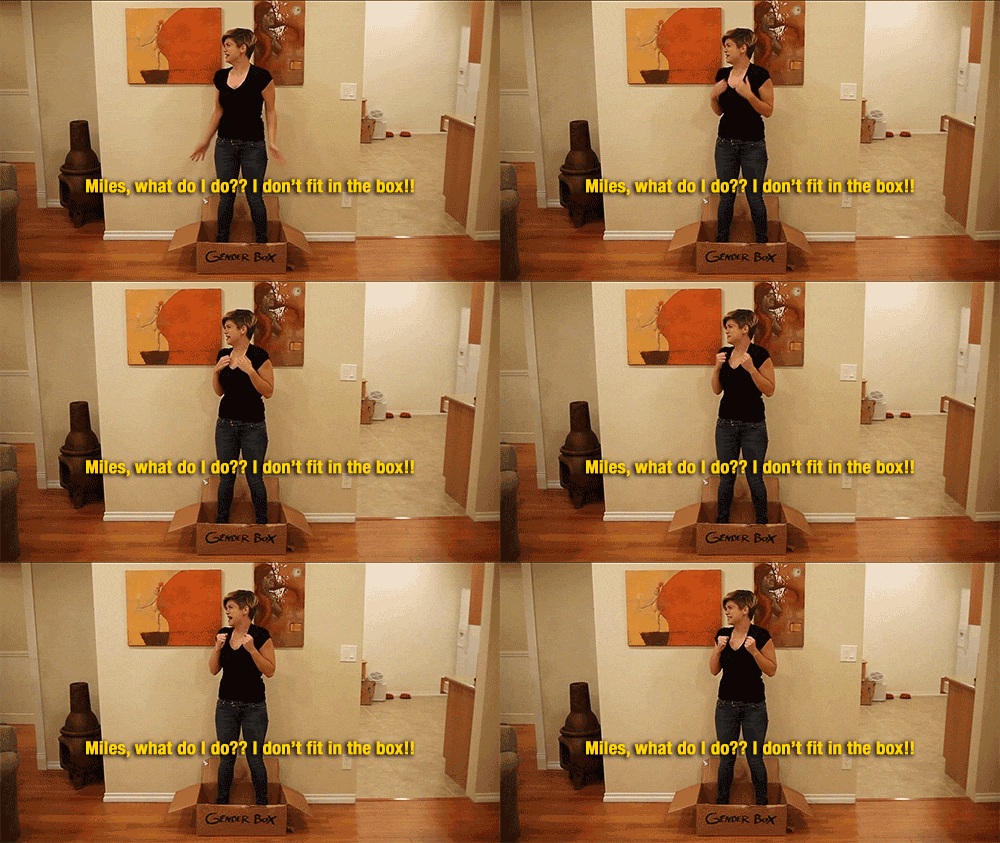
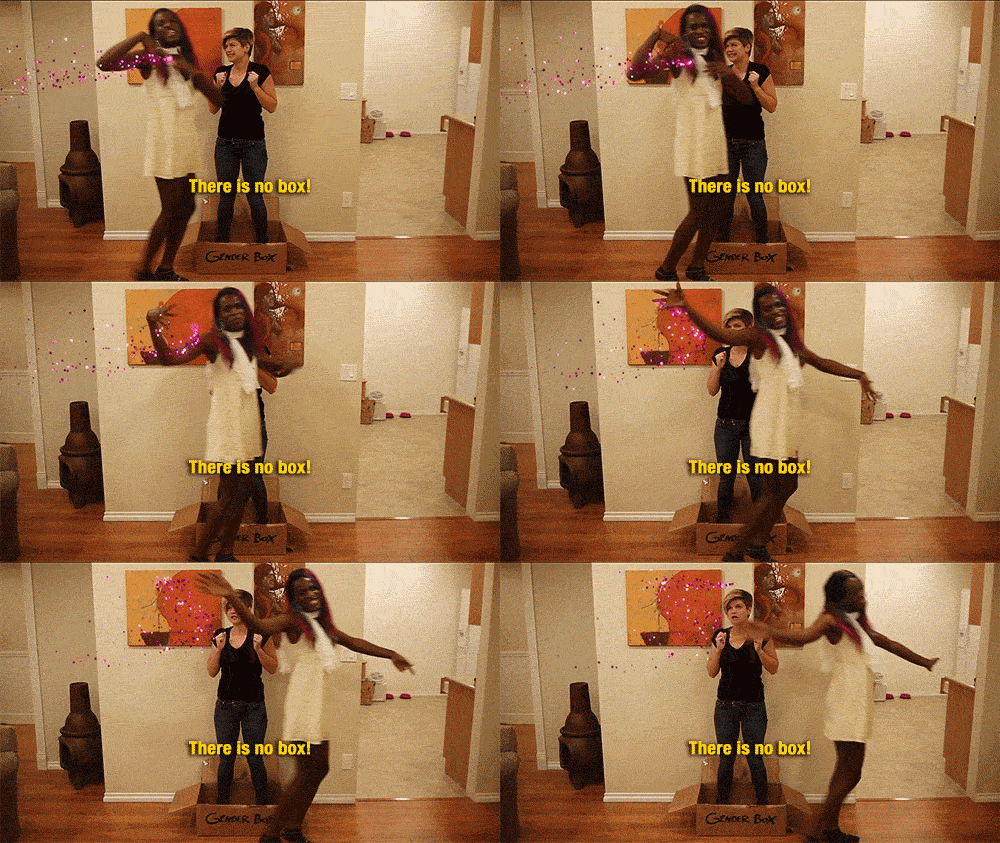
linzerdinzer: THE GENDER BOX!! Check out Miles Jai...
by donaella
THE GENDER BOX!! Check out Miles Jai (http://www.youtube.com/milesjaiproductions - @MilesJai) in THE GENDER BOX on the LinzerDinzerTV Channel! http://www.youtube.com/linzerdinzertv
Rafa Spoladore and -1 others like this
18 Jan 17:05


Can Money Buy Happiness? The Science of Materialism, Animated
by Maria Popova
Experiences vs. things, or why the emotional rewards of pro-social spending outshine those of self-interest.
“Money has never made man happy, nor will it, there is nothing in its nature to produce happiness. The more of it one has the more one wants,” Ben Franklin — who was born 307 ago today — is often (perhaps mis-)quoted as having proclaimed. In asking what you would do if money were no object, Alan Watts echoed Franklin as he advocated for liberating creative purpose from money-work. But what does science say? Count on AsapSCIENCE to illustrate the answer:
Humans are very sensitive to change: When we get a raise or commission, we really enjoy it — but we adapt at incredible speeds to our new wealth. Some studies have shown that in North America additional income beyond $75,000 a year ceases to impact day-to-day happiness.
AsapSCIENCE have previously covered the science of productivity, what alcohol does to your brain, why we blush, the science of lucid dreaming, how music enchants the brain, the neurobiology of orgasms, and why we are all female.
Complement with this delightful vintage illustrated primer on how people earn and use money, an amusing and somewhat unsettling memento from the golden age of consumer culture.
Donating = Loving
In 2012, bringing you (ad-free) Brain Pickings took more than 5,000 hours. If you found any joy and stimulation here this year, please consider becoming a Member and supporting with a recurring monthly donation of your choosing, between a cup of coffee and a fancy dinner:
| ♥ $10 / month♥ $3 / month♥ $25 / month♥ $50 / month♥ $100 / month |

You can also become a one-time patron with a single donation in any amount:
 Brain Pickings has a free weekly newsletter and people say it’s cool. It comes out on Sundays and offers the week’s best articles. Here’s what to expect. Like? Sign up.
Brain Pickings takes 450+ hours a month to curate and edit across the different platforms, and remains banner-free. If it brings you any joy and inspiration, please consider a modest donation – it lets me know I'm doing something right.

Rafa Spoladore likes this
18 Jan 17:04
Brasil deve liderar integração econômica da América Latina
Criação de um espaço comum é condição fundamental para os países da região sobreviverem às mudanças na dinâmica da economia global, avalia Luiz Gonzaga Belluzzo, professor da Facamp e da Unicamp
Rafa Spoladore likes this
18 Jan 17:01
Swedish music sales 'boosted by Spotify'
Music sales in Sweden rose last year thanks to the growing popularity of music streaming service Spotify, the country's music industry body said, offering hope to a sector battered by file-sharing.
Rafa Spoladore likes this
18 Jan 17:01
In Photos: Animals That Get High
All levels of the animal kingdom from flies to top predators indulge in drugs and alcohol. Sometimes humans even push intoxicants on the creatures.
Rafa Spoladore likes this
18 Jan 16:52


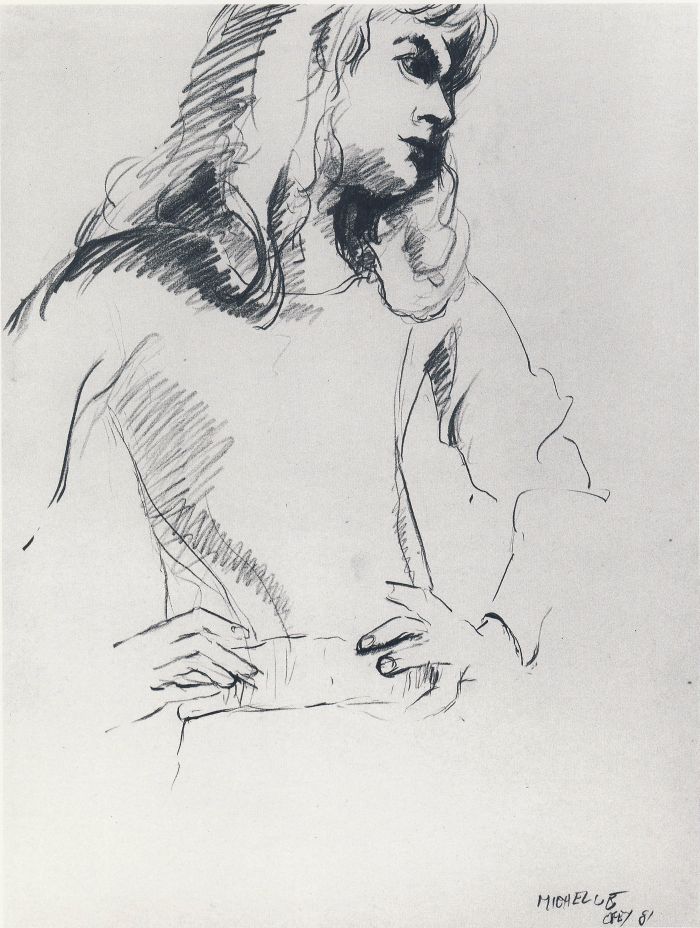
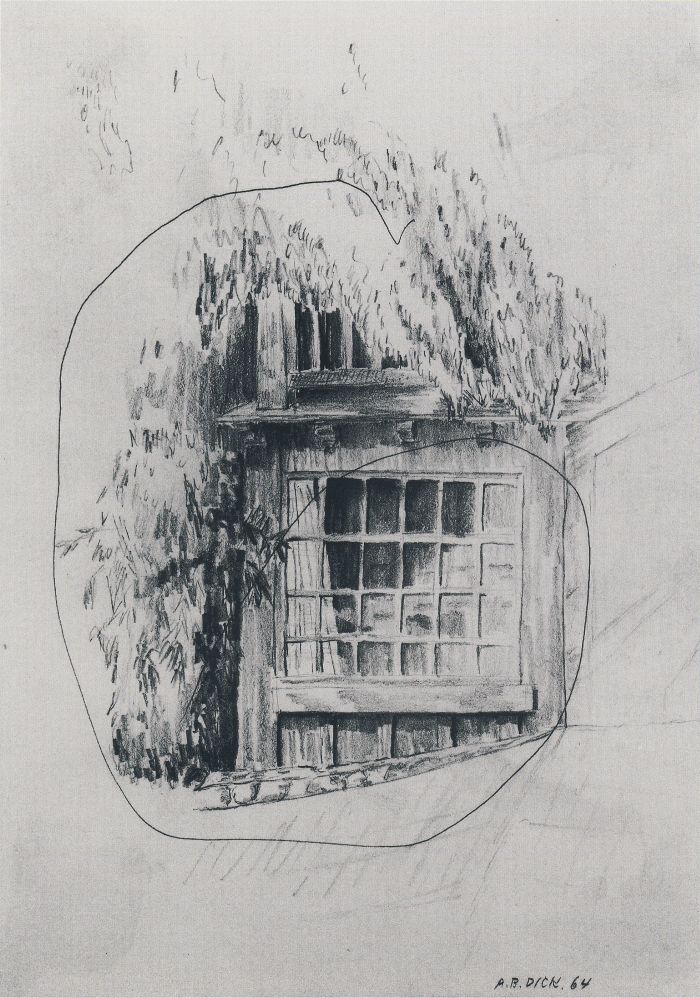







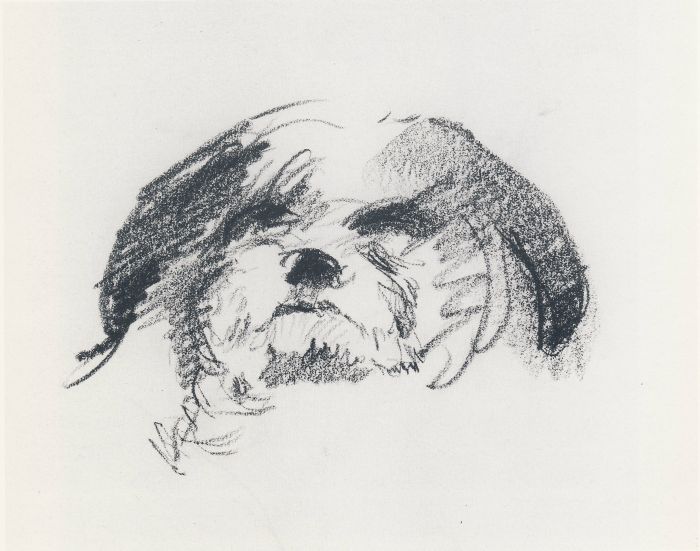


The Art of Ofey: Richard Feynman’s Little-Known Sketches & Drawings
by Maria Popova
“I wanted to convey an emotion I have about the beauty of the world…this feeling about the glories of the universe.”
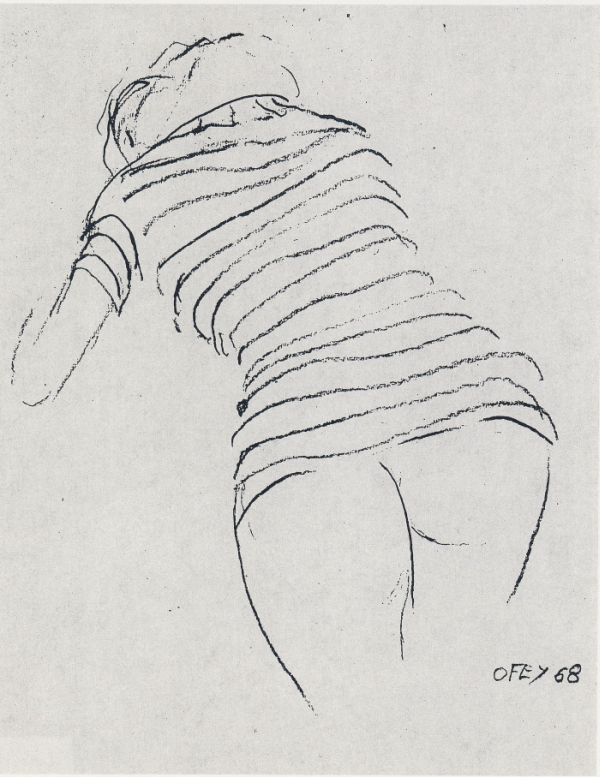
 Just like Sylvia Plath and Queen Victoria, Nobel-winning physicist Richard Feynman — champion of scientific culture, graphic novel hero, crusader for integrity, holder of the key to science, adviser of future generations, bongo player — was a surprisingly gifted semi-secret artist. He started drawing at the age of 44 in 1962, shortly after developing the visual language for his famous Feynman diagrams, after a series of amicable arguments about art vs. science with his artist-friend Jirayr “Jerry” Zorthian — the same friend to whom Feynman’s timeless ode to a flower was in response. Eventually, the two agreed that they’d exchange lessons in art and science on alternate Sundays. Feynman went on to draw — everything from portraits of other prominent physicists and his children to sketches of strippers and very, very many female nudes — until the end of his life.
The Art of Richard P. Feynman: Images by a Curious Character (UK; public library) collects a quarter century of Feynman’s drawings, curated by his daughter Michelle, beginning with his first sketches of the human figure in 1962 and ending in 1987, the year before his death.
Dancer at Gianonni's Bar (1968)
In an introductory essay titled “But Is It Art?,” Feynman recounts his arrangement with Jerry and observes the intersection of art and science:
I wanted very much to learn to draw, for a reason that I kept to myself: I wanted to convey an emotion I have about the beauty of the world. It’s difficult to describe because it’s an emotion. It’s analogous to the feeling one has in religion that has to do with a god that controls everything in the universe: there’s a generality aspect that you feel when you think about how things that appear so different and behave so differently are all run ‘behind the scenes’ by the same organization, the same physical laws. It’s an appreciation of the mathematical beauty of nature, of how she works inside; a realization that the phenomena we see result from the complexity of the inner workings between atoms; a feeling of how dramatic and wonderful it is. It’s a feeling of awe — of scientific awe — which I felt could be communicated through a drawing to someone who had also had that emotion. I could remind him, for a moment, of this feeling about the glories of the universe.
Female Posing (1968)
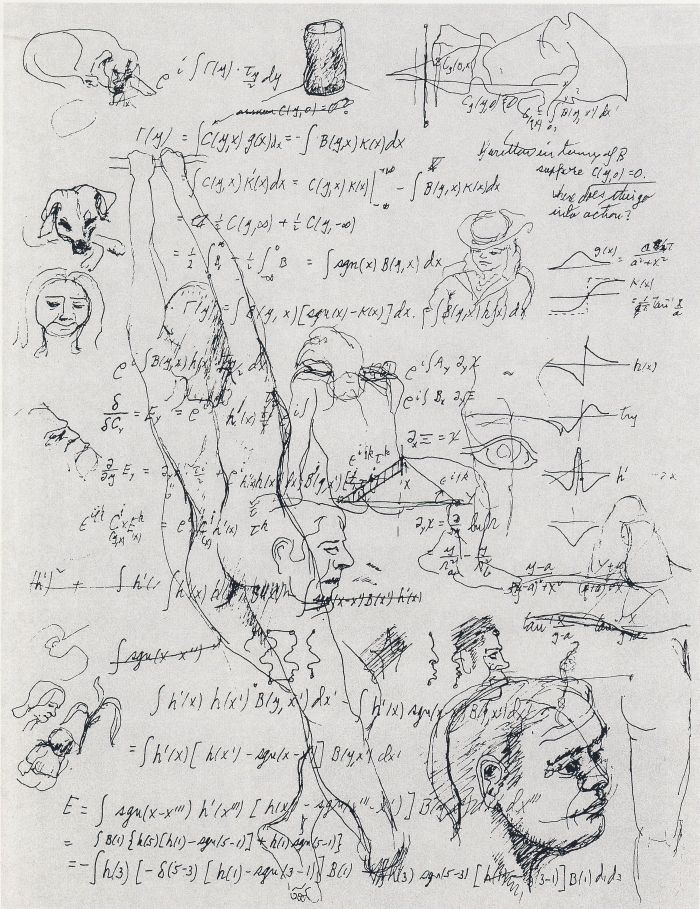
Equations and Sketches (1985)
Martha Bridges (1965)
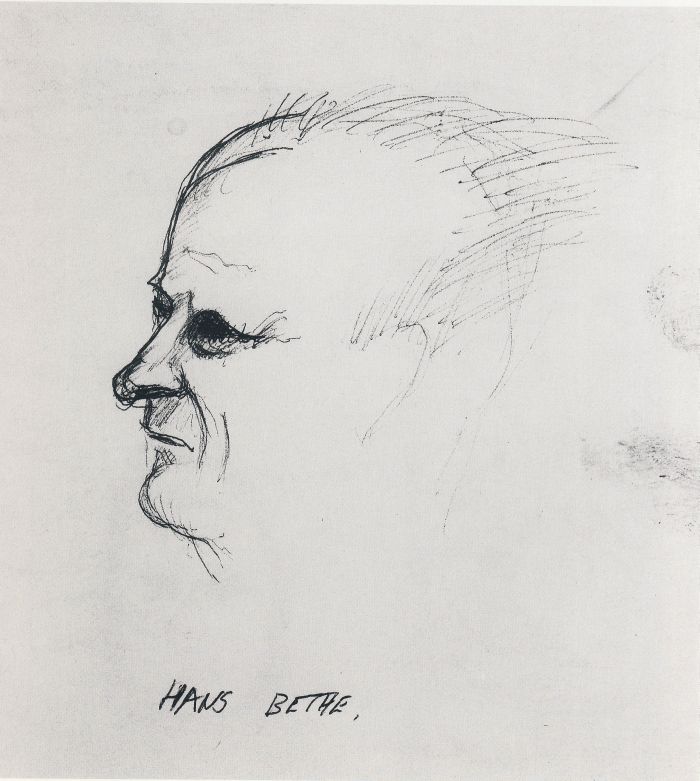
Hans Bethe (date N/A)
Michelle Feynman (1981)
Sketch with Last Line by Carl Feynman, age 2 (1962)
Once Feynman decided to sell the drawings upon a friend’s suggestion, he was cautious of people fetishizing them because of his academic prominence and the sheer curiosity of a distinguished scientist who dabbles in art, so he decided to adopt a pseudonym: Ofey. Feynman explains the origin:
My friend Dudley Wright suggested ‘Au Fait,’ which means ‘It is done’ in French. I spelled it O-f-e-y, which turned out to be a name the blacks used for ‘whitey.’ But after all, I was whitey, so it was all right.
From Behind (1985)
Jirayr Zorthian (date N/A)
Nude from the Rear (1979)
Nude Sleeping (1975)
Portrait of a Stripper (1969)
In the introductory essay, Feynman also considers the differences in teaching art and teaching science, a disconnect Isaac Asimov has famously addressed in his passionate case for creativity in science education. Feynman writes:
I noticed that the teacher didn’t tell people much (the only thing he told me was my picture was too small on the page). Instead, he tried to inspire us to experiment with new approaches. I thought of how we teach physics: We have so many techniques—so many mathematical methods—that we never stop telling the students how to do things. On the other hand, the drawing teacher is afraid to tell you anything. If your lines are very heavy, the teacher can’t say, “Your lines are too heavy.” because some artist has figured out a way of making great pictures using heavy lines. The teacher doesn’t want to push you in some particular direction. So the drawing teacher has this problem of communicating how to draw by osmosis and not by instruction, while the physics teacher has the problem of always teaching techniques, rather than the spirit, of how to go about solving physical problems.
1 Minute Line Drawing (1985)
Portrait of a Woman (1983)
Sheet of Studies (date N/A)
Rufus (1985)
Richard Feynman's First Drawing (1962)
Though The Art of Richard P. Feynman: Images by a Curious Character is sadly long out of print and thus a collector’s item, you can find the essay “But Is It Art” in the fantastic 1985 anthology Surely You’re Joking, Mr. Feynman! (Adventures of a Curious Character).
↬ It’s Okay To Be Smart; images courtesy Museum Syndicate
Donating = Loving
In 2012, bringing you (ad-free) Brain Pickings took more than 5,000 hours. If you found any joy and stimulation here this year, please consider becoming a Member and supporting with a recurring monthly donation of your choosing, between a cup of coffee and a fancy dinner:
| ♥ $10 / month♥ $3 / month♥ $25 / month♥ $50 / month♥ $100 / month |
You can also become a one-time patron with a single donation in any amount:
Brain Pickings has a free weekly newsletter and people say it’s cool. It comes out on Sundays and offers the week’s best articles. Here’s what to expect. Like? Sign up.
Brain Pickings takes 450+ hours a month to curate and edit across the different platforms, and remains banner-free. If it brings you any joy and inspiration, please consider a modest donation – it lets me know I'm doing something right.
Rafa Spoladore likes this
18 Jan 15:16
Growing Moon near the horizon and binocular vision
by Luboš Motl
When you see the Moon near the horizon, it appears larger than when the Moon floats somewhere in the middle of the sky.

If you haven't joined the club of witnesses of this optical illusion, you're a rare exception and you're invited to try to explain the illusion as seen by the humans whose vision is not as objective as yours. ;-)
Needless to say, the actual angular size of the Moon – and the size of the spot on your retina – is the same regardless of our satellite's distance from the horizon (although both fluctuate roughly by 10% due to the eccentricity of the Moon's orbit). The usual explanation is that the optical illusion is a variation of the Ebbinghaus illusion.
The Ebbinghaus illusion is what makes you think that the left orange is smaller than the right orange on the picture below:

Do you agree? Remarkably enough, their sizes are equal (check it by a piece of paper!). The left orange looks smaller because you are automatically comparing it with the surrounding large blue disks so the left orange is smaller relatively to objects around it which is why the brain misinterprets this comparison as the Moon's being smaller in the absolute sense. The opposite comment applies to the right orange – among dwarfs, almost everyone is a giant.
The Physics arXiv Blog discusses a paper by Antonides and Kubota that disagrees with this explanation. Instead, it proposes a similar interpretative explanation that depends on our having two eyes – and probably the stereoscopic vision.
They say that the explanation at the beginning of this article is unlikely to work because the reported effect is usually too large (while it's relatively smaller in the case of the Ebbinghaus picture above). Moreover, the effect disappears on the photographs, they emphasize.
Let me tell you something. I don't believe that stereoscopic vision is in any way necessary for the optical illusion of a "large Moon near the horizon". Clearly, no one can stereoscopically distinguish the distance 380,000 kilometers from infinity. Even the distance 5 kilometers on a typical horizon is indistinguishable from infinity. Both eyes are looking in directions that are totally indistinguishable from two parallel directions in practice. The brain may be "thinking" about the distances it would calculate from the binocular vision but all the actual results for the Moon's distance (and the distant houses' distance) are infinity regardless of Moon's size – which means that the binocular vision plays at most a trivial role.
An explanation I offer to you doesn't depend on binocular vision but it differs from the Ebbinghaus illusion, too. But I don't claim I am the first one who formulated it. It's likely that I have heard it somewhere in the very form mentioned below.
What we actually mean when we say that the Moon looks larger is that the brain determines that the "absolute size of the Moon" – and not the angular size – is larger when the Moon is near the horizon. Now, you may protest that the absolute radius of the Moon is always 1737.5 kilometers, regardless of its orientation relatively to the Earth and your town.
That's fine but our eyes and brains are clearly incapable of estimating that the absolute radius is this number. You may quantitatively calculate (and the eyes and brains may subconsciously estimate) the absolute radius as the angular radius multiplied by the Moon's absolute distance from the Earth. However, the latter just looks infinite!
I think that our brains never think of the distances as being infinite. In fact, they don't even think about the unimaginably long distances such as 380,000 km. Instead, they try to imagine that the distance of the Moon from the Earth is the minimum possible distance that doesn't contradict any observations that the eyes and brains are "forced to see".
When the Moon is in the middle of the sky, above your head, there is nothing to compare the Moon with so your brain instinctively thinks that the Moon is rather close, perhaps 1 kilometer (which already looks like infinity, whether or not you use stereoscopic vision, focusing of your lenses, or any other method). So your brain estimates that the Moon's radius is about 4 meters (you don't say it loudly but your brain thinks that it's a 4-meter white ball flying above the fields, doesn't it?). Note that 4 meters is smaller than the right answer 1,700 kilometers by the same factor by which the actual distance 380,000 km was reduced to 1 km.
However, when you see the Moon next to buildings that are 5 kilometers from you, the brain decides that the Moon can't possibly be closer than the buildings (especially if the Moon is partly behind them), so you subconsciously "expand your idea about the size of the Universe" and decide that the Moon is a ball of radius at least 20 meters (at the distance of 5 kilometers or so from you). A 40-meter ball looks larger than an 8-meter ball and that could explain the effect.
This explanation predicts that the perceived size of the Moon should depend on the absolute distance of the "objects at the horizon" from you, i.e. on the apparent distance to the horizon. Yes, I am also afraid that this prediction will fail but I still have the courage to offer this possibly wrong explanation. ;-)
Would you say that my explanation is inequivalent to the Ebbinghaus one?


If you haven't joined the club of witnesses of this optical illusion, you're a rare exception and you're invited to try to explain the illusion as seen by the humans whose vision is not as objective as yours. ;-)
Needless to say, the actual angular size of the Moon – and the size of the spot on your retina – is the same regardless of our satellite's distance from the horizon (although both fluctuate roughly by 10% due to the eccentricity of the Moon's orbit). The usual explanation is that the optical illusion is a variation of the Ebbinghaus illusion.
The Ebbinghaus illusion is what makes you think that the left orange is smaller than the right orange on the picture below:
Do you agree? Remarkably enough, their sizes are equal (check it by a piece of paper!). The left orange looks smaller because you are automatically comparing it with the surrounding large blue disks so the left orange is smaller relatively to objects around it which is why the brain misinterprets this comparison as the Moon's being smaller in the absolute sense. The opposite comment applies to the right orange – among dwarfs, almost everyone is a giant.
The Physics arXiv Blog discusses a paper by Antonides and Kubota that disagrees with this explanation. Instead, it proposes a similar interpretative explanation that depends on our having two eyes – and probably the stereoscopic vision.
They say that the explanation at the beginning of this article is unlikely to work because the reported effect is usually too large (while it's relatively smaller in the case of the Ebbinghaus picture above). Moreover, the effect disappears on the photographs, they emphasize.
Let me tell you something. I don't believe that stereoscopic vision is in any way necessary for the optical illusion of a "large Moon near the horizon". Clearly, no one can stereoscopically distinguish the distance 380,000 kilometers from infinity. Even the distance 5 kilometers on a typical horizon is indistinguishable from infinity. Both eyes are looking in directions that are totally indistinguishable from two parallel directions in practice. The brain may be "thinking" about the distances it would calculate from the binocular vision but all the actual results for the Moon's distance (and the distant houses' distance) are infinity regardless of Moon's size – which means that the binocular vision plays at most a trivial role.
An explanation I offer to you doesn't depend on binocular vision but it differs from the Ebbinghaus illusion, too. But I don't claim I am the first one who formulated it. It's likely that I have heard it somewhere in the very form mentioned below.
What we actually mean when we say that the Moon looks larger is that the brain determines that the "absolute size of the Moon" – and not the angular size – is larger when the Moon is near the horizon. Now, you may protest that the absolute radius of the Moon is always 1737.5 kilometers, regardless of its orientation relatively to the Earth and your town.
That's fine but our eyes and brains are clearly incapable of estimating that the absolute radius is this number. You may quantitatively calculate (and the eyes and brains may subconsciously estimate) the absolute radius as the angular radius multiplied by the Moon's absolute distance from the Earth. However, the latter just looks infinite!
I think that our brains never think of the distances as being infinite. In fact, they don't even think about the unimaginably long distances such as 380,000 km. Instead, they try to imagine that the distance of the Moon from the Earth is the minimum possible distance that doesn't contradict any observations that the eyes and brains are "forced to see".
When the Moon is in the middle of the sky, above your head, there is nothing to compare the Moon with so your brain instinctively thinks that the Moon is rather close, perhaps 1 kilometer (which already looks like infinity, whether or not you use stereoscopic vision, focusing of your lenses, or any other method). So your brain estimates that the Moon's radius is about 4 meters (you don't say it loudly but your brain thinks that it's a 4-meter white ball flying above the fields, doesn't it?). Note that 4 meters is smaller than the right answer 1,700 kilometers by the same factor by which the actual distance 380,000 km was reduced to 1 km.
However, when you see the Moon next to buildings that are 5 kilometers from you, the brain decides that the Moon can't possibly be closer than the buildings (especially if the Moon is partly behind them), so you subconsciously "expand your idea about the size of the Universe" and decide that the Moon is a ball of radius at least 20 meters (at the distance of 5 kilometers or so from you). A 40-meter ball looks larger than an 8-meter ball and that could explain the effect.
This explanation predicts that the perceived size of the Moon should depend on the absolute distance of the "objects at the horizon" from you, i.e. on the apparent distance to the horizon. Yes, I am also afraid that this prediction will fail but I still have the courage to offer this possibly wrong explanation. ;-)
Would you say that my explanation is inequivalent to the Ebbinghaus one?
Rafa Spoladore likes this
18 Jan 15:15

Two people you might need in your professional life
by Seth Godin
An agonist. While an antagonist blocks an action, the agonist causes it to happen. Even more than a muse, a professional agonist might be exactly what you need to provoke your best work.
And of course, a procrastinatrix. Someone who's only job is to hold you accountable for getting it done, now, not later.
In a world with fewer bosses than ever, when we are our own boss, these two functions are more important than ever. If you can't find a way to do it for yourself, spend the time and the money to find someone to do it for you. Neither job is particularly difficult to do, but it's hard to do to yourself. Two more job titles for the future...
[Thanks to Sunny for the nomenclature.]
Rafa Spoladore likes this
18 Jan 15:13
Multiple steps toward the 'quantum singularity'
In early 2011, a pair of theoretical computer scientists at MIT proposed an optical experiment that would harness the weird laws of quantum mechanics to perform a computation impossible on conventional computers. Commenting at the time, a quantum-computing researcher at Imperial College London said that the experiment "has the potential to take us past what I would like to call the 'quantum singularity,' where we do the first thing quantumly that we can't do on a classical computer."
Rafa Spoladore likes this