Giuseppe Marino, Alexander S. Solntsev, Lei Xu, Valerio F. Gili, Luca Carletti, Alexander N. Poddubny, Mohsen Rahmani, Daria A. Smirnova, Haitao Chen, Aristide Lemaître, Guoquan Zhang, Anatoly V. Zayats, Costantino De Angelis, Giuseppe Leo, Andrey A. Sukhorukov, Dragomir N. Neshev
Optical nanoantennas have shown a great capacity for efficient extraction of photons from the near to the far field, enabling directional ... [Optica 6, 1416-1422 (2019)]
Riccardo Sapienza
Shared posts
30 Oct 19:04
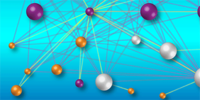
Quantum Network Nodes Based on Diamond Qubits with an Efficient Nanophotonic Interface
by C. T. Nguyen, D. D. Sukachev, M. K. Bhaskar, B. Machielse, D. S. Levonian, E. N. Knall, P. Stroganov, R. Riedinger, H. Park, M. Lončar, and M. D. Lukin
Author(s): C. T. Nguyen, D. D. Sukachev, M. K. Bhaskar, B. Machielse, D. S. Levonian, E. N. Knall, P. Stroganov, R. Riedinger, H. Park, M. Lončar, and M. D. Lukin
A solid-state qubit satisfies three key requirements of a building block for a quantum network.
[Phys. Rev. Lett. 123, 183602] Published Wed Oct 30, 2019
Meichen_Yu likes this
30 Oct 13:48
Experimental observation of the geometric phase in nonlinear frequency conversion
by Aviv Karnieli
Aviv Karnieli, Sivan Trajtenberg-Mills, Giuseppe Di Domenico, Ady Arie
The geometric phase is a common phenomenon in a variety of physical systems, with significant applications in optics. We report the first ... [Optica 6, 1401-1405 (2019)]
The geometric phase is a common phenomenon in a variety of physical systems, with significant applications in optics. We report the first ... [Optica 6, 1401-1405 (2019)]
30 Oct 11:03
[ASAP] Strong Coupling of Nanoplatelets and Surface Plasmons on a Gold Surface
by Ilan Shlesinger†, Hector Monin†, Julien Moreau†, Jean-Paul Hugonin†, Marion Dufour‡, Sandrine Ithurria‡, Benjamin Vest†, and Jean-Jacques Greffet*†

ACS Photonics
DOI: 10.1021/acsphotonics.9b01133
30 Oct 11:01
Extended Range of Dipole-Dipole Interactions in Periodically Structured Photonic Media
by Lei Ying, Ming Zhou, Michael Mattei, Boyuan Liu, Paul Campagnola, Randall H. Goldsmith, and Zongfu Yu
Author(s): Lei Ying, Ming Zhou, Michael Mattei, Boyuan Liu, Paul Campagnola, Randall H. Goldsmith, and Zongfu Yu
The interaction between quantum two-level systems is typically short range in free space and in most photonic environments. We show that diminishing momentum isosurfaces with equal frequencies can create a significantly extended range of interaction between distant quantum systems. The extended rang...
[Phys. Rev. Lett. 123, 173901] Published Wed Oct 23, 2019
30 Oct 11:00
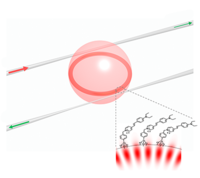
Microcavity Nonlinear Optics with an Organically Functionalized Surface
by Jin-hui Chen, Xiaoqin Shen, Shui-Jing Tang, Qi-Tao Cao, Qihuang Gong, and Yun-Feng Xiao
Author(s): Jin-hui Chen, Xiaoqin Shen, Shui-Jing Tang, Qi-Tao Cao, Qihuang Gong, and Yun-Feng Xiao
The efficiency of a third-order nonlinear process is improved by four orders of magnitude in ultrahigh-Q silica cavity, opening a new regime of nonlinear optics.
[Phys. Rev. Lett. 123, 173902] Published Thu Oct 24, 2019
23 Oct 07:55
Noninvasive light focusing in scattering media using speckle variance optimization
by Antoine Boniface
Antoine Boniface, Baptiste Blochet, Jonathan Dong, Sylvain Gigan
Optical imaging deep inside scattering media remains a fundamental problem in bioimaging. While wavefront shaping has been shown to allow ... [Optica 6, 1381-1385 (2019)]
Optical imaging deep inside scattering media remains a fundamental problem in bioimaging. While wavefront shaping has been shown to allow ... [Optica 6, 1381-1385 (2019)]
22 Oct 16:55
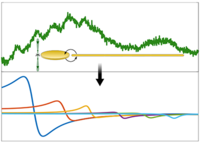
Direct Observation of Infrared Plasmonic Fano Antiresonances by a Nanoscale Electron Probe
by Kevin C. Smith, Agust Olafsson, Xuan Hu, Steven C. Quillin, Juan Carlos Idrobo, Robyn Collette, Philip D. Rack, Jon P. Camden, and David J. Masiello
Author(s): Kevin C. Smith, Agust Olafsson, Xuan Hu, Steven C. Quillin, Juan Carlos Idrobo, Robyn Collette, Philip D. Rack, Jon P. Camden, and David J. Masiello
First direct detection of Fano resonances in small gold disks that are proximity-coupled to long gold rods using a high-resolution transmission electron microscope.
[Phys. Rev. Lett. 123, 177401] Published Mon Oct 21, 2019
16 Oct 20:10
Disorder-Immune Photonics Based on Mie-Resonant Dielectric Metamaterials
by Changxu Liu, Mikhail V. Rybin, Peng Mao, Shuang Zhang, and Yuri Kivshar
Author(s): Changxu Liu, Mikhail V. Rybin, Peng Mao, Shuang Zhang, and Yuri Kivshar
When the feature size of photonic structures becomes comparable or even smaller than the wavelength of light, the fabrication imperfections inevitably introduce disorder that may eliminate many functionalities of subwavelength photonic devices. Here we suggest a novel concept to achieve a robust ban...
[Phys. Rev. Lett. 123, 163901] Published Tue Oct 15, 2019
16 Oct 20:08
Beyond Chu’s Limit with Floquet Impedance Matching
by Huanan Li, Ahmed Mekawy, and Andrea Alù
Author(s): Huanan Li, Ahmed Mekawy, and Andrea Alù
Chu’s limit determines the minimum radiation quality factor Q of an electrically small resonator, and hence its maximum operational bandwidth, which is inversely proportional to its volume. This bound imposes severe restrictions in several areas of technology, from wireless communications to nanopho...
[Phys. Rev. Lett. 123, 164102] Published Wed Oct 16, 2019
15 Oct 18:03

Near-zero-index materials for photonics
by Nathaniel Kinsey
Nature Reviews Materials, Published online: 26 September 2019; doi:10.1038/s41578-019-0133-0
Materials with a near-zero optical refractive index have stimulated much interest, as they can be used to investigate fundamental light–matter interactions. This Review surveys the wide range of near-zero-index homogeneous materials that have been explored and highlights the key experimental advancements they have enabled.
15 Oct 17:37
Determining random lasing action
by Riccardo Sapienza
Nature Reviews Physics, Published online: 15 October 2019; doi:10.1038/s42254-019-0113-8
Random lasing, which exploits disorder to enhance stimulated emission, challenges the conventional descriptions of lasing. This Expert Recommendation describes experimental methods required to properly assess and demonstrate random lasing action.
Riccardo Sapienza likes this
07 Oct 08:45


[ASAP] Ultraviolet Interband Plasmonics With Si Nanostructures
by Zhaogang Dong*†, Tao Wang†‡, Xiao Chi§, Jinfa Ho†, Christos Tserkezis?, Sherry Lee Koon Yap†, Andrivo Rusydi§?, Febiana Tjiptoharsono†, Dickson Thian†, N. Asger Mortensen?#, and Joel K. W. Yang*†?

Nano Letters
DOI: 10.1021/acs.nanolett.9b03243
03 Oct 13:42

Quantum Nonlocal Aberration Cancellation
by A. Nicholas Black, Enno Giese, Boris Braverman, Nicholas Zollo, Stephen M. Barnett, and Robert W. Boyd
Author(s): A. Nicholas Black, Enno Giese, Boris Braverman, Nicholas Zollo, Stephen M. Barnett, and Robert W. Boyd
Optical aberration cancellation is predicted and demonstrated to all orders by means of position-momentum entangled photons.

[Phys. Rev. Lett. 123, 143603] Published Mon Sep 30, 2019
30 Sep 11:50
Google e la direttiva copyright: chi l’avrebbe mai detto?
by .mau.
Immaginate una felice città in cui si trovano varie panetterie e un grande supermercato che tra gli scaffali vende anche il pane di queste panetterie. A un certo punto i panettieri si accorgono che nessuno viene più in negozio da loro, perché è più comodo fare un unico giro al supermercato, e quindi si accordano per stabilire che il supermercato deve pagare loro il pane più di quanto loro lo facciano pagare ai loro clienti. Il direttore del supermercato ascolta le lamentele dei negozianti e risponde “Capisco. Vorrà dire che da domani venderò solo pane confezionato industriale”, al che i panettieri gridano allo scandalo perché il supermercato vuole intimidirli.
Ecco a grandi linee cosa sta succedendo in Francia. Ve la ricordate tutta la storia sulla direttiva europea riguardo al copyright, e per la precisione sull’articolo 15 (ex 11) che introduceva un nuovo diritto d’autore su chi raccoglie e ripubblica gli estratti (“snippets”) delle notizie presentate dai giornali. Di per sé i vari stati membri dell’Unione Europea hanno due anni di tempo per implementare nelle leggi nazionali la direttiva, ma i francesi evidentemente avevano fretta – d’altra parte uno degli europarlamentari più attivi a favore della direttiva è stato Jean-Marie Cavada – e quindi a luglio hanno già emanato la legge al riguardo, che copia pedissequamente il testo della direttiva e quindi non richiederà procedure di infrazione. Google ha preso atto della cosa e ha deciso di rispettare la legge alla lettera: se una testata giornalistica vuole esercitare i propri diritti, basta che lo indichi nel file robots.txt del proprio sito, o nei singoli file o addirittura in porzioni specifiche del testo, e loro si limiteranno a riportare il titolo della notizia senza estratti.
Risultato? Diciamo che gli editori non l’hanno presa troppo bene. Qui potete leggere le prime righe del commento di Carlo Perrone (GEDI, ex Secolo XIX); qui potete vedere di come un’agenzia (che il mio amico Federico mi dice essere vicina all’UE) grida al latrocinio da parte di Google che vuole bypassare i diritti dei media. Beh, su: non è proprio così. Capisco che tutta la narrazione che i giornali hanno propinato in quest’anno abbondante si basa sul fatto che Google News ruba loro i proventi senza fare alcun lavoro se non raccogliere automaticamente i loro testi. Potremmo discutere all’infinito se sia vero o falso: non solo l’abbiamo già fatto fino allo sfinimento, ma soprattutto non è un mio problema, non essendo io né Google né un media. Però non possiamo pensare che Google sia obbligato a fornire un suo servizio (quello degli snippet) solo perché gli editori vogliono essere pagati: a Mountain View avranno fatto i loro conti e avranno deciso di forzare la mano. Perché sì, in un certo senso è vero che c’è un ricatto: come avrete notato, Google non ha scelto di bloccare a priori gli estratti, ma costringe le singole testate ad autobloccarsi, immagino per far partire una guerra tra poveri. Epperò resta il punto di partenza: se gli editori sono davvero convinti che le rassegne stampa automatiche toglievano loro ricavi, a questo punto avranno comunque dei soldi in più anche se non arrivano da Google, no? (Come, “no”? Volete forse dire che non ho capito nulla della loro posizione?)
Non mi stancherò mai di ripeterlo: c’è indubbiamente un problema di raccolta pubblicitaria legata alla fruizione delle notizie, ma la soluzione non può essere peggio del problema. È probabile che molta gente si accontenti dei titoli o poco più – gli snippet, insomma – e quindi non vada a leggere le notizie sui siti dei singoli giornali, nonostante i tentativi di clickbaiting di molte testate. Ora, se le notizie di base sono comunque le stesse tra i vari giornali mettere una tassa da far pagare alle terze parti è controproducente: o questi trovano qualcuno che comunque accetta di lasciarle libere, oppure chiudono baracca e burattini e la gente di cui sopra andrà avanti lo stesso senza finire sui siti delle singole testate. Un accordo diretto su modi migliori per mandare i lettori dai motori di ricerca ai siti dei giornali sarebbe stato più furbo: non so se le due parti l’abbiano mai davvero perseguito, ma sicuramente un obbligo ope legis porta alla prevaricazione da chi comunque ha il coltello dalla parte del manico. La chiusura di servizi come Google News può sembrare a prima vista un lose/lose, ma guardando i numeri chi ci perde davvero è solo una delle due parti, per quanto l’altra poi possa piangere. Mi aspetto sempre una confutazione che non sia a base di slogan, ma non trattengo certo il fiato.
Cosa cambia tutto questo per Wikipedia? Al momento nulla. Noi infatti non usiamo estratti degli articoli, perché li riformuliamo sempre; il nostro problema con l’articolo 15 è legato al titolo delle notizie, che per noi è un dato bibliografico ma di per sé risulta tutelato. Il fatto che Google non lo ritenga tale non significa molto, se non per vedere il risultato di un’eventuale contesa legale: ma noi dobbiamo restare sul sicuro e ci atterremo a un’interpretazione il più ampia possibile dei limiti. Per il momento, quindi, aspettatevi che quando la direttiva sarà legge anche in Italia troverete con ogni probabilità un dato in meno sulle fonti (ma il link resterà, non preoccupatevi: non dobbiamo certo fare ripicche.)
Jacopo.bertolotti likes this
27 Sep 05:01
[ASAP] Coherent Multiphoton Control of Gallium Phosphide Nanodisk Resonances
by Vikas Remesh†, Gustavo Grinblat‡§, Yi Li‡?, Stefan A. Maier‡?, and Niek F. van Hulst*†?

ACS Photonics
DOI: 10.1021/acsphotonics.9b00780
27 Sep 04:59

[ASAP] Discriminating between Coherent and Incoherent Light with Planar Metamaterials
by T. Frank†‡, O. Buchnev‡§, T. Cookson†, M. Kaczmarek†, P. Lagoudakis†, and V. A. Fedotov*‡§

Nano Letters
DOI: 10.1021/acs.nanolett.9b02094
27 Sep 04:59
Rogue waves and analogies in optics and oceanography
by John M. Dudley
Nature Reviews Physics, Published online: 23 September 2019; doi:10.1038/s42254-019-0100-0
An analogy between wave propagation in hydrodynamics and in optics has yielded new insights into the mechanisms leading to the formation of giant rogue waves on the ocean. We review experimental progress and field measurements in this area.
20 Sep 10:49

[ASAP] Deep Ultraviolet Plasmonic Enhancement of Single Protein Autofluorescence in Zero-Mode Waveguides
by Aleksandr Barulin, Jean-Benoi^t Claude, Satyajit Patra, Nicolas Bonod, and Je´ro^me Wenger*

Nano Letters
DOI: 10.1021/acs.nanolett.9b03137
17 Sep 05:06
[ASAP] Direct Characterization of Carrier Diffusion in Halide-Perovskite Thin Films Using Transient Photoluminescence Imaging
by Wenhao Li†‡, Matthew Shao Ran Huang†‡, Srinivas K. Yadavalli†, Juan David Lizarazo Ferro†‡, Yuanyuan Zhou†, Alexander Zaslavsky†‡, Nitin P. Padture†, and Rashid Zia*†‡

ACS Photonics
DOI: 10.1021/acsphotonics.9b00778
10 Sep 20:49
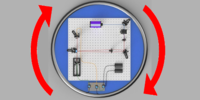
Photon Bunching in a Rotating Reference Frame
by Sara Restuccia, Marko Toroš, Graham M. Gibson, Hendrik Ulbricht, Daniele Faccio, and Miles J. Padgett
Author(s): Sara Restuccia, Marko Toroš, Graham M. Gibson, Hendrik Ulbricht, Daniele Faccio, and Miles J. Padgett
A well-known quantum experiment is performed on a rotating lab table—offering a probe of quantum physics in a noninertial reference frame.
[Phys. Rev. Lett. 123, 110401] Published Tue Sep 10, 2019
06 Sep 20:00
Third-Harmonic Generation in Photonic Topological Metasurfaces
by Daria Smirnova, Sergey Kruk, Daniel Leykam, Elizaveta Melik-Gaykazyan, Duk-Yong Choi, and Yuri Kivshar
Author(s): Daria Smirnova, Sergey Kruk, Daniel Leykam, Elizaveta Melik-Gaykazyan, Duk-Yong Choi, and Yuri Kivshar
We study nonlinear effects in two-dimensional photonic metasurfaces supporting topologically protected helical edge states at the nanoscale. We observe strong third-harmonic generation mediated by optical nonlinearities boosted by multipolar Mie resonances of silicon nanoparticles. Variation of the ...
[Phys. Rev. Lett. 123, 103901] Published Fri Sep 06, 2019
05 Sep 18:34
[ASAP] Self-Rolled Multilayer Metasurfaces
by Esteban Bermu´dez-Uren~a* and Ullrich Steiner*
ACS Photonics
DOI: 10.1021/acsphotonics.9b00816
29 Aug 12:34
Guiding light at the nanoscale
by Silvia Milana
Nature Reviews Physics, Published online: 29 August 2019; doi:10.1038/s42254-019-0109-4
Two recent papers demonstrate optical waveguides consisting of ultrathin photonic crystals, which approach the lowest possible thickness for such devices.
29 Aug 09:06
Inverse design of long-range intensity correlation in scattering media
by Koirala, M.; Sarma, R.; Cao, H.; et al.
Title: Inverse design of long-range intensity correlation in scattering media
Author(s): Koirala, M.; Sarma, R.; Cao, H.; et al.
Source: PHYSICAL REVIEW B, 100 (6): AUG 12 2019
Document Type: Article
Author(s): Koirala, M.; Sarma, R.; Cao, H.; et al.
Source: PHYSICAL REVIEW B, 100 (6): AUG 12 2019
Document Type: Article
29 Aug 09:05
[ASAP] Spectral Narrowing in a Subwavelength Solid-State Laser
by David Herna´ndez-Pinilla, Javier Cuerda, Pablo Molina, Mariola O Rami´rez, and Luisa E. Bausa´*
ACS Photonics
DOI: 10.1021/acsphotonics.9b00836
19 Aug 05:26

[ASAP] Quantum Plasmonic Immunoassay Sensing
by Nuttawut Kongsuwan†, Xiao Xiong‡, Ping Bai‡, Jia-Bin You‡, Ching Eng Png‡, Lin Wu*‡, and Ortwin Hess*†

Nano Letters
DOI: 10.1021/acs.nanolett.9b01137
19 Aug 05:26

[ASAP] Silicon Metasurfaces for Third Harmonic Geometric Phase Manipulation and Multiplexed Holography
by Bernhard Reineke†, Basudeb Sain†, Ruizhe Zhao‡, Luca Carletti§, Bingyi Liu?, Lingling Huang‡, Costantino De Angelis?, and Thomas Zentgraf*†

Nano Letters
DOI: 10.1021/acs.nanolett.9b02844
13 Aug 07:52
Nonreciprocal Willis Coupling in Zero-Index Moving Media
by Li Quan, Dimitrios L. Sounas, and Andrea Alù
Author(s): Li Quan, Dimitrios L. Sounas, and Andrea Alù
Mechanical motion can break the symmetry in which sound travels in a medium, but significant nonreciprocity is typically achieved only for large motion speeds. We combine moving media with zero-index acoustic propagation, yielding extreme nonreciprocity and induced bianisotropy for modest applied sp...
[Phys. Rev. Lett. 123, 064301] Published Fri Aug 09, 2019
08 Aug 09:09
Tensor networks for complex quantum systems
by Román Orús
Nature Reviews Physics, Published online: 05 August 2019; doi:10.1038/s42254-019-0086-7
Understanding entanglement in many-body systems provided a description of complex quantum states in terms of tensor networks. This Review revisits the main tensor network structures, key ideas behind their numerical methods and their application in fields beyond condensed matter physics.