13 Mar 21:39
by Marco Pascucci, Gilles Tessier, Valentina Emiliani, and Marc Guillon
Author(s): Marco Pascucci, Gilles Tessier, Valentina Emiliani, and Marc Guillon
We characterize, experimentally, the intensity minima of a polarized high numerical aperture optical speckle pattern and the topological charges of the associated optical vortices. The negative of a speckle pattern is imprinted in a uniform fluorescent sample by photobleaching. The remaining fluores…
[Phys. Rev. Lett. 116, 093904] Published Fri Mar 04, 2016
11 Mar 16:52
The frequency of a laser based on trapped ultracold atoms can be made insensitive to fluctuations in the laser cavity’s length.
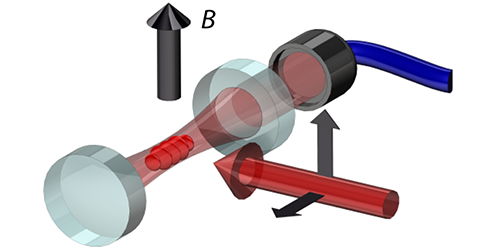
[Physics] Published Wed Mar 09, 2016
03 Mar 12:32
by XiaoZhi Lim
Nanolights are bright, beautiful — and increasingly useful
Nature 531, 7592 (2016). http://www.nature.com/doifinder/10.1038/531026a
Author: XiaoZhi Lim
Virus-sized particles that fluoresce in every colour could revolutionize applications from television displays to cancer treatment.

02 Mar 22:53
by Bo Zhang and Xiang Cheng
Author(s): Bo Zhang and Xiang Cheng
Correlated patterns of particles form in colloidal liquids as they approach the glass transition.
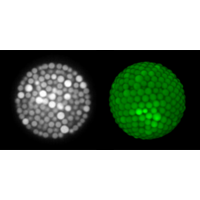
[Phys. Rev. Lett. 116, 098302] Published Wed Mar 02, 2016
01 Mar 08:41
by Per Lunnemann, Femius A. Koenderink
While metamaterials are often desirable for near-field functions, such as
perfect lensing, or cloaking, they are often quantified by their response to
plane waves from the far field. Here, we present a theoretical analysis of the
local density of states near lattices of discrete magnetic scatterers, i.e.,
the response to near field excitation by a point source. Based on a
point-dipole theory using Ewald summation and an array scanning method, we can
swiftly and semi-analytically evaluate the local density of states (LDOS) for
magnetoelectric point sources in front of an infinite two-dimensional (2D)
lattice composed of arbitrary magnetoelectric dipole scatterers. The method
takes into account radiation damping as well as all retarded electrodynamic
interactions in a self-consistent manner. We show that a lattice of magnetic
scatterers evidences characteristic Drexhage oscillations. However, the
oscillations are phase shifted relative to the electrically scattering lattice
consistent with the difference expected for reflection off homogeneous magnetic
respectively electric mirrors. Furthermore, we identify in which source-surface
separation regimes the metasurface may be treated as a homogeneous interface,
and in which homogenization fails. A strong frequency and in-plane position
dependence of the LDOS close to the lattice reveals coupling to guided modes
supported by the lattice.
Donate to arXiv
25 Feb 20:05
by Ilya Starshynov
Ilya Starshynov, Jacopo Bertolotti, Janet Anders
We study theoretically how multiple scattering of light in a disordered medium can spontaneously generate quantum correlations. In particular we focus on the case where the input state is Gaussian and characterize the correlations between two arbitrary output modes. As there is not a single ... [Opt. Express 24, 4662-4671 (2016)]
25 Feb 20:04
by Ilya Krasnikov
Ilya Krasnikov, Christian Suhr, Alexey Seteikin, Bernhard Roth, Merve Meinhardt-Wollweber
The quantitative analysis of Raman spectroscopic signals in biological tissue is generally difficult. Typical samples contain a multitude of molecular species and, in addition, measurements are altered by attenuation of the Raman signal. Realistic numerical modeling of the Raman process can help to ... [J. Opt. Soc. Am. A 33, 426-433 (2016)]
23 Feb 20:08
by Vadim Y. Soloviev
Vadim Y. Soloviev
Light scattering in refractive media can be used for visualization of caustics and singularities of wavefronts of the incident radiation. Its modeling requires solving the radiative transfer equation. Numerical solution of the radiative transfer equation in turbid media with a spatially varying ... [J. Opt. Soc. Am. A 33, 383-390 (2016)]
23 Feb 20:08
by Chong Sheng
Article
Wavefront shaping is typically carried out outside the medium within which the beam is propagating. Sheng et al. exploit concepts inspired by General Relativity for wavefront shaping within optical waveguide settings, constructing narrow collimated beams and shape-preserving beams accelerating on arbitrary trajectories
Nature Communications doi: 10.1038/ncomms10747
Authors: Chong Sheng, Rivka Bekenstein, Hui Liu, Shining Zhu, Mordechai Segev

23 Feb 10:54
by Haiyang Huang, Hao Li, Wei Li, Aimin Wu, Xin Chen, Xuefeng Zhu, Zhen Sheng, Shichang Zou, Xi Wang and Fuwan Gan

ACS Photonics
DOI: 10.1021/acsphotonics.5b00641
22 Feb 21:31
by Miguel A. Bandres, Mikael C. Rechtsman, and Mordechai Segev
Author(s): Miguel A. Bandres, Mikael C. Rechtsman, and Mordechai Segev
Quasicrystals are a class of materials that exhibit long-range order but no periodicity. A study of topological transport in quasicrystals shows that, surprisingly, a two-dimensional photonic quasicrystal exhibits a topological insulating phase.
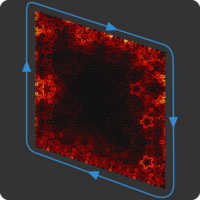
[Phys. Rev. X 6, 011016] Published Mon Feb 22, 2016
22 Feb 21:31
by Jason A. Newman, Qiaoen Luo, and Kevin J. Webb
Author(s): Jason A. Newman, Qiaoen Luo, and Kevin J. Webb
We present a coherent optical method for wavelength-resolution imaging of moving objects hidden within thick randomly scattering media. Spatial speckle intensity correlations as a function of object position are shown to provide access to the spatially dependent dielectric constant of the moving obj…
[Phys. Rev. Lett. 116, 073902] Published Thu Feb 18, 2016
22 Feb 21:30
by Louis Salkin, Alexandre Schmit, Pascal Panizza, and Laurent Courbin
Author(s): Louis Salkin, Alexandre Schmit, Pascal Panizza, and Laurent Courbin
Using a bubble-blowing apparatus, researchers developed a model that explains the effects of several factors, such as the breath velocity, on the process of blowing a bubble.

[Phys. Rev. Lett. 116, 077801] Published Fri Feb 19, 2016
22 Feb 21:30
by William Guerin, Michelle O. Araújo, and Robin Kaiser
Author(s): William Guerin, Michelle O. Araújo, and Robin Kaiser
Subradiant states of many emitters have been created in a dilute cold-atom gas.
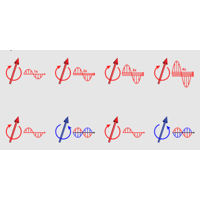
[Phys. Rev. Lett. 116, 083601] Published Mon Feb 22, 2016
22 Feb 20:37
by Jianxi Gao
Universal resilience patterns in complex networks
Nature 530, 7590 (2016). doi:10.1038/nature16948
Authors: Jianxi Gao, Baruch Barzel & Albert-László Barabási
Resilience, a system’s ability to adjust its activity to retain its basic functionality when errors, failures and environmental changes occur, is a defining property of many complex systems. Despite widespread consequences for human health, the economy and the environment, events leading to loss of resilience—from cascading failures in technological systems to mass extinctions in ecological networks—are rarely predictable and are often irreversible. These limitations are rooted in a theoretical gap: the current analytical framework of resilience is designed to treat low-dimensional models with a few interacting components, and is unsuitable for multi-dimensional systems consisting of a large number of components that interact through a complex network. Here we bridge this theoretical gap by developing a set of analytical tools with which to identify the natural control and state parameters of a multi-dimensional complex system, helping us derive effective one-dimensional dynamics that accurately predict the system’s resilience. The proposed analytical framework allows us systematically to separate the roles of the system’s dynamics and topology, collapsing the behaviour of different networks onto a single universal resilience function. The analytical results unveil the network characteristics that can enhance or diminish resilience, offering ways to prevent the collapse of ecological, biological or economic systems, and guiding the design of technological systems resilient to both internal failures and environmental changes.

22 Feb 10:05
by Tigran V. Shahbazyan
We obtain the local density of states (LDOS) for any nanoplasmonic system in
the frequency range dominated by a localized surface plasmon. By including the
Ohmic losses in a consistent way, we show that the plasmon LDOS is proportional
to the local field intensity normalized by the absorbed power. We obtain
explicit formulas for the energy transfer (ET) between quantum emitters and
plasmons as well as between donors and acceptors situated near a plasmonic
structure. In the latter case, we find that the plasmon-assisted ET rate is
proportional to the LDOS product at the donor and acceptor positions, obtain,
in a general form, the plasmon ET enhancement factor, and establish the
transition onset between Forster-dominated and plasmon-dominated ET regimes.
22 Feb 10:02
by lippi1968
Sommario:
Il vivace dibattito tra la ministra della Pubblica Istruzione ed una linguista italiana che lavora in Olanda, vincitrice di un prestigioso grant ERC, ha acceso la curiosità di molti sullo stato della ricerca in Italia. Vediamo come stanno le cose analizzando i dati del settennio di attivita dello European Research Council (2007-2013).
I fatti sono noti: la ministra ha gioito dei buoni risultati dei 30 studiosi, di origine italiana, che si sono aggiudicati un Grant ERC nell'ultima valutazione annuale. Per la ministra è “un'ottima notizia per la ricerca italiana”.
Data di pubblicazione:
Venerdì, 19 febbraio, 2016 - 22:02
leggi tutto

16 Feb 22:14
by Freddy T. Rabouw, Johanna C. van der Bok, Piernicola Spinicelli, Benoît Mahler, Michel Nasilowski, Silvia Pedetti, Benoît Dubertret and Daniël Vanmaekelbergh

Nano Letters
DOI: 10.1021/acs.nanolett.6b00053

16 Feb 22:13
by Evan Meyer-Scott, Daniel McCloskey, Klaudia Gołos, Jeff Z. Salvail, Kent A. G. Fisher, Deny R. Hamel, Adán Cabello, Kevin J. Resch, and Thomas Jennewein
Author(s): Evan Meyer-Scott, Daniel McCloskey, Klaudia Gołos, Jeff Z. Salvail, Kent A. G. Fisher, Deny R. Hamel, Adán Cabello, Kevin J. Resch, and Thomas Jennewein
A photonic qubit has been transmitted over a lossy 30-meter-long channel without destroying its state in a precertification scheme that does not require synchronization or indistinguishability.
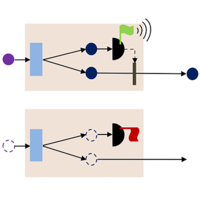
[Phys. Rev. Lett. 116, 070501] Published Tue Feb 16, 2016
16 Feb 22:13
by B. C. Hiesmayr, M. J. A. de Dood, and W. Löffler
Author(s): B. C. Hiesmayr, M. J. A. de Dood, and W. Löffler
Four photons are shown to be entangled through their orbital angular momentum.
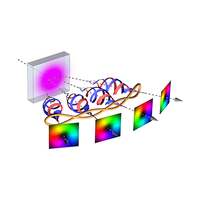
[Phys. Rev. Lett. 116, 073601] Published Tue Feb 16, 2016
16 Feb 15:14
by Michele Cotrufo, Clara I. Osorio and A. Femius Koenderink

ACS Nano
DOI: 10.1021/acsnano.5b07231

12 Feb 16:51
by B. P. Abbott et al. (LIGO Scientific Collaboration and Virgo Collaboration)
Author(s): B. P. Abbott et al. (LIGO Scientific Collaboration and Virgo Collaboration)
Gravitational waves emitted by the merger of two black holes have been detected, setting the course for a new era of observational astrophysics.
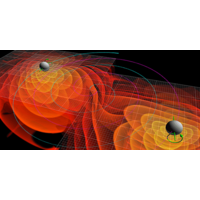
[Phys. Rev. Lett. 116, 061102] Published Thu Feb 11, 2016
10 Feb 23:51
by Alexey O. Bak, Edward O. Yoxall, Paulo Sarriugarte, Vincenzo Giannini, Stefan A. Maier, Rainer Hillenbrand, John B. Pendry and Chris C. Phillips

Nano Letters
DOI: 10.1021/acs.nanolett.5b04300

10 Feb 23:35
by Jason W. Merrill, Hui Cao, and Eric R. Dufresne
Author(s): Jason W. Merrill, Hui Cao, and Eric R. Dufresne
When light travels through strongly scattering media with optical gain, the synergy between diffusive transport and stimulated emission can lead to lasing action. Below the threshold pump power, the emission spectrum is smooth and does not change from shot to shot. Above the lasing threshold, the sp…
[Phys. Rev. A 93, 021801(R)] Published Mon Feb 08, 2016
10 Feb 10:30
by Weiqi Xue, Yi Yu, Luisa Ottaviano, Yaohui Chen, Elizaveta Semenova, Kresten Yvind, and Jesper Mork
Author(s): Weiqi Xue, Yi Yu, Luisa Ottaviano, Yaohui Chen, Elizaveta Semenova, Kresten Yvind, and Jesper Mork
Researchers have studied a membrane laser containing nanometer-sized holes to demonstrate how photon losses can be minimized.
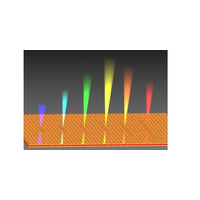
[Phys. Rev. Lett. 116, 063901] Published Tue Feb 09, 2016
09 Feb 20:59
by Weiqi Xue, Yi Yu, Luisa Ottaviano, Yaohui Chen, Elizaveta Semenova, Kresten Yvind, and Jesper Mork
Author(s): Weiqi Xue, Yi Yu, Luisa Ottaviano, Yaohui Chen, Elizaveta Semenova, Kresten Yvind, and Jesper Mork
Researchers have studied a membrane laser containing nanometer-sized holes to demonstrate how photon losses can be minimized.
[Phys. Rev. Lett. 116, 063901] Published Tue Feb 09, 2016
08 Feb 08:39
by Alan Zhan, Shane Colburn, Rahul Trivedi, Taylor K. Fryett, Christopher M. Dodson and Arka Majumdar

ACS Photonics
DOI: 10.1021/acsphotonics.5b00660
08 Feb 08:39
by A. Regler, K. Schraml, A. Lyamkina, M. Spiegl, K. Müller, J. Vuckovic, J. J. Finley, M. Kaniber
We present a combined experimental and simulation study of a single
self-assembled InGaAs quantum dot coupled to a nearby ($\sim 25nm$) plasmonic
antenna. Micro-photoluminescence spectroscopy shows a $\sim 2.4\times$ increase
of intensity, which is attributed to spatial far-field redistribution of the
emission from the quantum dot-antenna system. Power-dependent studies show
similar saturation powers of $2.5\mu W$ for both coupled and uncoupled quantum
dot emission in polarization-resolved measurements. Moreover, time-resolved
spectroscopy reveals the absence of Purcell-enhancement of the quantum dot
coupled to the antenna as compared to an uncoupled dot, yielding comparable
exciton lifetimes of $\tau\sim0.5ns$. This observation is supported by
numerical simulations, suggesting only minor Purcell-effects of $<2\times$ for
emitter-antenna separations $>25nm$. The observed increased emission from a
coupled quantum dot-plasmonic antenna system is found to be in good qualitative
agreement with numerical simulations and will lead to a better understanding of
light-matter-coupling in such novel semiconductor-plasmonic hybrid systems
Donate to arXiv
05 Feb 15:58
by T. J. Constant
Nature Physics 12, 124 (2016).
doi:10.1038/nphys3545
Authors: T. J. Constant, S. M. Hornett, D. E. Chang & E. Hendry
Surface plasmons in graphene offer a compelling route to many useful photonic technologies. As a plasmonic material, graphene offers several intriguing properties, such as excellent electro-optic tunability, crystalline stability, large optical nonlinearities and extremely high electromagnetic field concentration. As such, recent demonstrations of surface plasmon excitation in graphene using near-field scattering of infrared light have received intense interest. Here we present an all-optical plasmon coupling scheme which takes advantage of the intrinsic nonlinear optical response of graphene. Free-space, visible light pulses are used to generate surface plasmons in a planar graphene sheet using difference frequency wave mixing to match both the wavevector and energy of the surface wave. By carefully controlling the phase matching conditions, we show that one can excite surface plasmons with a defined wavevector and direction across a large frequency range, with an estimated photon efficiency in our experiments approaching 10−5.

05 Feb 11:51
by admin@smbc-comics.com

Hovertext: In order to have that one Monty Python sketch about a dead parrot, you must first invent mortality.
New comic!Today's News:
