08 Nov 20:56
by Yang-Yu Liu and Albert-László Barabási
Author(s): Yang-Yu Liu and Albert-László Barabási
Complex networks range from subcellular biological networks to the Internet. Our ability to control these systems deeply challenges our understanding. Control also may well be a guiding principle in their design. This article reviews the emerging science of the control of complex networks.
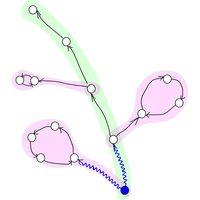
[Rev. Mod. Phys. 88, 035006] Published Tue Sep 06, 2016
21 Sep 21:28
by Z. L. Yuan, B. Fröhlich, M. Lucamarini, G. L. Roberts, J. F. Dynes, and A. J. Shields
Author(s): Z. L. Yuan, B. Fröhlich, M. Lucamarini, G. L. Roberts, J. F. Dynes, and A. J. Shields
A compact scheme can directly modulate the phase of a laser without a bulky external modulator.
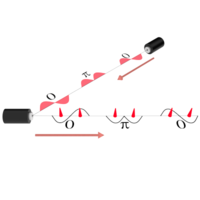
[Phys. Rev. X 6, 031044] Published Tue Sep 20, 2016
21 Sep 21:27
by Sejeong Kim, Su-Hyun Gong, Jong-Hoi Cho and Yong-Hoon Cho

Nano Letters
DOI: 10.1021/acs.nanolett.6b02331

21 Sep 21:18
by K. J. Kemp, S. Barker, J. Guthrie, B. Hagood and M. D. Havey
The phenomenon of electronic wave localization through disorder remains an important area of fundamental and applied research. Localization of all wave phenomena, including light, is thought to exist in a restricted one-dimensional geometry. We present here a series of experiments to illustrate, using a straightforward experimental arrangement and approach, the localization of light in a quasi-one-dimensional physical system. In the experiments, reflected and transmitted light from a stack of glass slides of varying thickness reveals an Ohm's law type behavior for small thicknesses, and evolution to exponential decay of the transmitted power for larger thicknesses. For larger stacks of slides, a weak departure from one-dimensional behavior is also observed. The experiment and analysis of the results, showing many of the essential features of wave localization, is relatively straightforward, economical, and suitable for laboratory experiments at an undergraduate level.
20 Sep 19:54
by Avijit Barik, Xiaoshu Chen and Sang-Hyun Oh

Nano Letters
DOI: 10.1021/acs.nanolett.6b02690

19 Sep 12:17
by Renwen Yu, Joel D. Cox, and F. Javier García de Abajo
Author(s): Renwen Yu, Joel D. Cox, and F. Javier García de Abajo
Plasmons provide excellent sensitivity to detect analyte molecules through their strong interaction with the dielectric environment. Plasmonic sensors based on noble metals are, however, limited by the spectral broadening of these excitations. Here we identify a new mechanism that reveals the presen…
[Phys. Rev. Lett. 117, 123904] Published Fri Sep 16, 2016
19 Sep 12:17
by Xiang Guo, Chang-Ling Zou, Hojoong Jung, and Hong X. Tang
Author(s): Xiang Guo, Chang-Ling Zou, Hojoong Jung, and Hong X. Tang
A new device that can potentially be scaled up for quantum computing converts visible light to infrared light suitable for fiber-optic transmission without destroying the light’s quantum state.
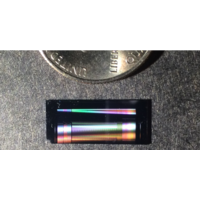
[Phys. Rev. Lett. 117, 123902] Published Fri Sep 16, 2016
18 Sep 20:09
by Juan de Torres, Mathieu Mivelle, Satish Babu Moparthi, Hervé Rigneault, Niek F. Van Hulst, María F. García-Parajó, Emmanuel Margeat and Jérôme Wenger

Nano Letters
DOI: 10.1021/acs.nanolett.6b02470

16 Sep 10:47
by James A. Dolan, Matthias Saba, Raphael Dehmel, Ilja Gunkel, Yibei Gu, Ulrich Wiesner, Ortwin Hess, Timothy D. Wilkinson, Jeremy J. Baumberg, Ullrich Steiner and Bodo D. Wilts

ACS Photonics
DOI: 10.1021/acsphotonics.6b00400
16 Sep 10:45
by Gretchen Vogel
What seemed a coup has turned into a nightmare for Sweden's most prestigious university, the Karolinska Institute (KI). In 2010, KI and its associated hospital in Stockholm managed to recruit star surgeon Paolo Macchiarini, who made international headlines when he implanted artificial windpipes into patients. With his groundbreaking tissue engineering work, KI leaders hoped he would propel the university to the top of a hot field. Instead, Macchiarini has plunged Swedish science and KI into their most serious misconduct scandal in decades, with allegations ranging from faking scientific data to subjecting patients to a risky procedure without the necessary approvals, in at least two cases leading to their deaths. Over the past 2 weeks, four investigations have released their damning findings. One confirms that Macchiarini committed misconduct, while the other three paint an unflattering image of the roles KI and the hospital have played in the affair. The case has led to a wave of resignations and dismissals, both at KI and the Nobel Assembly, the august body of 50 KI professors that selects the winners of the Nobel Prize in Medicine or Physiology. But restoring trust won't be easy. A recent survey by a leading polling company found that the institute's reputation had plunged as a result of the scandal.
Author: Gretchen Vogel
16 Sep 10:44
by Richard Stone
A veritable army of outfits in Iran offer to write theses and scientific papers for a fee, advertising on the internet, through fliers, and via the placard-carrying touts who line the sidewalk outside the University of Tehran. It's unknown how many papers and theses are ginned up under false pretenses. In 2014, a member of Iran's Academy of Sciences estimated that each year as many as 5000 theses—roughly 10% of all master's and Ph.D. theses awarded in Iran—are bought from dealers. Such transactions may soon be illegal. This autumn, Iran's parliament is expected to take up work on a bill that would outlaw shady practices in scientific publishing.
Author: Richard Stone
15 Sep 12:23
by Denis Garoli, Pierfrancesco Zilio, Yuri Gorodetski, Francesco Tantussi and Francesco De Angelis

Nano Letters
DOI: 10.1021/acs.nanolett.6b03359

13 Sep 20:16
by Alexander N. Poddubny, Ivan V. Iorsh, and Andrey A. Sukhorukov
Author(s): Alexander N. Poddubny, Ivan V. Iorsh, and Andrey A. Sukhorukov
We develop a general theoretical framework of integrated paired photon-plasmon generation through spontaneous wave mixing in nonlinear plasmonic and metamaterial nanostructures, rigorously accounting for material dispersion and losses in the quantum regime through the electromagnetic Green function.…
[Phys. Rev. Lett. 117, 123901] Published Tue Sep 13, 2016
13 Sep 20:14
by Hugo M. Doeleman, Ewold Verhagen and A. Femius Koenderink

ACS Photonics
DOI: 10.1021/acsphotonics.6b00453
13 Sep 08:52
by Jin Lian
Jin Lian, Sergei Sokolov, Emre Yüce, Sylvain Combrié, Alfredo De Rossi, Allard P. Mosk
Near the band edge of photonic crystal waveguides, localized modes appear due to disorder. We demonstrate a new method to elucidate spatial profile of the localized modes in such systems using precise local tuning. Using deconvolution with the known thermal profile, the spatial profile of a ... [Opt. Express 24, 21939-21947 (2016)]
09 Sep 19:35
by Zheng Xi, Lei Wei, A. J. L. Adam, H. P. Urbach, and Luping Du
Author(s): Zheng Xi, Lei Wei, A. J. L. Adam, H. P. Urbach, and Luping Du
Identifying subwavelength objects and displacements is of crucial importance in optical nanometrology. We show in this Letter that nanoantennas with subwavelength structures can be excited precisely by incident beams with singularity. This accurate feeding beyond the diffraction limit can lead to dy…
[Phys. Rev. Lett. 117, 113903] Published Fri Sep 09, 2016
09 Sep 17:53
by Michael Schirber
Author(s): Michael Schirber
A newly discovered optical vortex forms a ring around many intense laser pulses but was never noticed before.
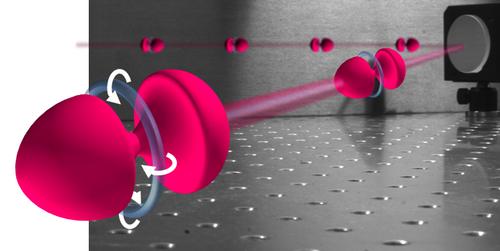
[Physics 9, 105] Published Fri Sep 09, 2016
08 Sep 19:35
by sam
Electrically tunable lenses (ETLs) are polymeric or fluid-filled lenses that have a focal length that changes with an applied current. They have shown some great potential for microscopy, especially in fast, simple z-sweeps.


The above figure shows the ~120 um range of focal depths an ETL installed between the camera and a 40x objective (from reference 1). Note that this arrangement has the drawback of changing the effective magnification at different focal depths; however, this effect is fairly small (20%) and linear over the full range. For high-resolution z-stack imaging of cells, this mag change would not be ideal. But it should be correctable for imaging less sensitive to magnification changes. Basic ETLs cost only a few hundred dollars, a lot cheaper than a piezo stage or objective focuser. Optotune has a lot of information about how to add an ETL to a microscope.
Another cool application of an ETL is in light-sheet microscopy. A recent paper from Enrico Gratton (reference 2) used an ETL to sweep the narrow waist of a light sheet across the sample, and synchronize its motion to match the rolling shutter of a CMOS camera.

The main goal was to cheaply and simply create a light sheet that had a uniform (and minimal) thickness across the entire field of view. Previous low-tech methods to achieve this was to close down an iris, thus reducing the difference in thickness across the sample, but it also reduces the minimal waist size. The high-tech way to do this is creating “propagation-invariant” Bessel or Airy beams. These do not spread out as they propagate, like Gaussian beams do, but creating them and aligning them in microscopes is significantly more challenging.

Gratton’s cheap trick means one can create a flat and thin light sheet for the cost of an ETL and the complexity of synchronizing a voltage ramp signal to the CMOS rolling shutter readout. To be honest, I don’t 100% know how complicated or robust that is in practice. I’m just guessing that it’s simpler than a Bessel beam.
-
Wang, Z., Lei, M., Yao, B., Cai, Y., Liang, Y., Yang, Y., … Xiong, D. (2015). Compact multi-band fluorescent microscope with an electrically tunable lens for autofocusing. Biomedical Optics Express, 6(11), 4353. doi:10.1364/BOE.6.004353
-
Hedde, P. N., & Gratton, E. (2016). Selective plane illumination microscopy with a light sheet of uniform thickness formed by an electrically tunable lens. Microscopy Research and Technique, 00(April). doi:10.1002/jemt.22707
08 Sep 14:07
by Surong Guo, Nahid Talebi, Wilfried Sigle, Ralf Vogelgesang, Gunther Richter, Martin Esmann, Simon F. Becker, Christoph Lienau and Peter A. van Aken

Nano Letters
DOI: 10.1021/acs.nanolett.6b02353

08 Sep 13:13
Announcement: Where are the data?
Nature 537, 7619 (2016). doi:10.1038/537138a
As the research community embraces data sharing, academic journals can do their bit to help. Starting this month, all research papers accepted for publication in Nature and an initial 12 other Nature titles will be required to include information on whether and how others

08 Sep 13:13
by Volodymyr B. Koman
Volodymyr B. Koman, Christian Santschi, Olivier J. F. Martin
Efficient optical energy transfer is key to many technologies, ranging from biosensing to photovoltaics. Here, for the first time we show that by introducing a random medium with appropriate filling factor, absorption in a specific volume can be maximized. Using both numerical simulations and an ... [Opt. Express 24, A1306-A1320 (2016)]
03 Sep 19:45
by Markus R. Wagner, Bartlomiej Graczykowski, Juan Sebastian Reparaz, Alexandros El Sachat, Marianna Sledzinska, Francesc Alzina and Clivia M. Sotomayor Torres

Nano Letters
DOI: 10.1021/acs.nanolett.6b02305

01 Sep 07:09
by Shuren Hu and Sharon M. Weiss

ACS Photonics
DOI: 10.1021/acsphotonics.6b00219
25 Aug 09:03
by Guillem Anglada-Escudé
A terrestrial planet candidate in a temperate orbit around Proxima Centauri
Nature 536, 7617 (2016). doi:10.1038/nature19106
Authors: Guillem Anglada-Escudé, Pedro J. Amado, John Barnes, Zaira M. Berdiñas, R. Paul Butler, Gavin A. L. Coleman, Ignacio de la Cueva, Stefan Dreizler, Michael Endl, Benjamin Giesers, Sandra V. Jeffers, James S. Jenkins, Hugh R. A. Jones, Marcin Kiraga, Martin Kürster, Marίa J. López-González, Christopher J. Marvin, Nicolás Morales, Julien Morin, Richard P. Nelson, José L. Ortiz, Aviv Ofir, Sijme-Jan Paardekooper, Ansgar Reiners, Eloy Rodríguez, Cristina Rodrίguez-López, Luis F. Sarmiento, John P. Strachan, Yiannis Tsapras, Mikko Tuomi & Mathias Zechmeister
At a distance of 1.295 parsecs, the red dwarf Proxima Centauri (α Centauri C, GL 551, HIP 70890 or simply Proxima) is the Sun’s closest stellar neighbour and one of the best-studied low-mass stars. It has an effective temperature of only around 3,050 kelvin,

24 Aug 19:28
by J. Mertens, A. Demetriadou, R. W. Bowman, F. Benz, M.-E. Kleemann, C. Tserkezis, Y. Shi, H. Y. Yang, O. Hess, J. Aizpurua and J. J. Baumberg

Nano Letters
DOI: 10.1021/acs.nanolett.6b02164

23 Aug 19:49
by L. De Angelis, F. Alpeggiani, A. Di Falco, and L. Kuipers
Author(s): L. De Angelis, F. Alpeggiani, A. Di Falco, and L. Kuipers
Phase singularities are dislocations widely studied in optical fields as well as in other areas of physics. With experiment and theory we show that the vectorial nature of light affects the spatial distribution of phase singularities in random light fields. While in scalar random waves phase singula…
[Phys. Rev. Lett. 117, 093901] Published Tue Aug 23, 2016
23 Aug 19:48
by Tyler W. Hughes and Shanhui Fan

Nano Letters
DOI: 10.1021/acs.nanolett.6b02474

23 Aug 19:48
by admin
Those of you who’ve been reading this blog since it’s inception will remember that I used to post a lot about solid state drives, because we spent a lot of time trying to handle the 1 GB/sec bandwidth of sCMOS cameras back in 2013. We standardized on RAID 0 arrays of four Samsung Pro SSDs, and I stopped thinking about it, because that was good enough for our purposes.
Since then, however, quite a bit has changed. You can now get an 512 GB SSD card that can write at 1.5 GB/sec and read at 3 GB/sec (the Samsung Pro 950) for $350. Newer Samsung products promise slightly faster read / write speeds at disk sizes up to 1 TB. These use the M.2 interface, designed for SSDs, but PCIe to M.2 adapters are readily available if your motherboard doesn’t have an M.2 slot. To get full speeds you’ll need a motherboard with a PCIe 3.0 x4 slot available.
Another thing that’s changed is that sCMOS cameras have made it really easy to capture large data sets. In the last year people really seen to have taken advantage of this and we’re seeing a lot of people acquiring 100GB+ data sets, and often up to 1 TB. A big consequence of this is that data processing is increasingly becoming I/O bound. A mechanical hard drive tops out at around 120 MB/sec sequential read/write speed. At those speeds, just reading a 20 GB file takes around 3 min. We’ve seen this become a major issue where exporting a 500 GB data set from Nikon ND2 to TIFF takes hours.
If you’re doing any processing of large data sets, it’s very advantageous to have a fast drive like this to speed up I/O. There’s still a challenge in getting data on and off of these drives, since gigabit ethernet tops out at around 100 MB/sec, and most USB3 drives max out around 250 MB/sec (as an aside, the Samsung T3 looks pretty promising, with 450 MB/sec transfer rates). Finally, most people (at least here) still want their data on a mechanical drive for long term storage. But at least once you have data on the fast drive the I/O bottleneck gets better by about 10 – 20-fold.
All of this would be well worth thinking about if you’re building the compute environment for a microscopy core from scratch. I imagine you’d want fast local storage for data processing, 10 Gbit networking to move data around, and some kind of slow archiving to long term storage. You’d also want to educate people about data handling so that they think about these issues when designing their experiments.
22 Aug 19:40
by Chahan M. Kropf, Clemens Gneiting, and Andreas Buchleitner
Author(s): Chahan M. Kropf, Clemens Gneiting, and Andreas Buchleitner
A progressive loss of phase information (i.e., decoherence) is fundamental to many physical systems since they evolve over time. Researchers present a way of deriving master equations to dynamically characterize disordered quantum systems with finite dimensions.
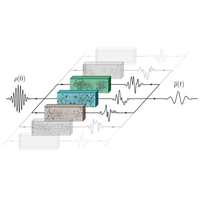
[Phys. Rev. X 6, 031023] Published Fri Aug 19, 2016
19 Aug 10:33
by James N. Monks, Bing Yan, Nicholas Hawkins, Fritz Vollrath and Zengbo Wang

Nano Letters
DOI: 10.1021/acs.nanolett.6b02641

