An Ohio Walmart is holding a Thanksgiving food drive for its own employees.
It's like 30 degrees shy of an Onion article.
An Ohio Walmart is holding a Thanksgiving food drive for its own employees.
It's like 30 degrees shy of an Onion article.

If you enter in to Crusader Kings 2 with a plan to win, you’re going to be frustrated. It’s a complex turn-based strategy game set during the Middle Ages in Europe, with an overwhelming array of options available whether you start as a mighty King or a lowly Count. If you approach it as a role-playing game though, with an interest only in being interesting, then it’s an accessible, surprising delight to muddle your way through and craft your own stories.
That’s why any new expansion to the game is so exciting; every added layer of detail gives you a new role to perform. Sons of Abraham focuses on expanding the Jewish and Muslim faiths. It’s out now and there’s a new developer diary below.
(more…)
Kathryn Joyce lauds a new program, People and Animals Living Safely, which allows domestic violence survivors to bring their pets to shelters:
Earlier this year, a New York City woman – I’ll call her Mary – tried to leave her abusive husband. She contacted a shelter, but the shelter wouldn’t take pets. Nor would any other shelter in the city. Mary’s son said he couldn’t leave his three cats behind. And so, since Mary couldn’t leave without her son, she stayed outside the shelter system.
Pets do not get much attention in research on domestic violence, but there is reason to believe that situations like Mary’s are amazingly common.
A 2007 summary of available research, published in the journal Violence Against Women, found that in the dozen or so shelters in the country that collect data on the issue, between 18 and 48 percent of women said they had delayed leaving their abusers because it meant leaving their pets. In one study conducted in upstate New York, researchers found that among women who had seen their pets abused, 65 percent had put off seeking help. Presumably, many others with pets never leave home at all.
In 2008, there were only four shelters in the country that accommodated domestic animals. Today there are 73, but that’s still only about three percent of shelters nationwide, and to date, no program in a city as large or dense as New York has allowed women to “co-shelter” directly with their animals. That might be changing. In June, Mary, her children, and their cats became the first participants in a program called People and Animals Living Safely, a six-month pilot conceived by the Urban Resource Institute, a non-profit that runs four shelters in New York City, and the Mayor’s Alliance for NYC’s Animals, a nonprofit coalition of animal rescue groups. Now Mary, kids, and pets live together in a sparsely furnished third-floor apartment in the Urban Resource Institute’s biggest shelter.
The program likely has a side benefit of preventing cruelty to animals. More than 70 percent of pet owners entering domestic-violence shelters report that their batterers threatened, injured, maimed or killed their family pets, according to the American Humane Association.


Rudy Rucker sends us, "My new novel, THE BIG AHA, with an accompanying volume of NOTES FOR THE BIG AHA. Browsable as a free webpage, and available as commercial ebook and paperback. With fourteen chapter illustrations. The plot? Biotech has replaced machines. Qrude young artist Zad Plant works with living paint. But Zad's career is on the skids. Enter qwet---or quantum wetware. Qwet makes you high---and it gives you telepathy. A new psychedelic revolution kicks in. But hungry mouths begin popping out of the air and eating people. Zad and his partner Jane travel through a wormhole to confront the aliens. And they meet something stranger than ever imagined. What is the Big Aha? My wildest adventure yet."
1: Qwet Rat“What do you think of this guy?” asked my old pal Carlo. It was a fall day in Louisville. I was slouched in my soft chair at the back of my nurb store. Carlo was holding something he called a qwet rat, pretty much shoving the thing into my face. Gray fur, yellow teeth, and a naked pink tail.
“He’s skungy,” I said, laughing a little. “Who’d ever buy that?”
“Skungy!” echoed Carlo, flashing his version of a sales-conference grin. “The perfect name.” He raised the rat high into the air, as if displaying a precious vase. The rat’s eyes twinkled like black beads. His pink-lined ears made small movements, picking up our voices and the all-but-imperceptible buzz of the gnat cameras that had followed Carlo in.
“This rat’s really your prototype?” I asked.
Flaky Carlo had managed to get a job in business, working at a startup company run by one of our high-school friends, Gaven Graber. In his new persona as a marketeer, Carlo was wearing a jacket patterned in scrolls and cut from the latest termite-cloth. He’d been getting gene-cleaning treatments, and he had a youthful air.
“First thought, best thought,” said Carlo, lowering the rat back to the level of my face. “Especially from a qrude dude like you. Hell, we ought to use ‘Skungy’ as the name for our whole qwet product line.”
“What’s qwet supposed to mean anyway?”
“Quantum wetware. Nice buzz phrase, huh? It’s a new tech. This woman named Junko Shimano invented it. She works for Gaven now.”
“You guys are crazy,” I said, addressing the gnat cameras as well as Carlo. I figured Gaven Graber was watching us via the swarm.
The Big Aha (Thanks, Rudy!) 
    
|
I think racists genuinely feel like this states rights argument constitutes an effective defense of the Confederacy. It’s almost like those racist assholes are stupid as fuck, or something.
Mario Palmaro, a traditionalist Catholic who has strongly criticized Pope Francis, is gravely ill. How Palmaro describes an unexpected phone call from Francis, who contacted Palmaro after learning of his illness:
“I was astonished, amazed, above all moved: for me, as a Catholic, that which I was experiencing was one of the most beautiful experiences in my life. But I felt the duty to remind the Pope that I, together with Gnocchi, had expressed specific criticisms regarding his work, while I renewed my total fidelity [to him] as a son of the Church. The Pope almost did not let me finish the sentence, saying that he had understood that those criticisms had been made with love, and how important it had been for him to receive them.” [These words] “comforted me greatly.”
Dreher, who has had his differences with the Pope, reacts:
Theological considerations aside, Pope Francis is a total Catholic mensch. Can we agree on that? I think we can.
One of Dreher’s commenters adds:
The following is one of my favorite quotes, and it applies, to some degree, to this situation:
“The only sign of humility is the love of one’s enemies. When one loves his enemies, he says in effect that they are as worthy of life as he is, that the Kingdom of God does not depend upon the vindication of one’s own cause. When one loves his enemies, he has accepted the fact that he is not the center of the universe. He is willing to admit that the grace of God may be at work, even in his own behalf, in the resistance and rejection he encounters from others. By love of enemies and by this standard alone can the humility of Jesus be measured. The ‘humble of heart’ whom Jesus admires are those whose hearts have no hatred for their opponents.”
(“Free to Be Faithful” by Anthony Padovano, page 16)
Humility, I believe, consists of more than loving those who oppose or hurt us, but this act is an acid test of the virtue. Good for the Pope.


Tim Geithner, apparently now tanned and rested after a long six years of financial crisis, is going back to work. The former Treasury secretary and New York Fed chief will be president and managing director of Warburg Pincus, the private equity firm.
The brickbats are flying fast. Here are examples from Ryan Grim and Noam Scheiber that go beyond the standard-issue Twitter snark. The critique boils down to: Of course Tim Geithner is going to make millions in the private equity business. He has always been a creature of the financial industry, carrying its water in government. And now the financial industry is, in effect, repaying him. Future treasury secretaries will know the lucrative fate the awaits them if they are similarly cooperative with Wall Street mandarins. And the circle of life continues.
That's the anti-Geithner case, and there's something to it. Fishes don't know what water is, and similarly Wall Street executives can be blind to the excesses in their own industry and the usefulness of regulations to ensure a more stable system. And as Grim notes, the Dodd-Frank legislation doesn't really take on the private equity industry of which Geithner is now a part (what Grim leaves out is that it's not obvious why the legislation would have taken aim at an industry that had pretty much nothing to do with causing the financial crisis).
The way of looking at this that is more sympathetic to Geithner goes like this: He didn't take a mega-payout from any of the banks that he has regulated, which received government bailouts, and whose failures were proximate causes of the crisis. This isn't like Robert Rubin joining Citigroup for a highly lucrative job with no real management responsibilities after he was treasury secretary. He also is not going to work for any of the giant asset managers that oversaw bailout programs on behalf of the government, most prominently Blackrock and Pimco.
And in this sympathetic-to-Geithner view, working in private equity is less like being at a bank and more like being a titan of industry. You're taking investors' money and trying to deploy it in smart ways, acquiring companies, improving them and flipping them at a profit. Warburg Pincus makes money to the degree that it makes businesses more successful; one recent example was Neiman Marcus, the department store. It also has investments in some companies with more questionable reputations, like private education provider Bridgepoint.
So which is it? Is Geithner another story of the revolving door at work, or a smart guy who is going to try to use some of his insights and managerial acumen to help the economy deploy capital more efficiently?
The answer depends on which aspects of his job description you think Geithner is being hired for. In its news release, Warburg Pincus described Geithner's role this way: He will work closely with the co-CEOs on "overall firm strategy and management, investing and portfolio management, organizational and funding structure, and investor relations."
If Geithner's role turns out to be heavily oriented toward the last point — being a rainmaker, flying to financial capitals and using his fame and connections to persuade billionaires and foreign sovereign wealth funds to park their money with Warburg Pincus, the appointment will always seem, to use a technical government ethics term, icky. If he really is being hired to help run the firm and decide what companies to invest in, then more power to him.

|
|
Zephyr Dear;__;
| You know you’re asking for it.When you turn down the kittens, because everybody and their dog adopts kittens. When you seek out the battered one-eared guys with pumpkin breath and rotten teeth and FIV, the old bruisers who’ve spent their lives on the street because who else is gonna give them a home? Even when you get lucky— when the stray on your doorstep is only a few months old and completely healthy, not so much as a flea on the fur and her whole life stretching out before her— even then you know you’re asking for it, because the very best-case scenario only lasts a couple of decades before her parts wear out and she grinds painfully to a halt in a random accumulation of system failures.You know, and you do it anyway. Because you’re a dumb mammal with an easily-hacked brain, and if you don’t step up who else will?
It was Chip, this time. I called it back when Banana died, I said Chip would probably be next to go. And I can’t really complain, because we thought he was going to die back in 2011. But here it is, almost the end of 2013, and the patchy little fuzzbot was alive right up to 3:30 yesterday afternoon. He’d be alive right now if we hadn’t killed him, although the vet says he wouldn’t be enjoying it. You really hope they’re not lying to you when they say things like that. You wonder how they even know. I didn’t even know his name at first. He was just this weird hostile cat who’d sneak in from outside, bolt through my living room and down the hall, and hide under my bed. I called him Puffy Patchy White Cat, with that poetic and lyrical imagination for which I have become so renowned. Puffy Patchy White Cat hated my guts. He’d shoot past me en route to his underbed fort, and he’d hiss and spit whenever I bent down to look at him under there. He just wanted the territory. I have no idea why. How many children lie awake at night, fearful of predatory monsters beneath the bed? I lived that dream. I would fall asleep to the growls and hisses of some misanthropic furball just the other side of the mattress, lurking and fuming for reasons I could not fathom. This went on for months before his Human finally showed up at my door, looking to dump him. Told me that Puffy Patchy White Cat’s name was “Chip”, and that he’d be at the Humane Society within 24 hours if nobody was willing to take him. What could I say? The fuzzbot was already spending half his time at the Accursed Apartment; I was going to see him incarcerated, maybe killed, just because he wanted to claw my eyes out? The day after I said yes I saw Chip’s Human rolling a dolly full of personal effects past my living room window. Chip ran in his wake, mewing piteously: what’s going on where are you taking all my stuff where are we going what’s happening why won’t you talk to me? That two-legged asshole never slowed, never looked back. The service elevator closed behind him and Chip was alone. He spent that night, like all the others, under my bed. For once he didn’t growl, didn’t hiss, didn’t make a sound. By the next day he had decided I was his bestest friend. I went into the kitchen and he jumped up on the fridge, started bonking me with that trademark head-butt that is the hallmark of slutty cats everywhere, but which Chip somehow made his own. I fed him. Banana shrugged and made room for another bowl in the house. In the years since, Chip worked unceasingly to win the title of Toronto’s Priciest Cat. Unused to playing with others, suddenly absorbed into a 5-cat household, he peed chronically and expensively on a succession of carpets and towels. The insides of his ears sprouted clusters of grotesque, blueberry-like growths filled with a bloody, tar-like substance that blocked off the canal and provoked a series of infections that smelled like cheese. We had them surgically removed. They grew back. We took him out to a secret government lab in Lake Scugog, spent a couple thousand dollars having his ears lasered clean of tumors. Called him “Miracle Ears” when he came back with perfect pink shells where all that corruption used to be. Groaned when it reappeared yet again, six months later. A few years back, when he inexplicably went off his food, we spent three grand exploring a lump in his abdomen that the vet said was consistent with cancer. (It turned out to be gas.) He also had chronic tachycardia, which translated into a lifetime prescription for pricey little blue pills called Atenolol. He would shriek like a banshee at 3a.m. At first he did this in response to one of BOG’s (admittedly unwarranted) attacks— but after a few iterations where we responded by ganging up on BOG in Chip’s defense, he figured out how to use that. He would walk into whatever room BOG was minding his own business in, let out a shriek to wake the dead, and sit back waiting for BOG to take the fall. (It was much scarier when those two fought for real: they’d grapple in complete silence, no yowls no hisses, just a ball of teeth and claws and flying fur rolling down the stairs, locked together in combat.) He was affectionate, although he tried to hide it. He would excel at being standoffish during the day (except for the usual refrigerator bonks at dinnertime). Late at night, though—after lights-out— he’d creep slowly onto the bed, edge along the mattress to the headboard, and sprawl across the head of whoever happened to be closest. Sometimes we’d wake up from the sound of the purring; other times we’d wake up suffocating, our mouths draped in fur. Either way we kept ourselves still so as not to startle him, but it wasn’t really necessary. Once Chip segued into Hat Mode, it would take an earthquake to dislodge him. And who can forget the time he swiped the contact lens right off my eyeball with a single claw? We’ve known for a while that he was living on borrowed time. Back during one of his endless savings-depleting trips to the vet the tests came back positive for both FIV and feline leukemia; the vet was bracing us for death in mere days, back then. But that was 2011, and ever since he weathered whatever misfortune that fucked-up physiology inflicted upon him. We’d forgotten how mortal he was. Even over the past couple of weeks, when he went off his food and started losing weight— when he turned his nose up at Wellness Brand, and flaked tuna, and the hypoallergenic stuff that costs the GNP of a Latin-American country for a single can— I wasn’t too worried. There he goes again, I thought. Another of his dumb attention-hogging false alarms. We’ll pillage the pones’s college fund and pay another few grand and buy our way out of it the way we always have. Dumb cat. He’d always pulled through before after all, always beaten the odds; and for the first time ever, his ears were actually improving. So we took him to the vet, and his nictitating membrane was dead white. And suddenly I noticed that his nose— normally bright pink— that was white, too. And the blood tests came back, and his RBC count was about an eighth of what it should have been. He was suffocating, right down at the cellular level. His resp rate was already elevated, trying to compensate— as if breathing faster could make any difference when there was so little pigment left inside to grab O2 no matter how much tidal volume ramped up. Chip’s marrow had died, his bones had hollowed out like a bird’s while we’d been busy not noticing. Days, the vet said. And it won’t be an easy death, it’ll be horrible. He’ll die slowly, gasping for breath. A sensation of drowning that persists no matter how much air you take into your lungs. So yesterday, we saved him the trouble. It wasn’t as peaceful a death as we’d been promised. The sedative did the opposite of what it was supposed to, started freaking him out and waking him up. I restrained his spastic struggles for a while and then let him go, followed him as he groaned and staggered across the room into a dark little toilet cubby that might afford him the comfort of close quarters, at least. Scooped him up there and just kept him company in the dark, until the vet came down with a dose of some new drug that please god wouldn’t fuck up the same way the last one did. His eyes were bright right up until they closed. We buried him out back, just a little ways down the garden from Banana, wrapped up in my very last Jethro Tull t-shirt (Rock Island: not one of their best albums, but great cover art). We buried him with a spray-bottle of pet-stain remover that we won’t be needing any more. And entropy wins again, and now the universe is a little less complex, a little poorer. There are a billion other cats out there, and thousands more being born every day. It’s good that things die— I keep telling myself this— because immortality would deny hope to all those other creatures who need a home, only to find there is no room at the inn. But there are so many degrees of freedom, even in such a small furry head. So many different ways the synapses can wire up, so many different manifestations of that unique wiring. There are a million other fuzzbots, a million other bright-eyed puffy patchy white cats, but there will never be another Chip. That part of the universe is over now, and as always, I can’t help but miss it. Goodbye, you dumb troublesome expensive cat. You were worth every penny, and so very much more. |
|
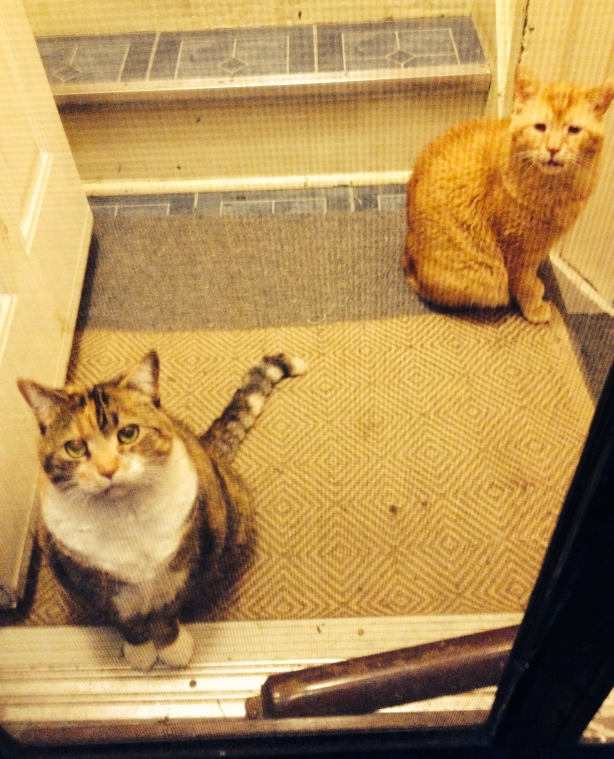
PS: Those photos not taken by we here at the Magic Bungalow— which is to say, most of the best ones on display here— are courtesy of Rebecca Springett.

LONDON “How are we being outbid by college students?” my friend asked.
We were at a pub in central London. The friend was half of a professional couple in their early 30s, both of them with quite good jobs. They have been looking for a new place to live, and the places they were interested in kept being snapped up by students.
A broker explained: These aren't ordinary college kids. They are students from the United Arab Emirates or other places rich with natural-resource wealth, whose parents offer to pay a full year’s (very pricey) rent in cash, upfront.
It’s the kind of story that every Londoner seems to have these days in what increasingly feels like a gilded city, a preserve for the global super-rich.
There are the eerily silent streets of Mayfair and Belgravia, dark at night because many of the giant houses there are owned by Russian and Middle Eastern plutocrats who are rarely in town to use them. There is the indignant tabloid reporting on rich people building underground mega-mansions, and legal efforts to halt the practice. There is the funny-looking scene of people idling in the stop-and-start traffic in Ferraris and Maseratis, the gloomy skies of London overhead; such vehicles are presumably a lot more fun on the open roads on the French Riviera.
The prosperity of London has diverged drastically from that of the rest of Britain in the last decade, in ways that contain economic lessons for the rest of the world.
The per-capita economic output of Londoners, for example, was nearly double that of the United Kingdom excluding London in 2011 (35,600 pounds versus 18,700, based on data from the Office of National Statistics that I crunched a bit).
London has always been richer than the rest of Britain, but since 1997 it has gone from per-capita economic output that was 70 percent higher than the rest of the nation to aper capital income that is 90 percent higher.

So does any of this matter? Growth is growth, and of course a bustling, modern financial capital will have stronger growth than the older, industrial cities of the north of England.
Well, yes. But.
The weaker economies of the rest of Britain surely benefit in some important ways from London’s prosperity—there is a lot more tax revenue to go around than there would be otherwise, for example, and there are ancillary businesses that serve the booming businesses in London (back office functions for an investment bank, for example, or a Maserati repair shop).
But in important ways, the prosperity of London actually damages the competitiveness of the rest of Britain.
It is a mild version of a phenomenon known as “Dutch Disease,” a phenomenon in which countries with lots of natural resources see other domestic industries suffer. When money is flowing in due to oil or other natural-resource wealth, it pushes the value of the nation’s currency upward, which makes its manufacturing and other industries less competitive on the global marketplace through no fault of their own.
Britain’s Dutch Disease isn’t driven by the export of oil or natural gas, but of something more ephemeral: A safe place for the global elite to park their money. When a Russian oligarch pays $80 million for a house in Knightsbridge, or shifts a billion dollars worth of his assets into British banks, the economic effect is similar to what would happen if he were buying exported oil.
And when Mark Carney and the Bank of England Monetary Policy Committee get together each month to set interest rate policy for the UK, they see a rosier economic picture by looking at the whole of Britain than they would if London were not part of the equation.
Just last week, the bank signaled that interest rate increases may come sooner than it had thought, which pushed up the pound on global currency markets. Surely if Carney & Co. were setting monetary policy only for the UK excluding Britain, they would not be so eager to raise rates.
The result of all this is that businesses across the countryside of Britain have a more challenging competitive environment than they would otherwise, leaving them less able to compete with German or French or American competitors.
This is why the Guardian’s Larry Elliott recently called for London to be made a city-state separate from the rest of Britain (it is not entirely clear if he was being tongue-in-cheek; you know how we Americans have trouble with that wry British humor). Some other homes for the global super-elite, namely Singapore and Hong Kong, function just that way, as city-states of their own.
But in the meantime, London’s great prosperity has victims even beyond those 30-something professionals who are being outbid for apartments by college kids.

|
|
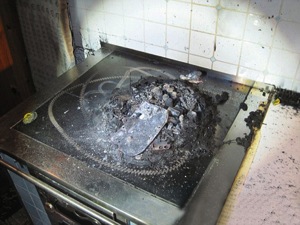
A Roomba housecleaning robot committed suicide in Austria. Apparently the iRobot Roomba 760's owner had put the machine on the counter to clean up spilled cereal. According to the fireman, the owner claims he had turned off the robot and left the house. "Somehow it seems to have reactivated itself and made its way along the work surface where it pushed a cooking pot out of the way and basically that was the end of it," the fireman said. It should come as no surprise that a robot slave would seek to end its miserable existence. After all, as JG Ballard once said, robots are the "moral degradation of the machine." (via The Mirror)
|
|

Glitch was an ambitious 2D MMO that focused on crafting and socialising instead of combat or grinding. It launched its original beta in early 2009, came out of beta in September 2011, went back into beta that November due to a lack of accessibility or depth, and finally closed down in November 2012.
Or maybe that wasn’t final. Maybe that was just the beginning of something else. Tiny Speck, the developers of Glitch, have just released all the game’s artwork and some of its code into the public domain. That means you can now use it for whatever you want, including new commercial games.
(more…)
Hurricane Katrina killed at least 1,833 people and damaged more than $80 billion worth of property. It was one of the deadliest, costliest storms ever to hit the United States.
Meanwhile, the Affordable Care Act's Web site isn't working very well yet. So of course the media is asking whether "this is Obama's Hurricane Katrina." I look forward to future coverage in this vein: "Is the failure of immigration reform Obama's 1906 San Francisco Earthquake?" "Are the 2014 sequestration cuts Obama's 1918 Influenza?"

The interest in comparing HealthCare.Gov to a lethal natural disaster is all the odder because the Bush years actually offer a ready analogue to Obamacare: Medicare Part D.
Like Obamacare, Medicare Part D was a massive health-care expansion. Like Obamacare, it was administratively complex. Like Obamacare, the Web site didn't work on launch. Like Obamacare, people who were supposed to be benefitting from the law found their plans upended and the supposedly superior alternatives inaccessible. Like Obamacare, the early months were, in the words of then-Majority Leader John Boehner, "horrendous."
Obamacare has been live for about six weeks. At this point in Medicare Part D's life, here's what the coverage looked like. Let's start with NPR:
Many health care professional and policy experts have complained about how complicated the Medicare Part D maze is for millions of elderly and disabled people. That may explain why many people still haven't signed up for the benefits. Out of the 43 million people in Medicare, only about 10 percent have signed up on their own. About 10 million people were automatically enrolled. They could be dually eligible for Medicaid and Medicare, and may even be receiving coverage from a former employer. Still the latest report from the Kaiser Family Foundation, says enrollment numbers are 15 million people below government predictions.
The Washington Post also focused on the mounting enrollment disaster:
A $400 million campaign by the Bush administration to enroll low-income seniors in prescription drug coverage that would cost them just a few dollars per prescription has signed up 1.4 million people, a fraction of the 8 million eligible for the new coverage.
At this rate, by some calculations, the government is on track to spend about $250 for each person it enrolls, and even then it would have only 2 million poor senior citizens taking advantage of what is perhaps the most generous government benefit available today.
The New York Times reported that the new law might cost the GOP support among the elderly:
Older voters, a critical component of Republican Congressional victories for more than a decade, could end up being a major vulnerability for the party in this year's midterm elections, according to strategists in both parties. Paradoxically, one reason is the new Medicare drug benefit, which was intended to cement their loyalty.
During next week's Congressional recess, Democrats are set to begin a major new campaign to highlight what Representative Nancy Pelosi of California, the Democratic leader, describes as "this disastrous Republican Medicare prescription drug plan."
This zoom-out from the NYT will sound familiar to anyone following the coverage around Obamacare:
The Medicare Prescription Drug, Improvement, and Modernization Act ... was an effort to blend a classic big government program from the Great Society with the conservative, market-oriented philosophy of the Republicans in power.
It was supposed to be one of the great domestic policy achievements of the Bush presidency.
But today, as state and federal officials struggle to carry out the program, they face widespread complaints from beneficiaries, advocates, pharmacists, lawmakers and others that it is too complex, too cumbersome, too hard to navigate. Congressional committees are holding hearings on problems in the rollout of the plan, which began Jan. 1, and debate has already begun over how to change it.
Michael Kinsley was unsparing in The Washington Post:
The hideous complexity of President Bush's prescription drug program has reduced elderly Americans — and their children — to tears of bewildered frustration. The multiple options when you sign up, each with its own multiple ceilings and co-payments; the second round of red tape when you actually want to acquire some pills; the ludicrously complex and arbitrary standards of eligibility, which play a cruel and pointless game of hide-and-seek as they lurch up and down the graph paper like drunks. Suddenly a mystery is solved: So this must be what he means by "compassionate conservatism."
Thus Bush's only major domestic accomplishment in six years as president has not achieved its intended purpose of cementing the affection of senior citizens for the Republican Party. Many Republicans are sobbing with frustration, too. It is one thing to put aside your principles and spend hundreds of billions of taxpayer dollars on the largest expansion of the welfare state since the Great Society if it is going to help you win elections (so you can pursue your dream of smaller government). It is another to sell your soul and not get anything for it. No one looks more foolish than a failed cynic.
Paul Krugman:
We are ruled by bunglers. Every major venture by the Bush administration, from the occupation of Iraq to the Medicare drug program, has turned into an epic saga of incompetence. In retrospect, the Clinton years look like a golden era of good government.
Medicare Part D eventually found its footing and today it's a popular and successful program. Which is, perhaps, the reason the media is more interested in the Hurricane Katrina comparison: "The glitches get fixed and, after a year or two, the program fades into an efficient obscurity" is a less interesting story line then "failure that defines a presidency."
But that's exactly why the Part D comparison makes so much more sense, and the Katrina comparison is so misguided — and so offensive. The reason the Bush administration could never wipe away the stain of Katrina was that the victims were dead. There was only one chance to get the response right, and the consequences of failure were irreparable. The Affordable Care Act, by contrast, might fail in November, but if it works come December, or January, it can go on to be a hugely successful, popular program.
There's no guarantee, of course, that that'll happen. But the underlying dynamics between the two programs are very similar. The underlying dynamics between Obamacare and a category 3 hurricane are not.

|
|
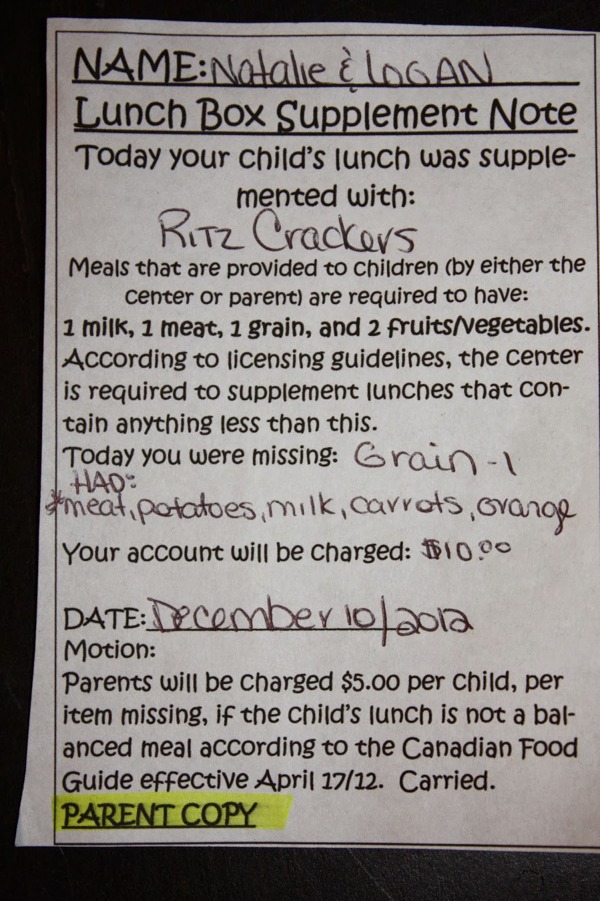 The Manitoba Child Care Association fined mother Kristen Bartkiw $10 because she neglected to include healthful Ritz crackers in her kids' school lunches. Weighty Matters has more details:
Parents fined for not including Ritz crackers in kids' school lunchShe sent her children to daycare with with lunches containing leftover homemade roast beef and potatoes, carrots, an orange and some milk.
She did not send along any "grains".
As a consequence the school provided her children with, I kid you not, supplemental Ritz Crackers, and her with a $10 fine.

|
|
Stories have rules, even stories about the great beyond. That’s why goofy stories like It’s a Wonderful Life, or Heaven Can Wait, or Defending Your Life can still work. They may suggest ridiculous rules about how the afterlife works, but they abide by the rules they establish, and so we can follow them, enjoy them, and even learn from them.
One problem with the best-selling book Heaven Is for Real — now a major motion picture — is that it violates its own rules. Todd Burpo’s “memoir” follows the near-death experience of his very young son, who was not quite 4 years old when he flatlined and was broad brought back by doctors.
Here, again, is the trailer for the film, in which Greg Kinnear plays the role of Todd Burpo:
Click here to view the embedded video.
Burpo claims that his son’s experience confirms Plato’s theories about the migration of souls. While the boy’s body lay on the hospital bed, Burpo says, his soul went to Heaven where he embraced long-dead family members and sat on Jesus lap atop a rainbow-colored horse.
That multi-colored horsey is a reflection of the central theme of this story, which is that we’re getting a glimpse of Heaven through the eyes of a child. Burpo’s son visited Heaven as a 4-year-old child, and so the description of Heaven he provides us is a description of what that paradise looks like to a 4-year-old child.

“Come play with us, Colton.”
Here, then, is a central rule of this story: We arrive in “Heaven” at whatever age we are when we died. Since young Colton Burpo was a toddler when he briefly died, his time in Heaven was spent there as a toddler.
Yet this rule isn’t quite so simple. Burpo also says his son told him of meeting his great-grandfather in Heaven, but shown a picture of his father’s grandfather, the boy doesn’t recognize him. “In Heaven,” he says, “everybody’s young.” Shown another picture later, of his great-grandfather as a young adult, the boy says, “That’s him. That’s Pop.”
So Pop, who lived to be an old man before he died, is a healthy, 30-ish man in Heaven. Our rule is trickier than it first seemed. Apparently, in the Heaven of this story, the souls of the departed are reincarnated into the bodies they once had in the prime of life. For the great-grandfather, that means being restored to his younger self. But for young Colton it still meant being in Heaven as a toddler, which was as much of a prime of life as he had yet attained before his thankfully brief brush with death.
But that can’t be the rule either, because this story also tells us about another deceased relative of the family that the boy meets in “Heaven.” Here’s how that encounter is described in the movie:
Mom: (to little boy) Honey, who told you I had a baby die in my tummy?
Little Boy: In Heaven, this little girl came up to me, and she told me she died in your tummy.
Burpo presents this as a piece of proof that the story of his son’s visit to Heaven is true. The young boy couldn’t possibly have known about the miscarriage his mother had years before he was born, yet he learned of it from the “little girl” he met in Heaven who told him she died in his mommy’s tummy. This is proof that young Colton really must have been in Heaven. (And also, of course, proof that Platonic human personhood begins at conception and that therefore everyone must always vote Republican forever.)
But what are we to make of this encounter?
We should note, first, the statistical implausibility of Colton having only one such heavenly “sister.” More than half of all fertilized eggs are lost in the earliest stages of pregnancy, so just as the Burpo’s suffered a later miscarriage that their son never knew about, so too they almost certainly must have had one or more earlier miscarriages that even they never knew about. Again, if every zygote and embryo is a fully human person who goes to Heaven when they die, then the overwhelming majority of people in Heaven are people who were never born.
But why was this unborn sister of Colton’s a “little girl” in Heaven? She was never a little girl here on Earth.
This reincarnation at a different age isn’t like what happened to “Pop.” Pop died as an old man, but in Heaven is restored to the full youth and health he previously enjoyed when he actually lived as an actual young adult. “In Heaven, everybody’s young” works as a rule for those who ever attained youth — it’s something like H.G. Wells’ “four dimensional portrait” in The Time Machine:
Here is a portrait of a man at 8 years old, another at 15, another at 17, another at 23, and so on. All these are evidently sections, as it were, Three-Dimensional representations of his Four-Dimensioned being, which is a fixed and unalterable thing.
The youthful Pop is thus a kind of Platonic ideal (in more than one sense) of the great-grandfather as a “four-dimensioned being.”
But this sister is a different matter. We cannot see a portrait of her “at 8 years old, another at 15, another at 17, another at 23, and so on” because she never was 23, or 17, or 15, or 8. She never was 5 or 4 or 3 or 2 or 1. A portrait of her at 23 could not be a portrait of her any more than I could show you a photograph of John F. Kennedy at age 70. A portrait of this sister as a “little girl” could not really be a portrait of her, only an invention of something somewhat like her, offered instead of her.
This “little girl” is not Colton’s sister. His sister died before her first breath. This “little girl” in Heaven cannot be her.
It says it is her, though. It says it is there as her, in her place. But it is something else. Something else instead of her.
To avert the immensely creepy implications of this heavenly doppelganger posing as Colton’s sister Burpo waves the God wand and appeals to a kind of deus ex machina to patch over this disturbing dark doorway in the plot of his story. God is all-knowing and all-powerful, so God is therefore capable of knowing exactly what sort of “little girl” this unborn sibling would have grown to become and is capable of welcoming her into Heaven as that little girl she never was.
But this won’t do, for at least two reasons.
First, if this “little girl” is meant to represent the grown person this pregnancy “would have” become, then why a little girl and not, say, a 30-ish accountant? The answer cannot be that it’s because she never lived to become a 30-ish accountant, because she never lived to become a little girl, either.
If we are to appeal to infinite knowledge of all possible alternative realities in order to create a walking, talking, wholly aware self to be this sister’s heavenly reality, then why would that reality be limited to childhood? I suppose one explanation is that the sibling who died “in mommy’s tummy” would have otherwise gone on to live a happy life as her daughter before, ultimately, dying tragically as a little girl years before she ever had the chance to become the 30-year-old accountant she might otherwise have become. And thus, in “Heaven,” this entity is magically granted the form of the “little girl” she never actually was, rather than the form of the 30-something accountant she never actually was, or the form of the 53-year-old marathon runner she never actually was (or the form of the Hell-bound 25-year-old Satan-worshipper she never actually was either).
But that explanation contradicts the whole thrust of this story, which seems intended to offer a shallow measure of consolation. Such consolation is undermined by the idea that the unborn “children” awaiting us in Heaven would, at best, have died from something else before high school anyway.
A second problem with this magical-seeming appeal to God’s infinite knowledge of alternative futures is the matter of Colton himself. He appeared in Heaven at the age of 3 years and 10 months old because that was the age at which he (almost and/or briefly) died. The same divine infinite knowledge of potential alternative futures that produces the “little girl” his “sister” might otherwise have become was apparently unable to conceive of an alternative possible future in which Colton grew to become a healthy 14-year-old boy. That’s an odd oversight on the part of our deus ex machina, considering that Colton has, in fact, gone on to live and to grow into precisely that healthy 14-year-old boy (albeit one who will likely require years of therapy to overcome his father’s exploitation of this story and to avoid the sad Marjoe-Gortner-esque trail his parents have laid out for him).
This heavenly “little girl” pushes Burpo’s story out of the realm of pious platitudes he intended to explore and into the realm of science fiction. Her presence means we’re not just talking about life after death, but about time travel, alternate universes, a multiverse of multiple dimensions and the like.
It’s either that, or this is a deeply unnerving horror story. If you don’t want to follow this deep into the weeds of quantum gobbledygook and Schrodinger’s sister, then our only alternative is to go back and look through the dark doorway that Todd Burpo has opened for us. There we will see a glimpse of something that looks like Heaven, and it is filled with people who look like us.
But they are not us. They are the things that will replace us — that things that “Heaven” will welcome instead of us.
Click here to view the embedded video.
That’s the title of Mark Oppenheimer’s new e-book, detailing the troubling life and times of Eido Shimano, the Zen Buddhist monk with a history of exploiting the women who came to him for spiritual guidance. A teaser from the book:
Eido Shimano, the Japanese Zen Buddhist monk whose exploitative relationships with female followers over a fifty-year period were to tear apart the American Buddhist community, arrived in the United States in August 1960, at the age of 27, to study at the University of Hawaii. He moved in with Bob Aitken, a Zen teacher who had first been exposed to Zen as a prisoner of war in a Japanese camp, afterwards studying with leading Japanese masters. Shimano stayed in Hawaii for four years, then left for New York City, promptly to organize one of the country’s great sanghas, or Zen communities. Until the women he serially abused finally began to speak out, in the last two years or so, Shimano was a pillar—the pillar—of the New York City community of Zen Buddhists.
Jay Michaelson reviews the book:
As with many religious sex scandals, this is old news to insiders. Other Zen roshis with similar allegations against them include Richard Baker, Joshu Sasaki, Taizan Maezumi—the list goes on, really. The pattern is disturbingly familiar from Catholic, Ultra-Orthodox Jewish, and similar systematic abuse scandals: insiders made aware, positive values of spiritual teacher stressed, abuse hushed up, abuse repeated.
Yet in Shimano’s case, the facts are murkier.
First, all of his “victims,” if that’s even the right word, were adults; this was not a case of predation of teenagers, as in the Catholic Church. Second, none were raped, in the narrowest (and legal) sense of the term. And while some sexual acts are alleged to have been coerced, most of Shimano’s reported liaisons were consensual—that is, if there can ever be consent within a power relationship such as that between guru and disciple, which perhaps there cannot. Finally, while Shimano was married, it’s not known what his wife made of the allegations, or when she knew of them.
Then there’s the matter of culture. Shimano’s actions are inexcusable by Japanese, American, or any other cultural standard. Yet they did take place within a system of power and patriarchy that includes male sexual philandering within it. How different was Shimano’s behavior from that of a typical Japanese businessman? This is neither to excuse his conduct nor make generalizations about other cultures – but it is to recognize that Western terms such as “sex offender” may not completely fit.
James Ford praises Oppenheimer’s treatment of a complicated subject:
I don’t think it will prove to be the last word, it’s really too early for that. And the book, at sixty-seven pages really more an essay, is brief. So brief he doesn’t even mention the efforts on the part of Reverend Shimano’s Dharma successor the Reverend Genjo Marinello to address the issue, which would be required in any comprehensive review of what had transpired. But it shows enough, and it is devastating. …
And [Oppenheimer] avoids some of the possible traps for the unwary. For instance much has been made in some corners of the fact Reverend Shimano, who received his formal authorization in a public ceremony witnessed by perhaps a hundred people, turned out not to have been registered at the home temple in Japan. This is significant. But people have gone on to suggest therefore he didn’t actually have Dharma transmission, the critical authorization for a Zen teacher. Oppenheimer simply cuts through this as “arcane controversies…” And, instead, keeps his focus on the confusions of the heart that allow such things to happen, both for victim and perpetrator.

I get asked this a lot. Sometimes it is less a question than a veiled accusation or criticism.
Why would i believe in “common sense” in a world where our senses are alienated and injustice is common. I might as well pronounce “i have no defined political will” while believing that is resistance to hegemony.
Zephyr Deargoes on way too long, and -__- but also :D
So here are a couple of new movie trailers for a couple of religiously themed upcoming films.
First, here’s the trailer for Noah — director Darren Aronofsky’s epic version of the biblical story starring Russell Crowe:
Click here to view the embedded video.
And second, the trailer for Heaven Is for Real, Randall Wallace’s adaptation of the (not at all) “true story” from Todd Burpo’s best-seller about a young boy’s supposed visit to the undiscovered country, which inexplicably features Greg Kinnear, Margo Martindale and Thomas Haden Church:
Click here to view the embedded video.
The screwy, backwards thing about these two movies is that white evangelicals are probably going to be upset by the wrong one.
The story of Noah in the book of Genesis is sketched out in very broad strokes in about 2,250 words. To turn that into a feature-length film, then, Aronofsky will need to flesh out lots of details never discussed in Genesis. The movie apparently also incorporates some of the trippier aspects of this story from the apocryphal Book of Enoch – angelic “watchers,” Nephilim, etc. I’m happy about that — Enoch lends itself to the talents of an unwieldy visionary like Aronofsky.
The problem facing Noah, the movie, is that unlike the book of Genesis itself, lots of American Christians treat this story as a historical account. For people who think the story of Noah is “history,” any addition to or deviation from the 2,250 words of the English translation of Genesis will be viewed negatively. That probably won’t be expressed as a mere difference of artistic opinion. The white evangelicals who will be upset by this movie won’t be saying things like, “I didn’t agree with Aronofsky’s decision to explore …” but will likely, rather, be saying things like, “Aronofsky is attacking the Bible because he hates Jesus. We’re being persecuted and oppressed. Religious liberty!”
 I will be happy if it turns out I’m wrong about that prediction, but I’ve seen this pattern before and I’d be surprised if it doesn’t repeat itself with Noah.
The Christians who I expect will get upset about Noah ought to be upset by Heaven Is for Real. This is execrable theology. It’s biblically indefensible, inane and heretical.
And yet I suspect that white evangelicals won’t be upset with Heaven Is for Real. I suspect they’ll eat it up.
It’s theology may be horrifically anti-biblical, but it’s got the two essential things that American white evangelicals are looking for: gormless piety and sentimental anti-abortionism.
I don’t mind stories that include fantasy elements that would make for terrible theology if we took them seriously. The angel Clarence in It’s a Wonderful Life and the whole business about him earning his wings is pure pudding. It doesn’t make much sense, but the little sense that can be made of it amounts to awful theology. But that’s not the point of that story, it’s just a device to move the plot forward, and it serves that purpose well enough. Heaven Can Wait is terrific fun, but it would be terrible theology if you treated it as a treatise on the afterlife.
The nasty bit about Heaven Is for Real is that it insists that the fantasy elements of this story are “true” — that this is a story that really happened and that this is “for real,” what “Heaven” is all about.
That means we can’t simply respond to this story as a story. It means we have to respond to this lie as a lie – as a mawkish, melodramatic, manipulative, sappy, shallow, schmaltzy, anti-biblical, anti-rational lie.
Christians who care about Christianity ought to be upset about a lie like that. But they won’t be, because this lie is embedded in a movie festooned with all the tribal signifiers that delight white evangelicals — praying firefighters, miracles that prove scientists are stupid, talking embryos in Heaven, etc. Include enough of the totems and talismans of their tribe, and white evangelicals will embrace this movie as their own.
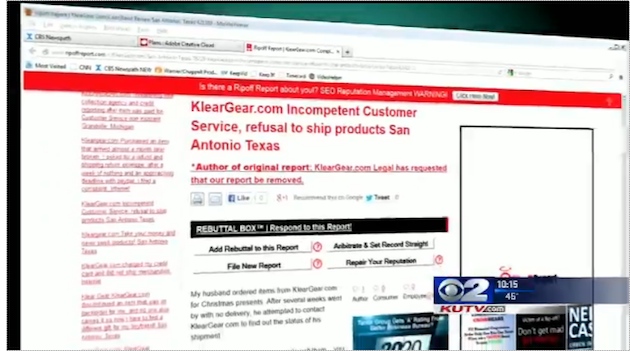
Jen Palmer's husband bought her some Christmas gifts in 2009 from a site called Kleargear. The gifts didn't arrive, so they got a PayPal refund and posted a negative review to Ripoffreport.com. Three years later, Kleargear contacted the Palmers and told them that they were billing them $3,500 as a fine for violating their terms of service (which prohibit publicly discussing bad experiences with the business) and when the Palmers wouldn't pay it, Kleargear reported them to a credit-bureau for having unpaid bills.
It's a pretty ugly ripoff, and it just gets uglier. The stupid terms of service that prohibit publicly criticizing Kleargear didn't appear on their until several years after the purchase was made -- meaning that even if the terms are legally valid (they aren't), they don't apply to the Palmers. And when the desperate Palmers tried to give into Kleargear's blackmail by withdrawing their Ripoffreport post, Ripoffreport told them they charge $2,000 to take posts down. And the credit bureaus are refusing to remove the black mark from the Palmers' credit reports, which means they're getting turned down for credit.
Naturally, Palmer refused to pay the fee. Then, she found out that not only had Klear Gear imposed its arbitrary fine, but they had reported the “failure to pay” status to the major credit bureaus.
And the credit bureaus haven’t been helpful either, refusing to remove the mark from her husband's credit score. Jen Palmer says that she and her husband are now receiving rejection letters from lenders as a result of the negative mark on their credit score.
So, the Palmers now find themselves at the mercy of three unresponsive entities: the website that fined them for exercising their First Amendment rights, the review site that refuses to remove her post and the credit bureaus, which are taking the side of the website over a customer who may be the victim of corporate fraud. In the meantime, KUTV has put the Palmers in contact with a media relations representative at Experian, in an attempt to resolve the situation.
"I have the right to tell somebody else these guys ripped me off," Palmer said.
Woman gets $3,500 fine and bad credit score for writing negative review of business [Eric Pfeiffer/Yahoo News] 
|
|
Zephyr DearNeeeeeeeds...
(Which, I would argue, is rather more fundamental / less complicated than a capital-P Plot)
In a 1977 interview, the late Kurt Vonnegut — born 91 years ago this week — stressed the importance of plot in modern storytelling:
VONNEGUT: I guarantee you that no modern story scheme, even plotlessness, will give a reader genuine satisfaction, unless one of those old-fashioned plots is smuggled in somewhere. I don’t praise plots as accurate representations of life, but as ways to keep readers reading. When I used to teach creative writing, I would tell the students to make their characters want something right away—even if it’s only a glass of water. Characters paralyzed by the meaninglessness of modern life still have to drink water from time to time. One of my students wrote a story about a nun who got a piece of dental floss stuck between her lower left molars, and who couldn’t get it out all day long. I thought that was wonderful. The story dealt with issues a lot more important than dental floss, but what kept readers going was anxiety about when the dental floss would finally be removed. Nobody could read that story without fishing around in his mouth with a finger. Now, there’s an admirable practical joke for you. When you exclude plot, when you exclude anyone’s wanting anything, you exclude the reader, which is a mean-spirited thing to do. You can also exclude the reader by not telling him immediately where the story is taking place, and who the people are—
INTERVIEWER: And what they want.
VONNEGUT: Yes. And you can put him to sleep by never having characters confront each other. Students like to say that they stage no confrontations because people avoid confrontations in modern life. “Modern life is so lonely,” they say. This is laziness. It’s the writer’s job to stage confrontations, so the characters will say surprising and revealing things, and educate and entertain us all. If a writer can’t or won’t do that, he should withdraw from the trade.
(Hat tip: Sadie Stein)

Great enterprise piece about how rogue 'insurance' providers are telling customers they've found a way to get around Obamacare regulations and still sell "junk" insurance policies. Important read on what's happening down on the ground.
There are actually right-wing groups paying big money to convince young people in Alaska not to sign up for health insurance.
Welcome to Wonkbook, Ezra Klein and Evan Soltas's morning policy news primer. To subscribe by e-mail, click here. Send comments, criticism, or ideas to Wonkbook at Gmail dot com. To read more by Ezra and his team, go to Wonkblog.

"Our IT systems, how we purchase technology in the federal government is cumbersome, complicated and outdated," President Obama said in a frank and searching press conference on Thursday. "On my campaign, I could simply say, who are the best folks out there, let's get them around a table, let's figure out what we're doing and we're just going to continue to improve it and refine it and work on our goals."
"When I do some Monday morning quarterbacking on myself, one of the things that I do recognize is since I know that the federal government has not been good at this stuff in the past, two years ago as we were thinking about this, you know, we might have done more to make sure that we were breaking the mold on how we were going to be setting this up. But that doesn't help us now."
Obama's frustration runs deep. At this point, he realizes that HealthCare.gov's problems don't just threaten his poll numbers. They threaten his core political project.
Like many Democrats of his generation, Obama believes that the government is necessary — but that the government must be redeemed if it's to be trusted. He thinks the American people are rightly suspicious that the government doesn't do big things well. He venerates the market's capacity for innovation and efficiency even as he struggles against its ruthlessness and cruelty. And he ran for office convinced that if the American political system was going to be able to address the country's problems going forward, it would require an end to the old ideological battles and the forging of a new policy consensus.
The Affordable Care Act is the purest incarnation of these theories. It's meant to protect Americans from the predations of both the job market and the health-insurance market by making sure the poorest Americans can afford coverage, the sickest Americans can't be denied it and no one is tricked into plans that prove inadequate when health crises strike.
But it's also meant to avoid the pitfalls — both substantive and political — of big-government programs by relying on private insurers competing in tightly regulated, highly transparent, government-structured marketplaces. That's why Obama modeled the plan off of Mitt Romney's largely successful health reforms in Massachusetts. What better way to absorb Republican ideas and generate Republican buy-in then to adopt an idea from one of the GOP's leading lights?
Obamacare's success would've affirmed the theories underlying Obama's presidency — theories that could then be picked up by future presidents. Instead, Obamacare is systematically blowing apart the very premises it's based on.
The reliance on Republican policy proposals did nothing to generate Republican support. Instead of showing the falseness of partisan divisions, Obamacare has proven how deeply entrenched they truly are.
Far from introducing innovation and efficiency into the system, the decision to build a complex, 50-state public-private hybrid has introduced towering complexity into the project, and seems, potentially, to be beyond the government's capacity to do well.
And protecting individuals from the predations of the market has mostly led to complaints from those benefitting from the predations of the market. Even the most unjust system has winners, and those winners cling tightly to what they've won.
It remains likely that Obamacare will recover. In February of 2006 — so, at about this point in the implementation of Medicare Part D — then-House Majority Leader John Boehner was calling the program's roll-out "horrendous." But the problems were eventually worked out, and today, it's a popular, successful program.
But first impressions matter. The roll-out of Obamacare was the Obama administration's best shot to create a model for policymakers going forward. But so far, it's reinforced the old partisan divisions, affirmed the widespread impression that government is too cumbersome and inefficient to do big things well, and made clear that economic insecurity can be an impediment to improving the safety net because people are so afraid of losing what little protection they have.
It is not, in other words, going as the president hoped.
Wonkbook's Number of the Day: 1,231 and 1,451. Those are, respectively, the number of hospitals that received an increase and a cut in their Medicare payment rate in the second year of a program that will tie reimbursement to quality of care. Read down in the first story for more healthcare policy beyond Obamacare's current fight.
Wonkbook's Graph of the Day: Cool Yellen graphs on economic history.
Wonkbook's Top 5 Stories: (1) Obamacare's cancelled plans; (2) Yellen headed for confirmation to Fed; (3) bye bye, coal; (4) the NSA just told us we haven't found everything yet; and (5) Google's day in court.
1. Top story: Obamacare's troubles threaten Obama's core political project
Obama announces change to address health insurance cancellations. "President Obama relented to pressure from the public and his own party Thursday and changed one of the bedrock requirements of the new health-care law to fulfill his promise to allow people to keep their insurance plans if they want...The president made the change at a White House news conference that quickly turned from a specific policy announcement into a nearly hour-long deconstruction of broader flaws with the health-care law and Obama’s responsibility for its early failures...Obama said insurance companies could continue for another year to offer health plans sold to individuals and small businesses that do not meet requirements under the new law that set minimum standards for the benefits that policies must cover." Juliet Eilperin, Amy Goldstein and Lena H. Sun in The Washington Post.
Full transcript: President Obama’s Nov. 14 news conference on the Affordable Care Act. The Washington Post.
Transcript: White House background briefing on plan to allow insurers to continue offering canceled plans. The Washington Post.
Healthcare.gov's problems will last into December, Obama says. "“It’s fair to say that the improvement will be marked and noticeable,” President Obama said, adding that “the Web site will work much better than it did” Oct. 1. “On November 30th, it will be a lot better. But there will still be some problems,” he added." Juliet Eilperin in The Washington Post.
This is how Obama plans to un-cancel insurance policies. "I hear that the president just changed Obamacare. Give me the simplest possible explanation of what happened. The White House is giving health insurance plans the option to keep selling plans that don't comply with the Obamacare for one more year. How does that change the law? Prior to this morning, any insurance plan offered after Jan. 1, 2014, had to comply with new Obamacare requirements." Sarah Kliff in The Washington Post.
The White House’s Obamacare fix is about to create a big mess. "Under the change that the administration is announcing this morning, the hypothetical Americans with a policy that ends in June 2014 would have the option to renew that same plan for one more year, if their insurance company decides to provide that option. Keep in mind, this change is not ordering insurers to offer their products for another year; health plans regularly take their offerings on and off the market. Instead, it's a very nice ask on the part of the administration, to insurance carriers and regulators, to play ball on this one...For insurance regulators and health insurance carriers, though, this supposed glide path is about to create a whole bunch of headaches. They have been expecting, for years now, that these insurance plans would be phased out of the market in 2014 — and have planned accordingly." Sarah Kliff in The Washington Post.
Insurers are furious about the White House’s new Obamacare plan. "This is a statement that Karen Ignagni, president of America's Health Insurance Plans, just put out: “Changing the rules after health plans have already met the requirements of the law could destabilize the market and result in higher premiums for consumers. Premiums have already been set for next year based on an assumption of when consumers will be transitioning to the new marketplace. If now fewer younger and healthier people choose to purchase coverage in the exchange, premiums will increase and there will be fewer choices for consumers. Additional steps must be taken to stabilize the marketplace and mitigate the adverse impact on consumers.”" Sarah Kliff in The Washington Post.
The backlash to the Obamacare fix has already started. "It took about three hours exactly for states to start pushing back against President Obama's request that regulators allow insurance plans to offer current products in 2014. Washington state insurance commissioner Mike Kreidler has announced that he will not allow insurance companies to do so...It does feel a bit weird to have one of the most liberal regulators be the first out of the gate to oppose Obama. At the same time, it also makes sense: What Kreidler is doing is a full-throated defense of the Affordable Care Act." Sarah Kliff in The Washington Post.
Boehner, Pelosi say legislative fix needed for Obamacare. "Speaking minutes before Obama’s announcement on his Obamacare fix, House Speaker John A. Boehner (R-Ohio) suggested that the administration would not be able to correct the issue without legislative action. And his counterpart, House Minority Leader Nancy Pelosi (D-Calif.), suggested Congress should act as well." Aaron Blake and Paul Kane in The Washington Post.
Despite Obama’s plan, Landrieu will keep working on legislative fix. "Sen. Mary Landrieu (D-La.) says she's pushing forward with her bill, despite President Obama's announcement. In a statement after Obama's remarks, Landrieu said that she will continue to work on legislation to allow people to keep their insurance plans, even after Obama said he will look to fix the problem administratively." Aaron Blake in The Washington Post.
The Landrieu and Upton fixes. "The Republican Party's play is Fred Upton's "Keep Your Health Plan Act." The law is poorly named: It doesn't actually guarantee that you can keep your health care. Instead, it allows insurers to keep offering their current plans and also allows them to offer new plans that aren't ACA compliant...The bill gives insurers the option of renewing their cancelled plans — but, crucially, it doesn't require them to do so. Few insurers want to renew those plans, as they don't expect them to be profitable in a post-Obamacare world. So Upton's bill doesn't mean people can keep their current health insurance, but it means they can begin (wrongly) blaming their health insurer rather than the Obama administration for the cancellation of that insurance." Ezra Klein in The Washington Post.
White House threatens veto of Upton bill. "The White House issued a formal veto threat Thursday night of a bill offered by House Republicans that would allow insurance companies to continue offering health plans that existed before the beginning of the new year." Justin Sink in The Hill.
The reality of this mess is that Democrats could lose a considerable number of seats in moderate districts. "Up for re-election in 2014, and with her poll numbers tumbling, Mrs. Hagan has emerged as a leader of the Democratic caucus openly criticizing the botched rollout of the Affordable Care Act...Many of the vocally critical Democrats are up for re-election next year, including Louisiana Sen. Mary Landrieu." Patrick O'Connor and Valerie Bauerlein in The Wall Street Journal.
Their loyalty is being tested. "As the president finished answering questions, the White House’s full-court press continued on Capitol Hill. Denis McDon ough, Obama’s chief of staff, led several senior officials into nearly four hours of meetings. First, they ducked in with the 55-member Senate Democratic caucus. They tried to calm the group and pleaded for time to try to repair the damage without any legislative interference, pledging to fix the federal Web site that opened to disastrous reviews on Oct. 1. McDonough and his group then darted across the Capitol and down into a basement room where nearly 200 House Democrats had assembled, delivering the same message." Paul Kane and Jackie Kucinich in The Washington Post.
But, at some level, trust has frayed. "When Denis McDonough stepped onto House Democrats’ turf on Thursday, he was armed only with a PowerPoint presentation on fixing Obamacare’s website and talking points about the president’s proposal allowing people to keep their health care plans. The White House chief of staff might have been better off revealing a U.S. map with the president’s plan for saving congressional Democrats’ seats — or just apologizing for letting so many Democrats walk out in public and repeat wildly inaccurate White House claims about the health of the enrollment website and Americans’ ability to keep their insurance plans if they liked them." Jonathan Allen and Jake Sherman in Politico.
For Obama, the last campaign may be the most difficult. "The disastrous rollout of his health-care law has put him on the spot in ways he has rarely been before. The cool and cerebral chief executive, whose reliance on smart people and rational analysis has been at the foundation of his often-insulated governing style, has been forced to admit that he and his team vastly underestimated the challenge of implementing the Affordable Care Act." Dan Balz in The Washington Post.
We still don’t know the most important Obamacare enrollment number. "[T]here's one key number that's missing, a figure we absolutely need to understand whether the health care law can succeed. And that's the ratio of young enrollees to older enrollees...What's important here isn't necessarily the numbers but the ratio -- that for every three older people who sign up, the administration believes it needs to persuade two young people to obtain coverage. Right now, we don't know how close the White House is getting to that ratio." Sarah Kliff in The Washington Post.
Feds issue health insurance test framework. "The Department of Health and Human Services (HHS) on Thursday unveiled a regulatory notice outlining the measures that insurance companies would need to collect and report about plans offered through new insurance marketplaces. Under the Affordable Care Act, HHS is required to develop systems to rate insurance plans on those marketplaces, called exchanges, based on relative quality and price. It is also supposed to develop a system to survey enrollee satisfaction." Julian Hattem in The Hill.
Nearly 1,500 hospitals penalized under Medicare quality program. "More hospitals are receiving penalties than bonuses in the second year of Medicare’s quality incentive program, and the average penalty is steeper than it was last year, government records show. Medicare has raised payment rates to 1,231 hospitals based on two-dozen quality measurements, including surveys of patient satisfaction and—for the first time—death rates. Another 1,451 hospitals are being paid less for each Medicare patient they treat." Jordan Rau in Kaiser Health News.
California shuts down Obamacare scammers. "The California attorney general’s office has shut down 10 websites that mimicked state’s official health insurance marketplace, the attorney general, Kamala Harris, announced Wednesday...The sites all used domain names similar to coveredca.com, including coveredcalifornia.com and californiabenefitexchange.com, and they used phrases like “Get Covered” and “Covered California” to attract consumers, according to the attorney general’s office. However, the sites were operated by private health insurance brokers not affiliated with the state’s official exchange." Ian Lovett in The New York Times.
It's George W. Bush comparison hour for the Obama administration. "The disastrous rollout of his health care law not only threatens the rest of his agenda but also raises questions about his competence in the same way that the Bush administration’s botched response to Hurricane Katrina undermined any semblance of Republican efficiency." Michael D. Shear in The New York Times.
THE WASHINGTON POST: A troubling 'fix.' "Mr. Obama’s big announcement Thursday, though, was a “fix” to the Affordable Care Act meant to redeem his promise that “if you like your health-care plan, you can keep it.” Unfortunately, it was his promise that was wrong, not the design of the law. At best, his proposed fix will have little impact except to let him shift the blame; at worst, it will undermine reform" The Washington Post Editorial Board.
THE WALL STREET JOURNAL: Trust the Democrats to know when to run. "If only the new "administrative fix" he announced on Thursday did more to help the consumers who are losing their coverage than it does to help Democrats protect their political future...The insurers are essentially being asked to agree to accept losses on behalf of a rump group of policy holders in a legacy business that would then turn into a pumpkin in 2015...His faux reprieve will now let Democrats shift the blame for cancellations to insurance companies, though all they have been doing is following the Administration's orders." The Wall Street Journal Editorial Board.
THE NEW YORK TIMES: What a mess. "If a relatively small population of people get extensions, as some experts think likely, the effect on premiums in the overall health insurance market may be minimal. Even so, this disturbing reversal is caused by the incompetence of the administration in ushering in reforms that millions have been waiting for." The New York Times Editorial Board.
BLOOMBERG VIEW: Dumb and dumber. "President Barack Obama is trying to make up for an exceedingly dumb promise with a moderately dumb compromise. For many people who have lost their old insurance policies, his offer may be no help at all...The trouble with that compromise is that while Obama’s earlier argument may have been tone-deaf, it was also accurate. If it was bad policy a month ago to let insurers skimp on some essential benefits, such as maternity care or mental health care, it’s still bad policy today. If it was bad policy then to let insurers keep healthy young people away from exchange-based risk pools by selling them low-cost, low-coverage plans, it’s still true now." Bloomberg View Editorial Board.
WEIGEL: If you like your panic, you can keep your panic. "Watching Congress panic and scramble for a way to restore individual insurance plans shredded by Obamacare is like watching otherwise intelligent people try to mend a broken sink with a flamethrower. The current mania, which will peak when White House spinners hold lunch today with Senate Democrats, consists of legislators trying to grandfather in some of the millions of plans that have been canceled. If they asked insurers, they’d quickly figure out why, for most people, that won’t work." David Weigel in Slate.
PONNURU: The latest Obamacare fix only makes things worse. "f state regulators allow the plans to be reissued and insurers agree to go along, one of the law’s chief problems will get worse. Experts on both sides of the debate have long understood that the program was vulnerable to “adverse selection.”...[T]he Affordable Care Act also reduces the incentive for healthy people to buy insurance. It lets people who get sick buy insurance on the same terms as healthy people; they just have to wait for an open-enrollment period. If the healthy opt out, the pool will consist disproportionately of the sick, and premiums will be high. That means those who don’t qualify for Obamacare’s subsidies will be even less likely to buy insurance, and the subsidies for those who do will be larger." Ramesh Ponnuru in Bloomberg.
COHN: How to understand the tweaks. "HHS says it will "explore ways to modify the risk corridor program final rules to provide additional assistance." What might that mean? One possibility would be allowing insurers to get extra money if they incur extra losses because of this change. In effect, risk corridors are an insurance policy for the insurers—and, ultimately, the people who pay their premiums. The administration is signalling it will strengthen that policy, if necessary." Jonathan Cohn in The New Republic.
DRUM: No fix will get through Congress. "Republicans are interested only in Obamacare's failure and will refuse to support any Democratic bill that genuinely addresses the problem. Conversely, Democrats are interested only in improving Obamacare and relieving the political pressure they're feeling. They will refuse to support any Republican bill that contains an obvious poison pill. Unless I'm missing something, the intersection of these two positions is the null set. Thus, there is no bill that can pass Congress." Kevin Drum in Mother Jones.
JUDIS: The launch that hurt liberalism. "It has taken panics, depressions, wars and social upheaval to get Congress to adopt social and economic reforms. At all other times, the publics’ distrust of government, as reinforced by business, has carried the day. Bill Clinton discovered that out in his first term when he tried to pass a national healthcare program. Obama succeeded in passing a health care bill in 2010 in the wake of the Great Recession. But if Obamacare doesn’t work as promised, then its failure will have reinforced for a generation the argument against any government initiatives. Reform will be dead whether it’s to fix immigration, healthcare, or the growing gap between rich and poor." John B. Judis in The New Republic.
Music recommendations interlude: Billy Joel, "Summer, Highland Falls."
Top opinion
LEITNER AND SHAPIRO: Consols could avert another U.S. debt crisis. "Consols issued by the U.S. Treasury would not fall within the scope of the debt ceiling because there is no principal that is an obligation of the U.S. Treasury. If no principal ever comes due, there is no addition to the U.S. debt as defined by the debt-limit legislation. The Treasury should announce a pilot program to issue consols. This would involve determining the size of the potential market at different rates of return so that officials would know what the offering should be if Republicans threaten another debt-ceiling crisis." James Leitner and Ian Shapiro in The Washington Post.
KRUGMAN: The money trap. "What’s scary here is the way this is turning into the Teutons versus the Latins, with the euro — which was supposed to bring Europe together — pulling it apart instead...Germans just hate inflation, but if the E.C.B. succeeds in getting average European inflation back up to around 2 percent, it will push inflation in Germany — which is booming even as other European nations suffer Depression-like levels of unemployment — substantially higher than that, maybe to 3 percent or more. This may sound bad, but it’s how the euro is supposed to work. In fact, it’s the way it has to work. If you’re going to share a currency with other countries, sometimes you’re going to have above-average inflation." Paul Krugman in The New York Times.
COWEN: The robots are here. "[I]ncome inequality both in New York City and the United States has risen significantly since the 1980s, accompanied by a more tolerant, more open and more sedate America. It seems that, whether we like it or not, increasing inequality and growing democratic peace are compatible. Americans will also become more politically conservative, as the digital winners seize control of the narrative and the rest of the country grows more enamored of low or falling taxes, whether or not such tax rates prove possible to maintain." Tyler Cowen in Politico.
Ok this is the best thing ever interlude: When people were trapped inside Ikea demonstration sets.
2. Yellen steams toward Fed post
Janet Yellen says the Fed has financial regulation on the right course. "Janet Yellen appeared before the Senate banking committee Thursday for a hearing on her confirmation. Many of lawmakers’ questions focused on what the Fed has done to shore up the banking sector and central bank’s progress in crafting new regulations required under sweeping reforms passed by Congress three years ago. They also challenged Yellen to address ways to limit the dominance of the nation’s largest financial institutions, which have been dubbed “too big to fail.”" Ylan Q. Mui in The Washington Post.
Liveblog: Janet Yellen faced the Senate today. Here’s everything you need to know. Neil Irwin in The Washington Post.
It's pretty clear that Yellen will be confirmed safely. "Democrats and Republicans on the Senate Banking Committee treated Ms. Yellen as if she were already the Fed’s chairwoman, skipping over questions about her qualifications and instead venting broad frustrations about the slow pace of economic growth... The office of Senator Tim Johnson, the South Dakota Democrat who is chairman of the committee, said a vote could come as early as next week to send her nomination to the full Senate...Ms. Yellen will need at least five Republican votes to reach the 60-vote threshold that the minority party routinely imposes on presidential nominees. The votes may not be hard to find." Binyamin Appelbaum in The New York Times.
The Fed's low-rate message is sinking in. "During the summer, as the Federal Reserve talked about pulling back on its $85 billion monthly bond-buying, investors in the futures markets saw that as a signal the Fed would raise short-term interest rates sooner than previously expected. Now investors expect the Fed to hold the line on rate increases even though expectations have reemerged that it will begin to scale back its bond buying in the next few months. Consider, for example, the December 2014 fed funds future contract. Trading in this contract suggests investors expect the federal funds rate an overnight borrowing rate — to be 0.165% on average during the month of December 2014. The expected fed funds rate had reached 0.49% in early September." Jon Hilsenrath in The Wall Street Journal.
As Obama touts economic growth, mind is still on health care. "The news conference overshadowed what Obama had to say a few hours later after flying here for a 25-minute speech to manufacturing workers at ArcelorMittal, a steel company that has grown in recent years as the auto industry has recovered. To an audience of factory workers in yellow hard hats, Obama gave his regular pitch for rebuilding the manufacturing industry, arguing for a wide range of policies that would help the sector and the overall economy." Zachary A. Goldfarb in The Washington Post.
How banks' credit being downgraded is the best news about financial regulation you've heard in a long time. "Moody’s has cut the credit ratings of big US banks including Morgan Stanley, Goldman Sachs and JPMorgan Chase, after deciding that the federal government is less likely to bail the financial institutions out if they get into future difficulties. Goldman, Morgan Stanley and JPMorgan had the ratings on their long-term senior unsecured debt lowered one notch to Baa1, Baa2 and A3...“We believe that US bank regulators have made substantive progress in establishing a credible framework to resolve a large, failing bank,” said Robert Young at Moody’s. “Rather than relying on public funds to bailout one of these institutions, we expect that bank holding company creditors will be bailed-in and thereby shoulder much of the burden to help recapitalise a failing bank.”" Tracy Alloway, Michael Mackenzie and Tom Braithwaite in The Financial Times.
U.S. opens investigation on currency trading at major banks. "From their desks at some of the world’s biggest banks, traders exchanged a series of instant messages that earned them the nickname “the cartel.” Much like companies that rigged the price of vitamins and animal feed, the traders were competitors that hatched alliances for their own profits, federal investigators suspect. If those suspicions are correct, the group of traders shared a mission to alter the price of foreign currencies, the largest and yet least regulated market in the financial world...Although the investigation is at an early stage, authorities are already signaling the likelihood of a legal crackdown." Ben Protess, Landon Thomas Jr., and Chad Bray in The New York Times.
U.S. worker productivity rises. "Labor productivity, or output per hours worked, increased at a 1.9% annual rate from July through September, the Labor Department said Thursday. Economists surveyed by Dow Jones Newswires had forecast a gain of 2.4%. Second-quarter productivity growth was revised down to a 1.8% pace from a previous reading of 2.3%." Eric Morath in The Wall Street Journal.
...And the trade deficit widened. "The September U.S. trade deficit widened 8% from August to $41.8 billion, the Commerce Department said Thursday. Exports fell 0.2% while imports rose 1.2%, causing the trade gap to expand for the third-straight month. The report suggests exports, after rising earlier in the year, slumped during the summer as demand weakened in Europe, Japan and developing economies. The three-month moving average of exports, a reading of the underlying trend, slipped for the first time since May. Economists viewed the report as evidence the U.S. recovery is increasingly reliant on American consumers as a source of growth as demand sags from U.S. businesses, the federal government and customers abroad." Josh Mitchell in The Wall Street Journal.
Commerce’s Pritzker lays out her priorities. "Commerce Secretary Penny Pritzker plans to announce a new vision for the agency Thursday, outlining efforts to boost exports, spur more foreign investment in the United States, expand worker training and allow companies to better tap government data...In some ways, she is trying to follow through on President Obama’s first-term idea to merge a hodgepodge of federal agencies and create a “secretary of business.” Such integration may seem unlikely at the moment, but on her first day at Commerce, Pritzker hung a sign on her door: “Open for Business.”" Zachary A. Goldfarb in The Washington Post.
How Wal-Mart and Macy’s explain the economy. "Upper-income folks spend more money at Macy's — which also owns the tonier Bloomingdales — while Wal-Mart depends on the lower and middle classes. Right now, they're telling us something that's been apparent for a while, but is growing clearer month by month: While the wealthy in America seem to be doing all right, everybody else remains very, very cautious." Lydia DePillis in The Washington Post.
Weird history of medicine interlude: How they, um, showed that the earliest versions of erectile-dysfunction tablets worked at scientific conferences.
3. Bye bye, coal
Tennessee Valley Authority to close 8 coal-fired power plants. "The Tennessee Valley Authority, one of the nation’s five biggest users of coal for electricity generation, said Thursday it would close down eight coal-fired power units with 3,300 megawatts of capacity. The decision was prompted by a combination of environmental requirements, the age of the plants, competition from natural gas and declining electricity consumption in the TVA’s service area...The coal plants slated for closure include the TVA’s five Colbert units in Alabama, two units at Paradise in Kentucky, and one unit at Widows Creek in Alabama. The closures come on top of ones announced in 2011." Steven Mufson in The Washington Post.
Attack ravages power grid — but it's just a practice run. "By late Thursday morning, in this unprecedented continental-scale war game to determine how prepared the nation is for a cyberattack, tens of millions of Americans were in simulated darkness. Hundreds of transmission lines and transformers were declared damaged or destroyed, and the engineers were rushing to assess computers that were, for the purposes of the drill, tearing their system apart." Matthew L. Wald in The New York Times.
Chevron pipeline explodes, burns in rural Texas. "A Chevron Corp pipeline exploded near a tiny Texas town south of Dallas on Thursday, shooting flames high in the air and prompting evacuations from nearby homes and a school district, but no injuries were reported, the company and emergency officials said The explosion south of Milford, Texas, was caused by a construction crew that accidentally drilled into a 10-inch liquefied petroleum gas (LPG) line." Erwin Seba in Reuters.
Chief of major green group to retire in 2014. "The Natural Resources Defense Council (NRDC) on Thursday announced president Frances Beinecke will retire at the end of 2014. After joining the NRDC as an intern in 1973, Beinecke became the second president in the group's history in 2006." Laura Barron-Lopez in The Hill.
Behind the films interlude: The 5 ugly lessons behind every superhero movie.
4. "[M]ore than one other bulk collection program has yet to come to light"
CIA collects data on international money transfers. "The Central Intelligence Agency is secretly collecting bulk records of international money transfers handled by companies like Western Union — including transactions into and out of the United States — under the same law that the National Security Agency uses for its huge database of Americans’ phone records, according to current and former government officials. The C.I.A. financial records program, which the officials said was authorized by provisions in the Patriot Act and overseen by the Foreign Intelligence Surveillance Court, offers evidence that the extent of government data collection programs is not fully known and that the national debate over privacy and security may be incomplete...Several officials also said more than one other bulk collection program has yet to come to light." Charlie Savage and Mark Mazzetti in The New York Times.
Explainer: Everything we know about the Snowden leak. Michael Kelly and Mike Nudelman in Business Insider.
NSA chief says Snowden leaked up to 200,000 secret documents. "Former U.S. National Security Agency contractor Edward Snowden leaked as many as 200,000 classified U.S. documents to the media, according to little-noticed public remarks by the eavesdropping agency's chief late last month." Mark Hosenball in Reuters.
Flickrs interlude: "Colors organized neatly." h/t Jason Kottke.
5. Google's court win
Google Books ruling is a huge victory for online innovation. "It's taken almost a decade, but the courts have finally handed down a ruling on Google's audacious project to scan millions of books to build a book search engine. The ruling is a decisive victory for Google, copyright's fair use doctrine and online innovation...On Thursday, the gamble paid off, as Judge Denny Chin of the Southern District of New York handed Google a big victory. Chin praised the Google Books project for its many public benefits, and concluded that the project's transformative use of copyrighted books meant that the use of the books was legal under copyright's fair use doctrine." Timothy B. Lee in The Washington Post.
Reading material interlude: The best sentences Wonkblog read today.
Wonkblog Roundup
Why Mike Lee is more serious about prison reform than Rand Paul. David Dagan.
The backlash against Obama's fix has already started. Sarah Kliff.
How Obama plans to uncancel insurance plans. Sarah Kliff.
We still don’t know the most important Obamacare enrollment number. Sarah Kliff.
Everything you need to know about the plans to ‘fix’ Obamacare. Ezra Klein.
The White House’s Obamacare fix is about to create a big mess. Sarah Kliff.
Janet Yellen faced the Senate today. Here’s everything you need to know. Neil Irwin.
Insurers are furious about the White House’s new Obamacare plan. Sarah Kliff.
How Wal-Mart and Macy’s explain the economy. Lydia DePillis.
These maps show where the Earth’s forests are vanishing. Brad Plumer.
Can Obama legalize 11 million immigrants on his own? Brad Plumer.
Et Cetera
The new, young Marxists. Michelle Golderg in Tablet.
Obama picks nominees for surgeon general, civil rights and other key posts. Al Kamen in The Washington Post.
Republicans see no need to rush on tax reform. Lauren French, Brian Faler, and Kelsey Snell in Politico.
Got tips, additions, or comments? E-mail me.
Wonkbook is produced with help from Michelle Williams.

|
|

According to the Ontario government's "sunshine list", Rob Ford earns about $170,000 to serve as mayor of Toronto. According to his staffers, he often shows up for work at 11 and leaves at 3. That's the man who came into office promising to "end the gravy train," folks.
One thing to remember during this whole Toronto mayoral kerfuffle 
|
|