Chalk art awesome!
Check out the link for more.
Via [YouTube]

The last thing I ever expected out of my otherwise well-planned life was a divorce. I didn’t expect my marriage to last just 10 years and to be a single father at 37. Living through the financial impact of divorce has been like watching a tornado destroy what little I had built in my 15 years since finishing college.

Almost 17 years ago, I fell in love with a smart, beautiful, fun woman. I was a future architect living in Baltimore, fresh out of school making $23,000. We dated for six years, mostly long-distance, and nearly all of my disposable income went to pay for phone calls and flights to visit her while she attended college 1,000 miles away. I pinched pennies and lived an ascetic existence on tuna noodle casseroles.
She liked nice things, but wasn’t a princess. I considered myself a value shopper—the type of person who likes to save, but occasionally spends money to buy quality things. To wit: I paid for her engagement ring by selling a mutual fund I had bought five years prior. Before we got married, we went through Pre-Cana, a life preparation course couples must take before getting married in a Catholic church. We discussed the goals we shared, lifestyles we wanted, our careers, kids—the usual stuff—and more or less agreed on things. I knew we were a little different in our handling of money, but nothing that couldn’t be overcome. We were in love and we got hitched.
Married life was good for about six years. We rented a place in Baltimore and lived off my salary while she was in law school. By then, I had a graduate degree and was making about $44,000. We went on simple, fun dates and traded reasonable gifts. Shopping was rare because we couldn’t afford it. Eating out was a well-enjoyed date night treat. Our spare dollars were socked away for trips to visit family, and we bought a few loose stocks with bonus money.
My wife finished law school, and not being a cutthroat type in a cutthroat market, she struggled to find a job she liked in the Baltimore and D.C. area. The implicit brass ring from law school was for her to take over her dad’s small practice, or perhaps open a branch office. After a couple years of underemployment (her friends were averaging $80,000 a year, while she was at $35,000), I got a transfer with my company to work in Jacksonville, Fla. so she could move back to her hometown and work for her dad. She’d have mentorship, familiarity, no competition, stability.
Six years in, I was doing well as an architect. The market was hot and I had just received an awesome pay raise by switching jobs. I now made nearly $70,000. Against my better judgment, we decided to upgrade and purchased a spectacular home at auction—offloading our very affordable home at the height of the real estate bubble. Our new home would now eat up 55 percent of our income. It was as if my raise never happened.
Although she was barred in two states (that’s a good thing for an attorney), my wife worked for peanuts for her dad doing small town law, never making more than $52,000, and more often $40,000, while we learned that her friends with less experience made $120,000. The promise of firm equity kept me going, but we planned to have children to fill the new house we bought, and I worried that we wouldn’t be able to afford the life we wanted if my wife didn’t start earning more.
When our daughter was born in 2008, my wife never went back to work full-time. This wasn’t planned—it was a unilateral decision that I objected to.
While we were married, my wife was dealing with mild depression, but it was manageable with meds you have heard of. After our daughter was born, things started to turn south. To summarize the last four years of her medical history (and avoid a HIPAA violation), she had some physical health issues (multiple bone fractures and surgeries) and mental health issues (onset of personality disorders). Note well: Financial strife follows closely on the heels of health issues.
In 2010, some of her mental health issues surfaced. The market tanked and she now worked even less, earning about $25,000 a year as an attorney with $130,000 in outstanding school loans. She became suicidal and went on long-term disability. We were left riding one income in a budget built for two, a house built for four, many medical bills and prescriptions to fill, and a growing toddler to raise.
One of the many unfortunate side effects of my wife’s mental health issues was shopping: chronic shopping; addictive shopping; shopping to fill a bottomless abyss of pain and sadness; shopping to “rebel and punish”. Those were words she used. Any reason to buy a gift was a license to shop. At first, it wasn’t grossly negligent—just some extra lunches or tops, a book, or an extravagant hair-mani-pedi outing. It was $50 or $80 a month of money we didn’t have. Then $100 a month. Then hundreds of dollars appeared on our three credit cards. She bought shoes, handbags, jewelry. She bought 21 different perfumes.
My wife never did grasp that our lifestyle had to change when we had less income to live on. Her spending increased. Imagine working a full day and coming home to a spouse who was not working, but shopping online all day. This was my Groundhog Day.
It was now January 2012, and I tried everything to communicate our dire situation to my wife and what it would mean: repossession of her beloved SUV, no money for clothes for our daughter, the loss of our home. In an attempt to scare home the point of us being broke due to her shopping, I approached my in-laws for help. They were very much on my side, although they were historically cowardly parents—the kind who’d rather be your best friend than an authority figure. Her six-foot four-inch dad-boss-attorney had a one-on-one with her. It didn’t work. Nothing did.
A month later, I began confiscating debit and credit cards from my wife because she couldn’t stop shopping—all 11 of them. New cards would appear. I would gather them, pay them off and put them in the shredder. She hid her booty, lied to my face about her shopping and getting more credit. Four months earlier, my wife took it upon herself to spend $6,000 during the first week of November—an amount that more than tripled what we had spent on Christmas, ever, for both families and ourselves. I changed the laptop login to keep her from using the credit card info saved on various websites. She was under house arrest.
By now, my situation had developed into a disaster drama on so many levels—suicidal tendencies, drug addictions, work disability, multiple fender benders, binge eating, checking out from child care duties—that my spouse was unrecognizable from the woman I had married. It was so bad that my very Catholic parents told me, their very Catholic son, that I needed to get a divorce.
Sadly, underlying all those issues was the undeniable reality of having to navigate the day-to-day. “I’m sorry” doesn’t pay the bills. I met with an attorney in June and we separated on July 5, my own independence day.
The Cost of Divorce
There are some decisions in life that you should only do once, so you have to get it right. I believe marriage should be one of those. When it’s not, divorce should be. You have to get the right team behind you because you are making decisions that will affect you for the rest of your life, or at least until your children turn 18.
Divorce is a process, not a transaction. Like a chess match, no “game” is alike, and it breaks down into three financial phases:
1. The Opening
Meeting with a family law attorney will most often cost you a consultation fee—sometimes flat, sometimes based on an hourly rate. Mine was $350 for about 90 minutes. This is like a two-way interview. You get to measure the candor of the attorney, whether you trust they will go to bat for you, whether they have the experience and skill for your case. When you find someone you want to move forward with, they will require a retainer. This is most often a non-refundable amount of money that “hires” them and gets them started on your case. My attorney’s retainer was $5,500. I suppose it’s open to some negotiation, but these are standard fees and rates. My experience with attorneys (other than the fact I was married into a family of them) was paying $250 to make a ridiculous speeding ticket go away, so yeah, it was a major sticker shock. The retainer rarely covers the total work effort, and mine lasted a few months. Ask a lot of questions about the typical process, hourly costs, monthly costs, total costs.
2. The Middle Game
Depending on your case, whether it’s disputed or not, you will have monthly billings based on the attorney’s efforts. Mine cost $275 per hour. I heard of others paying upwards of $400 per hour. My total case lasted nine months. Some monthly invoices for me were under $1,000; others were $3,500. Everything is billed: emails, calls, research, paperwork, postage, and the expenses depend on the needs of your case. If you need extra effort—meetings, negotiations, court filings, hearings, depositions, expert testimony—expect to pay a lot. I needed all of the above at times, and that added up.
3) The End Game
Cases follow a typical trajectory: dispute, informal discussion between parties, organized meetings between parties (mediation), and if nothing can be settled, trial. Mediation ends many cases, some go to trial. After a day-long mediation, which cost $1,700 for the mediator, and about $2,500 for my attorney’s time, my former spouse and I came to an agreement—mostly to avoid court. All in, the divorce process cost me a hair over $30,000. Two minutes before agreeing to the settlement, I inquired about the cost of a trial, and he said “double what you’ve spent.” Enlightenment!
Lessons Learned
There have been so many for me, and I am offering things that engaged, seriously dating, and even unattached single people should be thinking about financially before marriage:
1. If you have assets of any sort to your name, get a prenuptial agreement.
Prenups are not just for trust fund babies and Donald Trump. Before marriage, I owned some loose stocks, mutual funds and my car—$20,000 max. My debts were about $20,000 in grad student loans. However, I had recently received a small five-figure inheritance. My wife’s assets: a car. Debts? $130,000 in law school loans. Naïve, trusting, and in love, I joint-titled everything, and lost half of the inheritance that was mine before the divorce. I will never marry again without a prenuptial agreement, unless I marry someone with far more assets than me, in which case I would completely understand having to sign one myself.
2. Keep your assets separately titled (car, property, credit cards, etc.).
If you like and drive each other’s cars, make it official and swap titles. If you ever need to sell something, like a house, it is easier if it is in one person’s name. There is no need to have joint credit cards unless one person has a horrific credit history; build your own credit individually.
3. Never co-sign on a partner’s debt.
I co-signed on part of my wife’s law school loans and realized later it was my credit history at risk if she/we should default. I was now responsible for decisions she made (law school, program cost, etc.). Those loans were the vicious variable rate government loans that could not be consolidated, so we paid those off first, but mostly with my salary.
4. If you’re a saver and don’t marry a saver, have separate pots of money.
Yes, I mean a joint checking account that pays the bills and separate accounts for playtime. Income disparity? Work it out. Who pays for what? Work it out. Don’t fall for the “we’re one team” and “what’s mine is yours” bullshit. Believe me, it saves resentment, and allows for true gifts and surprises to be given later. Bonus!
5. A spending addiction is every bit as serious as an alcohol or drug addiction.
The one time I was able to convince my wife to attend an AA meeting for spending, she was laughed out of the room and never went back. That was myopic and sad. An addiction is an addiction. My wife had both a drug and spending addiction, so I had a painful, protracted lesson in addictive behavior. An addict seeks an escape, rides a rush, experiences guilt, and then crashes. Repeat ad nauseum until there’s an intervention. No logic, no threat, no emotion can move an addict to change—it must come from within. After I asked for a divorce and we separated, my “shocked” wife racked up $18,000 in nine months shopping with her credit cards. She still has not hit bottom.
6. Deal with issues early and communicate.
If you notice a pattern, however small like a new Starbucks habit that costs $20 a week that goes against your couple’s philosophy or anything previously discussed, talk it over immediately. These things fester. Debt digs deep holes quickly.
7. Hold your spouse accountable for behavior.
If he or she goes on a spending bender, HE/SHE pays it back on HIS/HER credit card over time from HIS/HER paycheck. I paid off at least $35,000 in unauthorized spending from my wife in the past two years. I enabled too much for too long, and in the end, received no “credit” in the eyes of divorce law. In my case, it would have been much wiser for me to not have joint credit cards, and let the debt pile up on her cards. When we divorced, it would have been her debt to manage (unless it was for family purchases).
8. Be on top of family finances.
You don’t need to be a comptroller or do your own taxes by hand. There are no brownie points for that. Financial literacy might be an aspiration, but be on top of two things: balancing your checkbook monthly (with your bank statement in hand/online), and developing a reasonable budget (a bucket for every dollar you earn each month). Force yourself to track money trails. If you are lucky enough to underspend in an area, save or move that money so you won’t touch it. When you get those skills down (schedule them like a household chore if you have to), you can move on to investments and long-term savings goals like a house, grad school or retirement (highly recommended unless you pay someone to manage those for you). Online tools can help a great deal.
9. Don’t borrow from friends or family.
Unless you are starting a legitimate business, and they are truly investors, tapping friends and family for cash is cheating because there is a good chance what you need the cash for would not be loan-worthy from a bank (i.e. it’s to cover some irresponsibility or unnecessary purchase). If you borrow from friends or family, insist on drawing up a contract. Record whose debt, when, how much, repayment terms, interest, etc. Get it notarized. And especially if you borrow against an internal pot of money (401(k) loan, inheritance or earmarked account), create a formal IOU to pay yourself back. I lost thousands because I dipped into money that was mine or earmarked for a specific long-term goal with the intention we would pay ourselves back, and it never happened. As the law pretty much states, if it’s not in writing, it doesn’t exist. The old saw “it’s not personal; it’s just business” readily applies.
10. Insist on keeping your kids’ needs at the forefront.
I would live in a shoebox before I would subject my child to substandard daycare or schooling. Clothes, medical care, food, books all come before my needs, and I suspect this is the same for most parents. When push comes to shove, providing for the kids will usually bring most parents back to the reality of needs versus wants.
11. Enforce equality.
This is critical, especially if one person is a saver and the other is a spender. In 10 years of marriage, my wife always got the new car and while I got the hand-me-down. As I watched our financial house crumble, I felt obligated to be a financial martyr. A new handbag for my wife shows up? I put off the suit I really needed for work. Do a temperature check with friends and coworkers. Other guy friends had toys and hobbies—motorcycles, expensive golf clubs, wine collections—and I had nothing. I didn’t want any of that, but more importantly, I felt I couldn’t have it even if I wanted it. I have a high threshold for pain, but that degree of subordination from selfishness was too much to overcome.
When Rules Are Broken
If you suspect internal financial malfeasance (i.e. someone raided the cookie jar):
1. Keep a paper trail.
Keep credit card statements, bank statements, investment accounts—any summary of your assets and dates. Know what you have just in case your checking account gets emptied, or so an investment is not mysteriously liquidated without your knowledge.
2. Distance yourself from bad behavior that could affect you.
Close dormant or joint credit cards. Suggest opening a card in your name alone (pick one with different perks you want, as an excuse). Meet with bank personnel to protect accounts with passwords or limitations involving joint approval. Move non-essential funds from checking to savings, or better yet, make them disappear into short-term CDs.
3. Assemble your resources.
Prime your network of family, friends, coworkers—anyone you may need to rely on for advice, or, heaven forbid, financial or professional help. Make sure what’s happening to you is not normal couples behavior—you’d be surprised how distorted the view can be from the inside of something dysfunctional. Get commitments in case you need character witnesses or sworn statements about events or things like who is a better parent.
4. Keep a journal.
I would have overlooked so much about what was happening to me, even month-to-month, if I had not kept a journal. I uncovered patterns of behavior, and was able to remind myself to do, and not do things I would have otherwise forgotten. And it wasn’t always for bad times: my journal helped keep my morale up.
5. Get a lawyer.
An hour consultation with a family law specialist will run anywhere from free to $400 or more. A divorce is too important to opt out of an attorney because you don’t have the money. Call in favors, pay in tiny installments, barter, just find a way.
I’ve been living solo for almost a year. I took a few actions that provided some buffer from being flat broke when I filed for divorce. First, I was always the family money manager—I knew where the bodies were buried as an accountant might say. I knew how funds came in, what typical expenses were, and where I could borrow in the short-term to pay the next bill. Second, I insisted on carrying no balances on our credit cards. If not for this fact, I might still be living the charade. Not relying on credit shines true light on reality—what is sustainable behavior and what is not. My former wife made our financial life a farce. Third, no matter how badly we needed funds, I refused to stop contributing to my 401(k), so I knew we were never spending every single dollar, and were always saving something. Fourth, I refused to let us dip into easy money (my small inheritance I received) in order to pay for my wife’s shopping binges.
I had to give up half of everything worth anything. Due to our income disparity, I agreed to take on more of the costs associated with our house (I pay the mortgage until its sale) and daughter (daycare, health insurance), in order to avoid paying child support. We share custody of our daughter. I also negotiated a finite amount of alimony to be paid after the house sells—I’ll be truly financially emancipated when that’s done. And it’ll feel great.
Peter Pacer is an architect in Jacksonville making the best of his time tethered to Florida. He is an active parent, blogger, volunteer, runner, schemer, and scratch negotiator by necessity.
14 Comments




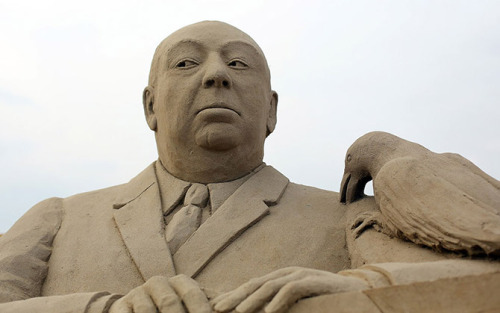




These awesome photos are from the 2013 Weston Sand Sculpture Festival on the sandy shores of Weston-super-Mare in Somerset, England. Each year the festival has a different theme and this year’s theme is Hollywood.
“Since the festival started in 2006, themes have included Fairy Tales, The Continents of the World, Under the Ocean, Great Britain, and The Jungle. What began with two Dutch sand sculptors building a giant King Kong from 30 tonnes of sand has now turned into a world famous get-together of some of the niftiest hands in sand sculpting.
More than 20 of the world’s greatest sculptors from nine different countries are working away using 4,000 tonnes of sand from the beach.”
The festival opened on Good Friday and runs through the end of September.
Visit Dailymail.co.uk to view more of the awesome sand sculptures from this year’s Weston Sand Sculpture Festival.
[via Free York and Dailymail.co.uk]
Paulahmartin"It makes sense, because they're self-medicating with carbohydrates," says Dr. Edward Hallowell, a psychiatrist in Sudbury, Mass., who has ADHD and treats adults with ADHD. "Carbs do the same thing that stimulant medications do — promote dopamine," says Hallowell, who wasn't involved in the latest study. "So you get the gallon of ice cream at midnight."
People diagnosed with ADHD as children may be more apt to be obese in adulthood, scientists say. Differences in brain biology or the impulsiveness typical of ADHD may contribute to lasting, bad eating habits.
» E-Mail This » Add to Del.icio.us
PaulahmartinI get why this is a clusterwhoops and why a lot of these big finance companies are evil, but why would you spend half your life's savings in one stock? I feel bad for this lady but that was a stupid thing to do.

Uma Swaminathan tuned the television set in the living room of her ranch style home in the suburbs of East Brunswick, N.J. to CNBC. It was 9:00 a.m. on May 18, 2012, a day the retired schoolteacher thought might make her rich. She logged onto her Vanguard brokerage account on her computer and placed an order for 5,000 shares of Facebook at $42 a share.
On TV, wearing his trademark hoodie, 28-year-old Mark Zuckerberg, creator of the world's largest social networking site, stood in the courtyard of Facebook headquarters in Menlo Park, California. A crowd of eager Facebook employees held up company license plates and posters for the cameras. They'd stayed up all night at an employee "hack-a-thon" to celebrate the big day when Facebook was finally going public, in what might have been the most anticipated initial public offering in history. The boyish, blue-eyed Zuckerberg grinned, standing next to Bob Greifeld, chief executive of Nasdaq-OMX Stock Market, Inc., the largest electronic stock exchange in the United States.
With short hair, brown skin, and few wrinkles, Swaminathan looks much younger than her 68 years. She spent most of adult life as a suburban mom, making tofu for her daughter's friends at theater rehearsals, taking her three sons to soccer practice and Boy Scouts, and volunteering in the local community. She served a term as president of the Indian American Association of New Jersey.
Her interest in the stock market didn't develop until her husband died about 13 years ago. Her four children had already moved out to attend college or to pursue their careers. Swaminathan was left with her late husband's 401(k) retirement account, when she started dabbling in the market, investing in stable companies like Microsoft. Not long after, she began to follow the news coverage of initial public offerings (IPOs) -- when private companies enter the public market -- and came to know of the phenomenon known as the first day "pop." On the day that companies would debut on the stock market, the price would tend to shoot up before stabilizing. A year earlier, she watched as social networking site LinkedIn's stock price closed up 109 percent on its opening day.
She'd never placed such a big bet on just one stock, but she felt a personal connection to Facebook. She had been using the site to connect with family and friends since 2009, and almost everyone she knew had an account.
Now, as she watched the TV in eager anticipation, millions of shares were going to leave the hands of private investors and start trading, giving anyone with enough money a chance to own a slice of the social network giant. Silence descended as Zuckerberg came forward to deliver his speech: "I just want to say a few things, and then we'll ring this bell and we'll get back to work. Right now this all seems like a big deal. Going public is an important milestone in our history. But here's the thing: our mission isn't to be a public company. Our mission is to make the world more open and connected..."
Finally he reached the moment so many were waiting for: "So let's do this!" And the opening bell sounded as he signed the digital screen on the podium before him: "To a more open and connected world," he wrote. His handwritten message instantaneously appeared in Times Square just above the giant illuminated NASDAQ exchange ticker.
Facebook shares hit the market at an opening price of $38. Minutes later, Swaminathan's online order was executed, and the retired schoolteacher had just spent approximately half her life savings.
 I: THE OFFERING
For Mark Zuckerberg, selling Facebook shares on the public market had a clear downside. Besides the headache of releasing a company's financial details to the public, he worried that increased scrutiny and push for profits would compromise Facebook's mission.
But like any growth-stage company, Facebook needed money, and private companies face restrictions on how much stock they can issue for cash. In early 2011, Goldman Sachs helped Facebook conjure IPO-type money without an actual IPO by creating a special investment product to sell its private shares to Goldman's wealthiest clients. But when the New York Times exposed the plan, the SEC began to investigate the transaction. Soon after, Zuckerberg decided to take the company public. In late 2011, the Wall Street Journal reported that Facebook was anticipating an IPO valuation of $100 billion -- nearly four times more than Google's market cap when it went public in 2004.
On February 1, 2012, Facebook filed its Form S-1 -- effectively a birth certificate for publicly traded companies -- containing everything an investor needs to know before buying shares at an IPO, including basic financial information and the business model. Facebook's S-1 showed that the company was primarily in the display-advertising business, with a net profit of $1 billion in 2011 from total revenue of $3.7 billion.
The S-1 is especially meaningful to investment banks. Facebook listed its underwriters -- the banks picked to buy and sell shares on the IPO -- near the front of the document, from left to right, in order of responsibility, with Morgan Stanley in the coveted "left lead" position.

This put Facebook's IPO in the hands of one of Silicon Valley's most celebrated bankers: Michael Grimes, co-head of global technology banking at Morgan Stanley's Menlo Park office, located just a few miles north of Facebook's headquarters.
II: THE BANK
Michael Grimes, the son of a mapmaker, is a lifelong Californian with a bachelor's in computer engineering from UC Berkeley. A titan in the world of tech IPOs, his status grew not only from expertise in taking small and large digital companies public, but also from his myth-making showmanship. To win Ancestry.com's IPO, he created his own family tree and wore a green Hermes tie with leaves to signify the company logo. To get a Hewlett Packard acquisition, he waited outside an executive's office for hours just to make a pitch.
With Grimes and the investment bank prepping the offering and building demand for shares, it fell to another Morgan Stanley employee, Scott Devitt, to tell outside money managers whether they should buy Facebook stock. As the head of Morgan Stanley's Internet equity research team, Devitt makes a 12-month target price for stocks and provides a rating -- buy, hold, or sell -- for hedge funds like Citadel and large, storied institutional investors like Fidelity. Devitt's agreement with his clients guarantees an independent analysis of company performance -- even if Morgan Stanley is leading the IPO. (Devitt advised clients on whether to buy companies like LinkedIn, Zynga and Pandora while Grimes orchestrated their IPOs.)
The stark division between these two functions of a bank is known as a "Chinese Wall." It forbids investment bankers, like Grimes, from influencing research analysts, like Devitt. Morgan Stanley and other brokerage firms were slammed with fines for repeatedly breaching the "Wall" during the dot-com boom. In the aftermath of the Facebook IPO, the bank would find itself under the spotlight yet again for allegedly sharing key, private information with wealthy clients.
In Facebook's case, the trouble began with a simple revision.

III: THE REVISION
A roadshow -- a city-by-city promotional tour where executives drum up support for their IPO before large investors -- is typically a lackluster affair. Facebook's was more like a Hollywood party.
On May 7, 11 days before the IPO, Facebook management -- CEO Mark Zuckerberg, COO Sheryl Sandberg, and CFO David Ebersman -- stepped out of a black SUV in front of the Sheraton Hotel in midtown Manhattan for their first meeting with investors. A crowd of paparazzi greeted them, and a long line of onlookers wound around the hotel building. Inside the meeting, Facebook played a video introducing the business model to special clients of its underwriting banks.
Eleven days before the historic IPO, Morgan Stanley found out Facebook had cut revenue projections -- a nearly unprecedented last-minute correction.Although an IPO roadshow is supposed to be an untarnished hype-machine for a company's prospects, back in California, those prospects were hurting. Facebook's new internal forecasts showed revenue growing slower than expected. The reason: Users were flocking to smartphones faster than the company could serve mobile ads.
On the first day of what may have been the most watched IPO roadshow in memory, Ebersman confessed to Morgan Stanley that Facebook had cut revenue projections -- a nearly unprecedented last-minute correction in an IPO of its scale. Even if the changes were small, statistically, in IPO showbiz statistics run second to momentum, and nothing kills momentum like a poorly timed downward revision.
Facebook and Morgan Stanley knew they had to make a public disclosure. But what to disclose? The law requires companies to share all information that would likely influence an investor's decision to buy stock. Plus, Morgan Stanley's research team was still advising clients based on figures that Facebook now considered wrong. With less than a week before the IPO, they came up with a solution that they thought would spare Facebook a modicum of embarrassment -- but would have fateful consequences for Morgan Stanley and investors:
• First, Facebook would file an amendment to its public birth certificate, the S-1, to include information about mobile usage cutting into revenue.
• Second, the company would call research analysts with much more specific information about the company's weakening projections.
IV: THE AMENDMENT
When a company makes an amendment to its S-1, the entire document can be filed again, without track-changes or highlights to specify the changes. When Facebook filed its "Amendment No. 6 to Form S-1" to disclose its ongoing challenge to serve ads to mobile users, changes were embedded on three pages of the 170-page document.
On page 14 and 17, the company said that its users were growing faster than ads due to the increased use of mobile phones and product decisions that allowed fewer ads per page. On page 57, Facebook said the mobile trend discussed elsewhere in the document had continued in the second quarter, due to users shifting from computers to phones. None of the changes suggested any major revision to Facebook's financial outlook.


Facebook's lowered revenue estimates did not appear in the S-1, nor was there any precedent requiring these numbers to be included. Even the most sophisticated retail investors, armed with a software bot that could comb the new S-1 for updates, could not have read what research analysts at Morgan Stanley, JP Morgan, Goldman Sachs, Citigroup, and many other investment banks would learn later that evening: That Facebook, already projected to trade at high multiples given its earnings figures, was slashing its annual projections.
V: THE CALL
Before an IPO of Facebook's size, research analysts and large investors play a massive multi-billion-dollar game of "Telephone," because analysts at underwriting firms are banned from publishing or emailing research about a new public company until 40 days after the IPO. The rule is designed to protect retail investors from taking analysts' notoriously bullish research too seriously. But it has an unintended side effect: Research analysts can pass on exclusive, last-minute information to institutional clients without a paper trail.
And Facebook's last-minute revelation was about to launch a historic game of "Telephone."
After the company's surprising eleventh-hour amendment, the unenviable job of explaining Facebook's revisions to the research analysts fell to Cipora Herman, Facebook's vice president of finance. On May 9, Herman and Michael Grimes huddled in a Philadelphia hotel for a rehearsal session. He played the part of an analyst, while she played herself. They practiced until the amended S-1 was officially made public on the SEC website, at exactly 5:03pm.
In its revised S-1, Facebook told the public that mobile ads presented an ongoing challenge. In calls that night to research analysts, the company said much more.Before her first call to Scott Devitt at Morgan Stanley, Grimes left the room to avoid the appearance of breaking the law that bans investment bankers from influencing analysts. "I was far down the hall so I wouldn't hear anything," he testified in a Massachusetts suit brought against Morgan Stanley. "I took extra precaution to do that, and sat on the floor."
But Herman had a script in Grimes' handwriting detailing Facebook's new second-quarter revenue estimates:
"I wanted to make sure you saw the disclosure we made in our amended filing. The upshot of this is that we believe we are going to come in the lower end of our $1.1 to $1.2 bn range for Q2 based upon the trends we described in the disclosure."
The script also showed that Herman had added Facebook's year-end estimates:
"Trend/headwinds over the next six to nine months as this run through the rest of the year, this could be 3 to 3 and a half percent off the 2012 $5 billion target."
Herman's first three calls were to the research desks of Morgan Stanley, JPMorgan, and Goldman Sachs, and after their conversations, all three banks cut their estimates of Facebook's annual revenue by between 3.01% and 3.33% -- perfectly aligned with Herman's notes, as the following charts from court documents show:


The news spread -- from research analysts to their preferred clients -- that Facebook was slashing revenue estimates in the middle of the roadshow. Morgan Stanley, JP Morgan, and Goldman Sachs had effectively sounded alarm bells on Wall Street. Even analysts who hadn't yet made a single call about Facebook's new figures were being inundated with questions. "Our clients were asking us to confirm what they had heard, so we had to tell them what we knew," said a research analyst at one of the other underwriting firms.
Many large investors sensed a rare opportunity: With its revenue projections falling at such a peculiar time, the conditions could be perfect to place a massive bet against Facebook stock.
VI: THE BET
A week before the IPO, confusion reigned in the financial press.
On May 11, Bloomberg reported that demand for Facebook's stock among institutional investors was much lower than expected. But on the same day, Reuters had a conflicting report: Facebook was already oversubscribed, and one large unnamed institutional investor was calling around syndicate desks trying to get more shares.
While retail investors clamored for Facebook shares, some large investors were planning a massive short -- essentially betting against the stock's buyers. Scott Sweet, senior managing partner of Tampa-based research firm IPO Boutique, received calls from hedge fund clients saying they heard from research analysts at underwriting banks that Facebook's mobile trend was behind its lowered earnings estimates. One multi-billion dollar hedge fund client told Sweet that he planned to short the stock as a result. (Sweet didn't name the investor due to a confidentiality agreement he has with clients.)
"The consensus among hedge funds on the West Coast was to short the stock on day one.""The consensus among hedge funds on the West Coast was to short the stock on day one," said one institutional investor at a medium-sized hedge fund specializing in technology stocks. "The call we received from JP Morgan about earnings being lighter than expected gave us even more conviction in our short." Hedge fund analysts at his firm were receiving calls from their personal brokers days before the IPO, hawking an allegedly rare chance to get shares of Facebook stock. "That never happens," the hedge fund investor said. "Supply was definitely exceeding demand."
But despite the growing consensus among some large investors that Facebook was overpriced, on May 15, three days before Facebook's market debut, the underwriting banks increased the IPO range from $28-$35 to $35-$38, citing heavy demand. A day later, they increased supply to more than 420 million shares.
The new share and price allocation placed Facebook's valuation at the iconic $100 billion mark.

VII: THE GLITCH
Back in her home, Swaminathan didn't know about the reduced revenue estimates or about the vast number of hedge funds that were planning to short Facebook. After the opening bell ceremony neared its end at 9:30 a.m., she was still watching CNBC waiting for the stock to begin its scheduled trading at 11:00 a.m. "We are witnessing a lot of American wealth getting generated as we speak," said a CNBC reporter. "After years of people taking risks, dealing with uncertainty, unknowns, rivals, this is the pay-off."
"Awaiting Facebook's opening trade" showed in a breaking news box on the bottom of the screen, while an unchanged $38 opening price appeared on a split screen in anticipation of 11:00 a.m. Minutes later, Swaminathan, eager for the stock to open, called her son, who lives in New York City, to inform him about the 5,000 shares she had ordered. She had placed a buy limit order, a conditional transaction to purchase shares at a specified price -- $42 in her case -- or lower.
Her son, who studied finance at UC Berkeley, was livid. "Cancel the order immediately," he told his mother. "Cancel it! Cancel it!" Around 9:45 a.m., she hit the icon on her trading screen to cancel the order and then resumed watching TV. At 11:00 a.m., CNBC announced that Facebook's opening was delayed until 11:05 a.m. In all the times she had seen IPOs on television, Swaminathan had never witnessed a market delay on the opening day. Something is wrong, she thought.
She turned her attention to her computer screen only to realize that there was no sign of her having voided the order. She kept refreshing the page in hopes of seeing the notification. When no cancellation report appeared, she called her stockbroker at Vanguard. "What's going on?" she asked.
If the cancel order was placed, then it's probably cancelled, the broker told her. She got off the phone and went back to her computer screen. There was no sign of cancellation. She called Vanguard again. This time, she says, she waited on the line for a long time, but no one came to take her call.
Meanwhile, Facebook stock opened at 11:30 a.m. The mysterious delay was due to technical glitches. NASDAQ's electronic trading platform couldn't handle the high volume of trades. In the first 30 seconds, around 82 million shares were exchanged.

Facebook did not experience the anticipated pop. The stock reached a high of around $45 per share. At 4:00 p.m., when the market closed, the stock was priced at $38.23, only 23 cents more than its opening price.
Later that day, the Wall Street Journal reported that Morgan Stanley had stepped in to stabilize the stock, using what is referred to in finance as a "greenshoe option" -- a common stipulation in the IPO agreement that lets underwriting banks sell more shares to investors than they are allotted. The mechanism lets banks buy back the shares at the offering price, in case the company's stock price needs a little help on the first day. The buying action puts upward pressure on the stock.
Her son came to New Jersey to stay with her over the weekend. For two days, they quarreled. He wanted to know why she put so much money into one stock, and she couldn't give him a satisfying answer. "He kept asking me what was going through my head when I bought the shares," she recounts.
On Monday morning, she called Vanguard. "Was my purchase cancelled?" she asked. The answer finally came: No, the broker told her, Vanguard had purchased 5,000 shares on her behalf at a price of $41.25, meaning about $206,000 from her retirement account was spent to acquire her stake.

On that second day of trading, Facebook closed at $34.03. Swaminathan had lost, on paper, about $36,000. Her son advised her to hold onto her shares until she either resolved the matter with Vanguard or the price bounced back.
VIII: THE AFTERMATH
The next couple days were a blur. Swaminathan approached Vanguard again, asking why the cancel order wasn't processed. She could have sold the shares before the price plummeted, she said to the broker, asking to speak with a supervisor. The supervisor blamed NASDAQ and said they would notify the exchange about the incident. When she called a day later, Vanguard declared it a legitimate purchase. There was nothing that could be done for her.
In the meantime, she tuned into CNBC to watch coverage of the IPO's aftermath. When news started rolling in about class action lawsuits filed against Morgan Stanley and Facebook for selective disclosure, she was stunned. Institutional investors received warnings about lower revenue estimates before the opening day, CNBC reported. (Some of these class-action lawsuits are still ongoing.)
Swaminathan wasn't keen on using the court system. She had already lost money and was wary about losing more to legal expenses. But in June, one lawyer told her about the Financial Industry Regulation Authority (FINRA) -- a private corporation that acts as a self-regulatory body among securities firms, such as banks. She believed the agency had a way for her to seek restitution without the complexities of a formal lawsuit. FINRA offered a way for her to air her grievances without a hefty legal fee, and the organization's stated goal is to protect investors -- investors like her, she thought.
She quickly wrote a typo-riddled complaint, laying out her misgivings against Facebook, Morgan Stanley, NASDAQ and her brokerage firm Vanguard, to FINRA. It was a two-page explanation of what happened on the day of the IPO. "I was caught up in the Facebook IPO hype and thought that this would be a good investment and practically put all my retirement money in this stock purchase," she wrote in the complaint. She said Vanguard failed to inform her of the status of her trade, blamed NASDAQ, and then retracted responsibility to say her trade was a proper execution. She complained that "only certain customers, mostly big institutions and hedge funds" could file claims with NASDAQ about the trading glitches.
She also jotted down the expected reparation: $105,000 for compensatory damages, $500,000 for punitive damages, $1 million for "pain and suffering" and $315,000 in damages related to fraud. "I feel jilted and my confidence is now permanently stricken," she said in the complaint. FINRA will be on my side, she thought, as she told her story to the regulatory body.
IX: THE HEADLINES
On July 16, FINRA sent Swaminathan a letter: Neither Facebook nor NASDAQ was a member of their organization, and it lacked the authority to call them in. Still, she was willing to arbitrate with Morgan Stanley and Vanguard.
But in November, a response came from Morgan Stanley in the form of a lawsuit: Morgan Stanley & Co. LLC v. Swaminathan. The bank had essentially filed an injunction to stop the arbitration from happening, requesting that Swaminathan pay legal fees incurred if it is required to participate in arbitration. When Swaminathan read the court documents, she panicked. "They wanted to take what I had left," she cried.
Then she saw the headlines.
Reuters based a story on Morgan Stanley's complaint, entitled, "Morgan Stanley seeks to halt Facebook arbitration case." Gizmodo.com wrote, "A Sad Woman Lost Her Entire Life Savings in the Facebook IPO and Now Wants Her Money Back." Business Insider had "There Actually Is A Widow Who Says She Lost Her Life Savings In The Facebook IPO."
She was mortified. "Whatever happened to confidentiality?" she exclaimed. "FINRA had promised that my documents would stay private." Indeed, her complaint might have stayed private if it went unsettled (FINRA makes awards and judgments public on its website). But Morgan Stanley made her papers available to the press when it attached them to a countersuit filed through New York's public court system.
She eventually withdrew her claims against both the bank and Vanguard. "I just couldn't deal with the stress anymore," she said. "I guess the big guy always wins."
X: THE LOSS
An American flag hangs in front of the JPMorgan Chase tower in midtown Manhattan. In early May, rivaling its height was another banner with a Facebook IPO logo. Business journalist Heidi Moore shared a photograph of the building's façade with her Twitter followers on May 4. Radio reporter Ben Bergman retweeted it with a comment: "In Facebook We Trust."
By Aug. 18, Facebook lost about $50 billion in value. But many big investors made huge profits betting against the company.By Aug. 18, Facebook lost about $50 billion in value. But many big investors made huge profits betting against the company, and others avoided major losses by backing out of the IPO just in time. During the roadshow, Capital Group, a large mutual fund and one of Morgan Stanley's preferred clients, pulled out of the deal after initially showing interest, and many other funds followed suit, according to a research analyst who was in correspondence with investors. SAC Capital Advisors, Steven Cohen's $14 billion dollar hedge fund and another one of Morgan Stanley's prominent clients, took a sizeable short position in the stock, said a research analyst. Scott Sweet's multi-billion dollar hedge fund client flipped the stock at $42. His subsequent short made his firm its "largest profit of the year," Sweet said. There's "no way" a retail investor could have known about the lowered projections, unless he or she "had a friend at a multi-billion dollar institution," he added.
A few days after Facebook debuted, Massachusetts's regulator William Galvin issued a subpoena to Morgan Stanley as part of an investigation into research analysts communicating Facebook's revenue prospects to certain institutional investors. Seven months later, Galvin's office settled with Morgan Stanley for $5 million after charging its investment banking division with inappropriately influencing research analysts during Facebook's IPO roadshow -- essentially breaching the "Chinese Wall." When asked about the script he wrote for Facebook's vice president of finance, Grimes testified, "I don't remember if she had a script or not."
Facebook, Vanguard, and Morgan Stanley declined to comment on all the claims in this story.
Swaminathan held onto her shares and went to her birth city of Chennai, India. She's writing two books -- one about herbs and spices and another about New Jersey's public school system. She hasn't traded stocks in a while, but she checks Facebook's stock price every few days hoping that someday it will bounce back.
Saturday, May 18, marked the one-year anniversary of the IPO. Facebook's shares closed Friday at $26.25 -- exactly $15 below her purchase price.

    
|
PaulahmartinOkay, so this is really long, but the bottom line is: the FDA is all, "Oh generics are just the same as name brand" but at the same time, they can only inspect 11% of factories making generic drugs, and the companies in places that India and China that make the generics, well, they have a lot of incentive to lie about the efficacy of their products. Bottm line is, the cheapest drugs come from places whose manufacturing processes are shady at best.
An investigation into widespread criminal fraud at a generic drug company.
Paulahmartin“To be fair, I should disclose that my issues with the IRS preceded that interview (with Obama) by several years,” Conners said Tuesday in the 35-second statement. hahahahaha
Amy's Baking Company in Scottsdale, Arizona was recently featured on an episode of Kitchen Nightmares, in which Gordon Ramsay eventually broke off his agreement to help the bakery because the owners, Samy and Amy Bouzaglo were too awful to work with... yeah, that's right: if Gordon Freakin' Ramsay thinks you're too difficult, maybe it's time to do some soul searching. If that doesn't give you a good idea of what the Bouzaglos are like, maybe this will...
Submitted by: Unknown
Submitted by: Unknown

The Internet is full of interesting things to read outside of The A.V. Club—no, really! In our periodic Read This posts, we point you toward interesting or noteworthy pieces that caught our eye.
Sometimes it’s easy to forget that when they’re not created out of thin air with CGI, the places in films are real sets that have to be built and then dismantled—or, in the case of the original Tatooine sets for Star Wars, left to rot in the desert. Sammy Medina at Co. Design details the recent discovery of those neglected sets, which include the Skywalker ranch and Mos Espa by New York photographer Rä Di Martino, who found the sets in Tunisia by accident on Google Earth and eventually tracked them down with the help of locals.
Di Martino has now immortalized the crumbling remains of Tatooine in two series of photographs ...
Read morePaulahmartinI think I shared pt 1 a long long time ago. She really nails what it's like. I think this is absolutely lovely.











































The best part of your day!
Chance, wants to know who put pickles in his bug sandwich!? “Bleagh!”

Loki, after losing another battle with the toilet paper tube, wonders if a face lift would be a good idea.

Gretchen, has been watching too many of those pirate movies again.

Top pic: “Hi! I have a silly picture of my little hedgehog, Chance, that you may
enjoy. He is 4 years old, and very entertaining. I have more pictures of
my hedgehogs on my blog, ooo shiny object. Hope you
like it!!” -Larissa W.
Middle pic: Loki on Tumblr
Bottom pic: “I caught my hedgehog, Gretchen, making this silly face!” -Becca H.
Filed under: Uncategorized Tagged: Hedgie Madness, Pocket Pets 

PaulahmartinJust like the last gif quite a bit.

I'm afraid that this deserves its own post. Thanks to that overtime last night, I was too pooped to do this, but here you go. First off, for your viewing pleasure, the goal:
And because you know you want a better view that you can plunk down into GDTs in the future for shits and giggles:

How'd folks react?
Pretty good "You had ONE job" photo of Jonathan Quick usat.ly/15YG8lK //twitpic.com/cn9gw3
— Michael Schwartz (@MikeMSchwartz) May 1, 2013
Yeah, Quick messed up BIG. But the Kings should maybe not wait until the final minute of the 3rd to start playing.
— Bryan Arciniega (@nihlus) May 1, 2013
Can't argue with him, not that I have a problem with the Kings (mostly) forgetting game one was last night.
The LA Kings should pull Jon Quick and put him on the 1st Line.
— The Royal Half (@theroyalhalf) May 1, 2013
Steen be nimble, Steen be slick, Steen wasn't seen by Jonathan Quick
— Marc(@Dr_Habs) May 1, 2013
Hahaha. It looks like Steen murdered Quick and is skating for his life. Hopefully this is the picture of the series. twitter.com/ConnorZ19/stat…
— Connor (@ConnorZ19) May 1, 2013
How does Quick feel about the whole thing?

Submitted by: Meqad
Tagged: roller coaster tycoon , rollercoasters , failbook , g rated Share on Facebook
"...The globally-averaged temperature across the world's land and ocean surfaces was 0.58°C (1.04°F) above the 20th century average of 12.7°C (54.9°F), tying with 2006 as the 10th warmest March since records began in 1880. Both the Northern and Southern Hemispheres were also 10th warmest for March..."Data from the National Climactic Data Center via Paul Douglas' incomparable On Weather blog.

PaulahmartinO GOOD


These awesome macro photos of insects and arachnids are the work of Israel-based photographer Dmitriy Yoav Reinshtein. The level of detail is truly astonishing.
“The artist says all of the bugs are alive when he photographs them, and when he is done, he lets them fly away. Exactly how that works is a mystery - seems pretty tough! - but Reinshtein certainly has the speed and skill to capture each perfect moment. He is so quick, oftentimes he is even able to document a single drop of water balancing precariously atop a bug’s head.”
Visit My Modern Metropolis to view more of Dmitriy’s amazing photos.
 For people looking to shop for TVs and computers at someplace other than Best Buy or Walmart, California-based chain Fry’s Electronics might seem like a viable option. But one former Fry’s employee says the store’s commission-based pay system for salespeople is hurting both the workers and Fry’s customers.
As part of a thread on Reddit, the onetime Fry’s employee goes into great detail about the problems he has with the store.
He says that Fry’s sales staff is solely dependent on commission to make a living, but if an item is discounted, there is no commission. And when it comes to price-matching, he claims that the difference between Fry’s sticker price and the matched price will come out of the associate’s commission.
“[S]o it is their job and livelihood to say that sale item is either out of stock or that a higher priced crappier item is a much better deal, he explains.
He adds that the commissions are so small on most of the items at Fry’s that it’s often not worth the salesperson’s time to help a customer out.
“For a salesperson to receive credit on ANYTHING, they must take you and your items to a computer terminal to: get your name, last name, address, phone number, etc.,” he writes. “Imagine doing this for a simple USB cable. You can either say, “fk it I don’t have time for this” and leave, but doing so just prevented a worker from their precious $0.10.”
Similar to what we’ve heard from employees at other stores, he says that Fry’s sales associates are judged on the number of extended warranties they sell to customers.
According to the former employee, taking time to help a customer find an item to look at or simply answer a customer’s questions can have a negative impact on an associate’s pay. Like tipped employees, commission sales reps can start with a base pay below the minimum wage, so long as the added commission brings his pay up to at least that minimum level.
“Helping [customers] will put you at negative pay per hour, which means you will enter the draw system,” he alleges. “This is when an associate doesn’t make enough to get minimum wage, the store will give you a couple bucks to make up for it. HOWEVER, the next paycheck they will recoup it back and then fire you.”
Similarly, he says that Fry’s requires sales staff to take time off the floor for 1-3 hour meetings about which items are on sale and which items should be pushed to customers.
“During these conferences, associates are making $0,” he writes. “So when they get out, they must do shady practices to get in the positive. Like adding random services and fees to your purchase and label them as ‘California recycling fees, federal waste fee, etc.’”
I contacted Fry’s to see if the company had any comments or wanted to challenge this former employee’s allegations. However, I was told that the one person in the entire company who could respond to a media request was on vacation until next week. I asked if there was anyone else at all who I could speak to or e-mail but was told the best I could do was fax — yes, fax — a written request and that it would be given to the vacationing staffer when he returned. I was also offered the chance to mail — snail mail — my request. Because it is apparently 1993 at Fry’s HQ.
If anyone at Fry’s is reading this and wants to contact us about this former employee’s claims, you can write us at tips@consumerist.com, as our fax machine is still in the shop.

PaulahmartinThis tipping business is out of control. I vote that we just pay everyone a living wage, and adjust menu prices accordingly. Now everyone is saying that 15% isn't enough; 20% is the new standards. What a dumb system.

Joseph Weisenthal had dinner at 715 in Kansas this weekend, and noticed that one of the items on the menu included buying the kitchen a six-pack for $12. This kind of thing isn’t unique to 715—restaurants everywhere do it, and some people wonder if it’s a nice thing or annoying thing to have on the menu. Personally, I think it’s nice. Just because it’s on the menu doesn’t mean you have to order it. The thing I’m wondering about is whether or not the kitchen actually gets a six-pack, or if it’s really a way to give them a tip.
Every year, millions of frustrated last-minute tax filers discover that the U.S. government makes it astoundingly difficult to give it money.