Shared posts

30 Mar 22:22

Five Best Android Home Screen Replacements

by Alan Henry

Five Best Android Home Screen Replacements

Anyone can just download a launcher, but when you want an experience that transforms how you interact with your Android phone—especially one that's context-aware and surfaces information you need when you need it, you have a few solid options to choose from. Here are five of the best.

Read more...


30 Mar 22:22

Learn How To Be A Better Wildlife Photographer

by Jason G. Goldman on Animals, shared by Whitson Gordon to Lifehacker

Learn How To Be A Better Wildlife Photographer

You don't have to travel far to shoot decent wildlife photos. Other than spending some time practicing at the zoo or with your pets, why not take your camera to a nearby park or hiking trail? Birds and squirrels and lizards and the like may not be as charismatic as zebras or pandas, but they make for interesting subjects all the same. Like the pigeon I snapped on a recent trip to San Francisco (above), or the Western scrub jay that I photographed in a friend's backyard (below).

Read more...


30 Mar 22:22

Scuff Potatoes with a Fork for Perfect Roasts

by Mihir Patkar

The next time you're roasting potatoes, make sure you scuff them up with a fork first. This will help to really crisp them up, says The One Pot Chef.

Read more...


30 Mar 22:21

Top 10 Ways to Make Your Boss Love You

by Whitson Gordon

Top 10 Ways to Make Your Boss Love You

Unless you're lucky enough to work for yourself, we all have a boss we have to answer to. Provided they're not the devil incarnate, there are quite a few ways to ensure you two have a good relationship. Here's what you should keep in mind.

Read more...


30 Mar 22:21

Create a Common Gmail Account to Sync Contacts in Everyone's Phones

by Mihir Patkar

Create a Common Gmail Account to Sync Contacts in Everyone's Phones

To keep your partner, housemates or office colleagues always updated with commonly used contacts, create a group Gmail account. Smartphones can add it as a secondary account and sync the contacts, so everyone's phone is always updated.

Read more...


30 Mar 22:20

Get Your Girl Scout Cookie Fix All Year with Grocery Store Equivalents

by Whitson Gordon

Girl Scout cookie season is nearly over, so many of us are stocking up like squirrels for the long, cookie-less months ahead. Reader SarcasmSiempre discovered, however, that you can buy almost the same exact cookies all year round in your local grocery stores. We did a taste test to see how they compared to the real deal.

Read more...


30 Mar 22:20

Make Your Own Sour Cream for a Fresher, More Customizable Condiment

by Adam Dachis

Make Your Own Sour Cream for a Fresher, More Customizable Condiment

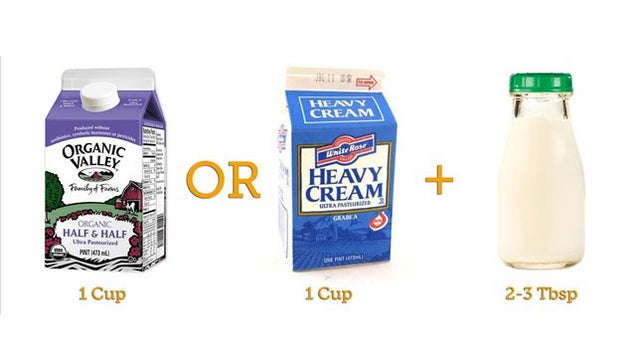
If you like sour cream, you ought to consider making it yourself. The stuff you buy in the store comes as-is. If you make it yourself, you get a fresher product and total control over how thick it turns out.

Read more...


30 Mar 22:19

How Do You Stave Off a Cold?

by Walter Glenn

How Do You Stave Off a Cold?

Getting more sleep is one of many techniques you can use to boost your immunity and help avoid getting sick. But, at some point, it happens to all of us. What do you do to help stave off a cold once you realize it's coming?

Read more...


30 Mar 22:19

When Your Kids Tell You You're Mean, Take It as a Compliment

by Melanie Pinola

When Your Kids Tell You You're Mean, Take It as a Compliment

It's hard when your children, whom you love and would do anything for, tell you you're mean or, worse, they hate you. Sometimes, though, you could consider it a sign you're doing something right.

Read more...


30 Mar 14:53

Let’s Count The Ways In Which The NY Times’ Love Letter To The Comcast Merger Is Full Of Bull

by Chris Morran
This NY Times column from March 28 reads like it was written by Comcast's PR department.

This NY Times column from March 28 reads like it was written by Comcast’s PR department.

Yesterday, the NY Times’ “Common Sense” column demonstrated anything but common sense in a thinly-veiled love letter to Comcast CEO Brian Roberts, who is apparently the savior of cable TV and will somehow bestow wonderful, magically-awesome levels of customer service on Time Warner Cable… if only those big-bad regulators in D.C. would just see what is so obviously a perfect deal for consumers. If only that were true.

Let’s look at author James B. Stewart’s article and try to figure out exactly how much Kabletown Kool-Aid he’s consumed…

1. Ignoring Comcast’s Role In Current State Of Cable TV
Early in the article, Comcast-inheritor Roberts laments the current state of cable competition, in which a company’s presence is often determined by deals made with municipalities many moons ago.

“Cable is a relic of an antiquated model,” admits Roberts. “The result is we’re not in New York or Los Angeles. How great can that be?”

In a sense, he’s right. Comcast should have been in New York City and/or Los Angeles, but not as the sole provider like TWC is for many of the residents of those two cities. No, Comcast should have been able to compete with everyone else, giving consumers choice and compelling providers to compete on rates and customer service.

But Roberts can not wash his hands of the situation that he (and his company-founding father before him) played no small part in creating, and from which Comcast has benefited greatly.

Take the Philadelphia area, which has long been dominated by Comcast, but which used to have multiple regional providers serving different parts of the region. In the last two decades, Comcast has gobbled up most of those companies, creating an effective monopoly in the area thanks to all those exclusivity deals each of the acquired providers had made in the ’70s and ’80s.

Furthermore, while Philly leadership pretends it’s about prettying up the city, a recent move to regulate and remove satellite dishes from buildings all around the city has Comcast written all over it.

And don’t forget Boston, a city is so ridiculously overrun by exclusive Comcast coverage that former Mayor Thomas Menino had to petition the FCC to allow the city to regulate the company’s soaring prices.

It is the cable industry, including Comcast, that sought these sorts of deals and guarantees, and which has allowed them to continue because they allow providers to get away with charging high rates and providing minimal customer service.

Roberts even admits as much later in the Times piece, when he says the only feasible way for Comcast to be a player in NYC is for it to buy Time Warner Cable, as it would be too expensive to run its own lines.

2. No One Asked Us…
Stewart then goes on to make a completely asinine statement about those who are against the Comcast merger:

The sheer size of the deal, and the intense public interest in unfettered Internet access, have galvanized an array of opponents, from Senator Al Franken, Democrat of Minnesota, to the Consumers Union to the Writers Guild of America…I suspect few of them, if any, are Time Warner Cable customers.

Let’s just look at how utterly, absolutely stupid of an assumption that is.

First, I’m not going to speak for my colleagues at Consumers Union, but I happen to know for a fact that they — and many other employees of Consumer Reports, including myself, and several other Consumerist writers — have had, or currently have, cable and Internet service from Time Warner Cable. Consumers Union’s headquarters is located in Yonkers, NY,  only a few miles north of NYC, and many of CR’s employees live in areas where TWC is the only option. A simple phone call or e-mail, and anyone at the company would have told Mr. Stewart so.

And then there’s the Writers Guild, which has a large number of members in New York City (that’s why there is a WGA East office in Manhattan, Mr. Stewart.) All those writers for Comcast’s own Saturday Night Live and Tonight Show are probably TWC customers. That’s not to mention all the people who write for the soap operas, talk shows, and the various series that film in NYC. Again, I’m sure someone at the Guild, or the use of the author’s much-touted common sense, would have sorted this one out.

I don’t know Sen. Franken’s current living situation, but I do believe he’s lived in NYC at some point in the past 25 years, since he used to broadcast his Air America radio show from Manhattan, and worked on Saturday Night Live in the early ’90s, which means he’s likely to have been a TWC customer at some point.

3. Personal Bias Is A Bad Measuring Stick
Let’s just assume that Mr. Stewart’s ill-informed attempt to discredit merger critics was based in actual fact and that none of these people concerned about a merger between the nation’s two largest cable and Internet providers have ever had to deal with TWC’s horrendous service.

What does that matter?

Did one need to be either an AT&T or T-Mobile customer to oppose that failed merger? Does he think that members of the FCC and the DOJ are going to say, “Well, I can’t be part of this decision because I’m a DirecTV gal”?

In fact, it may be best if the people making the decision have minimal experience with either provider, as their personal biases can’t get in the way. The last thing I want is some regulator deciding they will approve this merger because they once got double-billed by Time Warner Cable and somehow think this merger will stop such nonsense from happening in the future (Spoiler Alert: It won’t.)

Speaking of which…

4. The Grass Is Always Slightly Less Brown
Stewart seems to be living under the delusion that Comcast’s customer service couldn’t possibly be worse than TWC’s. He even cites J.D. Power regional ratings to back up his point, saying that TWC was the lowest-rated in almost every region for its pay TV service. And this is indeed true.

A summary of the JD Power ratings for Comcast and TWC's pay-TV services. We've circled all the instances in which the two companies scored the same or in which TWC outscored Comcast. Note that neither company managed to do better than a 3 on the JD Power scale, indicating a score of "About Average." Click chart for full-size.

A summary of the JD Power ratings for Comcast and TWC’s pay-TV services. We’ve circled all the instances in which the two companies scored the same or in which TWC outscored Comcast. Note that neither company managed to do better than a 3 on the JD Power scale, indicating a score of “About Average.” Click chart for full-size.

What the author at the venerated newspaper omits is a link to the JD Power study, as that would show that Comcast performed just as poorly half of the time, and the instances in which Comcast outscored Time Warner Cable, it did so only marginally (a fact Stewart waits until the very end of the story to even mention before allowing Roberts to shrug it off with all the awesome super-rad tech that will help curmudgeonly Stewart finally find Mad Men on his cable listings… Kids today!). Nowhere in the seven rated categories for each of the four regions does either company score better than “About Average.”

And you’ll notice that of all the companies that rank or rate TV and Internet providers, Stewart cherry-picks one that sort of helps to make the case that Time Warner Cable is a bad company.

In fact, there are multiple sources that would have indicated the same thing, but which would have also shown that Comcast is just as bad, if not worse.

Circling back once again to our colleagues at Consumer Reports, whose recent survey of telecom providers turned up equally bad results for the two merger partners, and where Comcast received especially low marks for customer support.

Recent data from Netflix showing how Verizon and Comcast have allowed its downstream speeds to slow to a crawl during the last half of 2013, while TWC continued to provide adequate support for the service. Click for full-size chart.

Recent data from Netflix showing how Verizon and Comcast have allowed its downstream speeds to slow to a crawl during the last half of 2013, while TWC continued to provide adequate support for the service. Click for full-size chart.

Stewart conveniently left out this information from Netflix, showing that Time Warner Cable downstream speeds have remained sufficient, and even improved, during the months that the all-great Comcast passive-aggressively throttled Netflix content by allowing it to bottleneck until the Internet’s biggest traffic consumer decided to pay the toll.

And the folks at the American Customer Satisfaction Index, whose latest ratings of pay-TV companies and ISPs showed both Comcast and Time Warner Cable bringing up the rear in the two categories. Comcast was the bottom-scraper when it came to Internet service, while it allowed TWC the honor of being the caboose on the pay-TV train.

Neither company has provided any shred of evidence that customer service, billing, or reliability will improve post-merger. There has been lip-service paid to the notion that by combining their assets, they will be better able to invest in much-needed resources.

But given the potholed track record of these two companies, why would we have any reason to believe that savings on manpower, networks, maintenance, and content will be reinvested in improving customer service when all a merger would do would be to create an even larger company with minimal competition and even fewer reasons to provide competitive rates or customer service?

5. The Myth Of Geographic Overlap
Here’s the argument you hear repeatedly from Stewart and other cheerleaders for this merger: Comcast and Time Warner Cable don’t currently overlap, so it’s not really creating a monopoly.

It’s a valid point, and one that those opposed to the merger will have to repeatedly rebut in the coming months, but it’s a deflection of the bigger issues involved here.

Because the cable industry has virtually no competition — even the large satellite companies can’t compete in providing broadband services — they can get away with things like unexplained rate increases; new fees for old products and services; using customers as hostages in blackout battles with broadcasters.

Far from giving Comcast a reason to pass savings on to customers, a nearly-doubled subscriber base could actually provide the company with an incentive to continue nickel-and-diming customers. An extra dollar a month from 30 million customers is a nice chunk of change at the end of the year. Data caps and usage-based pricing for Internet users would be a gold mine for the merged company, especially since their consumers have few-to-no alternatives for broadband service.

Stewart mocks the notion put forth by law professor and author Susan Crawford, among others, that a merged Comcast/TWC would create a “monopsony,” a company that would effectively be negotiating with vendors on behalf of an entire industry. The mega-provider would be able to demand the absolute lowest rates from networks and other providers, which Stewart sees as only resulting in good, claiming the future Comcast-zilla “has an incentive to pass at least some of those savings on to customers to increase demand for its services with lower prices.”

Again, we ask where he’s imagining this incentive coming from? If Comcast has no competition and customers can’t get their Internet and TV service elsewhere, why on Earth would the company not continue to chisel away at subscribers’ wallets?

6. Who Cares About The Broadcasters?
Continuing on with the discussion of creating a monopsony, the Comcast ad in the Times — (because that’s what it is: a huge, effectively sponsored, story that only cost Comcast a few bucks to get Stewart to Philly and show him around its shimmering USB drive on JFK Blvd.) — rightfully points out that antitrust law is intended to protect consumers, so why should anyone care about broadcasters and other content creators not getting their full due?

“It’s hard to imagine that the wildly popular ESPN or Netflix needs protection from regulators in Washington,” writes Stewart, ignoring the ripple effects and other problems associated with monopsony.

Say Comcast goes to Sony to discuss online streaming rates for its TV and movie studios’ content. The mega-company, which not only has cable customers, but also Internet users, a built-in TV audience on a major broadcast network, multiple news channels, and a slew of cable offerings, could use that leverage to guarantee it pays a lower rate than anyone else in the industry. This drives up rates for competitors, who either pass that cost on to customers or who have to be more selective about what they license for their customers’ use.

It provides a barrier for entry to start-up companies or new ventures from existing companies; makes it harder for smaller, regional providers to grow and compete; and could drive some companies — on both the content and provider side — out of business. Less choice, higher prices. That’s a consumer issue, Mr. Stewart.

Additionally, cable companies are the gatekeepers for much of the information entering Americans’ homes. With no current net neutrality rules, a cable company can literally decide what its customers can and can’t see. Even though Comcast is still obligated to oblige by the recently-gutted rules through 2018, the above-referenced Netflix standoff shows that it has the means and the leverage to get around such weak-kneed regulation.

7. Someday My Cable Prince Will Come…
Stewart makes the fallacious claim of an “array of consumer television and broadband options” available to consumers, disregarding all studies showing that very few people have access to more than one cable provider; that satellite TV customers generally need a cable company to get broadband; that Verizon has stated publicly that it has no immediate plans to build out its FiOS fiber network into new areas of the country.

He even made me laugh a bit by speculating that Google may bring its Google Fiber network to New York City at some point in the next millennium. Verizon, which has the poles and the existing landline network in place, has been trying to wire that city for years with FiOS and has barely made a dent in Manhattan and many of the more populated areas of the city.

I actually did a spit-take when Stewart tossed out the suggestion that Sprint’s pie-in-the-sky plan to provide wireless broadband service would someday be a viable non-cable option for consumers. At this point, that idea exists only in the speeches that SoftBank CEO Masayoshi Son gives to make the case for his own desired merger of Sprint and T-Mobile USA. Yes, widespread broadband Internet seems like an inevitable future for data to the home, but it’s unlikely to come from any of the major wireless providers who are currently too busy enjoying their tiered data plans and their associated overage fees. And the notion that Sprint, which has not been able to keep up with its competitors in terms of speed and reliability, would be the superhero to swoop in and provide competition to New Yorkers is just ludicrous.

You simply can’t wipe away all the problems with this merger with a few glib, biased complaints about how much you currently hate Time Warner Cable. You can’t just say that the deal won’t create a monopoly because there already is one. You can’t pin your hopes for future competition on what-ifs and maybes.


30 Mar 14:47

Navy midshipman dies after skateboarding accident

- The U.S. Naval Academy says a midshipman has died after a skateboarding accident last weekend.
30 Mar 14:46

Missing girl's mother: 'I'm a hell of a good mother'

Police and federal agents focused their search for 8-year-old Relisha Rudd in D.C., while her mother defends her actions.
29 Mar 21:10

Don’t Put Your Bread In The Fridge & Other Important Food Storage Tips

by Mary Beth Quirk

(photo: liz west)

(photo: liz west)

We’ve all got a somewhat innate sense of where to store the foods we eat in our modern cultures — you’re not going to stick your ice cream in the pantry and expect it to stay frozen, or freeze your fresh apples. But what about butter — countertop or refrigerator? Should I really use that “eggs” slot on the inside of my fridge door? Answer us, oh kitchen gods!

Julia Collin Davison is an executive food editor for the book division of America’s Test Kitchen and is an on-screen test cook for America’s Test Kitchen and Cook’s Country from America’s Test Kitchen. And she was also kind enough to chat with Consumerist about some of the foods we think people might be storing incorrectly.

Today, we’ll focus on some of the more perishable (and debated-about) items in your kitchen: Dairy, eggs, and bread

EGGS:
Where to store: In the refrigerator, obviously, but more precisely…
Where exactly: In the back of the fridge– not in the door, even if your fridge has one of those egg-holder things. “Those holders are in a horrible location, because eggs need to be stored as cold as possible and that door is the warmest place,” notes Davison. “So take that thing out, it’s usually removable, and store them in the back of the fridge.”

BUTTER:
Where to store: For daily use, either the countertop or in the refrigerator will do. For long-term storage, put that butter in the freezer.
How to store it: Butter really likes to absorb certain smells, so keep yours wrapped and/or covered and away from smelly foods so it won’t take on their odors.
Butter on the counter… really? There is a bit of war (at least in the Consumerist bat cave) between those who think it’s perfectly okay to store your butter in a “butter bell” on the counter and those who think that’s just revolting. We were hoping Davison could declare which side of this divisive issue was in the right, but alas… it’s somewhat of a stalemate.

“For short-term storage, like if you’re going to go through a stick pretty quickly, whether you choose to keep it in the butter bell on the counter or whether you just to keep it in the fridge — it’s kind of your call,” she explains.

And so the war wages on.

YOGURT:
Where to store: In the refrigerator, for goodness’ sakes.
Why are we even including this one? I had to add this one out of fear that some people might find it okay to keep yogurt unrefrigerated. As Davison points out, she’s seen corner stores in New York City with unrefrigerated butter. So um, don’t do that.

CHEESE:
Where to store: Refrigerator
How: The ATK team found that those pricy wax-paper specialty cheese storage bags you can buy keep cheese at its freshest, but a zip-top plastic bag should do just fine. Keep air out of it and keep it cold; that’s what you’re looking for.

BREAD:
Where to store: For daily use, it’s fine to keep it on the counter in a breadbox or whathaveyou, or in the pantry. If you’re storing the bread, or storing gluten-free breads, the freezer is your best best. Don’t put it in the fridge (more on that in a second).
What about plastic bags? In a bag, air is the enemy. If you live in a humid climate you can leave that bag open a little bit to prevent moisture build-up.
What’s wrong with keeping bread in the fridge? “Bread should not go in the refrigerator, period,” Davison says. “The refrigerator will speed up the staling process, a process called retrogradation. It’s the process of the removal of moisture from products.”

She adds that homemade gluten-free bread will stale within hours of baking, so she suggests slicing homemade loaves and throwing them in a plastic bag in the freezer to take out as you need.

The next part of Spoilage Wars will look at where to put your fruits and vegetables, and how to keep them from rotting as soon as you get them home from the supermarket.

29 Mar 21:06

GM Adds 971,000 Vehicles To Ignition Recall, Confirms 13th Death Tied To Defect

by Chris Morran

Not a good way to end the week for General Motors, which not only added 971,000 vehicles to the ignition-related recall that had already been issued for 1.6 million car, it also confirmed that the defect is indeed tied to 13 deaths.

While the previous recall had stopped with model-year 2007 vehicles, the additional recall affects 2008-10 Chevrolet Cobalts, 2008-11 Chevrolet HHRs, 2008-10 Pontiac Solstices, 2008-10 Pontiac G5s and 2008-10 Saturn Sky vehicles.

The concern is that some of these newer vehicles may have been repaired using the same defective ignition switches that were used in the older cars. GM believes that only about 5,000 of the 971,000 cars will actually need an update, but says it is adding these cars out of caution.

Initial reports about the GM recall had tied the defect — in which the ignition switch can turn back into the “off” position unexpectedly, making vehicles difficult to control or stop, and deactivates the air bags — to 13 deaths, but GM would only confirm a dozen.

Detroit News reports that Transport Canada had been investigating the June 2013 incident involving the crash of a 2007 Cobalt in Quebec, but that GM confirmed on Friday that a failure of the ignition was indeed involved in the fatal incident.

On April 4, a federal judge in Texas will hear arguments from GM and plaintiffs regarding an attempt to compel the carmaker to tell owners of recalled vehicles to not drive their cars until they have been fixed.

GM maintains that the cars are safe to drive, but has advised owners to only not have a keyring attached to their vehicles’ keys. It’s believed that having a heavy keychain or having the car key attached on a ring with several other keys can trigger the ignition defect.

This recall expansion comes the day after GM directed its dealers to stop selling their current inventories of Chevy Cruze vehicles with 1.4-liter turbo engines. The carmaker has yet to make public the reason for this move, but stop-sale orders are sometimes given in advance of safety recalls.

29 Mar 21:05

Groupon’s “Salebration” Leads To Confused, Voucherless Customers

by Laura Northrup

Groupon is running a shady deal, readers told us. They recently sent a 20% off coupon code to customers, promising 20% off a local deal. Neat. Jenny nabbed three $12 vouchers for a local store, spending only $18. Yet her 20% coupon only got her a discount of $1.20. She was disappointed that it was only taking ten percent off, and complained to Groupon and to us. The deal, it turns out, wasn’t shady at all.

spankys

“They sent me a response back that sounded like they didn’t even read my email, and of course they didn’t fix it,” she wrote to Consumerist. “Thought their customers should know.”

We conferred with Groupon’s media relations, and learned what really happened here. First, the coupon can only apply to one voucher; she bought three. A lot of customers probably missed that bit of fine print.

Here’s where the misunderstanding comes in, though: $1.20 is 20% off. That’s the discount that she’s getting off the amount that she paid for the Groupon, not the redeemable value at the store.

Things got confusing when we heard from Meghan, who was trying to use the same fab coupon to buy some kayak lessons. She got 20% off one lesson. That would be fair, and well within the rules of this sale, except for how this particular deal works. Instead of buying a single voucher that gets her four lessons, it’s set up so that each hour is a separate voucher, and the minimum purchase possible is 4.

kayak

That wouldn’t be a problem, except that the policy where you can only use the coupon on one voucher still applies. “I’m not a math whiz,” she wrote to Consumerist, “but I was thinking 20% off of 40.00 would be closer to $32.00 or $8.00 off?” Your math teachers did well: that is what the deal was supposed to be.

We’re still waiting to hear back from Groupon about Meghan’s deal. We’ll update this post when we hear something back. Update: Groupon’s media relations team agrees with Meghan and with Consumerist, and will give her the 20% off discount on all four vouchers. Yay!

If you run into the same problem, Groupon says to simply contact them:

If anyone else has an unusual circumstance such as the boat deal where multiple vouchers make up a single unit, we’ll make it right. They just have to reach out to us at www.groupon.com/support.

29 Mar 21:04

Does Less Cash Mean Less Crime?

by Laura Northrup

This might seem like a completely backwards question, especially when you consider the recent mega-breach of credit and debit card numbers at Target. But it could be that the wider adoption of credit cards and electronic payments contributed to huge decreases in crime rates in the United States in the 1990s.

Cards, after all, have built-in fraud protection: if someone takes your cards in a good old-fashioned mugging, you can report them stolen and limit your liability. That’s certainly not the case for cash.

A recent working paper from the National Bureau of Economic Research found some ideal data to figure out whether less use of cash really does decrease crime. The now-familiar Electronic Benefits Transfer (EBT) cards that replaced paper welfare checks in the 1990s rolled out in different parts of Missouri at different times. As people living in impoverished neighborhoods no longer have to cash their checks and carry large amounts of cash around, street crime should decrease. Right?

That is indeed what happened. The overall crime rate went down 16.6%, and rates of assault and larceny fell as well. What the change didn’t affect was the incidence of robbery: maybe, the researchers speculate, because robberies are relatively rare compared to lesser street crimes, so having less cash circulating in the local economy doesn’t affect the rate of robberies very much.

Less Cash, Less Crime: Evidence from the Electronic Benefit Transfer Program [NBER]
As Cash Use Drops, Do Crime Rates Follow? [Bloomberg Businessweek]

29 Mar 21:03

Want Free Tickets To A Tampa Bay Rays Game? Eat This 4-Pound Burger And A Pound Of Fries

by Mary Beth Quirk

Over at the Tampa Bay Rays clubhouse, or wherever baseball people hang out (a clubhouse makes sense, right?) I imagine there was a conversation after the Arizona Diamondbacks revealed its 18-inch, $25 corndog stuffed with cheese and bacon. And it went a little something like this…

“Isn’t that cute? They want people to pay for something excessively extravagant! Let’s turn this game up.”

And thus, the team’s Fan vs. Food challenge was born in the name of a bit of friendly inter-league competition: The Rays are pushing a promo where whoever can eat an entire four-pound burger and its accompany pound of fries can win two tickets to a game, plus a T-shirt to replace the one you’re going to split wide open in the pursuit of that reward.

Let’s take a look at the uncropped version, just to get a real feeling for the scale of meat involved here:

manfood2

29 Mar 21:03

“Google Naps” Maps Show The Best Places To Catch Some Shuteye, Antarctica Included

by Ashlee Kieler

We wouldn't trust the suggestion to nap on a bench in the Atlantic Ocean even if there's "tasty salt water for free."

We wouldn’t trust the suggestion to sleep in the Atlantic Ocean even if there’s “tasty salt water for free.”

Sometimes you just need a nap. A refreshing, wake-up-invigorated-to-tackle-the-rest-of-your-day nap. But what happens when you’re not at home and are unfamiliar with the best place to lay your head? Fear not, because a pair of Dutch developers have the solution: Google Naps.

Google Naps, a parody of Google Maps (obviously), aims to uncover “the world’s coziest and coolest places to take a well-deserved nap,” The Next Web reports.

The program uses your computer or device’s location (it won’t work if you deny it access to your location, and you can’t do a search, both of which are definite negatives) and overlays user-submitted data on the best nearby napping spots. Napping locations are depicted with yellow icons sitting on benches, fields, beds and bridges.

Users can submit the best places to take a snooze in all corners of the world from China to South Africa, so you’ll never be without a comfortable place to catch a few Zs again. Although it doesn’t appear that the locations are vetted by anyone; there are a number of spots located in the ocean or submitted by users with innuendoes as names.

A quick search in our area of Washington, D.C., and you’ll find a plethora of options. Okay, so you might not want to actually nap in these places, but the user-submitted “Why should I sleep here?” rationalizations are at least good for a little laugh.

Our personal favorite is a bench outside the Federal Trade Commission offices because as one user named Snoozer puts it “Federal Trade Commission – cares about consumer welfare.”

"Federal Trade Commission – cares about consumer welfare."

“Federal Trade Commission – cares about consumer welfare.”

If you’re tired from doing all sorts of touristy things you can “hang out with Obama” on a bench near the White House. (The benches may exist, but we doubt the Prez will be power-napping on any of them during his lunch hour.)

If you like to be one with nature, you might prefer a field near Meridian Hill Park where there’s “lots of shade from the trees. Also fresh water from the pond.”

We may have found one area where Google Naps could be useful – college capuses.

It appears that users in Columbia, MO, have gone to town locating the best napping places at the University of Missouri.

"Nice view overlooking the quad." - from Columbia, Missouri.

“Nice view overlooking the quad.” – from Columbia, Missouri.

We’re not sure how long Google Naps will be around, but the developers are hoping the real Google Maps doesn’t take offense to the parody site.

Hello, please don’t be mad this is just a joke, a parody. We don’t mean to damage your brand or anything, we just want to bring a smile on the faces of Google fans. So please don’t take this to court, we only have a few hundred Euros in the bank. And we also don’t want to go to jail because we’re too busy with other things at the moment. But whenever you are in the Netherlands you can have a nap on our couch if you want, just e-mail us. We can also make coffee and bake eggs if you like that (for a small price).

If history is any indicator (remember, Dumb Starbucks?) it won’t be long until the parody developers hear from Google.

Google Naps: a parody of Google Maps that helps you find the best places for a snooze [The Next Web]

29 Mar 21:02

Who Are We To Argue With Chemists Advocating Meat Marinated In Beer?

by Mary Beth Quirk

Listen, when science tells you to do something, I’m not going to argue. And so if chemists says marinating meat in beer before you cook it to help kill potentially scary carcinogens, well, we’re listening. Because let’s face it, there’s a high possibility that you’ll have beer hanging around that summer barbecue (if summer ever shows its sunny face, sigh).

A team of European scientists wrote in the American Chemical Society’s Journal of Agriculture and Food Chemistry that beer marinades provide a great way to cut down on polycyclic aromatic hydrocarbons (PAHs, as the science folk call’em), reports PSMag.com.

That’s the stuff that forms on meat when it’s cooked over open flames, “mainly, by contact of dripping fat with hot embers.” Because that substance can be carcinogenic, some health experts recommend limiting exposure to PAHs.

It sounds like researchers had a somewhat tasty time with this experiment, using pork loin steaks from a grocery store and marinating some in beer baths of varying types and others without anything as a control group.

According the findings, black beer did the best out of the three, reducing net weight of total PAHs by 53%. Next in line were non-alcoholic pilsners at 25% reduction and regular pilsner at 13%.

We’re sure you’ve stopped reading at this point because “grilled meat” and “beer,” but hey, at least now you have a scientific excuse for dousing that steak in a fine brew.

Chemists Endorse Marinating Meat With Beer [PSMag.com]

29 Mar 21:01

SiriusXM Swaps ’40s Music For Billy Joel, Learns That People Really Love ’40s Music

by Laura Northrup

40sjoelIf you’ve never had SiriusXM satellite radio, you might not be familiar with their station “’40s on 4.” It’s exactly what it sounds like: songs from the first half of this century that your grandparents or great-grandparents might sing along with. You might assume that this sort of station wouldn’t be popular enough in 2014 to prompt a public outcry when it’s taken away. You would be wrong.

Now, ’40s on 4 isn’t being taken away forever. SiriusXM is running a temporary channel that’s all Billy Joel, all the time, which sounds like a pretty great idea. The part of this plan that doesn’t sound so great to us was that they’re putting this station on channel 4 for its 3-month run. The ’40s on 4 programming isn’t gone: you can stream it on a smartphone or a computer.

ADVISORY: The Billy Joel Channel takes over @40sOn4 satellite channel 4 starting Mar 26 and running through Jun 25. @SIRIUSXM
SIRIUS XM 40s On 4 (@40sOn4) March 24, 2014

Let’s be honest: most people have satellite radio for listening in the car, and many of the people who would be interested in a ’40s station probably don’t carry around iPhones that they could use to stream it. “Obviously, [streaming the station] does not work for most of us who listen to the radio while driving,” writes Lindsay, the reader who originally told us about this consumer uproar.

Of course, there are some young, tech-savvy fans of the station. They’re tech-savvy enough to write to Consumerist and take to Facebook in anger.

Here’s a small selection of posts from just the last 24 hours or so:

didnotrequest

highstandards

joeleverywhere

explaintodad

canceling

SiriusXM is staying on message: ’40s on 4 will be back in June, once the Billy Joel station’s 3-month run is over. They don’t seem to understand why it is that people subscribe to satellite radio in the first place, especially people who have bought devices for their elderly parents to enjoy classic music.

We contacted Sirius and asked for their comment on the situation: they haven’t contacted us back yet. We’ll update this post if they do.

SiriusXM 40s on 4 [Facebook]
Bring Back “40s on 4″ [Facebook]

29 Mar 20:59

Flair Guy From ‘Office Space’ Loses Lawsuit Against 20th Century Fox Over Its “Illegal Flair”

by Mary Beth Quirk

How many pieces of flair is enough? Trick question: You can never have enough.

How many pieces of flair is enough? Trick question: You can never have enough.

Mention an excessive use of flair and no doubt your listeners will cast their minds back to 1999′s Office Space, starring everyone’s imaginary boyfriend Ron Livingston, where an over-excited waiter at Chotchkie’s shows off an over-the-top amount of pins, buttons and other baubles plastered all over his work attire (37 pieces, to be exact). The actor who plays Flair Guy, or “Brian” felt that not only did his character own that look, he’s entitled to any money the movie studio made from flair spinoff products.

It’s safe to say that 20th Century Fox didn’t agree with him, as actor Todd Duffey just lost his lawsuit against the studio for hawking the Office Space Box of Flair, which had “fifteen flair buttons printed with fun sayings and designs” for anyone who wants to pretend to work at a casual dining chain with torturous dress code rules.

Duffey said his image had been unjustly used to sell that item, and sued the studio last year seeking damages, attorney’s fees and “destruction of the allegedly illegal flair,” reports Quartz.

Too bad he signed away “all rights throughout the universe” when he agreed to appear as Brian in the movie as part of his “Day Player Agreement.” That little bit of paperwork includes “the right to use pictures from his performance for commercial purposes,” a U.S. District Court judge wrote in his decision.

“There is only one reasonable way to read the relevant terms: Duffey granted Cubicle all rights to 17 images of his performance in Office Space, including the right to use his image on Office Space merchandise,” he said, dismissing the lawsuit.

The guy from “Office Space” has lost his lawsuit against “illegal flair” [Quartz]

You can follow MBQ on Twitter where she will display as much flair as she sees fit given the day and time: @marybethquirk

29 Mar 20:57

Court Shoots Down Big Meat’s Challenge To USDA’s Country-Of-Origin Labeling Rules

by Chris Morran

Last year, the U.S. Dept. of Agriculture enacted new rules requiring meat producers to provide more specific details on the country or countries of origin for their products. Saying the new mandate placed too onerous a burden on them, suppliers sued to block the rule change, but that challenge has been shut down by a federal appeals court.

The American Meat Institute, a place at which I’d love to take a continuing-education course, and the other plaintiffs in the lawsuit alleged that requiring meat packagers to break out the “born, raised, and slaughtered” information on labels was not merely burdensome, but also violated the First Amendment protection against compelled speech.

They also claimed that USDA has not shown any reason why such labels would be in the interest of public health or that the previous labeling system — which allowed commingling of meat from different countries and only required that the end product be labeled as a “product of” whichever countries were involved — was in any way deceptive.

But today, the U.S. Court of Appeals for the District of Columbia Circuit rejected the AMI’s challenge, allowing the USDA guidelines to be enforced.

29 Mar 20:57

Exxon Shipped 5 Million Gallons Of Bad Fuel To Stations

by Chris Morran

The ExxonMobil facility in Baton Rouge (photo: John Hanley)

The ExxonMobil facility in Baton Rouge (photo: John Hanley)

An ExxonMobil facility in Louisiana has been partially shut down this week while the company investigated what was causing complaints of gummed-up intake valves from area customers who fueled up with Exxon gasoline. A new report says that some 5 million gallons of the bad gas, enough to fill up hundreds of thousands of cars, was shipped out to gas stations.

Louisiana’s commissioner of agriculture and forestry tells The Advocate that two batches of the problem fuel, totaling 120,000 barrels of gasoline, were sent out in mid-March from the ExxonMobil facility in Baton Rouge.

On Wednesday, the company shut down the gasoline loading racks at that terminal to investigate a “potential issue” with fuel that had been sold nearby. There had been increased complaints about gummed-up engines in recent weeks.

One service station employee told The Advocate that he’d recently had about 40 to 50 people come in with gripes about their vehicles not starting right in the morning. The commissioner says his office has received 24 such complaints from people in the Baton Rouge area.

“What we think is something got in the fuel that shouldn’t have gotten in,” said the commissioner, whose department is now testing gasoline for possible culprits. “We need to know exactly what compound we are dealing with.”

Exxon believes that subsequent shipments of non-bad gasoline in the weeks since the problem fuel went out, so the bad stuff should be gone by now. The Baton Rouge terminal supplies fuel not just to ExxonMobil-branded stations but to other service stations that buy fuel from third-party suppliers. That terminal alone provides about 50% of the gasoline sold in the Baton Rouge area.

“We are taking this matter seriously and are investigating the issue to determine the cause,” ExxonMobil said in a statement. “We want customers to know that the fuel currently at stations meets Louisiana’s stringent regulatory requirements and is safe for use in vehicles.”

29 Mar 20:56

British Airways Apologizes For Bad Timing Of Underwater “Escape To Indian Ocean” Ad

by Mary Beth Quirk

While it’s not as bad as deliberately capitalizing on tragedy to market something, British Airways is feeling the heat for some very bad timing after a London man spotted an ad for the airline encouraging travelers to “escape the commute and discover the Indian Ocean” over an underwater shot.

As everyone knows, there’s a missing Malaysian Airlines flight believed to have crashed somewhere in that same ocean, killing all 239 people on board, so talking about the delights of the area is just not a great idea at the moment.

The New York Daily News spoke to the 29-year-old Londoner who snapped the pic of the offending ad as seen in Euston Station.

“I just thought it was a really strange time to have the ad running,” Alan told the NYDN.

The airline has since apologized for the ad, explaining that the decision to run it was made before the flight went missing.

“We are very sorry for any offense caused. The advertising campaign featured in the U.K. is being withdrawn. This campaign was planned some months ago and we recognize that its appearance at this time is inappropriate.”

The New York Times found itself in a similar situation after running an underwater ad for an iPad on its home page, right above a story about the missing flight.

Alan is now asking that the attention from the ad go toward a good cause, asking news agencies and others to donate to Cancer Research UK by either texting BEAT to 70099 or by visiting http://www.cancerresearchuk.org/.

Too soon? British Airways advertisement encourages flyers to ‘discover the Indian Ocean’ [New York Daily News]

29 Mar 15:40

Police: Man, 86, kills grandson's girlfriend, self

- Police say an 86-year-old man shot his grandson in the head and then killed the grandson's girlfriend before fatally shooting himself in New York City.
29 Mar 15:39

Oklahoma woman charged in deaths of 2 women, girl

- An Oklahoma woman was charged Friday in the 1992 deaths of her grandson's mother, another woman and a 6-year-old girl whose bodies were found buried last year in a hole that had been dug for a septic tank.
29 Mar 15:39

Dallas man found dead in home filled with clutter

- A Dallas house was so jammed with clutter that it took two days before the homeowner's body was finally discovered amid the debris, authorities said Friday.
29 Mar 15:36

Homeless woman on job interview arrested for leaving kids in car

A 35-year-old Arizona homeless woman faces child abuse charges after she allegedly left her two young children in the car while she interviewed for a job.
29 Mar 15:22

Christian school pressures 'tomboy' to transfer

- Eight-year-old Sunnie Kahle likes to keep her hair short, wear boys' clothes, collect hunting knives and shoot her BB gun.
29 Mar 15:22

Navy gunman originally faced murder charge in NC

- Court records show the civilian the Navy says killed a sailor aboard a ship in Virginia once faced a murder charge in North Carolina but ended up pleading guilty to voluntary manslaughter and was out of prison less than two years later.