
A full quarter of the year has already gone by, which means stores are slashing prices on winter-centric goods and other seasonal items. Here are the best things to buy this month.

    
|
A full quarter of the year has already gone by, which means stores are slashing prices on winter-centric goods and other seasonal items. Here are the best things to buy this month.
|
|

Some apples might be better than others when it comes to keeping the doctor away. Canadian researchers analyzed the antioxidant levels in eight different apple varieties to find which ones have the highest concentrations of those disease-fighting compounds.

|
|

Most of us take a lot of our basic infrastructure for granted, until it's suddenly unavailable. While no one expects their cities water supply to get interrupted (or poisoned), it's still a good idea to keep a few days—or weeks—worth of water on hand just in case.

|
|

Traveling is fun, but tourists are vulnerable to thieves and pickpockets. A small financial disaster can ruin your vacation. Use the following tips to protect your money while traveling.

|
|
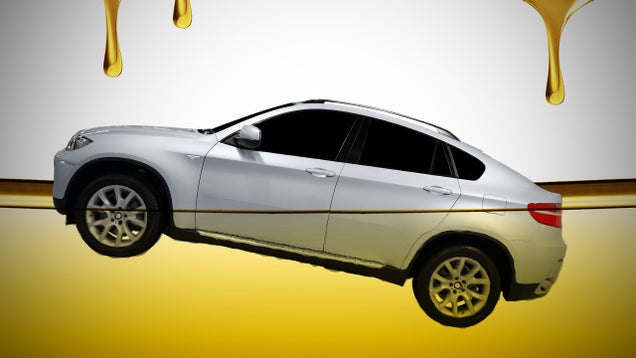
Cars need a ton of maintenance to keep running smoothly. The easiest thing anyone can do is check the fluids to ensure your car stays healthy. With that in mind, here are the five fluids you should check on a regular basis.

|
|
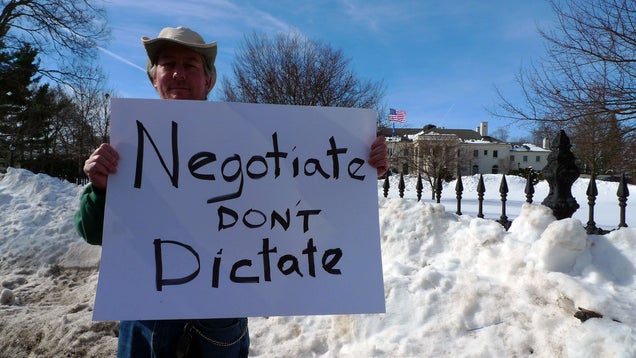
When you think of negotiations, you probably think of persuasive talkers. While that skill can be useful, Reddit CEO Yishan Wong believes that you're better off listening instead.

|
|
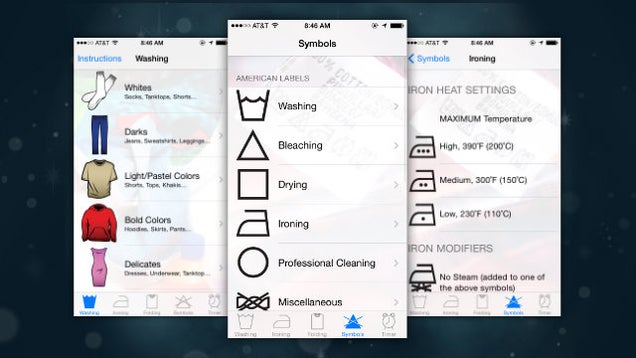
iPhone: Laundry isn't exactly rocket science , but with all the various care labels and instructions, it's easy to get confused on the proper washing techniques. Complete Laundry Care is a simple app that guides you through the process.

|
|
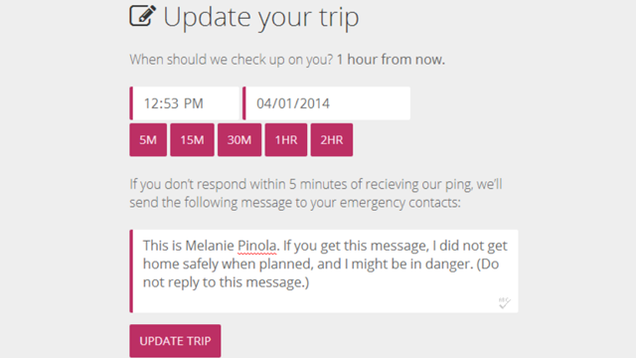
If you're going on a solo trip or even for a walk alone at night, it's a good idea to let a loved one know you're safe (or possibly not). Kitestring is a simple webapp that checks up on you and sends a text message to your emergency contacts if you don't respond by a designated time.

|
|
 When you think of beverages with a complex bouquet of flavors, what comes to mind? Wine, maybe? Fancy coffee and tea? Craft beers? What about Coca-Cola? Yes, there are people who appreciate the complexity of Coca-Cola. They now have a special glass from which to drink their high-fructose corn ambrosia.
Who would come up with such a wacky thing? Well, Riedel, an Austrian company that makes different glasses for different varietals of wine. These glasses can cost hundreds of dollars each, making the Coca-Cola glass seem like a bargain at only $20.
Still, twenty bucks is twenty bucks, and that’s money that I could be spending on ten bottles of Passover Coke. Are these glasses any good? Here’s Riedel’s marketing spiel:
Inspired by the iconic curves of the original Coca-Cola contour bottle, the Coca-Cola + Riedel glass is made to enhance the drinking experience. Developed by a tasting panel of industry experts and Coca-Cola lovers, it was determined that this form captures the distinct spices, aroma and taste of Coca-Cola and creates a magical sensorial experience.
 Um, okay. Nobody knows the Coca-Cola recipe for certain, but traditional cola recipes do include spices like coriander and cinnamon. The important question is whether a special glass really enhances the experience. Fortunately, Gizmodo got hold of the fancy glass and investigated this important question. For the blind taste test, they tried different glasses out on a trained sommelier and writer Ashley Feinberg, “a person who enjoys Coke most of the time sort of.”
How do you have a blind taste test of different types of glasses? Simple: blindfold the tasters and hold the glasses up to their mouths so they can drink. This looks very strange. There’s a video.
Their results were surprising: both preferred the Riedel glass. Maybe all of that effusive praise for the glass’s design isn’t nonsense. Like wine and beer glasses, the vessel enhanced the flavor, and make the beverage’s carbonation less sharp without it seeming flat. The shape of the glass provided just the right balance of carbonation, aroma, and flavor.
Should you buy one? Meh, probably not.
Does a $20 Glass Built Just for Coke Actually Improve the Taste? [Gizmodo]
Coca-Cola + Riedel Glass [Riedel]


(Goodwill Denver)
Inside the 1812 Bible originally published in England, employees found an inscription in black script with a name, birthdate and date of death inside, along with the area where the family lived. The last inscription ended with another family member who had passed away in 1932, reports 9 News.
From there, Goodwill’s chief people officer, who happens to be a genealogy enthusiast, heard about the discover from the company’s CEEO and decided she had to track down the current day family.
After searching the Internet she was able to trace the Bible back to a descendant of the family in London, who got in touch with his brother in New Jersey.
The New Jersey man said he had no idea how his great, great grandfather’s uncle’s Bible made its way across the centuries to end up in the U.S., but it’s in good hands from now on.
“I intend to take good care of it for future generations,” he said.
I hope the same thing happens one day to my descendants, when they are finally reunited with the copy of Sweet Valley High’s Dangerous Love, but it might be hard because I crossed out my last name and used the last name of my 6th grade crush instead. Let’s hope technology is up to that task.
Heirloom Bible discovered in Denver thrift store [9 News]

Raphael recently went out to eat at Olive Garden, the food and service were, he says, “fine.” He was less delighted when he looked at the receipt, though. It provided useful suggested tips for 15%, 18%, and 20%. Only these suggestions weren’t actually 15-20% of his before-tax dinner tab, which is what you’re supposed to base tips on. Or are things different on Planet Darden?

Raphael snapped a picture of his receipt and sent it to Consumerist. “Tips are supposed to be based on the total amount before taxes, to which a 15% tip on $39.21 is $5.88,” he wrote to us. “Even if I were to tip on the total plus tax of $41.95, it’s still under the suggested 15% tip amount at $6.29.” Did someone make a mistake while setting up the systems, or is Olive Garden out to scam higher tips for its servers?
Before we contacted Darden, Olive Garden’s parent company, we checked their receipt math. Something wasn’t adding up: $6.61 isn’t 15% of $41.95, either. So we wrote back to Raphael. “Did you use any coupons, gift cards, or vouchers?” we asked. “Either they calculated the suggested tip based on your before-coupon total, which would be correct, or these numbers have no basis in reality.” It’s certainly possible to have numbers and prices with no basis in reality: the continuing existence of Target proves that.
That wasn’t the case here, though. Raphael went back to his itemized receipt and noticed that, oh yeah, they had received a free dessert. One of your food items might be comped, but that doesn’t mean that your server didn’t bring it to you and you shouldn’t account for it in your tips. That’s why Olive Garden included it in the tip.
Take it from us: not everyone is out to screw you over. It’s good to be watchful and catch errors or miscalculations when they happen, but also to think critically and figure out and check things out before declaring consumer war.
RELATED:
Chili’s Helpfully Suggests 18% Tip On My Tab


Lucky carrot sticks getting a ranch bath. (elana’s pantry)
Oh, hello there. I didn’t notice you, busy as I was using this slice of pizza as a dedicated ranch dressing spoon. Anyway, friend, while you and I might not need anything official to know that Americans are dumping, slathering and otherwise distributing ranch dress on all kinds of food, a new report says it’s the No. 1 condiment shipped to our country’s food service outlets.
The NPD Research group said in a report released yesterday (H/T to The Salt) calling ranch the “Swiss Army knife” of salad dressings (which makes me think of biting a knife, and that’s wrong) as Americans eat it with veggies, on salads and with pizza dipped into it, along with a myriad other food uses.
NPD says it’s the top ready-to-use dressing flavor shipped to places like cafeterias, restaurants and other food institutions, followed by blue cheese dressing, and is growing in an otherwise mostly flat salad dressing category.
So why exactly do we savor each moment that delicious creamy concoction is in our/my presence? Or really, what is it about the ranch flavor that’s conducive to multiple food experiences.?
“It’s cool, creamy, dairy, and it has a little bit of nip to it, but not much,” a new-product expert at the market research firm Mintel explains to NPR’s The Salt.
Also put it on pizza, seriously. Have I mentioned that yet?

The Cornell University Food and Brand Lab (H/T to Quartz) studied 65 cereals in 10 different grocery stores and found that not only are cereals marketed to kids placed half as high on the shelves as adult cereals — which makes sense to put them in the sightline of kids — but that the brand mascots are trying to make eye contact.
By “trying,” I don’t mean Tony the Tiger has come to life, but is more like one of those creepy paintings that is always watching: “A second key finding from the same study is that the average angle of the gaze of cereal spokes-characters on cereal boxes marketed to kids is downward at a 9.6 degree angle whereas spokes-characters on adult cereal look almost straight ahead.”
So if there’s a person on the box of say, Special K, she’s probably just gazing off wherever, she doesn’t want to gaze directly into your eyes. But that Sonny is cuckoo for eye contact, and his eyes say it all — “Buy me, kid. Throw a tantrum, do whatever it takes. I’ve seen inside your soul and I know you want Cocoa Puffs.”
When showing Tricks the Trix rabbit to adults in two ways, one with him looking straight ahead and one looking down, adults showed higher brand trust and loyalty for the one with the straight-ahead gaze.
While researchers didn’t study that effect in kids, they did suggest that healthier brands use the same tactics when marketing to kids — or keep children from the cereal aisle altogether if Sonny’s going to be making eyes at them.
Eyes in the Aisles: Why is Cap’n Crunch Looking Down at My Child? [Cornell University]
The creepy ways that cereal boxes get your kid’s attention [Quartz]

 Meet Facebook’s new mascot of accidental oversharing: a kindly blue dinosaur that shows up and gently prods you to think about the privacy settings on your posts. Why a dinosaur? We’re not sure, but it’s definitely cuter than a cartoon annoyed family member or an adorable rendering of a publicly gossiped-about friend.
It’s better for Facebook, of course, if we post everything publicly: public posts are where their current “trending topics” come from, and all of that delicious public information about you and your friends is what makes the site so valuable to advertisers.

Users see the Privacy Dinosaur when they haven’t changed their post settings for a while: “we just wanted to make sure you’re sharing your post with the right audience,” it tells users. We’ve all done it, after all: you switch your posting to “public” to share a cool blog post you write or to enter a contest where you need to share a blog post in order to enter a drawing, and then leave your settings wide open for the whole world to see an embarrassing photo that you post or a status complaining about the break room coffee pot.
It’s not that Facebook wants us to stop oversharing altogether–as use of the site has spread from being limited to Web-savvy college students to having everyone from great-grandparents to kids under 13 using it, they want to make sure that users know what their options are, and who they’re sharing posts with.
What’s the Deal With Facebook’s Privacy Dinosaur? [Mashable]


(erikg)
Reader Nick tried out this fab coupon, and the experience hasn’t left him all that keen to keep buying things on eBay. “Especially frustrating is that items for sale on eBay are time sensitive,” he wrote to Consumerist. “I committed to buy something expecting a simple coupon to work, instead I’m out an extra $10 i didn’t wish to spend.” The specific item he wants might be available today, but unless it’s in the inventory of one of the big-name retailers now selling on eBay, he has no way to know for sure that the item will be available whenever eBay gets around to fixing the coupon.
Oh, yes: fixing the coupon. eBay customer service told Nick that they’re working on fixing the problem–another customer who wrote to eCommerceBytes was told that the promotion was more popular than expected and ran out of funds, and the team needs to get more funds into the relevant account. Okay. Here’s the thing, though: they can’t go back and give customers a retroactive ten bucks off. Nope. Nick was told to keep shopping, and maybe the coupon would work eventually.
“They instead just told me to keep on trying with no ETA to speak of,” he writes. “I guess they’d like me to keep on buying items without knowing if a simple coupon will work or not.” Maybe what they meant is that he should try to purchase items with a fixed “Buy It Now” price instead of bidding in auctions, but it’s ridiculous to tell customers to just keep trying to make purchases for the next week or so until the coupon works.
We sent a request for comment over to eBay, and will update this post when (if) they get back to us.
eBay Fails to Honor Coupons It Gave Buyers [EcommerceBytes]
Has anyone had problems redeeming their $10 coupon code recently? [eBay Forums]


A Tesla shouldn’t go “vroooom,” CBS.
One of the main reasons someone might purchase a Tesla is part of what makes the vehicles what they are — being an electric car means having an engine that’s quieter than the usual grumble and rumble of a traditional car. So anyone watching 60 Minutes this past Sunday might’ve been surprised to hear what seemed like an electric car with a nasty cold.
CBS issued an apology today for footage of Tesla car that had been dubbed over with the sound of a traditional engine, reports the Associated Press. The online video of the segment has since been corrected with the proper audio.
The network said an editor made an “audio error” in dubbing that sound in over the much quieter Tesla car during a segment on company founder Elon Musk.
Jalopnik.com was the first to notice the discrepancy, noting that the sound resembled that of a revving motorcycle, which is even farther off the mark.
Apparently you can’t just close your eyes and hit a button the Fun Board Of Sounds anymore. TV really has changed, y’all.
Here’s the now-corrected footage — notice the pretty darn quiet engine at the 40 second mark:
CBS dubs sound for quiet electric car [Associated Press]


This is what joy looks like. (Break.com on YouTube)
We know, we know — you’re feeling weary of all things April Fool’s Day/prankish. But bear with this one, because it’ll probably make your insides feel warm and glowy, whether through jealousy or because a deserving waitress just got a crapload of awesome tips during her shift as part of a delightful prank.
Usually when we hear about waitstaff receiving exorbitant tips, the whole thing is shrouded in mystery and the tipees fade back into the money-filled night like the fairy godmothers they are.
But in this case, Break.com set up and filmed the whole thing with the help of the waitresses coworkers and others planted at the restaurant.
She’s raised her sister from childhood, successfully overcome an eating disorder and started a non-profit yoga business to help others battle eating disorders and is generally a great person, her friends and family say. Which is probably why she tried to split up her first tip with coworkers, $1,000 she receives in cash from a generous customer.
By the end, she’s netted two tickets to Hawaii for vacation, a job working on a yoga program to help others with eating disorders and oh yeah, a new car.
The only surprising thing is how long it takes her to realize this is an awful lot of good luck for one person. But maybe I’m just that jaded — heck, I’d be suspicious as soon as someone left me vacation vouchers in lieu of a $5 tip.


In spite of the National Pork Council’s best legal efforts, one can still buy canned unicorn meat from ThinkGeek.com.
8. When the National Pork Board sent a cease-and-desist to ThinkGeek over canned unicorn meat, a product that does not actually exist.
ThinkGeek dared to use the phrase “the new white meat” as a slogan for the sparkly mythical horse meat it cooked up as an April Fool’s joke several years back. The folks at Big Pork apparently thought it was too close to their “The other white meat” tag line and threatened to sue… again, over non-existent meat from a fictional animal.
7. Spirit Airlines CEO Ben Baldanza ignores all evidence to the contrary, declares his company the “most consumer-friendly airline.”
Yes, the airline that charges for carry-on bags — which it declared a “consumer benefit” — and was the only U.S. carrier to make a recent list of the world’s worst airlines, is apparently the most consumer-friendly, at least in the mixed-up brain of CEO Baldanza.
6. McDonald’s suggestion to employees who need to de-stress: Take two vacations a year!
The McDonald’s internal McResource site provided many nuggets of wisdom that merit inclusion on this list, from telling employees to make quick cash by selling unopened Christmas gifts on eBay to breaking up their food into smaller bites so that it lasts longer to the gem of them all — advising that two vacations a year help to reduce the risk of heart attack. Dear McDonald’s — if you have to tell employees how to sell gifts for cash or how to extend their meager pantry, they probably can’t afford the time off for one, let alone two vacations in a year.
Alas, McDonald’s didn’t even pull down the McResource site until folks noticed that the health advice given to employees basically told them to avoid fast food… like McDonald’s.
5. Ryanair CEO Michael O’Leary calls for standing room cabins in airplanes.
Probably the one person in the airline industry whose statements might make Spirit’s Ben Baldanza bristle, Ryanair loudmouth-in-charge O’Leary has made a career out of his efforts to squeeze as many passengers into flying tin cans as possible. In 2011, he pitched the notion of toilet-free planes — not planes with free toilets, but planes that have nowhere to void one’s bladder or bowels — in order to make room for more seats. But more recently, he declared that “seatbelts don’t matter” and called for new plane design that would resemble a subway car, with people standing around holding on to grips as Ryanair’s bottom-dollar flights soar through the air at several hundred miles per hour.
4. AOL CEO Tim Armstrong not only tries to screw workers out of 401(k) benefits, but also reveals private medical info about two employees and their children.
It’s bad enough when a huge multibillion-dollar company gathers employees to tell them that company contributions to their retirement plans will be delayed. But when the CEO of that company then tells everyone that one of the main reasons for the delay is that it had to pay for the health care of two female employees who had recently given birth to “distressed babies,” a line has been crossed. It’s the kind of thing you’d expect to see in a dark comedy — a CEO of a once-great company flippantly announcing to employees, “Sorry about the delay in benefits; blame Sarah, Janet and their sick little kids. Here is their home address and Social Security info while we’re at it.”
3. The FDA applauds itself For banning a chemical in baby bottles and infant formula packaging, after the industry had already stopped using it.
It’s not just big companies that make ridiculous statements. Bisphenol-A (BPA) is a controversial but commonly used chemical in plastic food packaging that has been linked to everything from increased risks of certain cancers, to obesity, to diabetes, reproductive abnormalities, and heart disease. For years, numerous consumer advocates, physicians and parent groups have tried to get the FDA to ban its use, but the agency maintains that the science has not yet proven BPA to be unsafe. However, the FDA didn’t hesitate one bit to pat itself on the back (one of its favorite pastimes) when it “banned” BPA first from baby bottles and then from infant formula packaging, in both instances long after those respective industries had already phased out BPA.
“Consumers can be confident that these products do not contain BPA,” declared the FDA of its non-triumph, while inadvertently and tacitly implying that consumers should be concerned about BPA elsewhere.
2. Comcast paints itself as the superhero of net neutrality.
In a recent statement from Comcast’s in-house merger whisperer David Cohen, the company pointed out that while Verizon might have convinced a federal court to gut the FCC’s net neutrality rules, Comcast remains “the only ISP in the country that is bound by” those old rules. What merger-meister Cohen omits from that statement is that Comcast is still required to obey the net neutrality rules as a condition of the company’s acquisition of NBC Universal. Oh, and that obligation expires after 2018.
But the real kicker from Cohen’s statement is when he declares, “There has been no company that has had a stronger commitment to openness of the Internet than Comcast,” resulting in spit-takes around the world from everyone who is even vaguely familiar with Comcast’s sketchy history… and who also happened to be drinking water at the time they read that statement.
1. AT&T says that taking away customers’ right to sue is all in the best interest of consumers.
Three years ago this month, the U.S. Supreme Court sided with AT&T and decided that it was perfectly fine for a company to stick a tiny clause in a massive contract — a contract the customer has no ability to negotiate or alter — that takes away that customer’s right to have her day in court if she’s wronged by the business, and instead forces her into a binding arbitration process that has repeatedly been shown to be weighted in favor of businesses. But, don’t worry, claims AT&T, which declared in the wake of the ruling that they were doing this all in the best interest of consumers, because arbitration almost always results in a faster resolution.
Too bad that this “resolution” is often a pittance compared to what a plaintiff would get in a lawsuit, or that the customer can’t make his case because he can’t afford proper legal representation and research, or that these arbitration clauses generally ban class actions, leaving each wronged customer to fend for himself… and leading many wronged customers to never seek redress.
But yeah… it is faster.

If you make it through your house burning down and that car accident, you might think you’ve got a the nine lives of a cat. But those nine lives will run out eventually, so you had better learn how to not suck… at picking a life insurance policy.
Death and taxes.
Blah, blah, blah.
But when you die, we imagine you don’t want to leave your family destitute, hounded by debt collectors, needing to sell the family farm just to pay for food.
Well, that’s where life insurance comes in.
Not all life insurance is bad — it can be fantastic — but a strong-armed salesperson who preys on your emotions might take you for more than you can afford, and a policy that doesn’t fit your family’s needs.
Here are 15 things you may not know — or that you need to know — about life insurance.
1. You need a higher death benefit than you think.
A $1 million dollar policy may seem like a lot, but if you have a spouse and two young kids who aspire to college someday, and you have some debt, $1 million may not get them very far if you want them to maintain the lifestyle they’ve become accustomed to.
How much coverage you need depends on your salary, whether or not your spouse works, if you may need child care, and the debt you may leave behind: college tuition, credit card bills, a mortgage, and more. Try these calculators from LifeHappens.org and MSN Money for help. Also check out BankRate.com’s Life Insurance Cheat Sheet.
2. Life insurance comes in several flavors, and you need to pick the right kind.
Term insurance will cover you for a set time period, and at the end of the period, you’ll no longer have insurance. This is often a good choice for young families who can’t afford permanent insurance, or for those who only want to be insured for a certain time period.
Permanent insurance will give you coverage for as long as you pay the premiums (and sometimes longer), and in addition to the insurance part, it also has an investment component. It comes in different flavors — whole, universal and variable — and they offer different investment options and the ability to use your cash value to pay premiums.
The other important difference is cost. Term policies are generally much less-expensive than any kind of permanent insurance, which charges additional fees for the investment component of the policy. Try BankRate.com’s calculator to decide which kind is best for you and use the Insurance Information Institute’s glossary to make sure you understand all the terms in any policy you consider.
3. Do you need permanent insurance, or does your salesperson need a high commission?
We’re not saying that permanent policies are bad, but they are costly, and they do offer your insurance agent a higher commission. If your agent keeps pressing the investment component of a permanent policy, take a step back.
If you bought a term policy and invested the difference you would have paid for the permanent policy, how much of a nest egg could you accumulate? We’re not saying it’s impossible for the permanent policy to do better, but if you want insurance, buy insurance. If you want an investment, buy an investment. The added layers of fees and fewer investment options that come with permanent policies make it likely that an index fund or exchange-traded fund will do you better in the long run. And yes, before you salespeople start sending us nasty e-mails — permanent policies do have tax advantages, but so do 401(k)s and IRAs.
4. Look for guaranteed level premiums.
You don’t know exactly what your financial future holds, but it’s a fair guess to say that if your premiums go up over time, it may be harder to pay the premiums. And if you don’t pay, your policy will lapse. Leaving you and your heirs with nothing.
5. Don’t wait too long to get coverage.
The younger you are, the cheaper premiums will be. And, if a health problem comes up before you get coverage, you could face higher premiums or be denied coverage entirely. Also, if you have debt or a mortgage or college-bound kids and you don’t have any insurance, they get nothing if you get hit by a bus. So what are you waiting for?
6. Forget the fancy-pants.
Many policies are often sold with riders, or additional coverage for an additional fee for items such as accidental death, illness, income replacement or waiver of premiums. The benefits to these isn’t usually worth the cost, to consider them closely.
7. Review, review, review.
Your insurance needs are going to change as your life changes: when you get married, get divorced, have kids. During a major-life event like these, make sure you go over your life insurance needs, and make changes when you have to. And because life insurance doesn’t pass through a will, but through beneficiary designations, make sure the insurer knows who you want to get the death benefit.
8. Don’t count on your employer’s insurance alone.
Many employers offer between one and three years’ salary as a death benefit, and for most families, that’s not enough. Even if your employer’s insurance did cover your family’s needs, you’d be left with no coverage if you quit or get laid off. It makes more sense to buy your own policy because it will travel with you as long as you pay the premiums. Consider any insurance you get through your employer to be gravy.
9. Think about your estate planning needs.
If you want to leave an inheritance for your heirs, life insurance is a great way to do it. It can also be a handy way to pay for estate taxes — also called death taxes — should there be enough in your estate that you’re subject to estate taxes.
(Again, remember life insurance distributions are based on your beneficiary designation on the policy, not on what your will says.)
10. Forgetting to pay premiums is a no-no.
If you don’t make timely payments, all those years of premiums could be for nothing and the insurer may cancel your policy. Consider having auto-payments from a checking or savings account to make sure you don’t miss an important deadline.
12. Don’t lie.
If you’re not truthful on your life insurance application, you could be denied coverage, see your policy cancelled (without a return of premiums you’ve paid) or face much higher rates when the insurance company learns the truth.
11. Make sure your beneficiaries or someone you trust knows where the policy is.
You know, in case you get his by that bus. No insurance company will know you’re dead and start ringing your beneficiary’s doorbell. Someone will have to notify the insurance company before any benefits are paid.
12. Consider your health — in good times and in bad.
Life insurance not a one-shot deal. If your health changes for the worse, you may want to see if you can convert your term policy for a permanent one because you may not be eligible for new insurance. But if you lose a significant amount of weight or you stop smoking, you could be eligible for a less expensive policy.
13. Avoid no-medical policies.
While it may be less hassle to qualify, these will cost you more in the long run.
Just think: the insurer has to set rates to cover those with good health and those with poor health, and who is more likely to want a policy without a medical exam? Yes, those in poor health. If your health means your rates would be higher, do the math to see if you’re better off investing what you’d pay in premiums instead.
14. Don’t bother with accidental death and dismemberment polices.
These policies are commonly sold by credit card companies. Also avoid lender-offered policies that promise to pay or your mortgage or other debts. A straight-up term policy will cost less for more coverage.
15. Your kids — unless they’re the breadwinners in your family — don’t need life insurance.
And yes, they’re even marketed in those freebie diaper bags you get when you deliver a child in a hospital. Case in point: My late dad bought me a whole life policy with a $50,000 death benefit when I was 10. It wasn’t because he wanted a payoff when I was dead, but he was thinking in terms of a long-term investment for me (while trying to help out a friend with a new insurance sales job). Today, the cash value part of the policy is worth $16,000, so I could take that money out now. Or, my beneficiaries would get a total of $66,000 when I die. But, rather than paying the $340 annual premium, my dad could have invested the premiums in a mutual fund earning 8%, and over 33 years, it would have been be worth $53,593 (Thanks to the SEC’s compound interest calculator for help with the math.)
So while the insurance policy would do slightly better for my heirs, the investment would be have been better for me during my lifetime. Something to think about before you buy a policy for a kid.
Because you made it this far, willing to think about your demise and all, enjoy this life insurance commercial.
Next week… long-term care! Don’t pretend you’re not excited…
Have a topic you’d like to see covered in How To Not Suck? Or maybe you’re an expert who would like to share your insight with Consumerist readers? Send us a note at notsuck@consumerist.com.
You can read Karin Price Mueller’s stories for The Star-Ledger at NJ.com, follow her on Facebook, and on Twitter @kpmueller.
PREVIOUSLY ON HOW TO NOT SUCK:
15 Things Everyone (Including Renters) Should Know About Homeowner’s Insurance
15 Things You Need To Know About Buying Auto Insurance
How To Not Suck… At Going To Small Claims Court
How To Not Suck… At Buying In Bulk
How To Not Suck At Planning Your Wedding, Part 5: Spending Your Wedding Cash
How To Not Suck At Planning Your Wedding, Part 4: The Honeymoon
How To Not Suck At Planning Your Wedding, Part 3: The Costly Little Extras
How To Not Suck At Planning Your Wedding, Part 2: The Stuff People Pay Too Much For
How To Not Suck At Planning Your Wedding, Part 1: The Most Expensive Steps
How To Not Suck… At Teaching Your Kids About Money
How To Not Suck… At Valentine’s Day Gifts
How To Not Suck… At Merging Your Money When You Marry
How To Not Suck… At Borrowing For College
How To Not Suck… At Saving For College
How To Not Suck… At Pre-Paying For Your Funeral
How To Not Suck… At Making Financial New Year’s Resolutions
How To Not Suck… At Last-Minute Christmas Gifting
How To Not Suck… At Saving For The Holidays
How To Not Suck… At Charitable Giving
How To Not Suck… At Disputing Credit Report Errors
How To Not Suck… At Lowering Your Utility Bills
How To Not Suck… At Home Inspections
How To Not Suck… At Understanding Credit Card Rewards
How To Not Suck… At Getting Ready For Tax Season
How To Not Suck… At Picking A Retirement Plan
How To Not Suck… At Deciding When To DIY
How To Not Suck… At Getting Out Of Debt
How To Not Suck… At First Year College Budgets
DISCLAIMER: Any websites, services, retailers, or brands mentioned in the story above are only intended as some of many options available to consumers, and do not constitute an endorsement by Consumerist, Consumerist Media LLC (CML) or its staff. Per Consumerist’s No Commercial Use Policy, such information may not be used by others in advertising or to promote a company’s product or service. In addition, this policy precludes any commercial use of any of CML’s published information in any form, or of the names of Consumers Union®, Consumer Media, Consumer Reports®, The Consumerist, consumerist.com or any other of CU or CML’s publications or services without CU or CML’s express written permission.

 It used to be be that eBay was the place where you could go to buy obscure collectibles and sell the remain of your broken computer. Instead of all of those regular civilian consumers, though, eBay is more interested in dealing with big retail brands these days, offering a concierge service that will deliver your purchases to you within mere hours.
A large number of national chain stores have joined the service, including venerable but troubled retailers Kmart and JCPenney. Apparently, someone out there doesn’t just need Hitler teakettles and obsolete video games: they need them this afternoon.
This retail utopia isn’t available to everyone, though: delivery by Mini Cooper concierge is only available to people who live in the designated delivery zones in certain cities: the San Francisco peninsula, Chicago, Dallas, and New York (parts of Manhattan, Brooklyn, and Queens.) Delivery costs $5, and eBay says that the minimum order fluctuates according to demand, but is usually $25.
While participating stores sell alcohol, tobacco, and prescription drugs, eBay Now will not deliver these items. They also won’t deliver furniture, TVs bigger than 42″, and anything else that won’t fit in a car. If you couldn’t get it home by yourself easily, they won’t bring it to you.
eBay started this experiment in super-fast, super-local commerce in 2012, hoping to compete with Amazon’s same-day delivery service.
ECommerceBytes, a site that reports news of interest to small online sellers, notes that they were only able to find items from large chain retailers available through eBay Now. Maybe not what people picture when you say “local merchant,” but Walgreens and Radio Shack do provide local jobs. Reports last year indicated that small local merchants would be able to sell through eBay Now, but so far the only vendors are national chains that are mall stalwarts.
Other retailers that are part of the early rollout include Home Depot, Office Depot, Bed Bath & Beyond, Urban Outfitters, and GNC.
eBay Signs Retail Chains to Same-Day Delivery Service [EcommerceBytes]
eBay Now [FAQ]

The Consumer Financial Protection Bureau heard a lot from consumers in 2013. The agency received the most complaints in its history, including those from three new areas – payday loans, money transfers and debt collections. But it appears that fewer complaints were sent to offending companies for review and response.
COMPLAINTS UP, RESOLUTIONS DOWN
The CFPB’s annual Consumer Response report [PDF] shows the bureau received 163,700 complaints in 2013, that’s an 80% increase in the number of complaints received in 2012.
However, the bureau only sent 113,200 (69%) of complaints to companies for review and response. In 2012, the bureau sent 75,400 (83%) of the 91,000 complaints to companies for review and response.
Additionally, fewer complaints elicited monetary relief from companies last year. Only 8,520 complaints received compensation in 2013, while 9,000 complaints did in 2012.
Consumerist reached out to the CFPB for comment on the lower percentages of forwarded complaints and monetary settlements, but have not yet received a response. If we hear anything from the Bureau, we will update.
BETTER RESULTS FOR SOME
Although there may have been fewer instances of monetary relief last year, consumers reported receiving higher amounts of compensation for each complaint type with the exception of student loan complaints.
The overall median relief amount in 2013 was $154, up just $9 from the amount the previous year. Student loan complaints received just $187 median relief amount this year compared with $1,307 last year.
BIGGEST GRIPES
The top three complaints received by the bureau in 2013 were regarding:
Information about consumer complaints is available to the public through the CFPB’s public Consumer Complaint Database.
The CFPB allows a company 15 days to respond to a complaint and provide steps taken or plan to take to resolve the issue.
A complaint is listed in the database after the company responds to the complaint or after the company has had the complaint for 15 calendar days, whichever comes first.
The CFPB began taking consumer complaints regarding credit cards when it opened in July 2011. Since that time, the agency has expanded its complaint operations to include mortgages, bank accounts and services, private student loans, vehicle and other consumer loans, credit reporting, money transfers, debt collection, and payday loans.
In March 2012, the agency launched a searchable consumer complaint database on its website.
Complaints inform the Bureau’s work and help to identify problems, which then feed into the Bureau’s supervision and enforcement prioritization process, officials with the CFPB say in a news release.
CFPB Report Shows Complaints Rose 80 Percent in 2013 [Consumer Financial Protection Bureau]


Android: Chrome is one of our favorite Android browsers , but it can be a little sluggish sometimes. This settings tweak, thanks to Redditor erythrocytes64, may give you a tidy speed boost, depending on your device.

|
|
RECALL #1: 1.34 MILLION VEHICLES
The recall involves a number of different GM models from a wide range of model years:
2010 Chevy Cobalt
2009-2010 Chevy HHR
2004-2006, 2008-2009 Chevy Malibu
2004-2006 Chevy Malibu Maxx
2005-2006, 2008-2009 Pontiac G6
2008-2009 Saturn Aura
2004-2007 Saturn Ion
Some of these vehicles — most notably the Ion and the Cobalt — are already involved in the ignition-related recall.
According to GM, “there may be a sudden loss of electric power steering (EPS) assist that could occur at any time while driving.” The loss of EPS makes it more difficult to control the vehicle and may increase the odds of being involved in a collision.
There are multiple reasons why the EPS in these vehicles could fail. For example, the Cobalt, Ion, and HHR vehicles need a replacement power steering motor. But it gets more complicated for the other makes and models.
Certain cars will need just a replacement torque sensor assembly, while others will need that assembly plus the power steering motor, and a third subset requires a replacement power steering motor controller unit. It all depends on the model years of the vehicles and when they were produced. More specific details are provided in this PDF.
Alas, replacement parts are not yet available, so GM will need to do the recall process in multiple steps. First, it will begin notifying affected owners in mid-April, followed by a second letter when dealerships finally have the parts and can make the repairs.
RECALL #2: 174,000 CHEVY CRUZE VEHICLES
Now we know why GM issued that stop-sale on unsold Chevy Cruze vehicles last week.
The carmaker is recalling 174,000 model year 2013-2014 Cruzes with 1.4 liter turbo engines over concerns that the right-front half shaft may fracture and separate.
If the half shaft fractures and separates while driving, the vehicle would lose power and coast to a stop. If a vehicle with a fractured half shaft is parked without the parking brake applied, the vehicle could move unexpectedly. Either condition increases the risk of a crash.
Again, GM has no parts to fix this problem, but will begin notifying affected owners by the end of April. Concerned owners may contact Chevrolet at 1-866-694-6546.
RECALL #3: 490,000 CHEVY AND GMC TRUCKS
Here’s another recall affecting a number of different makes and models:
2014 Chevrolet Silverado Light Duty Regular Cab, Double Cab, and Crew Cab 1500 series
2015 Suburban
2015 Tahoe
2014 Sierra Regular Cab, Double Cab, and Crew Cab 1500 Series
2015 Yukon and Yukon XL vehicles equipped with a 6-Speed Automatic Transmission (feature code MYC).
These vehicles may have a transmission oil cooler line that is not securely seated in the fitting. If the line is not securely seated and transmission oil leaks from the fitting, the oil could contact a hot surface and cause a vehicle fire.
Owners of affected trucks will begin being notified by the end of April. Chevy owners may contact Chevrolet at 1-866-694-6546 and GMC owners may contact GMC at 1-866-996-9463.


