
You might not think much of bringing your allergy pills on a vacation, but authorities in certain countries might. Travel Blog Johnny Jet points out that some over-the-counter medication can get you in trouble.

    
|
You might not think much of bringing your allergy pills on a vacation, but authorities in certain countries might. Travel Blog Johnny Jet points out that some over-the-counter medication can get you in trouble.
|
|

Relationships are tough no matter how similar you are to your partner, but author Charles Murray points out that personal habits you find objectionable are often the biggest deal breakers. These habits tend to boil down to three main categories.

|
|

When you think of good role models, businesses probably aren't your first thought but you may be surprised by the wisdom they have to offer. After all, we often learn a lot from their leaders . A select few can teach us quite a bit about how to have fruitful, happy, and successful lives.

|
|
 If you really need to get moving in the morning, try the new seasonal offering from Dunkin’ Donuts: flower-shaped donuts with a layer of colorful frosting, topped with a marshmallow Peep. You could also call it a sugar-coated pastry with a sugar-encrusted sugar blob on top. “As America’s donut leader, we are always seeking new and innovative donut varieties to help our guests celebrate special moments and occasions,” Dunkin’ Brands Executive Chef Stan Frankenthaler says in a press release, because of course Dunkin’ Donuts has an executive chef.

 Today, four of the biggest names in Consumerist news, including one former champ, fought it out in the Worst Company Sandbox of… Sand. Each member of this cruddy quartet may be deserving of the Golden Poo, but only two could move on the next round.
 COMCAST VS. FACEBOOK
Both of these contenders were dominant in their Round One matches, with Comcast taking nearly 90% of the vote against Yahoo and Facebook earning three times the votes given to DirecTV. But they can’t both win, so today’s bout was to see which of those two drubbings was a true indicator of widespread hate. And while Comcast’s 69% Round Two win is nowhere near the margin of victory it enjoyed in Round One, it’s a clear sign that anyone who wants the Golden Poo will probably have to pry it from the hands of the Kabletown Krew.
But there are still some fights to be fought before we can go crowning any contender. Up next for Comcast is Verizon, which beat fellow telecom titan in the other Round Two action from today…
 VERIZON VS. AT&T
We had a hunch going into today’s match between the Death Star and Big V that many voters would be deciding based on which of the company they were customers of, as opposed to AT&T and Verizon’s bigger-picture anti-consumer behavior, like forcing everyone into arbitration, or, ya know, gutting the core of net neutrality. Regardless of why they voted, it was the bigger (at least in terms of wireless customers) company coming out on top, with Verizon barely eking out a narrow victory over its longtime rival.
Given how close this battle was and how well Comcast has performed thus far, it would be a pretty big upset for Verizon to beat Comcast in the quarterfinals. We’ll find out when that voting opens later this week.
Once again, here is how the WCIA bracket stands with only two matches to go in Round Two:

 Last week, we told you how our banking sources had linked the recent rash of fraudulent debit and credit card charges from a mysterious company listed as WEBLEARN to the scammers behind a similar scheme that had dinged victims’ accounts for bogus $9.84 transactions during the holidays. Some further investigation by those better equipped to do so has turned up more on this link.
Cybersecurity journalist Brian Krebs writes today about the connections between WEBLEARN and the folks behind the so-called $9.84 scam.
Krebs confirmed what we’d heard from the bank folks — that this scam, like the earlier one, was using a third-party card-payment processor, in this case a company called BlueSnap, to push through its fraudulent transactions.
The processor in the $9.84 scam was company named Credorax, which lists offices in Malta, Israel, London, and Massachusetts. In January, it claimed to have been just an innocent dupe of the scammers. Interestingly enough, BlueSnap also has offices in Malta, Israel, London, and Massachusetts.
BlueSnap also used to go by the name of Plimus. In 2011, Krebs wrote about Plimus because it was processing payments for a scam artist who was selling computers that were pre-loaded with botnets. It was also sued for its part in allegedly creating fake online reviews and marketing campaigns for various affiliated websites.
Writes Krebs of the similarities between WEBLEARN and the $9.84 scam:
As with the $9.84 scheme, this latest round of phony charges appears tied to an affiliate marketing scheme for “online learning” (hence, the “Weblearn” notation on victims’ credit card statements). One site that’s connected to the Weblearn scheme is onlinelearningaccess.com, which actually includes commented-out code hidden in its HTML content stating that “the charge will appear on your credit card as WebLearn8884612032.”
That same site is closely tied to a network of other flimsy affiliate learning systems, including greatweblearning.com, jnselearning.com, and learnonlinemembers.com. As we can see from the checkout page at onlinelearningaccess.com, the base price of the “system” is $8.83, but different checkout totals can be achieved ($11.08 and $10.78, e.g.) simply by selecting different items to add to your shopping cart.
Regardless of who is behind the scams, or whether they are caught or stopped, these sort of nickel-and-dime schemes will continue so long as their are bad, clever jerks with access to computers.
So it’s worth reposting the following advice:
1. Be vigilant about checking your debit and credit card statements
Yes, it’s annoying and time-consuming (and depending on how little you have in your bank account and/or how much you owe to a credit card company, it might be depressing), but checking your statements a couple of times a week is the best way to catch these things before it’s too late. The longer these transactions go unnoticed, the harder it is for investigators to do their job, and the harder it is to make your case that it’s fraud.
2. Be mindful of all transactions, not just WEBLEARN
When looking at your statements, don’t just look at the company names for obvious scams. Look at the names and the dollar amounts and make sure each transaction on your card makes sense to you. The $9.84 scam used multiple names but the same amount, while the WEBLEARN scam is using different dollar amounts but the same company name. Previous scams have used company names that look a lot like businesses you might spend money at in order to fly under the radar.
3. Call your bank or credit card company immediately
Even if you get through to someone who promises to refund your money, you need to contact your bank and/or credit card issuer so they can investigate. Likewise, if you’re unsure of a transaction on one of your cards, the bank can usually provide more information that will help you determine whether or not some strange-looking purchase is legitimate or not. After all, something that looks like it’s coming from a company you’ve never heard of might be a legit purchase in the unfamiliar name of a holding company or franchisee.


Tempting, we know. (plasmadis)
Police say the woman was first spotted in the store Thursday night taking cans of beer from the store and drinking them where she stood, reports the Albany Times-Union.
Workers told her to hit the road, but then found her five hours later asleep in a shipping container in the “employees only” receiving dock area, according to the State Police, with beer cans scattered on the floor nearby.
She was booted once again but was discovered the next day at the store, allegedly with a 24 oz. beer shoved in her pocket. While employees waited for the police to arrive, she reportedly went into the bathroom and chugged the evidence.
The attraction of just settling down with a beverage where you buy it might be nice, but more appropriate behavior for say, a bar, or the privacy of your own home. Besides, the last time I slept in a shipping container I swore would be my last. Couches are infinitely more comfortable.
Woman drinks beer, trespasses at Walmart [Albany Times-Union]

The naming convention used to be split between Grade A and Grade B, but now it’s all Grade A, and uses names that conjure up images of coffee, notes NPR’s The Salt blog.
Instead of names “Fancy” and “Grade A Dark Amber,” there are colors like “Golden,” “Amber” and “Dark,” with flavor descriptions of “Delicate,” “Rich,” “Robust” or “Strong.” And what used to be below Grade B, formerly known as “Commercial Grade,” is now Very Dark with a Strong taste, and can be sold to retailers if its quality is good enough.
It’s confusing to some, or maybe it’s just that syrup names are so entrenched in the collective Vermont mind that it’ll take some getting used to.
“I like the old grading system much better,” said one customer tasting syrups at a recent event at one sugarhouse. “More of a Fancy,” she said of the lightest syrup, which is now called Golden Delicate. “That’s the name I’m used to for it.”
Sugarmakers in Vermont are hoping that names like “Robust” will make people think of coffee, and help those that aren’t used to buying syrup get a better idea of what the products will taste like.
“Not very many people have a chance to come to a sugarhouse and to sample different grades, and have somebody explain to them about the differences,” says one sugarmaker. “They’re standing in front of a supermarket shelf, and they’re wondering if they’re really going to like what’s in that jug.”
She explains that customers would sometimes think Fancy was the highest quality syrup, and then be disappointed that it wasn’t, leading to future syrup confusion.
“If you got that and you thought, “Wow, if this is their best syrup, it doesn’t have much flavor. I guess I don’t like maple syrup,’ ” she explains.
Vermont sugarmakers would like to see the grading convention adopted by other states to provide a uniform experience for customers, but the state is on its own so far. Your move, Canada.
By Any Other Name, Does Vermont’s Maple Syrup Taste As Sweet? [The Salt]

 Starting in the second half of 2013, Netflix speeds on several major Internet service providers began to sink drastically as the ISPs allowed Netflix downstream traffic to bottleneck, resulting in slow, fitful delivery to consumers who had paid Netflix for the service and the ISPs for broadband access. Earlier this year, Comcast speeds turned up out of their nosedive when the company made a profitable deal with Netflix, but what about everyone else?
A recent story from ArsTechnica looks at the possible cause for a delay in a paid-peering deal between Netflix and two major ISPs whose customers are currently lucky if they are able to access Netflix at all — Verizon FiOS and AT&T U-Verse.
As you can see from the Netflix-supplied chart above, U-Verse speeds have been sinking last September, rebounding slightly in February, but still barely watchable at below 1.7 Mbps.
Verizon FiOS speeds were actually improving until the fall of 2013, when they began to drop. Then between December and January — a time period that just happens to coincide with a federal court’s gutting of the FCC’s net neutrality rules — they sank like a wily coyote with an Acme safe around his ankle, and have continued to slide.
It’s been reported that Netflix is in talks to make a Comcast-like deal with these two companies, one that would either put Netflix servers in the ISPs’ data centers or give it more direct access to the ISPs network. But why haven’t there been any deals made?
The better question might be why did the Comcast deal come together when it did?
Ars reports that Comcast had initially wanted a significant amount of money ($.01 per GB) from Netflix, but that it ultimately settled for less than that in order to get the deal done in time to help make the company’s “We’re pro-consumer” case to regulators.
Additionally, as part of its previous acquisition of NBC Universal, Comcast has agreed to abide by the net neutrality rules through 2018, regardless of the court’s trashing of the guidelines. While allowing the Netflix bottlenecks is not explicitly in violation of those rules, the last thing Comcast wants when it’s trying to buy Time Warner Cable is additional scrutiny from regulators.
But Verizon and AT&T aren’t in the process of trying to acquire a major competitor, so they lack that motivation to capitulate on pricing or other Netflix demands.
Likewise, neither Verizon nor AT&T have a customer base the size of Comcast, so Netflix may think it can play chicken as it can better handle losing angry FiOS and U-Verse subscribers than those companies can.
One final thing to consider is that FiOS and U-Verse often exist in the few markets where there is some sort of competition for cable and Internet service, so Netflix may be banking that disgruntled subscribers may flee Verizon or AT&T for another company.
Rest assured that, barring more strenuous net neutrality rules that ban bottlenecks, these deals will be made at some point. But Netflix will go as long as it can before having to shell out hundreds of millions of dollars for the access it once enjoyed without that toll, and the ISPs are going to try to get as much for access to their pipelines as possible.

 For the past few years, a growing number of Walmart customers have complained about threadbare shelves, while Walmart workers say it’s a result of being understaffed and mismanaged. Now the nation’s largest retailer is admitting that it’s losing billions of dollars by trying to be cheap.
According to a recent BusinessWeek story, Walmart execs announced at a company meeting earlier this month that improving the level of merchandise that is in-stock and available for customers to buy is a top priority.
As Walmart workers told us last year, a number of Walmart stores have plenty of inventory in the back of the building, but some of it never reaches the floor because there are too few employees — or too many employees being directed to do non-shelving work — to keep shelves stocked.
Last fall, Walmart finally began to add some hours for employees to do more stocking work, but complaints from customers have not stopped.
At the company meeting, executives said they will add more hours in an effort to improve “in-store execution.” If it fails to make a change for the positive, the company figures to lose $3 billion a year.
Whether or not that works will likely depend on who they hire and how they treat the new hires. One Walmart worker told Consumerist that her store has a way of overwhelming new part-time hires with too much work, leading to a high level of turnover, meaning time is wasted training people over and over again.
Over the last five years, Walmart’s workforce has decreased in size, while the company has continued to open up stores in new locations around the country. We’ve been told that workers get a higher hourly wage to stock, but that many cashiers and other employees have been drafted into shelving duty during their regularly scheduled hours and without any bump in pay for that time.
Right now it’s a wait and see if Walmart’s latest plan will work. The condition of its shelves is one of those few things that a retailer can’t hide from consumers’ eyes.

 It probably isn’t necessary for us consumers to test the structural integrity of our condoms, but this video published last week features a bold Italian experimenter doing just that.
Yes, the man’s running commentary is in Italian, but you don’t need to understand every word in order to get what’s going on here.
What we’re not clear on is what Nutella adds to the fizzy reaction. We won’t argue that everything is better with Nutella, but we don’t really see what that adds, other than adding something Italian to the mix. Which it does, sorta.
Thanks to the magic of Google, you can watch the video with real-time subtitles here.
Coke + Nutella + Mentos + Durex ITALIA world record [YouTube]

According to the report [PDF], there were multiple times that employees at either GM or NHTSA could have fixed the defect, but chose not to for one reason or another:
•2001 – 2002: As previously reported, internal GM documents show that it knew of a problem with the ignition in the 2003 Saturn Ion (one of the subsequently recalled vehicles) while the car was still in pre-production. Rather than halt production or stop using the defective ignition switches, GM continued to install them in the Ion and numerous other vehicles for several years.
•Nov. 2004 – Feb. 2005: As GM rolled out its 2005 Chevy Cobalt, it learned that “vehicle can be keyed off with knee while driving.” In early 2005, it opened an engineering inquiry into the issue. After deciding that the current switch was “very fragile,” and that it was “close to impossible to modify the present ignition switch,” the inquiry was closed with a decision of “no action.” The reasons given for the lack of action included a long lead time, high cost for repair, and that “[n]one of the solutions seems to fully countermeasure the possibility of the key being turned during driving.”
•May 2005: Because GM was being forced into buying back so many defective Cobalts, it opened another engineering inquiry only months after closing the first one. Engineers suggested a change to the key ring slot, but GM eventually decided against that tweak.
•July 2005: The driver of a 2005 Chevy Cobalt is killed in a crash in Maryland. A later Special Crash Investigation by NHTSA finds that the air bag did not deploy because the key had been turned to the “Accessory” setting.
•Dec. 2005: Rather than issue a recall for the known defect, which had resulted in numerous buy-backs, multiple complaints and at least one preventable death at this point, GM issues a Service Bulletin to dealers on the topic, advising them to tell drivers to remove heavy objects from keychains. The reason for the bulletin and not the recall? GM recently stated this was “the appropriate response to the reported incidents, given that the car’s steering and braking systems remained operational even after a loss of engine power, and the car’s engine could be restarted by shifting the car into either neutral or park.”
•April 2006: The GM engineer responsible for the ignition switch authorized Delphi, the manufacturer of the switch, to make changes in response to the complaints and accidents. The new parts would eventually show up starting with model year 2008 GM vehicles, but there was still no action taken to remedy the many cars on the road with the defective part. Additionally, the part number of the switch was never changed, which is why some newer GM vehicles may have inadvertently received faulty switches when having their cars repaired.
•Oct. 2006: Another driver of a 2005 Cobalt is killed in a crash. Once again, a NHTSA investigation determines that the air bags did not deploy, most likely because the key had been turned to “Accessory.”
• Sept. 2007 – Nov. 2007: The Chief of the Defects Assessment Division (DAD) within NHTSA’s Office of Defects Investigation (ODI) emails other ODI officials to propose an investigation of “frontal airbag non-deployment in the 2003-2006 Chevrolet Cobalt/Saturn Ion.” At the time, GM maintained that it saw no problems with these cars.
The DAD chief made his presentation to an ODI panel — citing 29 Complaints, four fatal crashes,and 14 field reports — but the panel held there was no discernible trend and opted to not pursue a formal investigation.
• April 2009: The driver and passenger in a 2005 Cobalt were killed in a crash in Pennsylvania when their air bags fail to deploy. While a subsequent NHTSA investigation stated that the “cause of the air bag non-deployment in this severe crash could not be determined,” the report notes that once again the ignition was in the “Accessory” position.
•2010: NHTSA’s ODI panel again considers an investigation into the GM vehicles, but again concludes the data does not show any trend.
•2012 – 2013: GM conducts multiple tests on a wide range of vehicles and determines that the early Cobalts and Ions have ignition switches that do not meet the company’s minimal standards.
It is not until January of 2014, more than a dozen years after the problem was first detected and could have been stopped, that GM decides to recall approximately 1.6 million vehicles for a part that costs a few bucks and doesn’t take that long too replace.


Even in well organized bathrooms, it never hurts to have a little more storage. Thankfully the folks at The Family Handyman have a few ideas that offer room for toothbrushes, curling irons, or razors, and all you need is a little PVC pipe.

|
|
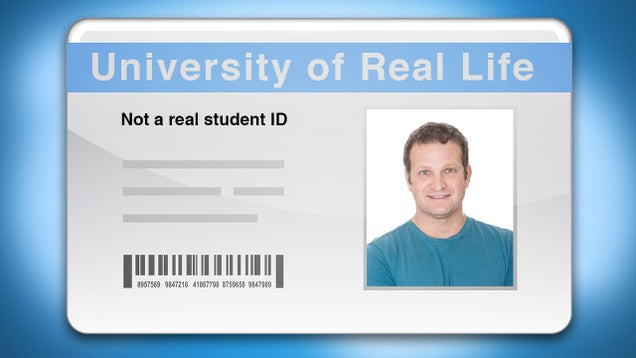
While most people don't automatically consider college students to be financial leaders, college students showcase some financially secure tendencies that can be instructive for the rest of us. Financial lessons are often learned from trial and error and come about through times of change and growth. That's why we can learn a thing or two from those college kids out there, who are busy learning, growing, and transitioning. And evidently, setting some great examples for the frugal financial-ista.

|
|

You know what to look for in a healthy cereal , but portion size is just as important. And you might be tricking yourself in that aspect based on the size of the flakes, says nutritionist Barbara Rolls of Penn State.

|
|

Planning a vacation? It's probably a bad idea to make your hotel reservations during business hours in the office, suggests a new study by Rice University and Iowa State University.

|
|

It's important to review your credit periodically. But your credit report contains a lot of information, and it can be confusing to navigate. Here's how to decode and understand your report.

|
|

