Shared posts

19 Sep 02:39

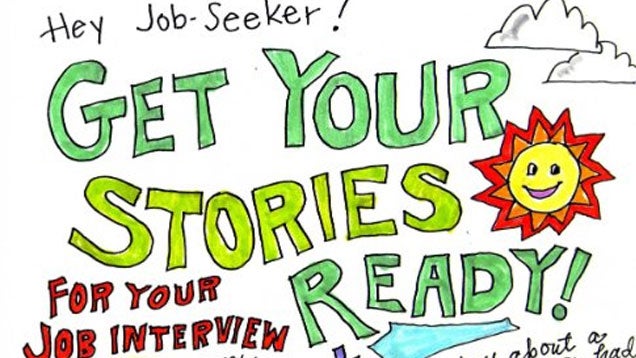
Prepare These 15 Stories for Your Next Job Interview

by Melanie Pinola

Prepare These 15 Stories for Your Next Job Interview

Storytelling is perhaps the best way to present information so it's memorable and relatable, and it can make you stand out especially in job interviews . Career expert Liz Ryan of Human Workspace drew up this poster to help you arm yourself with stories before your next interview.

Read more...


19 Sep 02:39

The Best Way to Freeze Meals for Cooking Later in the Oven or Crockpot

by Melanie Pinola

The Best Way to Freeze Meals for Cooking Later in the Oven or Crockpot

Freezer cooking allows you to prep a ton of meals for easier cooking later in the week. Even if you already know how to store foods in the fridge or freezer , though, freezer meals may require special handling.

Read more...


19 Sep 02:39

The Most Common Hidden Hotel Fees (and How to Avoid Them)

by Patrick Allan

The Most Common Hidden Hotel Fees (and How to Avoid Them)

When you book a hotel room with a decent travel booking site , you might think that you're getting a great deal. Then when you arrive you're hit with fees you didn't know about. Here are some of the most common culprits and a few things you can do to avoid them.

Read more...


16 Sep 20:45

The Essential Android Security Features You Should Enable Right Now

by Eric Ravenscraft

The Essential Android Security Features You Should Enable Right Now

Your phone is probably the most personal device you own. You carry it with you at all times, and it can access a large chunk of your most sensitive data. Here's how to keep it secure using just the basic tools provided by Google.

Read more...


16 Sep 20:43

Deep Clean Greasy Stove Grates with the Help of Boiling Water

by Melanie Pinola

Deep Clean Greasy Stove Grates with the Help of Boiling Water

Over time, stove grates take on a greasy, cruddy film. If you want to make them look like new again, some really hot or boiling water can help cut through the grossness and make the cleaning chore easier.

Read more...


16 Sep 20:43

This Graphic Lists Over 200 Resources for Making Money Online

by Melanie Pinola

This Graphic Lists Over 200 Resources for Making Money Online

There are tons of ways to make money online , in your spare time and maybe with very little effort . From freelancing to flipping sites, this infographic covers the major resources that can help you put more money in your bank account.

Read more...


16 Sep 20:38

Deodorize and Clean a Microwave with Baking Soda and Water

by Patrick Allan

If you have a microwave that's covered with spattered sauce and popcorn butter, you can kill the odor and loosen up the gunk with a bowl filled with baking soda and water.

Read more...


16 Sep 20:33

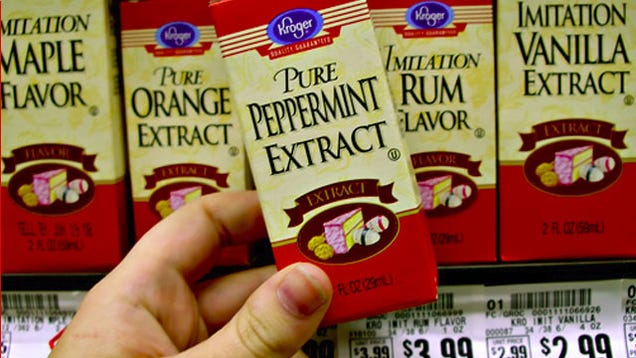
Study Shows the Most Informed Consumers Choose Store Brands

by Melanie Pinola

Study Shows the Most Informed Consumers Choose Store Brands

A recent study of users' shopping habits reveals that the more informed you are about a type of product, the more likely you are to choose a generic store brand over the pricier national brand.

Read more...


16 Sep 20:29

​Sanitize or Quarantine Your Hotel Room's TV Remote Before Using It

by Mark Wilson

​Sanitize or Quarantine Your Hotel Room's TV Remote Before Using It

We've mentioned how dirty remote controls are , and they may not be cleaned very often—if ever. When you stay in a hotel, you might want to clean off previous occupants' germs before using it, but there are other options too.

Read more...


30 Jul 01:57

Amazon Still Not Interested In Reuniting Lost Kindles With Owners

by Laura Northrup
Are you missing this Kindle?

Missing one of these?

Two years ago, we tried to reunite a Kindle left behind on a plane with its owner, and we didn’t succeed. The reader who found it didn’t trust the airport lost and found, and Amazon wasn’t any help. Even though Amazon knows full well who each Kindle belongs to, with their e-mail address and even their credit cards and billing addresses. That doesn’t matter, though. When Steve called about a Kindle that he found, Amazon told him to throw it away.

If you’re wondering why he didn’t turn it in at the lost and found of the place where he found it, well, he found it right outside of his back door. “It was just the tablet, as in someone dropped it somehow,” he wrote to Consumerist. A less honest person would see this as a sign that the universe wanted him to have the very latest version of Kindle Fire HD, but Steve is honest. It bothers him that he has this Kindle.

“I asked if they would contact the owner and then I could send the tablet to Amazon and they could in turn send it to the customer,” he told us. “I didn’t ask for contact info for obvious reasons.” Yet Amazon still isn’t in the business of reuniting customers and Kindles. What was he told when he asked Amazon? “Instead of trying to get the tablet to its owner, Amazon told me to throw it away!”

What’s curious about that piece of advice is that you’re not supposed to toss items with rechargeable batteries in the trash, and Amazon has a mail-in recycling program for Kindles.

In the meantime, Steve’s best option may be putting up posts on Craigslist and other free, popular classified-ad venues. If that doesn’t work, he can either keep the device or turn it in to local police. The latter option is probably the better one if his conscience is bothering him.

Still, we contacted Amazon to find out whether “eh, throw it away” is an official policy when an honest person turns in a wayward Kindle. We’ll update you when we find something out.

30 Jul 01:52

Appeals Court Allows Farmers To Keep Feeding Unnecessary Antibiotics To Animals

by Chris Morran

More than 35 years ago, the FDA acknowledged that feeding medically unnecessary antibiotics to farm animals may encourage the development of antibiotic-resistant bacteria, which poses a huge health risk to humans. In 2012, a federal court ruled that the FDA is required by law to hold hearings in which the drug makers would need to prove the safety of non-medical use of these antibiotics. But today, a the U.S. Second Circuit Court of Appeals overturned the lower court’s ruling, saying it’s up to the FDA to decide if it wants to hold such hearings.

At issue in the case is 21 U.S.C. § 360b(e)(1), which states that the FDA “shall, after due notice and opportunity for hearing to the applicant, issue an order withdrawing approval of … any new animal drug if the Secretary finds… that experience or scientific data show that such drug is unsafe for use under the conditions of use upon the basis of which the application was approved or the condition of use authorized.”

Advocacy groups like the Natural Resources Defense Council argued that this statute requires the FDA to hold a hearing if it has determined that the use of a drug may be unsafe. The government contends that it doesn’t actually mandate that any such hearing be held, just that a hearing is required before the FDA can withdraw approval.

After years of having petitions ignored or denied by the FDA, the NRDC and others sued to compel the agency to conduct these long-delayed hearings. The lower court agreed, but the government appealed the ruling.

Today, a divided appeals panel came down on the FDA’s side.

“Congress has not required the FDA to hold hearings whenever FDA officials have scientific concerns about the safety of animal drug usage,” reads the opinion of the majority [PDF], which also found that the FDA “retains the discretion to institute or terminate proceedings to withdraw approval of animal drugs by issuing or withdrawing [notices of opportunities for hearings], and that the statutory mandate… applies to limit the FDA’s remedial discretion by requiring withdrawal of approval of animal drugs or particular uses of such drugs only when the FDA has made a final determination, after notice and hearing, that the drug could pose a threat to human health and safety.”

The judges explain that if Congress had intended to “mandate the commencement of the notice and hearing process whenever the agency staff formed a scientific opinion adverse to the drug, it would have stated those intentions explicitly.”

In his dissenting opinion [PDF], Judge Robert Katzmann chides the majority for accepting the view that “Congress gave the FDA discretion to do virtually nothing about that problem for over 30 years — and then, when it finally decided to act, to adopt a different regulatory strategy than Congress expressly provided.”

“Today’s decision allows the FDA to openly declare that a particular animal drug is unsafe, but then refuse to withdraw approval of that drug,” writes Katzmann. “It also gives the agency discretion to effectively ignore a public petition asking it to withdraw approval from an unsafe drug. I do not believe the statutory scheme can be read to permit those results.”

While the appeal was pending, the FDA issued a widely derided (except by those in the drug and meat industries) guidance for industry in late 2013, asking drug companies to voluntarily withdraw the approved non-medical uses of their animal antibiotics and to stop selling these drugs solely for growth promotion.

Problem is, many of the drugs sold primarily for growth promotion are still approved for medical use, meaning farmers only need to now claim they are buying these drugs — which represent 80% of all antibiotics sold in the U.S. — for “preventative” medical purposes.

Meanwhile, millions of Americans fall ill, and more than 23,000 die, every year from drug-resistant bacterial infections.

The hope behind these lawsuits was that they would compel drug makers to back up their unsupported claims that providing medically unnecessary antibiotics to animals is safe. Since decades of research has proven otherwise, it’s likely that the FDA would have had no choice but to remove approvals for these drugs and to restrict their use.

“As previous court rulings made clear, FDA has failed to follow its own scientific evidence and stop this practice. Unfortunately, today’s Appeals Court decision effectively gives FDA a free pass to ignore the science when it is politically inconvenient,” said Jen Sorenson, NRDC attorney. “We will evaluate all our legal options, and we will continue to push to end the dangerous and unnecessary use of antibiotics on animals that are not sick through every avenue available to us.”

Robert S. Lawrence, MD, director of the Johns Hopkins Center for a Livable Future and a professor with the Johns Hopkins Bloomberg School of Public Health, calls the appeals court decision “deeply disappointing” because it “allows voluntary guidelines to take the place of decisive action in confronting one of the most important public health problems of our time.”

30 Jul 01:50

Dealership Gives Disgruntled Customer $100 Refund… In Loose Change

by Ashlee Kieler

Usually when a consumer receives a refund from a company they get a check in the mail, or store credit, or a gift card. But for one Florida college student who got into a dispute with a car dealership, that refund came in the form of two bags full of scrounged-together change.

The ordeal began earlier this year when the student purchased a used 2003 Saab from a dealer in Jacksonville and immediately began having issues with the transmission, First Coast News reports.

The dealership repaired the vehicle and sold the international student a warranty.

A short time later, the transmission went out again. No big deal since she bought the warranty, right? Apparently, not so much.

“First time I paid $300,” she tells First Coast News. “Second time, they asked me for $400 saying how the warranty doesn’t cover labor. I thought it unfair because nobody said that to me.”

So, the woman filed a complaint with the Department of Motor Vehicles and an investigation concluded that the dealer needed to issue her a refund.

“The warranty did not cover labor and I failed to write that in and that was her loophole,” the dealership owner says.

When the student arrived at the dealership this week she found the refund in an unexpected form: loose change, with a few dollar bills.

Instead of hauling off the two bags, the woman left the refund at the dealership, saying she wasn’t sure if it was the correct amount and didn’t have time to count every penny.

The dealership owner tells First Coast News that the unusual refund manner wasn’t in retaliation, but that business has been slow and most of the coins came from various containers where he keeps spare change.

“I am doing what DMV asked me to do,” he says. “It is legal tender.”

The refund remains at the dealership awaiting pickup.

Jacksonville car dealer gives woman refund in pennies [First Coast News]

30 Jul 01:48

Everybody Wants The Night Shift After Naked Hamburglars Steal A Bunch Of Beef From Eatery

by Mary Beth Quirk

Safe for work -- he's got skivvies on. (Southwest Florida Crimestoppers)

Safe for work — he’s got skivvies on. (Southwest Florida Crimestoppers)

There’s nothing like a bit of a “bad boy” image to turn even upstanding, law-abiding citizens into admirers — and by that I mean, there’s nothing like the sight of three (mostly) naked men stealing from a restaurant in the middle of the night to make staff laugh.

Two naked men and a third friend clad only in his underwear reportedly broke into a South Florida eatery and stole 60 hamburgers, three pounds of bacon, three red peppers and a paddleboard, reports the Fort Myers News-Press (warning: link has video that autoplays) this week, and were caught on camera in the midst of their caper. Police say they also left a trail of red peppers outside by a bathhouse.

“Dumb, dumber and dumbest,” one waitress joked.

“They left a trail like Hansel and Gretel,” another waitress said. “One of them probably said after, ‘Uh, guys, where did we leave our clothes?’”

Authorities have released photos in an attempt to identify the men, who police say are likely college age guys out for a bit of fun. One of the guys even realizes he’s in his birthday suit at one point, and appears to turn away from one camera, not realizing there’s another one nearby.

And because the threesome are fit, strapping fellas, well, the restaurant’s manager jokes that his staff wouldn’t mind if they came back.

“These two want to meet the bandits,” he said about the jokey waitresses. “Everybody wants to work the night shift now.”

He adds it’s the first time robbers have busted through a back door totally naked looking only for beef, and not money.

“When I saw the security footage, I said how is this guy not wearing any clothes?” he says. “Then I said, ‘Wait, it’s not just one. There’s three naked. That’s what makes this funny.”

It is scientific fact that the more naked people there are involved in a late-night burger heist, the funnier it becomes, that is true.

Bonita Beach naked hamburglars on the loose [News-Press.com]

30 Jul 01:29

FlightCar Loses All The Stuff In My Glove Box, Isn’t Answering The Phone

by Laura Northrup

flightcar_videoWhat if there were an AirBNB for cars? FlightCar is a startup that aims to connect lonely cars in long-term airport parking with travelers in need of short-term wheels. This seems like a great idea….except, like many “sharing economy” businesses, it’s a great idea until something goes wrong. Just ask reader Evan.

Car owners who leave their vehicles behind with FlightCar don’t just get free parking and a car wash. They also can make money if someone rents their car, receiving a check based on the number of miles the vehicle was driven. Neat. Obviously, part of renting your car to strangers is that you shouldn’t leave the backseat filled with Trader Joe’s tote bags and water bottles, and you should also remove your expensive sunglasses from the center console. What if you do leave some items behind, though? That’s what happened to Evan.

He left his vehicle with FlightCar in San Francisco. He did leave a few things in the glove box: the car’s manual, the registration, and a charging cable. Out of those things, car owners must leave behind the registration, can choose whether to leave behind the manual, and shouldn’t leave behind a charging cable. Fine. When he returned, he found the glovebox empty. Where was his stuff?

“Search the entire FlightCar office – they have stuff for 30+ other cars, but not mine,” he writes. He notes that an employee tells him that hey, things were a lot worse in the office last week. Not helpful. The location’s assistant manager told him to e-mail the company, which Evan did. That was on July 7.

On July 8, he called the company simultaneously on two different phones, while also tweeting them. If this sounds like overkill, remember that the company still had the registration to his car. He received a few different pieces of advice, which included that he should send a list of missing items for reimbursement. Okay.

Later that afternoon, the local office contacted him with good news: they had found his stuff! (We now know where it was–more on that in a bit.) He gave them his work address to mail it to, and he has received the manual back.

“God forbid you have damage or accident with FlightCar – what then?” he wrote at the time. “On hold for another 2 days while they hire an intern?”

We got in touch with one of the company’s founders, Kevin Petrovic. He explained to us that FlightCar’s goal is not to hold on to your owner’s manual and then not answer the phone, but that they had some recent staff turnover and were short-handed at the time of Evan’s trip.

How things are supposed to work is that staff take everything out of the car and store it in a numbered box. They make a copy of the registration with the owner’s personal information redacted for renters to carry with them in the car.

Say Evan’s car was #23 parked with them at the time: it would be stashed in the office in a box with the number 23. Makes sense.

“We’re usually pretty good at storing the owner’s items and returning them to the car,” Petrovic told Consumerist, noting that they have problems with stored items from cars less than 1% of the time. The system apparently went awry in this case. Petrovic explained, “For some reason, we had two boxes with the same number on them.”

Mixups in the office happen all the time, as anyone who has ever worked in an office knows, and startup growing pains happen too. We just feel bad for Evan, who was frustrated. What if he forgot how to put his windshield wipers on intermittent mode?

While Evan had two different phone calls going, the local office discovered that they had two boxes with the same number on them for some reason. Evan’s stuff was in that other box #23.

“I love these startup ideas, but there’s such a gap when things go wrong – hope that they can improve and iterate on these experiences and be better,” he wrote to us.

As of today, Evan has his owner’s manual back, and he knows that it’s his own copy. The rest of the items that had been in the back are still missing. It’s not like he left his diamond-encrusted tire pressure gauge in there, but he would still like to have his phone charging cable and non-diamond-encrusted tire pressure gauge back.

Update: FlightCar still hasn’t found the rest of Evan’s stuff, but has offered him $100 as compensation for the items and this whole episode.

“At the end of the day,” he reflected in an e-mail to Consumerist this afternoon, “hours lost, some property still missing, and an experience learned the hard way to save a few bucks on parking.”

30 Jul 01:08

Am I Completely Screwed If My Student Loan Co-Signer Dies?

by Ashlee Kieler

Imagine this scenario: You’ve been out of college for several years, have a good job and you have no problems making your student loan payments in full and on time. Then tragedy hits; your parent dies or declares bankruptcy. If this loved one was a co-signer on your student loan, this change can trigger an often-overlooked clause that allows the lender to claim you are in default on your loan, potentially wreaking longterm havoc on your credit and finances.

The TL;DR Version:

Many private student loans have “automatic default” clauses that are triggered when a loan’s co-signer dies or declares bankruptcy.
Even if the loan is in good-standing and the borrower is financially stable, the loan can be called in and the default reported to credit bureaus, tainting the borrower’s credit.
Some lenders allow for borrowers to release co-signers after certain requirements have been met, but they don’t make it easy.
If a lender doesn’t have a co-signer release clause, it may allow you to appeal to be the sole name on the loan, but you often have to make this appeal within a limited time window.

With tuition rates outpacing inflation, a growing number of students have had to turn to student loans. Borrowers also increasingly took out private loans to make up difference that federal loans won’t cover. In order to obtain these loans or to minimize the interest rates, many private loans are co-signed by parents or other family members.

According to the Consumer Financial Protection Bureau, whose April 2014 report listed auto-defaults as a significant source of complaints from borrowers, nearly 90% of private student loans were co-signed in 2011.

So, how does an option intended to help student borrowers with no or poor credit histories turn into a credit-wrecker?

What The #*&(@ Is An Automatic Default?

Image courtesy of bluwmongoose

If you have a private student loan, you may not know that buried deep within the terms of that loan there may be a small but poisonous provision that permits the lender or loan servicer to place a loan in default, or accelerate the full balance of the loan, upon the death or bankruptcy of a co-signer. And it doesn’t matter whether the loan is in good standing or if you are financially stable.

Deanne Loonin, director of the National Consumer Law Center’s Student Loan Borrower Assistance Project, tells Consumerist that her organization has been trying to spotlight this hazard to borrowers.

“There’s no standard language required so there are variations on the theme,” explains Loonin, “but that’s where it originates.”

The Student Loan Borrower Assistance Project offers examples of what these kinds of provisions may look like.

How Do Lenders Decide To Default?

They are called “automatic defaults,” but how automated are the systems that determine whether or not your loan is suddenly due?

The 3 Models For Loan Servicing

There are generally three ways in which your private student loan can be owned and serviced:
•1: The lender both owns and services the loan. Such loans tend to offer the most flexibility in terms of automatic defaults.
•2: The lender owns the loan, but a third party services it. Adds another layer of bureaucracy; servicer may be required to follow lender’s rules on auto-defaults.
•3: The loan has been securitized and is now part of a larger pool of loans that has been sold off to investors. The servicer has minimal ability to bend the rules.

Because each lender is different in the way it handles auto-defaults, there is no hard-and-fast answer to that question.

According to the CFPB report, some industry participants rely on third parties that scan public records of death and bankruptcy filings. Those records are then electronically matched to customer records and used to trigger the default. Lenders who rely on this process often do not take into any extenuating circumstances into consideration before hitting the default button.

That isn’t always the case, explains the CFPB’s Rohit Chopra (who previously answered a bunch of Consumerist readers’ student loan questions).

Banks that actually own the loans they service are generally able to exercise more discretion on defaults, explains Chopra. But even that leeway is subject to pooling and servicing agreements, which lay out rules that govern bundled securitized loans and can often be restrictive.

Bad for the Banks

While the auto-default rules are intended to protect lenders from being stiffed by a borrower who can’t repay without a co-signer, Chopra explains that these provisions can lead to outcomes that are not in the best interest of the financial institution or the borrower.

“For many lenders, they might find that it doesn’t make sense to demand a full balance on a loan when a person is paying on time and has been for a significant period of years,” Chopra says of automatic default clauses.

4 Ways Auto-Defaults Can Backfire On Banks

  1. Reduction of Interest Income: Placing a loan that is in good-standing in default and demanding the full balance will likely reduce the interest income over the life of the loan.

  2. Reduced Recovery of Principal: Automatic defaults may lead to lower recoveries of principal balances because a borrower is unlikely to be able to cover the entire cost of the loan immediately; additionally, the servicer could lose money by using collection agencies.

  3. Poor Customer Experience: For a borrower who has proven to be a responsible paying customer and is facing the death of a parent or grandparent co-signer, debt collection calls demanding the full balance with limited explanation will probably not be welcomed. This might substantially reduce the willingness of the borrower to pursue other credit products with the financial institution.

  4. Damage to Reputation: The deployment of debt collection protocols on an otherwise-performing loan in a time of a family tragedy may give the impression that a private student lender or servicer is inadequately managed or simply unwilling to work constructively with borrowers.

Damage That Can’t Be Undone?

Image courtesy of Tim Schreier

While auto-defaults may look bad for banks, the consequences for borrowers are much worse and longer-lasting, even though the borrower may have done nothing to cause the problem.

Student loan servicers report automatic defaults to credit bureaus, negatively impacting the borrower’s credit profile, which, in turn, makes it challenging to qualify for future loans, obtain credit, or even get a job.

Loonin explains that credit reports don’t make a distinction about the reason for a default, meaning most loans placed in default are treated the same way.

Stopping The Problem Before It Starts

Federal loans generally don’t require a co-signer, but a number of students who take out private loans do so without first exhausting all federal lending options.

“Private student loans should really be a last resort, if possible,” says Chopra. “When you run into trouble you often have very few options to navigate tough times.”

Of course, with tuition rates still on the rise, federal loans won’t provide enough funding for some students, leaving private student loans as the only option.

“With private student loans, because it’s so much money, consumers need to look at terms very carefully before signing the contract,” Maura Dundon, senior policy counsel with the Center For Responsible Lending, tells Consumerist. “You need to check for these provisions.”

One of the main issues with these types of loans, and their provisions, is that the consumers taking them out are young and simply not looking to the future.

“While you don’t expect to hit tough times, consider the class of 2008,” Chopra says. “They started school when the economy was okay, but by the time they graduated, it began to crater.”

What If I Already Have One Of These Loans?

There may be an out for consumers that have already taken out private loans with auto-default provisions, but it all depends on the wording in your contract.

For example, if you’ve been out of college for five years and no longer see the need to have your parent tethered to your existing loan, some lenders will offer a co-signer release if a borrower meets certain requirements – generally a set number of on-time payments.

But Chopra explains that many borrowers have found that their loan contracts don’t include co-signer release provisions, meaning they may be stuck.

And even those borrowers who do have co-signer release provisions have learned that actually obtaining that release is no simple task.

In one case highlighted in the CFPB report, a borrower reported that at the time of origination, the lender stated it could release his co-signer after he made 28 on-time payments. However after making those payments, the borrower learned that 36 payments were required. After making the additional payments, he was told that 48 payments were now required.

Dundon suggests to avoid this situation, borrowers working toward completing requirements set by the release guidelines should keep thorough records and stay in touch with the lender.

According to Chopra, many borrowers who try to learn their lender’s co-signer release guidelines — and all the attendant paperwork — often run into roadblocks, like being unable to locate any of this information on lenders’ and servicers’ websites.

But that doesn’t mean a borrower is out of luck entirely.

The CFPB has provided several sample letters that consumers can send to their loan servicer inquiring about how to release a co-signer [PDF].

Chopra tells Consumerist that the letters have been very helpful for borrowers so far.

What If There Is No Co-Signer Release Provision?

Consumers that do not have co-signer release provisions, or who are finding out too late that their loan contains this auto-default clause, may not be completely screwed.

Because triggering automatic defaults isn’t the best business practice for banking institutions, borrowers can try to appeal to their servicer.

“It’s a case-by-case basis and depends on how long the default has lasted,” Loonin says. “You can try to work with the lender on a payment plan.”

However, most lenders write off loans after about 120 days, so some borrowers might need to work with a debt collector or company other than their original lender.

This Is All Going To Change, Right?

Image courtesy of John Hanley

Following the CFPB’s report on automatic default clauses and their potentially devastating after-effects, legislators began taking a look at what could be done to protect consumers.

In early May, New York Representative Tim Bishop proposed an amendment to the Truth in Lending Act that would establish requirements for the treatment of a private education loans upon the death or bankruptcy of a co-signer of a loan.

Known as the Protecting Students From Automatic Default Act of 2014, the proposed amendment adds a section to the current Act that outlines duties a servicer should follow upon learning of a co-signer’s death or bankruptcy. The law would require the lender to immediately notify the borrower if an auto-default is going to be triggered, or if the loss of the co-signer otherwise changes the terms of the loan, or accelerates the repayment terms of the loan.

Additionally, the proposed bill establishes a timeline of at least 90 days for the borrower to identify a new co-signer, if necessary, before facing default.

While the bill has yet to make any progress, its introduction is just one sign that things could change for the better.

So Long Sallie?

I change that would have a more immediate effect if it comes to pass, Sallie Mae, the issuer of millions of student loans may be getting out of the business of automatic defaults.

A spokesperson for the company tells Consumerist that shortly before spinning off its loan servicing operation into a separate entity called Navient Corporation, Sallie Mae revised its policy on the position of removing deceased co-signers from private education loans.

Sallie Mae’s process upon notification of a co-signer’s death now calls for the customer to automatically continue as the sole individual on the loan with the same terms.

Additionally, if the customer’s account becomes delinquent, the company will work with him or her to understand his or her ability to make ongoing payments.

The company reserves the right to modify the loan’s terms to accommodate the customer’s demonstrated ability to pay if the customer is in financial hardship.

“We deeply regret that prior contacts made on our behalf to family members of a deceased cosigner may have been unintentionally insensitive and caused unnecessary burdens at such difficult times,” the spokesperson said.

The company is also prospectively removing co-signer death from its promissory notes as a basis on which Smart Option Student Loans may be placed in default.

So while these automatic default clauses can wreak-havoc, not all hope is lost just yet.

30 Jul 01:01

Forty-Year Family Feud Leads To Empty Shelves At 70 Supermarkets, Protests In Two States

by Kate Cox

A weird situation in New England is getting weirder. Regional grocery store chain Market Basket, which operates 71 stores in Massachusetts, New Hampshire, and Maine, is finding itself at the center of a massive controversy, with employees, executives, customers, and even local lawmakers all getting involved. The core issue? The board ousted good-guy CEO Arthur Demoulas to replace him with perceived money-grubber Arthur Demoulas, and the resulting furor has led to strikes, boycotts, and empty shelves.

Confused yet? Don’t blame you. Here’s what’s going on.

Arthur T. Demoulas became the CEO of Market Basket in 2008. He developed a reputation as a leader who genuinely cared about the 25,000 employees who worked for the family-run business. Employees for the company — both in the stores and also in the back offices — reportedly found him very likable, and were loyal to him and to the company.

In 2013, Arthur T.’s cousin, Arthur S. Demoulas, gained control of the company’s board. After trying for months, Arthur S. was finally able completely to oust Arthur T. from his role this June. A few other top executives also got the boot and were replaced with external hires.

Arthur S., however, does not enjoy the positive reputation of his cousin. The company is known for worker-friendly policies like good health insurance and promotions from within but employees believe that the new leadership means an end to employee-friendly practices and the start of a laser focus on nickel-and-diming their way to the bottom line.

Now workers at every level have rebelled, and so has the public. As of Friday, workers have vowed not to restock until Arthur T. is reinstated. Store shelves are sitting around empty in most Market Basket locations while the feud continues.

Thousands of protestors have gathered for rallies and demonstrations at Market Basket stores over the past days, starting with an event at the company’s Tewksbury, MA headquarters. Eight senior employees who helped organize the rallies have been fired; several of them had 40 or more years of service with the company.

17 Massachusetts lawmakers on Saturday signed a letter supporting the workers and urging consumers to boycott the chain. Massachusetts Attorney General (and gubernatorial candidate) Martha Coakley also put in her two cents to support the workers. Even the governor of New Hampshire has issued a statement asking Market Basket’s new leadership to address the issue.

So where did this all come from? As always, there’s more to the story: current events are just the culmination of well over forty years’ worth of Demoulas family animosity.

A local blogger from Gloucester, MA, has a whole two-part explainer up covering the entire family drama- and scandal-filled backstory back to 1916, when the first store opened. It’s quite a tale, involving epic, decades-long lawsuits, paid-off witnesses, and lots of people going to jail.

The whole saga is well worth a read, but the important points in the timeline leading to today are these:

  • The original founder had two sons, Mike and George Demoulas. They inherited his business.
  • Mike and George expanded and co-managed the chain through the 1950s and ’60s, until George died suddenly in 1971.
  • During the 1970s and 1980s, Mike basically stole the company out from under George’s heirs one chunk at a time.
  • In the 1990s, George’s family sued Mike’s family over the fraud. The ensuing lawsuits become sprawling chaos.
  • George’s family eventually wins. Mike is found to have defrauded them to the tune of $500 million and they gain back 51% of the company.

Ousted-but-beloved Arthur T. is one of Mike Demoulas’s four children; new, reviled leader Arthur S. is one of George Demoulas’s four children. It’s not hard to see why there would be animosity between them, nor even particularly hard to see why Arthur S. and his family might feel they are owed more from the company than they have been getting.

But what’s become clear over the past few weeks is that pretty much everyone at every level underestimated the loyalty Market Basket employees have for Arthur T. Market Basket does not have a unionized workforce, and so the employees do not have protection to undertake a collective strike.

Arthur T. Demoulas issued a statement today urging the company to reinstate the employees who were fired, saying, “The success of Market Basket is the result of two things: a business model that works and the execution of it by a dedicated and impassioned team of associates. Their fierce loyalty to the company and its customers has always been deeply valued. In the final analysis, this is not about me. It is about the people who have proven their dedication over many years and should not have lost their jobs because of it. I urge that they be reinstated in the best interest of the company and our customers.”

This week, the protests have moved from the company’s head offices to the (empty) stores themselves. Employees are calling for rallies at all 71 store locations. Reports from local media find that consumers are vaguely supportive of the workers, but mostly just want to be able to buy groceries again.

It’s unusual at best for so many workers to rally in support of one top executive over another, particularly at the risk of their own jobs. Arthur T. might not get his job back, but the chain needs to find a way to make peace with its workforce before all its customers get too used to shopping with the competition.

30 Jul 01:00

Authorities Bust Tiny Dog Out Of Hot Van At Costco, 98-Year-Old Mom Out Of Hot Car At Casino

by Laura Northrup
(CBS DFW)

(CBS DFW)

Shopping at Costco is pretty great, but that doesn’t mean you should bring your dog along on your shopping trip, then leave it in your vehicle with the temperature outside in the 90s. The same goes for your very young and very old loved ones. Come to think of it, just don’t lock anyone in the car. An elderly woman and a dog are both still alive because authorities intervened and got them both out.

A passing shopper filmed an Animal Services employee breaking the windows of a van in Plano, Texas over the weekend. “I was hot, and I could only imagine what the dog was going through,” the shopper noted. An Animal Services employee said that while they would have preferred not to break into the vehicle, the dog was becoming distressed, panting rapidly. He had been left with a cup of water, and the van’s windows were all closed.

Animal Services now has the dog, because it turns out that he didn’t belong to the owner of the van. The family claimed to have found him as a stray recently, and the city is looking for his owner(s). The dog will go up for adoption if they can’t be found. The people who locked the animal in the van received a citation for animal cruelty, and the city is not responsible for the expense of repairing the broken window.

Meanwhile, police were summoned to a casino in Maryland when someone reported an elderly woman sitting alone inside of a locked truck in the parking garage. It was about eighty degrees inside the closed vehicle, and she had been waiting there for five hours while her son was inside gambling. When police found him, they arrested him for vulnerable adult neglect, as well as an unrelated outstanding warrant.

Sitting in a hot car is a miserable experience even if you’re a young and healthy adult human. Don’t leave vulnerable elders, children, and animals in your vehicle.

Police: Man Left His Elderly Mom in Hot Car While at Md. Casino [CBS Washington]
Plano Man Breaks Into Hot Van To Rescue Dog [CBS DFW]

29 Jul 00:48

Arby’s Celebrates 50th Anniversary By Giving Out Free Shakes Tomorrow

by Laura Northrup

arbys_shakesFor humans, the 50th anniversary is the golden anniversary. For fast-food restaurants, it’s apparently the “give everyone free shakes” anniversary, since that’s how Arby’s is celebrating its 50th year in business tomorrow. Print out this coupon and head over for a Jamocha (which is just mocha) shake tomorrow, Wednesday, July 23rd, 2014. No other purchase required. [Brand Eating]

29 Jul 00:30

Credit Card Breach May Have Hit Goodwill Thrift Stores, Could Go Back To 2013

by Laura Northrup

(C x 2)

(C x 2)

Banks can figure out the source of a major credit card breach long before the targeted company announces that something went wrong, and that site shares the scary news with the rest of the world. Have you used your credit card at a Goodwill Industries store lately? Bad news from that not-for-profit thrift store chain.

If you want to learn where your credit card number may have been stolen by evil fraudsters long before the rest of the world, you should keep an eye on the blog Krebs on Security. It will make you want to lock your credit cards up in a safe in a secret room in your basement and use cash for every transaction, sure, but isn’t it better to be paranoid than to be uninformed?

In any case, banker sources say that cards hit with fraud were used in Goodwill Industry retail stores in Arkansas, California, Colorado, Florida, Georgia, Iowa, Illinois, Louisiana, Maryland, Minnesota, Mississippi, Missouri, New Jersey, Ohio, Oklahoma, Pennsylvania, South Carolina, Texas, Virginia, Washington, and Wisconsin.

Goodwill confirmed that it is working with the Secret Service regarding a possible payment information breach at “select U.S. store locations.”

Goodwill Industries International was contacted last Friday afternoon by a payment card industry fraud investigative unit and federal authorities informing us that select U.S. store locations may have been the victims of possible theft of payment card numbers.

While Goodwill didn’t confirm this, financial industry sources said that their evidence indicates that the breach may go back to the middle of 2013. If we learn anything more that thrift shoppers should be terrified about, we’ll let you know.

Banks: Card Breach at Goodwill Industries

26 Jul 23:02

Man asked to leave Southwest flight over tweet (Video)

A Minneapolis man and his two children were asked to leave a Southwest Airlines flight in Denver after he tweeted about a boarding disagreement.
26 Jul 17:24

Many military dogs are being left overseas (Photos)

War weary veterans look forward to being reunited with their loved ones, whether they stand on two legs or walk on four.
26 Jul 17:24

Survey: honey bee colony losses in Va. continue

Virginia continues to see steep honey bee colony losses.
24 Jul 01:06

Prince William County news in brief - Washington Post


Prince William County news in brief
Washington Post
The City of Manassas will unveil a new City Hall sign and plaque dedicated to former mayor Marvin Gillum. The public is invited to the event which, will begin at 6 p.m. Sunday at the Harris Pavilion, 9201 Center St., Manassas. In January, a citizens ...

and more »
24 Jul 00:50

Meat supplier in China scandal has global reach

It isn't a household name, but the company at the center of a food scandal in China helps make some of the world's most popular foods, including the Big Macs and Quarter Pounders served at McDonald's locations.
24 Jul 00:49

High-tech thermostats simplify climate control

Programmable thermostats are getting easier to use and syncing them with smartphones is revolutionizing the concept of climate control. Consumer Reports lists the best thermostats to buy.
23 Jul 22:23

Reward posted after puppies found in Va. dump die

A reward is being offered for the person or persons responsible for abandoning four newborn puppies at a trash site in Danville.
23 Jul 22:22

Naval Academy holds change-of-command ceremony

Vice Adm. Walter Carter is the new superintendent of the U.S. Naval Academy.
23 Jul 22:21

Montgomery County promotes autism resources in wake of twins' basement lock-up

After Montgomery County Police discovered a set of 22-year-old twins with autism locked inside a dark, urine-soaked basement room, Montgomery County officials and autism advocates are reminding families of those with autism about available local resources.
23 Jul 02:22

These Disk Drives Play “Stairway To Heaven” Better Than That Guy At The Party With A Guitar

by Mary Beth Quirk

Anyone who’s ever walked into a college party knows that if there’s a guitar around, at some point it will definitely be picked up and used to play “Stairway to Heaven,” often, by someone who could be described as, “That guy who plays ‘Stairway to Heaven’ at a party.” Add a bunch of disk drives to that list, and they probably do it a lot better than those amateurs.*

The YouTube user behind this gem has also programmed its computer symphony to play Simon & Garfunkel’s “Sound of Silence,” as well as the themes to the Lord of the Rings movie series and Back to the Future in the past.

And again, it’s probably a lot more talented than that guy at the party at 2 a.m. who doesn’t realize no one wants to hear his repeated attempts.

Sorry, guy.

*Seriously though, do your thing. Keep practicing. But do your thing.

22 Jul 23:35

Tests show fox that bit girl in Henrico was rabid

Henrico County police say a fox that bit a girl's ankle has tested positive for rabies.