Whether you're calculating a tip or just in need of some fast math, percentages can be something even math students goof. This video from YouTube channel MindYourDecisions shows you the easiest way to find those numbers in your head.

Whether you're calculating a tip or just in need of some fast math, percentages can be something even math students goof. This video from YouTube channel MindYourDecisions shows you the easiest way to find those numbers in your head.

Losing a parent is obviously a devastating blow. Some debt collectors may convince you that you have to pay a deceased parent's debt. In most circumstances, this isn't true, but you should know when you might be on the hook for some bills.


Despite your best efforts to fix problems on your own, sometimes you just have to call for help—whether you've got broken gadgets, downed service, or just need to fix a company's mistake. Calling customer service can be a miserable experience, but when it comes time to bite the bullet and give them a ring, follow these tips to make it go as smoothly as possible.

Let's be real here: everyone should be washing their hands after they use the bathroom. To help remind the forgetful types, this setup lights up a sign if the sink wasn't used after the toilet was flushed.

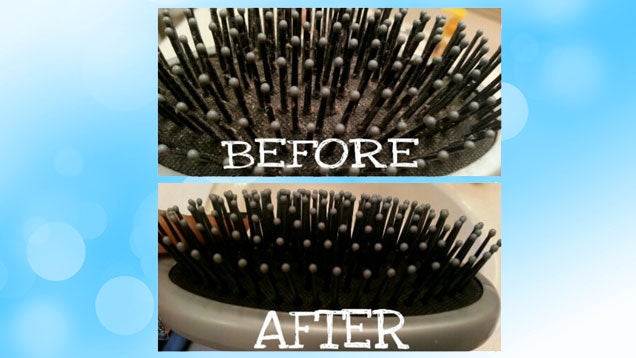
The many bristles of a hair brush might be great for detangling hair, but they can also trap all sorts of filth. The tool to clean a hairbrush? A toothbrush.

Sure, Oscar Mayer’s P3 Protein Packs are nothing but healthy-ish Lunchables for adults, and that’s fine. Still, have you ever looked at the kids’ version of Lunchables and said to yourself, “I wish that this had less meat and cheese and more sugar?” If so, you’re the target customer for desserts from Lunchables Lunch Combinations.
Or maybe they aren’t desserts. Maybe you’re supposed to combine the two packages of candy, cookies, and marshmallow fluff into a single glorious sugar high.
These apparently aren’t new, but their existence is new and slightly scary to us.
SPOTTED ON SHELVES – 7/21/2014 [The Impulsive Buy]


(afagen)
In Los Angeles, homeowners trying to conserve water in the midst of the statewide drought also have the challenge of avoiding “brown lawn” fees. For those who don’t want to install drought-resistant turf or use other landscaping measures, there’s the allure of a quick solution.
“As soon as the water sanctions hit, and as soon as people find their water bills rising, they’re looking for ways to cut back on their expenses, and that’s when they start calling,” one lawn painting business owner tells CBS San Francisco.
Painters mix up dyes mixed with water after matching it to the parts of the lawn that are still green, and then simply spray it onto the grass.
Paint? On grass? Isn’t that bad? Apparently not, she explains — the dye job doesn’t kill the grass completely, allowing it turn green on its own when the rains come in winter.
SoCal Homeowners Spray-Painting Lawns Green To Avoid Water Fees During Drought [CBS San Francisco]


(marike79)
Police say the store manager saw the suspect “select a vibrator from the love unit” beofore moving to the “t-shirt cube” where she allegedly stuffed the toy behind “a young child in the stroller,” reports The Smoking Gun, citing the incident report from the cops.
She then left the store, and was followed by a worker who demanded she give back the purloined item. The Spencer’s employee confronted the suspect and reportedly “retrieved the merchandise from the stroller” and walked back inside.
Things could’ve ended there, but the manager claims the suspect than tried to come back into Spencer’s, so she called the police. The woman was cited for shoplifting, booked into county jail and later released.
Cops: Woman Tried To Shoplift Vibrator By Hiding Device Behind Her Child In Stroller [The Smoking Gun]

When you’re shopping in a real-life store, fill up a cart, and then abandon it, that makes you kind of a terrible consumer. Store employees will secretly hate you. More importantly, no one will chase after you and hand over a coupon in order to encourage you to come back and finish your transaction. That’s where online shopping is very different.
Some people may find it creepy and intrusive when a retailer e-mails them to let them know about your abandoned cart, but this only happens when a customer has an account with the retailer, and the company has that contact information. Fine. Lots of retailers do this, but not all retailers offer customers an incentive to come back and complete their purchase. Which ones do? Our pals over at Rather-Be-Shopping.com rounded up a list of stores that will send you a coupon to coax you back after you abandon your cart.
Here are some popular retailers on the list:
Bass Pro Shops

This retailer gives you a pretty sweet reward for wandering off: $20 off a minimum purchase of $100.
(via Rockstar Finance)
Bed, Bath and Beyond
Sure, 20% off one item coupons for BB&B are a plentiful resource, but abandoning a cart will earn you one if you don’t feel like waiting around for the next one to show up.
JCPenney
Those who view a few items on the site and then wander off are rewarded with access to a page of coupon codes.
J. Jill
You don’t even have to pile anything in your virtual cart to receive a coupon, as long as they have your contact info. A few months ago, they were giving out a $20 off $80 purchase coupon.
Macy’s
They’ve been known to send 15% off coupons when you abandon a cart.
Toys ‘R’ Us and Babies ‘R’ Us
Okay, it’s only a free shipping coupon sent the following day, but that’s better than no coupon at all.
Abandon Shopping Cart: 17 Online Retailers Who’ll Bait You Back with a Coupon [Rather-Be-Shopping.com]


(C x 2)
The newest version of the Toyota Sienna minivan has a featured called “Driver Easy Speak,” which might as well be named, “We Yell At Your Kids So You Don’t Have To.”
It uses a built-in microphone to amplify your voice and send it through speakers in the back seats, effectively amplifying whatever warning you’re currently directing at misbehaving kids, reports the Associated Press.
The company says the feature was added “so parents don’t have to shout to passengers in the back,” reports the Associated Press. Because “I WILL pull this car over if you don’t stop kicking your brother’s seat and throwing gummy worms out the window” works much better at a higher volume, but screaming it constantly takes a toll on a person, ya know?
And you better save your breath, misbehaving minors — the system only works one way, so if you want your mom to swing past the ice cream place you better ask nice and loud.
New Toyota Minivan Makes It Easier to Yell at Kids [Associated Press]

According to the New York Times, a slew of class-action suits that materialized after a government report found many consumer products carrying the Energy Star label weren’t actually deserving of the title has some manufacturers and their backers fighting back.
The proposed legislation, introduced by Ohio Rep. Robert Latta, would eliminate consumers’ option to file class-action lawsuits against the companies that manufacture the products, so long as the Environmental Protection Agency came up with a remedy for products that did not live up to their billing. One possible remedy: reimbursing consumers.
Additionally, Whirlpool is threatening to withdraw from the Energy Star program if such lawsuits continue to be permitted.
The bill has a strong backing by manufacturers and others involved in the Alliance to Save Energy group, which counts LG Electronics as a founding member and Whirlpool as an associate member.
Although Whirlpool did not provide comment to the Times, the industry’s trade association, the Association of Home Appliance Manufacturers, says there are other safeguards in place for consumers that offer alternatives to class-action suits.
“EPA already has sufficient authority to protect consumers and make the determination of whether compensation is appropriate,” the group tells the Times.
Still, consumer advocates, such as our colleagues at Consumers Union, say the proposed bill is anti-consumer.
“Consumers need that backstop of the courts to get redress.” Class-action suits, she said, are appropriate in cases where “it’s lots of small injuries,” Shannon Baker-Branstetter, a specialist on clean energy and climate change at CU tells the Times.
She says class-action suits are appropriate in cases where there are lots of small injuries, such as an appliance that will use a few extra dollars’ worth of electricity each year.
The Energy Star program was created in 1992 as a way to identify efficiency among products such as refrigerators, washing machines, televisions and light bulbs.
Back in 2010, congressional auditors tested the Energy Star system by submitting laughable applications to apply for the label. As it turns out, the system wasn’t exactly on-par, eventually approving several products including a gas-powered alarm clock.
Congress eventually ordered changes to the program and now products must be checked by an independent, certified laboratory. Additionally,the products are subject to spot checks on units pulled from store shelves.
Since then, several appliances that were once labeled with the Energy Star logo have been disqualified. As a result LG, Samsung and Whirlpool have faced class-action suits.
While the label may draw consumers to products – an EPA survey found that the logo influenced 91% of consumers to make a purchase – it is a voluntary program.
Whirlpool is arguing that such suits are pre-empted by the federal government.
According to the Times, a judge in New Jersey threw out one class-action suit brought under Energy Star because the company had already paid compensation to consumers.
Big thanks to reader Jo for sending a tip about this issue to Consumerist. Send your tips to tips@consumerist.com.
Whirlpool Wants Congress to Ban Class-Action Suits Tied to Energy Star Program [New York Times]

Here’s an example letter, based on a recent successful complaint to a car manufacturer that crossed our desk recently. We’ve obscured the details, but the overall format of the letter remains the same.
The summary. If you can’t sum your problem up in two or three sentences, have someone else read your e-mail and do it for you. As Consumerist’s tipline reader, I cannot emphasize enough the importance of getting your point across before the letter-reader’s eyes glaze over.
In the first paragraph, put your problem and suggested resolution. Then get on with the details.
742 Evergreen Terrace
Springfield, USA 23456
July 19, 2014Hoverbike Corporation of America
Attn: Customer Service
P.O. Box 1578
Kabletown, WV 25414Dear Hoverbike Corporation:
I am writing to your company about a problem with my Hoverbike, a 2012 Skylark model. I began to have trouble staying aloft a few months ago, and this week the height control module completely failed. While the bicycle is a few months out of warranty, I believe that this occurred because of a design flaw in the Skylark, and I am asking that your company cover or share with me the cost of the required repair.
Next are the details: who, what, where, when? Include addresses, store numbers, and serial numbers if applicable to your situation. Here you can add more details about your incident or problem and elaborate on what you recounted in the opening sentences if you need to.
My parents purchased my Hoverbike (serial number 118532C423) for me on April 21, 2012 from our local authorized Hoverbike dealer, Krebs Cycles of Springfield. I have enjoyed riding my bicycle, but also taken good care of it, performing all recommended maintenance, keeping it meticulously clean, not hovering over bodies of water, and not riding recklessly.
After researching this specific problem and talking to other Hoverbike owners, I have learned that this is a common issue with Hoverbikes manufactured before 2013. I believe that the failure of this module was not due to neglect or error on my part. I am asking that the Hoverbike Corporation cover in full or share with me the cost of this repair.
I have enclosed a work order from my mechanic that details the repairs needed on my bicycle.
This next section is optional, but often helpful: discuss how your problem goes against the product’s branding and marketing, and also your relationship with the brand.
Of course, don’t feel the need to explain your relationship to the brand if you don’t really have a history of using their products or friends or family who do. Yet consider the product’s branding and marketing and how it relates to your situation: does the company tout its notebook computers’ portability while your own battery won’t charge, tethering you to your desk? Has a travel website that advertises itself as convenient and integrated caused serious problems with your travel plans? Mention any such contrasts if they apply.
Hoverbike’s reputation and marketing emphasize your bicycles’ durability, reliability, and safety. Before this mechanical failure, I was very pleased with my Hoverbike, and in a few years I will need to upgrade to a larger one as I grow, but now I hesitate to choose one. My brother and sister also own Hoverbikes that are functioning perfectly, and they aren’t so sure that that they will stick with the brand after watching my experiences with the mechanical failure of my Hoverbike.
If your marketing campaigns are any indication, I am your target customer, a young girl who is allowed to explore her town on her own and use her bicycle for travel and recreational rides. More importantly, I am eight years old and look forward to a future of eco-conscious commuting. I hope to have many decades of cycling ahead of me, and I want to continue riding Hoverbikes in the future. Please restore my faith in your brand, stand behind your product, and cover the cost of this repair.
Thank you for taking the time to read this letter.
Sincerely,
Lisa Simpson
610-555-3223
lsimpson@springfield.k12.us
That’s it! It can also help in some cases to give the company a reasonable deadline to respond to you, and to outline any other acceptable resolutions. Telling the company what you want is an important starting point, even if what you want is only an apology.
RELATED:
How To Write A Complaint Letter
Get Past Executive Customer Service Gatekeepers With Letter-Writing 101
8 Ways To Make Sure Your Complaint Letter Will Be Ignored
5 Sample Letters That Get Debt Collectors Out Of Your Face

Sometimes, we hurt the ones we love. Which is why even if we didn’t mean to be so harsh, many products we use every day have become the victims of trademark genericization, meaning they’ve morphed from a single product identified under a name to an entire product category. And when courts get involved it becomes “genericide,” which sounds even more murderous. Can’t you just imagine Law & Order: Genericized Trademarks? [dun dun]
While some of the 15 products below are truly victims of genericide, having had their trademarks canceled in a court, others simply failed to register as trademarks at all, or in some cases, weren’t renewed or were abandoned for other reasons. Which means now you can have your own escalator company or sell flooring and call it linoleum. Wouldn’t suggest setting up your own heroin company, however.
15 GENERICIZED TRADEMARKS
1. Aspirin: Formally known as acetylsalicylic acid, aspirin was created in 1897 and originally trademarked by Bayer AG. The name means “pain relief, speed, reliability and tolerability,” according to Bayer. Aspirin comes from “acetyl” and Spirsäure, a German name for salicylic acid. Its time as a trademarked word would be short — in 1917 many of Bayer’s U.S. assets were confiscated as a result of World War 1, including its patents and trademarks.
2. Heroin: Speaking of losing trademarks, heroin was also stripped from Bayer in 1917. The drug derived from morphine was named trademarked by the company in 1898 based on the German word heroisch, which means “heroic, strong.” Couldn’t find mention of its heroin history on Bayer, which is unsurprising.
3. Cellophane: Cellophane gets its name from regenerated cellulose (the stuff that makes up much of plant’s cell walls) and diaphane, or transparent. It was created by Swiss chemist Jacques E. Brandenberger and patented in 1912. In 1923, DuPont chemists created a moisture-proof system for cellophane. It has since become genericized in the U.S., though still trademarked in other countries. Plastic wrap isn’t cellophane, by the way — it’s polyvinyl chloride.
4. Escalator [PDF]: First coined by Charles Seeberger of Otis Elevator Co. in 1900 when he debuted his device. The word comes from the roof the word scala for “steps” in Latin, with “E” as the prefix, and a suffix of “Tor.” Roughly, that means “traversing from.” It was also supposed to be pronounced with the accent on the middle syllable — es-CA-lator. Otis lost the trademark when the U.S. Patent Office ruled that even Otis had used escalator as a generic descriptive term in its own patents. It was officially genericized.
5. Trampoline: The first modern trampoline was built by George Nissen and Larry Griswold in 1936, and comes from the Spanish for “diving board” – trampolin. The generic term for it before was actually the “rebound tumbler.” It’s unclear when it lost its trademark, but anyone can now sell a trampoline.
6. Thermos: The predecessor to the thermos was Sir James Dewar’s “vacuum flask,” invented in 1892. The Thermos first hit the market in 1904 for commercial use, named as such by German glass blowers who held a contest to name the product. A Munich resident suggested Thermos from the Greek Therme for “heat.” Thermos GmbH sold trademark rights to three independent companies in 1907, who then began producing it and selling it around the world. It was named a generalized trademark in the U.S. in 1963, but remains a registered trademark in some other countries.
7. Dry Ice: Trademarked in 1925 by the DryIce Corporation, dry ice is solid CO2. It lost its trademark in 1932.
8. Kerosene: Abraham Gesner registered a trademark for combustible hydrocarbon liquid, derived from the Greek “kerns” for wax, in 1854. The North American Gas Light Company and the Downer Company were the only ones allowed to use the term for some years, until it eventually became genericized.
9. Laundromat: Named by George Edward Pendray, Westinghouse Electric introduced the Laundromat in 1940, the first automatic washing machine that could be wall-mounted. It was last registered to Westinghouse in 1952, and has since expired as a trademark, according to USPTO.gov. Westinghouse Nuclear still maintains a history page for the original company.
10. Linoleum: While Linoleum — from the Latin linum for “flax” and oeum, “oil” — was considered to be the first term to become generic, it was never trademarked by its English inventor, Frederick Walton. He established the Linoleum Manufacturing Company Ltd in 1864, but apparently never trademarked the term in the first place. That fact came to light when Walton was facing competitors in court in the late 1870s. By that time, the generalization had already happened, and it was too late.
11. App Store: Apple sued Amazon in 2011 claiming consumers could be confused by its “Appstore for Amazon” but then abandoned the trademark and the lawsuit in 2013.
12. Yo-Yo: Trademarked in the U.S. in 1932 by entrepreneur Donald F. Duncan, his company lost a case brought by ac competitor in 1965, when a federal appeals court ruled that the trademark was improperly registered and therefore invalid.
13. ZIP code: Otherwise known as the Zone Improvement System, the ZIP code was originally registered as a servicemark by the United States Postal Service in 1976 but has since expired due to non renewal.
14. Zipper: The word zip was already around as a noun and a verb, referring to sound it makes when you make the motion that accompanies that kind of noise. You zip and it goes “zip!” It was first registered as a trademark in 1925 by B.F. Goodrich for overshoes with fasteners invented by Gideon Sundback. An executive is said to have slid the fastened up and down saying, “zip ‘er up,” thus, Zipper. The company sued to protect the trademark in 1930 but only got to keep the rights to Zipper Boots, as zipper had entered the common lexicon by then as a generic term.
15. TV Dinner: C.A. Swanson & Sons developed the pre-packaged, frozen dinner meal in 1953 and trademarked it as TV Brand Frozen Dinner, but stopped using TV Dinner in 1962. Today, any kind of frozen meal you can eat in front of a screen could be called a TV dinner.
SO WHO’S NEXT?
The below names are still protected by trademarks so they can’t be used by competitors without possibly facing trademark infringement lawsuits. They could be in danger of genericide, however, as with a recent trademark dispute between Skee-Ball and Brewskee-Ball shows — the trademark name for the game could be up close to genericide.
Some you might know and use full well knowing it’s a brand name — how often do you tell someone to just “rip the Band-Aid off”? But what about cooking something in the Crock-Pot, or perhaps calling a Realtor — who knew?
42 TRADEMARKS WHO NEED TO WATCH THEIR BACKS
1. Adrenalin
Generic name: Epinephrine
Owned by: Parke-Davis
2. AstroTurf
Generic name: Artificial Turf
Owned by: Monsanto
3. Band-Aid
Generic name: Adhesive bandage
Owned by: Johnson & Johnson
4. Bubble Wrap
Generic name: Inflated cushioning
Owned by: Sealed Air
5. Bubbler (only included because I’m from Wisconsin, if I haven’t mentioned)
Generic name: Drinking fountain
Owned by: Kohler Company
6. ChapStick
Generic name: Lip balm
Owned by: Wyeth Consumer Healthcare
7. Crock-Pot
Generic name: Slow cooker
Owned by: Sunbeam products
8. Dumpster
Generic name: Front loader waste container
Owned by: Dempster Brothers, Inc.
9. Fiberglas, Fiberglass
Generic name: Glass wool
Owned by: Owens Corning
10. Formica
Generic name: Wood or plastic laminate
Owned by: Formica Corporation
11. Frisbee
Generic name: Flying disc
Owned by: Wham-O
12. Hackey Sack
Generic name: Footbag
Owned by: Wham-O
13. Hula Hoop
Generic name: Toy hoop
Owned by: Wham-O
14. Jacuzzi
Generic name: Hot tub or whirlpool
Owned by: Jacuzzi
15. Jet Ski
Generic name: Stand-up personal watercraft
Owned by: Kawasaki
16. Kleenex
Generic name: Facial tissue
Owned by: Kimberly-Clark
17. Lava lamp
Generic name: Liquid motion lamp
Owned by: Mathmos
18. Mace
Generic name: Pepper spray
Owned by: Mace Security International
19. Memory Stick
Generic name: Flash memory storage device
Owned by: Sony
20. Muzak
Generic name: Elevator music, background music
Owned by: Muzak Holdings
21. Onesies
Generic name: Infant/adult bodysuit
Owned by: Gerber Products Company
22. Ping Pong
Generic name: Table tennis
Owned by: Parker Brothers
23. Plexiglas, Plexiglass
Generic name: Acrylic glass
Owned by: Altuglas Internaional, Rohm & Haas
24. Popsicle
Generic name: Ice Pop
Owned by: Good Humor-Breyers
25. Putt-Putt Golf
Generic name: Miniature golf
Owned by: Putt-Putt Fun Center
26. Q-Tips
Generic name: Cotton swabs
Owned by: Unilever
27. Realtor
Generic name: Real estate agent
Owned by: National Association of Realtors
28. Saran Wrap
Generic name: Plastic wrap, cling wrap
Owned by: S.C Johnson & Son, Asahi Kasei
29. Scotch tape
Generic name: Clear adhesive tape
Owned by: 3M
30. Sharpie
Generic name: Permanent marker
Owned by: Sanford L.P., owned by Newell Rubbermaid
31. Skee-Ball
Generic name:
Owned by:
32. Stetson
Generic name: Cowboy hat
Owned by: John B. Stetson Company
33. Styrofoam
Generic name: Extruded polystyrene foam
Owned by: Dow Chemical Company
34. Super Glue
Generic name: Cyanoacrylate adhesive
Owned by: Super Glue Corporation
35. Super Heroes
Generic name: Superhero
Owned by: DC Comics, Marvel Comics
36. Tarmac
Generic name: Asphalt road surface
Owned by: Tarmac
37. Taser
Generic name: Electroshock weapon, stun gun
Owned by: Taser Systems
38. Teflon
Generic name: Polytetrafluoroethylene
Owned by: DuPont
39. Telecopier
Generic name: Facsimile machine
Owned by: Xerox
40. Tupperware
Generic name: Plastic storage containers
Owned by: Earl Tupper
41. Velcro
Generic name: Hook-and-loop fastener
Owned by: Velcro company
42. Xerox
Generic name: Photocopier to make a photocoyp
Owned by: Xerox
For more on genericide and genericized trademarks, check out these articles:
Genericide: Cancellation of a Registered Trademark by Jacqueline Stern in the 1982 Fordham Law Review [PDF]
The Genericide of Trademarks by John Dwight Ingram [PDF]

The amount of caffeine in a cup of coffee is often high, but generally considered safe. However, the FDA says that a single teaspoon — tea, with a lower-case “t” — is the equivalent of 25 cups of coffee.
Even if you think you could handle that jolt to your system, the FDA warns that “It is nearly impossible to accurately measure powdered pure caffeine with common kitchen measuring tools and you can easily consume a lethal amount.”
According to the warning, symptoms of caffeine overdose can include rapid or dangerously erratic heartbeat, seizures and death. Symptoms of caffeine toxicity include vomiting, diarrhea, stupor and disorientation.
“These symptoms are likely to be much more severe than those resulting from drinking too much coffee, tea or other caffeinated beverages,” writes the FDA, which is advising people to just say no to powdered caffeine.
Caffeine has come under fire in recent years, especially with regard to its use in so-called energy drinks. Of even greater concern are people who mix highly caffeinated beverages with alcohol, as the stimulating effects of caffeine may mask the drinker’s level of intoxication or allow the drinker to think they are less drunk than they really are.
Caffeine is also being added to non-beverage items, like the Wrigley’s Alert Energy gum, that the company pulled the plug on in 2013 after the FDA announced it was investigating food products with added caffeine.
The Center for Science in the Public Interest, which has ben pushing the FDA to do more about alerting consumers to the possible hazards of consuming too much caffein, says the agency’s warning about pure caffeine is a “step forward” but that the FDA should “take whichever additional measures it can against these products.”
This includes using its authority to put limits on caffeine content, and requiring warning labels when necessary.
“The overuse and misuse of caffeine in the food supply is creating a wild-west marketplace,” CSPI explains, “and it’s about time the sheriff noticed and did something.”


It’s you! On bread. (burntimpressions.com)
The Vermont Novelty Toast Corp. has been making novelty toasters since 2010, tweaking the appliances to toast logos and letters. Things are getting more complicated now, with in-depth graphics and the human face.
The founder of the company says the idea hit him a few months ago while he was trying to engrave a plate with a photo of his son.
“It came out great,” Galen Dively tells ABC News. “He loved it! And then he ate it.”
Here’s how it works: Customers submit photos, which he then downloads and tinkers with to make sure the photos will work on toast — manipulating color and contrast, and taking out background elements. The computer then turns those images into files that a plasma cutter can read.
“We just press some buttons and [the selfie] is cut out of sheet metal,” he explains, and those are inserted into the toasters. The appliances sell for $75 a pop and ship for free.
And there are some best practices users should employ when attempting to toast their faces, he adds.
“You want to choose a bread that’s not very airy. White bread works really well, but I’ve used Ezekiel bread. It all depends on the design, too. If the design has more fine details, then you really want to get a fine-grain bread.”
I always saw myself as a fine-grained kind of gal anyway.
You’re Toast: Company Will Stamp Your Face on Sliced Bread [ABC News]


(Shaylor)
In the epitome of a damned if you do, damned if you don’t situation, Laura and Mark received notice from Glendora, Calif. that they’d get a $500 penalty for not watering their brown lawn… on the same day the state approved mandatory outdoor watering restrictions with the same fine for violating that attached, $500.
Why is the lawn brown? Because they’re conserving water. Why are they conserving water? Because California asked them to — the state water board chairman even called brown lawns in Cali a “badge of honor.”
But Mom and dad aren’t communicating effectively, it seems.
“Despite the water conservation efforts, we wish to remind you that limited watering is still required to keep landscaping looking healthy and green,” says the letter, according to the Associated Press, setting a 60-day deadline to get the brown green again.
They’re not alone in the confusion, Laura adds.
“My friends in Los Angeles got these letters warning they could be fined if they water, and I got a letter warning that I could be fined for not watering,” she explains. “I felt like I was in an alternate universe.”
While there’s nothing on the books that says local governments can’t fine citizens for brown lawns, Gov. Jerry Brown’s office isn’t a fan of those fees, either.
“These efforts to conserve should not be undermined by the short-sighted actions of a few local jurisdictions, who chose to ignore the statewide crisis we face, the farmers and farmworkers losing their livelihoods, the communities facing drinking water shortages and the state’s shrinking reservoirs,” said Amy Norris, a spokeswoman for the California Environmental Protection Agency, in a written statement.
But local officials say you shouldn’t have to choose between nice landscaping and being drought-conscious — just because there’s a dearth of water doesn’t mean you have the right to drive down property values, by way of drought-resistant landscaping or turf removal programs.
“During a drought or non-drought, residents have the right to maintain their landscaping the way they want to, so long as it’s aesthetically pleasing and it’s not blighted,” said Al Baker, president of the California Association of Code Enforcement Officers.
Another resident who received violation notices in Orange County says she spent $600 installing such drought-resistant landscaping, and still thinks the whole thing is nuts, especially when she sees signs urging residents to conserve water.
“It’s almost crazy because one agency is telling you one thing and another is forcing you to do the opposite,” she said.
California cities issue warnings about brown lawns even while state encourages saving water [Associated Press]

Car strikes house in Manassas, 3 injured Washington Post A car hit the house in the 9100 block of Bayberry Avenue in Manassas about 4:30 a.m. Sunday, injuring three people, authorities said. One of the home's residents was critically injured and transported to the trauma center at Inova Fairfax Hospital via ... and more » |
Prince William County community calendar, July 20-26, 2014 Washington Post “War and Peace” tintypes, an exhibit of portraits by Melissa Cacciola depicting men and women from various backgrounds in the armed forces. 9 a.m.-5 p.m. daily, through Dec. 1, National Museum of the Marine Corps, 18900 Jefferson Davis Hwy., Triangle. and more » |


