Almost from the beginning of the COVID pandemic, reports have accumulated of persistent, weird, disabling symptoms in survivors, a syndrome that's come to be known as long COVID. The complex of fatigue, confusion, heart arrhythmias, gut disorders, and other problems—which may persist months after an infection begins or arise months after it seems to have concluded—has attracted attention and sympathy, intense patient activism, substantial research interest, and huge government investment. Last December, the US Congress voted in $1.15 billion to fund four years of research into long COVID, and this February, the US National Institutes of Health announced it would use those funds to create a nested set of large studies examining adult and child experiences of the syndrome.
What makes long COVID research urgent is also what makes it, at this point, so challenging. No one has yet been able to determine its cause, beyond the association that it occurs in people who have had COVID—or who think they did but weren't able to get a test to prove it. This makes it difficult to understand and therefore to predict who is vulnerable: why one patient develops lasting symptoms and another does not.
On Friday, the World Health Organization officially named a new version of the SARS-CoV-2 virus a variant of concern, and attached the Greek letter omicron to the designation. The Omicron variant is notable for the sheer number of mutations in the spike protein of the virus. While Omicron appears to have started spreading in Africa, it has already appeared in European countries like Belgium and the UK, which are working to limit its spread through surveillance and contact tracing.
As of now, the data on the variant is very limited; we don't currently know how readily it spreads compared to other variants, nor do we understand the degree of protection against Omicron offered by vaccines or past infections. The new designation, however, will likely help focus resources on studying Omicron's behavior and tracing its spread.
Many changes
While the Delta variant's version of spike has nine changes compared to the virus that started the pandemic, Omicron has 30 differences. While many of these haven't been identified previously, a number of these have been seen in other strains, where they have a variety of effects. These include increasing infectiveness of the virus, as a number of the changes increase the affinity between the spike protein and the protein on human cells that it targets when starting a new infection.
Travelers at the airport in Johannesburg, South Africa, on November 27, 2021, after several countries imposed new travel restrictions in response to the omicron Covid-19 variant. | Phill Magakoe/AFP via Getty Images
Omicron is the newest Covid-19 “variant of concern,” according to the World Health Organization.
A new Covid-19 variant, now named the omicron variant, was detected in South Africa on Wednesday, prompting renewed concern about the pandemic, a major stock market drop, and the imposition of new international travel restrictions to stop the spread.
Though the variant’s existence was first reported by South Africa, it has also been found inBelgium, Botswana,Germany, Hong Kong, Israel, Italy, and the United Kingdom, meaning the variant has already spread — though how far is unclear, as new cases continue cropping up around the world.
While it will take scientists some weeks to understand the omicron variant, including how quickly it can spread and what the illness from infection with the variant looks like, the World Health Organization has already labeled omicron a “variant of concern,” which means it could be more transmissible, more virulent, or more able to evade the protection granted by vaccines than the original strain of Covid-19.
More information about the new variant is sure to emerge over the coming days and weeks, but here’s what experts are saying so far.
What do we know about the new variant?
Early evidence suggests that the omicron variant is highly contagious, possibly more so than the delta variant. With more than 30 mutations on the spike protein — the part of the virus that binds to a human cell, infecting it — omicron could both be more transmissible and have more mechanisms to evade immunity already conferred by vaccines or prior infection.
“The mutations would strongly suggest that it would be more transmissible and that it might evade some of the protection of monoclonal antibodies and convalescent plasma, and perhaps even antibodies that are induced by vaccine,” Dr. Anthony Fauci, the nation’s top infectious disease expert, told George Stephanopoulos on ABC’s This Week on Sunday.
As Fauci emphasized, however, the vaccines still work, and they are still the best way to protect yourself from the virus.
“I don’t think there’s any possibility that [the omicron variant] could completely evade any protection by vaccine,” Fauci said. “It may diminish it a bit, but that’s the reason why you boost.”
Pressed by @GStephanopoulos on whether vaccines can fight omicron variant, Dr. Fauci says “I don’t think there’s any possibility that this could completely evade any protection by vaccine. It may diminish it a bit, but that’s the reason why you boost.” https://t.co/RB4JDN9jsrpic.twitter.com/rE9IxqwtL3
So far, cases of the variant have appeared primarily in young people, leaving them exhausted and with body aches and soreness, according to Dr. Angelique Coetzee, head of the South African Medical Association. “We’re not talking about patients that might go straight to a hospital and be admitted,” she told the BBC.
Compared to its pandemic peak, cases in South Africa are relatively low right now. However, the country has still seen a substantial spike in new infections: On Friday, South Africa reported 2,828 new Covid-19 cases, according to the Associated Press, with as many as 90 percent of those cases potentially caused by the omicron variant.
Reinfection is also a concern with the new variant, according to the journal Nature, but at this early stage, it’s difficult to tell how likely reinfection or breakthrough infections actually are.
“The mutation profile gives us concern, but now we need to do the work to understand the significance of this variant and what it means for the response to the pandemic,” Dr. Richard Lessells, an infectious disease expert at University of KwaZulu-Natal in Durban, South Africa, said at a South African health ministry press conference on Thursday.
Whether the efficacy of treatments such as monoclonal antibodies — and new pill treatments from Pfizer and Merck — will be the same against the omicron variant is also unclear, as is the new variant’s virulence, or how sick it will make those infected, Dr. Leana Wen, a professor of health policy at George Washington University, told CNN’s Jim Acosta on Friday.
3 key Qs about new #covid19 variants: 1) Is it more contagious? 2) Is it more virulent? 3) Is there immune escape? Lots unanswered re Omicron, but the Biden admin had to act. Imagine the outcry if they did not institute a travel ban & this variant took hold in the US. @Acostapic.twitter.com/EJvFQuhTR2
According to the WHO, the earliest known case of the omicron variant was on November 9, and the mutation was first detected November 24 in South Africa, which has an advanced detection system. While the delta variant is still the dominant strain worldwide and currently accounts for 99.9 percent of cases in the US, the discovery of the omicron variant has coincided with a spike in South African cases — a more than 1,400 percent increase over the past two weeks, according to the New York Times.
However, the variant has likely spread far more widely than South Africa, according to Fauci. “When you have a virus that’s showing this degree of transmissibility & you’re having travel-related cases ... it almost invariably is going to go all over,” NBC reporter Kaitlan Collins tweeted Saturday, quoting Fauci.
Fauci says the Omicron variant hasn't been detected in US but he wouldn't be surprised if it's already here. "When you have a virus that's showing this degree of transmissibility & you're having travel-related cases...it almost invariably is going to go all over,” he tells NBC.
What are governments doing to contain the new variant?
On Friday, President Joe Biden announced new travel restrictions on eight southern African countries, which will take effect on Monday. Travel from Lesotho, South Africa, Eswatini, Namibia, Zimbabwe, Mozambique, Malawi, and Botswana will be restricted, though those restrictions won’t apply to US citizens or green card holders, among other groups.
As Wen said on Friday, travel bans don’t necessarily do much overall to prevent the spread of the virus, but they can buy time for governments to learn more about diseases and variants and better protect their populations.
“I’ve decided that we’re going to be cautious,” Biden told reporters on Friday. “But we don’t know a lot about the variant except that it is of great concern; it seems to spread rapidly.”
Other nations — including the UK, Australia, Israel, France, and Germany — are also restricting travel from southern African nations in an effort to contain the new variant, despite criticism from the South African government.
“This latest round of travel bans is akin to punishing South Africa for its advanced genomic sequencing and the ability to detect new variants quicker,” South Africa’s foreign ministry said in a Saturday statement. “Excellent science should be applauded and not punished.”
As of Saturdaythe US has not imposed any new travel restrictions on the European or Asian nations where the omicron variant has appeared.
In addition to imminent travel restrictions on a number of southern African nations, Biden urged vaccination and boosters for US citizens as a response to the new variant.
To that end, Biden on Friday also called on wealthy countries with the capability to donate vaccines to do so to low- and middle-income countries, as well as to waive intellectual property rights on current vaccines and treatments so that poorer countries can produce generic versions.
Accessibility isn’t the only issue when it comes to a global vaccination campaign, however. Vaccine hesitancy has proven to be a global problem, including in South Africa, where last week the government asked drug companies to delay delivery of new vaccine doses in response to declining demand, despite less than 30 percent of its adult population being inoculated. Europe is presently struggling with a new outbreak at least partly due to its uneven vaccine uptake and vaccine resistance.
How concerned should I be?
Omicron is likely already in the US, given the loosened restrictions on international travel earlier in the month and that the variant dates at least as far back as November 9. And even if it’s not yet, it soon will be, experts say.
“It’s not going to be possible to keep this infection out of the country,” Fauci told the New York Times. “The question is: Can you slow it down?”
While there are still many unknowns about the omicron variant, experts agree that it’s a troubling development in the Covid-19 pandemic.
“We’ve seen variants come and go, and every month or two we hear about one,” Dr. Ashish Jha, dean of the Brown University School of Public Health, told PBS on Friday. “This one is concerning. This one is different. There are a lot of features here that have me and many of us concerned about this.”
Delta, the current dominant strain of the virus, shows heightened transmissibility and an ability to evade antibodies, as Vox’s Umair Irfan explained in June. But as with delta, the key to limiting omicron’s spread depends upon human behavior and people’s willingness to engage with proven public health responses.
Stopping the spread also means stopping the possibility of harmful mutations to the virus. Mutations — changes to the makeup of the virus — are bound to happen, and many of them are harmless to people. The more opportunities the virus has to spread, however, the more chance it has to mutate into a variation that spreads faster, is more resistant to antibodies and treatments, or creates worse health outcomes — or even all of these negative traits.
Existing tools, however, should still be effective in stopping omicron— PCR tests appear to detect the variant, according to the WHO, and Dr. Francis Collins, director of the National Institutes of Health, told NPR on Friday that “there is no data at the present time to indicate that the current vaccines would not work [against omicron].”
Additionally, masking and social distancing both are proven strategies to stop the spread of Covid-19, as are getting vaccinated and getting a booster shot.
Those steps are especially crucial as the holiday season and cold weather bring people together indoors, where transmission occurs. According to the New York Times’s Covid-19 tracker, cases in the US have increased 10 percent over the past two weeks, with daily averages of new cases over 85,000, hospitalizations over 52,000, and about 1,000 deaths each day. As of November 24, almost 75 percent of vaccine-eligible Americans have received at least one vaccine dose.
Families, parents, and caregivers rally in front of the US Capitol to call on Congress to include paid family and medical leave in the ‘Build Back Better’ legislative package on November 2. | Paul Morigi/Getty Images for PL+US
If passed, it would be transformative for women’s workplace participation and economic growth.
The need for paid leave has only become more clear during the pandemic.
In the last two years, workers have been forced to juggle caregiving, sick leave, and professional responsibilities, often facing impossible choices among all three. Many women, who’ve borne the brunt of these demands, have reduced their involvement in the workforce or left it altogether.
Democrats hope to tackle these issues with a new measure included in their Build Back Better Act. It passed the House of Representatives last week, and would guarantee US workers four weeks of paid family and sick leave, a major protection that millions of people don’t currently have. At the moment, however, the provision’s chances of passing the Senate are uncertain given pushback from Sen. Joe Manchin (D-WV) — and the narrow margins the party has to advance legislation.
The US’s recent loss of women workers has been striking. At the start of the pandemic, 3.5 million moms of school-age children temporarily or permanently left their jobs, according to the Associated Press. As of this fall, one in three women said they’ve considered leaving the workforce or “downshifting” their jobs, according to a McKinsey study. And per data from the Bureau of Labor Statistics, thousands of women still haven’t returned to the labor force after departing during the pandemic.
There’s a host of reasons for these departures, but as Vox’s Rani Molla has reported, women are far more likely than men to have significant caregiving responsibilities. And these responsibilities have surged during the pandemic, when many women have taken on caregiving for their school-age children and sick family members.
The Build Back Better Act tries to help workers balance caregiving responsibilities, and sick leave, with work. The $1.85 trillion legislation boosts funding for child care, and makes a roughly $205 billion (over 10 years) investment in a new federal paid family and sick leave program.
By itself, the program is far from enough to address the needs that workers face, and it won’t go into effect until 2024, but if enacted it could eventually help keep more women in the workforce.
The effects of this federal program could be substantial: In addition to boosting women’s participation in the workforce, existing paid leave programs have been found to reduce families’ food insecurity, improve children’s health outcomes, and reduce worker turnover.
For it to become a reality, however, the legislation still needs to make it through the Senate.
How people would be able to access paid leave under BBB
The program, which would officially launch in 2024, would guarantee four weeks (or 20 workdays) of paid family and sick leave for most workers each year.
To qualify for the program, workers will need to have made at least $2,000 over the two years prior to their application for the leave. It’s a threshold that could exclude low-wage workers unable to work consistently because of caregiving responsibilities or other reasons, but New America paid leave expert Vicki Shabo notes that it would include the overwhelming majority of workers.
The program also aims to cover workers left out of the existing Family and Medical Leave Act program, which guarantees the ability to take unpaid leave. Because of the way it’s written, FMLA doesn’t currently apply to a swath of smaller employers and certain part-time workers, exceptions this new proposal would avoid. The House paid leave policy is also accessible to people who are self-employed and members of the gig economy, as long as they meet the earnings eligibility requirements.
“Anybody that satisfies that earnings and work history requirement would be eligible, and that would be critical because the very people that are left out of FMLA are the ones in the most precarious position,” Shabo says.
The money paid to workers would be distributed through a couple different channels. The federal government would set up a new program run by the Social Security Administration, through which people could submit applications if their states and employers don’t already provide paid leave. To apply through the federal program, workers would have to submit their leave requests up to 90 days before they take leave, or up to 90 days after they do so.
Workers whose state or employer already have paid leave programs in place would continue to receive benefits through these channels. The federal government would then reimburse those states and companies.
This policy design is intended to fill in current gaps while making sure companies and states that already offer paid leave programs aren’t disincentivized from doing so. The availability of these programs is pretty inconsistent right now: Nine states and the District of Columbia have implemented some form of paid family and sick leave, and roughly 25 percent of employers offer paid family leave while 68 percent provide paid sick leave, according to 2019 and 2017 Kaiser Family Foundation surveys.
The benefits a worker on leave would receive depends on their prior wages, and could be as much as 90 percent of what they were making. Workers would receive 90 percent of the first $290 they make per week, 73 percent of their next $290 to $659, and 53 percent of any additional wages between $659 and $1,192. Democrats designed the policy this way to ensure low-wage workers received the support they needed — and the highest proportion of wage replacement.
Overall, the maximum amount that a worker is able to receive is capped at $814 a week, or $3,256 for all four weeks.
While past Democratic proposals have paid for this benefit using a payroll tax, the House’s program will be fully covered by revenue raisers like a new corporate minimum tax rate and a new tax on stock buybacks. The program currently isn’t slated to sunset, and could run indefinitely if the revenue raisers proposed continue to cover its costs.
Four weeks of paid leave would put the US at the lower end of the spectrum relative to other countries: Although programs vary, the global average is 29 weeks of paid maternity leave and 16 weeks of paid paternity leave, according to the New York Times.
Previous research of other country’s programs found around six months to be the ideal period of time for family leave, specifically, because it allows parents to bond with their children without facing the professional backlash that a longer duration of leave can result in.
The economic effects of a federal program could also be considerable. According to the Bipartisan Policy Center, women who take paid family leave are 40 percent more likely to return to work after a new child than those who do not, meaning these programs could keep a whole group of people in the workforce, boosting economic growth. The Center for American Progress has estimated that the longer-term effects of women’s departures during the pandemic could be as much as $64.5 billion in lost wages and economic activity each year.
“New mothers, in particular, and caregivers to seriously ill loved ones are more likely to return to work if they have access to paid leave,” Shabo says.
Opposition from the Senate could wind up killing the paid leave plan
Paid leave is facing a steep challenge in the Senate. Joe Manchin, a key moderate, has repeatedly questioned whether this policy should be included in the budget bill.
His concerns have led Democrats to pare down their original plans of a 12-week paid leave program modeled after one Sen. Kirsten Gillibrand (D-NY) has been pushing for years.
Paul Morigi/Getty Images for MomsRising Together
Sen. Kirsten Gillibrand speaks at a press conference supporting Build Back Better investments in home care, child care, paid leave and expanded CTC payments on October 21.
Part of Manchin’s problem with the policy is that he feels reconciliation isn’t the process that should be used to pass this measure. As the bill contains so many social and climate spending proposals that Republicans are against, Democrats are trying to pass it through reconciliation, which requires only majority support in both houses of Congress. Because Democrats have 50 votes in the Senate, with Manchin aboard, they could pass paid leave, and everything else in the Build Back Better Act, without a single GOP vote.
Up to this point, attempts to find a bipartisan approach for paid leave have failed.
Historically, there have been disagreements over how to pay for the legislation, with Democrats advocating for a payroll tax to cover its costs, while Republicans have pushed for people to borrow from their future Social Security benefits. Additionally, there have been conflicts over whether the program should require employer participation or whether it should be voluntary. During the Trump administration, Ivanka Trump’s attempts at a paid leave program wound up largely floundering as well, though they did contribute to Congress approving paid leave for federal employees.
Because of Manchin’s concerns, paid leave may well be removed from the Build Back Better Act or cut significantly. And that would be a great loss for millions of workers.
Gillibrand has said that she’s hopeful a paid leave provision will wind up in the legislation — even if it’s a narrower one than the House included.
“I think Sen. Manchin and I can come together hopefully in the next couple of weeks on something that could be included in this package that would be a Democratic-only proposal that we could start with, something modest, perhaps,” Gillibrand said in a CBS interview last weekend.
One way lawmakers could curb the program further is to limit how long it would last, perhaps setting a specific deadline for the program to sunset, for example. They could also slash the number of weeks the benefit would cover, or apply means testing to exclude workers making over a certain amount.
Were the proposal to be removed, it would leave millions of workers exactly where they are now: forced to choose between caregiving and their own health and income, even as the US continues to navigate a devastating pandemic.
Stephanie Drury set one boundary with her mother: Don’t shame me. Stephanie’s mom wasn’t allowed to shame her daughter for her hair or her wardrobe or the way she raised her own children. If she did, Stephanie would stop talking to her.
The boundary didn’t hold. Every time they spoke, Stephanie’s mom would inevitably shame her for one reason or another. Stephanie would cut off contact for a month or two, feel guilty, then call her mother back. Even when her mother promised to do better, she would fall back into her own patterns. So would Stephanie: She would cut off contact again, she would feel guilty again, rinse, repeat.
Finally, after a year of back-and-forth, Stephanie’s husband asked whether she and her parents would be willing to have a mediated conversation on how to improve their overall relationship. They asked a trusted family friend who was a pastor to mediate. When he sent an email to the people who would be participating in that discussion, Stephanie’s mother seemed to interpret the very act of asking for a meeting as an act of aggression. She replied with, “It’s too bad that Stephanie has decided to never talk to us again. It’s so sad that Stephanie has made this decision, and that we’re never going to see our grandchildren.”
“I was so relieved that someone else was bearing witness to this insanity that I grew up with,” Stephanie, who works as a risk analyst in Seattle, says. (Several people in this article asked that their last names not be used in order to speak freely about estrangements, abuse, and complex familial relationships.) “I had an extreme emotional response. I kicked a hole in the wall. It was finally real to me. And my therapist was like, ‘Your conscious brain finally accepted what your subconscious had always known, which is that your parents were always capable of disowning you. You were disposable to them all your life.’”
That was 15 years ago, and Stephanie hasn’t been in touch with her parents since. In that time, her oldest child has gone off to college, and her youngest is now in high school. In that time, Stephanie’s siblings have tried to set similar boundaries with their parents and been similarly rejected; they have since cut off contact with their parents as well. And in that time, Stephanie has learned to rebuild her self-esteem, her faith, and her sense of self, finding new versions of them that were not dictated to her by her parents.
When Stephanie finally cut her parents out of her life in 2006, the language she needed to talk about her decision wasn’t readily available. Even the word “boundary” wasn’t exactly part of the common lexicon. Slowly but surely, she found her way to a larger community of people who cared about her in ways that were loving and supportive, some of them in real life but many of them online.
“Now I have boundaries around, ‘I don’t care if you’re family, you can’t talk to me that way.’ I guess that’s pretty good,” she says. “There’s grief around not being loved. But there’s also the joy and promise of finding loving people. They’re everywhere. They don’t have to be your blood relatives.”
We are, in 2021, somewhat moreacquainted with the ways that concepts like toxic relationships and gaslighting can warp families beyond recognition and turn these bonds sinister. Many people are conscious of the idea of setting boundaries, and understand that the definition of family can be elastic enough to include, say, beloved friends. None of these ideas are new, but the language we’re using to talk about them has a clinically detached vibe that allows us to confront incredibly painful experiences with some degree of distance. It feels precise; it captures an inexact idea we know to be true in our bones: Sometimes, family isn’t worth it.
But what do we mean when we say that? Just what is a family anyway?
Here’s one possible answer: Your family is the people who raised you and the people you grew up with. Usually, you were born to them, but sometimes you were adopted by them at an early age. You can think of a dozen variations on this idea, but the core of it is always the same: the nuclear family unit.
This definition of a family has been provided to us by our culture, our storytelling, and our religious traditions for the past several centuries, and it is officially underwritten by government policy in most nations, including the United States. Just think of how many TV sitcom episodes have ended with some family patriarch reminding his children — and by proxy all of us in the audience — that family comes first, and your family will never let you down. The unshakable primacy of the family unit is one of the earliest tropes we learn.
But it’s an idea with profound limitations.
At the core of that idea is obligation. Some obligations are necessary for society to function; parents need to either care for their children or find others who will. But other obligations are messier and more prone to abusive dynamics. “Your parents raised you, so you owe them a debt you cannot repay” is all right in theory, but it starts to break down the second you consider a parent who perhaps didn’t have their child’s best interests at heart. Similarly, “family comes first” can quickly turn horrific if a member of a family abuses another, and the primary actions taken to repair the situation are aimed at preserving the family, not at helping the victim heal.
Another model for a family already exists in American culture: the queer chosen family.
But toxicity doesn’t have to enter the picture for our definitions of family to evolve. In an era when migrating from one’s hometown to an urban area might be the only way to find work, many families, even really good ones, are feeling the strain of trying to keep relationships alive across the distance. More and more, for those of us who have moved far away from home, our nearby friends have begun to fill family-like roles, without us ever quite defining them as such.
There’s a model for a family made up of people you are not related to that already exists in American culture. For a long time, queer chosen families, loose structures of people who support each other in family-like ways, have offered an alternative to the nuclear family structure, though more queer people are opting for the nuclear family structure of two parents raising children. Even as the evangelical church that dominates much of American politics actively works to reinforce a more rigid definition of family, the more loosely defined chosen family model has gained prominence.
Daniel reached a crisis point shortly before the holidays in 2019. He had broken with the evangelical church he grew up in, and in the process of therapy meant to help him work through his complicated emotions around that break, he started to uncover vague memories of childhood sexual abuse in his childhood home. He called his parents to say he was going through some intense therapy, that he and his wife wouldn’t be coming home for the holidays, and that he would check in after a few months. He’d had a good relationship with his parents before that point, but he came to feel as though that relationship had been predicated on conviviality more than anything real.
“They never asked what was happening. They never pushed any further than, ‘Whatever space you need, take it,’” says Daniel (who asked that Vox not use his real name, out of concern of family reprisal). “My dad eventually sent me an email saying, ‘Hey, don’t email us anymore with these updates of when you think you might be ready to talk. When you’re ready to have a congenial relationship again, come back and we can talk.’ There was no, ‘What’s happening? Are you okay?’ I found that very unusual, and for me, that was an indicator that there was a lot of shit that they were avoiding.”
Daniel and his wife are both cisgender, and they’re in a heterosexual marriage. But after the break with his family, they found the most support and solace from hanging out with their queer friends, particularly a lesbian couple that lives a couple of blocks away from them in Chicago. The more time the couples spent together, the more Daniel found the kind of support and security he had found lacking in his own family.
The concept of “found” or “chosen” family is not unique to queer spaces, but it has become strongly associated with them. In the mid-20th century, queer people who had migrated to major cities began forming ersatz family structures that resembled but didn’t completely replicate the more traditional nuclear family. The creation of queer chosen families, Kath Weston writes in her landmark 1991 book Families We Choose, stemmed from the fact that gay and lesbian people kept migrating to particular cities. Often they had been rejected by family, but sometimes they had just left. And once they had gotten to, say, San Francisco, they would form close ties with other queer people around them. Of course they would. How could they not? It’s how human beings work.
The queer chosen family became of paramount importance during the AIDS crisis, as gay men, especially, cared for each other during a time of horrifying death and devastation. These men had often been completely cut off by their families of origin, but they still sought the kind of care, empathy, and love people typically expect from a family.
In the late 20th century, especially in the midst of the AIDS crisis, the legal recognition of these families — and how difficult it was to fit them into the existing framework of family as we knew it — became a major concern for many queer people. After all, if your lover of a decade was dying alone in a hospital, or if the homophobic biological family of a teenage runaway you were caring for returned to take them back “home,” wouldn’t you want the same sort of legal rights as a spouse or a parent?
Weston’s book recognized how dissimilar chosen families could be to nuclear families, while also fulfilling many of the same emotional needs. Because of that dissimilarity, the mere existence of chosen families posed a threat to core assumptions about what families were. Weston writes:
Does it not make sense to argue that gay families represent an alternative form of family, a distinctive variation within a more encompassing “American kinship”? Because any alternative must be an alternative to something, this formulation presumes a central paradigm of family shared by most people in a society. In the United States, the nuclear family clearly represents a privileged construct, rather than one among a number of family forms accorded equivalent status.
Indeed, as queer people were afforded more acceptance within American society, our ability to fit into the nuclear family framework increased. In 2021, I can marry another woman quite easily. In California, the two of us can even adopt a child relatively easily. Neither of those things would have been easy or even possible 40 years ago. However, there’s still less recourse for legal recognition of, say, a polyamorous triad or a loose commune of queer people raising children collectively.
“Does it not make sense to argue that gay families represent an alternative form of family, a distinctive variation within a more encompassing ‘American kinship’?”
“Vanilla queerness is something that’s pretty acceptable now with many older generations and families. But when you start thinking about the forms of sexual identity and sexual practices that are still understood as marginal or deviant or somehow unhealthy in the mainstream, you come to this threshold where that isn’t considered acceptable,” says Aren Aizura, an associate professor of gender, women, and sexuality studies at the University of Minnesota.
“Queer and trans sex workers have been instrumental to creating queer community because they can’t come out to their biological families as doing sex work,” Aizura explains. “It’s similar for people who are involved in kink communities. So if it’s something that is an everyday part of your life that is difficult to reveal to family, then you have to organize a much wider and more comprehensive vision of queer family. Who’s the person you call when you’re sick? When you need someone to bring you food? When you need help covering rent? For sex workers, for instance, it’s often other sex workers doing mutual aid with each other.”
Aizura adds that it’s tempting to idealize the queer chosen family, but in some cases, chosen families can also breed toxicity and abuse. Treating others poorly or spreading one’s pain outward is not exclusively reserved for cisgender, heterosexual people. It’s something we’re all capable of. Because queer chosen families are often formed by people who were ostracized by their families of origin in painful or even traumatic ways, those people can replicate that trauma within the space that was meant to offer an escape from trauma.
The prevalence of traumatic backgrounds within queer spaces, however, makes them uniquely well-suited to discussing and processing those backgrounds. And the more that a collective awareness of how trauma operates moves into the American mainstream, the more that queer ideas about chosen family also move into the mainstream. As queer people are being granted greater legal protections, so long as our family structures replicate the nuclear family structure, it follows that cishet people are adopting more ideas about how family might consist of the friends you’re especially close to, not just your family of origin (see: the rise of Friendsgiving).
“When friends are moving from being really good friends to what you and they would consider chosen family, the responsibility to one another — communication, staying in touch, checking in — that changes and in a really good and meaningful way,” Daniel said of his evolving relationship with his and his wife’s friends. “But big life stuff changes too. If my wife and I decided we wanted to move and didn’t have a conversation with these folks, it would be very different than it would be even with some of our other close friends. ... We joke with our [chosen family], ‘Don’t you dare think about moving without talking to us.’”
If the mainstream evolution toward affording chosen family structures some degree of prominence is largely thanks to the gravitational pull of the queer community, then in America, at least, the evangelical church is the other pole, trying to drag the culture back toward something more rigid and patriarchal. And while that split is expressed most dramatically in the lives of queer people, it affects many non-queer people too.
I spoke with about a dozen people who are estranged from their families and have found chosen family structures that better suit them. In all but a couple of those conversations, the evangelical Christian church or a similar conservative religious tradition came up.
“I spent well into my mid-20s thinking I couldn’t name bad things about my parents, or I somehow was dishonoring them. As a kid, as a Christian, that’s the way you make Jesus happy. You do what your parents ask you to do,” Daniel says. “I went from being a really hyperactive zero-through-6-year-old to being a picture of complacency. And some of that was the hyperactivity working its way off as I got older. But the complacency was reinforced by religious messaging in the church. So even when stuff was not okay, [you didn’t say anything]. So much of my journey over the past two years is finding the voice that I never had in my family to advocate for or protect myself. In that religious program, kids just didn’t advocate for themselves.”
White evangelicalism in America (particularly upper-class white evangelicalism) remains defined by a rigid family structure with a father holding supremacy over a wife and both parents holding supremacy over their kids. Abuse within a culture tends to correlate with how patriarchal that culture is, and in recent years, evangelical Christian America has been beset by numerous scandals underscoring abuse within specific churches and evangelicalism more generally. (One recent example of this is the ongoing revelations about the prevalence of sexual assault at Liberty University.)
What’s more, evangelical culture also revolves around the family unit as the core social organizing structure of our lives, says Kristin Kobes Du Mez, a professor of history at Calvin University and the author of Jesus and John Wayne: How White Evangelicals Corrupted a Faith and Fractured a Nation. Obviously, the family is a core social organizing structure in most people’s lives, but within evangelicalism, the family’s primacy outstrips even that of the government or church. That belief system leaves little recourse for, say, children growing up within abusive homes.
“Worst comes to worst, the church maybe can step in. So you have to bring any family issues through the church, through the elders, and in these churches, they’re all men,” Du Mez says. “So if you have sexual abuse or domestic violence, members of these communities are strongly discouraged from or even ordered against reaching out to police, to any counselors outside of their own religious community.”
Within chosen family structures, however, there’s often an abundance of discussion of traumatic upbringings and rejection by families of origin, something rooted, in America at least, in the idea of the queer community building spaces where these conversations aren’t being hushed up.
“It’s been really helpful to see what actual love looks like,” says Dianna Anderson, a writer from Minneapolis, who became estranged from their father over his vote for Donald Trump, despite knowing he had a queer child. (The role of Trump in family estrangements has been frequently documented.) “Coming from an evangelical context, a lot of times we’re told love is being nice to a person or still having terrible thoughts about them but not telling them, which becomes a sort of gaslighting. Whereas the queer community at its best is very much showing love in support of your identity, understanding you as an entire person, and not trying to dissect parts out.”
“It’s been really helpful to see what actual love looks like”
The divide between queer people and evangelical America has been written about endlessly, and some polling suggests the evangelical church’s opposition to queer identities is responsible for its falling membership rates. So it makes an ironic sort of sense that the alternative family structures Weston wrote about in 1991 now form a similar oppositional role to the drumbeat of white evangelical patriarchy, a tension that seems likely to grow ever more fraught.
And yet one of the primary drivers of our redefinition of families is often much beloved by conservative evangelicals. It’s modern capitalism.
One thing that tends to introduce emotional distance in families is physical distance. It gets harder and harder to maintain tight emotional bonds when people are living a long way away from each other. Once that physical distance opens up, it often also allows the mental space someone might need to reconsider toxic elements of their family of origin.And in the modern world, more people are moving away from their families of origin because the jobs they want are situated in major cities, sometimes quite far away.
Ale grew up in Romania, in a conservative Catholic community. But when they were able to leave home to go to university, they opted for the United Kingdom, where they were finally able to begin exploring their gender identity in earnest. The physical distance that existed between them and their family allowed an emotional distance to grow as well.
Now, more than a decade later, Ale is in their early 30s and maintains a relationship with their parents, but not really as themselves. They see their parents rarely, and when they talk on the phone or over video chat, their parents are addressing the child they thought they had. They are not really talking to the child they do have, because Ale doesn’t want to talk about their life with their parents. And so the relationship frays.
“Once a week, we’re gonna chat for about 15 to 20 minutes on FaceTime, and I will ask them probably the same stuff, and I will reveal nothing about my life,” Ale says. “‘Yeah, work is really busy. Always is. Stuff is fine. Here are the cats, aren’t they cute? I’m seeing some friends. We’re gonna hang out.’ That’s it. Nothing further ever gets explained.”
Can you call this an estrangement? Technically, it’s not. Ale still dutifully talks to their parents every so often. But their journey toward accepting their queerness drove a wedge between them and their parents that their parents are unaware is even present. Ale has thought about coming out to them but feels that would likely end the relationship.
This sort of not-an-estrangement estrangement is far more common, in my experience, than outright cutting one’s family out of one’s life. I no longer speak with my own parents, for example, but I spent most of my adult life dutifully calling them every so often to talk about matters of no great importance. When I did try to be honest with them about my transness, the relationship collapsed because my parents chose a phantom son over the daughter they actually had. But even before that, the relationship didn’t really exist because I wasn’t ever being honest with my parents or myself. We were performing the rituals of family, not actually honoring a real connection.
One doesn’t need to embrace a queer identity for simple physical distance to create a gap between family members. It’s really hard to maintain relationships across geography, even in a modern era of instant communication. You’re much more likely to form close relationships with people you see all the time, and you’re more likely to see people all the time if they live in close proximity to you.
Thus, the simple act of migration is a major factor in our modern reconceptualization of the family. Modern capitalism has devalued rural and suburban areas, siphoning more and more kids who grew up there into metropolitan areas, often on the coasts. And if you’re moving from, say, South Dakota to Los Angeles, as I did, you are slowly but surely going to feel the influence of the place you grew up start to wane. The money is on the coasts, so kids move there, while parents stay behind. And relationships fracture.
And this shift has implications beyond the slow fraying of parent-child bonds when neither side is particularly active in trying to keep them alive. If you grew up in an abusive family structure 100 years ago, you were highly unlikely to be able to leave it, which would mean you would more or less come to accept it as normal. When you can leave that structure and move away, you might find yourself coming to accept that the way you were raised was pretty messed up. Drawing boundaries with toxic family members is far easier when you have half a continent to act as the ultimate boundary for you.
Stephanie’s children are reaching the age where, if they so choose, they could cut her out of their lives. She doesn’t expect them to do this. She doesn’t want them to do this. She believes she has a good relationship with them. But her own experience with her parents has convinced her that she owes her children so much, and they owe her very little.
“I once had a counselor say, ‘You don’t owe your parents anything.’ And when she said that to me, I was in a place where that was hard to let sink in. And she said, ‘Well, look at it this way: Would you say that your children owe you anything?’ And I was immediately like, ‘No! Absolutely not!’” Stephanie says. “[As a parent], you only really need to be good enough. But the bare minimum of being good enough is equality and treating your child like a human and not expecting them to tend to your narcissistic injuries.”
We’ve all grown up immersed in a culture that insists, at all turns, that family comes first, that your family will always be there for you, that the worst thing you could do is turn your back on your family.
But we also know how untrue that is. We know families can be broken in millions of different ways and even the most loving families have moments of dysfunction. That’s not a reason to abandon the idea of family altogether. Of course not. But maybe it is an argument to expand the definition of family from “the people I’m related to” to “the people who come first, the people who will always be there for me, the people I will never turn my back on.”
Or, to put it more simply: Sometimes, your family isn’t your family, and that’s okay.
So maybe there’s a better model to build our families around. I asked those I interviewed for this article who are estranged from their families what characteristic they believe is most crucial to the definition of family. To my surprise, nobody said love. Instead, the theme that came up the most often was that of safety, of security, of having a place to be yourself without fear or consequence.
“This is very schmaltzy, but: Who feels like home to you? Family should be who feels like home. There are definitely people who I just click with and feel safe with and resonate with. Not all of them but parts of them,” Stephanie says. “And I’m learning to lead with that more and more. Your intuition is never wrong.”
Almost exactly a year ago, Microsoft acquired Zenimax Media, a parent company for several video game publishers, including Bethesda. When that occurred, some sizable percentage of the gaming community asked the immediate and obvious question: does this mean games from Bethesda and others would be Microsoft exclusives? Xbox chief Phil Spencer was the first to weigh in on the question by giving a total non-answer.
“I don’t want to be flip about that,” he added. “This deal was not done to take games away from another player base like that. Nowhere in the documentation that we put together was: ‘How do we keep other players from playing these games?’ We want more people to be able to play games, not fewer people to be able to go play games. But I’ll also say in the model—I’m just answering directly the question that you had—when I think about where people are going to be playing and the number of devices that we had, and we have xCloud and PC and Game Pass and our console base, I don’t have to go ship those games on any other platform other than the platforms that we support in order to kind of make the deal work for us. Whatever that means.”
Whatever that means, indeed. On the one hand, yes, Microsoft had clearly thought about delivering new games to Microsoft-centric platforms... but none of this was done to keep other players from playing these games. To anyone paying attention, that sounded like exclusives wouldn't be a thing. Todd Howard of Bethesda made many of the same noises.
But then came Xbox CFO Tim Stuart, who's messaging was a bit less vague but a lot more concerning.
Speaking at the Jeffries Interactive Entertainment Virtual Conference last Friday (as transcribed by Seeking Alpha), Stuart said directly that "in the long run... we don't have intentions of just pulling all of Bethesda content out of Sony or Nintendo or otherwise. But what we want is we want that content, in the long run, to be either first or better or best or pick your differentiated experience, on our platforms."
"That's not a point about being exclusive," Stuart continued. "That's not a point about... adjusting timing or content or road map. But if you think about something like Game Pass, if it shows up best in Game Pass, that's what we want to see, and we want to drive our Game Pass subscriber base through that Bethesda pipeline."
Still vague, but less so. So, no Bethesda exclusives, but perhaps timed exclusives, timed releases, or content differences on Microsoft platforms. Maybe. Kinda? It's all very confusing.
Except no it isn't and it turns out everyone was simply lying. Because Elder Scrolls VI, a Bethesda title, was just announced as a PC and Xbox exclusive after all. And it's Phil Spencer who is back to drop that bad news.
This week, Microsoft put probably the final nail in that conversational coffin, with Xbox chief Phil Spencer confirming in an interview with British GQ magazine that the upcoming Elder Scrolls VI will be available only on Xbox consoles and the PC.
In a quote that doesn't seem likely to soothe many PlayStation owners, Spencer said the exclusivity is "not about punishing any other platform, like I fundamentally believe all of the platforms can continue to grow." Instead, Spencer was focused on "be[ing] able to bring the full complete package of what we have" with the company's games, meaning integration with Xbox Live, Game Pass, Xbox Cloud Gaming, etc. "And that would be true when I think about Elder Scrolls VI," he added. "That would be true when I think about any of our franchises."
Now that clears multiple things up. First and foremost, that Microsoft and/or Bethesda simply lied to the public after the acquisition. And, secondly, that in fact at least some Bethesda titles will in fact be Microsoft exclusives! It's hard to know for sure, but all those previous statements sure read like cowardice to me. And I will damned well say that Tim Stuart should be very pissed off at how this all makes him specifically look. "We're not looking to pull Bethesda games out of Sony or Nintendo" some how morphed into the exact opposite.
And so it goes. We have a major gaming hardware manufacturer now buying up a game studio that released its most famous titles on the Sony PlayStation in a way that sure looks like it is purposefully trying to pull those PlayStation owners over into buying Microsoft hardware. I sure hope this was all worth it to those that made money from the acquisition at Bethesda, because this isn't going to be good for that studio's reputation with its most dedicated fans.
For NYT’s The Upshot, Alicia Parlapiano and Quoctrung Bui outlined all of the provisions of Biden’s Build Back Better bill and where the $2 trillion over 10 years will come from. A treemap provides an overview that sticks to the top of the page as you scroll through the table of line items.
The House Oversight Committee recently launched an investigation into the giant consulting firm McKinsey, and its role in inflating drug prices as well as pushing opioids at every opportunity.
“Over the last decade, McKinsey & Company—one of the largest consulting companies in the world and a major U.S. government contractor—has engaged in a pattern of conduct that raises serious concerns about its business practices, conflicts of interest, and management standards,” wrote Chairwoman Maloney. “The company’s support for drug companies pushing addictive opioid painkillers and raising prices for life-saving medications, even as McKinsey also advised the federal agency regulating their conduct, may have had a significant negative impact on Americans’ health. McKinsey’s investments through an internal hedge fund—including in companies benefiting from opioid sales—also raise significant concerns about conflicts of interest.”
The opioid stuff is certainly scary, but more interesting to us at Techdirt is that the Committee also released a set of incredibly damning documents, of PowerPoint slides from McKinsey, presented to AbbVie execs about ways to jack up the prices on drugs, especially by bending over backwards to re-patent the same drug over and over again. Going through the slides is an exercise in observing pure evil. For all the talk of internet companies "putting profit over societal benefit" or whatever, these documents show deliberate planning by McKinsey to make sure that AbbVie drugs more or less bankrupt those who take them -- often by blatantly abusing the patent system.
Some of the slides go back about a decade, at a time when the entire pharmaceutical industry was freaking out over its own failures to discover new and useful drugs that it could get monopoly rents over. Rather than building a nice sustainable business with nice sustainable margins, the pharma industry, over the last few decades, has focused on squeezing ridiculous monopoly rents out of the public by abusing patent laws. And, of course, you'll hear that they need to do this to pay for all the research and development, and all the costs of trials and whatnot. Except nearly all those claims are bullshit.
Stories abound about the billions of dollars that it costs to develop a new drug -- except studies have shown those numbers are massively inflated (a drug that the pharma firm claimed cost $1.3 billion to develop actually cost the firm only $55 million). Much of the actual costs (and research and work) are done by universities or through public funding from NIH and NSF. But all of the profits go to the big pharma companies.
But what McKinsey and AbbVie did with Humira is truly nefarious. As the presentations show, AbbVie (and its predecessor, Abbott) was terrified of facing any competition for Humira, a biologic drug that is used by many to treat arthritis, Crohn's disease, and other diseases. Apparently it costs around $84,000 a year, though that link claims that if you're lucky, perhaps insurance will lower that cost to just $60k. That same page claims the reason it costs so much is:
One of the reasons that Humira is so expensive is because it’s a complex medication to make. DNA technology must be used to create proteins for the drug—a process that can’t be replicated, unlike with synthetically manufactured medications.
Except, these internal documents from McKinsey tell a very, very, very different story. McKinsey and Abbott knew that other competitors entering the market would cut the price of Humira significantly:
The project was pitched as a way to assess this competitive threat and to look for ways to limit it, but throughout the report you see winks and nods towards abusing patent law to stop the competition, as well as pretending that biosimilar competition was somehow unsafe:
Note that the two items that actually might benefit the public: lowering prices and competing... are at the bottom of the list.
But what McKinsey really seems to love is this idea of "formulation change" to both extend the effective patent life of a drug... and to boost the cost, claiming that these "innovations" allow them to jack up the cost:
And, if you think maybe that doesn't matter because the earlier version will go off patent, the way the scam works is that you get the pharma company to phase out entirely the older formulation a few years before the patent runs out, forcing patients to move onto the newer formulation. Thus, when the patent runs out on the earlier version, Pharma tells everyone that it would be a "step backwards" to go with a generic or biosimilar of the "earlier" formulation.
From there, the slides shift to a year later, when McKinsey is really all in on trying to find ways to reformulate Humira and extend the patent life (and the ability of Abbott to jack up prices). The slides make little attempt to hide the fact that this is all about protecting Abbott's profits, not making anyone's lives better. The presentation shows that McKinsey set up an internal incentive program to try to get various Abbott scientists to suggest any kind of ideas for how to patent new formulations of Humira to extend the patents covering it:
They don't even hide the fact that this is entirely an effort to "broaden our Humira patent estate in response to Biosimilars." It's got nothing to do with improving things for customers. It's about keeping drug prices high way beyond the expiration of the original Humira patents.
And what do Abbott/AbbVie scientists get for selling their soul and deliberately keeping prices of life-saving drugs way too high for most people? Apple devices. This is why they pay McKinsey the big bucks. They set up a program in which Abbott scientists would get an iPhone if they had an idea on how to extend Humira's patents, an iPad if those ideas turned into an actual patent applications, and (yup) you'd get a Mac computer if the patent was actually granted:
There's much more in the presentation, and Tahir Amin from I-MAK Global has an even more in-depth Twitter thread about this nonsense.
And... in an interesting bit of timing... just a week or so after the House Oversight Committee released these incredibly eye-opening documents, the Institute for Clinical and Economic Review released a big report detailing how recent US drug price increases are not supported by new clinical evidence. And guess which drug tops their list of the drug price changes having (by an order of magnitude) the most impact on how much people had to spend? Humira.
The report shows that because of unsubstantiated price increases on Humira, Americans spent an unnecessary extra $1.4 billion on Humira, thanks to a 10% increase in net price on a drug that a decade ago everyone (including Abbott and McKinsey) knew was facing the expiration of its patents, as well as expected competition from biosimilars.
As ICER noted in its release, in other countries, where Humira is actually facing biosimilar competition, prices are falling:
“While prescription drugs continue to arrive in the US with increasingly high launch prices — often not aligned with those therapies’ ability to improve patients’ lives — year-over-year price increases have slowed considerably since ICER began issuing these UPI reports,” said David Rind, MD, ICER’s Chief Medical Officer. “However, there remain many high-cost brand drugs that continue to experience annual price hikes, even after accounting for their rebates. The most extreme of these is Humira, with an ever-escalating US price that contrasts starkly to its falling price in every country where Humira currently faces biosimilar competition. Even more concerning, several of these treatments have been on the market for many years, with scant evidence that they are any more effective than we understood them to be years ago when they cost far less."
To McKinsey consultants and AbbVie scientists: were those iPhones worth it?
This is all real, and truly alarming. But it would be a mistake to view that as the sum total of the world in 2021. Under the radar, some aspects of life on Earth — in areas like public health, the economy, science and technology, and animal welfare, among others — are getting better, sometimes dramatically so.
Many of us aren’t aware of the ways the world is getting better because the press — and humans in general — have a strong negativity bias. To be sure, some objective conditions aren’t mere spin: This pandemic has been a horror. But it also happens to be the case that negative experiences affect people more, and for longer, than positive ones. Survey evidence consistently indicates that few people in rich countries have any clue that the world has taken a happier turn in recent decades — one poll in 2016 found that only 8 percent of US residents knew that global poverty had fallen since 1996.
It’s worth paying some attention to this huge progress. The people benefiting aren’t missing it — 50 percent of Chinese respondents in the 2016 poll said they knew poverty had fallen — and you shouldn’t either.
Nothing’s permanent, and big challenges like climate change and the fraying of liberal democracy remain. But as dismal as many things are right now, the world has gotten much better on a variety of important, underappreciated dimensions. The progress we have made on these fronts makes me optimistic that we can overcome the setbacks and tragedies of the last couple of years.
1) Poverty fell substantially during the pandemic in the US
Christina Animashaun/Vox
In 2020 and 2021, the federal government responded to the economic shock of the pandemic by doing something unprecedented: It shoveled money to most Americans to help them weather the storm.
Unlike stimulus checks passed during the 2001 and 2008 downturns, the 2020-2021 checks were universal at the bottom of the income scale. They had no work requirement, nor were recipients required to have paid federal taxes in the past to get the checks. That means that the stimulus checks should have had a profound effect on poverty this past year or so — and that’s exactly what researchers are finding.
In March, researchers at Columbia led by Zachary Parolin estimated that as a result of President Joe Biden’s American Rescue Plan, the US poverty rate would fall to 8.5 percent in 2021, the lowest figure on record and well below 2018’s figure of 12.8 percent. The Columbia authors find that if you compare 2021 to every year for which the US census has data, from 1967 to 2019, and use a consistent poverty line, 2021 is projected to have the lowest poverty rate on record.
That was hardly the expected outcome given the depth of the Covid-induced recession, but it’s a huge silver lining amid the chaos of the past year.
2) Global poverty is down dramatically in the last 40 years, even with Covid-19
Tim Ryan Williams/Vox
One of the most important developments of the past few decades of human history is the dramatic decline of extreme poverty, defined by the World Bank as living on less than $1.90 per day. That’s a very, very low bar, and in 1981, 42.7 percent of humans fell below it, living in absolutely dire poverty.
But by 2017, the rate had fallen by more than three-quarters, to 9.3 percent.
Some development experts argue we should be using a global poverty line of $10-$15 a day instead (you can read more in detail about those debates here). But even a higher poverty line shows a big reduction in hardship — in 1981, 75.1 percent of humanity lived on less than $10 a day ($3,650 per year); by 2018, that figure was at 62.4 percent.
The Covid-19 pandemic, of course, blunted progress on global poverty; an estimated 97 million people fell into poverty in 2020 compared to the year before, per the latest estimates from the World Bank.The pandemic also increased global inequality, as incomes fell in poor countries like India but rose among the poor and middle class in rich countries due to government support.
But those projections also suggest the world is already reversing this setback. The Bank’s researchers estimate that the number of people in extreme poverty shot up from 655 million in 2019 to 732 million in 2020 — but will fall in 2021, to 711 million. To put those numbers in further context, the 2021 poverty estimate is lower than the number of people in poverty in 2016, and even the elevated 2020 figure was lower than the number of people in poverty in 2015, despite population growth.
Covid-19 certainly interrupted progress on global poverty, and uninterrupted progress would obviously be preferable. But while there’s still a lot of work to be done, the world is already showing signs of recovering, and the medium- to long-run trends are positive.
3) Cancer death rates in the US have been falling substantially for years
Tim Ryan Williams/Vox
The US is a fairly rich country where maladies that tend to hit later in life — like cancer — have come to dominate the list of top causes of death. The good news is that in recent decades we have made considerable progress in developing and deploying better treatments for cancer.
A recent study from researchers at the American Cancer Society estimates how many more people would have died between 1991 and 2018 had cancer death rates stayed at their 1991 level. That was the year cancer deaths peaked, in part because that’s when lung cancer deaths (mostly from smoking) were peaking for men.
Reductions in cancer death rates since then have averted nearly 2.2 million deaths in men and 1 million in women. That’s a huge number of people who got to enjoy longer lives due to progress in preventing and treating cancer.
That said, experts believe the pandemic hampered diagnosis and treatment of the disease these past couple of years and expect an uptick in advanced disease and mortality from cancer to show up in data in coming years. It doesn’t wipe away the progress of the last couple of decades, but it’s fair to temper our enthusiasm.
4) Cigarette smoking is on the way out in America
Tim Ryan Williams/Vox
Even with decades of progress against smoking, lung cancer still represents over 20 percent of all cancer deaths.
But as of 2018, deaths from lung cancer had fallen from their peak by 54 percent among men and by 30 percent among women. That progress is largely attributable to progress against smoking. We’ve come a long way from 1955, when 45 percent of Americans reported smoking in a given week to Gallup, to 2021, when a mere 16 percent do (which is itself a big drop from 21 percent in 2014).
With the FDA working (slowly) on rules that would ban cigarettes with addictive levels of nicotine, traditional cigarettes could soon be a thing of the past in the US. The next frontier in the battle against smoking is in the developing world, where progress has been harder. We also aren’t fully sure of the risks posed by e-cigarettes, but they remain safer than the cigarettes they have replaced.
5) Child mortality has fallen by over half worldwide
Tim Ryan Williams/Vox
One of the big unqualified wins for the world in the last few decades has been the decline in child mortality.
Worldwide, under-5 deaths fellby more than halfbetween 1990 and 2019, with some of the fastest progress in the world’s poorest regions, like sub-Saharan Africa and South Asia. Childhood mortality tends to be driven by preventable causes like malaria, diarrhea, and pneumonia, and the world has made progress on preventing them through interventions like bednets and better water sanitation.
These estimates stop in 2019 — global public health statistics take a while to compile — and we’ve obviously had a pandemic in the interim. But as we’ve now learned, Covid-19 is not very lethal among young children. Yes, there have been deaths, and they’ve been tragic, but the UN Inter-agency Group for Child Mortality Estimation finds that 11,700 children under 20 have died of the illness worldwide — only 0.4 percent of total Covid-19 deaths in their estimate.
The bigger concern is that Covid-related economic slowdowns and lockdowns have disrupted other health and nutrition programs and thus indirectly increased child mortality by increasing deaths from other diseases, like malaria. For malaria-driven mortality, at least, the evidence for such an effect is mixed, with high-malaria countries reporting lower malaria levels in 2020 despite Covid-19, and countries with low levels seeing them rise somewhat.
But we will have to wait for more definitive data to see how child mortality has evolved in 2020-21 and beyond. Whatever the answer, the trends from 1990 to 2019 are worth celebrating, even as early estimates of the pandemic’s effects should give us pause.
6) Countries are showing it’s possible to de-link economic growth and emissions
By far the most significant negative trend in the world over the past few decades has been climate change, which may have already cost thousands of lives and may well cost millions more in the future.
To avoid that outcome, the world needs to cut emissions — and fast. While rich countries are not making as much progress as they should, one exciting trend to highlight here is that several countries (including the US) have managed to cut per capita emissions relative to 1990 levels while achieving substantial economic growth. In other words, they’ve been able to show that fighting climate change need not be at odds with improving economic well-being.
This cuts against the warnings of both conservative opponents of climate action and people on the left in the “degrowth” movement that action to prevent climate change will necessitate a halt to economic growth (which, realistically, would translate into declining living standards and slowed progress against global poverty). It suggests that a more robust emissions-reduction regime, like the one outlined in the Build Back Better plan, can avert the worst consequences of climate change without making Americans or (more importantly) the global poor worse off.
7) More and more chickens are living cage-free
Tim Ryan Williams/Vox
In some important ways, life has been improving for the billions of sentient farm animals, capable of feeling emotions and pain, living in factory farms in the US and abroad.
By far the most numerous species of farm animal is the chicken, and chickens, both for meat and eggs, have historically been treated very poorly. In 2010, per the United Egg Producers trade group (hardly an organization with an interest in making egg farms look bad), 97 percent of egg-laying hens were confined to what are known as “battery cages.”
These cages typically hold five to 10 birds each, and United Egg Producers’ minimum standards state that each bird be given 67 square inches — a smaller space than a standard 8.5-by-11-inch piece of paper. And that’s for farms that comply with the voluntary standards; many didn’t, and offered even less space.
But as the above chart shows, more and more egg producers are transitioning away from battery cages. As my colleague Kenny Torrella explains, this progress was spurred in large part by bans on the cages in states like California, Michigan, and Oregon, and sped along by pledges from egg companies secured by advocates in response to bad publicity. Life on egg farms outside a cage is hardly a picnic, but it’s a vast improvement, one that represents some 70 million fewer hens living in cages in 2021 compared to 2015.
8) Over half the world has gotten a Covid-19 shot already
Considerable media attention on Covid-19 has focused, fairly, on the communities of anti-vaxxers who’ve held out against getting protection against the illness. Some attention has also, correctly, been paid to the inadequate amount the US and other rich countries have pledged to fund Covid-19 vaccination in the developing world.
But it’s still worth taking a moment to appreciate the largest and fastest vaccination campaign the world has ever seen. Less than a year after US regulators gave emergency approval to the first Pfizer/BioNTech vaccine candidate, over half the world has gotten at least one shot, and two out of five people on Earth have been fully inoculated.
As the chart above shows, there are deep inequities in the allocation of those doses. Africa, in particular, has been neglected in vaccine provision, and rich countries need to do much better in providing doses there.
But South America, hardly the richest region on Earth, has the highest vaccination rates of any continent, and Asia is near European and North American levels (albeit in part because many Asian countries have relied on less effective Chinese vaccines).
That’s an enormous public health success that we shouldn’t take for granted, even as we recognize that there’s still plenty of work to be done.
9) Covid-19 vaccines emerged astonishingly fast
Tim Ryan Williams/Vox
Also notable is just how fast Covid-19 vaccines were developed. There are illnesses whose biological origins have been known for over a century — like tuberculosis — for which a reliable vaccine still does not exist. Malaria’s underlying parasite was identified in 1880 and the World Health Organization first recommended a vaccine against it this year.
Covid-19, by contrast, was first detected in China in December 2019, and a year later, the FDA had approved Pfizer’s mRNA vaccine against it.
Best of all, the speedy development process has shown that mRNA and adenovirus-based vaccine “platforms” can work at scale, which raises the prospect of more effective vaccines against malaria, tuberculosis, and HIV, especially through mRNA technology. If even a fraction of those efforts succeed, the benefits to global health will be enormous.
Tile, a company that pioneered consumer trackers, will be acquired by Life360, a company whose services help families keep tabs on one another's safety.
The acquisition values Tile at $205 million and should be finalized in the first quarter of 2022. Tile's current CEO, C.J. Prober, will remain at the helm and Tile will retain its own branding. (It is also expected to retain its employees.) Prober will join Life360's board.
Life360 already has a widely used app that allows family members to track each other's locations, be notified of accidents, and so on. By merging with Tile, Life360 can allow its users to track items and pets as well. This is in part because Life360 is a smartphone app for iOS and Android, but some physical objects—like your luggage or your dog—are better tracked by individual bits of hardware than by your smartphone, which you generally keep on your person.
Over the last month or so, you've probably heard a lot about the Facebook Files or the Facebook Papers, which are the documents shared by former Facebook employee and whistleblower Frances Haugen with the media, starting with the Wall Street Journal, and then a rather reluctant "consortium" of seventeen big name US-based news organizations. The reluctance was apparent in the name of the Slack group created for all of the reporters working on the project: "Apparently We're A Consortium Now."
While I've been skeptical of some of the framing of the reporting on the papers, I still do generally believe it was a good thing to get this research out to the world -- even if I have little confidence that the media could ever do a good job conveying the story.
As news of the consortium broke, many people called out the fact that all of these big journalism organizations weren't actually releasing the documents they were going through themselves, often only describing them or quoting parts of them. Given that in a few cases where we've been able to see the full documents, it has appeared that some of the reporting was misleading or confused, this was a concern. And, of course, there were other concerns about the makeup of the consortium, and the fact that it was entirely based in the US.
That doesn't mean that it made sense to freely release all the documents to the public. There are plenty of reasonable concerns about privacy when you have a giant cache of internal documents. That's why it's a good thing to find out that Gizmodo has now taken on the task of making the Facebook Papers public, and doing so in partnership with a bunch of independent experts who will help Gizmodo's reporters sift through the documents and make sure that they're okay to be released:
Today, we see a strong public need can be served by making as many of the documents public as possible, as quickly as possible. To that end, we’ve partnered with a small group of independent monitors who are joining us to guide our work in preparing the papers for public release. The mission is to minimize any costs to individuals’ privacy or the furtherance of other harms while ensuring the responsible disclosure of the greatest amount of information in the public interest.
As Gizmodo notes, there are many reasons to carefully review the documents before releasing them:
More than for privacy, the documents require extra review to ensure we aren’t just handing groups of criminals and spies a roadmap to undermining the controls Facebook does have in place to detect propaganda aimed at spreading lies, hate, and fear. That would undermine any benefit the world stands to reap from this act of whistleblower justice.
The work is just beginning but we’re eager to start releasing documents as as possible. The first batch will likely consist of documents that warrant the least amount of redactions, just to get the ball rolling.
This is all good news. But it's a bit crazy that it's Gizmodo doing all this work. Gizmodo wasn't even a member of the original consortium and only joined after the first batch of stories went out. Also, Gizmodo is way smaller and with way fewer resources than many of the other members of the consortium, which includes the flush NY Times, the Washington Post, NBC, CNN, the Associated Press, Politico, Wired and more.
The fact that it took a month for any of the members, let alone one of the smaller ones, to actually decide to put together the effort to release the papers is a damning statement on how many members of the consortium see their role in the media to be a gatekeeper to information, rather than providing the public access to information.
New tests promise lab-quality results in under an hour — all without having to get up off your couch.
As many of us rush around trying to find the perfect Thanksgiving turkey and holiday gifts, there’s another thing experts recommend we stock up on: at-home tests for Covid-19.
“At-home testing will be essential over the next few months,” said Leana Wen, an emergency physician and professor of health policy at George Washington University.
The most common form of at-home testing is the rapid antigen test — think BinaxNOW, QuickVue, or Ellume — where you swab your own nostrils and get results back in around 15 minutes. Thesecan be found at your local pharmacy, though supply has been erratic (more on this below). Antigen testsare typically contrasted with molecular tests — think lab-based PCR — which are better at picking up the virus, though you have to get swabbed by a professional and then wait, sometimes several days, until results come back.
Now, however, companies like Cue Health and Detect are selling a new class of tests: molecular tests that can be performed entirely at home. They promise PCR-quality results in under an hour — all without ever having to get up off your couch.
If you can find and afford at-home tests — whether they’re the relatively cheap antigen tests or their more expensive molecular cousins — experts say it will be particularly useful for you to have them on hand this fall and winter, for a few reasons.
For Americans who got their first two doses this spring, immunity may well be waning. Data so far shows the vaccines’ effectiveness against infection tapers off around the six-month mark. And so far, only 18 percent of Americans have gotten a booster shot (though that may well rise now that all adults are eligible). That, together with the fact that infection rates are climbing in the US, means breakthrough cases are likely to rise here, as they’ve already begun to do in Europe. And with the weather getting colder and the holidays coming, we’re all going to be spending more time indoors with others.
To be clear, if you’re fully vaccinated, the data showsyou’re still well protected from severe disease or death from Covid-19, and reported infections in the US are so far still mainly among unvaccinated people. But should you get a breakthrough infection, you could infect others who are unvaccinated, have waning immunity, or are elderly and thus more at risk for severe illness even if they are vaccinated. That’s what testing can prevent.
“We need to shift from thinking about at-home testing as just a diagnostic tool to thinking about it as a preventative tool,” said Wen, who recommends taking a test before an indoor social gathering even if you’re not feeling symptoms.
Neil Sehgal, a health policy professor at the University of Maryland School of Public Health, told me he’s about to fly from Washington, DC, to California to spend Thanksgiving with relatives there. Everyone in his family plans to take a rapid test before the holiday meal, he said, to help ensure they don’t pose a risk to others.
“The challenge right now is that even if you are vaccinated, your breakthrough infection is a link in a chain that may end up infecting somebody for whom consequences may be more serious than for you,” Sehgal told me. “We all have to make a decision about whether or not we want to participate in those chains of transmission.”
Likewise, Wen said she’s planning to use rapid tests for holiday get-togethers. She also finds them useful for birthday parties and dinner parties; now that it’s getting too cold for outdoor meals, her family and her invited guests test before gathering in her home.
Both experts noted that there’s an additional reason why it’s useful to keep a few tests in your house in the coming months: Antiviral pills for Covid-19, produced by Merck and Pfizer, will probably soon be available in the US under an emergency use authorization. But these treatments are most effective if you take them soon after you’ve become infected. That means it’s in your interest to catch the virus early on — and having a test close to hand can help you do that.
It shouldn’t be so hard to get at-home tests. Here’s what went wrong.
One issue clouds these expert recommendations: The availability of at-home test kits has been spotty at best.
An American, looking at how easy it is to snag a rapid test across the pond in the UK or Germany, could be forgiven for feeling a pang of envy — and a hefty dose of frustration. More than a year and a half into the pandemic, over-the-counter antigen tests are often sold out at stores like CVS or Walgreens.
Despite the Biden administration’s decision to invest $1 billion in rapid tests, the market remains constrained, in part because of regulatory hurdles. Early on, the US decided to categorize these tests as medical devices, which means they needed to pass a stringent FDA approval process, Sehgal explained. As a result, only a few companies’ tests squeezed through to market in 2021.
“We’ve been slow to adopt and approve them in the US because they’re not as sensitive as PCR tests,” Sehgal said. But even though antigen tests are not foolproof at detecting the virus, “they are sensitive enough to give you a pretty realistic sense of whether you pose a risk to the people you’re gathering with” — that is, of whether you’re actively contagious.
“I do think a more public-health-minded mental model would have led to quicker approval of more rapid antigen testing options,” Sehgal continued. In other words, the US should have conceived of the tests as a harm reduction measure: We know they’re not perfect, but if we deploy them at scale, they’ll reduce harm overall.
“The FDA would still have to approve them under an emergency use authorization to make it to market, but the urgency with which the FDA has acted with vaccines could have been similarly applied to testing. If so, I think we’d have seen earlier approvals for more domestic manufacturers of rapid tests,” he added.
Another reason for the low stock is simply that bigger purchasers snapped up a lot of the tests early on. Companies, sports teams, andschool systems placed bulk orders in the spring and ate up a lot of the stock before the general public could get to it. “They made contracts because they knew that to resume in-person activity, this would be a good strategy,” Sehgal said.
The upshot is that when regular individuals walk into their drugstores to try and buy a couple boxes, there’s not much left on the shelf.
Under the Trump administration, officials at times appeared todiscourage testing, for fear that it would reveal more positive cases. Instead, the US focused on developing vaccines at warp speed, thinking of them as the silver bullet that would destroy the pandemic.
But this fall, the Biden administration decided to make testing a more integral part of its pandemic strategy. White House coronavirus response coordinator Jeff Zients said in October that the $1 billion investment “puts us on track to quadruple the amount of at-home, rapid tests available for Americans by December. So that means we’ll have available supply of 200 million rapid, at-home tests per month starting in December.”
Many experts hailed it as a welcome, if overdue, commitment.
“What rapid tests do is they allow us to live more peacefully with this virus — to actually be able to not have it be so disruptive to society,” Michael Mina, an epidemiologist who’s been one of the most vocal proponents of rapid tests, told the Washington Post. These tests can make quarantines unnecessary, allowing us “to keep students in school, to keep businesses running and to stop the need for shutdowns, even amid outbreaks.”
The next generation of at-home tests
Up till now, at-home testing has been pretty much synonymous with antigen tests, such as BinaxNOW or QuickVue. Overall, these tests’ sensitivity tends to be in the range of 85 percent, meaning they miss about 15 percent of people who are infected. That said, they’re very good at detecting an infection when people have high viral loads, which is when they’re likeliest to infect others.
Molecular tests are considered the gold standard in Covid-19 testing. They take your sample and amplify the genetic material in it many times over, so if there’s even a tiny shred of virus in it, they will almost certainly detect it. Traditionally, the downside has been that you need a professional to swab you and a lab to process your results.
At-home molecular testing is starting to change that.
This month, the health tech company Cue Health began selling directly to consumers a molecular test that can be performed entirely at home. You can buy it online, no prescription needed, and get lab-quality results without leaving home, according to the company. The Cue test shows results in line with lab PCR results 97.8 percent of the time, as verified in an independent study conducted by the Mayo Clinic. And it’s quick, offering results in 20 minutes, similar to the wait time for antigen tests.
There’s a catch, though: It’s not cheap. A three-pack of single-use tests will run you $225, and that’s not counting the reusable reader, which costs $250. At that price point, it’s far from ripe for equitable access. (For comparison, antigen tests are priced from about $10 to $40 per test.)
“We’re not priced like an antigen test, but we don’t perform like an antigen test,” said Clint Sever, Cue’s co-founder and chief product officer, adding that the test is used by the likes of Google, NASA, and the NBA. “It’s a breakthrough technology.”
Detect is another health tech company offering an at-home molecular test (the product will be available soon). This one will also come with a reusable hub and single-use individual tests. With the hub priced at $39 and each test at $49, Detect’s system will be more affordable than Cue’s, though still pricier than an antigen test. The Detect test is 97.3 percent accurate, similar to a PCR lab test, according to Axios. It returns results in one hour.
Both Cue’s and Detect’s tests have earned an emergency use authorization from the FDA, and both companies have their sights set on much more than just Covid-19 testing. With a bit of tweaking, their platforms should be able to test for other health issues, too.
Detect’s plan “is that you’ll be able to get a flu test or a Covid test or whatever you need, at home,” Owen Kaye-Kauderer, the company’s chief business officer, told Axios.
Cue envisions a future where its reader will be able to test you for everything from the flu and strep throat to chlamydia and gonorrhea. “Covid has basically accelerated the transition to virtual care services and connected diagnostics,” Sever told me.
The fundamental innovation here — giving your humble home the diagnostic capabilities of a professional lab — will likely become popular in many areas of health care over the next few years. That helps explain why companies like Cue and Detect are eager to get into the game, even though many experts say that as we approach springtime, Covid-19 will likely be entering the endemic phase: It’ll keep circulating in parts of the population, but its prevalence and impact will come down to relatively manageable levels, so it becomes more like the flu than a world-stopping disease.
“When we get to the point where transmission has slowed and we enter the endemic phase,” Sehgal said, “at-home testing becomes much less important.”
In the meantime, Wen recommends that each family keep a few at-home tests in the house. Don’t fret too much about whether they’re antigen or molecular; get what you can find and afford.
“This is a case of ‘don’t let the perfect be the enemy of the good,’” she said. “These tests can allow us to go from Covid-19 as a threat that feels almost existential to just another risk among all the risks we take into account every day. They can let us get back the normalcy we’re craving.”
Enlarge / A health care worker prepares to administer Pfizer-BioNTech COVID-19 vaccines at an elementary school vaccination site for children ages 5 to 11. (credit: Getty | Bloomberg)
The fresh data comes at the start of a holiday week and a new surge in cases, worrying experts that the pandemic—and its impact on children—will only worsen as the country heads into the winter months. Travel during this week will likely rival pre-pandemic levels, according to estimates by AAA and the Transportation Security Administration. And many families are anxious to resume holiday traditions and packed family gatherings, in which unvaccinated children are at risk of getting and transmitting the virus.
In the week of November 11 to 18, nearly 142,000 children reported getting COVID-19. That's an increase of 32 percent from two weeks ago. Overall, cases of COVID-19 in the US have increased 27 percent in the past two weeks.
A few weeks back, both Verizon and AT&T announced they'd be pausing some aspects of their 5G deployments over FAA concerns that those deployments would create significant safety hazards. The problem: there's absolutely no evidence that those safety concerns are legitimate.
The FAA and airline industry claim that use of the 3.7 to 3.98 GHz "C-Band" spectrum to deploy 5G wireless creates interference for avionics equipment (specifically radio altimeters). But the FCC has closely examined the claims and found no evidence of actual harm anywhere in the world, where more than 40 countries have deployed C-band spectrum for 5G use. Just to be sure, the FCC set aside a 220 MHz guard band that will remain unused as a sort of buffer to prevent this theoretical interference (double the amount Boeing requested).
None of this was enough for the FAA. That's of major annoyance to AT&T and Verizon, which paid $45.45 billion and $23.41 billion respectively earlier this year for C-band spectrum, and have been widely and justifiably critcized for underwhelming 5G network performance and availability so far. Consumer advocates and policy experts like Harold Feld are also confused as to why the FAA continues to block deployment in these bands despite no evidence of actual harm:
"...the technical evidence on which the FAA bases its interference concerns have a lot of problems — not least of which that about 40 other countries operate similar 5G deployments in the same C-Band without any interference showing up. Either physics works differently in the U.S., or the report at the center of this controversy needs to explain why this hasn’t shown up in any other country where deployments are either authorized or have already taken place."
Not only did the FAA block the deployment of 5G in the C-band based on what appears to be nonexistent evidence of harm, Feld suggests that while the FAA has been leaking their concerns to the Wall Street Journal, they've simultaneously refused to hand over needed data to the FCC (you know, the agency that actually has expertise in wireless spectrum deployment and use).
As Jon Brodkin at Ars Technica notes, the FAA's own November 2 bulletin (pdf) states there's no "proven reports of harmful interference" with C-Band 5G deployments anywhere in the world. As Feld notes, the entire fracas (which began during the Trump era and continues until now) should be remedied once the FCC is finally fully staffed:
"If nothing else, this exercise should make it abundantly clear why the Senate needs to confirm Davison, Rosenworcel and Sohn as quickly as possible. We cannot have spectrum disputes between agency fought out in the press in ways that destabilize confidence in the safety of air travel. Federal policy at this level is not a game of chicken, and cannot be fought out like this in the press. We need the key agencies here at full strength and able to resolve the systemic problem — not just the existing problem."
In the interim, the dumb squabble will just contribute to the existing din of gibberish about how 5G is a health and safety hazard. Evidence of most of these claims remains entirely optional.
The US investment product promising users ‘a journey through risk to reward’ has been ruled an infringement of trademark rights
The Road might go “ever on and on” for Bilbo Baggins, but it has come to a sharp end for the developer of a cryptocurrency called JRR Token, after the estate of JRR Tolkien took legal action to block it.
The Lord of the Rings-themed cryptocurrency, with the tagline “The One Token That Rules Them All”, launched in August. It came with a video endorsement from Billy Boyd, the actor who played Pippin in the films, and the head-scratching claim that “Saruman was trying to unify Middle Earth under centralised rule whereas the fellowship wanted decentralisation. Cryptocurrency is literally a decentralised network.”
Enlarge / Travelers at the United Terminal 7 at LAX airport as people prepare to travel over the Thanksgiving holiday. (credit: Getty | Al Seib)
Cases of COVID-19 are high and getting higher in the US as Americans head into a holiday week marked by nationwide travel and jam-packed family gatherings.
The country's daily average of new cases has jumped 29 percent over the last two weeks, and the current average for daily new cases is nearing 94,000, according to data tracking by The New York Times. Previously, national cases were this high at the beginning of November last year and at the beginning of this past August—as the country headed into two of the largest surges in the pandemic so far.
While cases are largely holding steady at high levels in the South and West, the Northeast and Midwest are seeing rapid surges. In the Northeast, Connecticut is seeing the fastest rise in cases nationwide, with a 117 percent jump in new daily cases over the last two weeks. New Hampshire, Rhode Island, and Massachusetts rank after Connecticut for the country's sharpest case increases. Maine, meanwhile, is seeing its highest levels of cases and hospitalizations yet in the pandemic.
Metro delays will extend through the end of the year at least, as Washington’s rail transit system still can’t provide a timetable for the return of all of the cars that were pulled offline five weeks ago due to safety concerns. That’s the takeaway from WMATA’s most recent service update, issued today, which outlines the […]
An altered microbiome has been associated with—and thereby either implicitly or explicitly implicated as a partial cause of—a wide range of human maladies. These include immune disorders like celiac disease, asthma, and diabetes; obesity; cancers; psychiatric disorders like depression and Alzheimer’s disease; and Autism Spectrum Disorders (ASD). It’s been tied to so many things that Jonathan Eisen felt compelled to start the “Overselling the Microbiome Awards.” He had to compile the list for years, even though he’s an evolutionary biologist who truly acknowledges and understands the vital role our microbiome plays in our health.
The notion that an altered microbiome can be a causative factor in ASD comes from studies with mice, in which transferring gut flora from humans with ASD into mice generated social deficits and behavioral abnormalities in the animals. But evidence in humans had issues, so a group of Australian scientists who shared Eisen’s wariness, led by Jacob Gratten, decided to perform a rigorous test of the idea.
A failure to replicate
The Australian team knew that ASD is often associated with GI symptoms and realized that it is tempting to look for and even assume an intestinal component to the disorder. But they note that the human studies linking an altered microbiome to ASD are pretty weak: they are small, they are biased and fail to consider confounding variables, and they are poorly designed and analyzed. Moreover, the researchers write, “a meta-analysis of human microbiota-associated animal studies has raised concerns that the sheer extent of positive findings is implausible.”
A few months ago, my G Suite-enabled Gmail account reached a grim milestone: with no warning, the “block [email address]” feature—available from the menu with the three vertical dots in the upper left of the Gmail screen—stopped working because I had maxed out the total number of addresses Google allows to be blocked.
For years, I’ve used the feature liberally to block emails from PR people who send off-topic pitches or scammers who try to phish my passwords or infect my devices. With a single click, any future emails sent by those nuisance addresses automatically landed in my spam folder.
Blocked but not blocked
At some point, the block address feature stopped working. When I use the feature now to block an address, I see a message telling me that all future emails from the address will go to my spam folder. Which is exactly what I want. But that’s not what happens. Emails from those addresses continue to go right into my inbox.
As you'll recall, a few months ago, former President Donald Trump sued Facebook, Twitter, and YouTube claiming that his own government violated the 1st Amendment... because those three private companies kicked him off their services for violating their policies. Yes, the premise of the lawsuit is that while he was president, the actions of three private companies somehow proved that the government (which he ran) was violating his rights. The lawsuits are nonsense and they have not gone well for Trump at all. Part of the (very) ridiculous argument is that Section 230 is unconstitutional.
The lawsuit against Twitter was recently transferred from Florida (where Trump filed it) to the Northern District of California (where Twitter wanted it), and now the Justice Department has said it will be entering the case specifically to defend the constitutionality of Section 230.
The United States is entitled to intervene in this action under the Federal
Rules of Civil Procedure and by statute. Rule 5.1(c) permits the Attorney General
to intervene in an action where, as here, the constitutionality of a federal statute is
challenged. See Fed. R. Civ. P. 5.1(c). Rule 24 further permits a non-party to
intervene when the non-party “is given an unconditional right to intervene by a
federal statute.” Fed. R. Civ. P. 24(a)(1). The United States has an unconditional
statutory right to intervene “[i]n any action . . . wherein the constitutionality of any
Act of Congress affecting the public interest is drawn in question[.]” 28 U.S.C. §
2403(a). In such an action, “the court . . . shall permit the United States to intervene
. . . for argument on the question of constitutionality.” Id. Here, Plaintiffs have
“drawn in question” the constitutionality of 47 U.S.C. § 230(c), and the United
States has an unconditional right to intervene to defend the statute.
This is, of course, slightly interesting, because President Biden himself has called for "revoking" Section 230 and the DOJ has an unfortunate recent history of terrible ideas around Section 230. So, there was at least some fear that perhaps they wouldn't bother to defend the law.
Still, the DOJ likely realizes what a horrible precedent such a case could present, even if it doesn't fully agree with the law, so it's good to see them step in and defend the law. That said, it's hard to believe that any judge would actually take the ridiculous claims in the lawsuit seriously.
House Speaker Nancy Pelosi (D-CA), House Majority Whip James Clyburn (D-SC), and House Majority Leader Steny Hoyer (D-MD) speak to reporters at the US Capitol building as the House prepares to vote on infrastructure legislation, on November 5, 2021, in Washington, DC. | Allison Shelley/Getty Images
The legislation, dubbed the Build Back Better Act (BBB), would dedicate substantial funding to universal pre-K, provide child care subsidies covering roughly 20 million children, and extend an expanded child tax credit for one more year. Additionally, it includes the largest investment in clean energy — predominately in the form of tax credits — that the federal government has ever made.
The bill is a key part of President Joe Biden’s first-year agenda, and it now heads to the Senate, where it’s expected to get pared back due to the opposition moderates like Sen. Joe Manchin (D-WV) have expressed to provisions including paid leave. Its passage in the House, however, is a notable step and an important sign of progress given how long lawmakers have been at an impasse over the legislation.
Friday’s vote follows months of Democratic disagreements over what to include in the bill and what to cut.
Most recently, five House moderates refused to vote on the legislation until it received a score from the Congressional Budget Office estimating its impact on spending and revenue. They signaled, too, that they might not vote for the bill as written if that score failed to align with the White House’s own analysis.
The $160 billion estimate factors in $207 billion in funding that the CBO thinks the government will bring in from additional IRS enforcement. Without this revenue, the CBO estimates that the bill would add $367 billion to the debt over a decade.
Treasury Secretary Janet Yellen, citing analyses by the Treasury Department and the Joint Committee for Taxation, said this week that the bill would be fully paid for, and actually reduce the debt over time. There are some discrepancies between the CBO and White House numbers, however, one of the largest being estimates for IRS enforcement revenue — which the administration put at $480 billion instead of $207 billion.
House moderates’ backing is vital due to Democrats’ narrow majority in the House, which means the party can lose only three votes in the passage of this bill. With moderate support, the legislation got the simple majority it ultimately needed to pass 220-213 along party lines, though Rep. Jared Golden (D-ME) still defected. No Republicans, who’ve broadly criticized the bill for its expansive size, supported the vote, which took place following a lengthy speech made by House Minority Leader Kevin McCarthy.
Despite this movement in the House, however, there are no guarantees about the bill’s future in the Senate. Because moderate senators including Manchin and Kyrsten Sinema (D-AZ) haven’t explicitly said they’re backing the legislation yet, it’s possible the bill could see significant changes before becoming law.
What’s in the Build Back Better Act
As it stands, the roughly $1.85 trillion legislation (one estimate put the House bill spending total as high as $2.4 trillion) concentrates most of its funding on early childhood care and education as well as climate spending.
Major provisions of the House package — and spending estimates calculated by the Committee for a Responsible Federal Budget — currently include:
$570 billion for climate-related provisions (including clean energy tax credits)
$380 billion for universal pre-K and child care subsidies
$275 billion for an increase to the SALT cap
$205 billion for a four-week paid leave program
$190 billion for a one-year extension of the expanded child tax credit and making it fully refundable permanently
$175 billion for the maintenance and construction of affordable housing
$150 billion for long-term home health care
$120 billion to extend Affordable Care Act premium tax credits
$35 billion to expand Medicare coverage to include hearing services
Along with major investments in the social safety net and clean energy, Democrats have used the bill to address their long-held policy goal of enabling Medicare to negotiate drug prices. The legislation would allow the federal government to renegotiate how much Medicare pays for 10 drugs in the near term, a change that’s expected to help lower costs significantly — not just for the government, but for all of those who need those medicines — given the leverage that Medicare has.
To raise revenue to cover the new spending, the legislation contains a slew of changes to the tax code targeting corporations and wealthier individuals. These provisions include a new 15 percent minimum tax rate for corporations, a 1 percent surcharge on corporate stock buybacks, and an additional 8 percent surtax for those making more than $25 million in income.
Another more contentious tax update — a change to the SALT provision — adds about $275 billion in spending to the bill, and would mostly benefit wealthier individuals. The change was demanded by certain Democratic leaders who argued for it because they feel their constituents face significant tax burdens, which are higher in some left-leaning states. The update, which would alter the amount of state and local tax deductions (SALT) individuals could take, would raise the cap of that deduction from $10,000 to $80,000 for the next few years.
Overall, this legislation is still quite expansive, but pretty different from the $3.5 trillion social and climate spending proposal Democrats introduced earlier this year. Because of moderate pushback, programs including free two-year community college education and the expansion of Medicare coverage for dental and vision services, along with increases to the top corporate tax rate, have been stripped out completely. And immigration reform measures and other provisions in the House bill may not make it through the Senate.
What the CBO said about the bill’s cost
The Congressional Budget Office’s estimates suggest the bill would add roughly $160 billion to the national debt between 2022-2031, if IRS enforcement revenue was factored in. It’s an analysis that differs from the estimates made by the White House, though a key discrepancy is due to divergent estimates about the IRS enforcement figures, which was anticipated.
The CBO’s report indicates that the measure’s revenue raisers, including a new tax on stock buybacks and savings from prescription drug negotiations, would be enough to cover most if not all of the bill’s costs. Overall, the CBO estimates that the bill includes about $1.63 trillion in spending and $1.47 trillion in revenue (including the IRS enforcement money), meaning about $160 billion isn’t covered by the pay-fors.
Though the CBO’s data showed that the legislation’s spending isn’t fully addressed by new revenue, its analysis gave some moderate hold-outs in the House the assurances they need to move forward on the bill since most of its figures were in line with the White House’s.
Previously, analyses from the nonpartisan Joint Committee on Taxation and the White House indicated that the revenue the legislation generated would largely match its spending.
An estimate from the Joint Committee on Taxation suggested the measure would bring in about $1.5 trillion in revenue over a decade.That calculation did not include more recently added provisions, like policies to cut prescription drug costs, that are expected to bring in further revenue. Another estimate from the Treasury Department concluded that the full suite of pay-fors including tax increases and drug cost savings would bring in up to $2.2 trillion in 10 years, fully covering the entirety of the bill.
Following the CBO report, the White House has emphasized that it’s even more confident about the legislation’s revenue raisers. “The combination of CBO & JCT’s scores over the last week and Treasury analysis make it clear that Build Back Better is fully paid for, and in fact will reduce our nation’s debt over time through $2 trillion+ in revenue raisers and other savings,” Treasury Secretary Janet Yellen posted in a tweet on Thursday.
The CBO’s estimate of the costs of the bill wound up being lower than what the White House projected, while the revenue that it estimated from prescription drug cost savings was actually higher. Since the White House also expects revenue from IRS enforcement to be more than the CBO’s estimates, it’s told House members it doesn’t expect the bill to add to the debt.
The combination of CBO & JCT’s scores over the last week and Treasury analysis make it clear that Build Back Better is fully paid for, and in fact will reduce our nation’s debt over time through $2 trillion+ in revenue raisers and other savings.
Earlier this month, a White House review found that the bill would reduce the deficit by $36 billion in the first 10 years, and roughly $2 trillion in the second 10 years.
The CBO scoring mostly affirms these analyses with some discrepancies including the amount of money that increased IRS enforcement will bring in. According to the Treasury Department, more aggressive enforcement of tax policies could significantly help the government recoup taxes that wealthy people have failed to pay. The Treasury calculations show that enforcement could add $480 billion in revenue. The CBO, meanwhile, estimates that such enforcement would only bring in $207 billion because of how it measures the effects of these policies.
Other economic experts, including former Treasury Secretary Larry Summers, have echoed the White House’s claims and emphasized that the legislation is fully paid for. “Together, they are smaller over 10 years than this past year’s stimulus was over a single year, and in addition, they are substantially paid for,” Summers has said about both a recently passed bipartisan infrastructure bill and the social spending legislation.
There are still obstacles ahead for the social spending bill
House passage of the social spending bill doesn’t mean that it will pass as-is in the Senate.
Manchin has already indicated that he has outstanding concerns, particularly regarding the four-week paid leave program the House bill includes. In the past, he’s argued that the proposal could be overly burdensome for businesses and that reconciliation isn’t the right process for passing it.
“I’ve been very clear where I stand on that,” Manchin said earlier this week.
Manchin has also long been concerned about the cost of the bill and potential additions to the national debt, an issue he’s continued to raise, along with worries about inflation. “I will not support a bill that is this consequential without thoroughly understanding the impact that it will have on our national debt, our economy and, most importantly, all of our American people,” he’s said. Democratic leaders, meanwhile, emphasize that this bill’s spending is spread out over 10 years and could actually counter inflation because it would reduce the costs that families face on expenses like child care and prescription drugs.
Because the bill is being considered via reconciliation, it can’t pass the Senate without the support of every member of the Democratic caucus. And that means, given Manchin’s positions, it’s likely that the legislation will be tweaked further in the upper chamber.
This debate comes as Congress faces a daunting year-end to-do list. In addition to passing the reconciliation bill, Congress also needs to address the debt ceiling and fund the government in order to prevent a potential global economic calamity and another government shutdown. Lawmakers have until December 3 to accomplish both tasks.
Getting all of these things done before the end of the year would be no small feat: After Congress returns from its Thanksgiving recess, it has about 10 working legislative days before lawmakers are scheduled to leave for another winter break. In that time frame, lawmakers could pass a short-term spending bill to keep the government open, known as a continuing resolution, in order to focus their energies more heavily on reconciliation.
Senate Majority Leader Chuck Schumer, for his part, has said the Senate will pass the social spending bill before leaving for a holiday break, though Manchin has seemed more skeptical about this timing.
His potential pushback, along with that of other moderates, cast doubt on whether the bill will be able to make it through the Senate anytime soon.
The Food and Drug Administration has authorized booster doses of both the Pfizer-BioNTech and Moderna COVID-19 vaccines for all people ages 18 and up, the companies announced separately this morning.
The boosters are to be given at least six months after a person's second dose and, according to Moderna, can be used for mix-and-match boosting. That is, people who received two Pfizer-BioNTech vaccine doses earlier this year could get a Moderna booster and vice versa.
Preliminary data released last month from a mix-and-match booster trial run by the National Institutes of Health found that Moderna boosters appeared to generate the highest antibody levels overall, including in people who had previously received two doses of the Pfizer-BioNTech vaccine. However, the trial used a full dose of the Moderna vaccine (100 micrograms) for a booster, whereas the FDA has authorized a half-dose shot (50 micrograms) for boosters. It's unclear if the half dose offers the same edge over boosting with a third Pfizer-BioNTech shot, which is given at the same dosage as the first two shots (30 micrograms).
Making it annoying to cancel a subscription has long been a proud American pastime. AOL was notorious for making it extremely difficult. Broadband and cable providers routinely make it a pain in the ass to cancel phone, broadband, or cable. And everyone from the Wall Street Journal to SiriusXM enjoy making signing up easy, but cancelling something that requires a phone call and time on hold. In COVID times, with support staffs often short handed, it's a practice that's become more annoying than ever.
In an about face from decades of regulatory apathy, Lina Khan's FTC has announced that the agency is going to start cracking down on companies that trick users into signing up for services, or making it an annoying headache to cancel:
1. Given complaints about unauthorized charges & impossible-to-cancel billing, FTC has issued a policy statement making clear that firms that trick customers into signing up for subscriptions or trap them when they try to cancel are breaking the law. https://t.co/y0LkZWvVFY
According to the full FTC announcement and the company's new enforcement policy statement, the FTC is going to start cracking down harder on companies whose sign-up process fails to provide clear, up-front information, fails to obtain consumers’ informed consent, or fails to make cancellation easy (a lot of companies are horridly designing new website or app cancellation buttons and menus as you read this):
"Marketers should provide cancellation mechanisms that are at least as easy to use as the method the consumer used to buy the product or service in the first place."
It's hard to overstate how feckless regulatory enforcement has historically been on this front. Especially in sectors like telecom. Remember when journalist Ryan Block recorded his eight minute phone call trying to cancel Comcast service? And remember, despite significant public and press outrage, Comcast faced absolutely no accountability courtesy of limited competition and regulatory capture? In countless industries (even those that are more competitive) that's effectively the norm.
The FTC voted 3-1 to approve the new policy statement, the one dissent (pdf) coming from Donald Trump appointee Christine S. Wilson on what she claimed was procedural grounds. Of course saying you're going to crack down on this, and actually cracking down on the absolute parade of companies that engage in these kinds of behaviors is something else entirely. Especially for an agency with limited staff and resources. Still, in this age it's refreshing to see regulators simply do their job when it comes to simple proposals with broad bipartisan public support.
On Tuesday, DC mayor Muriel Bowser announced that the city’s indoor mask mandate would be lifted on Monday, November 22. But yesterday, several DC councilmembers voiced their opposition to the policy reversal in a letter to Bowser, calling her decision “ahead of the science.” The ten councilmembers—including Chairman Phil Mendelson and three at-large representatives—cited rising transmission levels in […]
Big news on the Pike & Rose dining scene: The long-awaited Melina finally opens its doors this Monday (Nov. 22nd). Housed on the ground floor of the new office building across from REI, this modern Greek restaurant is the latest venture from the founders of Cava and Julii: Ted Xenohristos, Ike Grigoropoulos and Dimitri Moshovitis. The menu ranges from veggie-centric plates like mushroom souvlaki and stuffed onions to meat- and seafood-heavy dishes like braised short rib, grilled octopus, lamb kofte kebab and beef tartare. We got the chance for a pre-opening visit. Want a sneak peek of the food, the menu and the interior? Check out Store Reporter on Facebook and Instagram.
Shalom shouk
Plant-based kosher restaurant Shouk made its debut this week at the Montrose Shopping Center, right next to MOM’s Organic Market on Randolph Road. The star of this menu is the Shouk Burger, a mix of roasted tomato, pickled turnip, arugula, charred onion and tahini. But there are plenty of other dishes to try: hummus, falafel, salads, french fries, mushroom shawarma, and BBQ sandwiches made from jackfruit. This is the third location for D.C.-based Shouk; a fourth will open this winter at Bethesda’s Westwood Shopping Center.
PGA on the way — plus tennis & pickleball
Good news for local golfers, tennis players and pickleballers: A PGA Tour Superstore, first of its kind in Maryland, is heading to White Flint Plaza. Owned by one of the founders of Home Depot, PGA stores offer clothing, accessories and equipment for all three sports plus lessons, practice bays, repair services and trade-ins. Doors will open in 2022 right next to the upcoming Aldi grocery store, filling out the rest of the space that previously belonged to Shoppers Food Warehouse. (Click here for more on the new Aldi.) If you can’t wait to check out the PGA Superstore, there’s one in Fairfax that opened this past August.
Masks are back in MoCo
With Covid-19 cases rising again as we approach Thanksgiving weekend, Montgomery County will reinstate its mask mandate beginning Saturday morning (Nov. 20th). Not that this will make much difference in our daily lives: If you’ve been out and about since the mask mandate was lifted just before Halloween, you’ve likely noticed that most people never stopped wearing them.
The Store Reporter Guide
A weekly guide sponsored by some of our favorite local businesses
Our local restaurants are filling up fast for holiday catering and dine-in. Some are already fully booked for Thanksgiving weekend, while other still have availability. Be sure to call ASAP to reserve your seats or your takeout order. And if you’re looking to promote your business — either for the holidays or anytime — check out Signs on the Move, the newest addition to the Store Reporter Guide.
DINING & DELIVERY
BROOKLYN’S DELI, homemade meats, soups & sandwiches at Potomac Woods Plaza, 1089 Seven Locks Road. Try our corned beef, hand-carved pastrami, brisket, nova, chopped liver, pancakes, cheese blintzes, bagels & more — all made from scratch. Phone: (301) 340-3354. Open daily for carry-out, catering, indoor dining & plenty of patio seating. Menu: brooklynsdelimd.com.
COLADA SHOP POTOMAC: Indulge in Cuban favorites at Cabin John Village. Check out our seasonal menu full of delicious autumn flavors! Pair sweet potato & caramelized onion croquetas with a dulce de leche flan latte, or enjoy the vegan creamy leek & carrot empanadas with fall-inspired cocktails & mocktails. Looking for the perfect gift for your favorite coffee lover? Our limited-edition Winter Blend coffee bac & our cafe con leche mug makes the perfect gift! Phone: (240) 332-8870. Learn more at www.coladashop.com.
FISH TACO: Let’s catch up! We are family-owned and we source our food seasonally, sustainably & locally. We take pride in using the highest quality ingredients to bring our guests delicious, hand-crafted meals & empower them to connect with what’s important in life. We offer our famous fish tacos, as well as an assortment of Baja-inspired favorites. Visit us at multiple area locations, or order online at www.fishtacoonline.com.
GREGORIO’S TRATTORIA, Italian favorites at Cabin John Village, 7745 Tuckerman Lane. Full menu and weekly specials featuring pizzas, pastas, seafood, meats, salads & more. Open indoors & outdoors for lunch & dinner, 11 a.m. to 10 p.m. We also offer curbside pickup, pay by phone & contact-free delivery. Phone: (301) 296-6168. Call for holiday catering: (800) 749-8894. Menu for all locations: gregoriostrattoria.com.
LAHINCH TAVERN AND GRILL, charming & cozy pub at Cabin John Village, serving regional American cuisine with an Irish twist. We’ve got a fireplace, two bars, a wood-burning grill, open kitchen & large-screen TVs, plus outdoor dining with garage doors that open in fair weather. Live music five nights a week, weekday lunch deals, happy hour, weekend brunch & late-night menu. Call us: (240) 499-8922. Menu: lahinchtavernandgrill.com.
MOBY DICK KABOBS, Persian cooking on the go. Multiple locations in Maryland & the DMV. Our family platters feed 3-4 people starting at $36.99 or 5-6 people starting at $63. Check out daily specials like khoresht gheymeh (yellow split-pea soup with beef) on Wednesdays & ghormeh sabzi (herb stew) on Fridays. All locations open for dine-in, carry-out, delivery & curbside pickup. Potomac phone: (240) 660-2626. Rockville phone: (301) 738-0005. Menu: mobyskabob.com.
MOSAIC CUISINE: French-inspired cuisine in Rockville. Beautiful modern dining room & bar. Steak frites, salmon filet beurre rouge, boeuf Bourguignon, lobster bisque, shitake mushroom potage, fried chicken waffle sandwich, Nutella waffles, crêpes & much more. Open Tues.-Sun. for breakfast, lunch & dinner at 186 Halpine Road. Dine inside or outside, take your meals home, or order delivery with Grubhub & Postmates. Easy online ordering or by phone: (301) 468-0682. Menu: mosaiccuisine.com.
ORIGINAL PANCAKE HOUSE, the first name in pancakes. Whatever you want for breakfast or lunch, we’ve got it: eggs & omelettes, bacon, sausage, hash browns, sandwiches, French toast, waffles, wraps, burgers, salad & crepes both sweet & savory. Bethesda: 7703 Woodmont Ave., (301) 986-0285. Rockville: 12224 Rockville Pike, (301) 468-0886. Indoor & outdoor dining, takeout, curbside pickup or delivery via third-party apps. Menu: ophrestaurants.com.
PICCOLI PIATTI PIZZERIA: Authentic. Neapolitan. Greatness. We use high-quality imported Italian flour & tomatoes, locally sourced meats, organic produce & spectacular domestic cheeses to create exceptional, affordable dishes that please the whole family. Our pizza is crafted to order in the classic Neapolitan style & finished in our 900-degree brick oven. Great pastas, small plates & lunch sandwiches too! 10257 Old Georgetown Road in the Wildwood center. Call us: (240) 858-6099. Order online: piccolipiattipizzeria.com.
POTOMAC PIZZA, a delicious favorite since 1978. Multiple locations in Maryland and the DMV. Potomac location: (301) 299-7700. Traville location: (301) 279-2234. Chevy Chase location: (301) 951-1127. Dine with us or choose contact-free delivery, curbside pickup or takeout. Sister company Bagels & Grinds also offering bagels, lox & cream cheese pickup in Potomac on Saturday mornings. Menu: potomacpizza.com.
QUARTERMAINE COFFEE ROASTERS, locally roasted fresh coffee & more. Coffee is the perfect gift, and we have lots of accessories to go with it: French press & Chemex brewers, grinders, mugs, travel tumblers & more. We offer samplers & gift cards. Plus, our holiday blend is finally here! Need coffee for an event? Call the Bethesda store & order our Joe to Go: (301) 718-2853. Also: $5 flat-rate shipping with $30 minimum for beans shipped to your door. Click on the person next to the shopping cart at www.quartermaine.com.
QUINCY’S POTOMAC BAR & GRILLE, atPotomac Woods Plaza off Montrose & Seven Locks. Twenty beers on tap & American bar fare: hand-cut sirloins, filets & ribeyes; fried chicken, grilled chicken kabobs, lamb lollipops, fajitas & more. We host trivia night on Mondays, karaoke on Tuesdays, bingo on Wednesdays, Family Feud on Thursdays. Visit us during football to watch every college & NFL game on our 30+ indoor & outdoor TVs. Follow us on Facebook & Instagram. Phone: (240) 500-3010. Menu: quincyspotomac.com.
ROSE’S LUXURY: The Michelin-starred D.C. favorite is now offering delivery to our area. Choose two or three nights of impeccably prepared meals, including appetizers, entrées and desserts — $40 and up, per person per night. Your order will arrive with easy-to-follow instructions for assembly and reheating, complete with garnishes, pour-over sauces, dollops of whipped cream and custom Spotify playlists. Menus change every two weeks. Click here for details.
SISTERS THAI POTOMAC, Asian & Thai cuisine + drinks & desserts. Indoor & patio dining with a funky, charming decor at Cabin John Village, 7995 Tuckerman Lane. Try our chicken satay, larb gai, pad thai, drunken noodles, curry dishes & much more. We’re also known for our Instagrammable desserts, cocktails, teas, fruit drinks & specialty lattes. Phone: (301) 299-4157. Menu: sistersthaicabinjohn.com.
THE BOTTLE SHOP WINE & BEER: Exceptional wine, craft beer & artisan snacks — chilled & ready to go — to make your evenings special. You’ll find us at Potomac Woods Plaza, 350 Fortune Terr., around the corner from Park Potomac (Montrose & Seven Locks). Check our weekly wine & beer discounts on Facebook, Twitter & Instagram. Call us: (301) 738-9463. Website: mybottleshop.net.
WINTERGREEN PLAZAhas the stores, restaurants & services businesses you need — all in one place, with free & easy parking. Besides Food Lion, Classic Beer & Wine, Dunkin’ and Starbucks, this is the home of Chipotle, Habit Burger, Jersey Mike’s, Mission BBQ, Niwano Hana, Paisano’s Pizza, Sweet Frog, Ten Ren Tea Ginseng, The Halal Guys & Wingstop. Also: salons, professional practices, Bray & Scarff, The UPS Store, Pure Hockey, Rockville Soccer, TennisTopia & much more. For a full list, click here.
YEKTAPersian restaurant & market. 1488 Rockville Pike. Our restaurant is open for carry-out or curbside pickup, 11 a.m.-8 p.m. Monday-Saturday and 11:30 a.m.-7 p.m. Sunday. Call (301) 984-0005 or use ChowNow, UberEats, Grubhub & other delivery apps. Our market is open 10 a.m.-8 p.m. Monday-Saturday and 11 a.m.-7 p.m. Sunday. Carry out or pick up curbside. To place your order, email info@yekta.com or call (301) 984-1190. Menu: yekta.com.
FURNITURE, ART, JEWELRY & COLLECTIBLES
FREEMAN’S AUCTION: America’s oldest auction house, established in 1805. Potomac-based rep Debrah Dunner will help you consign fine art including modern & contemporary art, jewelry, 20th Century design & more. Virtual appointments, free auction estimates, easy no-contact pickup of your goods. Call (301) 738-0347; email ddunner@freemansauction.com; or visit freemansauction.com/directory/debrah-dunner.
JUST JEWELS: Ready to sell your jewelry? Lee Siegel has been buying & selling diamonds, fine jewelry & watches for 25 years. Modern & older cuts, engagement rings, loose diamonds, vintage pieces & brands like Cartier, Tiffany, Van Cleef & Arpels, David Webb, Chopard, Bvlgari, David Yurman, Rolex, Cartier, Patek Philippe & Omega. License #2801. Call our office in Bethesda: (301) 525-7561. Email justjewelsusa@outlook.com. Website: justjewelsusa.com.
STX GOLD: Turning your old jewelry into thousands of dollars since 2009. We buy gold, silver, platinum & sterling silver flatware, serving pieces & platters. By appointment only at our office, or we’ll come to you. We always wear masks & gloves for your safety. For a no-obligation appointment, call (301) 318-9788. Visit our website & check the current price of gold: stxgold.com.
KIDS & TEENS
COLLEGE MONEY SMART: Paying for college on your mind? Don’t let college costs derail your financial life. Take control of your college financial planning to lower your costs, avoid excessive debt and protect your family’s future. When you know more, you won’t owe more! Call (301) 841-8727 or email Taren Coleman at taren@collegemoneysmart.com. Website: collegemoneysmart.com.
PREP 1ON1 ACT/SAT TUTORING: Personalized tutoring plans created specifically for your student’s needs. Our highly trained tutors will prepare your student for the ACTs, SATs and PSATs, including mock tests to help get them ready for the real thing. Not sure which test is best? Our complimentary diagnostic tests will help you decide. Instruction is online or in-person at Cabin John Village, Suite 207. Email: info@prep1on1.com. Call (240) 621-7225. Website: prep1on1.com.
TIPS ON TRIPS AND CAMPS: What will your kids be doing next summer? We’re here to offer ideas, expertise & plenty of options. Tips on Trips and Camps has been around for half a century, guiding families like yours to the best summer options for their students ages 7-18+. All our services are FREE to families. No need to figure this out alone — we are happy to help, with plenty of ideas for summer 2022! To get started on your summer plan, call Lisa Bulman Mullen:(561) 703-6448or emaillisa@tipsontripsandcamps.com.
HOME & PROFESSIONAL SERVICES
JIMMY GUSKY HEATING & AIR, one-stop shop for heating, air conditioning, plumbing and ductwork, serving Rockville & the D.C. area. We always give you an honest opinion and transparent pricing, making repairs when we can and helping you decide when replacement is the better option. Have an emergency? We’re available 24/7. Call (301) 327-7306. Website: jimmygusky.com.
MALECH LAW, Bethesda family law practitioner. Aggressive legal representation in high-conflict divorces, child custody & child support conflicts, spousal support & alimony battles, enforcing & modifying court orders, protective orders in domestic violence cases, & settlement agreements. Call Lloyd Malech at (202) 441-2107. Website: malechlaw.com. Family law, reenvisioned.
MIKE’S LOCKSMITH & SECURITY, commercial, residential & emergency. Lock repair & replacement, re-key services, touchscreen locks & high-security locks. Now offering security cameras, video doorbells & monitored security systems accessible on any device, so you can talk to visitors & unlock doors remotely. All at a low monthly fee. Labor & materials guaranteed for as long as you own your home. Appointments & after-hour emergencies: (240) 506-7500. Email: mike@mikes-locksmith.com. Website: mikes-locksmith.com.
SIGNS ON THE MOVE: Our Smart Cars equipped with Tri-Signage are visible from every angle – and most importantly, memorable to customers. This is an exciting, effective & affordable way to get your local advertising message front & center before thousands of faces daily. We assist retailers, restaurants & bars, real estate teams, doctors, dentists, law groups, education businesses & more. Owned & operated by three lifelong MoCo residents. Call (301) 245-7700. Website: www.signsonthemove.com.
TAFF & LEVINE D.D.S. provides state-of-the-art dental treatment in a relaxing atmosphere surrounded by caring doctors and staff. No insurance? No problem! Join our V.I.P. dental plan, pay one monthly fee for free hygiene appointments and 10% off all other dental procedures. 7811 Montrose Road in Potomac. Call 301-530-3717. Website: taffandlevine.com.
TOWN & COUNTRY MOVERS, family-owned moving and storage company, based in Gaithersburg and serving the DMV since 1977. We handle local, long-distance and international relocations, as well as short-term and long-term storage solutions. Our staging division works with local realtors to enhance listings and improve home sales. Call (301) 670-4600. Website: townandcountrymovers.com.
SHOP LOCAL
AUSTYN PARKER, fun jewelry for kids, cute clothes for moms & gifts for everyone. Message us for a private appointment at our new outdoor shop in Potomac. For kids: Make-your-own jewelry kits & online parties where everyone works on a project together. For moms: We’ve got your favorite brands like LNA, Monrow, Perfect White Tee, Generation Love, Chrldr & Comune. Shop Facebook or Shop Instagram. Call us: (301) 706-8122. Email us: randi@austynparker.com. Check out our website: austynparker.com.
GLITTER ENTHUSIAST: Rockville artist Jamie Kushner Blicher creates dazzling abstract art inspired by her journey through IVF treatment. Digital artist Ashley Fisher helps turn these colorful, joyful designs into paintings, prints, nursery & kids’ room decor, acrylic trays, tote bags, headbands, masks & more. We also create custom pieces to fit your home & your personal story. Check us out on Good Morning America. Follow us on Facebook & Instagram. Website: glitterenthusiast.com/collections.
GYM & TONIC, the premiere store for athleisure wear that takes you from bootcamp to brunch. Stop by to shop in person at Park Potomac, Monday through Saturday from 11 a.m. to 5 p.m. We also offer virtual shopping appointments, same-day delivery in the DMV & shipping all over the U.S. Find us on Instagram @lovegymandtonic to see all of our latest arrivals. Email us: wendyamy18@gmail.com. Call us: (301) 340-8800.
HANNA’S CONNECTIONclothing boutique, inside the Cabin John mini-mall. All new fall arrivals of tops, sweaters and wraps that pair perfectly with our fabulous ankle pants. Stop in to see everything in person, schedule a private appointment, or arrange a virtual shopping session. New open/walk-in hours; call us for the latest. Curbside/limited delivery/shipping available. Shop new arrivals on Facebook and Instagram. Call us: (301) 704-0264. Website: hannasconnection.com.
JOYFUL BATH CO.: everything you need for the spa experience at home! We make our own soaps, shower steamers, bath bombs, soy candles, Turkish towels, custom baskets & gift sets. All our products are vegan & cruelty-free, paraben & phthalate-free, great for sensitive skin, no SLS or detergents, no glittery mess. We ship, we offer curbside pickup, and we’re open for in-person shopping: 10 a.m.-5 p.m. Monday-Friday and 10 a.m.-2 p.m. Saturdays. 5534 Wilkins Ct., North Bethesda. Call (301) 986-5320 . Website: joyfulbathco.com.
KAUFMANN JEWELERS: Fine jewelry, custom jewelry, large & small repairs. Father & son George & Corey Kaufmann are carrying on the family tradition: offering an upscale shopping experience while preserving the handshake-generation, family-business mentality. Whether we’re designing your custom piece, showing you our collection or handling your repairs, Kaufmann Jewelers strives to build lifelong clients. Call us: (301) 978-7778. Visit us at Park Potomac, 12500 Park Potomac Avenue. Website: kaufmannjewelers.com.
OAK is a modern Kensington boutique infusing creativity, comfort & style with a slight twist. This time of year, the store is evolving with lots of cotton, linen & athleisure. Think comfy style with lots of natural fibers & basics with an edge. Fair trade and made-in-the-U.S. products when possible. Most items priced under $100. Open every day but Mondays at 10511 Metropolitan Ave., minutes from Rockville Pike. Shop Facebook & Instagram to see what’s in the store. Call us: (301) 933-0281. Website: oakthshop.com,
SCOUT & MOLLY’S BOUTIQUE, your North Bethesda fashion destination at Pike & Rose. Black Friday sale — all day (Nov. 26th). Enjoy 30% off your entire order. Get a jumpstart on Thanksgiving by shopping online! Outerwear, sweaters, joggers, graphic tees & tons of gift ideas! Find both AhDorned and Haute Shore at our location as well! Shop Instagram, shop Facebook, shop online, shop in-store or call us: (301) 348-5047. Website: northbethesda.scoutandmollys.com.
CELEBRATIONS
CARD MY YARD POTOMACis the premier yard greeting sign rental service, specializing in making your BIG day even BIGGER. Birthdays, anniversaries, babies or just because, Card My Yard will make it special! Locally owned and family-operated. Check us out on Facebook and Instagram. Email us: potomac@cardmyyard.com. Call us: (301) 908-3616. Book your greeting at cardmyyard.com.
FLASHBACK FILMS, photo & video montages for your special occasion — whether in-person or virtual. Professional montages at affordable prices for all your important milestones: birthdays, anniversaries, graduations, mitzvahs & more. We’re a locally based, student-run company and will work within your budget. Send us your photos and we’ll do the rest. Visit us on Instagram. For video samples & pricing, email flashbackfilms123@gmail.com.
JAMIE KRAMER EVENTS is dedicated to crafting authentic, memorable & customized experiencesfor private & corporate events. Celebrations & milestones, conferences & board meetings, team building, corporate retreats, networking & more. Whether you’re ready for an in-person event or still prefer virtual, we promise to make it unforgettable. Check us out on Instagram & Facebook, and email jamie@jamiekramerevents.com to start planning. Website: jamiekramerevents.com.
LILAC, special occasion wear for girls, tweens & teens. We have the perfect outfits for bar & bat mitzvahs (both service & party), recitals, graduations, cotillion & other special occasions. Our clothes are fashionable, well-made, well-priced, age-appropriate — and not typically found in department stores. Now booking private shopping appointments for fall events! Find us on Instagram (@lilacgirlshop) and Facebook (@shoplilacgirl). For more info, email sales@shoplilacgirl.com.
FITNESS, WELLNESS & BEAUTY
ROBERT SHERMAN FITNESS, personal training & Zoom classes from a master trainer for Reebok, Schwinn, SPRI, Beachbody, Lifetime & Equinox. Specializing in yoga, post-rehab, muscular strength, endurance, sports performance & active aging, with 37 years training/teaching globally. Choose in-home distanced sessions, Zoom classes for 1-4 people, or Livestream classes for as low as $10: yoga, core, strength, barre, cycle & Pilates. Email robert@robertshermanfitness.com or visit robertshermanfitness.com.
ROCKVILLE PERSONAL TRAINING, first three sessions $99. Our private studio on Rollins Avenue uses the latest research & technology for a fun, affordable & effective exercise program designed specifically for you. We have backgrounds in medical exercise & clinical physiology, plus a decade of experience working with ages 9-90. We disinfect between clients, & we keep you safe with HEPA & UV-C air filtration. Trainers are vaccinated! Full vax equals no masks if you are also vaccinated, according to CDC guidelines. Check us out on Facebook, Instagram & Twitter. Call us or text us: (240) 630-0298.
THE GLOSSARY NAIL SPA: The newest salon at Cabin John Village, offering manicure, pedicures & waxing. You’ll find us right next to My Eye Dr. We use the highest quality products and never re-use materials, so everything is fresh for you. Walk-ins welcome, but weekends are busy so it’s best to make an appointment. Call us: (240) 660-2192. Website: glossarynailspa.com.
Now that the Pixel 6 has been out for a few weeks, Google has started to address some of the common complaints about the device.
First up, there's a new update out there addressing the fingerprint reader, which some people have had problems with. The November security update for the Pixel 6 and 6 Pro is build number "SD1A.210817.036," which this most recent fingerprint update increments by one, to end up with build "SD1A.210817.037." Google hasn't officially said what the build does, but Verizon posted a changelog for build 037, which says: "The current software update improves the performance of your device's fingerprint sensor."
The update is 14.5MB if you're coming from the November security patch. Not everyone was having problems with the fingerprint sensor, but the thread about it on the /r/GooglePixel subreddit seems to have mostly positive impressions after installing. It feels like the update is on a pretty slow rollout. Even if you're on the older build, pressing the "check for update" button won't pull it down automatically like normal. The OTA is available for manual download on Google's Pixel site, so your options are to manually apply it (instructions are at the top of that page) or wait longer.
For years, we've noted how telecom and media giants have been trying to force "big tech" to give them huge sums of money for no reason. The shaky logic usually involves claiming that "big tech" gets a "free ride" on telecom networks, something that's never actually been true. This narrative has been bouncing around telecom policy circles for years, and recently bubbled up once again thanks to FCC Commissioner Brendan Carr.
Carr's push basically involves parroting AT&T's claim that big tech should be funding AT&T network upgrades. You're to ignore the fact that giants like AT&T routinely take billions in tax breaks and subsidies for network upgrades that never arrive. This quest to punish "big tech" with unnecessary new surcharges is something that's also supported by the National Association of Broadcasters, who have long hated companies like Microsoft's efforts to use unlicensed spectrum from unused television channels (aka "white spaces") to deliver new broadband options.
The FCC does desperately need to find more funding revenue to shore up programs like the Universal Service Fund (USF) and E-Rate, which help provide broadband access to schools and low income Americans. So it recently announced it would be considering a new tax on unlicensed spectrum. Pressured by NAB, the Biden FCC's plan would assess regulatory fees on “unlicensed spectrum users,” which would include users of Wi-Fi, Bluetooth and other consumer wireless devices. It's a tax on tech, proposed by telecom and media companies that want to punish their ad and data collection competitors in tech.
Harold Feld, who probably knows more about wireless spectrum policy than anybody, has penned a helpful piece over at Forbes explaining why this is a terrible idea. He outlines that NAB's real goal is to punish companies like Microsoft for daring to use spectrum the broadcast industry falsely believes belongs to them:
"The NAB has made it abundantly clear this is payback against tech companies — particularly Microsoft. Broadcasters don’t just claim to own their individual channels. They claim to collectively own all “broadcast spectrum.” About 10 years ago, the FCC authorized unlicensed access to unused television channels, aka “TV white spaces.” Broadcasters vowed to strangle the new technology in its cradle rather than share “their” spectrum and, unfortunately, were largely successful. But in recent years, Microsoft has tried to resurrect the TV white spaces as a way of bringing broadband to rural America."
The FCC's proposal may go nowhere. Interim (and soon permanent) FCC boss Jessica Rosenworcel may just be doing her due diligence, and opening the door to a conversation about various options to shore up dwindling FCC broadband program funding. But Harold makes it very clear the proposal, if adopted, would be hugely problematic and defeat the benefit of unlicensed spectrum:
"The idea that a tax on unlicensed spectrum would only hurt Microsoft or “big tech” is absurd. The whole point of unlicensed spectrum is that it’s open for everyone to use. The effort by broadcasters to impose a Wi-Fi tax should be as laughably ridiculous as modem taxes and email taxes. But rather than simply deny the proposal, the FCC has put it out for public comment."
While Harold's correct that this particular push belongs to NAB, the broader push to hit "big tech" with various new FCC regulatory fees is something also being supported by telecom giants, and the regulators who love them. Both broadcasters and telecoms realize the FCC is desperate for new funding for low-income programs, and want to exploit that with efforts that predominately benefit themselves. For NAB, it's punishing big tech for daring to innovate using spectrum it falsely thinks it owns. For AT&T, it's forcing "big tech" to pay for network upgrades it routinely fails to finish despite billions in tax breaks, regulatory favors, and subsidies.
The Food and Drug Administration is expected to authorize booster doses of the Pfizer-BioNTech COVID-19 vaccine for all adults as early as Thursday, agency insiders told The New York Times Tuesday.
The reported timeline is remarkably fast-paced for the regulatory agency and comes as members of the Biden administration continue to suggest widespread boosting is necessary to bring the COVID-19 pandemic under control.
"I believe... that when we look back on this, we will see that boosters are likely a very critical part of the immunization regimen and not a bonus or a luxury," top infectious disease expert Anthony Fauci told Reuters on Tuesday.
A special Ed Sheeran and Pokémon GO collaboration event has been announced, starting on November 22, 2021 and lasting for a week.
The event features a special musical in-game performance by Ed Sheeran, additional spawns, new avatar items, sunglasses Squirtle and a special redeemable sweatshirt.
Ready for the return of Squirtle wearing sunglasses ? We are. We also learn that Ed Sheeran loves Water Pokémon.
Pokémon GO Ed Sheeran Event Overview
Starts
Monday, November 22, 2021, at 11:00 a.m. PST (GMT -8)
Ends
Tuesday, November 30, 2021, at 1:00 p.m. PST (GMT -8)
All bonuses start on November 22, 2021 and last until November 30, 2021.
Bonuses TLDR:
Special in-game music at night and a special performance by Ed Sheeran. Available in in-game news.
Boosted Water-type starters in the wild and Sunglasses Squirtle (shiny eligible)
New free Sweatshirt Avatar item, stickers and a free one-time event box
Musical Bonuses
A Special Ed Sheeran performance will be available through the Pokémon GO app. You’ll be able to check out the performance in the in-game News beginning on Monday, November 22, 2021, at 11:00 a.m. PST (GMT −8).
The performance will feature songs from =, Ed’s new album, and more. Songs include: “Perfect”, “Bad Habits”, “Overpass Graffiti”, “Thinking Out Loud”, “First Time” and “Shivers”.
Overpass Graffiti will be playing every night in Pokémon GO from Monday, November 22, 2021, to Tuesday, November 30, 2021.
Boosted Spawns
Ed Sheeran always chooses the Water-type Pokémon as his first partner when he starts a Pokémon RPG. In celebration of this collaboration, the event features all of the Water-type first-partner Pokémon currently available in Pokémon GO.
All of the Water-type starters are shiny eligible bar Froakie. Squirtle will be appearing wearing sunglasses. Do note that these Pokémon will be somewhat boosted. You can find the sunglasses Squirtle sprite below:




/cdn.vox-cdn.com/uploads/chorus_asset/file/23040069/GettyImages_1347952953.jpg) Paul Morigi/Getty Images for MomsRising Together
Paul Morigi/Getty Images for MomsRising Together

/cdn.vox-cdn.com/uploads/chorus_asset/file/21899595/VOX_The_Highlight_Box_Logo_Horizontal.png)
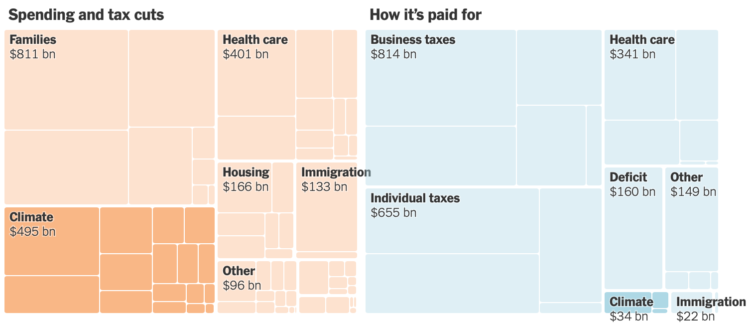


/cdn.vox-cdn.com/uploads/chorus_asset/file/23038503/2021_poverty_charts_updated.jpg) Christina Animashaun/Vox
Christina Animashaun/Vox
/cdn.vox-cdn.com/uploads/chorus_asset/file/23034833/tqphh_the_global_extreme_poverty_rate_has_plummeted.png) Tim Ryan Williams/Vox
Tim Ryan Williams/Vox
/cdn.vox-cdn.com/uploads/chorus_asset/file/23034842/3ADkA_the_rise_in_us_cancer_deaths_br_has_slowed_significantly_nbsp_.png) Tim Ryan Williams/Vox
Tim Ryan Williams/Vox
/cdn.vox-cdn.com/uploads/chorus_asset/file/23034840/FWXuk_fewer_americans_are_smoking_cigarettes__1_.png) Tim Ryan Williams/Vox
Tim Ryan Williams/Vox
/cdn.vox-cdn.com/uploads/chorus_asset/file/23034844/7nz1W_child_mortality_rates_dropped_across_the_globe_br_over_the_past_three_decades_br___1_.png) Tim Ryan Williams/Vox
Tim Ryan Williams/Vox
/cdn.vox-cdn.com/uploads/chorus_asset/file/23017183/decoupling.png)
/cdn.vox-cdn.com/uploads/chorus_asset/file/23034852/Vbkxl_the_growing_share_of_cage_free_us_hens_nbsp___1_.png) Tim Ryan Williams/Vox
Tim Ryan Williams/Vox
/cdn.vox-cdn.com/uploads/chorus_asset/file/23040089/coronavirus_data_explorer__7_.png)
/cdn.vox-cdn.com/uploads/chorus_asset/file/23037916/8MeWr_covid_19_vaccines_were_developed_in_record_time__1_.png) Tim Ryan Williams/Vox
Tim Ryan Williams/Vox
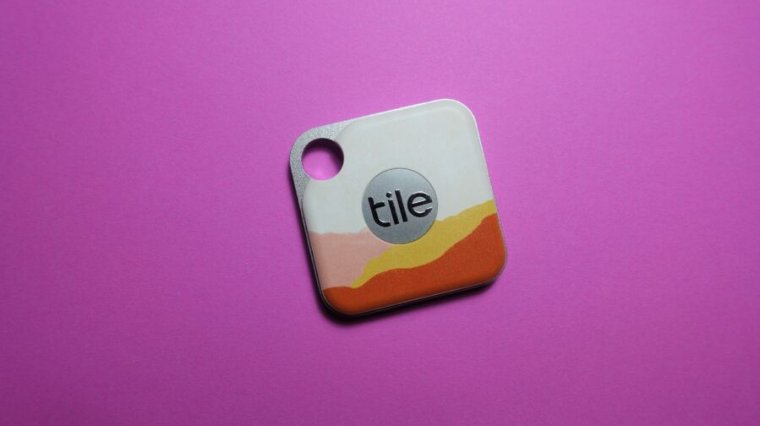

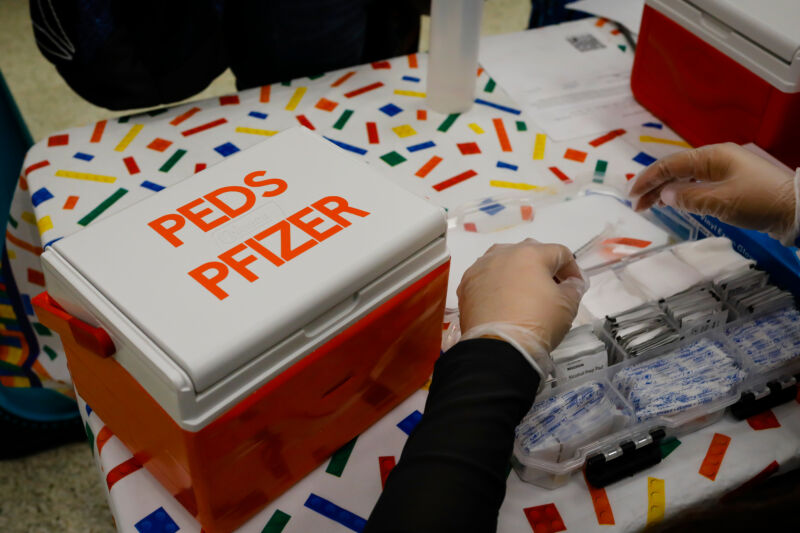

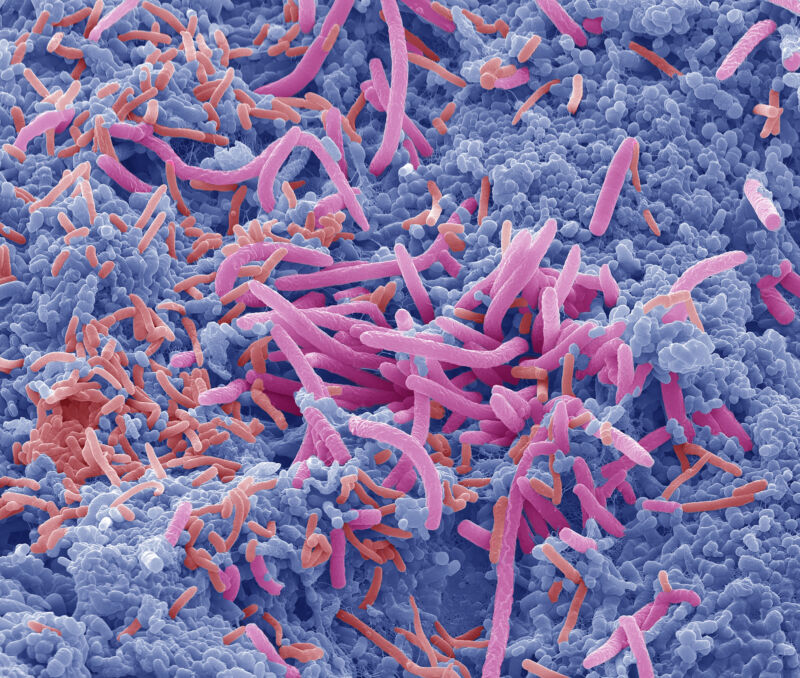






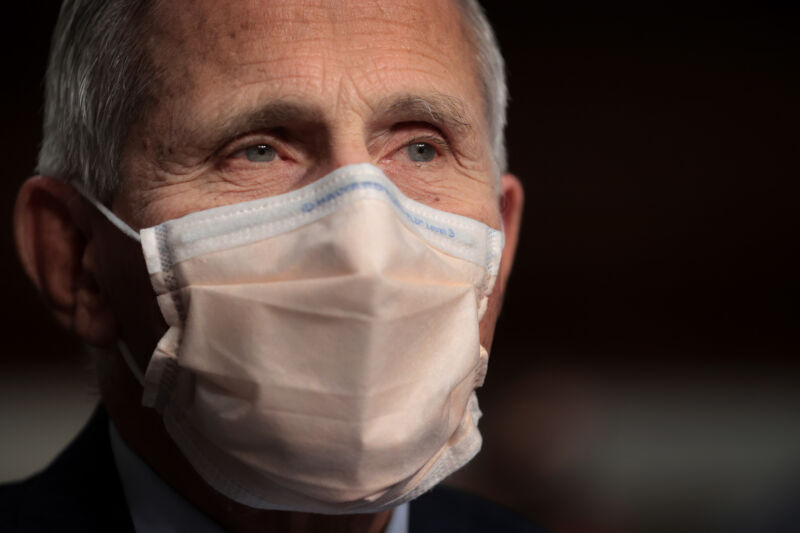
 ? We are. We also learn that Ed Sheeran loves Water Pokémon.
 Totodile
 Mudkip
 Piplup
 Oshawott
 Froakie


 Squirtle
Wearing Sunglasses
Squirtle
Wearing Sunglasses