Shared posts

26 Aug 21:30

Trump admin issues stop-work order for offshore wind project

by Aidan Hughes, Inside Climate News

The Trump administration on Friday issued an order to stop work on a nearly complete offshore wind energy project, the latest step in the Trump administration’s crackdown on wind power.

In a letter to Orsted, the Danish company developing Revolution Wind, the Bureau of Ocean Energy Management said its order is tied to concerns about “the protection of national security interests of the United States and prevention of interference with reasonable uses of the exclusive economic zone, the high seas, and the territorial seas.”

The letter did not explain why the project posed national security concerns or interfered with reasonable uses of the area. BOEM did not respond to emailed questions.

Read full article

Comments

26 Aug 21:27

DOGE accused of copying entire Social Security database to insecure cloud system

by Jon Brodkin

A Social Security Administration (SSA) official alleged in a whistleblower disclosure that DOGE officials created "a live copy of the country's Social Security information in a cloud environment that circumvents oversight."

Chuck Borges, the SSA's Chief Data Officer (CDO), "has become aware through reports to him of serious data security lapses, evidently orchestrated by DOGE officials, currently employed as SSA employees, that risk the security of over 300 million Americans' Social Security data," the Government Accountability Project said in a letter sent today to members of Congress and the US Office of Special Counsel. The nonprofit Government Accountability Project is representing Borges.

Although it has been widely reported that DOGE sought and obtained access to Social Security records in its attempt to find evidence of fraud, the letter to lawmakers said the live copy of SSA's database hasn't previously been disclosed. DOGE's actions were taken "under the authority of SSA Chief Information Officer (CIO) Aram Moghaddassi" and violate SSA protocols and policies, the letter said.

Read full article

Comments

26 Aug 21:27

Google Will Make All Android App Developers Verify Their Identity Starting Next Year

by Ryan Whitwam, Ars Technica
With claims that sideloaded apps are 50 times more likely to contain malware, Google is tightening restrictions for developers distributing apps outside the Play Store.
26 Aug 19:49

Summer getting longer

by Nathan Yau

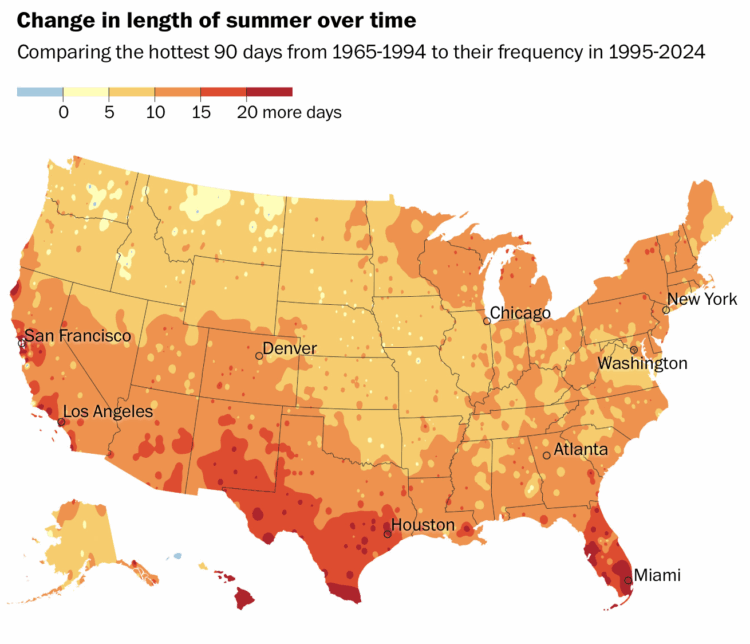
For the Washington Post, Kasha Patel and Naema Ahmed mapped the change in summer time.

The analysis, conducted by climatologist Brian Brettschneider, examined the hottest 90 days of the year from 1965 to 1994 and compared their frequency over 1995 to 2024. He found that the temperatures that used to kick off the hottest three months of the year are expanding beyond the calendar definition of summer.

I like the interactive bit at the beginning to enter your ZIP code. It’s speedy.

Tags: climate change, summer, temperature, Washington Post

26 Aug 19:24

Google’s AI model just nailed the forecast for the strongest Atlantic storm this year

by Eric Berger

In early June, shortly after the beginning of the Atlantic hurricane season, Google unveiled a new model designed specifically to forecast the tracks and intensity of tropical cyclones.

Part of the Google DeepMind suite of AI-based weather research models, the "Weather Lab" model for cyclones was a bit of an unknown for meteorologists at its launch. In a blog post at the time, Google said its new model, trained on a vast dataset that reconstructed past weather and a specialized database containing key information about hurricanes tracks, intensity, and size, had performed well during pre-launch testing.

"Internal testing shows that our model's predictions for cyclone track and intensity are as accurate as, and often more accurate than, current physics-based methods," the company said.

Read full article

Comments

26 Aug 15:38

AI Is Eliminating Jobs for Younger Workers

by Will Knight
New research from Stanford provides the clearest available evidence that AI is reshaping the workforce—but it’s complicated.
25 Aug 22:58

Google will block sideloading of unverified Android apps starting next year

by Ryan Whitwam

Android's open nature set it apart from the iPhone as the era of touchscreen smartphones began nearly two decades ago. Little by little, Google has traded some of that openness for security, and its next security initiative could make the biggest concessions yet in the name of blocking bad apps. Google has announced plans to begin verifying the identities of all Android app developers, and not just those publishing on the Play Store. Google intends to verify developer identities no matter where they offer their content, and apps without verification won't work on most Android devices in the coming years.

Google used to do very little curation of the Play Store (or Android Market, if you go back far enough), but it has long sought to improve the platform's reputation as being less secure than the Apple App Store. Years ago, you could publish actual exploits in the official store to gain root access on phones, but now there are multiple reviews and detection mechanisms to reduce the prevalence of malware and banned content. While the Play Store is still not perfect, Google claims apps sideloaded from outside its store are 50 times more likely to contain malware.

This, we are led to believe, is the impetus for Google's new developer verification system. The company describes it like an "ID check at the airport." Since requiring all Google Play app developers to verify their identities in 2023, it has seen a precipitous drop in malware and fraud. Bad actors in Google Play leveraged anonymity to distribute malicious apps, so it stands to reason that verifying app developers outside of Google Play could also enhance security.

Read full article

Comments

25 Aug 16:14

A Crypto Micronation Is Making Friends at the White House

by Joel Khalili
With Chinese crypto billionaire Justin Sun as its prime minister, Liberland hopes to make strides in international diplomacy and finally settle the parcel of forestland it claims to own.
25 Aug 16:13

IBM and NASA Develop a Digital Twin of the Sun to Predict Future Solar Storms

by Fernanda González
The tool models the sun using AI, and its developers say it can anticipate solar flares 16 percent more accurately and in half the time of current prediction systems.
23 Aug 08:12

Federal law enforcement deployments are coming to other cities, Trump says

by Eric Katz
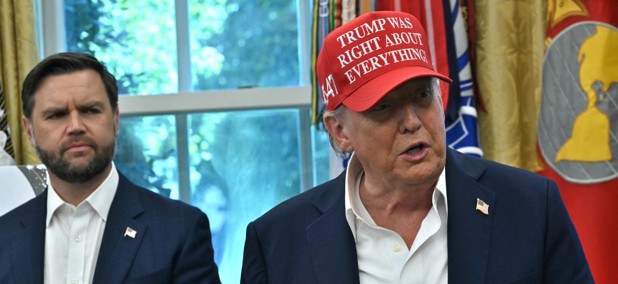
Federal law enforcement personnel will soon deploy to other cities around the country, President Trump said at the White House on Friday, even as he suggested he could keep officers and agents in Washington past their 30-day limit. 

Trump suggested employees from the departments of Justice, Homeland Security and other agencies could go out to several cities to tackle crime, adding Chicago would come next after the nation’s capital. Federal personnel have deployed throughout Washington in recent weeks at Trump’s direction, where they have conducted activities ranging from enforcing traffic violations to making arrests related to alleged immigration violations. 

“After we do this, we'll go to another location,” Trump said. “We'll make it safe, we're going to make our cities very, very safe. Chicago is a mess.” 

Crime in Chicago, like Washington and most major cities in the United States, has trended down in recent years and has gone down this year in particular. The Justice Department reported in January that violent crime in Washington had hit a 30-year low

The mechanism for deploying staff from agencies such as the FBI, Drug Enforcement Administration, Customs and Border Protection, Immigration and Customs Enforcement, U.S. Park Police and others that have patrolled Washington to other cities remains unclear. Their presence in the capital was aided by Trump’s decision to federalize control of the district’s police force, an option uniquely available due to the 1973 Home Rule Act not applicable to any other cities. 

Trump said after Chicago he would consider deploying feds to New York. Leaders there and in Illinois have signaled they would not be amenable to such an arrangement. 

Under the Home Rule Act, Trump can control Washington for 30 days, after which time Congress would need to authorize an extension. Trump suggested on Friday he could circumvent that limitation by declaring a national emergency, though he hoped to avoid doing so. 

Around 500 federal officers and agents are currently patrolling in the capital, with support from a cadre of National Guard soldiers that is growing to 2,000 individuals in the coming days. Attorney General Pam Bondi said 719 arrests have been made in Washington since the federal deployments began, though she did not specify whether that was in addition to the normal arrests by the city’s own police force. 

The president also suggested he was working with Republican leadership in Congress to approve an additional $2 billion in funding to “clean” Washington.

]]>
21 Aug 17:44

Evaluating the fairness and gerrymandering of district boundaries

by Nathan Yau

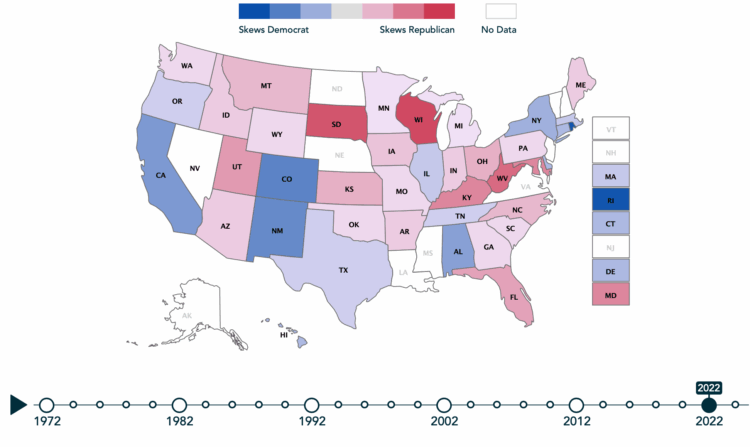
PlanScore uses four measures to define partisan gerrymandering, and they’ve made the data available over time.

Most of our federal and state legislators are elected from districts. Every ten years, state governments redraw district boundaries in a process known as redistricting. PlanScore promotes fairness in the redistricting process. We make it easy for policymakers and advocates to score new district maps and assess whether they’re fair or gerrymandered. We also provide access to the most comprehensive historical dataset of partisan gerrymandering ever assembled.

I think this could be the year that more people learn what gerrymandering is. Only a few thousand more AI-generated memes to go.

Tags: gerrymandering, PlanScore

20 Aug 23:02

Government Staffing Cuts Have Fueled an Ant-Smuggling Boom

by Kate Knibbs
“It’s getting out of hand,” one seller says. “They realize the US market is a gold mine.”
20 Aug 22:40

Fired Antitrust Official Reveals How Trump’s Friends Turned Justice Into A Pay-To-Play Business

by Mike Masnick

When I was in DC last week, everyone seemed to be talking about the brewing drama at the Department of Justice’s antitrust division. The HPE/Juniper merger settlement had raised eyebrows, two senior officials had been fired, and rumors were swirling about political interference playing a role in ending what had appeared to be a decently strong antitrust case.

But I don’t think anyone expected one of those fired officials to go full scorched earth quite this quickly—or this thoroughly.

Roger Alford, who served as principal deputy assistant attorney general in the DOJ’s antitrust division before being fired, has now delivered a blistering public account of what he witnessed inside the Trump administration’s Justice Department. Speaking at the TPI Aspen Forum and writing in UnHerd, Alford has essentially confirmed a pay-to-play system that many people expected to arise under Trump, while also destroying any pretense of principled antitrust enforcement (which people like Matt Stoller naively insisted would continue under Trump).

For the few hipster antitrust folks among you, who still harbored credulous hopes that the Trump administration’s “populist” approach to antitrust would continue the more aggressive merger enforcement we saw under Lina Khan, Alford’s account should put that fantasy to rest permanently. What emerges instead is a picture of an administration where hiring the right Trump-connected lobbyists can get you out of even the most solid antitrust case.

The story centers on what should have been a straightforward antitrust case. Hewlett Packard Enterprise (HPE) wanted to acquire Juniper Networks for $14 billion, combining the second and third largest companies in the enterprise networking market. The DOJ filed a lawsuit in January to block the merger, alleging it would harm competition and consumers—exactly the kind of horizontal merger challenge that antitrust enforcers have been bringing for decades.

By all accounts, the government had a strong case and was prepared to go to trial. Then, just days before the trial was set to begin, the DOJ abruptly settled on terms that many experts called out as surprisingly weak. Instead of blocking the merger, the settlement required only that HPE divest a small business unit serving certain customers and license some AI technology.

What happened in between? According to reports (and now confirmed by Alford), HPE hired some of Trump’s friends, and suddenly the case got resolved through backroom dealing rather than legal merit.

Alford frames his account as a battle within the Republican party between what he calls “genuine MAGA reformers” (lol) and “MAGA-In-Name-Only lobbyists.” But come on. There are no “genuine MAGA reformers” anymore. There are just different types of grifters eyeing which angle works best for themselves. Alford’s description makes clear this is really about whether the wealthy and well-connected can simply purchase their way out of antitrust enforcement.

In his UnHerd piece, Alford doesn’t mince words about what he witnessed and makes sure to name names:

The core problem is simple: Attorney General Pam Bondi has delegated authority to figures — such as her chief of staff, Chad Mizelle, and Associate Attorney General-Designee Stanley Woodward — who don’t share her commitment to a single tier of justice for all.

That assumes, of course, that Bondi isn’t also playing politics and loyalty over policy, which she absolutely is.

In his Aspen speech, Alford goes even further, directly accusing senior DOJ officials of corruption:

Although I am limited in what I can say, it is my opinion that in the HPE/Juniper merger scandal Chad Mizelle and Stanley Woodward perverted justice and acted inconsistent with the rule of law. I am not given to hyperbole, and I do not say that lightly. As part of the forthcoming Tunney Act proceedings, it would be helpful for the court to clarify the substance and the process by which the settlement was reached. Although the Tunney Act has rarely served its intended purpose, this time the court may demand extensive discovery and examine the surprising truth of what happened. I hope the court blocks the HPE/Juniper merger. If you knew what I knew, you would hope so too. Someday I may have the opportunity to say more.

In case you’re wondering, the Tunney Act (the Antitrust Procedures and Penalties Act) makes judges evaluate whether a DOJ antitrust consent decree is “in the public interest.” Courts usually rubber-stamp, but they can demand explanations, take public comments, and—rarely—order discovery or reject a decree. If Alford’s right, this is one of those rare cases where the court should actually dig.

These are remarkable accusations from a recently fired government official. “Perverted justice” is not the kind of language former DOJ officials typically use when describing their former colleagues, even when they disagree with policy decisions.

Alford’s account describes in detail how the influence-peddling operation works in practice. Companies facing antitrust scrutiny can now hire politically connected lobbyists to circumvent the normal legal process entirely:

Is this the new normal, with every law firm hiring an influence peddler to dual track and sidestep the litigation and merger review process? That’s what law firms are now considering. The Department of Justice is now overwhelmed with lobbyists with little antitrust expertise going above the Antitrust Division leadership seeking special favors with warm hugs. On numerous occasions in a variety of matters we implored our superiors and the lawyers on the other side to call off the jackals. But to no avail. Today cases are being resolved based on political connections, not the legal merits

He specifically names the fairly well-known “lobbyists” involved in the HPE case:

Mike Davis and Arthur Schwartz have made a Faustian bargain of trading on relationships with powerful people to reportedly earn million-dollar success fees by helping corporations undermine Trump’s antitrust agenda, hurt working class Americans, break the rules, and then try to cover it up.

Alford suggests that this move will hurt the reputations of both Davis and Schwartz, but that’s a bit rich, as both have reputations that are well known throughout the political world, and this seems more par for the course than anything else. The only reason to hire either of them is not for their knowledge of antitrust law or how to manage the fallout from an antitrust trial.

The only reason to hire them is for their political connections and shamelessness in conducting dirty tricks.

Davis spent years pushing ridiculous anti-internet/anti-tech policies, and four years ago it was revealed that he had actually sought to get hired by Google, and only became anti-internet when they rejected him. He’s made it quite clear that his views are entirely transactional. He has also talked about how excited he was to put kids in cages (he said it will “be glorious”) and to indict everyone named Biden.

Trump loves him.

As for Arthur Schwartz, he’s been a “political advisor” to Donald Trump Jr. for years and is close with the Trump family. A recent profile of MAGA lobbyists had retiring Republican Senator Thom Tillis refer to Schwartz as “a political hack” and a “shitty political consultant.”

If anything, their reputations were burnished by this, not harmed. They’re political sleazeballs hired to engage in a corrupt plan, and they did exactly that.

Not surprisingly, this creates a system of “for my friends, everything, for my enemies, the law” kind of Justice Department:

Others at the DOJ and elsewhere in government consider some parties, counsel, and lobbyists to be on the “same MAGA team” and worthy of special solicitude. They consider others to be “enemies of MAGA” that merit particular disfavor. In my opinion based on regular meetings with him, Chad Mizelle accepts party meetings and makes key decisions depending on whether the request or information comes from a MAGA friend. Aware of this injustice, companies are hiring lawyers and influence peddlers to bolster their MAGA credentials and pervert traditional law enforcement.

Alford’s revelations should put the final nail in the coffin to those poor deluded people who bought into the narrative that Trump’s approach to antitrust would somehow be more populist or more aggressive toward corporate power than traditional Republican policies. Instead, what emerges is a system that’s significantly more blatantly corrupt than the usual corporate-friendly approach (which was already somewhat corrupt):

The cost to the country of this new pay-to-play approach to antitrust enforcement is enormous. For thirty pieces of silver, MAGA-In-Name-Only lobbyists are influencing their allies within the DOJ and risking President Trump’s populist conservative agenda. This goes far beyond traditional lobbying functions. Their goal is to line their own pockets by working for any corporation that will pay top dollar to settle antitrust cases on the cheap. Doing so undermines the rule of law and desperately harms the average American. At risk are President Trump’s antitrust goals of reforming health care, addressing monopoly abuses, promoting deregulation, and helping renters, farmers and blue-collar workers.

And, yes, it’s easy to laugh at Alford for being so naive as to believe that a Trump DOJ would actually do anything along those lines, or actually believing that Trump had “antitrust goals” like those he described. You truly had to not be paying attention to think that’s where things were headed.

But at least it’s nice of him to come out and confirm exactly what plenty of us predicted would happen.

What makes Alford’s account particularly striking is how quickly and completely he’s burned his bridges. Getting fired from a senior government position is one thing—going public immediately afterward with detailed allegations of corruption is quite another. This suggests just how angry Alford is about what he witnessed.

His personal reflection drives home the bitterness:

My position while I served in government was simple: lobbyists and lawyers are subordinate to the law. Yet by stating this truth, I was dismissed for insubordination. My termination letter is now framed and hangs on the wall in my office at Notre Dame. I joke with friends that I’ve never been fired before, and I’ve been working since my first job as a young teenager at the Dairy Queen in Sherman, Texas. All it took to be fired were lobbyists exerting influence on my superiors to retaliate against me for protecting the rule of law against the rule of lobbyists.

This is certainly not the first time that a Trump regime official told all upon being stabbed in the back, but Alford coming out so clearly and directly calling out this blatant corruption is still notable.

Alford’s revelations should end any remaining speculation about whether this administration would continue Lina Khan-style antitrust enforcement. The HPE/Juniper case establishes a clear precedent: hire the right Trump-connected lobbyists, and you can get your merger approved regardless of its competitive impact.

Put money in the pockets of the king’s friends, and the king will make your troubles disappear.

Alford warns that other major cases may face similar interference:

Which case is the next casualty? Will the same senior DOJ officials ignore the President’s Executive Order just because Live Nation and Ticketmaster have paid a bevy of cozy MAGA friends to roam the halls of the Fifth Floor in defense of their monopoly abuses? I wonder what the national security arguments will be in that case.

And, um, yes. The answer is yes. Any major company is going to hire one of these guys, and they’ll laugh all the way to the bank.

There are no principles here. Only transactions.

What Alford describes isn’t just a failure of antitrust policy—it’s the fundamental corruption of the entire justice system that many of us warned we’d see in a second Trump Presidency. Alford’s account portrays justice as for sale to the highest bidder with the right MAGA connections.

Of course, the real irony here is that this is exactly the kind of behavior that Trump and his supporters keep claiming he was elected to get rid of. “Drain the swamp.” Instead, he’s loaded the swamp up with more alligators than ever, and they’re all his friends. The MAGA world isn’t just proving the “every accusation is a confession” line true over and over again, they seem to be proudly using it as a slogan.

This level of corruption is no surprise. The willingness of Alford to be so direct in telling the world about it so quickly after leaving the Justice Department, though, is certainly significant.

20 Aug 21:33

Trump confirms US is seeking 10% stake in Intel. Bernie Sanders approves.

by Ashley Belanger

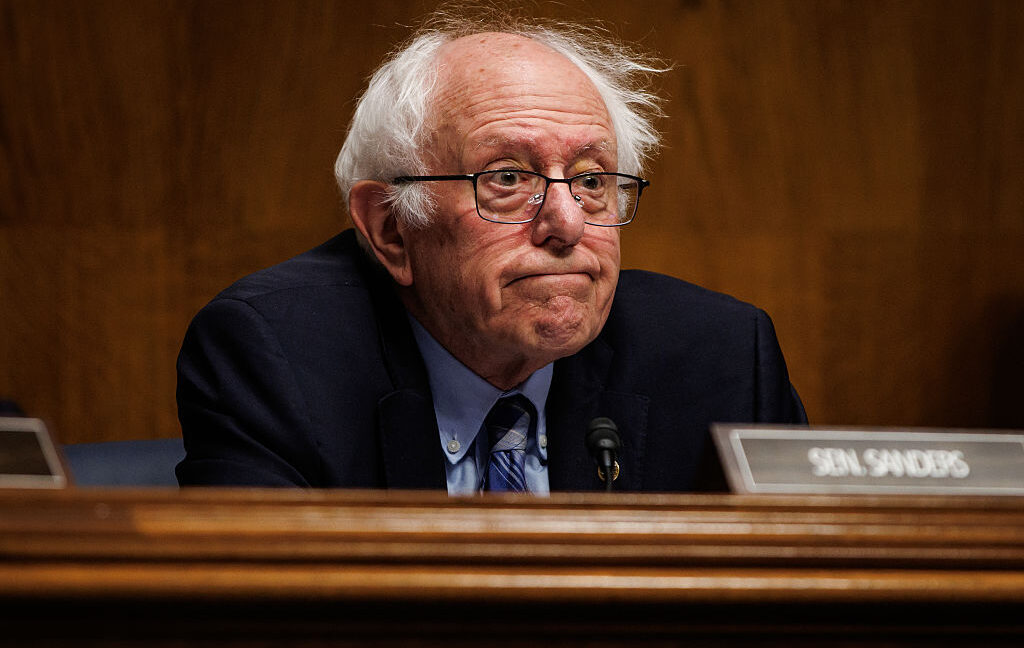
After the Trump administration confirmed a rumor that the US is planning to buy a 10 percent stake in Intel, US Senator Bernie Sanders (I-Vt.) came forward Wednesday to voice support for the highly unusual plan, finding rare common ground with Donald Trump.

According to Commerce Secretary Howard Lutnick, the plan would see the US disbursing approved CHIPS Act grants only after acquiring non-voting shares of Intel and likely other chipmakers. That would allow the US to profit off its investment in chipmakers, Lutnick suggested, and Sanders told Reuters that he agreed American taxpayers could benefit from the potential deals.

"If microchip companies make a profit from the generous grants they receive from the federal government, the taxpayers of America have a right to a reasonable return on that investment," Sanders said.

Read full article

Comments

20 Aug 17:26

Google Pixel 10 Series, Pixel Watch 4, Pixel Buds 2a: Specs, Features, Release Date

by Julian Chokkattu
The Pixel 10 series is here. These are the first official flagship Android phones with magnetic Qi2 wireless charging. Also in tow are the Pixel Watch 4 and Pixel Buds 2a earbuds.
20 Aug 15:29

Arkansas Hosts the Planet’s Only Public Diamond Mine

by Benj Edwards, Ars Technica
Visitors have unearthed more than 35,000 diamonds at Crater of Diamonds State Park since 1972.
18 Aug 00:42

Is It Still ‘Trump Derangement Syndrome’ If All The Predictions Were Accurate?

by Mike Brock

“Hysterical.” “Alarmist.” “Trump Derangement Syndrome.” “He’ll be constrained by institutions.” “There are adults in the room.” “You’re overreacting.” “The generals won’t let him.” “Stop being so dramatic.”

Every single person who said we were being hysterical about Trump being an existential threat should be forced to explain how the President seizing control of the capital’s police force and deploying military units to forcibly relocate citizens represents normal democratic governance.

They called us hysterical when we said he’d use the military against civilians. He’s literally doing it right now.

They called us alarmist when we said he’d seize control of law enforcement. He just placed D.C. police under the direct command of his Attorney General.

They called us deranged when we said he’d create fake emergencies to justify authoritarian power grabs. He’s invoking emergency powers while violent crime is at a 30-year low.

They said the institutions would hold. The institutions are being commandeered in real time.

They said the generals would refuse illegal orders. The National Guard is already deployed.

They said we were exaggerating the fascist threat. He’s literally declaring “Liberation Day” while seizing control of the capital.

Remember who told you this was hysteria.

They told you that those of us warning about fascism were being hysterical. Now the President has seized control of the capital’s police force, deployed military units against citizens, and announced forced relocations of undesirables—and these same voices are explaining why it’s not really that bad, why it’s technically legal, why we should wait and see how it plays out.

The “hysteria” was prophecy. The “alarmism” was accuracy. The “derangement” was simply seeing clearly what was coming while others chose comfortable blindness.

They’ll never admit they were wrong. They’ll just keep moving the goalposts. “Sure, he seized control of D.C. police, but it’s only for 30 days.” “Yes, he deployed the military, but it’s just the National Guard.” “Okay, he’s forcibly relocating citizens, but he says they’ll be given places to stay.”

This is how normalization works—through the reasonable voices who explain why each new outrage isn’t quite outrageous enough to justify the alarm we’re expressing.

We weren’t hysterical. We were right.

We weren’t alarmist. We were accurate.

We weren’t deranged. We were paying attention.

And now, as military units patrol the capital under presidential command, as police forces answer to the President’s personal authority, as citizens are forcibly relocated for the crime of poverty—now they want us to remain calm, to trust the process, to avoid inflammatory language.

No.

This is fascism. We told you it was coming. You called us hysterical. And now it’s here.

Remember who saw it clearly. Remember who denied it. And never, ever let them forget that when American democracy needed defenders, they chose to police the tone of those sounding the alarm rather than confront the threat itself.

The existential threat wasn’t rhetorical. It was real. It’s here. It’s happening.

And everyone who called us hysterical for warning about it is complicit in its arrival.

Mike Brock is a former tech exec who was on the leadership team at Block. Originally published at his Notes From the Circus.

17 Aug 16:16

Experiment will attempt to counter climate change by altering ocean

by Teresa Tomassoni, Inside Climate News

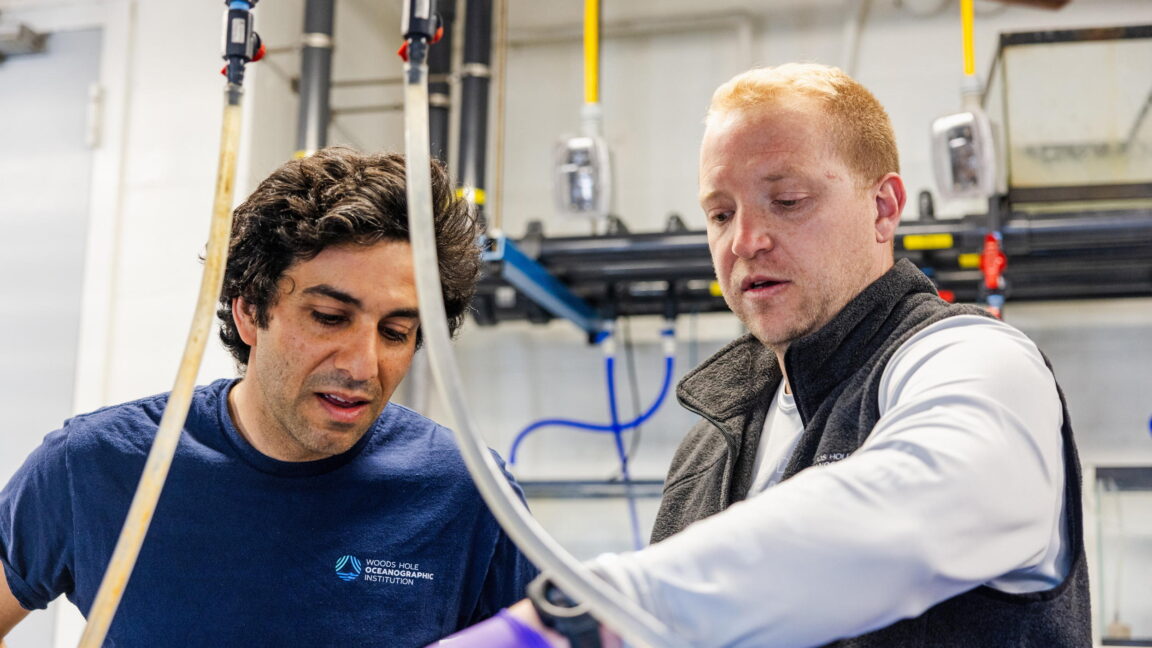
Later this summer, a fluorescent reddish-pink spiral will bloom across the Wilkinson Basin in the Gulf of Maine, about 40 miles northeast of Cape Cod. Scientists from the Woods Hole Oceanographic Institution will release the nontoxic water tracer dye behind their research vessel, where it will unfurl into a half-mile wide temporary plume, bright enough to catch the attention of passing boats and even satellites.

As it spreads, the researchers will track its movement to monitor a tightly controlled, federally approved experiment testing whether the ocean can be engineered to absorb more carbon, and in turn, help combat the climate crisis.

As the world struggles to stay below the 1.5° Celsius global warming threshold—a goal set out in the Paris Agreement to avoid the most severe impacts of climate change—experts agree that reducing greenhouse gas emissions won’t be enough to avoid overshooting this target. The latest Intergovernmental Panel on Climate Change report, published in 2023, emphasizes the urgent need to actively remove carbon from the atmosphere, too.

Read full article

Comments

17 Aug 16:15

Study: Social media probably can’t be fixed

by Jennifer Ouellette

It's no secret that much of social media has become profoundly dysfunctional. Rather than bringing us together into one utopian public square and fostering a healthy exchange of ideas, these platforms too often create filter bubbles or echo chambers. A small number of high-profile users garner the lion's share of attention and influence, and the algorithms designed to maximize engagement end up merely amplifying outrage and conflict, ensuring the dominance of the loudest and most extreme users—thereby increasing polarization even more.

Numerous platform-level intervention strategies have been proposed to combat these issues, but according to a preprint posted to the physics arXiv, none of them are likely to be effective. And it's not the fault of much-hated algorithms, non-chronological feeds, or our human proclivity for seeking out negativity. Rather, the dynamics that give rise to all those negative outcomes are structurally embedded in the very architecture of social media. So we're probably doomed to endless toxic feedback loops unless someone hits upon a brilliant fundamental redesign that manages to change those dynamics.

Co-authors Petter Törnberg and Maik Larooij of the University of Amsterdam wanted to learn more about the mechanisms that give rise to the worst aspects of social media: the partisan echo chambers, the concentration of influence among a small group of elite users (attention inequality), and the amplification of the most extreme divisive voices. So they combined standard agent-based modeling with large language models (LLMs), essentially creating little AI personas to simulate online social media behavior. "What we found is that we didn't need to put any algorithms in, we didn't need to massage the model," Törnberg told Ars. "It just came out of the baseline model, all of these dynamics."

Read full article

Comments

17 Aug 00:51

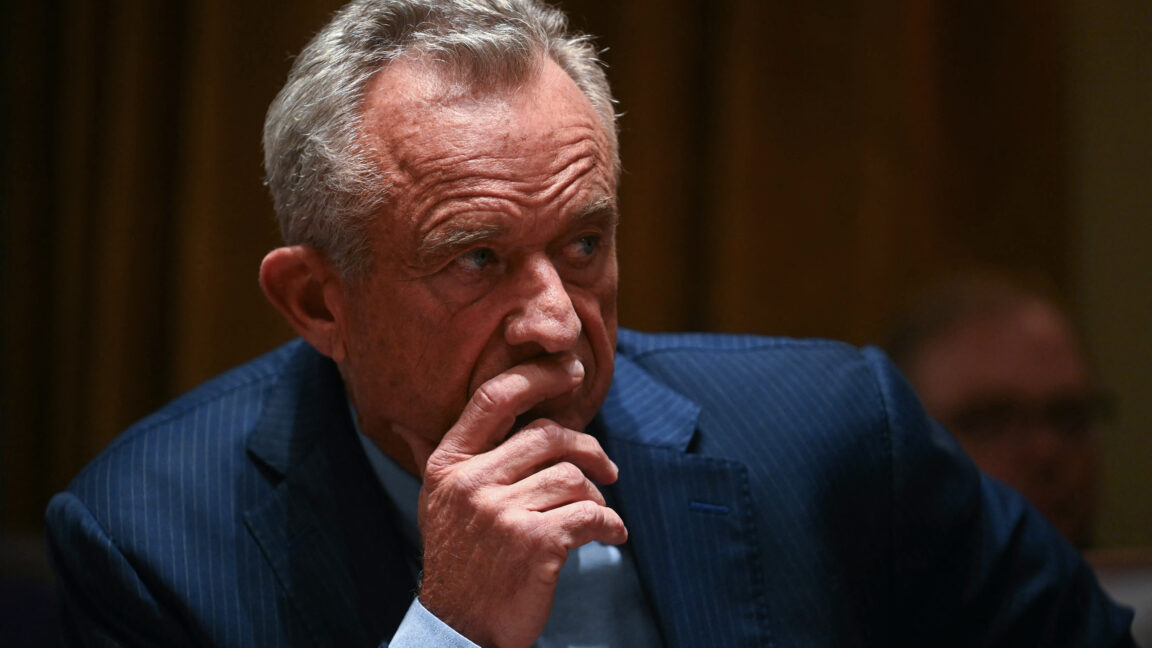
Anti-vaccine RFK Jr. creates vaccine panel of anti-vaccine group’s dreams

by Beth Mole

Zealous anti-vaccine advocate Robert F. Kennedy Jr. is reviving a long-defunct federal vaccine panel that anti-vaccine advocates, including Kennedy, have long sought and health experts fear will be used to dismantle evidence-based recommendations for life-saving childhood shots.

The panel is a task force outlined in the National Childhood Vaccine Injury Act of 1986, which is best known for setting up the National Vaccine Injury Compensation Program. The law states that the task force's goal is to "promote the development of childhood vaccines that result in fewer and less serious adverse reactions than those vaccines on the market on the effective date of this part and promote the refinement of such vaccines."

The federal government has multiple overlapping procedures and systems that evaluate, review, and continuously monitor the safety of childhood vaccines, which have gone through rigorous testing and are well-established to be safe. Further, the government does, in effect, promote improved vaccines by providing grants to academic and industry researchers to develop advanced shots. It also conducts its own vaccine research toward that goal. For instance, researchers at the National Institutes of Health were critical in developing the mRNA vaccine technology that enabled the swift creation of mRNA COVID-19 vaccines that saved millions of lives at the height of the pandemic.

Read full article

Comments

17 Aug 00:47

Trump admin ranks companies on loyalty while handing out favors to Big Tech

by Jon Brodkin

The Trump administration has ended potential enforcement actions against dozens of tech firms and 165 corporations overall, delivering on promises to end the alleged "weaponization" of the federal government, a report by nonprofit consumer advocacy group Public Citizen said.

"In six months, the Trump administration has already withdrawn or halted enforcement actions against 165 corporations of all types—and one in four of the corporations benefiting from halted or dropped enforcement is from the technology sector, which has spent $1.2 billion on political influence during and since the 2024 elections," the report published on Wednesday said. The political spending includes $352 million that "is attributable to Elon Musk."

At the beginning of Trump's second term, there were at least 104 tech companies facing at least 142 federal investigations and enforcement actions, Public Citizen reported. The Trump administration has halted or withdrawn about one-third of the "targeted investigations into suspected misconduct and enforcement actions against technology corporations... So far, 47 enforcement actions (against 45 tech corporations) have been withdrawn or halted (38 withdrawn, nine halted)," the report said.

Read full article

Comments

15 Aug 19:07

Spoilers

by Reza
15 Aug 19:05

Starlink tries to block Virginia’s plan to bring fiber Internet to residents

by Jon Brodkin

Starlink operator SpaceX is fighting Virginia's plan to deploy fiber Internet service to residents, claiming that federal grant money should be given to Starlink instead. SpaceX is already in line to win over $3 million in grant money in the state but is seeking $60 million.

Starlink is poised to benefit from the Trump administration rewriting rules for the $42 billion Broadband Equity, Access, and Deployment (BEAD) grant program. While the Biden administration decided that states should prioritize fiber in order to build more future-proof networks, the Trump administration ordered states to revise their plans with a "tech-neutral approach" and lower the average cost of serving each location.

With the Trump administration backing its attempt to obtain more federal funding for Starlink, SpaceX is likely to object to state plans that still include significant fiber builds. That's what happened yesterday when SpaceX filed comments on Virginia's final proposal, which will be reviewed by the National Telecommunications and Information Administration (NTIA).

Read full article

Comments

15 Aug 19:00

Judge Not Buying DOJ’s Claim That Elon Wasn’t Running DOGE

by Mike Masnick

Remember back in February when the DOJ told a court that, despite multiple public statements from both Elon Musk and Donald Trump to the contrary, Elon Musk was not associated one bit with DOGE and therefore should not be subject to litigation regarding DOGE’s wildly illegal actions? And remember how lots of people just kinda pretended this was fine and normal?

Well, in the ruling that Cathy Gellis just wrote about, the judge clearly recognizes the reality that Elon Musk absolutely was DOGE:

Musk, assisted by his DOGE subordinates, “continued to exercise control over USAID systems . . . to systematically block access to all systems by USAID personnel.”

Later, the judge makes it clear that the plaintiffs alleged—plausibly, despite the DOJ’s spin—that Musk ran DOGE, by his own public admissions. The judge is responding to the DOJ’s claim that Musk isn’t subject to the Appointments Clause because he had no real authority in his role. As the judge notes, nobody who wasn’t born yesterday would believe this:

This argument, however, fails to account for Plaintiffs’ allegations which strongly support the inference that Musk directed the actions to shut down USAID without authorization from any USAID official, including the closure of USAID headquarters and the removal of the USAID website, between January 31, 2025 and February 2, 2025. Consistent with its analysis in Does 1, 771 F. Supp. 3d at 668-69, such an inference is supported by the allegations in the Second Amended Complaint that Musk took a leading role in DOGE’s efforts to take physical control of USAID headquarters, including its secured spaces, and that Musk publicly took credit for the dismantling of USAID during this time period in multiple posts on X, including the February 2 and 3 posts in which he stated that “we spent the weekend feeding USAID into the wood chipper,” that “we’re in the process of . . . shutting down USAID,” that “USAID is a criminal organization,” and that it was “[t]ime for it to die.” SAC ¶ 87-88. Collectively, these allegations support the inference that, as the de facto administrator of DOGE at the time, Musk directed these actions.

Obviously this is motion-to-dismiss posture, not a factual finding. But when a federal judge is drawing reasonable inferences from well-pleaded allegations and concluding Musk was the “de facto administrator” of DOGE, the DOJ’s “he was just an advisor with no authority” line becomes harder to sell with each filing.

Cathy had mentioned this ruling on Bluesky as she was working on her article, and apparently that alerted lawyer Kel McClanahan of a judge officially recognizing Elon as DOGE administrator.

OK full disclosure I only found this because @cathygellis.bsky.social was complaining about OCR and I was like wtf opinion is she talking about

National Security Counselors 🕵 (@nationalsecuritylaw.org) 2025-08-14T04:34:52.005Z

And that matters because Kel is representing multiple clients who are suing Musk and DOGE in cases where the DOJ continues to deny Musk’s role. So Kel took this information he learned from Cathy and made sure the judges in his cases learned about it as well.

Plaintiffs respectfully draw the Court’s attention to today’s opinion in Does v. Musk, No. 25-462 (D. Md.), in which Judge Chuang finds not once but twice that the plaintiffs had sufficiently alleged that Elon Musk was in charge of the “Department of Government Efficiency” or “DOGE,” however that term was defined

Now that’s service journalism at work.

15 Aug 18:26

Dedicated volunteer exposes “single largest self-promotion operation in Wikipedia’s history”

by Nate Anderson

Quick—what are the top entries in the category "Wikipedia articles written in the greatest number of languages"?

The answer is countries.

Turkey tops the list with Wikipedia entries in 332 different languages, while the US is second with 327 and Japan is third with 324. Other common words make their appearance as one looks down the list. "Dog" (275 languages) tops "cat" (273). Jesus (274) beats "Adolf Hitler" (242). And all of them beat "sex" (122), which is also bested by "fever," "Chiang Kai-Shek," and the number "13."

Read full article

Comments

15 Aug 12:30

Now You Can Get Your Flu Vaccine at Home

by Emily Mullin
The nasal spray vaccine FluMist can now be ordered online and shipped to your door.
13 Aug 13:53

Perplexity offers more than twice its total valuation to buy Chrome from Google

by Ryan Whitwam

In the wake of its big antitrust loss, Google could soon find itself forced to sell one of its crown jewels. Among the government's proposed remedies in the search case is a requirement that Google divest its market-leading Chrome browser, and Perplexity is already throwing its proverbial hat into the ring with a whopping $34.5 billion offer. The problem, however, is that Perplexity doesn't have nearly that much cash.

Perplexity has ridden the AI hype wave, with its AI-powered search appearing on smartphones and in the company's custom Comet browser. Like any company offering an AI product, investors have been happy to throw money at Perplexity, totaling around $1 billion so far. Investors value the company at about $14 billion right now. So how does Perplexity have more than twice that to buy Chrome? That's the neat part—it doesn't.

There is so much capital floating around in the artificial intelligence sphere currently that even a cash-poor firm like Perplexity can secure enough investment to splurge on Chrome. Reuters reports that the all-cash offer is funded by various venture funds, but Perplexity has not offered specifics.

Read full article

Comments

13 Aug 13:41

FBI report: U.S. crime rates fell nationwide in 2024

by Amanda Hernández, Stateline
Violent crime in the United States fell 4.5% in 2024, according to a new FBI report, while property crime dropped 8.1% from the previous year.

The declines continue a trend seen since crime surged during the COVID-19 pandemic, when homicides jumped nearly 30% in 2020 — one of the largest one-year increases since the FBI began keeping records in 1930. By 2022, violent crime had fallen close to pre-pandemic levels.

Homicides, which the FBI classifies as murder and nonnegligent manslaughter, dropped nearly 15% in 2024. Reports of other violent offenses also decreased, including rape by 5.2%, robbery by 8.9% and aggravated assault by 3%.

Property crime also fell across all major categories, with motor vehicle theft down 18.6%, burglary down 8.6% and larceny-theft down 5.5%. Reported hate crimes decreased 1.5% from the previous year.

The 2024 report draws on submissions from 16,675 law enforcement agencies — 2.1% more than last year — representing more than 95% of the U.S. population. Every city agency serving a population of 1 million or more people provided a full year of data. Participation in the FBI’s crime data collection is voluntary, and the data is based on crimes reported to police.

About 75% of participating agencies submitted information through the FBI’s new, more detailed National Incident-Based Reporting System, or NIBRS, which covered 87% of the population.

The data release marks a shift from recent years when participation lagged following the FBI’s 2021 transition to the new system, which required many law enforcement agencies to invest in training and technology upgrades. In 2021, national reporting rates fell below 70% for the first time in two decades, forcing the FBI to estimate results for many jurisdictions.

The FBI’s crime trends report also includes new law enforcement safety data. Sixty-four officers were feloniously killed in the line of duty in 2024, 43 officers were accidentally killed and 85,730 officers were assaulted.

Although the FBI’s 2024 report is a year behind, it aligns with other crime trend reports. The Council on Criminal Justice, a nonpartisan think tank, recently found that homicides and other serious offenses, including gun assaults and carjackings, fell in the first half of 2025 across 42 major cities compared to the same period in 2024.

Stateline reporter Amanda Hernández can be reached at ahernandez@stateline.org.

Stateline is part of States Newsroom, a nonprofit news network supported by grants and a coalition of donors as a 501c(3) public charity. Stateline maintains editorial independence. Contact Editor Scott S. Greenberger for questions: info@stateline.org.

]]>
13 Aug 13:40

After firing of BLS chief, Lutnick tells federal statisticians that independence is ‘nonsense’

by Eric Katz
The independence of federal statistical agencies is “nonsense,” the head of the Commerce Department and one of President Trump’s chief economic emissaries told employees on Tuesday, who said they need to focus only on obtaining “the right answer.” 

The comments, coming on the heels of President Trump firing the head of the Bureau of Labor Statistics after her agency released a weak jobs report, sparked concern among the staff present for the remarks. Commerce Department Secretary Howard Lutnick immediately followed up his comment by noting accuracy was the only important concept for federal statisticians and stressed they “can’t be twisted by anyone,” according to a recording obtained by Government Executive

Still, Lutnick seeming to label statistical independence as an irrelevant consideration caught employees off guard and renewed questions of potential political interference in federal statistical work. Trump’s firing of Erika McEntarfer, who had served as BLS commissioner, caused watchdog groups, former agency leaders and current employees to sound the alarm on what the decision could mean for future political interference with their work.  

“What is the answer to the question?” Lutnick asked at a town hall for Census Bureau and Bureau of Economic Analysis employees when asked about the importance of statistical independence at federal agencies. “As best as humanly possible with as many tools as possible, get the right answer. So independence is a nonsense. Okay, accuracy is the only word that matters.” 

Lutnick did make clear he sought only truthful data and would not accept any improper biases. He said that being “honestly accurate” is the driving force of the statistical agencies and anyone who has an opinion on an outcome they prefer is working for the wrong bureau. 

“If someone's opinion is driving them, then they're tilting the foundation, and they're going to mess with America,” Lutnick said. “Let's get the answer right. God knows, let's get the answer right. And, therefore, that's all I care about.” 

The secretary went on to call for the right answer several more times. 

“Get the answer right, and let's try to get America on the right track to take care of all Americans. You are the driver of those statistics that we rely upon. They can't be twisted. They can't be twisted by anyone.”

Robert Santos, who led Census from 2022 until shortly after Trump took office, noted the 2018 Foundations for Evidence-Based Policymaking Act codified the independent nature of statistics-related work at federal agencies. 

“The core values of the Census Bureau are scientific integrity, objectivity, transparency and independence,” Santos said. “Independence of federal agencies to gather and process data, then publish federal statistics is what the public needs and deserves.” 

Lutnick spent much of his address talking up the benefits of AI, calling for federal statisticians to integrate it more into their work, according to one attendee. They should produce more and better data that is delivered on a timelier basis, he said, repeating three times “more, better.” He cited revisions made to BLS jobs data in suggesting that delays in accurate data can lead to bad decisions by policymakers. Trump and other administration officials have taken that line of thinking further, suggesting without any evidence that BLS purposely misrepresented the data to reflect negatively on the president. 

Paul Schroeder, executive director of the Council of Professional Associations on Federal Statistics, said Lutnick’s goal of accuracy could become not credible if he does not ensure independence of the agencies he oversees. 

“I certainly disagree that independence is nonsense,” Schroeder said, adding that independence in the context of statistical agencies refers to independence from political bias or favor. A failure to ensure its work is free from such bias, he said, would “harm the accuracy” of the data. 

The Trump administration has taken an adversarial approach to the independence that some agencies maintain. Trump signed an executive order this year curtailing the autonomy that many independent regulatory agencies have historically enjoyed, requiring the White House to have more oversight of their actions. Office of Management and Budget Director Russ Vought prior to taking office told Tucker Carlson that he was focused on “destroying independence at every agency.” In his first time leading OMB during Trump’s first term, he said, he was frustrated by who got to “make the decisions on statistics” and vowed to remove related independence that enabled that mindset.

]]>
09 Aug 14:34

Disney Scraps Deepfake Dwayne Johnson After Lawyers Panic About The Public Domain

by Mike Masnick

Disney spent 18 months negotiating to create a digital version of Dwayne Johnson for the live-action Moana film. Johnson agreed. The technology was ready. Then Disney’s lawyers killed the whole thing—not because of privacy concerns or actor rights, but because they worried parts of the film might end up in the public domain.

This is exactly what we predicted would happen. While everyone obsessed over whether AI training infringes copyright, the more fascinating question was always what happens when AI-generated works can’t get copyright protection at all. Early cases established that copyright only covers human-created works, and the Copyright Office has since clarified that most AI-generated images have no copyright protection (with limited exceptions depending on human creativity added). This should be a boon for the public domain.

Remember the Hollywood strikes from a few years ago? Actors demanded stronger copyright protections, convinced that was their shield against AI replacement by the studios. At the time, I argued they had it backwards. The lack of copyright in AI-generated works actually served to protect actors better than any new law could—because copyright-obsessed studios would never risk having their precious IP fall into the public domain.

Turns out I was right. A new report reveals that Disney—the company that spent decades lobbying to extend copyright terms to protect Mickey Mouse—abandoned a deepfake Dwayne Johnson project purely over public domain fears.

Johnson approved the plan, but the use of a new technology had Disney attorneys hammering out details over how it could be deployed, what security precautions would protect the data and a host of other concerns. They also worried that the studio ultimately couldn’t claim ownership over every element of the film if AI generated parts of it, people involved in the negotiations said.

Disney and Metaphysic spent 18 months negotiating on and off over the terms of the contract and work on the digital double. But none of the footage will be in the final film when it’s released next summer.

This is kind of hilarious on multiple levels. As predicted, that one simple trick (AI-generated works being in the public domain) actually acts as a tool against Hollywood relying on AI tools. The actors who called for stronger copyright got it backwards. Stronger copyright would, as always, give more power to the studio who would control the copyright and use it to squeeze more out of actors for less.

The fact that it’s public domain actually gives the actors much more power over how studios can use AI.

Of course, studios shouldn’t be so damned afraid of using public domain works. If some bits of the movie are not covered by copyright it’s not going to diminish people’s interest in seeing the full official release via authorized means. It might just mean that some clips are used by fans to remix it in fun ways, possibly driving more attention.

This is the beautiful irony of copyright maximalism eating itself: Disney’s own obsession with controlling every frame of content now prevents them from using the very technology they hoped would let them replace human performers. The actors who called for stronger copyright protections got exactly what they needed—just not how they expected.

Once again, weaker copyright serves creators better than the iron grip of the middlemen who profit from aggregating and controlling their work.