Dish no. 34: BBQ brisket plate with a lamb bahn mi and queso mac and cheese from Hometown Bar-B-Que (454 Van Brunt St, Brooklyn; 347-294-4644) ...
Continue reading "Hometown Bar-B-Que's BBQ Brisket Plate, One of Our 100 Favorite Dishes" >Shared posts
11 Sep 15:10
Hometown Bar-B-Que's BBQ Brisket Plate, One of Our 100 Favorite Dishes
by Billy Lyons
kateWe should go here next time we hit IKEA.
11 Sep 14:26

I quit a client project after he refused to pay my invoices. A few months later, he got in touch out...
I quit a client project after he refused to pay my invoices. A few months later, he got in touch out of the blue. This is exact email:
Client: Hey, I’m taking some eHow classes in all that s*** you were charging me for so I can do it myself. The only thing I need to know is if you would happen to have a spare copy of this “Adobe’s Creative’s Suites” that I could use….??? :) ;)
11 Sep 13:32

Does the Web Seem Way Slow Today? It May Be Soon If You Don't Get in the FCC's Face
by Josh Harkinson
No, the internet isn't actually broken today. Those spinning wheels of death you may have seen on Netflix, Tumblr, Reddit, Mozilla, and hundreds of other sites are part of Internet Slowdown Day, an effort to show what might happen if the internet actually did get broken by the bureaucrats at the Federal Communication Commission. The FCC will soon vote on a proposal to essentially eliminate net neutrality, the policy that forces internet providers such as Comcast and AT&T to treat all internet traffic the same. Here are five things you should know about what's happening today:
The Participating websites aren't actually slower: Not even Netflix is crazy enough to make a political statement by throttling itself. The spinning page-load symbols on participating sites are just widgets (see below), which anyone can download here. Some activists are also replacing their social media profile pics with images like this:
Sign the letter to congress, the FCC and the White House telling the cable companies to fuck off, it's our internet https://t.co/aY661mCaBw
— Anonymous (@YourAnonNews) September 10, 2014
In this sense, Internet Slowdown Day is very similar to the SOPA blackout of 2012, when people and major sites across the internet blackened their logos and profile pictures to protest the Stop Online Piracy Act, which would have given the federal government wide latitude to enforce copyright law. SOPA showed that when major internet companies team up with grassroots activists, politicians tend to listen.
The real story is who is not participating: Although Google claims to support net neutrality, it's conspicuously silent about Internet Slowdown Day. Last year, Wired's Ryan Singel noted that the terms of service for Google Fiber, the company's relatively new ISP division, included some of the same provisions that Google had long decried as hostile to an open internet. By prohibiting customers from attaching "servers" to its network, Google Fiber was contradicting the principle of treating all packets of information equally, prompting Singel to accuse the search giant of a "flip-flop" on net neutrality. It's not that simple, of course, but tech companies such as Google clearly have much less to gain from net neutrality now that they're multibillion-dollar behemoths. Even if they don't take on the role of actual ISPs, large tech firms can easily afford to pay cable companies for faster service, creating a competitive firewall between their services and those offered by leaner startups.
In america, every day is already an internet slowdown day: Pushing internet traffic into "slow" lanes might be more tolerable if those lanes were still really fast in absolute terms. Sadly, however, the United States ranks a pathetic 25th among nations for download speeds:
This show is bigger than the superbowl: The net neutrality debate has generated a record 1,477,301 public comments to the FCC, the commission said today. As Politico notes, that breaks the previous record of 1.4 million complaints generated by Janet Jackson's 2004 wardrobe malfunction. The number of comments to the FCC will likely continue to grow as Internet Slowdown Day encourages visitors to voice their objections.
the fcc is not your friend: There's no question that the FCC is facing a public backlash against its plan to gut net neutrality. The question is whether the outrage will be sufficient to change its course. FCC Chairman Tom Wheeler is a major Obama bundler and former head of two major industry groups that staunchly oppose net neutrality. He's likely to side with the cable industry unless essentially forced to do otherwise. All of which is to say that the bar is incredibly high for Internet Slowdown Day. Until "net neutrality" becomes a household term, don't count on Washington to care about it.
10 Sep 19:42
Coming Attractions: Baked's new Tribeca location, which is...
by Devra Ferst
kateHELL YES.
 Baked's new Tribeca location, which is slated for an "October-ish" opening, will have a sexy cake pole — think cake stand meets stripper pole. The pole is a nod to the space's former tenant Harmony Burlesque. Co-owner Matt Lewis explains: "We figured the only way to improve upon the stripper (dance) pole, is to add cakes to it." Check it out. [National Baking Society]
kate likes this


10 Sep 15:51
Disney, DreamWorks, Pixar, Lucasfilm, Sony Are Sued in Wage Theft Scandal
by Amid Amidi
Shocking details of wage-theft conspiracy emerge in a class action lawsuit filed against DreamWorks, Disney, Pixar, Lucasfilm, Digital Domain 3.0, Sony Pictures Imageworks and others.
Alainmendez likes this
10 Sep 15:46

The client sent me their logo in a very low resolution, which I still printed on the dummy version...
The client sent me their logo in a very low resolution, which I still printed on the dummy version of the menu I was working on. It looked terrible.
Me: As you can see, I need the logo in a higher resolution for the final print.
Client: I can’t see the problem. But on the other hand, I’m not wearing my glasses.
Me: Don’t you have some bigger version of this picture?
Client: Yes, of course!
The client goes and comes back with a small brochure.
Client:Look, this is our takeaway menu.
The logo looked slightly better on the brochure, but only because it was smaller.
Me: Okay, this… is in no way bigger. Don’t you have the original file of this logo?
Client: Hahaha, no. We don’t do files here.
10 Sep 15:40
Darwyn Cooke Illustrates 23 Variant Covers For The DC Universe You Wish Really Existed
by Chris Sims
If you are a jaded, bitter superhero reader like we are here at ComicsAlliance, America's Grumpiest Comic Book News Site™, then you probably respond with announcements of variant covers with an eyeroll and a noncommittal grunt, and may even go as far as to say "Variants! Bah!" out loud to an empty room full of action figures. That's what we usually do, but not today, friends and neighbors. Not today.
Because today, DC Comics announced that most of the cape (and one He-Man) comic they publish in December is going to have a "widescreen" variant by Darwyn Cooke, and holy cats, they are some of the most beautiful DC superhero pictures we have ever seen.
kate likes this
10 Sep 15:34
Stop Talking 'Bout My Generation
by BEN SCHRECKINGER
One summer in college, I found myself sharing a drink with a high school classmate named Dan, and Dan found himself sharing with me the most valuable fruits of his higher education: a method for picking up women in bars. As Dan explained it to me, he would approach the lucky lady, take her hand a
kate likes this
10 Sep 14:38


After Claiming An Advanced Biofuel "Doesn't Exist," Media Outlets Ignore Its Large-Scale Production

Several media outlets ignored the opening of the country's largest advanced biofuel plant -- which produces a fuel with a far lesser climate impact than gasoline that can help reduce our dependence on oil -- even though they previously claimed that such a biofuel "does not exist."
The New York Times brazenly claimed in 2012 that cellulosic ethanol, a type of fuel made from agricultural waste such as corn stalks, "does not exist" -- and many other news outlets also adopted this misleading framing. Industry journal Platts published a blog titled: "Puzzling over the US mandate for a fuel that doesn't exist yet," later clarifying that the fuel simply did not exist "in the US at commercial volumes" at the time. The Wall Street Journal editorial board wrote that "Congress subsidized a product that didn't exist" and "is punishing oil companies for not buying the product that doesn't exist." FoxNews.com called the fuel "merely hypothetical." National Review Online contributing editor Deroy Murdock stated "EPA might as well mandate that Exxon hire leprechauns."
However, since a new facility started producing cellulosic ethanol on a commercial-scale on September 3, these outlets have remained silent.* Poet-DSM Advanced Biofuels opened the biggest cellulosic ethanol facility in the country for production, which will "convert 570 million pounds of crop waste into 25 million gallons of ethanol each year." The Iowa facility is being heralded as "a major step in the shift from the fossil fuel age to a biofuels revolution."
Cellulosic ethanol and other "advanced biofuels" are included in the Environmental Protection Agency (EPA)'s Renewable Fuel Standard (RFS), which requires oil companies to mix fuel made renewable sources into their product. This standard was part of a bill that passed during the Bush Administration with bipartisan support -- a fact that several right-wing news outlets failed to mention in their coverage.
A lifecycle analysis from Argonne National Laboratory estimated that the type of fuel produced at the new Poet-DSM facility emits up to 96 percent fewer greenhouse gas emissions than conventional gasoline. The Poet-DSM facility is the first of three cellulosic ethanol plants scheduled to start production this year, which will together produce an estimated 17 million gallons per year. Jeremy Martin, an expert from the Union of Concerned Scientists, called the plant opening "an important milestone on the road to clean transportation." Martin added: "With efficient vehicles and clean fuels like cellulosic biofuel we can cut our projected oil use in half in 20 years."
*Based on a search of publicly available content from September 1 - September 7.
Photo at top of cellulosic biofuel crop from Flickr user KBS with a Creative Commons license.
10 Sep 14:20
Filed under: Anime, Character Studies, Editorials Tagged: Haikyu!!, Kuroko's Basketball, Yowamushi Pedal


The New Faces of Shonen Sports Anime
by reversethieves
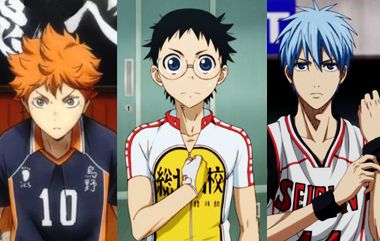
 In the past I have talked about my theory of the two major categories of shonen fighting protagonists. I call them the Shonen Hero and the Seinen Hero. The Shonen Hero is what you very stereotypically think of with the genre. They are passionate and ambitious but have almost no experience. Therefore everything must be explained to them but they have an endless pool of potential to draw from and so they learn powerful techniques almost instantly. In contrast the Seinen Hero while still in a shonen magazine feels like a character taken from a series for older men. These character usually have years of training under their belt and tend to be more stoic and coldly driven. They are not perfect but they are 80% of the way to maximum. Usually their journey is about perfecting their skills, adding to their already powerful repertoire, or learning to work with a team. Not every shonen fighting protagonists falls into these two categories. There are some notable exceptions or combinations of the two but nine times out of ten your hero will fall into one of these categories. Naruto and Simon are your stereotypical Shonen Heroes while Luffy and Kenshiro are your stereotypical Seinen Hero.
Until recently I would have told you that sports anime pretty much follows that same formula to the T. The main character who joins the team is either the fresh young buck with no skills but an insane potential and a killer move or a cold ace with the crazy skills but with a major flaw. Like the shonen fighting protagonist there is the very rare exception to this rule but overall they are just as easy to divide into the two camps. The thing is the last few shows we have been watching have added a third archetype that I have never really seen be this predominant until now. They are the Super Support Protagonist.
The thing is this character is a mixture of the Shonen Hero and the Seinen Hero but with some added elements that make them more than just a blend of the other two. Usually the protagonist is the star of the team. They are the character who scores the most points, gets all the important points, and draws all the attention, love, and hate to themselves. The Super Support Protagonist might do that on occasion but most of the time they are there so all the other characters can shine or work together better. They usually have some technique or place in the team that helps everyone around them. If the Shonen Hero is the fighter, and the Seinen Hero is the wizard, then the Super Support Protagonist in the bard. In years past they would have usually been secondary or tertiary character on a team. Someone who might get an episode of two in the spotlight but no more than that. But apparently this Super Support Protagonist is appearing more and more as the lead in modern sports shows.
 Kuroko’s Basketball, Yowamushi Pedal, and Haikyu!! have enjoyed immense popularity recently. It may come as no surprise then that they do share some similar qualities.
No longer the stoic genius or the hotblooded ace; more recent heroes of sports anime are the guys who would have been side characters in the past. And it isn’t just their personalities that mark them as previous side characters, but their roles on their teams, too.
Kuroko’s central role is passing the ball. Hinata is the decoy of the court. Onoda pulls the other members along so they can conserve their strength. All of these characters act in the best interest for the rest of the team. Each of them is integral to the team succeeding despite them not necessarily having the role that gets the most outside attention or glory. So intentionally or not, all of these titles end up emphasizing how important a cohesive team is maybe more so than when the central figure is the ace.
Kuroko, Onoda, and Hinata all feel like they occupy the same spot in the team: the soul.
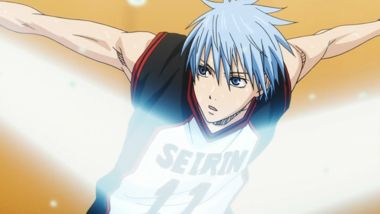
Kuroko Tetsuya is probably the first place we noticed this trend. When Kuroko’s Basketball came out it really stood out because Kuroko did not feel like your standard lead. If anything Taiga Kagami feels like he should be the main character. Kagami is the guy who often gets the game winning baskets, he is the one who is crazy powerful and feared by other teams, and is just overwhelming powerhouse. Kagami jumps like a kangaroo while Kuroko could not dunk without the help of a ladder. If anything Kagami seems to be there to fill the desire for a Seinen Hero character in the show for anyone who can’t full jive with a Super Support Protagonist. But in the end while Kagami is certainly a character with a central focus the show’s core is Kuroko. The series is named after him after all.
Kuroko almost never scores any baskets let alone game winning ones. He can’t really shoot. In fact one of the main plot points is him getting to the point where he is merely poor at shooting as opposed to absolutely dreadful. His dribbling, speed, defense, and stamina are equally unremarkable. He really only has two trumps cards. He is near invisible on the court because most people forget to pay attention to him because he lacks presence. To capitalize on that the one skill he really has is passing which he has does remarkably well. That means he can often get the ball to where it needs to go. This lets him ses up other for glory more than directly garnering it for himself.
That said it is not like he is Cat Guy. Kuroko is often one of the keys to victory in most matches. He will set up Kagami or Junpei Hyuga to get the baskets they need to win in a way that only he can do. But his ability not only lets his team score more it also lets him prevent the other team from pulling ahead by the use of vital steals and interceptions. Even more blatant forms of misdirection like the Vanishing Drive or Phantom Shot don’t win games by themselves. They instead usually get the team to a place where they can win using their skills as opposed to being ultimate road to victory. Much like his namesake Kuroko works seemingly invisibly to make everything work despite being in the center stage.
Kuroko’s Basketball was a big surprise to me. I didn’t know what to expect so a quiet, mild character like Kuroko, the nearly invisible “phantom sixth man” of the Generation of Miracles, was a nice change of pace. And Kuroko isn’t just, say, suppressing his true nature in a “he was hiding his past as a devastating monster which led to death and destruction so now he must hold it back except in times of true need” kind of way either.
Still Kuroko is a genius-type, just not the way you’d usually expect, and he is such a genius that many times only the other geniuses can tell how good he is.
Kuroko’s desire is to create a truly united team and prove that that is the pinnacle of the sport; as opposed to relying on individual strong players. In most instances, he doesn’t seem concerned about himself at all which is shocking. And when he does improve or change something in his game, it feels almost altruistic in nature. Kuroko is the character on this list most dedicated to the idea of team.
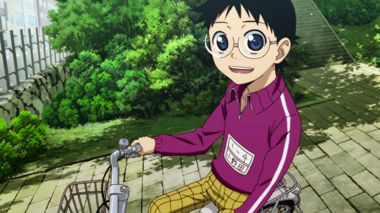
Yowamushi Pedal is a brilliant example of the Super Support Protagonist phenomenon because you can see all three type of sports stars right next to each other. While Onoda is the primary viewpoint and a Super Support Protagonist you also have Naruko Shoukichi as a stereotypical Shonen Hero and Imaizumi Shunsuke as the quintessential Seinen Hero. But in the end Onoda is the main character. The thing about Yowamushi Pedal is it shows how the Super Support Protagonist can buoy up the Shonen Hero, the Seinen Hero, or even the Sempai.
When Onoda starts the series he has lots of cycling experience it is just that he has never formally trained for competitive racing. This could easily set him up to be Shonen Hero or the Seinen Hero. His raw but self-taught power could make him the Shonen Hero and his years of experience could make him a rough Takumi Fujiwara styled Seinen Hero. But those two positions will eventually be far better filled by his teammates. Instead his perfect cadence lets him pull along other characters so they can shine during their chosen part of the course and rest when they need to reverse their strength. His specialty is uphill climbs which are the perfect place for sprinters and all-rounders to eat up energy so they can’t be at their best during the crucial last leg of the race. Onoda is able to carry everyone during the toughest parts so the whole team can be their best. He is also vital for saving teammates that have fallen behind (even when the person who has fallen behind is himself.)
But he is more than just the physical backbone of the team. He is also the emotional foundation of the team. Often times the Souhoku High School Bicycle Club can be in a mental place where victory seems impossible (especially when Midousuji is involved) but it is always Onoda who has that rock solid optimism that prevents then from falling into despair. Imaizumi is far too stoic and introspective to take that role while Naruko is a bit to brash and selfish to be that anchor as well. It is Onoda’s magnanimous attitude and cheerful smile that allows the rest of the team to take sustenance from his support when they need it. N0 one else on the team could have pulled Tadokoro Jin so far or saved Imaizumi from his demons.
Onoda is not the type to be the first to cross the finish line and grab the glory. He is not even the type to be the first to cross the line during the up hill climb section of the race. He is the one to make sure someone else is poised to be their best mentally and physically when they have the chance to cross that finish line.
Onoda is not a character I really imaged as staring in a sports series: an otaku through and through. And he hangs on to that hobby, too, he isn’t trying to be someone else. It is nice to see a character that can be interested in geekery and sports (it happens, ya’ll!).
Even more importantly, Onoda brings a bit of fan-boy into the team. What I mean by that is, he is enthralled by the talents of the rest of the cycling team and thus believes in each of them wholeheartedly. So when they place responsibility on Onoda or ask something of him, he is moved to push himself that much harder. They then are pushed along by Onoda in this amazing feedback loop.
Onoda is that rare guy who can’t understand or fully acknowledge his own abilities. That humbleness, unfeigned, is really refreshing and never comes off as frustrating.
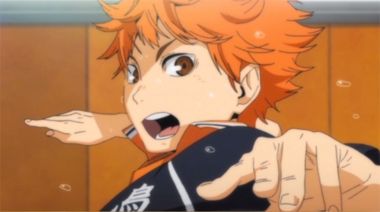
In any other anime Shouyou Hinata would have the role of ace. The power player position is a great place for a Shonen Hero to shine brighter than everyone else. Conversely the Seinen Hero gets to use the maximum amount of strategy and experience as the team’s main setter. As the decoy Hinata does not really fill any of those roles. He is scoring more than the average Super Support Protagonist but at the same time for every time he scores a point with his insanely fast quick set with Kageyama there are two other times when he is just there to fake out the other team so someone else can score. Also just due to the nature of volleyball and the rotation of players there will be a decent amount of time where Hinata is not on the court and must instead cheer on his teammates while the becomes the stars.
Hinata is probably the character who comes closest to just being a Shonen Hero but in that regard he is clearly outshone by Yu Nishinoya whose position as libero lets him constantly protect the court like a stalwart guardian. Also Nishinoya fits the insanely passionate short spunky guy archetype to the T. Of course with this methodical precision and the need to learn to work with a team Kageyama has the Seinen Hero spot locked down. So Hinata falls into the third position but he can fill the power player spot of Shonen Hero if it is needed.
If nothing else Hinata is the guy who wants to be the Shonen Hero but is equally content to be the Super Support Protagonist if that is what the teams need him to be. He might never be the ace but he will always be a vital piece of the team’s key to victory.
Hinata is a passionate little guy wishing for a starring role and I’d actually vote him “most likely to succeed” among the characters here. He is even chasing after a player called The Little Giant who was also a shorter volleyball player.
What sets Hinata apart is that he doesn’t have the confidence, bravado, that often accompanies that fired up attitude. He gets nervous, even to the point of sickness sometimes. He is always willing to go the extra mile in training without any expectation.
In some ways, Hinata is a little like Kuroko and a little like Onoda. He is a decoy on the court and he is a fan of all the member of his team. But you’d never call Hinata a shy guy. Hinata contains an utterly buoyant personality which he pairs with a big grin that never fails to perk up his teammates.
It is important to note that Super Support Protagonist is not the most versatile type of protagonist. The Shonen Hero and Seinen Hero can be dropped into any type of show. The Super Support Protagonist can only exist in shows that have team sports. That means you can’t have a Super Support Protagonist in a boxing or judo series. The Super Support Protagonist needs a team to play off of. You will even notice that the Super Support Protagonist usually has a secondary protagonist cut from the Shonen and Seinen Hero cloth. But the Super Support Protagonist allow a very different type of story to be told when that team dynamic exists.
All too often when you have the Shonen and Seinen Hero they become the be all and end all of the story. 90% of the story will begin to revolve around the protagonist. Every game is won by the main character and the supporting cast is mostly there to support that one player. Individual characters might get the occasion chance to shine but it is more an unexpected cure ball to the formula than something that happens on a regular basis. The Super Support Protagonist lets everyone have a chance to shine. This lets the rest of the cast step more into the spotlight and have their stories feel more like main chapters as opposed to side story pieces. Each member of the team becomes part of the ensemble cast and not just the chorus of praise for the hero.
Plus, they just change-up the formula a bit in a genre where it is all to easy to feel like you have seen this story before with a different set of actors.
You may also be thinking we have forgotten a big title on this list: Free! And you’d be right, it is certainly a series that has garnered a ton of fans and does emphasize the importance of the team over the individual. However, the lead characters (Haru and Rin), funnily enough, are dead on shonen sports types. Free!’s greatness I think is in how it takes those sports roles and personalities and pushes them to extremes. It probably deserves its own conversation.
With Kuroko, Onoda, and Hinata, they let their teammates shine brighter without diminishing their importance on the team or their role as the main character. And I think that is where the strength of each title lies.
We wouldn’t be foolish enough to suggest there have never been characters like these before. But to have so many new titles which focus on different personalities and positions on teams feels rather like they are ushering in a new era of shonen sports.
As a final note: I do find myself rather curious to know if these new leads are your favorite character in their respective series or not? I am thrilled to have different people taking center stage, but I must admit that other characters are my favorites.
Filed under: Anime, Character Studies, Editorials Tagged: Haikyu!!, Kuroko's Basketball, Yowamushi Pedal
10 Sep 14:20


10 Birds Your Grandkids May Never See, Thanks to Climate Change
by Chris Mooney
Long before modern times, human beings caused great extinctions of charismatic animals, including many species of birds. From the gigantic Moas of New Zealand (the Polynesians killed them off in about 100 years after arriving), to the Dodo and Passenger Pigeon, we made nature poorer, throwing away biological diversity and unique products of evolution that can never be replaced.
But it looks like all of that may have been a meager preview to the consequences of climate change for the diversity of birds in our modern world. Such is the upshot of a vast new study by the Audubon Society's scientists, which overall finds that by the end of the century, more than half of all North American bird species will be "threatened" by climate change. (The study did not examine the nearly 10,000 other bird species around the world, but there's no reason to think the punchline for them would be very different.)
There are currently 588 North American bird species, and the Audubon study projected that out of those, 314 will lose "more than 50 percent of their current climatic range by 2080," and another 126—the "climate endangered" species—will lose that much by as soon as 2050. Losing habitat is, of course, not the same as extinction. Some of these species enjoy legal protections already, and some live on other continents, too. And some will find new habitats. But clearly, the loss of habitat is a major threat to a species.
Here are 10 birds classified as "climate endangered" by the report:
1. Piping Plover

Projection: For this cute shorebird, "only 38 percent of its original non-breeding range" will remain by 2080. (US Geological Survey/Flickr.)
2. Hermit Warbler
Projection: Under climate change, this West Coast warbler "may be forced up the mountains to follow ideal climate, and it can't ascend forever." (US Fish and Wildlife Service/Flickr.)
3. Golden Eagle
Projection: This powerful raptor will lose "41 percent of breeding range and 16 percent of non-breeding range" by 2080. (USFWS Mountain-Prairie/Flickr.)
4. Burrowing Owl
Projection: By 2080, this zany owl could lose "77 percent of its current breeding range"! (travelwayoflife/Wikimedia Commons.)
5. Common Loon
Projection: According to Audubon, it "looks all but certain that Minnesota will lose its iconic loons in summer by the end of the century." (Jackanapes/Flickr.)
6. Boreal Chickadee
Projection: This cute, frenetic forest bird will be "squeezed farther and farther north in a region already under pressure from timbering." (David Mitchell/Wikimedia Commons.)
7. Prairie Falcon
Projection: A stunning three-quarters loss of summer range by 2080. (Alan Vernon/Wikimedia Commons.)
8. Brown Pelican
Projection: This gigantic bird bounced back from DDT, but now climate change may reduce its winter range by 54 percent. (Jim Mullhaupt/Flickr.)
9. Greater Sage Grouse
Projection: By 2080, climate change could decimate the range of this amazing western species, reducing it by 71 percent in breeding season and 92 percent in winter. (Fish and Wildlife Service Pacific Southwest Region/Flickr.)
10. Bald Eagle
Projection: Only 26 percent of its summer breeding range is expected to remain by 2080, though climate change may also create new habitats. (Ingrid Taylar/Flickr.)
10 Sep 13:44

The Gulf Is Still So Far From Recovering. Just Ask This Oyster Farmer.
by Tim McDonnell
John Tesvich slices open oysters on the deck of his boat, the "Croatian Pride". Tim McDonnell/Climate Desk
John Tesvich is a fourth-generation oyster farmer in Empire, a tiny Gulf Coast enclave south of New Orleans. He's spent his life working in the rich oyster beds here, the most productive in the nation, and has weathered his share of storms: During Hurricane Katrina, his house ended up under 17 feet of water. But last week, as he navigated his 40-foot oyster boat out into open water, he admitted that the turmoil this region has faced in the last decade was beginning to wear him down.
"A lot has changed over the years," he said. "It seems like one crisis after another sometimes."
One crisis was particularly damaging to Tesvich's industry: The 2010 Deepwater Horizon oil spill. The fourth anniversary of the busted undersea well's sealing (after it gushed crude into the Gulf for nearly five months) is coming up next week, and Tesvich, who also chairs the oyster industry's main statewide lobbying group, says his crop is still struggling to rebound.
Tesvich got some good news last week, when a federal judge in New Orleans found that BP's "willful misconduct" and "gross negligence" had been the principle causes of the spill, a ruling that could eventually force BP to pay billions for ecological restoration in the Gulf. But for oystermen here, whose day-to-day income depends on these reefs, those dollars still seem very far away.
10 Sep 12:47
Attack on Titan Manga Wins 2014 Harvey Award
Hajime Isayama's manga wins Best American Edition of Foreign Material category
Dsider likes this
09 Sep 20:40

French poster of Le Chant de la Mer (Song of the Sea) directed...
French poster of Le Chant de la Mer (Song of the Sea) directed by Tomm Moore (Secret of Kells).
09 Sep 20:34
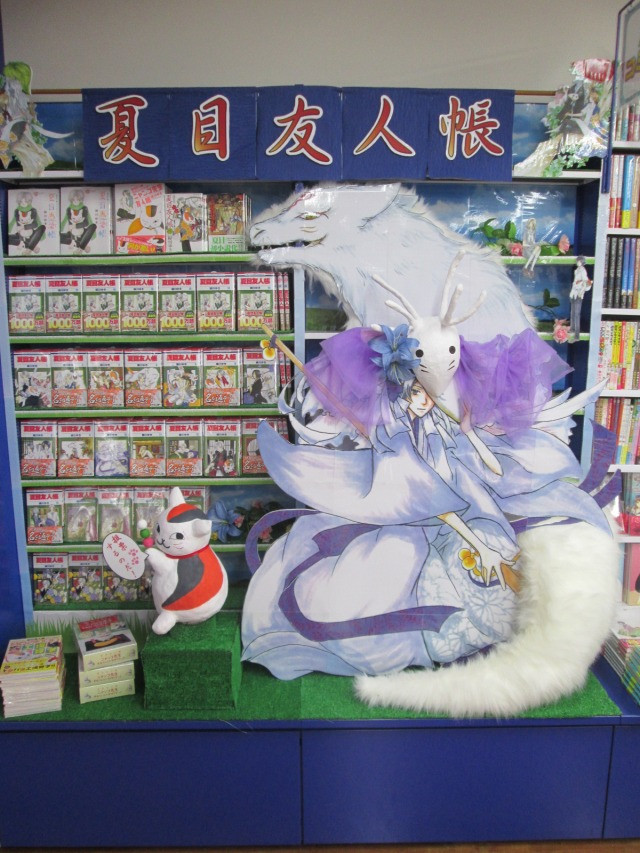
Reader Cosplay Featured in "Natsume's Book of Friends" Promotion
by Scott Green
This weekend, volume 18 of Yuki Midorikawa's Natsume's Book of Friends manga is being released, along with a felt craft book and a Nyanko-sensei guided book of factory tours. Promoting these, and celebrating 10 millions copies sold, a series of posters featuring fans cosplaying as the series cast will decorate JR Shinjuku Station East Exit Metro Promenade over the next week.
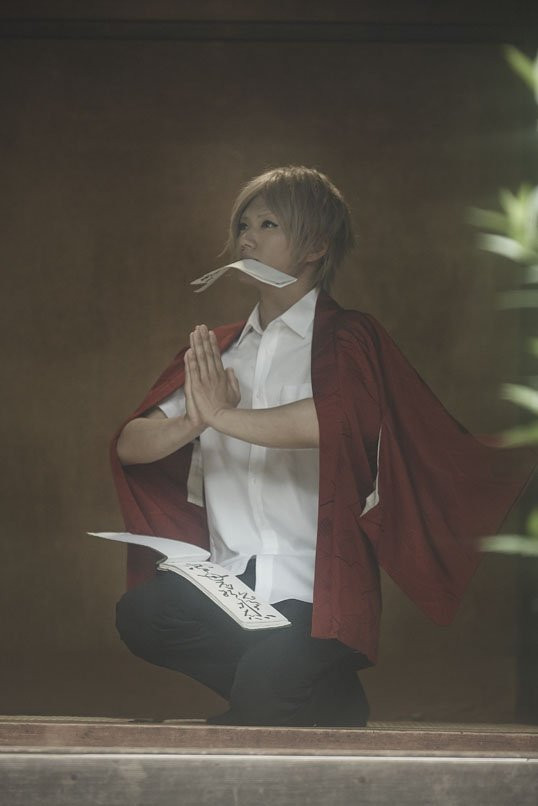






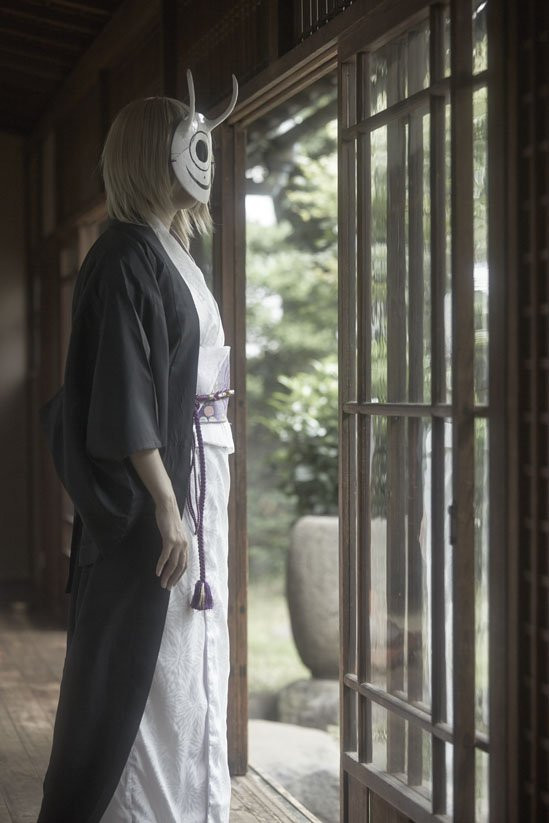


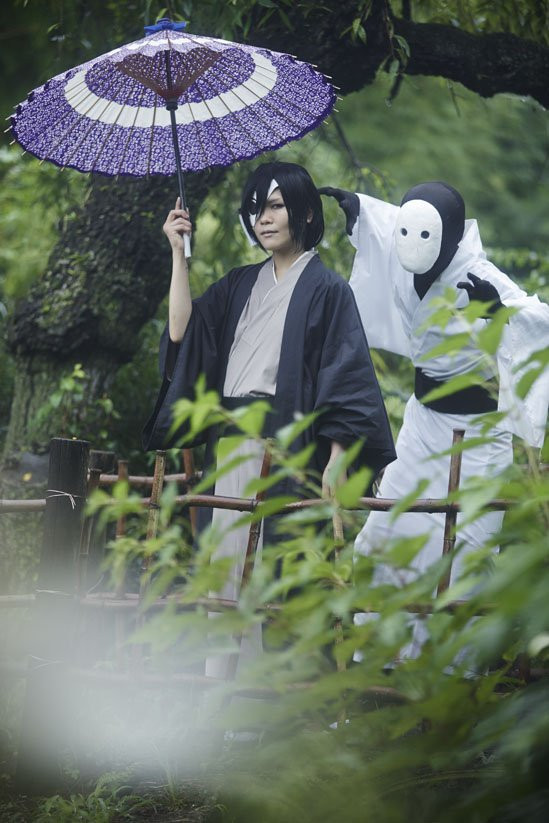


You can also check out entries in Natalie's bookstore display design contest here
------
Scott Green is editor and reporter for anime and manga at geek entertainment site Ain't It Cool News. Follow him on Twitter at @aicnanime.
kate likes this
09 Sep 20:30

White House Hosts First-Ever 'White House Game Jam'
by james_fudge
Over the weekend the White House hosted the White House Game Jam, where game creators in the serious games and "Games for Change" space took part to show "the beneficial properties of games."
09 Sep 20:29

Netflix Joins Fight for the Future's Net Neutrality Protest Sept. 10
by james_fudge
In case you missed it, video streaming service Netflix will be taking part in Fight for the Future's "Internet Slowdown" initiative to protest the FCC's proposed changes to the Open Internet Order (also known as net neutrality).
09 Sep 20:09

Client: We are having an internal argument I need you to solve. Which is correct: 3 month battery...
Client: We are having an internal argument I need you to solve. Which is correct: 3 month battery life or 3 months battery life?
Me: 3-month battery life.
Client: Oh. So if I don’t use a hyphen, then it’s months?
Me: No. The only correct use is 3-month battery life.
Client: When can I say months?
Me: When used like this: “the battery life is 3 months.”
Client: Is this correct? 3 month(s).
Me: No. 3-month battery life is the only correct use.
Client: Well, I think I’ll just use 3 months battery life. I was just checking with you to make sure I wasn’t horribly wrong.
tanner.jon likes this


09 Sep 19:59


DuckTales Opening Recreated With Actual Ducks, Amazing
by John Frost

Anyone born after 1990 may not get this. But this video with actual ducks recreating the opening from Disney Saturday Morning’s DuckTales is fantastic!
I’m surprised no one thought to do this before…
DuckTales debuted in 1987 and featured Scrooge McDuck, who doesn’t get enough love in the theme parks if you ask me, with his nephews Huey, Dewey, and Louie and sometimes Donald as well (but really only in a few episodes). Plus a host of other guest characters. They have adventures, fight bad guys, and always comeback to Duckburg. Of course, the series relied heavily on the comic book series created by Carl Barks. The final episode aired in 1990, much to the sadness of Disney fans of all ages.
Join me below the jump where there’s an amazing one man vocal harmony DuckTales theme song cover:
Previously: Postmodern Jukebox version of DuckTales part of Slow Morning Jams.
DuckTales Opening Recreated With Actual Ducks, Amazing originally posted on
The Disney Blog - Disney News and Information -- by fans, for fans . If you're reading this on a different site, please click the above link to read the original story. Thank you.
Lostphrack likes this
09 Sep 19:44


Aldnoah.Zero Arrogance
by sdshamshel
Most of the fights in the mecha anime Aldnoah.Zero follow a roughly similar pattern: In a reversal of the typical structure of giant robot combat, a technologically superior and seemingly invincible enemy is overcome by the tactics and ingenuity of the protagonist Inaho and his allies without the need of secret prototype weapons or trump cards. What I think makes these battles and the opponents’ eventual defeats work really well both narratively and thematically is that their downfall is usually based on them being blinded by arrogance.
One might argue that this is unrealistic, or more specifically that an opponent with such an edge in terms of firepower would likely not have overlooked some of the weaknesses that end up being exploited by Inaho. However, given the culture of the Vers Empire, the feudalistic space culture that attacks the Earth, I find that it makes a lot of sense. The subjects of the Vers Empire, especially their “Orbital Knights,” have been raised to believe that they are inherently better than people from Earth, and that this superiority derives from their discovery and use of a powerful technology called the “Aldnoah Drive.” While from our perspective it’s easy to point out that the “inherent” superiority of the Vers is anything but because it derives from an outside source in the Aldnoah Drive, actually history has shown that similar reasoning, as strangely illogical as it can seem, has often been used to justify similar mindsets or even forms of racism.
Consider the hypothetical example of a nation of people who believe they are simply better than their neighbors because they were born on land that was more arable. Although one could easily say that this is just a matter of luck or probability to an extent, it wouldn’t seem that strange for them to believe that they were somehow blessed by God or some other great power, and that they deserve this blessing on some fundamental level. It’s circular reasoning to be sure, but that doesn’t necessarily stop anyone from believing it.
Thus, the Orbital Knights believe that they are inherently superior in every way over the Terrans, therefore they receive the more powerful technology, therefore they are inherently superior in every way over the Terrans. They buy so much into not only the idea that the people of Earth are too stupid to figure anything out, but that they actually have no Achilles’ heels to exploit in the first place. With nothing to challenge them and without even acknowledging that they may have overlooked something in their robots (or “Kataphrakts” as Aldnoah.Zero calls them), potentially preventable defeats are addressed too late.
09 Sep 19:38

I work as an in-house graphic designer. I build ads and marketing campaigns using resources from our...
I work as an in-house graphic designer. I build ads and marketing campaigns using resources from our vendors. The client, in this case, is an internationally famous candy maker.
Me: The image you sent me is really low resolution. Can you please provide me with a hi-res jpeg or .eps?
(I receive the same 72dpi image again)
Me: This is still very low resolution. Your ad space is rather large and this will look like a postage stamp on a billboard. Please send a larger image.
Client: I’m not sure if you’re familiar with MS Word, but if you put the jpeg in there, you can just click the corners of the image and make it bigger.
Well, I guess I can’t argue with that…
09 Sep 19:36
Here is an upcoming shirt design! Oft-requested from The Black...
Here is an upcoming shirt design! Oft-requested from The Black Prince comic. I’ll let you know when it’s available! Merchandise train keeps rolling, toot toot
09 Sep 19:34
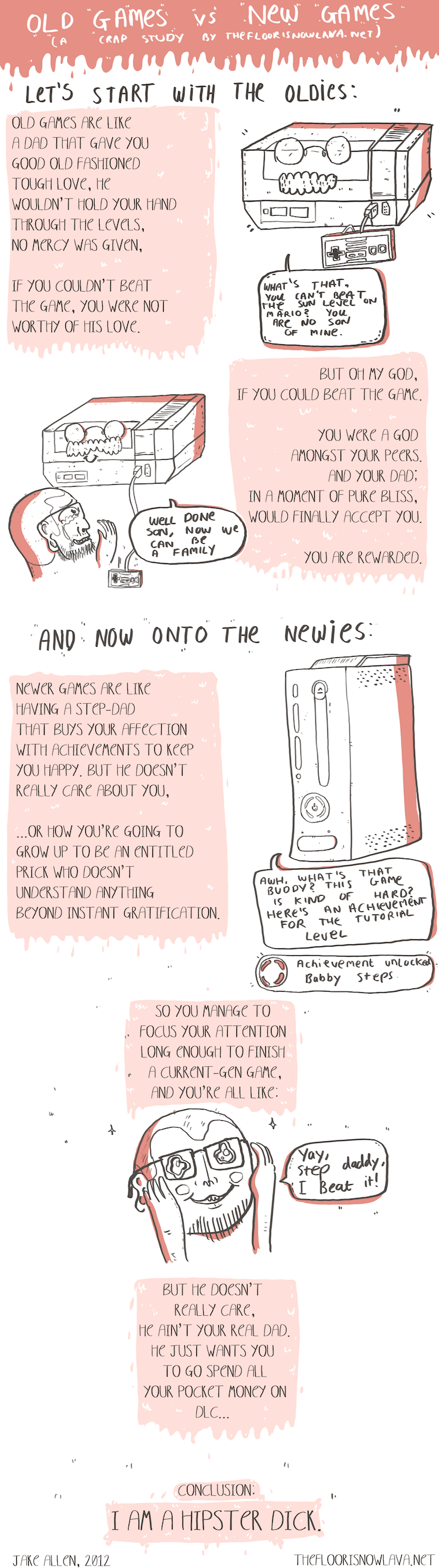 The major difference between classic and modern gaming...besides Dark Souls, of course.
See more: Old Games vs. New Games


Old Games vs. New Games
by Steve Napierski
kateThe conclusion is key lol
The major difference between classic and modern gaming...besides Dark Souls, of course.source: THEFLOORISNOWLAVA
See more: Old Games vs. New Games
09 Sep 15:20


These Women Are the NRA's Worst Nightmare
by Mark Follman
kateShannon Watts having worked for Monsanto is pretty damning as they are one of the worst companies in operation in the world. But she doesn't work there anymore, I'll look at that as her realizing they are horrific.
A march across the Brooklyn Bridge, June 2014 John Minchillo/AP
Kelly Bernado woke to the headlines after working her late shift as an ER nurse in Seattle, and she cried through the day and into the next, the shooting at her own son's high school a year before haunting her all over again. In Houston the morning after it happened, Kellye Burke was on her way to pick up a Christmas tree, her six-year-old son nestled in his car seat, when she saw the large LED road sign publicizing a gun show and felt the urge to scream. In Brooklyn, Kim Russell felt a surge of adrenaline when she heard the news; after choking back the nausea, she began agonizing about what her first-grader would hear at school. She'd never told her daughter about the time when a robber shot her friend to death and wounded her, then pressed the cold muzzle against her forehead as she begged for her life.
At home in an Indianapolis suburb the morning following the massacre at Sandy Hook Elementary, Shannon Watts, a 41-year-old former public relations executive and mother of five, created a Facebook page calling for a march on the nation's capital: "Change will require action by angry Americans outside of Washington, D.C. Join us—we will need strength in numbers against a resourceful, powerful and intransigent gun lobby." The seed for Moms Demand Action for Gun Sense in America—today a national organization backed by nearly 200,000 members and millions of dollars—had been planted. "I started this page because, as a mom, I can no longer sit on the sidelines. I am too sad and too angry," Watts wrote. "Don't let anyone tell you we can't talk about this tragedy now—they said the same after Virginia Tech, Gabby Giffords, and Aurora. The time is now."
Three days later, five women convened in Brooklyn for a Skype call with Watts and formed the group's first chapter. They felt that what happened in Newtown was like another 9/11. None of the women had experience as political activists, but they did remember Mothers Against Drunk Driving, the pioneering grassroots movement of the 1980s that rewrote laws and battled cultural resignation about alcohol-related traffic deaths. They also realized they had an asset that MADD organizers could only have dreamed of: social media. As word of a new effort to confront gun violence sprang up in Facebook feeds, offers flooded in to help launch more chapters, from Virginia and Texas to Kentucky and Colorado.
Kim Russell, Lucia McBath, and Erica Lafferty during the NRA's 2014 annual meeting Everytown for Gun Safety
Today, Moms Demand Action has teams on the ground in all 50 states, elbowing their way into policy hearings and working to motivate "gun sense voters" fed up with the carnage. In less than two years, the organization has compelled more than a half-dozen national restaurant chains, internet companies, and retailers to take a stand against lax gun laws, and has joined forces with one of the nation's most deep-pocketed political operators to hold elected leaders to account. Many groups have taken on the nation's 30,000 annual firearm deaths—and this latest effort bears resemblance to the Million Mom March in the wake of the 1999 Columbine shooting, whose organizers also sought to be "a MADD for guns." But no group has risen so far, so fast, influencing laws, rattling major corporations, and provoking vicious responses from hardcore gun rights activists. With its ambition to turn out a million voters for the November midterms, Moms Demand Action may be emerging as a potent threat to the National Rifle Association's three-decade-long stranglehold on gun politics.
If stricter national gun laws seemed imminent in the aftermath of Sandy Hook, just four months later the popular narrative was that any chance for change had been deep-sixed. A majority in the US Senate approved universal background checks for gun buyers, but the bill fell a few votes short of the 60 needed to overcome a Republican filibuster. Once again, the NRA had won.
But Moms Demand Action took the fight to another arena—public opinion, with a special focus on brand-conscious corporate America. After Sandy Hook, Second Amendment activists had stepped up a tradition of openly carrying firearms into Starbucks stores ("open carry" is legal to varying degrees in all but a few states), so in May 2013, Moms launched a campaign urging members to "#SkipStarbucks" on Saturdays and post pictures of themselves having coffee elsewhere. Watts and Kate Beck, a Moms leader in Starbucks' hometown of Seattle, published a scathing op-ed on CNN.com calling out the company's inaction and citing an accidental shooting at a Starbucks in Florida and a rally at another in South Dakota that drew 60 armed activists. "As mothers," they said, "we wonder why the company is willing to put children and families in so much danger. Nobody needs to be armed to get a cup of coffee."
When CEO Howard Schultz announced in mid-September that firearms were no longer welcome on Starbucks' premises, he declined to discuss the steady pressure applied by Moms, whose 54 Facebook posts over three and a half months had reached more than 5.5 million people and spawned a 40,000-signature petition.
Not long after, dozens of men carrying semi-automatic rifles descended on a Dallas restaurant where four Moms members were having lunch. The women took pictures and turned it into a national news story. It was "a public relations disaster" for the open-carry activists, says veteran Republican strategist and gun owner Mark McKinnon. "Lesson learned? Moms trump guns."
Social media had helped set off a tectonic shift. "Now there's this passionate community of people who can instantly be in touch in a very public and affirming way," says Kristin Goss, a political scientist and author of Disarmed: The Missing Movement for Gun Control in America. "That's a very new thing for this cause." Second Amendment activists have long relied on gun shows, stores, and ranges to rally their faithful, she says, "but for supporters of gun regulations, what's that space—the emergency room? It's Facebook."
Shannon Watts Chang W. Lee/New York Times/Redux
But a few high-profile victories and rapid growth had brought an age-old problem: Moms Demand Action struggled to raise enough money to sustain a corps of national and regional leaders. In summer 2013, Watts met with Mark Glaze, head of Michael Bloomberg's Mayors Against Illegal Guns, in Montana. They talked at length as they rode a mountain gondola beneath the expansive vistas near Big Sky, forging a plan to build the furthest-reaching operation yet to go toe-to-toe with the NRA. Bloomberg's group had what Moms needed—not just big funds, but also an expert policy shop and a sprawling political network—but it lacked what Moms had in spades: grassroots firepower and an appealing image. As one political operative who has worked on the guns issue put it, "If you were desperately trying to rebrand your organization because everybody hates you for taking their cigarettes and sodas and guns, wouldn't you leap at the moms?"
As the nation prepared to light anniversary candles for the 20 children and six educators of Sandy Hook in December, the two groups announced their combined operation: Everytown for Gun Safety, backed by a whopping $50 million from Bloomberg, who vowed to double the NRA's political spending in 2014. "We were the perfect solution to each other's problems," Glaze, who was Everytown's executive director until this June, told me. Momentum toward reform could have vanished after the background check bill went nowhere, he notes, "as often happens when you sort of lose with your big moment and your advocates in the field fade away. We were determined not to let that happen."
There seemed a snowball's chance that Congress would take on guns again, but Moms had other plans. Starting in January it campaigned against Facebook—where people regularly advertise guns for sale and can easily circumvent background checks for buyers—soon prompting the site to introduce better protections for minors and crack down on potentially illegal sales. In the spring, when Texas open-carry activists showed up armed at national restaurant chains in Dallas and San Antonio, Moms responded with a volley of press appearances, petition drives, photo memes, and hashtags. Guys flaunting loaded assault rifles at Chipotle? Time for #BurritosNotBullets. At Chili's? #RibsNotRifles. At Sonic, America's Drive-In? #ShakesNotShotguns. It took less than two weeks for Chili's and Sonic to officially reject firearms at their eateries; in Chipotle's case, just 48 hours in the crosshairs was enough.
More MoJo reporting on the Open Carry movement
- Fearing Rising Backlash, NRA Urges Gun Activists to Stand Down
- Spitting, Stalking, Rape Threats: How Gun Extremists Target Women
- Gun Activists With Assault Rifles Harass Marine Vet on Memorial Day
- Target Gets Drawn Into Gun Rights Battle
- Target Remains in Crosshairs of Texas Gun Fight
- Gun Activists Flaunting Assault Rifles Get Booted From Chili's and Sonic
Moms made Target the next battleground, gathering images posted by open-carry activists who'd toted their AR-15s in the toy aisles and declared the retailer "very 2A friendly." With Moms' hashtag activism plugged into Everytown's political machinery and mailing list of 1.5 million names, Target headquarters in Minneapolis got hit with 11,000 phone calls and 390,000 petition signatures within a month. Moms also called out Target's new strategic partner The Honest Company (the baby products line from young mom Jessica Alba), staged "stroller jams" at Target stores in Texas and Virginia, and protested outside the company's annual shareholder meeting.
Just before July Fourth, the nation's fourth-largest retailer announced that firearms were no longer welcome in its 1,789 stores.
Last week, Moms launched a six-figure ad campaign targeting Kroger over its gun policy, and on Monday, Panera Bread—which approached Moms months ago to discuss the issue—announced that it does not want firearms brought into its stores.
Forcing corporations to take a stand against gun activists is no small feat, says Glaze, an experienced Washington lobbyist. "Changes to the culture are more important than legal changes in some ways," he says. "This sends a message that having guns everywhere makes people uncomfortable, which goes directly against the gun lobby's agenda—to normalize having them everywhere."
"As each fresh shooting Horror is met by the same inaction in Congress, a roiling frustration may be awakening an army of moms who see themselves as outsiders armed only with their clout as voters and agitators." So wrote a reporter for Time magazine—in May 2000, on the eve of the Million Mom March on Washington. The parallels between that grassroots movement and today's are striking. The Columbine massacre in April 1999 had gripped the nation, but it was a rampage at a Jewish community center in Los Angeles four months later that set off the movement, after Donna Dees-Thomases—a 42-year-old mom and part-time corporate publicist living in New Jersey—saw news footage of a daisy chain of children being led away from the building. "Think about what those kids saw," Dees-Thomases said in the Los Angeles Times about the attack that left five seriously wounded, including three kindergarten-age boys. (All the victims survived, though the gunman killed a mail carrier elsewhere before the rampage ended.) "I thought, 'Why haven't we done anything?'"
The method then was email, internet newsgroups, and an 800 number listed in newspaper ads; soon the Million Mom March had chapters all over the country. They campaigned for "common sense gun laws," and their march on Washington, which drew roughly three-quarters of a million people, included a stroller parade. They soon merged with the long-established Brady Campaign to Prevent Gun Violence and fought to shape policy at the state and local levels as well.
But where the Million Mom March was limited by its focus on legislation, its agenda soon eclipsed by the election of George W. Bush, and then 9/11, Moms Demand Action has gone a different route. "They've been incredibly creative with campaigns that don't rely upon elected officials, and finding alternative pathways to influence," says Goss, the political scientist. They also have the opportunity of heightened public awareness: A spate of mass shootings beginning with Virginia Tech in 2007, Goss says, has given rise to "a critical mass" of survivors and family members devoted to keeping gun violence at the forefront.
And Moms has actively recruited them. "One of the real lessons of MADD is that people understand tragedy on a human scale," says Chuck Hurley, its CEO from 2005 to 2010. "Everybody could understand Candy Lightner and her daughter being killed," he says, referring to the organization's founder and her 13-year-old, who was struck by a drunk driver in 1980. "There's no way people can understand 30,000 firearm deaths. The bigger the number, the less real it is."
"I think we're absolutely key," Lucia McBath told me in April, outside the packed Indianapolis hotel conference room where a delegation from Moms and Everytown was holding a press conference against the backdrop of the NRA annual convention just a few blocks away. McBath, whose teenage son, Jordan Davis, was gunned down in 2012 in a dispute over loud music by a man citing Florida's broad self-defense laws, speaks softly but emphatically. "Mothers know how to get things done," she continued, explaining that they can motivate each other and connect with families in a way no one else can. "A lot of mothers are suffering in this country over the nature of the violence."
McBath has been astonished by the outpouring of support in the wake of her son's death. "I feel like I have a whole nation praying for our family, and I'm deeply humbled by that." A fundamental shift on guns is inevitable, she says. "With the tobacco industry—how many years and how much effort did that take? Or gay rights? To change the culture you have to change the mindset, and that takes time. I know we will succeed."
Erica Lafferty was 27 when her mother, Sandy Hook principal Dawn Hochsprung, was slain confronting Adam Lanza. She took up the cause just three months later. "I could literally hear her voice in my head," Lafferty told me in Indianapolis. "'Child, get out of bed and do something productive.'" After a year of speaking out and lobbying Congress with Mayors Against Illegal Guns, she met Watts—"she just gives me this mom hug"—and it struck her: Had the roles been reversed, had she been killed and her mother become an activist, "she absolutely would not be doing what I'm doing," focusing on politicians in Washington. "She'd be doing what Shannon is doing, gathering all of these moms."
Confronting child gun deaths—especially those stemming from negligent storage or use of firearms, which go unprosecuted in many states—is an obvious imperative for Moms. "It's hugely important to our organization," Watts told me. The strategic promise is also clear: In the early 1980s, most Americans saw drunk-driving deaths as "a problem you had to live with," according to Hurley. Among MADD's crowning achievements was to redefine them as crimes. MADD put relentless pressure not just on political leaders but also on the liquor industry—in no small part by turning a spotlight on kids who had been killed.
Last Christmas Eve in Lancaster, Pennsylvania, a man who'd been "messing with" a 9 mm handgun unintentionally shot and killed his two-month-old daughter as she slept in her glider. The coroner ruled the death a homicide, yet local law enforcement officials said they were undecided about pursuing criminal charges. Typically that might've been the end of it, but Moms Demand Action voiced outrage via social media and the local press. Within two weeks the DA announced plans to prosecute. (He said no outside group influenced his decision.)
"While we fully support the father being held accountable for this crime, we also acknowledge the horrific grief this family is experiencing," Moms Demand Action said after the charges were announced. "We hope their tragedy can serve as an example that encourages others to be more responsible with their firearms." The father later pleaded guilty to involuntary manslaughter and reckless endangerment, which could have brought up to 15 years in prison. He got six years' probation and no jail time.
Moms also drew attention to a case in February in North Carolina, where a three-year-old boy wounded his 17-month-old sister after finding a handgun that their father—who wrote a parenting advice column in a local paper—had left unsecured. (The infant recovered.) "The parents have been punished more than any criminal-justice system can do to them," a captain from the county sheriff's department said soon after the shooting. After Moms swung into action, the father was charged with failure to secure his firearm to protect a minor; his case is pending.
"All too often DAs are loath to get involved, saying a family has suffered enough," Watts says, "especially in states where laws are inadequate." But just as MADD battled to tighten drunk-driving standards and stiffen penalties, Moms is pushing to toughen negligence and child-access prevention laws. One study found that 43 percent of homes with guns and kids have at least one unsecured firearm, and in 2013 at least 52 children killed themselves or others after coming across loaded guns, a Mother Jones investigation showed. "This idea of 'accidental' gun deaths, when something is truly negligence, has to be remedied," Watts says.
Moms Demand Action has also campaigned aggressively for laws to disarm domestic abusers—legislation categorically opposed by the NRA until it quietly began moderating its stance this past year. Every year more than a million women are physically assaulted by an intimate partner, and when a gun is present, the likelihood of their being murdered goes up more than fivefold. Women regularly are shot to death even after obtaining court protection orders against their abusers, according to a New York Times investigation last year. The phenomenon was on grim display again in July, when a man who'd had multiple restraining orders against him shot to death six of his ex-wife's family members in Texas, including four children. Thanks in part to Moms' lobbying, six states have moved on the issue in 2014, including Wisconsin and Louisiana, where bills were signed by conservative governors Scott Walker and Bobby Jindal.
Moms has also chipped away at the status quo by battling state laws that allow people to pack heat in schools or bars and by working with cities to require "social responsibility" measures (such as preventing their products from appearing in video games) from gun manufacturers bidding for lucrative police department contracts.
Universal background checks for gun buyers these are not, acknowledges Mark Glaze. But what's one of the first things you have to do if you want to sustain a movement? "You have to rack up some victories."
It's no coincidence that from the start Moms Demand Action has been armed with effective slogans and well-orchestrated campaigns against corporations: Watts has deep experience—from the other side. Before she decided to become a stay-at-home mom in 2008 when her youngest kids started middle school, she spent a decade as a PR executive for large firms, including Monsanto, where part of her role was to defend their controversial GMO products. She also handled crisis communications for corporations at FleishmanHillard; prior to that she'd been an aide to a Democratic Missouri governor and a speechwriter in the state Legislature.
All of which her detractors have tried to use against her. "Shannon Watts may be a liar, but she's a professional liar," the editor of BearingArms.com scoffed recently about her résumé. Opponents have also invoked her career to declare that she's not a real grassroots mom and denounced her as a "Democratic Party operative." And that's the tame stuff. As Moms' clout has increased, gun rights activists have aggressively targeted its members and leaders, calling them "Bloomberg's whores," "thugs with jugs," and far worse. Watts has been at the receiving end of menacing phone calls and violent images posted online. She gets emails from people threatening to rape and murder her and her children. "They call me every horrific name you've ever heard, and say they hope that if I die it gets televised so they can watch," she told me. (Watts has alerted the FBI to specific threats and has noted publicly that her home is protected by dogs and an alarm system.)
For decades the gun rights movement has relied on aggressive rhetoric—an overbearing government is coming to take your guns—and during the Obama presidency the NRA's leadership has doubled down on stoking anger among its members. But in its most exaggerated form, and directed at a group of sympathetic women, that rage has created a public relations nightmare for the gun lobby—particularly in Texas, where Moms Demand Action has 7,000 active members and counting. In late April, as I first reported in Mother Jones, a veteran NRA board member in Houston confronted the leader of Open Carry Texas, warning that the backlash from flaunting semi-automatic rifles in public was jeopardizing the gun lobby's longtime control of "a massive number of votes" in the Statehouse. The head of Open Carry Texas retorted that the NRA was siding with the "ultraliberal gun-control bullies" of Moms Demand Action. Some members of Open Carry Texas used disturbing intimidation tactics, including hounding a Marine veteran through city streets with assault rifles, shooting up a naked female mannequin, and publicizing a woman's personal information online and exposing her to vicious harassment.
By June, the NRA's lobbying wing made an extraordinary move, denouncing the Texas activists' demonstrations as "foolishness" and "downright weird." But when the enraged activists cut up their membership cards, the NRA beat a fast retreat and apologized.
Whipping up gun rights die-hards in recent years may have helped it sway lawmakers and elections. But in the process, the century-and-a-half-old NRA, once known for championing marksmanship, hunting, and gun safety, has all but ceded that legacy. And while most of its members, polls show, favor gun safety measures such as broader background checks, closing loopholes, and securing guns from the mentally ill, the leadership has stuck to its hardline position.
Key to Moms' message is that being a socially responsible gun owner has nothing to do with being anti-gun. In fact, some of the leadership is deeply experienced with firearms. As an ER nurse in Seattle, Moms regional leader Kelly Bernado has cared for patients physically shattered by gun violence—but as a police officer in the 1990s, she often rolled up on armed suspects and faced split-second decisions with her weapon drawn. "I find the people who carry weapons and think they can be some sort of hero in these situations absolutely ridiculous," she told me. (Though she came "very, very close" in one domestic-violence situation, Bernado never fired on anyone during her career.)
Kellye Burke, who grew up in rural Texas in a family tradition of gun ownership dating back to frontier days, says it was the notorious "good guys with guns" speech from the NRA's Wayne LaPierre one week after Sandy Hook that drove her to action. "It just personified the sickness and the callousness that has overtaken our country," she says. "The fact that they're still not acknowledging that this is an actual problem—it's just zero accountability and zero responsibility. And that trickles all the way down to the individual gun person who thinks, 'I can do whatever I want and basically screw everybody else.'"
The ripple effect that certain gun deaths now have across social media—from Trayvon Martin in Florida to two-year-old Caroline Sparks in Kentucky to college kids in Santa Barbara—echoes their comprehensive toll. Thirty-thousand Americans die from guns every year, but assume that even just five people are severely affected by each person's death and now the damage afflicts 150,000 more Americans annually. Over 10 years, that's a total of 1.8 million people. Now add the number of gunshot victims each year who survive—one Centers for Disease Control and Prevention estimate suggests at least 64,000, not including accidents—and the overall number of Americans directly affected by shootings each decade climbs to 5 million.
"Newtown concentrated the horror in one place," as Judith Palfrey, former president of the American Academy of Pediatrics, told me at the one-year anniversary. Still, polls show that few Americans vote based on gun policy. The most ambitious goal of Everytown, with Moms Demand Action as the vanguard, is to alter that calculus—and they may just have a chance. "Moms are an important and powerful constituency that can uniquely tap into the emotion of the electorate," says GOP strategist McKinnon. "At the very least they can get a hearing. Whether or not they can actually mobilize voters, we don't know yet."
Leaders of the movement preach patience as well as tenacity. "The NRA has been in this for a very long time, so I don't only see this through the lens of 2014," says Howard Wolfson, a top political adviser to Bloomberg. "This is not a one-time electoral effort."
The leading new gun reform groups share the same essential goals, though there are differences on how to achieve them. Americans for Responsible Solutions, the super-PAC and lobbying shop started by former congresswoman and mass-shooting survivor Gabrielle Giffords and her husband, Mark Kelly, is throwing millions of dollars this year behind 11 Senate and House candidates who back stricter gun laws. However, the group won't target Democrats such as Sens. Mark Pryor of Arkansas or Mark Begich of Alaska, who voted against the background check bill.
Support for allies "is obviously very helpful," Wolfson told me, "but there are two sides to this coin. From our perspective, we also want to make sure the people who oppose gun safety pay an electoral price." In July, Everytown rolled out a 10-point questionnaire for congressional candidates on gun safety priorities; the plan is to reward supporters and go after those who don't measure up—even if, says Wolfson, that means endangering the slim Democratic majority in the Senate. It's a page straight from the NRA playbook.
"This is about building a foundation," Watts says, "and it can't be built on whether you have Democrats or Republicans in office. Many Democrats have shown that they are just as in the pocket of the NRA as their Republican counterparts. This has to transcend political labels."
As Watts sees it, that's the only way to defeat the ingrained "nothing happened, nothing will" narrative that so frustrates her and the women who've joined her. "It's such a ridiculous idea that because something doesn't pass in weeks or months that all hope is lost."
For more of Mother Jones' reporting on guns in America, see all of our latest coverage here, and our award-winning special reports.
08 Sep 16:39


Disney’s Big Hero 6 Concept Art Explored
by John Frost

With just a few months left before Disney’s next animated feature hits the cinemas, it’s time we start paying closer attention to the world created for Big Hero 6.
Animation World Network was given access to some early concept art for the movie and was able to talk with Don Hall, co-director of the film, about the movie and the comic book it was based on.
“I was encouraged to explore the Marvel universe,” explained Hall, “and one of the projects I found was called ‘Big Hero 6.’ I’d never heard of it, but I liked the title and its Japanese influences — it just sounded cool.” Disney encouraged the filmmakers to take the existing property and make it their own. “We thought about sticking more closely to the source material,” he added, “but the idea of creating our own world was far too enticing.”

We also get a look at more concept art for the characters in the film, including this final character lineup:

The Big Hero 6 characters (L-R): Wasabi, Go Go Tomago, Honey Lemon, Fred, Hiro Hamada, Baymax, Aunt Cass, Tadashi Hamada, Professor Robert Callaghan and Yokai.
Much more awesome concept art in the original article at AWN!
Below the jump, one more awesome mini-trailer featuring Baymax who has all the right dance moves:
From Walt Disney Animation Studios, the team behind “Frozen” and “Wreck-It Ralph,” comes “Big Hero 6,” an action-packed comedy-adventure about the special bond that develops between Baymax (voice of Scott Adsit), a plus-sized inflatable robot, and prodigy Hiro Hamada (voice of Ryan Potter). When a devastating event befalls the city of San Fransokyo and catapults Hiro into the midst of danger, he turns to Baymax and his close friends adrenaline junkie Go Go Tomago (voice of Jamie Chung), neatnik Wasabi (voice of Damon Wayans Jr.), chemistry whiz Honey Lemon (voice of Genesis Rodriguez) and fanboy Fred (voice of T.J. Miller).Determined to uncover the mystery, Hiro transforms his friends into a band of high-tech heroes called “Big Hero 6.”
Inspired by the Marvel comics of the same name, and featuring breathtaking action with all the heart and humor audiences expect from Walt Disney Animation Studios, “Big Hero 6” is directed by Don Hall (“Winnie the Pooh”) and Chris Williams (“Bolt”), and produced by Roy Conli (“Tangled”).
The film hits theaters in 3D on Nov. 7, 2014.
Disney’s Big Hero 6 Concept Art Explored originally posted on
The Disney Blog - Disney News and Information -- by fans, for fans . If you're reading this on a different site, please click the above link to read the original story. Thank you.
08 Sep 14:32
LEGO reigns as number one toy maker on the planet in sales
by Jeremy Emerje Crocker
Can you believe it? LEGO started 2013 as the number three toy maker in the world before easily overtaking Hasbro's number two spot by the middle of the year. And then a year later LEGO did what seemed impossible and knocked Mattel off the top where they've sat for many years. As of the first half of 2014 LEGO's earnings reached US$2.03 billion while Mattel's was at US$2.0 billion. The margin is thin, but this is the first time LEGO has topped the US$2 billion point, no small feat entering Mattel's familiar territory.
While LEGO has seen a strong and steady rise in sales for many years, much of the credit this year has been given to the LEGO Movie pushing kids into the toy aisles. An increase in licensed sets and video games have also proven to be a huge success. With a bright holiday season still ahead and the movie sequel announced for 2017 (with two rumored followups) the future is very bright for LEGO.
But Mattel isn't letting this go without a fight. Back in February Mattel bought LEGO's closest building block rival company MEGA Brands, Inc., makers of Mega Bloks, for US$460 million ensuring their own place in the brick aisle. Still, when you consider that LEGO at its core basically only makes one product, block toys, while Mattel makes everything from baby toys to dolls to action figures, the accomplishments are most impressive!
With LEGO's history of consistently larger gains year after year expect even bigger numbers at this point next year.
[via The Wall Street Journal]

08 Sep 14:11

Black is the new Black
Client: Okay, I want my site’s content to be edgy, to stand out. I’m thinking all black text on a black background.
Me: I’m not sure that’s going to really stand out much.
Client: Why did you get into web design if you have no imagination? Just try to picture it for more than a minute and you’ll see why it’ll work.
Lostphrack likes this
08 Sep 13:26
Edge of Tomorrow Is Cruise's 1st Non-Franchise Film to Earn US$100 Million in 9 Years
The American live-action Edge of Tomorrow film passed the US$100 million mark at the U.S. domestic box office, making it the first non-franchise Tom Cruise...
Lostphrack, Dsider likes this