Shared posts

03 Mar 16:39

Are the committee’s selections slowly getting better or just easier to predict?

by johngasaway
2007

The 65-team field was statistically puzzling in 2007. Things have been more predictable lately, though the courts are less distinctive visually.

One way to think of the NCAA tournament is as the most popular nightclub in town. The men’s basketball committee is the bouncer, of course, stationed outside the club and working the rope line. There are 351 teams queued up hoping to get in, and the bouncer gives familiar and knowing nods to the first 20 or so teams as they breeze in. It’s pretty much the same group every year.

Next, after the usual teams have been waved through, there is always the same number of unfamiliar and oddly attired out-of-towners who show up. Once they explain that they’ve won the conference tournaments in their one-bid leagues, however, these teams are also let in.

Lastly, there are the toughest decisions of all. These are the final at-larges, and up until a few years ago the best way to get in was to engage in some form of the following conversation. For example this particular discussion took place in 2012:

SOUTHERN MISS: Uh, hi, I’m Southern Miss. I think I’m on your list for 2012.

BOUNCER (suspicious, checks clipboard). Nope, sorry, pal. Don’t see you. Wait behind the rope, please.

SOUTHERN MISS: I think there must be some mistake. I’m pretty sure I’m supposed to be on the list. My RPI is 21.

BOUNCER: Right this way.

In 2016 the RPI still functions as the bone and sinew of the team sheets that the committee uses to evaluate the entire field, and very possibly this is a lamentable state of analytic affairs. For its part the NCAA has maintained until it’s blue in the face that the committee really, truly and absolutely does look at more than just one aging metric that has no basketball-specific content and thus can be (and is) applied to any number of sports.

Well, maybe the NCAA’s right. In recent years something rather interesting has occurred on the rope line. The RPI still offers one method of entry, but it’s not the only way into the club. Teams that look good on basketball-specific metrics like KenPom, the BPI, Massey Ratings, TeamRankings.com, KPI Rankings, et al., are now getting into the tournament at a higher rate than we saw in previous years.

I looked at the average pre-tournament ratings of the five best eligible teams according to KenPom that have been left out of the tournament each year since 2002. It turns out the 2015 selections comprised the most KenPom-congruent field we’ve seen over the course of those 14 tournaments. (Congruent in terms of population only, of course. Seeding is another matter.) Each field is its own snowflake, naturally, but the overall trend across the past 14 tournaments has been toward greater agreement with the basketball-specific metrics. And, as first pointed out by Michael James of The 14 Game Tournament site, this trend has actually accelerated in more recent years.

The 2007 field teaches a lesson, but maybe not the one we think it does
Conversely, the 2007 field marked the nadir for the “We look good at KenPom” crowd. Syracuse, Clemson, Mississippi State, Florida State and Air Force were all ranked at No. 35 or higher on Selection Sunday by Ken’s laptop, but none of them received a bid. Are you not outraged?

Hold that thought. Maybe 2007 can tell us something important about the inherently unjust task of selecting which teams get to play for a national championship. Simply put, I doubt very much that a committee populated by members serving multi-year terms was somehow uniquely incompetent in one particular March.

Sure, you can make a case that the committee did whiff on the Orange that year, but the other four decisions were at least more understandable. The three major-conference snubs had a combined league record of 22-26, and in the Mountain West that season Air Force finished behind two teams that got in (BYU and UNLV) and tied with one that did not (San Diego State).

These were legitimately good teams (as a group they fairly dominated that year’s NIT), but in the games played before Selection Sunday they just didn’t give the committee enough reasons to bump other good teams. There will always be outliers, and the number of information sources that the committee now has at its fingertips should, one hopes, decrease the chances that any one of those sources — the RPI, a basketball-specific rating system, a number for “good wins,” or anything else — will be the tail that wags the dog.

Everyfan his or her own bracketologist…no, seriously
The good news for amateur bracketologists is that the process that has arisen by default — doddering old feeb RPI is still in the driver’s seat, but at least now there are KenPom guardrails — makes the field easier to predict than ever. And by “easier” I am referring not only to accuracy rate but also and especially to time expended.

Four years ago Drew Cannon introduced the Easy Bubble Solver, which is simply the sum of a team’s rankings in the RPI and at KenPom. At the time Drew rolled it out, he received his fair share of rather smug feedback (I know because I was his editor) about how the EBS really wasn’t “all that great” at predicting past selections.

Then a funny thing happened. After it was introduced, the EBS did in fact become better at predicting tournament selections. Maybe this is a neat inversion of the phenomenon described by Jeff Sullivan, wherein umpires in baseball stopped being influenced by catchers who were good at pitch framing because the umpires had become aware of metrics that measured how much they were being influenced by catchers who were good at pitch framing.

Maybe now that the committee knows that things like basketball-specific metrics do exist, they can’t help blending those insights in with what the RPI-structured team sheets are decreeing. In any event, Drew’s EBS offers today’s busy fan a shot at predicting the field about as well as actual bracketologists, but with far less effort.

The “about as well” claim, granted, comes with a huge asterisk. In recent years the committee has taken to lobbing at least one analytic grenade per year, almost as a token yet cathartic gesture that screams “I got your fancy numbers right here, pal!” Two years ago that grenade assumed the form of NC State, and in 2015 it was UCLA.

No doubt you’ll recall that the Bruins then went on to make the Sweet 16, a development which was held by some observers to be sufficient justification for what on Selection Sunday had been a mystifying decision. Of course if an even better team had been selected instead of UCLA and had also been given the benefit of a questionable goal-tending call in the round of 64, they too might have made the second weekend.

Anyway, good luck with your projected bracket, and do keep the committee’s annual grenade in mind. Personally I hypothesize that as the committee becomes progressively more responsible with the other 67 selections it will wax even bolder and Trumpier with the 68th team. My hypothesis gives my alma mater a glimmer of hope.


03 Mar 16:35

Charles Grassley Faces Formidable Challenger in Iowa Senate Race

by JENNIFER STEINHAUER
kurtadb

you can bet my parents will be working hard for this. go patty!

Patty Judge, a former Iowa lieutenant governor and state agriculture secretary, will seek the Democratic nomination to challenge the senator, who is seeking a seventh term.


03 Mar 16:35

Mitt Romney Really Doesn't Like Donald Trump

by Kevin Drum
kurtadb

doesn't this run the risk of insulting trump voters? if the idea is to convince people that they shouldn't vote for him, probably "you're a sucker," isn't the best approach.

The Washington Post has gotten a copy of Mitt Romney's exciting anti-Trump speech:

"Donald Trump is a phony, a fraud," Romney will say, according to a speech prepared for delivery Thursday morning at the University of Utah's Hinckley Institute of Politics.

"His promises are as worthless as a degree from Trump University. He's playing the American public for suckers: He gets a free ride to the White House, and all we get is a lousy hat."...According to Romney's Thursday remarks, Trump's "domestic policies would lead to recession. His foreign policies would make America and the world less safe. He has neither the temperament nor the judgement to be president. And his personal qualities would mean that America would cease to be a shining city on a hill."

Needless to say, Trump's response is that Romney is a loser. But Romney has the ultimate comeback: "A person so untrustworthy and dishonest as Hillary Clinton must not become president. But a Trump nomination enables her victory." That argument doesn't seem to have convinced anyone yet, but I guess it's worth a try.

02 Mar 17:42

European place names with the word “saint” in them

by Tyler Cowen

No, they didn’t forget to fill in the map for Scandinavia, those are the actual metrics.  Source here.

The post European place names with the word “saint” in them appeared first on Marginal REVOLUTION.

02 Mar 17:25

Second phase of U.S. 36 bike path — from Boulder to Louisville — opens to cyclists

by By Mitchell Byars Staff Writer
Officials announced that the U.S. 36 bike pathway will be fully open Tuesday, allowing cyclists to ride from Boulder to Westminster without interacting with vehicles.
01 Mar 15:50

Loving Vincent

by Jason Kottke

Loving Vincent is an upcoming feature-length film about Vincent van Gogh that is animated in an unusual way: using 12 oil paintings per second. They've trained dozens of painters -- and are looking for more if you're interested -- in the style of van Gogh to illustrate every instant of the film. Here are some of the painters working on the movie:

Loving Vincent

(via colossal)

Tags: art   Loving Vincent   movies   trailers   video   Vincent van Gogh
01 Mar 15:45

The Next Justice? It’s Not Up to Us

kurtadb

good stuff. reminds me of akhil amar's structural constitutional analyses.

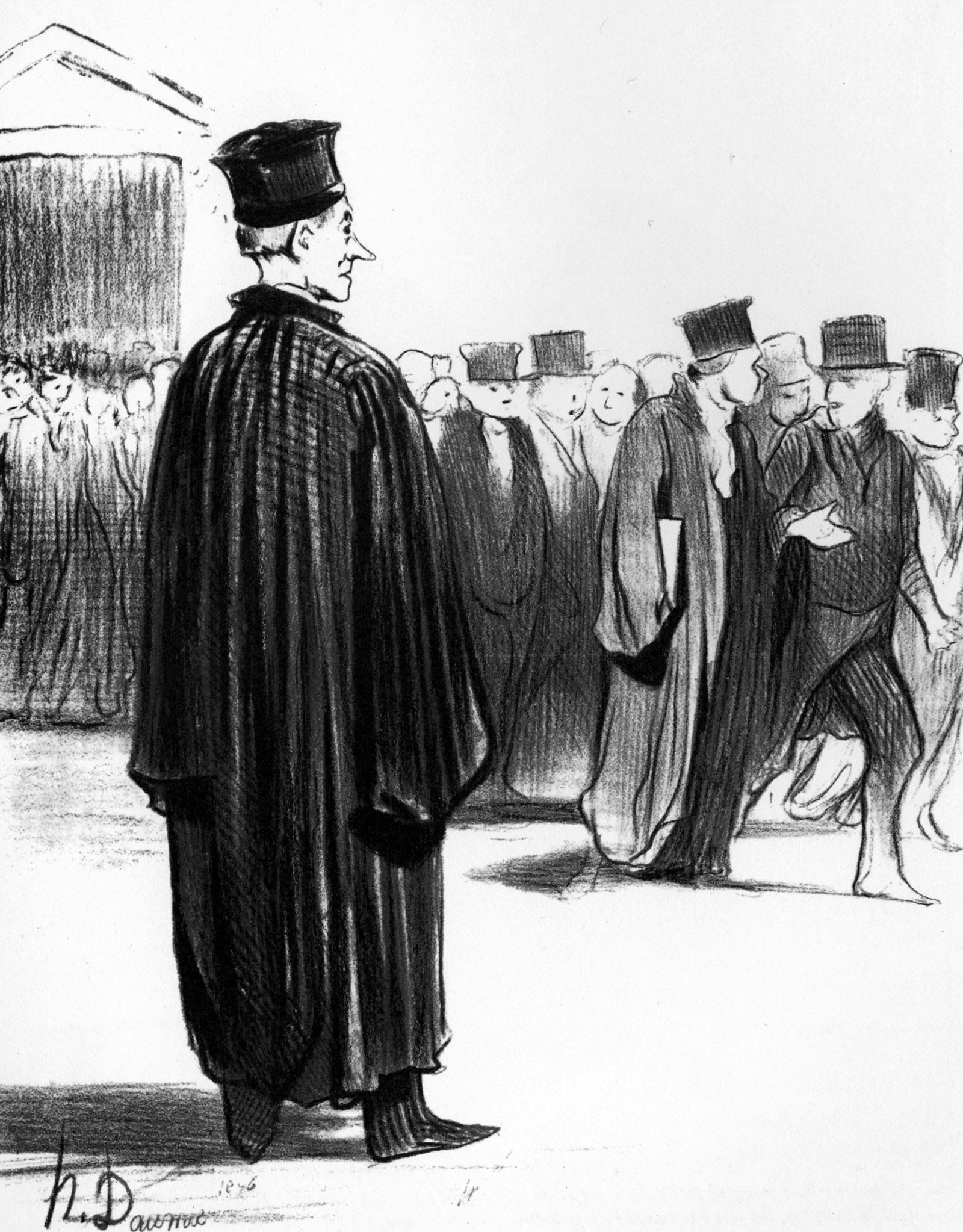
daumier_lawyers
Honoré Daumier

No sooner was Antonin Scalia dead than Republicans said that his seat should not be filled before the election of a new president. Senator Mitch McConnell said this will let the American people “have a voice” in who the new justice will be. Senator Kelly Ayotte said “Americans deserve an opportunity to weigh in” on the matter. And Senator Ted Cruz, the presidential candidate, Senate Judiciary Committee member, and self-styled guardian of the Constitution, wrote on Twitter, “We owe it to him, [Scalia] & the Nation, for the Senate to ensure that the next President names his replacement.” That is, we owe it to the archetypal originalist, where the Constitution is concerned, to ignore and defy the original Constitution.

One thing the framers of the Constitution set out to prevent was a popular say in who should be a Supreme Court justice. The aim of the document was to ensure there would be an independent judiciary—independent of Congress (by ensuring justices’ salaries), independent of changing administrations (by granting them life tenure), and not subject to popular election. This ideal could not be perfectly reached, and changes in the Constitution have made it even harder to attain. But those who profess an absolute devotion to the Constitution should at least pay it some lip service.

If the framers wanted to let the people “have a say” and “weigh in,” they would have made the appointment or confirmation of the justices come from the one directly democratic part of the system—the popularly-elected and short-termed members of the House of Representatives, a body that was designed to read the pulse of the people in a direct and frequent way. Instead, they gave the choice of justices a double baffle of insulation from the public. The president alone has the appointment power—and remember that the president was originally not elected directly by the people but indirectly through electors. Then a second filter was provided by confirmation in the Senate—and the Senate was originally not directly elected but indirectly by state legislatures. The Senate was meant to be a more stable body than the House, its members serving terms that are three times as long and only a third of them up for reelection at a time—not the whole body, as in the House. The Senate was meant to assure other nations that treaties (confirmed by the Senate) and other commitments would be honored for more than a day.

Of course, Senators became popularly elected in 1913, by the Seventeenth Amendment. But originalists should at least remember that senators were given their confirmation power because they were not subject to continuing popular approval. An extra fillip of irony is provided now, since some of the conservatives who want to let the people “have a say” in who becomes a justice—including Ted Cruz!—have recently called for revocation of the Seventeenth Amendment, so the people would not have a say in who becomes a senator.

So far, then, we have seen that the aim of keeping the judiciary independent was put in the Constitution by these moves:

1. Appointment by a non-directly elected president.

2. Confirmation by an (originally) non-directly elected Senate, only a third of whose members are removable at any election.

3. The elimination of any influence by the directly-elected House, which was constantly removable.

What more can be done to promote independence in the Judiciary?  Alexander Hamilton reminds us of this in Federalist Nos. 78 and 79:

4. Give “permanent tenure of judicial offices” to guarantee “independent spirit in the judges” (No. 78).

5. Give them “a fixed provision for their support” (No. 79), by guaranteeing each justice “a compensation which shall not be diminished during their continuance in office.”

These ideas were enshrined in Article III of the Constitution, which states:

The judicial power of the United States, shall be vested in one Supreme Court, and in such inferior courts as the Congress may from time to time ordain and establish. The judges, both of the supreme and inferior courts, shall hold their offices during good behaviour, and shall, at stated times, receive for their services, a compensation, which shall not be diminished during their continuance in office.

Which brings us to one more point:

    6. Since life tenure is “during good behavior,” high crimes and misdemeanors must not go unpunished even by judges. But the House, attuned to new developments, can only challenge (impeach) a justice, and the (original) non-directly elected Senate must try him.

As I say, nothing can entirely remove the Court from popular influence. Mr. Dooley, the character created by the humorist Finley Peter Dunne, said it in 1901: “th’ Supreme Coort follows th’election returns.” But what more could the framers have done to make it clear that they wanted a judiciary that was independent of letting people “have a say” or “weigh in,” as our Republican “originalists” are now demanding? It is true that the nation has changed its ethos since the time of the Constitution—become more democratic, more egalitarian, more sensitive to human rights. But Antonin Scalia devoted his life to denying this history, to calling us back to the strait jacket of eighteenth-century values. What could be more absurd than for a cultist of Scalia like Senator Cruz to call for a popular referendum on Supreme Court justices?

29 Feb 19:16

Colorado lawmakers update homebrewing 'family' language

kurtadb

Kara can brew now too! :)

Print   Email   Font Resize

Posted:   02/26/2016 10:21:54 AM MST

Updated:   02/26/2016 11:53:59 AM MST

DENVER (AP) — Good news for single beer brewers — an outdated requirement that Colorado homebrewers be a "head of a family" is on its way off the books.

The state Senate Friday voted 34-0 Friday for a bill changing that language from "head of a family" to "adult."

Colorado's homebrewing law lays out who can brew beer or wine without a liquor license. Currently the law requires those home brewers to be "head of a family," though the requirement is considered an anachronism and isn't enforced.

The brewing update has already passed the House and now heads to the governor's desk.

———

Online:

HB1084: http://extras.denverpost.com/app/bill-tracker/bills/2016a/hb_16-1084/


29 Feb 15:52

Tim Howard close to Colorado Rapids transfer

by Rob Usry

Tim Howard's long and illustrious career at Everton appears as if it will be over after this Premier League season. ESPNFC reports that the United States goalkeeper is on the verge of finalizing a transfer to MLS where he would join the Colorado Rapids.

The reported transfer fee between MLS and Everton is expected to be between $600,000 and $750,000.

It was rumored a week ago that Howard was demanding a yearly salary of around $5 Million, which is a little outrageous for a player of his age. The report now states that he'll be paid $2 Million a year. While that's still pretty steep for a goalkeeper Designated Player in MLS, it's way more reasonable than what he wanted.

The 36-year-old USMNT legend will finish out the current season with Everton then join the Rapids in July when the European transfer window opens.

Yet another high profile American star is set to come back to MLS. While it's great for our domestic league and the fans, it has to infuriate Jurgen Klinsmann who has repeatedly stated his wishes for his players to test themselves in the best leagues. No matter how mad he may be, it doesn't appear as if it will affect Howard's national team standing with no clear heir apparent to his roster spot in waiting.

26 Feb 20:08

Open Thread: Ted Cruz Really *Is* A Cartoon Villain

by Anne Laurie
kurtadb

why do we have so many anti-democratic structural components to our democracy. we're really not doing it right.

Little children are being poisoned, at the behest of his fellow Repubs, and Ted Cruz decides to grandstand. Per Politico:

Ted Cruz is standing in the way of a bipartisan Senate bill to provide hundreds of millions of dollars in aid for Flint, Mich., and other communities that need to upgrade their drinking water infrastructure…

Cruz, who is campaigning ahead of Thursday’s Republican debate, has placed a “soft hold” on the aid package to give him more time to study the details of the proposal, the Texas Republican’s spokeswoman Rachael Slobodien said Thursday. Without naming Cruz, Sen. Jim Inhofe (R-Okla.), a lead negotiator on the Flint aid package, acknowledged a hold was preventing it from moving to the floor, but Inhofe said he was hopeful the impasse could be resolved. Slobodien also said she did not expect Cruz to hold up the bill permanently.

Democrats say their members all support the package to provide at least $850 million in aid toward deficient water infrastructure and health programs in Flint and elsewhere, despite deep cuts to an advanced vehicle manufacturing loan program. Sen. Debbie Stabenow (D-Mich.), a leader in the negotiations, said those cuts amount to “ending a program that I authored” in a 2007 energy law and that the package meets “every test Republicans gave us.”…

Michigan Republican Rep. Fred Upton, who chairs the energy panel, and Democrat Dan Kildee, whose district includes Flint, cosponsored H.R. 4470, which the House this month approved 416-2. The bill would require the Environmental Protection Agency to notify the public when concentrations of lead in drinking water exceed levels triggering action and improve federal, state and local communication.

The Senate would amend that bill by adding the funding assistance under the approach envisioned by architects of the Flint deal.

Democrats have elevated Flint into a broader narrative on race in their primary with Hillary Clinton and Bernie Sanders agreeing to debate there March 6. Clinton, who has been endorsed by Flint Mayor Karen Weaver, in particular, using it to highlight her appeal to black voters, including a new 60-second ad showcasing her recent visit there.

But Republicans have their own electoral factors to consider…

If none of his competitors use the “Ted Cruz is in favor of letting little children be poisoned by their government” attack tonight, they all deserve to lose. (Of course, they deserve to lose anyway… )

25 Feb 20:47

Yes! I Will Be Liveblogging Tonight's Republican Debate

by Kevin Drum
kurtadb

almost kind of interested to watch this one now that the rubber's meeting the road.

I have run out of excuses. I don't have any house guests. I'm not going out to dinner tonight. Nobody is celebrating a birthday. My computer and I are fully available to liveblog tonight's Republican debate.

So I shall. It "starts" at 8:30 pm Eastern on CNN, but it really starts at 9 pm. See you then.

25 Feb 16:23

The Dangerous All Writs Act Precedent in the Apple Encryption Case

Tim Cook, the C.E.O. of Apple, has strongly objected to a court’s order that the company must help the F.B.I. access the phone of one of the San Bernardino shooters.
Tim Cook, the C.E.O. of Apple, has strongly objected to a court’s order that the company must help the F.B.I. access the phone of one of the San Bernardino shooters. Credit Photograph by David Paul Morris / Bloomberg via Getty

Tim Cook, the C.E.O. of Apple, which has been ordered to help the F.B.I. get into the cell phone of the San Bernardino shooters, wrote in an angry open letter this week that “the U.S. government has asked us for something we simply do not have, and something we consider too dangerous to create.” The second part of that formulation has rightly received a great deal of attention: Should a back door be built into devices that are used for encrypted communications? Would that keep us safe from terrorists, or merely make everyone more vulnerable to hackers, as well as to mass government surveillance? But the first part is also potentially insidious, for reasons that go well beyond privacy rights.

The simple but strange question here is exactly the one that Cook formulates. What happens when the government goes to court to demand that you give it something that you do not have? No one has it, in fact, because it doesn’t exist. What if the government then proceeds to order you to construct, design, invent, or somehow conjure up the thing it wants? Must you?

The F.B.I.’s problem is that it has in its possession the iPhone used by Syed Rizwan Farook, one of the San Bernardino shooters, but the phone is locked with a passcode that he chose. (The phone, which investigators found while executing a search warrant for Farook’s car, is actually the property of the San Bernardino County Health Department, Farook’s employer, which has consented to its search—and so, as Orin Kerr points out, on the Washington Post blog the Volokh Conspiracy, there is no Fourth Amendment issue there.) If the F.B.I. enters the wrong passcode ten times, the data may be turned to gibberish. And if the F.B.I. disables that feature, allowing it to enter every possible passcode until it hits the right one, it may still come up against another barrier: a built-in delay between wrong entries, so that typing in five thousand possibilities, for example, might take thousands of hours. Both sides agree that Apple has given significant technical assistance with the San Bernardino case already; in response to a separate warrant, it gave the F.B.I. the iCloud back-ups for Farook’s phone (the most recent was from some weeks before the shooting). In the past, in response to court orders, Apple has helped the government extract certain specific information from older iPhones—perhaps seventy times, according to press reports. But there is apparently no way for the company to do so on the newer operating system, iOS 9, which the shooter was using and which was built without a “back door.” In other words, there is no set of instructions or a skeleton key in a drawer somewhere in Cupertino that Apple could give the F.B.I. to allow it to get in.

And so Judge Sheri Pym, a California district-court magistrate, has ordered Apple to come up with a new software bundle that can be loaded onto the phone and, in effect, take over the operating system and tell it to let the F.B.I. in. (Apple will have a chance to object to the order in court.) As an added point of convenience, this bundle is also supposed to let the agents enter passcodes electronically, rather than tapping them in, which is one of the many points on which the government seems to have moved from asking for compliance with a subpoena to demanding full-scale customer service. In its request for the order, the government says that “Apple has the exclusive technical means which would assist the government in completing its search,” for a number of reasons. One is that iPhones look for a cryptographic signature before accepting operating-system software as legitimate. But the government, again, is not asking for a signature or even for the equivalent of a handwriting guide (which would be problematic, too) but for an entire ready-to-run bundle. It has said that it wants Apple to put in a code that makes the bundle usable only on Farook’s phone—but that is a desire, not a description of an existing, tested, software protection. (The government also says that it will pay Apple for its work.) The other reasons that the government says that Apple should be compelled to do this work come down to Apple being Apple—being a smart company that designs this kind of thing. What is the government’s claim on that talent, though? Would it extend to a former engineer who has left the company? The government’s petition notes that the operating system is “licensed, not sold,” which is true enough, but conveys the darkly humorous suggestion that Apple’s terms of service are holding the F.B.I. back.

It is essential to this story that the order to Apple is not a subpoena: it is issued under the All Writs Act of 1789, which says that federal courts can issue “all writs necessary or appropriate in aid of their respective jurisdictions and agreeable to the usages and principles of law.” Read as a whole, this simply means that judges can tell people to follow the law, but they have to do so in a way that, in itself, respects the law. The Act was written at a time when a lot of the mechanics of the law still had to be worked out. But there are qualifications there: warnings about the writs having to be “appropriate” and “agreeable,” not just to the law but to the law’s “principles.” The government, in its use of the writ now, seems to be treating those caveats as background noise.  If it can tell Apple, which has been accused of no wrongdoing, to sit down and write a custom operating system for it, what else could it do?

In the motion filed on Friday, the government dismissed Apple’s objection by saying that it “appears to be based on its concern for its business model and public brand marketing strategy,” and that writing new code shouldn’t be an “undue burden”—one of the standards for applying the All Writs Act—since Apple writes a lot of code. This particular use of the All Writs Act is fairly novel, however. The precedent the government’s supporters cite is the use of All Writs in a 1977 Supreme Court decision involving telephone taps, called pen registers. In that case, the F.B.I. wanted New York Telephone, which was already helping it to set up a tap in an illegal-gambling sting, to let it use some spare cables that were, physically, in the same terminal box as those hooked up to the suspect’s phone. The telephone company told the F.B.I. to get its own wires and string them into the apartment of one of the alleged gamblers some other way. When the F.B.I. objected that the suspects might spot the rigged cables, the Court agreed that it could legitimately ask the telephone company for its technical help and “facilities.” But the F.B.I. wasn’t asking New York Telephone to design a new kind of cable.

If a case involving a non-digital phone network could be applied to smartphones, what technologies might an Apple precedent be applied to, three or four decades from now? (The N.S.A. used, or rather promiscuously misused, another pen-register case from the same era to justify its bulk data collection.) It no longer becomes fanciful to wonder about what the F.B.I. might, for example, ask coders adept in whatever genetic-editing language emerges from the recent developments in CRISPR technology to do. But some of the alarming potential applications are low-tech, too. What if the government was trying to get information not out of a phone but out of a community? Could it require someone with distinct cultural or linguistic knowledge not only to give it information but to use that expertise to devise ways for it to infiltrate that community? Could an imam, for example, be asked not only to tell what he knows but to manufacture an informant?

This is the situation that Apple is in, and that all sorts of other companies and individuals could be in eventually. There are problems enough with the insistence on a back door for devices that will be sold not only in America but in countries with governments that feel less constrained by privacy concerns than ours does. And there are reasons to be cynical about technology companies that abuse private information in their own way, or that jump in to protect not a principle but their brands. But the legal precedent that may be set here matters. By using All Writs, the government is attempting to circumvent the constitutionally serious character of the many questions about encryption and privacy. It is demanding, in effect, that the courts build a back door to the back-door debate.

Sign up for the daily newsletter.Sign up for the daily newsletter: the best of The New Yorker every day.

25 Feb 16:21

February 20

by foodyear365
kurtadb

yum!

Home-cooked Ethiopian food. I don’t have a cookbook and I don’t know of any definitive website, but at a basic level, Ethiopian is very simple. I learned a lot of it from chatting with the sales clerk while she rang me up. There are three essential ingredients: berbere spice powder, a jar of kibbeh (a spiced clarified butter), and, of course, injera, the spongy bread made from teff flour. While there is undoubtedly a lot more to learn, use these three things and whatever you make will taste Ethiopian. Injera is kind of expensive and comes in large packs of about ten, which is a great incentive to continue making Ethiopian food for the rest of the week.

To start, you’re supposed to take red onions and cook them very slowly, stirring until they become a paste. I diced the onion in a food processor and put it in a cast-iron skillet on low heat for an hour. I was the most successful in cooking atakilt wat, which you make by stewing diced carrots and potatoes (and cabbage, which I didn’t have) in about two tablespoons of kibbeh, about one and a half teaspoons of turmeric, and a little water and salt, cooking until they are soft. To make mesir wat, a red lentil stew, I started with onions and kibbeh, but the butter probably isn’t needed. Then I added two tablespoons of berbere, which is far too much; I had to temper it with sugar. Use half of that or less. Add garlic, which brings out the taste of the berbere, and then add one cup of lentils and two to three cups of water. Cook until the mixture is thick and soft, adding salt and more berbere to taste. I also made roasted beets with red wine vinegar.

(Photo: Ethiopian coffee at Java Shack, Arlington, Virginia.)

>> February 21

<< February 19


24 Feb 23:28

What The Hell Is Cynthia Coffman Thinking?!

by Colorado Pols
kurtadb

what a psycho

Attorney General Cynthia Coffman.

Attorney General Cynthia Coffman.

As the Colorado Independent’s Susan Greene reports, GOP Attorney General Cynthia Coffman had a bizarre “Twitter meltdown” last week following the interview of the mother of Dylan Klebold, of one of the perpetrators of the 1999 Columbine High School mass shooting:

Ted Zocco-Hochhalter — father of a student who was paralyzed in the 1999 rampage — didn’t know what he’d feel when he learned that Sue Klebold, mother of Columbine shooter Dylan Klebold, was coming forward after 17 years to tell her family’s story.

Ire? Disgust? Outrage?

After having watched Sue Klebold’s interview, Zocco-Hochhalter’s response was yes to all of the above – though not toward Sue Klebold, he notes, but rather toward Coffman for weighing in with comments he describes as “incredibly ignorant and insensitive.”

Here are the Tweets AG Coffman fired off after Sue Klebold’s interview aired:

To which the father of Columbine victim Anne Marie Hochhalter says:

Nonsense, counters Zocco-Hochhalter, who lauds Sue Klebold for her candor about the guilt and responsibility she feels about the shootings her son helped carry out before he fatally turning his gun on himself. Sue Klebold spent much of her “20/20” interview acknowledging that she missed key signs of her son’s depression and urging families to learn how to spot kids’ mental health problems before desperation turns to violence. Those are the main points of her book, “A Mother’s Reckoning: Living in the Aftermath of Tragedy,” the proceeds from which she’s donating to mental health causes.

“Here we have an Attorney General’s office publicly criticizing Sue Klebold for talking about mental illness as a factor in school shootings. That’s not only insulting to our intelligence, but it’s also flat-out wrong – showing a remarkable lack of knowledge and professionalism about the issue,” Zocco-Hochhalter tells The Independent.

Coffman’s reaction to ABC’s interview with Sue Klebold is very difficult to understand from just about any professional or even responsible point of view. Of course the story of how she missed warning signs that could have helped prevent the Columbine High School shootings should be told. Of course talking about mental illness is better than concealing it. And above all, seventeen years is long enough to wait to talk about it.

Isn’t it possible that telling her story could prevent another Columbine?

No one we have asked about this story has had a plausible theory for why Coffman would launch into this unprofessional outburst aginst Sue Klebold on her official Twitter account in response to a news magazine show interview. Coffman though her spokesman refused to answer questions, saying the Tweets “speak for themselves.”

That may be true, but they don’t say anything good about Cynthia Coffman.

24 Feb 22:10

Harley-Davidson possible anchor for Rooney Valley development

by By Josie Klemaier YourHub Reporter
kurtadb

booooo! (mike, this is right across from dinosaur ridge.) not looking forward to harley traffic where i ride my bike.

A Harley-Davidson dealership would anchor a planned retail development at the intersection of C-470 and West Alameda Parkway in Jefferson County, developers say.
24 Feb 20:25

Republicans Decide to Boycott the Supreme Court Vacancy. Does This Remind You of Anyone?

by Kevin Drum
kurtadb

i'm pretty persuaded by the theory that they're afraid obama will make them look bad with his nominee, so this way even he nominates such a person they can say, no, we already told you we wouln'dt hold a hearing. it's not about the nominee.

The Republican members of the Senate Judiciary Committee have officially announced that they aren't willing to even hold hearings for President Obama's Supreme Court nominee—no matter who it is.1 Their letter includes all the usual argle bargle about needing to "protect the will of the American people" blah blah blah, but none of that matters. They're doing this because they want to do it and they have the power to do it. I doubt that Democrats would act much differently under similar circumstances.


That said, you can add me to the huge crowd of observers who are puzzled by the political tactics here. The obvious question is: Why refuse to even hold hearings? That just makes Republicans look sullen and obstructionist. Why not hold hearings normally, drag them out a little bit, and then vote down whoever Obama nominates? The result is the same, but Republicans look more like senators and less like small children throwing a temper tantrum.

I suppose the answer is that this is a good way of firing up their base, and they think that's more important than appealing to the center. Fair enough. But that raises another question: What's the best way to fire up the Republican base? I'm not trying to troll anyone here, but it seems like the answer is to hold hearings. That would keep the whole Supreme Court issue front and center for months on end. The base would be faced almost daily with the prospect of what a liberal justice would do; talk radio would go nuts; and there would be endless chances to find specific problems with the nominee—many of which would coincidentally require the production of reams of files and records to trawl through.

Democrats, conversely, would have less to get fired up about. Sure, they'd be unhappy, but they wouldn't be able to carp endlessly about Republican obstruction. Their guy is getting a hearing, after all.

So it seems like holding hearings normally would be a better way to fire up the GOP base and a better way to keep the Democratic base a little quieter. It probably wouldn't make a huge difference either way, but it's still a win-win. What am I missing here?

1After which they undoubtedly went out for a beer and shared their bewilderment about the fact that so many Republicans have been trained to vote for a guy like Donald Trump. What could possibly have driven them in such a direction?

23 Feb 05:39

Colorado rain-barrel bill passes House committee Monday

by By Joey Bunch The Denver Post
For the second year in a row, a legislative storm is brewing in Colorado over who legally owns drops of rain.
19 Feb 18:37

Drink and Act Locally

by ColoFarmFood
kurtadb

mostly of interest to mike. and not super substantive, but interesting to know about.

(Promoted by Colorado Pols)

Colorado’s robust craft beer scene is world famous.

The Colorado Farm & Food Alliance networks Colorado family farms, winemakers, brewers, food producers, chefs, restaurateurs, and consumers—Working together to advocate for a balanced approach to resource use that supports: sustainable and secure local food systems, healthy lands and clean water, and a resilient farm, food, and drink economy.

We are a newly incorporated nonprofit in Colorado, and we are not yet engaged in any of the potential ballot measures that might be of interest to our constituents.

But we are considering getting involved in the effort to change Colorado’s liquor laws.  Because enhancing local food systems, and the placed-based economies that such support, is a top priority for our organization.

Cincinnati-based Kroger, Inc. along with Walmart–owned by America’s richest family and based in Arkansas–are pushing a rewrite of long-standing Colorado law regarding beer and wine sales in grocery stores. Many local brewers, wineries and community-based ‘Mom and Pop’ stores oppose the corporate-backed measure.

Big-Grocery (Kroger, Inc., Walmart, etc.) sells exclusive shelf space and not only product.  As we see Big-Beer (InBev, MoslonCoors, etc.) buy out small breweries it seems a real risk that the variety of small, locally produced beers, Colorado wines, and craft spirits will be mostly shut out in exchange for carefully marketed faux-microbrews, fewer Colorado wines, and  Big-Booze spirits.

The Colorado Farm & Food Alliance connects rural communities, food and drink producers, and consumers across the state “in the field and on the plate” to support policy that enhances sustainability and long-term food security.

Local businesses have deep roots in Colorado communities. Kroger has deep ties to Ohio.

Our mission is to encourage the availability of healthy, locally sourced foods to all communities in Colorado paired with a core message and actions to support a sustainable local food system.

Strengthening local food systems means safeguarding the health of the land and supplies of clean water, and addressing climate change. It also means supporting local business, local food and drink production, and local communities.

Our partners are businesses and associations, family farms and markets, local restaurants and producers, wineries, brewers, boutique distilleries, rural food and economic groups, and others that understand protecting Colorado’s environment protects our family farm and local food economy.

Colorado’s local food and drink economy brings millions into small communities and cities across the state. Let’s keep it here by supporting Colorado businesses.

By educating rural and urban communities from “farm to table” we bring a call to action along with locally sourced food and drink, to the tables of Coloradans across the state.

And while we have not yet formally joined any efforts around the 2016 ballot in Colorado, many of our supporters and partners are already engaged.

Because if we care about placed-based economies and secure food systems, its time to Drink and Act Locally.


18 Feb 20:12

So, About Those Colorado Hate Groups…

by Colorado Pols

The Denver Post has an odd story up today about the latest index of hate groups compiled by the Southern Poverty Law Center–a list that includes, as it does every year, an unfortunate number of organizations based in Colorado:

Sixteen hate groups, including neo-Nazis, anti-gay churches and even a music label, operated in Colorado last year, according to the Alabama-based Southern Poverty Law Center.

Colorado saw five new hate groups operating in 2015, but the state had a net gain of one group last year, said Mark Potok, senior fellow and editor of the organization’s Intelligence Report…

“While the number of extremist groups grew in 2015 after several years of declines, the real story was the deadly violence committed by extremists in city after city,” Potok said.

“Whether it was Charleston, San Bernardino or Colorado Springs, 2015 was clearly a year for deadly action for extremists.”

Reading today’s story, which notes the domestic terror attack on Colorado Springs’ Planned Parenthood clinic last November, we were shocked that a prominent Colorado Springs organization on the SPLC’s hate group list received no mention whatsoever:

chapstitlecard

That’s right, folks! For a long, long list of reasons we have documented in this space for several years, the Colorado Springs-based Pray in Jesus Name “ministry” is one of the hate groups on the SPLC’s list. Arguably, PIJN is one of the highest-profile hate groups on the SPLC’s list anywhere in America, being run by a sitting Republican Colorado lawmaker, Rep. Gordon “Dr. Chaps” Klingenschmitt.

We try not to get into the business of complaining about every media omission, mostly because we’d spend all day every day on them if we did. But we simply can’t understand why “Dr. Chaps” didn’t even rate a mention in a story he should have been the star of. Chaps is where the nexus between groups that can legitimately be considered to be proponents of hatred and modern Republican politics becomes, well, a very uncomfortable thing. The sort of thing that gets omitted or otherwise glossed over by news outlets looking to “be fair.”

But it shouldn’t be glossed over. It’s the most important part of this story.

17 Feb 19:37

Lionel Messi’s Foot Sends Penalty Kick Into Lore

by VICTOR MATHER
Instead of blasting his penalty kick into the net on Sunday, Messi, playing for Barcelona, tapped it softly to the right, and Luis Suárez punched it in.


16 Feb 19:41

President Raises Stakes in Supreme Court Nominee Battle

by JENNIFER STEINHAUER
kurtadb

ready, fire, aim!

During a news conference, President Obama said there was no basis in the Constitution for Republicans to refuse to hold hearings and vote on his nominee.


16 Feb 16:35

The President on Ellen

by TaMara (BHF)
kurtadb

this happened to be on at the gym when i was there and it really was pretty charming.

I did not see her show yesterday, but searched out the videos when I realized he appeared and glad I did. The On The Road To Equality (above) was touching. Spoiler alert: Ellen’s not gay.

President Obama talking about his daughters, FLOTUS and the video Anne Laurie alluded to last night are below the fold.

Yes, I will miss this president. Consider this an open thread.

ETA: Blame any typos on Bixby, he is literally laying in my lap (or his head is, that’s all that can fit). Not sure what that’s about, he’s not usually this clingy.

12 Feb 23:16

Greeley man's death tank gauging at oil rig leads to $14,800 in fines

by By Monte Whaley The Denver Post
kurtadb

shared for nonsensical headline

Two oil field companies were fined a total of $14,800 for their roles in fatally exposing a 57-year-old Greeley man to toxic vapors in 2014 while he worked in the Weld County oil patch.
11 Feb 15:41

Squirrel Creek Lodge home to wildlife rescue ... and swingers club

by By Joe Vaccarelli YourHub Reporter
Tucked away just south of C-470 off Santa Fe Drive, Kendall Seifert runs two distinctly different operations in the same place, with one helping support the other.
11 Feb 15:39

The Clinton-backed 1994 crime law had many flaws. But it didn't create mass incarceration.

by German Lopez
kurtadb

i just don't buy the notion that the only people qualified to be president in 2016 are people who opposed the consensus view on criminal justice in 1994. it's especially dangerous to read so much into hillary's support of bill's initiatives. what else would you expect?

A 22-year-old crime law is once again making news.

At a rally on Thursday, Bill Clinton confronted Black Lives Matter protesters who blamed the 1994 crime bill that he signed into law for America's mass incarceration — a law that Hillary advocated for and Bernie Sanders voted for.

This has become a consistent line of attack against the Clintons. In a scathing op-ed, Michelle Alexander, author of The New Jim Crow, suggested the 1994 law was a big contributor to mass incarceration. Historian Donna Murch echoed the sentiment. News reports even occasionally treat the claim — that the 1994 crime law was a big cause or the driver of mass incarceration — as fact.

But as journalist Kevin Drum noted in a blog post at Mother Jones, the 1994 law simply didn't have that much of an effect on prisons and jails: The black incarceration rate in particular continued a decade-plus-long climb after the law, but began a steady decline soon after.

The law's effect was small for one simple reason: States preside over the great bulk of the US justice system. So it's actually state policies that fueled mass incarceration — to the point that one could entirely exclude the federal prison system and America would still be the world's leader in incarceration.

This context is important not only because it demonstrates that the criminal justice policies Clinton supported weren't that significant to mass incarceration, but also because it helps show (as I'll get to later) that the Clinton White House and federal government were following a much broader tough-on-crime movement at a time when crime was historically high.

It's now easy to look back on that movement with scorn; I think mass incarceration is morally abhorrent, and the country should reverse it. But we're never going to be able to solve the problem if we don't look past the presidency.

Federal policy is not the cause of mass incarceration

Federal criminal justice policy, including much of the 1994 crime law, focuses almost entirely on the federal system, particularly federal prisons. It might be tempting to think of this system as huge — its name, federal prison, has a certain ring to it. But that's wrong.

In the US, federal prisons house only about 13 percent of the overall prison population. That is, to be sure, a significant number in such a big system. But it's relatively small in the grand scheme of things, as this chart from the Prison Policy Initiative shows:

State policy drives mass incarceration. Prison Policy Initiative

One way to think about this is what would happen if a President Clinton or President Sanders used her or his pardon powers to their maximum potential — meaning, the president pardoned every single person in federal prison right now. That would push America's overall incarcerated population from about 2.2 million to 2 million.

That would be a hefty reduction. But it also wouldn't undo mass incarceration, and the US would still lead all but one country in incarceration — with an incarceration rate of about 629 per 100,000 people, only the tiny island country of Seychelles would come ahead.

So to really pull back mass incarceration, states will need to make changes. (And that will likely involve more than reforming drug laws: About 53 percent of state prisoners are in for violent crimes, and just 16 percent are in for drug offenses.)

The federal prison system is big — and the 1994 crime law, along with other tough-on-crime measures passed in the 1980s that expanded federal drug sentences in particular, made it bigger. But federal laws simply aren't the cause of mass incarceration.

The 1994 crime law included one big attempt to influence state policy — but it didn't really work

Bill Clinton in New Hampshire. Justin Sullivan/Getty Images

One caveat to all of this is that the federal government can try to influence state policy with funding incentives. For example, the Brennan Center for Justice, which supports undoing mass incarceration, proposed a potential federal law that would effectively give states money for plans to cut incarceration without increasing crime.

Indeed, the 1994 crime law, which the Clintons and Sanders supported, attempted to encourage states to adopt harsher criminal justice policies. Much of the law's criminal justice portions focused on federal policy, particularly increasing the length of federal prison sentences. But the law also provided funding for states to build prisons and, notably, adopt truth-in-sentencing laws that effectively increase prison sentences by requiring prisoners serve out at least 85 percent of their prison sentences without early release.

(The 1994 crime law was also bigger than prison sentencing policy, including a host of policies that liberals still support. It included the Violence Against Women Act, which helped crack down on domestic violence and rape; a 10-year ban on assault weapons; funding for firearm background checks; and grant programs for local and state police.)

But did the truth-in-sentencing incentives really influence state policies? Evaluations of the 1994 crime law suggest otherwise.

A 1998 report by the Government Accountability Office (GAO), for which federal investigators talked to state officials about whether the 1994 law influenced state policies, noted that just four states adopted truth-in-sentencing laws (TIS) solely as a response to the 1994 law:

At the time of our review, based upon determinations made by DOJ, 27 states had TIS laws that met the requirements for receiving federal TIS grants. For each of these 27 states, we contacted state officials to determine whether the availability of such grants was a factor in the respective state's decision to enact a TIS law. Based on the responses to our telephone survey, the states can be grouped into three categories—TIS grants not a factor (12 states), TIS grants a partial factor (11 states), and TIS grants a key factor (4 states).

Why did most states apparently not care for the 1994 law? Many state officials said that they were already interested in tough-on-crime measures before the federal law, GAO investigators found:

According to Ohio officials, the state passed its TIS law in 1995, which is later than the enactment date of the 1994 Crime Act. However, the officials told us the state law was based on a July 1993 report by the Ohio Sentencing Commission. Thus, according to the state officials, the availability of federal grants did not influence the state's decision to pass TIS legislation. Rather, according to Ohio officials, a widespread concern about early release of violent crime offenders was a major factor in the state's decision to pass TIS legislation.

Some state officials also argued that the funding incentives were too small to drive big policy changes. Vermont, for instance, said meeting the federal requirements for truth in sentencing would cost several million dollars but only result in about $80,000 in federal grants.

A more recent report, published by the National Institute of Justice in 2002, produced similar findings: "Overall, Federal TIS grants were associated with relatively few State TIS reforms. There was relatively little reform activity after the 1994 enactment of the Federal TIS grant program, as many States had already adopted some form of TIS by that time."

Another key point here: Truth-in-sentencing laws were only one way that federal and state governments embraced mass incarceration. They also flat-out increased prison sentences, adopted harsh mandatory minimum sentences, and encouraged police and prosecutors to be tougher on criminals. So even the impact the 1994 law had in states that embraced its funding was partial at best.

None of this is to exonerate the Clintons, Sanders, and the 1994 crime law they all supported for mass incarceration. They are all somewhat culpable — after all, the Clintons and Sanders backed a law that increased incarceration as one of its explicit goals.

But the reality is that the 1994 crime law did not create mass incarceration, and, indeed, mass incarceration was a result of much broader policies driven by a much broader nationwide movement.

Clinton and Sanders were supporting a much broader movement through the 1994 crime law

A map of mass incarceration at the state level. MetricMaps

So what drove mass incarceration? Essentially, state policies — that increased prison sentences, expanded what counted as a crime worthy of jail and prison, and drove all the actors in the criminal justice system, particularly prosecutors, to push incredibly harsh punishments. Many of these policies predated the 1994 crime law.

In the 1970s and '80s, crime rates were historically high. This created a political crisis in America, as the public, media, and politicians bought into the idea that punitive measures were necessary to combat the breakdown of society's moral fabric.

Take, for instance, the murder rate over the past several decades, which was unusually high from the 1970s through the early '90s:

The media went into a frenzy over these types of numbers, widely covering gang and gun violence, drug use among children, and the crack cocaine epidemic. This drove the public to demand that lawmakers do something about these problems. And policymakers responded with mass incarceration.

The idea was that more arrests, more prosecutions, and longer prison sentences would deter crime and drug use. Facing a crisis, US lawmakers pursued these policies with little concern for the costs — not just the financial burden, but the racial disparities and erosion of civil liberties they produced as well.

Criminal justice expert Mark Kleiman explained the mood at the time in a great piece for the Washington Monthly:

No one knew then that we'd seen the worst. All we knew is that the number of murders had more than doubled, that the total number of violent crimes had increased six-fold in the previous thirty years, that no reversal of trend seemed to be in sight, and that the street-level arms race financed by the crack trade had expanded the age range of killers and their victims down into adolescence. If you weren't seriously worried about crime in 1994, you just weren't paying attention.

Support for tough-on-crime laws was not exclusive to conservatives or Republicans. The 1994 crime law, for instance, got more votes from Democrats than Republicans in the House of Representatives. And then-Sen. Joe Biden spearheaded and supported many bipartisan tough-on-crime measures throughout the 1980s and '90s.

It's now easy to look back at these ideas with scorn. Criminal justice experts point out, for example, that incarceration reached the point of diminishing returns by the 1990s — there are only so many serious criminals out there, and by then the people getting put in prison weren't people who'd be committing crime after crime on the street. So mass incarceration was an ineffective way to fight crime.

The Clintons have also pulled back from the 1994 crime law. Bill Clinton conceded the law went too far. Hillary Clinton said of the 1980s and '90s anti-crime policies, "I think that a lot was done that went further than it needed to go and so now we are facing problems with mass incarceration."

But these policies were desperate responses to real crises at the time. State officials didn't need federal incentives to pursue mass incarceration. They just had to look at the country's problems with crime and drugs — and the media and public's demands that something be done — to feel like they had to act.

Recognizing all of this is crucial to understanding not just the context surrounding the 1994 law — which, again, was very flawed — but what America needs to do to reverse mass incarceration today.

Appreciate the limits of federal power — to fix mass incarceration

Congress. Brendan Hoffman/Getty Images

The focus on the 1994 crime law is problematic because it suggests that the president and Congress have a tremendous amount of power over the national criminal justice system. Experts, particularly John Pfaff at Fordham Law School, have long worried that this type of messaging from the media and politicians may cause people to expect too much from federal officials and too little from their local and state counterparts.

A recent example is when petitions asked President Barack Obama to pardon Steven Avery, who was depicted in Making a Murderer as perhaps wrongfully convicted. But Avery was convicted of a state crime, not a federal one, so Obama doesn't have the power to pardon him — a fact literally hundreds of thousands of petition signers seemed to miss.

This is a crucial distinction. For better or worse, the bulk of the criminal justice system is driven by state policies. And that means no president and no Congress can really put an end to mass incarceration — not without state cooperation. But if people don't get that, how can they know whom to put pressure on for serious criminal justice reform?


Watch: The school-to-prison pipeline, explained

10 Feb 19:48

As seen from space: Denver Broncos Super Bowl parade

by
As the sea of orange swelled in and around Denver's Civic Center Park, DigitalGlobe, the locally based eye in the sky, was able to snap a long-range shot of crowds gathering for the Denver
09 Feb 20:05

Marcobot Has Apparently Exceeded Its Rated Mean Time to Failure

by Kevin Drum
kurtadb

funny!

Oh hell, now I'm just starting to feel sorry for Marco Rubio. The whole Marcobot thing has apparently made him so self-conscious that he can barely even recite his stump speech anymore without getting flustered. Here he is delivering a line about values being rammed down our throats right after he's just said it. There's an almost poignant moment at 0:26 when Rubio suddenly realizes what he's just done.

This reminds me of a Star Trek episode where Kirk uses some kind of sophomoric paradox to trick a computer into self destructing. That's about what Chris Christie seems to have done to Rubio.

08 Feb 16:11

Monday Victory Afterglow Open Thread

by Colorado Pols

If you have bad news for Colorado, dump it today when nobody will care.

03 Feb 19:34

GOP measure to boost road money threatens Bustang, transit projects

kurtadb

nice headline. they're threatening to raid transit funds and put it all into roads. (because they hate intelligent urban planning?) it's not as if they're trying to raise taxes for roads.

Print   Email   Font Resize

Posted:   02/02/2016 02:21:52 PM MST

Updated:   02/03/2016 07:45:03 AM MST

Colorado Department of Transportation shows off the Bustang.

Colorado Department of Transportation shows off the Bustang. (Helen H. Richardson, The Denver Post)

The Republican-led state Senate gave initial approval Tuesday to a bill that would send an additional $15 million to road building projects but cut money for mass transit options, such as the new Bustang service.

The measure is part of a long-running effort by Republicans to rewrite a 2009 law authored by Democrats and showcases the ideological divide this session about how to address the state's transportation needs.

Like similar measures in recent years, the bill faces a near-certain rejection in the Democratic-controlled House, but it allowed Senate Republicans to renew complaints about the current system.

Under the FASTER law, the state increased vehicle registration fees for three years to raise money for road and bridge improvement projects.

The fees total more than $100 million a year for road projects, with $15 million set aside for state and local transit projects.

Senate Bill 11, sponsored by Sen. Tim Neville, R-Littleton, would end the earmark for transit projects and spend all the fee revenue on state and local road improvements. It would also eliminate the state Division of Transit and Rail.

Sen. John Cooke, R-Greeley, called the current spending "a bait and switch" because not all the fee money goes to road construction, and the former sheriff compared it to consumer fraud.

Democrats argued the FASTER law envisioned mass transit as part of the program.

"If we don't want congestion, we need to be doing mass transit," said Sen. Matt Jones, D-Louisville.

If enacted, Colorado Department of Transportation officials said the bill would eliminate the $3 million for Bustang commuter service as well as $6 million in regional bus and mass transit grants.

Launched last summer, the Bustang lines have weekday bus routes from Denver to Colorado Springs, Fort Collins and Glenwood Springs. There are stops along the way. The route along Interstate 70 has been so popular that weekend service was added in November for the trip to Glenwood Springs.

"We are opposed to this bill," said CDOT spokeswoman Amy Ford, "and feel that providing choice in how people travel our roadways is just as critical as maintaining and operating them."

Meanwhile, the House voted 41-23 to give final approval to a bill that allows buses — such as the Flatiron Flyer between Boulder and Denver — to drive on the road shoulder at times of high congestion.

John Frank: 303-954-2409, jfrank@denverpost.com or @ByJohnFrank

01 Feb 16:20

Monday Open Thread

by Colorado Pols
kurtadb

so true!

Admit it, you were hoping for a snow day.