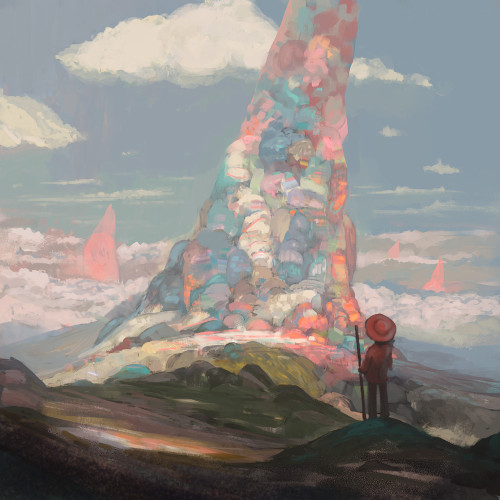

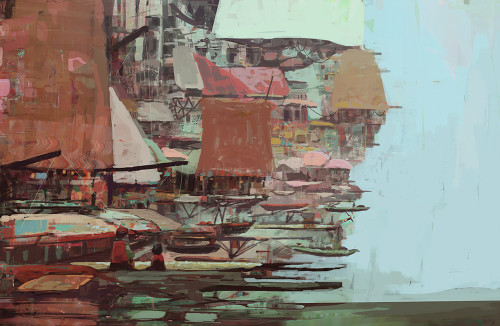
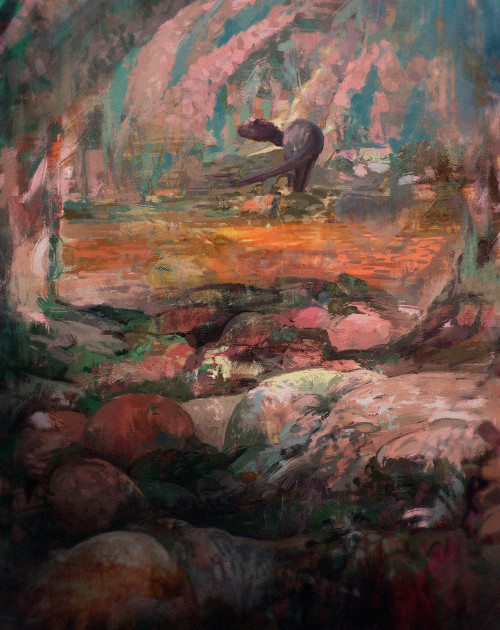
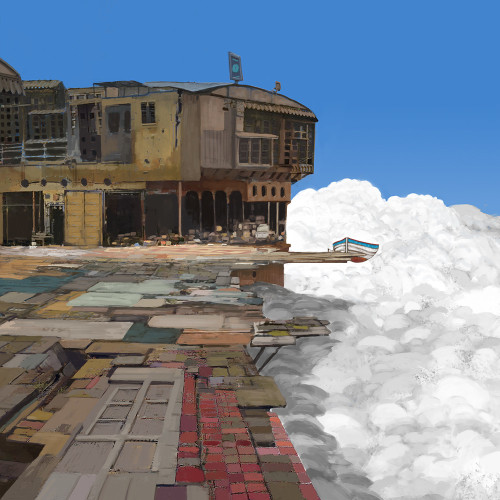
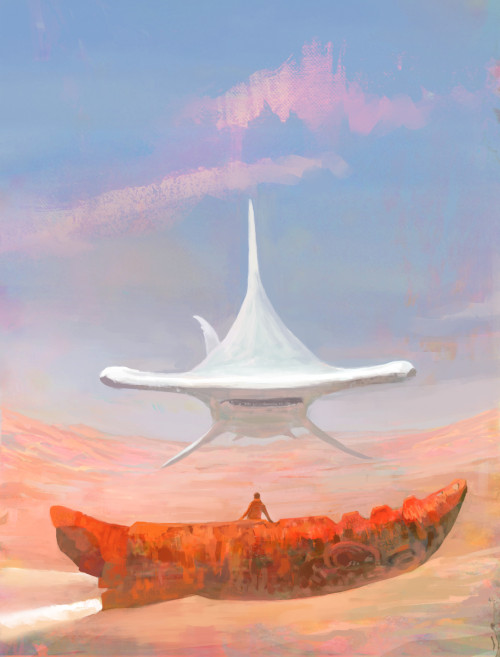
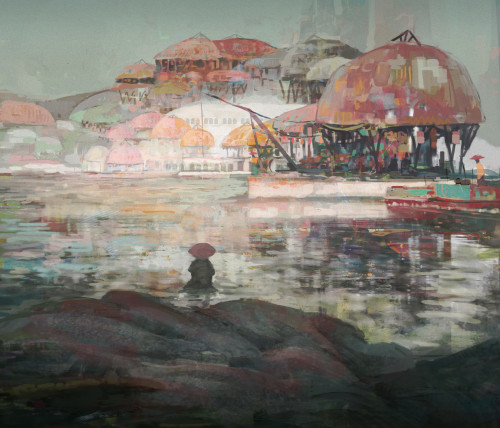
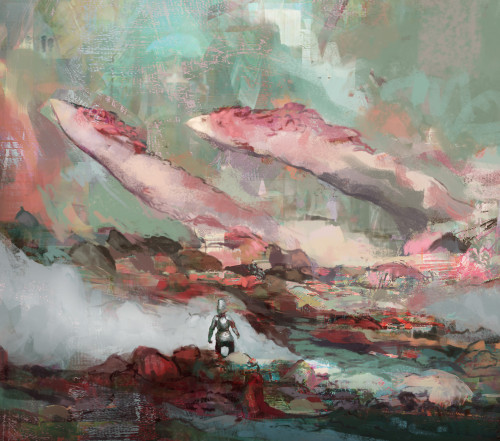
The art of Francisco Martín, aka Mocaran

In an attempt to make further strides in ridding our waterways of plastic, The Ocean Cleanup has unveiled a new project. The non-profit is looking to cut off ocean plastic at the source by cleaning up 1,000 of the world’s most polluted rivers by 2025. With research showing that 1% of rivers are actually responsible for 80% of the plastic that ends up in the ocean, the project is critical in freeing the world’s oceans of plastic. To that end, The Ocean Cleanup has announced The Interceptor—a new scalable solution to tackle river plastic.
The Interceptor has been in the works since 2015 and is already operational in Indonesia and Malaysia. Plans are also underway to install the system in Vietnam’s Mekong Delta and in Santo Domingo. Incredibly, the system can extract a little over 110,000 pounds of plastic a day and on good days—with optimal conditions—it can double that number. These exciting plans come on the heels of news that The Ocean Cleanup has successfully begun collecting plastic from the Great Pacific Garbage Patch after a few initial setbacks.
“To truly rid the oceans of plastic, we need to both clean up the legacy and close the tap, preventing more plastic from reaching the oceans in the first place,” says Boyan Slat, Founder and CEO of The Ocean Cleanup. “Combining our ocean cleanup technology with the Interceptor, the solutions now exist to address both sides of the equation.”
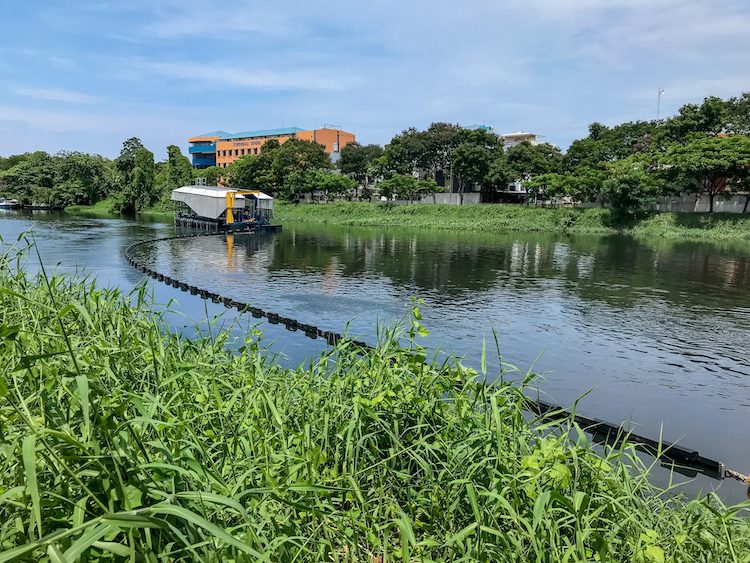
So how does The Interceptor work? The solar-powered system is anchored to the riverbed and uses the natural flow of the river to capture plastic. For safety reasons, The Interceptor has a completely autonomous setup. This has the dual benefit of allowing it to operate around the clock. Thanks to a floating barrier, garbage is guided into the system without closing access to the river. This allows vessels to continue making use of the waterway and doesn’t impede the natural wildlife found in the river. In a technological touch, each system has a computer on board to help monitor performance and energy use.
These new achievements are incredible when one remembers how The Ocean Cleanup began. Slat was just 18 years old when he launched the non-profit, leaving college to invest his future in his idea. Now, together with a staff of over 80 professionals, Slat is seeing the fruits of his labor pay off.
The Ocean Cleanup: Website | Facebook | Instagram | Twitter | YouTube
h/t: [Mother Nature Network]
World’s Largest Ocean Cleanup System Is Finally Ready to Launch
“Boy Genius” Is Now a Young Man With a Plan to Remove All Plastic From Oceans by 2050
Floating Park in Rotterdam Is Made Entirely of Recycled Plastic Harvested From River
People Are Picking Up Trash and Sharing Before-and-After Photos for the “Trashtag Challenge”
The post The Ocean Cleanup Aims to Rid World’s Dirtiest Rivers of Plastic by 2025 appeared first on My Modern Met.

“Maelstrom 9” (2016)
Luke Shadbolt captures the roiling majesty of ocean waves in his large-scale aquatic photographs. Printed at 150 x 100 cm (nearly 6 feet by 3.3 feet), the color and black-and-white images show the dramatic shapes and dynamic textures of open water when agitated by major weather events.
In a statement on the artist’s website, the Maelstrom series is described as “a cursory glimpse of the exchange, cycle and balance of power fundamental to the functioning of our planet and its oceans… Maelstrom encourages the viewer to reflect upon our own naivety and place as a species within the greater natural balance of power.”
The Acquiesce the Front series similarly seeks to draw connections between the human experience and our natural environment. “The physical manifestations portrayed are a deft reflection of those storms that are implicit to the human condition,” and our individual frailty in the face of big events. Yet Shadbolt finds hope in the potential “to learn and grow from these events. While we may be powerless to stop the storm from approaching, we can work to redirect the flood.”
Shadbolt is represented by Michael Reid Gallery in Sydney and Berlin. The Sydney-based photographer and creative director tells Colossal that he is currently in the process of opening a studio in New York City. You can explore more of his dramatic photographs on Instagram and Facebook.

“Acquiesce 5” (2017)

“Acquiesce 2” (2017)

“Maelstrom 1” (2016)

“Maelstrom 3” (2016)

“Maelstrom 5” (2016)

“North Avoca 1” (2016)

“Maelstrom 4” (2016)

“Maelstrom 8” (2016)
Nuno checks back in with this carefully curated camera carryall for his Japan trip and has a humorous customs story as well.
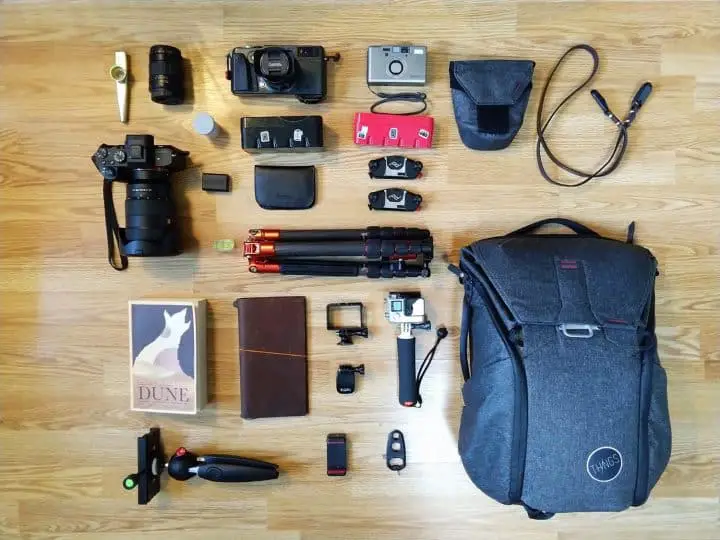
It’s me again!
Been meaning to write to you for a long time, but then life just gets in the way and we park things for far too long. Anyway, here I am again!
I guess these posts of mine should be more appropriately named to “What was in my bag”. I always do the shot beforehand but end up writing to you way after, 5 months after this particular time. Anyway, enough of this.
This is a special one, it’s the travel bag that I took with me to Japan. A trip of my dreams, something I have been wanting to do for sooo long.
I was definitely decided on taking my Sony for general photography, and the Xpan for landscapes, the GoPro revelated itself a nice companion when I took it to Iceland, so I added it into bunch too. What kept me awake at night was if to take the Contax or not. I was thinking that it would be good for nights out, where I would not want to take the big Sony with me, but in the back of my mind, I was also thinking of how much value I would be carrying around with me in a single trip. It’s size though, so appealing and practical ended up being the winning factor, always ready in a jacket pocket, was a nice camera to take out in the subway, or cozy dining places, or to use when I became one-armed after dislocating my forearm in the dangerous hills of Naoshima.
Took the peak design clips with me which allow for nice and quick access to the cameras, the loops also help in just needing on neck and wrist strap, to shed some weight, since this was a proper heavy bag. A small tripod for quickly setting it up on top of something, with a long Arca place because of the Xpan’s thread location. A bigger tripod for more serious and timed shots, still quite light though since it’s made out of carbon. Empty JCH film cases, since I decided to get the film in Japan, as theoretically I would be able to get a tax return on it, but in the end I was not, because I was going to buy and use it in Japan. The refund only applies if I take the film out of the country and not use it while in it (kind of makes sense). Extra memory cards, batteries for all the cameras and some other accessories.
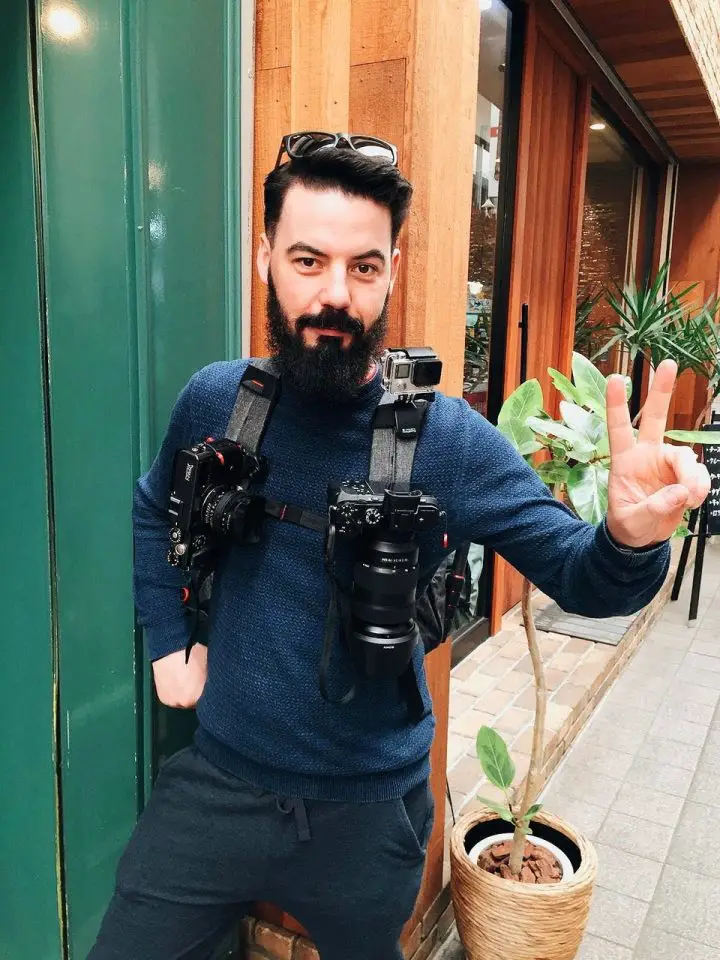
It was quite an amount of gear to carry around as a friend properly noted, I looked like an Asian when they come to Europe, to be fair, don’t think they look this cool. While waiting in a queue on an Okonomiyaki place, a Japanese gentleman took notice of me, he was carrying an A7 with a vintage lens on it, so it was apparent that he knew his camera stuff as well. He was quite enthusiastic about how I looked and when noted that the Xpan was a film camera called me “Kaiko”, with a big smile. I thought I had heard the word before and went to look it up shortly after, I was pleased with it’s meaning.
On the way back we stop in Seoul for 2 days, to visit as well and my companion Kazoo caught the eyes of the security guard in Seoul airport, so I had to play a little serenade for him to see that it was not a smoking pipe. Suffice to say that everyone in the security line was amused.
It was a great trip and I was glad I could fit everything and also use it.
The list:
Your camera shop guide provided itself quite useful to hunt for some gear and it was amazing to see those shops where you can find literally anything.
Thank you for kindly replying to my email that I sent to you with some questions, ahead of my trip.
website: nunocruzstreet.com
instagram: @nunocruzstreet
Until the next time!
Cheers
—
Nuno Cruz
—————————
Thanks for sending us your bag shot Nuno. What song did you serenade them with? :)
Keep them coming folks, we need more submissions, so get your bag on Japancamerahunter.com
Send me a high resolution image of the bag. Optimum size is 1500px across. Please ensure there is a bag in the shot, unless you don’t use one. The more you can write about yourself the better, make it appealing and tell us a story. Snapshots of your gear with a camera phone and no words will not be featured.
Oh and don’t forget your contact details (twitter, flickr, tumbler et al). Send the bag shots here. Please understand that there is a long wait now as there is a backlog of submissions. Not all make the cut, so make sure yours is funny/interesting/quirky. And please make sure the shot is of good quality, as the ones that are not do not go up.
Cheers
Japancamerahunter
The post In your bag No: 1660 – Nuno Cruz appeared first on Japan Camera Hunter.

Cookeina sulcipes, Tropical Goblet. Location: Colombia
Photographer Alison Pollack’s subject of choice is usually hiding in plain sight. To find the minuscule but magnificent fungi and Myxomycetes that she shares on @marin_mushrooms, Pollack drops down to hands and knees with a magnifying glass. “The smaller they are, the more challenging they are to photograph, but I absolutely love the challenge,” Pollack tells Colossal. “My goal is to show people the beauty of these tiny treasures that are all around the forest but barely visible unless you look very very closely.”
Pollack, who is a mathematician by training and “computer geek” by trade (she is now retired from an environmental consulting career), relishes the technical and creative challenges of being a self-taught photographer. She seeks to create compelling artistic beauty with her images while also depicting scientific details in sharp focus. Pollack explains that focus stacking allows her to capture the depth and texture of her small subjects, sometimes incorporating upwards of one hundred photos to create a single image.
To increase the breadth and depth of her discoveries, Pollack travels nationally—and sometimes abroad—to find more fungi and Myxomycetes during her native California’s dry season. She also invests in relationships with other mushroomers, attending weekend gatherings to learn from her peers. “I would love to be able to travel more to different parts of the world to look for and photograph mushrooms and myxos,” Pollack tells Colossal. “Australia and New Zealand, and tropical regions, have mushrooms and myxos that really call to me, and I hope to be able to travel to those areas some day. But every walk in my local woods is a mycelial adventure!”
You can explore more of Pollack’s previous fungi finds on Colossal and follow along with her latest discoveries via Instagram. Pollack also offers prints of her photographs; if interested, contact her on Instagram as well.

Didymium squamulosum. Location: Mt Tamalpais, CA. Composite photo to show detail on both the stipe and cap with sporotheca.

Ascocoryne sarcoides and Trichia. Location: Trout Lake, WA

Willkommlangea reticulata. Location: Fairbanks, AK

Phillipsia domingensis. Location: Colombia

Physarum. Location: Fairbanks, AK

Crepidotus crocophyllus. Location: Pt Reyes, CA

Physarum. Location: Mt Tamalpais, CA

Leocarpus fragilis. Location: Fairbanks, AK

Mycena strobilinoidea and Clavulina. Location: Gifford Pinchot State Park, PA
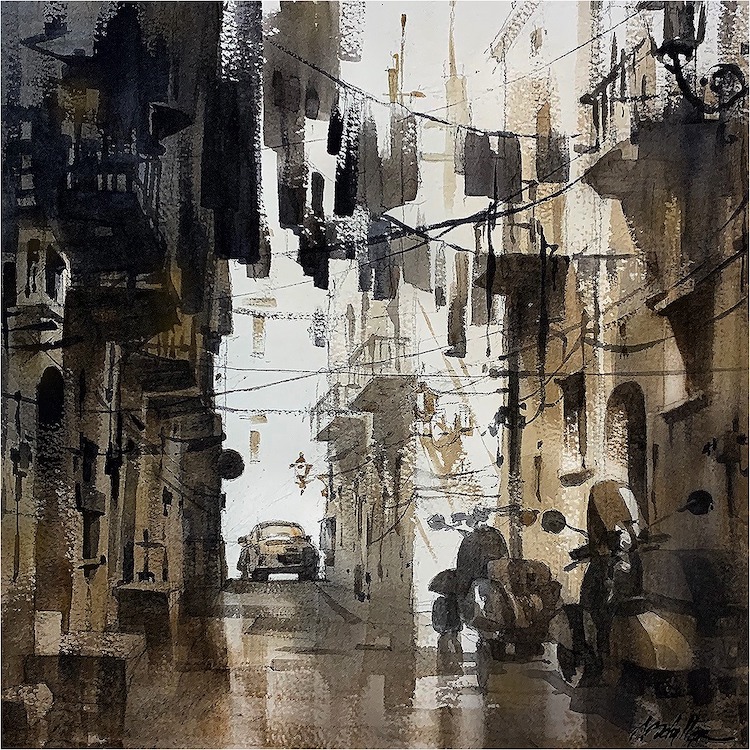
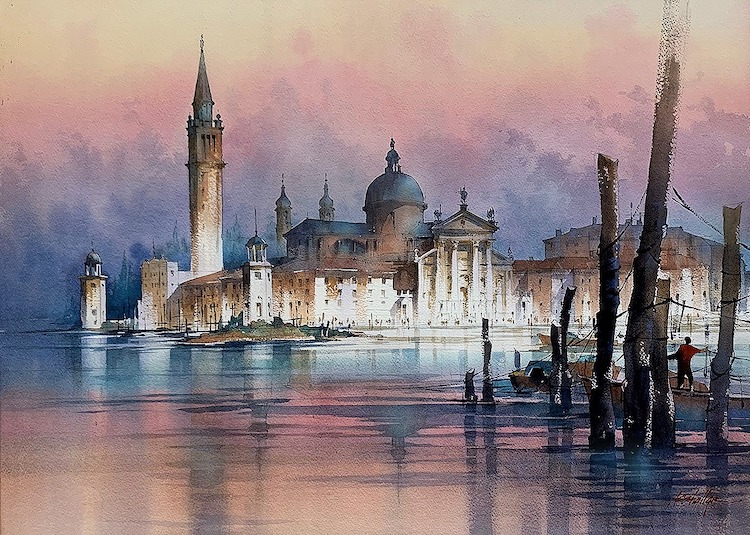
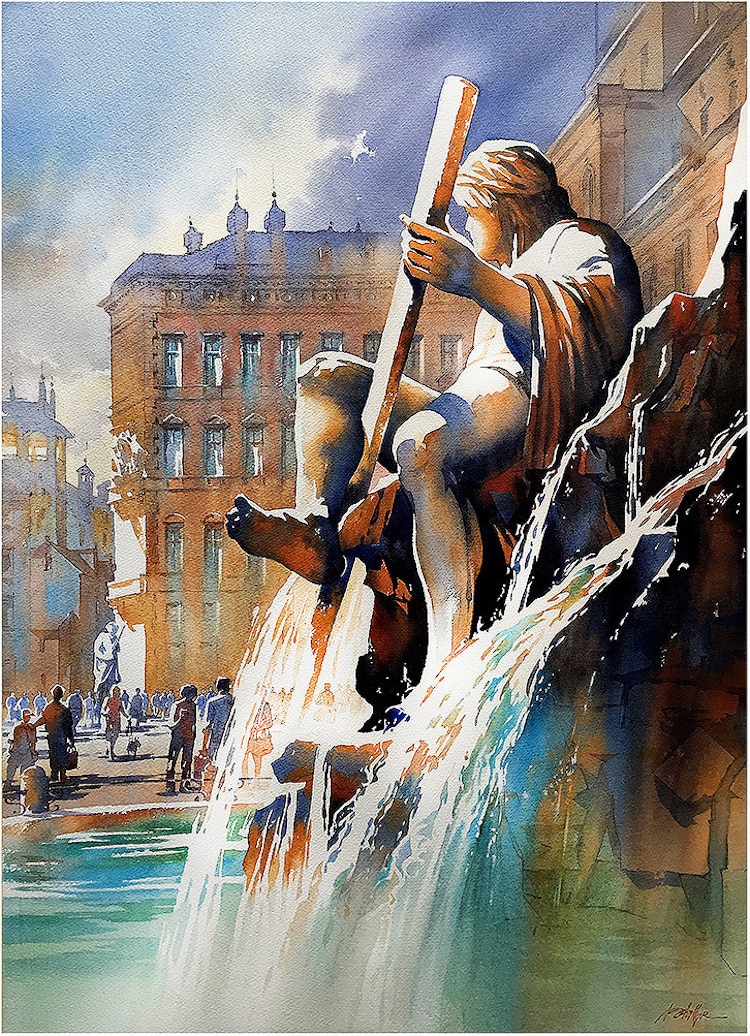
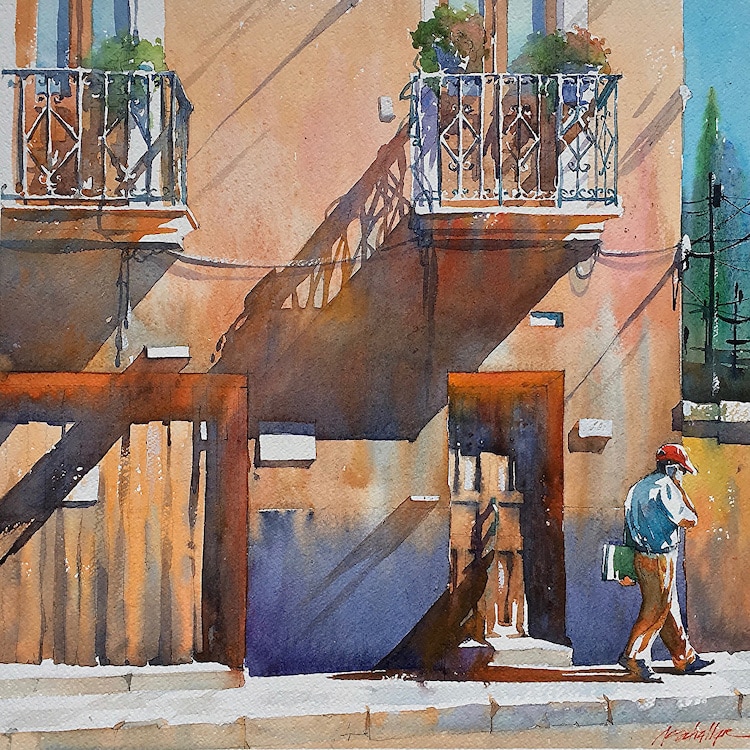
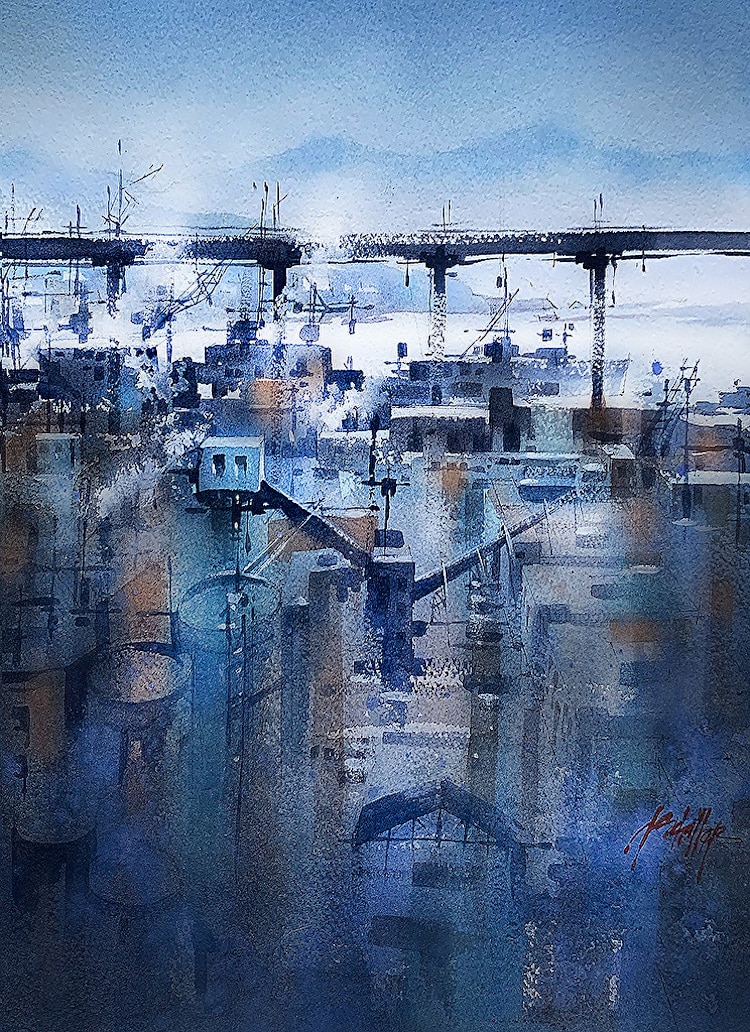
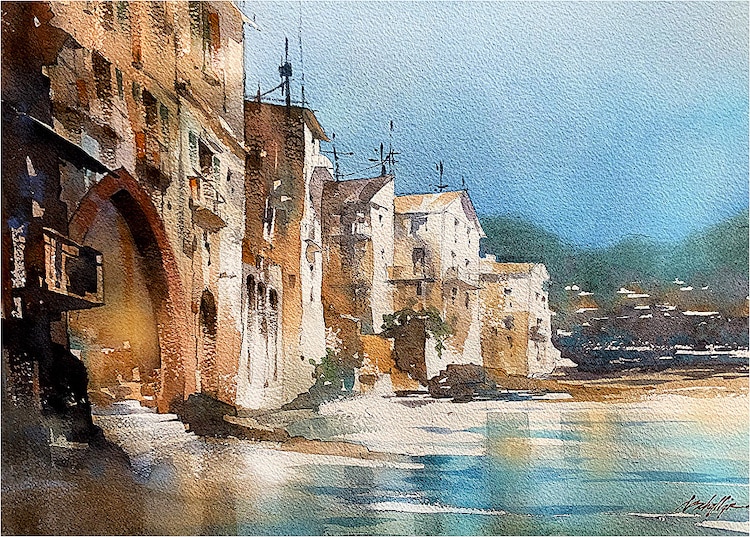
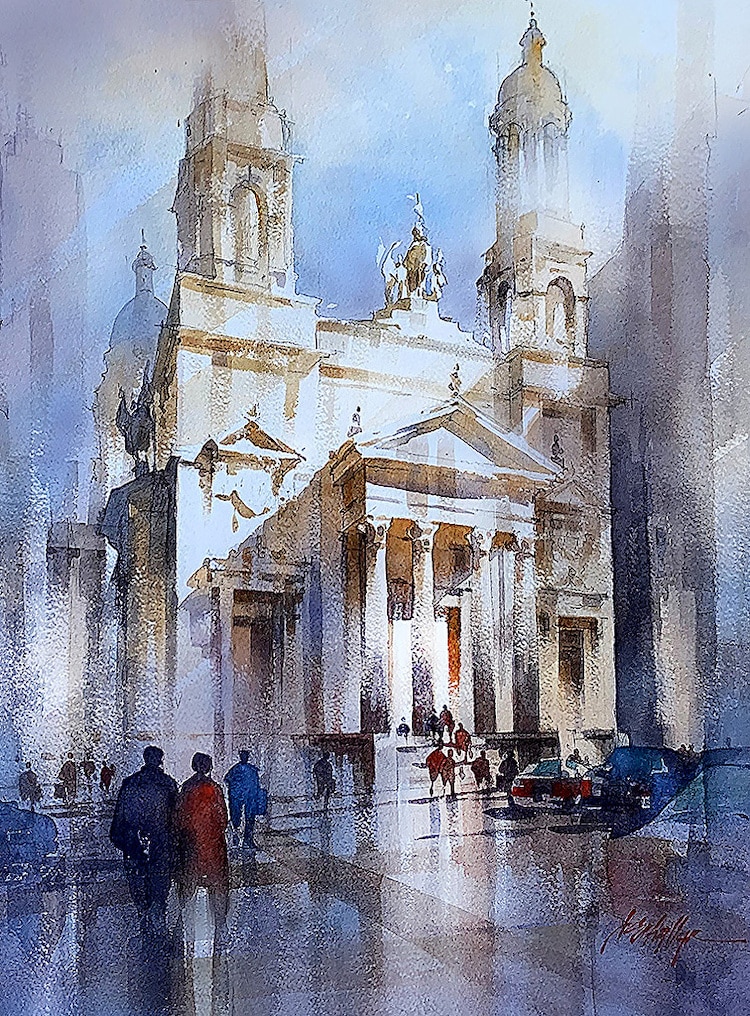
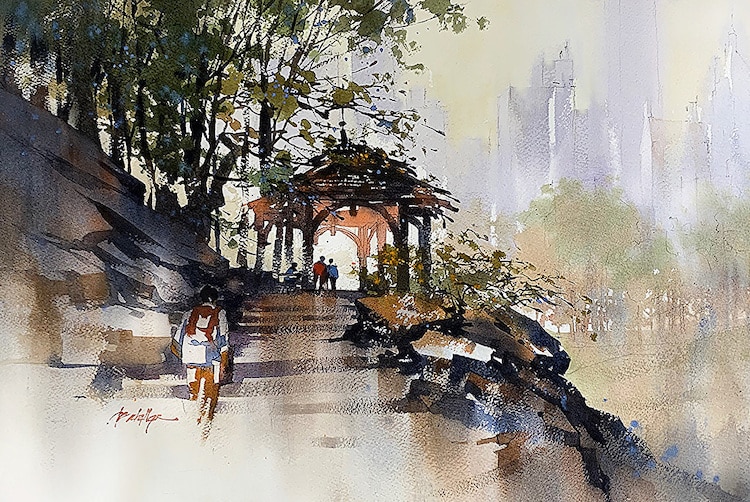
Artist Thomas W. Schaller combines a passion for architecture and storytelling into emotional landscape watercolor paintings. Originally trained as an architect, he found himself drawn to images of the built environment and eventually left designing behind to pursue fine art on a full-time basis. His education places him in an ideal position for architecture painting. Schaller understands how to design structures and knows what attributes to include and what he should leave out. At the same time, he’s able to tap into the feelings we get from visiting a city—such as a sentimentality—to produce pieces that are both beautiful and alluring.
Schaller looks at his architecture paintings as narratives meant to raise more questions than they answer. Within the diffused watercolor washes and faint shadows, he relishes the mystery. “My work is an invitation for you to ask your own questions, and tell your own stories,” he says. “It is my hope that painting can act as a sort of bridge between one world and another allowing for both personal—as well as more universal—forms of communication.”
We had the pleasure of speaking with Schaller about his work, including just how prolific a painter he is. Guess how many pictures he’s completed and then scroll down for My Modern Met’s exclusive interview.
 What came first: a love of architecture or a love of painting?
As a kid, I loved nothing more than to dream up imaginary houses, imaginary cities—under the sea, on other planets, etc. I was obsessed with the idea of “home.” I always believed that we can design the life we want, and “home” is less a place than it is a state of mind over which we all have more control than we sometimes think. So “architecture” in the broadest sense, and the drawing and painting of places, people, and things—real or imagined—have always been of equal importance.
You started your career as a commercial architectural artist. What did that involve?
I studied both art and architecture in university and eventually went on to become a registered architect. But it was always the image—drawings and paintings—of the built environment that most compelled me. So eventually, I began my own business producing concept design and design illustration for larger architecture, development, and entertainment firms. I did work as well for the theater and movie industry.
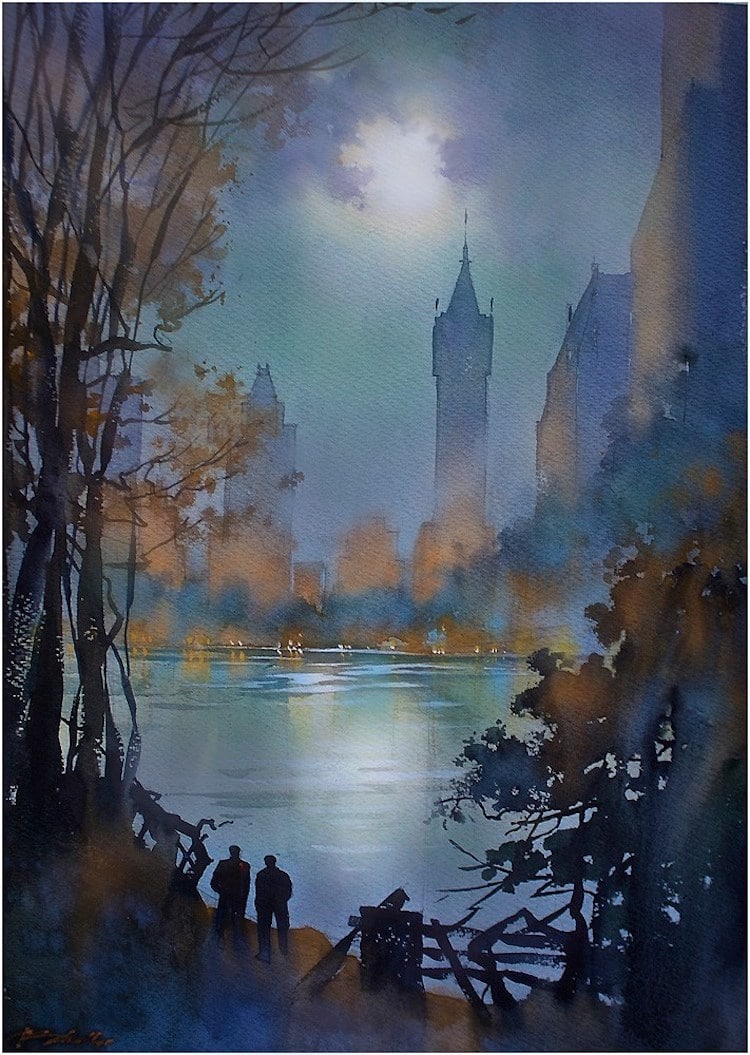
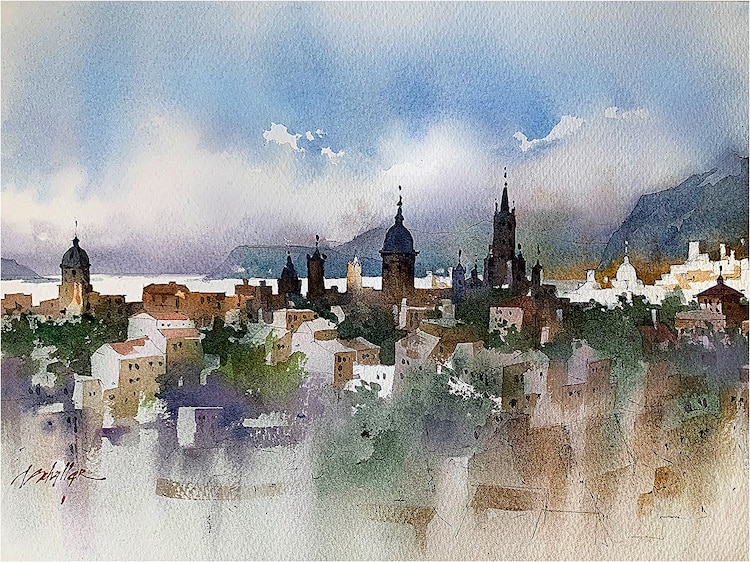 How did it prepare you for a career as a fine artist?
When I began, most illustrators in the field used pen and ink or early-stage computer images. I longed to work in watercolor because I loved it and it seemed a natural fit to evoke the emotionality and narrative power of architecture. I was inspired by the work of architects of earlier eras and I wanted to introduce elements of the French Beaux-Arts, the English landscape aesthetic, and even a bit of the power of Hugh Ferriss in more modernist work.
You identify places as having emotional weight and stories of their own to tell. How do you seek to evoke an emotional response through your work?
Since I work as a fine artist now, there are fewer commercial entities to please, so I’ve discovered something that should have been very obvious. If you want to engage the viewer, don’t tell them everything, encourage them to ask their own questions. An artist should not describe—he or she should interpret. If you design into your work a bit of mystery—areas where the viewer must “fill in the blanks”—you set up an unspoken dialog with your viewers and an emotional weight will begin to develop organically. This is just one example of course, but an important one.
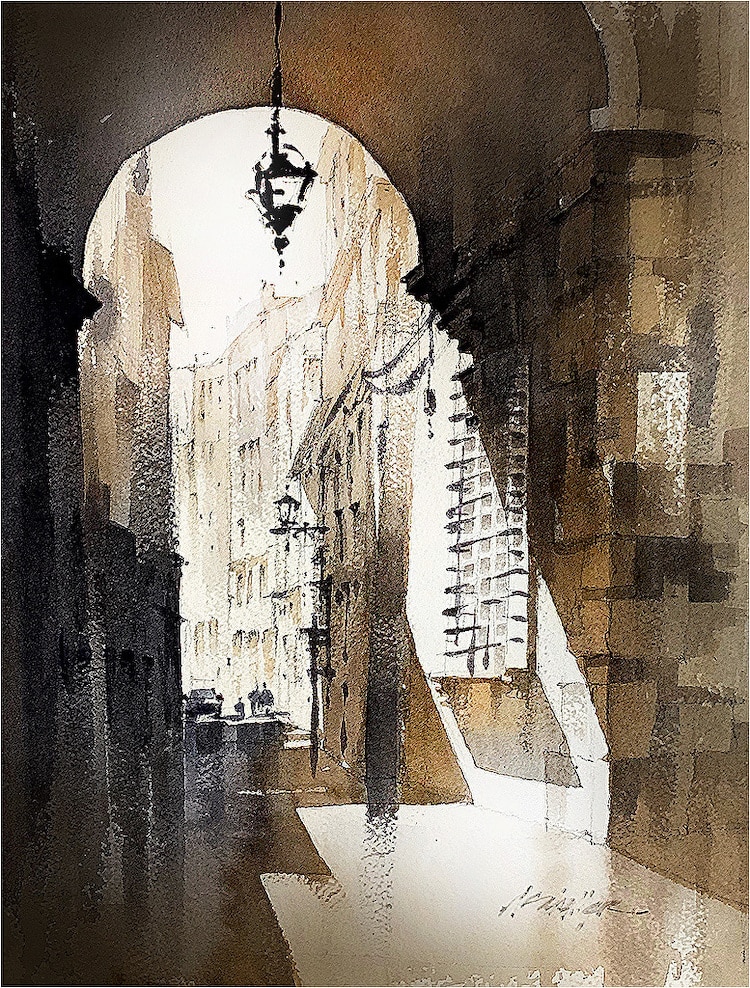
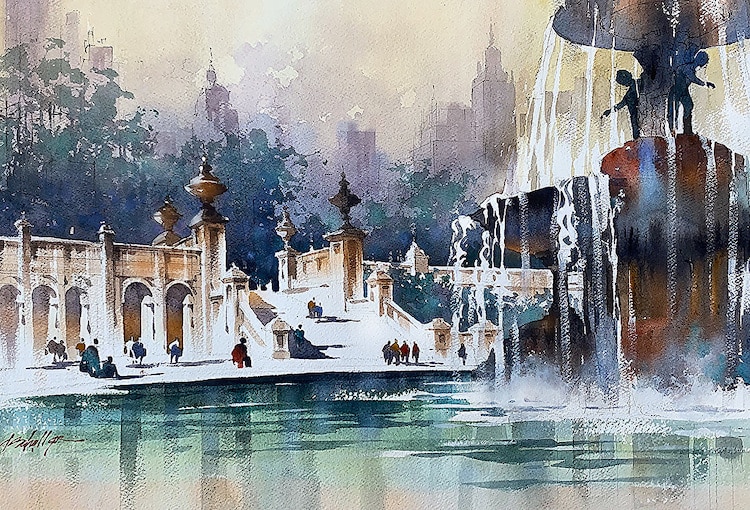 You’ve created a lot of work. Do you have a favorite painting?
Yes – I paint constantly. In the past 10 years alone, I expect I have produced several thousand paintings, albeit, not all of them are especially good! But I’m often asked if I feel about them a bit like “my children” and asked if it is difficult to let them go. Very rarely is that the case. I love the process of painting—of making art—but the finished painting to me is not as important. I’m only as good as my next painting.
What about it is special to you?
I have one painting that I would not sell and that is special to me. It is a distant view of a man and his dog sitting on a rocky ledge under a tree looking at a distant imaginary city. It is really an image of a man on the verge of change—contemplating an unknown future. It is not a very good painting technically, but it has an emotional weight that I wish all my work to have.
 How do you think painting architecture changes the way you look at urban environments?
For me, I think it is crucial to see architecture not so much as solid, fixed objects, but as living, breathing things. Buildings, like trees and people, etc. have personalities, and they are always in a state of change. Architecture is only as good as how well it affects the people who live and work and interact with it every day.
And for the record “architecture” for me does not just mean buildings. One of my personal breakthroughs was in recognizing some years ago that in painting, everything is “architecture;” buildings, figures, trees, skies, water, even atmosphere, and empty space. And by this, I mean that since we paint on a flat two-dimensional surface, everything we express on that paper is nothing more than a collection of shapes—shapes of light and shade and of color—that can imply a sense of depth, perspective, dimensionality.
 What kind of techniques do you use when using watercolor?
As in all mediums, watercolor can seem awash in special techniques. But if not selected judiciously, techniques can often look like tricks and gimmicks. None of them are wrong of course, I just mean that the painter should choose wisely to be sure that the techniques selected that best suit the intent of the work at hand. Personally, I am working hard to edit my work. I wish to use as few elements as I can to effectively tell the story I wish it to tell.
But in general my work is a study in contrasts: light / dark; vertical / horizontal; warm tones / cool tones; the manmade / the natural world; and the contrasts of time; past, present, future. Working in this way, I can orchestrate this very real sense of tension and resolution within my paintings—another way to imbue your work with emotional resonance.
 What’s on the horizon for you? Anything exciting you can tell us about?
I loved the process of completing my last book and I have a few more I hope to write in the years to come. Aside from painting, writing is what I love most to do. And I see clear similarities between the two disciplines.
But in the near future, I am looking forward to a few really high profile exhibitions of my work here in the U.S. as well as in Moscow, Shanghai, and in the UK. Beyond that, I am just grateful to be able to wake up every day and paint. To have a life in which you are able to do what you most love has been a dream come true.
The post Interview: Former Architect Captures the Emotion of Architecture in Watercolor Paintings appeared first on My Modern Met.

Framed Nostalgia (2019), 31 x 37 x 10 inches. Images courtesy of the artist
Connecticut-based Syrian-born artist Mohamad Hafez (previously) uses found objects, paint, and scrap metal to create architectural dioramas of Middle Eastern urban environments. The photorealistic miniatures are packed with detail and speak to the political and social issues plaguing the artist’s war-torn homeland.
An architect by trade, Hafez imagines and builds cross-sections of streets and structures covered in grime and graffiti. Situated within suitcases and picture frames, the wall-mounted pieces are meant to be viewed and considered up close. Exposed rusty pipes, rubble, and weathered doorways of the crumbling nation are contrasted by hopeful verses from the Quran. The streetscapes, according to statement on the artist’s website, combine Hafez’s interests in street art and activism. While feeling helpless to bring about meaningful changes in Syria, his intention with the dioramas is to “expose the Middle East’s conflicts to the world in a modest, artistic approach to appeal to a wider contemporary audience.”
Harold J. Miossi Art Gallery at Cuesta College is currently hosting a Retrospective exhibition of Hafez’s work through December 20, 2019. His miniatures can also be seen at The Oriental Institute of the University of Chicago as their first “interpreter-in-residence.” To dive deeper into Hafez’s miniature worlds, follow the artist on Instagram.

Framed Nostalgia 1 (2019) (detail)

Framed Nostalgia 1 (2019), detail

WWII Box (from the Baggage Series, detail

Framed Nostalgia 2 (2019), 31 x 37 x 10 inches.

Hiraeth, 61 x 35 x 21 inches.

Hiraeth, detail.

Unsettled Nostalgia. 12 x 60 x 8 inches

Unsettled Nostalgia, detail.

The urban architecture of Sofia, Bulgaria becomes an oversized Tetris game in a series by Mariyan Atanasov. To create the visual allusion, Atanasov abstracted the Eastern European city’s geometric buildings into minimal images, editing out distractions like phone wires and trees. In each photo sections of architecture seem to float down, ready to slot into the stack in the same mode as the classic 80’s video game created by Soviet Russian software engineer Alexey Pajitnov. Atanasov is based in Paris, Texas and shares his photography and design projects on Behance and Instagram, including many other minimalist architectural studies from around Europe. (via Trendland)


Using a combination of pencil, crayon, and gouache, Bristol-based illustrator Rosanna Tasker creates evocative illustrations that convey lively energy and fantastical nostalgia. In Tasker’s illustrations, female figures are often the protagonists, with animals and plants playing supporting roles. Strong geometric shapes, concentrated mark-making, and carefully considered negative space in tightly controlled color palettes form dynamic imagery.
Tasker, who is 25, studied illustration at University of the West of England, Bristol. In an interview with Irina & Silviu, the artist explained that she found her artistic voice by “unlearning everything I was told at school and college about how I should draw. That stuff is important too, and I do believe in learning the rules before breaking them, but to find your own unique style you definitely have to return to your uninhibited childhood roots and rediscover what comes naturally to you,” she shared.
Tasker works full-time as an illustrator, with a roster of editorial and publishing clients including The New York Times, The Guardian, and Tangent Books. Her prints and greeting cards are available from Etsy and Toi Art Gallery, where a selection of works are in the gallery’s Unstoppable Women show. Take a peek inside Tasker’s studio in this interview, and follow along with her latest projects on Instagram.


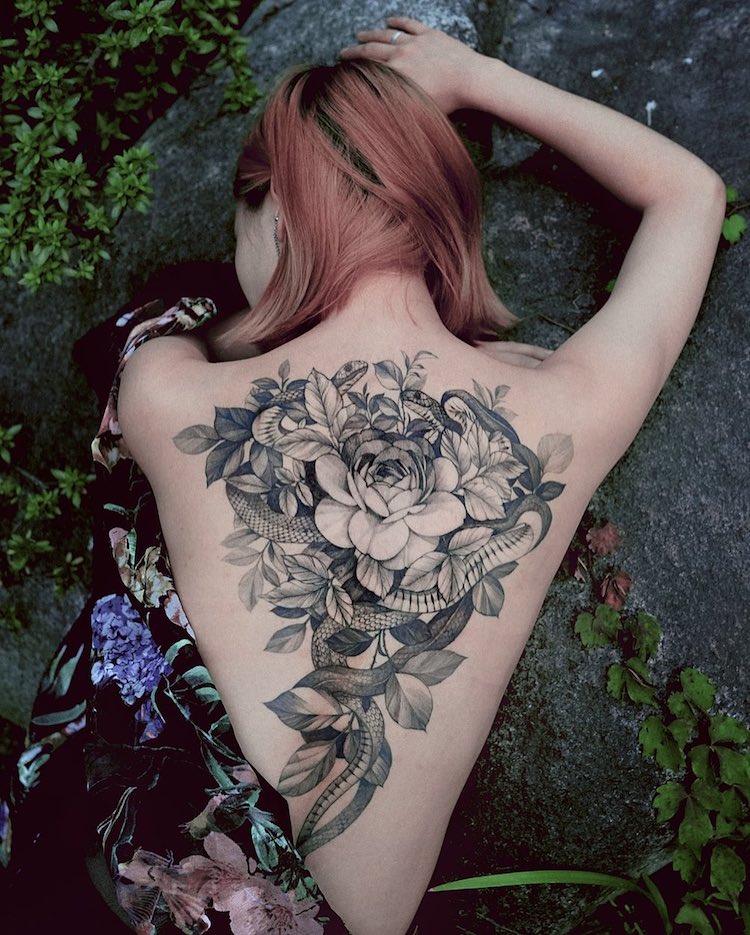
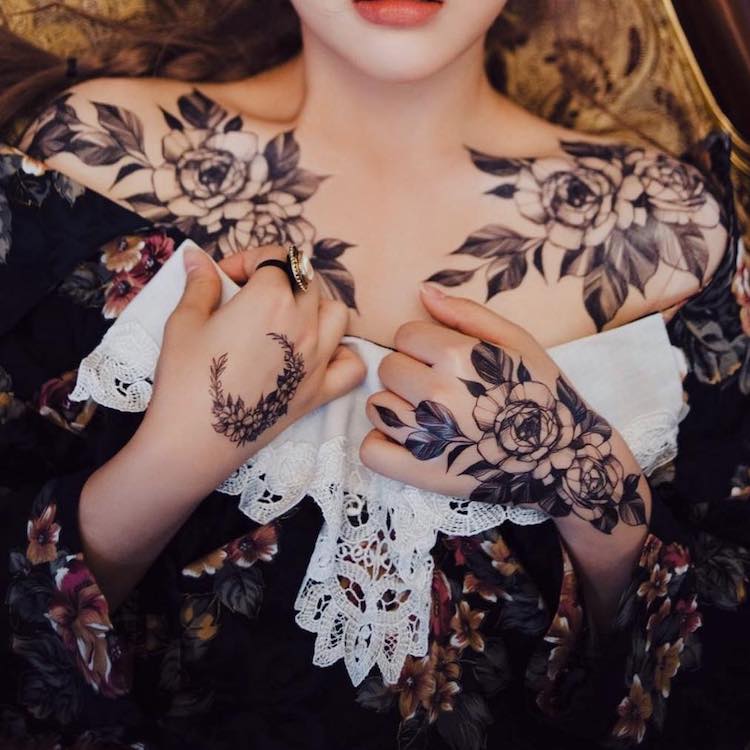
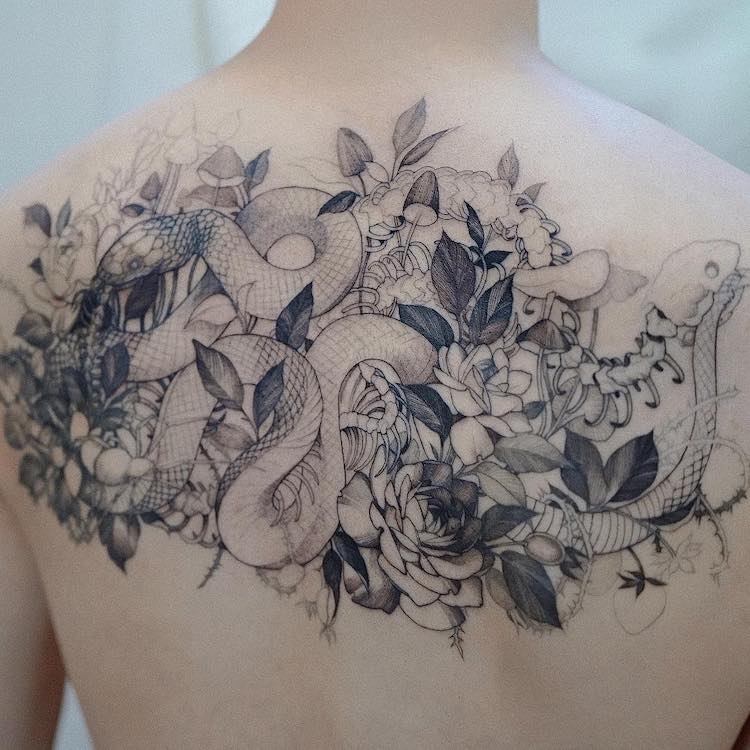
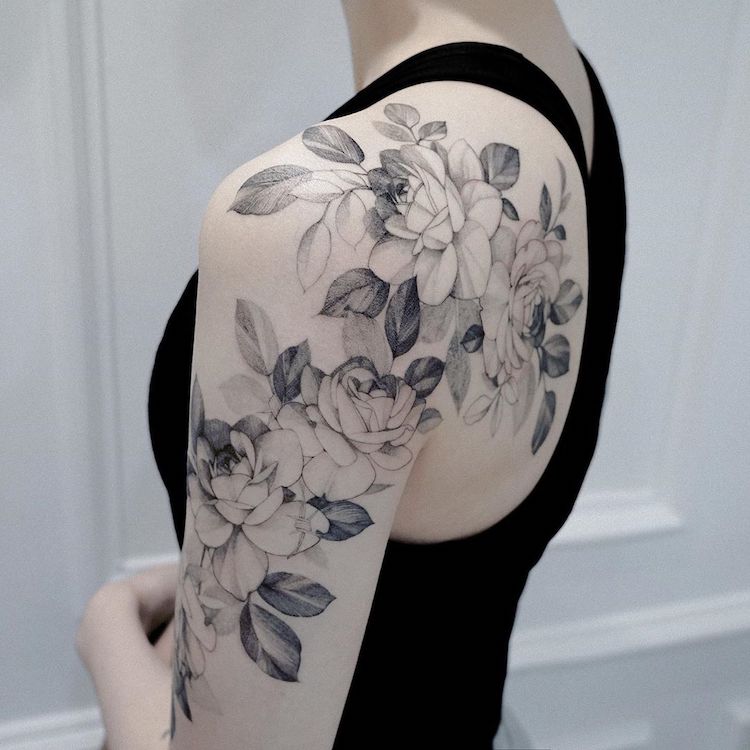
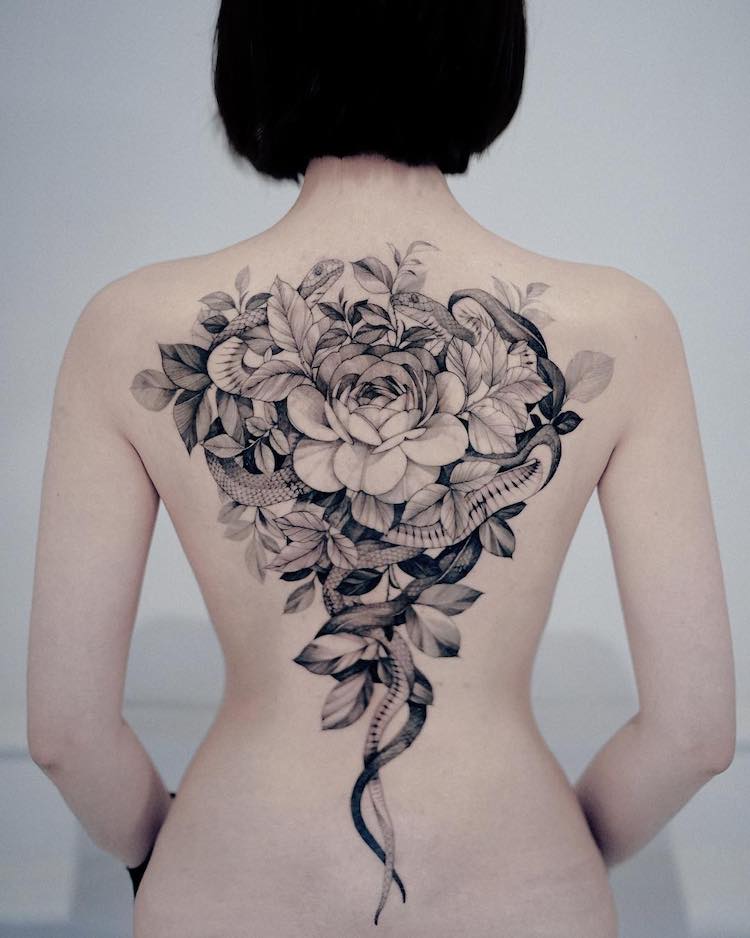
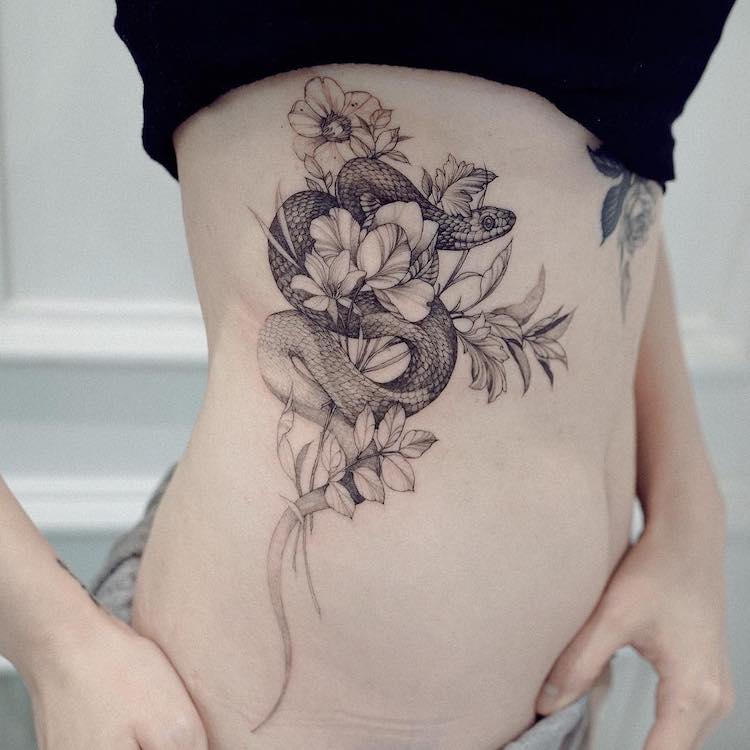
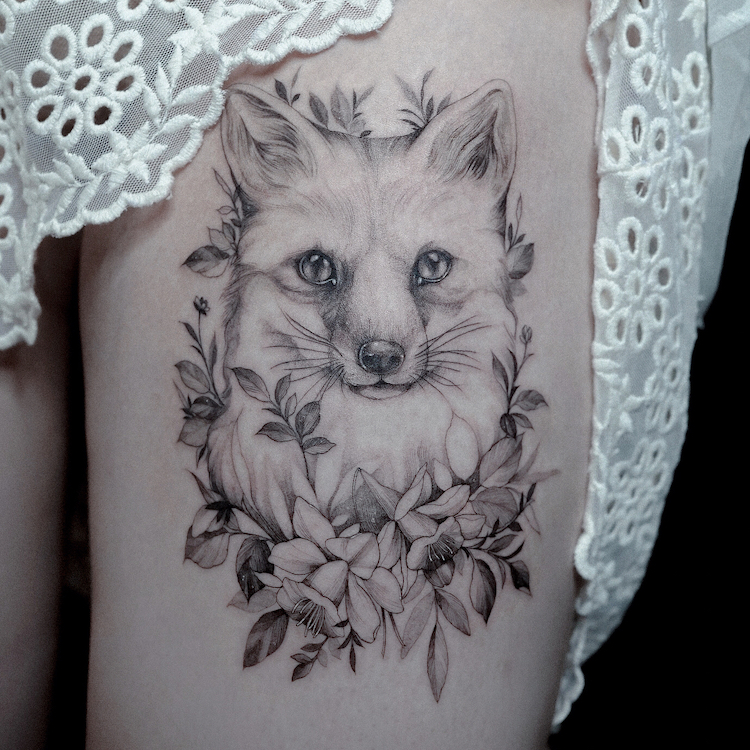
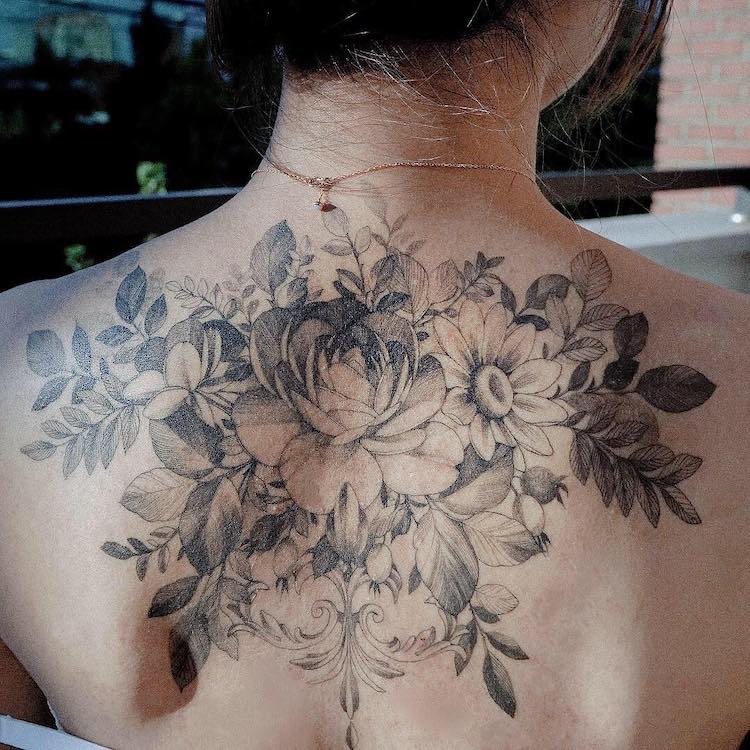
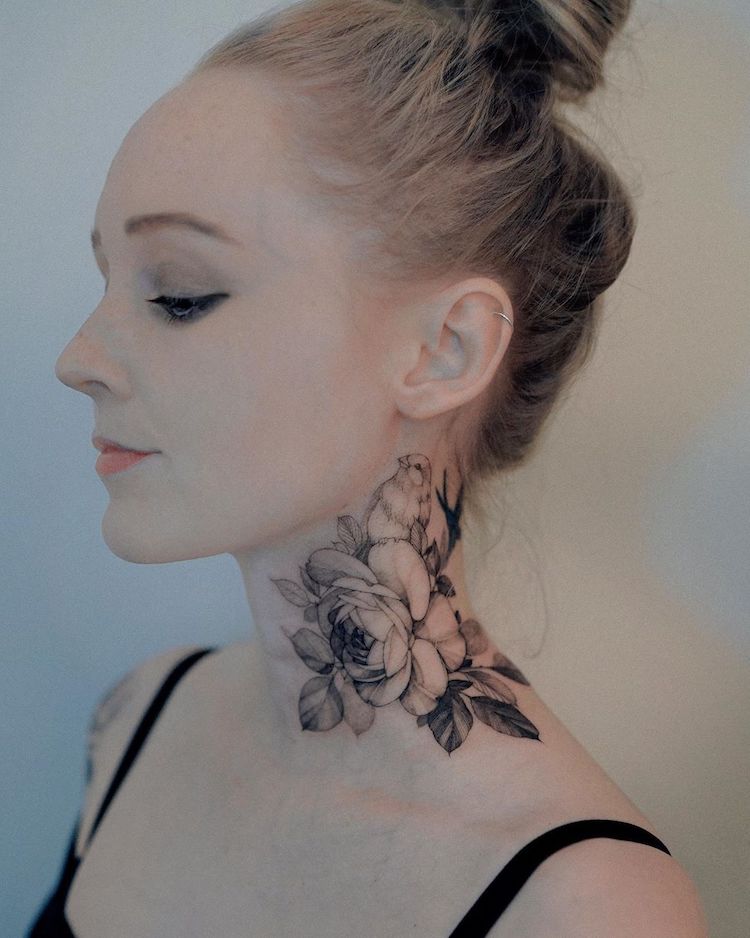
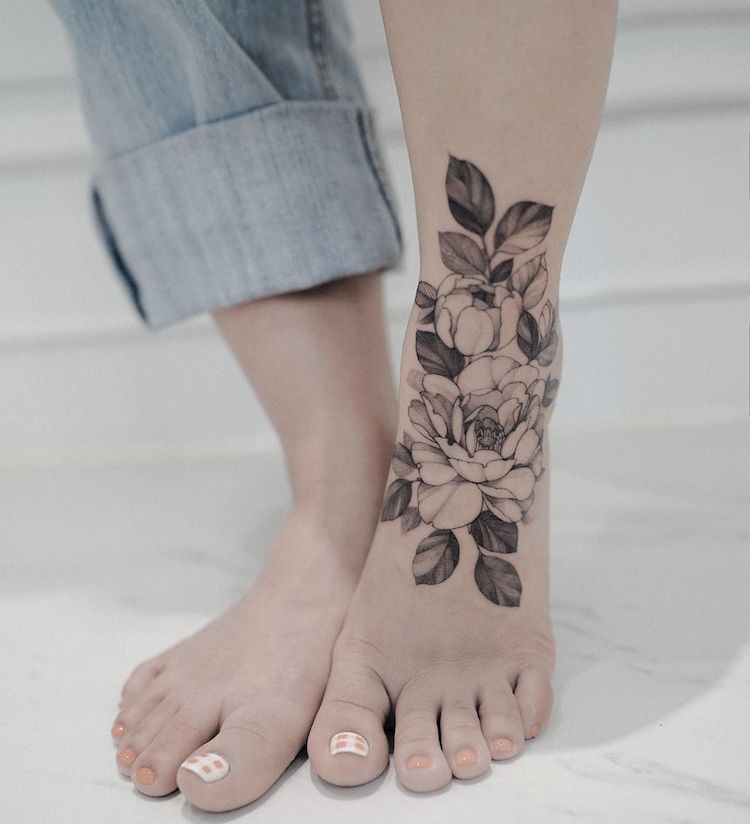
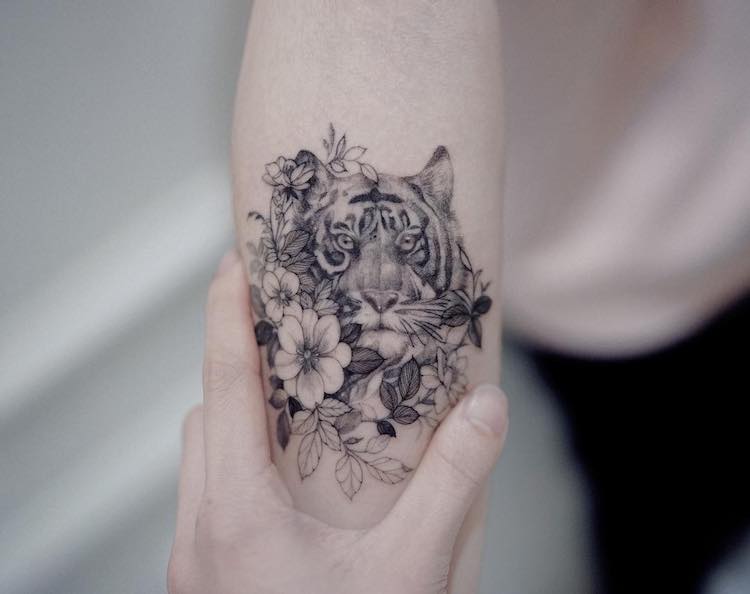
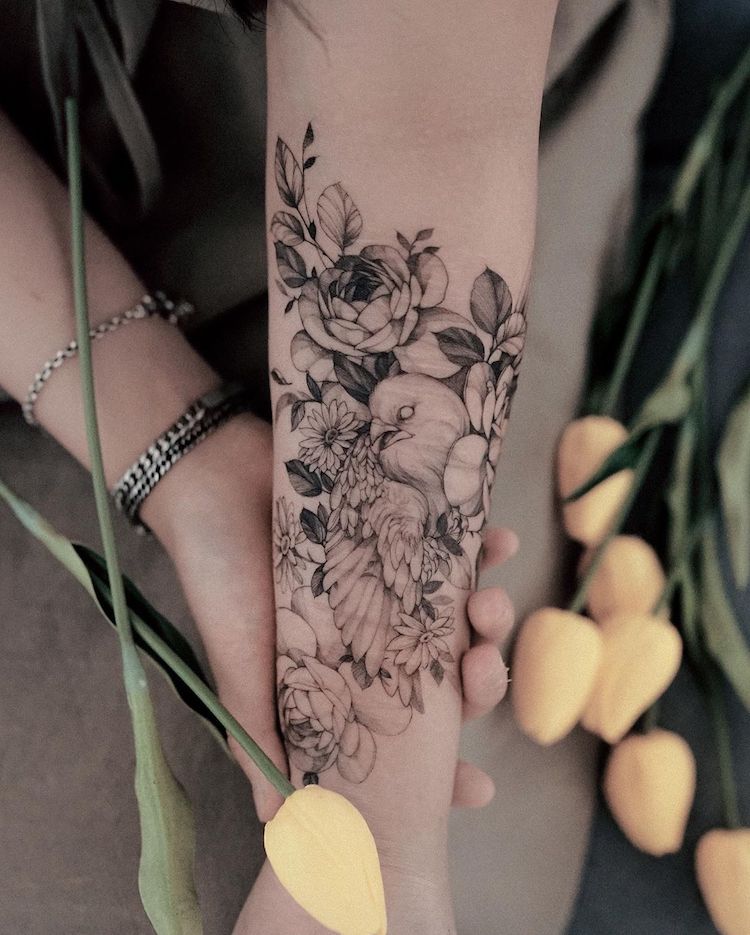
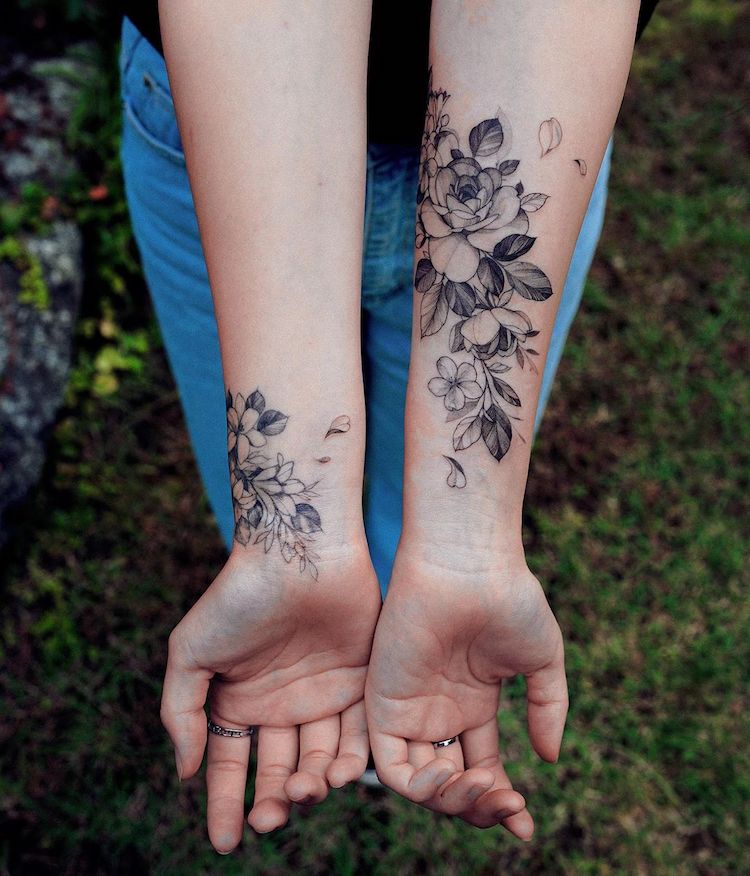
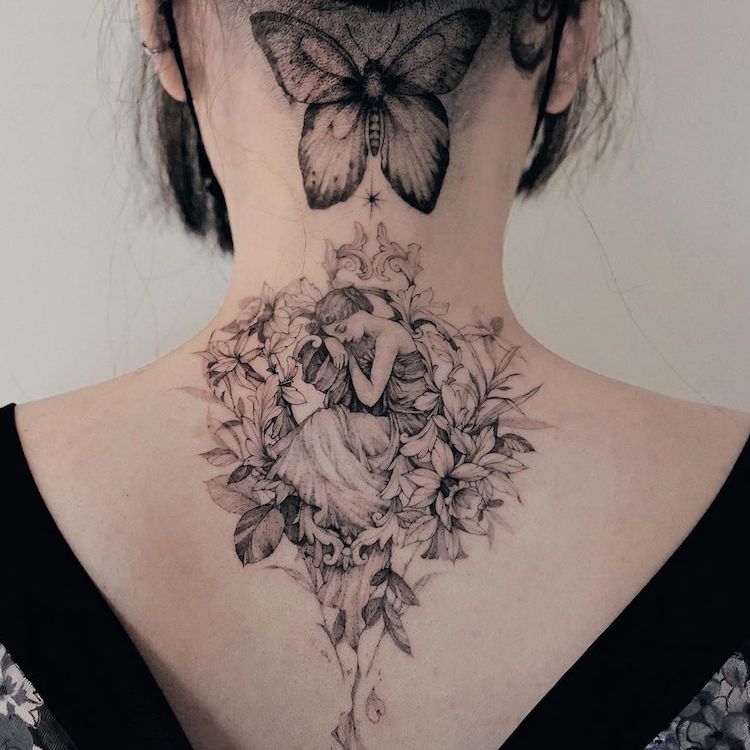
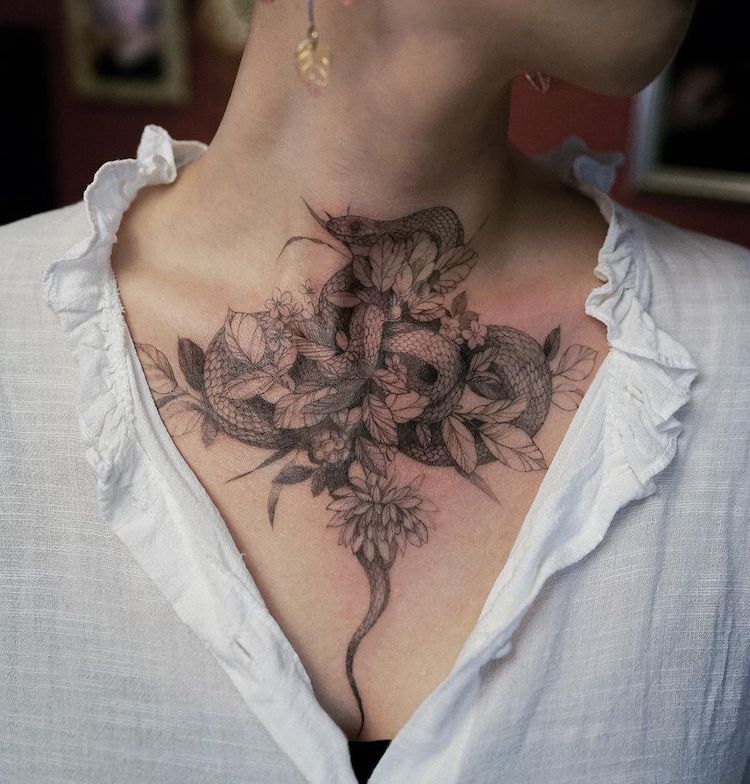
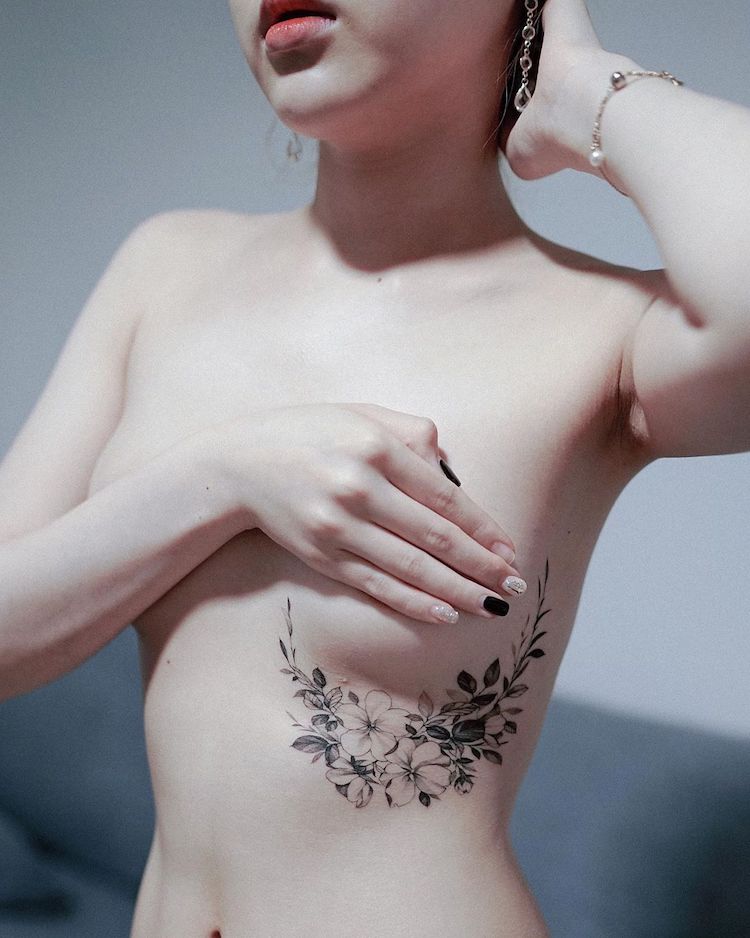
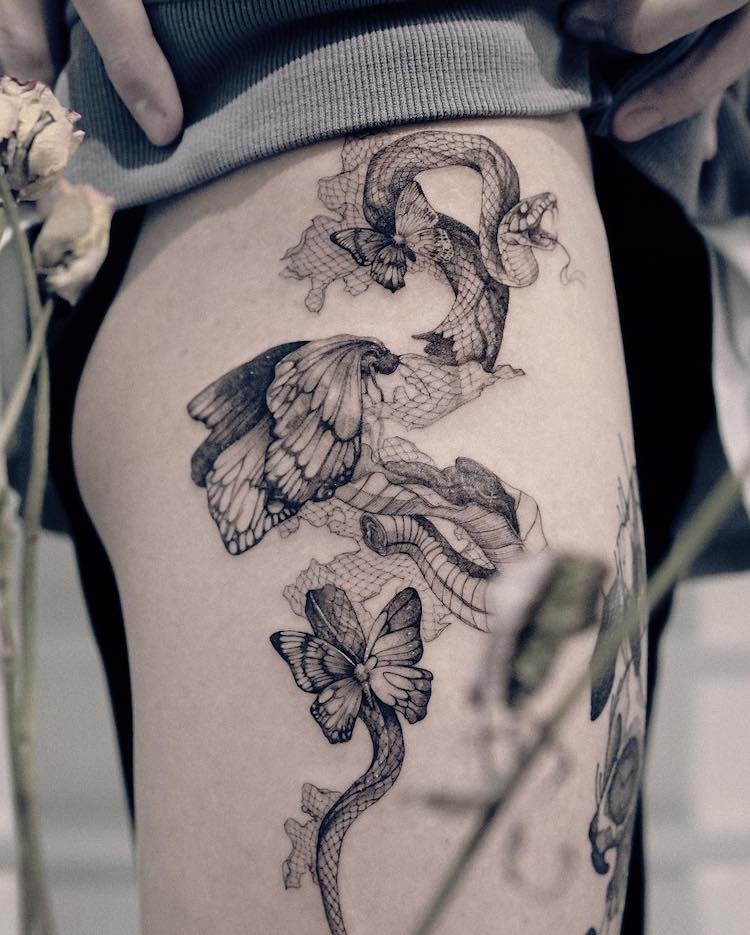
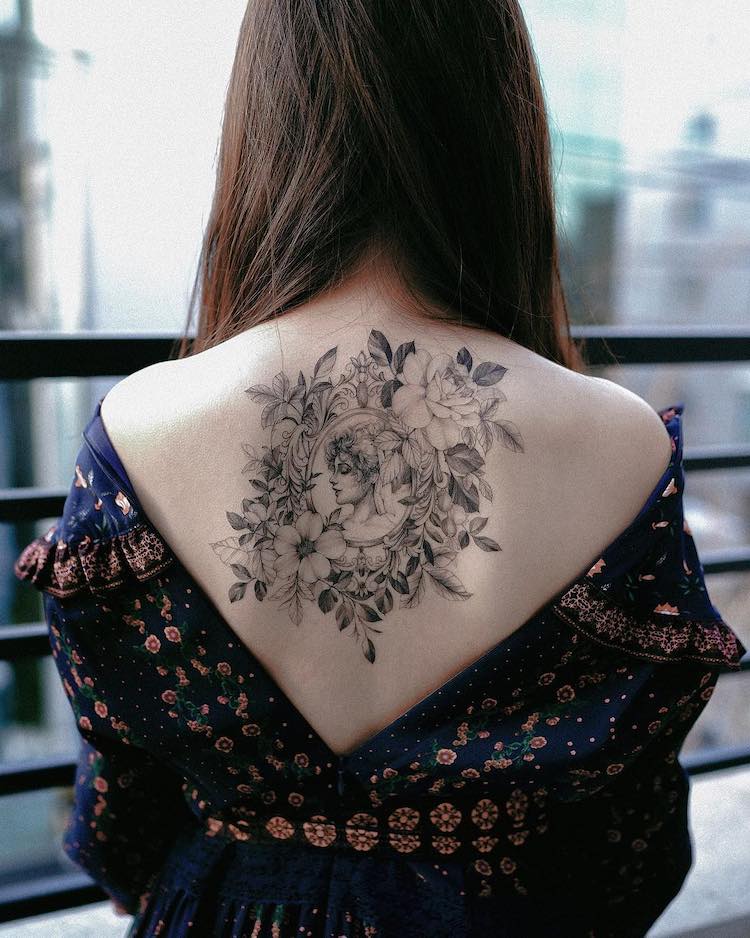
South Korean tattoo artist Le jardin de Zihwa, known simply as Zihwa, creates delicate drawings on the skin. Opting for soft black shading and thin lines produced with a single needle, her style favors subtlety with soft shading and realistic rendering. The aesthetic is fitting for her nature-inspired subject matter; the blooming florals, slithering snakes, and coy foxes recall technical drawings you might see in a textbook. Zihwa’s compositions, however, makes the potentially modest drawings seem magical, and they feel like part of a fairy tale on etched skin.
Zihwa was originally trained as a graphic designer and began her tattooing career several years ago. The designer’s training is evident in the placement of her tattoos, and her illustrations often wrap around parts of the body in a deliberate way—like they were always meant there. In one tattoo, a snake trails down the middle of a client’s chest while another design showcases how flowers and birds are a perfect fit on the side of the neck as they settle just underneath the ear.
Since gaining fame as a tattooer, Zihwa has started to create products based on her drawings. The likes of hand mirrors, pouches, and temporary tattoos are now available in her online shop.
 Le jardin de Zihwa: Website | Instagram | Facebook
h/t: [So Super Awesome]
20+ Creative Ear Tattoos That Are More Fun Than Wearing Earrings
40+ Creative Tattoo Ideas to Inspire Your Next Bit of Body Art
20+ Creative Collar Bone Tattoos with Statement-Making Style That’s Above the Rest
35+ Flower Tattoos Celebrating the Vibrant Varieties of Beautiful Botanicals
The post Delicate Nature-Inspired Tattoos are Perfectly Placed on the Wearer’s Body appeared first on My Modern Met.