Off the beaten path from Australia’s wildlife preserves and
pristine beaches is a little-known country that has quietly
prospered for 43 years. The Principality of Hutt River sits on 75
square kilometers of land five hours north of Perth in Western
Australia. Its stark landscape is not unlike a stretch of Nebraska
farmland, except for the occasional stray marsupial and the wild
roadside melons, scattered like hundreds of abandoned softballs.
The country’s stamps, passports, and currency all bear the likeness
of its ruler, Prince Leonard.
Hutt River’s secession and heraldry are neither a political
statement nor a publicity stunt. They resulted from one man’s
determination to save his wheat farm from ruinous government
mandates. In 1970, after fighting a losing battle to repeal a
stifling wheat quota, Leonard Casley and several of his neighbors
declared independence from Australia. “We seceded to protect our
lands,” says Casley, “to stop our lands from being taken from
us.”
For more than four decades the self-made monarch has matched
wits with irritated bureaucrats and politicians. So far, he’s come
out ahead.
A year before Hutt River seceded, the Western Australian
legislature sought to stabilize wheat prices by enacting strict
caps on how many bushels farmers could sell. By limiting the supply
of wheat, they reasoned, the overall price would be exempted from
the laws of supply and demand. Like many such heavy-handed
measures, the quota bore unintended consequences. The harvest
limits stood to cripple larger farms unable to eke by on so little
produce. For Casley, the quota meant he could only harvest 100 of
his 10,000 acres. A 99 percent reduction in projected output did
not strike him as sound financial planning.
As the leader of a group of families affected by the quota,
Casley lodged a protest with the governor of Western Australia, Sir
Douglas Kendrew. Kendrew summarily denied the group’s request for a
waiver. Casley filed suit against the crown and Gov. Kendrew for
A$52 million on the grounds that the wheat regulation was an
unlawful imposition, as the quota had not yet passed into law.
Casley intended for his tort gambit to force a revision of the new
rule, but he instead drew the ire of the authorities. Two weeks
after his lawsuit was filed, the Western Australia government
introduced a bill to Parliament which, if passed, would “resume”
his and the other protesting farms under compulsory acquisition. In
other words, their land would become the property of the
government.
His Royal Highness Prince Leonard of Hutt
Rather than scuttling his farm or funneling excess crops into a
cereal black market, Casley took the novel approach of declaring
independence from the Commonwealth of Australia. He drafted an
official declaration of secession and sent copies to Western
Australia’s premier and governor. The government of Western
Australia had the legal purview to handle wheat and tax disputes,
but managing a secession was a bit outside the norm.
The government acknowledged receiving Casley’s declaration of
independence, but it did not recognize the document as having the
force of law. While no armies or police squadrons invaded to
capture Casley and his cohorts, Australia’s silence did not signal
an exemption from the quota. Not only was Casley still technically
liable for violating the wheat restrictions, he faced possible jail
time: Under Western Australia’s Penal Code, Casley could be charged
with “infringement of territory” and arrested. Given that the state
parliament had already threatened to “resume” his lands, the
possibility of criminal prosecution was entirely real.
When Australian Prime Minister William McMahon threatened legal
action against the Hutt River secessionists in 1971, Casley and his
counselors combed through law books, looking for a way to protect
their revolutionary activity. They found a loophole: the Imperial
Treasons Act of 1495, a law created during England’s more
rough-and-tumble days when rival claimants fought wars over the
throne. Under the act—officially “An Acte that noe person going wth
the Kinge to the Warres shalbe attaynt of treason”—any person
providing assistance to a “de facto” prince in exercise of his
functions could not be accused of treason. Thus, to shield his
family and neighbors from criminal prosecution, Leonard declared
himself His Royal Highness Prince Leonard of Hutt.
Prince Leonard had another legal workaround up his sleeve. Since
the beginning of the anti-quota campaign, Casley had been duly
elected as the administrator of Hutt River by its cooperating
farmers. When the government of Australia in official
correspondence addressed Casley as “Administrator of Hutt River,”
it inadvertently provided the functional recognition necessary to
make the Imperial Treasons Act applicable. Leonard both was a
titular prince and had formal recognition that he performed a
prince’s governing functions.
The Australian government did not follow through with the
threatened prosecution. Because of the two-year statute of
limitations under the Penal Code, the window of time during which
the government could have incarcerated Hutt River’s separatists for
infringement of territory closed in 1972. Prince Leonard’s farmers
kept cranking out wheat in open defiance of the quota.
Four years later, the government struck back. In 1976, the
Australian postal system refused to deliver mail to Hutt River,
forcing the landlocked principality to route its letters through
distant Canada. According to Casley, then–Prime Minister Malcolm
Fraser also instructed the Tax Office to “go out after me and break
me.” On December 2, 1977, Prince Leonard responded to Australian
belligerence with an official declaration of war. “They laughed
their heads off,” says Prince Leonard. “They said, ‘The prince has
really flipped his lid. He’s declared war on us.’ Then, three days
later I sent another telegram to the Governor-General declaring
that the state of war was now officially ceased.”
The bloodless hostilities garnered popular support for Hutt
River from the press, but the declaration of war had more to do
with legal maneuvering than publicity. “I do trust that you will
enforce the Laws of War,” Casley subsequently wrote to the
Governor-General. “Sovereignty is automatic to a country undefeated
in a state of war.…and if the state of war is not recognized by the
other party, once the notice is given then these conventions apply
to their relations.” In short, Leonard set a precedent for
international recognition of Hutt River under the Geneva
Convention.
Private Kingdom or Private
Enterprise?
Australia has not acknowledged Hutt River as a sovereign nation,
maintaining that the principality is a private enterprise. “The
area of land which is described as the ‘Hutt River Province’ is a
privately-owned wheat-growing property,” said Jeremy Bruer,
Australian Ambassador to the United Arab Emirates, in an official
embassy statement. “It has no special status. It has no separate
sovereignty and remains subject to the Australian Constitution and
the laws of Australia.”
Yet the principality is not without certain legal nuances. A
placard in Nain, its capital, proudly notes that Casley is a
“non-resident of Australia” for income tax purposes. All of Hutt
River’s resident subjects have likewise received these notices.
Citizens of Hutt River pay taxes on income earned there, but only
to Hutt River’s Tax Department—not to Australia.
In 1980 a Perth court ruled that, at least within Hutt River,
its currency and postage stamps are valid and legal. Australia
resumed delivering mail to the principality shortly thereafter.
Hutt River also issues license tags for cars, and even its own
passports, though their international recognition is limited. And
since September 2004, Hutt River has accepted foreign company
registrations, though their status on Hong Kong’s registry of
places to incorporate is now under review following an outcry in
the Australian media.
The prospects of becoming an Australian tax haven are
tantalizing. According to Hutt River’s official history, “Prince
Leonard…would doubtless wish to see his country benefiting from a
status equivalent to Monaco or the Bahamas Islands.” Were Hutt
River to flex its muscles and flaunt lower tax rates for
international corporations, it would be all but certain to
experience belligerent interference from the Australian government.
Meanwhile, the principality is tentatively expanding into realms
other than business incorporation. Hutt River is now a host to
several online colleges, and Prince Leonard envisions Nain as home
one day to a medical research center and its own university.
According to Casley’s Aide-de-Camp, Lord Steve Baikie, it is in
the best interest of both Hutt River and Australia to formally
recognize the principality’s de facto independence. “They’d make a
huge amount of money by assisting us to develop rather than arguing
against it,” Baikie says.
The yields from tourism are already apparent. While Hutt River’s
early notoriety led to an estimated 60,000 visitors a year, almost
all from within Australia, the curiosity-seekers now (at an
estimated 30,000 per annum) are predominantly foreigners in their
teens, twenties, and thirties. Prince Leonard has effectively
created a tourist magnet in a part of Australia few Australians
would ever visit, let alone Asians or Europeans. International
recognition would enhance its appeal as a destination and
potentially bring in more visitors to both countries.
Casley notes that there are investors lined up to incorporate in
Hutt River, but the prince refrains from encouraging large-scale
development, knowing that “waving red in front of the bull” could
bring down the Australian government’s wrath. “We could have a Hong
Kong here, or a Switzerland here,” he says, referring to potential
investors. “Company after company want to do just that.”
The Price of Princedom
Hutt River’s independence has brought costs as well. Australia
does not just withhold its acknowledgment from Hutt River, or the
development such recognition would bring. It has deprived Prince
Leonard of rights guaranteed to an Australian citizen even while
staunchly maintaining that he never ceased being one. All social
security benefits were withdrawn by the Australian Government from
Hutt River’s resident subjects at the time of secession, as well as
pensions receivable, educational allowances, and child endowments.
Leonard’s wife, Princess Shirley, is not eligible to draw the
medical benefits she is entitled to as the spouse of a war veteran.
(Casley served in the Royal Air Force during World War II.)
In the past large amounts of letters en route to Hutt River have
been confiscated and destroyed, without due process or judicial
review—necessary legalities if Leonard Casley is indeed an
Australian citizen.
The royal couple contend that they and the rest of Hutt River’s
subjects have been removed from the Australian electoral roll. In
recent elections Australian voters have received ID cards to take
with them to the polling booths, but subjects of Hutt River have
received no such documents. An odd development, given that in
Australia voting is not just a right of citizens but an enforceable
requirement.
Last year the Australian Tax Office wrote to Casley demanding
tax payments and he responded with a meticulous legal document
asserting his status as a foreign national and non-resident of
Australia. Were Hutt River to again face legal action in an
Australian court, Prince Leonard is confident his country would be
vindicated as a sovereign state.
Independent of potential legal battles, agents of Hutt River are
busy combing through recently declassified memoranda from the
Australian government about the principality. According to Baikie,
the contents indicate that Australia’s officials were much more
concerned about Hutt River than they initially indicated. “We’re
blown away by what we’re seeing in those archives.…Prime ministers
and state premiers asking for Prince Leonard to be charged…a lot
more opposed than we thought,” he says. Additional investigation
may yield further grounds for international recognition.
Despite the irritating impediments and legal hurdles which Hutt
River regularly faces, Leonard and his subjects are proud of all
they have accomplished. Leonard’s son, Prince Ian, is ready to
assume the crown when the time comes, and the prospect of
investment and development loom on the horizon.
Hutt River is no Australian golden goose, à la China’s “special
economic zones,” nor is it an explicit libertarian experiment, like
the charter city movement or New Hampshire’s Free State Project.
Yet it is much more than an eccentric’s flight of fancy. The
project began as a righteous fight for survival against a foolhardy
law, and stands as a rare recent example of a peaceful secession.
Though it lacks international recognition, the principality has won
key battles, carving out small but meaningful rights for itself
from the behemoth country surrounding it. The onerous wheat quota
which originally galvanized Leonard Casley into action is no longer
in effect—perhaps due to the precocious efforts of its most
prominent critic.
Prince Leonard can claim the distinction of reigning over his
country longer than most presidents or prime ministers in modern
history. He even sports a certain amusement about his country’s
finances as compared to America’s: “I’m thinking our treasury is in
a better way than your treasury, because our treasury
doesn’t owe anything.”
Detractors contest the legitimacy of Hutt River and its
sovereign; enthusiasts err towards infatuation with the heraldry
and titles of nobility that have sprung from the homegrown
monarchy. Leonard remains wry but clear minded. He points out that
he never intended to become a prince, or to start his own country.
He only meant to save his farm from ruinous wheat quotas. In that
he has been entirely successful.

 The Senate Permanent Subcommittee on
Investigations has accused Apple of being "among America's largest
tax avoiders," with Subcommittee Chairman Sen. Levin (D-MI) saying
that the multinational electronics giant avoided paying $9 billion
in tax in 2012.
The Senate Permanent Subcommittee on
Investigations has accused Apple of being "among America's largest
tax avoiders," with Subcommittee Chairman Sen. Levin (D-MI) saying
that the multinational electronics giant avoided paying $9 billion
in tax in 2012.  For millennia, the best teachers have used stories, analogies, and parables to break down complicated concepts into understandable bits that everyone can grasp. Aesop’s fables, the greatest religious texts throughout history, and Plato’s allegory of the cave are some of the most famous, showing us how to live morally, contemplate our existence, and make our way through the dilemmas that comprise everyday life. Today, I’m going to discuss five simple analogies that can help you understand five complex health topics a bit better, or perhaps be able to introduce them to the people (often skeptical or less-than-scientifically-inclined friends and relatives) around you who could use the lesson.


 Acting IRS Commissioner Steve Miller is
testifying before the House as part of an investigation into the
IRS targeting Tea Party groups. If you're not watching C-SPAN right
now, you're missing a savage flogging. Here's a sample
statement, from Rep. Roskam (R-Ill.) to Miller: "I find it ironic
that you're arguing today, 'The IRS is not corrupt, we're just
incompetent'."
Acting IRS Commissioner Steve Miller is
testifying before the House as part of an investigation into the
IRS targeting Tea Party groups. If you're not watching C-SPAN right
now, you're missing a savage flogging. Here's a sample
statement, from Rep. Roskam (R-Ill.) to Miller: "I find it ironic
that you're arguing today, 'The IRS is not corrupt, we're just
incompetent'."

 Asked about the
administration’s response to the Internal Revenue Service’s
admission, former senior presidential adviser David Axelrod tried
to distance President Obama from the bureaucrats who targeted
conservatives.
Asked about the
administration’s response to the Internal Revenue Service’s
admission, former senior presidential adviser David Axelrod tried
to distance President Obama from the bureaucrats who targeted
conservatives. In early March, an Ohio father
wrote to parenting site
In early March, an Ohio father
wrote to parenting site 


 Sen.
Sen. 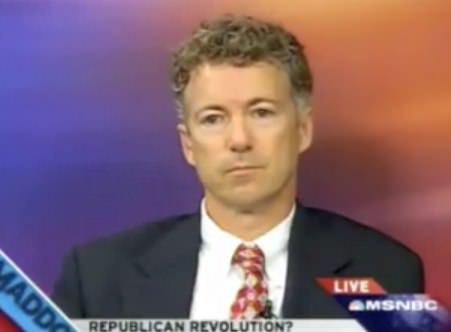 To the extent that he is known to minority
audiences at all, Republican Sen. Rand Paul of Kentucky is likely
best known for his
To the extent that he is known to minority
audiences at all, Republican Sen. Rand Paul of Kentucky is likely
best known for his 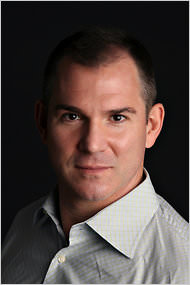 [H]e has managed, with
remarkable speed, to migrate to the foreground of Republican
politics. You could almost lose sight of what an albatross he
really is. [...]
[H]e has managed, with
remarkable speed, to migrate to the foreground of Republican
politics. You could almost lose sight of what an albatross he
really is. [...]