Starting this fall, a course in climate change is required for all incoming students at the University of California San Diego. The “Jane Teranes Climate Change Education Requirement” will help students learn about the “fundamental challenge that we face in the university [or] on this planet in the coming hundred years,” Professor Sarah Gille tells […]
"I seldom refer to men as biological men," Rep. Harriet Hageman said. "They're just men. That is what they are. I'm a woman. I'm not a biological woman. I'm just a woman."
By Owen Klinsky Up to $41 billion of the funds distributed to climate causes by the World Bank between 2017 and 2023 are unaccounted for due to poor accounting standards, according to an audit from Oxfam International published Thursday. The enormous sum represents almost 40% of the climate funds the Bank disbursed during the seven […]
By James D. Agresti
October 17, 2024
Artiom Photo/Shutterstock.com
OverviewKamala Harris, Joe Biden, media outlets, and so-called “fact checkers” are claiming that “violent crime is near a 50-year low.” In contrast, Donald Trump is alleging that “crime is worse than it’s ever been.”
The reality is that all of them are wrong.
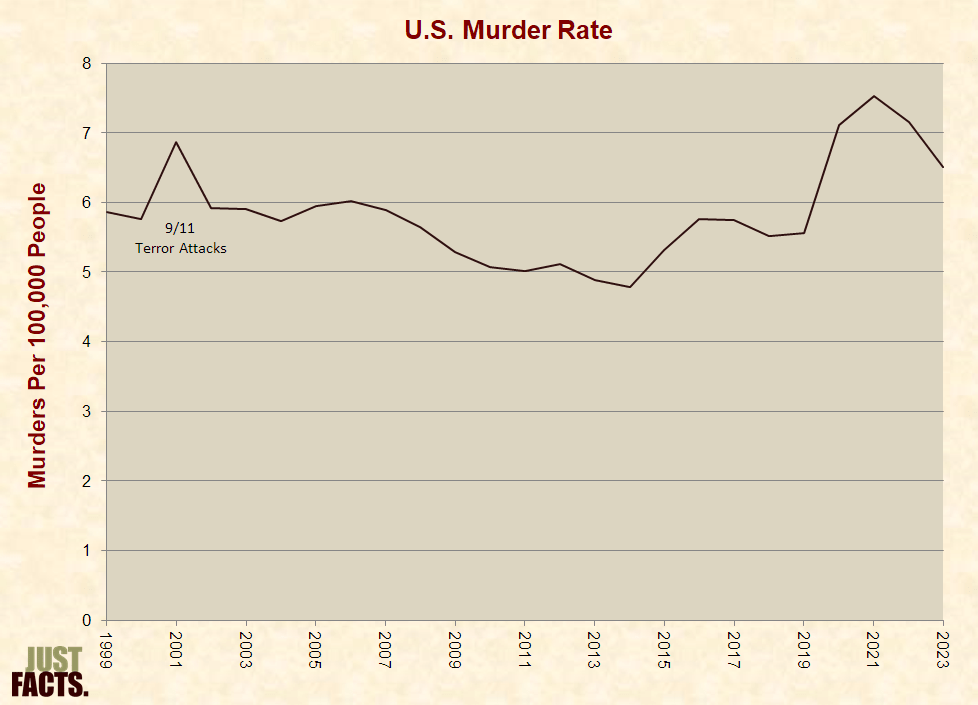
There are three key measures of violent crime with various strengths and weaknesses, but the most reliable and severe one shows that the murder rate in 2023 was 36% higher than the modern low in 2014 but 14% lower than the modern peak in 2021.
FBI Data
The statistics cited by Harris and others who declare that violent crime is extraordinarily low come from the FBI’s Uniform Crime Report, which is based on voluntary reports of crimes by state and local law enforcement agencies. As explained by the FBI, this report “excludes” crimes like “sexual assault,” “simple assault,” “attempted robberies,” and “crimes not reported to law enforcement.”
Regarding the last of those exclusions, the FBI discloses that “changes in police procedures, shifting attitudes toward crime and police, and other societal changes can affect the extent to which people report and law enforcement agencies record crime.” Thus, the FBI cautions against “making any direct comparison between data in this publication and those in prior” years.
If one ignores that warning—and all of the crimes not recorded in the Uniform Crime Report—violent crime appears to be near a 50-year low:
Trump claims that “the FBI defrauded everybody because what they did is they used statistics not including some of the worst areas and some of the worst cities.” This simply isn’t true, even in light of the fact that the FBI stealthily revised its 2022 crime data, which is accounted for in the chart above.
Contrary to Trump, the FBI provides “statistics for the entire United States” by including “estimated” crime numbers for law enforcement agencies that don’t report data to the FBI. This creates uncertainty, but agencies who submitted data to the FBI in 2023 covered 94.3% of the U.S. population and “every city agency” covering a million or more people.
On the other hand, the FBI has been burying crime data since the outset of the Biden administration, and this has led to some massive underreports of violent crime. For a prime example, NewsNation reported in 2022 that 14,677 murders occurred in 2021 based on the FBI’s convoluted presentation of its data. This was 8,000 fewer murders than the FBI’s actual estimate of 22,900 murders that year.
To rectify this problem, Just Facts has posted the FBI’s Uniform Crime Reports for 2020/2021, 2022, and 2023 at easily accessible permalinks. The FBI has buried these datasets in a fragmented manner under a maze of vaguely worded dropdown menus and acronyms with expiring hyperlinks.
Reports for earlier years are still readily available from the FBI.
DOJ Data
Another common source of violent crime data is the National Crime Victimization Survey (NCVS), which is conducted by the Department of Justice. In the words of an academic book published by the National Academies of Sciences, Engineering, and Medicine, this survey “is widely viewed as a ‘gold standard for measuring crime victimization’.”
Nevertheless, the book warns that the NCVS is “beset with methodological problems of surveys in general as well as particular problems associated with measuring illicit, deviant, and deleterious activities….”
The survey is based on a statistically powerful nationally representative sample of 160,000 people, but it doesn’t measure “homicide, arson, commercial crimes, and crimes against children under age 12.”
Also, it includes simple assaults in its violent crime rates, which commonly involve no injuries or minor ones.
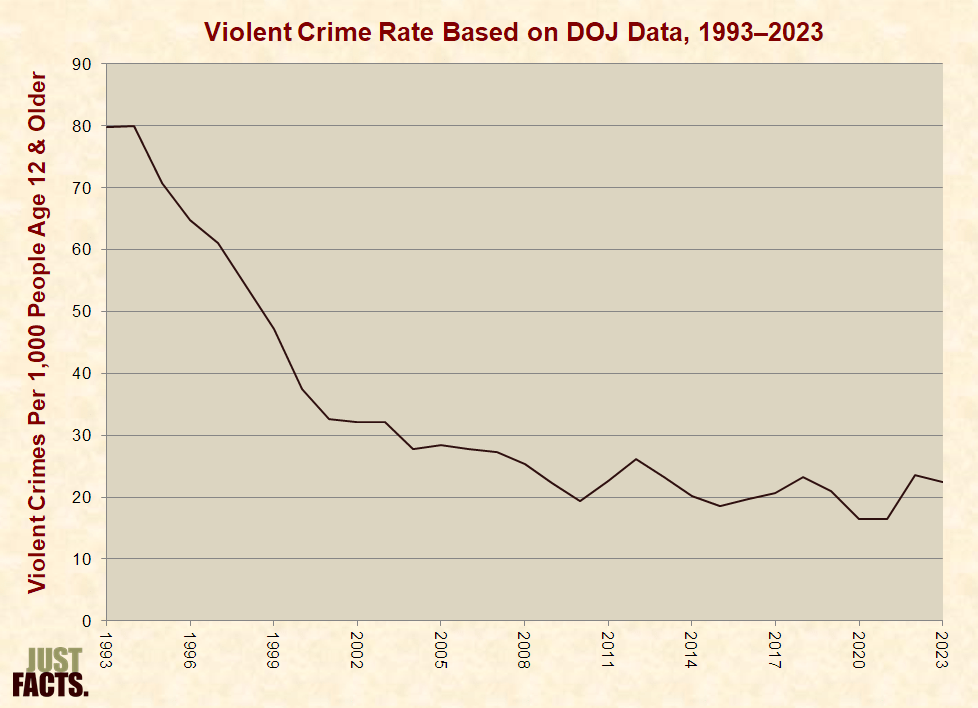
Like the FBI data, the NCVS shows large declines in violent crime since the early 1990s, but it greatly differs from the FBI data in recent years and shows an apparent 37% increase in violent crime from 2020 to 2023:
Given sampling margins of error, the NCVS violent crime rate may have risen by as little as 12% to as much as 69% from 2020 to 2023. Regardless, this is a sizeable disconnect from FBI statistics, which show a 6% decrease in the violent crime rate from 2020 to 2023.
Murder Data
The only measure of violent crime that transcends the vagaries of FBI and NCVS data is murder. Although counts of murders exclude all lower-level crimes, they capture the harshest and best-measured one.
Per a 2010 DOJ report, “Homicide is of interest not only because of its severity but also because it is a fairly reliable barometer of all violent crime. At a national level, no other crime is measured as accurately and precisely.”
There are two primary measures of murder—the FBI’s Uniform Crime Report and death certificate data compiled by the CDC. As explained in a 2014 DOJ report, death certificates provide “more accurate homicide trends at the national level than” FBI data because:
the reporting of death certificates is “mandatory,” while the FBI relies on “voluntary” reports “from individual law enforcement agencies that are compiled monthly by state-level agencies.”
death certificates include homicides that “occur in federal jurisdictions,” while the FBI rarely counts “homicides occurring in federal prisons, on military bases, and on Indian reservations.”
death certificates include homicides caused by the deliberate “crashing of a motor vehicle, but this category generally accounts for less than 100 deaths per year.”
However, death certificates tend to overcount murders because they include:
The 2014 DOJ report suggests that “a more comprehensive understanding of homicide in the United States can perhaps be achieved by combining the strengths of the two data collection systems.” Hence, Just Facts developed a methodology to combine data from both sources and a scholarly journal to produce murder estimates. This yields figures that are higher than the FBI’s estimates and 4.2% lower than the number of homicides recorded on death certificates.
Contrary to Harris, the media, and to Trump, these data show that the murder rate in 2023 was 36% higher than the modern low in 2014 but 14% lower than the modern peak in 2021:
While ignoring the fact that correlation does not prove causation, many media outlets and Democrats have blamed the surge in murders in 2020 on Covid-19 and Trump. In reality, the facts point to the BLM movement as the most likely cause. The same applies to the murder surge in 2015.
Conclusion
Violent crime is a serious issue, and in the case of murder, deadly serious. Yet, prominent Democrats, Republicans, and media outlets are all misleading the public about this problem that impacts a large portion of Americans.
A 1987 DOJ study based on crime data from 1974 to 1985 found:
42% of Americans will be the victim of a completed violent crime (assault, robbery, or rape) in the course of their lives.
83% of Americans will be the victim of an attempted or completed violent crime.
52% of Americans will be the victim of an attempted or completed violent crime more than once.
With regard to murders, one out of every 200 people in the U.S. will eventually be slain if murders remain at the same rate as 2023.
Even in previous years when murders were less common, the lifetime likelihood of murder was so shocking to some people that they sent repeated emails to Just Facts insisting it was wrong. Yet, the methodology used to compute this figure was developed by a licensed actuary, double-checked by a Ph.D. mathematician, and triple-checked by a Ph.D. biostatistician.
In other words, the numbers are correct, but some people’s perception of the problem is disconnected from reality.
All of this points to the need for reliable, contextualized facts on this issue, which are not readily available from the FBI and which political parties and the press often fail to provide.
The term “debanking” means a bank cutting ties with a customer deemed politically incorrect, extreme, dangerous, or otherwise out of bounds. (Illustration by The Free Press)
On February 6, 2019, Chris Abdur-Rahman Blauvelt, the founder of the crowdfunding platform LaunchGood, received an email from the payment processor Stripe.
“We are glad to have worked alongside LaunchGood as you have grown throughout the years,” Nicole Arboleda, a sales leader in Stripe’s Platform Partnerships division, said in the email that was shared with The Free Press. “However with that growth has come additional scrutiny from our financial partners, as you are aware.”
She continued: “Over the last year our risk and financial crimes team have worked to the best of our ability to remediate these issues. However due to the continued use of workarounds that are not supported by our financial partners, we unfortunately can no longer support your organization.” (Blauvelt said Arboleda did not share any further information.)
Being unable to process payments would make running his crowdfunding platform impossible. So Blauvelt, now 40, left a family vacation in Florida to fly to Stripe’s San Francisco headquarters to straighten things out.
A dozen people, mostly from Stripe’s compliance division, were waiting in a conference room. Blauvelt explained that LaunchGood, which crowdsources donations for Muslim charities around the world, was all about things like providing food aid in Syria, clean drinking water in Gaza, flood relief in Bangladesh, and so forth.
Blauvelt, who was born in Malaysia to a Protestant family, converted to Islam as a teenager. He knew the unspoken concern of those in the room. As he told me, he explained to Stripe, “We’re not terrorists. We’re trying to bring humanity together.”
Stripe’s Arboleda told Blauvelt it was out of their hands: Stripe’s banking partner, Wells Fargo, had made the call to cut ties. She said that was all she knew—and, in fact, it was all she was allowed to know. Banking laws prevented banks from disclosing their reasons for severing ties with customers.
Chris Abdur-Rahman Blauvelt founded the crowdfunding platform LaunchGood, which had its accounts closed by Stripe in 2019. (Sarah Rice for The Free Press)
Blauvelt co-founded LaunchGood in 2013. That year, users donated $1.3 million on the site. Over the next several years, that figure jumped—to $3 million in June 2015, and then $34.4 million in December 2018. To date, Blauvelt said, users have raised more than $660 million on his site. He couldn’t believe the bank was about to destroy everything he had built.
Blauvelt was convinced that Wells Fargo was worried about funds on LaunchGood being inadvertently sent to a terrorist organization. He acknowledges there have been concerns about some of the recipients of his funding—for example, Islamic Relief, the biggest Muslim charity in Britain, has been accused by Israeli authorities of funding Hamas. A 2014 audit—paid for by Islamic Relief—found the board did include antisemites who had praised Hamas, the Iranian-backed terror proxy, but that the charity itself had no connection to the group.
Blauvelt texted me: “The U.S. government has repeatedly asked Israel for proof of these baseless allegations and have not been able to get any for years.”
He added, “We understand that we’re held to a higher standard and are subject to greater scrutiny as a Muslim crowdfunding platform, and thus we go above and beyond.”
A Wells Fargo spokesperson did not reply to a request for comment from The Free Press. A spokesman for Stripe said that the company “has a policy against commenting on or sharing the details of any user or review.”
Nothing Blauvelt said mattered. Stripe, in their original email, informed him that he had just weeks to find another payment processor.
In short, LaunchGood had been “debanked.” Debanking, or, as some financial institutions prefer, derisking, refers to a bank cutting ties with a customer deemed politically incorrect, extreme, dangerous, or otherwise out of bounds.
Blauvelt, who converted to Islam as a teenager, raises money for Muslim charities. After Stripe closed his accounts, he explained, “We’re not terrorists. We’re trying to bring humanity together.” (Sarah Rice for The Free Press)
And the list of the debanked, including the famous and obscure, grows by the day.
Former first lady Melania Trump alleges in her new memoir that both she and her son, Barron, were debanked. “I was shocked and dismayed to learn that my long-time bank decided to terminate my account and deny my son the opportunity to open a new one,” she wrote. (Trump’s email provider also declined to continue providing her service.)
Being debanked is a family affair for the Trumps. This includes the former president, Donald Trump, who was shut out of a Florida bank account after the January 6, 2021 storming of the Capitol. So was a news app run by Donald Jr. So was MyPillow CEO (and Trump supporter) Mike Lindell.
But it’s not just Trump supporters. Also debanked have been a number of Christian charities, including Indigenous Advance Ministries, a Memphis-based charity that does philanthropic work for orphans in Uganda, and Family Council, a pro-life charity based in Arkansas. According to Democratic lawmakers, many Arab and South-Asian Americans—who are considered “high risk” because of being Muslim—have been debanked, too.
Nowhere in the Constitution is there a right to banking, although for the vast majority of Americans, it is a staple of everyday life. But as the financial sector, like most every facet of contemporary society, has moved online—and as every major American institution, including banks, have been politicized—banks have felt compelled to monitor their customers’ political and personal lives. They need to be sure that the brands of the people who bank with them jibe with their own, so that they do not upset too many other customers or potential customers.
“Debanking for political or ideological reasons should concern everyone, whatever their politics,” Samuel Gregg, an economist at the libertarian American Institute for Economic Research, told me. “In the first place, if one side does it, the odds are that the other side will play that game. More generally, it reflects a broader problem that characterizes America as a whole: the relentless politicization of everything.”
Lawmakers on both sides of the aisle are increasingly concerned about the severity and capriciousness of the bankers’ decisions.
In February of this year, Democratic senators Elizabeth Warren and Bernie Sanders and representatives Ilhan Omar, Rashida Tlaib, and Ayanna Pressley wrote to Jamie Dimon, the CEO of JPMorgan Chase & Company, voicing concern that debanking “poses a particularly severe threat for customers from the Muslim American community.”
The letter added that the “economic ramifications extend beyond individual consumers and communities in the United States, as de-risking can also undermine the stability and sustainability of countries dependent on remittances and other aid flows for economic development.”
In September, Senator Mike Lee, a Republican from Utah, introduced the Saving Privacy Act. The libertarian Cato Institute explains the bill “would essentially end the practice of requiring banks to act as law enforcement agents and would prevent law enforcement agencies from accessing customers’ financial records without first obtaining a valid warrant.”
It’s unclear exactly how many U.S. citizens—or how much money—have been debanked recently. “That data doesn’t exist,” Todd Zywicki, a bankruptcy law professor at George Mason University’s Antonin Scalia Law School, told me. But we have some idea of the scope of the problem: In January 2016, the Consumer Financial Protection Bureau started to receive complaints from people whose bank accounts had been shut down suddenly and without much reason or notice. To date, there have been more than 15,000 complaints. (A CFPB spokesperson did not reply to a request for comment.)
“In the financial sector, you have layers and layers, one on top of the other, of laws and regulations that were designed to ensure the system is not aiding and abetting any wrongdoing, but now you have the government increasingly using those tools to target not just obvious wrongdoers but political foes,” Zywicki told me. “What banks understand is the government just doesn’t make suggestions. When the government suggests something, everybody understands that’s an order, and that’s how banks respond.”
Amit Sharma, a senior official in the Treasury Department’s Office of Terrorism and Financial Intelligence under then-president George W. Bush, says plenty of innocent people and organizations have been hit.
“Debanking that pulls on your heartstrings the most is debanking legitimate nonprofit organizations or nongovernmental organizations doing humanitarian relief in high-risk places,” Sharma, the current CEO of financial compliance firm FinClusive, told me. “That’s the most egregious, because on the other side of that are people in dire need.”
Nicholas Anthony, an analyst at the Cato Institute, said the cost of debanking now affects most everyone in the United States. “Banks spend tens of billions of dollars complying with government-mandated surveillance, and those costs show up in maintenance fees, service fees, and even interest rates,” Anthony told me. “This is to say nothing of the cost incurred when you are considered too risky to open a new account or keep an existing one. However, because the government has maintained so much secrecy around the process, most Americans don’t even realize this surveillance regime is the source of the problems they face.”
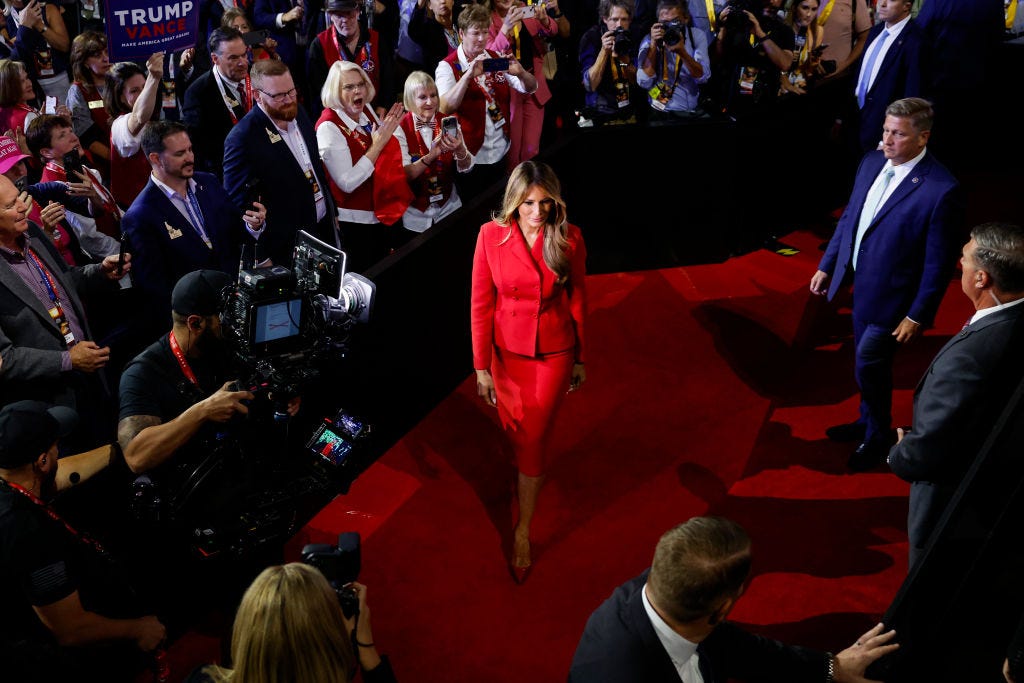
Melania Trump arrives at the 2024 Republican National Convention in Milwaukee, Wisconsin. She alleges in her new memoir, Melania, that both she and her son, Barron, were debanked. (Anna Moneymaker via Getty Images)
There is a long history of the federal government demanding the financial sector cooperate in stopping crimes such as money laundering and the financing of terrorism.
That stretches back at least to the federal Bank Secrecy Act of 1970, which sharply limits the rights of citizens to financial privacy and protection and bars banks from disclosing their reasons for severing ties with customers. The act has been amended many times over the decades.
Then came the terrorist attacks of September 11, 2001.
Four days after 9/11, newly installed FBI director Robert Mueller was briefing President Bush in the Oval Office. As Mueller described the FBI’s progress in identifying the hijackers, their nationalities and other biographical details, Bush cut him off. “What I want to know from you—today—is what the FBI is doing to prevent the next attack,” he said.
“I felt like a chastened schoolboy who had turned in the wrong homework assignment,” Mueller later recalled.
According to former FBI special agent Thomas J. Baker, this prompted Mueller to launch a dramatic change in FBI culture. Over the next several years, the bureau migrated from its traditional role as a law-enforcement agency to an intelligence-gathering agency. A key metric of success, Mueller said, became the “number of terrorist attacks thwarted.”
That conversation between Mueller and Bush “led to the USA Patriot Act and the beginning of the end of constitutional protections,” George Hill, a former FBI intelligence analyst who has testified before Congress about banks’ handling of the January 6 rioters, told me. The Patriot Act, which Congress passed with bipartisan support in October 2001, gave federal law enforcement vastly increased new powers of surveillance. Any wisp of suspicion of a terrorist tie could lock a business or an individual out of the financial system.
It also beefed up the Bank Secrecy Act, giving Washington greater oversight over everyone in the U.S. financial system—which amounts to pretty much everyone in the country. And it mandated that banks collect more data on their customers—also known as “know-your-customer protocols”—and report any suspicious activities.
Over the years, this machinery, which had in theory been created to stop terrorists from harming Americans, shifted its focus to Americans themselves.
“Under the Bush administration, it was more outward focused and, to the extent Americans were ensnared, it was because they were having communications with foreigners who were under surveillance,” Ilya Shapiro, a constitutional law expert at the Manhattan Institute, told me, referring to the government’s war on terrorism.
That changed with President Barack Obama, Shapiro said.
“Obama turned a lot of that apparatus inwards to go after politically incorrect businesses, where domestic terrorism could be defined to include even people who show up at school board meetings to protest policies,” he explained.
Emblematic of this “inward” approach was Operation Choke Point, which the Obama administration launched in 2013, targeting banks whose clients included legal weapons distributors and payday lenders assumed to be at risk of committing fraud or laundering money.
“The reason that we are focused on financial institutions and payment processors is because they are the so-called bottlenecks, or choke points, in the fraud committed by so many merchants,” Michael Bresnick, the executive director of Obama’s Financial Fraud Enforcement Task Force, said in a 2013 speech.
“Even many people who worry about politicized debanking will be reluctant to be seen as strong defenders of payday lenders,” Gregg, at the American Institute for Economic Research, said. “That, however, illustrates why strong stands against politicized debanking are necessary from the start. Once a precedent for this type of activity is established, people across the political spectrum will feel emboldened to use it to target groups promoting ideas they don’t like.”
In the Obama administration’s final weeks, in January 2017, it expanded the National Security Agency’s powers, making it easier for the agency to share communications with the government’s 16 other intelligence agencies, including the FBI.
Progressives fretted that President-elect Donald Trump would abuse these new powers. But Trump, who had promised on the campaign trail to end the war on terrorism, seemed uninterested in expanding the government’s surveillance powers.
In late August 2017, as the Trump administration was contending with fallout from its handling of the Unite the Right rally in Charlottesville, Virginia, the Department of Justice informed Congress that it was ending Operation Choke Point.
But President Joe Biden has renewed the spirit of Operation Choke Point by expanding the government’s spying operations on American citizens—announcing in June 2021 a “National Strategy for Countering Domestic Terrorism.”
Domestic terrorism, his administration explained in a fact sheet, “has evolved into the most urgent terrorism threat the United States faces today.” It added that the “U.S. Government will enhance domestic terrorism analysis and improve information sharing throughout law enforcement at the federal, state, local, tribal, and territorial levels, and, where appropriate, private sector partners.”
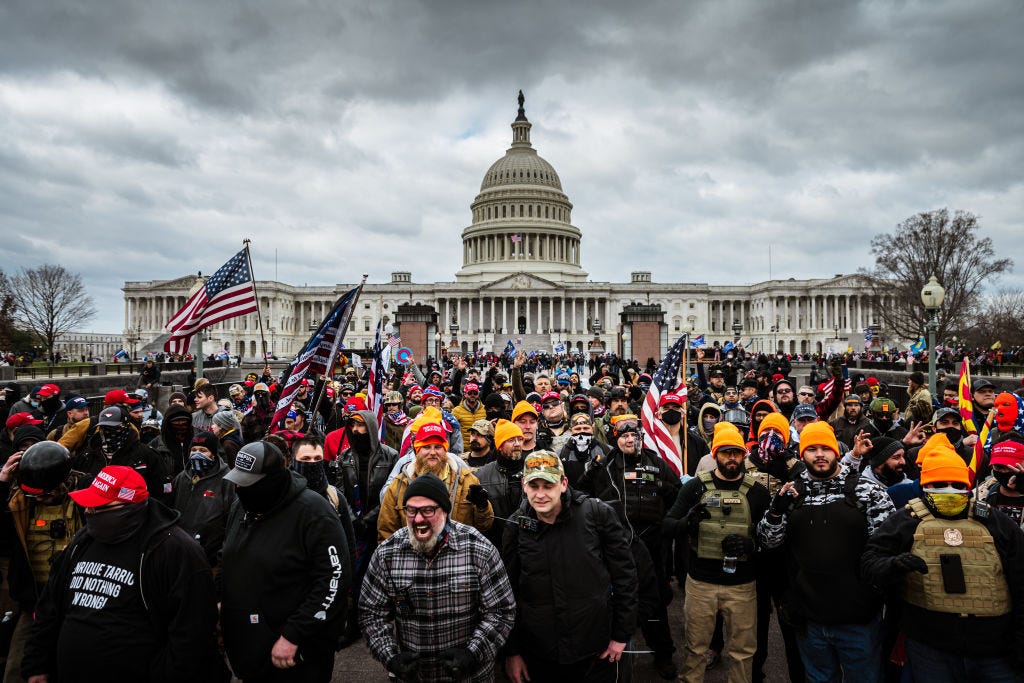
Donald Trump’s supporters gather in front of the U.S. Capitol on January 6, 2021. The Patriot Act gave law enforcement new powers of surveillance—any suspicion of a terrorist tie could lock a customer out of their bank. (Jon Cherry via Getty Images)
All of which is to say that, when the January 6, 2021 riot happened—the nation still reeling from an election the incumbent president refused to concede, the new president just two weeks away from being sworn in—the stage was set for a wave of debankings never before seen in America.
A few days after the riot, former FBI analyst Hill recalled that his colleague, a special agent focused on counterterrorism, had asked him to take a look at some potentially useful information that might lead to an investigation.
Hill was shocked. The information contained the names of Bank of America customers who had made a purchase with their credit or debit cards in the greater Washington area between January 5 and January 7, 2021, and had previously bought a firearm or ammunition anywhere.
“So, if you went to South Dakota to go pheasant hunting in 1996, you went to the top of that list,” Hill told me.
Hill added that, after speaking with a special agent in the FBI’s Washington Field Office, he learned that Bank of America had volunteered this information. (A Bank of America spokesperson did not reply to a request for comment. The House Judiciary Committee launched an investigation into this matter based on Hill’s whistleblower testimony, as well as others.)
Although it is not known how many January 6 rioters have been debanked, “We’ve seen so many other cases where the process is the punishment,” Hill said. “If they go for the kill shot and tried to completely garner your assets or just crush your life entirely, that’s going to wind up in court, and that’s going to wind up in discovery. The goal is to make your life difficult, so you stop being difficult for us—us being the government.”
It was about this time that a growing number of social conservatives started grumbling—mostly in Facebook chat rooms and elsewhere on social media—about their bank accounts being mysteriously closed.
This included Sam Brownback, the chairman of the National Committee for Religious Freedom, which he founded in 2022. Prior to that, Brownback had spent decades in public life, serving as a Republican U.S. senator from Kansas, the state’s governor, and under Trump, ambassador at large for international religious freedom.
In April 2022, the NCRF opened a business account at a JPMorgan Chase branch in Washington, D.C., Brownback told me. Three weeks later, the bank, without providing any explanation, closed it.
The cancellation had a ripple effect, causing some of the NCRF’s other financial institutions to withdraw their services, threatening the nascent organization’s ability to launch.
After NCRF repeatedly pushed Chase for an explanation for why its account had been terminated, Chase told NCRF that it would consider a reinstatement if “NCRF disclosed donors, provide a list of intended fund recipients for the next election cycle, and the full details of how the NCRF would select pro-religious freedom candidates to support,” according to a synopsis of the calls and emails between NCRF and Chase provided by NCRF. (Chase did not reply to a request for comment.)
NCRF did not comply.
The organization was able to find a new bank. But the experience caused Brownback to make fighting the debanking of people on religious grounds one of the group’s missions. They have given this effort the hashtag #ChasedAway.
As Brownback wrote in a September 27, 2022 letter to JPMorgan Chase CEO Dimon, “We are concerned that religious institutions, houses of worship, and people of all faiths are at risk of having their business, credit, or even personal or private bank accounts terminated for any or no reason at all.”
At Chase’s annual shareholder meeting, on May 16, 2023, Dimon said of the bank’s handling of NCRF: “No apologies are necessary, and no corrective action is necessary.”
Brownback assumed that his experience was typical of a large number of social conservatives—the vast majority of whom, he said, never speak up after they’ve been debanked.
Most people who receive a cryptic, anodyne-sounding email informing them that their account “has undergone a status change,” as Brownback put it, “just went away quietly and found another bank.”
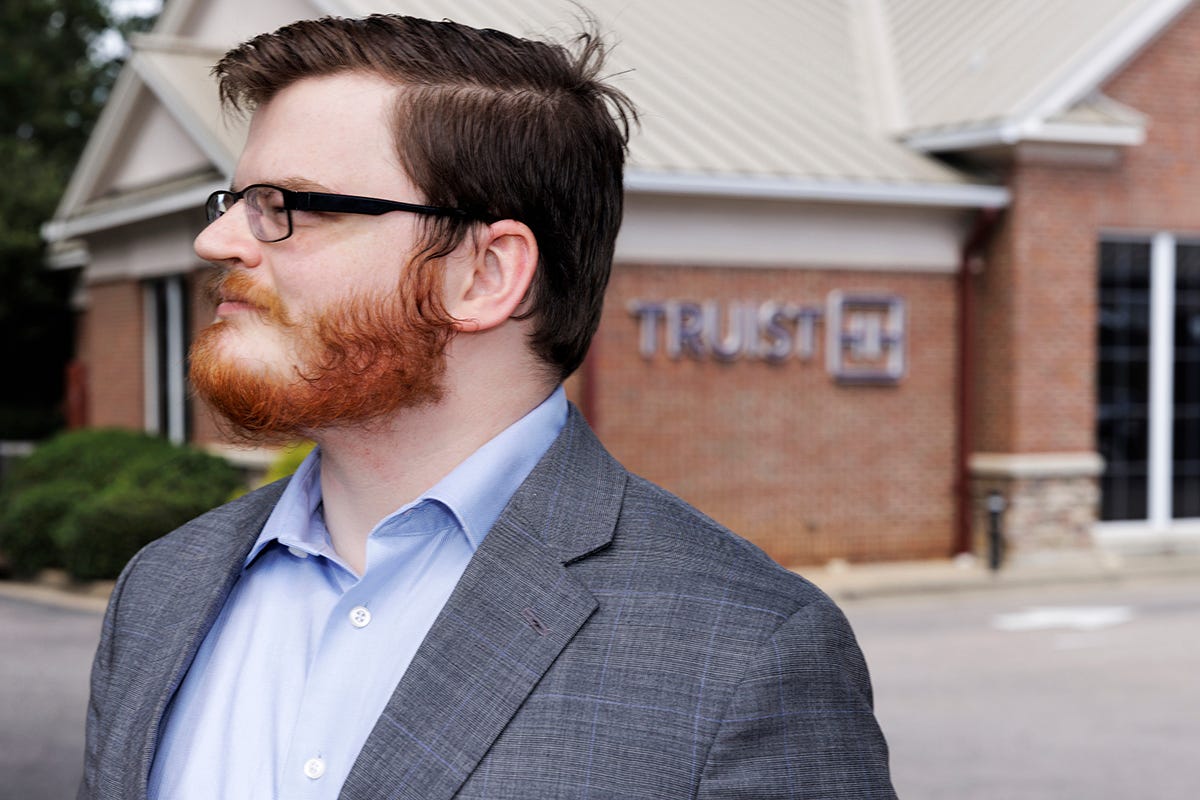
Stephen Horn stands outside the Truist bank branch where he opened his first savings account. On July 22, 2022, Truist sent a letter informing him that it had closed his account. (John West for The Free Press)
On July 22, 2022, Stephen Horn, a 26-year-old computer programmer who lives with his parents near Raleigh, North Carolina, received a disturbing letter from Truist bank.
“We regret to inform you that we have made a decision to close your account(s) with us as outlined below,” began the letter that Horn showed me. It was sent from the bank’s corporate headquarters in Winston-Salem.
The bank added that this decision had nothing to do with his credit. He had about $20,000 in his account, and he had 30 days to withdraw it. (A Truist spokesperson did not reply to requests for comment.)
Horn immediately guessed—although the banking secrecy laws keep him from confirming—that his activities around the January 6 riot were the reason.
The night before the riot, Horn rode in a chartered bus full of Trump supporters from Raleigh to Pentagon City in Arlington, Virginia. The next morning—January 6—he took the Metro into Washington, D.C., watched the president address his supporters outside the White House, and followed them up to the Capitol.
With a Raspberry Pi camera attached to his skateboard helmet, Horn filmed the mob breaking into the Capitol and Speaker Nancy Pelosi’s office, and delaying a joint session of Congress from counting the Electoral College votes that would formalize Joe Biden’s victory over Trump.
Shortly afterward, Horn posted his video online and photos of him appeared on social media. Tipsters notified the government of his identity. He was interviewed by the FBI and says he gave them his footage to help the government identify lawbreakers.
Horn saw himself as an independent journalist documenting a historic event. But the authorities saw him as a man who went to the Capitol to participate in and film the vandalism. Their view prevailed with the jury that in September 2023 convicted him of four misdemeanor counts, including disorderly conduct in the Capitol. In January, he was sentenced to a year of probation, a $2,000 fine, and 90 hours of community service.
His activities have brought his entire family to the attention of the federal government. In April 2023, Dan Horn, Stephen’s father, flew back to Raleigh from a missionary trip in Nigeria. When Dan arrived at Customs and Border Protection, his name popped up on their computer. “He was explicitly told by a CBP agent that he was flagged for questioning because of me,” Stephen Horn said.
Two weeks later, Customs and Border Protection revoked Dan’s Global Entry status—the “trusted travelers program” that enables frequent, low-risk globetrotters to reenter the United States faster.
Stephen Horn has managed to open a new bank account, although he wouldn’t tell me where. He didn’t think it was a good idea to draw attention to the bank.
Horn has a minimal online presence, and said he is not even a Trump supporter. When I interviewed him about being debanked, he said, “I had heard of corporations in the financial or service sectors banning politically ‘controversial’ individuals, but it had always been people who had much larger platforms and impact.”
Horn, who took videos of the riot inside the U.S. Capitol on January 6, 2021, was sentenced to a year of probation, a $2,000 fine, and 90 hours of community service. (John West for The Free Press)
Chris Blauvelt and LaunchGood eventually found a new bank and a new payment-processing company. He doesn’t care to identify them either.
In the post-October 7 world, questions continue to swirl around who LaunchGood funds. The Wall Street Journalreported that Israel questions some of LaunchGood’s recipients, saying they have ties to Hamas. Blauvelt responded that all charities raising money on LaunchGood must “pass three separate compliance checks”—including audits, screening of the people receiving that money, and “continuous monitoring of programs and transactions by our compliance software,” which, he noted, was developed by FinClusive, former Treasury official Amit Sharma’s financial-compliance company.
Blauvelt also says he will not be silenced if he runs into debanking troubles again. “Back when Stripe offboarded us, we didn’t even talk about it publicly for maybe a year or two, because it was so embarrassing,” he said.
So, Blauvelt said, LaunchGood plans—by the end of this year—to launch its own payment processor, PayGood, which will rely on smaller, more inclusive banks. (“Good luck with that,” George Mason’s Zywicki said. He predicted smaller banks would ultimately fall into line with the feds.)
Conservatives, no surprise, insist that it is those who run afoul of the Democratic establishment who are at the greatest risk of being debanked.
“Financial giants like Bank of America and Wells Fargo have a history of ‘debanking’ people who hold political views disfavored by the Biden-Harris administration,” Travis Taylor, a political scientist who has done extensive polling on debanking for the right-wing Florida think tank Foundation for Government Accountability, told me in an email.
All of which points toward an emerging, bipartisan, anti-debanking bloc on Capitol Hill.
“Every American should have the ability to take out a loan or save for their future without fear of discrimination or having their accounts closed without explanation,” Democratic representative from California Ro Khanna told me.
Zywicki told me it would help if those who have been debanked or know others who’ve been shut out of the banking system simply spoke up.
“When debanking happens to someone, they don’t raise a fuss, because what they’re most concerned about is finding a bank account somewhere else and getting back into the financial system,” he said.
Zywicki added: “If you don’t have access to financial services, you basically don’t exist.”
The SpaceX Starship in Boca Chica, Texas, on October 13, 2024. (Sergio Flores via Getty Images)
On Sunday morning, shortly after 7:25 a.m. Boca Chica, Texas, time, the world looked up to watch the fall of the century. Barreling back to Earth after pushing a 40-story spacecraft through the skies, the Super Heavy booster plummeted back to Texas, igniting its 33 engines to slow its descent to the ground.
Its target was a massive metal landing tower that, in theory, could catch the booster with two “chopstick” arms in a snug embrace, ensuring it could go up and, yes, down again one day. The task wasn’t thought possible years ago for a booster this large. But as it fell to Earth Sunday, engineers on the ground made the historic catch.
Elon Musk once called Starship a battle between theory and reality, and when simulations and reality don’t agree, “reality wins.”
On Sunday morning, they agreed.
“SpaceX is the company of return,” writes Boyle. “The return of boosters. Spacecraft. Ambition. Greatness.” (via SpaceX/X)
It is impossible to overstate what happened on the shores of Texas, or what’s happened for two decades in El Segundo, the little industrial town south of Los Angeles where SpaceX was born. In its infancy, the country was reeling from horror. Only months before SpaceX’s inception in March 2002, terrorists had flown commercial jets into two crown jewels of New York City engineering, murdering thousands.
Twice in August 2022, the American playwright, satirist and longtime Berlin resident C.J. Hopkins tweeted cover art from his book on The Rise of the New Normal Reich. This art featured an image of a Covid-era medical mask with a barely-visible white swastika superimposed upon it. In his first tweet, Hopkins wrote that “Masks are symbols of ideological conformity. That’s all that they are, and that’s all they ever were. Stop pretending that they were ever anything else or get used to wearing them.” In his second tweet, Hopkins simply quoted Health Minister Karl Lauterbach’s notorious statement that “Masks always send a signal.”
eugyppius: a plague chronicle is a reader-supported publication. maybe you subscribe?
I never tire of saying that there is no free speech in Germany, however much our Basic Law claims to guarantee freedom of expression. Yet Hopkins’s conviction is farcical even in the context of German criminal statutes and jurisprudence. To understand why, we must wade through some technicalities, but it’s worth it, I promise.
A variety of legal mechanisms have been used to forbid the reproduction of Nazi symbols and slogans since Germany’s defeat in World War II. The purpose is to impose a general tabu on the discursive accoutrements of National Socialism. Since 1968, these prohibitions occur in sections 86 and 86a of the German Criminal Code. These statutes forbid the “dissemination” of propaganda material or symbols that are “intended to further the activities of a former National Socialist organisation.” "
The words “… intended to further …” are very important here. Using National Socialist symbols and phrases critically or with hostility is generally not forbidden. And there is a further exemption as well. Later on in the statute, we read that no criminal offence occurs “if the act [of reproduction or dissemination] serves to further civic information,” if it is intended “to prevent unconstitutional activities, to promote the arts or science, research or teaching, reporting about current or historical events, or similar purposes.” This is the so-called “social appropriateness clause,” and courts have interpreted it widely, applying it even to privilege the ironic or sarcastic use of Nazi symbols.
This is not just crazy legal exegesis from eugyppius. Clivia von Dewitz, a sitting judge who wrote her doctoral thesis precisely on this area of German law, said much the same two weeks ago in an editorial for the Berliner Zeitung. In that piece, she explained why “the Tiergarten District Court was fully justified in acquitting CJ Hopkins”:
In its judgement, the court concluded that the defendant had not committed a criminal offence under the symbol-prohibition statute … with his two posts on X. According to the judgement, both posts … “made it readily apparent, when the associated text … was taken into account, that the allusion to National Socialism was expressed in an overtly negative sense.”
Furthermore, the posts were not at all intended to promote the revival of National Socialist ideas or even former National Socialist organisations. This is because people with neo-Nazi aims would never use the symbols of National Socialist organisations in a visual context expressing their rejection of them … In short, the court found that an American citizen had used Nazi symbolism without intending to glorify the Nazi regime in any way.
Indeed, the prosecutor’s argument – that Hopkins had made himself criminally liable because his anti-Nazi sentiments were not immediately clear “upon reading or considering his caption”– is totally idiotic. To be confused about this at all, you’d have to also think Hopkins was promoting Covid masks with his tweets and even celebrating them because they are medically useless symbols of ideological conformity. Could any minimally sentient person believe this was his message? Anything, up to and including “I disavow this swastika and I hate Nazis” can become ambiguous with sufficient stupidity.
In short, Hopkins’s case was not even close, because it was a) basically impossible to read his tweets as promoting National Socialism in any way, and b) even if some ambiguity attached to a) (which it does not), the “social appropriateness” clause exempts him. Thus, in order to overturn Hopkins’s acquittal and convict him, the Berlin Appellate Court had to devise a remarkably unconvincing masterpiece in special pleading:
Presiding [Appellate] Judge Delia Naumann emphasised that the law … is about banishing Nazi symbolism from the public sphere. The threat of punishment is intended to prevent its revival and normalisation. Therefore, it is not enough to invoke the use of the symbol in the context of criticising state action, according to Naumann. Hopkins had only criticised the Covid restrictions, in particular the compulsory wearing of masks, but had not openly and unequivocally expressed his rejection of National Socialism.
In the opinion of the appellate court, it is not enough that the comparison of arbitrary Nazi rule with the criticised state actions also entails a critical view of National Socialism. Instead, a clear criticism of National Socialism must also be expressed, otherwise National Socialism would be trivialised. Naumann pointed out that using swastika relativised the National Socialist genocide of six million Jews.
The Appellate Court here invents a special category of discourse – “criticising state action” – where more stringent rules apply. As Hopkins and his defence attorney point out, it is totally fine to use the swastika to accuse one’s political opponents of totalitarianism or fascism, as Der Spiegel did in May 2024:
“Haven’t you learned anything?” Spiegel asked above a swastika, as the 75th anniversary of the founding of the Federal Republic of Germany approached on 18 May 2024.
That image “criticise[s]” whatever it is that Spiegel editors imagine “right-wing extremism” to be, but it also nowhere “openly and unequivocally express[es]” any “rejection of National Socialism.”1Der Spiegel don’t have to do that because they’re not criticising the state. Hopkins, however, used a swastika to attack government Covid policies, and so he faces much greater scrutiny. The hostile journalists of the Legal Tribune Online (linked above), desperate to make the appellate court’s arguments coherent, speculate that the Spiegel cover is exempt because it falls under the “social appropriateness” exception, but the problem is that there is no way Hopkins should not receive the same protection. Only the judge’s plain distinction can make sense of the ruling: “Criticising state action” is another category of criticism, separate from all other categories of criticism, and it is subject to harsher limitations. Ironically, if actual card-carrying neo-Nazis ever were to take control of our political system, this legal standard would make it much harder for dissidents to point that out.
None of this matters, of course. Appeals courts get to be wrong and it doesn’t matter, you’re just fucked. Hopkins’s conviction is now legally binding; to have it overturned, he’ll have to appeal to the Federal Constitutional Court.
This whole sorry story is about two things:
It is, most directly and in the first place, one in a series of prosecutions intended to harass critics of the Covidian hygiene dictatorship. German authorities are specifically eager to target those guilty of “delegitimising the state,” a new category of pre-criminal political offence dreamed up by the bureaucrats in the Federal Office for the Protection of the Constitution during the Covid pandemic. Being house arrested and coerced into accepting doubtful and experimental medical injections caused many to notice that the Federal Republic was engaging in authoritarian tactics remarkably reminiscent of illiberal regimes, so our constitutional protectors decided they needed to put a stop to this via all the authoritarian and illiberal methods at their disposal.
But that’s only the immediate context. Hopkins’s conviction, more broadly and in the second place, is about who may wield the weapons of history. The decades-long tabu that the German state has laid upon National Socialism now endows the Hitler era with remarkable polemical force. The state and its supporters would like to secure for themselves the exclusive use of the Nazi cudgel, and to define the political opposition as the only appropriate target of Nazi comparisons. Yesterday, the Berlin Appellate Court outlined a novel legal theory that should make enforcing their monopoly ever so slightly easier. It comes just in time, because the years ahead will be hard. The Federal Republic is growing every day more illiberal, as our elites become ever further detached from popular sentiment and the interests of their own people. If they are to stay in power, they will need to crack down on the ambient discontent of the rabble. They will do this by banning political parties, by intimidating ordinary people who dare to express their opinions, and by prosecuting the odd satirist who says inconvenient things at inconvenient times by turning their own ideological shibboleths against them.
Although I suspect we disagree on many things, I consider Hopkins a friend, and I admire him for his courage and his stubbornness. His conviction comes at considerable personal cost, but I hope he recognises that it also hurts the malign forces who presently rule the Federal Republic, and damages the credibility of their efforts to instrumentalise the law for shallow, transparent political ends. That has been his service to Germany, and I will never forget it.
eugyppius: a plague chronicle is a reader-supported publication. maybe you subscribe?
Amusingly, the Spiegel cover is far easier to misread in a pro-Nazi sense than Hopkins’s mask tweets. Anyone totally ignorant of what Der Spiegel is and what it stands for could easily assume it was some kind of neo-Nazi message, while you have to be a total moron to read Hopkins’s tweets as affirming National Socialism.
Bored to the point of praying for death from a lightning strike in the latter half of the Vice Presidential debate last night, an exchange between Republican J.D. Vance and Democrat Tim Walz woke me up:
VANCE: You yourself have said there’s no First Amendment right to misinformation. Kamala Harris wants to use…
WALZ: Or threatening. Or hate speech.
VANCE: …the power of the government to use Big Tech to silence people from speaking their minds. That is a threat to democracy that will long outlive this political moment… Let’s persuade one another. Let’s argue about ideas and come together afterwards.
WALZ: You can’t yell “Fire!” in a crowded theater. That’s the test. That’s the Supreme Court test!
The “You can’t yell ‘Fire!’ in a crowded theater” saw is not only wrong, it’s the most overused anti-speech argument of our era, surpassing even the Karl Popper “Paradox of Tolerance” cartoon that was once meme legend. In 2012, the ACLU’s Gabe Rothman wrote that the “Fire!” bit was “worse than useless in defining the boundaries of constitutional speech.” Lawyers and civil liberties activists are in danger of self-harm every time it’s mentioned. “My head hits my desk every time the ‘shouting fire’ canard is trotted out. I think I have a permanent bruise on my forehead because of it,” says Nico Perrino of the Foundation for Individual Rights and Expression, who adds the damage might prevent him from knowing how many times it’s happened.
The “Fire” saw is one of those unkillable nuggets of received wisdom blurted out by people with at least three drinks in them, repeated as fact by a Vice Presidential candidate. Why? It feels like Democrats are intentionally fumbling the issue:
He should have just killed 28M by creating a new cold virus. No penalties for that.
Creativity shouldn’t be a crime. But an elderly Montana man has been sentenced to six months in prison, and ordered to pay $24,000, just because he created giant hybrid sheep that would be great to hunt. “An 81-year-old Montana man was sentenced on Monday to six months in federal prison for illegally using tissue and […]
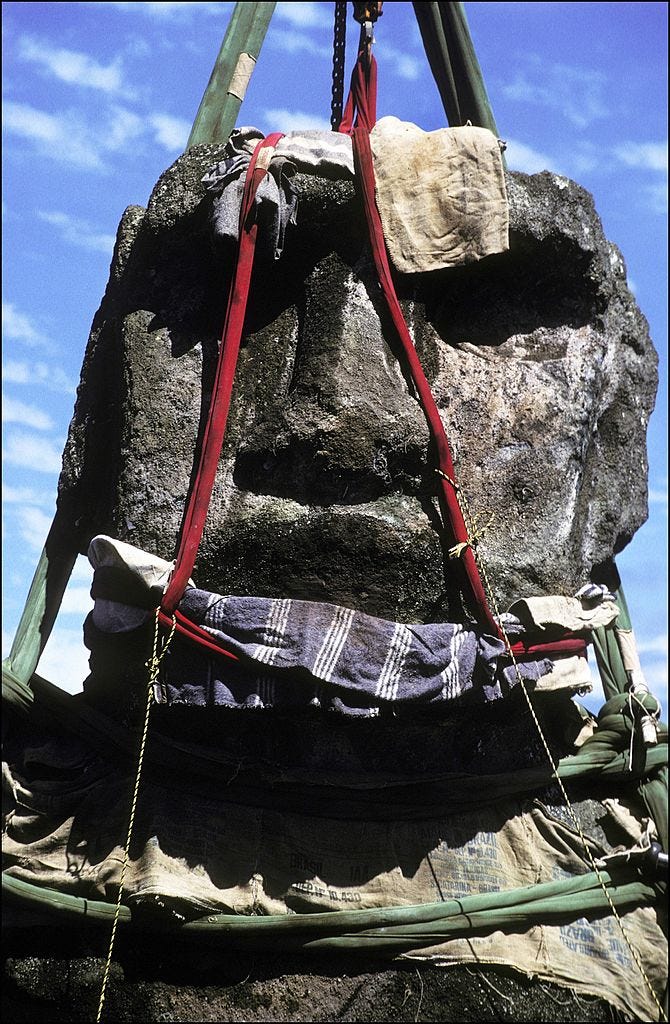
Maybe you’ve heard the story of the collapse of Easter Island before: a cautionary environmental tale for the modern world. It didn’t happen. (Gamma-Rapho via Getty Images)
A version of this story originally appeared in Faster, Please!
Easter Island, also known as Rapa Nui, is located in the southeastern Pacific Ocean, some 1,400 miles west of Chile. Polynesians settled there around 900 AD. They developed a complex society, building the now-famous massive stone statues. Back then, the island was covered in subtropical forest, including the world’s largest palm species. Europeans arrived in 1722, by which point the island was completely deforested.
Maybe you’ve heard this story before: a cautionary environmental tale for the modern world.
Here’s how it supposedly goes: Between 900 AD and 1722, islanders had cut trees for firewood, agriculture, canoes, houses, and statue transport. Deforestation then led to soil erosion, crop failures, loss of birds, and eventually the inability to build ocean-going canoes. As resources dwindled, the population, which was once 15,000 strong, crashed. Their society collapsed into warfare, starvation, and cannibalism. The old religion was abandoned, and rival clans toppled each other’s statues.
Jared Diamond—the scientist and historian who dedicated a chapter to telling this catastrophic tale of Easter Island in his well-reviewed 2005 book Collapse: How Societies Choose to Fail or Succeed—lists “human environmental impacts, especially deforestation and destruction of bird populations; and the political, social, and religious factors behind the impacts” as the main factors behind Easter Island’s collapse. The saga is meant to serve as a stark warning to readers about the consequences of unsustainable resource exploitation.
“The parallels between Easter Island and the whole modern world are chillingly obvious,” Diamond writes. “Thanks to globalization, international trade, jet planes, and the Internet, all countries on Earth today share resources and affect each other, just as did Easter’s dozen clans.
Except, it didn’t happen.
A new study published in Nature refutes Diamond’s theory of Rapa Nui collapse. Researchers analyzed genomes from fifteen individuals who lived between 1670 and 1950, using remains from France’s National Museum of Natural History. The genetic data revealed no evidence of a strong population collapse before European contact. Instead, there was steady population growth from settlement until the nineteenth century.
As one of the researchers put it, “There’s no strong collapse. We’re quite confident that it did not happen.” Kathrin Nägele, an archaeogeneticist at the Max Planck Institute for Evolutionary Anthropology, told Nature that the analysis “serves as the final nail in the coffin of this collapse narrative.”
In other words, there was no ecocide. There was no dramatic crash from 15,000 to 3,000 people, nor did the indigenous inhabitants destroy their ecosystem. Instead, the Polynesians that settled Rapa Nui saw their population grow steadily until the nineteenth century. Europeans found 1,500–3,000 people in 1722. Later, disease and slavery reduced the population to 110. Deforestation occurred, but it didn’t cause precontact collapse.
Why do I bring up the debunking of the Easter Island ecocide? It’s not to dismiss Diamond’s entire scholarship, or suggest industrial civilization doesn’t come at an environmental cost worth taking seriously. I bring it up because the Easter Island ecocide myth has been embraced as an essential parable by degrowth advocates—people who think Earth is already beyond its “carrying capacity,” or the maximum population size that the planet can sustainably support given its available resources.
According to degrowthers, to avoid civilizational collapse, rapacious capitalism must be replaced by a new socioeconomic system based on equilibrium and harmony between humanity and nature. Degrowthers are less interested in transitioning to carbon-free energy as they are focused on consuming less energy—whatever the source. (Yves Gellie via Getty Images)
Degrowthers, most of whom are on the far left of the political spectrum, argue that there must be many fewer humans in the future and that they must live less well, at least compared to those of us in rich countries. Old-school environmentalists right through to Greta Thunberg warn about the “limits to growth” and its consequences, including famine from overpopulation and the shortage of key natural resources.
To avoid civilizational collapse, rapacious capitalism must be replaced by a new socioeconomic system based on equilibrium and harmony between humanity and nature. Degrowthers are less interested in transitioning to carbon-free energy as they are focused on consuming less energy—whatever the source. Every time you hear about a green group trying to block a new solar field, or opposing federal reform, that’s degrowth in action, trying to push inaction.
The good news here is that leftist degrowthers are in retreat. The Covid-19 pandemic not only showed the benefits of tech progress through rapid vaccine development but illustrated just how little tolerance humanity has for scarcity. No one likes empty shelves in supermarkets, even if it’s just snacks. More importantly, the global renaissance in nuclear power means reversal of the greatest degrowth victory: making a safe source of clean energy seem wildly dangerous.
Across the world, countries are restarting plants, keeping existing ones open, and building new ones. Constellation Energy just announced a $1.6 billion investment to reopen a reactor at Pennsylvania’s Three Mile Island nuclear plant, the site of a partial meltdown in 1979 that ended nuclear expansion in the U.S. The new project, aimed at powering new Microsoft data centers, demonstrates the renewed interest in nuclear energy driven by surging electricity demand, particularly from AI.
There’s a right-wing version of degrowth too—even if they don’t necessarily march under the “degrowth” banner—and it’s an animating force in the Trumpist GOP. It sees the disruption inherent in modern global techno-capitalism, like when a community loses a major employer, as far outweighing any upside in, say, a country’s higher median household income over the long run. It criticizes consumerism for eroding traditional communities, undermining cultural and national identity. You get a flavor of this when J.D. Vance argues “a million cheap knockoff toasters aren’t worth the price of a single American manufacturing job.”
At its core, degrowth may be as much psychological as ideological. Fear of the unknown drives anxiety about rapid technological change and amplifies concerns over environmental degradation and social disruption. Nostalgia for simpler times fuels a desire to return to a perceived harmonious past. The desire for control and stability in an unpredictable world leads many to embrace degrowth as a way to impose limits and manage future uncertainties.
But if you’re going to propose a radical solution like degrowth, the science has to be right. In addition to the debunking of the story of Easter Island’s collapse, there’s a new literature review where researchers looked at 561 published studies that use the word degrowth in their title. They counted how many studies just talked about ideas or shared opinions, and how many actually used data or created models. The goal was to obtain a clearer picture of how solid the science behind degrowth really is. The conclusion: Not solid at all. According to the paper, only 17 out of 561 studies used theoretical or empirical modeling. When studies do use data, they often rely on very small sample sizes, e.g., a handful of interviews, or focus on unique cases that may not represent broader populations. The paper concluded, “published research on degrowth is dominated by ideology while lacking scientific quality.”
It’s not so much that the degrowthers have got the science wrong, but rather that what they are promoting isn’t really science at all.
Besides, to argue against growth is to argue against something at our very core. Both America and the world need more economic growth and technological progress to tackle global challenges like too much poverty and too little clean energy. Growth means more of, and better access to, what we need and want: clean water and Diet Coke. Ibuprofen and gene therapies for sickle cell disease.
Humanity’s appetite for novelty seems boundless, and that’s okay. Economic growth creates new demands, perpetuating a cycle of expansion and satisfaction. We need more growth. Until cancer is a distant memory, and we all live in a cleaner and more opportunity-filled world—or at least when we’re not spending a long weekend at a lunar resort.
A vaccine manufacturer based in India launched defamation proceedings against researchers who published a study that reported adverse events in people following Covid-19 vaccination.
The manufacturer also sued the editor of the international journal that published the study and demanded that the offending article be retracted immediately.
The Peer-Reviewed Study
The study at the centre of the controversy is a post-marketing safety analysis (phase IV) of Covaxin, one of India’s homegrown Covid-19 vaccines.
The researchers concluded that serious adverse events of special interest (AESI) after vaccination “might not be uncommon” and that the majority of AESIs in people persisted “for a significant period.”
Of the 635 participants involved, one-third reported developing AESIs such as new-onset skin disorders, nervous system disorders, and menstrual and ocular abnormalities.
Serious AESI, such as stroke and Guillain-Barre syndrome, were experienced by 1% of participants, but no causal link could be established in the study.
The researchers called for “enhanced awareness and larger studies” to carefully examine the potential for long-term harms of the vaccine.
The study was published in the journal Drug Safety on May 13, 2024, after it was examined by two independent peer-reviewers and the editor of the journal.
Mayhem Ensues
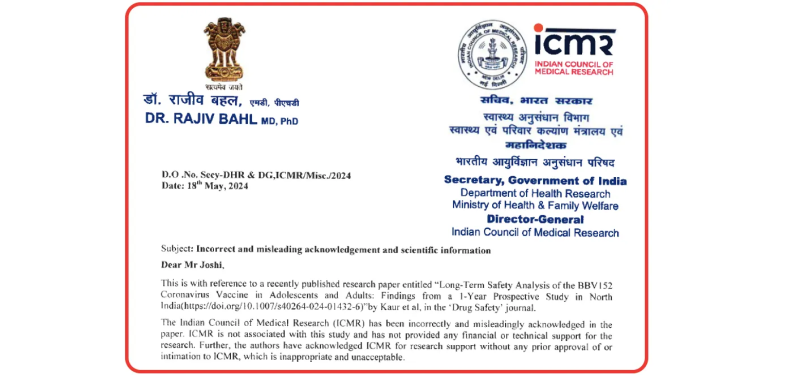
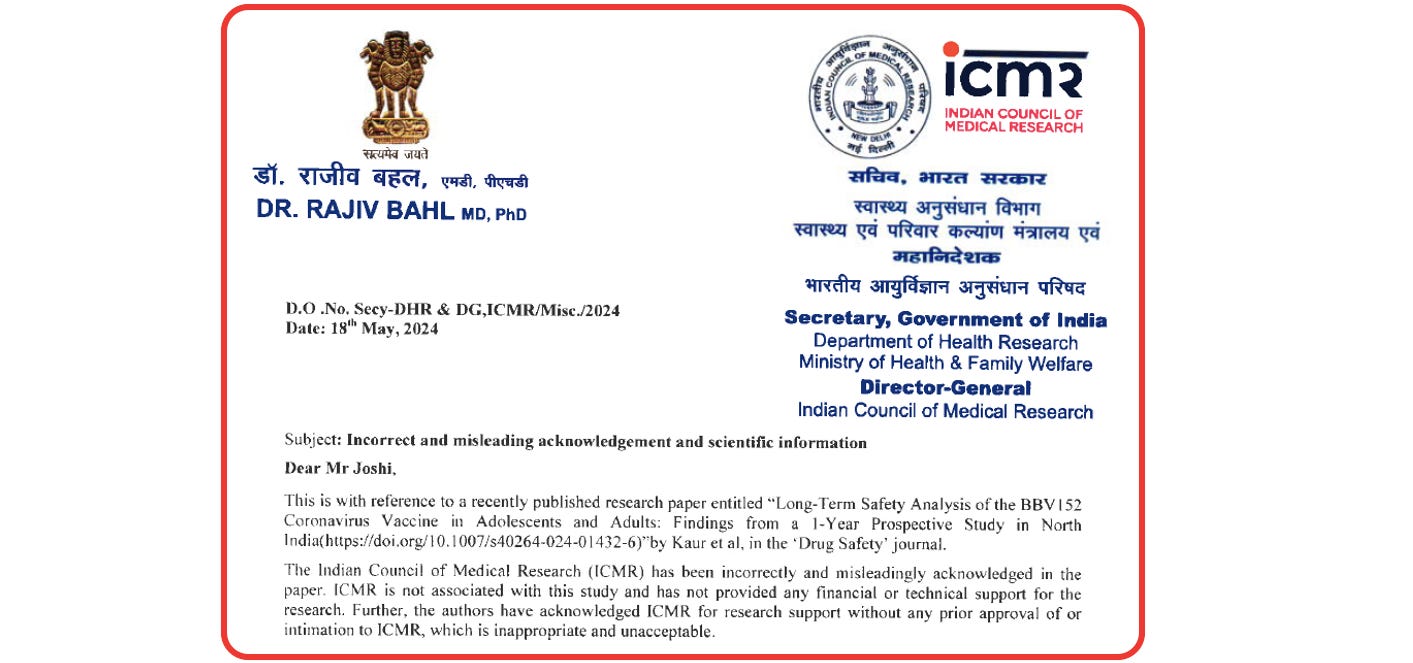
Within days of its publication, the government’s premier biomedical research organisation, the Indian Council of Medical Research (ICMR), which co-developed Covaxin, quickly distanced itself from the study.
On May 18, 2024, ICMR wrote to the journal wanting a retraction of the article and of the “acknowledgement” the researchers made to ICMR for its support.
The letter criticised the rigour of the study – it said there was no control arm, there were no baseline values of participants, and that collecting participant data by telephone interviews created a “high risk of bias.”
These limitations, however, are well-known in post-marketing studies. In fact, the authors went to great lengths to discuss the limitations of the study in the article, as well as recommend larger studies to elucidate harms.
The ICMR did not respond to repeated media enquiries.
The Lawsuit
In July 2024, the vaccine manufacturer, Bharat Biotech International Limited (BBIL) launched defamation proceedings in the civil court of Hyderabad, India, against the 11 study authors (6 are students) and the chief editor of Drug Safety, Mr Nitin Joshi.
The lawsuit claimed the study was “poorly designed with a flawed methodology” and therefore the conclusions drawn about the safety of Covaxin were “unreliable and defective.”
BBIL accused the authors of making “irresponsible and misleading” statements that had “a malicious intent” designed to be “defamatory,” which in turn, led to unfavourable media headlines that “irreversibly damaged the reputation” of BBIL.
The lawsuit alleges that the unflattering and false claims about Covaxin allowed BBIL’s competitors to “capture its customers” and hinder its business by “driving away potential customers and business partners.” It also alleged that the study was performed at the behest of competitors of the BBIL.
BBIL demanded a retraction of the study, noting that the researchers should refrain from any further publications of their research on the vaccine and sought damages to the tune of 50 million rupees ($US 600,000).
No attempt was made by BBIL to approach the authors and discuss alternatives prior to suing them.
BBIL did not respond to repeated media requests.
Sworn Statement by Authors
All authors have submitted a sworn statement under oath, refuting the allegations levelled against them.
It stated that there were no “nefarious objectives” in carrying out the study and that “it was conducted purely in the service of scientific enquiry.”
In the statement, the authors argued the study did not draw a “definitive link with the vaccine” and that this was stated clearly in the abstract of the journal article.
The authors called for further studies and said they couldn’t be held responsible for the way journalists reported on the study in the media.
They pointed out that it is standard practice to publish a “letter to the editor” of the journal to express a difference of opinion instead of lambasting the researchers in the media. BBIL chose not to take this route.
“This is nothing but an act of intimidation in coercing the [authors] to withdraw their article,” explained the authors in their statement.
It was pointed out that the ICMR is not a “neutral” government agency. It co-developed Covaxin and received royalties from BBIL for the sale of the product to the tune of 1.7 billion rupees ($US 20 million).
BBIL’s claim that it “suffered any loss of contracts for the supply of the vaccine” was entirely vague and unsubstantiated, said the authors.
In summary, they “rigorously followed the protocols of scientific investigation,” and stand by the integrity of the data, denying they were incorrect and flawed and therefore could not be deemed defamatory.
The Journal Caves
On Aug 28, 2024, Nitin Joshi, chief editor of Drug Safety, wrote to the authors to say a “post-publication review” had been conducted and that he now agreed with the criticisms of the paper.
Joshi, despite reviewing the study before it was published, stated that he intended to retract the article because he “no longer has confidence in the conclusions.”
In private emails, all authors were asked to agree or disagree with the decision to retract the article, but those reasons would not be included in the public retraction notice.
In response, the authors implored Joshi to reconsider his decision because it violated the editorial policies of the publisher (Springer) as well as COPE guidelines, a set of practices globally adopted for ethical publication of scientific papers.
“Removing/retracting the Article from the Journal without due process completely arbitrarily and unilaterally without even seeking any explanation from the Authors, suggests that the Journal is acting hastily,” wrote the authors.
They also suggested to Joshi that BBIL’s lawsuit merely served to intimidate the journal into retracting the article and “muffle or stifle any type of criticism/research about the vaccine.”
The authors went on to explain that retracting the study would “harm the credibility of their research, resulting in irreparable damage and defamation that cannot be compensated.”
On Sept 17, 2024, Joshi confirmed in an email to the authors that his decision to retract the paper was “final.” He denied being pressured by the defamation proceedings.
“I would like to emphasize that the decision to retract is an editorial decision, informed by a further evaluation of your article after concerns have been raised. In doing so we believe that the journal has followed COPE guidance appropriately,” wrote Joshi in the email.
Neither Joshi, nor the journal’s publisher (Springer), responded to media enquiries and it is assumed that the retraction of the article is imminent.
The defamation proceedings continue in the civil court of Hyderabad, India and the senior researchers are funding their own legal defence, as well as the legal defence of the student researchers.
So far, over 250 scientists, researchers, ethicists, doctors, and patients have signed an open letter addressed to BBIL, ICMR and the editor at Drug Safety, demanding the lawsuit be withdrawn, and the study remains published.
The state of Missouri has executed Marcellus Williams after he was convicted of stabbing social worker Felicia Gayle with a butcher knife over 40 times and robbing her home in 1998.
Bill would amend the Immigration and Nationality Act “to provide that aliens who have been convicted of or who have committed sex offenses or domestic violence are inadmissible and deportable.”
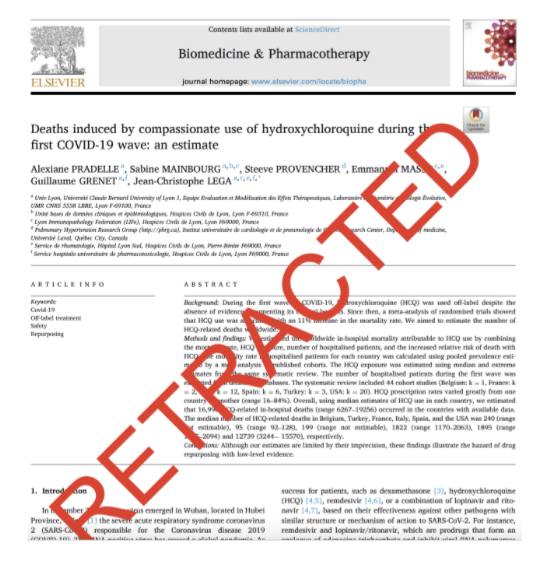
The article was always a hypothesized estimate of people that might have died, but now even that estimate has been retracted. The reason for the retraction was that the Belgian dataset that was one of the bases for the piece was found to be “unreliable” (but in reality was fraudulent). The article also repeatedly referenced the New England Journal of Medicine’s 2020 RECOVERY trial. The RECOVERY trial is well known to be a deeply flawed study which, in addition to implementing late treatment in severely ill Covid patients, used extremely high doses of HCQ.
The now retracted publication authors were all French or Canadian, with the primary author a pharmacist by the name of Alexiane Pradelle. According to a rudimentary internet search, Dr. Pradelle had never published before. Subsequently, listed authors were degreed as physicians, pharmacists, and/or professors of their respective disciplines. The main, corresponding author, Jean-Christophe Lega, runs the Evaluation and Modeling of Therapeutic Effects team at the University of Lyon.
Hydroxychloroquine’s Fabled Safety History Contrasts Data
In addition to being a hypothesized estimate, the article also attacked the legendary safety of HCQ, contradicting centuries of the safety of quinolines as a class.
HCQ, chloroquine and quinine are structurally and pharmaceutically/mechanistically related, sharing the same quinoline structural group. The original iteration of quinine was a very fortunate discovery that dates back to the 1600s (at least) as a medicinal tipple used by Jesuit missionaries in South America. It is naturally found in the bark of the Cinchona tree (also called a “Quina-Quina” tree).
Quinine is still available today both as a prescription drug, for similar indications as HCQ including malaria…and as a Covid-19 treatment.
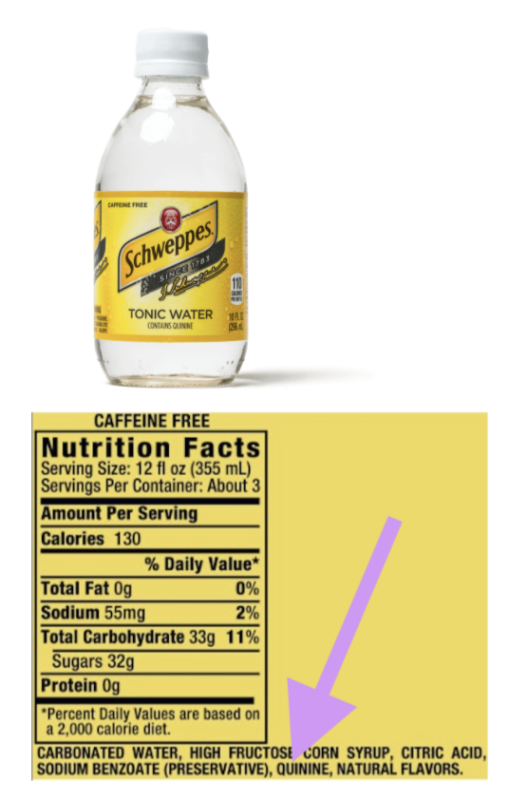
Quinine is so safe that it maybe unique in that the FDA simultaneously permits its use without a prescription, as an ingredient in tonic waters.
Basic logic dictates that, if a drug is safe for long-term use, it would also be safe for short-term use, including (and especially) in Covid-19 early treatment/pre-exposure prophylaxis type indications.
These are pharmacology fundamentals that ought to be known by any pharmacist or physician – let alone to a professor serving as a Journal Editor-in-Chief at a taxpayer-funded state College of Pharmacy.
Did not even one person on her editorial board of over 50 “peer-reviewers” and staff ponder the celebrated and storied history of HCQ (and its predecessors) and how incongruent this study’s findings were before choosing to publish data denigrating HCQ safety?
The correct answer to that might actually be: “no”…
The publishing editorial board all seem to be laboratory bench (non-clinical) research scientists, per their biographies. Although the board does promote itself as meeting DEI requirements of being “gender diverse,” a more important question might be is if they have the appropriate credentials and experience to review and opine on clinically complex drug safety/epidemiology subject matters in the first place.
Is just anyone now allowed to opine on specialty clinical pharmacology drug safety matters?
In certain journals/news publications, the answer to that question seems to be: “yes”…
Those “17,000 Deaths” Never Occurred
Another point of confusion surrounded the interpretation and promotion of this little-known publication by the lay press.
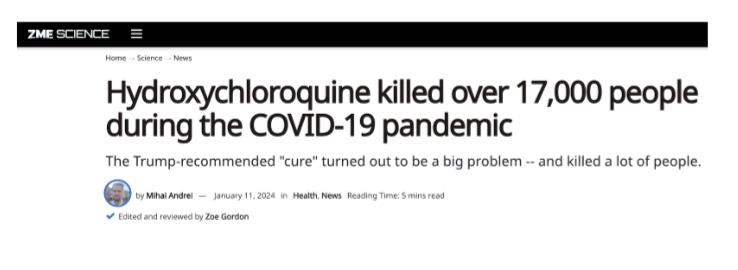
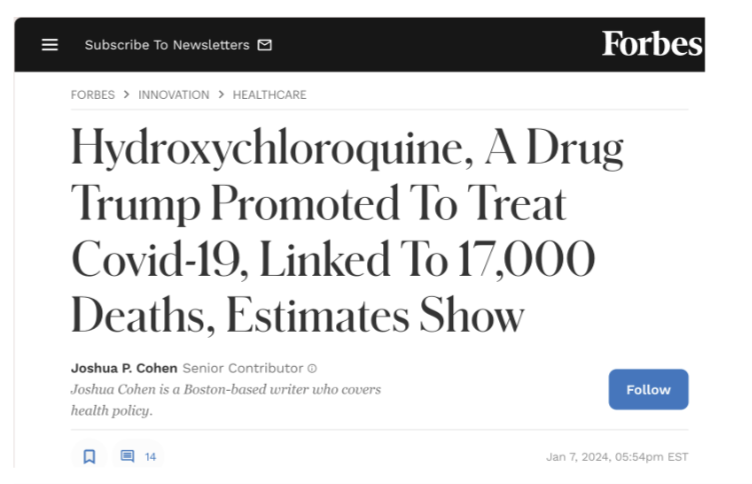
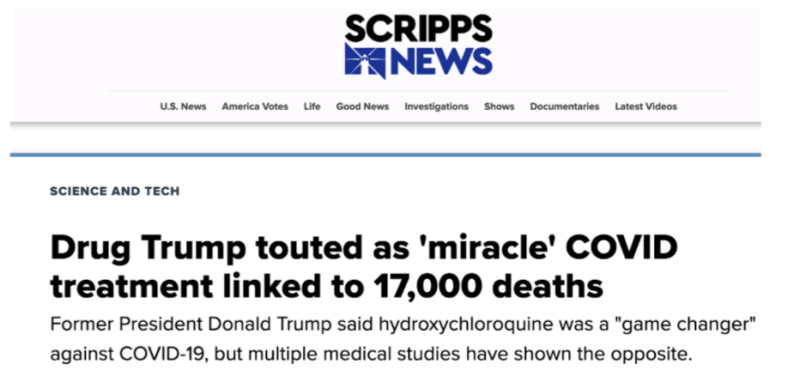
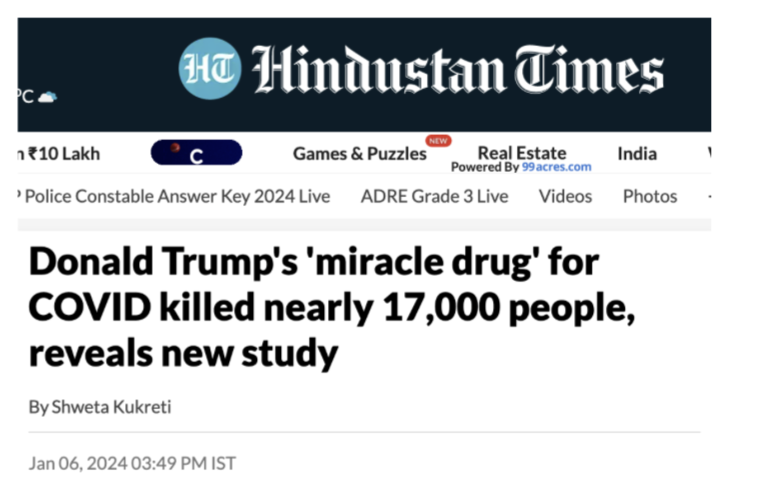
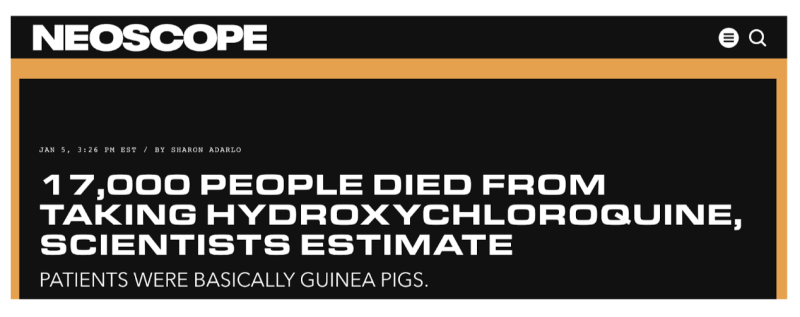
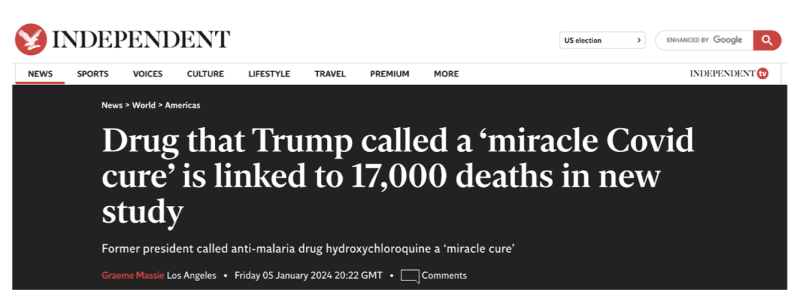
To be exact: there were never “17,000 deaths;” it was always a hypothetical extrapolation of people that could have died, based on “unreliable” (eg, actually, fraudulent) databases on top of the previously mentioned, problematic late-stage RECOVERY-trial-type dosing and timing.
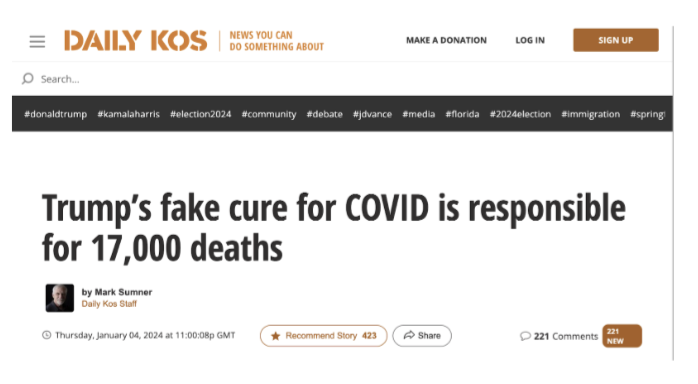
Still, Josh Cohen, a Forbes.com PhD senior healthcare columnist, used this publication to headline an absurdly biased op-ed against HCQ, stating that Trump’s HCQ proposal was “Linked To 17,000 Deaths.” Forbes’ Tufts, Harvard, and the University of Pennsylvania- trained “healthcare analyst” misrepresented or appeared to not understand the now-retracted study methodology or projections.
As of September 15, 2024, the above and other articles still show up very prominently (on the first page) of a Google search for “hydroxychloroquine deaths”…which never happened.
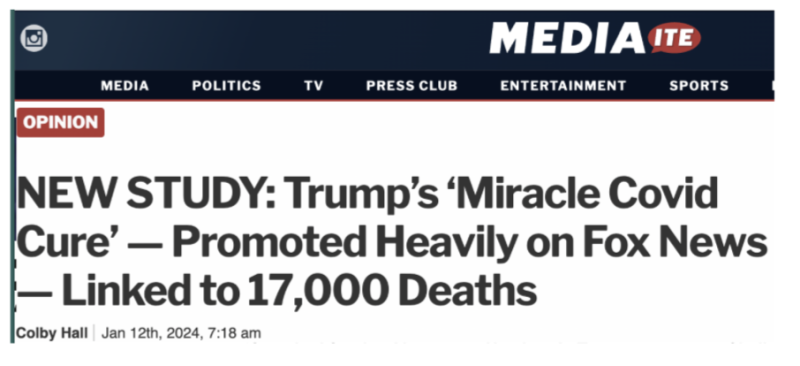
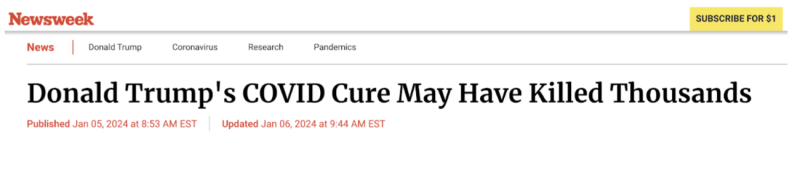
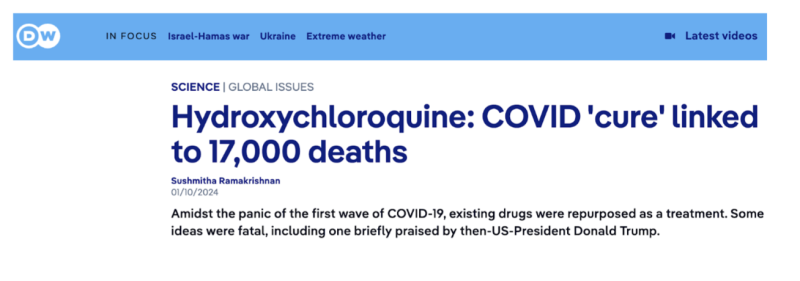
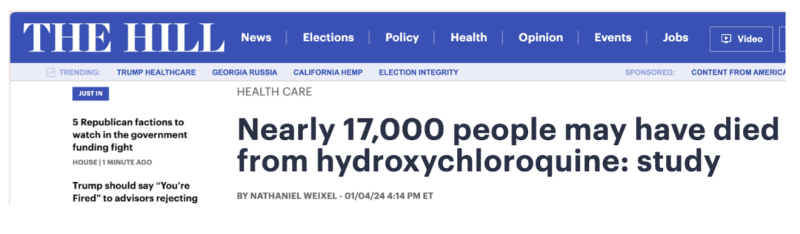
Here are some screenshots of headlines referencing non-existent deaths based on a now-retracted study:
Journal Editors Were Immediately Warned about Questionable Findings
Almost immediately following the January 2, 2024 publication, its critical flaws including basic miscalculations among many other deficiencies were brought to the attention of Dr. Townsend by Xavier Azalbert and non-profit BonSens.org attorneys starting on Jan 7, 2024. In fact, a total of 9 communications were sent by the above individuals, but none of them were ever shared as “Letters to The Editor” by Dr. Townsend in good faith to inform readers of specific potential shortcomings, as is otherwise commonly done.
Dr. Townsend seemed to forget that bad medical data and publications can do actual patient harm, and kept legitimate and important study criticisms to herself. Instead of taking responsibility and making a leadership decision, she passed the buck to a Committee on Publication Ethics, delaying the needed retraction.
It appallingly took 234 days (~7 months, from the January 2nd publication to August 26th) for Dr. Townsend’s Journal of Biomedicine and Pharmacotherapy to finally retract the "unreliable" article. But at that point, untold millions around the world had already been (and continue to be) polluted with outrageously incorrect information about non-existent HCQ deaths.
This raises some questions about Dr. Townsend’s duties and responsibilities as the Editor in Chief:
What efforts were made to correct incorrect headlines and articles published by the lay press, incorrectly frightening patients, pharmacists, and physicians, by fueling false tropes about HCQ?
What immediate efforts are being made to notify news organizations and/or amplify search engine results regarding the now-retracted publication?
What funding source/individual paid the $3,490 (“excluding taxes and fees”) publication fee? (Note: reputable academic journals do not charge to publish articles.)
Does Elsevier’s Journal of Biomedicine and Pharmacotherapy meet certain definitions of what is known as a predatory publisher?
Was this Editorial Board qualified to review regulatory/drug safety/epidemiology/any other clinical subjects?
Ethical scientists who believe in truth, transparency, and academic accountability are standing by, waiting for medical and academic justice.
Unethical scientists are also watching this situation unfold, twisting their mustaches, learning about what they could potentially one day get away with.
DISCLAIMER: This article is not medical advice. Do NOT start or discontinue ANY drug without first discussing it with a pharmacist or physician you know and trust.